Decorative Oriental Carpets

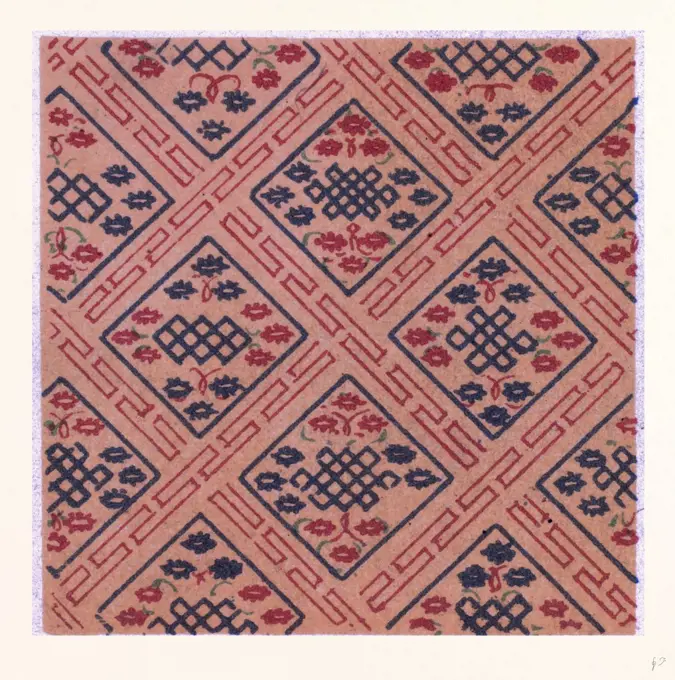
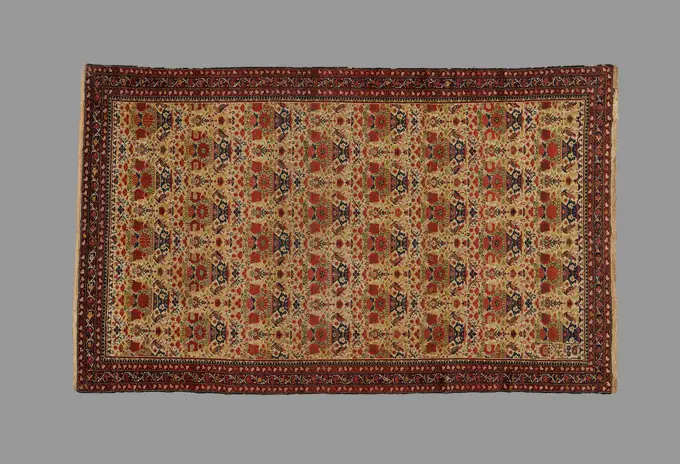
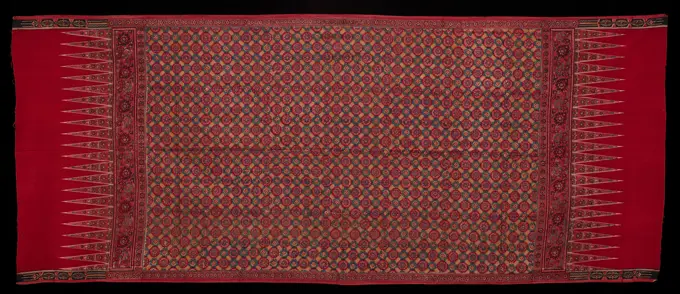
A variety of intricate oriental carpets featuring floral motifs and vibrant colors, showcasing traditional craftsmanship and designs from different regions.
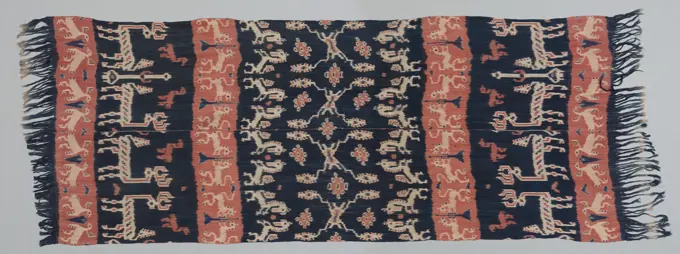
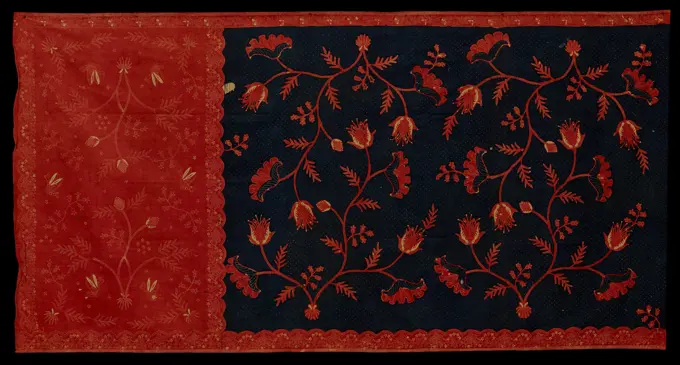
Hinggi, late 1800s. Indonesia, Sumba, late 19th century. Cotton, ikat dyed; overall: 268.5 x 94 cm (105 11/16 x 37 in.).
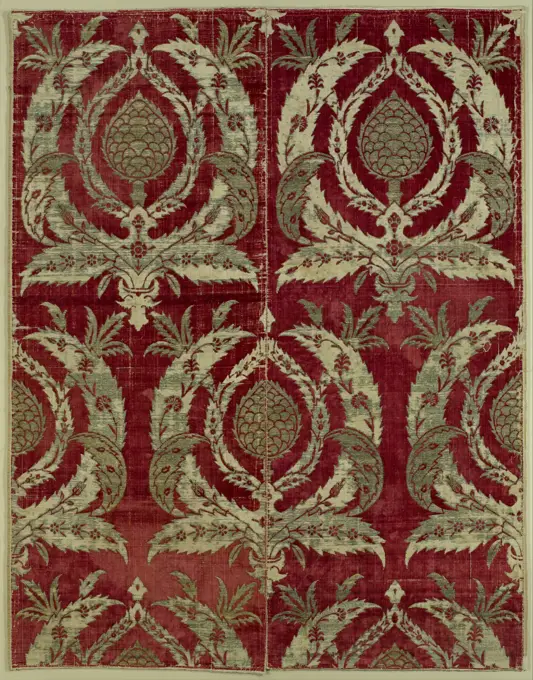
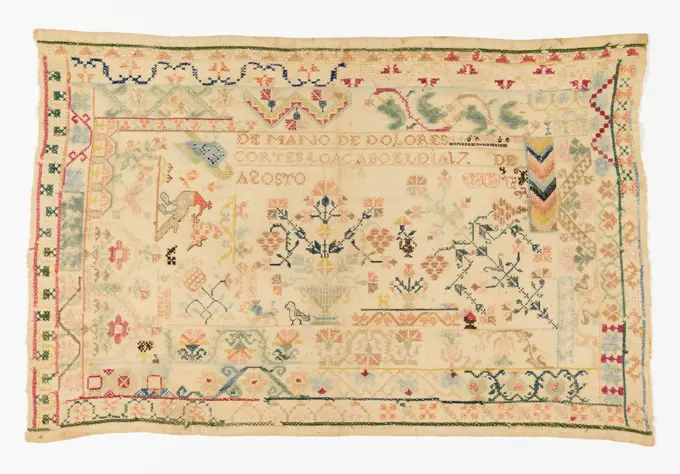
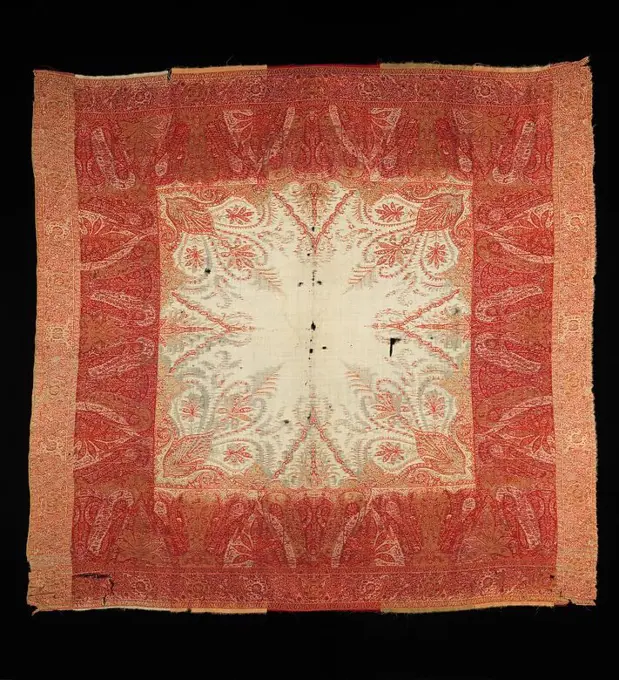
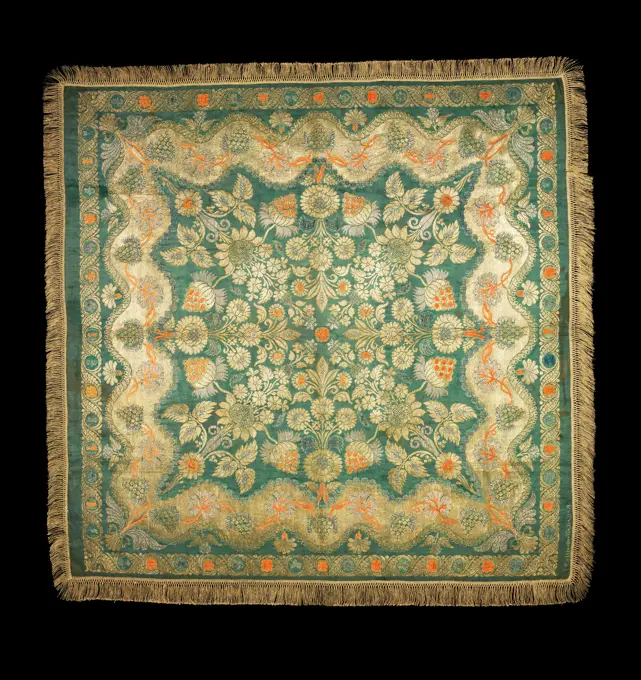
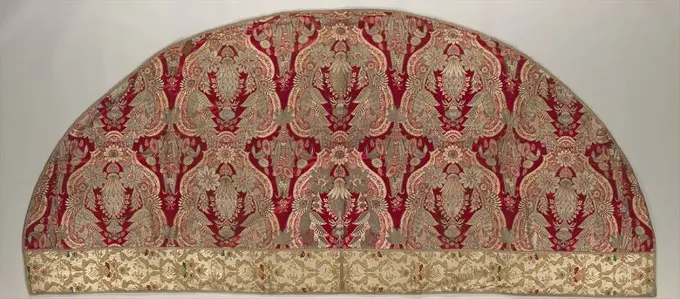
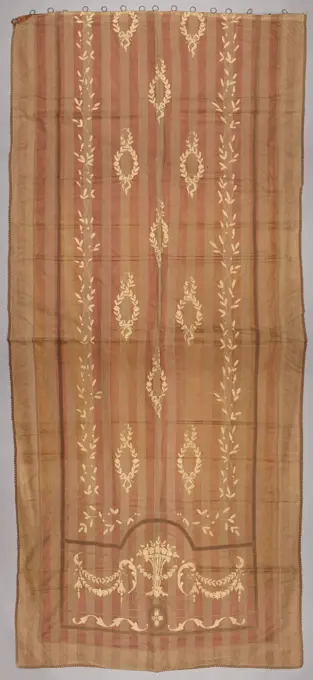
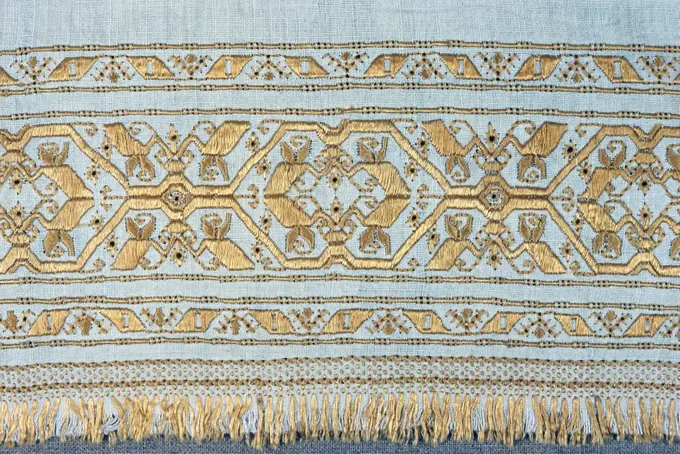
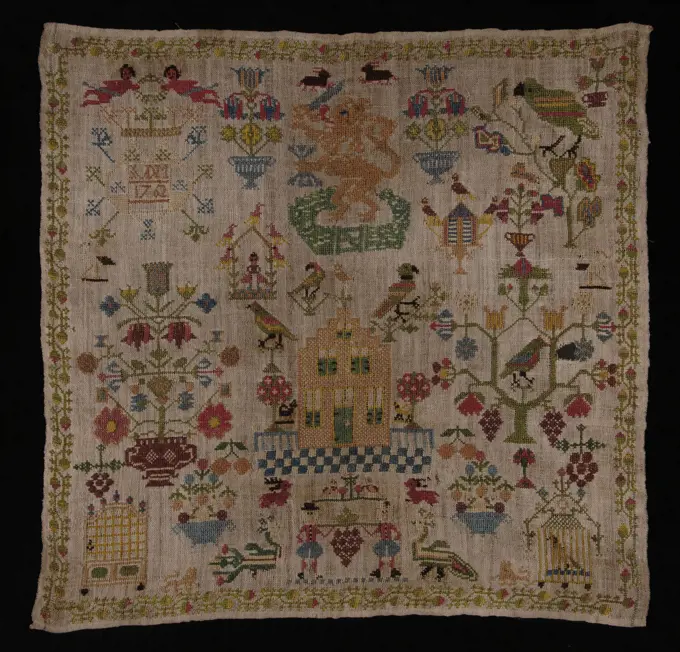
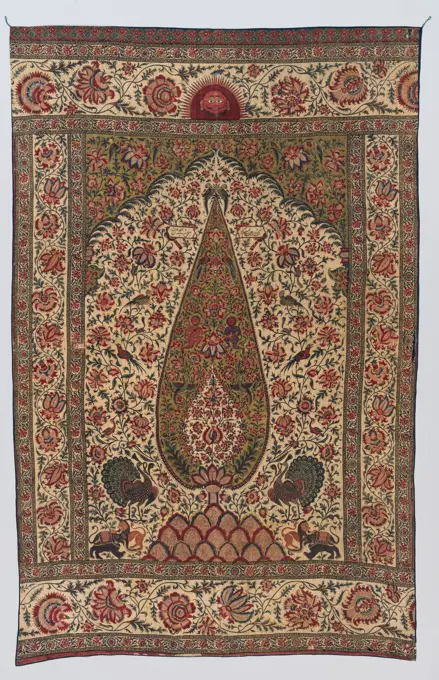
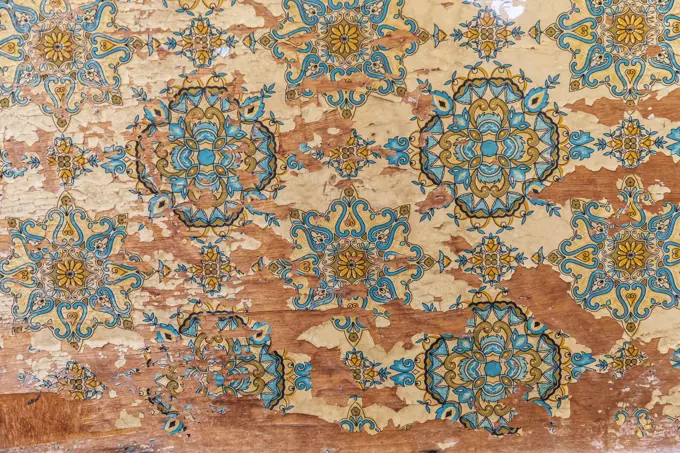
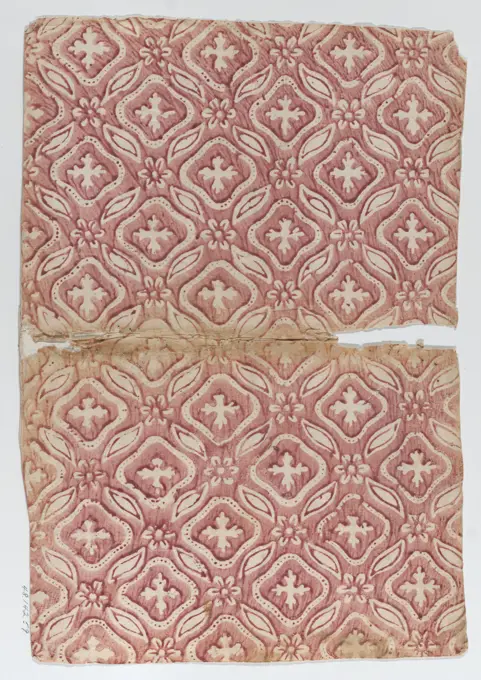
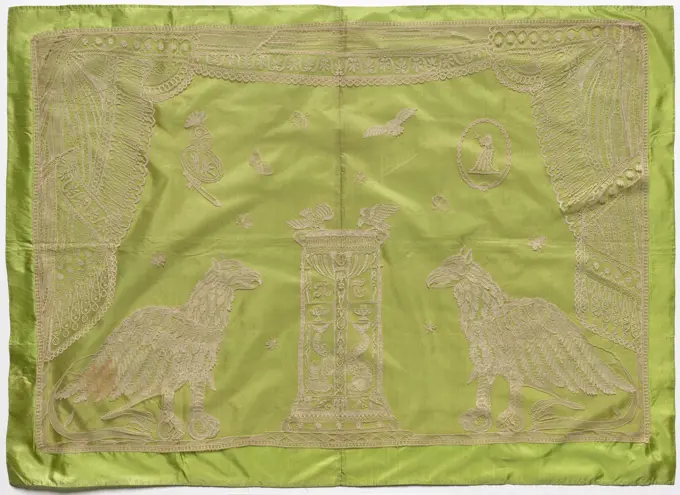
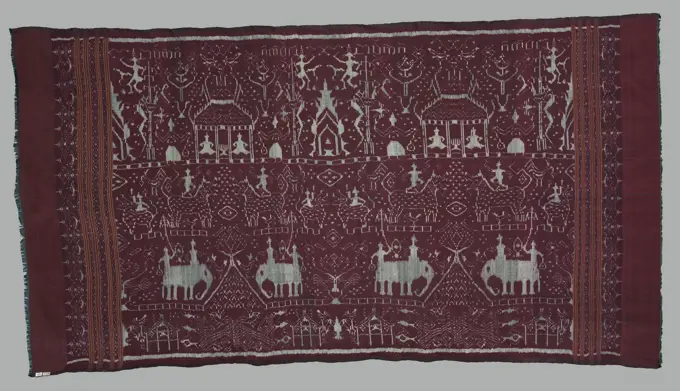
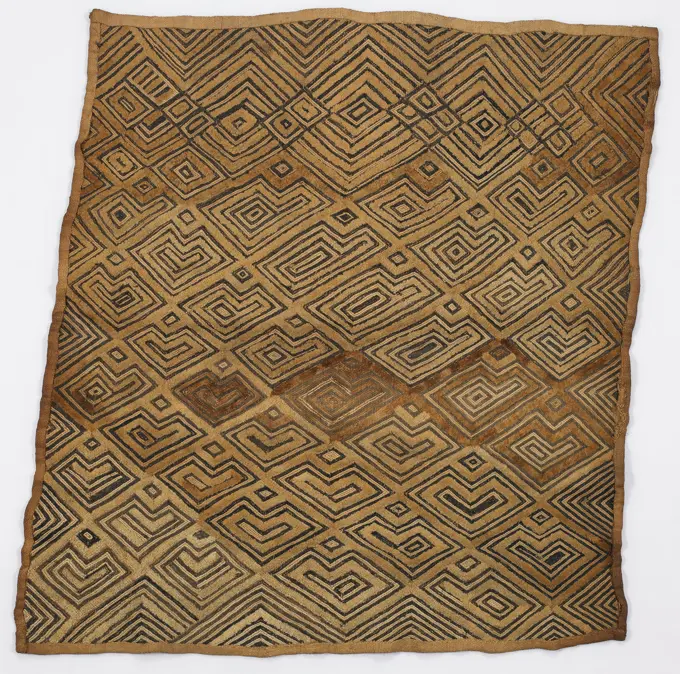
Fragment, Medium: silk, metallics Technique: woven, Tulips and hyacinths alternate with a palmette within a branched ogival framework. Details include three balls and cloudband., Turkey or Italy, 16th-17th century, woven textiles, FragmentShirvan Kilim 1875-1900 Caucasus. Flat-woven rugs or covers from the Middle East, eastern Europe, central Asia, and India, kilims are usually made in the slit tapesty technique, in which slits occur where an area of one color meets an area of another. Stepping is introduced along these lines in order to keep slits small and avoid structural weakness. Stepped or serrated edges are thus a hallmark of much kilim production. Patterns are generally geometric in nature, in harmony with the structural characteristics. This kilim, made in the Shirvan area of the southern Caucasus (present-day Azerbaijan), has a pattern featuring shield-shaped devices that probably derive ultimately from vegetal or animal-skin forms.-A Global View Recent Acquisitions of Textiles, 2012-2016, April 8-September 5, 2016. wool, plain and slit tapestry weaves; weft wrapping; cut warp fringe .Embroidered Square, 1600s-1700s. Italy, 17th-18th century. Embroidery, silk; overall: 55.9 x 53.3 cm (22 x 21 in.).Fragment Made 1701-1800 Japan. Brocaded fancy compound satin, silk and gilt paper; 3 strips to m.m. .Excerpt Eastern textile, c. 1600 - c. 1899 A fragment of cashmere, weaving with gold thread, red striped, with purple flowers. NOTE: MEERSHIP; 6 mm, plain binding.  silk. cotton (textile). cashmere (wool) A fragment of cashmere, weaving with gold thread, red striped, with purple flowers. NOTE: MEERSHIP; 6 mm, plain binding.  silk. cotton (textile). cashmere (wool)Rectangular Textile Fragment second half 16th century Bursa, a mountainside city in northwest Anatolia about 60 kilometers from Istanbul, was from the mid-fifteenth to the seventeenth centuries the major production center of velvets in the Ottoman empire. This splendid panel, composed of two loom-width pieces sewn together, typifies Bursa velvet weaving in the late sixteenth century. The motifs, especially the feathery leaves embracing the artichokes, are among the most frequently used by Ottoman weavers (and ceramicists) in this period. Fabrics such as this one were primarily employed in furnishings, such as cushions, curtains, and wall hangings, in the Ottoman empire. The many examples exported to Europe, on the other hand, were most often used in ceremonial costumes.. Rectangular Textile Fragment 446873Fragment of the contustion sash unknownFragment Made 1601-1700 Europe. Linen and wool, plain weave; tied and free double cloth .Sampler (Mexico); Embroidered by Dolores Cortes; silk embroidery on linen foundationFragment, Medium: silk Technique: 2/1 twill with complementary wefts and inner warps (samite), Checkerboard of medium-sized green and yellow X-shaped geometric figures and dark blue eight-pointed stars with deep ivory upright ovals centered in each star enclosing in alternate rows yellow palmettes and yellow cocks in profile. Stars bear small deep ivory heart-shaped ornament in each point. X-shaped geometric figures, outlined in yellow with pointed ends, contain herringbone hatching of green and yellow bands of varying widths in each arm and in the center of the figure a yellow fleuron outlined in green and dark blue, from which radiates through each arm a yellow axial stripe terminating short of end of arm in yellow and green heart-shaped figure outlined in dark blue., Europe, 8th-9th century, woven textiles, FragmentTextilefragment.   Maker: UnknownShawl. Culture: probably Scottish. Date: 1830-50.This is a particularly intricate pattern woven in one of the European shawl manufacturing centers, probably Paisley, Scotland. The palmette border pattern seems to relate to 16th-century textile vocabulary while the boteh is adapted from the Indian and Persian form. It is unusual to have an outer border in two colorways which gives the appearance of being applied but in fact it is all woven of one piece.The shawl held a place as a high fashion accessory for a relatively large period between the end of the 18th century to the 1870s. These accessories were originally adopted by men with exposure to India and Persia through the Trading Companies. The changing fashions near the end of the 18th century brought a renewed interest in Indian and Persian shawls as a form of warmth over the thin muslins of fashionable Empire silhouette dresses. The shawls came in many designs which generally incorporated the boteh form. This form, which is mostlHeadscarf first quarter 19th century Russian This object is from the collection of Natalia de Shabelsky (1841-1905), a Russian noblewoman compelled to preserve what she perceived as the vanishing folk art traditions of her native country. Traveling extensively throughout Great Russia, she collected many fine examples of textile art of the wealthy peasant class. From the 1870s until moving to France in 1902, Shabelsky amassed a large collection of intricately embroidered hand-woven household textiles and opulent festival garments with rich decoration and elaborate motifs. The Brooklyn Museum holdings include many fine examples including the majority of the garments. Portions of Shabelsky's collection are also housed at the Museum of Fine Arts, Boston, the Cleveland Art Museum, and the Russian Museum of Ethnography in St. Petersburg.. Headscarf 157892Ritual Textile (PuaKumbu)Womans Ceremonial Skirt (Tapis)Square scarf of cream -colored wool, embroidered with a floral motif in multicolored wool, anonymous, c. 1850 - c. 1860 Scarf of cream -colored wool, embroidered with a floral motif in multicolored wool. Square. Middle pattern: A frame of palm motifs and flower vines shows palms in three types with a limited inner drawing. There are two twisted and forward -facing and one lying back. Detached of this is always a large palm or ferry in the corners with a hiking top nodding; The inner decor shows smaller "mother" palms with "children's" palms on their lap that jump out of the band. In the center an eight -pointed star pattern, concentrically reproduced, including one with lobed contour; This contains extremely fine spring motifs. In the midst of the lines, a palm with a palm motif changed on a ground with a palm motif changed. Edge pattern: separately woven double length frames with slender and rosette pattern and used single transverse lists; All with transferred petals. Technology: SteFragment (Italy); silk, metallic thread (beaten gold on vellum wrapped around linen core)Fragment Made 1876 United States. Cotton, plain weave; roller printed .Fabric gore. unknown, authorCarpet 17th century. Carpet 447531Fragments, Medium: silk, linen, metallic Technique: combination of two structures, satin and twill, Formal pattern of ogives framing central field, red and gold predominate., Turkey, 16th-17th century, woven textiles, FragmentsChinese ornamentTable Cover with a Coat of Arms 16th century Spanish. Table Cover with a Coat of Arms 461054Cope. Culture: Italian. Dimensions: H. 51 1/2 x W. 113 1/2 inches (130.8 x 288.3 cm). Date: 1725-30. Museum: Metropolitan Museum of Art, New York, USA.Bed Cover (suzani); silk embroidery on cotton foundationVitrage of cotton tulle with tambouring work, anonymous, c. 1900 - c. 1910 Lace -in lace -up work: white tambooer work on ecrinkey machine tulle. The pattern has garlands of arches and olive branches, laurel wreaths and a flowerpot, within a soutache ornament. The net curtain is finished on three sides with galon and has sewn -down copper rings along the top. Netherlands cotton (textile) Lace -in lace -up work: white tambooer work on ecrinkey machine tulle. The pattern has garlands of arches and olive branches, laurel wreaths and a flowerpot, within a soutache ornament. The net curtain is finished on three sides with galon and has sewn -down copper rings along the top. Netherlands cotton (textile)Textile Fragment. Dimensions: L: 5 in (12.7 cm) x W: 5 in (12.7 cm). Date: 18th century. Museum: Metropolitan Museum of Art, New York, USA.Fragment, 1800s. China , 19th century. Silk; overall: 14.6 x 12.7 cm (5 3/4 x 5 in.).Cover Made 1601-1700 Italy. .Trademark worked in cross-stitch with colored silk on loosely woven cream-colored linen, IVDM 1762, sampler embroidery needlework footage silk linen, textile embroidery cross stitch inside the crowned heart: IVDM and 1762 bible religion spyman Canaan Dutch Lion Dutch GardenTextile Fragment second half 16th century. Textile Fragment 454565Upholstery Textile (France); wool warp, linen weft; Warp x Weft (A): 57.8 × 71.8 cm (22 3/4 × 28 1/4 in.) Warp x Weft (B): 31.8 × 69.2 cm (12 1/2 × 27 1/4 in.); 1975-6-1-a,bDeck cover, decorated on the narrow field with oval medallion-like shapes that are partly filled with a tree and a bird-like animal. Cover, perhaps for a camel. The Wide Narrow Field is decorated with oval medallion-like forms, z.g. Ertmen Guls, Partly Filled With a Tree and a Bird-Like Animal. A Grid or Twigs Between The Guls.Fragments, Medium: silk, metallic thread Technique: velvet, Red and beige velvet fragments with dragons, Fu dogs, clouds, and flowers., 19th century, woven textiles, FragmentsWall Hanging (pardah), 1800-1850. Uzbekistan, Bukhara. Silk: warp-faced plain weave, warp-ikat; cotton weft; overall: 211.8 x 142.2 cm (83 3/8 x 56 in.).Border. Culture: Russian. Dimensions: 31 in. (78.7 cm). Date: late 18th century.This object is from the collection of Natalia de Shabelsky (1841-1905), a Russian noblewoman compelled to preserve what she perceived as the vanishing folk art traditions of her native country. Traveling extensively throughout Great Russia, she collected many fine examples of textile art of the wealthy peasant class. From the 1870s until moving to France in 1902, Shabelsky amassed a large collection of intricately embroidered hand-woven household textiles and opulent festival garments with rich decoration and elaborate motifs. The Brooklyn Museum holdings include many fine examples including the majority of the garments. Portions of Shabelsky's collection are also housed at the Museum of Fine Arts, Boston, the Cleveland Art Museum, and the Russian Museum of Ethnography in St. Petersburg.The liveliness of the animals in this piece is typical of work prior to the 19th century. In Russian history, the stag wEmbroidered velum;  2nd half XVII century (1551-00-00-1600-00-00);Caucasian Karabakh carpet unknownPalampore (India); cottonOriental carpets more than two centuries old have rarely survived and are rarely represented in Islamic Art since Sunni Islam (and to a lesser extent Shia) eschews representational art in favour of precisely the repetetive geometric symbols and arabesques found, for example, in oriental carpets. This means that most examples of 17th century and earlier oriental carpets, mainly produced in Muslim lands, are only to be found in paintings from Christian lands where rich oriental carpets were associated with wealth, power and taste. Such carpets featured as an important decorative feature in paintings from the 14th century onwards, leading to the dichotomy that there are more depictions of oriental carpets produced before the 17th century in European paintings than there are actual oriental carpets surviving from the same period. Because of this European paintings have proved an invaluable source of reference for the study of the history of carpetmaking and carpets.Shawl 1840-49 British. Shawl 169244Shroud(Porisitutu’)Kalamkari 19th century. Kalamkari. 19th century. Cotton. Attributed to India. Textiles-Painted and/or Printed35mm originalExcerpt Eastern textile, c. 1800 - c. 1850 Fragment Eastern textile, with a striped pattern. Red tracks filled with a winding leaf vank with flowers in blue, green and silver alternate with a green and yellow striped track in which a silver -colored geometric ornament. In the cotton (textile). silk. Fragment Eastern textile, with a striped pattern. Red tracks filled with a winding leaf vank with flowers in blue, green and silver alternate with a green and yellow striped track in which a silver -colored geometric ornament. In the cotton (textile). silk.Middle East, Arabian Peninsula, Oman, Muscat, Muttrah. Peeling wall decorations at the souk in Muttrah.Fragment of silk fabric  motif of styIIsed flower vase unknownArmenian sash unknownCeremonial Cloth(Tampan)Fragment Made 1575-1625 Italy. Silk, cut, uncut, and voided velvet aganst plain weave foundation .Sleeve Bands (China); silk; 1953-68-1Book cover with red floral and abstract pattern 18th century Anonymous. Book cover with red floral and abstract pattern. Anonymous , Italian, 18th century. 18th century. Relief print (wood or metal). PrintsRugs and Carpets: Iran - Qum Kurk carpet with a central medallion and floral motifs, 2,10 x 1,35 metresPall, embroidered, red unknownBrocade, 1700s or 1800s. India, Surat, 18th or 19th century. Brocade, "himru"; silk and cotton; overall: 75.6 x 41.9 cm (29 3/4 x 16 1/2 in.).Band (Italy); silk embroidery on linen foundationPiece 18th-19th century Japan. Piece 66083Sampler (Spain); wool and cotton embroidery on linen foundation; linen needle lace; Warp x Weft: 19.1 x 57.2 cm (7 1/2 x 22 1/2 in.); Bequest of Gertrude M. Oppenheimer; 1981-28-407Oosters tapijt.Oriental carpet of knotted wool, runner format. There are two medals with grid work, rosettes and heart shapes in midfield. Around three edges.Throne facilities;  End of the 17th century (1691-00-00-1700-00-00);Szwarc, Szymon (1884-197.) - collection, purchase (provenance), throne facilitiesFragment of chasuble embroidery  floral motif unknownFragment (Japan)Textile, Medium: cotton Technique: roller printed in five colors on plain weave, Two offset Gothic-style windows set one next to the other with a bishop standing in front of one. Glazed and polished., England, ca. 1840, printed, dyed & painted textiles, TextilePanel (Half of a Bed Curtain) Made 1601-1700 Pátmos. Linen, plain weave; embroidered with silk in chain, double running, running (pattern darning), satin, and stem stitches; two loom widths joined .Towel End early 19th century. Towel End 443053Skirt cloth (kain sarong), late 19th-early 20th century, 81 1/2 x 43 1/2 in. (207.01 x 110.5 cm), Cotton; dyed, Indonesia, 19th-20th century, The Indonesian island of Java is renowned for its production of batik textiles. Using a resist-dyeing process, batik makers, usually women, draw intricate patterns in wax (the resist) with a pen-like device over cotton cloth. Then they soak the fabric in successive batches of color dyes. Because the wax resists dyeing, once it is removed, the original design remains. The work is also known as tulis, or writing. Antecedents of batiks can be traced back to Indian textiles from the first millennium CE. Evolving on Java from 1600s court culture into a major industry under 1800s Dutch colonial rule, batiks feature a range of motifs, many of which are uniquely Javanese.Bed cover, ChinaTextile Fragment 19th century. Textile Fragment 445303Doek.Cloth with geometric motifs.Piece 17th century Japan. Piece 71608Fragment Made 1675-1700 Japan. .Indian Trade Textile(Sarasa)Panel. Italy. Date: 1675-1725. Dimensions: 103.9 x 54 cm (40 7/8 x 21 1/4 in.)Repeat: 33.8 x 17.8 cm (15 1/4 x 7 in.). Silk, plain weave with supplementary patterning wefts; tied by binding warps in plain weave. Origin: Italy. Museum: The Chicago Art Institute, Chicago, USA.Towel Made 1801-1900 Turkey. embroidered .Bobbin (Point Plat Appliqué), Machine, and Needlepoint Lace Panel, early 19th century. Belgium, Brussels, early 19th century. Point plat appliqué on machine net, insertion of needlepoint next to edge, cotton machine lace edge; average: 58.4 x 84.8 cm (23 x 33 3/8 in.).Pillow Sham. England. Date: 1710-1730. Dimensions: 25.8 × 36.2 cm (10 1/8 × 14 1/4 in.). Cotton, plain weave; underlaid with linen, plain weave; embroidered with silk floss and silk yarns in herringbone, individual satin, satin, and stem stitches; laid work, couching, and French knots. Origin: England. Museum: The Chicago Art Institute, Chicago, USA.Family album 1940-1947, 1940 - 1947  Family album from the period of the Second World War and a few years later. The album contains 23 pages of brown paper with a total of 151 photos. Some of the photos are missing. Between the pages protective sheets of pergamine. In the back of a loose photo in a Melinex folder. The cover consists of woven raffia in beige, brown and orange. The album belonged to Janny van der Meer (married name). Until the summer of 1944 the photos show family steps and the war is absent. NetherlandsNetherlandsThe HagueThe Hague photographic support. paper. raffia (fiber) gelatin silver print family life at home The HagueFragment from Women's Trousers 19th century. Fragment from Women's Trousers 445877Piece 18th-19th century Japan. Piece 67448Piece 18th century Japan. Piece 72020Chasuble column fragment. unknown, authorSarong, 1900's before 1931. Cambodia, 20th century. Silk, Ikat, twill weave; overall: 177.2 x 99.8 cm (69 3/4 x 39 5/16 in.).Hip Wrapper (tapis), 1800-1850. India, Coromandel Coast, 1st half 19th Century. Cotton; plain weave; block printed, drawn resist, painted mordants, dyed; overall: 251.5 x 106.8 cm (99 x 42 1/16 in.).Sampler, Medium: silk embroidery on linen foundation Technique: embroidered in cross stitch on plain weave foundation, Crowned initials and date framed with palm branches at the top; flowers and trees in pots, floral shapes at bottom., Germany, 1762, embroidery & stitching, SamplerBrideweath Cloth(Ulos), 19thcentury, Twill weave with supplementary weft; cotton, 177 × 64 cm (69 11/16 × 253/16in.), ILE2006.4.180, , Made in Sumatra, Indonesia, TobaBatak, 19thcentury, TextilesFragment, 17th century; silk; Warp x Weft: 12.1 x 15.3 cm (4 3/4 x 6 in.)Panel, 20th century, 24 3/4 x 26in. (62.9 x 66cm), Raffia; cut pile embroidery, Democratic Republic of Congo, 20th century, Cut pile embroidery is produced by several ethnic groups within the Kuba culture, including Bushoong, Shoowa, Ndengese, Ngongo and Ngombe. The different styles are distinguished by characteristics such as the color of the ground cloth, the use of a flat stem stitch and the way in which the cut-pile is used to build up pattern areas. The designs are geometric and rectilinear, utilizing variations of chevrons, squares, triangles, diamonds, interlaced knots and L-shaped motifs. The motifs are symbolic and refer to Kuba creation myths, historical events or ordinary objects such as hoes, tortoises, or shields.Sample, Cheney Brothers, (South Manchester, Connecticut, USA), Medium: silk Technique: compound satin weave, Reproduction textile in a design inspired the Cooper Union Museum collection. Pattern has broad vertical stripes of a fine checkerboard pattern alternating with stripes of flowers and bells., USA, ca. 1915, woven textiles, SampleWoollen fabric with geometric motifs, from Peru, 14th CenturyBand, The Sacrifice of Isaac; Egypt; warp; s-spun, z-twist linen. wefts; s-spun linen, s-spun woolsCushion Cover Made 1720-1750 China. Brocade . ManchuAnonymous, senek carpet. Wool. Carnavalet museum, history of Paris.Sarassa, 19th century, 43 5/16 × 103 15/16 in. (110 × 264 cm) (approx.), Cotton, Indonesia, 19th centuryPiece 18th-19th century Japan. Piece. Japan. 18th-19th century. Silk. Textiles-WovenTextile Fragment 18th-early 19th century. Textile Fragment 445792QuiltShroud(Palu)Germantown Eyedazzler Saddle Throw , c.1875. America, Native North American, Southwest, Navajo, Post-Contact, Late Classic Period. Tapestry weave: cotton and wool (handspun and bayeta); overall: 68.6 x 86.4 cm (27 x 34 in.).Antependium;  XVIIIw. (1701-00-00-1800-00-00);Piece 18th-19th century Japan. Piece 66174