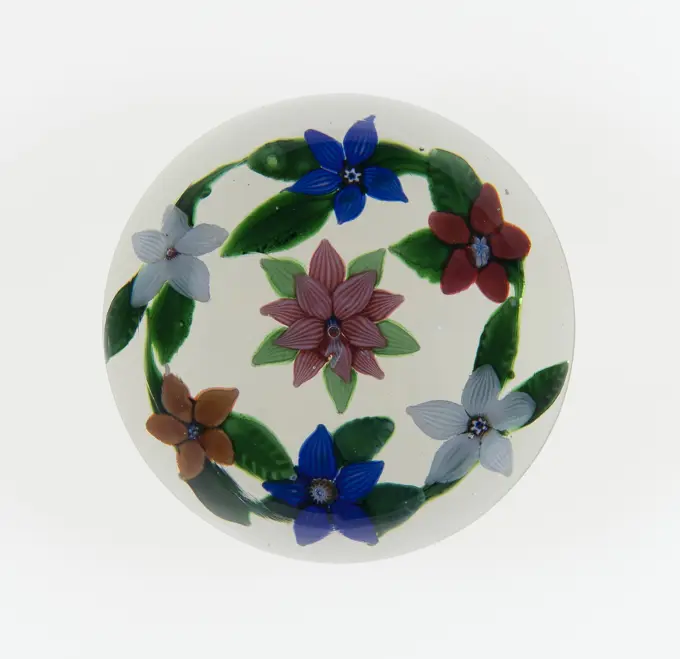
Decorative Plates

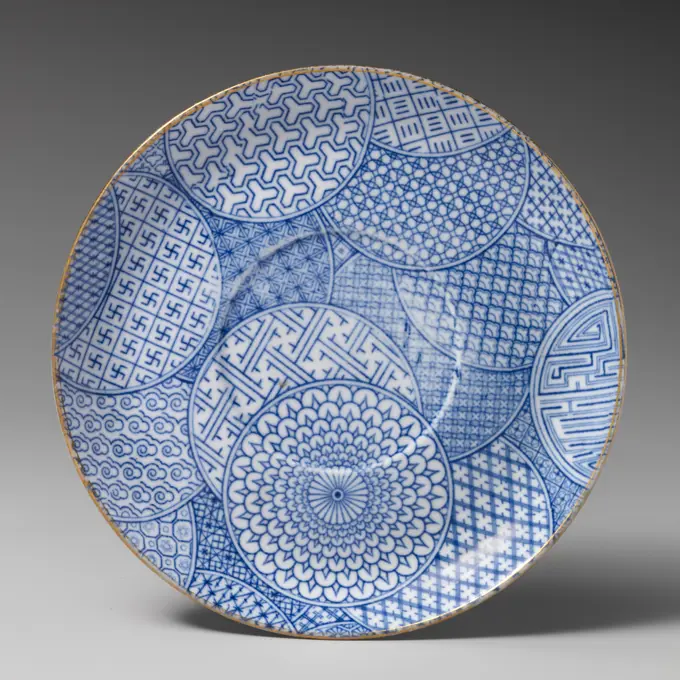
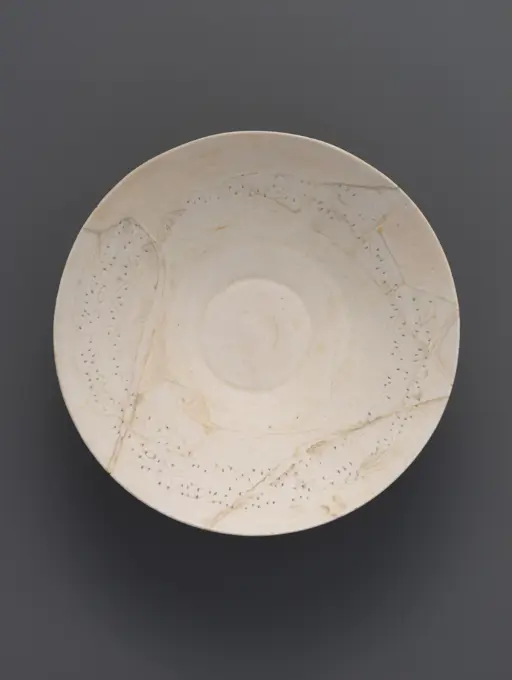
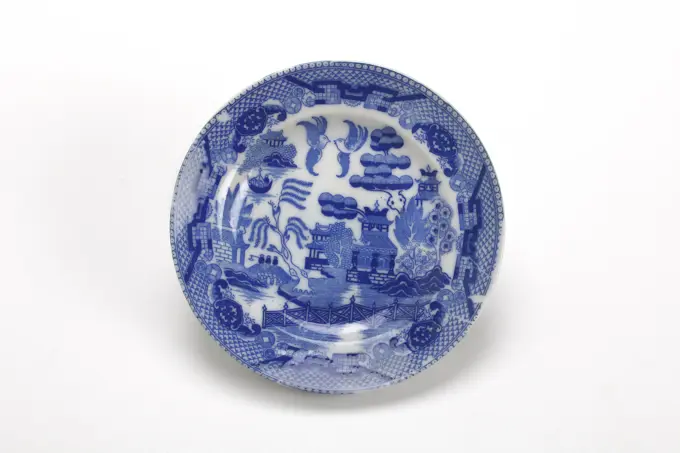
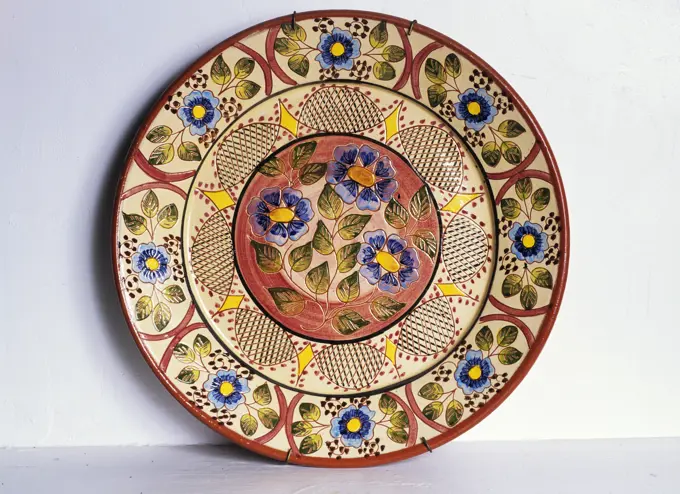
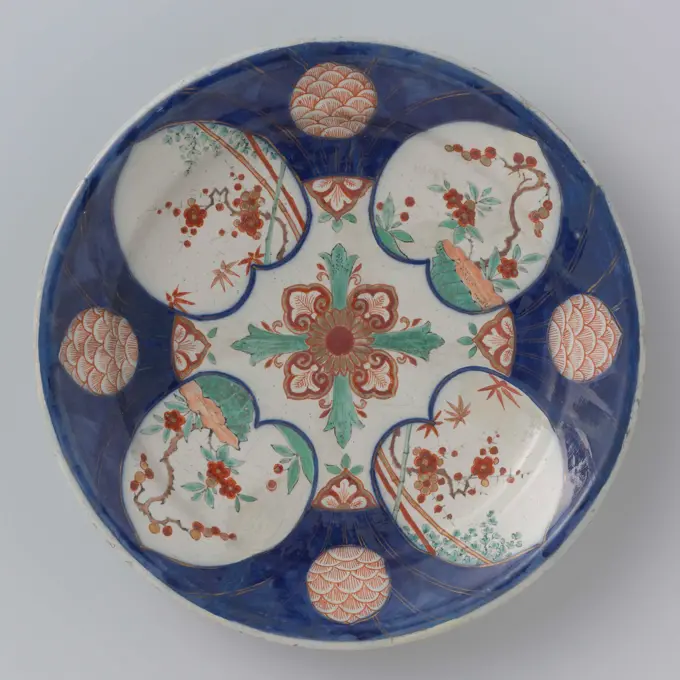
An assortment of beautifully decorated ceramic plates showcasing intricate designs, colors, and styles, from historical to modern patterns.

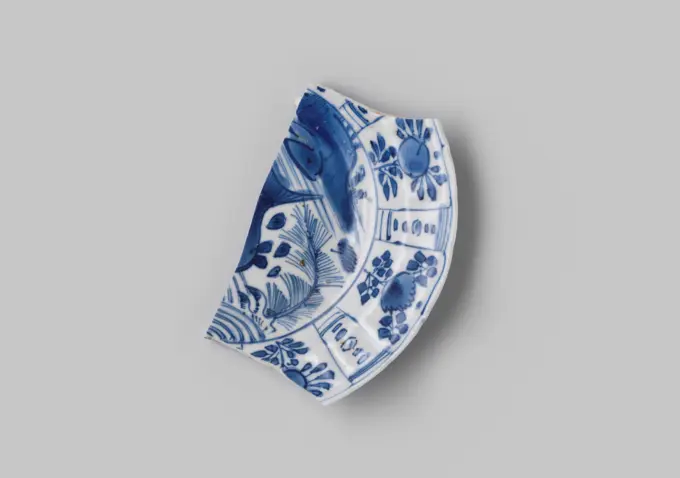
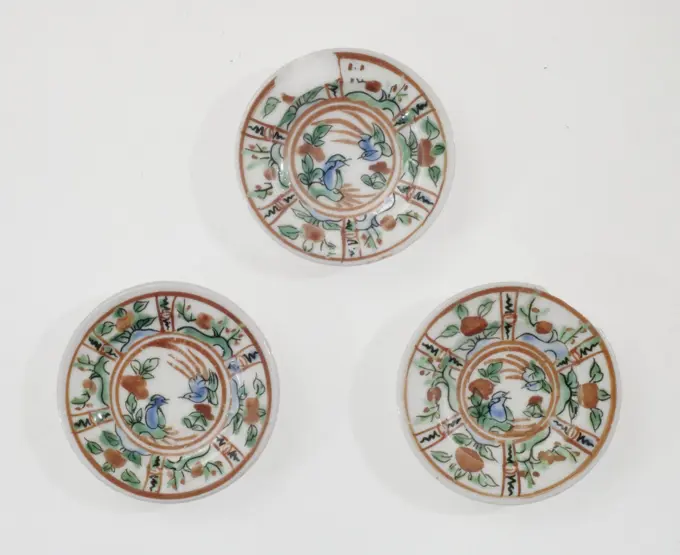
Fragment sign from V.O.C. ship De 'Witte Leeuw', Anonymous, Before 1613 plate (dishes) Sign from V.O.C. ship the 'Witte Leeuw' with a flat edge, decorated in underlaze blue, 90 present; Parts of the wall are missing. The shard is glassy white and has a lot of ingrained dirt. The bottom is glazed. The foot ring is faceted. More than 20 grains of oven sand have been found. The lip is scooped. In the flat a bird in a water landscape, surrounded by a flowering plant and a stylized cloud pattern. The show is surrounded by a star -shaped band with geometric motifs. On the wall and edge alternating wide and narrow fields filled with happiness symbols and flowering plants. Jingdezhen porcelain. bone china (material)   Sint-Helena
Fragment sign from V.O.C. ship De 'Witte Leeuw', Anonymous, Before 1613 plate (dishes) Sign from V.O.C. ship the 'Witte Leeuw' with a flat edge, decorated in underlaze blue, 90 present; Parts of the wall are missing. The shard is glassy white and has a lot of ingrained dirt. The bottom is glazed. The foot ring is faceted. More than 20 grains of oven sand have been found. The lip is scooped. In the flat a bird in a water landscape, surrounded by a flowering plant and a stylized cloud pattern. The show is surrounded by a star -shaped band with geometric motifs. On the wall and edge alternating wide and narrow fields filled with happiness symbols and flowering plants. Jingdezhen porcelain. bone china (material) Sint-Helena
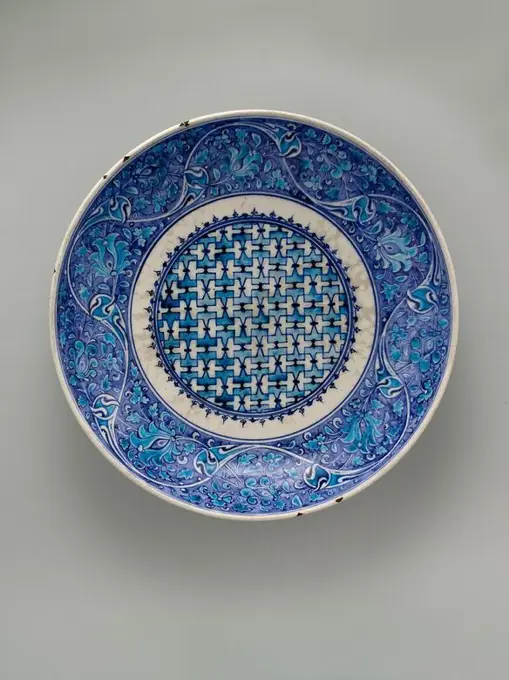
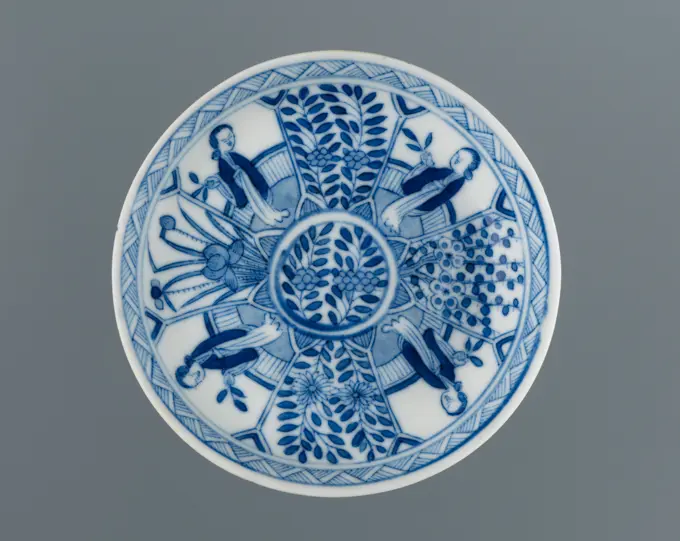
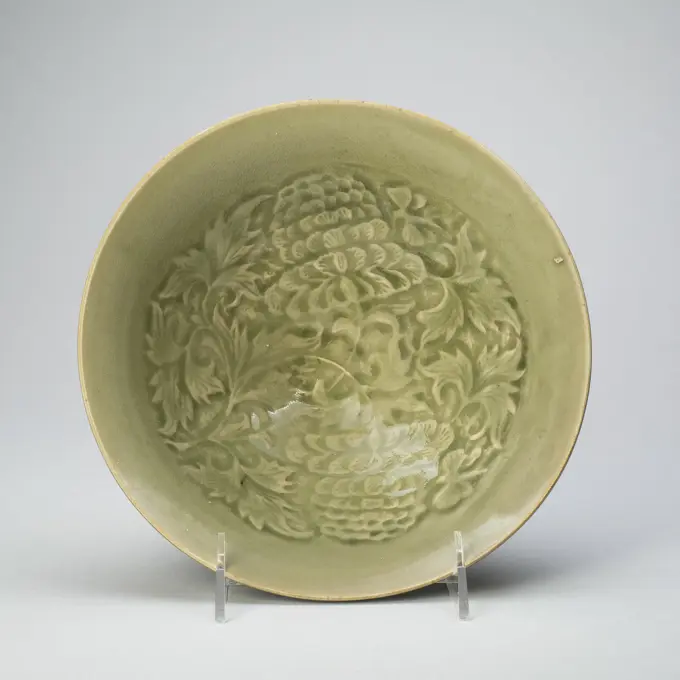
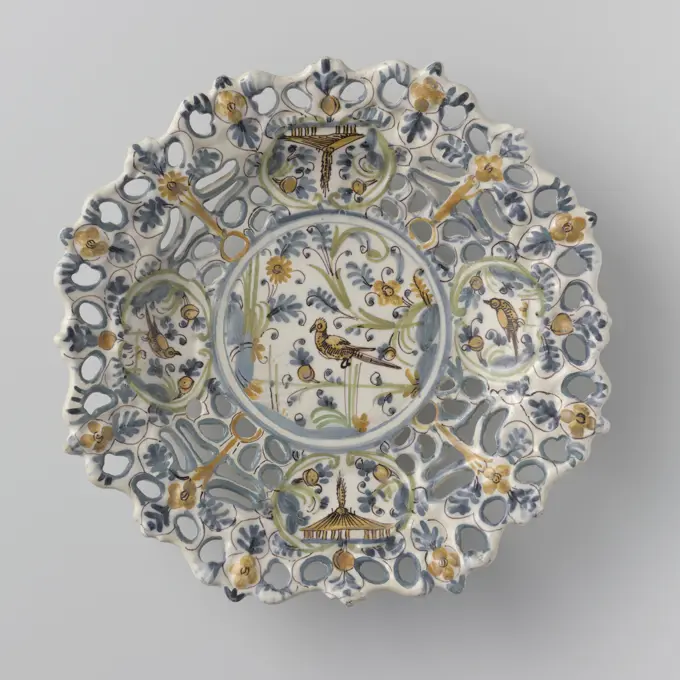
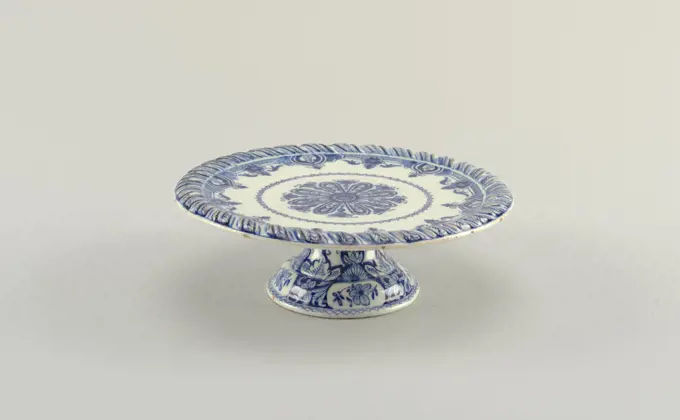
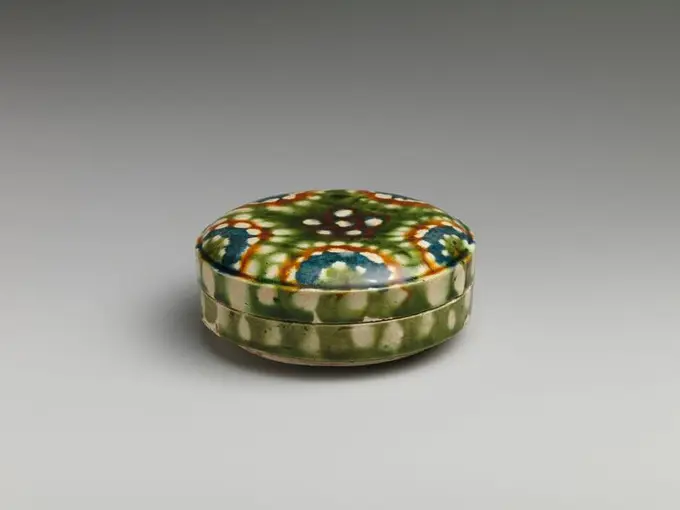
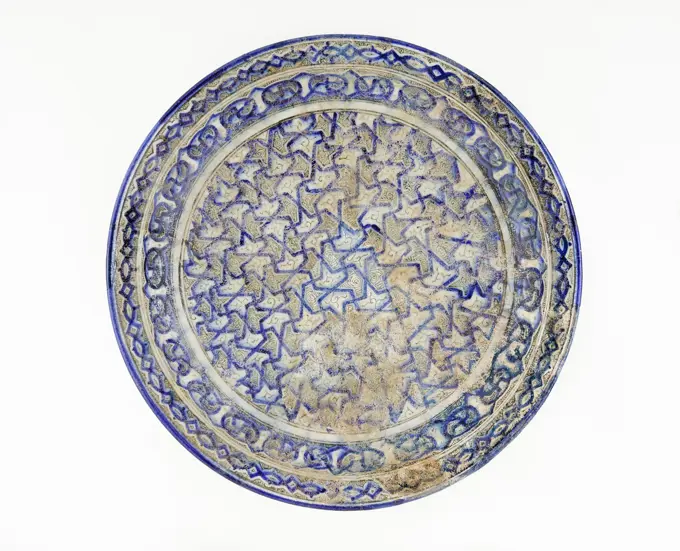
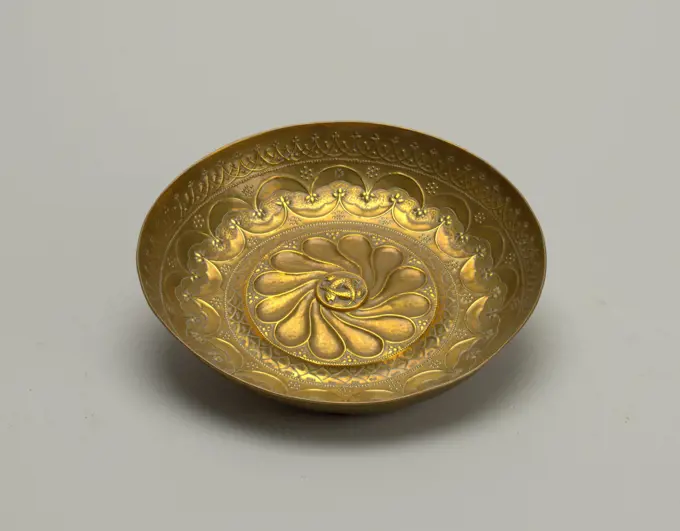
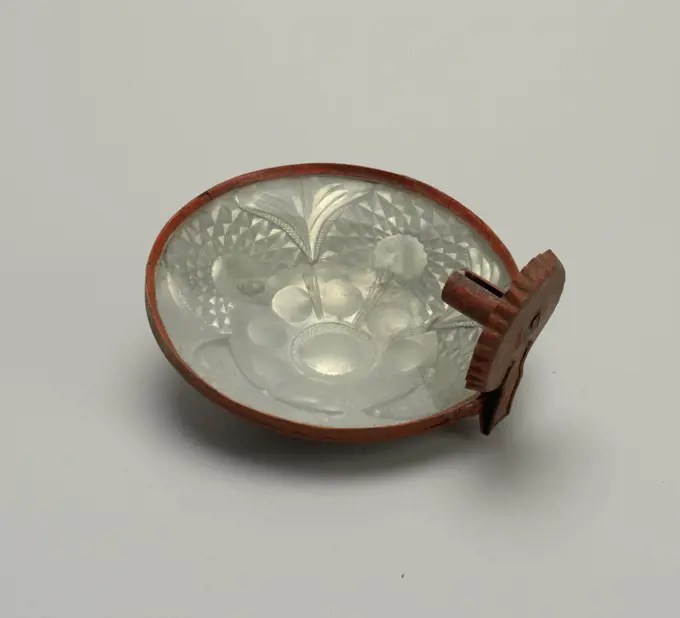
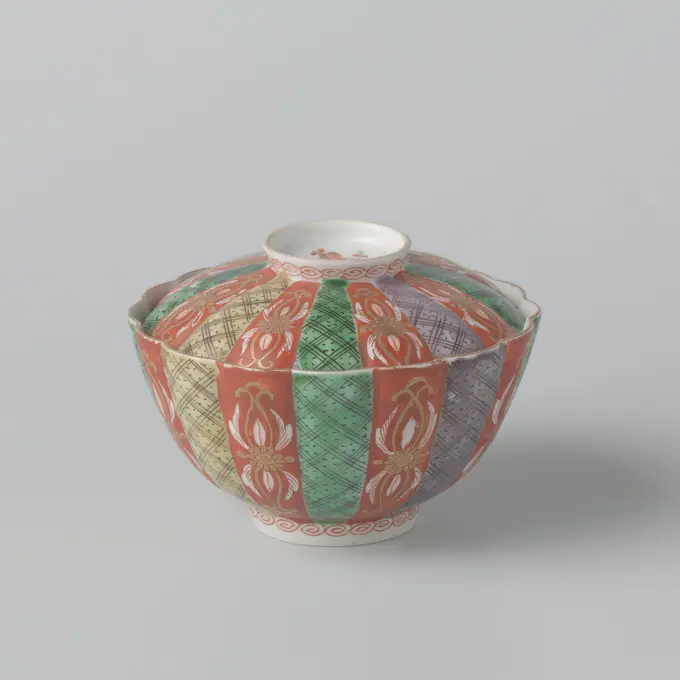
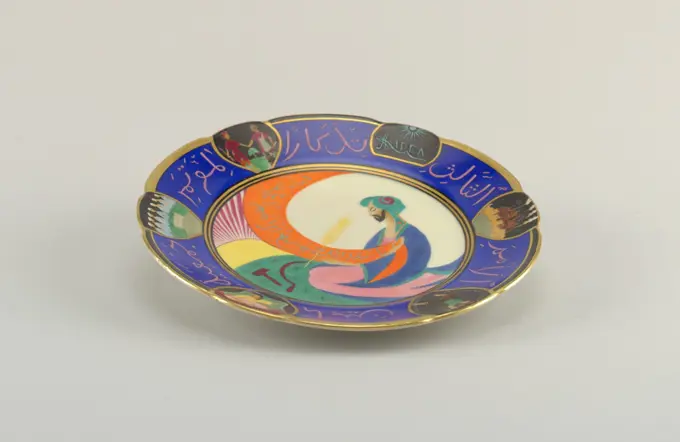
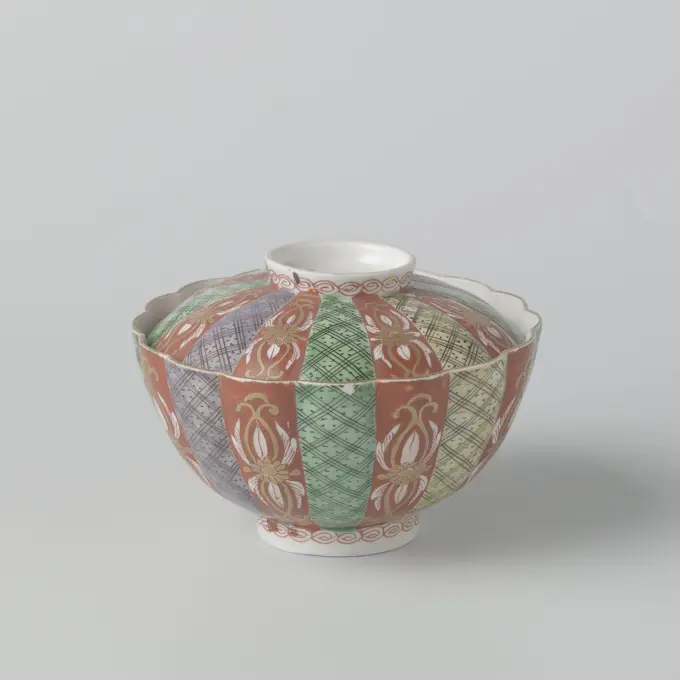
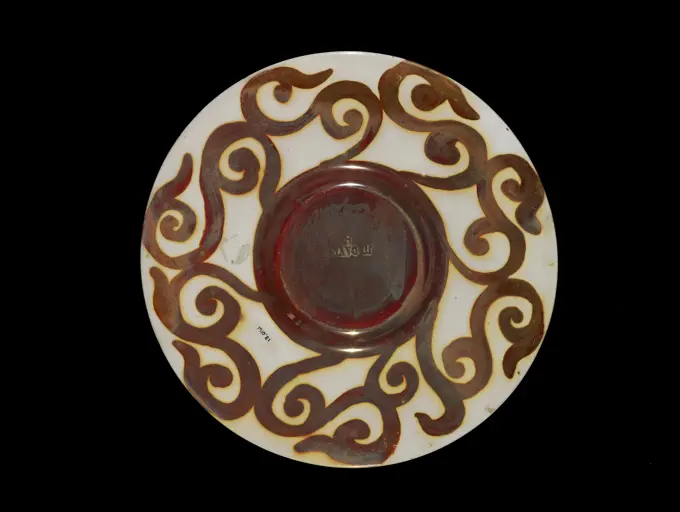
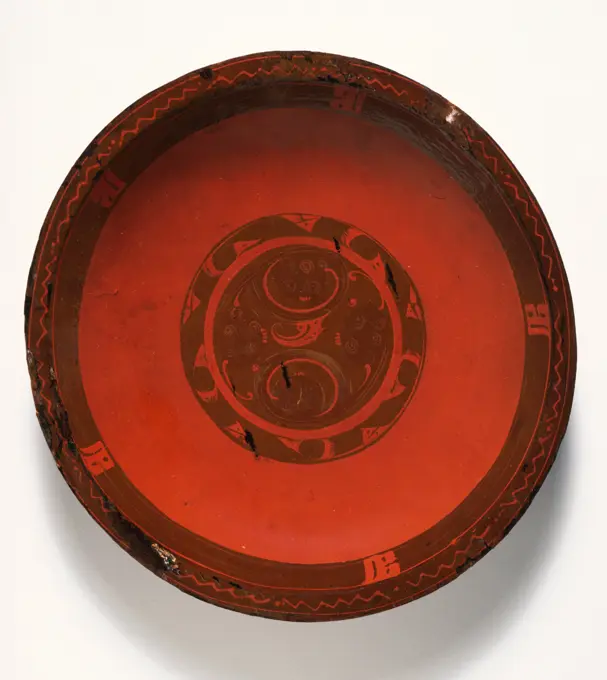
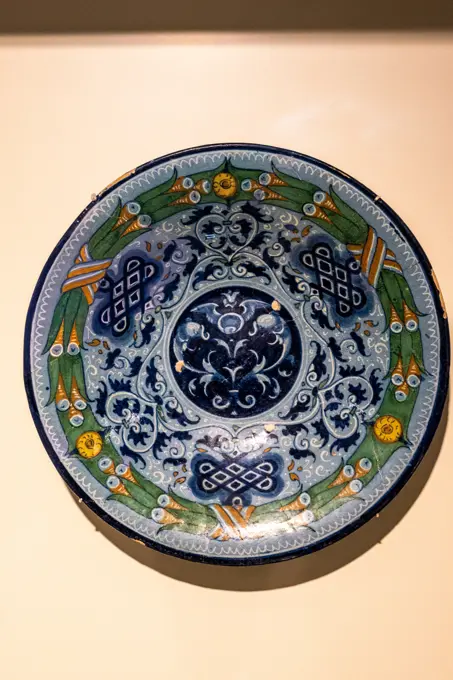
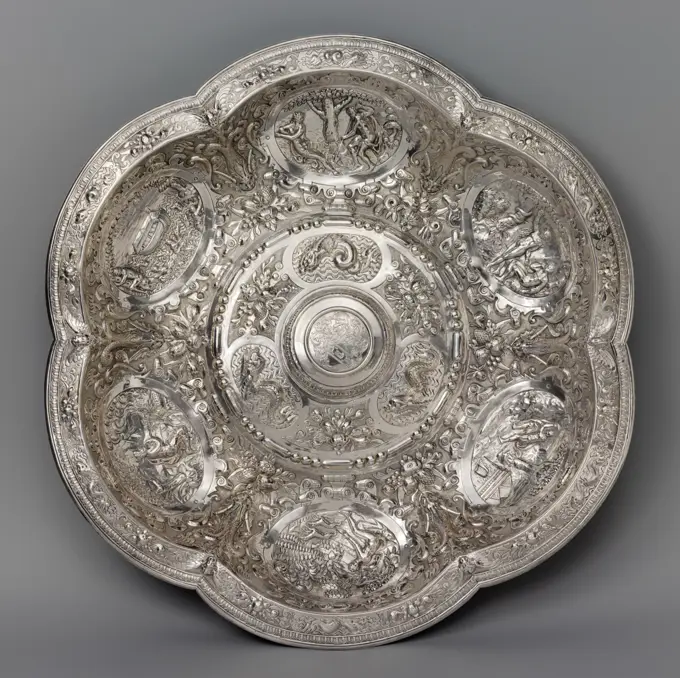
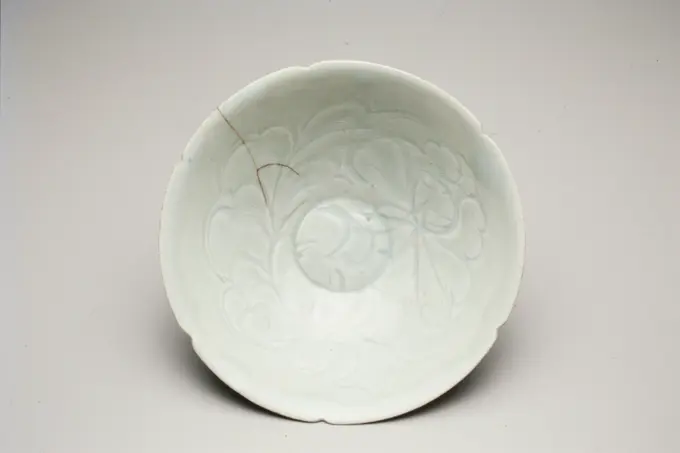
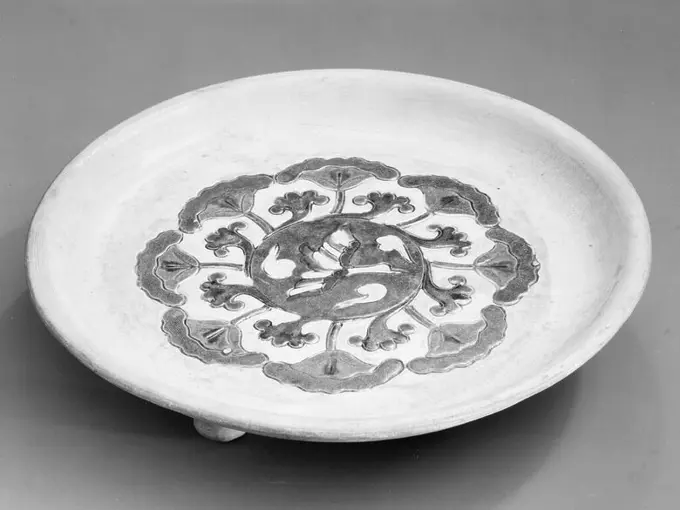
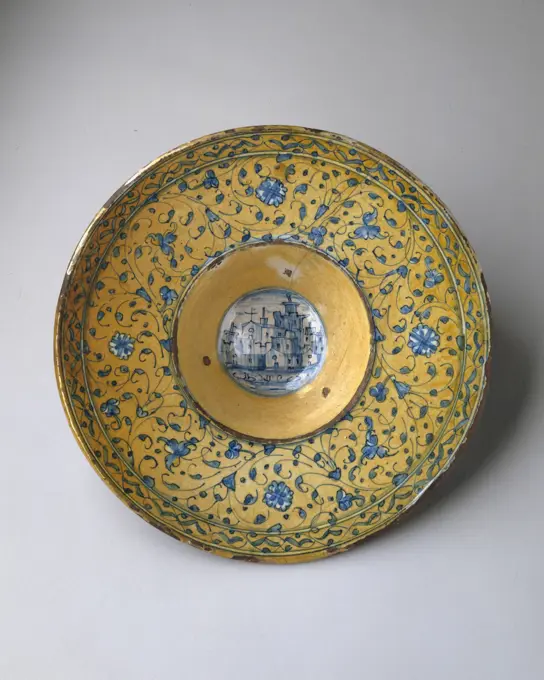
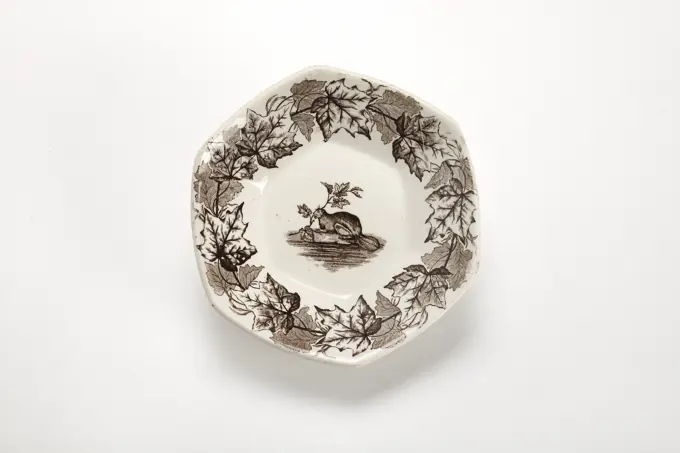
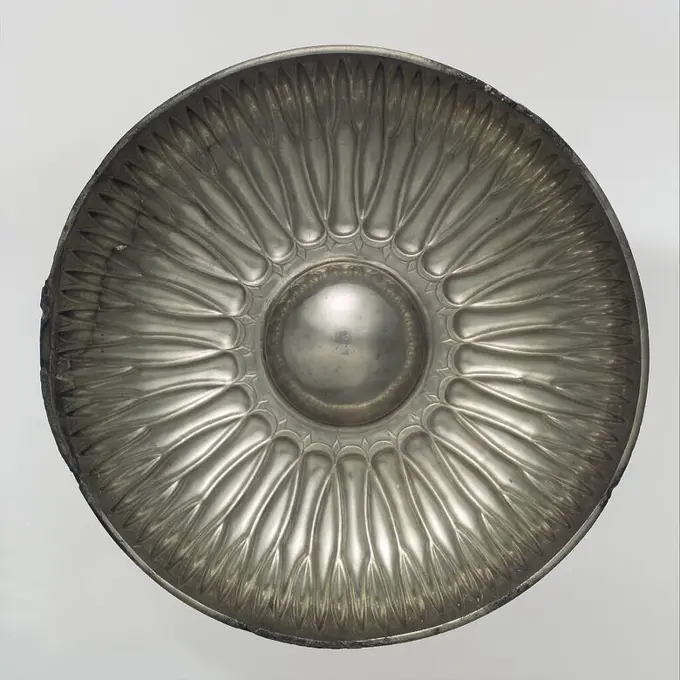
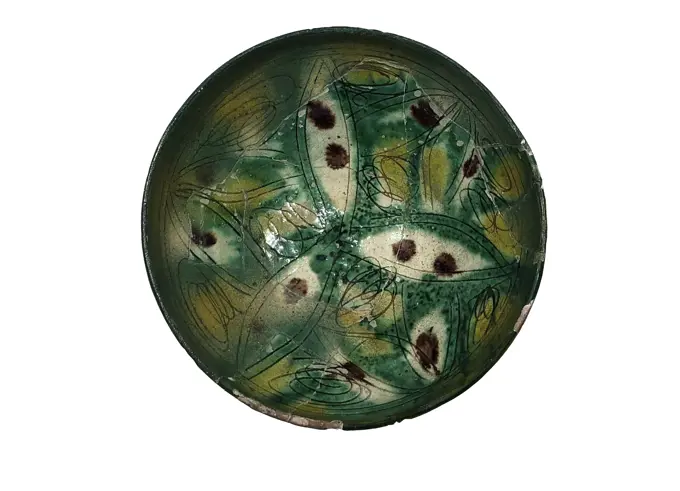
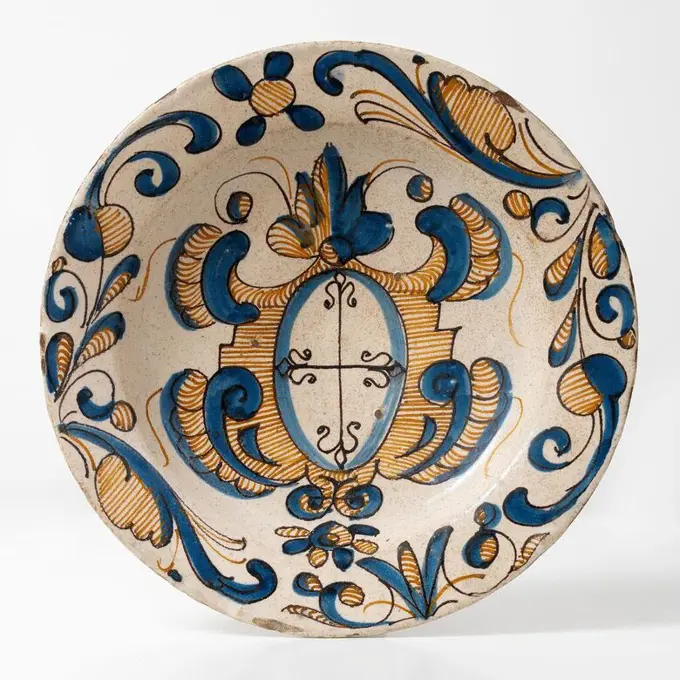
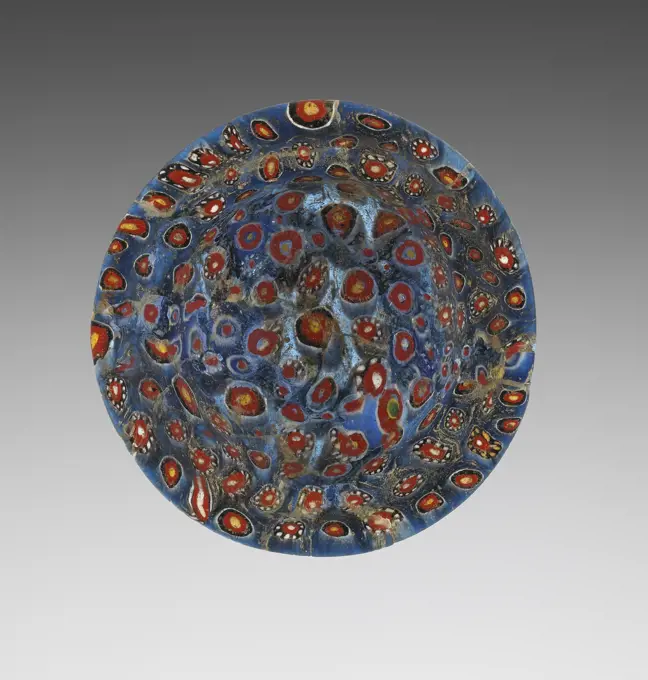
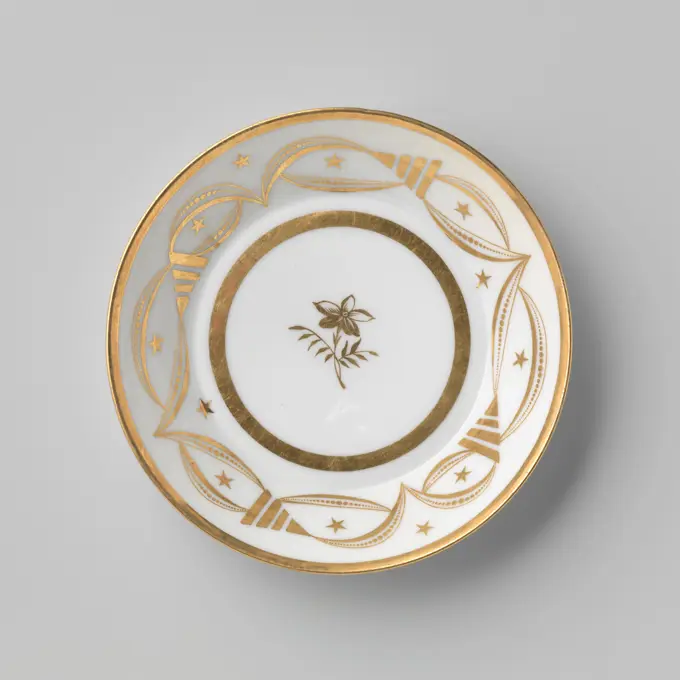
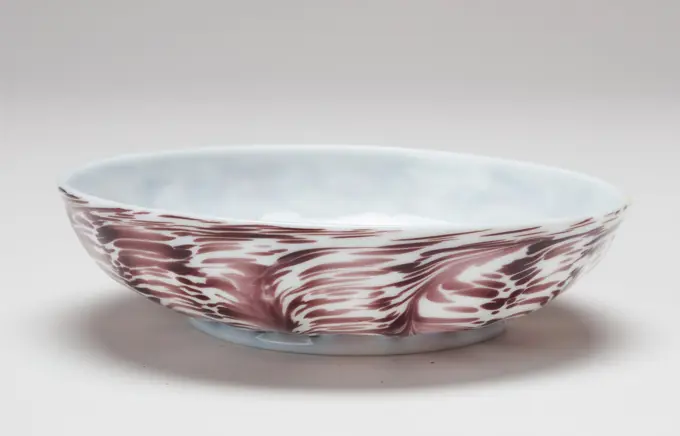
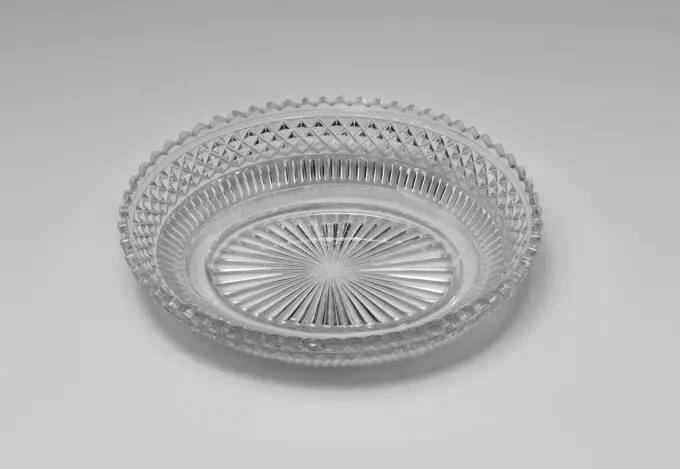
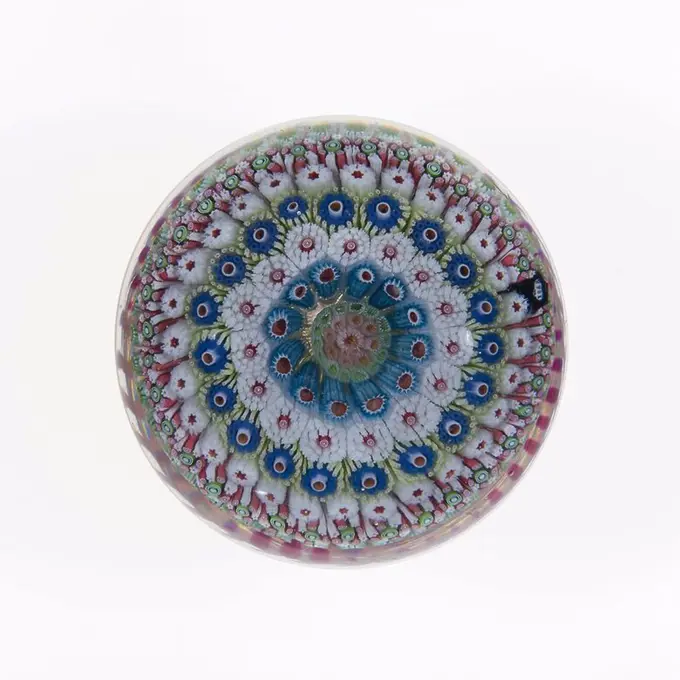
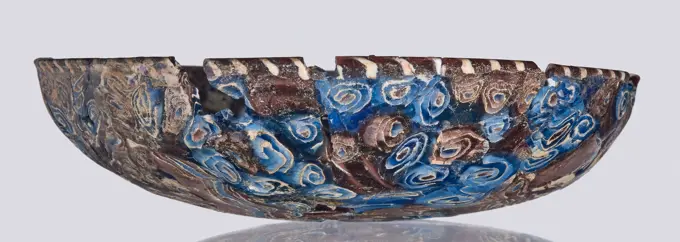
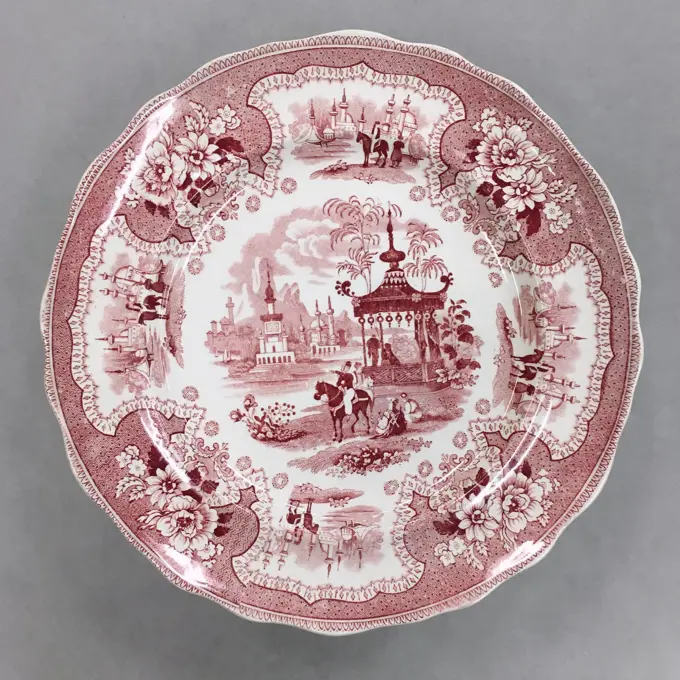
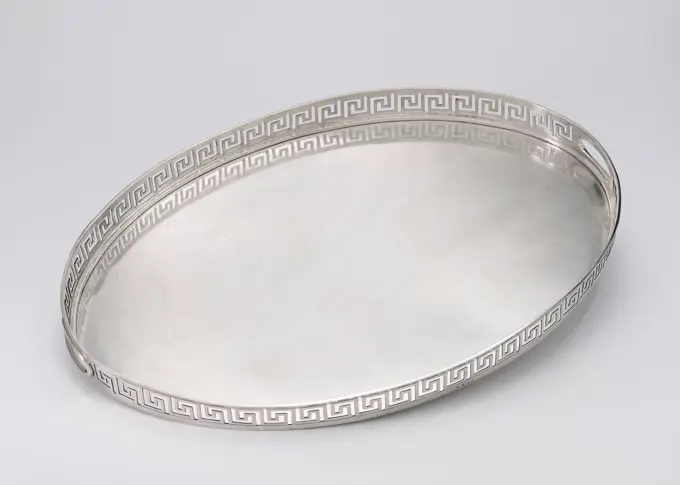
. Plate of Faïence. Multicolor painted with flower decorations. Memor with the monogram: A R.Dish. Dimensions: H. 3 in. (7.62 cm)Diam. 15 1/2 in. (39.4 cm). Date: mid-16th century.One of the most spectacular Iznik pieces in the Museum's collection, this saucer-shaped dish displays a palette of rich blue and bright turquoise characteristic of early Iznik ceramics. The floral scrolls on the cavetto are inspired by fifteenth-century Chinese celadon ware. Museum: Metropolitan Museum of Art, New York, USA.. Plate of Faïence. Multicolored painted with a Chinese water landscape and Lambrequins, in Imari colors.Talerzyk. unknown, craftsmanConical Bowl with Peony Scroll 1100-1150 China. Yaozhou ware; stoneware with underglaze molded decoration .Scale with openwork edge, anonymous, c. 1650 - c. 1680 Round scale of multi -colored painted faience. In the middle is a circle within which a bird is painted between branches. Four oval were painted on the wide openwork edge. A house is painted in two oval and a bird in two oval. The scale is marked. Savona earthenware. tin glaze. Round scale of multi -colored painted faience. In the middle is a circle within which a bird is painted between branches. Four oval were painted on the wide openwork edge. A house is painted in two oval and a bird in two oval. The scale is marked. Savona earthenware. tin glaze.Footed Salver, Metaale Pot de (the Metal Pot Factory), Tin-glazed earthenware, Flat circular top with raised gadrooned border at outer rim, on hollow stemmed domed base; painted in underglaze blue on white, on base with floral reserves on leafy border, on top with central rosette surrounded by scroll, lambrequin, and gadrooned borders, on underside with 4 groups of 4 dots., Delft, Netherlands, 1691-1724, ceramics, Decorative Arts, Salver, SalverPlate - Acadia Inconnu / UnknownFragment sign from V.O.C. ship De 'Witte Leeuw', Anonymous, Before 1613 plate (dishes) Sign from V.O.C. ship the 'Witte Leeuw' with a flat edge, decorated in underlaze blue, 90 present; Parts of the wall are missing. The shard is glassy white and has a lot of ingrained dirt. The bottom is glazed. The foot ring is faceted. More than 20 grains of oven sand have been found. The lip is scooped. In the flat a bird in a water landscape, surrounded by a flowering plant and a stylized cloud pattern. The show is surrounded by a star -shaped band with geometric motifs. On the wall and edge alternating wide and narrow fields filled with happiness symbols and flowering plants. Jingdezhen porcelain. bone china (material)   Sint-HelenaDish with Chrysanthemum Spray and Floral Scrolls. Thailand, Sawankhalok, late 14th century. Furnishings; Serviceware. Wheel-thrown stoneware with cream slip, underglaze brown painted decoration, and pale blue glazeBowl 12th-13th century. Bowl 447954Saucer-Dish With Flower Sprays And Model LED Flower Petals. Dish of porcelain with scalloped edge and round wall in which two rows of flower leaves in its landscaped, painted in underglaze blue. On the flat four flower branches in a double circle; around the circle two rows with flower leaf-shaped boxes filled with a loose flower branch; The edge with a decorative bond with geometric pattern; Three flower branches on the back. Marked on the bottom with an incense burner in a double circle. Two cracks in the wall. Blue White.Dish 1750 Japan. Dish. Japan. 1750. White porcelain decorated with blue under the glaze, polychrome enamels (Arita ware). Edo period (1615-1868). CeramicsBox with Abstract Design. Culture: China. Dimensions: H. 1 9/16 in. (4 cm); Diam. 3 5/8 in. (9.2 cm)H. (Lid) 11/16 in. (1.8 cm)H. (Body) 1 in. (2.5 cm). Date: early 8th century.Cobalt, a mineral that produces a brilliant blue color, was first introduced to China from West Asia in the early eighth century. It was quickly used in ceramics both in single color glazes and as an addition to the three-color glazes of the Tang dynasty. Museum: Metropolitan Museum of Art, New York, USA.Plate. Iran or Central Asia, 14th century. Ceramics. Fritware, underglaze-paintedDish, Keswick School of Industrial Art, 1884 - 1984, Repousséd brass, Circular, with concentric bands of ornament. At center, three fish., England, 1884-90, metalwork, Decorative Arts, DishLobed Dish with Overlapping Lotus Leaves. China. Date: 800 AD-899 AD. Dimensions: H. 2.5 cm (1 in.); diam. 13.8 cm (5 7/16 in.). Yue ware; stoneware with pale olive-green glaze and underglaze incised decoration. Origin: China. Museum: The Chicago Art Institute, Chicago, USA.Dish 1430-1470 Spanish. Dish 471806Saucer 1877 Worcester factory After the end of the Flight, Barr & Barr ownership of the Worcester factory in 1840, the firm went through a succession of owners and mergers before falling under the ownership of Kerr & Binns in 1852. During the partnership, the factory sought to rebuild its former eighteenth-century reputation in porcelain and known for Renaissance-inspired designs. With the establishment of the Royal Worcester Porcelain Company in 1862, the company gradually gained recognition for its Japanese-inspired designs, which formed part of Japonisme, a collective fascination with Japan that took place in Europe and the United States following the opening of Japanese markets to the West by Commodore Perry in 1853.. Saucer. British, Worcester. 1877. Bone china. Ceramics-PorcelainBowl 12th century. Bowl. 12th century. Composite body; incised and pierced. Attributed to Iran. CeramicsToy dessert plate - Inconnu / Unknown. Pottery wall plate with bright blue fond and multicolored ornaments. In the middle three leaves within a circle. Suspension holes in the foot ring, no glazed back, except at the brand.. Plate of faience, with yellow trim. Painted blue and with a scalloped edge.Plate, Fanny Levine, Glazed earthenware, Dish with bright yellow well; border of flattened natural-colored blossoms outlined in thick black on yellow ground., Boston, Massachusetts, USA, 1917, tiles, Decorative Arts, PlateDeep Dish second half 15th century Spanish. Deep Dish 471738Anonymous. Plate. Earthenware. 1790-1792. Paris, Carnavalet museum. 70955-55 Weapon, heart, speech, earthenware, decorative motif, revolutionary period, dishes, plateMedallion 19th century China. Medallion 70252Sconce and socket, Tin, glass, pewter, (A1) circular concave reflector made of tin discs, arranged in red, painted frame under glass; flat piece of tin with nail hold at back. (A2) removable socket in crimped tray which fits into slide-in frame. (B1) circular concave reflector made of pewter discs and triangles arranged in tin frame (painted red) under glass; flat tin piece at back with nail hole. (B2) removable candle socket in crimped tray whhich fits into slide-in frame., early 19th century, lighting, Decorative Arts, Sconce and socketDish with emblems. Dish of porcelain, decorated with golden emblems on dull blue ground.Fontainebleau (Atelier de, dit d'Avon). Flat. "Verni" land, transparent lead glaze, polychrome enamels. XVIIth century. Museum of Fine Arts of the City of Paris, Petit Palais. Faience, table service, dishes, XVIIth 17th XVII 17th 17th 17th century, dishSaucer, c. 1790. Wedgwood Factory (British). Jasper ware with relief decoration; diameter: 6.7 x 6.4 cm (2 5/8 x 2 1/2 in.).Dish from V.O.C.-ship De 'Witte Leeuw', Anonymous, Before 1613  Saucer from V.O.C. ship De 'Witte Leeuw', 95  present; Parts of the wall and the flat are missing. Large saucer with a flat edge and a scalloped lip, decorated in underlaze blue. In the flat two birds in a water landscape surrounded by a accolade -shaped tire filled with geometric motifs. On the wall and edge alternating wide and narrow fields with happiness symbols, flowering plants and bow work. The shard is glassy and has little ingrained dirt. The glaze is blue tinted. The soil is unglazed and the foot ring is straight, faceted and stands inside. Little oven sand was found. The lip is scooped. Jingdezhen porcelain. bone china (material)   Sint-HelenaCovered bowl with scrolls, diaper pattern and scattered flowers, anonymous, c. 1700 - c. 1749 Porcelain lid bowl with ribbed wall and lobed edge, painted on the glaze in red, green, yellow, eggplant, turquoise, black and gold. The outer wall of the bowl is divided into elongated compartments with alternating service and flower vines; Around the foot a tire with curl. A stylized flower on the bottom; The inner wall with five loose stylized flowers. Porcelain with email choices. Japan porcelain. glaze. gold (metal) vitrification / gilding / vitrification Porcelain lid bowl with ribbed wall and lobed edge, painted on the glaze in red, green, yellow, eggplant, turquoise, black and gold. The outer wall of the bowl is divided into elongated compartments with alternating service and flower vines; Around the foot a tire with curl. A stylized flower on the bottom; The inner wall with five loose stylized flowers. Porcelain with email choices. Japan porcelain. glaze. gold (metal) vitrification / Shield (Dhál). Culture: Indian, Gujarat. Dimensions: Diam. 16 15/16 in. (43 cm). Maker: Signed by Khooshal Dhunjee & Sons (Indian, Ahmedabad, 19th century). Date: ca. 1875.This shield is remarkably fine in quality, technique, and condition in comparison with other examples of Indian painted leather round shields in the Museum's collection (acc. nos. 36.25.586, .588, .593, and .608). It is also important for documentary purposes because the name and address of the shield painters are included on the reverse, placing this within the small group of Indian arms that can be connected with specific craftsmen or a place of production. On the bright red interior painted in gold letters it states: Khooshal Dhunjee & Sons / Painter and Shield makers / Dhalgarwada Street / City Ahmedabad / Bombay Presidency / India.This round convex leather shield is painted overall on the exterior with repeating floral patterns. In the center there is a stylized symmetrical leaf and blossom pattern painted in Dish. Dimensions: 14 1/2 in. (36.8 cm). Date: second half 15th century.This striking turquoise-and-black bowl belongs to a group of ceramics known as Kubachi ware. Named for a village in the Caucasus where this pottery was discovered in quantity, Kubatchi wares may have been produced elsewhere in northwestern Iran. This bowl-- painted in black under a pale turquoise glaze, with an incised pattern of spirals and floral elements--is among the earliest examples. The bowl displays an inscription of wishes for good fortune. Museum: Metropolitan Museum of Art, New York, USA.Saucer-dish with hunting scene, lotus scrolls and auspicious symbols, anonymous, c. 1700 - c. 1724 Porcelain bowl with round, ribbed wall and scalloped edge, painted in underlaze blue. On the flat a hunting scene with two armed riders in a landscape; the edge with a connected band of Lotusranken with Ruyi motif, between which the eight lucky symbols (chakra, shell, parasol, canopy, lotus, vase, fishing, infinite knot); The back with sixteen loose flower branches. Marked on the underside with the six-character brand of Keizer Chenghua in a double circle. Blue White. China porcelain. glaze. cobalt (mineral) painting / vitrification Porcelain bowl with round, ribbed wall and scalloped edge, painted in underlaze blue. On the flat a hunting scene with two armed riders in a landscape; the edge with a connected band of Lotusranken with Ruyi motif, between which the eight lucky symbols (chakra, shell, parasol, canopy, lotus, vase, fishing, infinite knot); The back with sixteen loose flower braWorkers of the World Unite Plate; Designed by Vkhutemas; Manufactured by Dulevo Porcelain Factory; enameled and gilt porcelainRound plate of hard-baked pottery; Staffordshire. Round plate of hard-baked pottery, covered with blue-black lead glazing with stains in light blue, green, tan and manganese. The edge is embossed with fields alternately smooth and filled with grille. On the trap fields alternately an eagle, a trophy and the portrait of Frederik the Great. On the smooth fields the inscriptions success to the King, King of Prussia, and His Forces. The sign belongs to five signs (BK-1987-40-A to BK-1987-40-F).Dish with Fluted Sides and Flowering Plants near a fence and floral scrolls. Dish of porcelain with ribbed wall and flat edge, painted in underglaze blue and on the glaze red and gold. On the flat a medallion with a flowerpot. On the medallion four times a peony rank; Between the tights four scalloped cartouches with flowering plants behind a fence. The ribs are colored differently with a flower branch in gold on the blue. The edge with a blue and a red band. Nine preen on the bottom. Imari.Plate, States with Portrait of Washington, America blindfolded, and Independence kneeling and a view of low two-story structure, probably the WhiteHouse. Manufacturer: James and Ralph Clews, British, active 1817-35Honorand: George Washington, American, 1732-1799, LL.D. 1781Covered bowl with scrolls, diaper pattern and scattered flowers, anonymous, c. 1700 - c. 1749 Porcelain lid bowl with ribbed wall and lobed edge, painted on the glaze in red, green, yellow, eggplant, turquoise, black and gold. The outer wall of the bowl is divided into elongated compartments with alternating service and flower vines; Around the foot a tire with curl. A stylized flower on the bottom; The inner wall with five loose stylized flowers. The lid with the same decoration; A prunus branch within the ring -shaped lid button. Porcelain with email choices. Japan porcelain. glaze. gold (metal) vitrification / gilding / vitrification Porcelain lid bowl with ribbed wall and lobed edge, painted on the glaze in red, green, yellow, eggplant, turquoise, black and gold. The outer wall of the bowl is divided into elongated compartments with alternating service and flower vines; Around the foot a tire with curl. A stylized flower on the bottom; The inner wall with five loose stylized flowerSaucer. Worcester Royal Porcelain Company; Worcester, England, founded 1751. Date: 1878. Dimensions: H. 2.4 cm (15/16 in.); diam. 12.4 cm (4 7/8 in.). Soft-paste porcelain, polychrome enamels and gilding. Origin: Worcester. Museum: The Chicago Art Institute, Chicago, USA.Underside view. Sunflowers, 1881. Earthenware dish. Designer: William De Morgan. Manufacturer: John Heath DavisFragment sign from V.O.C. ship De 'Witte Leeuw', Anonymous, Before 1613 plate (dishes) Fragment sign from V.O.C. ship De 'Witte Leeuw', 30 present. Jingdezhen bone china (material)   Sint-HelenaDish (Pan) with Spirals. China, Western Han dynasty, 206 B.C.-A.D. 25. Furnishings; Serviceware. Lacquer on wood core with brown and red painted decorationFragment of a dish, painted with tulips, anonymous, c. 1675 - c. 1725 Fragment of a dish of multicolored painted majolica. The fragment is painted with tulips in the colors blue, orange and green. The fragment was dug up in London (Middlesex Street). England earthenware. tin glaze. lead glaze majolica Fragment of a dish of multicolored painted majolica. The fragment is painted with tulips in the colors blue, orange and green. The fragment was dug up in London (Middlesex Street). England earthenware. tin glaze. lead glaze majolicaSaucer-dish with Pearl Chasing Dragons Against a Green Ground. Dish of porcelain with round wall, painted in underglaze blue and on biscuit green and eggplant. The dish is covered with a green glaze with in reserve pearl southying five-handed dragons and flames. Marked on the underside with the six character mark of Emperor Kangxi in a double circle. Email sur biscuit.Mallorca, Balearic Islands, Spain.Saucer 1832 Sèvres Manufactory French. Saucer 202623PORTUGUESE HANDPAINTED POTTERY LISBON PORTUGALBowl with Lotus Design 1115-1234 China. Yaozhou ware; stoneware with underglaze carved and incised decoration .. Scale of porcelain with sloping, octagonal wall, painted in underglaze blue. On the flat a stylized chrysanthemum surrounded by eight radiating boxes filled with various flowering plants on a rock with birds; The wall divided into eight compartments with different flower branches on a rock and birds; The edge with a geometric motif. The rear side divided into eight compartments with fruit branch and bird. Marked on the bottom with a shell in a double circle. Blue White.Saucer with a grapevine, anonymous, c. 1775 - c. 1799  Porcelain saucer with a straight wall, painted on the glaze in blue and gold. On the flat a gold medallion with entry decoration, surrounded by gold and blue tires. The inner wall with a band with a grape vine and gold and blue tires. A golden line on the outer edge and above the foot. Marked on the underside with X. Paris porcelain. glaze. gold (metal) painting / gilding / vitrificationPuzderko z nakrywką. unknown, craftsmanMaker's Mark IV with a star below, Basin, 1618, silver.Dish 17th-18th century. Dish 454760Bowl, 12th-13th century, 2 5/8 x 7 7/8 in. (6.7 x 20 cm), Ceramic, celadon glaze, China, 12th-13th century, This delicate bowl features a fluted rim and an interior floral design carved under celadon glaze. Cutting into the bowl is a forked crack, which has been filled with gold. This form of ceramic repair is not a Chinese tradition, and indicates that this work was a piece of export ware that was likely mended in Japan using a technique known as kintsugi, where cracks are mended by filling them with lacquer and then sprinkling the repair with gold. It is not known when this repair was made, but its meticulousness expresses how China's neighbors prized her porcelain wares.Tray. Culture: China. Dimensions: H. 2 3/8 in. (6 cm); Diam. 11 3/8 in. (28.9 cm). Date: 8th century.The shape of this tray emulates silver examples imported from either the Sasanian empire (224-651) in present-day Iran or the trading nation of Sogdia in present-day Uzbekistan. The pattern at the center of the tray was impressed while the clay was still soft, then splashed with three colors (sancai) of glaze that first appeared in funerary ceramics of the late seventh century. The addition of blue to the standard beige, green, and amber palette dates this tray to the eighth century when that color was first used. Museum: Metropolitan Museum of Art, New York, USA.Dish. Culture: American. Dimensions: 2 1/2 x 11 in. (6.4 x 27.9 cm). Manufacturer: American Pottery Manufacturing Company (1833-ca. 1854). Date: 1833-50. Museum: Metropolitan Museum of Art, New York, USA.Dish, painted with the crocus decor, Meisser Porzellan Manufaktur, 1896 Dish of painted porcelain. The dish is painted in green and brown. The dish is marked. Float porcelain Dish of painted porcelain. The dish is painted in green and brown. The dish is marked. Float porcelainDish made of porcelain with multicolored decoration in kaki monitor style (blossom branches and rock), anonymous, c. 1690 - c. 1710 Porcelain dish, with multicolored decoration in kaki monitor style (upper glaze emails green, blue, black and iron red) of flower branches and rocks. Arita (possibly) porcelain Porcelain dish, with multicolored decoration in kaki monitor style (upper glaze emails green, blue, black and iron red) of flower branches and rocks. Arita (possibly) porcelainCovered Bowl With Scrolls, Diaper Pattern and Scattered Flowers. Lid of lid cup made of porcelain with ribbed wall and lobed edge, painted on the glaze in red, green, yellow, eggplant, turquoise, black and gold. The outer wall of the bowl is divided into elongated compartments with alternating napkin and flour rinks; Around the button a band with curl work. A stylized flower on the inside; The inner wall with five loose stylized flowers. Within the annular lid knob a prunus branch. Porcelain with emailing.Box. Possibly England. Date: 1865-1875. Dimensions: Diam. 2 cm (3/4 in.). Silver and silver gilt. Origin: England. Museum: The Chicago Art Institute, Chicago, USA.Dish (tondino) ca. 1570-80 Italian, Montelupo. Dish (tondino). Italian, Montelupo. ca. 1570-80. Maiolica (tin-glazed earthenware). Ceramics-PotteryLazio Roma Rome SS. Giovanni e Paolo, Museum18. Hutzel, Max 1960-1990 Medieval: Ceramic fragments, sculptural fragments, fresco fragments, inscribed tomb markers. Houses one of the best collections of Malagan medieval ceramics for casting wall monuments, copies of which are housed in campanile. Specific Location: Museum Antiquities: Ceramic fragments, sculptural fragments, architectural fragments Object Notes: Basilica has separate record and is filed separately. German-born photographer and scholar Max Hutzel (1911-1988) photographed in Italy from the early 1960s until his death. The result of this project, referred to by Hutzel as Foto Arte Minore, is thorough documentation of art historical development in Italy up to the 18th century, including objects of the Etruscans and the Romans, as well as early Medieval, Romanesque, Gothic, Renaissance and Baroque monuments. Images are organized by geographic region in Italy, then by province, city, site complex and monument.Decorative plate; Manufaktura M.P.Radziwi  A in Nieborów; 1886-1897 (1886-00-00-1897-00-00);Dish with a young woman, anonymous, c. 1515 - c. 1525 Round dish of multi -colored painted majolica, with a deepened flat. On the flat an image of a young woman desired to left. Left of her a banderolle with the inscription: VM Bel Moririre TVTA La Vita Onora (a clean death honors the entire life). A scaly motif on the edge. The dish is painted in blue and Goudluster. Confuse earthenware. tin glaze. lead glaze. luster glaze majolica Round dish of multi -colored painted majolica, with a deepened flat. On the flat an image of a young woman desired to left. Left of her a banderolle with the inscription: VM Bel Moririre TVTA La Vita Onora (a clean death honors the entire life). A scaly motif on the edge. The dish is painted in blue and Goudluster. Confuse earthenware. tin glaze. lead glaze. luster glaze majolicaDish with edge of blue painted faience, Anonymous, c. 1690 - c. 1740Plate. unknown, craftsmanBowl late 9th-early 10th century Various types of arcade-like configurations decorate the interior walls of a great many splashed and sgraffiato pieces from Nishapur. The lozenge lattice in the center is also common.. Bowl 449354Saucer with petal-shaped panel around a central medallion, filled with flower sprays, anonymous, c. 1750 - c. 1774 Porcelain saucer, painted in underly glaze blue and on the glaze red and gold. On the flat of the dish a medallion with flour, around the medallion six petal-shaped compartments filled with flower branches; A flower vend between the courses; Three loose flowers on the back. Chinese Imari. China porcelain. glaze. cobalt (mineral). gold (metal) painting / gilding / vitrification Porcelain saucer, painted in underly glaze blue and on the glaze red and gold. On the flat of the dish a medallion with flour, around the medallion six petal-shaped compartments filled with flower branches; A flower vend between the courses; Three loose flowers on the back. Chinese Imari. China porcelain. glaze. cobalt (mineral). gold (metal) painting / gilding / vitrificationSake-kom, anonymous, 1825 - 1875 Sake scale in red-leak with a decoration in gold lacquer of the scripture for "long life". Japan wood (plant material). lacquer (coating) Sake scale in red-leak with a decoration in gold lacquer of the scripture for "long life". Japan wood (plant material). lacquer (coating)Bowl - Maple Thomas Furnival & Sons Thomas Furnival & SonsBowl with a radiating petal design. Culture: Phrygian or Lydian. Dimensions: Diam. 6 3/8 in. (16.7 cm). Date: ca. 8th-6th century B.C..The Phrygians ruled in Central Anatolia, from about 800 to 700 B.C., from their capital at Gordion. King Midas, known in myth to have turned all he touched to gold, may have been the person buried in the great tumulus at Gordion. That tomb contained many drinking bowls made of brass (which in antiquity would have had a bright golden color) with a raised knob in the center allowing it to be held comfortably from underneath.This silver bowl, with a fine petal design with graceful stems radiating from a central raised knob, is a variation on many of the drinking bowls from the Gordion excavations. Thus, there is a possibility that this vessel was made by the Phrygians. But the Lydians, who ruled in western Anatolia from 685 to 547 B.C., admired objects of Phrygian manufacture, and this silver vessel may have in fact been made by the Lydians. Museum: MetrBowl 9th-10th century. Bowl. 9th-10th century. Earthenware; white slip, incised and splashed with polychrome glazes under transparent glaze (sgraffito ware). Excavated in Iran, Nishapur. CeramicsPlate, XVIth Century - XVIIth Century, Pottery (earthenware decorated in blue, black and orange, with the shield of the order of Calatrava, surrounded by scrolls and vegetal motifs), of Talavera de la Reina or Puente del Arzobispo (Toledo), Diameter: 34.7 cm. Museum: Museo Fundación Francisco Godia, Barcelona, Cataluña, España.Fontainebleau (Atelier de, dit d'Avon). Flat. "Verni" land, transparent lead glaze, polychrome enamels. XVIIth century. Museum of Fine Arts of the City of Paris, Petit Palais. Faience, table service, dishes, XVIIth 17th XVII 17th 17th 17th century, dishScale, multicolored painted with a kakiemon decor, meissener porzellan manufaktur, c. 1730 Round scale of painted porcelain. The scale has a small mirror and a ribbed edge. The scale is painted with a roaring lion on the left and bound hedges with bamboo and prunus on the right. The scale is marked. Float porcelain Round scale of painted porcelain. The scale has a small mirror and a ribbed edge. The scale is painted with a roaring lion on the left and bound hedges with bamboo and prunus on the right. The scale is marked. Float porcelainPaperweight 1800-1899 France. This paperweight uses a traditional glass-making technique called millefiori to great effect. Italian for ìone thousand flowers,î millefiori was first developed in fifteenth-century Venice. In the nineteenth century, French glassmakers revived the technique with a cultural twist. Arranged to evoke traditional French gardens such as the Tuileries in Paris, paperweights like this example brought a little of this landscaping magic indoors.From the late 1840s to early 1860s, French manufacturers of fine glass and crystalósuch as Baccarat (Alsace), Clichy (Paris), and Saint-Louis (Lorraine)ócatered to the vast public enthusiasm for beautiful yet functional desk accessories. Paperweights, which were designed to secure loose papers against drafts, were among their most popular products.. Glass . Baccarat GlassworksPlate of multicolored painted majolica, anonymous, c. 1575 - c. 1600 Round plate of multi -colored painted majolica. The plate is painted with fruits and leaves inside a double blue circle. Painted in the colors blue, green, orange and yellow. Netherlands earthenware. tin glaze. lead glaze majolica Round plate of multi -colored painted majolica. The plate is painted with fruits and leaves inside a double blue circle. Painted in the colors blue, green, orange and yellow. Netherlands earthenware. tin glaze. lead glaze majolicaPlate. unknown, craftsmanPaperweight 1845-1905 Sandwich. Glass . Boston and Sandwich Glass CompanyMosaic Bowl; Eastern Mediterranean; end of 1st century B.C. - 1st century A.D; Glass; 4.2 x 9 cm (1 5,8 x 3 9,16 in.)Saucer with an ornamental border, anonymous, c. 1800 - c. 1824 Porcelain dish with a straight wall, painted on the glaze in gold. On the flat a gold medallion with a flower branch. The inner wall is with a pendulum of stars, half moon shapes with dots and triangles and a golden edge. Marked on the bottom with g. Empire. France porcelain. glaze. gold (metal) painting / gilding / vitrification Porcelain dish with a straight wall, painted on the glaze in gold. On the flat a gold medallion with a flower branch. The inner wall is with a pendulum of stars, half moon shapes with dots and triangles and a golden edge. Marked on the bottom with g. Empire. France porcelain. glaze. gold (metal) painting / gilding / vitrificationDish 1480-1500 Italian, Deruta. Dish. Italian, Deruta. 1480-1500. Maiolica (tin-glazed earthenware). Ceramics-PotteryWilliam L Antrim, Pa German Pie Plate, c 1938 Pa. German Pie PlatePaperweight 1843-1860 Lunéville. Technological improvements to optical scientific instruments in the mid-nineteenth century spurred a veritable obsession across Europe with identifying and classifying the natural world. Amateur botanists were eager to collect and preserve floral specimens, which they intently researched and catalogued. In response to this broad appeal, French glassmakers made paperweights that portrayed the very botanical subjects that were so enthusiastically sought. Many weights represented specimens with horticultural correctness, but others were entirely fanciful creations. Paperweights like this example speak to the periodís fascination with taxonomic systems.From the late 1840s to early 1860s, French manufacturers of fine glass and crystalósuch as Baccarat (Alsace), Clichy (Paris), and Saint-Louis (Lorraine)ócatered to the vast public enthusiasm for beautiful yet functional desk accessories. Paperweights, which were designed to secure loose papers against drafts,Saucer, 18th century, 1 3/8 x 5 1/4 x 5 1/4 in. (3.5 x 13.34 x 13.34 cm), Glass, Switzerland, 18th centuryFragment majolica dish, blue on white, Italian-looking tendrils, dish plate crockery holder soil find ceramic earthenware glaze, majolica Cooked on prunes. Italian decor archeology Italy Rotterdam serving food decorate archaeological find in the soil Rotterdam 1940.Oval Dish 1818 Pellatt & Green William Bayard (1761-1826) commissioned this table service (2008.594.1-.53) in 1818 for his daughter Harriet (1799-1875) and her husband Stephen Van Rensselaer IV (1789-1868) from Pellatt & Green, Londons premier glasshouse. The fine lead glass and deep Regency cutting would have created a brilliant sparkle in their candlelit dining room, in Albany, New York. The set originally included dozens of drinking glasses, for claret, ale, and champagne, as well as decanters, wine coolers, tumblers, and finger glasses, all “elegantly cut in diamonds & Rings” according to the surviving bill of sale (2008.594.54a,b). In addition to its elegance and quality, the service is extremely rare in its documentation to the specific American family who owned it and to the English glasshouse that made it.. Oval Dish 20097. Bin of pottery, decorated with stylized floral motifs. Signature: stamp; 12 / G; 1070; A.P. and 'loose'. To design th.a.c. Colenbrander.Tray with Design of Dragons in Waves 17th-18th century Japan. Tray with Design of Dragons in Waves. Japan. 17th-18th century. Carved red lacquer (tsuishu). Edo period (1615-1868). LacquerPaperweight. Saint-Louis; France, founded 1767. Date: 1848. Dimensions: H. 6.6 cm (2 3/8 in.) Diam. 8.6 cm (3 3/16 in.). Glass. Origin: France. Museum: The Chicago Art Institute, Chicago, USA. Author: Compagnie de Saint Louis.Tea Bowl andSaucer.   Maker: Worcester Porcelain Manufactory, British, founded 1751Dish with stylized flower scrolls 18th century China. Dish with stylized flower scrolls. China. 18th century. Porcelain painted in underglaze cobalt blue and café-au-lait glaze (Jingdezhen ware). Qing dynasty (1644-1911), Kangxi period (1662-1722). CeramicsPlate.   Maker: I. Curtis, American, ca. 1818-1825Czarka. warsztat egipski, workshopPlate, Palestine” Pattern.   Maker: William Adams and Sons, British, 1819-1863Oval classicist tray; Skalski, Józef (Ca 1764-1812); 1790-1795 (1790-00-00-1795-00-00);Paperweight 1840-1865 France. Technological improvements to optical scientific instruments in the mid-nineteenth century spurred a veritable obsession across Europe with identifying and classifying the natural world. Amateur botanists were eager to collect and preserve floral specimens, which they intently researched and catalogued. In response to this broad appeal, French glassmakers made paperweights that portrayed the very botanical subjects that were so enthusiastically sought. Many weights represented specimens with horticultural correctness, but others were entirely fanciful creations. Paperweights like this example speak to the periodís fascination with taxonomic systems.From the late 1840s to early 1860s, French manufacturers of fine glass and crystalósuch as Baccarat (Alsace), Clichy (Paris), and Saint-Louis (Lorraine)ócatered to the vast public enthusiasm for beautiful yet functional desk accessories. Paperweights, which were designed to secure loose papers against drafts, we