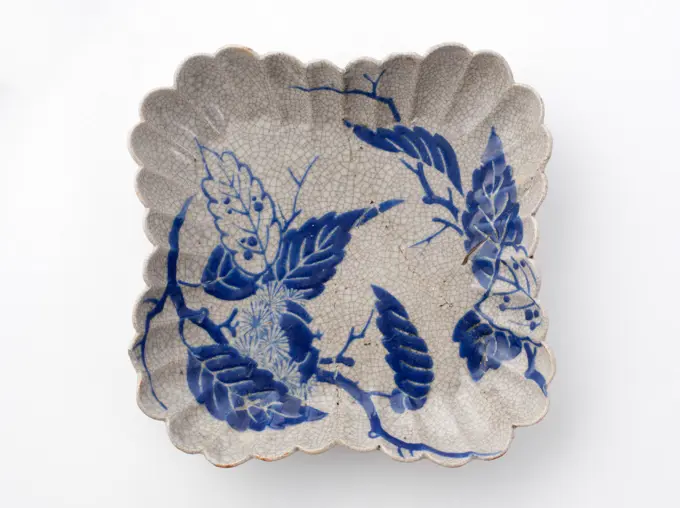
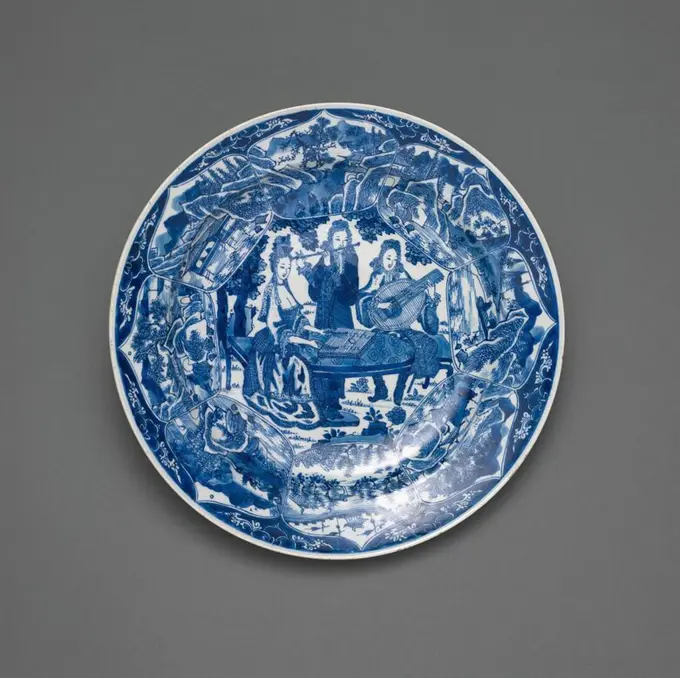
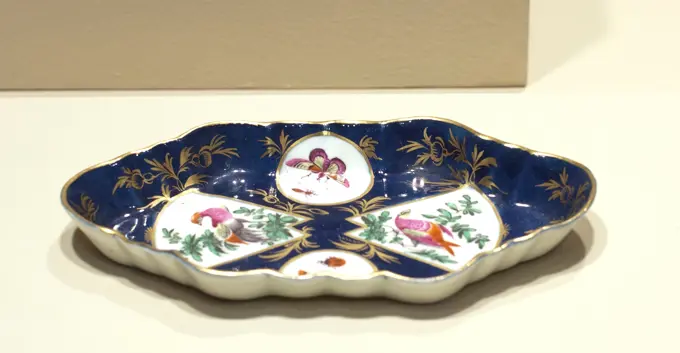
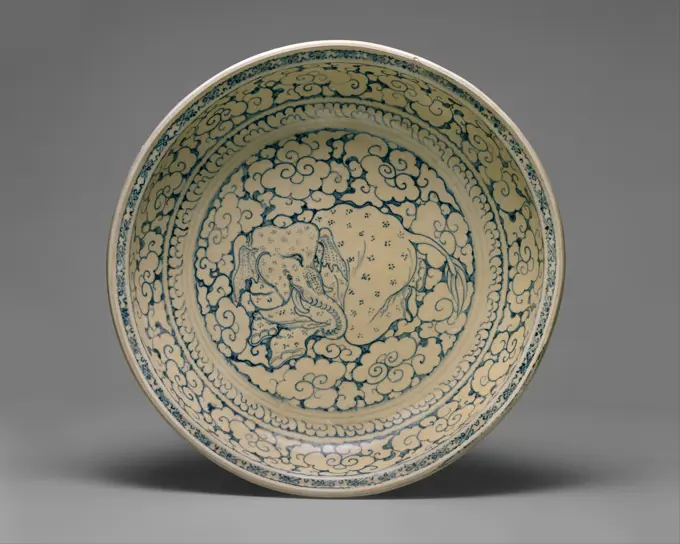
Decorative Plates

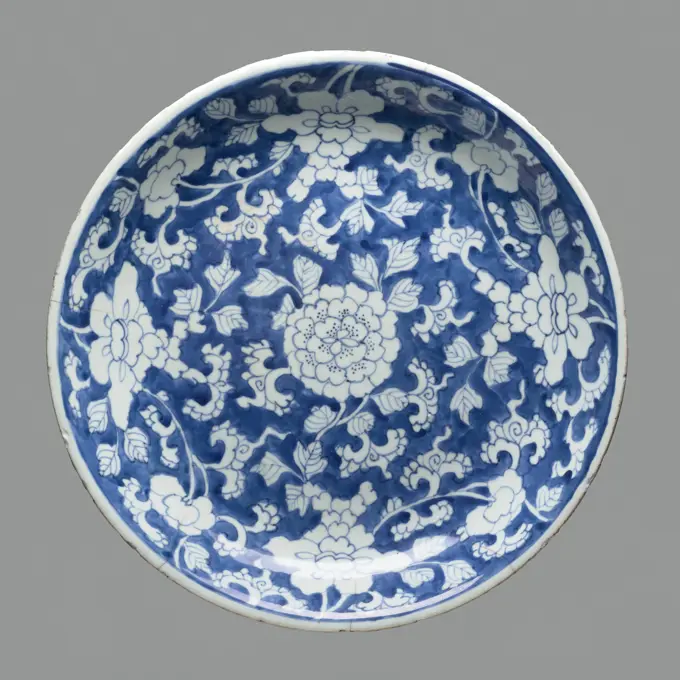
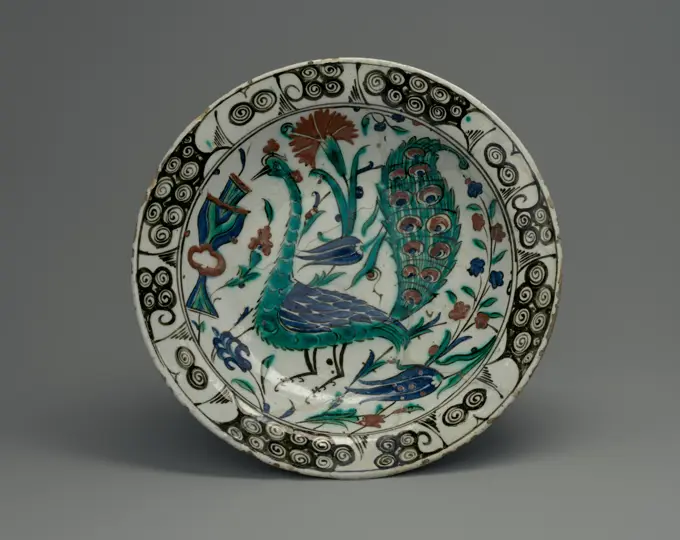
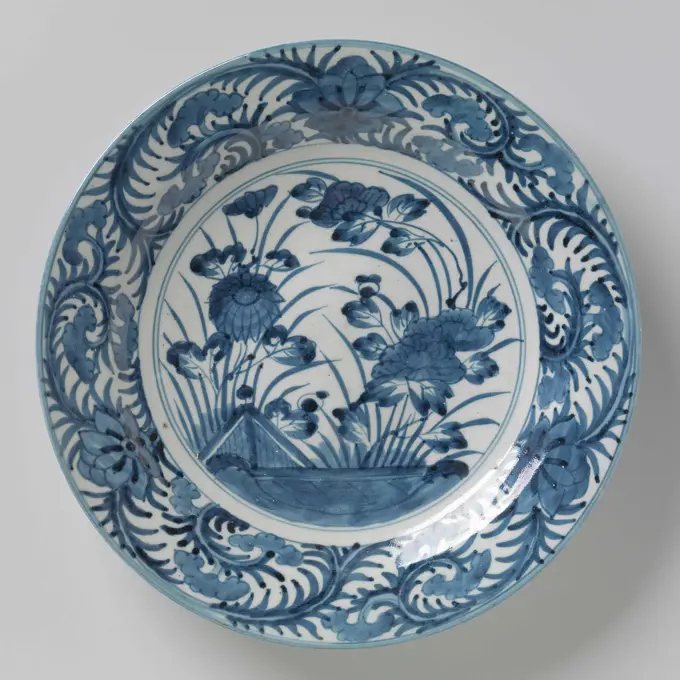
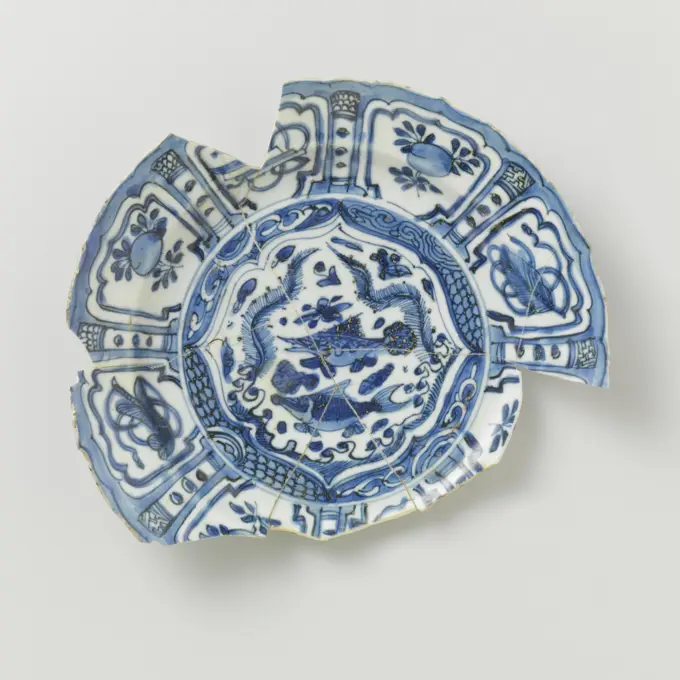
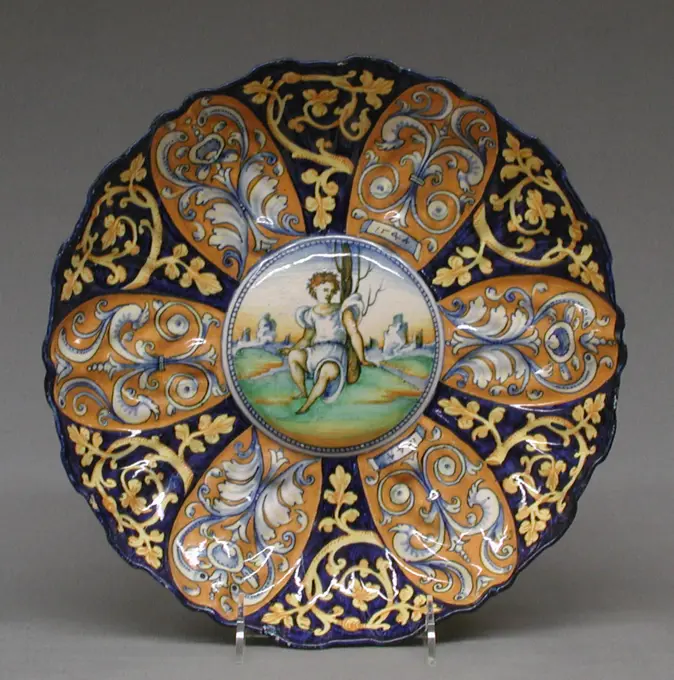
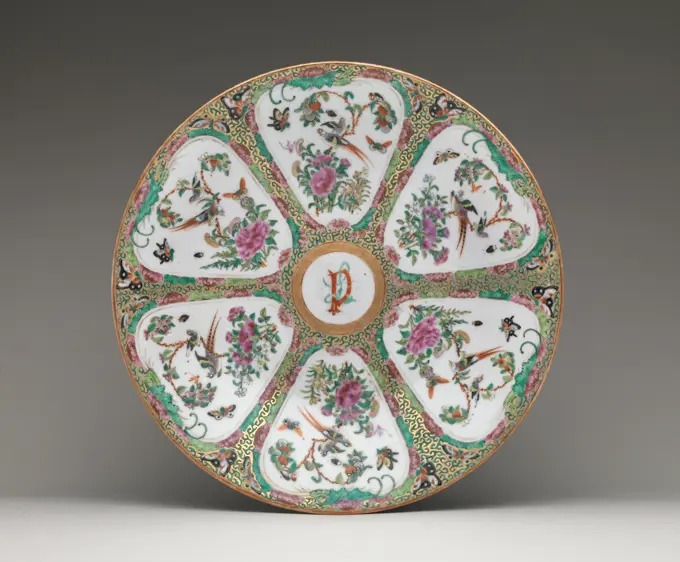
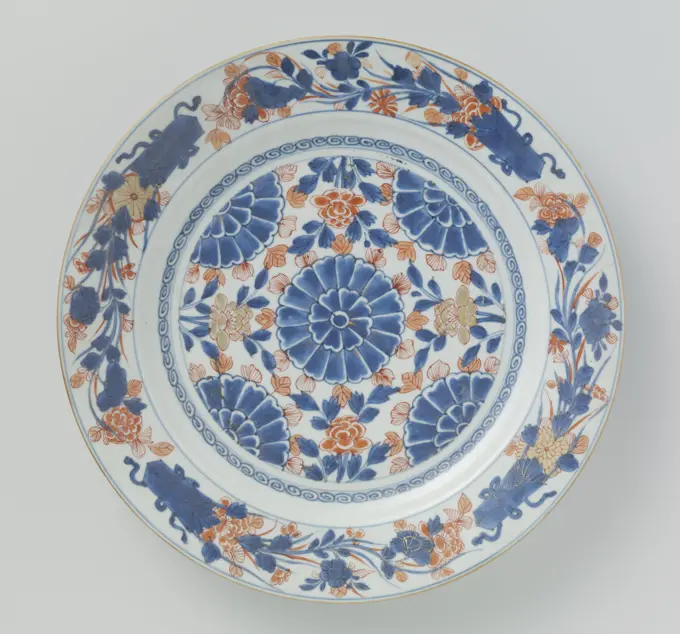
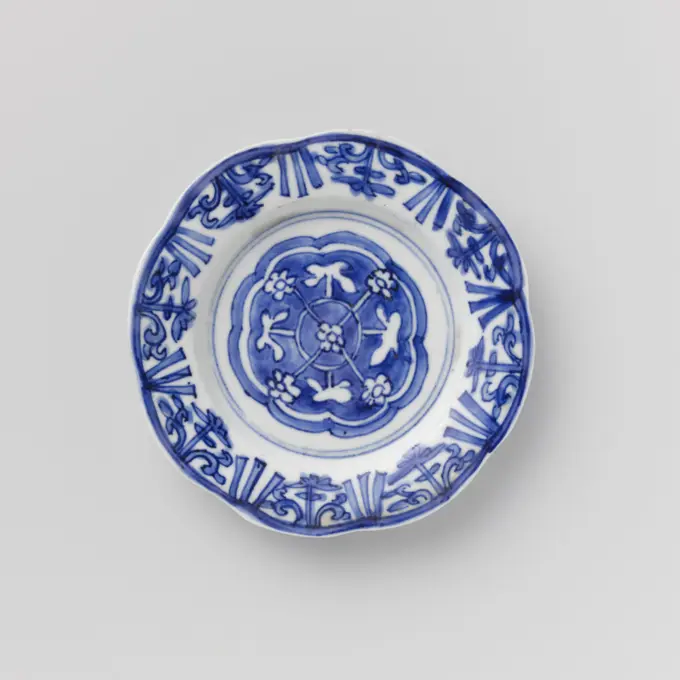
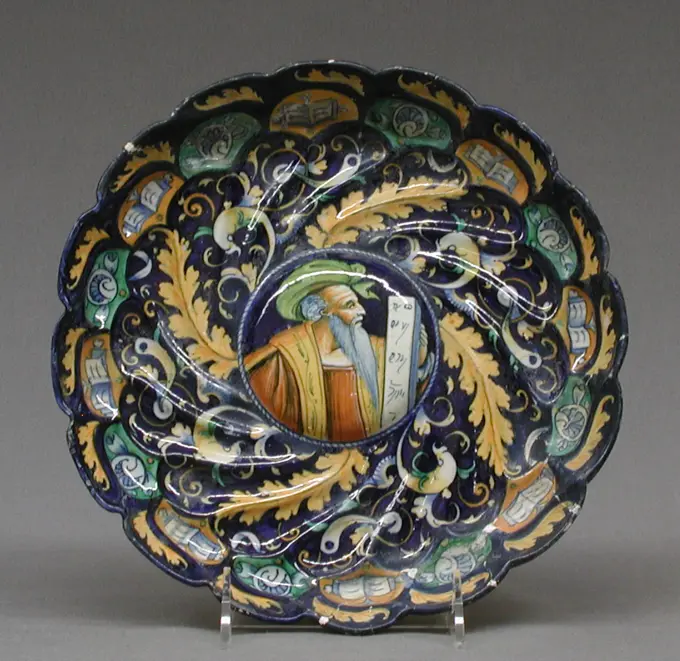
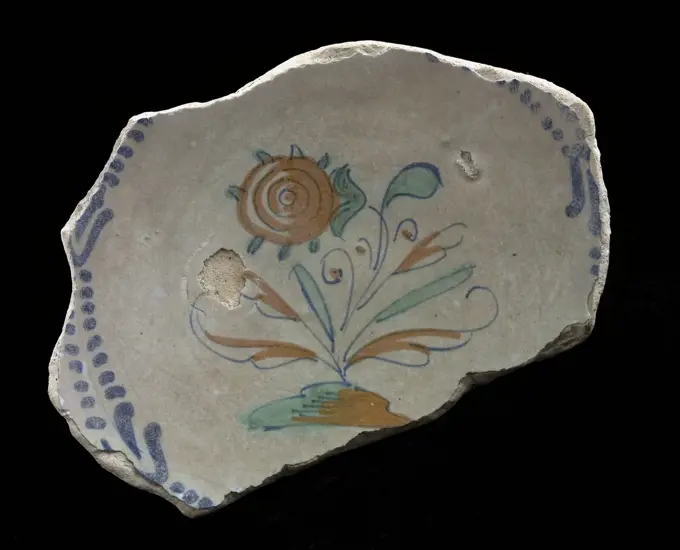
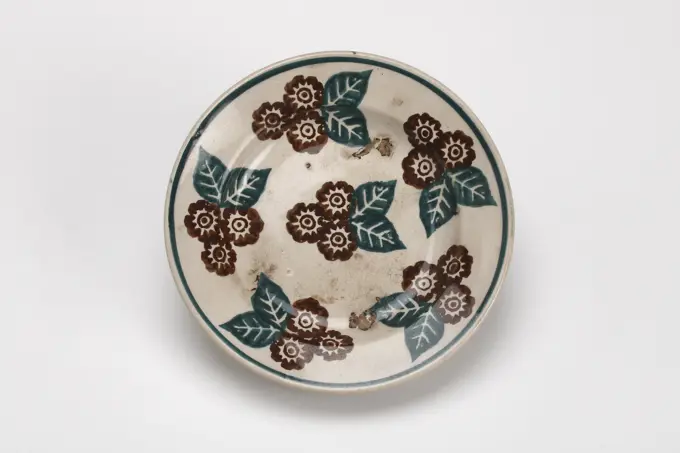
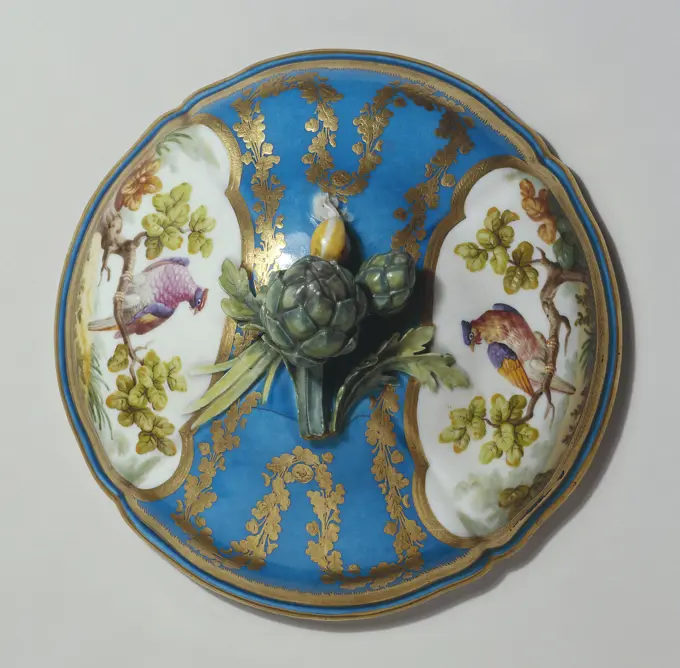
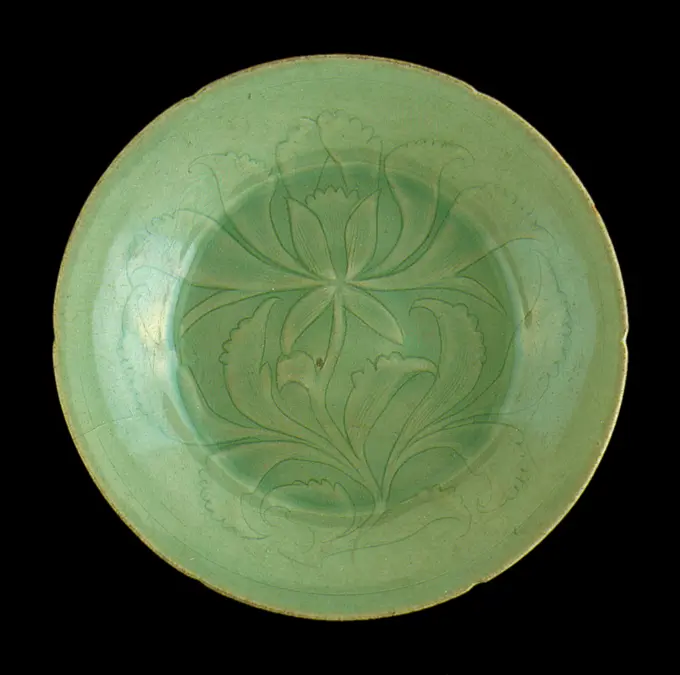
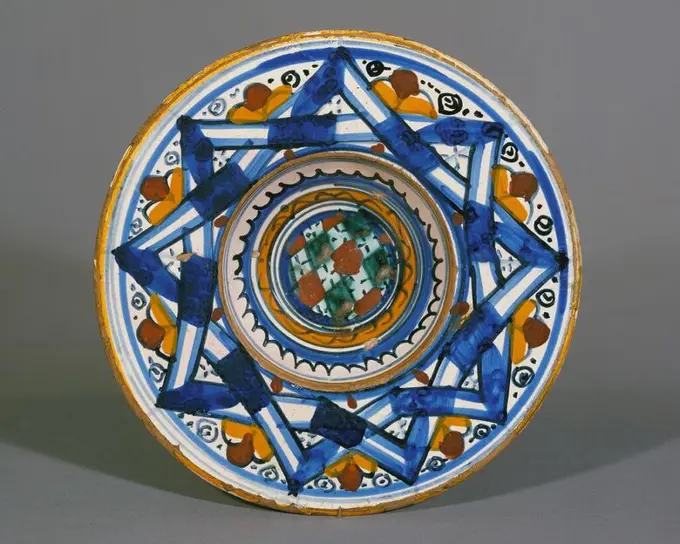
An array of exquisitely decorated porcelain dishes featuring intricate floral patterns and vibrant colors, representing fine craftsmanship.
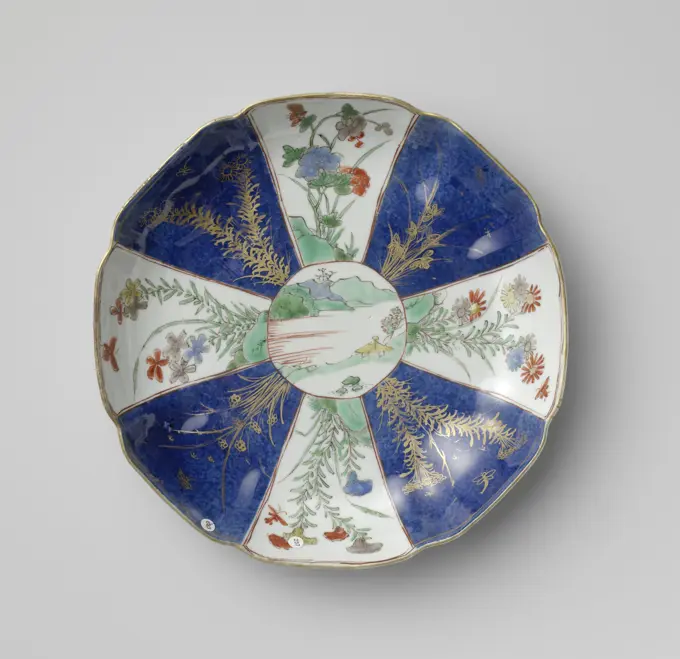
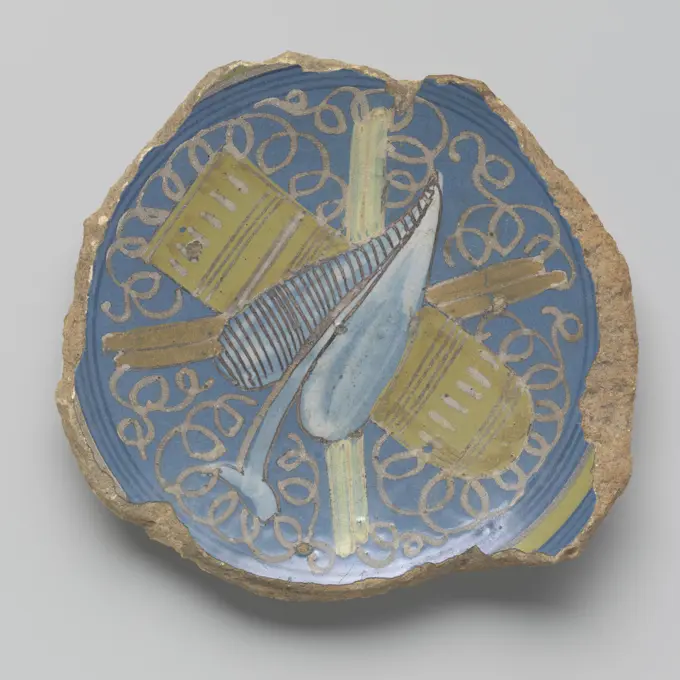
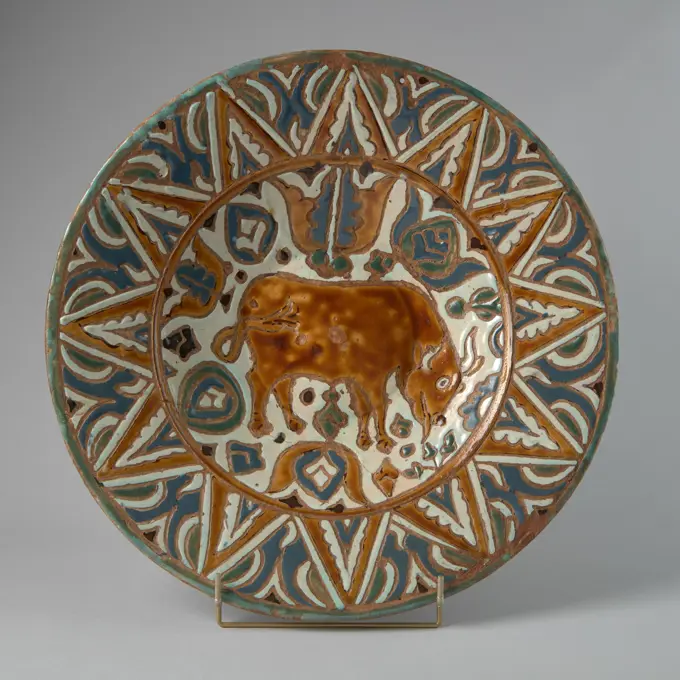
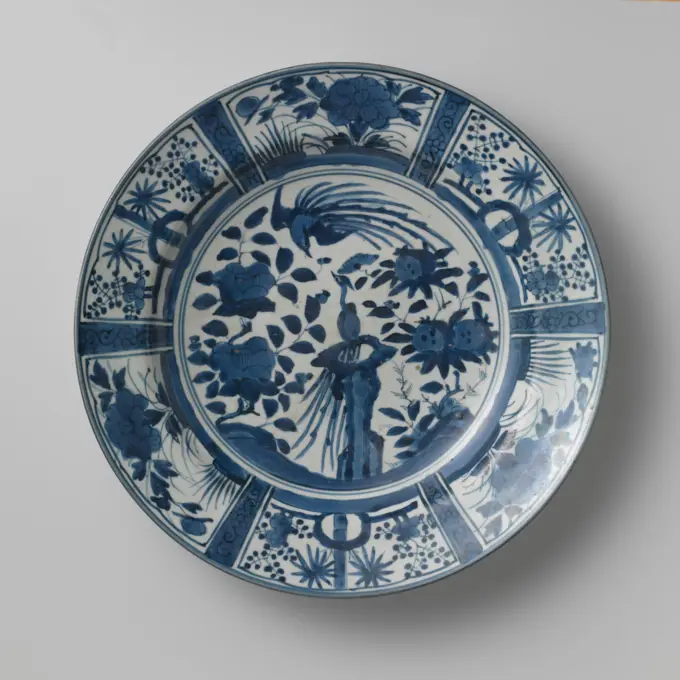
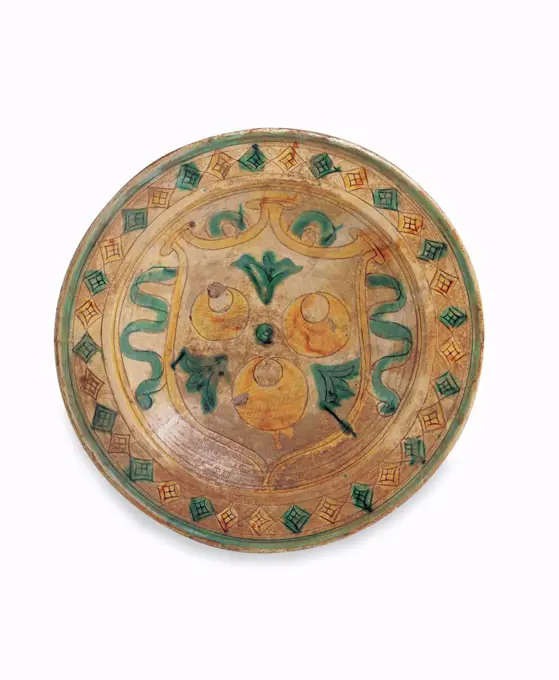
Saucer-dish in the shape of a flower with bleu poudré and panel decoration, anonymous, c. 1700 - c. 1724 Porcelain saucer with round, lobed wall and scalloped edge in the shape of a flower, painted in underly glaze blue and on the glaze blue, red, green, yellow, eggplant, black and gold with a professional decoration. On the flat a medallion with river landscape with pavilion, rocks and trees; The wall is modeled in eight petals alternately filled with a flower branch and butterfly in gold on a bleu poudré (powder blue) soil and a flower branch on a rock with butterfly on one white soil. Bleu Poudré with Famle Verte. China porcelain. glaze. cobalt (mineral). gold (metal) painting / gilding / vitrification Porcelain saucer with round, lobed wall and scalloped edge in the shape of a flower, painted in underly glaze blue and on the glaze blue, red, green, yellow, eggplant, black and gold with a professional decoration. On the flat a medallion with river landscape with pavilion, rocks and
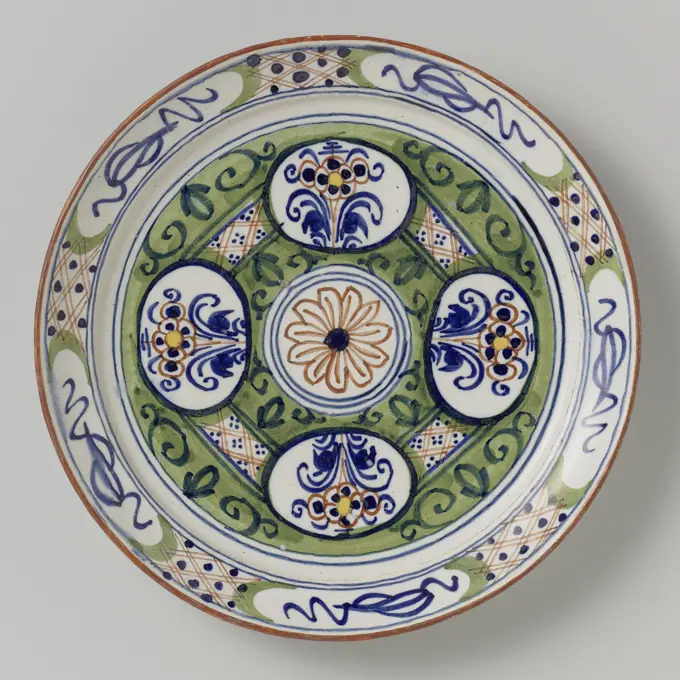
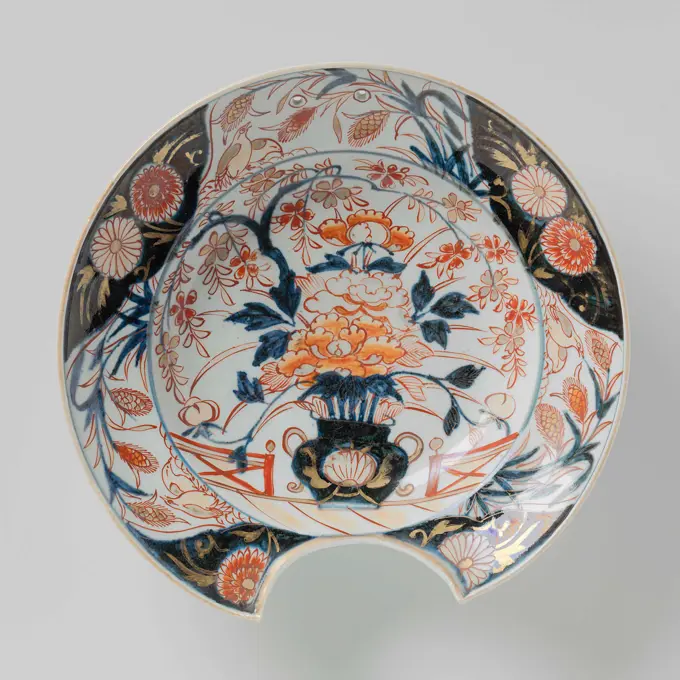
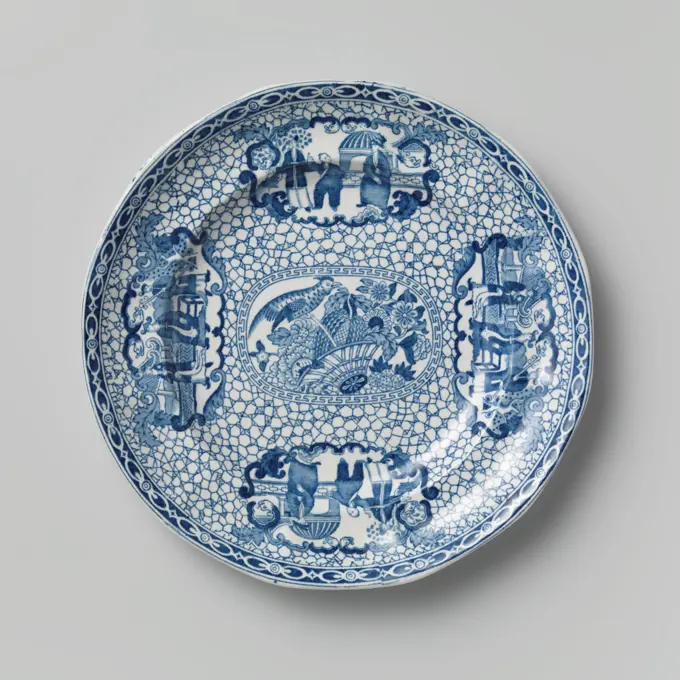
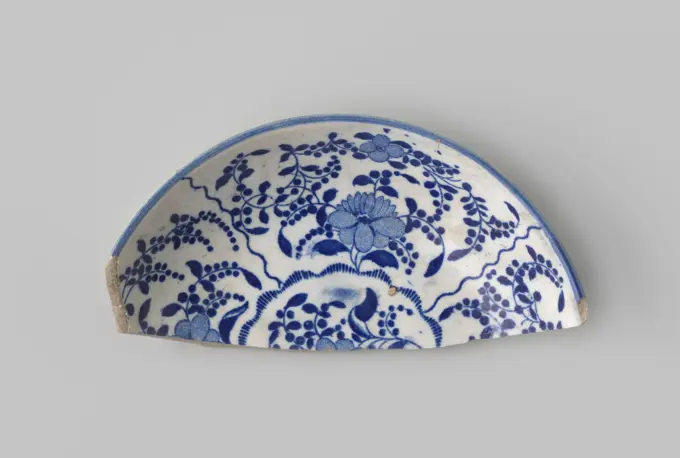
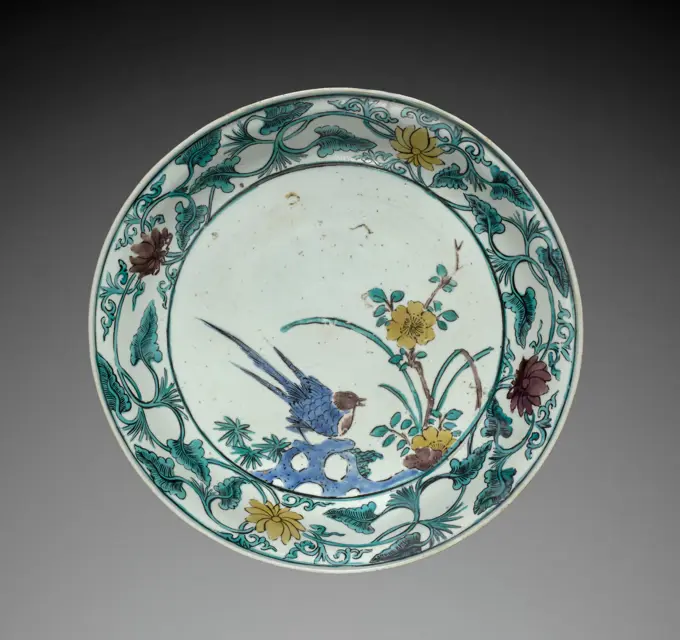
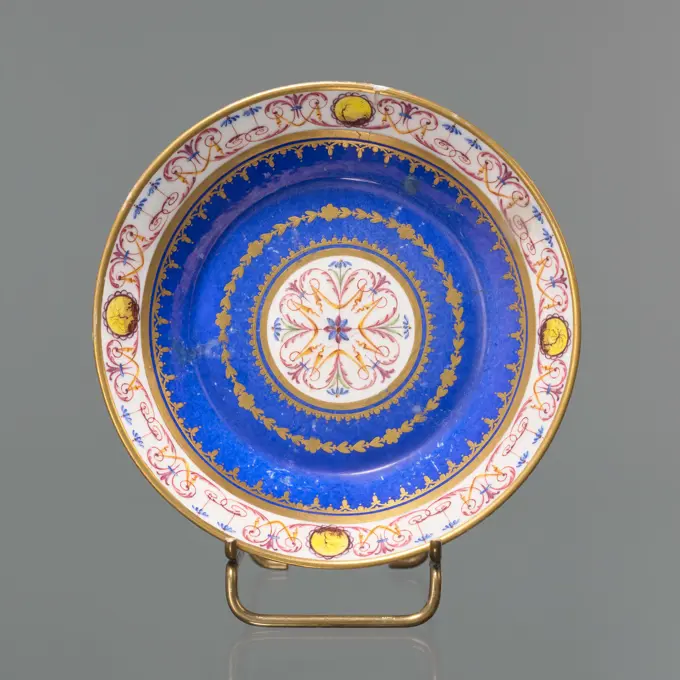
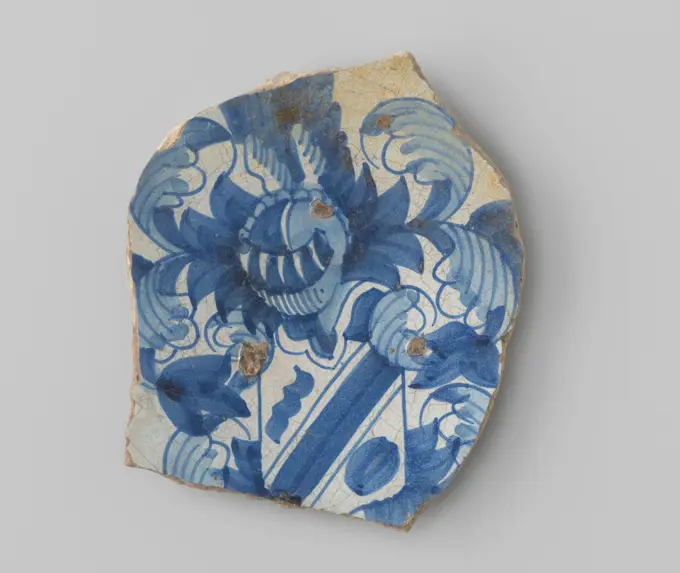
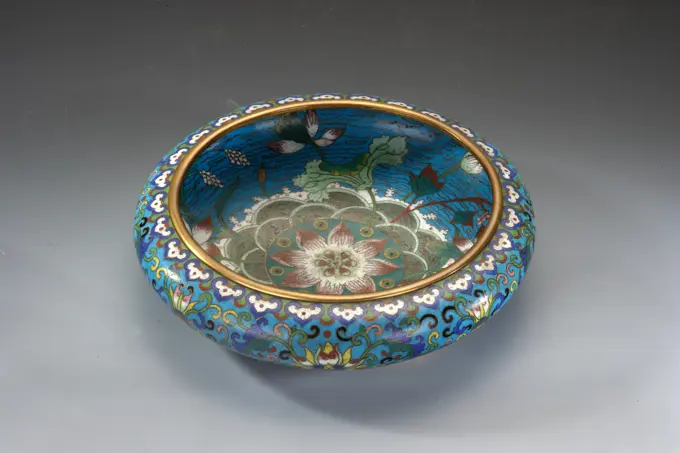
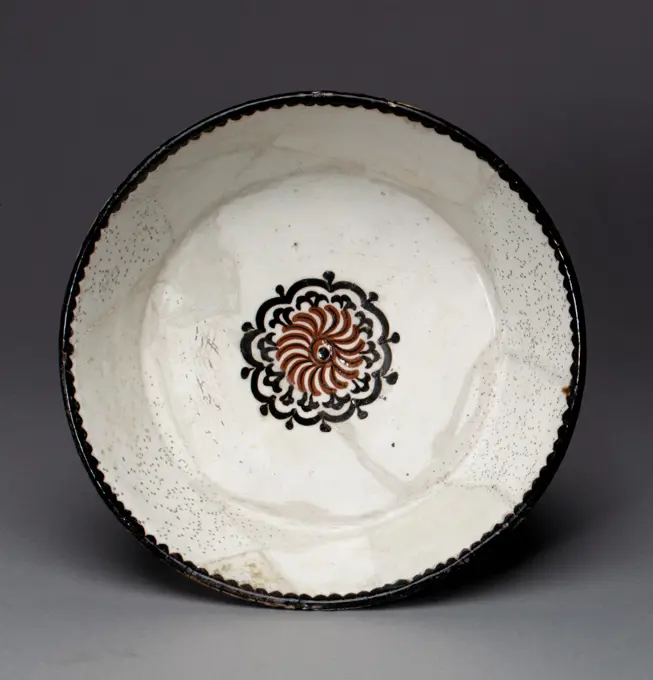
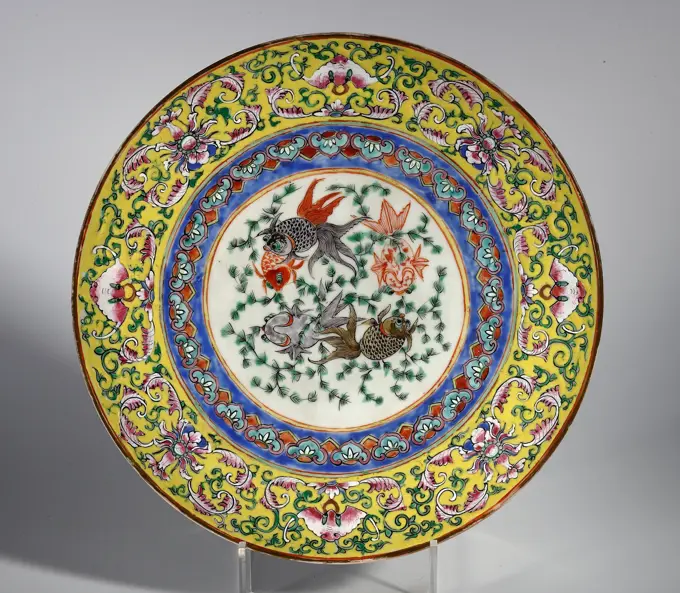
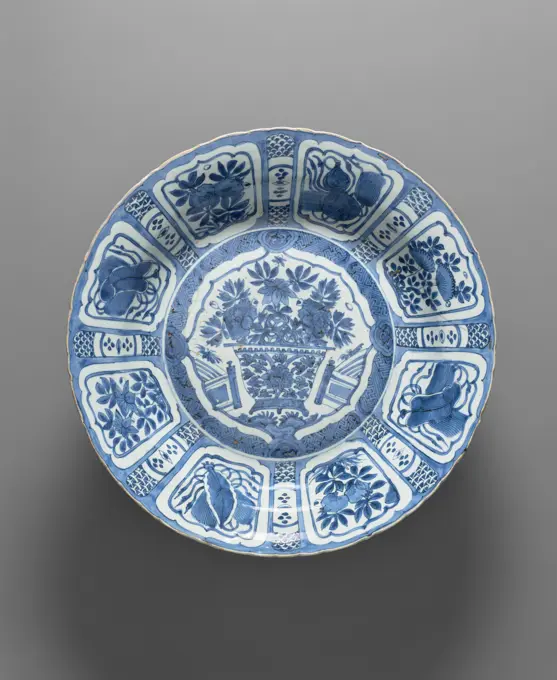
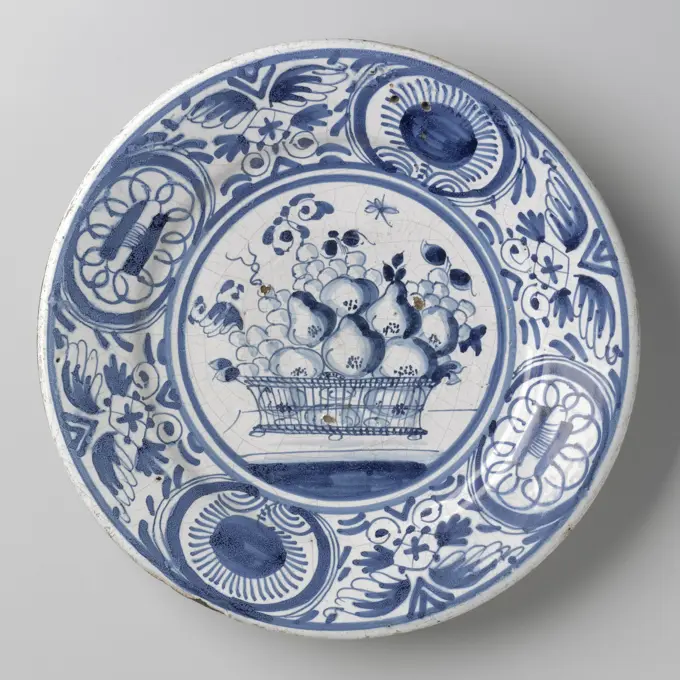
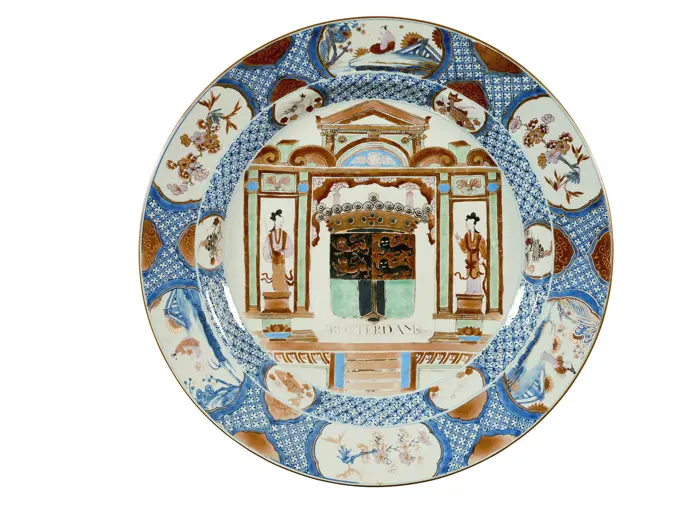
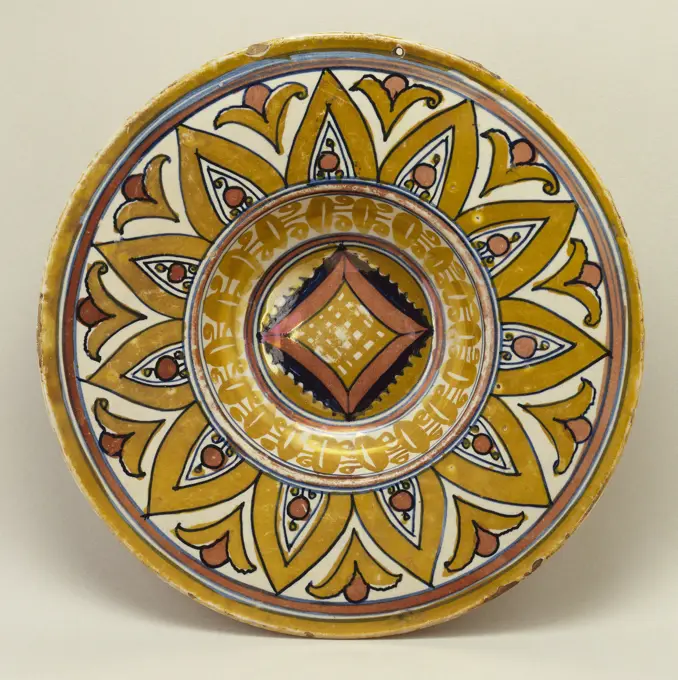
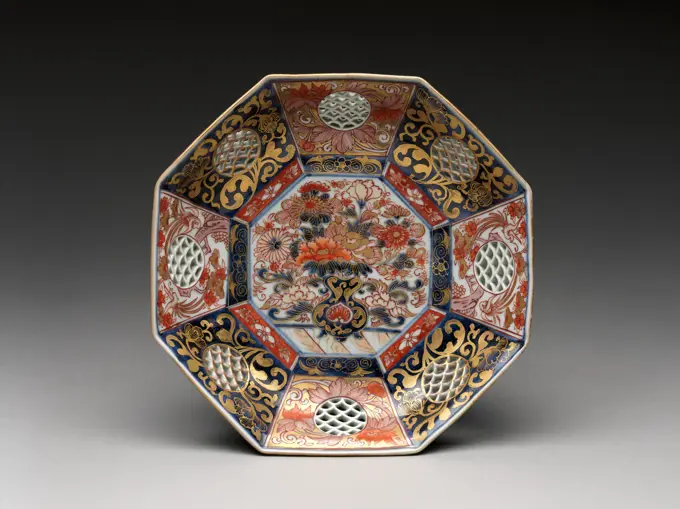
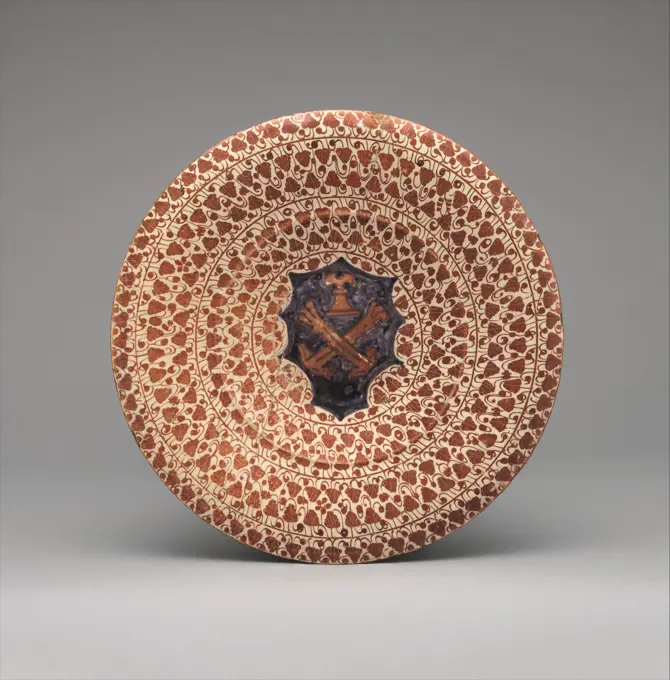
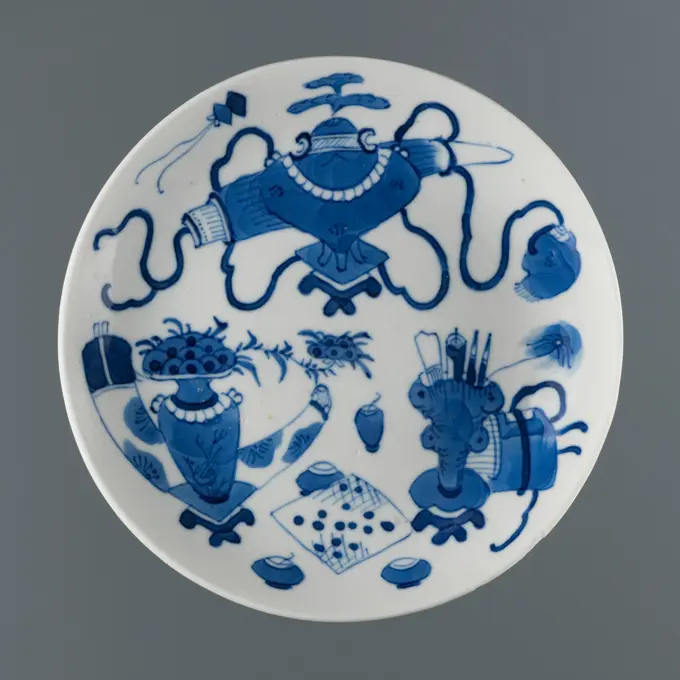
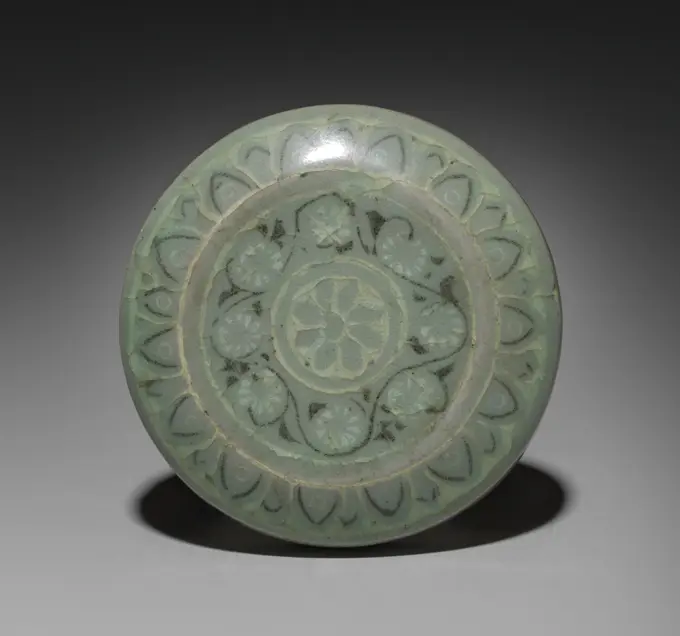
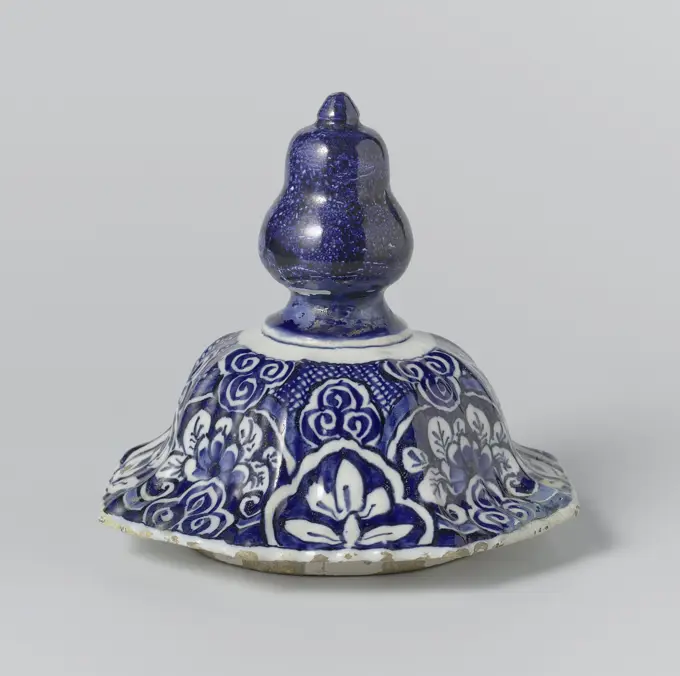
Saucer-dish in the shape of a flower with bleu poudré and panel decoration, anonymous, c. 1700 - c. 1724 Porcelain saucer with round, lobed wall and scalloped edge in the shape of a flower, painted in underly glaze blue and on the glaze blue, red, green, yellow, eggplant, black and gold with a professional decoration. On the flat a medallion with river landscape with pavilion, rocks and trees; The wall is modeled in eight petals alternately filled with a flower branch and butterfly in gold on a bleu poudré (powder blue) soil and a flower branch on a rock with butterfly on one white soil. Bleu Poudré with Famle Verte. China porcelain. glaze. cobalt (mineral). gold (metal) painting / gilding / vitrification Porcelain saucer with round, lobed wall and scalloped edge in the shape of a flower, painted in underly glaze blue and on the glaze blue, red, green, yellow, eggplant, black and gold with a professional decoration. On the flat a medallion with river landscape with pavilion, rocks and . Dish of Faïence. Painted multi-colored. Signature: Ar.Octagonal Dish With Flowering Plants in Panels and Flower Sprays. Octagonal dish with cover bowl of porcelain, painted in underglaze blue and on the glaze gold. The front of the dish is covered with underglaze blue with flower branches in gold on it. In it, an octagonal medallion spread with a flower vase with surrounding, continuously on the edge, four scalloped cartouches with flowering plants (prunus, bamboo) and a stylized peony. The outer wall with three prunus branches. Two preen on the bottom. Imari.. Plate of Faïence. Painted multi-colored with flower vase and decorated edges.Dish Van Faience, Anonymous, 1655 - 1670 Dish of Faience. Blue painted with a medallion with a putto in the middle, around 2 tires with leaf vines. Delft . Dish of Faience. Blue painted with a medallion with a putto in the middle, around 2 tires with leaf vines. Delft .Plate, painted with a basket with flowers, anonymous, c. 1710 - c. 1730 Faïence board. Multicolored painted with a basket with flowers. Rand with tifles and Chinese motifs. Delft . Faïence board. Multicolored painted with a basket with flowers. Rand with tifles and Chinese motifs. Delft .bord, anonymous, c. 1740 - c. 1780 Round plate of multi -colored painted faience, with a circle in which a star on the flat. Around four multicolored oval medallions with a flower branch. A Chinese motif is painted on the edge. Delft earthenware. tin glaze. Round plate of multi -colored painted faience, with a circle in which a star on the flat. Around four multicolored oval medallions with a flower branch. A Chinese motif is painted on the edge. Delft earthenware. tin glaze.Shaving Bowl With a Flower Vase, Quails and Flower Sprays. Shaving basin of porcelain, painted in underglaze blue and on the glaze red and gold. On the flat a flower vase with peonies and a thriving branch at a fence. A lotus drink on the vase. The edge is divided into six cartouches with alternating two quail in a flowering plant and chrysanthemes on a ground of underglaze blue. The outer wall with two prunus branches. A preen on the bottom. Imari.Large Dish with Artichokes, c. 1535-40. Turkey, Iznik, Ottoman period (1299-1922). Fritware with underglaze-painted design; diameter: 36.4 cm (14 5/16 in.); overall: 6.9 cm (2 11/16 in.).Chinese Cloisonné Enamel Footed Bowl,  Qing Dynasty, Qianlong Period, 1736-1796Round plate of hard baked pottery with a blue decoration, anonymous, c. 1920 Round plate of hard baked pottery, with a decoration in blue. The decoration consists of a network in which saved four medallions on the edge and a medallion in the middle. Within the medallion in the middle there is a fallen basket with fruits and flowers in which a bird painted and in the four other medallions a scene with three Chinese figures. England earthenware Round plate of hard baked pottery, with a decoration in blue. The decoration consists of a network in which saved four medallions on the edge and a medallion in the middle. Within the medallion in the middle there is a fallen basket with fruits and flowers in which a bird painted and in the four other medallions a scene with three Chinese figures. England earthenwareDishes of white -baking earthenware, with a foot ring, with a painting of fruit on the flat, and of geometric shapes around it, everything in yellow, orange, green and blue, anonymous, 1600 - 1650  Northern Netherlands earthenware. glaze majolica  Northern Netherlands earthenware. glaze majolicaFragment of a dish of white -baking earthenware, with a pressure decor with flowers in blue at the front, c. 1500 - c. 1899 fragment   earthenware. glazeDish;  XVII/18th century (1691-00-00-1710-00-00);Dish with Peacock Design early 17th century This peacock dish has a loose and rather gawky charm. Although a dish like this clearly was not meant for royal use, such designs were the mainstay of the Iznik ceramic industry in the seventeenth century.. Dish with Peacock Design. early 17th century. Stonepaste; polychrome painted under transparent glaze. From Turkey, Iznik. CeramicsDish With Flowering Plants and Floral Scrolls. Dish of porcelain, painted in underglaze blue. On the flat a thriving peony plant and a chrysanthemum behind a fence. The wall and edge matte 'Karakusa' tanks. Five preen's inside the foot ring. Arita, blue-white.Sign from V.O.C.-ship De 'Witte Leeuw', Anonymous, Before 1613 plate (dishes) Sign from V.O.C. ship De 'Witte Leeuw', 90  present. Jingdezhen bone china (material)  fishes Sint-HelenaDish (Tazza) dated 1544 Italian, Faenza. Dish (Tazza). Italian, Faenza. dated 1544. Maiolica (tin-glazed earthenware). Ceramics-PotteryPlate with Bird and Flower: Kutani Ware, mid- to late 1600s. Japan, Edo period (1615-1868). Porcelain with overglaze enamel (Hizen ware, Ko-Kutani style); diameter: 29.9 cm (11 3/4 in.); overall: 6.4 cm (2 1/2 in.).Kraak porcelain plate from the V.O.C.-ship the 'Witte Leeuw', anonymous, anonymous, before 1613 plate (dishes) Porcelain board from V.O.C. ship De 'Witte Leeuw', 95  present. Plate with a flat edge and a scalloped edge, decorated in underlaze blue. In the flat lucky symbols (Artemisiablad) surrounded by a wide, star -shaped bond with geometric motifs. On the wall and edge alternating wide and narrow fields with lucky symbols and flower and fruit branches (peach). Crack porcelain in blue and white. China porcelain. bone china (material). glaze. cobalt (mineral) painting / vitrification  Sint-HelenaDish 16th century. Dish. 16th century. Stonepaste; underglaze painted on white slip. Attributed to Turkey, Iznik. CeramicsDish (Italy); Manufactured by Cozzi Porcelain Factory; porcelain with underglaze decoration cobalt, overglaze enamel and gildingPlatter ca. 1860-66 Chinese, for American market. Platter 6553Small plate (saucer). Manufacture de porcelaine (Vincennes ; 1740-1756), factoryDish, anonymous, c. 1660 - c. 1670 Round dish of blue painted faience, with flowers on a ground with a standing and a flying bird. The edge is divided into eight large compartments that are interspersed with small compartments. A flower is painted in four of the large compartments and a Chinese lucky sign is painted in the four other. Delft earthenware. tin glaze. Round dish of blue painted faience, with flowers on a ground with a standing and a flying bird. The edge is divided into eight large compartments that are interspersed with small compartments. A flower is painted in four of the large compartments and a Chinese lucky sign is painted in the four other. Delft earthenware. tin glaze.Dish with stylized flower heads, flower sprays and bouquets, anonymous, c. 1700 - c. 1724 Porcelain saucer, painted in underly glaze blue and on the glaze red and gold. On the flat a medallion with a stylized flower in the center and half stylized flowers on the edges, here between flower branches; Around the medallion a band with curl work; Four bouquets with flowering flowers on the edge; The back with three flower branches. A chip in the edge. Chinese Imari. China porcelain. glaze. cobalt (mineral) painting / gilding / vitrification Porcelain saucer, painted in underly glaze blue and on the glaze red and gold. On the flat a medallion with a stylized flower in the center and half stylized flowers on the edges, here between flower branches; Around the medallion a band with curl work; Four bouquets with flowering flowers on the edge; The back with three flower branches. A chip in the edge. Chinese Imari. China porcelain. glaze. cobalt (mineral) painting / gilding / vitrificationSaucer with stylised flowers and precious objects, anonymous, c. 1700 - c. 1724 Porcelain saucer with lobed edge, painted in underlaze blue. On the flat a rosette with a flower in a circle in reserve in the center, four lines from the flower with a flower in reserve at the end, on the circle branches in reserve; Flower vines stylized on the edge interspersed with three lines; The rear with four valuables (pearl, window). Marked on the underside with the four-character brand of Keizer Yongzheng () In a double circle. A crack in the edge. Blue White. China porcelain. glaze. cobalt (mineral) painting / vitrification Porcelain saucer with lobed edge, painted in underlaze blue. On the flat a rosette with a flower in a circle in reserve in the center, four lines from the flower with a flower in reserve at the end, on the circle branches in reserve; Flower vines stylized on the edge interspersed with three lines; The rear with four valuables (pearl, window). Marked on the underside with the fDish ca. 1540 Italian, Faenza. Dish. Italian, Faenza. ca. 1540. Maiolica (tin-glazed earthenware). Ceramics-PotteryFragment majolica dish, polychrome, flower with swaying leaves on piece of ground, plate crockery holder soil find ceramic earthenware glaze, baked underside covered with lead glaze. Polychrome archeology decorate serving food tulip tulip variety Soil discovery 1914White -baking earthenware dish, with a foot ring, with white glaze on the top, on which a weapon with harness and plumes are painted in blue, anonymous, c. 1500 - c. 1699 fragment   earthenware. glazeDish early 17th century. Dish 448175A bowl for a long time;  18th century (1700-00-00-1800-00-00);Minc, Bronisław and Elżbieta - collection, Qing (era - 1644-1911), Cloisonné, Dar (provenance), lotus, bowls, Chinese artBowl with Rosette 10th century The whirling rosette decorating the base of this vessel seems to be a trademark of wares made in Samarqand, and its appearance on wares found in Nishapur may indicate that they were imported from Samarqand. A pseudo-inscription in kufic script is repeated on the exterior of this bowl, in the same red as the whirling rosette.. Bowl with Rosette. 10th century. Earthenware; white slip with polychrome slip decoration under transparent glaze. Attributed to present-day Uzbekistan, Samarqand. CeramicsPlate;  19th century (1801-00-00-1900-00-00);Qing (style), ceramics, Chinese (culture), lotus, bats (iconogr.), Color porcelain, fish, Chinese artDish first half 18th century Japanese, for European market The gift of the Hans Syz Collection in 1995 endowed the Museum with nearly three hundred examples of European and Asian ceramics meticulously acquired by Swiss-born collector Dr. Syz (1894-1991) to chart the migration of models and patterns from East to West. Documenting a continuous process of influence and adaptation, these pieces provide a discriminating review of the nuances of stylistic change resulting from three centuries of trade.. Dish 208251Plate ca. 1820 Mexican. Plate 3210. Fragment of the bottom of a saucer of soft creamy earth with flamed yellow, green and brown glaze. Increded decoration. Follow-up of Chinese ceramics.Fragment of a dish with taoistic symbols, c. 1620 - c. 1650 Fragment of a dish on a low foot ring. Light red shard covered with ting laze on the front and lead glaze at the rear. Painted in blue, mango purple, yellow and green with a tube (), Behind which two crosses placed twice -placed sticks; On the whole a rush -hour leaf. The whole in a light blue stock. Northern Netherlands earthenware. tin glaze. lead glaze majolica Fragment of a dish on a low foot ring. Light red shard covered with ting laze on the front and lead glaze at the rear. Painted in blue, mango purple, yellow and green with a tube (), Behind which two crosses placed twice -placed sticks; On the whole a rush -hour leaf. The whole in a light blue stock. Northern Netherlands earthenware. tin glaze. lead glaze majolica. Dish of Faience. Blue painted with a bird and decorated edges with flowers and feathers.Majolica dish bottom fragment with polychrome decor, curled tendrils in blue and orange, dish plate crockery holder soil find ceramic earthenware glaze tin glaze lead glaze, ring 9.0 hand turned baked decorated glazed fried Fragment majolica dish on stand Narrow stand ring Bottom glaze Decorated with polychrome decor in blue and orange Curled inside blue circles tendrils and floral motifs. underside darkened by staying in the bottom. Wood-baked archeology Valckensteyn Poortugaal Albrandswaard indigenous pottery serving serve Soil discovery: castle Valckensteyn in Poortugaal now Albrandswaard 1961-1962.Sharf of rossy baking earthenware, with white glaze, with a painting of a decorative edge in blue, anonymous, 1600 - 1650  Northern Netherlands earthenware. glaze majolica  Northern Netherlands earthenware. glaze majolicaDishwill of earthenware with white tinglaze at the rear and at the front tinglaze and a decoration of flowers and insects in blue, damaged, anonymous, 1500 - 1799   earthenware. tin glaze   earthenware. tin glazeMisa unknownSaucer-dish with powder blue and flower heads in reserve, anonymous, c. 1700 - c. 1724 Dish with a round wall of porcelain, painted in under -glaze blue. The dish is covered with bleu poudré (powder blue) with a flower saved seven times. Marked on the underside with a seal brand in a double circle. Bleu Poudré with blue and white. China porcelain. glaze. cobalt (mineral) painting / vitrification Dish with a round wall of porcelain, painted in under -glaze blue. The dish is covered with bleu poudré (powder blue) with a flower saved seven times. Marked on the underside with a seal brand in a double circle. Bleu Poudré with blue and white. China porcelain. glaze. cobalt (mineral) painting / vitrificationDish with Peaches and Morning Glory 1736-1796 China. Porcelain painted in underglaze blue and overglaze yellow enamel .Tile. Tile, painted in blue, yellow, manganese. Decoration of a rosette of sixteen leaves with a yellow heart.Platter ca. 1815-ca. 1834 James and Ralph Clews British. Platter 6518Dish With Two Hoo-Birds near Rocks and Flowering Plants. Dish of porcelain, painted in underglaze blue. On the flat in a double medallion a hay-bird on a rock in blooming plants (peony, pomegranate). A second bird flies above. The edge is divided into wide and narrow courses. The wide subjects with flowering plants (peony, prunus, camellia) at rocks; The narrow courses with a flower drink. Five preen on the bottom. The decoration is based on the Chinese squirrch porcelain. Blue White.Bowl, by Tuscany workmanship, 1530 - 1540, 16th Century, pottery. Italy: Emilia Romagna: Ravenna: Faenza: International Museum of Ceramics. Whole artwork. Soup plate decorated inside with heraldic shield featuring three crescents and palm leaves. Along the rim is a motif featuring small double cross-cut rhombiExcerpt with reddish shard, with a flower edge and stripes in blue, yellow and green on a white surface, anonymous, 1200 - 1899  Italy earthenware  Italy earthenwareDish (Pan) with Dragon amid Clouds. China, Chinese, Ming dynasty, Wanli mark and period, 1573-1620. Furnishings; Serviceware. Carved red lacquer on wood coreDish mid-16th century Spanish, Catalonia Tin-glazed earthenware, of which lusterware is one type, was developed in the Middle East in the ninth and tenth centuries to imitate the porcelains produced in China. The opaque white glaze concealed the clay body, which could range from pale buff to brick red, allowing for brilliant effects created by painting the white surface with metal oxides that fired to a range of colors. This technique, as well as the use of metallic lusteran iridescent, coppery painted glazespread throughout the Muslim world, arriving among the potters of Valencia in the thirteenth century. The so-called Hispano-Moresque lusterware, with its fusion of Islamic and Gothic styles and motifs, often in shaped imitating those of metal vessels, was treasured by the elite in Spain during the fifteenth century and exported to the courts of Europe. The Valencian industry declined in the late sixteenth century, as colorful Italian Renaissance maiolica gained in popularity amongDish with flower sprays and figures in an interior and in a landscape, anonymous, c. 1700 - c. 1724 Porcelain saucer, painted in under -glaze blue. On the flat a raised medallion in the center with six people in an interior around a table; Around this four times a flower branch (Prunus, Pioen, Lotus, Chrysanthemum). The edge with a continuous landscape with scholars and their servants; The back of the edge with flower vines. The back of the wall with four times a flower branch (Prunus, Pioen, Lotus, Chrysanthemum). Some chips in the edge. Blue White. China porcelain. glaze. cobalt (mineral) painting / vitrification Porcelain saucer, painted in under -glaze blue. On the flat a raised medallion in the center with six people in an interior around a table; Around this four times a flower branch (Prunus, Pioen, Lotus, Chrysanthemum). The edge with a continuous landscape with scholars and their servants; The back of the edge with flower vines. The back of the wall with four times a flower brPottery plate with saying FIRST PRAYED THEN EETE in blue on white ground, plate dish crockery holder soil find ceramic earthenware glaze tin glaze, hand-turned glazed baked Pottery plate with spell in blue on white fond. Low plate with only shoulder on the inside wide bordrand. Stand with soul Fully glazed Decoration consists of text spell within crown. Plate has been restored In the crown of saying: first prayed then archeology Rotterdam City triangle Hofplein indigenous pottery food room serving table Soil discovery: construction site Shell building Hofplein 20 Rotterdam 1957.12.29.Dish. unknown, craftsmanDish. The gold decoration on this dish shows the crowned symmetrical monogram of Johan van Hoorn and Susanna Agneta van Outhoorn who married in Batavia in 1691. Dutch employees of the Dutch East India Company (VOC) could order Japanese lacquerware from the Dutch trading post on the Deshima peninsula in Japan.Dish of blue majolica, anonymous, c. 1640 - c. 1675 Round dish of blue painted majolica. A basket with fruit is painted on the flat (apples, pears and grapes). On the edge, four oval medallions are painted within which stylized flowers (after Chinese example) and between which abstract paintings. Holland earthenware. tin glaze. lead glaze majolica Round dish of blue painted majolica. A basket with fruit is painted on the flat (apples, pears and grapes). On the edge, four oval medallions are painted within which stylized flowers (after Chinese example) and between which abstract paintings. Holland earthenware. tin glaze. lead glaze majolicaPorcelain dish with weapon of Rotterdam, dish plate dish crockery holder ceramic porcelain glaze, baked painted glazed stove enamelled Chine de commande Round saucer slanting edge on stand ring Under arm in black painted topglaze: ROTTERDAM wapengoed heraldic Rotterdam East India East India Company chine de commandeBoard, with on the flat Chinese buildings and flowering branches. Plate of pottery with liquefy transfer decor. On the flat single Chinese buildings and flourishing branches spread over the surface. The edge of the board with six cartouches with flowers. Between the cartouches abstract motives and leafwork.Tray;  19th/20th century (1868-00-00-1912-00-00);Cup with vegetable decorative patterns, Italian majolica of Deruta, beginning of the 16th century (face) ". Museum of Fine Arts of the city of Paris, small palace. 26973-3 Cup, decoration, face, Italian majolica, decorative motive, various objects, vegetalArita (ceramic production center), hollow dish, Imari decor (username). Ceramics, porcelain, polychrome enamels: cobalt blue under cover, red on covered, gilding. Petit Palais, Museum of Fine Arts of the City of Paris.Box early 8th century China Cobalt, a mineral that produces a brilliant blue color, was first introduced to China from West Asia in the early eighth century. It was quickly used in ceramics both in single color glazes and as an addition to the three-color glazes of the Tang dynasty.. Box 74082Plate of blue and white delft pottery, decorated with plants and birds and a growling wolf or fox in the middle, the 3 aschpots, 1759 Round plate of blue painted faience, with a hexagonal medallion in which a wolf or fox on the flat. The edge is divided into six courses in which plants and birds. The board is marked at the back with the number 3. The board belongs to two identical signs with the invnrs. BK-NM-4246 and BK-NM-4247. Delft earthenware. tin glaze. Round plate of blue painted faience, with a hexagonal medallion in which a wolf or fox on the flat. The edge is divided into six courses in which plants and birds. The board is marked at the back with the number 3. The board belongs to two identical signs with the invnrs. BK-NM-4246 and BK-NM-4247. Delft earthenware. tin glaze.Plate; Koenigliche Porzellan Manufaktur (KPM; Berlin; 1763-1918); 1870-82 (1823-00-00-1832-00-00);Plate with a vase of flowers ca. 1770 Japanese, for European market This dense and richly gilded variant of the Japanese Imari style was very popular in central Europe during the eighteenth century. The inventory mark on the underside indicates that this example was in the collection of Augustus II (1670-1733), elector of Saxony and king of Poland, and one of the most avid European collectors of East Asian porcelain in the eighteenth century.. Plate with a vase of flowers. Japanese, for European market. ca. 1770. Hard-paste porcelain with colored enamels over transparent glaze and gilded (Hizen ware; Imari type). Ceramics-Porcelain-ExportFragment of Cup 16th-17th century. Fragment of Cup 445472Funerary Basin (Pan) with Floral Roundel. China, middle Tang dynasty, about 700-800. Tools and Equipment; basins. Wheel-thrown earthenware with impressed decoration and polychrome (sancai) glazeDish decorated with decor in black and brown, Villeroy & Boch Ceramic Werke K.G., 1906 Dish of Chromolith-SteenGoed, decorated in black and brown with a decor that looks like a wheel with spokes (or a flower chalice in relief). Metling mastery stoneware Dish of Chromolith-SteenGoed, decorated in black and brown with a decor that looks like a wheel with spokes (or a flower chalice in relief). Metling mastery stonewareDeep earthenware bowl with silt decoration and image of woman in sgraffitotechniek, bowl crockery holder soil find ceramic earthenware clay engobe glaze lead glaze, hand-turned incised punctured bilge sgraffito glazed fried Deep earthenware dish red shard the whole covered with lead glaze on the inside two horizontally set sausage ears. Stand surface archeology foreign pottery import serving table serve foodDish with Birds and Insects near Flowering Plants and a Rock. Dish of porcelain, painted in underglaze blue. On the flat a thriving plant (camellia) at a rock. Therefore flying birds and insects. The wall and edge are divided into six compartments with a bird on a rock in a flowering plant, flying bird and insects. The outer wall with four flower branches. Four preen on the bottom. Blue White.Dish with stylized flowering plants, anonymous, c. 1600 - c. 1649 Dish of quail fritry with lead decorated with a stylized flowering plant in green, red, black, blue and brown on white engobe under transparent tin-lood-alkalaplaze. A cloud motif or curl on the edge. Iznik. Iznik earthenware. glaze painting / vitrification Dish of quail fritry with lead decorated with a stylized flowering plant in green, red, black, blue and brown on white engobe under transparent tin-lood-alkalaplaze. A cloud motif or curl on the edge. Iznik. Iznik earthenware. glaze painting / vitrificationPlate with design of Chinese lion, 19th century, Unknown Japanese, 1 1/8 x 6 7/8 x 6 7/8 in. (2.86 x 17.46 x 17.46 cm), Porcelain with overglaze enamel, Japan, 19th century, Among the earliest enameled porcelains to be produced in Japan at the Arita kilns are known as Ko-Kutani ware. Most were large, impressive plates with bold designs in vivid glazes of deep aubergine, green and yellow. Ko-Kutani ware was exported to Indonesia in great quantities in the seventeenth century where it was highly prized. In the early nineteenth century this style of porcelain was revived in Kaga province by a family of sake brewers who named the kiln Yoshidaya after their sake business. This pair of dishes, with a lively pattern of playful lions, is an example of revival Kutani.Plate - Portneuf potteryPlate 1755-65 Bow Porcelain Factory British. Plate. British, Bow, London. 1755-65. Soft-paste porcelain. Bow Porcelain Factory (British, 1747-1776). Ceramics-PorcelainPlate ca. 1800 Mexican. Plate 5950Dish, multi-colored painted with a kakiemon and an Imari decor, Meissener Porzellan Manufaktur, c. 1730 - c. 1735 Dish of painted porcelain. The dish has the shape of two partially covering leaves. The edge is partly sharp. One leaf has a large grain with his windows and is painted with flower branches. The other half -covered leaf is painted with a busy Imari textile pattern of windows. The dish is marked. Float porcelain Dish of painted porcelain. The dish has the shape of two partially covering leaves. The edge is partly sharp. One leaf has a large grain with his windows and is painted with flower branches. The other half -covered leaf is painted with a busy Imari textile pattern of windows. The dish is marked. Float porcelainBowl with Leopard early 13th century The lion was a symbol of power, strength, and royalty. Its reigning planet is the Sun, which is shown here as a circular disk against which the whimsically spotted lion is set. The bowl was made in Kashan, in central Iran, where the technology for making luster-glazed ceramics was introduced in the early twelfth century, with the arrival of the potters from Egypt who carried the secret knowledge for creating this decorative effect.. Bowl with Leopard. early 13th century. Stonepaste; luster-painted on opaque white glaze. Attributed to Iran, Kashan. CeramicsPapier -sherry with multicolored drawing of flowers and an decorative edge, anonymous, 1500 - 1799   earthenware. glaze   earthenware. glazePlate, with an amazon on the flat in a landscape, Petrus Regout, 1865 Plate of earthenware with red transfer decor. On the flat a landscape with Amazon, followed by a dog. The edge is decorated with flowers. Maastricht . Plate of earthenware with red transfer decor. On the flat a landscape with Amazon, followed by a dog. The edge is decorated with flowers. Maastricht .Oil pot, Manufacture de Sèvres, 18th century (lid). Museum of Fine Arts of the City of Paris, Petit Palais. 26357-7 Bucolic, ceramic, lid, decor, acorns, sevres manufacturers, oily, bird, pot, ragout, soupiereFlower - shaped Dish with Peony Spray Design in Relief. Korea, Goryeo dynasty (918-1392), 12th century. Furnishings; Serviceware. Wheel-thrown stoneware with carved and incised decoration and green glazeSaucer with a Pearl Chasing Dragon. Dish of porcelain with slightly spreading wall, painted in underglaze blue. On the inside and outside a continuous four-skylight dragon a pearl, the tail on the outside and the head on the inside; The dragon is surrounded by cloud motifs. Marked on the underside with a seal mark in a double circle. A chip in the edge. Blue White.Plate (tondino). Culture: Italian, Florence or vicinity. Dimensions: Diameter: 17.4cm (6 7/8 in.). Date: ca. 1480-1520. Museum: Metropolitan Museum of Art, New York, USA.Plate of multi -colored hard baked pottery; Staffordshire., Anonymous, c. 1750 - c. 1780 Plate of multi -colored hard baked pottery. The edge is decorated in relief with grille work, interspersed with two next to each other -placed symmetrical floral motifs. The scalloped edge is decorated on the inside with volutes and leaf motifs. The plate is covered with a spotted lead glaze in manganese, green, gray and yellow. The back is dotted in manganese and has a foot edge. The sign is part of five plates (BK-1987-39-A to BK-1987-39-F). England earthenware. lead glaze Plate of multi -colored hard baked pottery. The edge is decorated in relief with grille work, interspersed with two next to each other -placed symmetrical floral motifs. The scalloped edge is decorated on the inside with volutes and leaf motifs. The plate is covered with a spotted lead glaze in manganese, green, gray and yellow. The back is dotted in manganese and has a foot edge. The sign is part of five plates (BK-1987-39-A tDish ca. 1640 Japan. Dish 63588Ravier. sandstone, gray covered cracked, dark blue enamel. Paris, Cernuschi museum. Japanese art, dark blue, tree branch, Japanese ceramic, gray covered, cracker, email, gres, leaf pattern, ravier, fruitSnuffbox, anonymous, 1800 - 1850 Snuif box, oval, with a wide corrugated edge along the bottom. Lid light blue enamelled. Switzerland . Snuif box, oval, with a wide corrugated edge along the bottom. Lid light blue enamelled. Switzerland .Dish with Europeans Playing Musical Instruments. China. Date: 1661-1722. Dimensions: H. 5.5 cm (2 3/16 in.); diam. 34.1 cm (13 7/16 in.). Porcelain painted in underglaze blue. Origin: China. Museum: The Chicago Art Institute, Chicago, USA.Dish 12th-13th century. Dish 447175Dish 1430-1460 Spanish. Dish 471794Oblong Spoon Tray, from a Tea Service, 1765-70, Worcester Porcelain Works (a.k.a. Royal Worcester Porcelain Company), Worcester, England, est. 1751, 5/8 x 3 1/8 x 6 in. (1.6 x 7.9 x 15.2 cm), Porcelain, England, 18th centuryDish with Recumbent Elephant Surrounded by Clouds 15th-16th century Vietnam This exceptional dish, with its depiction of a kneeling elephant surrounded by abstract cloud formations, must be included among the dozen or two finest known early Vietnamese blue-and-white porcelain dishes and is therefore a major addition to the Museum's small but choice collection of these wares. The refined and sophisticated drawing of the charming and delightful elephant and the excellent control of the underglaze cobalt blue set it apart from most of the known corpus of important fifteenth- and sixteenth-century porcelains. The technique of manufacture, shape of the dish, and general composition of design are clearly based on blue-and-white prototypes of the early Ming dynasty (1368-1644), but the whimsical elephant and the particulars of the subsidiary design are uniquely the product of Vietnamese artistic sensibilities. The salty taste of the surface of the dish suggests it was recovered from a shipwrePlate 1430-1470 Spanish This plate is emblazoned with the coat of arms of the Morelli family of Florence, and must have belonged to a large table service. This small plate, because of its size, was probably used primarily for eating. Examples of matching services have only rarely survived, although documents indicate great numbers were made for both the domestic and the export markets. In a receipt dated 1454, the widow of Don Pedro Buyl, overlord of the Manises lusterware factories, received payment of 6000 gueldos (roughly equivalent to $360,000 in 2016) as a tithe on the potters goods destined for the export market. These wares leaving Grao, the port of Valencia, destined for Mediterranean markets, generally were transported by ships of Mallorcan registry. For this reason, lusterware, and later all glazed earthenware, became known as majolica. The ivy pattern rendered completely in copper luster became an increasingly popular decorative motif toward the end of the century as potterA plate;  19th century (1801-00-00-1900-00-00);Black hyalith glass plate with chinoiserie. Round, shallow board, the edge light concave. On the flat and edge gold-plated decoration of chinoiserie with butterflies, dragons and diamond motifs.Scale on three legs, painted with a four -legged friend on a ground, Anonymous, c. 1675 - c. 1740 Round scale of blue painted faience, standing on three legs in the form of animal claws. The circular center of the dish is deepened and painted with a four -legged friend on a ground. The edge has three deepened shell motifs, interspersed with symmetrical tiflens around a palm motif in relief. Savona earthenware. tin glaze. Round scale of blue painted faience, standing on three legs in the form of animal claws. The circular center of the dish is deepened and painted with a four -legged friend on a ground. The edge has three deepened shell motifs, interspersed with symmetrical tiflens around a palm motif in relief. Savona earthenware. tin glaze.Box and Cover (lid), 918-1392. Korea, Goryeo period (918-1392). Celadon; diameter of mouth: 7.4 cm (2 15/16 in.); overall: 2.7 cm (1 1/16 in.). Celadons, spoons, seals, and bronze mirrors were the most common burial objects in tombs during the Goryeo period (918-1392). Once used to contain color powder, rouge and eyebrow gel for makeup, this small container was one of the standard goods that furnished elites' tombs. Goryeo-period women and men used the grain powder of rice or millet for whitening their skin, safflower extract for rouge, and plant ash or soot for eyebrow gel. Yet, natural-looking make-up seems to have been the most favorable one in Korea according to the travelogue by Xu Jing (1091-1153), the Chinese diplomat who visited Korea in 1123.Lid, octagonal vaulted, with button and with blue and white decoration with leaves and flowers, anonymous, c. 1720 - c. 1750  Delft earthenware  Delft earthenwareBread plate - St. Johns Stone Chinaware Company (founded 1873) St. Johns Stone Chinaware Company (founded 1873)