Decorative Plates

An array of exquisitely decorated porcelain dishes featuring intricate floral patterns and vibrant colors, representing fine craftsmanship.
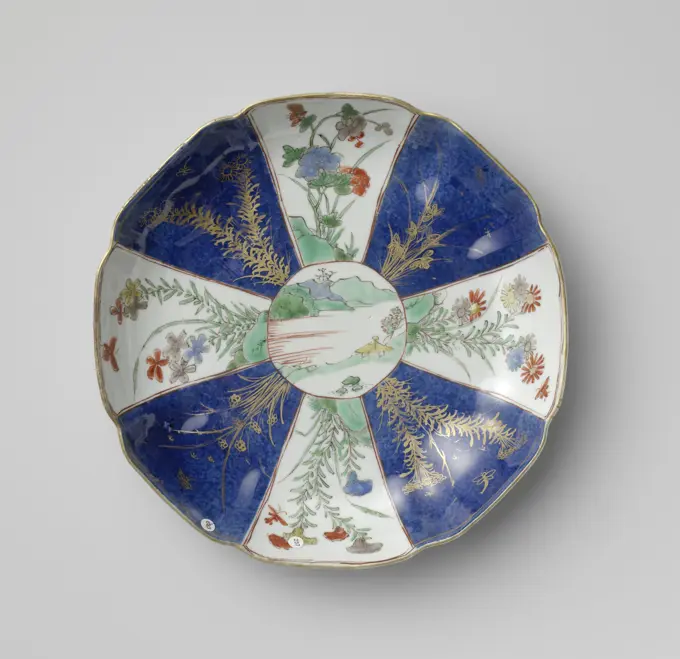
Saucer-dish in the shape of a flower with bleu poudré and panel decoration, anonymous, c. 1700 - c. 1724 Porcelain saucer with round, lobed wall and scalloped edge in the shape of a flower, painted in underly glaze blue and on the glaze blue, red, green, yellow, eggplant, black and gold with a professional decoration. On the flat a medallion with river landscape with pavilion, rocks and trees; The wall is modeled in eight petals alternately filled with a flower branch and butterfly in gold on a bleu poudré (powder blue) soil and a flower branch on a rock with butterfly on one white soil. Bleu Poudré with Famle Verte. China porcelain. glaze. cobalt (mineral). gold (metal) painting / gilding / vitrification Porcelain saucer with round, lobed wall and scalloped edge in the shape of a flower, painted in underly glaze blue and on the glaze blue, red, green, yellow, eggplant, black and gold with a professional decoration. On the flat a medallion with river landscape with pavilion, rocks and
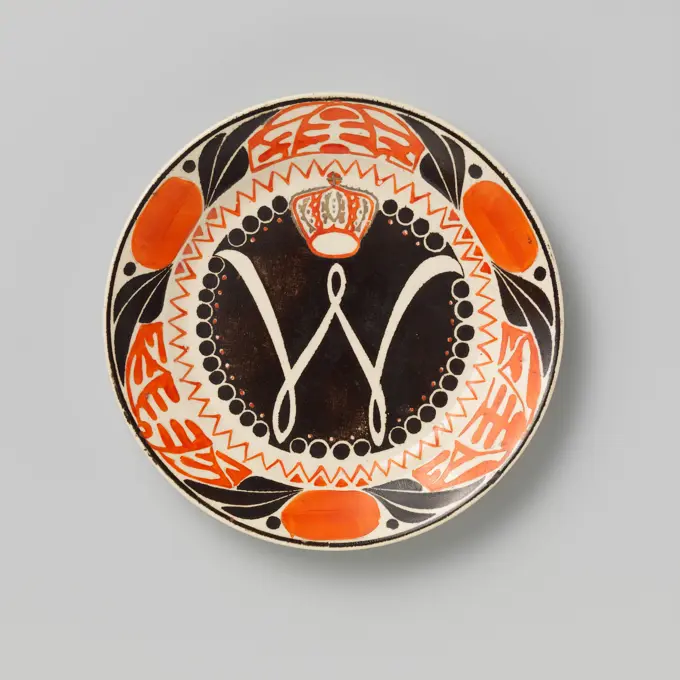
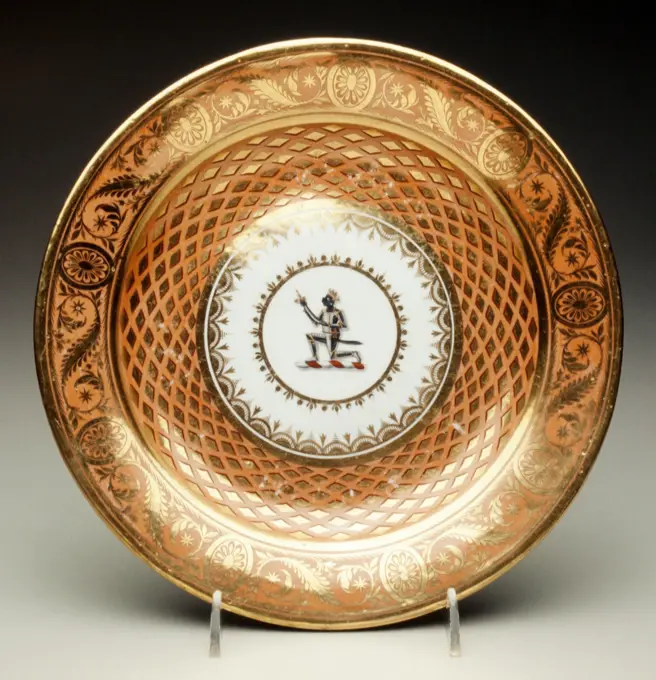
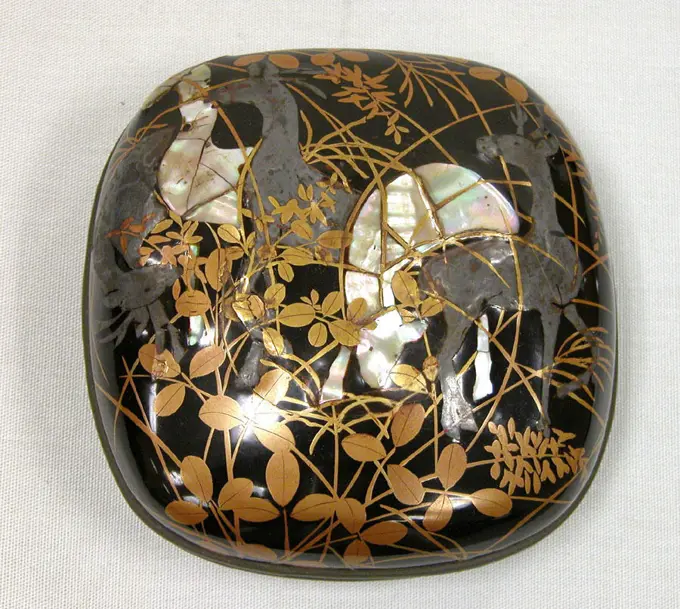
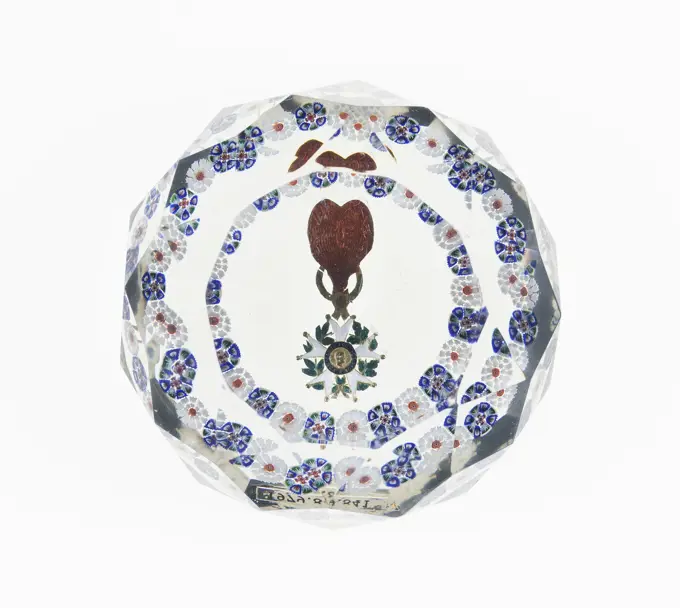
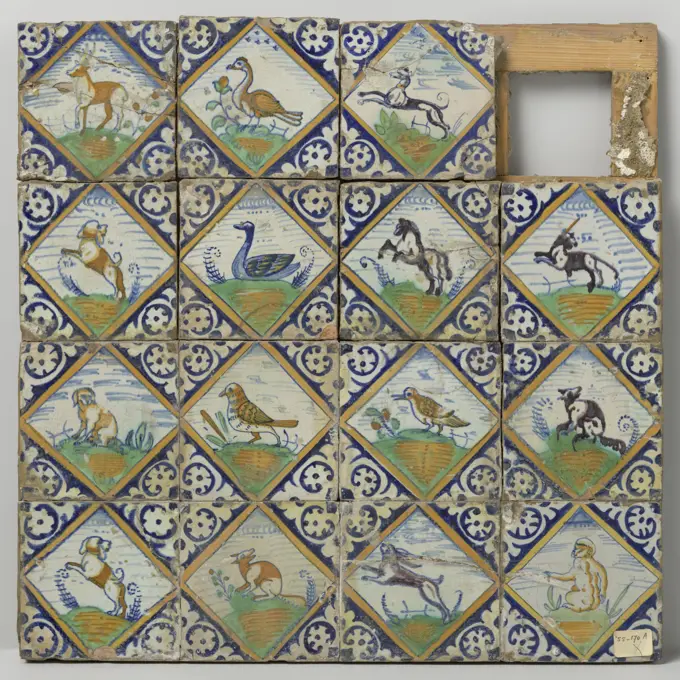
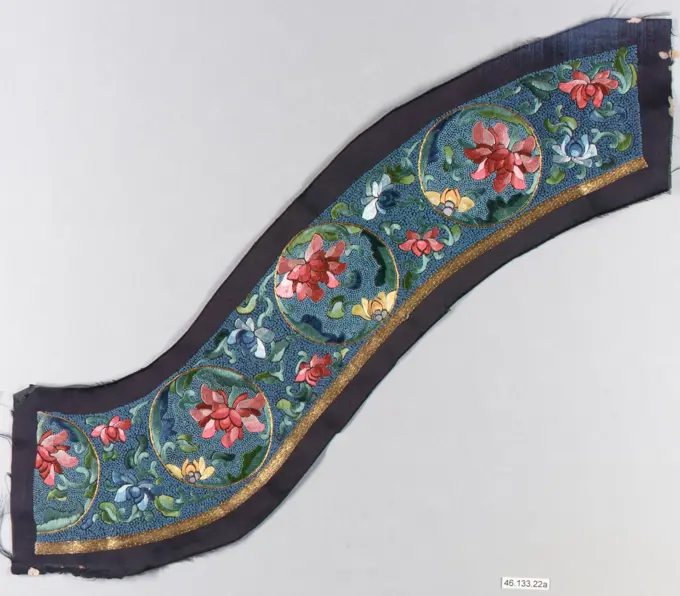
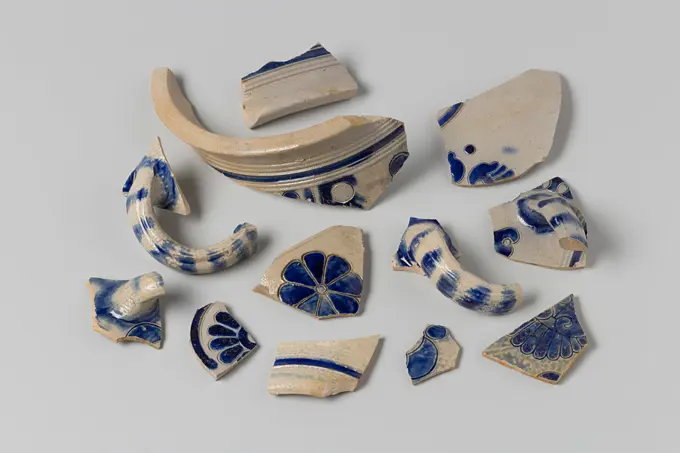
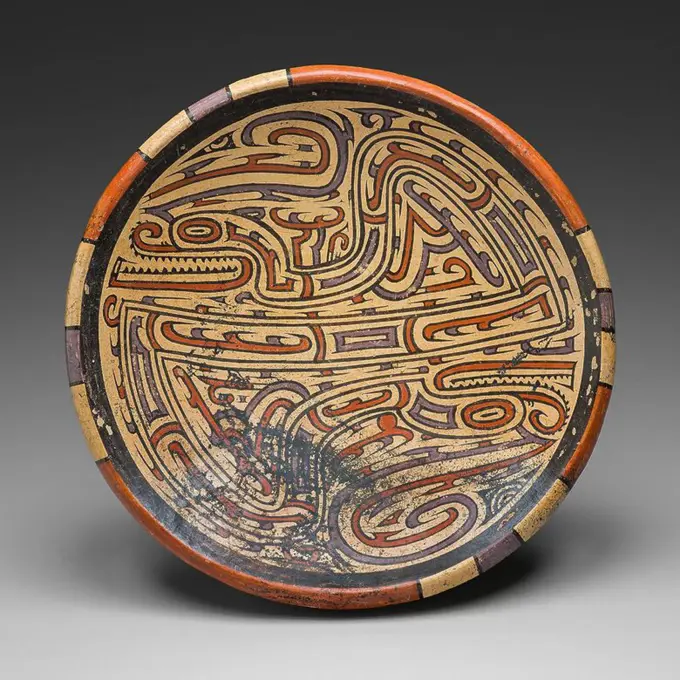
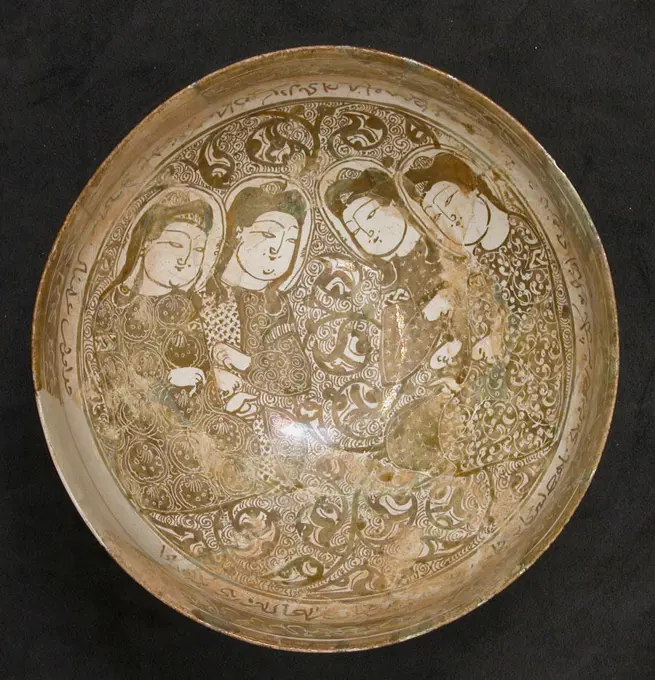
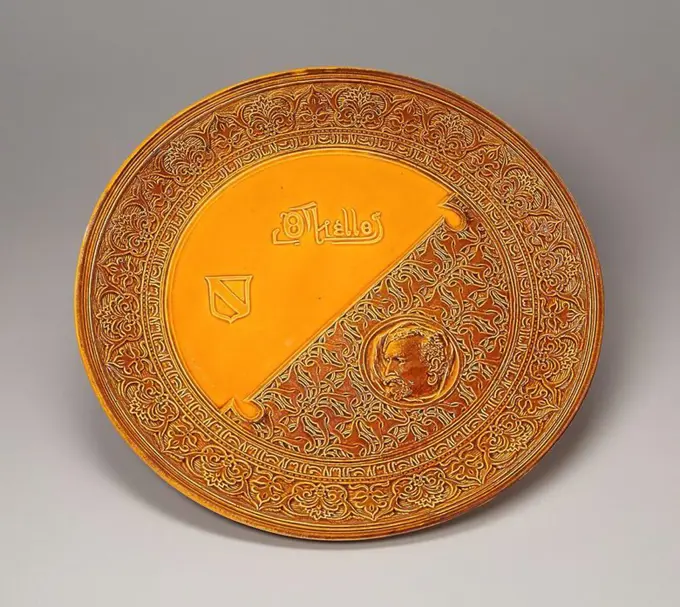
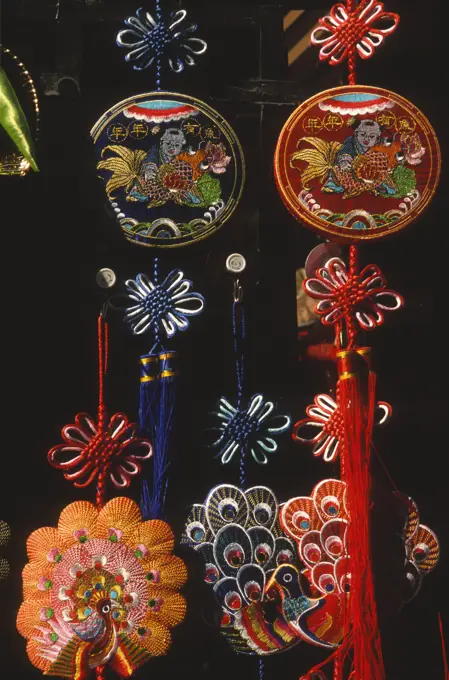
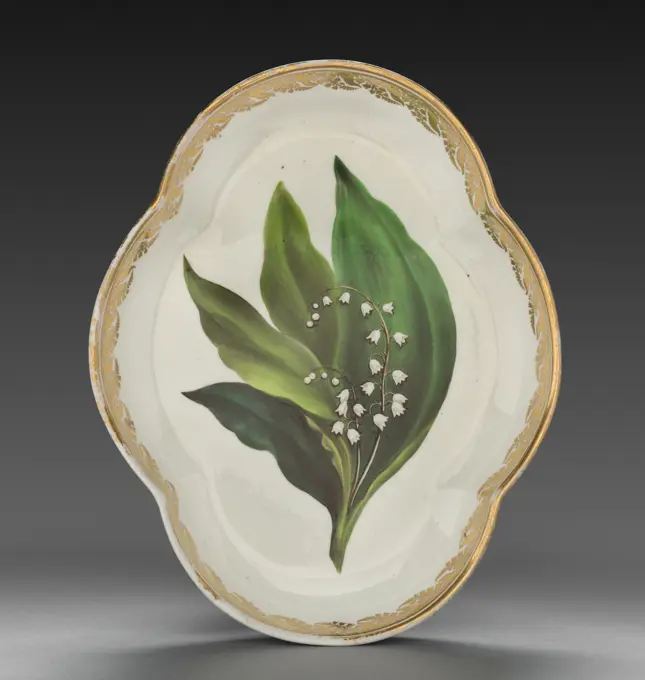
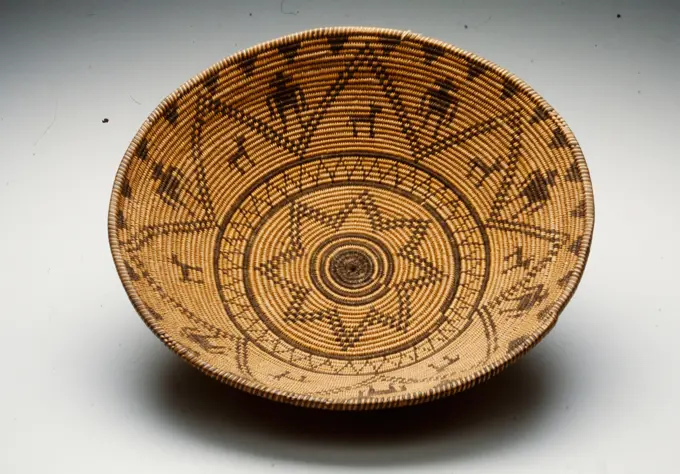
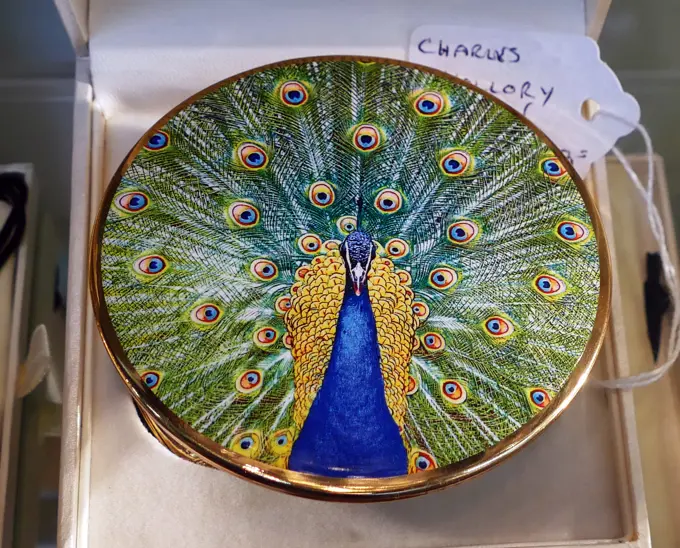
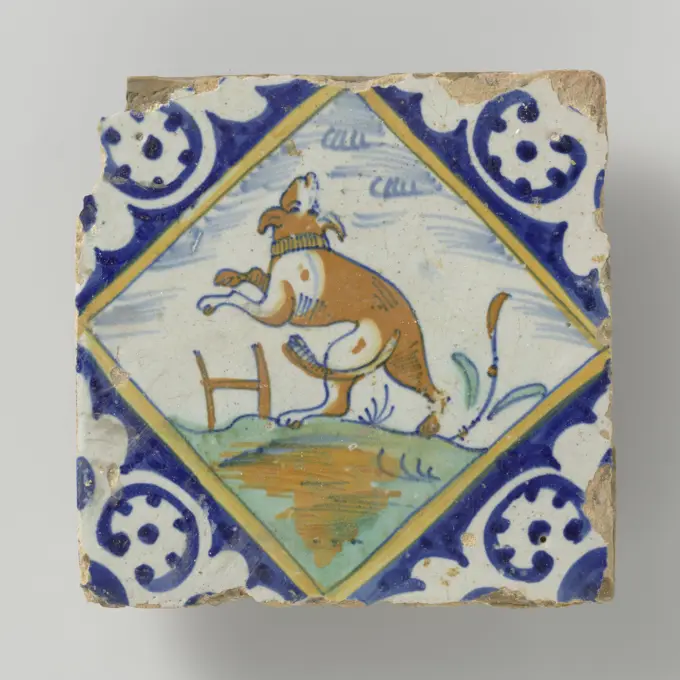
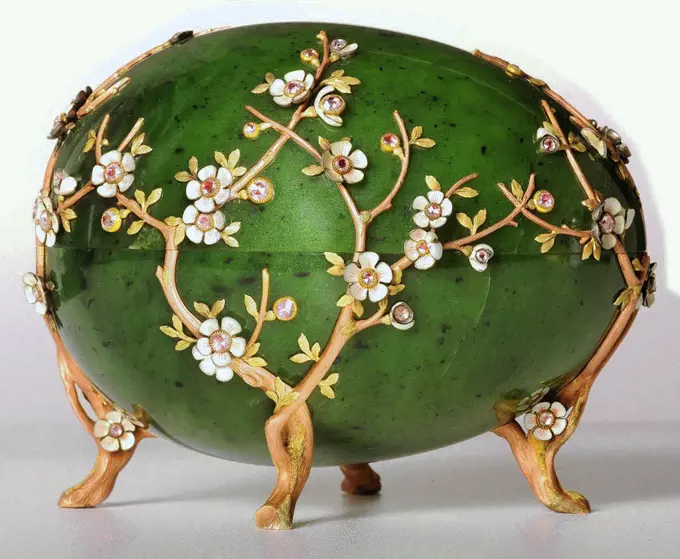
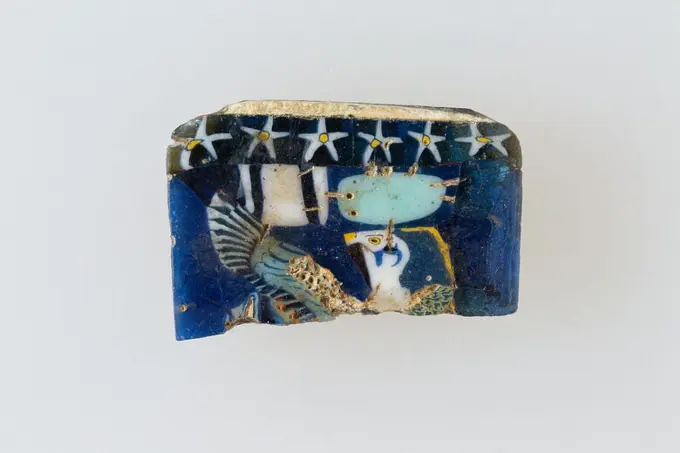
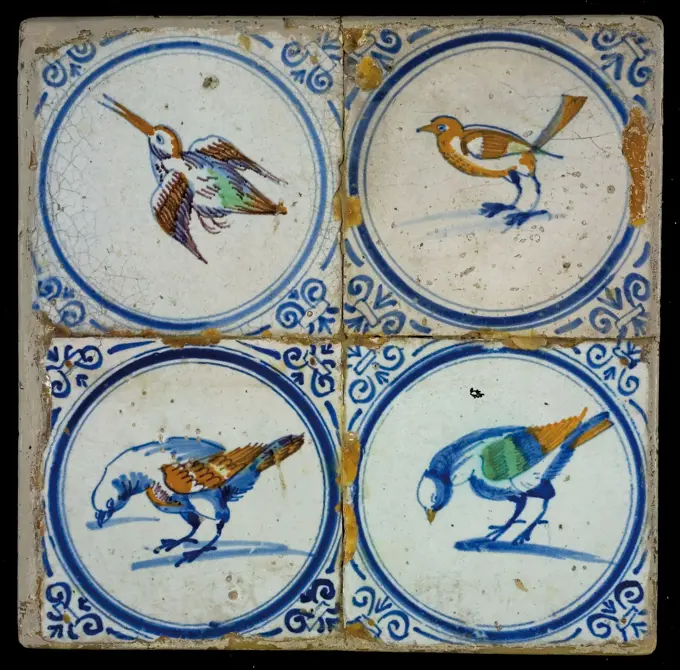
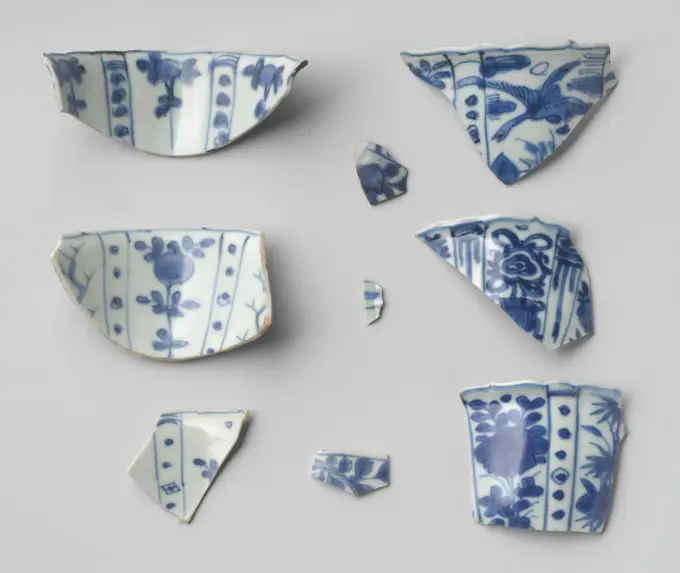
Shards of Kommen from V.O.C. ship De 'Witte Leeuw', Anonymous, Before 1613 bowl Shards Kraakporcelain from V.O.C. ship De 'Witte Leeuw'. Jingdezhen bone china (material)   Sint-HelenaDrapery Tieback. Dimensions: Diam. 4 3/4 in. (12.1 cm). Date: 1810-60. Museum: Metropolitan Museum of Art, New York, USA.Shards Kraakporcelain from V.O.C. ship De 'Witte Leeuw', Anonymous, Before 1613  Shards of cracking porcelain plates from V.O.C. ship De 'Witte Leeuw'. Jingdezhen bone china (material)   Sint-HelenaLuncheonplate.  Manufacturer: Onondaga Pottery Company, American, 1871-1966Blue and white dish with ruyi head from the Ming Dynasty. Dated 15th CenturyDish (ôzara). unknown, craftsmanPlate. Taizan (wł. Takahashi Yohei), authorSet of six small heart-shaped dishes. Delft, c. 1735-1755tin-glazed earthenware (faience)Close-up of black and white patterned Fornasetti plates viewed from abovePlate with armorial design, one of a pair, c. 1802, Worcester Porcelain Works (a.k.a. Royal Worcester Porcelain Company), Worcester, England, est. 1751, 1 1/4 x 9 3/8 in. (3.2 x 23.81 cm), Porcelain, England, 18th-19th centuryBox with Design of Deer and Bush Clover 19th century Japan. Box with Design of Deer and Bush Clover. Japan. 19th century. Gold maki-e inlaid with mother-of-pearl and pewter on black lacquer. Edo period (1615-1868). LacquerStar-Shaped Tile. Dimensions: W. 9-1/4 in. (23.5 cm). Date: first half 15th century.Eight-pointed star tiles from Nasrid Spain are rare, but this example bears centralized vegetal motifs specific to Málaga lusterware. Poetic inscriptions played an important role in the architectural decoration of Andalusia. Around the rim an Arabic inscription refers to the art of ceramic glazing. Museum: Metropolitan Museum of Art, New York, USA.Paperweight 1843-1865 Lunéville. Glass . Baccarat GlassworksDish of lead glaze pottery, with deepened flat. Dish of lead maze. The flat is deepened and decorated with three concentric circles in relief, where around two circular arranged sets of dimples. The wide edge has a series of studs interspersed with dimples. The dish is covered with red-brown, blue, green and purple and yellow-white slibleages shaken. The back is covered with brown, red-brown and yellow-white shaken sliblagen.Field of sixteen tiles with animals, anonymous, c. 1580 - c. 1625 Field of tiles each with a multicolored (blue, orange, yellow, green and purple) painted animal within a squared. In the corners, filling technique ornament. Originally consisting of sixteen tiles (4 x 4); Of these, 1 was loosened (see BK-1955-170-A-1). Netherlands earthenware. tin glaze majolica Field of tiles each with a multicolored (blue, orange, yellow, green and purple) painted animal within a squared. In the corners, filling technique ornament. Originally consisting of sixteen tiles (4 x 4); Of these, 1 was loosened (see BK-1955-170-A-1). Netherlands earthenware. tin glaze majolicaDish ca. 1870 Bohemian. Dish 207919Collar and yoke section late 18th century China. Collar and yoke section 69768Scherven van potten uit het wrak van de Oost-Indiëvaarder Hollandia.Stoneware, Rhenish, Westerwald, pot; fragm of rims, everted, flat, relieved bands underneath on the exterior; fragm of bodies with engraved and blue painted decorative, floral motifs; fragm of handles, horizontal, with blue painted decorative bands.Scene tile, house on hill, corner motif in blue quarter rosette, wall tile tile sculpture ceramics pottery glaze, baked 2x glazed painted sprinkled yellow shard square two nail holes. Central decor blue on white fond in circle with eight-sided frame purple sprinkled.Nistegel, anonymous, 1615 - 1635 Nistegel with scalloped long side. The side of this long side is decorated with tendrils. The top of the tile is decorated with a multicolored (blue, green, yellow and orange -brown) rosette surrounded by fruits and flowers, within a four -pass frame. In the corners, filling technique ornament. Netherlands earthenware. tin glaze majolica Nistegel with scalloped long side. The side of this long side is decorated with tendrils. The top of the tile is decorated with a multicolored (blue, green, yellow and orange -brown) rosette surrounded by fruits and flowers, within a four -pass frame. In the corners, filling technique ornament. Netherlands earthenware. tin glaze majolicaPedestal Bowl Depicting Bicephalic Footed Serpent with Headcrest. Coclé; Possibly Los Santos province, Panama. Date: 700 AD-1100. Dimensions: 15.2 × 29.2 cm (6 × 11 1/2 in). Ceramic and pigment. Origin: Los Santos, Provincia de. Museum: The Chicago Art Institute, Chicago, USA.Field of four tiles. Four tiles (2 x 2) each with a multicolored (blue, green, orange and purple) painted flower on a ground.Bowl 13th century. Bowl 450949Othello Plaque. Made by Rookwood Pottery; American, 1880-1960; Modeled by J.C. Meyenberg, 1884; American, late 19th-early 20th century; Retailer: Duhme & Co.; American, unknown. Date: 1884. Dimensions: Diam. 40.6 cm (15 1/4 in.). White slip decorated earthenware with "Standard" glaze. Origin: Cincinnati. Museum: The Chicago Art Institute, Chicago, USA.China, Tianjin, handicraft display,Quatrelobed Dish from Dessert Service: Lily of the Valley, c. 1800. Derby (Crown Derby Period) (British). Porcelain; overall: 4.2 x 25.6 x 20.7 cm (1 5/8 x 10 1/16 x 8 1/8 in.). Each dish is decorated with recognizable plants, the names of which are inscribed on the base in both Latin and English. Identifying the blossoms only became customary in the late 18th century when a single piece of porcelain was decorated with one species, and flowers were represented along with leaves, stems, seed pods, and roots. All of this reflects Carolus Linnaeuss recent invention of a scientific method to categorize all known flora. The decorations on the Derby factorys products derive from contemporary English botanical publications. For instance, illustrations in William Curtiss The Botanical Magazine served as models for the French marigold and nettle-leaved bell flower on the dessert service.Basket, 19th-20th century, 4 x 15 in. (10.16 x 38.1 cm), Plant fiber, United States, 19th-20th centuryTray;  19th/20th century (1870-00-00-1910-00-00);Peacock Powder Compact by Charles Mallory. 2019Loose tile from a tile field with tiles with animals, anonymous, c. 1580 - c. 1625 Part of Tegelveld BK-1955-170-A. Netherlands earthenware. tin glaze majolica Part of Tegelveld BK-1955-170-A. Netherlands earthenware. tin glaze majolicaFUENTE CON BORDE RIZADO - VIDRIADA Y PINTADO. Location: ALFARERIA. Coruña. SPAIN.Faberge egg by anonymous artist, Private Collection, H 11, 5Inlay, falcon with spread wings. Dimensions: H. 1.2 × W. 1.9 cm (1/2 × 3/4 in.). Date: 100 BC-100 AD.A mosaic glass technique allowed multiples of an image to be created: a figural or design composition was made by bundling colored glass canes, which were then drawn out into a long bar. The bar was then sectioned at right angles, probably by striking the bar with appropriate tools, to produce small inlay tiles. The tile would then be smoothed and polished on the face intended to appear outwards.Such elements could also be used side by side to create repeating patterns. Or if the rod presented one half of a scene or an element that was symmetrical, a tile and a reversed tile from the same rod could be put together to form a complete whole. Museum: Metropolitan Museum of Art, New York, USA.Ancient China: Ceramic Funerary Box, Qing Dynasty, 1644 -1912 AD.Animal tile, dog standing on ground, corner motif palmet, wall tile tile sculpture ceramics pottery glaze tin glaze, baked 2x glazed painted Ruddy shard square two nail holes. blue yellow green and orange on white fond.Shards of a sign from V.O.C. ship De 'Witte Leeuw', Anonymous, Before 1613 plate (dishes) Part of a sign and a loose shard from V.O.C. ship the 'Witte Leeuw', 45 present. Jingdezhen bone china (material)   Sint-HelenaTile field, four tiles, animal decor, orange, blue and green on white, four birds, including kingfisher, corner pattern ossenkop, tiled field wall tile tile sculpture ceramics pottery iron glaze metal, baked 2x glazed paintedPlate with W van Wilhelmina. Pottery plate, decorated with a crowned letter W on a black background in a wreath of red and black leaf ornament. At the rear the inscription: "Welcoming Amsterdam to his children, inauguration 1898. Marked with: Petrus Regout & Co. Maastricht.