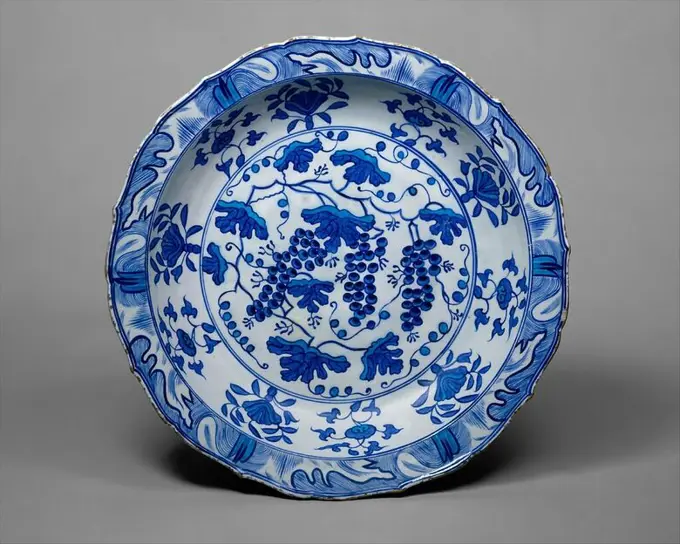
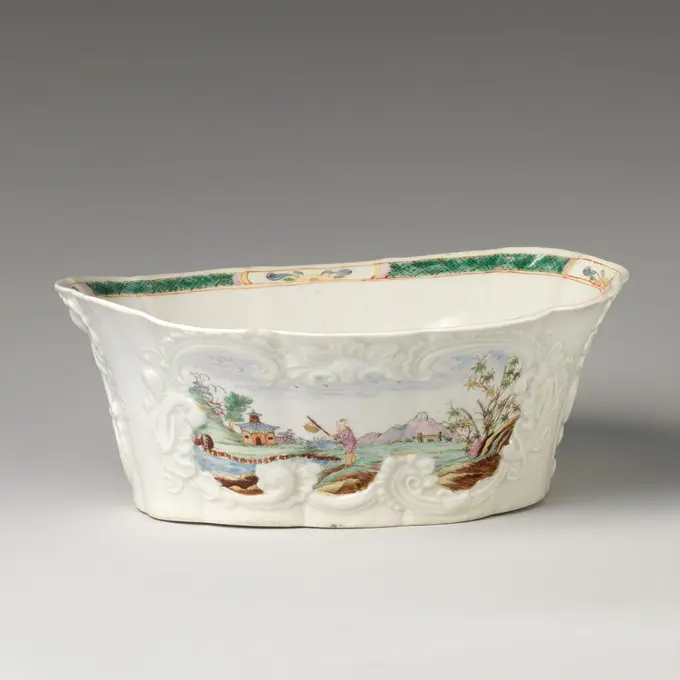
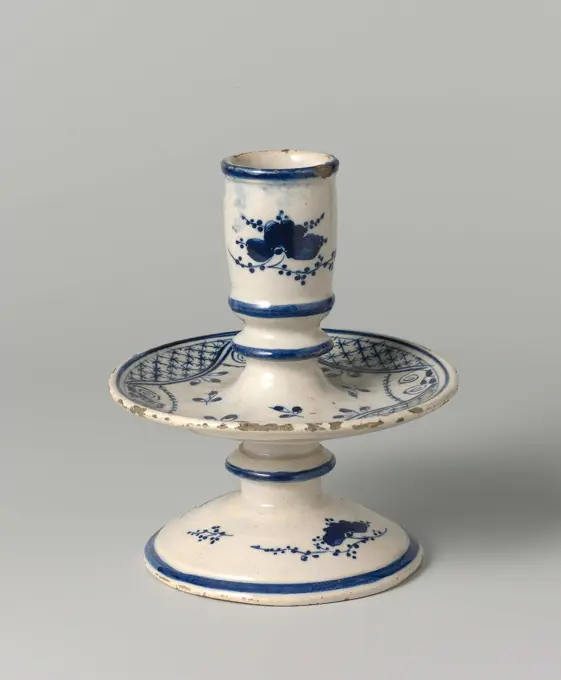
Decorative Porcelain Dishes

A collection of intricately designed porcelain dishes featuring colorful floral and landscape motifs, showcasing various cultural styles from the 17th to 18th centuries.

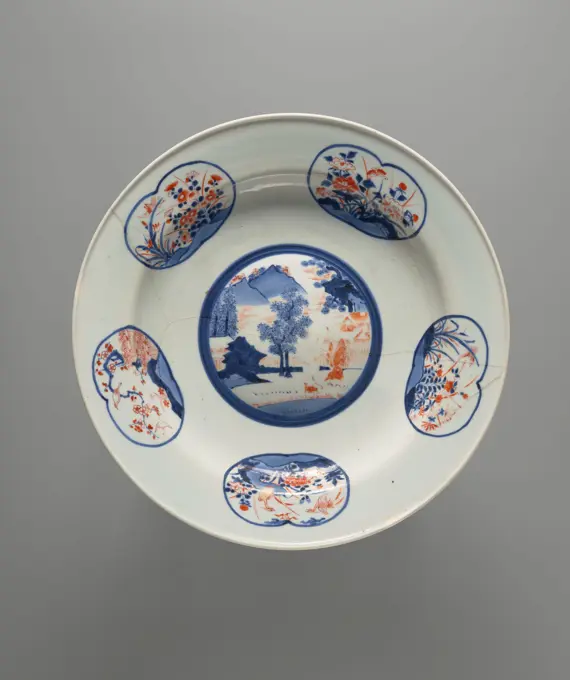
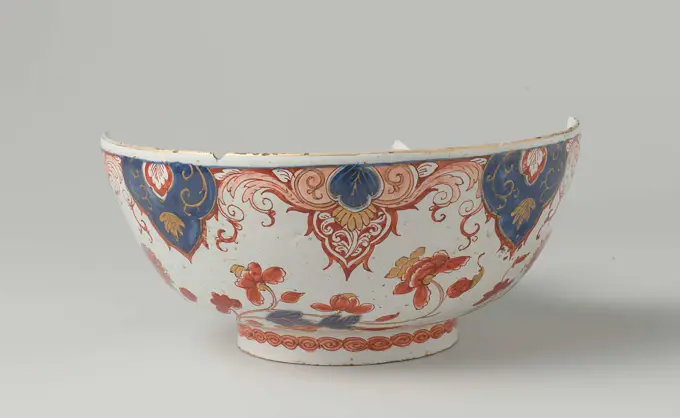
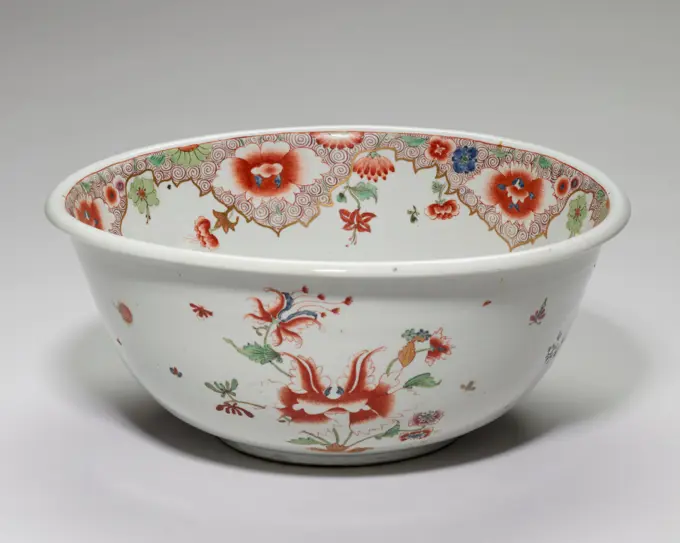
Bowl, late 17th century, Unknown Japanese, H.4 x Dia.10 in., Imari ware; porcelain with underglaze blue and overglaze enamels and gold, Japan, 17th century, The bold division of this bowl into symmetrical, but fancifully, delineated compartments around a central roundel is indicative of the fully developed Imari style of the late 17th century. Such wares were brought to Europe in great numbers by the Dutch East India Company where they were in high demand among British and Dutch collectors.
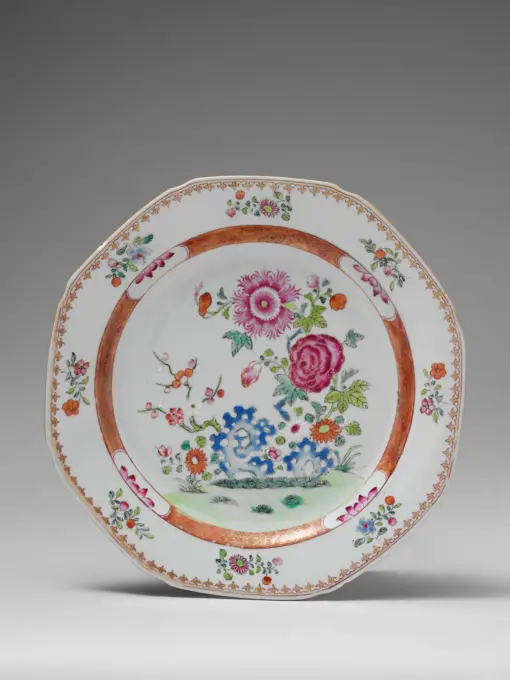
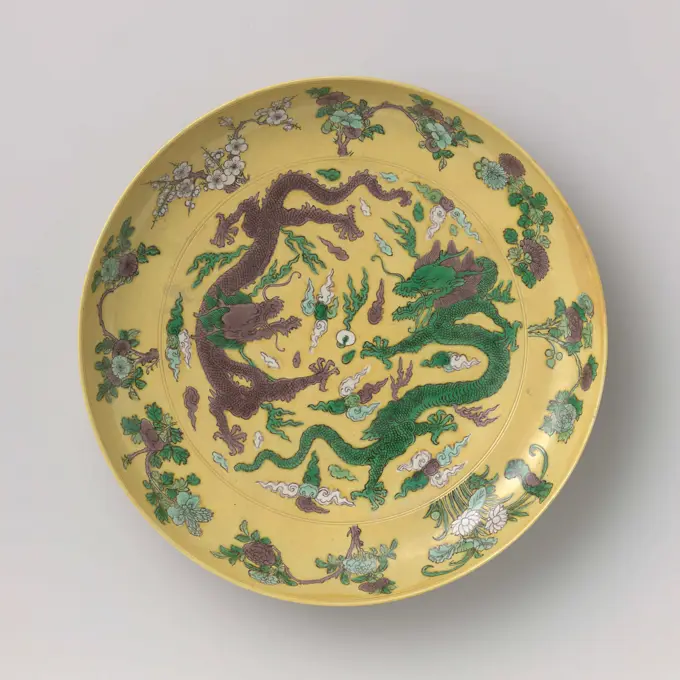
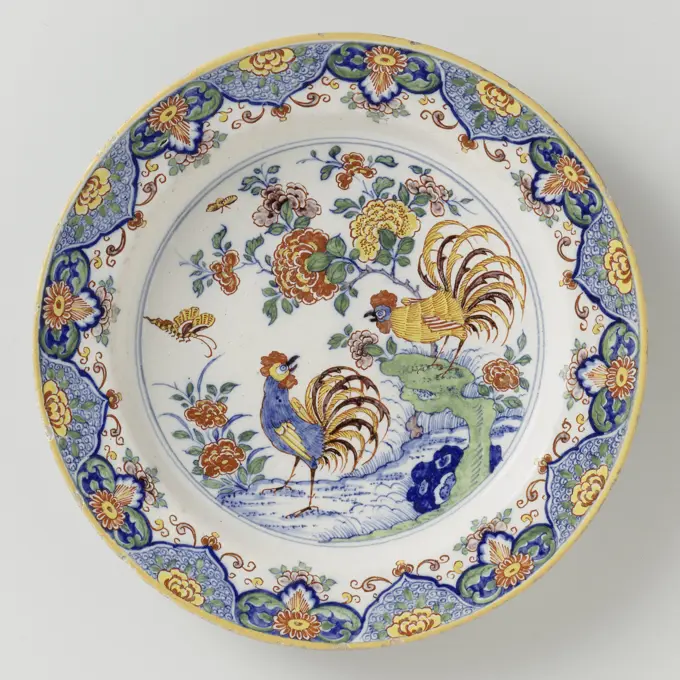
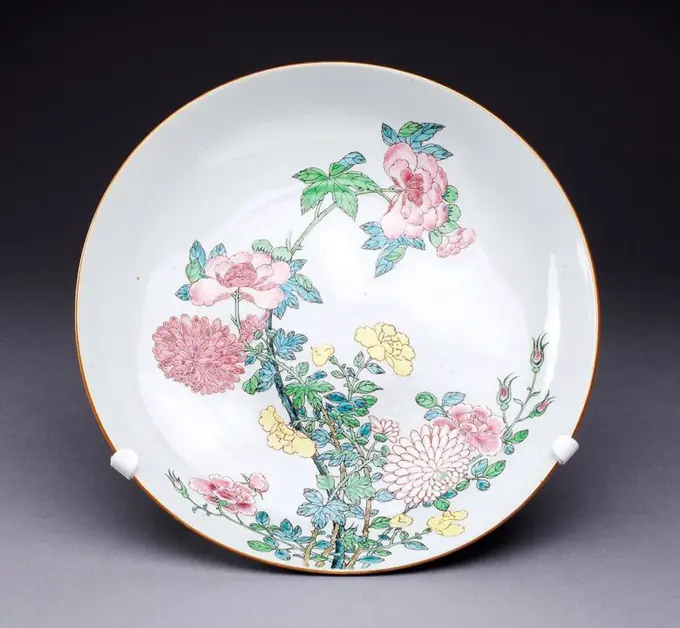
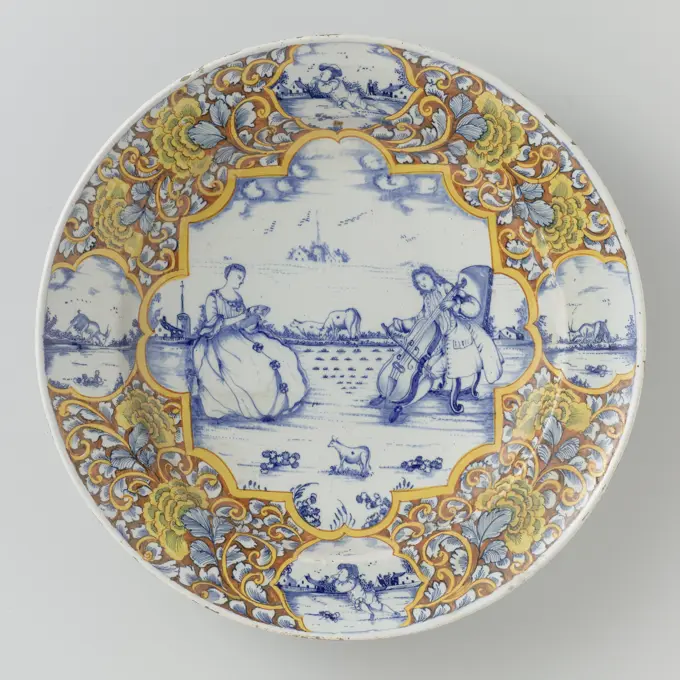
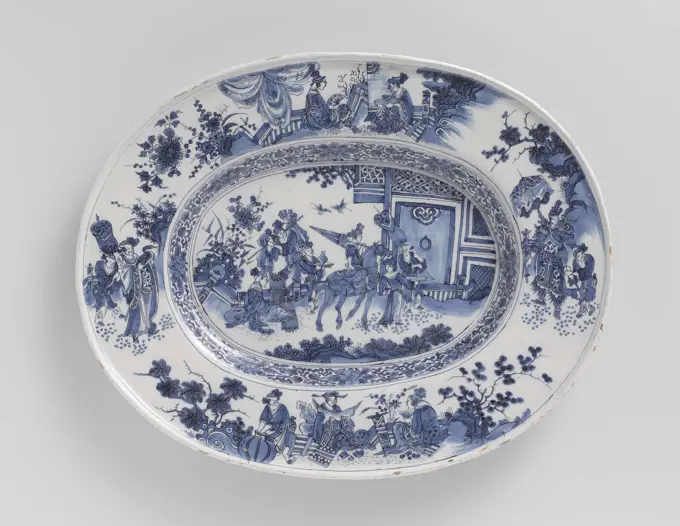
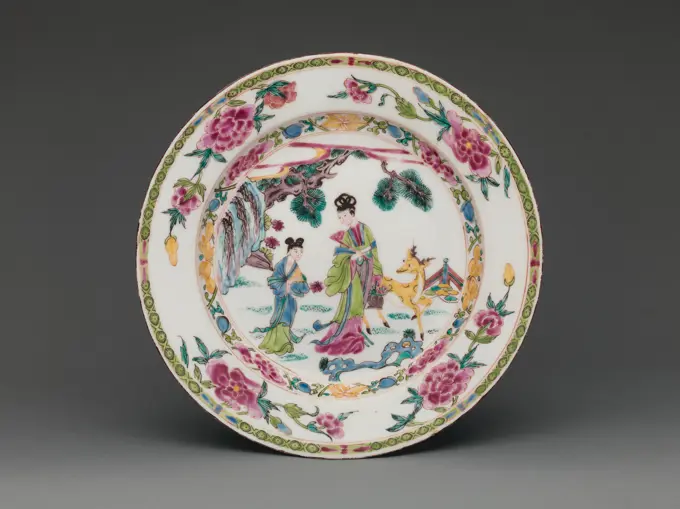
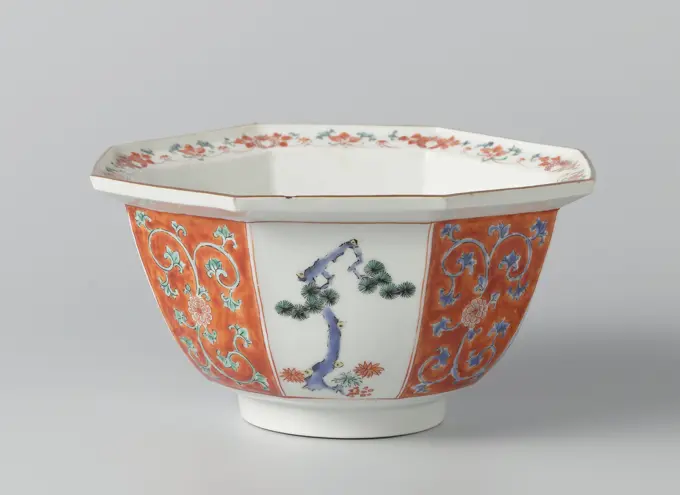
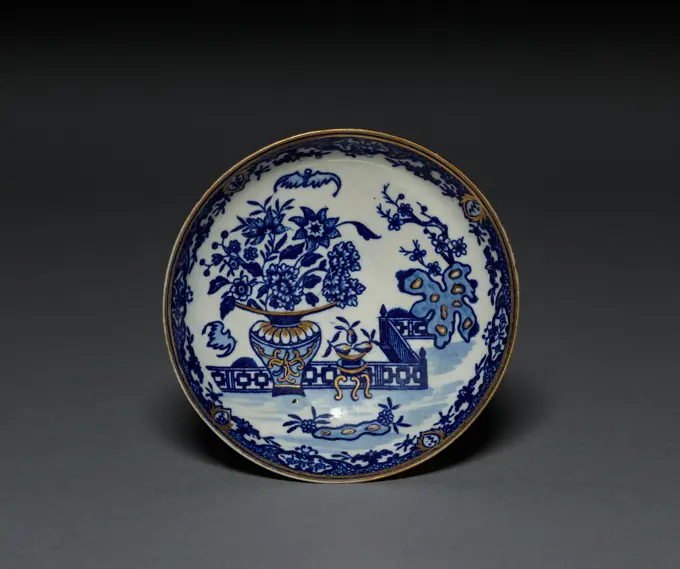
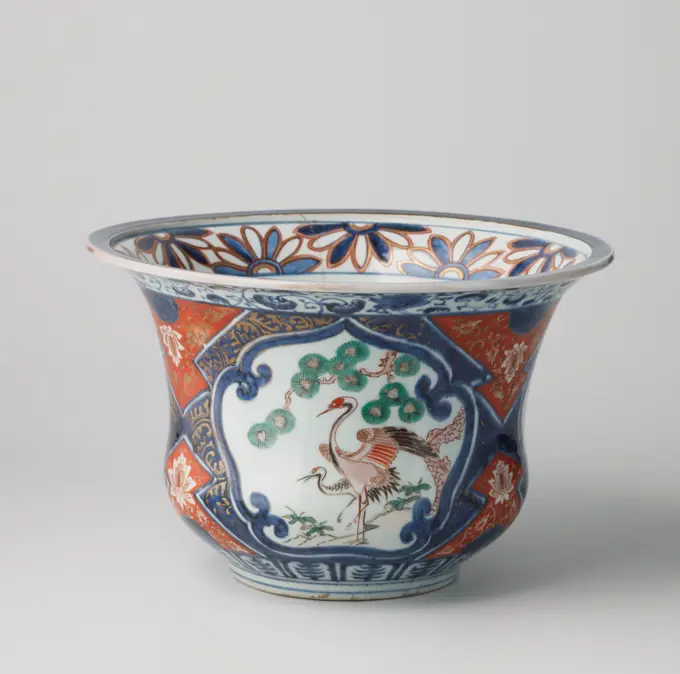
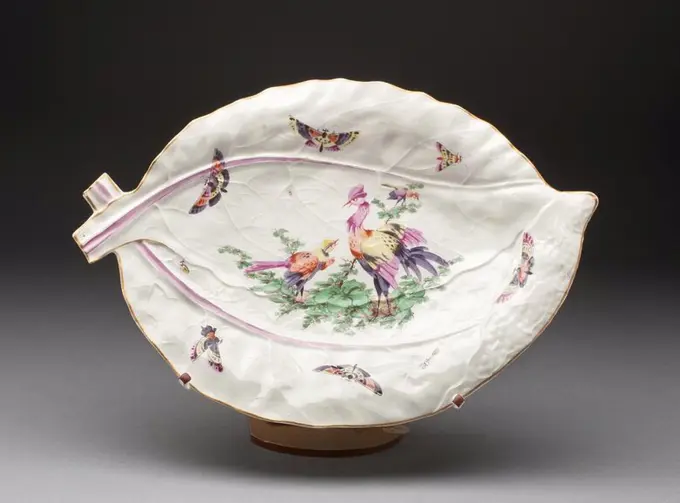
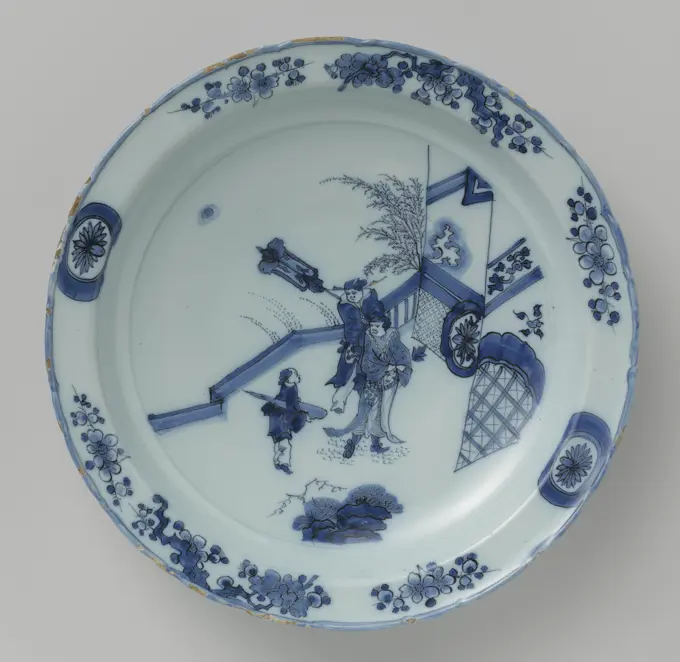
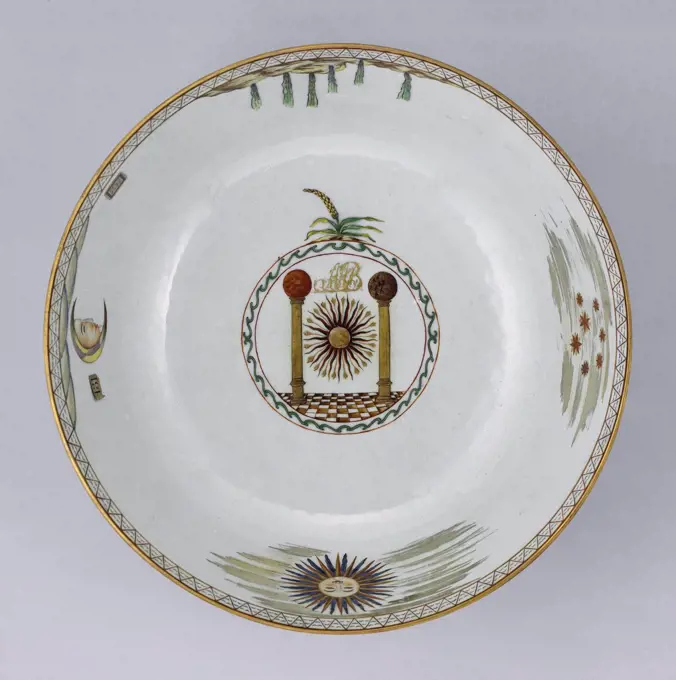
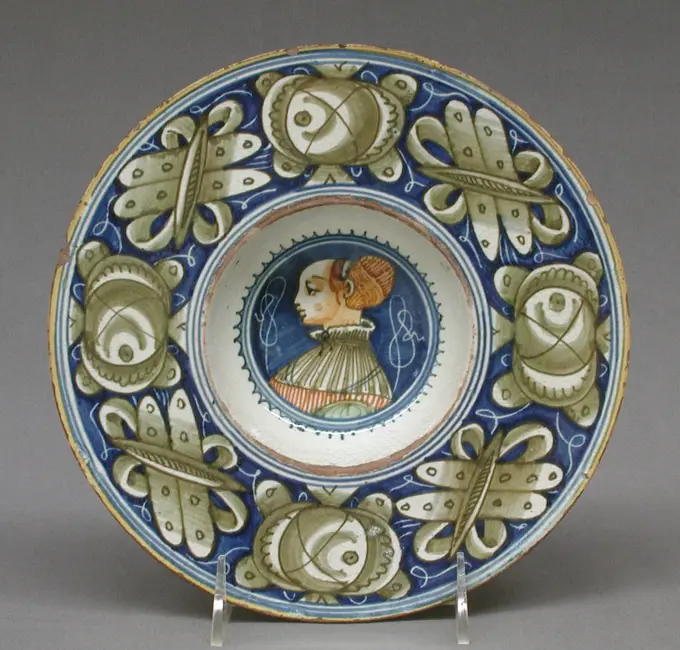
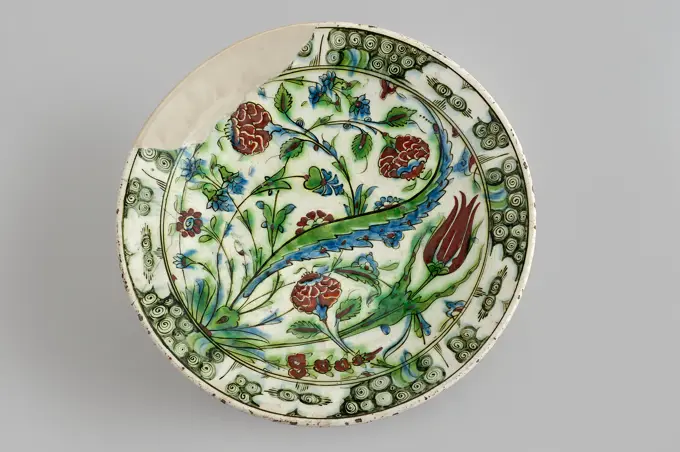
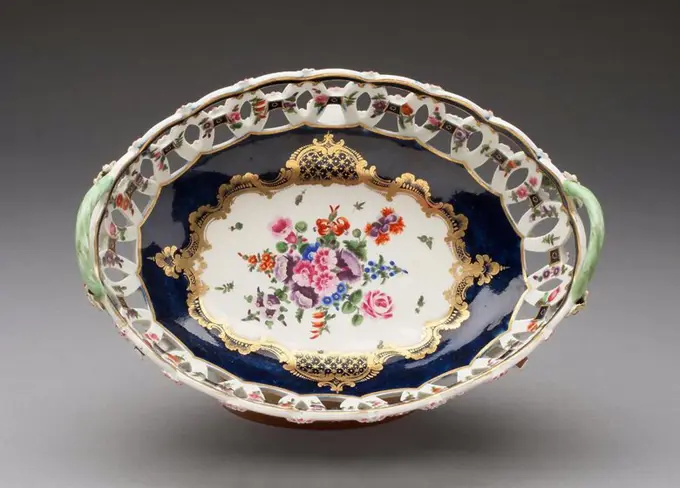
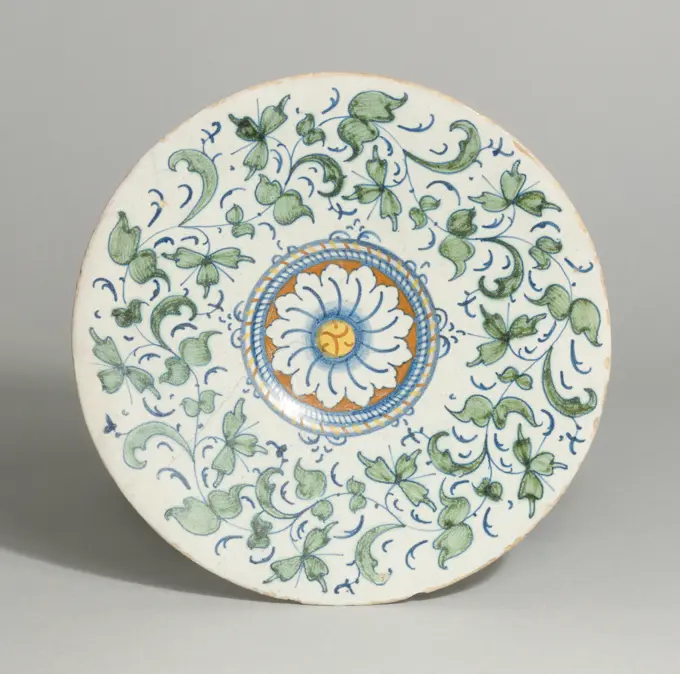
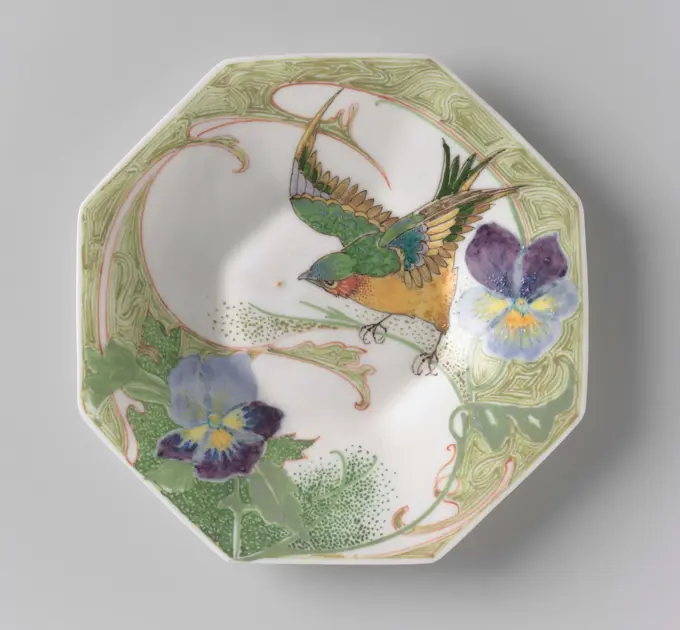
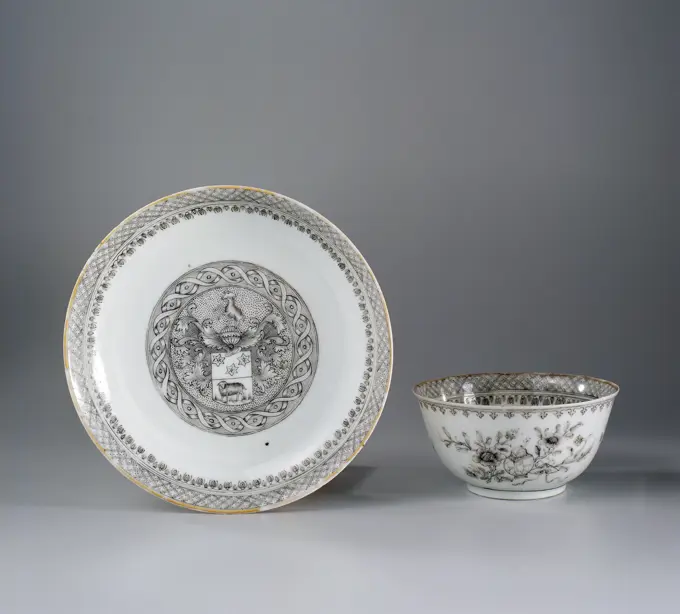
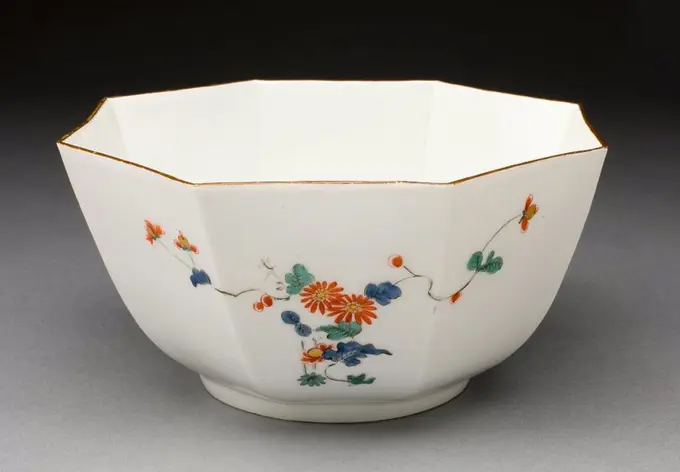
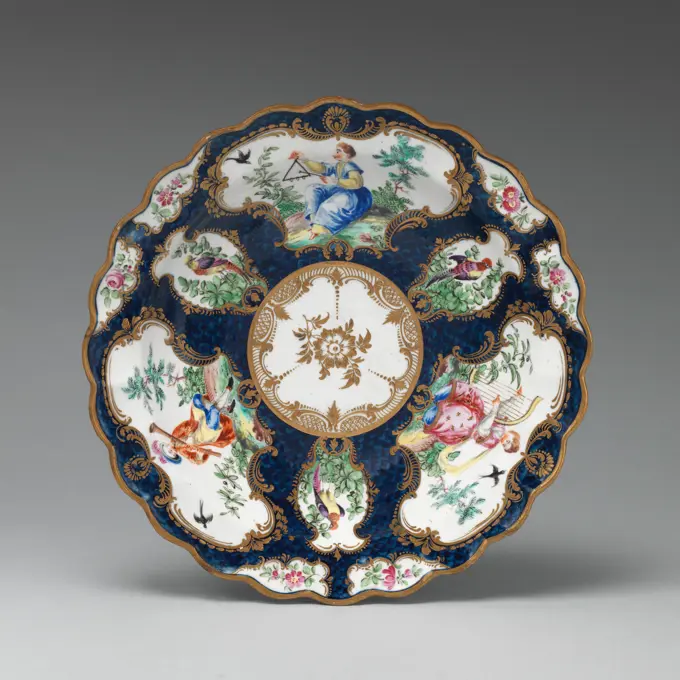
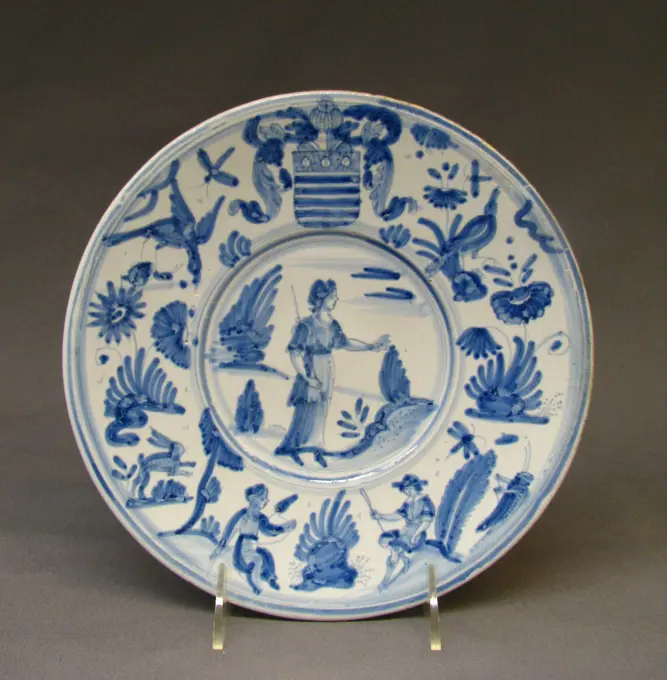
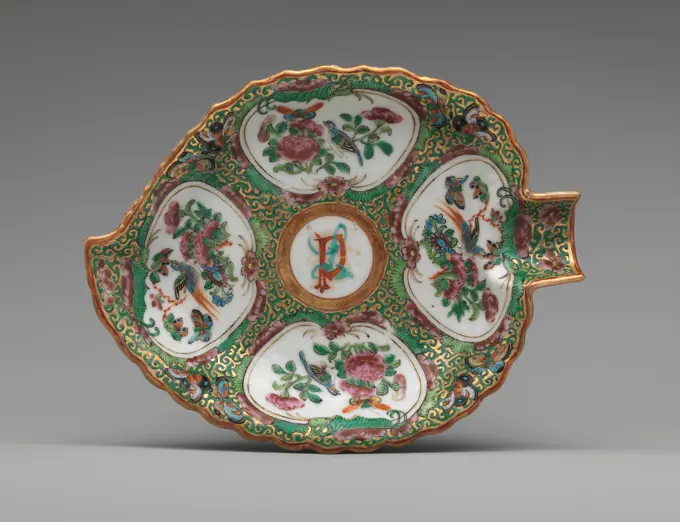
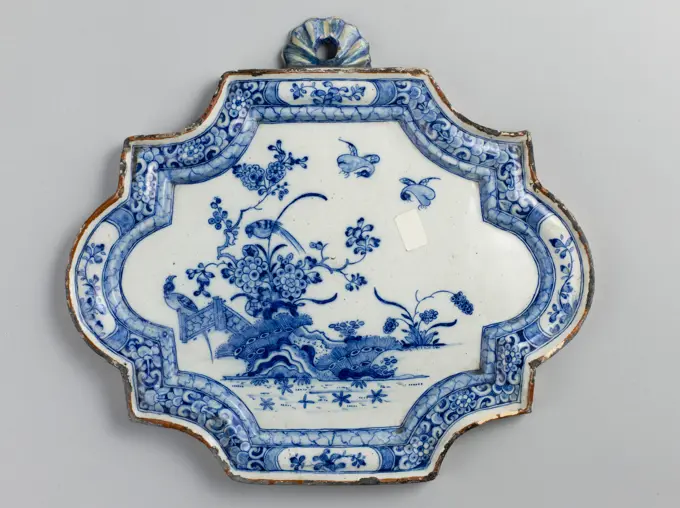
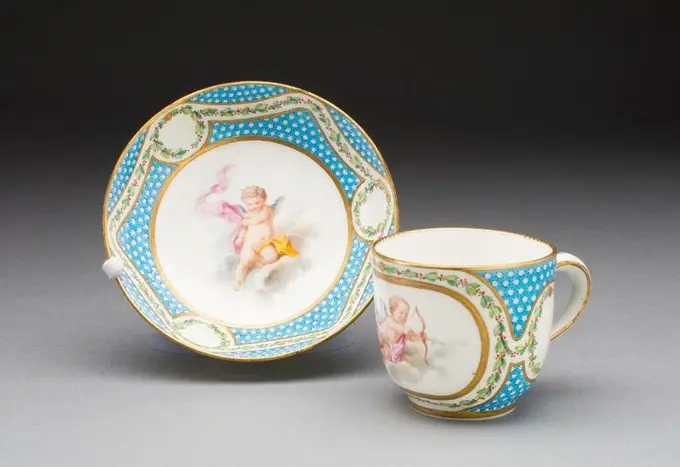
Saucer-dish with powder blue and panels in reserve with flower sprays, landscapes en precious objects, anonymous, c. 1700 - c. 1724 Dish with round wall of porcelain, painted in underly glaze blue and on the glaze blue, red, green, yellow, eggplant, black and gold. The front and back of the dish are covered with bleu poudré (powder blue) with five scalloped cartouches saved; On the flat a rock with peon branches; On the wall a prunus branch, a river landscape, a flower branch and antiques and valuables (vase, artemisia leaf), with a flower in gold on the blue in between; The rear with worn flower branches in gold. Marked on the bottom with a window in a double circle. Two chips in the edge. Bleu Poudré with Famle Verte. China porcelain. glaze. cobalt (mineral). gold (metal) painting / gilding / vitrification Dish with round wall of porcelain, painted in underly glaze blue and on the glaze blue, red, green, yellow, eggplant, black and gold. The front and back of the dish are covered witRound plate of multicolored painted Faïence, Anonymous, c. 1760 - c. 1800 Fowence plate multicolored painted with flower decoration. Delft . Fowence plate multicolored painted with flower decoration. Delft .Dish, multi-colored painted with a kakiemon decor, Meissener Porzellan Manufaktur, c. 1740 - c. 1745 Round dish of painted porcelain. The dish has a ribbed and scalloped edge. The dish is painted with a tiger around a bamboo stalk, stripped Indianic blums, butterflies and branches with birds. The edge is decorated with the 'altbrandenstein' pattern. The dish is marked. Float porcelain Round dish of painted porcelain. The dish has a ribbed and scalloped edge. The dish is painted with a tiger around a bamboo stalk, stripped Indianic blums, butterflies and branches with birds. The edge is decorated with the 'altbrandenstein' pattern. The dish is marked. Float porcelainDish 1720-1730 China. Hard-paste porcelain and polychrome enamels .Bowl, late 17th century, Unknown Japanese, H.4 x Dia.10 in., Imari ware; porcelain with underglaze blue and overglaze enamels and gold, Japan, 17th century, The bold division of this bowl into symmetrical, but fancifully, delineated compartments around a central roundel is indicative of the fully developed Imari style of the late 17th century. Such wares were brought to Europe in great numbers by the Dutch East India Company where they were in high demand among British and Dutch collectors.Plate Chinese, for American market 1765-70 Chinese export porcelain was one of the luxuries deemed essential to a well-appointed eighteenth-century house. Until 1784, when direct trade began between China and America, Chinese porcelain came to the colonies by way of Europe. This soup plate was part of a large service that descended in the Verplanck family of New York. View more. Plate. Chinese, for American market. 1765-70. Hard-paste porcelain. Made in ChinaDish, painted multi-colored with a kakiemon decor. Round dish of painted porcelain. The dish has a ribbed and scalloped edge. The dish is painted with a tiger to a bamboo stalk, sprinkled Indian blums, butterflies and branches with birds. The edge is decorated with the 'Altbrandenstein' pattern. The dish has been marked.Dish. unknown, craftsmanYosemite, Thomas and Richard Boote, founded 1842, Earthenware with transfer printed decoration, Circular form, the white ground with Japanese-inspired transfer printed polychrome decoration of a woman and child walking in a wooded landscape, the scene superimposed above bands and panels of geometric patterns and stylized flowers; the rim decorated with a geometric-patterned band encircling a ring of stylized flowers and leaves., 1883, ceramics, Decorative Arts, Plate, PlateSaucer with a crane near a peony plant and rock, anonymous, c. 1725 - c. 1749 Porcelain dish, painted on the glaze in blue, red, pink, green, black and gold. On the flat a leaf -shaped cartouche with a crane in a landscape in a flourishing peoning plant and a rock; the wall with flower vines in Bianco Sopra Bianco; The edge with a decorative pattern. Two cracks in the wall. Part of a service. European forms with Famle Rose. China porcelain. glaze. gold (metal) painting / gilding / vitrification Porcelain dish, painted on the glaze in blue, red, pink, green, black and gold. On the flat a leaf -shaped cartouche with a crane in a landscape in a flourishing peoning plant and a rock; the wall with flower vines in Bianco Sopra Bianco; The edge with a decorative pattern. Two cracks in the wall. Part of a service. European forms with Famle Rose. China porcelain. glaze. gold (metal) painting / gilding / vitrificationFluted saucer-dish with birds, flowering plants and brushwood fences, anonymous, c. 1700 - c. 1724 Porcelain dish with a ribbed wall and lobed edge, painted on the glaze in blue, red, green, yellow and black. On the flat a flowering plant and two flying birds for gathering hedges. On the edge two groups with the 'three friends of winter' (bamboo, prunus, pine). Brown edge. Old label on the bottom with 'Collection Westendorp/ 41'. A few chips and a crack in the edge. Decorated in Europe in the Japanese Kakiemon style. Chinapainter: Europe porcelain. glaze. painting / vitrification Porcelain dish with a ribbed wall and lobed edge, painted on the glaze in blue, red, green, yellow and black. On the flat a flowering plant and two flying birds for gathering hedges. On the edge two groups with the 'three friends of winter' (bamboo, prunus, pine). Brown edge. Old label on the bottom with 'Collection Westendorp/ 41'. A few chips and a crack in the edge. Decorated in Europe in the Japanese KakieSaucer-Dish With Pearl Chasing Dragons on a Yellow Ground. Dish of porcelain with round wall, painted in underglaze blue and on biscuit green, yellow, eggplant and black. On the flat in a rebel medallion two pearl roaching dragons between flames and clouds; on the wall flower branches (O.A. Lotus, Peony, Prunus, Chrysanthemum); The back with dragons. Marked on the underside with the six character mark of Emperor Kangxi in a double circle. Two old labels on the bottom with 'n * 317' and 'W057'. Four cracks in the wall. Email sur biscuit.Saucer-dish with two women beneath a prunus in a fenced garden, anonymous, c. 1700 - c. 1724 Porcelain dish, with modeled tulip motif in the wall and scalloped edge, painted on the glaze in red and gold. On the flat a medallion with two women (long lips) under a prunus tree in a fenced garden with rocks, plants and bamboo. On the wall tulip-shaped compartments with flower areas, also flower courses between the courses; The edge with a geometric pattern with flowers. Milk and blood. China porcelain. glaze. gold (metal) painting / gilding / vitrification Porcelain dish, with modeled tulip motif in the wall and scalloped edge, painted on the glaze in red and gold. On the flat a medallion with two women (long lips) under a prunus tree in a fenced garden with rocks, plants and bamboo. On the wall tulip-shaped compartments with flower areas, also flower courses between the courses; The edge with a geometric pattern with flowers. Milk and blood. China porcelain. glaze. gold (metal) painting /Dish 1720-1730 China. Hard-paste porcelain and polychrome enamels .Teapot stand with two Ladies and a Boy With Butterflies and Flower Sprays. Pattipan of porcelain with six times lobed wall, painted in underglaze blue and on the glaze blue, red, pink, yellow and black. On the flat a cartouche with a sitting lady playing with a child and a lady at a table with a flower in hand; beside them a hare, a vase, stools and two birds; to the cartouche napkin in underglaze blue with butterflies and flower branches in Bianco Sopra Bianco; The inner edge with napkin. Bottom unglazed. Family Rose.Salad Bowl, from the Cabbage Leaf Service (Saladier; Service à Feuilles de Chou) Bowl; Attributed to Léopold Weydinger (père) (French, active 1757 - 1806); Manufactured by Sèvres Porcelain Manufactory (France); soft paste porcelain, vitreous enamel, goldBord van gepolychromeerde faience, anonymous, c. 1750 - c. 1780 Round plate of multi -colored painted faience. The flat is painted with flowers and the edge is divided into courses. Flowers are painted in four large compartments and a Chinese motif in four narrow compartments. Delft earthenware. tin glaze. Round plate of multi -colored painted faience. The flat is painted with flowers and the edge is divided into courses. Flowers are painted in four large compartments and a Chinese motif in four narrow compartments. Delft earthenware. tin glaze.Plate, painted with two roosters and flowers in a landscape, Anonymous, 1752 Fowence board, multi -colored painted with two roosters and flowers in a landscape. Delft . Fowence board, multi -colored painted with two roosters and flowers in a landscape. Delft .Anonymous. Imari decor bowl cover. Porcelain. 18th century. Museum of Fine Arts of the City of Paris, Petit Palais. 122746-31Platter ca. 1860-66 Chinese, for American market. Platter 6585. Dish of Faïence. Many color painted with a large vase.Dish. unknown, male artistPlate; Porzellanmanufaktur du Paquier (Vienna; 1718-1744); around 1730-1740 (1730-00-00-1740-00-00);Dish. China. Date: 1720-1730. Dimensions: Diam. 27.3 cm (10 3/4 in.). Hard-paste porcelain and polychrome enamels. Origin: China. Museum: The Chicago Art Institute, Chicago, USA.A plate; Rosenthal (Selb; Porcelain Factory; 1879-); 1925-41 (1920-00-00-1930-00-00);Plaque (one of a pair) Made 1700-1725 Delft. Tin-glazed earthenware (Delftware) with polychrome decoration .Dish of multi -colored Faïence, Anonymous, c. 1750 - c. 1780 Dish of Faïence. On the flat in blue a muscicating couple in a landscape. A multicolored edge around it. Delft . Dish of Faïence. On the flat in blue a muscicating couple in a landscape. A multicolored edge around it. Delft .. Oval dish of faience with a chinoiserie decoration inspired by the Chinese transition porcelainCovered bowl with hoo-birds, flowering plants and floral scrolls, anonymous, c. 1700 - c. 1724 Porcelain lid bowl with ribbed wall and lobed edge, painted in undermglaze blue and on the glaze red, green and gold. The outer wall of the bowl is divided into four courses with a flying or standing Hoo-Vogel and Bloemranken alternately; Around the foot a flower or fruit branch four times. A fenced garden on the bottom; The inner wall with three flower or fruit branches (fingercitroen, peach). On the inner edge a band with flower vines. Gold Imari. Japan porcelain. glaze. cobalt (mineral). gold (metal) painting / gilding / vitrification Porcelain lid bowl with ribbed wall and lobed edge, painted in undermglaze blue and on the glaze red, green and gold. The outer wall of the bowl is divided into four courses with a flying or standing Hoo-Vogel and Bloemranken alternately; Around the foot a flower or fruit branch four times. A fenced garden on the bottom; The inner wall with three flower or frCome from multicolored padded faïence.kom van faience. Painted multi-colored.Plate ca. 1755 Bow Porcelain Factory British The importance of Chinese porcelain, both for the founding of the Bow factory and for its considerable commercial success in the following decades, is embodied by this Bow plate that dates from around 1755. The plate is painted with a scene of two Chinese women in robes standing in an abbreviated landscape that includes a deer, part of a fence, and rockwork from which a pine tree emerges, and the border is decorated with sprays of peonies. The palette of enamel colors is dominated by a strong rose pink and includes yellow, manganese, and two shades of both green and blue. Both the composition and the distinctive palette closely copy those of a Chinese porcelain plate (fig. 55) made for export approximately twenty to thirty years earlier during the Yongzheng period (1723-35) of the Qing Dynasty (1644- 1911). The palette of colors employed for the Chinese plate is customarily identified in the West by the French term famille rose, a designatioIncense burner (koro). Culture: Japanese, for European market. Dimensions: Height: 4 1/8 in. (10.5 cm). Date: late 17th century.The gift of the Hans Syz Collection endows the Museum with nearly three hundred examples of European and Asian ceramics meticulously acquired by Dr. Syz to chart the migration of models and patterns from East to West. Documenting a continuous process of influence and adaptation, these pieces provide a discriminating review of the nuances of stylistic change resulting from three centuries of trade.Among the most telling comparisons is that of a Japanese incense burner (koro) and its Viennese counterpart. The Japanese model, finely enameled in a palette of light coral, green, and blue in the kakiemon style of late-seventeenth-century Japanese porcelain, is known to have been exported to Europe, as Augustus the Strong, elector of Saxony, acquired an example in 1723. While no records are known to survive from Du Paquier's factory, it is likely that the koro reacOctagonal bowl with the 'three friends of winter', floral scrolls and hoo-vogel, anonymous, anonymous, c. 1670 - c. 1690 Octagonal bowl with upright edge, painted on the glaze in red, green, yellow, black and gold with flower vines on the sides of the outer wall against a red font and the 'three friends of winter' (Prunus, bamboo, pine), pine), On the inside in the bowl a Hoo bird and leaf and flower vines on the edge. Kakiemon. Japan porcelain. glaze. gold (metal) painting / gilding / vitrification Octagonal bowl with upright edge, painted on the glaze in red, green, yellow, black and gold with flower vines on the sides of the outer wall against a red font and the 'three friends of winter' (Prunus, bamboo, pine), pine), On the inside in the bowl a Hoo bird and leaf and flower vines on the edge. Kakiemon. Japan porcelain. glaze. gold (metal) painting / gilding / vitrificationSaucer, 1760-1780. Worcester Porcelain Factory (British, established 1751). Porcelain; overall: 12.1 x 7 cm (4 3/4 x 2 3/4 in.).Anonymous / 'Circular Chinese porcelain platter. Compañía de las Indias'. First half of the XVIII century. Hard-paste porcelain. Museum: Museo del Prado, Madrid, España.Flowerpot with cranes, shishi, hoo-bird and lotur scrolls, anonymous, c. 1700 - c. 1799 Porcelain flowerpot, painted in underly glaze blue and on the glaze red, green, black and gold. On the outer wall three scalloped cartouches with two cranes in a pine, a Hoo bird above a tree and one with a shishi (lion dog) with a peony. Around the cartouches leaf vines interrupted by two opposite sections from the edge and the foot with lotus vines and half a flower rosette. Around the foot a band with petal -shaped compartments with flower branch; On the outer edge a bond with Lotus vranks. The inner edge with a strap with half flower straws. In the bottom a hole, closed with a cork. Two cracks in the wall restored with two staples. Imari. Japan porcelain. glaze. cobalt (mineral). gold (metal) painting / gilding / vitrification Porcelain flowerpot, painted in underly glaze blue and on the glaze red, green, black and gold. On the outer wall three scalloped cartouches with two cranes in a pine, a HDish polychrome painted majolica, Anonymous, c. 1725 - c. 1775Dish with Imari Pattern, hard paste porcelain, vitreous enamel, gold, Dish with segmented decoration of gilt and enamel florals on alternating white and blue ground. At center, a white medallion with pink flowers. Gilding at rim., England, after 1833, ceramics, Decorative Arts, dish, dishPlate with flower basket., Anonymous, c. 1770 - c. 1820 Round plate of multi -colored painted faience, with a multicolored decoration of a flower basket on the flat. On the edge, five stylized flowers are painted in the colors blue, red and manganese, which are interspersed with five stylized plants in the colors green and red. Delft earthenware. tin glaze. Round plate of multi -colored painted faience, with a multicolored decoration of a flower basket on the flat. On the edge, five stylized flowers are painted in the colors blue, red and manganese, which are interspersed with five stylized plants in the colors green and red. Delft earthenware. tin glaze.Saucer-dish with three women and a peacock in a fenced garden in front of a pavilion, anonymous, c. 1700 - c. 1724 Scale of porcelain with round wall, painted in underly glaze blue and on the glaze blue, red, green, yellow, eggplant and black. On the flat a medallion with three women (long lips) with a peacock in a fenced garden for a pavilion, different lucky symbols behind the pavilion; To the medallion a bond with Ruyi motif; On the wall groups of happiness symbols, such as valuables (Artemisiablad, window), Taoist symbols (castagnets, lotus stem) and antiques (incense burner, tripod, scepter, books) interspersed with a cartouche of flower vines; The back with three flower branches. Marked on the underside with a lotus in a double circle. Rand has been broken. Famle Verte. China porcelain. glaze. cobalt (mineral) painting / painting Scale of porcelain with round wall, painted in underly glaze blue and on the glaze blue, red, green, yellow, eggplant and black. On the flat a medallionDish with flowers and birds 18th century Chinese with Dutch decoration A Japanese Kakiemon-style bird-and-flower painting has been used here by a Dutch painter to decorate a Chinese porcelain blank. The grouping of a pair of magpies, plum blossoms, and bamboo is a traditional Chinese image, which forms the rebus "the couple delights in double happiness" (zhumei shuangxi).. Dish with flowers and birds. Chinese with Dutch decoration. 18th century. Hard-paste porcelain (Jingdezhen ware). Ceramics-Porcelain-ExportVariety, Ridgeways, ca. 1879 - 1920, Glazed earthenware, Circular form with slightly concave rim, the white crackled ground with Japanese-inspired transfer printed polychrome decoration: stylized flowers and leaves on rim, the well with a panel and two medallions respectively, showing a crane() in landscape, a bird in flight over flowering branch, and a geometric pattern; all superimposed on a sprig of naturalistically rendered yellow flowers on a field of small leafy stems., ca. 1879-85, ceramics, Decorative Arts, Bowl, BowlDish, the Moriaanshooft, c. 1670 - c. 1680 FaaMence saucer with a flower decoration inspired by Chinese porcelain Delft . FaaMence saucer with a flower decoration inspired by Chinese porcelain Delft .Cup and Saucer 1760 Sèvres. Soft-paste porcelain, pink and green ground, polychrome enamels, and gilding . Manufacture nationale de Sèvres (Manufacturer)Plate 1715-1725 Delft. Tin-glazed earthenware with polychrome enamels .Platter Made 1785-1800 Jingdezhen. Hard-paste porcelain with polychrome enamels and gildingCup and Saucer 1755-1765 Meissen. Hard-paste porcelain, polychrome enamels, and gildingSaucer with butterflies and flowering plant near a rock, anonymous, c. 1700 - c. 1724 Porcelain saucer with round wall, painted in underly glaze blue and on the glaze blue, red, green, yellow, eggplant, black and gold. On the flat a continuous representation of flying butterflies in a flowering plant next to a rock, against a black background. Marked on the underside with the six-character brand of Kangxi in a double circle. Famle Noire. China porcelain. glaze. cobalt (mineral). gold (metal) painting / gilding / vitrification Porcelain saucer with round wall, painted in underly glaze blue and on the glaze blue, red, green, yellow, eggplant, black and gold. On the flat a continuous representation of flying butterflies in a flowering plant next to a rock, against a black background. Marked on the underside with the six-character brand of Kangxi in a double circle. Famle Noire. China porcelain. glaze. cobalt (mineral). gold (metal) painting / gilding / vitrificationSmall dish or shell -shaped cutting on a scallop. Porcelain. Carnavalet museum, history of Paris.Plate Made 1745-1755 Jingdezhen. Hard-paste porcelain with iron red enamels and gilding .. Round scale of multi-colored painted faïence, with a ribbed edge. The scale is painted with a Japanese () Decor. There are two figures in a landscape. Left is a table on which a vase painted with flowers and a house on the right, including a canopy. The scale has been marked and belongs to an identical scale.Saucer with rocks, flower sprays and butterflies, anonymous, c. 1700 - c. 1724 Porcelain saucer with ribbed wall and scalloped edge, painted in underlaze blue. On the flat a rock with two flower branches (peony, chrysanthemum), a butterfly and insects; the wall divided into six compartments filled with flower areas, butterflies and birds; Three flower branches on the back. Marked on the underside with the character 'Fú' in a double circle. Three cracks in the wall. Blue White. China porcelain. glaze. cobalt (mineral) painting / vitrification Porcelain saucer with ribbed wall and scalloped edge, painted in underlaze blue. On the flat a rock with two flower branches (peony, chrysanthemum), a butterfly and insects; the wall divided into six compartments filled with flower areas, butterflies and birds; Three flower branches on the back. Marked on the underside with the character 'Fú' in a double circle. Three cracks in the wall. Blue White. China porcelain. glaze. cobalt (mineral) paintingDish Made 1745-1755 Chelsea. Soft-paste porcelain, polychrome enamels . Chelsea Porcelain FactoryCovered Bowl with Hoo-Birds, Flowering Plants and Floral Scrolls. Lid of lid bowl of porcelain with ribbed wall and lobed edge, painted in underglaze blue and on the glaze red, green and gold. The outer wall is divided into four compartments with alternating a flying or standing hay-bird and flower drinks; Around the foot four times a flower or fruit branch. A fenced garden on the bottom; The inner wall with three flower or fruit varieties (finger lemon, peach). On the inner edge a bond with flower drinks. The lid has an annular button and lobed edge. Gold Imari.Scale, oval, with rocaillic ears, the porceleijne bottle, c. 1880 Scale of earthenware, oval with rocaillic ears, part of a service. Painted in underly glaze blue with floral motifs. Marked. Delft earthenware vitrification Scale of earthenware, oval with rocaillic ears, part of a service. Painted in underly glaze blue with floral motifs. Marked. Delft earthenware vitrificationPlate with so -called fools and roosters., C. 1740 - c. 1770 Plate, round, of earthenware, covered with tinglaze at the front and back. At the front in the flat multicolored painted with two fools with roosters. Rand with three bouquets. Delft earthenware Plate, round, of earthenware, covered with tinglaze at the front and back. At the front in the flat multicolored painted with two fools with roosters. Rand with three bouquets. Delft earthenwareTray ca. 1730-40 Chantilly The gift of the Hans Syz Collection in 1995 endowed the Museum with nearly three hundred examples of European and Asian ceramics meticulously acquired by Swiss-born collector Dr. Syz (1894-1991) to chart the migration of models and patterns from East to West. Documenting a continuous process of influence and adaptation, these pieces provide a discriminating review of the nuances of stylistic change resulting from three centuries of trade.. Tray 208353. Round plate of multi-colored padded faience, painted with flowers and floral motifs in the colors green, red and blue. Three identical signs with Invnrs are among the board. BK-NM-13351-A, BK-NM-13351-B and BK-NM-13351-C.Large Plate, c. 1762-1779. Strasbourg Factory (French). Faience; diameter: 30.8 cm (12 1/8 in.).Dish. Worcester Porcelain Factory; Worcester, England, founded 1751. Date: 1755-1765. Dimensions: 34.9 cm (13 3/4 in.). Soft-paste porcelain, polychrome enamels and gilding. Origin: Worcester. Museum: The Chicago Art Institute, Chicago, USA. Author: Worcester Royal Porcelain Company.Dish, De Metaale Pot, After Lambertus Cleffius, c. 1680 - c. 1690 Dish with slightly scalloped edge, from Faience with a chinoiserie decoration: painted in blue on white, slightly bluish, glaze with three figures on the flat at a fence. On the edge of blossom branches and two cartouches with a rosette. Back rear with compartments in which stripes and circles. Delft . Dish with slightly scalloped edge, from Faience with a chinoiserie decoration: painted in blue on white, slightly bluish, glaze with three figures on the flat at a fence. On the edge of blossom branches and two cartouches with a rosette. Back rear with compartments in which stripes and circles. Delft .Punch Bowl with Masonic Symbols, Anonymous master  . Dish of Faience with a floral decoration inspired by the Chinese porcelainDish 16th century or later Italian, Castel Durante. Dish. Italian, Castel Durante. 16th century or later. Maiolica (tin-glazed earthenware). Ceramics-PotteryBowl with a coat of arms and European ornamental border, anonymous, c. 1740 - c. 1760 Come from porcelain, painted on the glaze in blue, red, green, black and gold. On the outer wall twice an unidentified family crest. The weapon is divided into nine courses with in 1. and 9. Two palm branches on a blue background; 2. a crowned sword; 3. and 7. A jumping deer on a red background; 4. a lion; 5. A Golden Twin on a blue background; 6. A vertical golden band, two horizontal blue tires and one black; 8. A ship. The cover in the form of leaf vines. Three helmet signs: Six peacock feathers flanked by banners; six flags; A deer with palm branches. Between the weapons a flower branch with peony and aster. The inner edge with a European bond with shell motif and ranks. Two cracks in the wall. Weapon porcelain with email colors. China porcelain. glaze. gold (metal) painting / gilding / vitrification Come from porcelain, painted on the glaze in blue, red, green, black and gold. On the outer wall tLeaf Dish, c. 1735. Meissen Porcelain Factory (German), possibly by Johann David Kretschmar (German). Porcelain; overall: 5.6 x 22.6 x 17.7 cm (2 3/16 x 8 7/8 x 6 15/16 in.).Saucer ca. 1730 Meissen Manufactory German Nowhere is Meissen's sensitivity to the kakiemon style more evident than in these beautifully realized pieces, which, like their Japanese prototypes, were owned by Augustus II, elector of Saxony and king of Poland.. Saucer 199186Iznik plate. unknown, craftsmanKakiemon plate with beast, crane, insects, c. 1740, 1 1/4 x 9 in. (3.2 x 22.86 cm), Porcelain, Germany, 18th centuryBowl 1727-1737 Meissen. Hard-paste porcelain, polychrome enamels, and gilding . Meissen Porcelain Manufactory (Manufacturer)Scale of multi -colored Faïence, Anonymous, c. 1745 - c. 1775 Scale of Faïence with lobed edge. Multicolored painted with flower decorations. Delft . Scale of Faïence with lobed edge. Multicolored painted with flower decorations. Delft .. Bell-shaped head of porcelain, painted on the glaze in blue, red, green, black and gold. On the outer wall in a medallion the arms of the Van Reverhorst family surrounded by other family arms. The weapon is divided into four fields: 1. And 4. On a blue background Two keys, 2. and 3. On a white background Three windows in red. The helmet sign is a horse with wings. The cover consists of green palm branches and flower buds. The other weapons shown from left to right: Van Reverhorst, winter, Vereyck, De Bruyn, Groenendijk, Van Rhenen, Schrevelius. The whole must show the family tree of the Van Reverhorst family. On the outer edge a European ornament band with shell motifs and tendrils. Weapon porcelain with email colors.Subtotel, multi -colored painted, anonymous, c. 1760 - c. 1790 The underpotel has painted an oval shape multicolored with water landscapes in cartouches. Delft . The underpotel has painted an oval shape multicolored with water landscapes in cartouches. Delft .Dish with six-petalled flower design and floral scroll on cavetto Vietnam, probably Hai Duong Province early 16th century This dish, decorated in cobalt on a white slip and immersed in a translucent glaze, is typical of the Hoi An shipwreck cargo, salvaged near Cu Lao Cham island, offshore from Da Nang, central Vietnam. It is characterized by freely drawn brushwork that displays all the hallmarks of mass production, a skilled hand executing the underglaze blue designs with a practiced confidence. Technically the Vietnamese kilns never produced true porcelain but rather a high fired stoneware. The discovery of the Hoi An shipwreck in the late 1990s demonstrated the massive scale of Vietnamese glazed ceramic production at its peak in the early 16th century. View more. Dish with six-petalled flower design and floral scroll on cavetto. Vietnam, probably Hai Duong Province. early 16th century. Stoneware painted with cobalt blue under a transparent glaze. CeramicsArita (Ceramic Production Center), cup cup cup cup IMARI decor (common name). Ceramics, porcelain, polychrome enamels: cobalt blue under glaze, iron red on glaze, gilding. Petit Palais, Museum of Fine Arts of the City of Paris.Bowl;  19th century (1801-00-00-1900-00-00);Basket. Worcester Porcelain Factory; Worcester, England, founded 1751. Date: 1765-1775. Dimensions: 18.1 x 22.8 cm (7 1/8 x 9 in.). Soft-paste porcelain, underglaze blue, polychrome enamels and gilding. Origin: Worcester. Museum: The Chicago Art Institute, Chicago, USA. Author: Worcester Royal Porcelain Company.Plate with vegetable decorative patterns, Italian majolica of Deruta, beginning of the 16th century (face). Museum of Fine Arts of the City of Paris, Petit Palais. 27013-2 Ceramic, Vegetal Decor, Italy, Majolique de Druta, Italian Renaissance, dishes, plate. The octagonal porcelain dish is polychrome painted with a bird and violets (purple, light and dark blue and yellow) within an ornamental decor. Labeled with: Kroon, Rozenburg, Stork, The Hague (upper each other); On the left the brand before 1913, on the right the work order number 332; under the painting mark of c.w.j. 't heart.Bell-shaped cup with the arms of the Abeleven family, anonymous, c. 1740 Bell -shaped head of porcelain, painted on the glaze in black and gold. On the bottom the weapon of the Abeleven family. HWT weapon is divided into two courses with above three stars and under a sheep. The helmet sign is a sheep or a lamb. The cover consists of leaf vines. The weapon is painted within a medallion with a dotted background and a tire entangled rope. A decorative band and a band with servetwork on inner edge. On the wall three flower branches and valuables (vase, music stone, books) with a Spearhead border on the outer edge. The bottom with the monogram 'A.A.'. Weapon porcelain in Encre de Chine. China porcelain. glaze. gold (metal) painting / gilding / vitrification Bell -shaped head of porcelain, painted on the glaze in black and gold. On the bottom the weapon of the Abeleven family. HWT weapon is divided into two courses with above three stars and under a sheep. The helmet sign is a sheep or a lamPlate of multi -colored Faïence, Anonymous, c. 1700 - c. 1725 Faïence board. Multicolored painted with a Chinese water landscape and lambrequins, in Imari colors. Delft . Faïence board. Multicolored painted with a Chinese water landscape and lambrequins, in Imari colors. Delft .Bowl. Meissen Porcelain Manufactory; German, founded 1710. Date: 1727-1737. Dimensions: H. 8.6 cm (3 3/8 in.); diam. 17.8 cm (7 in.). Hard-paste porcelain, polychrome enamels, and gilding. Origin: Meissen. Museum: The Chicago Art Institute, Chicago, USA.Dish ca. 1770 Worcester factory. Dish. British, Worcester. ca. 1770. Soft-paste porcelain. Worcester factory (British, 1751-2008). Ceramics-PorcelainRound saucer with the 'three friends of winter', anonymous, c. 1670 - c. 1700 Round dish of porcelain, painted on the glaze in blue, red, green, black and gold with the 'three friends of winter' (bamboo, prunus, pine), in two bound hedges. Brown edge. Kakiemon style. Japan porcelain. glaze. gold (metal) painting / gilding / vitrification Round dish of porcelain, painted on the glaze in blue, red, green, black and gold with the 'three friends of winter' (bamboo, prunus, pine), in two bound hedges. Brown edge. Kakiemon style. Japan porcelain. glaze. gold (metal) painting / gilding / vitrificationPlate mid-17th century probably French, Nevers This plate is decorated with figures from L'Astrée (1607-1627) of Honoré d'Urfé (1568-1625).. Plate. probably French, Nevers. mid-17th century. Faience (tin-glazed earthenware). Ceramics-PotteryScale, twelve-angled, multi-colored painted with a Kakiemon decor, Meissener Porzellan Manufaktur, c. 1730 Scale of painted porcelain. The scale is twelve-angled and is painted with a Kakiemon decor; The Shiba Onkô motif on the mirror and symmetrical flower branches on the edge. The scale is marked. Messen (POSSIBLY) porcelain Scale of painted porcelain. The scale is twelve-angled and is painted with a Kakiemon decor; The Shiba Onkô motif on the mirror and symmetrical flower branches on the edge. The scale is marked. Messen (POSSIBLY) porcelainPlate of multicolored painted faience with flower decoration, anonymous, c. 1740 - c. 1780 plate (dishes) Round plate of multi -colored painted faience, painted with flowers and floral motifs in the colors green, red and blue. The board includes three identical signs with invnrs. BK-NM-13351-A, BK-NM-13351-B and BK-NM-13351-C. Delft earthenware. tin glaze.Sharf of yellowish baking earthenware, with white glaze, with a decorative edge and a painting of a landscape with haystack and farms in blue, anonymous, 1600 - 1650  Northern Netherlands earthenware. glaze majolica  Northern Netherlands earthenware. glaze majolicaSoup Plate Made 1762-1766 Saint Petersburg. Hard-paste porcelain, polychrome enamels, and gilding . Russian Imperial Porcelain FactorySoup plate, c. 1755, 8 1/4 in. (20.96 cm), Porcelain with enamel and gilded decoration, China, 18th centuryDish ca. 1860-66 Chinese, for American market. Dish 3339Anonymous. "Earthenware plaque with blue and white oriental decor". Earthenware. Paris, Museum of Romantic Life. EARTHENWARESalad Bowl (Insalatiera), c. 1760, Doccia Porcelain Manufactory, Sesto Fiorentino, Italy, Italian, 1735 - 1896, 5 3/8 x 12 1/8 in. (13.7 x 30.8 cm), porcelain, enamel, Italy, 18th centuryFish Platter 1895-1905 France. Porcelain with polychrome enamels and gilding . Théodore HavilandSèvres Porcelain Manufactory, Cup and Saucer, 1783, soft-paste porcelain.Cup and Saucer (from a tea service). Sèvres Porcelain Manufactory; French, founded 1740; François Boucher (French, 1703-1770); Painted by Jacques Fontaine (French, 1734/35-1807, active 1752-1800). Date: 1770. Dimensions: Cup: 6.4 x 9.2 x 6.8 cm (2 1/2 x 3 5/8 x 2 11/16 in.); Saucer: 3 x 12.1 cm (1 3/16 x 4 3/4 in.). Soft-paste porcelain, polychrome enamels, and gilding. Origin: Sèvres. Museum: The Chicago Art Institute, Chicago, USA.Dish. Dimensions: H. 2 5/8 in. (6.7 cm)Diam. 15 1/8 in. (38.4 cm). Date: second quarter 16th century. Museum: Metropolitan Museum of Art, New York, USA.. The decorative composition on this plate is not entirely balanced: the bamboo shoot, for example, ends somewhat clumsily by the rim of the plate. This is typical of Kakiemon-style porcelain, which is often slightly less refined in its manufacture and painted decoration. Kakiemon-style porcelain was not made in the Nangawara quarter of Arita - the centre for Kakiemon production - but in other locations in the southern Japanese town.Oval potting pan. Culture: British, Worcester. Factory: Worcester factory (British, 1751-2008). Date: ca. 1753. Museum: Metropolitan Museum of Art, New York, USA.. White collar cover of faience painted in blue, on a foot. The profiled trunk has blue painted lines on the profiles.