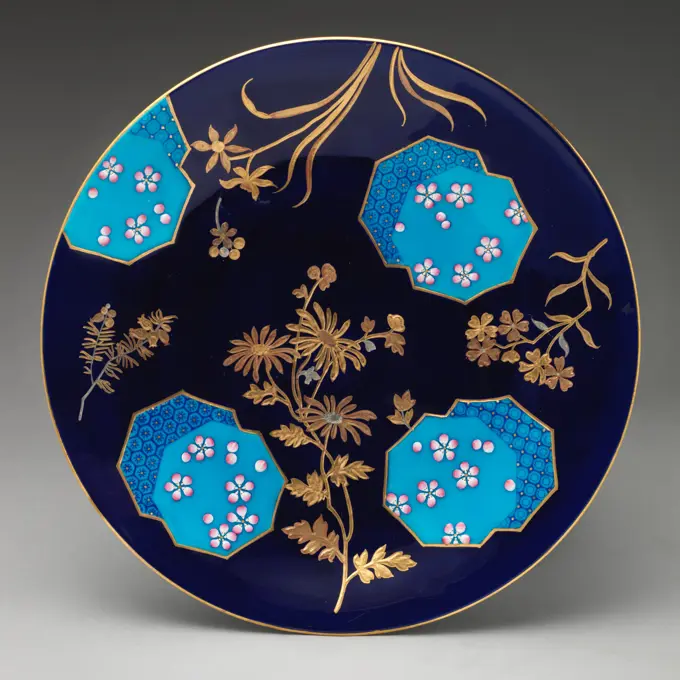
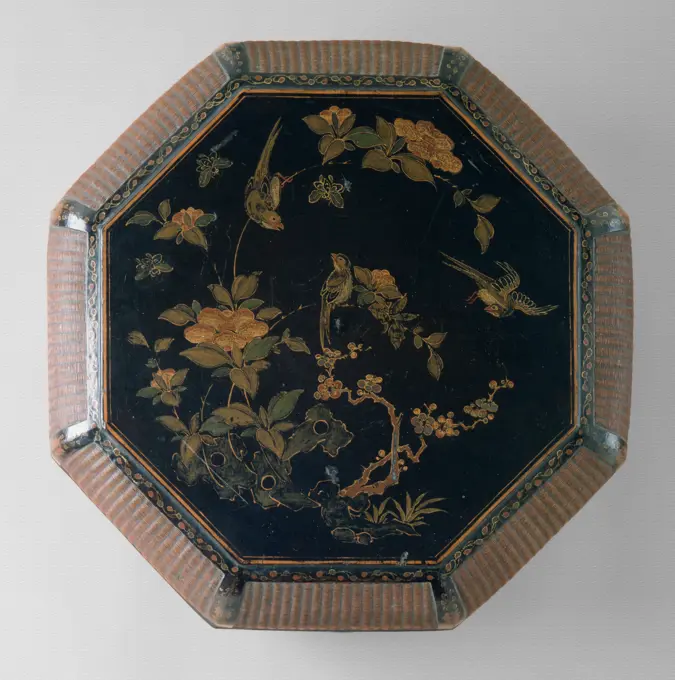
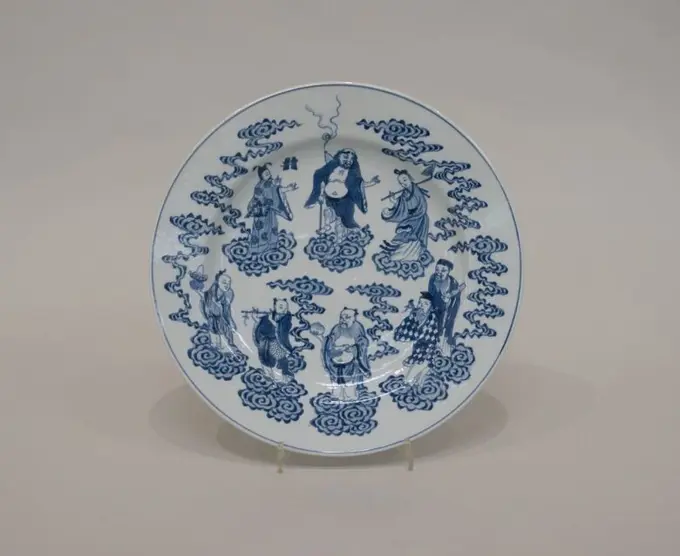
Decorative Porcelain Dishes

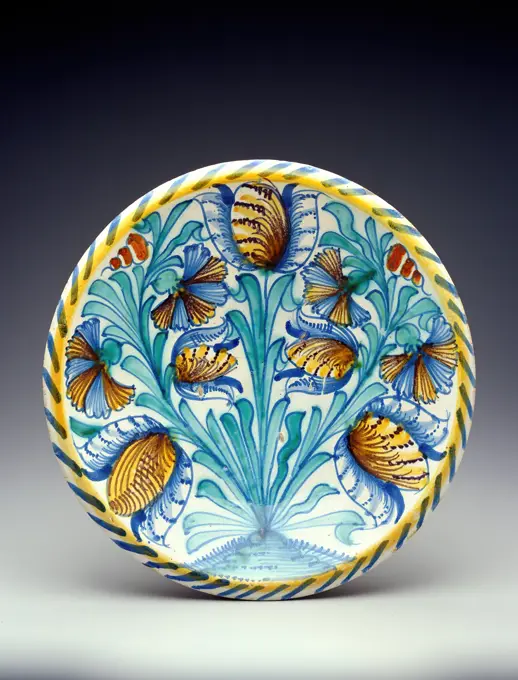
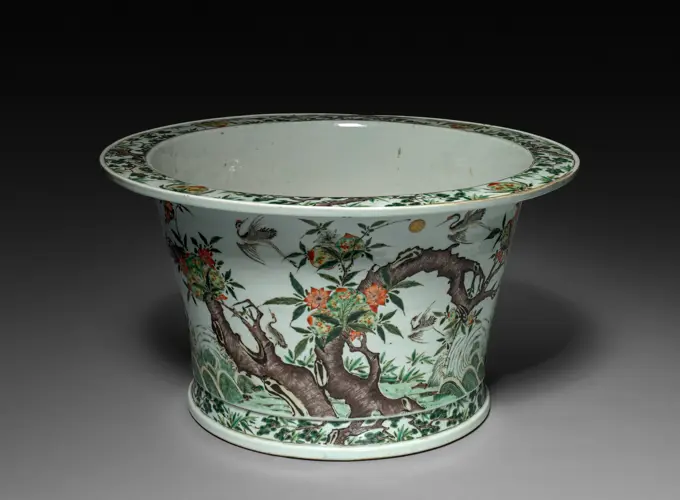
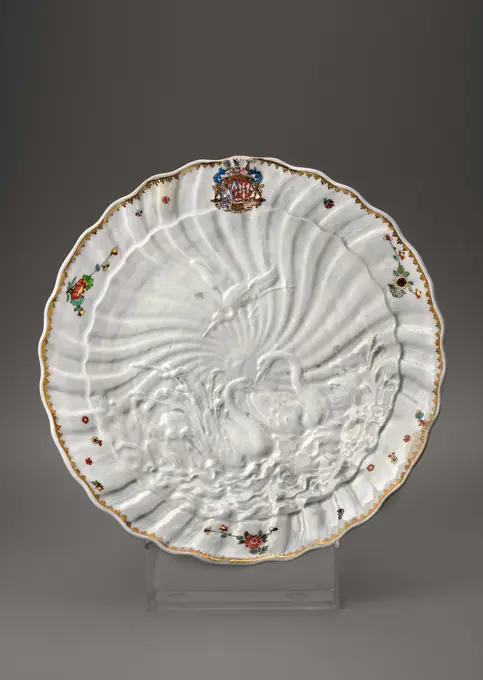
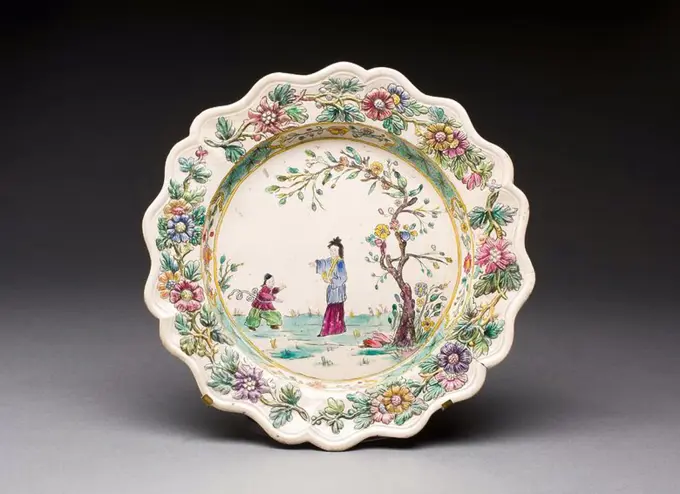
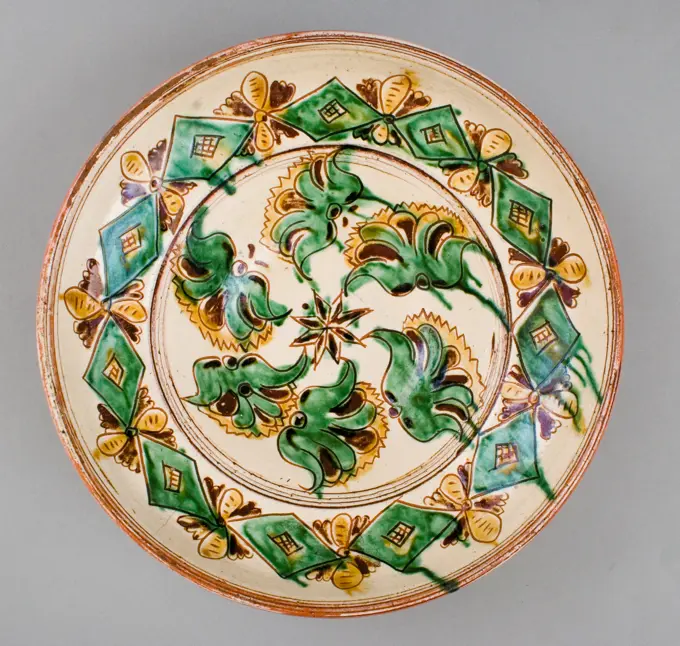
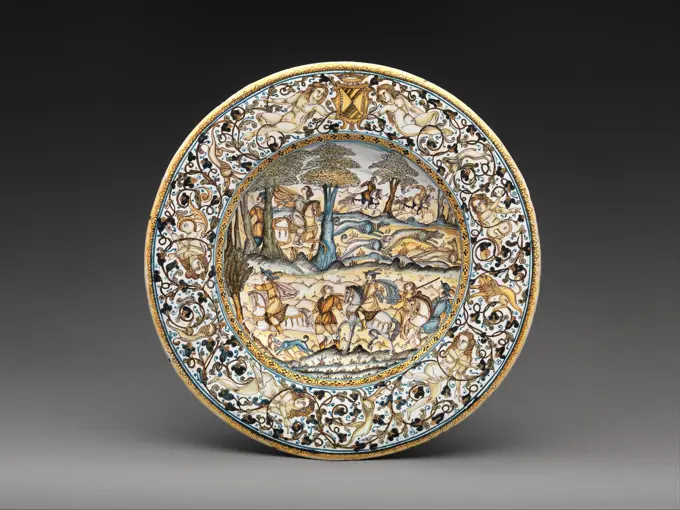
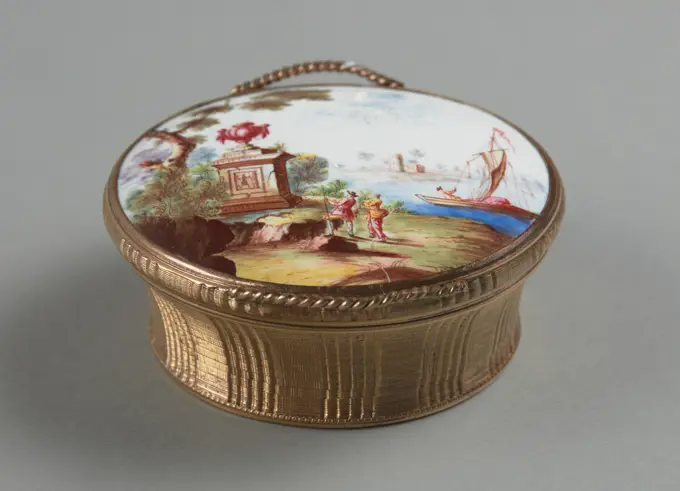
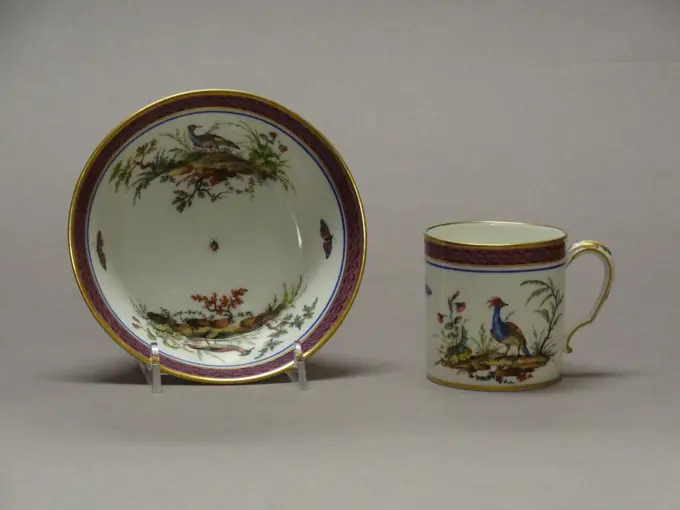
A collection of intricately designed porcelain dishes featuring colorful floral and landscape motifs, showcasing various cultural styles from the 17th to 18th centuries.

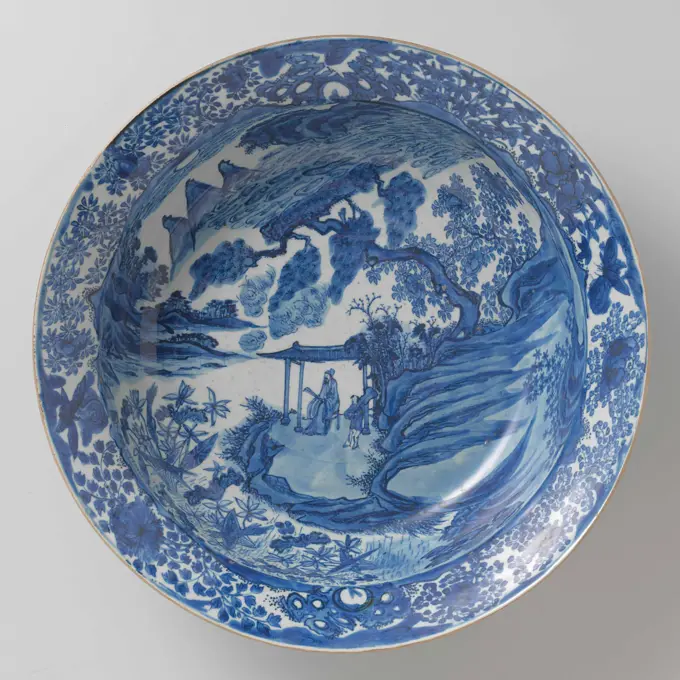
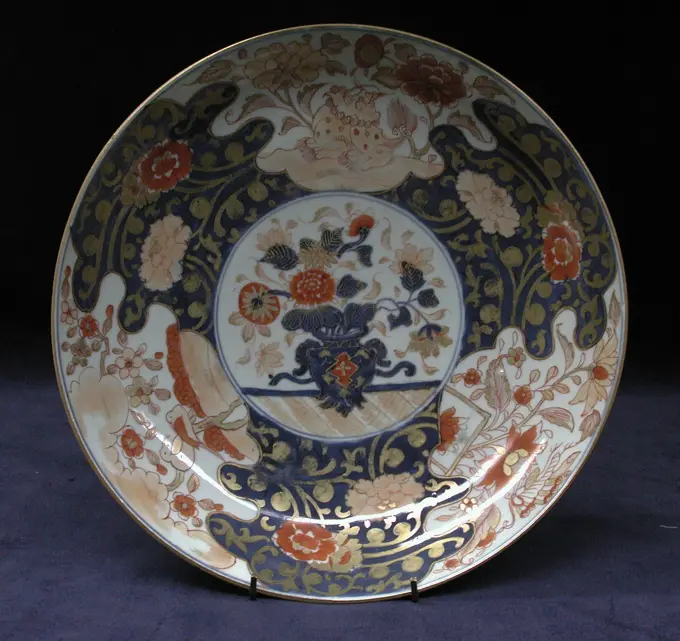
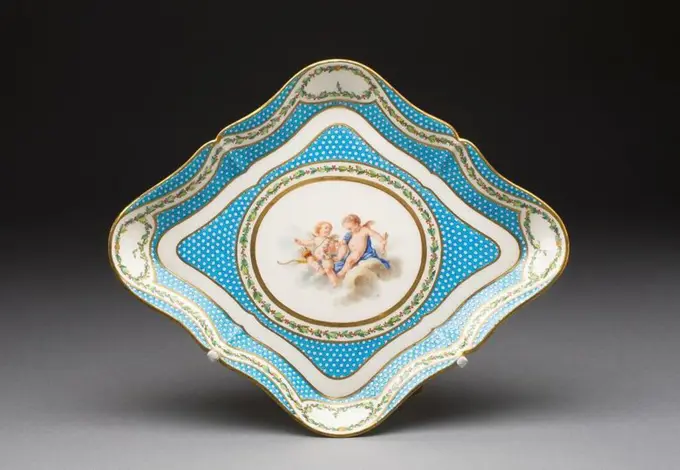
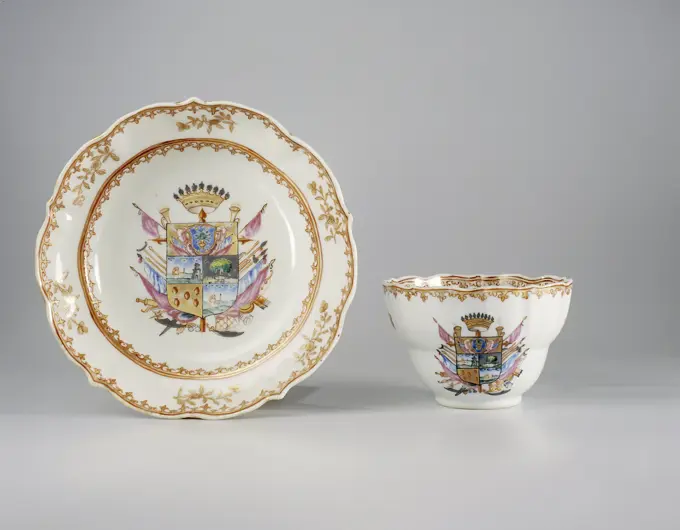
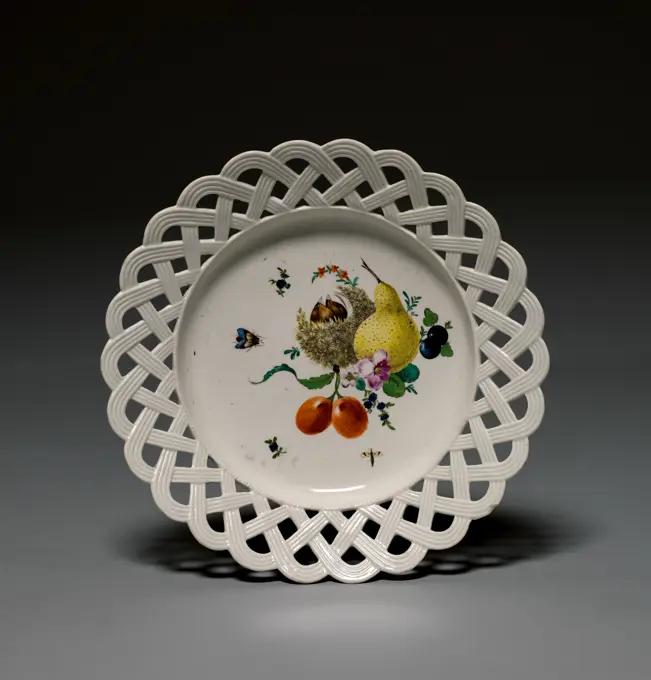
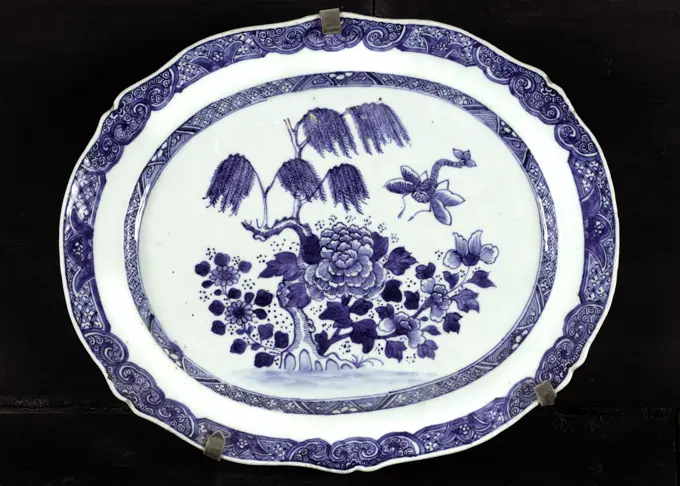
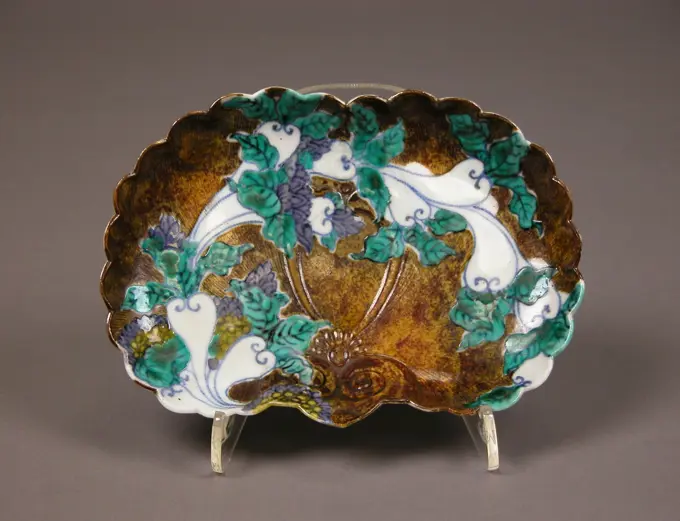
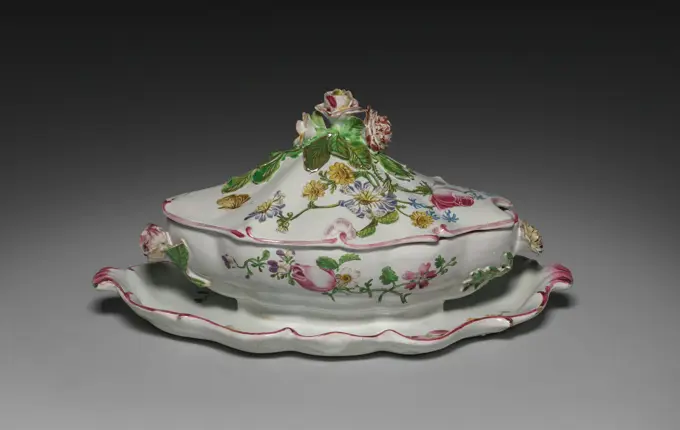
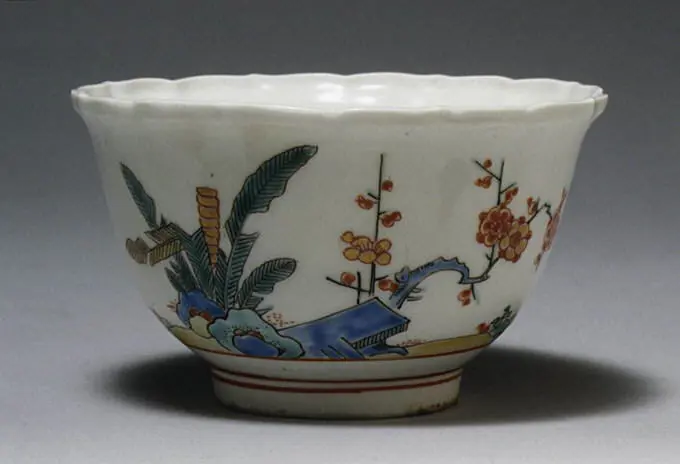
Bowl, late 17th century, Unknown Japanese, H.4 x Dia.10 in., Imari ware; porcelain with underglaze blue and overglaze enamels and gold, Japan, 17th century, The bold division of this bowl into symmetrical, but fancifully, delineated compartments around a central roundel is indicative of the fully developed Imari style of the late 17th century. Such wares were brought to Europe in great numbers by the Dutch East India Company where they were in high demand among British and Dutch collectors.
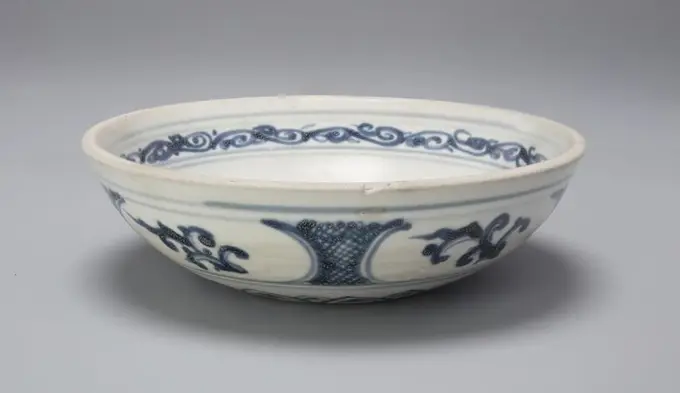
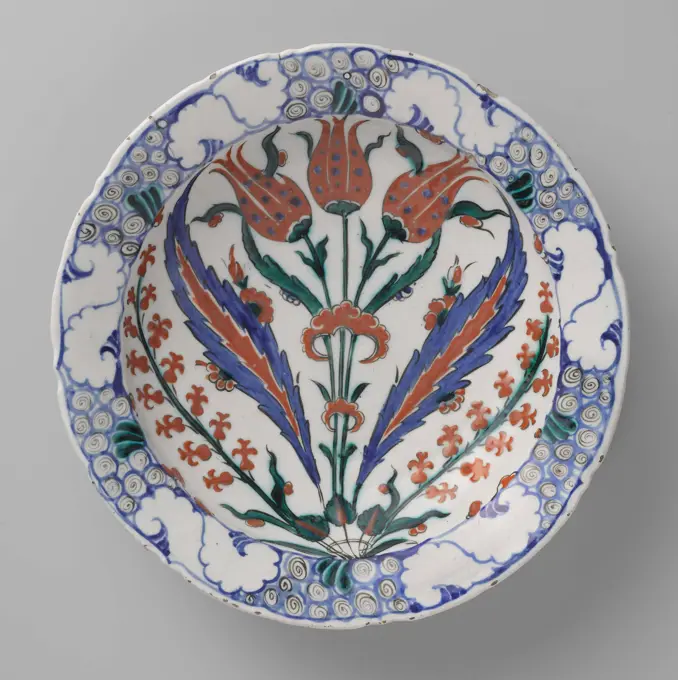
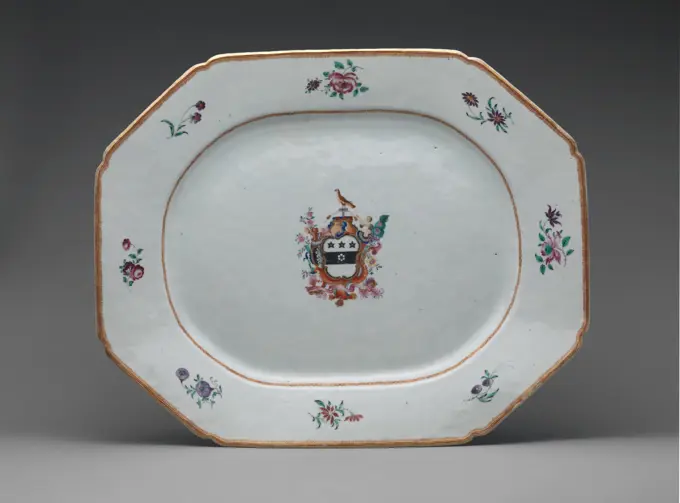
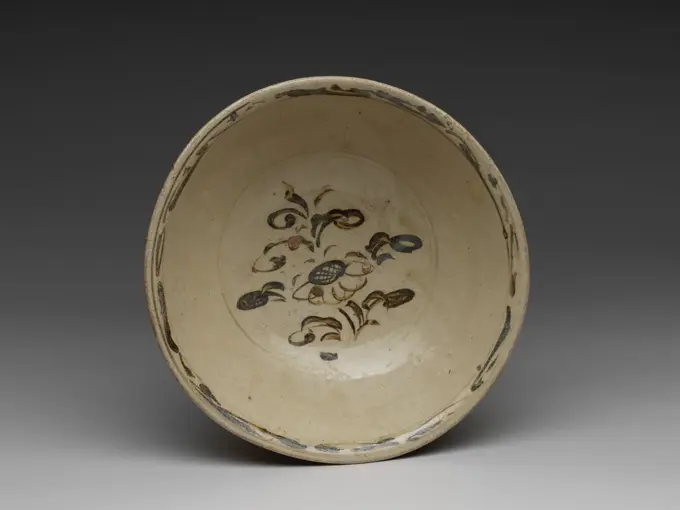
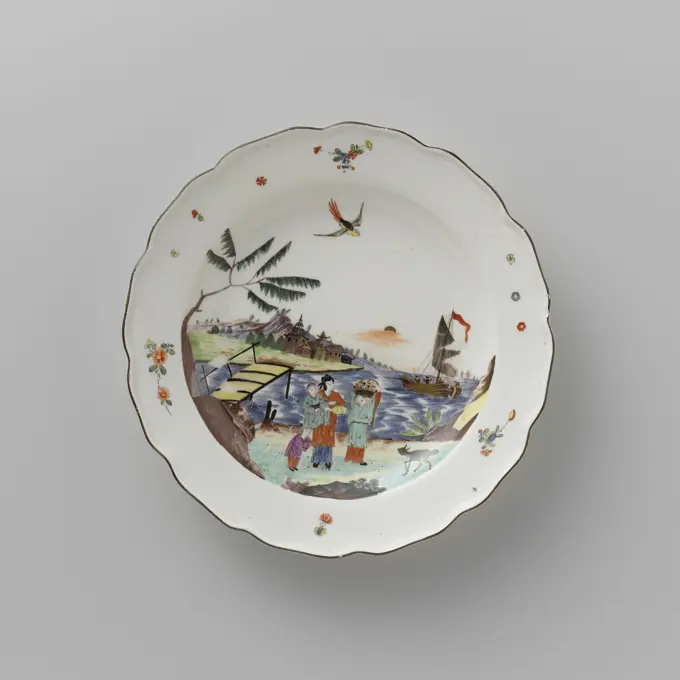
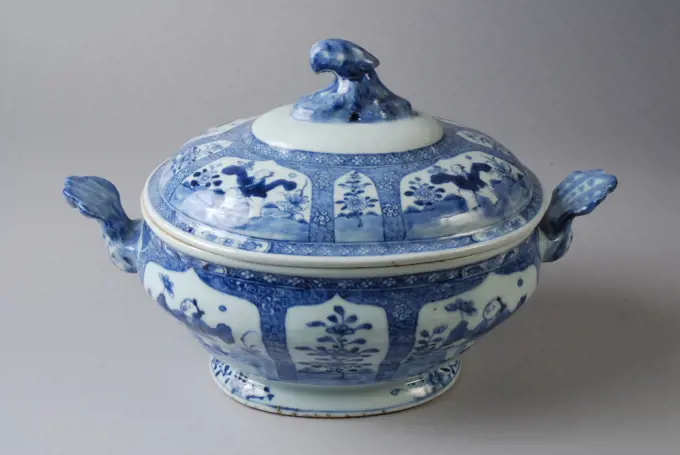
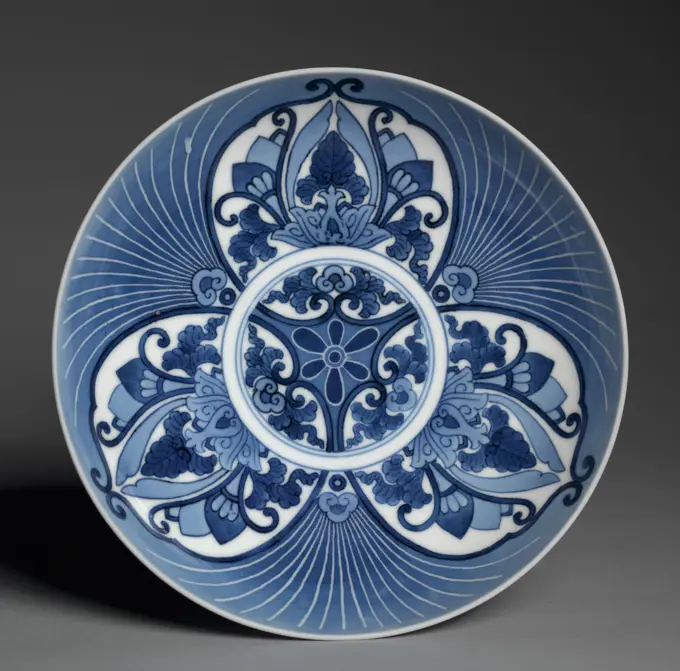
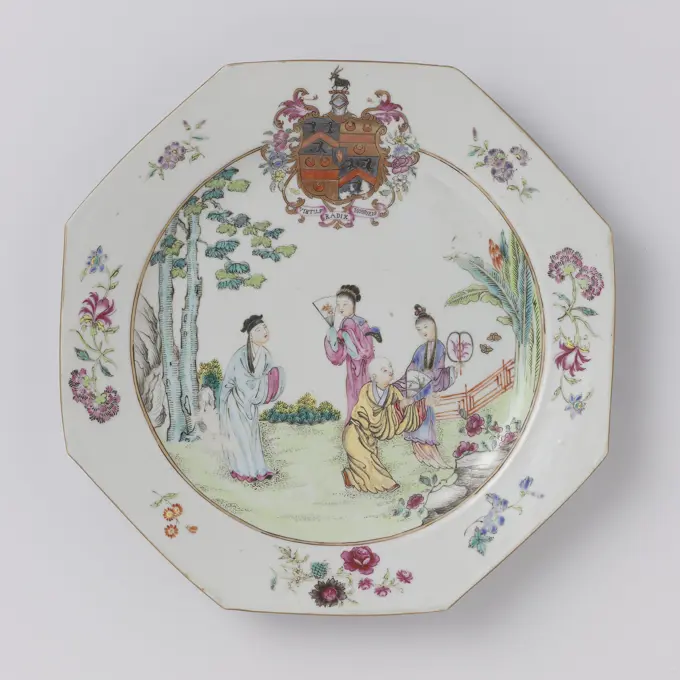
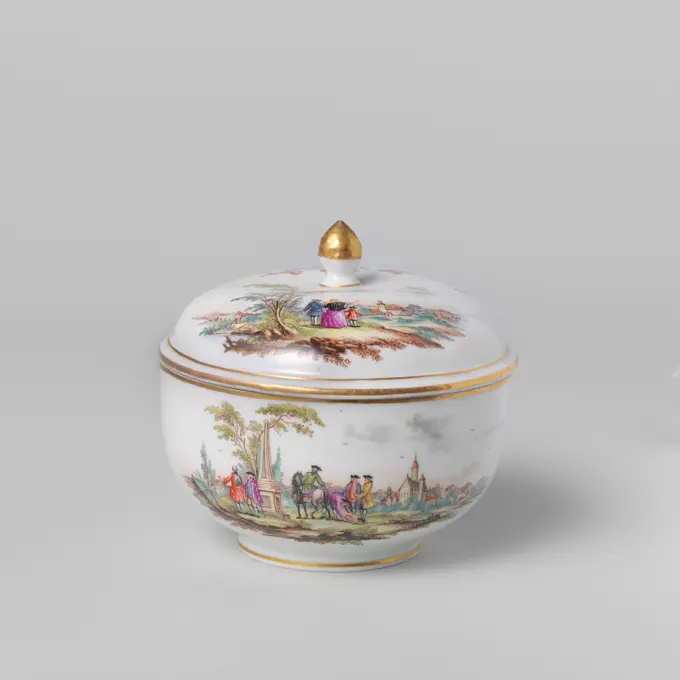
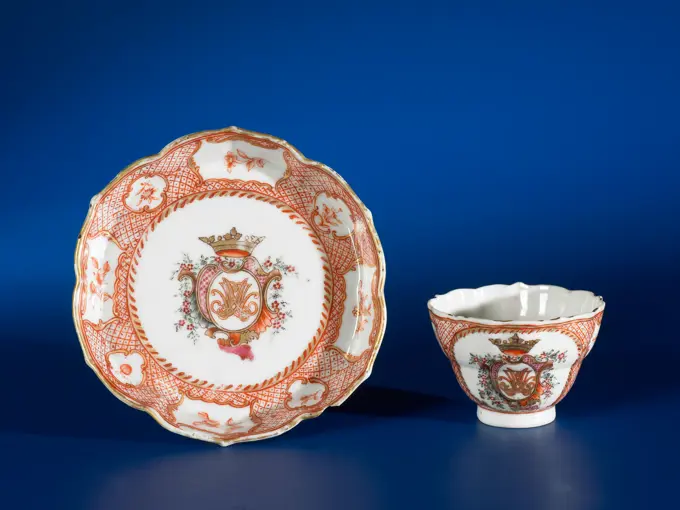
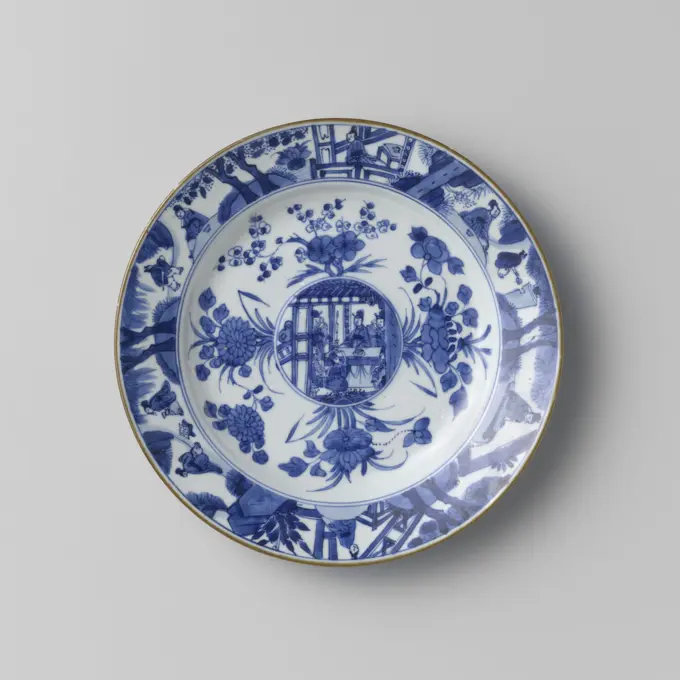
Bowl. Deep, wide bowl of porcelain, painted in undeglaze blue. On the bottom a landscape with mountains, trees (pine, peony) and flowering plants (lotus) with a scholar a shock with a shelter with a range with a range. On the edge a bond with flowering plants (chrysanthemum, peony) and butterflies at a rock. On the outer wall butterflies between flower branches. The outer edge with three-legged pearly dragons between flames. Marked on the underside with the six character mark of Emperor Chenghua in a double circle. Blue White.Fragment sign from V.O.C. ship De 'Witte Leeuw', Anonymous, Before 1613 plate (dishes) Fragment board from V.O.C. ship De 'Witte Leeuw', 90 present. Jingdezhen bone china (material)   Sint-HelenaRound saucer with the 'three friends of winter', anonymous, c. 1670 - c. 1700 Round dish of porcelain, painted on the glaze in blue, red, green, black and gold with the 'three friends of winter' (bamboo, prunus, pine), in two bound hedges. Brown edge. Kakiemon style. Japan porcelain. glaze. gold (metal) painting / gilding / vitrification Round dish of porcelain, painted on the glaze in blue, red, green, black and gold with the 'three friends of winter' (bamboo, prunus, pine), in two bound hedges. Brown edge. Kakiemon style. Japan porcelain. glaze. gold (metal) painting / gilding / vitrificationPlate. unknown, craftsmanDish, Adriaan van Rijsselbergh (attributed to), c. 1720 - c. 1730 Dish multi -colored painted with Eastern figures including a princess on horseback. Marked ar. Delft . Dish multi -colored painted with Eastern figures including a princess on horseback. Marked ar. Delft .Charger 1600-1699 Spain. Tin-glazed earthenware . Talavera de la Reina PotteriesSmall Bowl with Floral and Foliate Motif. Vietnam. Date: 1301-1500. Dimensions: 4.2 × 14.4 × 14.4 cm (1 5/8 × 5 5/8 × 5 5/8 in.). Glazed stoneware with cobalt-blue underglaze. Origin: Vietnam. Museum: The Chicago Art Institute, Chicago, USA.. Pipe bowl of faience. Blue painted flowers and insects.Fili Anka from the website, saucer from the website; Gotzkowsky-Manufaktur; around 1763/65 (1763-00-00-1765-00-00);. The production of pottery flourished in Iznik, a town in northwest Turkey, from the end of the 15th century. This kind of earthenware was often painted with designs of tulips, carnations, hyacinths, and roses. The bright red colour is also a technical tour de force. The border with awave-scroll motif is derived from Chinese porcelain. Iznik ware was a source of inspiration for European potteries in Italy and the Netherlands (Delft), among other places.Platter 1785-90 Chinese, for American market This object belongs to a large dinner service (10.149.1-.248) bearing the Townley family coat-of-arms. The service, probably ordered by Justice Samuel Chase (1741-1811) of Annapolis, Maryland, displays the enamel-painted arms of Margaret Townley, Chase's aunt.. Platter 6543Breakfast Cup. China; Chinese, made for the American market. Date: 1780-1790. Dimensions: H. 5.7 cm (2 1/4 in.). Porcelain and enamel. Origin: United States. Museum: The Chicago Art Institute, Chicago, USA.Dish 18th century Chinese, for European market The gift of the Hans Syz Collection in 1995 endowed the Museum with nearly three hundred examples of European and Asian ceramics meticulously acquired by Swiss-born collector Dr. Syz (1894-1991) to chart the migration of models and patterns from East to West. Documenting a continuous process of influence and adaptation, these pieces provide a discriminating review of the nuances of stylistic change resulting from three centuries of trade.. Dish 208249Bowl with iron-brown floral décor Vietnam, Hong River region 14th-early 15th century This bowl has a painted floral medallion as the central motif with a summarily executed floral meander on the rim. The freely drawn brushwork displays all the hallmarks of mass production, a skilled painter executing the underglaze iron-solution designs with a practiced hand. It has a high recessed foot, glazed on the exterior and with a chocolate-brown wash on the interior. Examples have been recorded from excavations at a monastery at Dazaifu, in Kyushu, southern Japan, at Trowulen, the Majapahit capital in East Java and at Fostat (Old Cairo), demonstrating the global reach of these ceramics in a 14th and 15th centuries. View more. Bowl with iron-brown floral décor. Vietnam, Hong River region. 14th-early 15th century. Stoneware with iron-underglaze floral décor. Tran or Ly Dynasty. CeramicsEleven Dinner Plates, Meissener porcelain manufactory, c. 1735 - c. 1740 Round plate of painted porcelain. The board has a scalloped edge and is painted with a contour chinoiserie in a landscape with a high horizon. The chinoiserie consists of a woman with three children on the banks of a bay, a child on the arm, the two others, the largest of which carries a basket with flowers on his head. The board is marked. Float porcelain Round plate of painted porcelain. The board has a scalloped edge and is painted with a contour chinoiserie in a landscape with a high horizon. The chinoiserie consists of a woman with three children on the banks of a bay, a child on the arm, the two others, the largest of which carries a basket with flowers on his head. The board is marked. Float porcelainSugar Bowl (Sucrier), 1745-48. Sèvres Porcelain Factory (French, est. 1756), Vincennes Porcelain Factory (France, 1740-56). Soft-paste porcelain with enamel decoration; part 1: 8.1 x 16.2 cm (3 3/16 x 6 3/8 in.). This covered bowl is one of the earliest surviving examples of Vincennes porcelain. Its decorations, particularly the lacy borders, show the influence of Meissen porcelain, but an individual note is struck in the extreme delicacy and colorful restraint of the painting of the landscape scenes.Sugar Bowl and Stand 1748-1758 Vincennes. Bleu lapis was one of the ground colors most often found on Vincennes and SËvres porcelains. The simple contrast of this dark color and the brilliant white of the porcelain body, accented by gilded ornaments, created a rich and sophisticated decoration.. Soft-paste porcelain, underglaze blue ground, and gilding . Manufacture de porcelaine de Vincennes (Manufacturer)Porcelain tureen with lid, in blue Oriental figure with flowers, terrine crockery holder ceramic porcelain glaze, baked painted glazed, oval shape outstanding short foot slightly double-conical body two handles in the form of palmetal sheet., vaulted lid elevation on which strong curled bud bottom underside blue underglaze: unidentified seal mark within double circle serve garnish serving Kangxi Kang ShiDish with Ginkgo Leaves, late 1600s-early 1700s. Japan, Edo period (1615-1868). Porcelain with underglaze blue (Hizen ware, Nabeshima type); diameter: 20 cm (7 7/8 in.). This dish is an example of the finest type of Japanese porcelain, Nabeshima-type Hizen ware. It has a complex, abstracted design of ginkgo leaves and Chinese grasses” (karakusa) in underglaze blue that may be among the most interesting of the underglaze blue designs. The dish is the largest of the three standard-sized Nabeshima dishes for individual servings.Dish with a flower vase, feng huangs, shishi and birds, anonymous, c. 1700 - c. 1750 Porcelain saucer, painted in underly glaze blue and on the glaze red, black and gold. On the flat a double medallion with a flower vase with chrysanthemums and peonies. The wall and edge are divided into four compartments with two shishi (lion dog) in a landscape, two birds on a branch of a prunus tree and twice a Ruyi-shaped cartouche with a Fenghuang against a blue background with flower vines. The dish is caught in a metal frame. Probably a European (French) Imitation of the Japanese Imari. Europe Porcelain (Material). Glaze. Cobalt (Mineral). Gold (Metal). frame: Metal painting / gilding / vitrification Porcelain saucer, painted in underly glaze blue and on the glaze red, black and gold. On the flat a double medallion with a flower vase with chrysanthemums and peonies. The wall and edge are divided into four compartments with two shishi (lion dog) in a landscape, two birds on a branch of a prunus tSaucer with fish between water plants, anonymous, c. 1700 - c. 1724 Porcelain saucer with ribbed wall and lobed edge, painted in underly glaze blue and on the glaze blue, red, green, yellow, eggplant, black and gold. The flat of the dish with a fish between aquatic plants and four smaller fish between aquatic plants on the wall and edge, the edge with a band Ruyi motif; Four fish in iron red on the outside. Marked on the bottom with 'yù', Jade, in a double circle. Old trader label on the bottom. Famle Verte. China porcelain. glaze. cobalt (mineral). gold (metal) painting / vitrification Porcelain saucer with ribbed wall and lobed edge, painted in underly glaze blue and on the glaze blue, red, green, yellow, eggplant, black and gold. The flat of the dish with a fish between aquatic plants and four smaller fish between aquatic plants on the wall and edge, the edge with a band Ruyi motif; Four fish in iron red on the outside. Marked on the bottom with 'yù', Jade, in a double circle. Old t. The octagonal porcelain dish is polychrome painted with a bird and violets (purple, light and dark blue and yellow) within an ornamental decor. Labeled with: Kroon, Rozenburg, Stork, The Hague (upper each other); On the left the brand before 1913, on the right the work order number 332; under the painting mark of c.w.j. 't heart.Dish, c. 1740 - c. 1760 Octagonal plate of porcelain, painted on the glaze in blue, red, pink, green, yellow, purple, black and gold. On the flat two men and two women in a fenced garden with rocks, trees and flowering plants, a scene from the <novel of the western room> (<Xixiang Ji>). On the wall and edge the weapon of the Boynton and Topham families surrounded by flower vines. The weapon is divided into four courses: 1. and 4. Three birds and a red twill on a black background; 2. and 3. Three half moons and a red band on a golden background. The helmet sign is a springbok on a helmet. Under the weapon a banderole with the inscription 'Virtus Radix Honoris'. Furthermore on the edge of loose flower branches. Old label on the bottom with 'Boynton Collection/ No. 1029'. Weapon porcelain with email colors. China porcelain. glaze. gold (metal) painting / gilding / vitrification Octagonal plate of porcelain, painted on the glaze in blue, red, pink, green, yellow, purple, black and gold. OnHalf spherical sugar bowl. Lid of multicolor painted porcelain. On the lid a landscape is painted in which figures and a flower bouquet. Gold-colored UI-shaped button.. Round dish of blue painted faience, with a parade with an elephant in a landscape on the flat. The edge is divided into courses. Four boxes containing two sitting figures in a landscape, are interspersed with four compartments containing floral motifs.. Dish of Faïence, painted in blue with fifteen scenes from the life of Christ. In the middle of the Flat Christ for Kajafas.Bowl SKOWICKI, AntoniArmorial Plate ca. 1690 Japan. Armorial Plate 49331Covered Bowl and Stand. Chantilly Porcelain Factory; French, founded c. 1725. Date: 1730-1740. Dimensions: Covered bowl: 10.2 × 15.9 cm (4 × 6 1/4 in.); Stand: 24.9 × 19.4 cm (9 13/16 × 7 5/8 in.). Soft-paste porcelain, tin glaze, and polychrome enamels. Origin: Chantilly. Museum: The Chicago Art Institute, Chicago, USA. Author: Chantilly Porcelain Factory.. Dish chotel with a short, straight, ribbed wall and braco-shaped edge of porcelain, painted on the glaze in blue, red, pink, green, yellow, black and gold. On the flat of the dish the monogram 'JM' in a crowned medallion with shell pattern, napkin work and flower branches; For the medallion and on the wall napkin work with four small and four large cartouches with flower branch. Bottom of the dish unglazed. A crack and two chips in the wall of the dish. European performance in email colors.Charger, c. 1680, 3 7/8 x 13 x 13 in. (9.8 x 33.0 x 33.0 cm), Tin-glazed earthenware, England, 17th centuryJardiniere with Cranes and Peaches over Waves, 1662-1722. China, Jiangxi province, Jingdezhen kilns, Qing dynasty (1644-1911), Kangxi reign (1661-1722). Porcelain with famille verte overglaze enamel decoration; diameter: 60.6 cm (23 7/8 in.); overall: 33.7 cm (13 1/4 in.).Plate of multi -colored Faïence, Anonymous, c. 1700 - c. 1725 Faïence board. Multicolored painted with a Chinese water landscape and lambrequins, in Imari colors. Delft . Faïence board. Multicolored painted with a Chinese water landscape and lambrequins, in Imari colors. Delft .Plate, c. 1750, 1 3/16 x 10 1/8 in. (3 x 25.72 cm), Porcelain, China, 18th centuryRound platter. Kaendler, Johann Joachim (1706-1775), sculptor, Koenigliche Porcellain Fabrique, Meissen (1710-1763), factoryButter fleet, painted multi-colored with a Mediterranean landscape. Round butter shot with raised ears painted multi-colored with a Mediterranean landscape. Marked in blue from.Plate. England, Staffordshire. Date: 1760-1769. Dimensions: Diam. 23.2 cm (9 1/8 in.). Salt-glazed stoneware, polychrome enamels. Origin: Staffordshire. Museum: The Chicago Art Institute, Chicago, USA.Dish with Singing Bird on a Rock, 1700s. Japan, Edo period (1615-1868). Porcelain with underglaze blue and overglaze color enamel (Hizen ware, Ko-Kutani style); diameter: 20.8 cm (8 3/16 in.); overall: 3.3 cm (1 5/16 in.).Large Bowl with Plum Blossoms and Openwork Hemp Leaves 18th century Japan. Large Bowl with Plum Blossoms and Openwork Hemp Leaves. Japan. 18th century. Stoneware with polychrome enamels and gold over a transparent glaze (Kyoto ware, Ko-Kiyomizu type). late Edo period (1615-1868). CeramicsDish with farmer's fur decor. Dish of pottery, painted with farmer's font decor in blue, green, orange-red and liluster.Pair of Plates (one of two). China, late 18th-early 19th century. Furnishings; Serviceware. Porcelain. Dish of porcelain, painted on the glaze in blue, red, green, black and gold. On the flat a crazy double monogram with links 'c.v.l.' and right 'F.S.A.' With to the letters flower branches. To make the monogram a shell pattern and leaf raft. A decorative band on the inner edge. Weapon porcelain with email colors.Wine-bottle cooler (seau à bouteille) (part of a service). Culture: French, Sèvres. Dimensions: 6 5/8 x 9 1/4 in. (16.8 x 23.5cm). Factory: Sèvres Manufactory (French, 1740-present). Date: 1771-72.The table services produced at Sèvres in the eighteenth century were highly prized and extremely expensive. They were not only purchased by the Crown and members of the aristocracy but also given by the king as diplomatic gifts to foreign courts and visiting dignitaries, and the esteem in which they were held did much to enhance the factory's prestige and fortunes. Because the number of pieces composing a service was very large, the cost was enormous, but this did not deter many courtiers from ordering a dinner or dessert service, or both.One of the most celebrated services produced at Sèvres was delivered to Louis-René-Édouard, prince de Rohan-Guémenée (1734-1803), on September 7, 1772. All of the pieces were decorated with the rich turquoise ground color known as bleu céleste and with birSaucer ca. 1860-70 Coalport Minton was the most important ceramics factory during the Victorian period and began exhibiting products at the first Great Exhibition of 1851. Founded in 1793 by Thomas Minton at Stoke-on-Trent, the firm initially specialized in transferware pottery before expanding under the ownership of Thomass son Herbert Minton, beginning in 1836. Under the ownership of Colin Minton Campbell, who succeeded his uncle in 1858, the factory became recognized as a specialist producer of Aesthetics movement porcelain, which were inspired by a rich array of exotic and eclectic decorative motifs.. Saucer. British, Coalport. ca. 1860-70. Porcelain. Ceramics-PorcelainSaucer-dish with hunting scene, Lotus Scrolls and auspicious Symbols. Scale of porcelain with round, ribbed wall and scalloped edge, painted in underglaze blue. On the flat a hunting scene with two armed riders in a landscape, jaming on two hare; the edge with a linked band of lotus drinks with Ruyi motif, between the eight lucky symbols (chakra, shell, parasol, canopy, lotus, vase, fish, infinite knot); The back with sixteen loose flower branches. Marked on the underside with the six character mark of Emperor Chenghua in a double circle. Blue White.Saucer-dish with powder blue and flower heads in reserve, anonymous, c. 1700 - c. 1724 Dish with a round wall of porcelain, painted in under -glaze blue. The dish is covered with bleu poudré (powder blue) with a flower saved seven times. Marked on the underside with a seal brand in a double circle. Bleu Poudré with blue and white. China porcelain. glaze. cobalt (mineral) painting / vitrification Dish with a round wall of porcelain, painted in under -glaze blue. The dish is covered with bleu poudré (powder blue) with a flower saved seven times. Marked on the underside with a seal brand in a double circle. Bleu Poudré with blue and white. China porcelain. glaze. cobalt (mineral) painting / vitrificationSèvres Porcelain Manufactory, Cup and Saucer, 1763, soft-paste porcelain.Dish, Anonymous, 1710 - 1750  Dish of Faience. Multicolored painted with cupid and flowers. Delft .Tray (from a tea service). Sèvres Porcelain Manufactory; French, founded 1740; Figures after François Boucher (French, 1703-1770); Painted by Jacques Fontaine (French, 1734/35-1807, active 1752-1800). Date: 1770. Dimensions: 28.6 x 25.1 x 30.2 cm (1 1/4 x 9 7/8 x 11 7/8 in.). Soft-paste porcelain, polychrome enamels, and gilding. Origin: Sèvres. Museum: The Chicago Art Institute, Chicago, USA.Cup with handle and saucer with a coat of arms, flower sprays and spearhead-borders, anonymous, c. 1750 - c. 1774 Ear head and porcelain saucer with a stepped wall and scalloped edge, painted on the glaze in blue, red, pink, green, black and gold. On the flat of the dish an unidentified family crest. The weapon is divided into five compartments with a weapon with a flowerpot and four stars on a blue soil surrounded by banners; 2. and 5. A half -naked figure with a spear in the water; 3. A boar for a tree; 4. Five red jugs against a golden background. The helmet sign is a crown with pearls. For the weapon military attributes and two trumpets. A Spearhead border on the wall. The edge with loose flower branches and a Spearhead border. The head with the same decoration. Weapon porcelain with email colors. China porcelain. glaze. gold (metal) painting / gilding / vitrification Ear head and porcelain saucer with a stepped wall and scalloped edge, painted on the glaze in blue, red, pink, greePlate;  XIX-20th century (1801-00-00-1920-00-00);Plate with loose pagodes flowering branches and a ship, Guillaume Lambert, c. 1859 - c. 1863 Plate of earthenware with flow -blue transfer decor. Loosen over the flat pagodean, flowering branches and a ship. The edge of the board with four cartouches with a mountain and a flowering branch. Maastricht earthenware Plate of earthenware with flow -blue transfer decor. Loosen over the flat pagodean, flowering branches and a ship. The edge of the board with four cartouches with a mountain and a flowering branch. Maastricht earthenwareDish with Dragons amid Clouds, Chasing Flaming Pearls 1662-1722 China. Porcelain painted in underglaze blue and overglaze yellow enamel .Plate, 1777-1799. Frankenthal Porcelain Factory (German). Porcelain; diameter: 26.7 cm (10 1/2 in.).Saucer-dish with hunting scene, lotus scrolls and auspicious symbols, anonymous, c. 1700 - c. 1724 Porcelain saucer with round, ribbed wall and scalloped edge, painted in underlaze blue. On the flat a hunting scene with two armed riders in a landscape, hunting a hare; the edge with a connected band of Lotusranken, between which the eight lucky symbols (chakra, shell, parasol, canopy, lotus, vase, fishing, infinite knot); The back with sixteen loose flower branches. Marked on the underside with the six-character brand of Keizer Chenghua in a double circle. Rand slightly damaged. Blue White. China porcelain. glaze. cobalt (mineral) painting / vitrification Porcelain saucer with round, ribbed wall and scalloped edge, painted in underlaze blue. On the flat a hunting scene with two armed riders in a landscape, hunting a hare; the edge with a connected band of Lotusranken, between which the eight lucky symbols (chakra, shell, parasol, canopy, lotus, vase, fishing, infinite knot); The back wiSaucer-dish with hunting scene, lotus scrolls and auspicious symbols, anonymous, c. 1700 - c. 1724 Porcelain saucer with round, ribbed wall and scalloped edge, painted in underlaze blue. On the flat a hunting scene with two armed riders in a landscape, hunting a hare; the edge with a connected band of Lotusranken, between which the eight lucky symbols (chakra, shell, parasol, canopy, lotus, vase, fishing, infinite knot); The back with sixteen loose flower branches. Marked on the underside with the six-character brand of Keizer Chenghua in a double circle. Rand slightly damaged. Blue White. China porcelain. glaze. cobalt (mineral) painting / vitrification Porcelain saucer with round, ribbed wall and scalloped edge, painted in underlaze blue. On the flat a hunting scene with two armed riders in a landscape, hunting a hare; the edge with a connected band of Lotusranken, between which the eight lucky symbols (chakra, shell, parasol, canopy, lotus, vase, fishing, infinite knot); The back wiBowl with the Eight Buddhist Treasures 16th century China The objects supported by lotus stands at the center of this bowl illustrate a traditional grouping of eight "treasures—among them an endless knot, a banner or flag, a conch shell, and a pair of fish—that were introduced with Buddhism and are often found in the later decorative arts. Here, the fish are repeated at the bottom of the bowl, while lotus blossoms, Buddhist symbols of purity, decorate the exterior. The prevalence of imagery associated with Buddhism and other religious practices in the decoration of cloisonné reflects the use of such goods in temples and palaces.. Bowl with the Eight Buddhist Treasures 40741Maker Unknown, Lid from the George Washington Memorial Service, c. 1800, porcelain, enamel, and gilding.Dish with Rampant Lions. Culture: Italian. Dimensions: Overall: diam. 18 7/8 x 2 11/16 in. (diam. 48 x 6.8 cm). Date: early 15th century. Museum: Metropolitan Museum of Art, New York, USA.Anonymous. Chinese lounge, decor from Juliette Drouet's house in Guernsey. West wall. An oval dish with blue and white floral decor. Ceramic. 1750-1850. Paris, house of Victor Hugo. 79111-1 Table arts, decorative arts, Chinese, ceramic, chinoiserie, oriental influence, orientalism, Chinese lounge, dishes, 19th 19th 19th 19th 19th 19th 19th century, 18th 18th 18th 18th 18th 18th 18 CenterDish with Design of Radishes 1650s Japan The blues in this rare early Nabeshima dish have violet tones not seen in later examples. The rust-colored glaze covering much of the surface evidences early Nabeshimas technical and aesthetic similarities to enameled porcelain produced in the nearby Arita region.. Dish with Design of Radishes 52341Plate, porcelain, enamel, gilding, Circular plate, concave center, scalloped rim. Upper surface painted in 'Tobacco Leaf' pattern in pink, yellow, blue, with underglaze blue areas and gilded details. Reverse painted with underglaze blue and red floral sprigs., China, ca. 1850-80, ceramics, Decorative Arts, PlateDish (part of a set) ca. 1752-55 Chelsea Porcelain Manufactory. Dish (part of a set). British, Chelsea. ca. 1752-55. Soft-paste porcelain. Chelsea Porcelain Manufactory (British, 1744-1784). Ceramics-PorcelainBowl with Flowering Plants, 1723-1735. China, Jiangxi province, Jingdezhen, Qing dynasty (1644-1911), Yongzheng mark and reign (1723-1735). Porcelain with overglaze enamel decoration; diameter: 12.8 cm (5 1/16 in.); overall: 6.7 cm (2 5/8 in.).Punch Bowl 1790 China. Porcelain, enamel, and gilding .Plate 1718-1735 Delft. Tin-glazed earthenware (Delftware) . Grieksche A Factory (Maker)Covered Butter Dish and Stand. Staffordshire, England. Date: 1755-1765. Dimensions: Overall: 9.2 x 16.5 x 14 cm (3 5/8 x 6 1/2 x 5 1/2 in.). Salt-glazed stoneware, polychrome enamels. Origin: Staffordshire. Museum: The Chicago Art Institute, Chicago, USA.Saucer with undulating flower petals on diaper pattern and flower sprays, anonymous, c. 1840 - c. 1860 Porcelain dish with lobed edge, painted on the glaze in blue, red, pink, green and black. On the flat of the dish in the center, a flower with two rows with wavy petals on a ground from servetwork; The outside of the bowl with three flower branches. Famle Rose. China porcelain. glaze. painting / vitrification Porcelain dish with lobed edge, painted on the glaze in blue, red, pink, green and black. On the flat of the dish in the center, a flower with two rows with wavy petals on a ground from servetwork; The outside of the bowl with three flower branches. Famle Rose. China porcelain. glaze. painting / vitrificationDish. Germany, Frankfurt. Date: 1695-1705. Dimensions: Diam. 34.1 cm (13 7/16 in.). Tin-glazed earthenware. Origin: Frankfurt am Main. Museum: The Chicago Art Institute, Chicago, USA. Author: Frankfurt-am-Main Pottery.Botersloot lid. Botersloot lid, painted multi-colored with the coat of arms of the Josselet family. There are two appliqued dogs on the lid.Covered Sauce Tureen with Attached Stand, c. 1765. Veuve Perrin Factory (French). Tin-glazed earthenware (faience) with enamel decoration; overall: 13.1 x 26.5 x 15.3 cm (5 3/16 x 10 7/16 x 6 in.).Snuffbox ca. 1730-35 Meissen Manufactory German. Snuffbox 207223Bord, anonymous, 1760 - 1800 Fowence board, with yellow piping. Blue painted with a peacock federation. Marked. Delft . Fowence board, with yellow piping. Blue painted with a peacock federation. Marked. Delft .Turen With Flower Sprays, Butterfly and Fish. Terrine lid of porcelain, painted on the glaze in blue, red, green, yellow, eggplant, black and gold. Large flower branches (peony, chrysanthemum) depicted; On the edge a band with napkin with a peony flower interspersed with shrimp or fish in a cartouche; a piona branch with a butterfly on the bottom; The edge with a bond with flower pattern, with a ruyi motif bond below. Lid has been broken. Famille Verte.For a long time; Marseille; around 1760-1770 (1755-00-00-1765-00-00);Covered Tureen (Terrine Saxe et plateau), c. 1752. Attributed to Louis-Denis Armand (French, active c. 1745-1783), Vincennes Porcelain Factory (France, 1740-56). Soft-paste porcelain with enamel and gilt decoration; overall: 25.8 x 38.5 cm (10 3/16 x 15 3/16 in.); container: 15.4 cm (6 1/16 in.).Platter. Pieter Adriaensz Kocks (1701-1722), company owner, De Grieksche A (wytwórnia fajansu ; 1658-1818), factoryPair of bowls 1720-30 Japanese, for European market The gift of the Hans Syz Collection in 1995 endowed the Museum with nearly three hundred examples of European and Asian ceramics meticulously acquired by Swiss-born collector Dr. Syz (1894-1991) to chart the migration of models and patterns from East to West. Documenting a continuous process of influence and adaptation, these pieces provide a discriminating review of the nuances of stylistic change resulting from three centuries of trade.. Pair of bowls 208310Plate with flower sprays and figures in an interior and in a landscape, anonymous, c. 1700 - c. 1724 Plate of porcelain with upright wall and sloping edge, painted in underlaze blue. On the flat a raised medallion in the center with six people in an interior around a table; Around it four times a flower branch (Prunus, Pioen, Lotus, Chrysanthemum); the edge with a continuous landscape with scholars and their servants; the back of the edge with flower vines; The back of the wall with four times a flower branch (Prunus, Pioen, Lotus, Chrysanthemum). Some chips in the edge. Blue White. China porcelain. glaze. cobalt (mineral) painting / vitrification Plate of porcelain with upright wall and sloping edge, painted in underlaze blue. On the flat a raised medallion in the center with six people in an interior around a table; Around it four times a flower branch (Prunus, Pioen, Lotus, Chrysanthemum); the edge with a continuous landscape with scholars and their servants; the back of the edge wiBlackboard with a chinese landscape with buildings and three figures on a bridge. Pottery plate with blue transfer decor. On the flat a Chinese landscape with buildings, a boat, three figures on a bridge, and two birds in the air. The edge of the sign among other things with grid work.Meissen Porcelain Manufactory, Two-Handled Cup and Saucer, c. 1740-50, hard-paste porcelain.Bowl Bachmiński, Aleksander (1820 1882)Saucer with a crowned monogram, anonymous, c. 1750 - c. 1774 Porcelain dish, painted on the glaze in blue, red, pink, green, black and gold. On the flat the crowned monogram 'A.M.' Surrounded by curl work and leaf vines. On the wall a band with servetwork in cartouches, flower vines and an unidentified, crowned monogram. A chip in the edge of the dish. Weapon porcelain with email colors. China porcelain. glaze. gold (metal) painting / gilding / vitrification Porcelain dish, painted on the glaze in blue, red, pink, green, black and gold. On the flat the crowned monogram 'A.M.' Surrounded by curl work and leaf vines. On the wall a band with servetwork in cartouches, flower vines and an unidentified, crowned monogram. A chip in the edge of the dish. Weapon porcelain with email colors. China porcelain. glaze. gold (metal) painting / gilding / vitrificationTwelve-Sided Saucer With Prawn, Fish and Water Plants. Twelve-style dish of porcelain, decorated in underglaze blue, with café-au-lait glaze and on the glaze blue, red, green, yellow, eggplant and black. On the flat in the center a shrimp surrounded by four fish and aquatic plants, the edge with zigzag work; The outside is covered with a café-au-lait-colored glaze with four plants in email. Marked on the underside with three characters in red email in a double circle in underglaze blue. Famille Verte with a brown glaze.Plate with hunting scene and arms of the Alarçon y Mendoza family ca. 1640-50 Francesco Grue. Plate with hunting scene and arms of the Alarçon y Mendoza family 201649Snuff box unknownCup and Saucer 1785-90 Chinese, for American market This object belongs to a large dinner service (10.149.1-.248) bearing the Townley family coat-of-arms. The service, probably ordered by Justice Samuel Chase (1741-1811) of Annapolis, Maryland, displays the enamel-painted arms of Margaret Townley, Chase's aunt.. Cup and Saucer 2872Dish with flower scrolls China 18th century View more. Dish with flower scrolls. China. 18th century. Porcelain painted in underglaze cobalt blue and overglaze red enamel (Jingdezhen ware). Qing dynasty (1644-1911). CeramicsBARREÑO VIDRIADO Y POLICROMADO CON FLORES-ARTE POPULAR S XX. Location: ALFARERIA. Toledo. SPAIN.Saucer with Dutch ships anchored at the Table Bay, anonymous, c. 1750 - c. 1774 Porcelain dish, painted on the glaze in blue, red, green, purple, black and gold. On the flat a performance of various Dutch ships for anchor in the South African table bay, at the Dutch location; The inner edge with decorative tire interspersed with flower vines in cartouches. European performance in email colors. China porcelain. glaze. gold (metal) painting / gilding / vitrification Porcelain dish, painted on the glaze in blue, red, green, purple, black and gold. On the flat a performance of various Dutch ships for anchor in the South African table bay, at the Dutch location; The inner edge with decorative tire interspersed with flower vines in cartouches. European performance in email colors. China porcelain. glaze. gold (metal) painting / gilding / vitrification. Dish of Faience. Blue painted with flower decorations.Sèvres Porcelain Manufactory, Cup and Saucer, 1789, soft-paste porcelain.Saucer with two European men at different seaports, anonymous, c. 1750 - c. 1774 Porcelain dish, painted on the glaze in blue, red, pink, green, yellow, black and gold. On the flat of the dish a cartouche with a face on a port with two European men in the foreground; For the Cartouche Ranken in Meissen-Stijl. A crack in the wall of the dish. European performance in email colors. China porcelain. glaze. gold (metal) painting / gilding / vitrification Porcelain dish, painted on the glaze in blue, red, pink, green, yellow, black and gold. On the flat of the dish a cartouche with a face on a port with two European men in the foreground; For the Cartouche Ranken in Meissen-Stijl. A crack in the wall of the dish. European performance in email colors. China porcelain. glaze. gold (metal) painting / gilding / vitrificationPlate 1881 Minton(s) British. Plate. British, Stoke-on-Trent, Staffordshire. 1881. Bone china. Minton(s) (British, Stoke-on-Trent, 1793-present). Ceramics-PorcelainPlat: Orpheus or Apollo playing La Viole, Italian Majolic of Faenza, 1538 (reverse) ". Museum of Fine Arts of the city of Paris, small palace. 27009-7 Faenza, Italian majolica, various object, reverse, dishTeacup and saucer, with flower decoration. Manufacture de Porcelaine de Berlin (1751-1757), manufactureOctagonal Food Box (Bajiao He) with Three Birds, Two Butterflies and Camellias and Plum Blossoms. China, Qing dynasty, Kangxi period, 1675. Furnishings; Accessories. Black lacquer with painted decoration and wickerworkPlate. Culture: China. Dimensions: H. 1 1/8 in. (2.9 cm); Diam. of rim 10 3/8 in. (26.4 cm); Diam. of foot 6 in. (15.2 cm). Date: 18th century. Museum: Metropolitan Museum of Art, New York, USA.Commemorative plate - Tercentenary of Quebec, 1608-1908 Wedgwood & Company Limited, 1900-1965 Wedgwood & Company Limited, 1900-1965Dish of Multicolor painted majolica. Round dish of multicolored painted majolica. On the flat a double circle has a dog painted on a ground. The edge is painted with a blue-white window (chessboard motif).