Decorative Porcelain Jars

A selection of beautifully crafted porcelain jars, showcasing intricate patterns and vibrant colors from different eras.

Pear-shaped covered jar with precious objects and flower sprays, anonymous, c. 1700 - c. 1724 Pear -shaped lid jar on the foot of porcelain with two ears, the top of which modeled in a monster head, painted in under -glaze blue. On the wall large lotus flowers and flower branches between which a lobed cartouche with rolls, books, artemisia leaf and two overlapping fan -shaped compartments, one with a man on a terrace with pavilion and flower branch; the foot with a zig-zag pattern; The edge with flower vines. Blue White. China porcelain. glaze. cobalt (mineral) painting / vitrification Pear -shaped lid jar on the foot of porcelain with two ears, the top of which modeled in a monster head, painted in under -glaze blue. On the wall large lotus flowers and flower branches between which a lobed cartouche with rolls, books, artemisia leaf and two overlapping fan -shaped compartments, one with a man on a terrace with pavilion and flower branch; the foot with a zig-zag pattern; The edge with
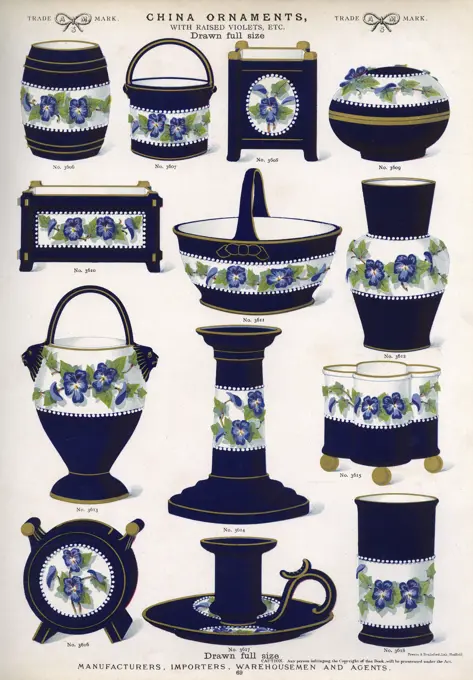
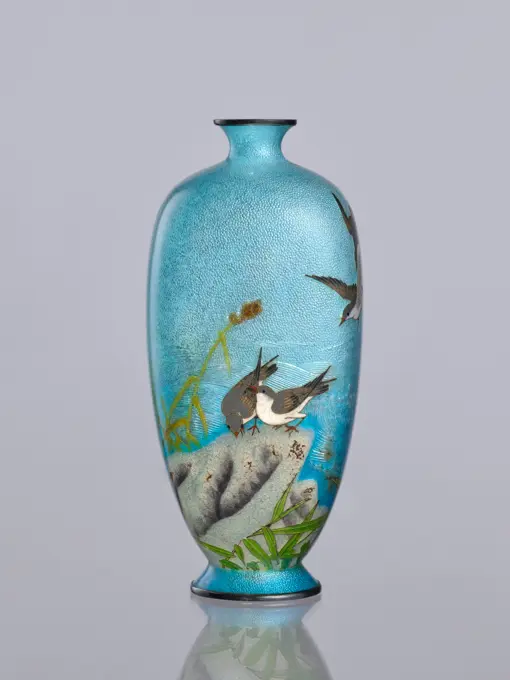
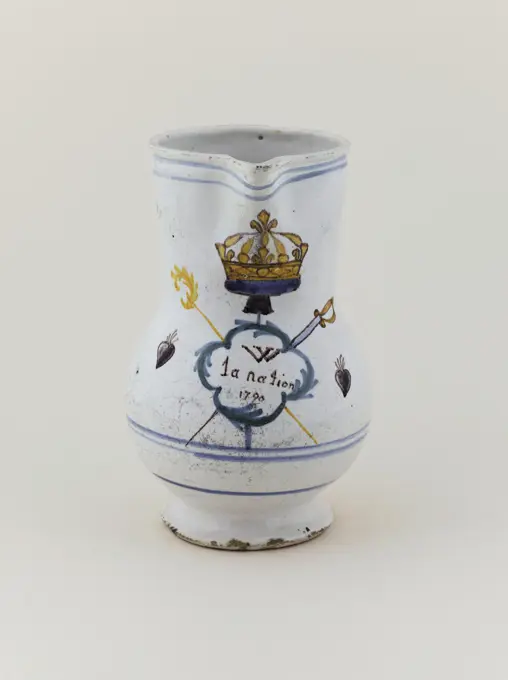
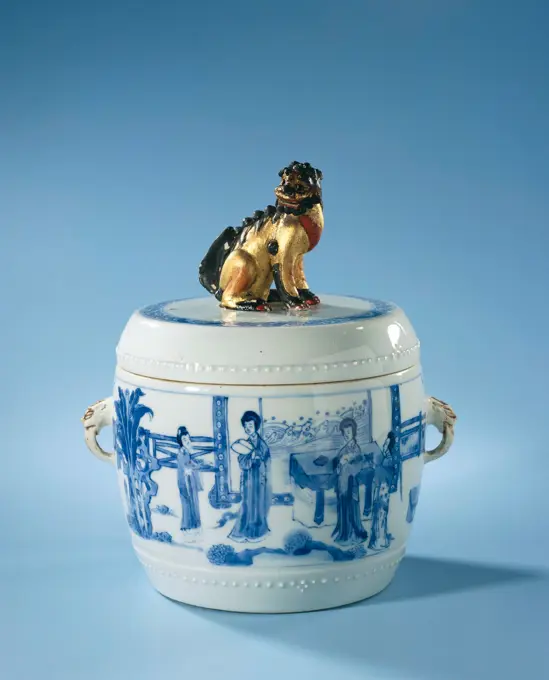
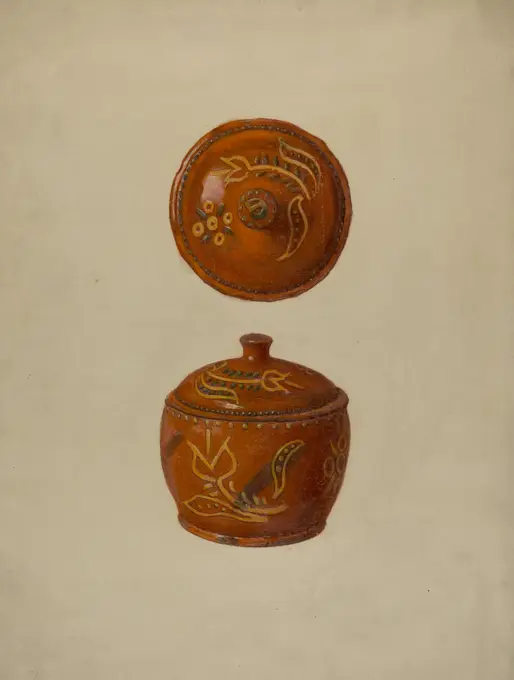
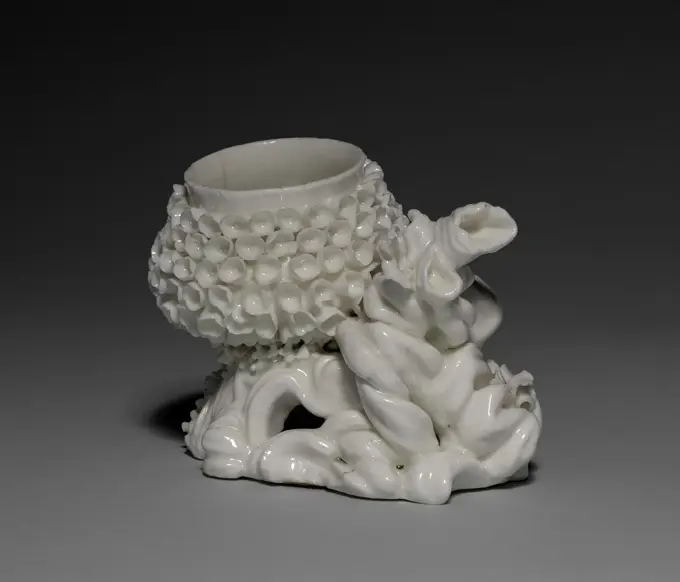
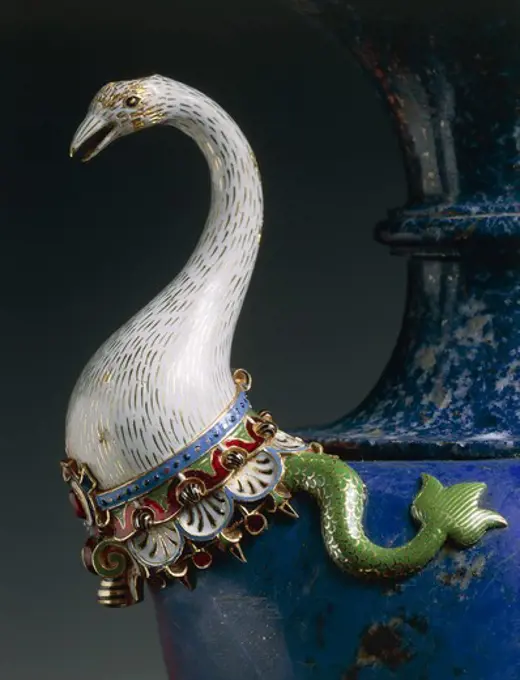
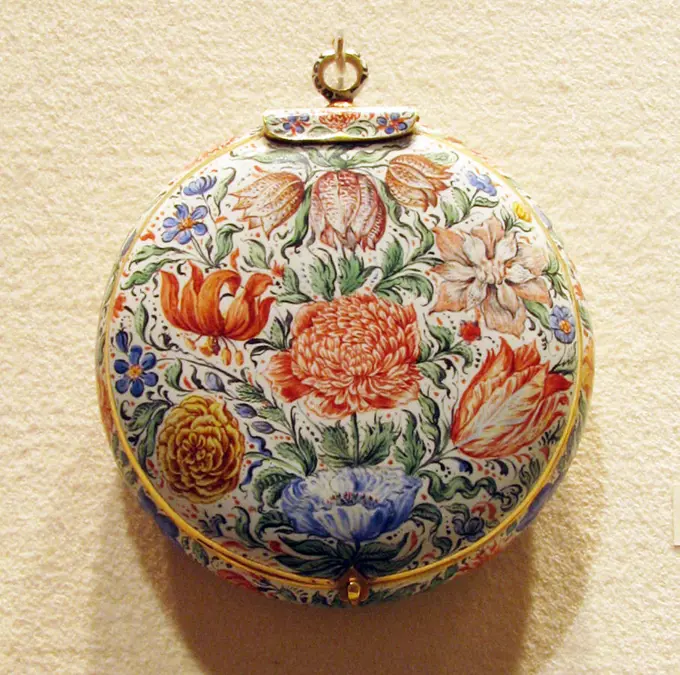
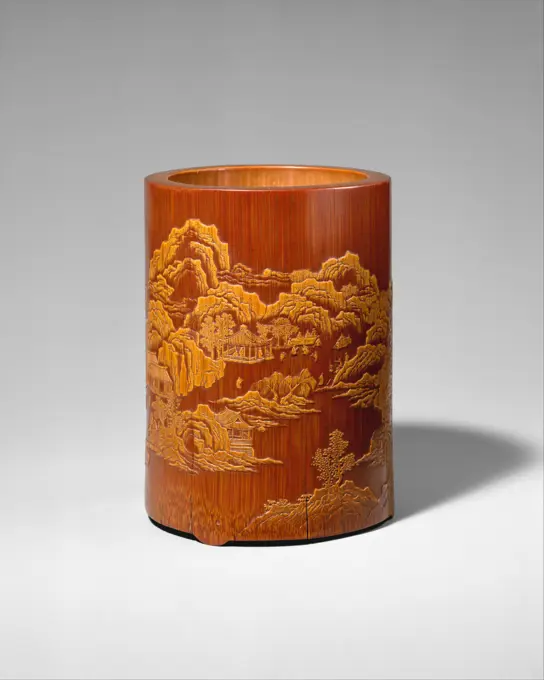
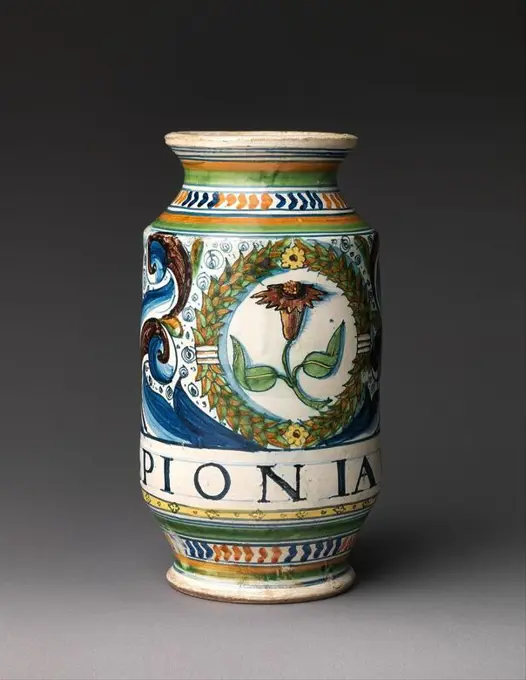
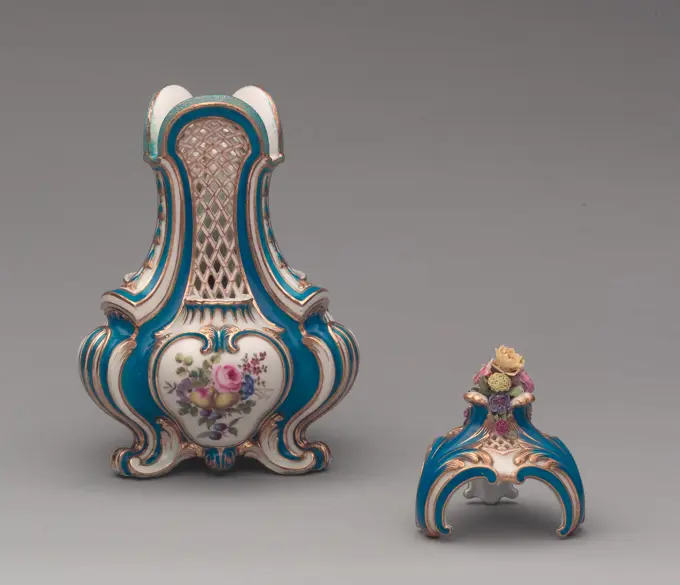
Vase with cover (vase pot-pourri triangle) (one of a pair) ca. 1761 Sèvres Manufactory French This unusual form of vase, which appears to have been used either for pot pourri or for growing small bulbs, was produced in very small quantities. Only two other pairs of this model are known today.. Vase with cover (vase pot-pourri triangle) (one of a pair) 232605Teapot with scenes of ships, c. 1754, 4 15/16 x 8 x 4 13/16 in. (12.54 x 20.32 x 12.22 cm), Porcelain, China, Chinese exportJug with a view of NunehamCourtenay.  Manufacturer: Bourne, Baker, and Bourne, EnglishPharmacy Bottle, c. 1500-1510. Italy, Papal States, Faenza. Tin-glazed earthenware (maiolica); overall: 38.8 cm (15 1/4 in.).. Pottery vase, octagonal and bottle-shaped with ditto slim neck. Painted in blue on the white tinglaze: on eight subjects Christ, Petrus, Mattheus, Lucas, John the Baptist, Bartholomeus, Thomas and Maria, all in half-sided with their attributes; There are under their names: ECCE Gay, S.Petrus, S.Matthaeus, s.Lucas, s.oannis.ba., S.Bartolomaeus, S.Thomas, S.Maria. Under these inscriptions half rosettes with symmetrical leaf raft. Above the figures a leaf wreath wound with ribbons, on which angel heads with wings and a lilensmotif are on the head. At the neck flying putti and angel heads between clouds. A leaf edge along the foot edge. Marked in blue with an asterisk including the number 125 including another one in celebration.Vase; Tomiki, Shôbei (Fl. Ca. XIX/20th century); 19th/20th century (1891-00-00-1910-00-00);Block, Julius Henry (1858-1934) - collection, chidori, clisonné, gift (provenance), Japanese (culture), Japanese art, vasesAnonymous. Pichet with three orders. Earthenware. 1790. Paris, Carnavalet museum. 72437-30 Beche, heart, crossed, crosse, painted, Epee, Revolutionary Faience, Nation, Object, Pichet, Revolution 1789, French Revolution, Symbol, Three Orders, Daily Life, 18th 18th 18th 18th 18th century'Ceramic Art, Chinese and Japanese Porcelain'. Artist: UnknownBrush Pot with Peonies: Dehua Ware, 1644-1911. China, Fujian province, Qing dynasty (1644-1911). Glazed porcelain with pierced and incised decoration; diameter: 9.5 cm (3 3/4 in.); overall: 14.9 cm (5 7/8 in.).. Drum shaped porcelain lid pot with handles in the form of sample heads, painted in underglaze blue and on the glaze red, black and gold. On the wall of the pot two scenes: two Chinese ladies (long lines) with two servants in a fenced garden at a pavilion. One has a rabbit in its arms, the other a range. The other side is with three ladies in a fenced garden for a room screen and a table. The ladies wear a range, a rabbit or a sprig. A servant presents an object on a scale. Around the foot and edge of the lid a bond with balls in relief; the lid with a border napkin; The button in the form of a, later in Europe painted, shishi (lion dog). Blue White.Cap 1700-1725 Swiss. Cap 112621Max Soltmann, Pa German Jar with Cover, c 1937 Pa. German Jar with CoverPair of Pot-pourri Bowls. UnknownElbow Cushion, Qianlong period, 1736-1795, 9 1/2 x 9 1/2in. (24.1 x 24.1cm), Silk, gold threads, embroidery, China, 18th centuryPotpourri Vase, c. 1750. Vincennes Porcelain Factory (France, 1740-56). Soft-paste porcelain; overall: 17.2 x 15.9 x 10.5 cm (6 3/4 x 6 1/4 x 4 1/8 in.).Goldsmith's art, Italy, 15th century. Hans Domes (active 1563-1601), Lapis lazuli water ewer, with enamelled gold and gilt bronze. Height 27.5 cm. Manufacture of the Casino di San Marco Workshop.Spirit keg in the shape of a Japanese woman on a chariot, anonymous, c. 1700 - c. 1730 Porcelain jeneverbank, painted in underly glaze blue and on the glaze red, green, black and gold. The jug is in the form of a woman in Kimono, sitting on a cart with two wheels. Her kimono is slightly raised, making her lower legs visible. At the front of the cart is a hole made for the tap. The head is detached from the body and acts as a cap. Modeled wheels on either side of the cart. The Kimono is decorated with clematis drinks, cherry blossoms and Paulowna branches. On the front of the cart a rectangular compartment with a cloudy and a scalloped cartouche with a lotus drink. The back of the cart with two birds behind bars, prunus blossoms and flower vines that run on the sides. Two corners of the cart broke off at the front. Imari. Japan porcelain. glaze. cobalt (mineral). gold (metal) painting / gilding / vitrification Porcelain jeneverbank, painted in underly glaze blue and on the glaze red, grSpirit keg in the shape of a Japanese woman on a chariot, anonymous, c. 1700 - c. 1730 Cap in the shape of a head of porcelain jenever rod, painted in underlaze blue and on the glaze red, green, black and gold. Imari. Japan porcelain. glaze. cobalt (mineral). gold (metal) painting / gilding / vitrification Cap in the shape of a head of porcelain jenever rod, painted in underlaze blue and on the glaze red, green, black and gold. Imari. Japan porcelain. glaze. cobalt (mineral). gold (metal) painting / gilding / vitrificationWatch case ca. 1645-50 Christophe Morliêre Many of the flowers depicted on the exterior of this watchcase were copied from models provided in a series of prints by Nicolas Cochin or Noël Cochin for use by goldsmiths, titled Livre nouveau de fleurs tres util pour lart dorfevrerie, et autres (Paris, 1645). This new form of painting on a pure white ground was developed by about 1630; its invention is generally ascribed to Jean I Toutin (1578-1644). In Blois, enamelers were under the special protections of Gaston, duc dOrléans (1608-1660), but Paris, too, was an early and important center of production. An increasing number of sources from which these enamel painters took their designs have been identified, and it seems safe to say that most, if not all, were content to reproduce in miniature the work of other artists.. Watch case 194173Vase 1760-65 British. Vase 9293Brush holder with Ode to the Pavilion of the Inebriated Old Man” early 17th century Zhang Xihuang Chinese A tour de force of carving skill, the design on this brush holder is cut from the lighter skin of the bamboo so that it stands in relief against the darker, fibrous stalk. The subject is a gathering hosted by Ouyang Xiu (1007-1072) in 1045. Ouyang later composed an ode to commemorate the event, and to poke fun at himself for being both the eldest and the most easily intoxicated of the guests.. Brush holder with Ode to the Pavilion of the Inebriated Old Man” 39625Small ovoid vase with two handles. unknown, craftsmanDu Paquier Porcelain Manufactory, Teabowl and Saucer, c. 1725, hard-paste porcelain.Albarello 1545-1555 Urbania. Tin-glazed earthenware (maiolica) . Castel Durante Potteries18th century French Porcelain China 2013Chess Piece, King 13th-14th century. Chess Piece, King 452320Maker Unknown, Cordial Bottle, c. 1775-1810, colorless glass, enamel, and pewter.Anonymous. Pichet with three orders. Earthenware. 1790. Paris, Carnavalet museum. 72437-23 Clergy, decoration, faience, nobility, revolutionary period, pitcher, reunion, French revolution, third-party-state, three orderSnuff Bottle, 17th-19th century, 3 7/8 x 2 1/2in. (9.8 x 6.4cm), Glass, China, 17th-19th centuryOsterschmuck - Easter Decoration Osterei freigestellt auf weissem Hintergrund Easter egg isolated on white background Copyright: xZoonar.com/Teamarbeitx 283814ApothecaryJarPharmacy jar (albarello). Culture: Italian, Montelupo. Dimensions: Overall (confirmed): 10 5/16 × 5 1/2 × 5 1/2 in. (26.2 × 14 × 14 cm). Date: ca. 1500-1510.Storage vessels were among the most frequently produced maiolica wares in late medieval and Renaissance Italy. Made in fairly standard shapes, they were designed to fit with dozens of others on a shelf, often in a pharmacy or shop. Their handles therefore tend to fit within the vessel's profile, and the cylindrical albarello type is generally narrower at the middle than at the top or bottom, making it easy to grip. Other common features include inscriptions indicating contents and flanged lips to help secure cloth or paper seals. The decoration, usually more elaborate on one side than the other, can sometimes link pieces to a known dispensary or specific workshop or artist. Museum: Metropolitan Museum of Art, New York, USA.. Earring of blue jasperware. The earring is decorated in white with Greek women's figures.Rectangular Tea Caddy Covered With A Light Blue Glaze And Antiques in panels. Rectangular tea bus from porcelain, covered with a light blue / turquoise glaze and painted on the glaze in blue, red, green, yellow, purple and black. On the wide sides a saved lotus-shaped cartouche with antiques (vases, peacock feathers, ruyi scepter, book rolls, mushroom (Lingzhi), impeller, etc.), the narrow sides with peekanjers in saved, leaf-shaped cartouche; On the shoulder two recessed medallions with stylized flower. The lid with a saved medallion on the top with stylized flower. A crack in the wall. European forms with email colors.Close-up of a golden pottery vase in unique floral patternVase with a lid Höroldt, Johann Gregorius, Mi Nia (Meissen)China Ornaments with raised violets, Plate 69.      Date: circa 1880sBOTES DE FARMACIA DEL HOSPITAL REAL - SIGLO XVII/XVIII. Location: MUSEO DEL PUEBLO GALLEGO. SANTIAGO DE COMPOSTELA. A CORUÑA. SPAIN.