Decorative Porcelain Plates

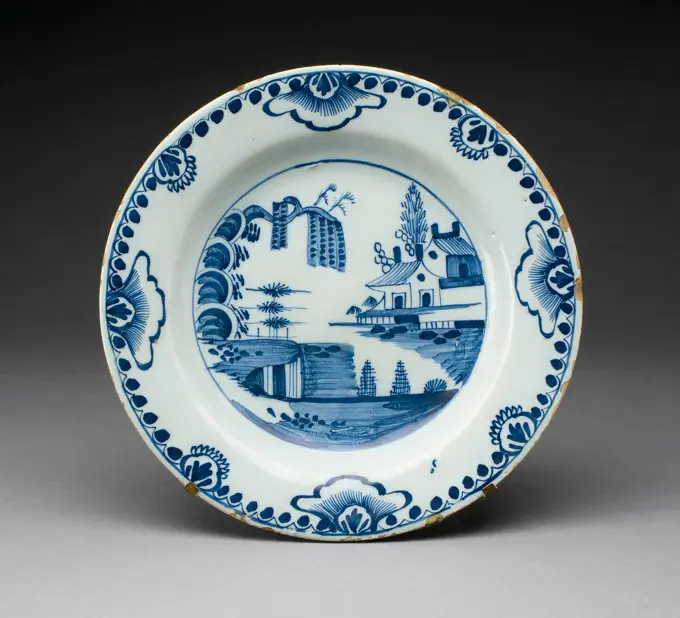
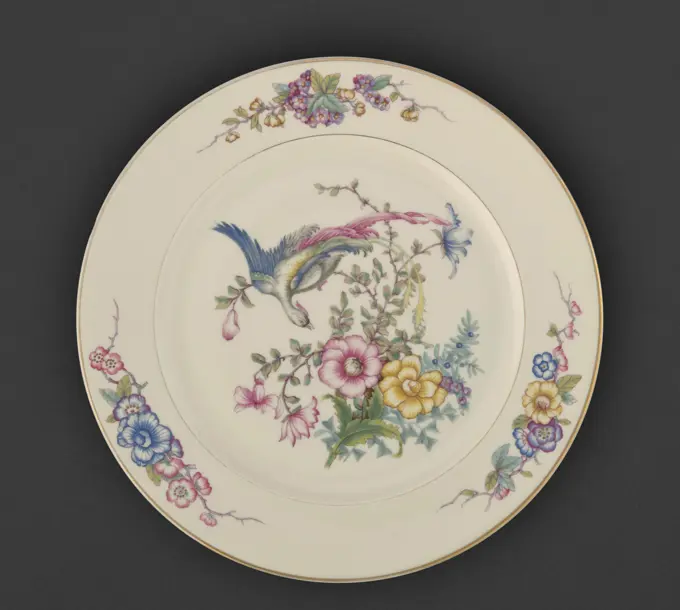
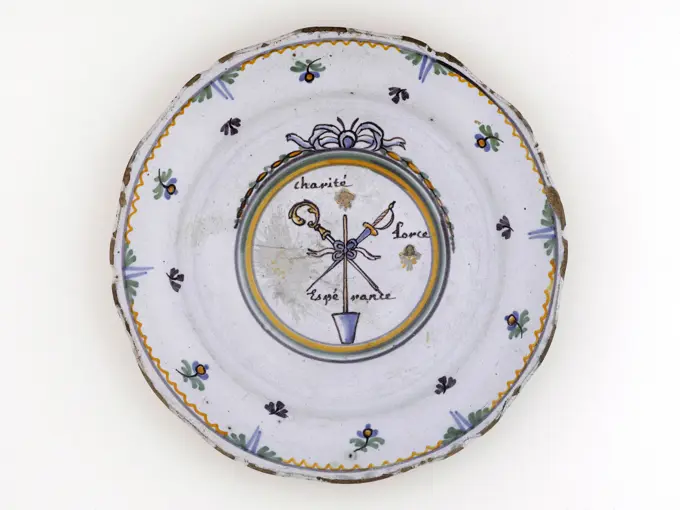
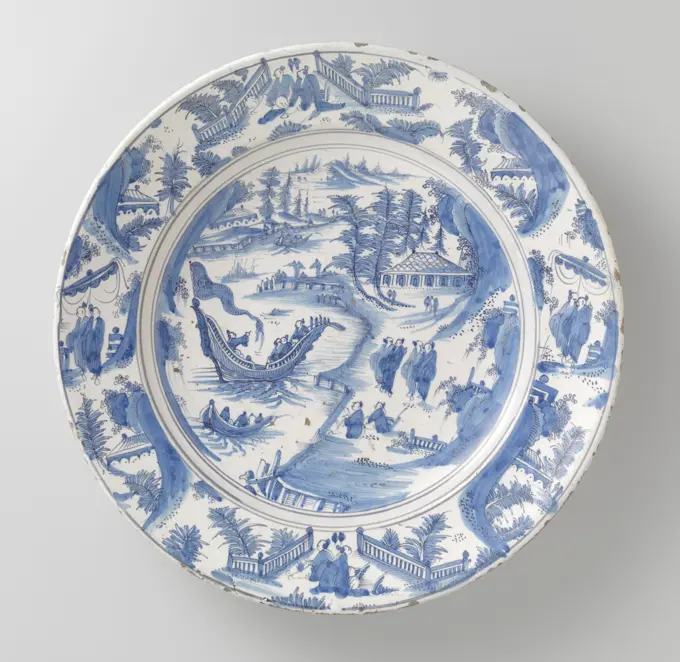
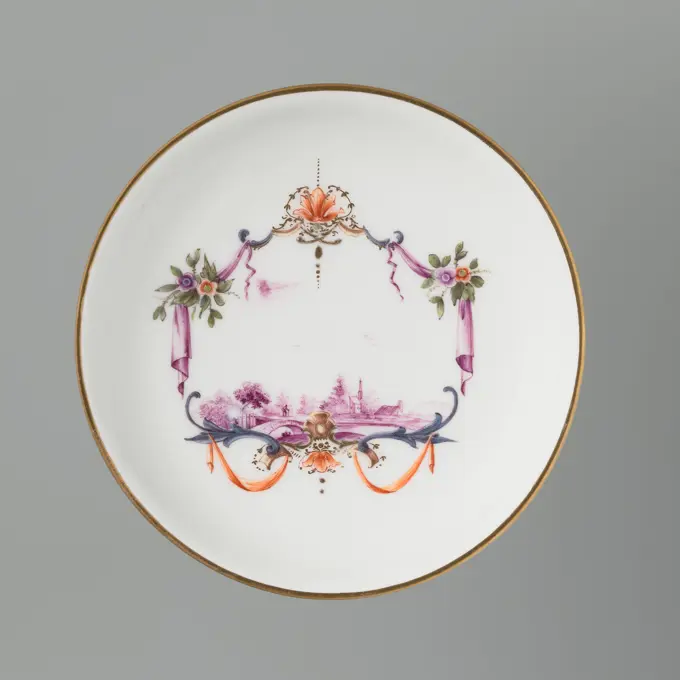
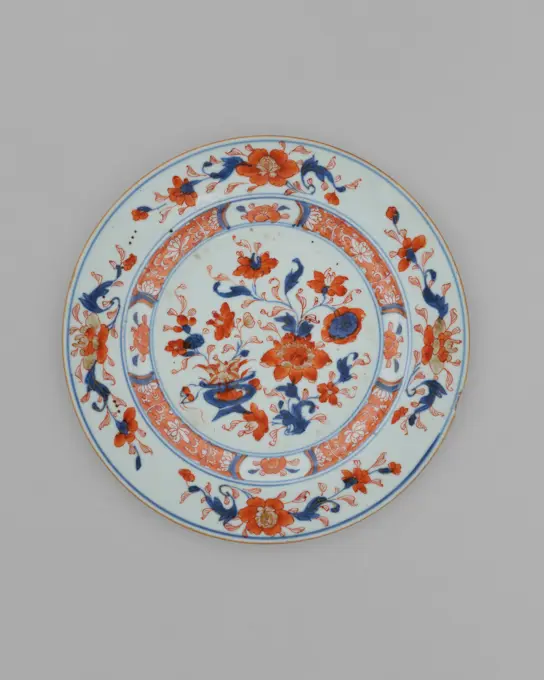
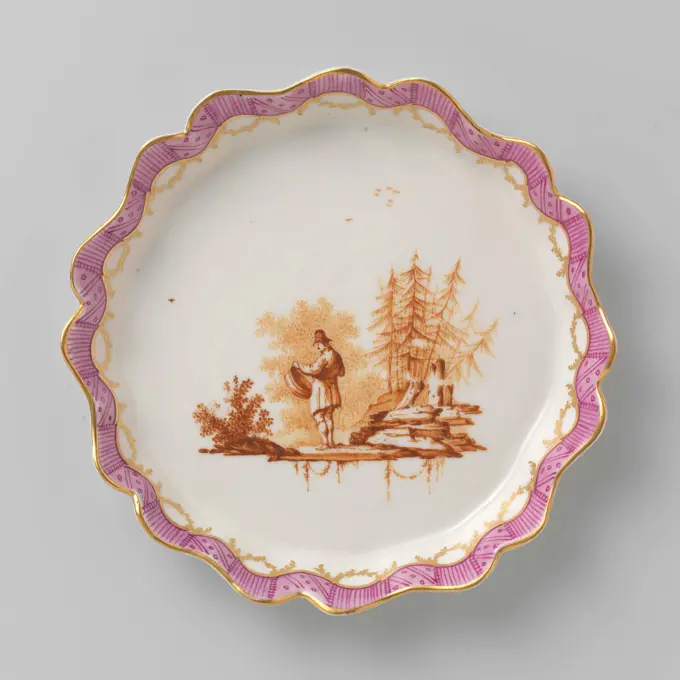
Assortment of elegant porcelain plates featuring colorful designs, including floral patterns, portraits, and historical symbols.

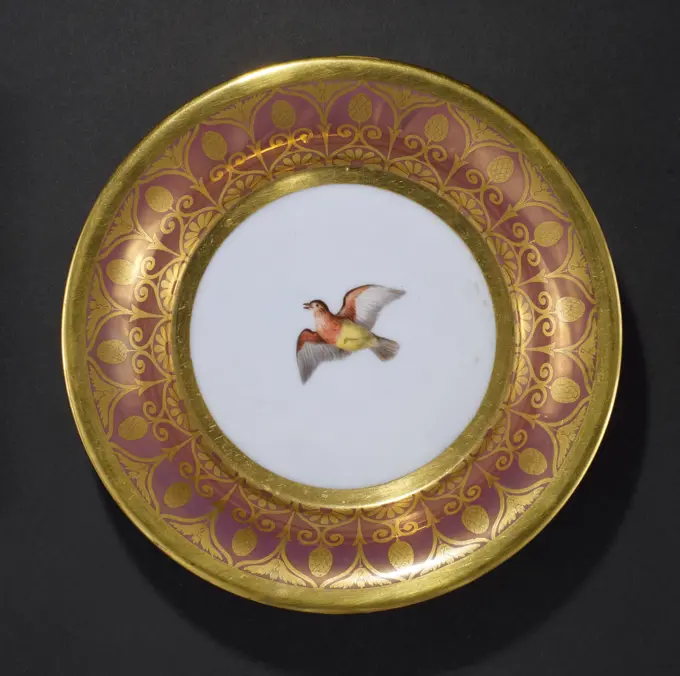
Plate; Rosenthal (Selb; Porcelain Factory; 1879-); 1925-41 (1920-00-00-1930-00-00);
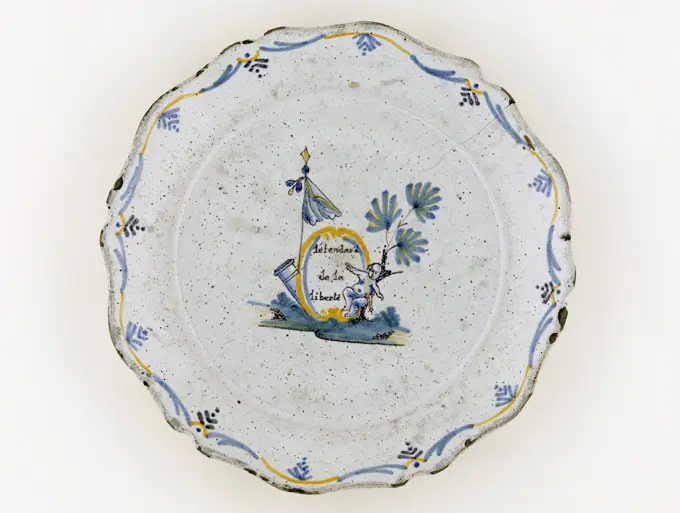
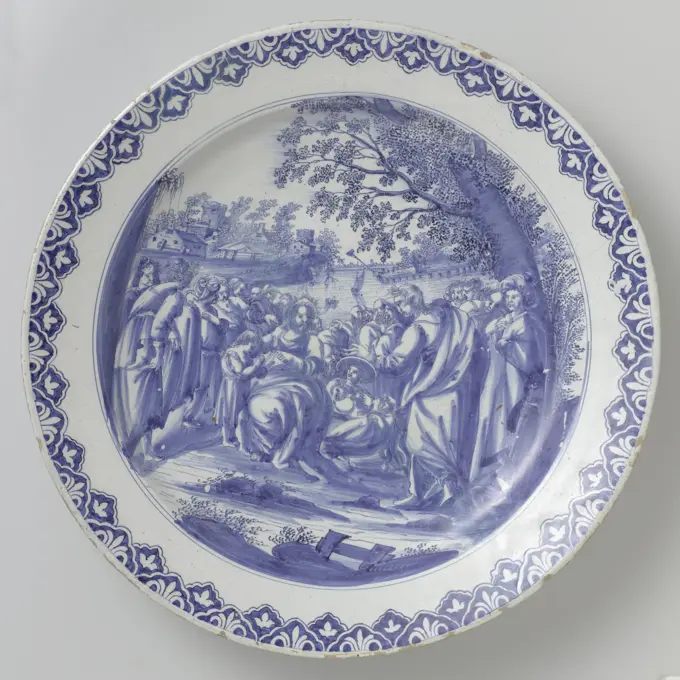
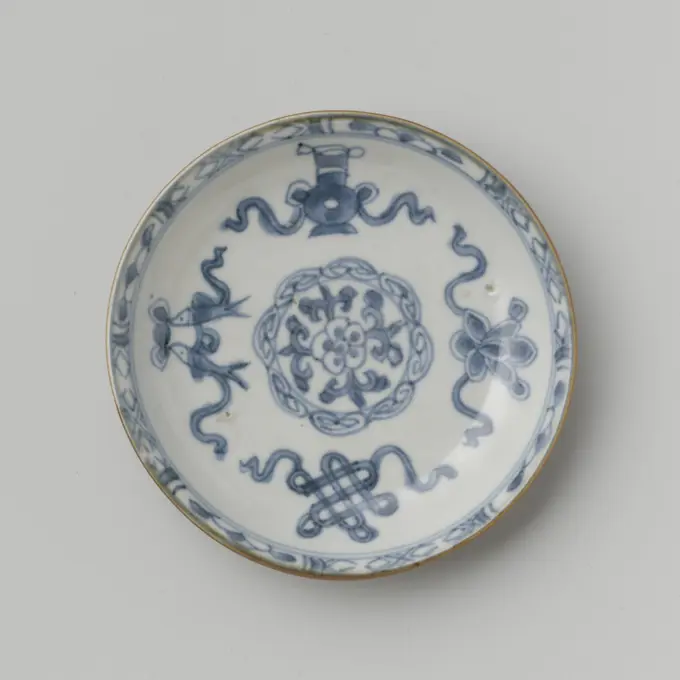
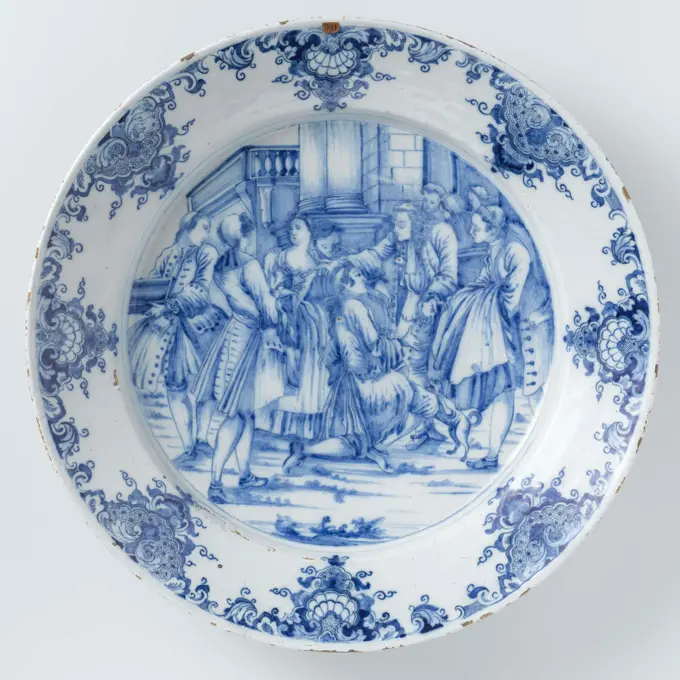
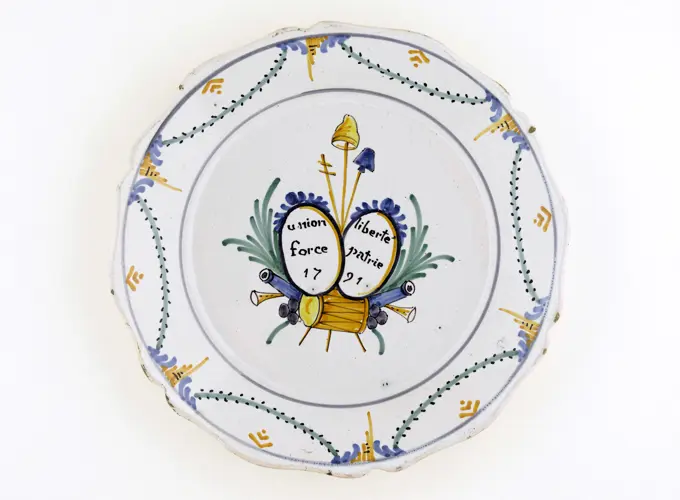
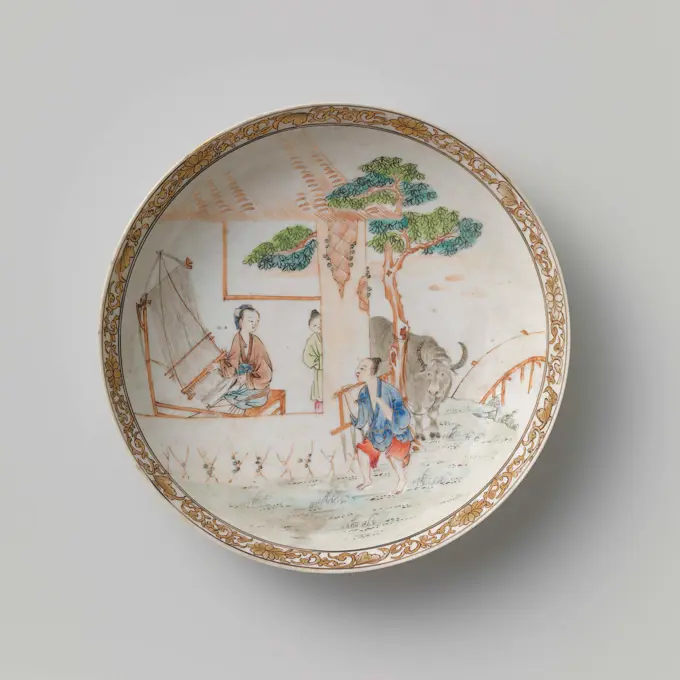
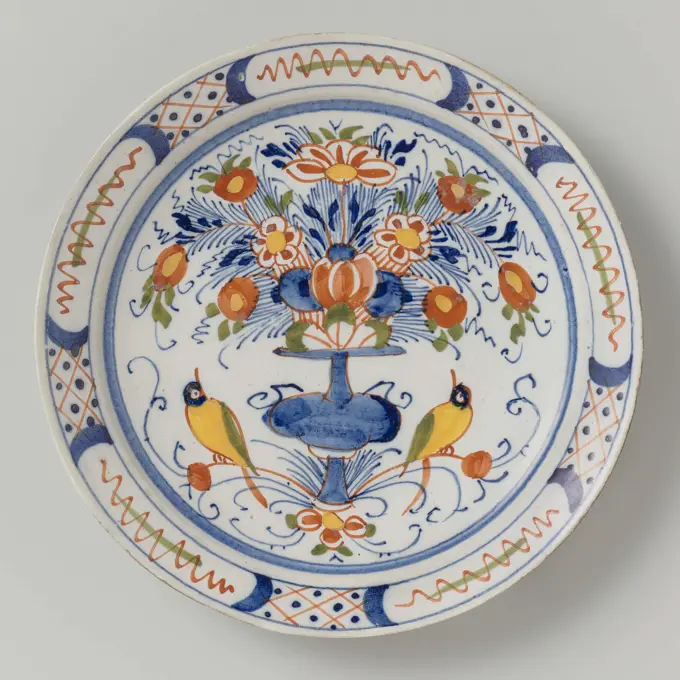
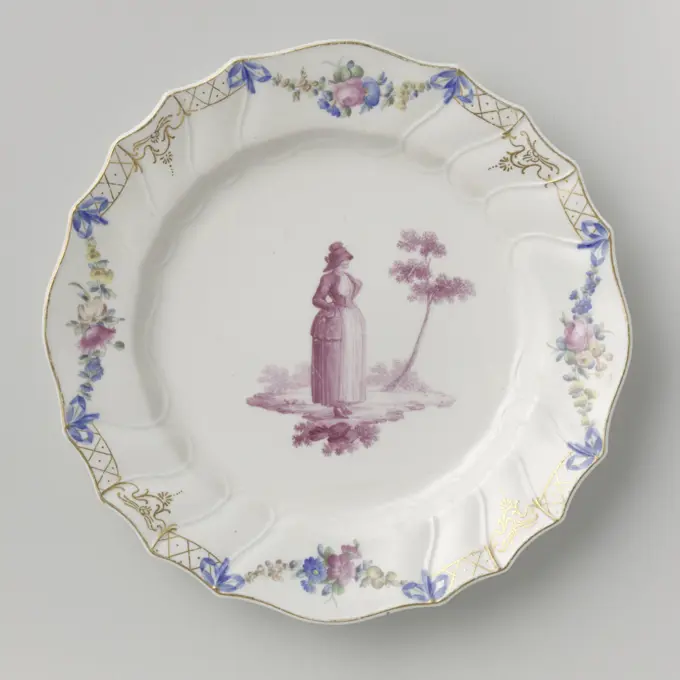
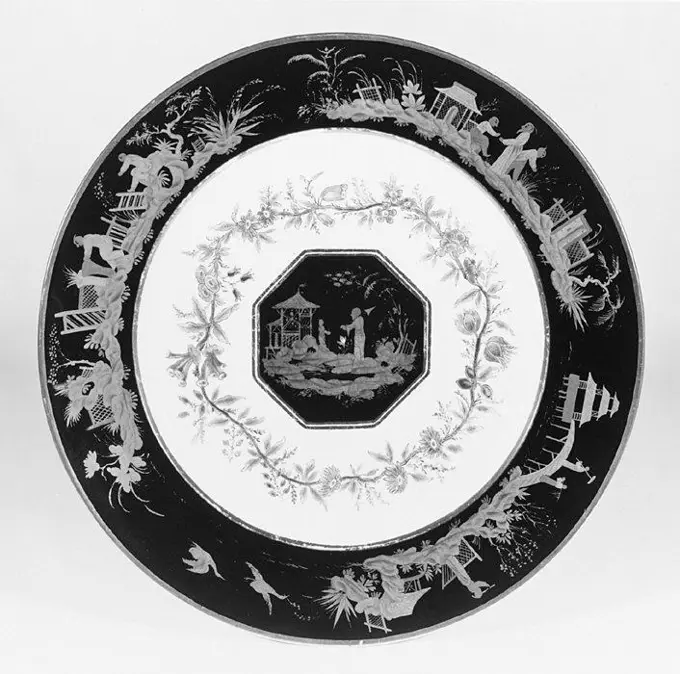
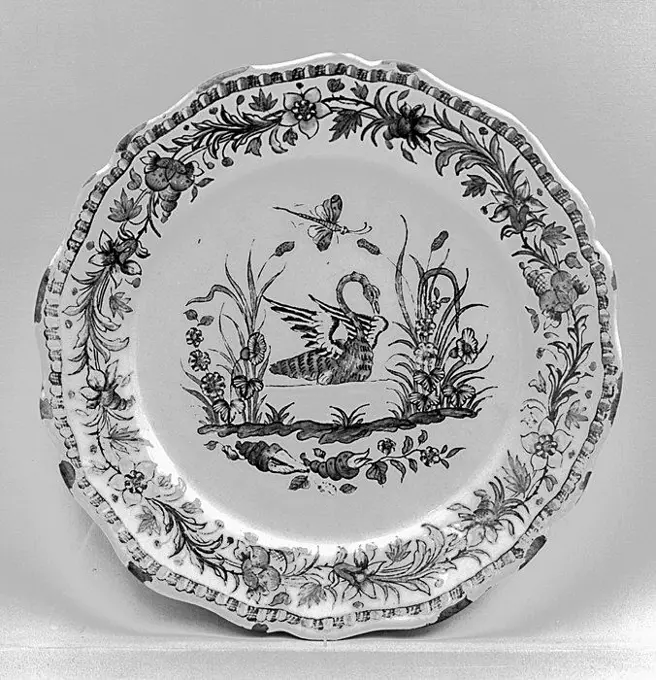
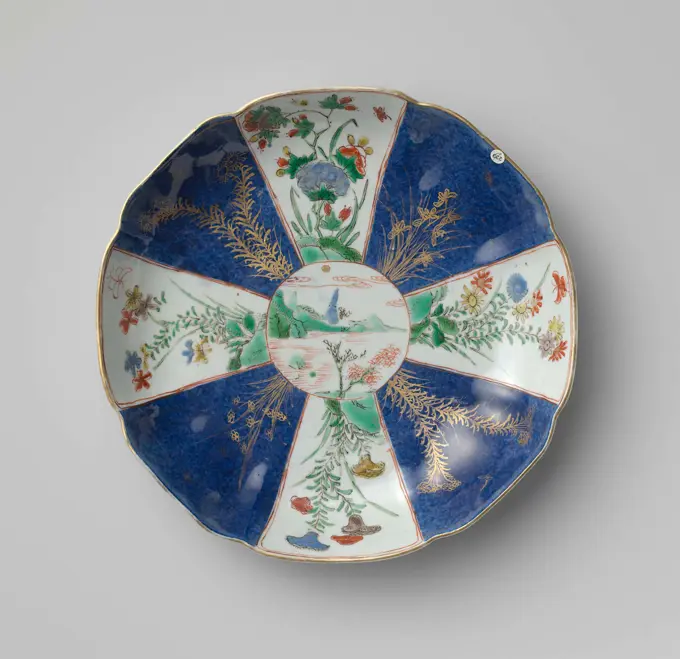
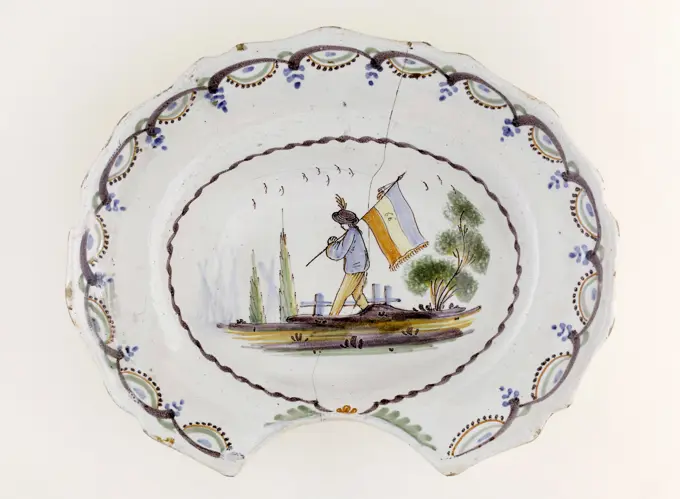
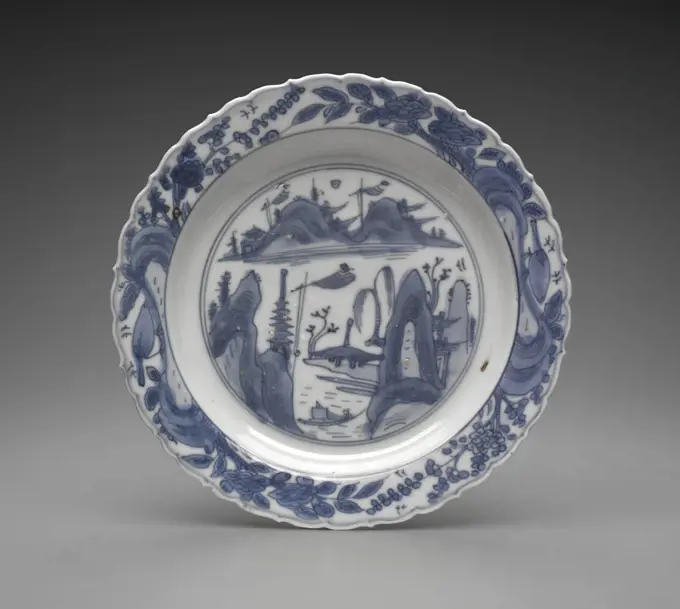
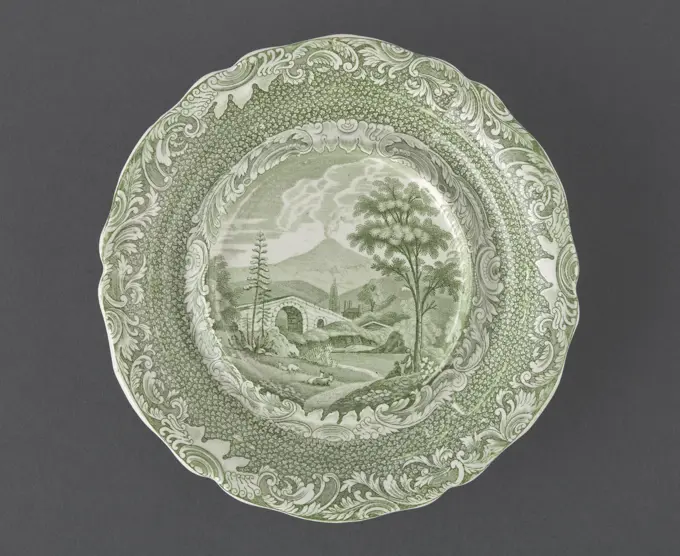
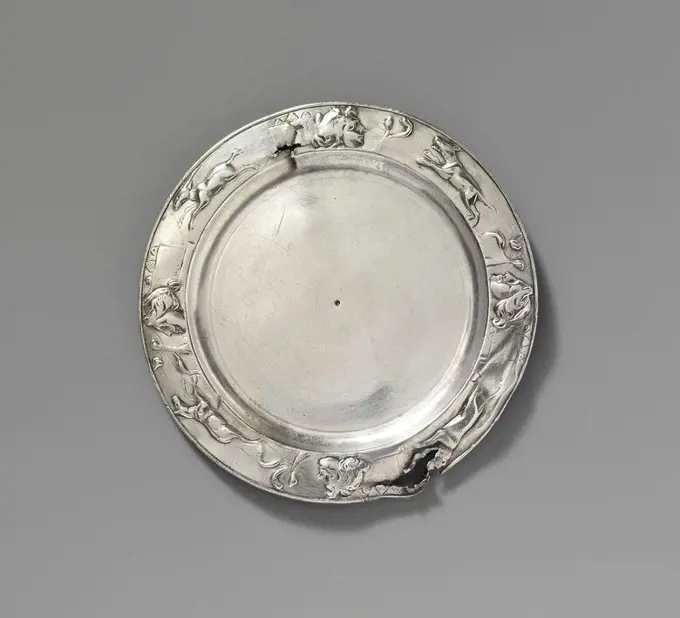
Dish belonging to a tea set with decoration of trophies on tied ribbons, Royal Porcelain Factory Dommer & Co., 1809 - in Or Before 1814 Tea set consisting of a teapot, a sugar bowl, a coil and twelve cups and saucers multicolored painted with trophies hanging on blue bows. The trophies relate to various professions. Marked in black: Amstel (the sugar bowl Amstel N. 805 and Inganglift A). Various entry brands in the heads and saucers. Nieuwer-Amstel porcelain Tea set consisting of a teapot, a sugar bowl, a coil and twelve cups and saucers multicolored painted with trophies hanging on blue bows. The trophies relate to various professions. Marked in black: Amstel (the sugar bowl Amstel N. 805 and Inganglift A). Various entry brands in the heads and saucers. Nieuwer-Amstel porcelainPlate with portraits of Princes Wilhelmina and Prince Willem V, anonymous, c. 1767 Plate of porcelain, painted in underly glaze blue and on the glaze in red, pink, green, yellow and black. Decorated in China in Underglaze with seven loose flower branches and a decorative strap on the edge. Decorated in Europe with portraits of Princess Wilhelmina and Prince Willem V, married in 1767, with between them in an orange tree; Rank on the edge. Decorated in Europe. China porcelain. glaze. cobalt (mineral) painting / vitrification Plate of porcelain, painted in underly glaze blue and on the glaze in red, pink, green, yellow and black. Decorated in China in Underglaze with seven loose flower branches and a decorative strap on the edge. Decorated in Europe with portraits of Princess Wilhelmina and Prince Willem V, married in 1767, with between them in an orange tree; Rank on the edge. Decorated in Europe. China porcelain. glaze. cobalt (mineral) painting / vitrificationFaïence board with the weapon of Beuningen - van Leeuwen, Anonymous, c. 1700 - c. 1725 Faïence board, in Imari colors with the alliance weapon of Jan van Beuningen (1667-1720) and Catharina Constantina van Leeuwen (1675-1720). Delft . Faïence board, in Imari colors with the alliance weapon of Jan van Beuningen (1667-1720) and Catharina Constantina van Leeuwen (1675-1720). Delft .Plate, Manufacture de Sèvres, 1773 Round plate of multicolored painted porcelain, with a scalloped edge. On the flat, the letters CL are painted in flower vines, above which a wreath. On the edge, three baskets are filled with flowers, three ovals in which a putto and six blower wreaths painted. A blue trim runs along the edge on which a leaf garland in gold. The board is marked. Sèvres porcelain. gilding (material). Round plate of multicolored painted porcelain, with a scalloped edge. On the flat, the letters CL are painted in flower vines, above which a wreath. On the edge, three baskets are filled with flowers, three ovals in which a putto and six blower wreaths painted. A blue trim runs along the edge on which a leaf garland in gold. The board is marked. Sèvres porcelain. gilding (material).Dessert plate - Francis Morley, 1845-1850 Francis Morley, 1845-1850Dinner plate. Prószków Śląski (fabryka fajansu ;1763-1853)Plate with a crowned coat of arms and flower sprays, anonymous, c. 1750 - c. 1774 Porcelain plate with scalloped edge, painted on the glaze in blue, red, pink, green, yellow, purple, black and gold. On the flat a crowned alliance weapon with two goats on the left against a tree and right in field 1. A galloping horse and in 2. A bird on a branch. The weapons are surrounded by a shell motif and leaf vines. The wall with a link tire; On the edge of loose flower branches. Old label on the bottom with 'Knatchbull-huggessen'. Weapon porcelain with email colors. China porcelain. glaze. gold (metal) painting / gilding / vitrification Porcelain plate with scalloped edge, painted on the glaze in blue, red, pink, green, yellow, purple, black and gold. On the flat a crowned alliance weapon with two goats on the left against a tree and right in field 1. A galloping horse and in 2. A bird on a branch. The weapons are surrounded by a shell motif and leaf vines. The wall with a link tire; On the edgePlate; Rosenthal (Selb; Porcelain Factory; 1879-); 1925-41 (1920-00-00-1930-00-00);Plate; Rosenthal (Selb; Porcelain Factory; 1879-); 1925-41 (1920-00-00-1930-00-00);Anonymous. Plate "The standard of freedom". Earthenware. Paris, Carnavalet museum. 71683-36 Canon, Decoration, Flag, Etendard, Faience, Liberte, Revolutionary Periode, French Revolution, PlateDish of multi -colored Faïence, Anonymous, c. 1750 - c. 1770 Dish of Faïence. In blue on the flat baptism in the Jordaan. Around a multicolored flower edge with putti and landscapes in blue. Delft . Dish of Faïence. In blue on the flat baptism in the Jordaan. Around a multicolored flower edge with putti and landscapes in blue. Delft .Plate; Rosenthal (Selb; Porcelain Factory; 1879-); 1925-41 (1920-00-00-1930-00-00);A plate of a pumpkin with a pattern of "Liverpool birds"; Derby Pot Works, Brick House label Josiaha Wedgwood, Sadler & Green (Liverpool); around 1765-1770 (1760-00-00-1780-00-00);Serving plate - Hallowell, Bay of Quinte, Ontario D'après Francis Morley & Company, 1850-1858. Dish of porcelain, painted on the glaze in red, pink, green, brown, black and gold. On the flat alliance weapon of the families of Oudtshoorn and Boesses. On the left the coat of arms of the van Oudtshoorn family in gray and black. On the right the coat of arms of the Boesses family divided into four surfaces: 1. And 4. A golden jerk on a green background, 2. and 3. a tree on a red background. The helmet sign is a gravy crown and the cover is in Louis XIV style in pink, gray, green and gold with palm leaves on either side. A golden acanthus decoration on the edge. Weapon porcelain with email colors.Dish, Anonymous, c. 1750 - c. 1800  Round dish of multi -colored painted faience. On the flat is a vase with flowers and on the edge five flowers are painted in the colors blue, purple, yellow, red and green. Delft earthenware. tin glaze.Plate, with a presentation of a Chinese house with garden on the flat. Pottery plate, gray, painted with mufflekeepers. On the flat a representation of a Chinese house with garden, in which two women are walking. The edge of the board with four cartouches with flowers. Between the cartouches loose flowers and abstract motifs.Plate Made 1745-1755 Jingdezhen. Hard-paste porcelain with grisaille decoration .Plate with women in a walled garden near a pond, anonymous, c. 1740 - c. 1760 Porcelain plate, painted on the glaze in blue, red, pink, green, yellow, brown, black and gold. On the flat three tea drinking women in a walled garden around a table on which a fruit bowl with fingercitroen and grapes stands, to the left of the table a boy, a cat and a vase in front of the table; Behind the table a rock and a pond with two ducks; the wall with a band with flower vines; The edge with three peon branches. A crack in the bottom. Famle Rose. China porcelain. glaze. gold (metal) painting / gilding / vitrification Porcelain plate, painted on the glaze in blue, red, pink, green, yellow, brown, black and gold. On the flat three tea drinking women in a walled garden around a table on which a fruit bowl with fingercitroen and grapes stands, to the left of the table a boy, a cat and a vase in front of the table; Behind the table a rock and a pond with two ducks; the wall with a band with flower vines; bord, anonymous, c. 1750 - c. 1780 Round plate of multi -colored painted faience. A flower vase and two birds are painted on the flat and a Chinese motif on the edge. The board includes three identical signs with the invnrs. BK-KOG-2424-A, BK-KOG-2424-B and BK-KOG-2424-D. Delft earthenware. tin glaze. Round plate of multi -colored painted faience. A flower vase and two birds are painted on the flat and a Chinese motif on the edge. The board includes three identical signs with the invnrs. BK-KOG-2424-A, BK-KOG-2424-B and BK-KOG-2424-D. Delft earthenware. tin glaze.Soup plate 1750-70 Chinese, for Continental European market. Soup plate 201252Dish with Jesus Suffering the Little Children to Come unto Him, Willem Jansz. Verstraeten, c. 1645 - c. 1660 Daadel van Faience with a representation of Jesus that lets the children come to themselves Haarlem . Daadel van Faience with a representation of Jesus that lets the children come to themselves Haarlem .Saucer with a flower rosette and symbolic objects, anonymous, c. 1725 - c. 1749 Porcelain saucer, painted in under -glaze blue and brown. On the flat a flower rosette surrounded by four lucky symbols (vase, lotus, fishing, infinite knot); The back covered with a brown glaze. Monochrome brown with blue and white. China porcelain. glaze. cobalt (mineral) painting / vitrification Porcelain saucer, painted in under -glaze blue and brown. On the flat a flower rosette surrounded by four lucky symbols (vase, lotus, fishing, infinite knot); The back covered with a brown glaze. Monochrome brown with blue and white. China porcelain. glaze. cobalt (mineral) painting / vitrification. Tin-glazed earthenware .Friends in need. Plate, blue painted with image of a boiler above fireplace, make sure an ax, a stack of cabbage and wood. With inscription. Back two blue edges and v.z.v. Two holes and iron wire to hang plate. Signature.Plate; Rosenthal (Selb; Porcelain Factory; 1879-); 1925-41 (1920-00-00-1930-00-00);A salad bowl with a view of the church in Skałka in Krakow G Owacki, Jan Nepomucen (1802 1847), MielówFaïence board with family crest, Anonymous, c. 1720 - c. 1740 Plate multicolored painted with an unknown family crest with a unicorn and a cow as a helmet. Along the edge a band consisting of spirals, flowers, shell motifs and lambrequins. Delft . Plate multicolored painted with an unknown family crest with a unicorn and a cow as a helmet. Along the edge a band consisting of spirals, flowers, shell motifs and lambrequins. Delft .Plate with arms of Okeover impaling Nichol, c. 1740, 1 1/8 x 9 1/8 in. (2.86 x 23.18 cm), Porcelain, China, 18th century, This plate is from a large service ordered by Leake Okeover of Derbyshire, England, whose descendants still retain the design that served as the pattern. A shipping invoice from 1740 reveals that the cost per piece was about £1, roughly ten times the price for most armorial porcelain. The intricate painting no doubt accounts for the strong price, and designates this service as the most elaborate armorial porcelain known to have been produced in the 18th century.Dish with Cursive Floral Spray. Vietnam, late 14th century. Furnishings; Serviceware. Wheel-thrown stoneware with cream slip, underglaze brown painted decoration, and clear glazeA plate; Rosenthal (Selb; Porcelain Factory; 1879-); 1925-41 (1920-00-00-1930-00-00);Board, with children's flat blade. Plate of pottery with multicolor transfer decor. On the flat bubble blying children in front of a house. Under the vermostation is the text: soap bubbles. The edge is decorated in blue with a wavy border to which garlands and a ribbon hang.Plate with three figures in a landscape near a village, anonymous, c. 1600 - c. 1699 Plate of porcelain, painted in underlaze blue. On the flat a landscape with three people, trees and hills. In the background a village and a church tower. The inner edge with a wave pattern. The outer wall and edge with three flower branches. Four pronins within the foot ring. 'Schevenings sign'. Arita, Blauw-Wit. Japan porcelain. glaze. cobalt (mineral) painting / vitrification Plate of porcelain, painted in underlaze blue. On the flat a landscape with three people, trees and hills. In the background a village and a church tower. The inner edge with a wave pattern. The outer wall and edge with three flower branches. Four pronins within the foot ring. 'Schevenings sign'. Arita, Blauw-Wit. Japan porcelain. glaze. cobalt (mineral) painting / vitrificationDish, oblong, with some men and a rider statue on the flat in an oriental landscape, Peter Regout, c. 1801 - c. 1879 Dish of earthenware, oblong, with flow -blue transfer decor. On the flat a representation of a few men at a rider statue in an oriental landscape. On the edge of the dish cartouches with Eastern buildings and flowers. Maastricht earthenware Dish of earthenware, oblong, with flow -blue transfer decor. On the flat a representation of a few men at a rider statue in an oriental landscape. On the edge of the dish cartouches with Eastern buildings and flowers. Maastricht earthenwareAnonymous. Plate. Earthenware. 1789-1791. Paris, Carnavalet museum. 70955-36 Charite, Epee, Esperance, Faience, Force, Decorative Pattern, knot, revolutionary period, peak, bucket, dishes, plateAnonymous, China. Plat decor green family, god and goddess of longevity (woman in boat, seated character). Hard porcelain, moufle fire enamels. 1st quarter of the 18th century. Museum of Fine Arts of the City of Paris, Petit Palais. Faience, table service, dishes, 18th 18th 18th 18th 18th 18th 18 century, dishSoup plate -  William & Edward Corn, 1854-1904 William & Edward Corn, 1854-1904Plate with An Image of the Parasol Lady. Porcelain plate, painted in underglaze blue. On the flat a lady at a pond with reed boarding to three birds for her on the land, next to the lady a servant holding a rich decorated parasol above her head; Changed with a medallion on the wall flour branches; The edge with a honeycomb motif with four cartouches with a lady and four medallions with birds; The back with seven insects. The show is to design by Cornelis Pronk (1691-1754). European performance in blue and white.Dish with the coat of arms of Hendrik Peter Godfried Quack and Isabella Gertraud von Carnap, Etienne Blancheron, c. 1790 - c. 1800 Oval bowl of porcelain with four rectangular ribs in the wall, painted on the glaze with gold. On the flat the alliance weapon of Hendrik Peter Godfried Quack and Isabella Gertraud von Carnap. The inner wall with a flower drink and a golden band on the edge. Three prenes on the bottom. porcelain company: Paris (possibly)Netherlands (possibly) porcelain. glaze. gold (metal) painting / gilding / vitrification Oval bowl of porcelain with four rectangular ribs in the wall, painted on the glaze with gold. On the flat the alliance weapon of Hendrik Peter Godfried Quack and Isabella Gertraud von Carnap. The inner wall with a flower drink and a golden band on the edge. Three prenes on the bottom. porcelain company: Paris (possibly)Netherlands (possibly) porcelain. glaze. gold (metal) painting / gilding / vitrificationTwo dishes, Willem Jansz. Verstraeten (attributed to), c. 1650 - c. 1660 Sausence dish with a decoration inspired by the Chinese porcelain from the transition period. Haarlem . Sausence dish with a decoration inspired by the Chinese porcelain from the transition period. Haarlem .. Dish of Faïence. Blue painted with a scene from 'the lost son'.Anonymous. Plate. Earthenware. Paris, Carnavalet museum. 71478-47 Phrygian cap, decoration, faience, strength, freedom, homeland, revalue period, French revolution, union, plateSaucer-dish with the oxheerd and the weaver girl. Scale of porcelain with round wall, painted on the glaze in blue, red, pink, green, yellow, black and gold. On the front a river landscape with a shepherd, OS on a tree bound, and a weave in a pavilion, a second woman looks around the corner of the frame; The inner edge with lotus drinks. Family Rose.Plate With Flower Sprays and Figures in an interior and in a Landscape. Porcelain plate with raised wall and sloping edge, painted in underglaze blue. On the flat one raised medallion in the center with six people in an interior to a table; four times a flower branch (prunus, peony, lotus, chrysanthemum); the edge with a continuous landscape with scholars and their servants; the back of the edge with flower drinks; The back of the wall with four times a flower branch (prunus, peony, lotus, chrysanthemum). A chip in the edge. Blue White.. Round plate of multicolored padded faience. A flower vase and two birds are painted on the flat and a Chinese motif on the edge. Three identical signs with the Invnrs are among the board. BK-KOG-2424-A, BK-KOG-2424-B and BK-KOG-2424-C.Plate with a woman in a landscape, Doornik, c. 1780 Soft-Paste porcelain plate (Pâte Tendre) with a scalloped edge, painted on the glaze in blue, pink, green, yellow and gold. A woman in a landscape on the flat in pink camaic. The edge, continuously on the wall, slightly modeled in three narrow and one wide -ranged box. A band of garlands, bows and gold motifs on this. Golden Rand. Marked on the underside with the stork and wl. Porcelain Company: Doornikthe Hague porcelain. soft-paste porcelain. glaze. gold (metal) painting / gilding / vitrification Soft-Paste porcelain plate (Pâte Tendre) with a scalloped edge, painted on the glaze in blue, pink, green, yellow and gold. A woman in a landscape on the flat in pink camaic. The edge, continuously on the wall, slightly modeled in three narrow and one wide -ranged box. A band of garlands, bows and gold motifs on this. Golden Rand. Marked on the underside with the stork and wl. Porcelain Company: Doornikthe Hague porcelain. soft-paste porcelPlate ca. 1791 Sèvres Manufactory French Porcelain decorated with a black ground in imitation of Asian lacquer was produced at Sèvres for about a fifteen-year period beginning in 1790. Furniture decorated with imported black lacquer panels saw a resurgence of popularity in the last two decades of the eighteenth century, and the Sèvres factory's efforts to simulate black lacquer on porcelain were probably stimulated by this renewed general interest in lacquer decoration. Black-ground Sèvres porcelain was decorated with chinoiserie scenes executed in gold, which was often applied in subtle tones of yellow, green, and red. Small decorative highlights were often executed in platinum, and the ability to apply platinumfirst mastered by the factory in 1790may have been an impetus to produce these lacquer-inspired pieces.[Jeffrey H. Munger, 2015. Plate 202662Saucer from the 'Swellengrebel service' with a double crowned monogram and a border with floral scrolls, c. 1740 Porcelain dish, painted on the glaze in blue, red, pink, green, yellow, black and gold. On the flat a crowned, double mirror monogram with 'mva' and 'hstd' surrounded by shell motifs, curls and flower branches; The inner edge with a band with flower vines. A crack and a few chips in the edge. European performance in email colors. China porcelain. glaze. gold (metal) painting / gilding / vitrification Porcelain dish, painted on the glaze in blue, red, pink, green, yellow, black and gold. On the flat a crowned, double mirror monogram with 'mva' and 'hstd' surrounded by shell motifs, curls and flower branches; The inner edge with a band with flower vines. A crack and a few chips in the edge. European performance in email colors. China porcelain. glaze. gold (metal) painting / gilding / vitrificationDish ca. 1825 British (American market). Dish. British (American market). ca. 1825. Earthenware, gaudy dutch. Made in Staffordshire, EnglandPlate 18th century French, Rouen Faience, or tin-glazed and enameled earthenware, first emerged in France during the sixteenth century, reaching widespread usage among elite patrons during the seventeenth and early eighteenth centuries, prior to the establishment of soft-paste porcelain factories. Although characterized as more provincial in style than porcelain, French faience was used at the court of Louis XIV as part of elaborate meals and displays, with large-scale vessels incorporated into the Baroque garden designs of Versailles. Earlier examples of French faience attest to the strong influence of maiolica artists from Italy. Later works demonstrate the ways in which cities such as Nevers, Rouen, Lyon, Moustiers, and Marseille developed innovative vessel shapes and decorative motifs prized among collectors throughout Europe. While faience can be created from a wide mixture of clays, it is foremost distinguished by the milky opaque white color achieved by the addition of tin oxide. Scale of porcelain, painted on the glaze in blue, red, pink, black and gold. On the flat the weapon of the Valckenier family. The weapon has a tree stump in the middle with half mane on either side and a helmet with the falcon as a helmet sign. The cover is in red, blue and gold. Three flour groups on the wall; The inner edge with a decorative band. Old label on the underside with 'Lefebvre antiquaire / 55. r. The Chateaudun Paris / no. 5626 Sil HSS '. Weapon porcelain with email colors.Plate. Netherlands, Delft. Date: 1695-1705. Dimensions: Diam. 26.5 cm (10 7/16 in.). Tin-glazed earthenware (Delftware). Origin: Delft. Museum: The Chicago Art Institute, Chicago, USA.Dish with flowers late 18th century China. Dish with flowers 46340Saucer-dish in the shape of a flower with bleu poudré and panel decoration. Dish of porcelain with round, lobed wall and scalloped edge in the shape of a flower, painted in underglaze blue and on the glaze blue, red, green, yellow, eggplant, black and gold with a trade decoration. On the flat a medallion with river landscape with pavilion, rocks and trees; The wall is modeled in eight flower leaves alternately filled with a flower branch and butterfly in gold on a bleu poudré (powder blue) ground and a flower branch on a rock with butterfly on a white ground. Bleu poudré with famille verte.Plate 1727 Delft. Tin-glazed earthenware (Delftware) . De Metaale Pot (The Metal Pot) Factory (Maker)Plate, Manufactuur Oud-Loosdrecht, c. 1778 - c. 1782 Porcelain plate. Scalloped edge. The mirror multi -colored painted with a bird on a ground with springs, slat and shrubs, the edge with rocailles and leaf garlands in beet red. Golden trims along the edge. Loosdrecht porcelain Porcelain plate. Scalloped edge. The mirror multi -colored painted with a bird on a ground with springs, slat and shrubs, the edge with rocailles and leaf garlands in beet red. Golden trims along the edge. Loosdrecht porcelainSeven plates from the service of Stadtholder William v. These seven plates are from a 435-part service owned by Stadtholder William v of Orange. The service was produced in Meissen between 1772 and 1774, possibly on commission for the Dutch East India Company (VOC). The plates bear scenes of various Dutch cities and buildings, as well as views of Java and Ceylon, then important Company territories.Excelsior, Old Hall Earthenware Co., Ltd., English, Glazed earthenware with transfer-printed decoration, Oval form, the white crackled ground decorated with blue Japanese-inspired tranfer-printed decoration: the rim with a wide band of abstract geometric design, with fine hatched lines, surrounding a narrow scalloped band; the well decorated with bands, medallions and panels of geometric motifs, a medallion showing a sailing vessel on water superimposed on a landscape within a rectangular frame., ca. 1880, ceramics, Decorative Arts, Platter, PlatterDish ca. 1530 Italian, Castel Durante. Dish. Italian, Castel Durante. ca. 1530. Maiolica (tin-glazed earthenware). Ceramics-PotteryRound platter; Koenigliche Porcellain Fabrique, Meissen (1710-1763), Kaendler, Johann Joachim (1706-1775); 1737-1741 (1737-00-00-1740-00-00);Bruehl, Edmund (1888-1962)-collection, Henryk (1700-1763), Mętlewicz, swan service, gift (provenance), coats of armsPlate; Rosenthal (Selb; Porcelain Factory; 1879-); 1925-41 (1920-00-00-1930-00-00);Saucer KorzecArita (ceramic production center), saucer of canned bowl with imari decor (usage name). Porcelain, polychrome enamels: cobalt blue under glaze, iron and green red on glaze, gilding. Petit Palais, Museum of Fine Arts of the City of Paris.Butter Plate; tin-glazed earthenware, transfer-printed decoration; 9.6 x 1.2 cm (3 3/4 x 1/2 in.)Bredalbane Plate; glazed earthenware, transfer-printed decoration; 19.6 diameter x 2.5 cm (7 11/16 x 1 in.). Porcelain plate with scalloped edge, painted on the glaze in blue, red, pink, green, black and gold. On the flat a family arm surrounded by curling work and flower drinks with a suspended helmet at the top. The weapon is divided into four compartments: two with a lion, one with a diagonal, red stripe and one with a soldier next to a tower; a decorative band on the wall; The edge a continuous leaf rank with garlands. A crack in the wall; Some chips in the edge. Weapon porcelain with email colors.Bowl saucer; Koenigliche Porcellain Fabrique, Meissen (1710-1763); around 1750 (1745-00-00-1755-00-00);Plate with symbols of the Eight Immortals late 18th century China. Plate with symbols of the Eight Immortals 47767Plate ca. 1825 Mexican. Plate 5983Anonymous / 'Octagonal Chinese porcelain platter. Compañía de las Indias'. First half of the XVIII century. Hard-paste porcelain. Museum: Museo del Prado, Madrid, España.Bowl with character of longevity (shou) late 16th-early 17th century China. Bowl with character of longevity (shou). China. late 16th-early 17th century. Porcelain painted in underglaze cobalt blue (Jingdezhen ware). MIng dynasty (1368-1644), Wanli period (1573-1620). CeramicsUnknown, plate, imitation imitation decor (common name). Porcelain, polychrome enamels. Petit Palais, Museum of Fine Arts of the City of Paris.Plate with flowers late 18th century China. Plate with flowers. China. late 18th century. Porcelain painted in overglaze polychrome enamels (Jingdezhen ware). Qing dynasty (1644-1911). CeramicsDish with Design of Hare in Clouds ca. 1624-43 Japan. Dish with Design of Hare in Clouds 53635Tea service. Tea services represented a significant part of the production of the Loosdrecht porcelain factory. On display here are a teapot, milk jug and sugar bowl along with other less familiar parts of a tea service, such as a slop bowl, which is used to rinse and warm the cups between two courses’, and a drip catcher (pattipan), which catches the drips from the spout of the teapot.Plate 1715-1725 Delft. Tin-glazed earthenware (Delftware) .Deep Dish 1420-1430 Spanish. Deep Dish. Spanish. 1420-1430. Tin-glazed earthenware. Made in Valencia, probably Manises, Spain. CeramicsPlate ca. 1750-60 Chinese, for European market. Plate 202483Tureen with stand with figures on a terras near a pavilion, anonymous, c. 1800 - c. 1849 Porcelain lid of terrine with two braided ears, painted on the glaze in blue, red, pink, green, yellow, black and gold. Cover button in the form of a shishi (lion dog). Famle Rose. China porcelain. glaze. gold (metal) painting / gilding / vitrification Porcelain lid of terrine with two braided ears, painted on the glaze in blue, red, pink, green, yellow, black and gold. Cover button in the form of a shishi (lion dog). Famle Rose. China porcelain. glaze. gold (metal) painting / gilding / vitrificationDish with ladies and boy late 17th-early 18th century China. Dish with ladies and boy 46445Anonymous. Flab beam dish. Earthenware. Around 1792. Paris, Carnavalet museum. 72437-4 Decoration, faience, french, revolutionary period, beard dish, standard bearer, French revolutionScale of multi -colored Faïence, the Greek A, c. 1700 - c. 1725 Scale of Faïence. Multicolored painted with a rosette and sprinkling flowers. Marked with the monogram A R. Delft . Scale of Faïence. Multicolored painted with a rosette and sprinkling flowers. Marked with the monogram A R. Delft .Platter Made 1735-1745 Dublin. Tin-glazed earthenware .Plate, pre1600, Porcelain with underglaze blue decoration, 7 3/4in. (19.685cm), Made in China, Chinese, 16thcentury, Containers -CeramicsSaucer with Chinese figures, a go-board and inscriptions. Dish of porcelain with a stepped wall, painted on the glaze in blue, red, pink, green, yellow, black and gold. On the platter of the dish a medallion with a seated Chinese man leaning on a stool, next to him three Chinese characters; To the medallion a standing Chinese lady and on the other hand, a standing Lord with Characters on either side; In between a cartouche with a caption. The dish marked with the seal brand of Emperor Xianfeng (). Family Rose.Toy dinner plate - Georgeville D'après Francis Morley, 1845-1850Papier saucer, painted with a symmetrical stylized decor, Theo Colenbrander, 1887 Dishes of earthenware, painted with a symmetrical stylized decor in green, yellow, blue, manganese and pink. The Hague earthenware Dishes of earthenware, painted with a symmetrical stylized decor in green, yellow, blue, manganese and pink. The Hague earthenwareBarber's Bowl with Cockerel late 17th-early 18th century Japan. Barber's Bowl with Cockerel 49325Board with a face on a chinese city on the flat. Pottery plate with lilac transfer decor, round, with a face on a chinese city, surrounded by flowers. On the edge cartouches with varied vases with flowers and buildings interspersed by fencing.Plate - Jacob Furnival & Company Jacob Furnival & CompanyDish late 18th-19th century China. Dish 51241Saucer. Manufacture de porcelaine (Vincennes ; 1740-1756), factoryDish, c. 1695 - c. 1710 Pestigate board, front and back with white tinglaze covered. Front multicolored decoration of dragons, birds and butterflies. Imitation of Chinese porcelain famille Verte. Marked at the rear with rose. Delft earthenware Pestigate board, front and back with white tinglaze covered. Front multicolored decoration of dragons, birds and butterflies. Imitation of Chinese porcelain famille Verte. Marked at the rear with rose. Delft earthenwarePlate with Female Bust. Italian, possibly Castel Durante. Date: 1520-1530. Dimensions: Diameter: 25.9 cm (10 3/16 in.). Tin-glazed earthenware (maiolica). Origin: Castel Durante. Museum: The Chicago Art Institute, Chicago, USA. Author: Castel Durante Potteries.Dish, multi -colored painted with a water landscape in a saved four pass in an Oranjerode fond, Meissener Porzellan Manufaktur, c. 1735 Subtotel of painted porcelain. The dish is covered with an Oranjerode Fond, in which accolade -shaped four -passes are saved with (water) landscapes with European figures, sometimes with bales and ships. The dish is marked. Float porcelain Subtotel of painted porcelain. The dish is covered with an Oranjerode Fond, in which accolade -shaped four -passes are saved with (water) landscapes with European figures, sometimes with bales and ships. The dish is marked. Float porcelainPlate with Female Bust 1520-1530 Castel Durante. Tin-glazed earthenware (maiolica) . Castel Durante PotteriesSaucer from a tea service for twelve, 1807-1808, Christophe-Ferdinand Caron; Manufacturer: Sèvres Porcelain Factory, French (Sèvres), French, 1774-1831, 1 1/4 x 6 x 6 in. (3.18 x 15.24 x 15.24 cm), Hardpaste porcelain, gilt, France, 19th centuryA plate; Copeland & Garret (England; Ceramics; 1833-1847); 1833-46 (1833-00-00-1846-00-00);Anonymous. Lion plate. Earthenware. Paris, Carnavalet museum. 71683-43 Decoration, french flag, faience, lion, revolutionary period, French revolution, plateSilver plate. Culture: Roman. Dimensions: H. 1/16 in. (0.1 cm); diameter 5 in. (12.7 cm). Date: 1st-2nd century A.D..The plate, originally part of a larger set of silver tableware, was clearly used over a prolonged period, since repeated polishing in antiquity has worn away the details of the rim decoration. On the underside are Latin inscriptions giving the names of two different owners. It was common for Romans to mark their valuable possessions in this way as a precaution against theft. The use of masks, symbols, and animals as decoration seen here was popular throughout the Imperial period. Museum: Metropolitan Museum of Art, New York, USA.