Decorative Porcelain Plates

Assortment of elegant porcelain plates featuring colorful designs, including floral patterns, portraits, and historical symbols.

Plate; Rosenthal (Selb; Porcelain Factory; 1879-); 1925-41 (1920-00-00-1930-00-00);
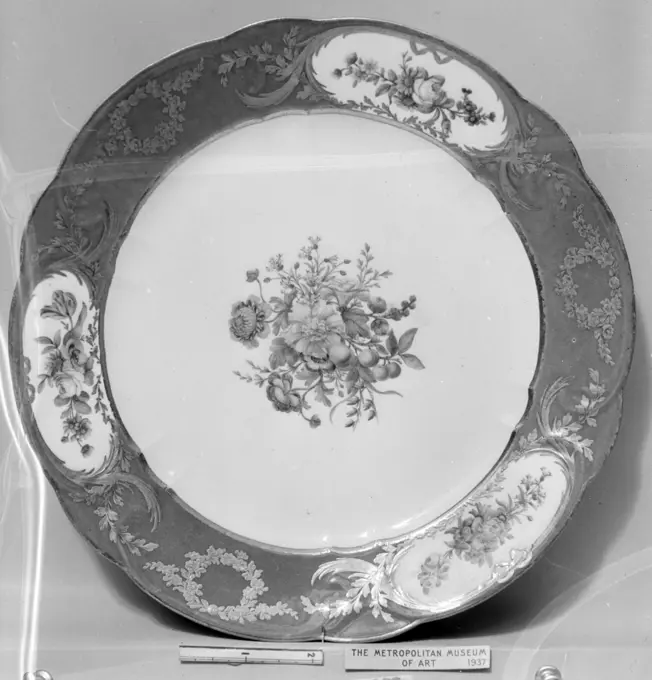
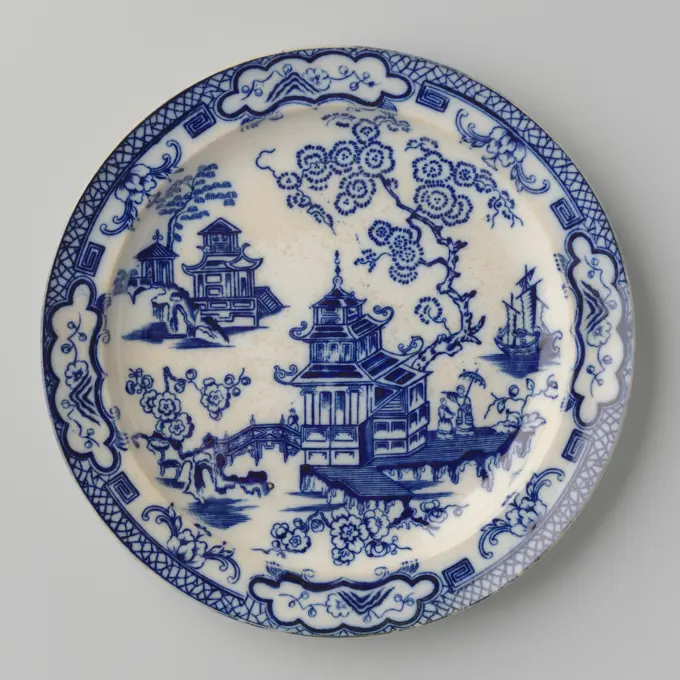
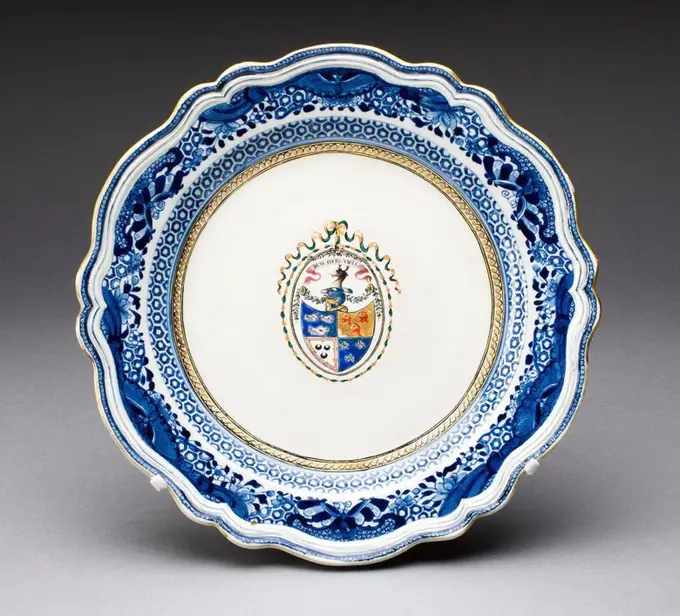
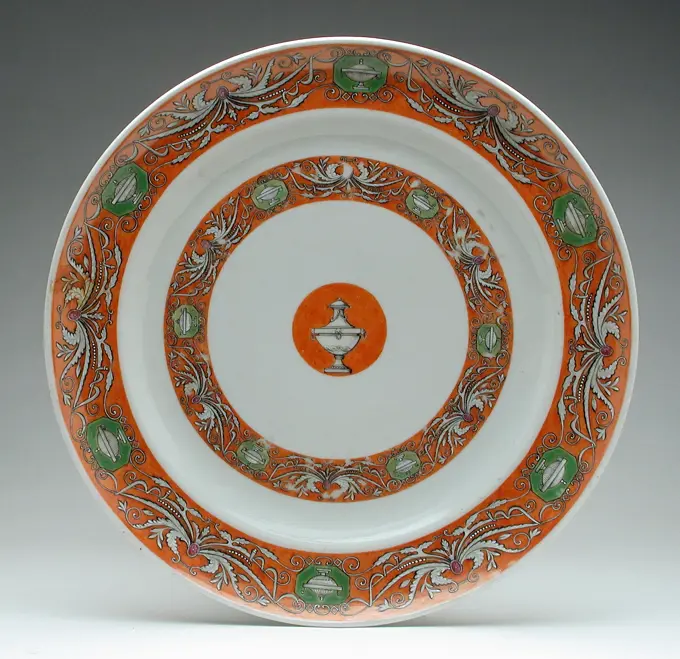
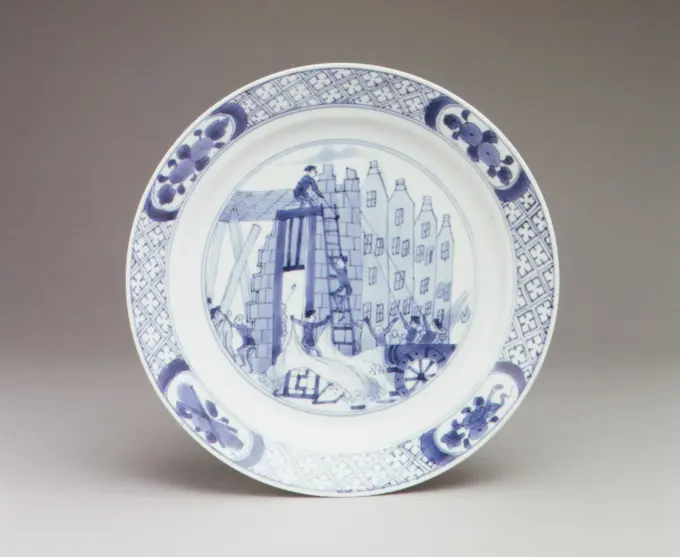
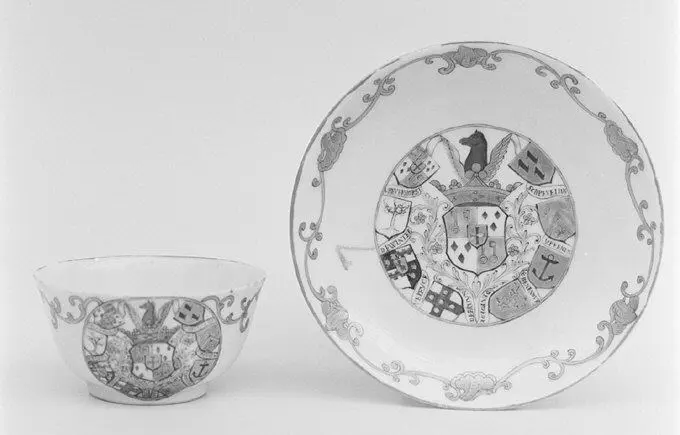
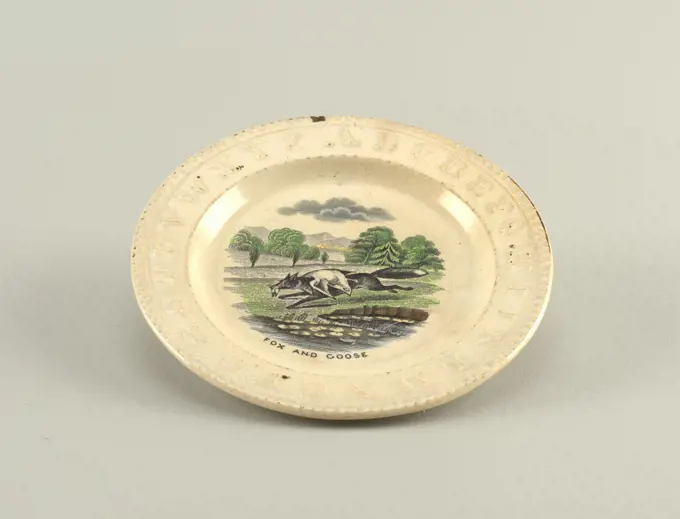
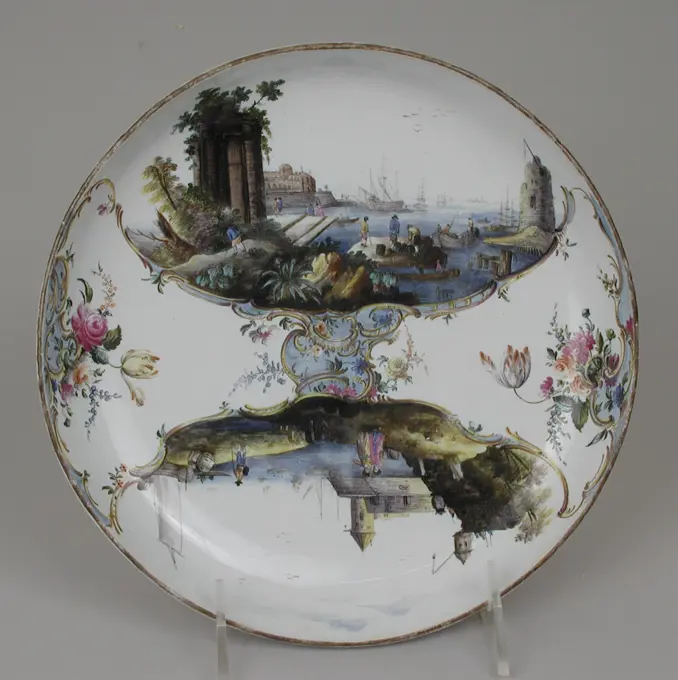
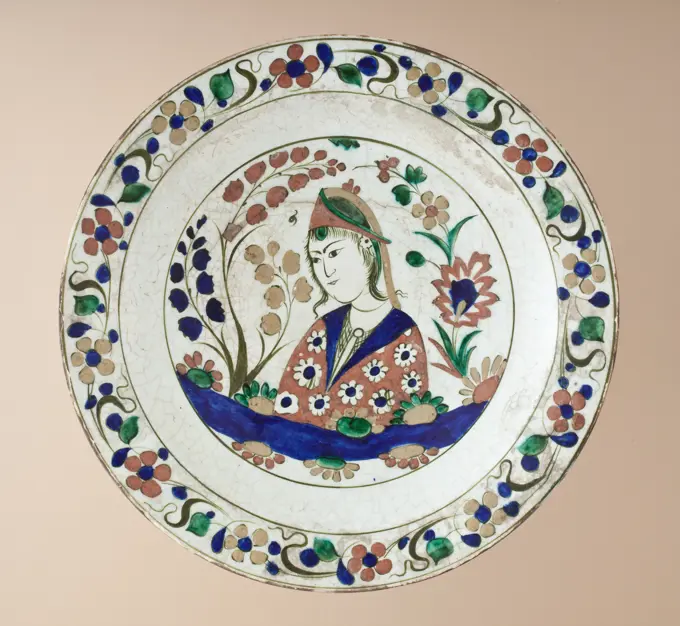
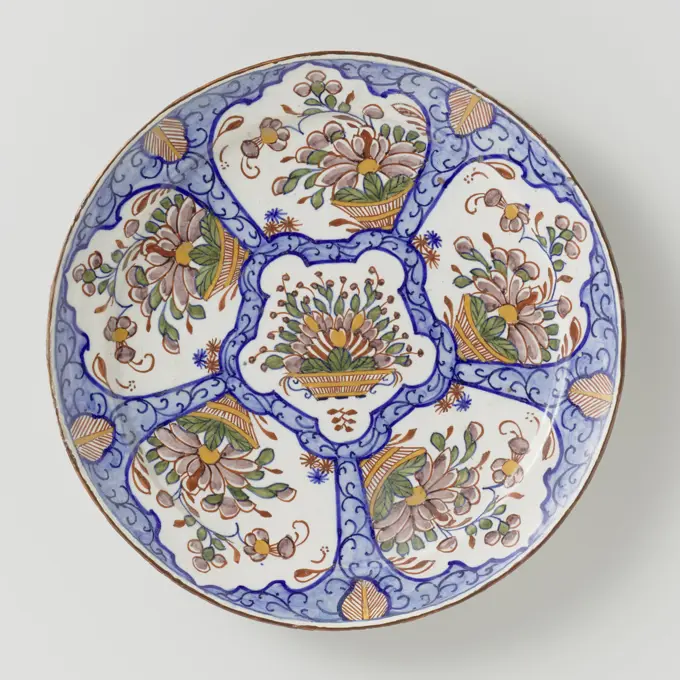
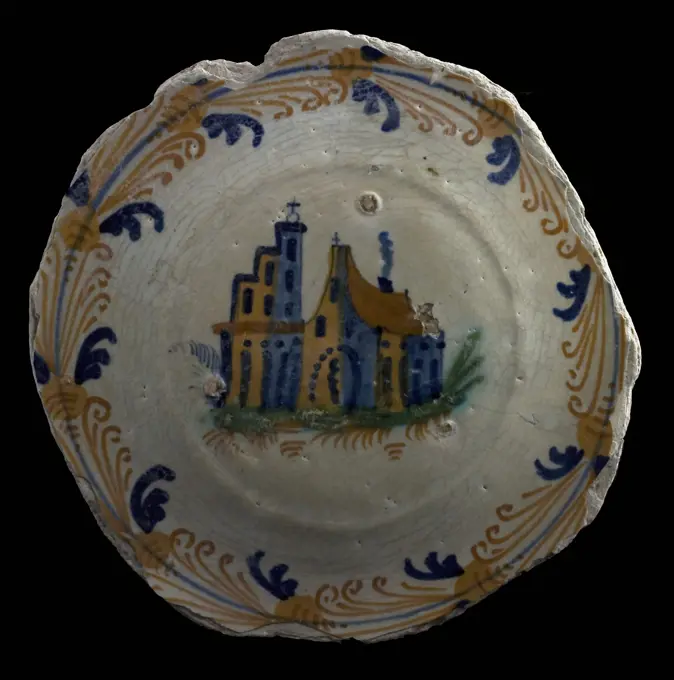
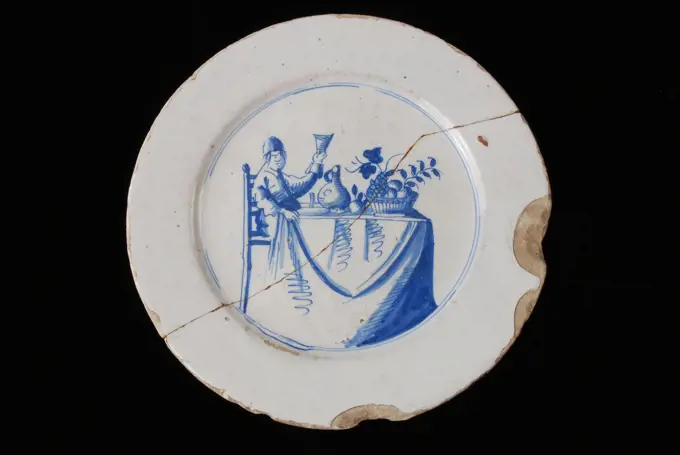
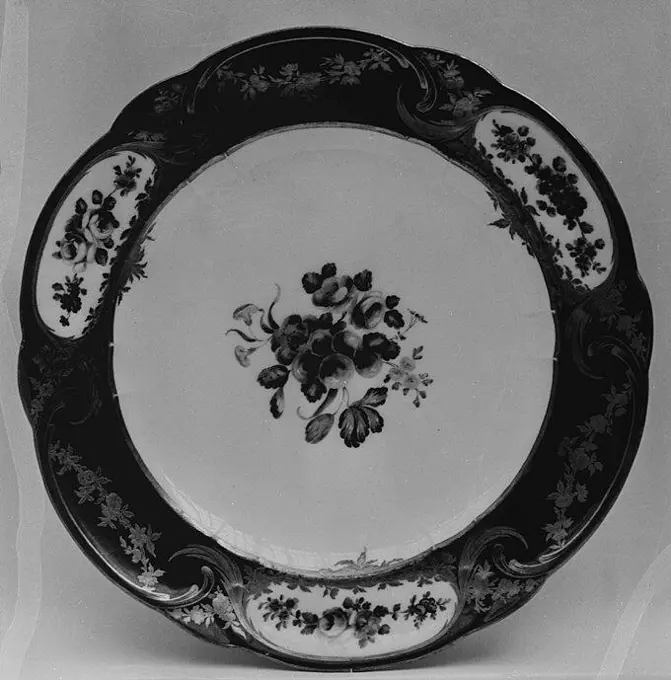
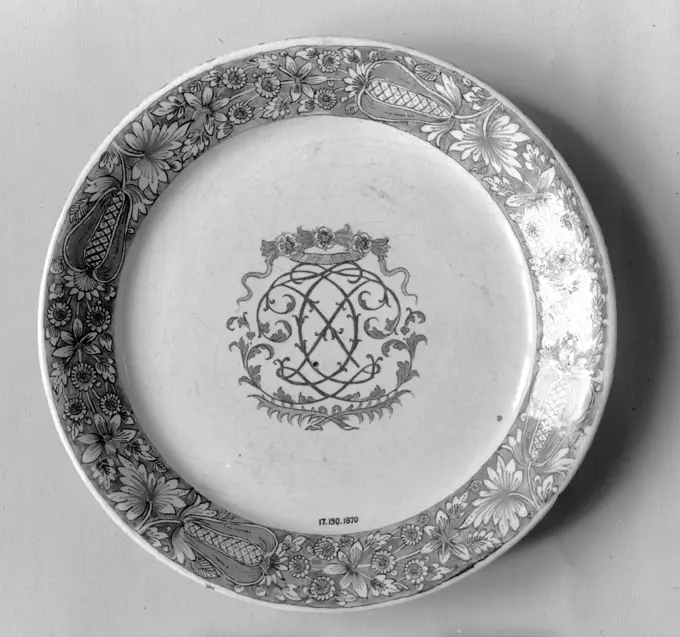
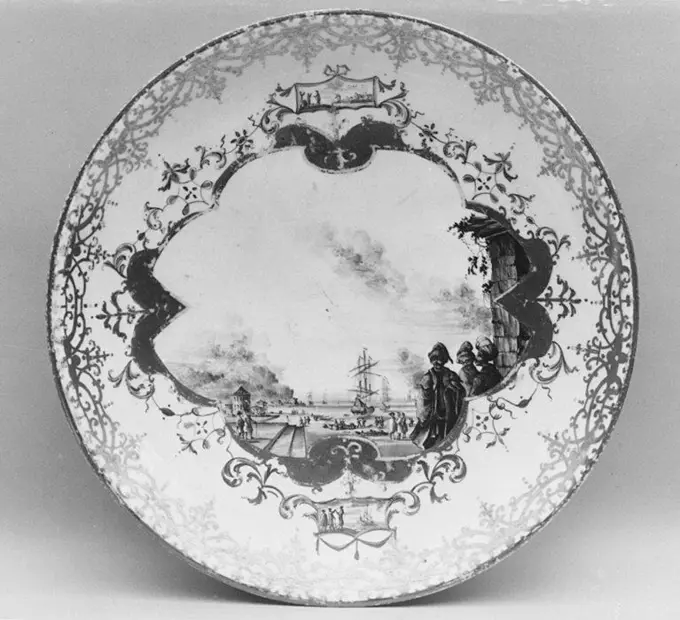
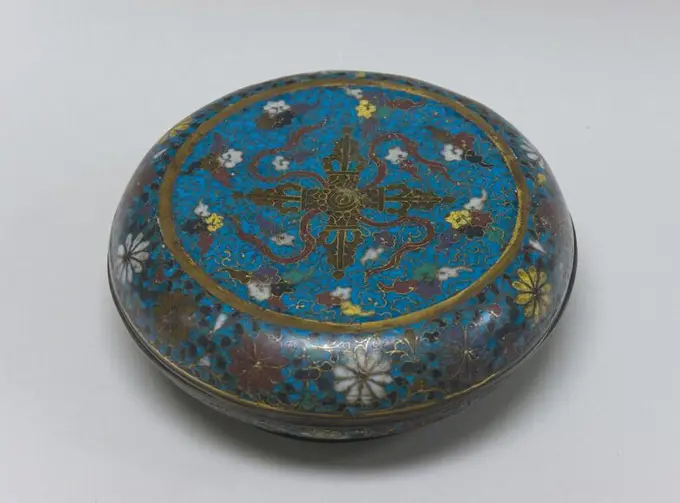
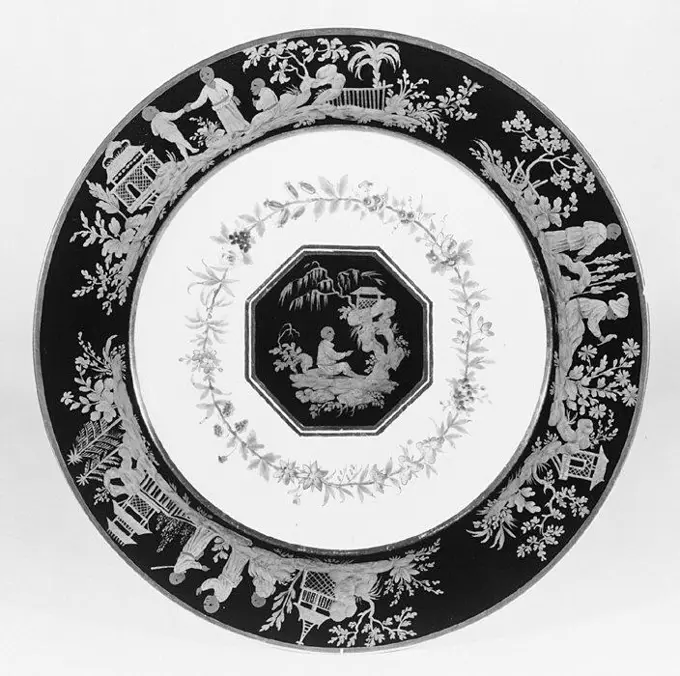
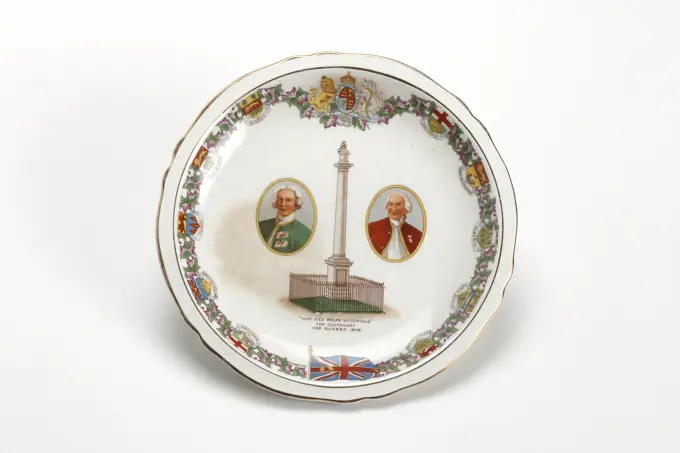
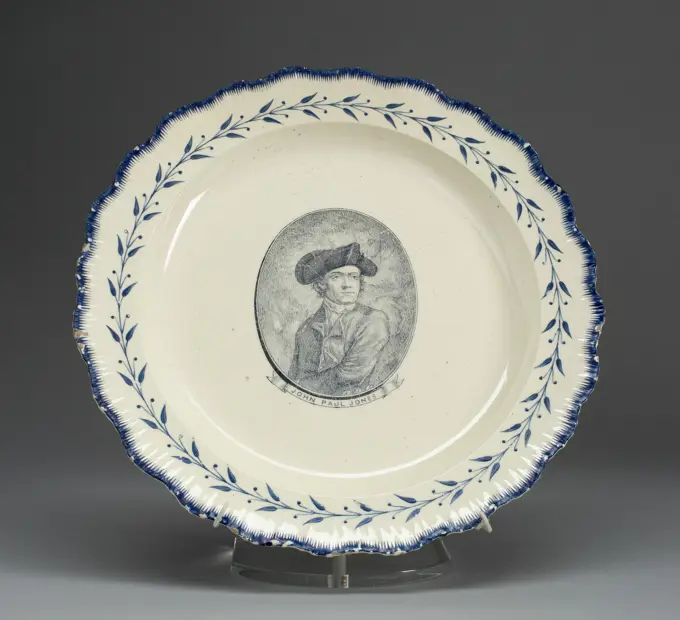
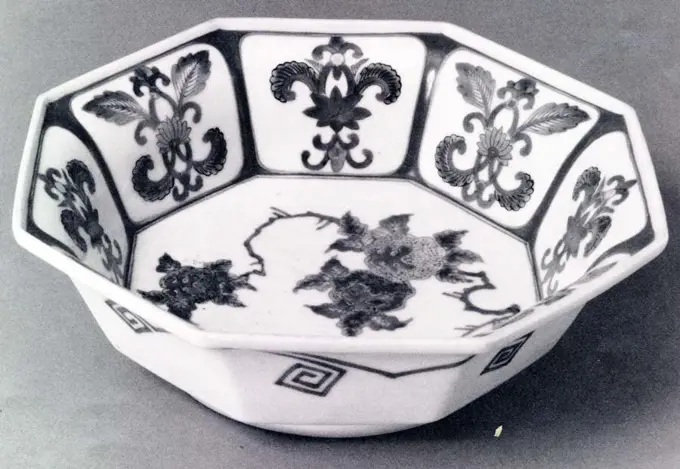
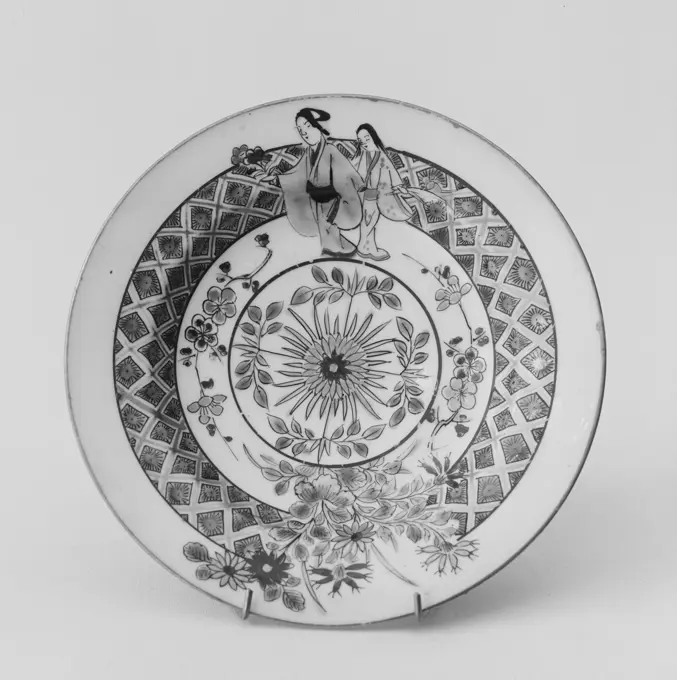
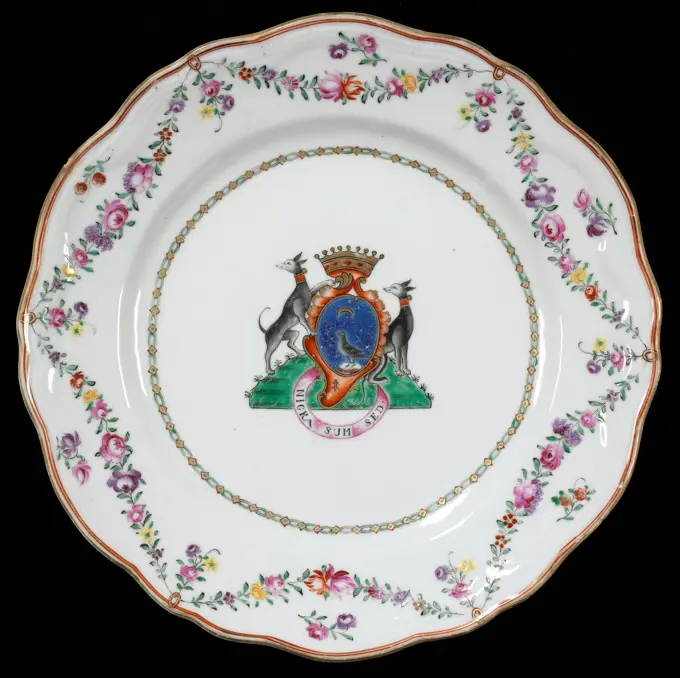
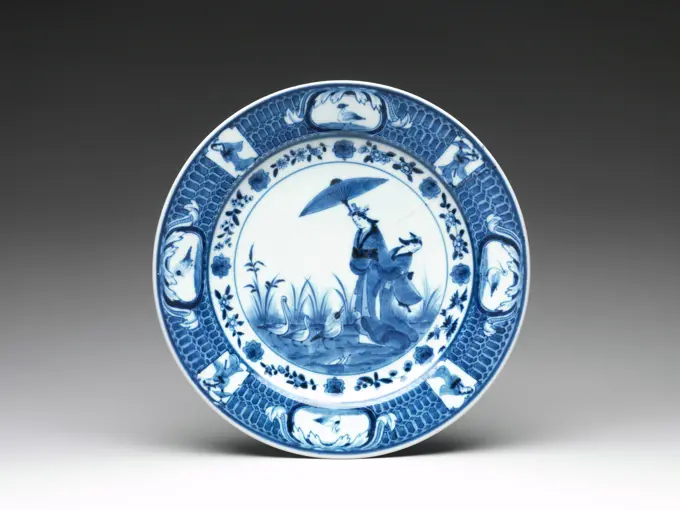
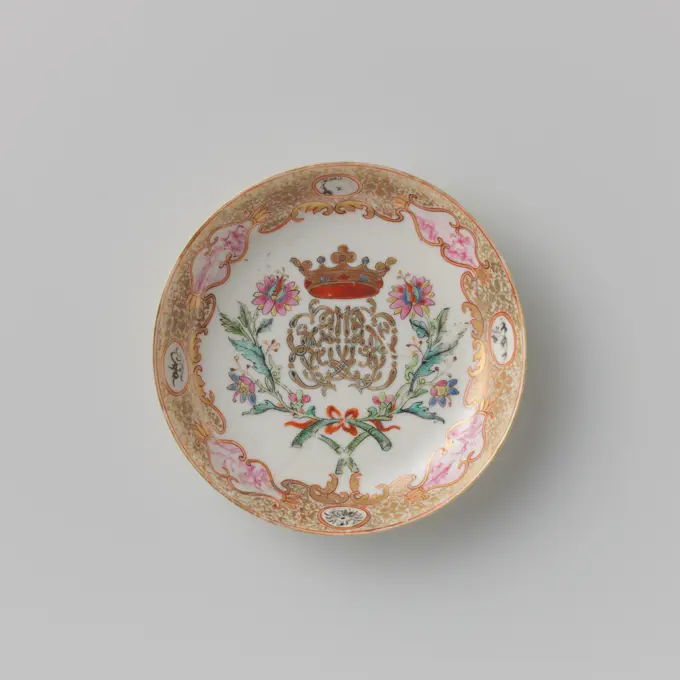
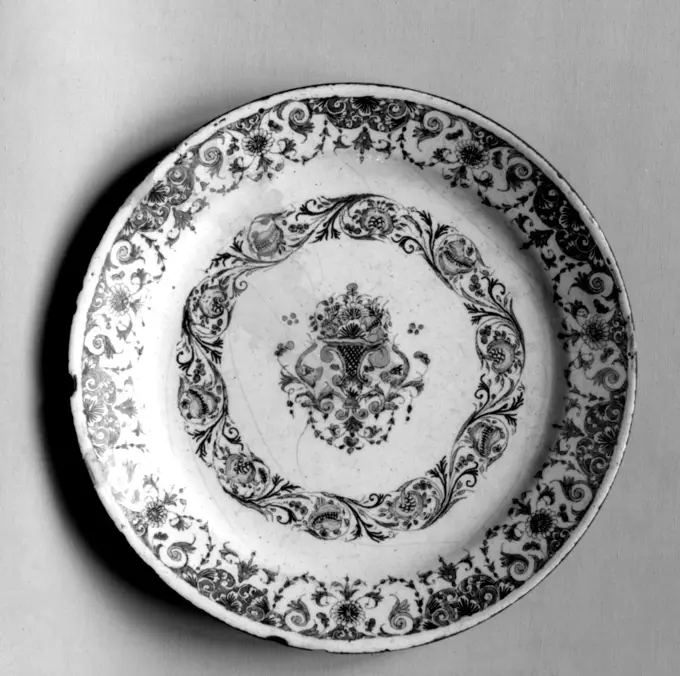
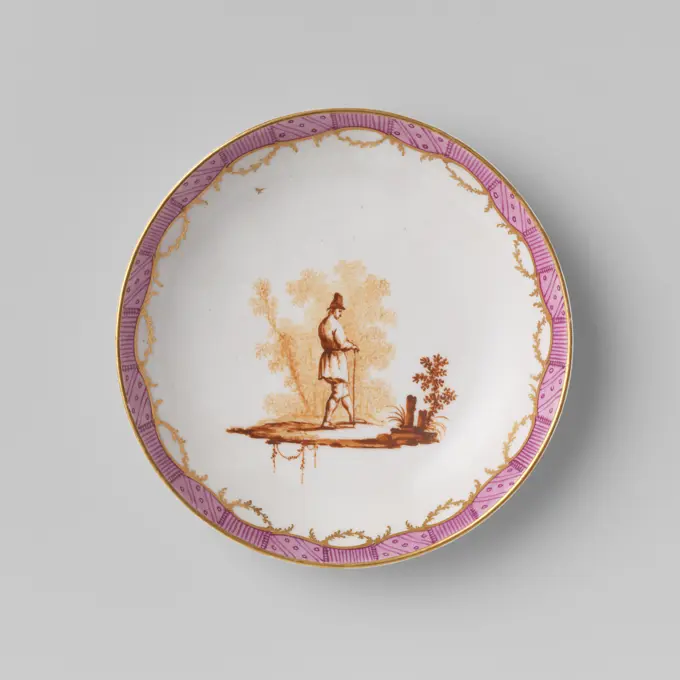
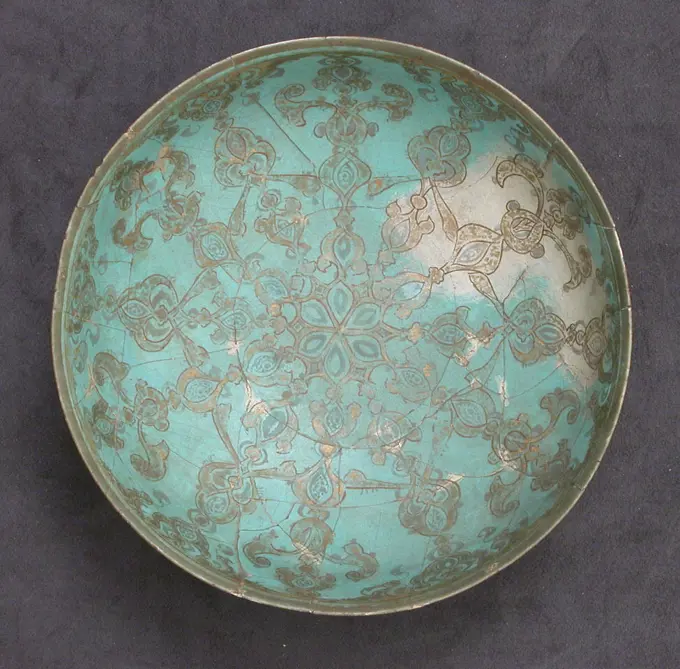
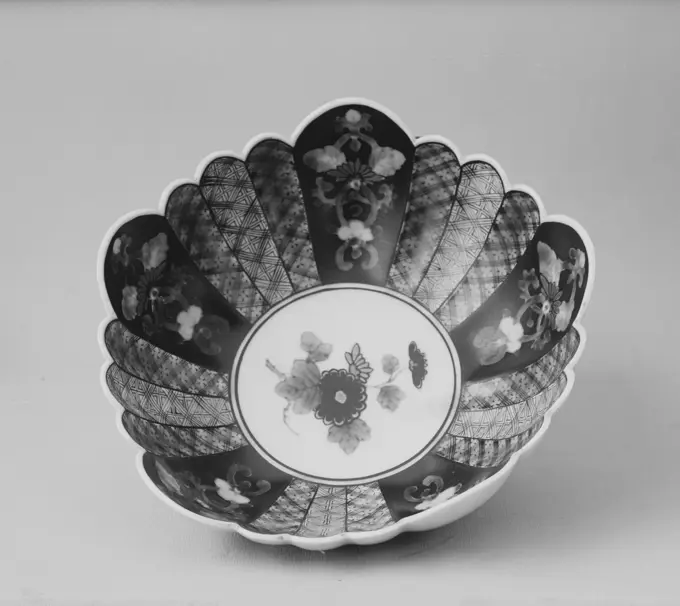
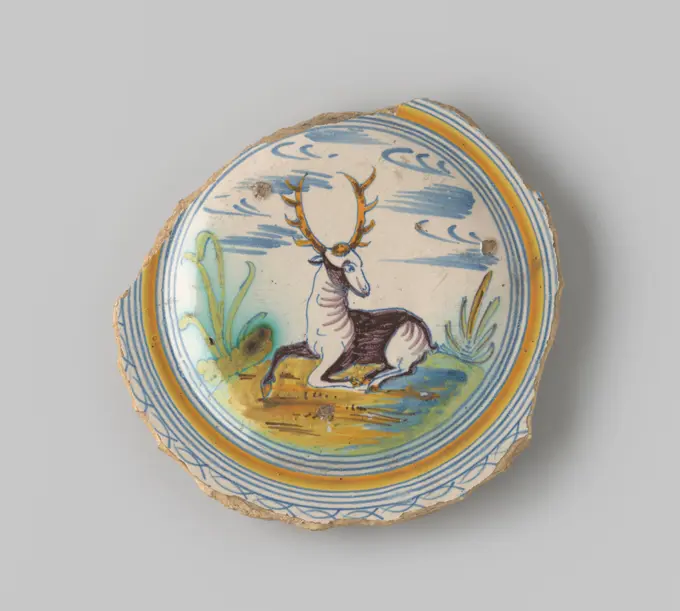
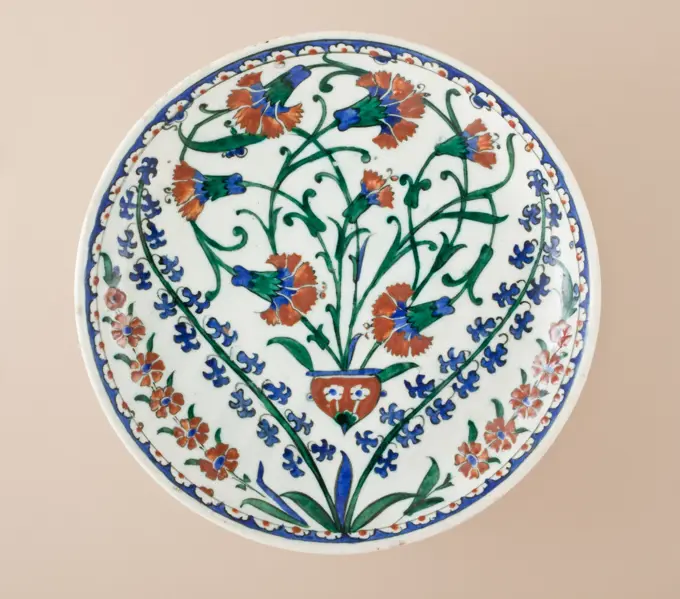
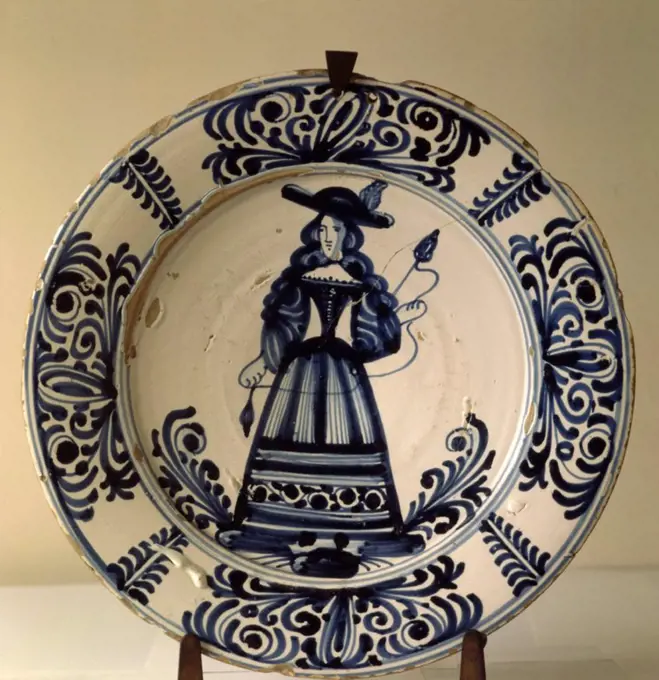
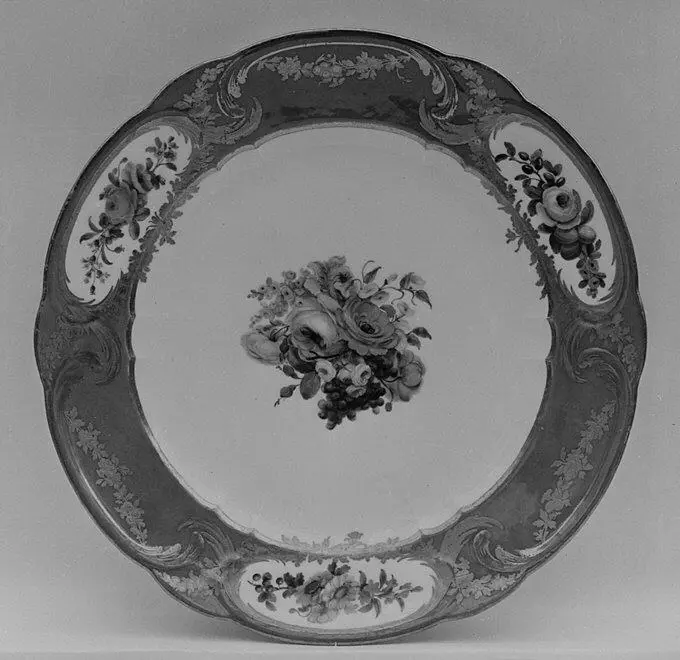
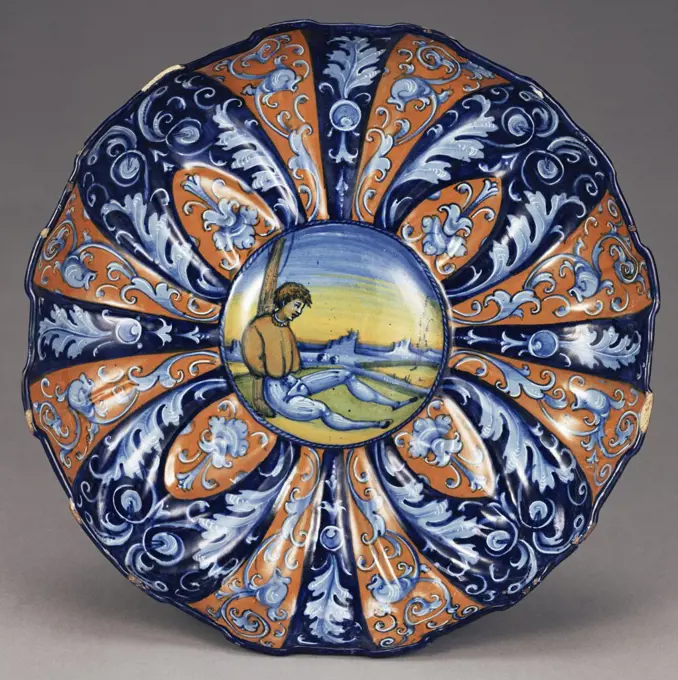
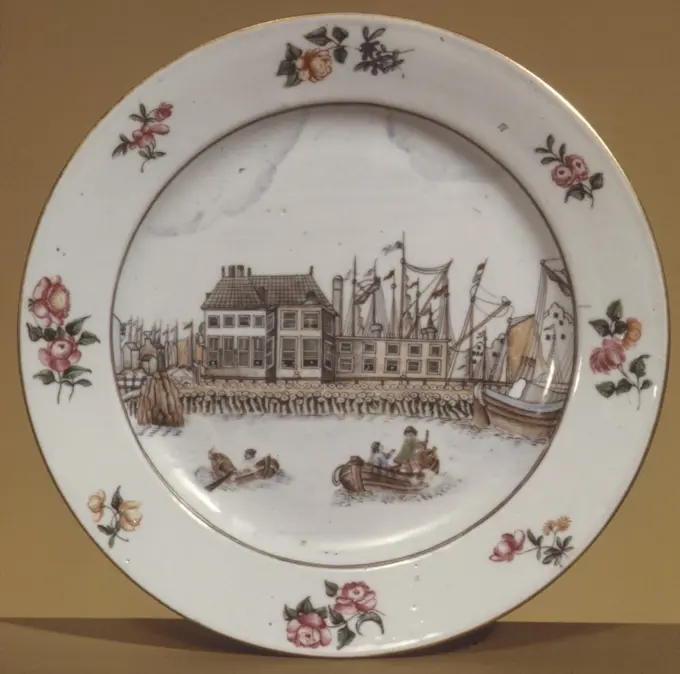
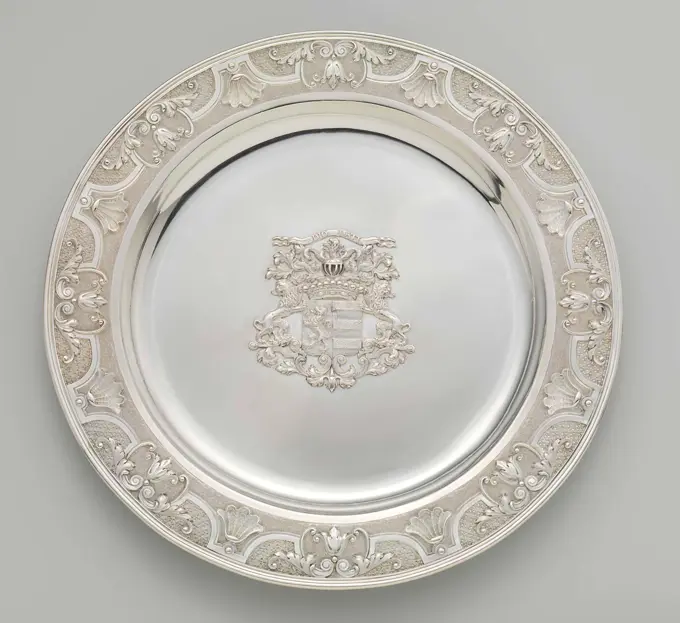
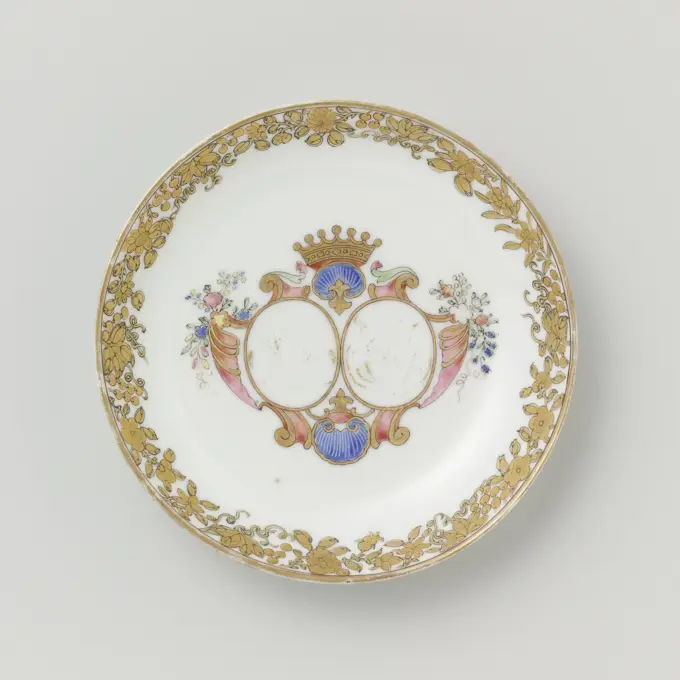
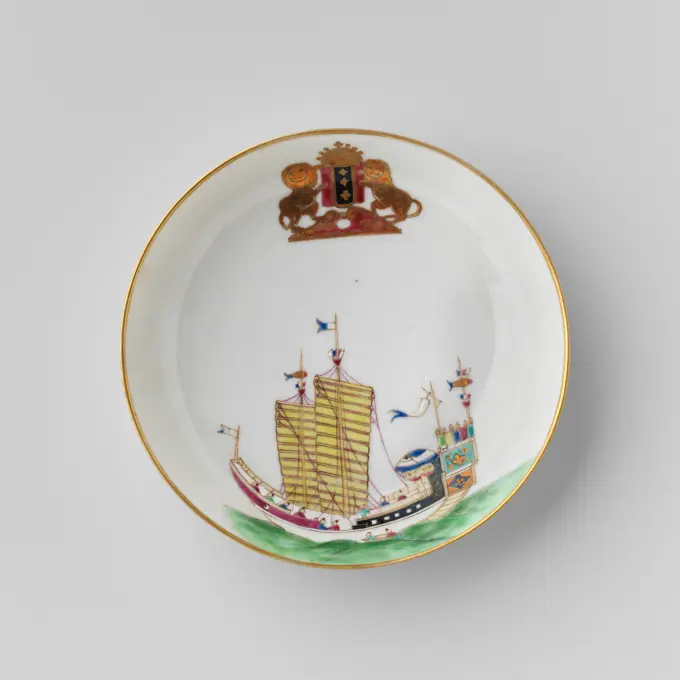
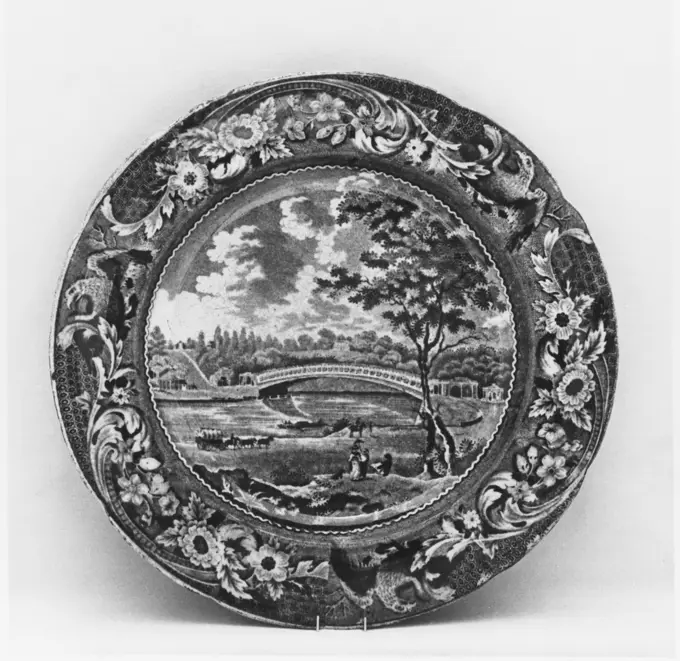
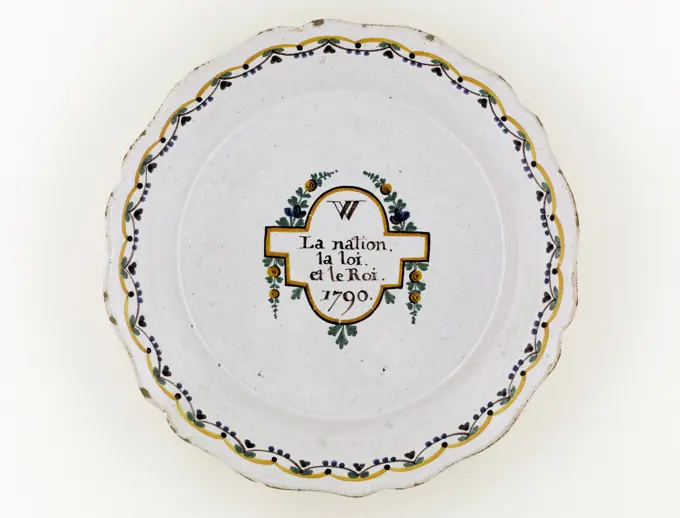
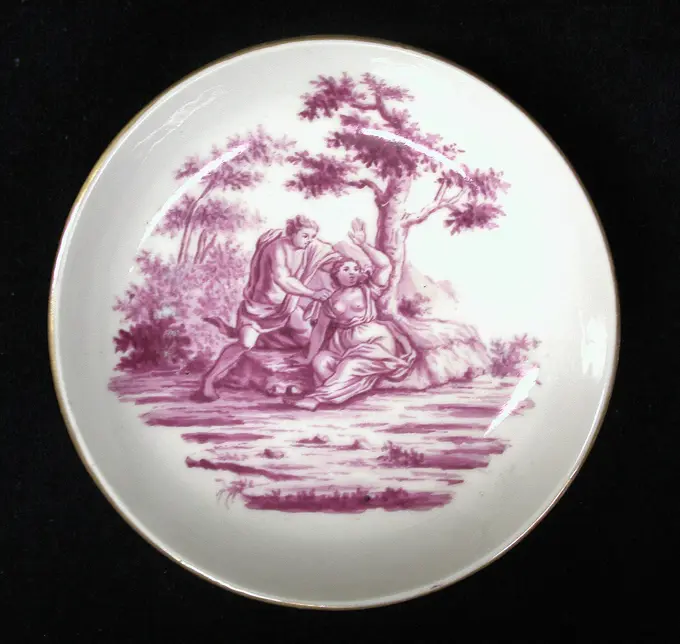
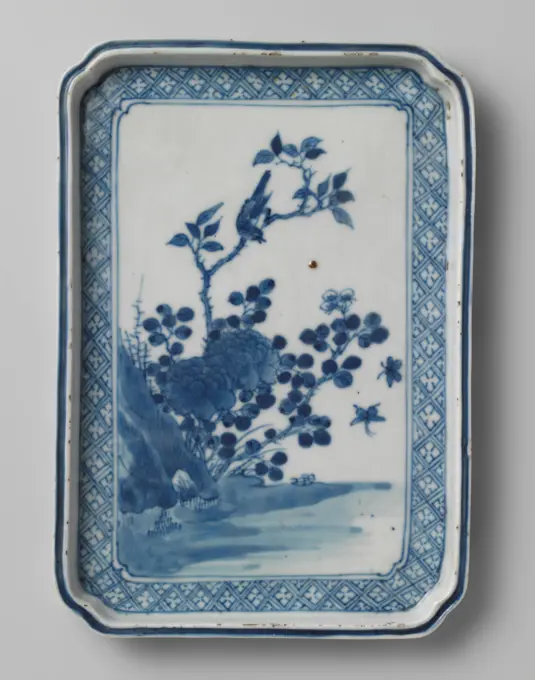
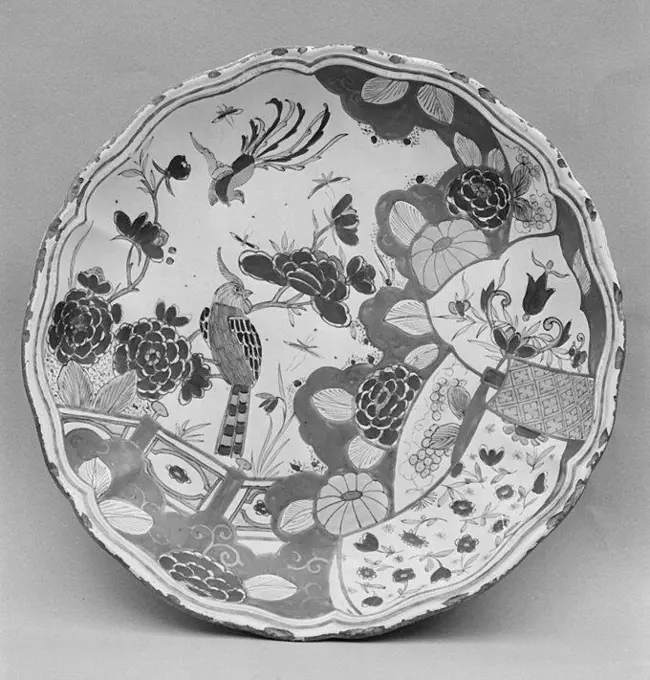
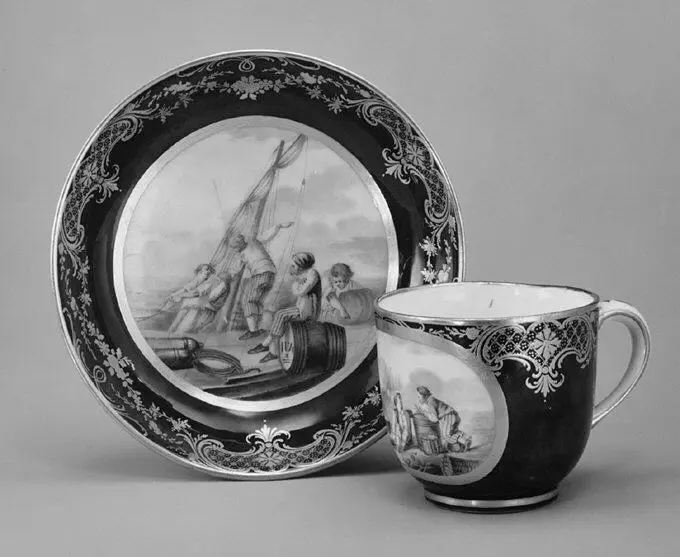
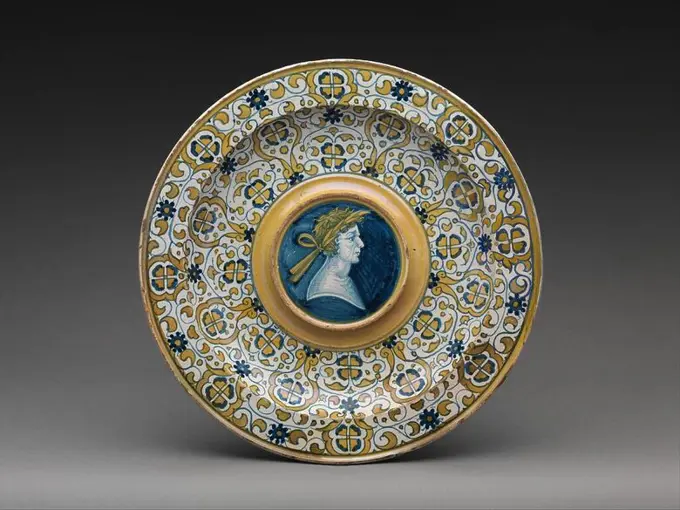
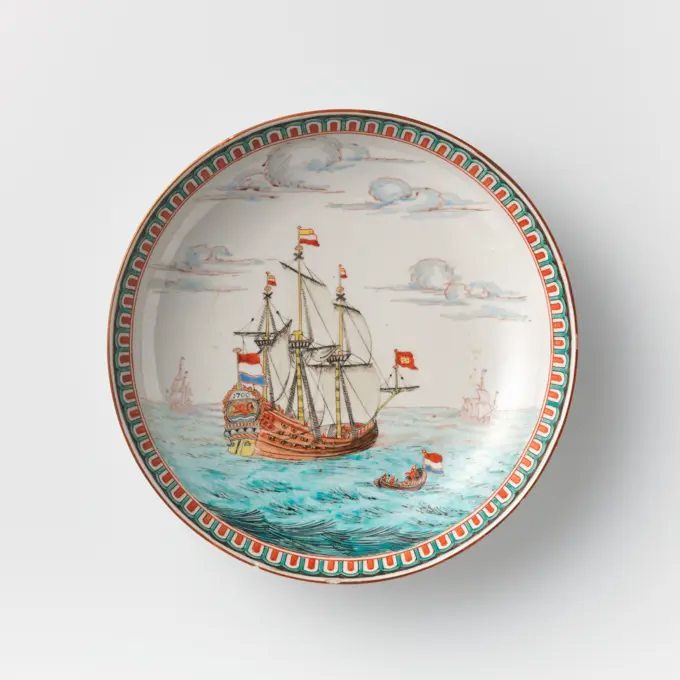
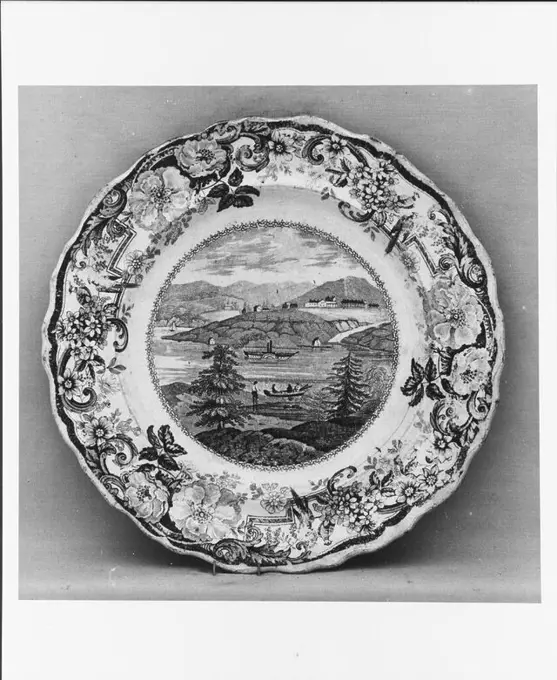
Plate (Italy); Manufactured by Doccia Porcelain Factory (Italy); gilt and glazed porcelainPlate (part of a service) 1784 Sèvres Manufactory French. Plate (part of a service). French, Sèvres. 1784. Soft-paste porcelain. Ceramics-PorcelainAnonymous. "Chinese porcelain plate". Chinese porcelain. Paris, Museum of Romantic Life. Chinese porcelainDish with bleu poudré and figures on a terrace, anonymous, c. 1700 - c. 1720 Porcelain saucer with raised wall and slanted edge, decorated in underly glaze blue and on the glaze blue, red, green, yellow, eggplant, black and gold. The front of the dish is covered with bleu pouddré (powder blue) with a large scalloped field filled with three people on a fenced terrace with rocks and two trees, a scholar at a table playing on a qin, a woman sitting sitting At a table in front of a bed, a servant with a bowl on a tray; the wall with a gold decoration on the blue with flower straws and tendrils; the edge with a gold decoration on the blue with a geometric pattern, which is spared eight compartments with antiques (incense burner, ruyi-scooper), valuables (pearl, diamond, music stone, horns), Buddhist lucky symbols (shell) and (mythological) animals in one Landscape (crab, deer, roosters, fish, bird and shishi/lion dog). Marked on the underside with two fish in a double circle. Edge damaged. Plate with two buildings and a ship on the flat. Plate of pottery with liquefy transfer decor. On the flat two buildings and a ship. The edge with four cartouches, including flowers. Four flowers between the cartouches.Plate. Culture: China. Dimensions: Diam. 9 in. (22.9 cm). Museum: Metropolitan Museum of Art, New York, USA.Plate. China. Date: 1775-1785. Dimensions: H. 2.9 cm (1 1/8 in.); diam. 24.1 cm (9 1/2 in.). Hard-paste porcelain with polychrome enamels and gilding. Origin: Jingdezhen. Museum: The Chicago Art Institute, Chicago, USA.Dinner plate (part of a service) 1760-70 Chinese, for Danish market. Dinner plate (part of a service) 201049Plate. China, Qianlong period, 1776-1810. Furnishings; Serviceware. PorcelainDish with venus show. Dish of porcelain, decorated with polychrome representation of Venus. Signature: The letter A.Plate ca. 1700 Chinese, for Dutch market. Plate 204614Teabowl and saucer ca. 1750-60 Chinese, for Dutch market. Teabowl and saucer 199884Saucer from the 'SwellenGrebel Service' with a Double Crowned monogram and a Border with floral scrolls. Dish of porcelain, painted on the glaze in blue, red, pink, green, yellow, black and gold. On the flat a crowned, double mirror monogram with 'mva' and 'hedd' surrounded by shell motifs, curlwork and flower branches; The inner edge with a bond with flower drinks. Goudemail Monogram worn down. European performance in email colors.Plate, Creamware with underglaze transfer printing and painting, A and B, with flat marly bearing the alphabet in relief and rope molding on rim. Hand-colored transfer-print of 'Fox and Goose.', USA, late 19th century, ceramics, Decorative Arts, PlateDish ca. 1770-80 French, Sceaux Faience, or tin-glazed and enameled earthenware, first emerged in France during the sixteenth century, reaching widespread usage among elite patrons during the seventeenth and early eighteenth centuries, prior to the establishment of soft-paste porcelain factories. Although characterized as more provincial in style than porcelain, French faience was used at the court of Louis XIV as part of elaborate meals and displays, with large-scale vessels incorporated into the Baroque garden designs of Versailles. Earlier examples of French faience attest to the strong influence of maiolica artists from Italy. Later works demonstrate the ways in which cities such as Nevers, Rouen, Lyon, Moustiers, and Marseille developed innovative vessel shapes and decorative motifs prized among collectors throughout Europe. While faience can be created from a wide mixture of clays, it is foremost distinguished by the milky opaque white color achieved by the addition of tin oxide Plate ca. 1525 or later Casa Pirota Manufactory. Plate. Italian, possibly Faenza. ca. 1525 or later. Maiolica (tin-glazed earthenware). Ceramics-PotterySaucer. Culture: Chinese, for American market. Dimensions: Diam. 5 5/8 in. (14.3 cm). Date: ca. 1860-66. Museum: Metropolitan Museum of Art, New York, USA.Plate. Iran, Tabriz region, early 17th century. Ceramics. Fritware, underglaze-paintedPlate, c. 1885, 7/8 x 9 in. (2.22 x 22.86 cm), Glazed and painted porcelain, England, 19th century. Porcelain plate, painted on the glaze in blue, red, pink, green, black and gold. On the Flat Family Family Coat of Arms with a blue background with a silver rose or flower and a few gold shamers. The helmet sign is a peacock and the weapon is surrounded by leaf raft; a decorative band on the wall; The edge with a bond with flower drinks includes through two decorative tires. Weapon porcelain with email colors.Plate ca. 1825 Mexican. Plate 5948Plate of multi -colored fowence, so -called "pancake", the Greek A (Possible), c. 1740 - c. 1760 plate (dishes) Round plate of multi -colored painted faience. On the flat, a flower basket is painted in a pond box, with five compartments around it, each with a flower basket. The flower baskets are painted in the colors yellow, green, purple, red and light brown. The board is marked. Delft earthenware. tin glaze.Plate - Montmorency Fall. Chute de Montmorency D'après Robert Cochran & Company, 1846-1896Soul of majolica dish, polychrome decor, landscape with church and watermill, Aigrette border, plate dish crockery holder soil find ceramic earthenware glaze, baked underside covered with lead glaze. Polychrome Vaulted soul of pancake dish or salad dish Italian Dutch decor archeology Rotterdam City center Stadsdriehoek New harbor indigenous pottery serve serve food decorate Italy Soil discovery cesspool at the Nieuwe havenSaucer With Two Figures in a Water Landscape and a Flowering Tree. Dish of porcelain with straight wall, painted on the glaze in red, black and gold. On the flat of the dish two people next to a flowering tree and a fence in a river landscape; The border with curlwork. Milk and blood.Faience plate on stand, blue on white, man with raised glass on covered table, plate crockery holder soil find ceramic earthenware glaze tin glaze, hand turned baked glazed decorated fried Plate on stand with almost flat saucer. Completely glazed. Yellow shard. Blue decor on white background Decoration consists of man seated at covered table holding his glass Two blue circles in the shoulder. Cooked archeology in indigenous earthenware serve to decorate serving tablePlaque (Netherlands); tin-glazed earthenware; 31.5 x 24.3 x 2 cm (12 3/8 x 9 9/16 x 13/16 in.); Bequest of Walter Phelps Warren; 1986-61-72Soup plate - Dufferin Terrace & Citadel. Place Dufferin & Citadelle D'après Robert Cochran & Company, 1846-1896Plate (assiette à palmes) (1 of 102) (part of a service) 1767 Sèvres Manufactory French. Plate (assiette à palmes) (1 of 102) (part of a service) 197914Plate of hard baked earthenware., Anonymous, c. 1820 - c. 1840 plate (dishes) Round plate of hard baked pottery. Creamware with a overpressure of a man and woman on a bike on the flat, with the caption A Visit to Carlton House, in the colors black, green, red, yellow and purple. The edge has leaves and spiral shapes. England earthenware. lead glazePlate ca. 1730-40 Factory of Jean-Baptiste Guillibaud Faience, or tin-glazed and enameled earthenware, first emerged in France during the sixteenth century, reaching widespread usage among elite patrons during the seventeenth and early eighteenth centuries, prior to the establishment of soft-paste porcelain factories. Although characterized as more provincial in style than porcelain, French faience was used at the court of Louis XIV as part of elaborate meals and displays, with large-scale vessels incorporated into the Baroque garden designs of Versailles. Earlier examples of French faience attest to the strong influence of maiolica artists from Italy. Later works demonstrate the ways in which cities such as Nevers, Rouen, Lyon, Moustiers, and Marseille developed innovative vessel shapes and decorative motifs prized among collectors throughout Europe. While faience can be created from a wide mixture of clays, it is foremost distinguished by the milky opaque white color achieved by the Dish ca. 1735 Meissen Manufactory German. Dish 197675Covered Box. Culture: China. Dimensions: Diam. 8 1/2 in. (21.6 cm). Date: mid-16th century. Museum: Metropolitan Museum of Art, New York, USA.Small platter 19th century Dutch, Delft. Small platter 187844Plate ca. 1791 Sèvres Manufactory French Porcelain decorated with a black ground in imitation of Asian lacquer was produced at Sèvres for about a fifteen-year period beginning in 1790. Furniture decorated with imported black lacquer panels saw a resurgence of popularity in the last two decades of the eighteenth century, and the Sèvres factory's efforts to simulate black lacquer on porcelain were probably stimulated by this renewed general interest in lacquer decoration. Black-ground Sèvres porcelain was decorated with chinoiserie scenes executed in gold, which was often applied in subtle tones of yellow, green, and red. Small decorative highlights were often executed in platinum, and the ability to apply platinumfirst mastered by the factory in 1790may have been an impetus to produce these lacquer-inspired pieces.[Jeffrey H. Munger, 2015. Plate 202664Dish Portuguese, Oporto 18th-19th centuryPlate, Canova” Pattern.   Maker: Thomas Mayer, British, active 1826-38Commemorative plate - Here died Wolfe Victorious" Ter Centenary 1759 Quebec 1908 Buffalo Pottery Buffalo PotteryAnonymous. Dish with three orders. Earthenware. 1789-1790. Paris, Carnavalet museum. 72430-25 Clerge, crown, faience, nobility, revolutionary period, reunion, French revolution, third stat, three orders, dishSèvres Porcelain Manufactory, Saucer, 1811, Hard-paste porcelain.Plate c 1790 England. Creamware .Octagonal bowl 18th century Attributed to Shibuemon Japanese. Octagonal bowl. Attributed to Shibuemon (Japanese, active 17th century). Japan. 18th century. Porcelain with underglaze cobalt and enamels. Edo period (1615-1868). CeramicsDish with coat of arms of Pope Innocent X. Dish of pottery, covered with cream-colored tinglaze, in the flat decorated with the coat of arms of Pope Innocent X. (Giambattista Pamfili) 1644-1655.. Scale of Faïence. Muchic painted with a rosette and spreader flowers. Signature with the monogram A R.Plate; Copeland & Garret (England; Ceramics; 1833-1847); 1833-46 (1833-00-00-1846-00-00);Saucer 18th century Japan. Saucer. Japan. 18th century. Porcelain decorated with enamels (Arita ware). Edo period (1615-1868). CeramicsDeep dish (part of a service) 1770-85 Chinese, probably for Swedish market. Deep dish (part of a service) 201170Armorial plate, c. 1780, 1 1/16 x 9 in. (2.7 x 22.86 cm), Porcelain with enamel decoration, China, 18th centurySaucer-dish with the arms of Namur, anonymous, c. 1700 - c. 1724 Porcelain bowl with ribbed wall and scalloped edge, painted in underly glaze blue and on the glaze blue, red, green, yellow, black and gold. On the flat in a medallion the weapon of Namur with the inscription 'Nameur', for the weapon of flower branches, two butterflies and two birds. The wall is divided into twelve petal subjects with alternating a flower vase and a person in a landscape; Between the compartments of servetwork. The back with two flower branches. A few cracks and chips in the edge. Weapon porcelain with famille e -mail colors. China porcelain. glaze. cobalt (mineral). gold (metal) painting / gilding / vitrification Porcelain bowl with ribbed wall and scalloped edge, painted in underly glaze blue and on the glaze blue, red, green, yellow, black and gold. On the flat in a medallion the weapon of Namur with the inscription 'Nameur', for the weapon of flower branches, two butterflies and two birds. The wall isDish with Parasol Ladies ca. 1735-40 Design attributed to Cornelis Pronk Dutch Two graceful ladies attired in Japanese kimono have stopped to look at three birds that have crossed their path. An inner border encircles the scene with floral designs, while the outer border contains panels with images of birds and ladies, echoing the central motif. The design on this plate is a modified version of a drawing by a Dutch artist named Cornelis Pronk, originally depicting Chinese ladies in the same setting. Pronk was commissioned by the Dutch East India Company to create a design for tea and dinner sets for Chinese potters to use as a model. At some point, this design made its way to Japan, where Pronk's original design was altered to reflect Japanese fashions instead of Chinese. However, the Japanese versions of this type were sold privately, not by the Dutch East India Company.. Dish with Parasol Ladies. Design attributed to Cornelis Pronk (Dutch, Amsterdam 1691-1759 Amsterdam). Japan. ca. 1Saucer with a crowned, illegible monogram surrounded by two flower sprays, anonymous, c. 1750 - c. 1774 Porcelain dish, painted on the glaze in blue, red, pink, green, yellow, black and gold. On the flat a crowned, illegible monogram surrounded by two flower branches; The wall with flower vines with four cartouches with a landscape and four medallions with plants. Dish has been broken. European performance in email colors. China porcelain. glaze. gold (metal) painting / gilding / vitrification Porcelain dish, painted on the glaze in blue, red, pink, green, yellow, black and gold. On the flat a crowned, illegible monogram surrounded by two flower branches; The wall with flower vines with four cartouches with a landscape and four medallions with plants. Dish has been broken. European performance in email colors. China porcelain. glaze. gold (metal) painting / gilding / vitrificationPlate with a ship and landscape with church tower, anonymous, c. 1630 - c. 1650 Round plate of blue painted faience. A ship is painted on the flat and a landscape with a church tower. The board is a bottom find. Delft earthenware. tin glaze. Round plate of blue painted faience. A ship is painted on the flat and a landscape with a church tower. The board is a bottom find. Delft earthenware. tin glaze.Plate with arms of Wirsen and Swedish flag, c. 1790, 9 3/4 in. (24.77 cm), Porcelain with enamel and gilded decoration, China, 18th centuryPlate ca. 1705-20 French, Rouen Faience, or tin-glazed and enameled earthenware, first emerged in France during the sixteenth century, reaching widespread usage among elite patrons during the seventeenth and early eighteenth centuries, prior to the establishment of soft-paste porcelain factories. Although characterized as more provincial in style than porcelain, French faience was used at the court of Louis XIV as part of elaborate meals and displays, with large-scale vessels incorporated into the Baroque garden designs of Versailles. Earlier examples of French faience attest to the strong influence of maiolica artists from Italy. Later works demonstrate the ways in which cities such as Nevers, Rouen, Lyon, Moustiers, and Marseille developed innovative vessel shapes and decorative motifs prized among collectors throughout Europe. While faience can be created from a wide mixture of clays, it is foremost distinguished by the milky opaque white color achieved by the addition of tin oxide Dish. Dish of porcelain. Painted in sepia with figures in a landscape. Along the edge a lilac fries between golden piping.Anonymous. Flag beard dish. Earthenware. . Paris, Carnavalet museum. 72437-2 Phrygian cap, clergy, decoration, french flag, faience, nobility, re-solution period, beard dish, French revolution, third-stat, three orderTripod Dish with Flying Goose and Stylized Flowers and Vines. China. Date: 700 AD-750 AD. Dimensions: H. 5.6 cm (2 3/16 in.); diam. 28.3 cm (11 1/8 in.). Slip-coated earthenware with three-color (sancai) lead glazes and underglaze mold-impressed decoration. Origin: China. Museum: The Chicago Art Institute, Chicago, USA.Soup Bowl Made 1745-1755 Jingdezhen. Hard-paste porcelain with polychrome enamels and gilding .Bowl late 12th-early 13th century. Bowl 452616Plate, c. 1740. Meissen Porcelain Factory (German), manner of Adam Friedrich von Lowenfinck (German, 1714-1754). Porcelain; diameter: 23.4 cm (9 3/16 in.).Jacob Blessed by Isaac ca. 1567 Possibly engraved by P.M. The fine engraving on this set of plates (65.260.1-.12) depicts scenes from the Old Testament. The engraver, who must have been trained on the Continent, based his compositions on illustrations in a Concordance to the Bible, improvising where necessary to fill in the circular frame offered by the plates. The plates and a related piece engraved with a portrait of Queen Elizabeth I must have been made as a gift to or from the queen herself.. Jacob Blessed by Isaac 204604Bowl 1780 Japan. Bowl. Japan. 1780. White porcelain decorated with blue under the glaze, iron red and gold (Hizen ware, Kutani type). Edo period (1615-1868). CeramicsFragment of a dish with a lying deer on the lightly flat on the ground with plants, anonymous, c. 1600 - c. 1650 Excerpt of a dish of earthenware on a fairly high foot ring, painted in blue, green, yellow, orange and mango purple on the white tinglaze with the slightly violated flat, a herty and yellow circles of each other cutting blue arches on a ground with plants lying on a ground with plants . Lead glaze on the back Northern Netherlands earthenware Excerpt of a dish of earthenware on a fairly high foot ring, painted in blue, green, yellow, orange and mango purple on the white tinglaze with the slightly violated flat, a herty and yellow circles of each other cutting blue arches on a ground with plants lying on a ground with plants . Lead glaze on the back Northern Netherlands earthenwareDish. Turkey, Iznik, 1560-1585. Ceramics. Fritware, underglaze-paintedPlatter (part of a service) mid-18th century Chinese, for German market. Platter (part of a service) 201354Blue plate with a picture of a spinner, 17th century.Plate (assiette à palmes) (1 of 102) (part of a service) 1786 Sèvres Manufactory French. Plate (assiette à palmes) (1 of 102) (part of a service) 197931Molded Dish with an Allegory of Love; Unknown; Faenza, Italy, Emilia-Romagna, Europe; about 1535; Tin-glazed earthenware; Object: H:  7.3 x Diam.:  27.94cm (H:  2 7/8 x Diam.:  11 in.)Dish with landscape in medallion. Dish of porcelain with landscape painted on the flat a polychrome in a medallion. Edge and medallion deposited in gold. With a corresponding head (A).Plate with the Arms of SouthCarolina.  Manufacturer: Thomas Mayer, British, active 1826-38After Source material drawn by: Thomas Sully, American, born England, 1783-1872Engraver Source material by: George Murray, American, died 1822Publisher source material by: John Binns, American, born Ireland, 1772-1860Plate ca. 1760-65 Chinese, for Dutch market. Plate 204500Communion set. Central to the Protestant celebration of the Holy Communion is the remembrance of the Last Supper, when Christ and his disciples gathered for the last time. Christ asked that his suffering and death be commemorated with a communal meal. This is why wine is poured into cups and bread is placed on plates during religious services. This communion set from Dordrecht ranks among the most richly decorated altar plate.Plate. Dated: c. 1936. Dimensions: overall: 20.3 x 25.4 cm (8 x 10 in.) Original IAD Object: 10 1/4" in diameter. Medium: black and white photograph. Museum: National Gallery of Art, Washington DC. Author: Helmut Hiatt.Dish 1800-1815 Chinese. Dish. Chinese. 1800-1815. Porcelain. Made in ChinaSaucer from the 'Swellengrebel service' with a double crowned monogram and a border with floral scrolls, c. 1740 Porcelain dish, painted on the glaze in blue, red, pink, green, yellow, black and gold. On the flat a crowned, double mirror monogram with 'mva' and 'hstd' surrounded by shell motifs, curls and flower branches; The inner edge with a band with flower vines. Goudemail monogram worn out. European performance in email colors. China porcelain. glaze. gold (metal) painting / gilding / vitrification Porcelain dish, painted on the glaze in blue, red, pink, green, yellow, black and gold. On the flat a crowned, double mirror monogram with 'mva' and 'hstd' surrounded by shell motifs, curls and flower branches; The inner edge with a band with flower vines. Goudemail monogram worn out. European performance in email colors. China porcelain. glaze. gold (metal) painting / gilding / vitrificationWorkshop of Maestro Giorgio Andreoli of Gubbio, Plate with border of foliate scrollwork with dolphin heads and cornucopias; in the center, shield of arms of Vigerio of Savona, 1524 Workshop of Maestro Giorgio Andreoli of Gubbio, Plate with border of foliate scrollwork with dolphin heads and cornucopias; in the center, shield of arms of Vigerio of Savona, 1524, tin-glazed earthenware (maiolica), Widener Collection 1942.9.332Saucer with cock and three fans with flower sprays, anonymous, c. 1725 - c. 1749 Porcelain dish with sloping wall, painted on the glaze in blue, red, pink, green, yellow, black and gold. On the flat of the dish a medallion with a rooster; around the medallion three fans with flowering plants against a pink soil; Three elongated compartments with servetwork between the fans. Famle Rose. China porcelain. glaze. gold (metal) painting / gilding / vitrification Porcelain dish with sloping wall, painted on the glaze in blue, red, pink, green, yellow, black and gold. On the flat of the dish a medallion with a rooster; around the medallion three fans with flowering plants against a pink soil; Three elongated compartments with servetwork between the fans. Famle Rose. China porcelain. glaze. gold (metal) painting / gilding / vitrificationDish with river face, Royal Porcelain Factory Dommer & Co., 1809 - 1814 Dish decorated with a multi -colored landscape. Sitting man with a stick and farm along the Rievier. Along the edge a golden edge. Marked: Amstel. Nieuwer-Amstel porcelain Dish decorated with a multi -colored landscape. Sitting man with a stick and farm along the Rievier. Along the edge a golden edge. Marked: Amstel. Nieuwer-Amstel porcelainSaucer with a Chinese junk and the arms or amsterdam. Dish of porcelain, painted on the glaze in blue, red, pink, green, yellow, black and gold. On the front of the dish a Chinese jonk with crew on the waves, above the arms of Amsterdam. Weapon porcelain.Plate; Koenigliche Porzellan Manufaktur (KPM; Berlin; 1763-1918); 1870-82 (1823-00-00-1832-00-00);Plate ca. 1824-ca. 1836 Joseph Stubbs. Plate. British (American market). ca. 1824-ca. 1836. Earthenware, transfer-printed. Made in Staffordshire, Stoke-on-Trent, EnglandSaucer 1785-1800 Chinese, for British market. Saucer 201343. Subdamer painted porcelain. The saucer is covered with an orange-red fond, in which braco-shaped four passes are saved with (water) landscapes with European figures, sometimes with bales and ships. The dish has been marked.Soup Plate 1800-1830 Chinese. Soup Plate. Chinese. 1800-1830. Porcelain. Made in ChinaPlates with coats of arms from Rouen, France. Hand-finished chromolithograph by Ris Paquot from his General History of Ancient French and Foreign Glazed Pottery, Chez l'Auteur, Paris, 1874.Box ca. 1700-1740 British or French. Box. British or French. ca. 1700-1740. Silver, tortoiseshell. Metalwork-Silver In CombinationLid, elongated, with button, belonging to a tableware with swirled ribbon motif with leaf branches, flower bouquets and sprinkled flower branches. Lid, elongated, with button, belonging to a porcelain crockery with roared motif in purple and gold with green leaf branches, flower bouquets and scattered flower branches. Edges lightly waved with decoration in gold with purple leaf motif. Since green crossed leaf motif. Signature: M.O.L. and Amstel.Anonymous. Plate. Earthenware. Paris, Carnavalet museum. 71680-30 Decoration, faience, law, nation, revolutionary period, French revolution, king, plateSaucer ca. 1760-65 possibly Dutch The gift of the Hans Syz Collection in 1995 endowed the Museum with nearly three hundred examples of European and Asian ceramics meticulously acquired by Swiss-born collector Dr. Syz (1894-1991) to chart the migration of models and patterns from East to West. Documenting a continuous process of influence and adaptation, these pieces provide a discriminating review of the nuances of stylistic change resulting from three centuries of trade.. Saucer. possibly Dutch. ca. 1760-65. Hard-paste porcelain. Ceramics-PorcelainRectangular dish with flowering plants, a bird and insects near a rock, anonymous, c. 1700 - c. 1799 Shallow, rectangular bowl of porcelain with squeezed corners, painted in underlazur blue. On the flat a bird on the branch of a flowering plant (peony) and two butterflies in a rock. A band with servetwork around it. The outer wall with a blue band with prunus flowers in reserve. The underside is unglazed. Old label on the bottom with 'legacy Mrs. A.M. KickHefer/ Japan, Arita, 18th century/ 1967 '. Arita, Blauw-Wit. Arita porcelain. glaze. cobalt (mineral) painting / vitrification Shallow, rectangular bowl of porcelain with squeezed corners, painted in underlazur blue. On the flat a bird on the branch of a flowering plant (peony) and two butterflies in a rock. A band with servetwork around it. The outer wall with a blue band with prunus flowers in reserve. The underside is unglazed. Old label on the bottom with 'legacy Mrs. A.M. KickHefer/ Japan, Arita, 18th century/ 1967 '. Arita, BlauDish probably 19th century Dutch, Delft. Dish 187883Cup (gobelet Bouillard) (part of a service) 1775 Sèvres Manufactory French. Cup (gobelet Bouillard) (part of a service) 202211Snuff Box Sacrifice of Cupid 1850-1899 France. Gold, enamel, stones .Dish with the coat of arms of Hendrik Peter Godfried Quack and Isabella Gertraud von Carnap, Etienne Blancheron, c. 1790 - c. 1799 Oval dish a porcelain sauce bowl, with one side of the spot. Painted on the glaze with gold. On the flat the alliance weapon of Hendrik Peter Godfried Quack and Isabella Gertraud von Carnap. The inner wall with a flower drink and a golden band on the edge. Baking sand on the bottom. Edge damaged. Marked on the underside with X. porcelain company: Paris (possibly)Low Countries (possibly) porcelain. glaze. gold (metal) painting / gilding / vitrification Oval dish a porcelain sauce bowl, with one side of the spot. Painted on the glaze with gold. On the flat the alliance weapon of Hendrik Peter Godfried Quack and Isabella Gertraud von Carnap. The inner wall with a flower drink and a golden band on the edge. Baking sand on the bottom. Edge damaged. Marked on the underside with X. porcelain company: Paris (possibly)Low Countries (possibly) porcelain. glaze. gold Ewer stand with classicizing head. Culture: Italian, probably Deruta. Dimensions: Overall (confirmed): 1 7/16 × 12 1/2 in. (3.7 × 31.8 cm). Date: ca. 1520-50. Museum: Metropolitan Museum of Art, New York, USA.Bowl 13th century. Bowl 454002Schaucer-dish with ships bearing Dutch flags and the arms of Zeeland, anonymous, c. 1850 - c. 1899 Porcelain dish, painted on the glaze in blue, red, green, yellow, brown, black and gold. On the front a large three -masters with the Dutch flag, the year 1700 and the Wapen van Zeeland; Two more ships in the background; A small boat with five people for the Driemaster; A decorative band on the inner edge. Some chips in the edge. Decorated in Europe. China porcelain. glaze. gold (metal) painting / gilding / vitrification Porcelain dish, painted on the glaze in blue, red, green, yellow, brown, black and gold. On the front a large three -masters with the Dutch flag, the year 1700 and the Wapen van Zeeland; Two more ships in the background; A small boat with five people for the Driemaster; A decorative band on the inner edge. Some chips in the edge. Decorated in Europe. China porcelain. glaze. gold (metal) painting / gilding / vitrificationFragment of a dish, anonymous, c. 1700 - c. 1740 Fragment of a dish of blue painted Majolica. A performance of Elias is eaten on the flat that is eaten by the ravens. Friesland earthenware. tin glaze. lead glaze majolica Fragment of a dish of blue painted Majolica. A performance of Elias is eaten on the flat that is eaten by the ravens. Friesland earthenware. tin glaze. lead glaze majolicaPlate. Culture: British (American market). Dimensions: Diam. 7 7/8 in. (20 cm). Maker: James and Ralph Clews (British, Cobridge, Stoke-on-Trent, active ca. 1818-36). Date: ca. 1825-ca. 1834. Museum: Metropolitan Museum of Art, New York, USA.Anonymous. Plate. Earthenware. Paris, Carnavalet museum. 71680-16 Canon, castle, decoration, flag, faience, die, revolutionary period, French revolution, tower, live, plate