Decorative Porcelain Vases

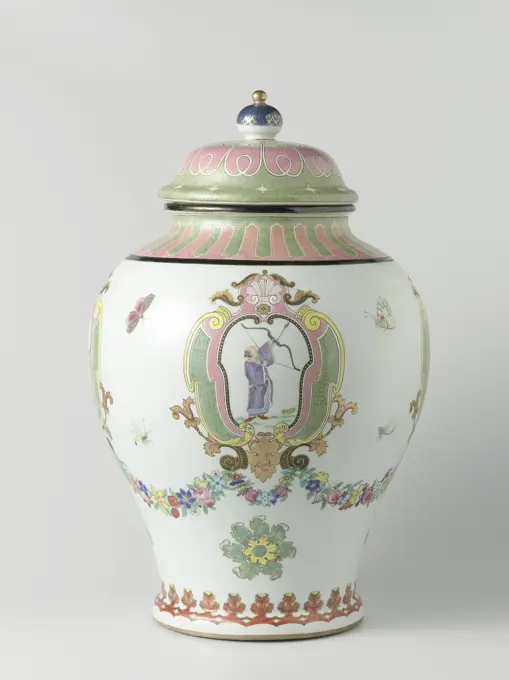
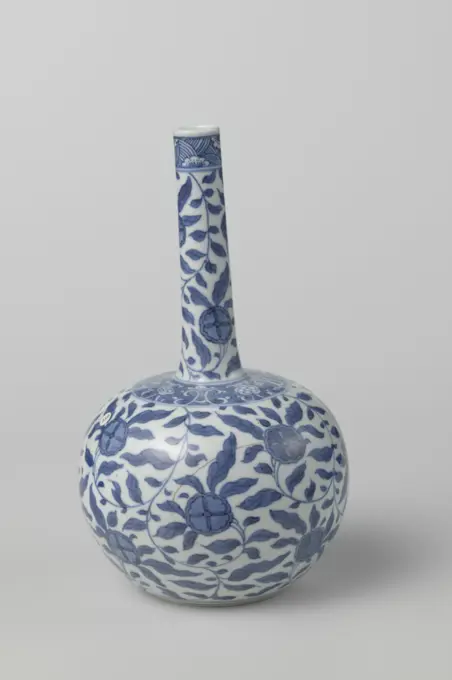
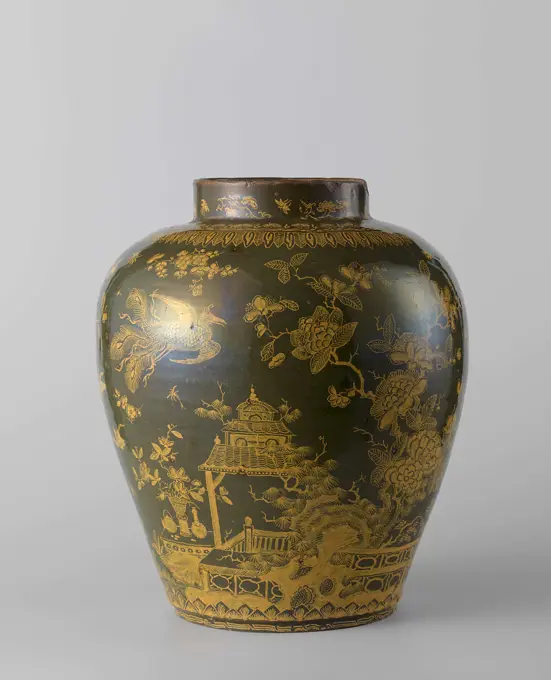
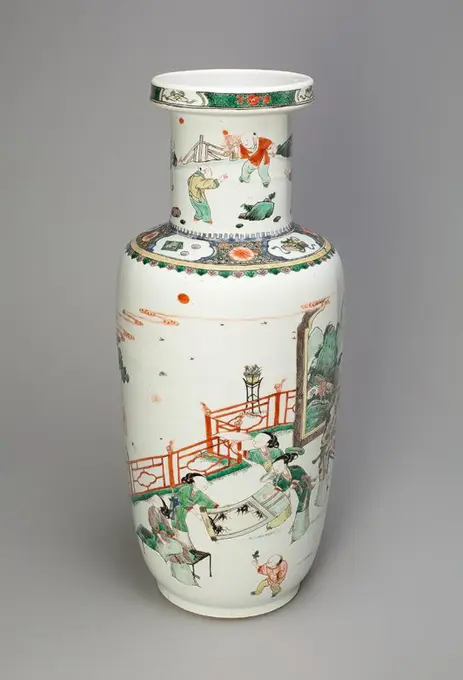
A series of beautifully crafted porcelain vases with intricate blue and colorful designs, featuring floral and decorative patterns.
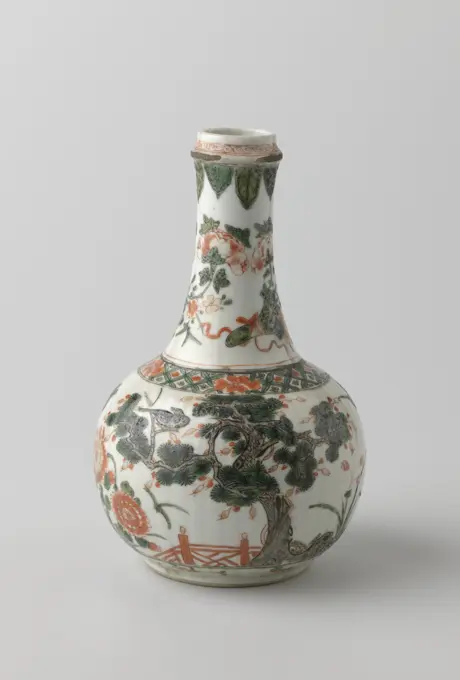
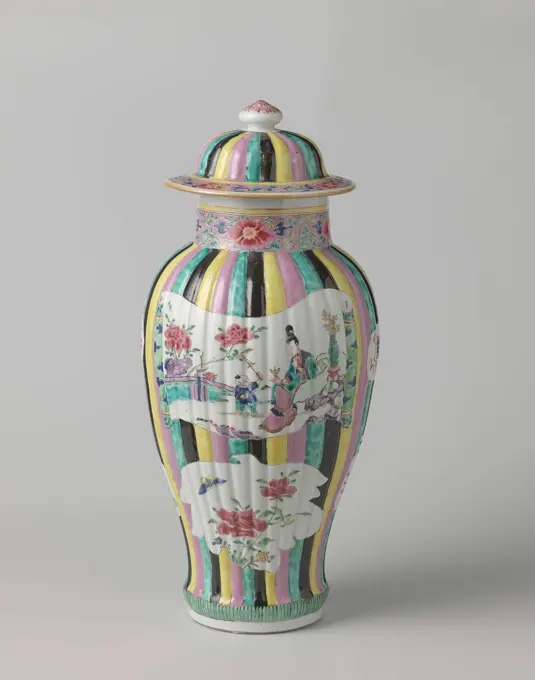
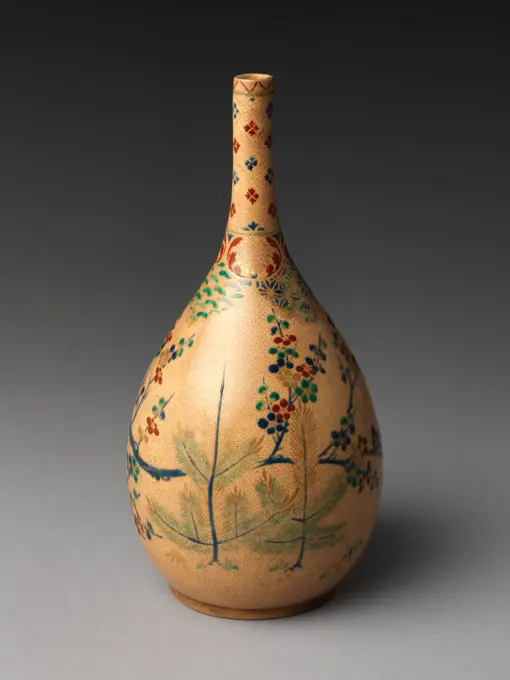
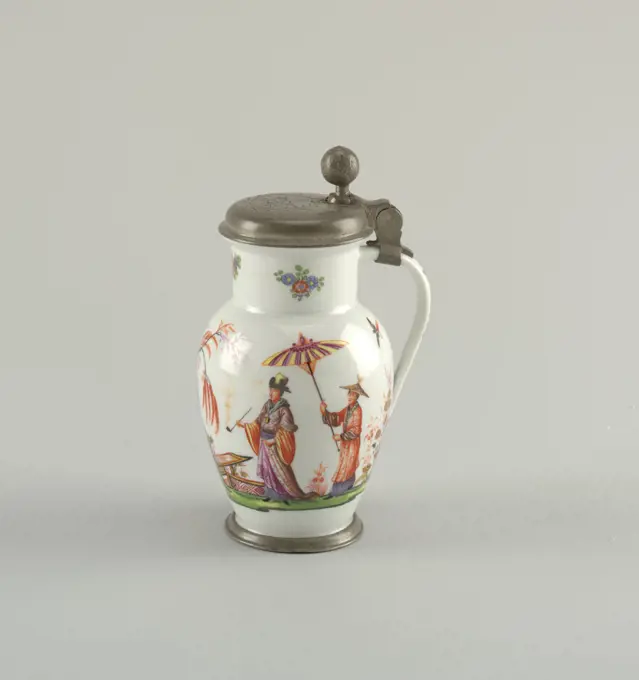
Fluted bottle with trees, plant, birds and bouquets, anonymous, c. 1700 - c. 1724 Bottle -shaped vase of porcelain with ribbed wall and thickening under the edge, painted on the glaze in blue, red, green, eggplant, black and gold. On the wall twice a pine with two birds in front of a fence, with two plants in between, one of which is a chrysanthemum; On the shoulder a tire with servetwork with flowers interspersed with a flower; The neck with two bouquets with peoning, chrysanthemum and splendid, above which a bond with hanging leaf motifs. 'Sidebottom' painted on the bottom. Dappering around the edge damaged. Famle Verte. China porcelain. glaze. gold (metal) painting / gilding / vitrification Bottle -shaped vase of porcelain with ribbed wall and thickening under the edge, painted on the glaze in blue, red, green, eggplant, black and gold. On the wall twice a pine with two birds in front of a fence, with two plants in between, one of which is a chrysanthemum; On the shoulder a tire wit
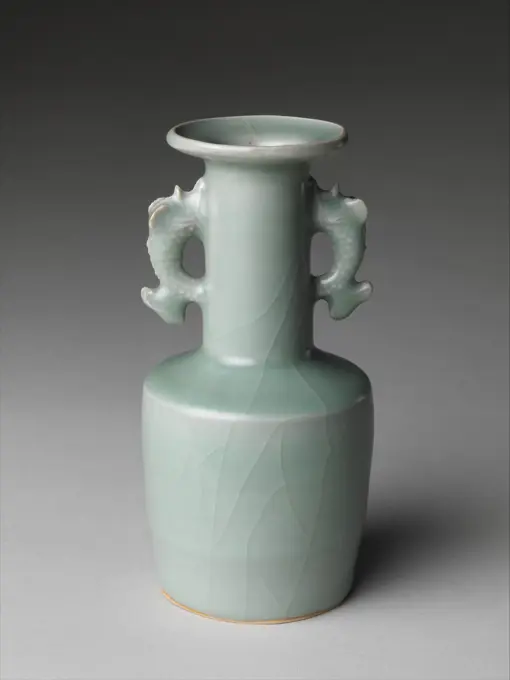
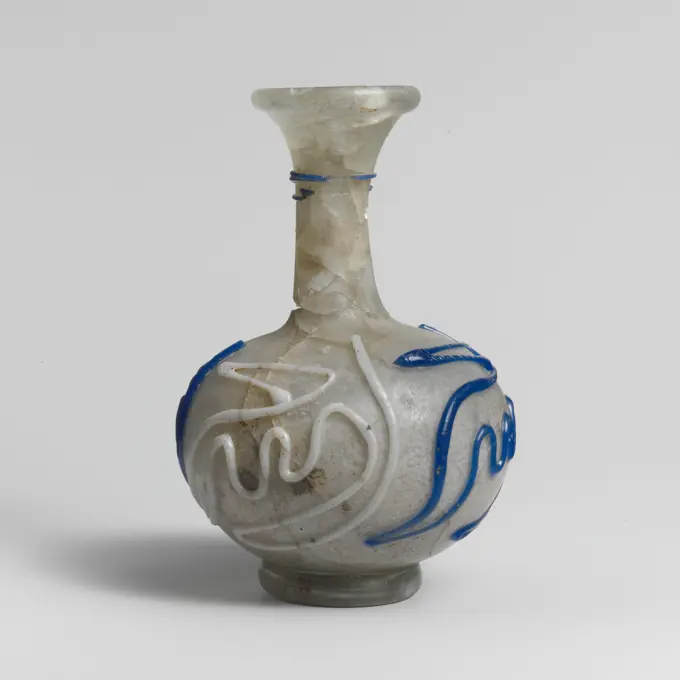
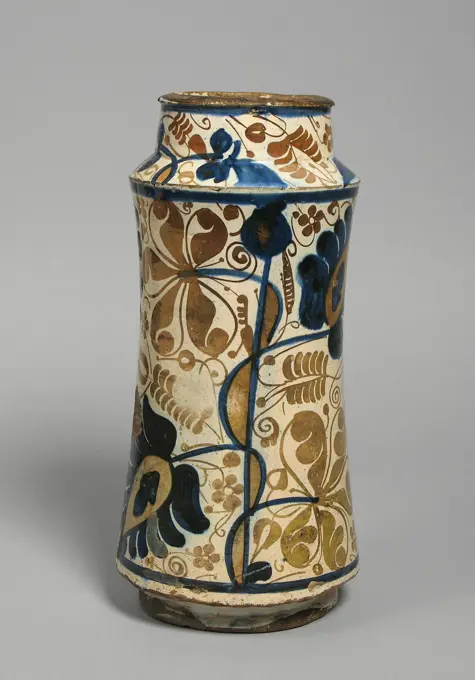
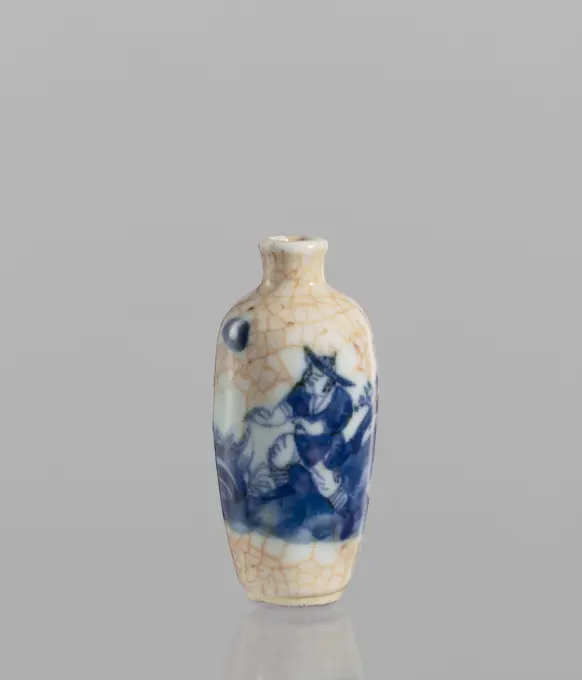
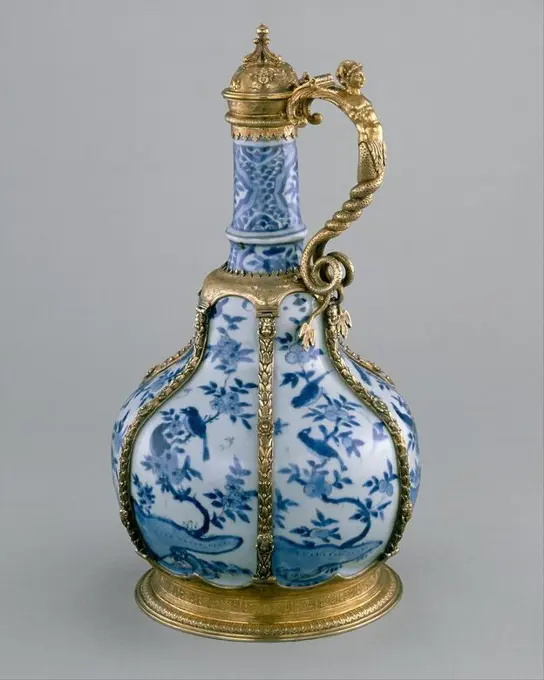
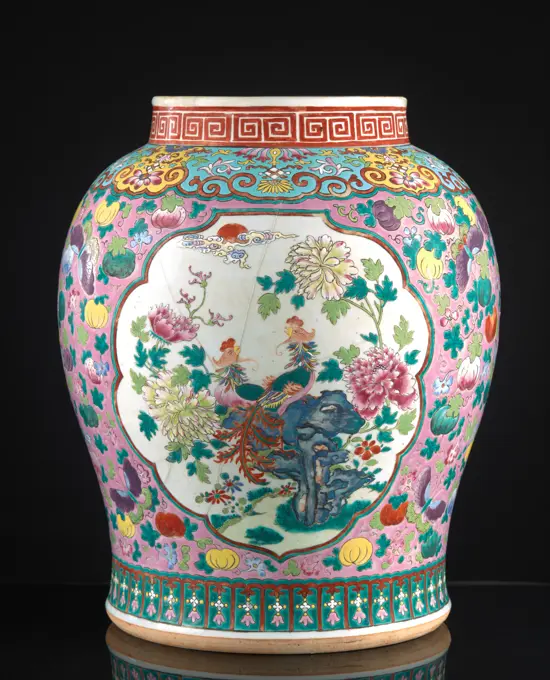
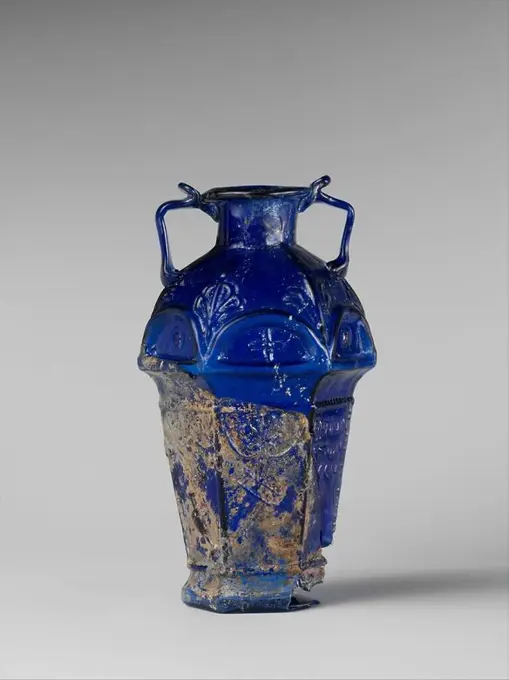
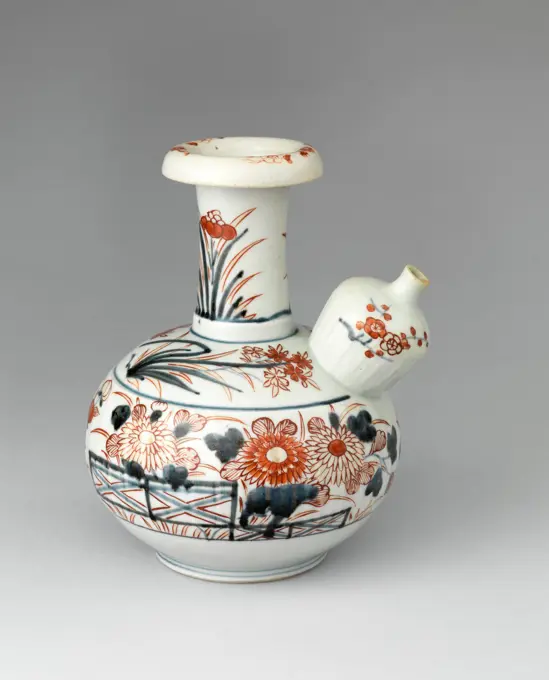
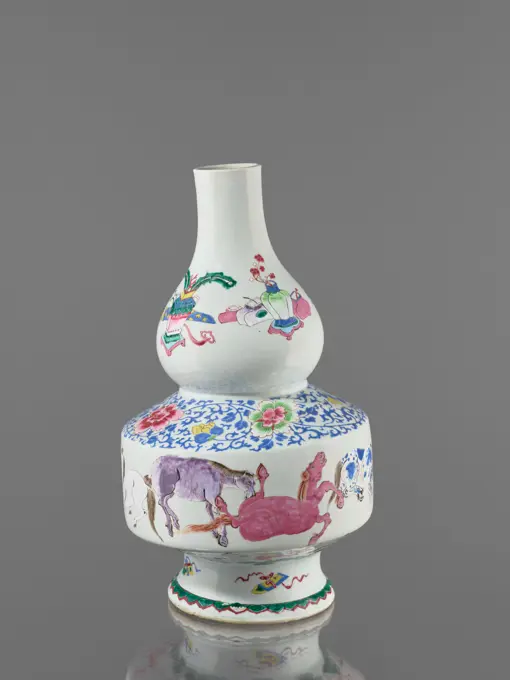
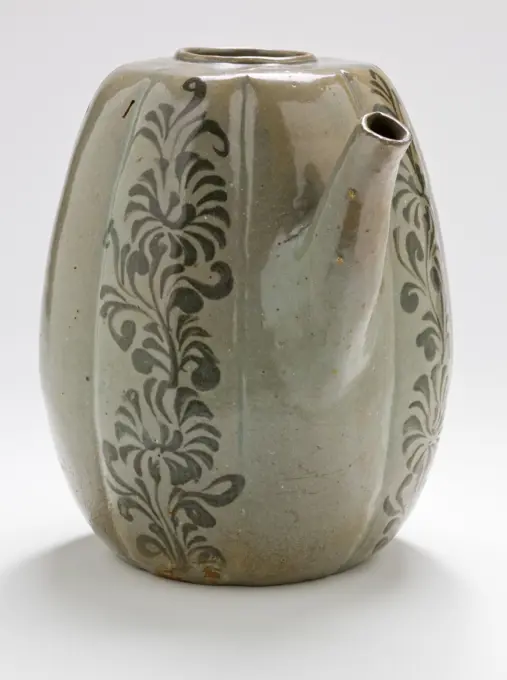
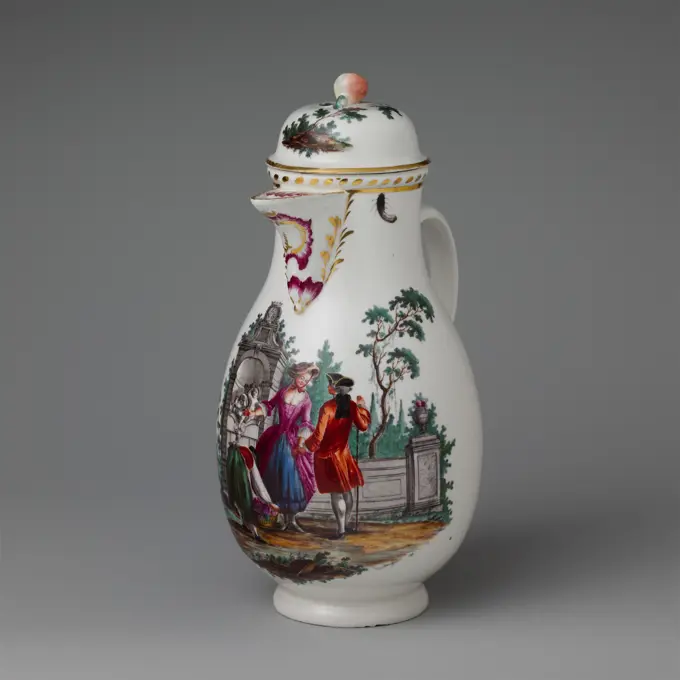
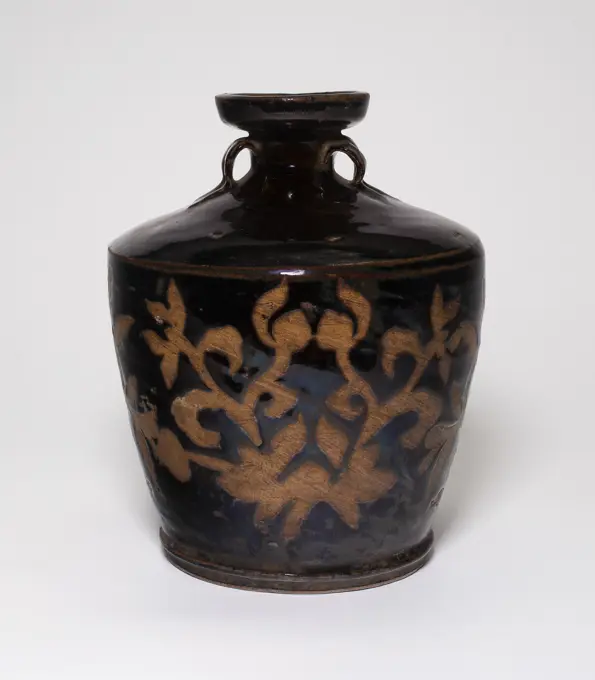
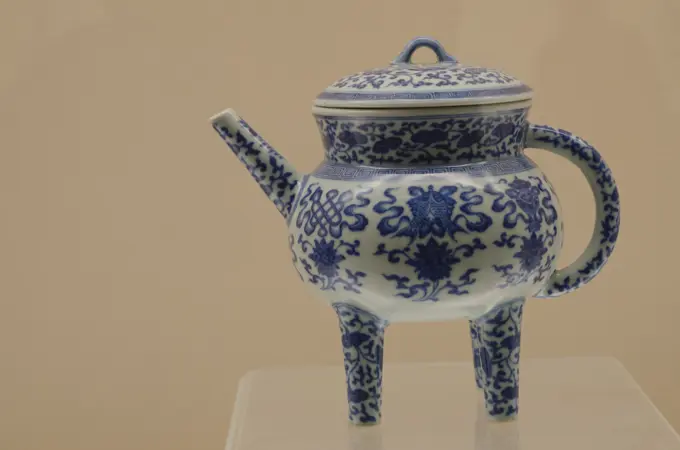
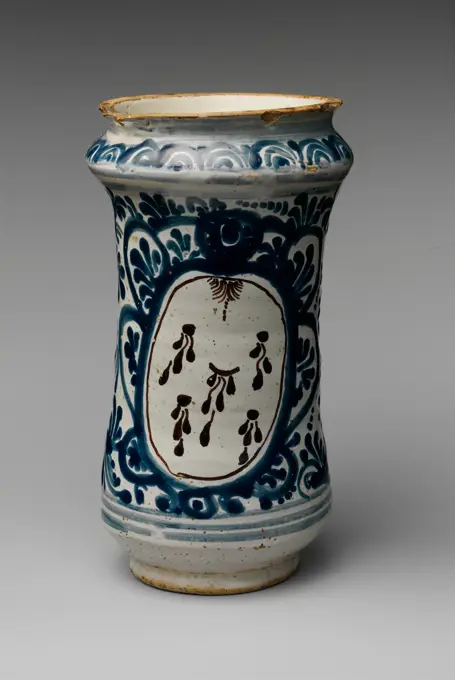
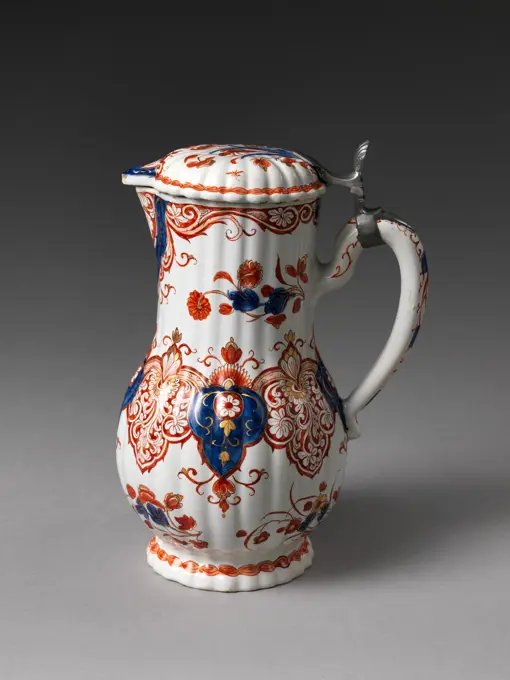
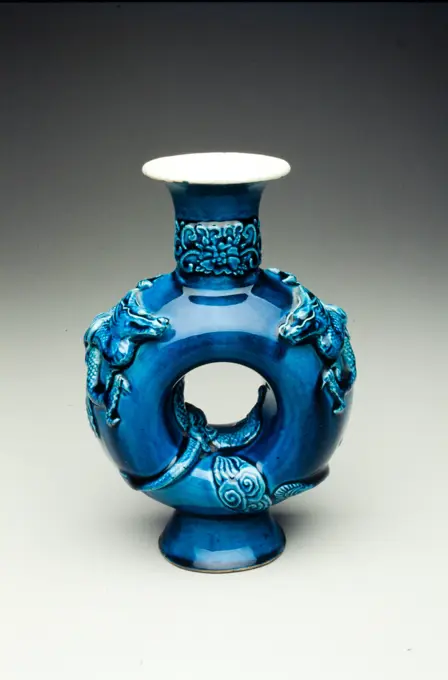
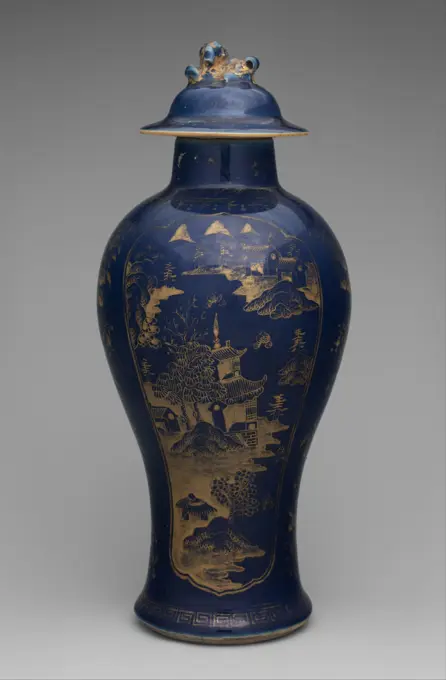
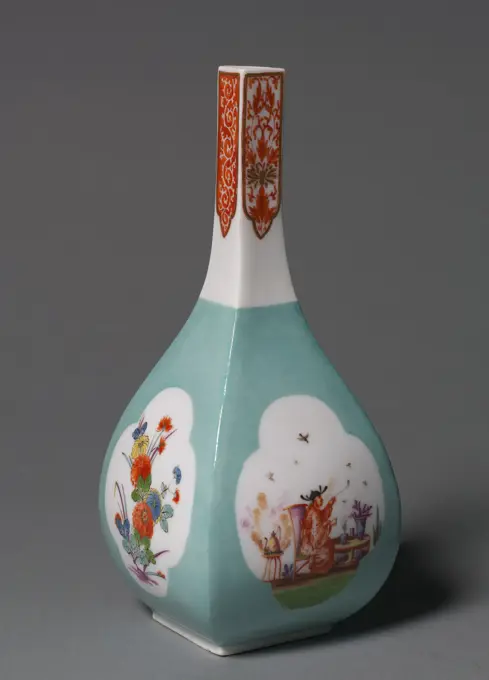
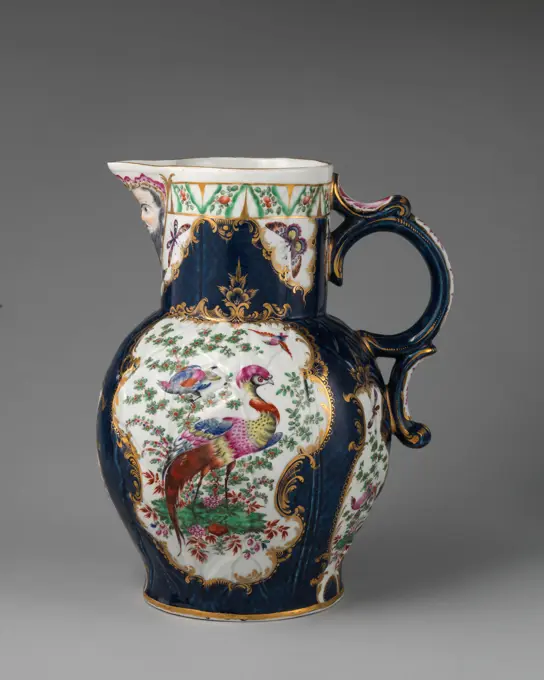
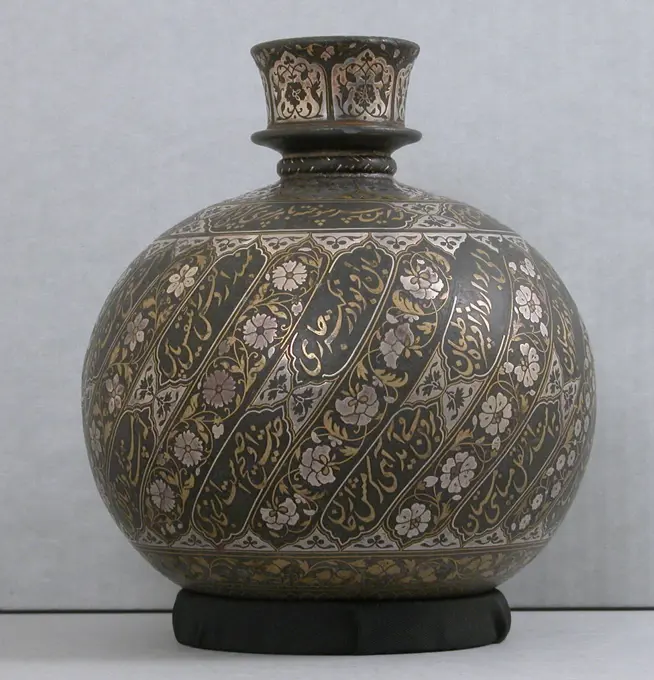
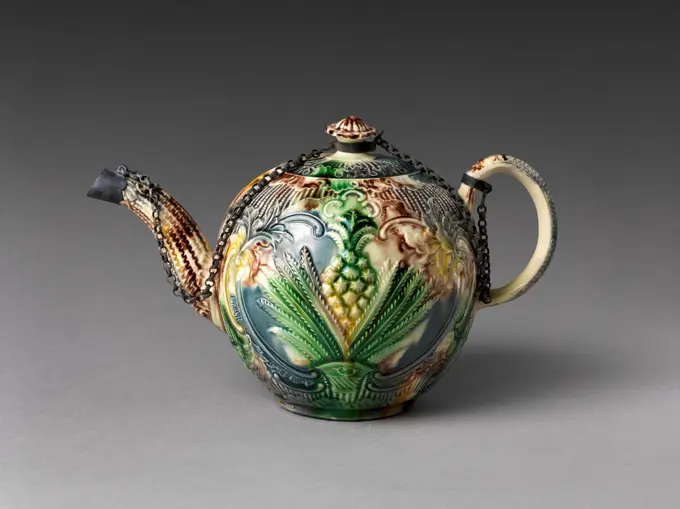
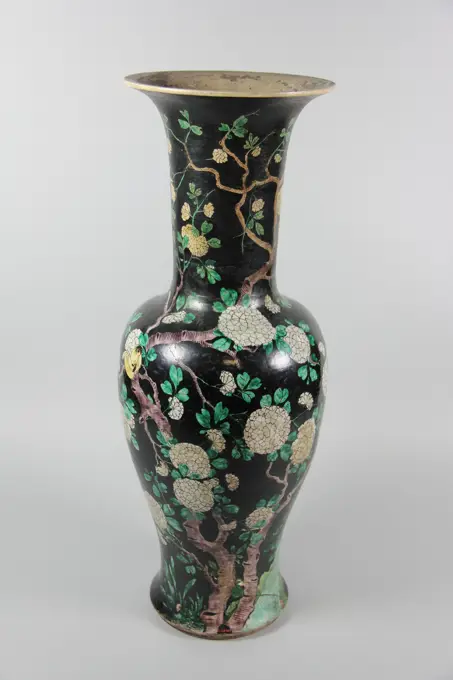
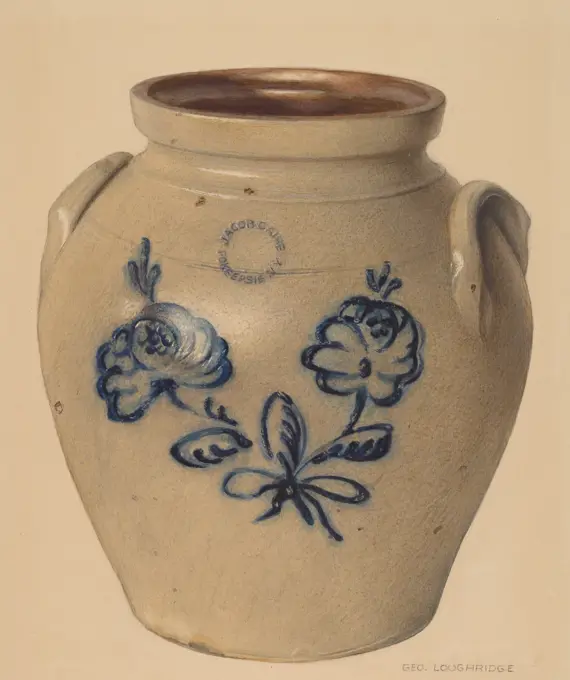
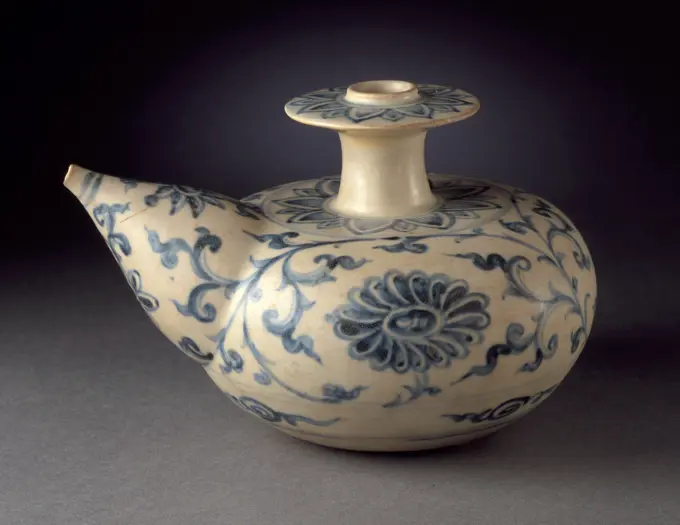
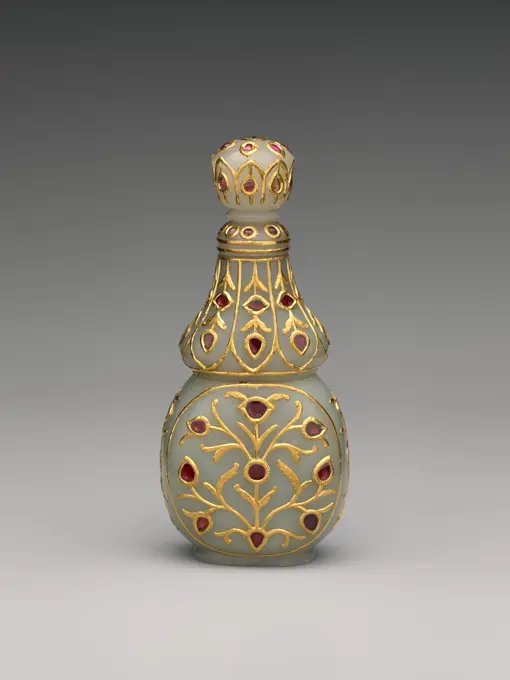
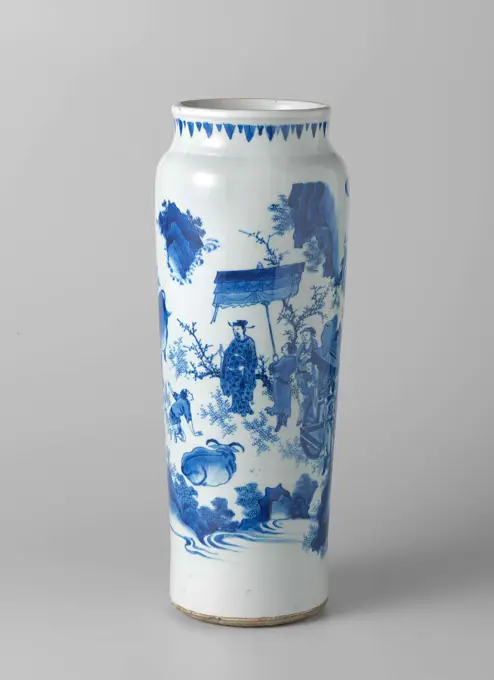
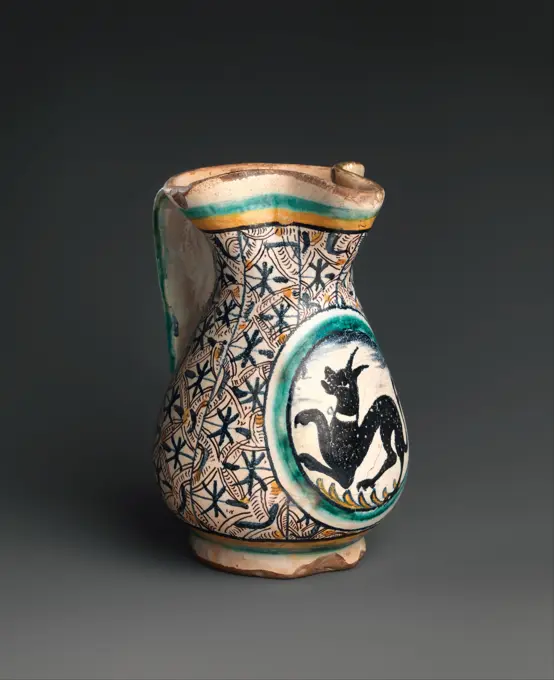
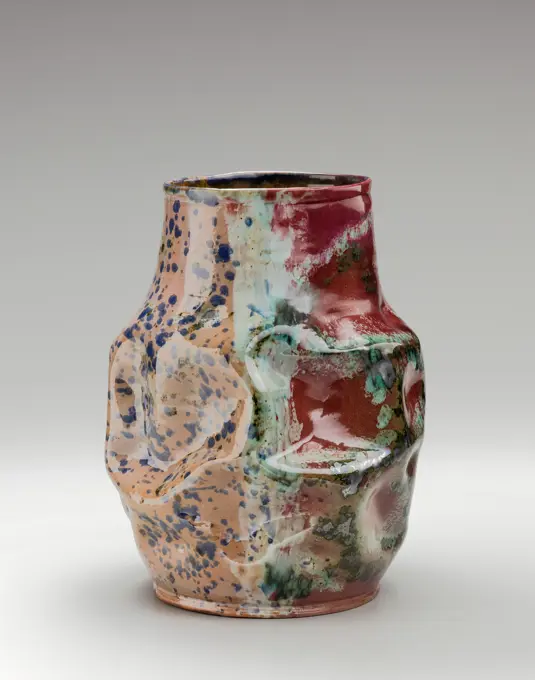
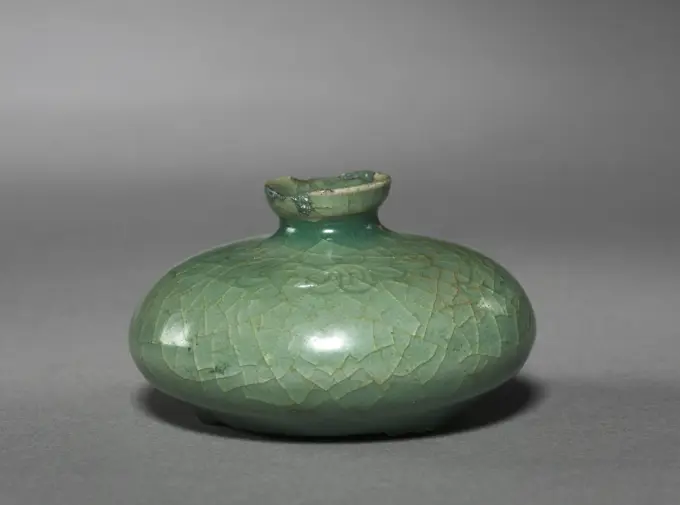
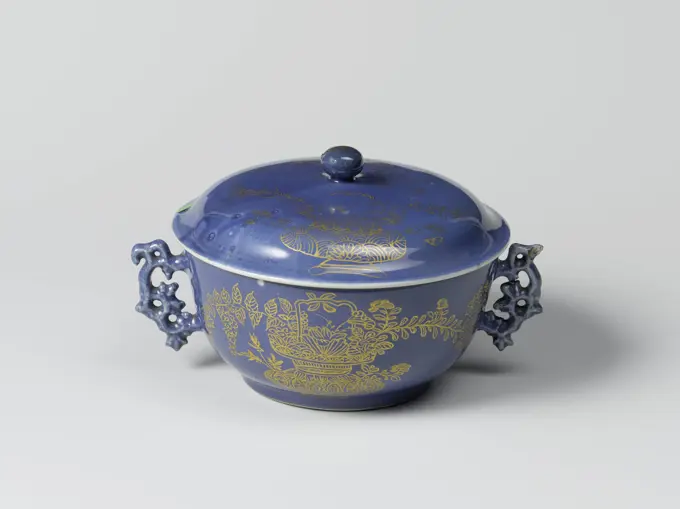
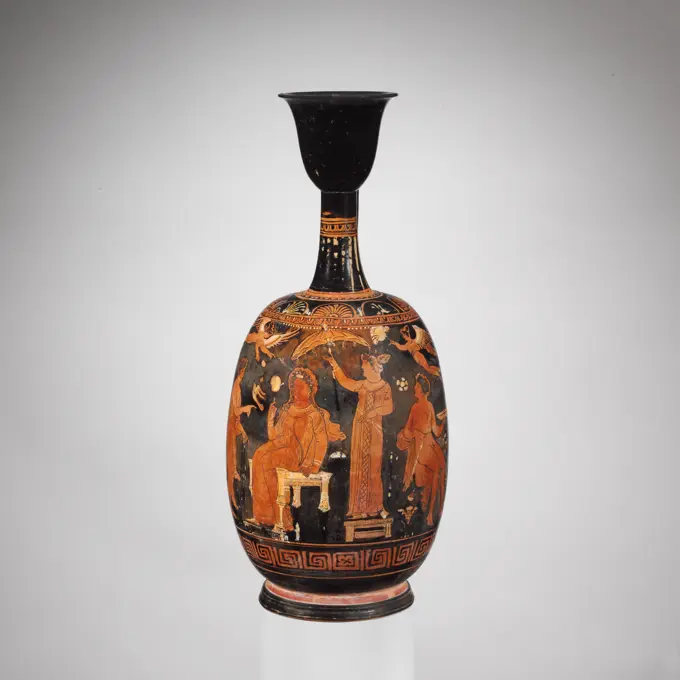
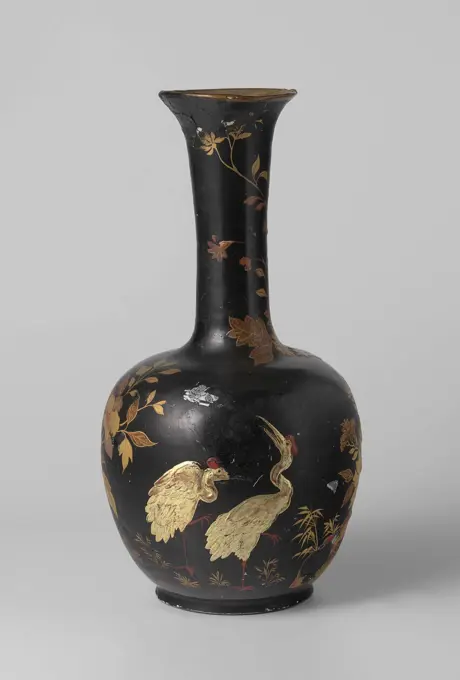
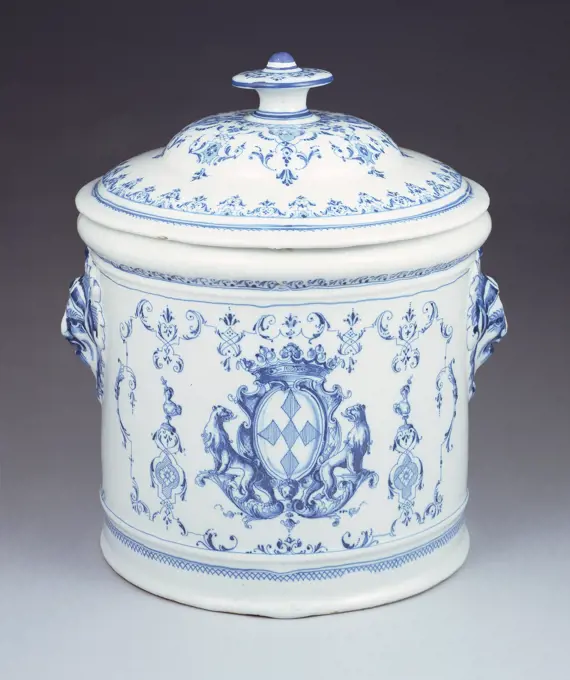
Covered jar with floral scrolls, anonymous, c. 1700 - c. 1799 Cover of stoneware, painted in under -glaze blue. On the wall a band with continuous flower vines. Below and above three horizontal lines. The glaze is slightly gray. Blue White. Thailand stoneware. glaze. cobalt (mineral) painting / vitrification Cover of stoneware, painted in under -glaze blue. On the wall a band with continuous flower vines. Below and above three horizontal lines. The glaze is slightly gray. Blue White. Thailand stoneware. glaze. cobalt (mineral) painting / vitrificationPair of cachepots 1770-80 Italian, Milan. Pair of cachepots. Italian, Milan. 1770-80. Faience (tin-glazed earthenware). Ceramics-PotteryEwer. Lampet kan with blue saksian pattern, unnoticed.Vase with Dragonfish Handles 12th-13th century China Vases of this type were especially popular in Japan, where they were sometimes used in the tea ceremony. The vases form, known as a mallet shape, can be traced to glass vessels produced in Syria in the ninth and tenth century and was most likely introduced to China at around that time. The fanciful handles are a Chinese addition.. Vase with Dragonfish Handles 42447Vase;  around 1900 (1899-00-00-1900-00-00);. Vase of earthenware, belonging to a couple of three, polychrome painted with sunflowers and topographic representations. On one side, the house is depicted the Paauw Wassenaar and on the other hand the house of the Prince of Wied in Scheveningen. Sunflowers have been painted between and above the performances.Vase with lid. unknown, craftsmanCovered Jar, polychrome floral decoration, handle on cover in shape of squirrel. 18th century Dutch. Covered Jar, polychrome floral decoration, handle on cover in shape of squirrel. 460392Glass bottle with snake-thread decoration 3rd century A.D. Roman, Rhenish Colorless; trails in opaque white and opaque blue.Everted rim, folded over and in, and smoothed into side of flaring mouth; cylindrical neck, expanding downwards; squat, globular body; applied, partially tubular base ring; flat bottom with pontil scar at center.Around top of neck, a fine blue trail wound in an overlapping spiral; on body, four separate trails, alternately white and blue, each making the same abstract curvilinear design, flattened and serrated at top.Broken and repaired, with some losses to lower neck and to trail around neck; pinprick bubbles; dulling, some gritty encrustation on bottom inside base ring, and weathering and encrustation on interior.Vase with blue and white serpentine applied thread bands.. Glass bottle with snake-thread decoration. Roman, Rhenish. 3rd century A.D.. Glass; blown and trailed. Late Imperial. GlassPharmacy Jar second half 15th century Spanish. Pharmacy Jar. Spanish. second half 15th century. Tin-glazed earthenware. Made in probably Manises, Valencia, Spain. CeramicsFlakonik - snack;  19th century (1801-00-00-1900-00-00);Ewer. Culture: British, London mounts and Chinese porcelain. Dimensions: Height: 13 5/8 in. (34.6 cm). Date: porcelain 1573-1620, mounts ca. 1585.In the sixteenth century, Chinese porcelain occasionally arrived in England, sometimes by way of the Levant, sometimes by sea around the Cape of Good Hope. As it was very rare and considered a special treasure, the most accomplished English silversmiths were often commissioned to make mounts for it. Pieces such as these were regarded as suitable for royal gifts or for the furnishing of princely houses. The ewer shown here is one of a group of Chinese porcelains of Wanli period (1573-1620), with silver-gilt mounts made in London by an unidentified silversmith about 1585. They were all acquired by the Museum from the estate of J. P. Morgan. Museum: Metropolitan Museum of Art, New York, USA.Przeszo Przyszoci unknownVase with lid with the house De Paauw, N.V. Haagsche Plateel Factory Rozenburg, 1896 Vase with pottery lid, belonging to a couple of three polychrome painted with sunflowers and topographical representations. On one side the house De Paauw in Wassenaar is depicted and on the other hand the house of the Prince van Wied in Scheveningen. Sunflowers are painted between and above the performances. The Hague earthenware Vase with pottery lid, belonging to a couple of three polychrome painted with sunflowers and topographical representations. On one side the house De Paauw in Wassenaar is depicted and on the other hand the house of the Prince van Wied in Scheveningen. Sunflowers are painted between and above the performances. The Hague earthenwareGlass hexagonal amphoriskos. Culture: Roman. Dimensions: Other: 5 5/8 × 3 1/8 × 2 13/16 in. (14.2 × 8 × 7.2 cm)Diam. of rim: 1 1/2 in. (3.8 cm). Date: 1st half of 1st century A.D..Translucent cobalt blue; handles in same color.Rim folded out, round, and in, with uneven beveled upper edge; short cylindrical neck; hexagonal sloping shoulder; hexagonal body, curving in at top below shoulder, then straight-sided but tapering downwards, and curving out to projecting plain band at bottom; flat hexagonal bottom; two strap handles applied to shoulder, drawn up and slightly outwards, then turned in, folded into a flattened thumb rest, projecting outwards above rim, and trailed off on underside of rim and top of neck.On shoulder, six palmettes with alternating inward and outward facing leaves at angles, and six recessed semicircular pediments with thick raised rib-like edges on panels, decorated alternately with circular bosses comprising two small concentric circles and a central dot and a Ovoid Covered Jar With Flower Baskets And Auspicious Symbols. Lid of egg-shaped porcelain lid pot, painted in underglaze blue and on the glaze in blue, red, pink, green, black and gold. On the wall lucky objects (table with rolls, ruyi scepter, impeller, qin, incense burner, bowl with mushrooms (Lingzhi) and rolls). On the shoulder an irregular bond with peony reflections on 'frog, leaf reflections, chrysanthuses, flower rosettes and peach blossom' crackled ice '. On the edge a band with chrysanthuses. Cover knob gold painted. Lid pot is part of cabinet set AK-RBK-15919. Family Rose.Ewer with landscapes in panels and floral scrolls, anonymous, anonymous, c. 1655 - c. 1680 Can be made of porcelain with spherical body, C-shaped ear and small, triangular spout from the edge, painted in underlaze blue. The belly is covered with 'Karakusa' vines containing three scalloped cartouches. The middle catouche with two men in a landscape, one with a parasol and a fan, the other with a closed parasol and a dog. To the left of this a cartouche with cranes in a landscape with trees and rocks. The third cartouche with different birds in a landscape with a pavilion, mountains and a pond. The neck and ear with flower vines. A hole in the top of the ear. Arita, Blauw-Wit. Japan porcelain. glaze. cobalt (mineral) painting / vitrification Can be made of porcelain with spherical body, C-shaped ear and small, triangular spout from the edge, painted in underlaze blue. The belly is covered with 'Karakusa' vines containing three scalloped cartouches. The middle catouche with two men in a lOld Imari wine pitcher, late 18th-early 19th century, Unknown Japanese, 8 × 6 3/8 × 6 1/8 in. (20.32 × 16.19 × 15.56 cm), Arita ware; porcelain, Japan, 18th-19th centuryGourd-shaped vase. unknown, craftsmanCovered ewer with powder blue and panels in reserve with Flower sprays and birds. Gloves with lid of porcelain with elongated body, wide neck, ear and S-shaped curved spout, painted in underglaze blue and on the glaze red, green, yellow, eggplant, black and gold. Covered with bleu poudré (powder blue) with two scalloped cartouches on the wall in reserve filled with prunus branch, plants and birds or water with blooming lotus plants and two birds; on the powder blue ground a decoration in gold with magnolia branch and prunus branch, to shoulder a band with Ruyi-motif and one with a geometric pattern, the spout and the ear with decorative tape; The lid with four decorative tires in gold. Bleu poudré with famille verte.Lid of multicolored painted faïence. Faïence lid, painted multi-colored.Melon-shaped Ewer with Chrysanthemum Scroll Design in Underglaze Iron. Korea, Korean, Goryeo dynasty (918-1392), 12th century. Furnishings; Serviceware. Wheel-thrown and molded stoneware with brown painted decoration and green glazeVase with Cover, Qing dynasty (1644-1911), Kangxi reign (1661-1722). China, Jiangxi province, Jingdezhen kilns, Qing dynasty (1644-1911), Kangxi reign (1661-1722). Porcelain with underglaze blue decoration; overall: 45.6 cm (17 15/16 in.).Covered Jar With Hoo-Birds in panels on a ground of Lotus and Floral scrolls. Porcelain lid, painted in underglaze blue and on the glaze red, black and gold. On the outer wall flower drinks with a lotus drink and a cartouche with a hay-bird alternately. Around the button a tire with pointed leaf motifs. Lid knob in the shape of a rooster on a rock. Imari.Can. Gray with blue can of stoneware with a pewter lid. Decorated with line ornament and a horse.Miniature Covered Jar 1100-1299 South Korea. Stoneware with underglaze inlaid decoration of green and white clays .Covered Jar With Figures, Flower Sprays And Auspicious Symbols in Shaped Panels on a Multi-Colored Ground. Porcelain lid pot with baluster-shaped body and ribbed wall, painted on the glaze in blue, red, pink, green, yellow, purple, black and gold. On the wall cartouches against a common background of vertical tires (harlequin pattern); Two cartouches in the shape of open rolls with a lady (long lijs) with boy (ocean) in a fenced garden with flowering plants, including two leaf-shaped cartouches with ponda branch and butterfly, on either side of the large courses a smaller pomegranate and finger lemon-shaped box with lucky symbols; On the neck a bond with flower drinks. The lid with the same decoration. On the bottom an old label with 's.k. 21 'and one with' 17100/91 ... 003/5 '. Belonging to a five-part cabinet set. Family Rose.Coffeepot ca. 1773-75 Höchst Manufactory The abbreviated signature on the underside of this coffeepot indicates that it was decorated by Louis-Victor Gerverot (French, 1747-1829), a highly skilled and unusually peripatetic porcelain painter who worked at a wide array of porcelain factories in Germany, the Netherlands, and England.1 Gerverot’s career reflects the itinerant nature of many who were involved in the ceramic industry in eighteenth-century Europe; both porcelain painters and those involved in the more technical aspects of production commonly moved from factory to factory, providing expertise to nascent operations or seeking better terms of employment. The constantly shifting workforce enabled the rapid growth of porcelain factories in Germany, in particular, during the second half of the eighteenth century, but it also meant that factory styles often shifted when they were dominated by the presence, however temporary, of a strong and unusually capable artistic personality.GHigh Shouldered Jar with Loop Handles and Reserved Decoration of Stylized Floral Decor 960 CE-1279 China. Cizhou-type ware; stoneware with brown-black glaze and underglaze reserved decoration .China, Shanghai, Shanghai Museum. Ancient china and porcelain collection. Blue under glazed He (pot), Jingdezhen ware, Qing Dynasty (circa AD 1821-1850).Fountain jar with an image of The Archer, anonymous, c. 1740 Fontein pot in the form of a baluster -shaped lid vase or porcelain, painted on the glaze in blue, red, pink, green, yellow, purple, black and gold. On the belly four times a cartouche with the archer. The cartouche consists of leaf vines, shell motif, curl and a mask; The cartouches are interconnected by a garland and surrounded by butterflies and insects. Under each cartouche a stylized leaf rosette, of which a hole has been drilled in one in the center for the crane. Around the foot a band with raised leaf vines. A decorative tire on the shoulder. The lid with three decorative tires with servetwork against a (light) green or pink background. The lid button with a golden stylized flower on a dark blue background. Decoration possible based on a design by Cornelis Pronk (1691-1754). Tap is missing. European performance in email colors. Chinadraughtsman: Netherlands porcelain. glaze. gold (metal) painting / gilding / vitrificaBottle with stylized flower scrolls, anonymous, c. 1700 - c. 1724 Bottle of porcelain with spherical body and straight, long neck, painted in underlaze blue. On the bottle a continuous motif of stylized flower vines; On the shoulder a band with blue and flower vines in reserve; Around the edge a strap with floral motifs. Marked on the bottom with the letter 'G'. Blue White. China porcelain. glaze. cobalt (mineral) painting / vitrification Bottle of porcelain with spherical body and straight, long neck, painted in underlaze blue. On the bottle a continuous motif of stylized flower vines; On the shoulder a band with blue and flower vines in reserve; Around the edge a strap with floral motifs. Marked on the bottom with the letter 'G'. Blue White. China porcelain. glaze. cobalt (mineral) painting / vitrificationBottle with Pine and Character for Longevity (Shou) China. Bottle with Pine and Character for Longevity (Shou) 47582Pot (without lid) with multicolored painting. Pot (without lid) of multicolor painted faience on an olive-green fond. The shape of the pot is wide canopic and the pot has a low round neck. On the pot are in yellow flowers, tied hedges, birds, a Chinese pavilion, which serves a table with a teapot, a vase with flowers and a bottle.Baluster Vase with Women Performing the "Four Accomplishments" and Children in a Garden. China. Date: 1662-1722. Dimensions: H. 43.8 cm (17 1/4 in.); diam. 19.0 cm (7 1/2 in.). Porcelain with overglaze enamel decoration. Origin: China. Museum: The Chicago Art Institute, Chicago, USA.Covered Bottle-Vase (Meiping) with Children among Blossoming Vine 1100-1127 China. Qingbai ware; porcelain with underglaze carved and incised decoration .Vase Necel, Franciszek (1868 1935)Ginger vessel;  19th century (1801-00-00-1900-00-00);Apothecary Jar 1700-1750 Mexican. Apothecary Jar 3460Sand Shaker. Culture: Mexican. Dimensions: Diam. 3 3/4 in. (9.5 cm). Date: ca. 1750. Museum: Metropolitan Museum of Art, New York, USA.Jug with stylized floral pendants ca. 1701-15 The "Greek A" Factory The Japanese Imari palette of red, dark blue, and gold has been used to enliven a traditional Chinese blue-and-white pattern of the late seventeenth century.. Jug with stylized floral pendants. Dutch, Delft. ca. 1701-15. Tin-glazed earthenware painted with colored enamels. Ceramics-PotteryVase, c. 1850, 10 1/4 x 5 3/4 x 3 1/2in. (26 x 14.6 x 8.9cm), Porcelain, China, 19th centuryCovered Box. Thailand, Sawankhalok, 16th century. Furnishings; Accessories. Stoneware with underglaze black painted decorationCovered Vase 1770-95 Chinese. Covered Vase 2558Saki Bottle, c. 1730. Meissen Porcelain Factory (German), probably by Johann Gregor Herold (German, 1696-1775). Porcelain; overall: 21.3 x 9.7 cm (8 3/8 x 3 13/16 in.).Cup from Sake Cups with Dragons, c. 1893-1914. Seifū Yohei III (Japanese, 1851-1914). One from a set of six sake cups; porcelain with underglaze blue and iron oxide rims; overall: 5 x 4.5 cm (1 15/16 x 1 3/4 in.).Jug 1770-75 Worcester factory. Jug. British, Worcester. 1770-75. Soft-paste porcelain. Worcester factory (British, 1751-2008). Ceramics-PorcelainBase for a Water Pipe (Huqqa) with Poetry and Flowers early 18th century The inlaid brass and silver decoration is placed in diagonal cartouches running along the body of the huqqa base, with Persian verses praising tobacco in nastaliq script. The poem on the body of the base consists of eleven rhymed couplets which contain several playful puns referring to the relaxation resulting from smoking a huqqa. This style of ornamentation with flowers and line-breaks resembles that in Deccani manuscript illuminations. It is rare to have inlaid calligraphy in bidri ware. This is thus an unusual piece.. Base for a Water Pipe (Huqqa) with Poetry and Flowers 454601Ewer early 17th century. Ewer 444888Teapot with relief decoration ca. 1750-70 Style of Whieldon type Listen to experts illuminate this artwork's story Listen Play or pause #407. Teapots Supported by Bloomberg Philanthropies We're sorry, the transcript for this audio track is not available at this time. We are working to make it available as soon as possible.. Teapot with relief decoration. probably British, Staffordshire. ca. 1750-70. Earthenware with molded decoration painted with metal oxides under transparent glaze. Ceramics-PotteryOvoid Covered Jar With Flower Sprays and Narrative Scenes in Medallions. Lid of egg-shaped porcelain lid pot with a ribbed wall, painted in underglaze blue. On the lid a scene of three Chinese men on a terrace with a servant that offers one of them a bowl. On the edge flower branches. Blue White.Vase;  around 1910-1920 (1891-00-00-1900-00-00);Sake bottle with pine and plum 18th century Japan. Sake bottle with pine and plum. Japan. 18th century. Stoneware (Kyoto ware). Edo period (1615-1868). CeramicsPewter-Mounted Tankard, Meissen Porcelain Manufactory, German, active from 1710 to the present, hard paste porcelain, vitreous enamel, pewter, Oviform body with straight neck and flange, and strap handle. Polychrome and gilt chinoiserie: man holding parasol over a smoking dignitary, and two men and two childern. On neck, kakiemon flowers. The hinged cover is of pewter., Germany, 1725-1735, ceramics, Decorative Arts, tankard, tankardCache-Pot; Manufaktura Majoliki in Nieborów (Nieborów; Wytwórnia; 1881-1899); 1881-1886 (1881-00-00-1886-00-00);OLYMPUS DIGITAL CAMERAJar with Cover. Culture: China. Dimensions: H. 10 in. (25.4 cm). Museum: Metropolitan Museum of Art, New York, USA.Lidded Jar, anonymous, c. 1700 - c. 1724 Porcelain cylindrical lid jar on a base and two raised ears with monster heads, painted in underly glaze blue and on the glaze blue, red, green, yellow, black and gold. On the wall two boxes saved with squeezed corners with a woman (long lijs) sitting in a fenced garden on or near a table with objects (rolls, artemisia leaf, incense burner). The lid with two saved, fan -shaped compartments with flowering plants (prunus, chrysanthemum), birds and butterflies. The blue email flakes in a few places. Bleu Poudré with Famle Verte. China porcelain. glaze. cobalt (mineral). gold (metal) painting / gilding / vitrification Porcelain cylindrical lid jar on a base and two raised ears with monster heads, painted in underly glaze blue and on the glaze blue, red, green, yellow, black and gold. On the wall two boxes saved with squeezed corners with a woman (long lijs) sitting in a fenced garden on or near a table with objects (rolls, artemisia leaf, incense buGinger vessel from the cover;  1723-35 () (1723-00-00-1735-00-00);Paderewski, Ignacy Jan (1860-1941), Paderewski, Ignacy Jan (1860-1941)-collection, qing (style), yongzheng (style), ceramics, Chinese (culture), gift (provenance), Chinese artVase lid;  18th century (1701-00-00-1800-00-00);BOTIJO VIDRIADO-DECORADO EN AZUL BLANCO Y ROJO-LLAMADO DE INVIERNO-S XX. Location: ALFARERIA. LA RAMBLA. CORDOBA. SPAIN.Jar 301 CE-600 CE Mediterranean Region. Glass . IslamicVase, bottle-shaped, with inscription "A lupolos". Bottle-shaped vase of multi-colored painted majolica. Along the bottom edge of the vase, a banderole has been painted with inscription "A lupulos". Above the banderole, a naked woman is painted on a bull in a hilly landscape. The vase includes a second vase with Invnr. BK-NM-14387-B.Pair of flower vases with eight spouts. Between 1680 and 1740 various Delft pottery factories produced spouted flower vases. These two examples have a double row of spouts on the front. The handles are in the shape of mythical winged creatures.Decorative pitcher National Potter School in KołomyjaFragment of a jug with pierced roundels, anonymous, c. 1650 - c. 1699 Fragment of a jug of stoneware on high foot with a spherical belly. The ear and the neck are missing. Profiles on the neck and foot. Partly covered with cobalt blue. On both sides of the abdomen a somewhat flattened, double -walled part with an openwork rosette surrounded by two printed and imposed circles in relief. One with dots and one continuous leaf vend. Between the two sides a vertical band with printed and imposed medallions with a flower surrounded by triangles, which are also filled with a flower. Westerwald. Westerwald stoneware. glaze. cobalt (mineral) vitrification Fragment of a jug of stoneware on high foot with a spherical belly. The ear and the neck are missing. Profiles on the neck and foot. Partly covered with cobalt blue. On both sides of the abdomen a somewhat flattened, double -walled part with an openwork rosette surrounded by two printed and imposed circles in relief. One with dots and one contJar with Design of a Garden. Anonymous. Japan, Edo period, circa 1660-1690. Ceramics. Arita ware, early Kakiemon style; porcelain with over-glaze enamelsVase;  19th/20th century (1891-00-00-1910-00-00);Block, Julius Henry (1858-1934) - collection, cloisonné, gift (provenance), Japanese (culture), flowers, butterflies, Japanese art, vasesRosewater Sprinkler or Bottle Vase With Light Brown and Precious Object and Antiques. Rose water dropper or porcelain spot bottle with spherical body and pear-shaped neck, covered with a café-au-lait glaze and painted in underglaze blue. The lower part of the body is covered with a light brown glaze above which a tire with a thick cream-colored glaze; The shoulder in underglaze blue with napkin interspersed with a flower in a cartouche; The neck also in blue with valuables (books) and antiques (vase, scepter, books), above two flower branches. Edge damaged; Chip off the foot. Monochrome brown with underglaze blue.Vase. unknown, craftsmanClose-up of a pitcher, Faenza, Emilia-Romagna, ItalySmall Jar 14th century China. Small Jar. China. 14th century. Porcelaneous stoneware (Longquan ware). Yuan dynasty (1271-1368). CeramicsThe Landing of the Fathers at Plymouth Pitcher; Made by Enoch Wood (English, 1759 - 1840); England; glazed earthenware, transfer-printed decorationVase with birds and flowers 19th century China. Vase with birds and flowers. China. 19th century. Porcelain painted inpolychrome enamels over black ground (Jingdezhen ware, famille noire). Qing dynasty (1644-1911). CeramicsGeorge Loughridge, Jar, c 1938 JarMiniature Holy Water Container (Kendi) with Lotus Petals and Chrysanthemum Scrolls. Vietnam, circa 1400-1600. Furnishings; Accessories. Wheel-thrown stoneware with cream slip, underglaze blue painted decoration, and clear glazeSnuff Bottle, 1780-1880, 3 3/8 x 1 5/8in. (8.6 x 4.1cm), Porcelain, ChinaVase with stopper 18th-19th century India. Vase with stopper. India. 18th-19th century. Jade (nephrite) with gold and silver inlays. Mughal period (1526-1858) or Qing dynasty (1644-1911). JadeVase 19th century Italian, Venice (Murano). Vase 186073Covered Jar With Ruyi-Heads And Flowers. Egg-shaped pot of porcelain, painted on the glaze in blue, red, green, yellow, eggplant and black with flowers and styled tendrils. The pot is decorated with three compartments in the form of a lobed window with a peony surrounded by styled tendrils; between the three courses a ruyi motif and flower branches. Around the foot an ornamental band; Around the shoulder a bond with Ruyi motifs. Famille Verte.Hydriske. Eastern Mediterranean or Italian. Date: 450 BC-350 BC. Dimensions: 6.7 × 4.6 × 4.6 cm (2 5/8 × 1 3/4 × 1 3/4 in.). Glass, core-formed technique. Origin: Eastern Mediterranean Region. Museum: The Chicago Art Institute, Chicago, USA. Author: Ancient Eastern Mediterranean.Cantonese bowl. unknown, craftsmanPowder Jar 1830-70 American. Powder Jar. American. 1830-70. Parian porcelain. Probably made in Bennington, Vermont, United StatesSleeve Vase. Cylindrical vase (trolley) of porcelain with a wide, slightly spreading neck, painted in underglaze blue. On the wall a continuous landscape with mountains, trees and rocks. Herein a dignity and his effect and a wheelchair. He receives an oxshearder with his OS. The shepherd is on his knees for the dignity. On the neck a band with dependent, pointed leaf motifs. Transition porcelain in blue and white.Jug ca. 1480-1500 Italian, Florence or environs (probably Montelupo) Jugs ornamented with heraldic animals were very popular and were widespread; the shape of this one is typically Tuscan. Examples like this were traded extensively and one is represented in the famous Merode Triptych, painted in the Netherlands around 1430 and currently on view at the Cloisters (see metmuseum.org/collections).. Jug. Italian, Florence or environs (probably Montelupo). ca. 1480-1500. Maiolica (tin-glazed earthenware). Ceramics-PotteryVase ca. 1897-1900 George E. Ohr In many ways George Edgar Ohr was the quintessential Arts and Crafts potter, combining artistic vision with extraordinary skill with his hands. Working in the seaside resort town of Biloxi, Mississippi, he dug the clay, processed and prepared it, threw the shape on the wheel, alt altered the piece according to his vision, mixed and applied his own glazes, fired the kiln, created his own style of advertising, and took his wares on the road. Ohrs personal mantra was "no two alike," and he was as eccentric as his work was individualistic, with its manipulated forms on ultra-thin thrown vessels, crimping, ruffling, off-centering, and twisting, to create unprecedented forms for the 1890s. To these forms, he applied his own completely new and unusual glazes, applied by sponging, splashing, and spattering, resulting in works that in many ways anticipated the abstract art movements that would find form decades later. Some of Ohrs glazed works exhibit startlinOil Bottle with Scroll Design, 1100s-1200s. Korea, Goryeo period (918-1392). Celadon ware; outer diameter: 7.4 cm (2 15/16 in.); overall: 4.2 cm (1 5/8 in.).Tureen, anonymous, c. 1700 - c. 1724 Come with a lid of porcelain with two standing ears with curl work, completely covered with underlaze Bleu Poudré (powder blue) and painted with gold on the glaze. On the bowl a flower basket and a flower vase (lotus, blue rain, aster, peony). The lid with the same decoration. Bleu Poudré with gold. China porcelain. glaze. cobalt (mineral). gold (metal) painting / gilding / vitrification Come with a lid of porcelain with two standing ears with curl work, completely covered with underlaze Bleu Poudré (powder blue) and painted with gold on the glaze. On the bowl a flower basket and a flower vase (lotus, blue rain, aster, peony). The lid with the same decoration. Bleu Poudré with gold. China porcelain. glaze. cobalt (mineral). gold (metal) painting / gilding / vitrificationJug. Martin Brothers (English, 1873-1914); London and Southall, England. Date: 1890. Dimensions: 18.4 x 15.2 x 12.7 cm (7 1/4 x 6 x 5 in.). Salt-glazed stoneware. Origin: Southall. Museum: The Chicago Art Institute, Chicago, USA. Author: Martin Brothers.Terracotta squat lekythos (oil flask) ca. 340-320 B.C. Attributed to the Group of New York 28.57.10 Woman with attendant, youths, and ErotesThe scene has been interpreted as depicting a bride seated between the groom and the servant with a parasol, as Erotes hover above.. Terracotta squat lekythos (oil flask) 252962 : Attributed to the Group of New York 28.57.10, Terracotta squat lekythos (oil flask), ca. 340320 B.C., Terracotta, H. 5 5/8 in. (14.3 cm). The Metropolitan Museum of Art, New York. Fletcher Fund, 1928 (28.57.10)Vielleuse. Staffordshire, England. Date: 1760-1770. Dimensions: 30.2 x 21 x 14.3 cm (11 7/8 x 8 1/4 x 5 5/8 in.). Lead-glazed earthenware (creamware). Origin: Staffordshire. Museum: The Chicago Art Institute, Chicago, USA.. Vase of faience. Completely covered with bragging in black with flowers in gold and red.Vase and Lid Vase And Lid; Manufactured by Zsolnay, Pècs Factory; Hungary; earthenware, eosin glazePair of Miniature Vases with Birds and Chrysanthemums, 1736-95. China, Jiangxi province, Jingdezhen kilns, Qing dynasty (1644-1911), Qianlong mark and reign (1736-95). Porcelain with famille rose overglaze enamel decoration; diameter of mouth: 2.1 cm (13/16 in.); overall: 9.5 cm (3 3/4 in.).Figured flask. Culture: American. Dimensions: H. 6 3/4 in. (17.1 cm). Date: ca. 1840. Museum: Metropolitan Museum of Art, New York, USA.Cruet Stand 1720-1730 Rouen. Tin-glazed earthenware (faience) . Rouen Potteries (Manufacturer)Vase, bottle -shaped, with inscription "a lupolos", anonymous, c. 1530 - c. 1560 vase Bottle -shaped vase of multicolored painted majolica. Along the bottom edge of the vase, a banderol is painted with inscription "A Lupulos". Above the banderol, a naked woman is painted on a bull in a hilly landscape. The vase includes a second vase with invnr. BK-NM-14387-B. Castelli earthenware. tin glaze. lead glaze majolicaSmall duplic vase. Thick-walled drip-shaped vase without a foot or foot ring and with a flat lip. Two flat ears were switched on on 2/3. Round the entire body are alternately applied blue and white glass plates, the lower part of law and the upper wavy.Lidded Jar; Joseph Olerys Manufactory (Moustiers) (French, active about 1650 - present); Moustiers, France; about 1723 - 1725; Tin-glazed earthenware (faience); 26 x 22.2 cm (10 1,4 x 8 3,4 in.)Vase with Stylized Floral Scrolls. Korea. Date: 918 AD-1392. Dimensions: H. 27.4 cm; diam. 17.9 cm. Stoneware with underglaze iron brown painted decoration. Origin: Korea. Museum: The Chicago Art Institute, Chicago, USA.