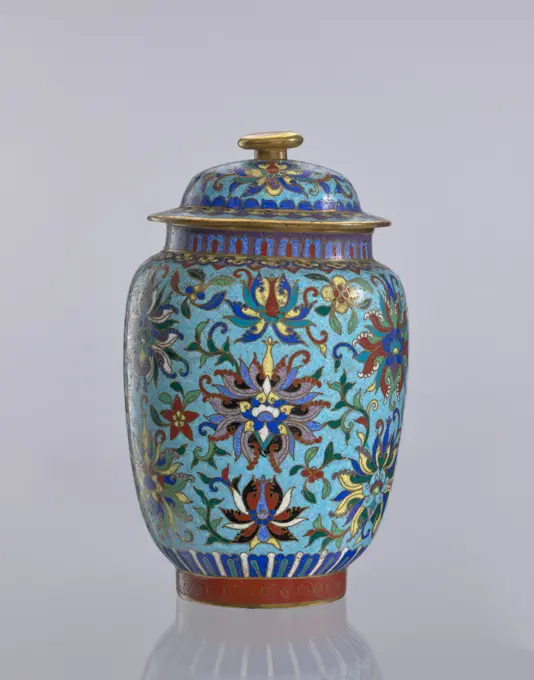
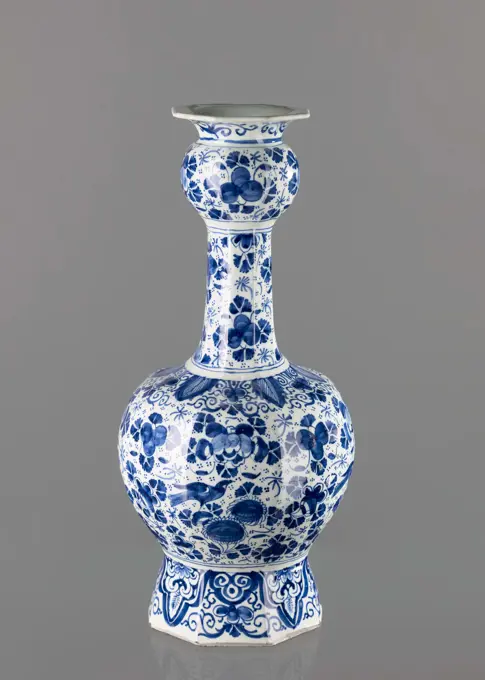
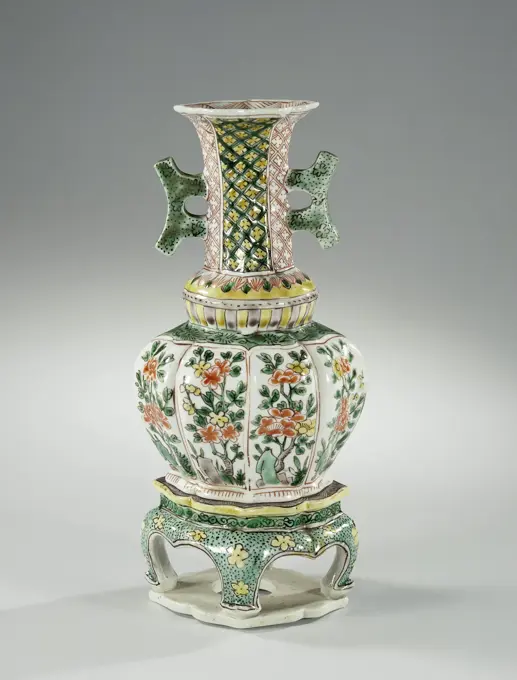
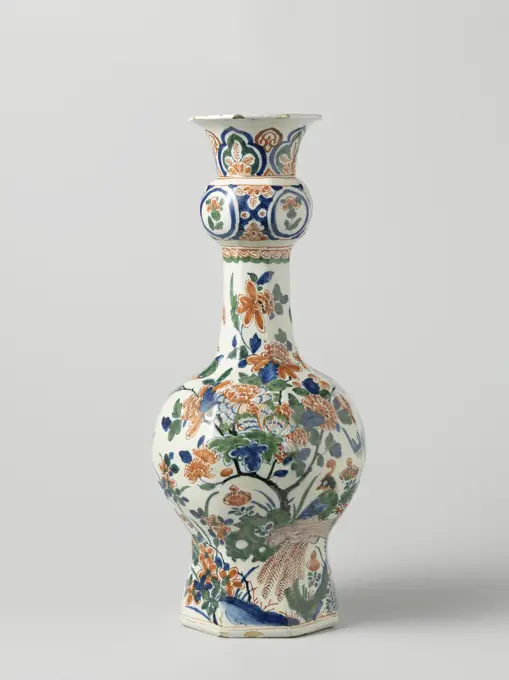
Decorative Porcelain Vases

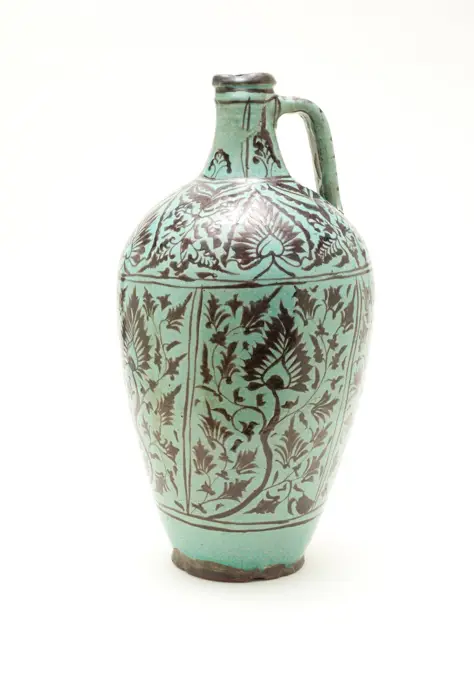
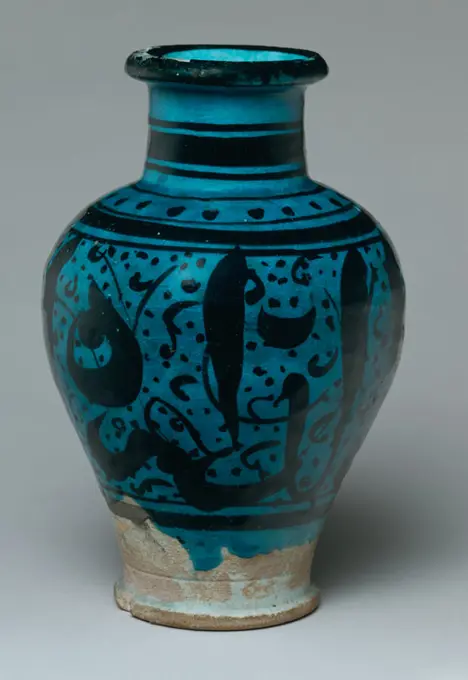
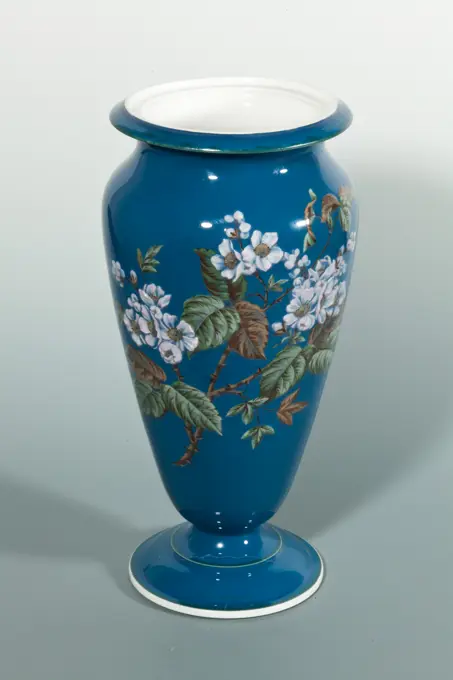
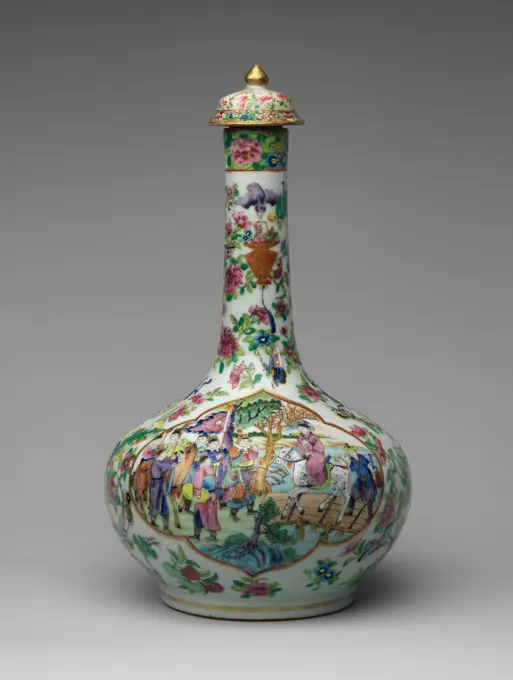
A selection of ornate vases made from porcelain and faience, featuring intricate designs and vibrant colors reflective of cultural heritage.
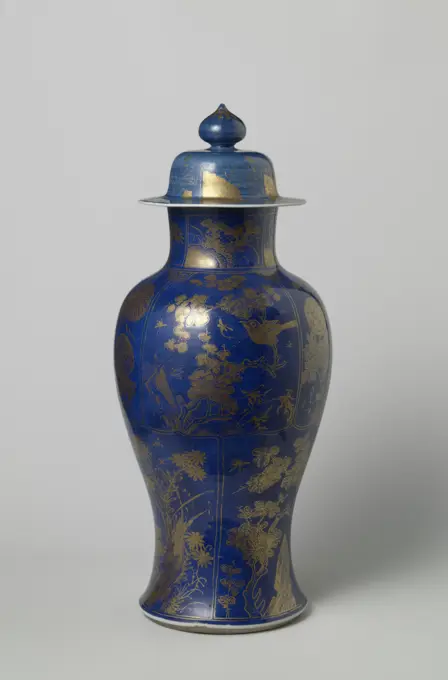
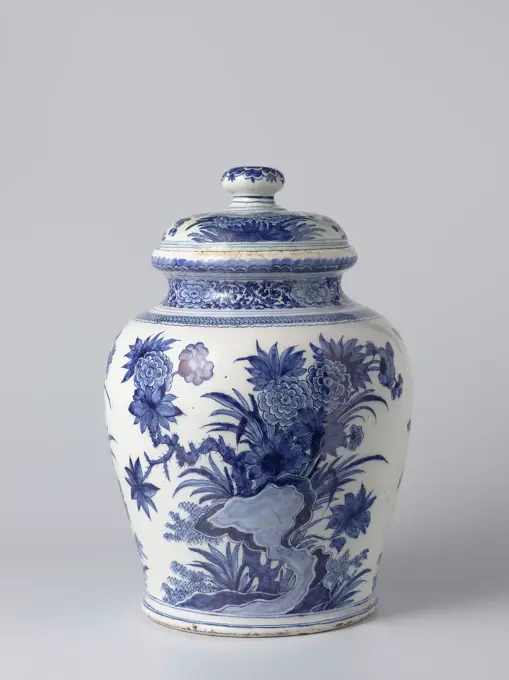
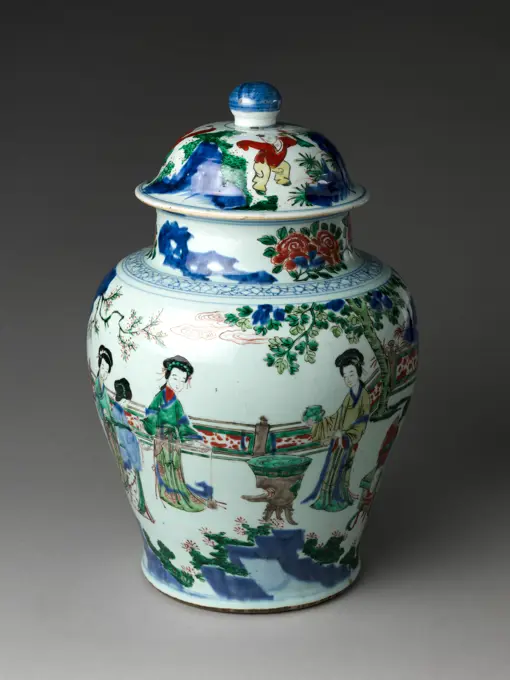
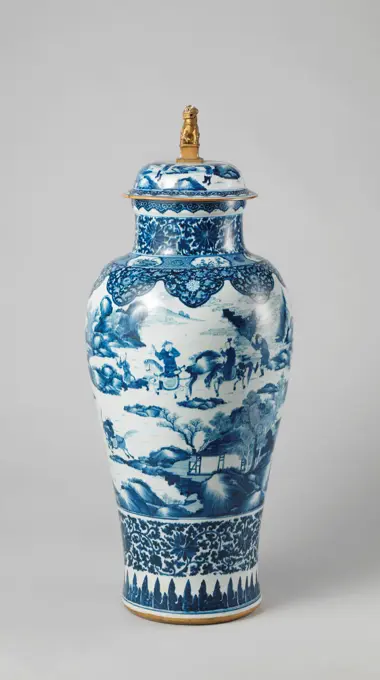
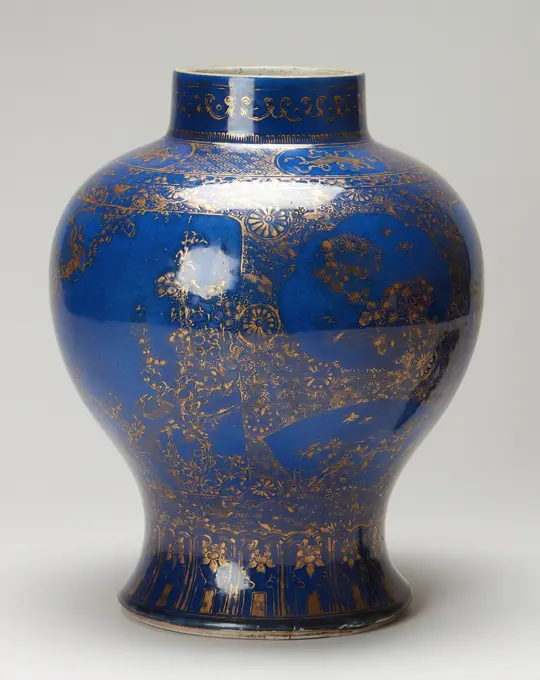
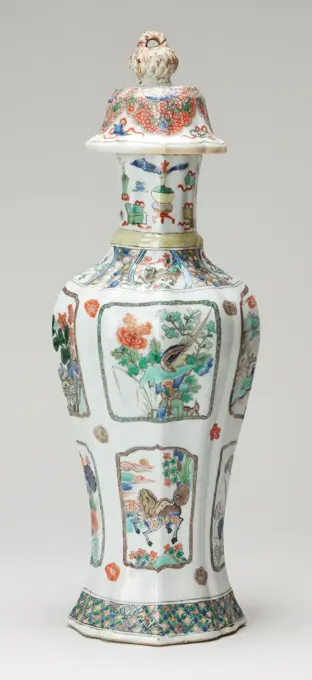
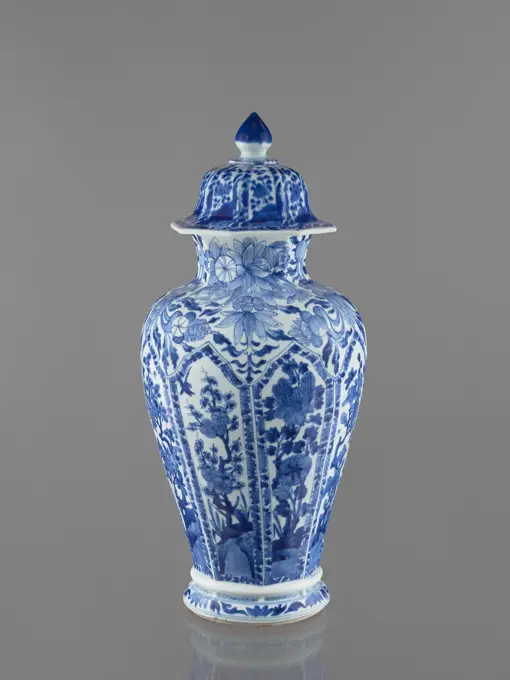
Baluster covered jar with powder blue and flowering plants and animals in panel decoration, anonymous, c. 1700 - c. 1724 Balus -shaped lid jar with long, spreading neck, painted in underly glaze blue and on the glaze gold. The pot is covered with bleu poudré (powder blue) and decorated with three rows of compartments: the bottom row has a different flowering plant or tree in each section with a rock with insects; The second row is also with four different flowering plants (Lotus, chrysanthemum, prunus, peony) with birds and/or butterflies. Around the neck four compartments with different flower areas and butterflies; A double circle on the bottom. The lid with worn decoration of four compartments with flowering plants on a rock and decorative edge. Lid has been restored. Bleu Poudré with gold. China porcelain. glaze. cobalt (mineral). gold (metal) painting / vitrification Balus -shaped lid jar with long, spreading neck, painted in underly glaze blue and on the glaze gold. The pot is co
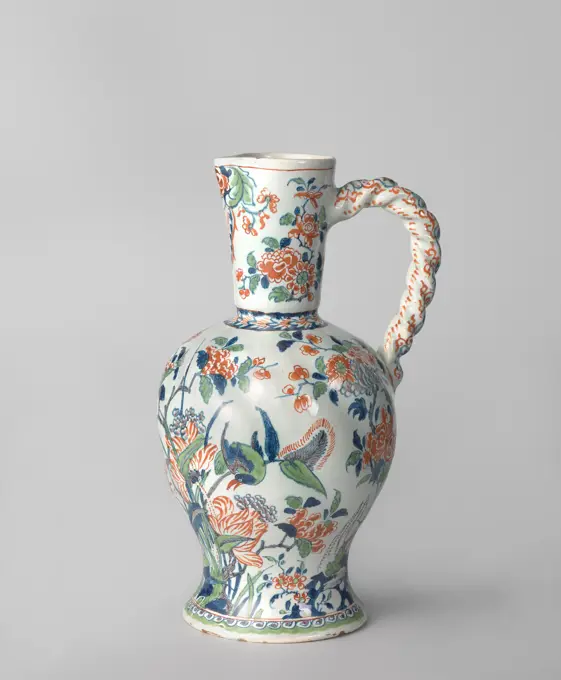
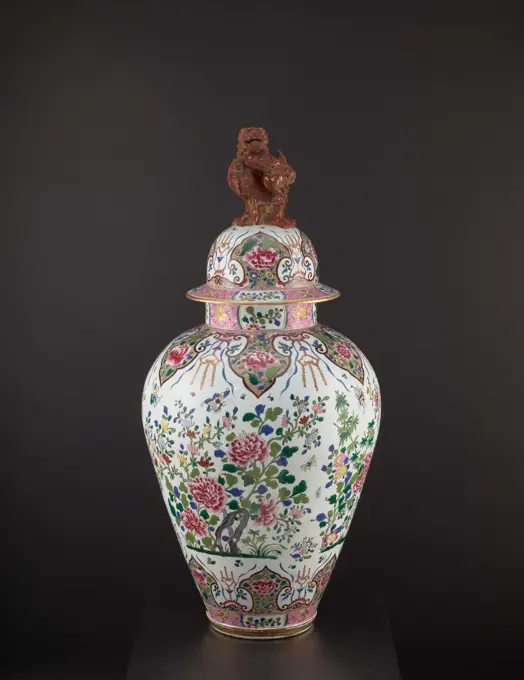
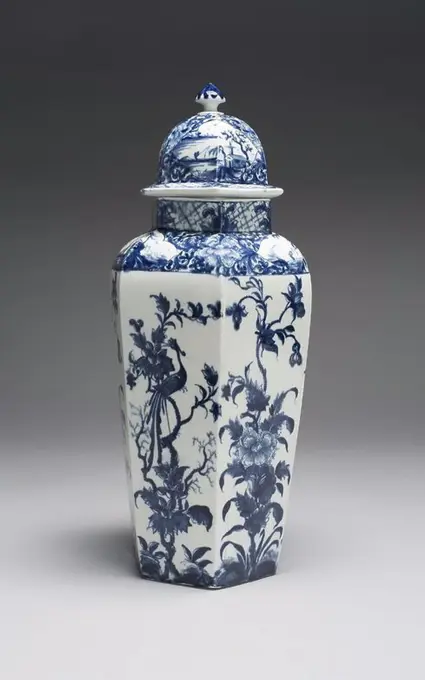
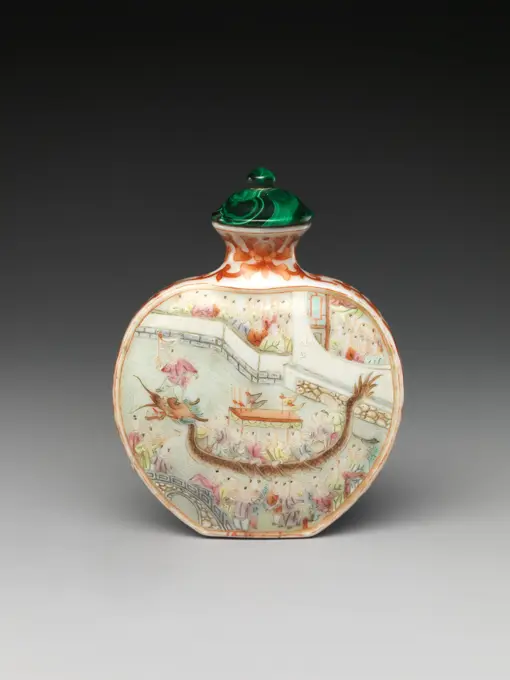
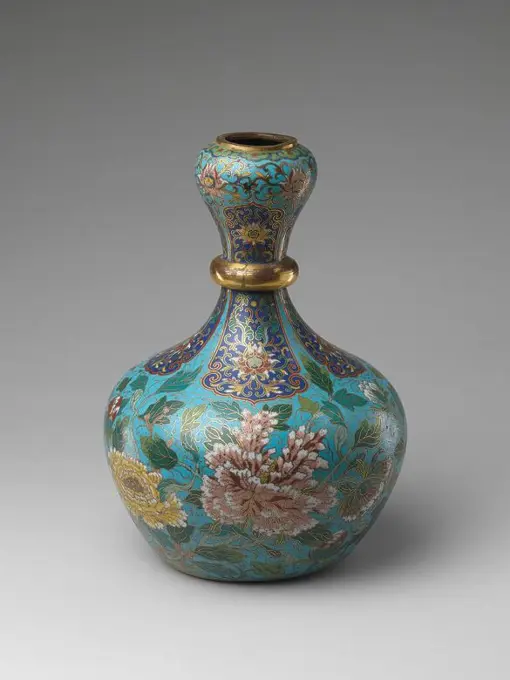
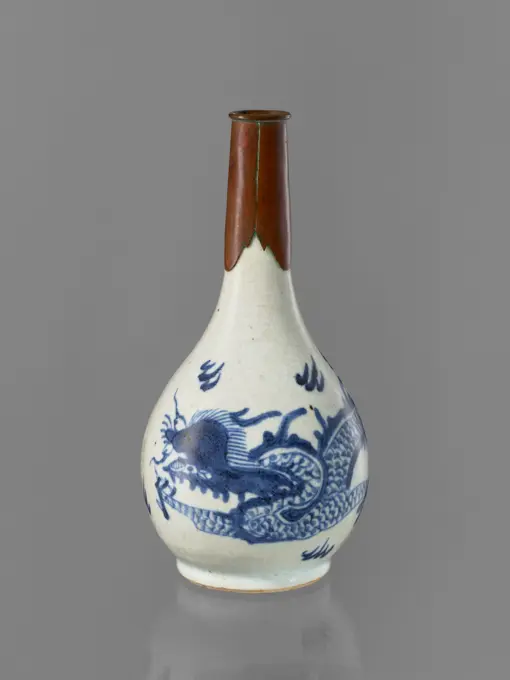
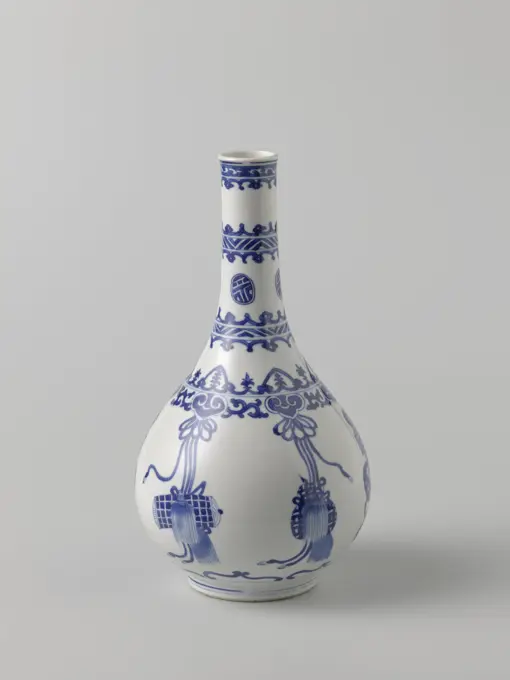
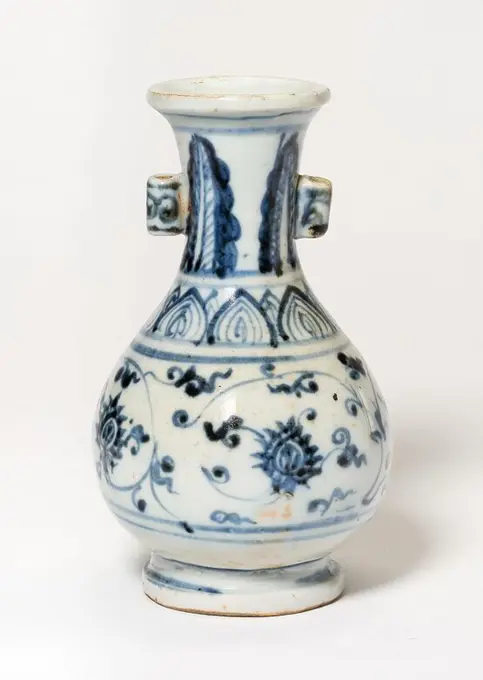
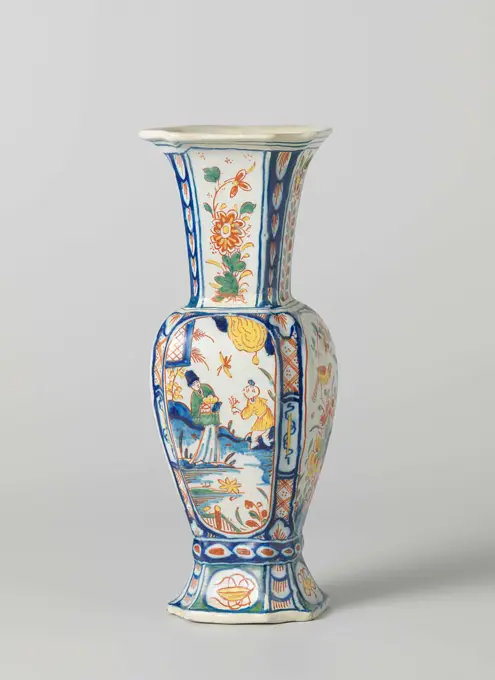
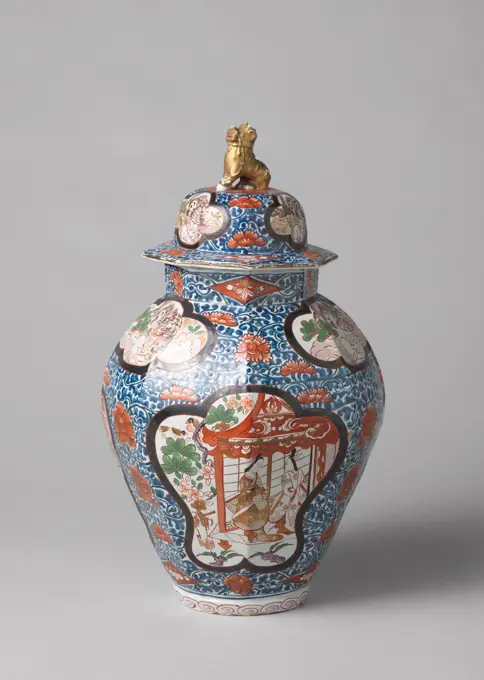
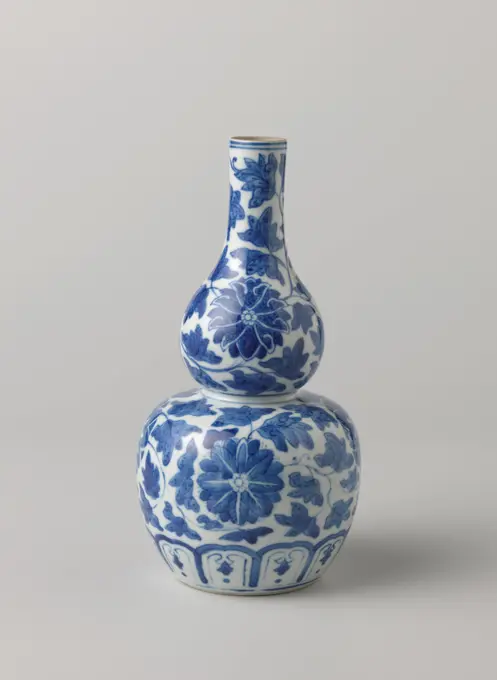
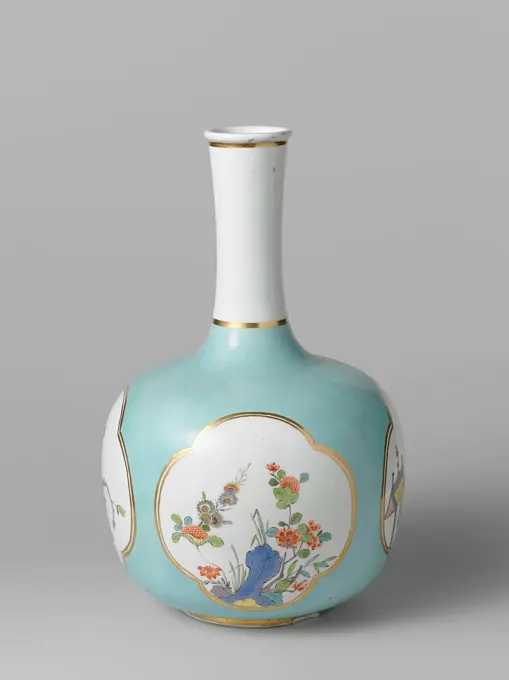
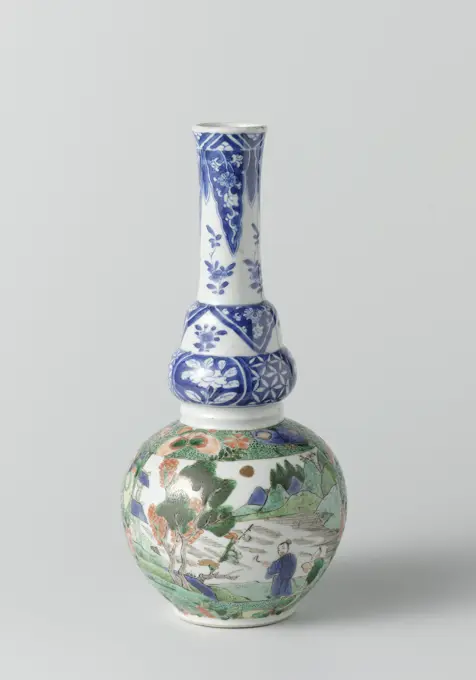
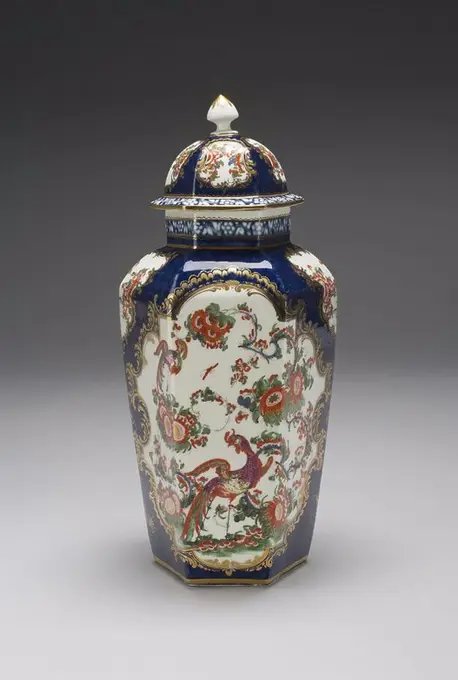
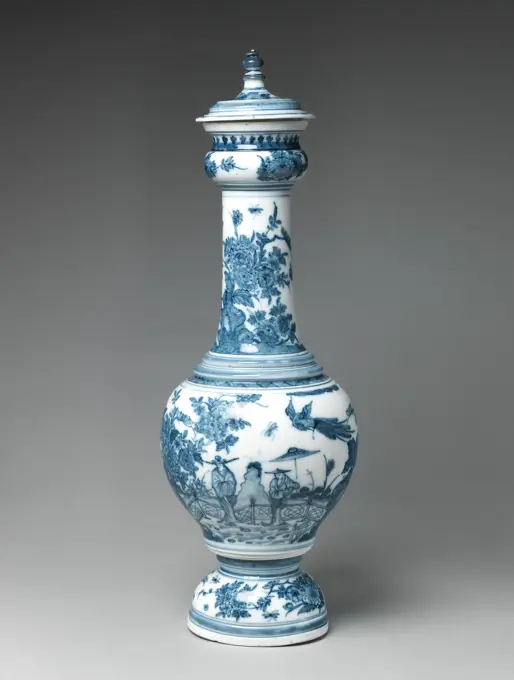
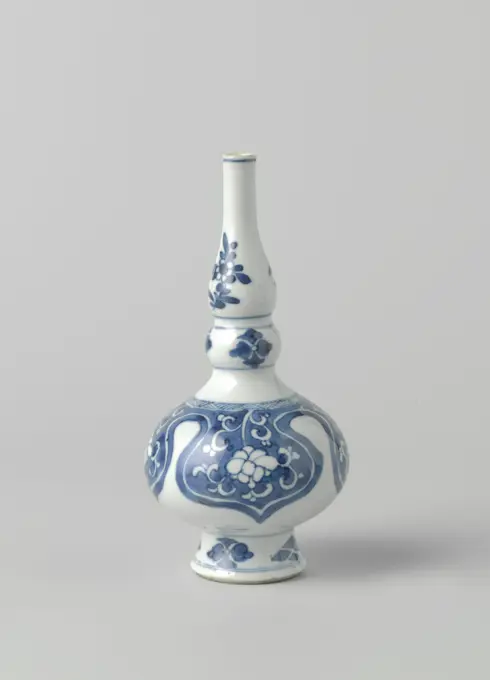
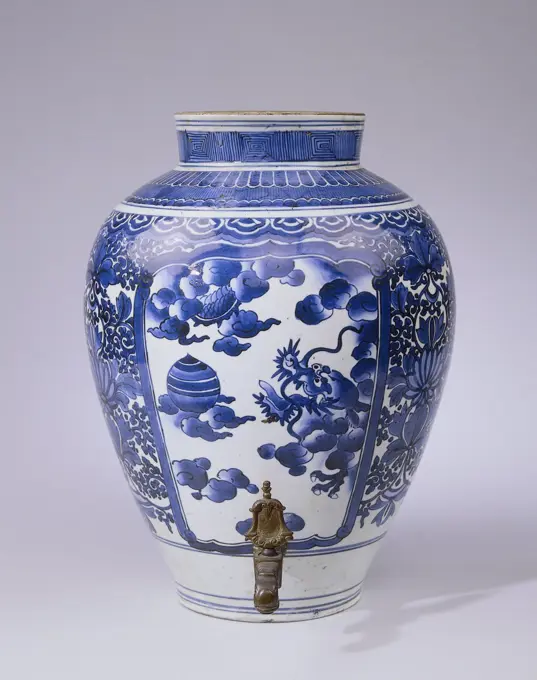
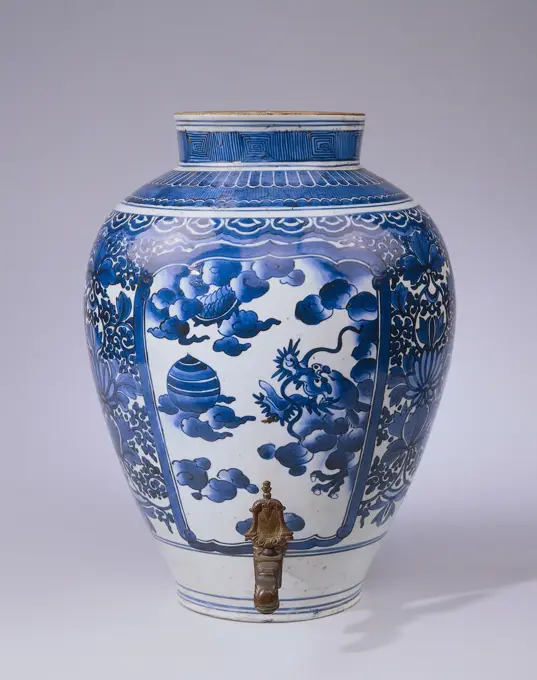
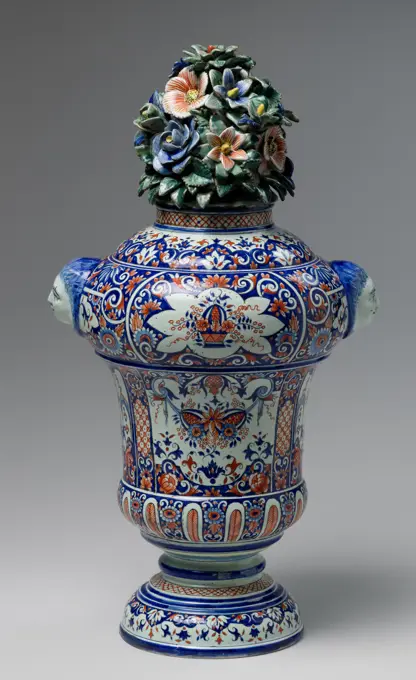
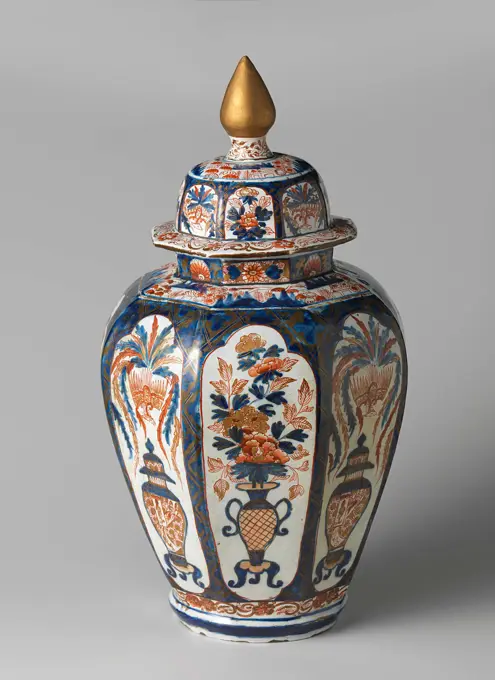
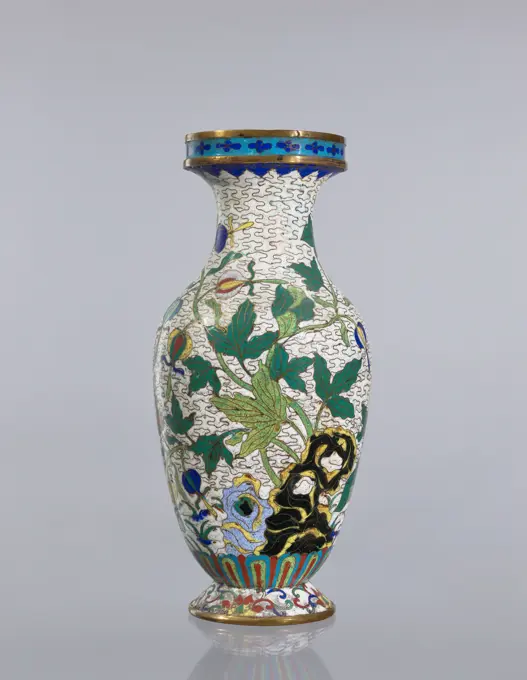
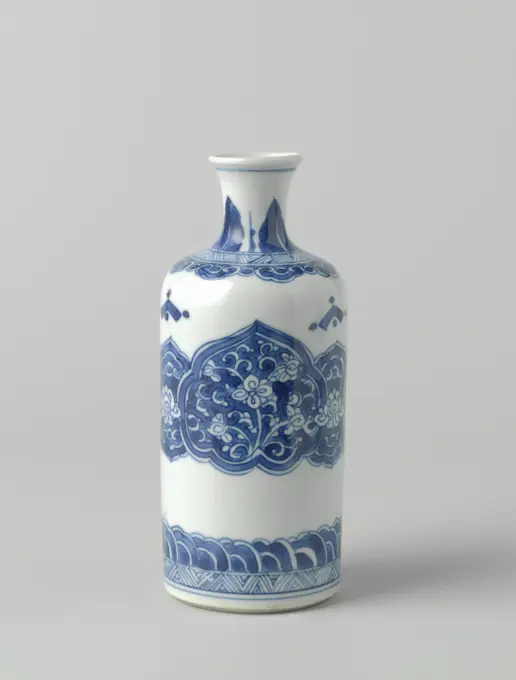
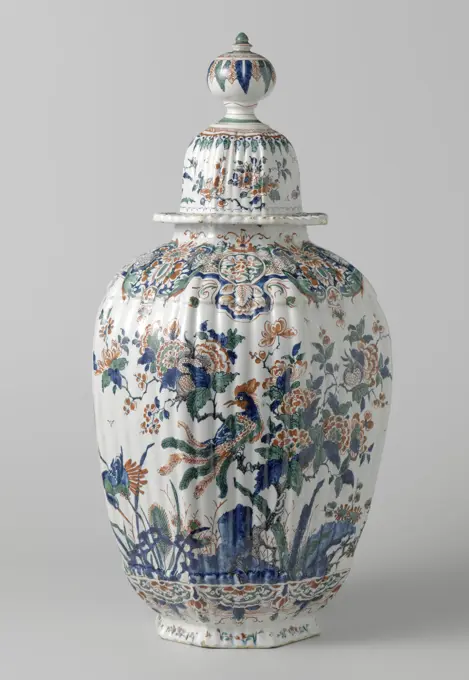
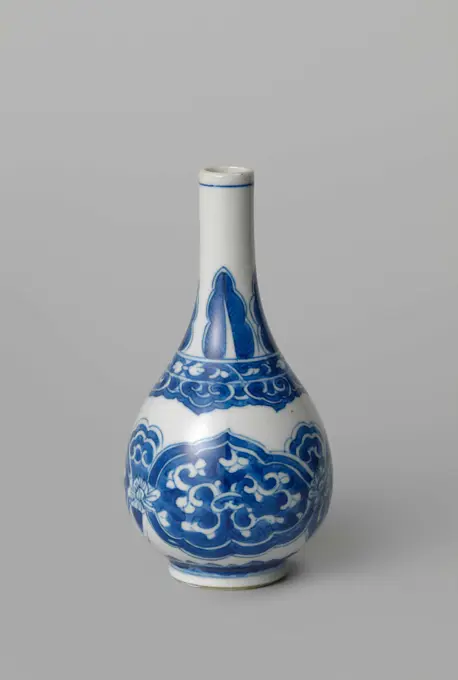
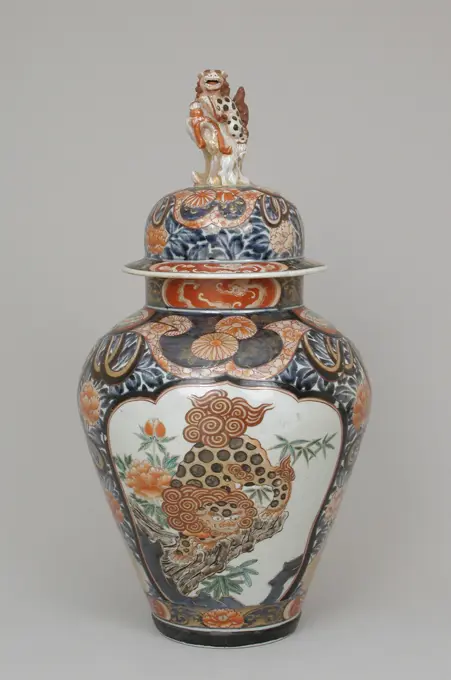
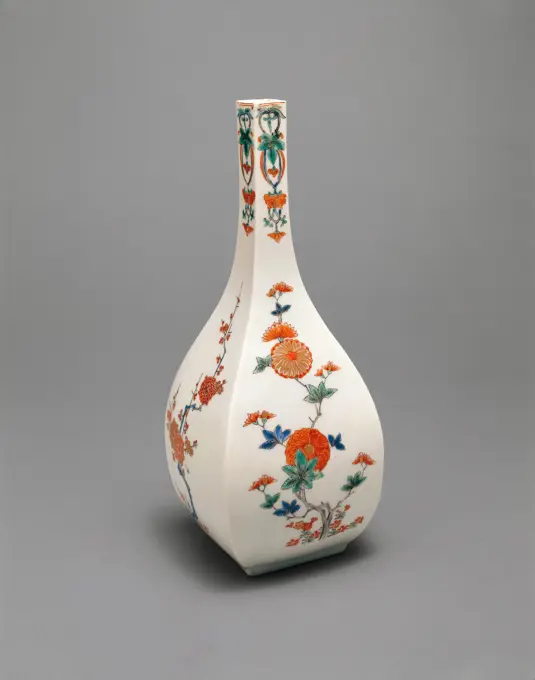
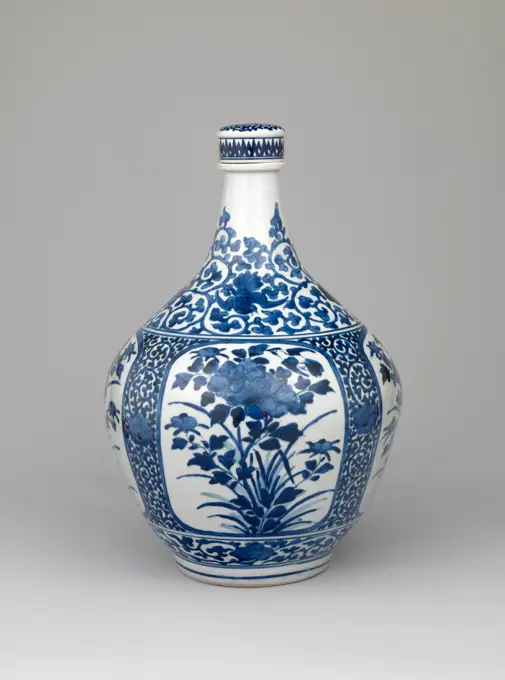
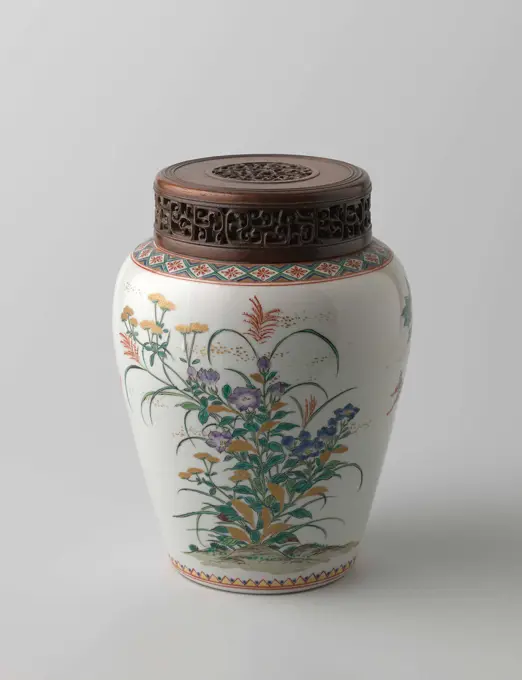
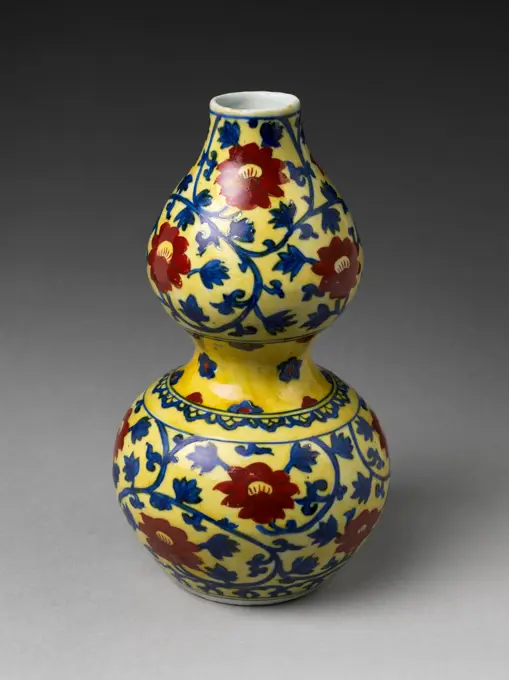
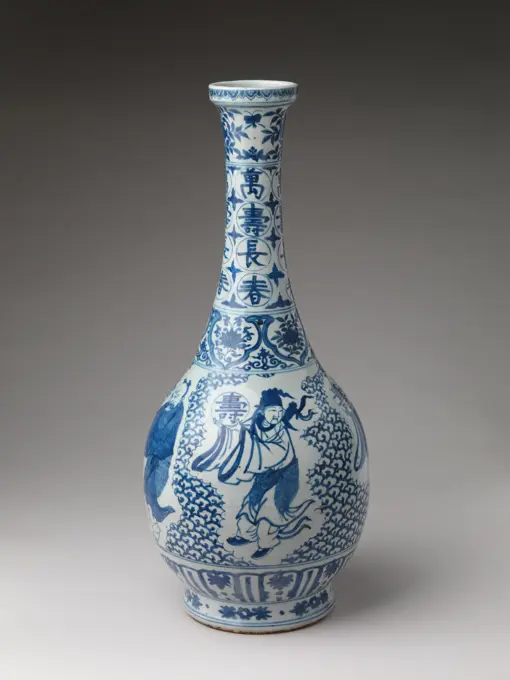
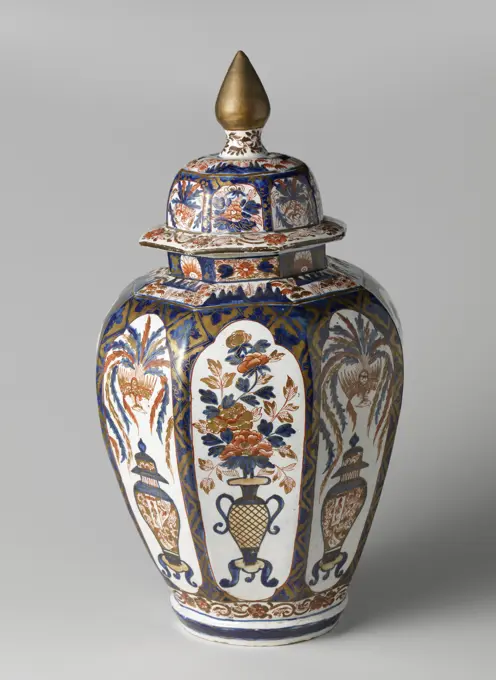
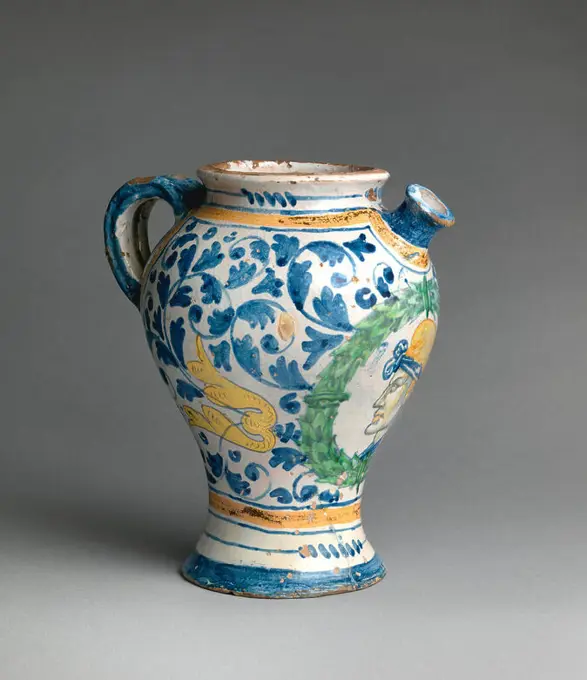
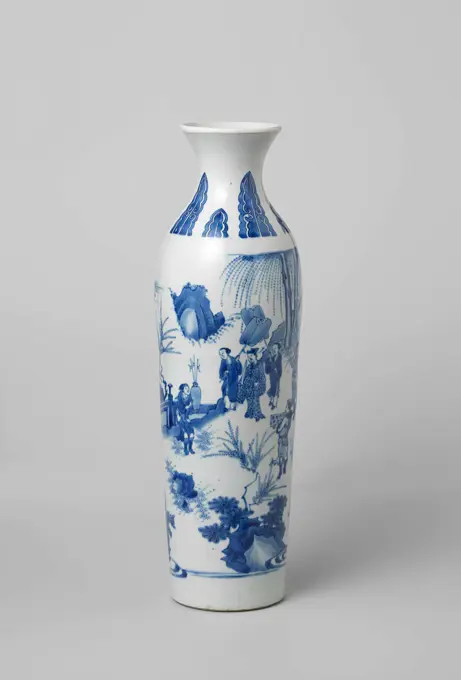
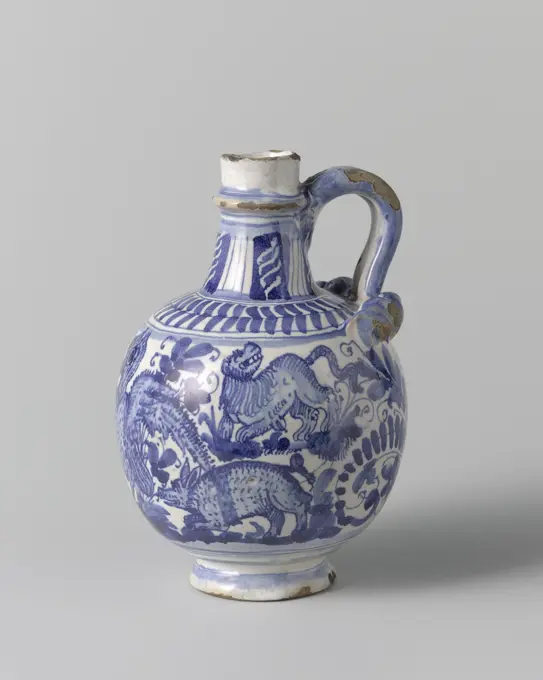
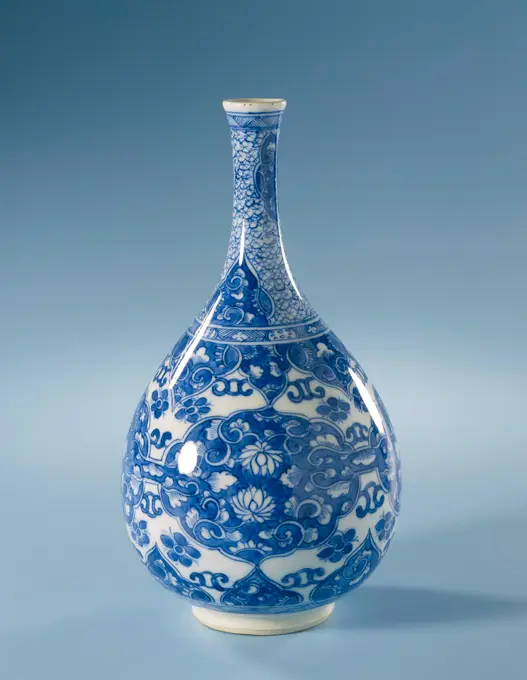
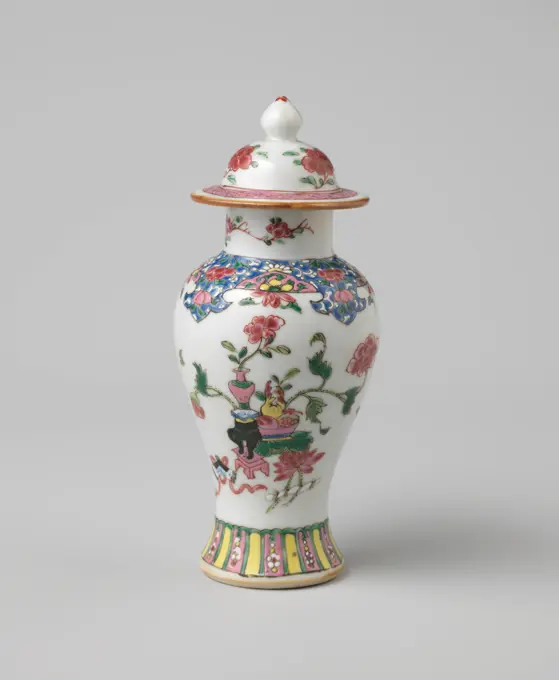
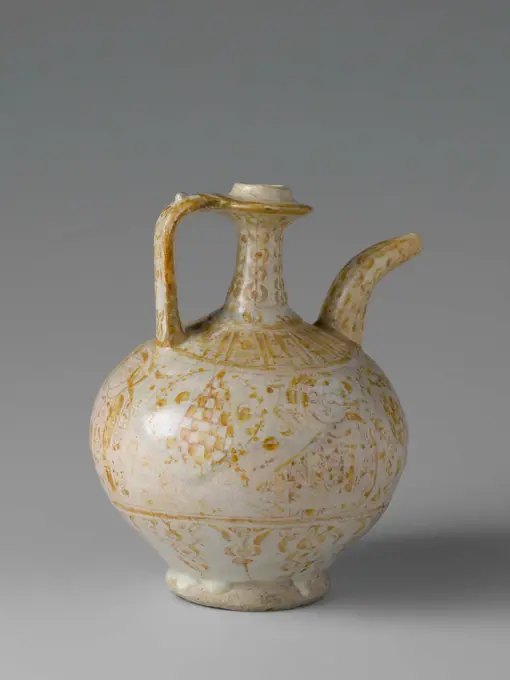
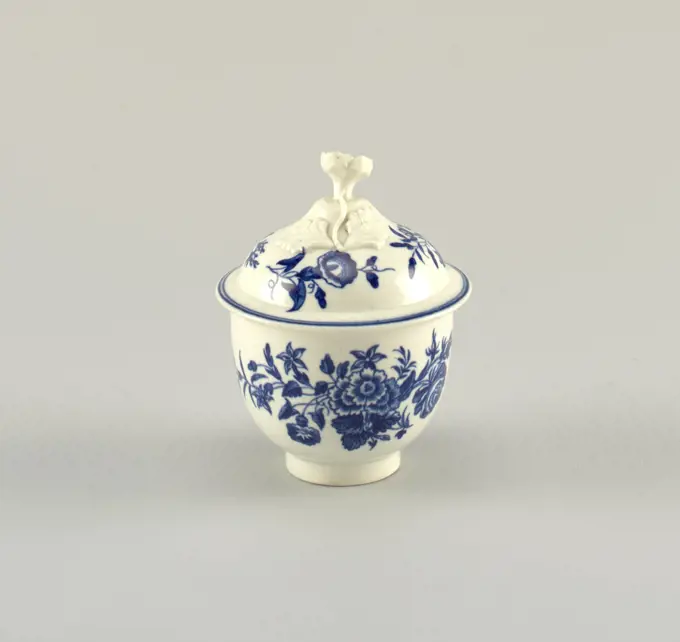
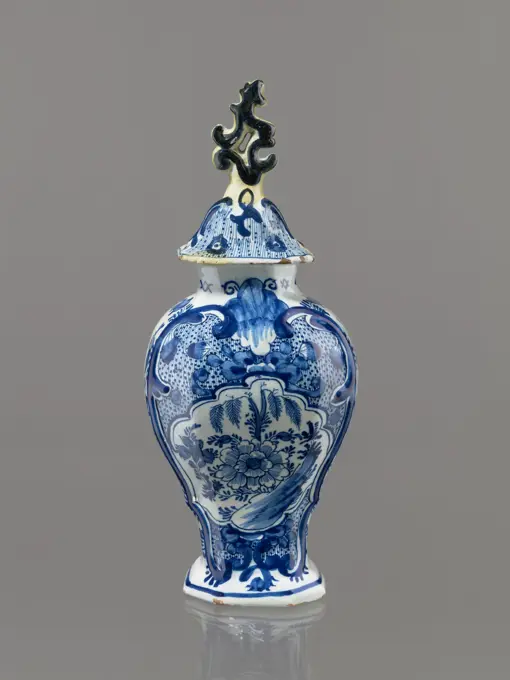
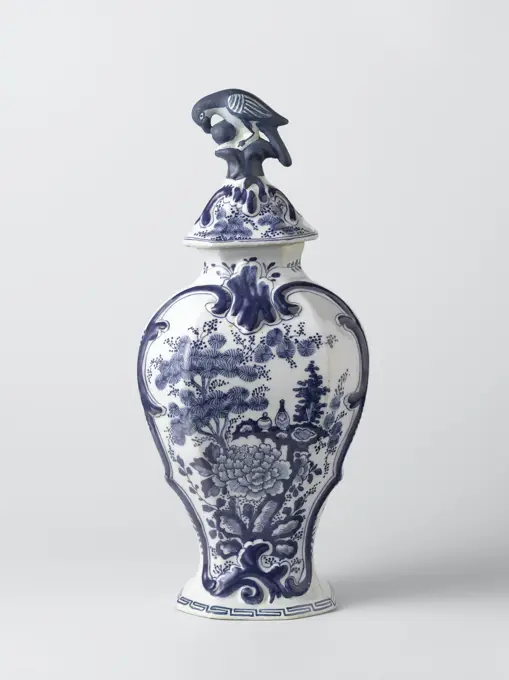
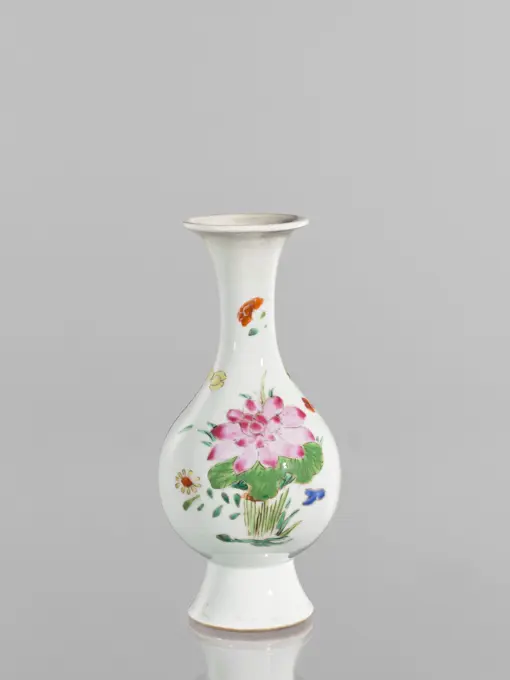
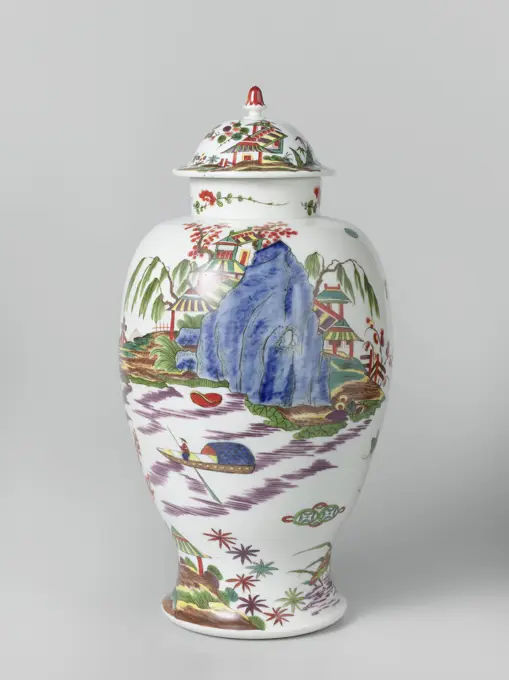
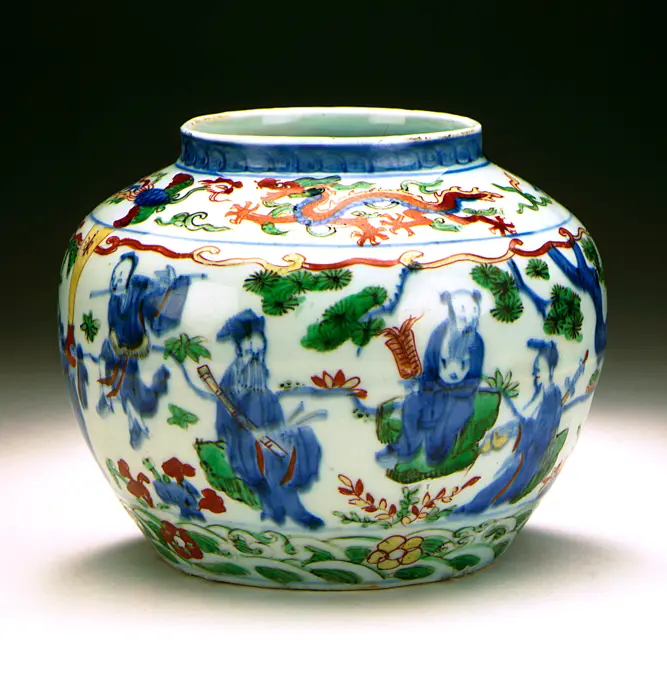
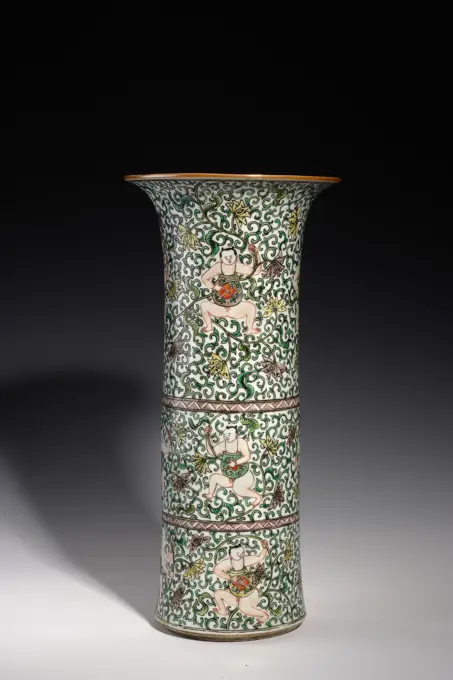
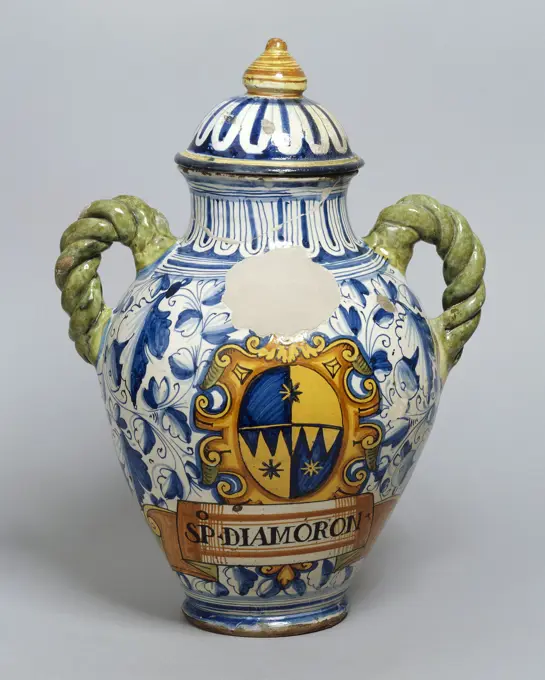
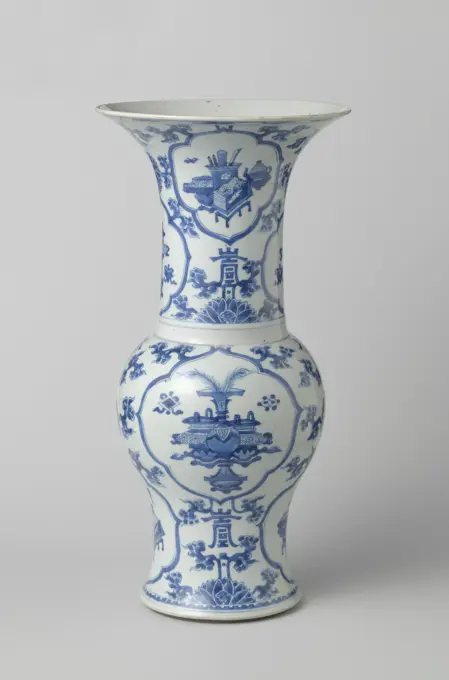
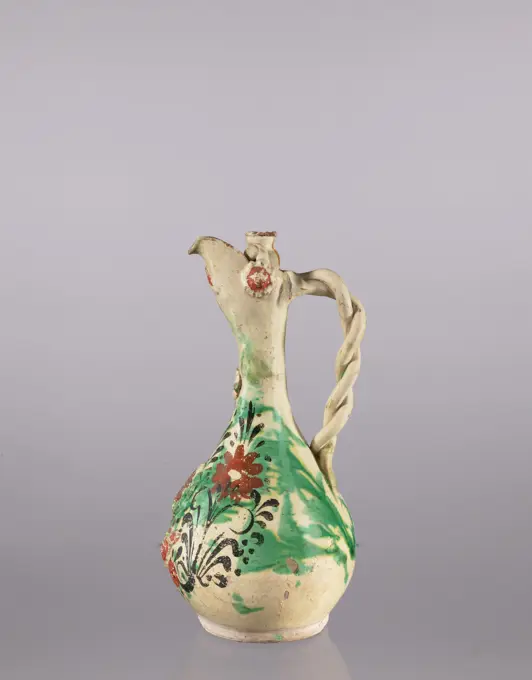
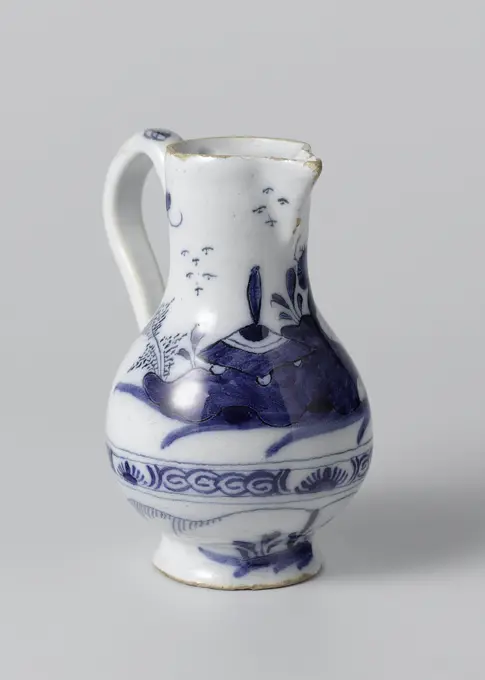
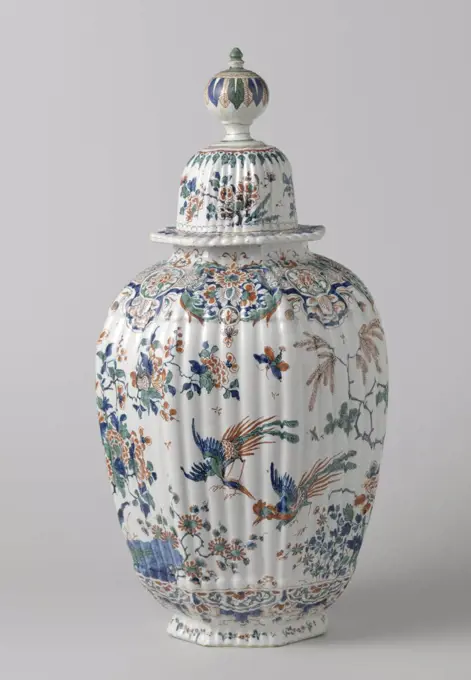
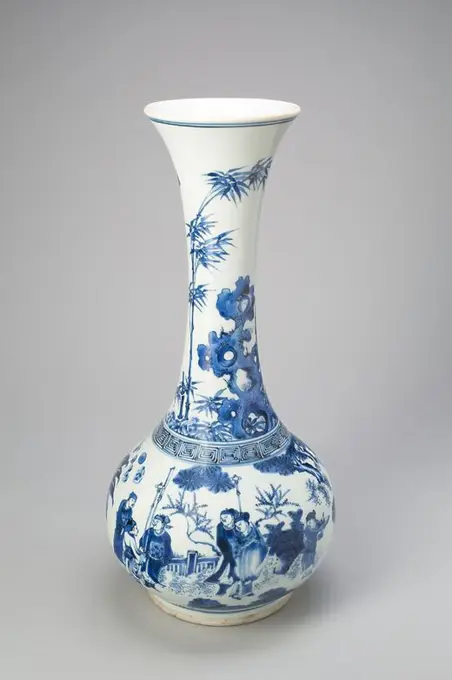
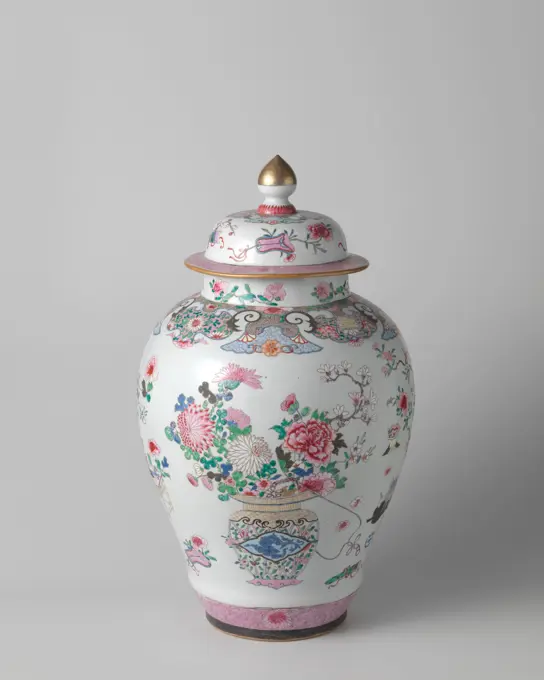
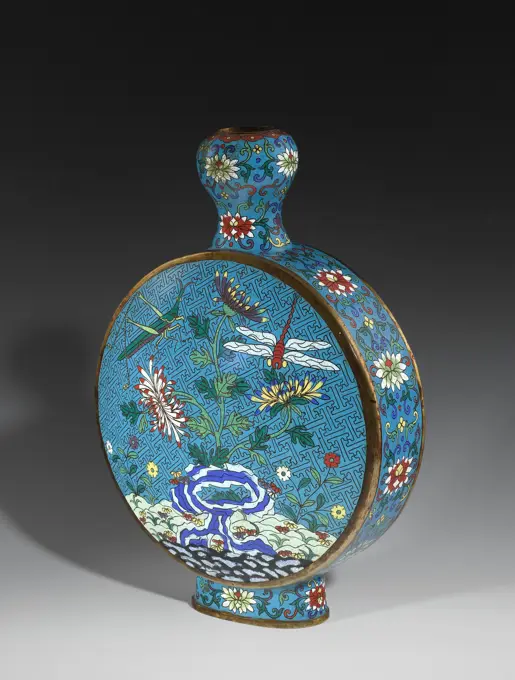
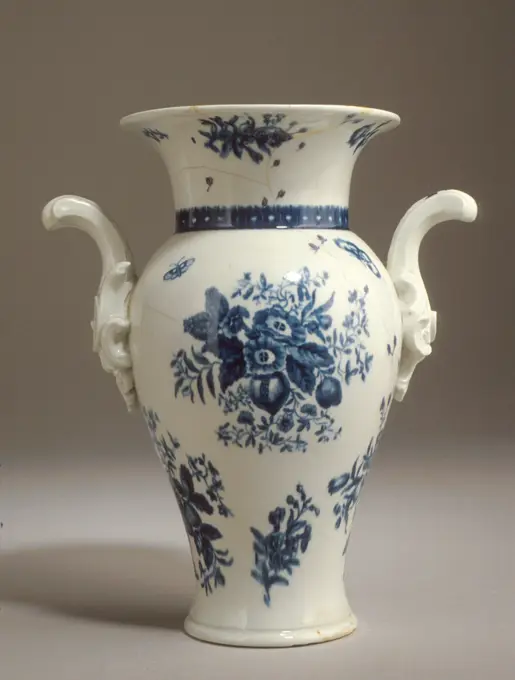
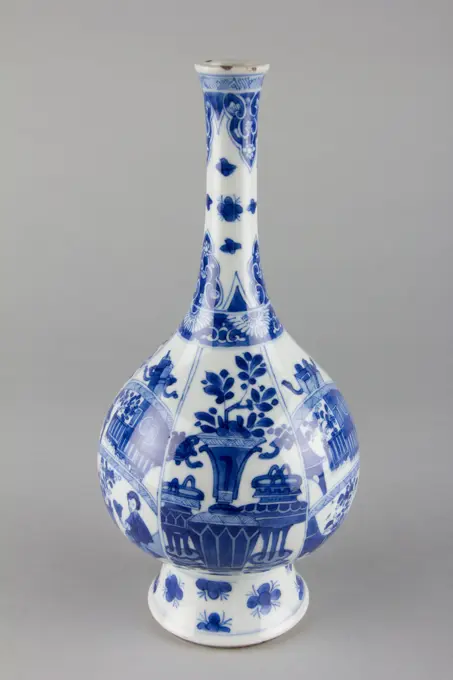
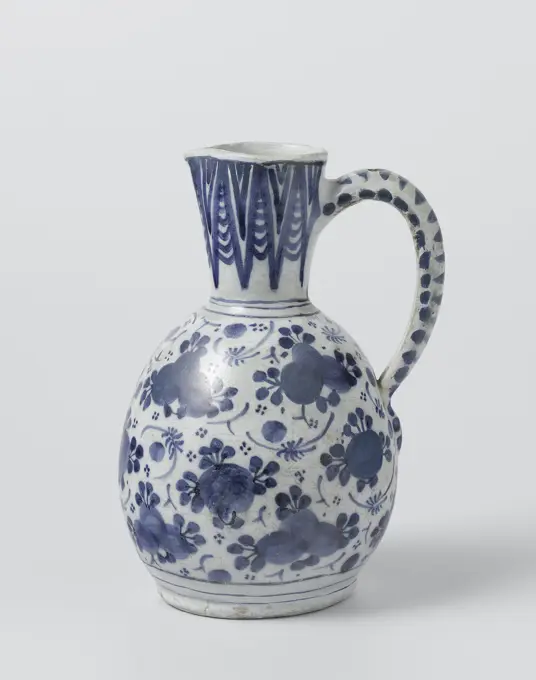
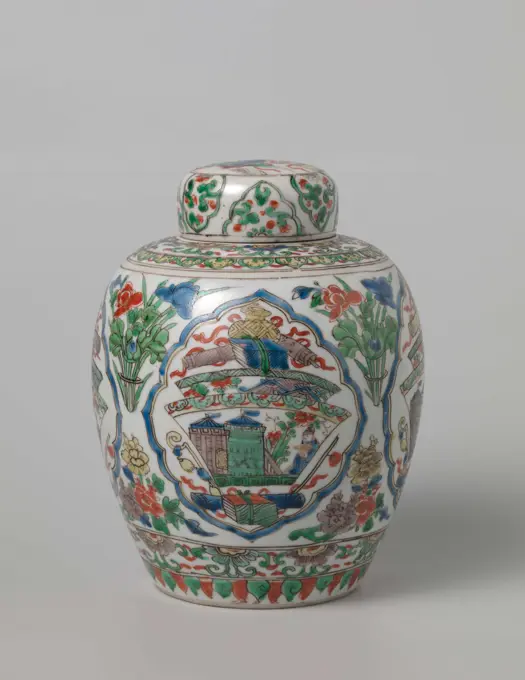
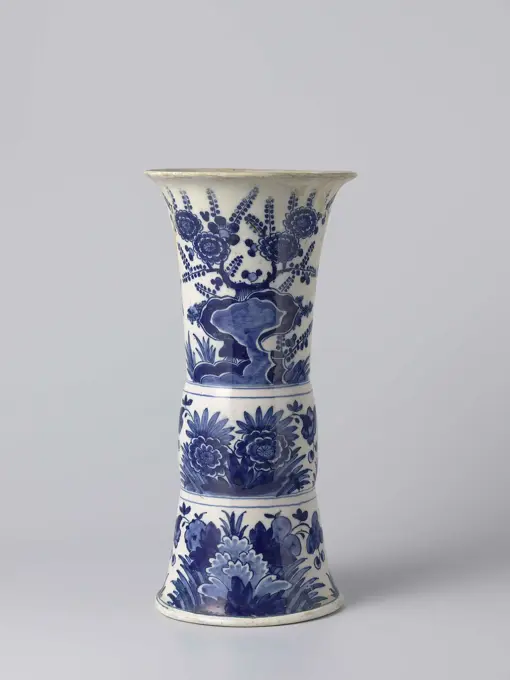
. attributed to the Drie Posteleyne Astonne (Pieter Gerritsz Kam) Delft, c. 1700 tin-glazed earthenware (faience)Pear-shaped bottle vase with auspicious objects, anonymous, c. 1680 - c. 1720 Bottle -shaped vase made of porcelain with pear -shaped body, painted in underlaze blue. On the body six lucky symbols (scroll, vase, button) with ropes with brushes ending in a Ruyi motif; on the shoulder and the neck tires with decorative patterns with curl and geometric motifs; On the edge a bond with Lotusranken. Blue White. China porcelain. glaze. cobalt (mineral) painting / vitrification Bottle -shaped vase made of porcelain with pear -shaped body, painted in underlaze blue. On the body six lucky symbols (scroll, vase, button) with ropes with brushes ending in a Ruyi motif; on the shoulder and the neck tires with decorative patterns with curl and geometric motifs; On the edge a bond with Lotusranken. Blue White. China porcelain. glaze. cobalt (mineral) painting / vitrificationVase with Loop Handles. China. Date: 1400-1499. Dimensions: H. 6 in. Porcelain painted in underglaze blue. Origin: China. Museum: The Chicago Art Institute, Chicago, USA.Multicolored painted vase of faience. Vase of faience. Multicolored painted with chinoiseries.Coverpot, Jan van Putten & Co., 1830 - 1850 FaiMence lid jar. Multicolored painted with Japanese Imari Decor. The lid jar is part of a cupboard set. Delft . FaiMence lid jar. Multicolored painted with Japanese Imari Decor. The lid jar is part of a cupboard set. Delft .Double-gourd-shaped vase with a continuous pattern of floral scrolls, anonymous, c. 1725 - c. 1749 Calebas -shaped vase of porcelain, painted in underlaze blue. The body and the neck are decorated with a continuous pattern of lotus and flower vines with large leaves; Around the foot a band with leaf -shaped compartments. Marked on the underside with the four-character brand of Keizer Xuande. Blue White. China porcelain. glaze. cobalt (mineral) painting / vitrification Calebas -shaped vase of porcelain, painted in underlaze blue. The body and the neck are decorated with a continuous pattern of lotus and flower vines with large leaves; Around the foot a band with leaf -shaped compartments. Marked on the underside with the four-character brand of Keizer Xuande. Blue White. China porcelain. glaze. cobalt (mineral) painting / vitrificationFlower vase. Delft (ośrodek ceramiczny ; ca 1600- ), factoryVase. The turquoise colour of this vase is based on Chinese celadon porcelain. The painting of the Chinese horseman in the field is known as contour chinoiserie,’ because the face and hands are executed in red and black contours (outlines), without any shadows. The vase is one of a pair; its companion is in the Porzellansammlung in Dresden.Baluster covered jar with powder blue and flowering plants and animals in panel decoration, anonymous, c. 1700 - c. 1724 Balus -shaped lid jar with long, spreading neck, painted in underly glaze blue and on the glaze gold. The pot is covered with bleu poudré (powder blue) and decorated with three rows of compartments: the bottom row has a different flowering plant or tree in each section with a rock with insects; The second row is also with four different flowering plants (Lotus, chrysanthemum, prunus, peony) with birds and/or butterflies. Around the neck four compartments with different flower areas and butterflies; A double circle on the bottom. The lid with worn decoration of four compartments with flowering plants on a rock and decorative edge. Lid has been restored. Bleu Poudré with gold. China porcelain. glaze. cobalt (mineral). gold (metal) painting / vitrification Balus -shaped lid jar with long, spreading neck, painted in underly glaze blue and on the glaze gold. The pot is coBottle vase with landscape, bird on branch and neck decoration in underglaze blue, anonymous, c. 1800 - c. 1899 Bottle -shaped vase (lump of lessons) of porcelain, painted in underly glaze blue and on the glaze blue, red, green, yellow, eggplant, black and gold. The body is covered with butterflies and flowering plants on a black speckled soil, with two rectangular cartouches saved with a bird on a magnoliat branch in flowering plants and two people in a river landscape with rocks, trees and a pavilion; the neck with a decoration in underlaze blue of a tire with servetwork interspersed with a cartouche with a flower in reserve, above it a band with French point with flower vines in reserve with a flower branch, on the neck flower branches with a band with hanging leaf motifs with hanging tops above it Flower vines in reserve. A crack in the edge. Famle Verte. China porcelain. glaze. cobalt (mineral). gold (metal) painting / gilding / vitrification Bottle -shaped vase (lump of lessons) Vase with Cover (one of a pair). Worcester Porcelain Factory; Worcester, England, founded 1751. Date: 1765-1775. Dimensions: H. 29.2 cm (11 1/2 in.). Soft-paste porcelain with blue scale ground and gilding. Origin: Worcester. Museum: The Chicago Art Institute, Chicago, USA. Author: Worcester Royal Porcelain Company.Vase with cover ca. 1725 Meissen Manufactory The Meissen factory was the first in Europe to master the technology to produce porcelain similar to that made in China. The factorys interest in Chinese porcelain extended to the palette of blue and white, which was inextricably linked in the minds of Europeans to porcelains imported from Asia. The fascination with the Far East encompassed subject matter as well, and the scenes of Chinese figures in exotic landscapes on this vase are typical of the taste for chinoiserie in the early eighteenth century.. Vase with cover. German, Meissen. ca. 1725. Hard-paste porcelain. Ceramics-PorcelainRosewater sprinkler or bottle vase with floral scrolls in reserve in lambrequins, anonymous, c. 1680 - c. 1720 Rose water drops or point bottle on high, spreading foot and two thickening in the neck, painted in under -glaze blue. On the belly a band with a zigzag pattern with a band with a flower vines saved in lambrequins underneath. Alternately a stylized flower and a window. On the neck a band with stylized flowers; above that flower branches. Blue White. China porcelain. glaze. cobalt (mineral) painting / vitrification Rose water drops or point bottle on high, spreading foot and two thickening in the neck, painted in under -glaze blue. On the belly a band with a zigzag pattern with a band with a flower vines saved in lambrequins underneath. Alternately a stylized flower and a window. On the neck a band with stylized flowers; above that flower branches. Blue White. China porcelain. glaze. cobalt (mineral) painting / vitrificationTriple Long-Necked Bottle Vase with Double Dragon Roundels and Elongated Curly Dragons (Gui) 1736-1795 China. Porcelain painted in underglaze blue .Ovoid jar (fountain jar) with flowering plants near a rock, anonymous, anonymous, c. 1670 - c. 1680 Egg -shaped pot (fountain jar) of porcelain, painted in underlaze blue. On the abdomen twice a flowering plant (peony) and butterflies with a rock with an orchid in between. On the shoulder a band with a Swastika pattern interrupted by four lobed cartouches with valuables (Artemisiablad) on a brush. The neck with a tire stylized leaf motifs. A metal tap is later attached at the bottom of the belly. The lid with a continuous landscape with rocks, trees and clouds. Lid is not matching. Two chips in the edge. Arita, Blauw-Wit. Japan porcelain. glaze. cobalt (mineral). kraan: brass (alloy) painting / vitrification Egg -shaped pot (fountain jar) of porcelain, painted in underlaze blue. On the abdomen twice a flowering plant (peony) and butterflies with a rock with an orchid in between. On the shoulder a band with a Swastika pattern interrupted by four lobed cartouches with valuables (Artemisi. Pot, underglaze blue, with tap with limits and swastikama motifs. Faucet later added.Cobalt vase decoration Far Eastern type; Manufaktura Majoliki in Nieborów (Nieborów; Wytwórnia; 1881-1899); 1881-1886 (1881-00-00-1886-00-00);Vase, early 1900s. Samson & Co. (French). Faience; overall: 55 x 28.6 cm (21 5/8 x 11 1/4 in.).Pot, part of a cupboard set. Pot, multicolored painted faïence. The pot is octagonal and eight courses are painted on eight sides. In four courses is a vase with two S-shaped handles, portrait on a 3-legged pedestal and filled with flowers, painted in the other four courses a pot with lid on a 3-legged pedestal above which a phoenix. The pot is part of a couple and has been marked.Ovoid vase. unknown, craftsmanVase. unknown, craftsmanCilindrical bottle vase with floral scrolls in reserve in ruyi-shaped panels, anonymous, c. 1680 - c. 1720 Bottle -shaped vase made of porcelain with a cylindrical body and short, spreading neck, painted in underlaze blue. On the belly a wide band with connected Ruyi-shaped cartouches with flower vines saved against a blue background. Above the foot a band with a zigzag pattern and stylized leaf motifs. On the shoulder a band with a zigzag pattern and hanging Ruyi motifs. On the neck pointed leaf motifs. Blue White. China porcelain. glaze. cobalt (mineral) painting / vitrification Bottle -shaped vase made of porcelain with a cylindrical body and short, spreading neck, painted in underlaze blue. On the belly a wide band with connected Ruyi-shaped cartouches with flower vines saved against a blue background. Above the foot a band with a zigzag pattern and stylized leaf motifs. On the shoulder a band with a zigzag pattern and hanging Ruyi motifs. On the neck pointed leaf motifs. Blue WhitOctagonal ribbed vase with lid of multicolored painted faïence, the metal pot, c. 1695 - c. 1725 Octagonal, ribbed vase of multicolored painted faïence. The vase is painted with flowers, rocks, birds and a bird in a tree. The vase is part of a couple, the other parts are: three identical pots and an identical vase. The parts are marked. Delft earthenware. tin glaze. Octagonal, ribbed vase of multicolored painted faïence. The vase is painted with flowers, rocks, birds and a bird in a tree. The vase is part of a couple, the other parts are: three identical pots and an identical vase. The parts are marked. Delft earthenware. tin glaze.Pear-shaped bottle vase with floral scrolls and petals. Bottle-shaped vase of porcelain with a pear-shaped body, painted in underglaze blue. On the abdomen a continuous band with varied scalloped, oval cartouches with saved flower drinks against a blue background and narrow scalloped cartouches with a spotted flower and ruyi motif. The shoulder with a band hanging ruyi motifs against a blue background and a tire with spared flower drinks. A bond with standing leaf motifs on the neck. Blue White.. Faïence lid pot. Painted blue. The lid pot is part of a cupboard set.Jar with women at leisure mid-17th century China. Jar with women at leisure. China. mid-17th century. Porcelain painted in underglaze cobalt blue and overglaze polychrome enamels (Jingdezhen ware). Qing dynasty (1644-1911), Shunzhi period (1644-61). CeramicsBaluster-shaped vase (part of a five-piece garniture) ca. 1690-1720 Japanese, for export market (Hizen ware, Imari type) This garniture, a grouping of vases, is notable for its completeness. Most such groupings have been broken up over time into their individual components. The painted decoration on all five vases is unusually richpainted with a dark cobalt blue applied under the glaze, then further decorated with red, green, turquoise, and black enamels and gilding. The finials or decorative knobs on the lids are in the form of a guardian lion, known as a shishi, echoing in three dimensions the primary motif painted below.. Baluster-shaped vase (part of a five-piece garniture). Japanese, for export market (Hizen ware, Imari type). ca. 1690-1720. Hard-paste porcelain with underglaze blue and overglaze enamel and gilding. Ceramics-Porcelain-ExportBottle with chrysanthemums and plums, late 17th century, Unknown Japanese, 9 × 3 1/2 × 3 1/2 in. (22.86 × 8.89 × 8.89 cm), Hizen ware, Kakiemon style; porcelain with overglaze enamels, Japan, 17th centuryBaluster vase with a hunting scene and borders with floral scrolls, anonymous, c. 1800 - c. 1820 Large, baluster -shaped vase of porcelain, painted in undermglaze blue and on the glaze gold. On the belly a hunting scene with hunters on horseback and on foot with weapons and dogs in a landscape with trees, mountains and rocks. Below a bond with Lotusranken. Above the foot a band with standing leaf motifs. On the shoulder a band with lambrequins with alternating lotus and flower vines. Above it a band with server work with a flower rod interrupted by cartouches with flowering plants (Lotus, peony, bamboo, chrysanthemum, prunus). The neck with a bond with Lotusranken. On the edge a band with Ruyi motif. The lid with the same decoration. Cash button in the form of a shishi. Blue White. China porcelain. glaze. cobalt (mineral). gold (metal) painting / gilding / vitrification Large, baluster -shaped vase of porcelain, painted in undermglaze blue and on the glaze gold. On the belly a hunting Vase, 20th century, 7-1/8 x 4-5/16 x 4-5/16 in. (18.1 x 11.0 x 11.0 cm), Cloisonné, China, 20th centuryVessel for spices. unknown, craftsmanApothecary bottle with mynas and peonies, c. 1660-1680, Unknown Japanese, 20 1/4 × 13 3/8 × 13 3/8 in. (51.44 × 33.97 × 33.97 cm), Imari ware; porcelain with underglaze cobalt blue, Japan, 17th century, In the 1500s and 1600s, blue-and-white porcelains made at Chinas famed Jingdezhen kilns were extremely popular in Europe, where the technology required to produce porcelain would not be known for another 200 years. When the Jingdezhen kilns entered a period of decline in the mid-1700s, porcelain makers in a town in far western Japan called Arita seized the opportunity and began making blue-and-white porcelains featuring European shapes and Chinese-style decoration for export to Europe. The combinations of flowers and birds used on many of these works—like myna birds and peonies—could also be found in traditional Chinese-style ink paintings. In the 1660s and 70s, the period of time during which this large apothecary bottle was created, Arita dominated the global porcelain market.Wooden Cover Of Jar. Wooden, openwork lid of lid pot.Vase China. Vase. China. Porcelain painted in underglaze blue and overglaze yellow and red enamels. Ming dynasty (1368-1644), Jiajing mark and period (1522-66). CeramicsBottle with Daoist Immortals late 16th-17th century China The immortals on the bottle are all carrying the Chinese character shou, or longevity, and the good wishes implied therein are also reiterated in the inscription on the neck, which reiterates the desire for long life.. Bottle with Daoist Immortals 49189Beaker China. Beaker. China. Porcelain. Qing dynasty (1644-1911), early Kangxi period (1662-1722). CeramicsCan. Can of earthenware with a high straight neck and tossed body at a high foot. The handle of the can be braided. The can be decorated with floral motifs in Chinese style in blue, red, green and purple. On the front a kilin and a bird on either side of a shrub.Guan-type vase with lid. unknown, craftsmanVase with Cover (one of a pair). Worcester Porcelain Factory; Worcester, England, founded 1751. Date: 1755-1765. Dimensions: 38.1 × 17.5 cm (15 × 6 7/8 in.). Soft-paste porcelain with underglaze blue decoration. Origin: Worcester. Museum: The Chicago Art Institute, Chicago, USA. Author: Worcester Royal Porcelain Company.Pot with lid, part of a cupboard set, the 3 clocks (attributed to), c. 1820 - c. 1850 Pot with lid, of multicolored painted Faïence. The pot is eight -sided and eight courses are painted on the eight sides. In four compartments, a vase with two S-shaped handles, standing on a three-legged pedest and filled with flowers, in the other four compartments is a pot of lid on a three-legged pedestal above which a phoenix. The pot is part of a couple and is marked. Delft earthenware. tin glaze. Pot with lid, of multicolored painted Faïence. The pot is eight -sided and eight courses are painted on the eight sides. In four compartments, a vase with two S-shaped handles, standing on a three-legged pedest and filled with flowers, in the other four compartments is a pot of lid on a three-legged pedestal above which a phoenix. The pot is part of a couple and is marked. Delft earthenware. tin glaze.Jug (chevrette). Culture: French, Rouen. Dimensions: Height: 9 1/8 in. (23.2 cm). Maker: Workshop of Masséot Abaquesne (French, active 1538-57) and; Laurent Abaquesne (active 1545-90). Date: ca. 1545.Adorned with the profile likeness of a man encircled by a laurel wreath, this short-necked jug is of a type used in apothecary shops to store syrups, oils, and other liquid medications that could be easily dispensed from the spout. Museum: Metropolitan Museum of Art, New York, USA.Gu-shaped Beakerase with the Eight Immortals, Chinese Ladies and Flower Pots in panels. Gu-shaped porcelain vase with a round thickening in the middle and a spreading neck, painted in underglaze blue. On the wall tires with people and flower pots in petals. At the top a band with the eight immortal; Below a band with alternating a seated Chinese lady (long lice) or a flowerpot on a stool. On the thickening alternating a Chinese lady (long lice) in a fenced garden or a flower pot on a low table; Above flower branches. The lower strap with eight muscizing ladies for a fence; Above flower branches. Above and below the thickened middle part and on the inner edge a bond with a zigzag pattern. Marked on the underside with the six character mark of Emperor Jiajing in a double circle. A crack in the edge. Blue White.Vase with covers; unpredictable Lona Manufaktura; 18th century (1701-00-00-1800-00-00);Vase (wheelchair) with a Company in a Landscape. Cylindrical vase (trolley) of porcelain with a narrow, spreading neck, painted in underglaze blue. On the wall a high-quality capacity in a landscape with a servant behind him with a parasol. In addition to him, four servants. A man offers a vase with arrows on a tray to the dignity. In the landscape are rocks, willow, pine trees and banana trees. A tire with pointed leaf motifs on the neck. The bottom is unglazed. Transition porcelain.Can, painted with owl, boar, hare and dogs, anonymous (Possible), c. 1650 - c. 1700 Spherical can of blue painted faience, on one foot. The neck is narrow and short and the ear wide and ends in two spirals. On the abdomen, an owl, a boar, a hare and dogs are painted between plants and leaves. PortugalSavona earthenware. tin glaze. Spherical can of blue painted faience, on one foot. The neck is narrow and short and the ear wide and ends in two spirals. On the abdomen, an owl, a boar, a hare and dogs are painted between plants and leaves. PortugalSavona earthenware. tin glaze.Vase 1700-1750 Puebla state. Tin-glazed earthenware . Talavera Poblana (Potter). Vase of faience. Blue painted with floral decorations. The vase with lid is part of a cabinet set.Vase Depicting a Phoenixlike Bird 1700-1750 Puebla. Chinese blue-and-white porcelain arrived in the Americas during the 1570s, when the Manila Galleons began crossing the Pacific Ocean from Mexico to the Spanish Philippines and back. Cargoes of Asian luxury goods landing at Acapulco were transshipped to Colonial Mexico City and Puebla, where they remained until shipment continued across the Atlantic Ocean to Seville. A thriving ceramic industry developed in Puebla, producing glazed earthenware imitating porcelain and freely adapting Chinese designs, often with humorous vitality. This vase of Chinese shape displays panels with phoenix-like birds framed by dot-and-leaf patterns, scrolled tendrils, and semicircular ìChinese astersî beneath a cloudlike canopy. Floral bands on the shoulder and footing of the jar similarly reflect decorations derived from blue-and-white export porcelain.. Tin-glazed earthenware . Talavera Poblana (Unknown Role)Hexagonal tea caddy with floral scrolls and petal borders, anonymous, c. 1680 - c. 1720 Hexagonal porcelain tea lease on six short feet, painted in underlaze blue. On each side a lobed cartouche with flower vines saved in a blue background. On the top and bottom three decorative tires: one blue, one with teases saved in blue and one with standing or hanging, pointed leaf motifs. The lid with flower vines saved in blue. Blue White. China porcelain. glaze. cobalt (mineral) painting / vitrification Hexagonal porcelain tea lease on six short feet, painted in underlaze blue. On each side a lobed cartouche with flower vines saved in a blue background. On the top and bottom three decorative tires: one blue, one with teases saved in blue and one with standing or hanging, pointed leaf motifs. The lid with flower vines saved in blue. Blue White. China porcelain. glaze. cobalt (mineral) painting / vitrificationVase with a cover;  XVIII/19th century (1791-00-00-1810-00-00);Flower vase - bottle. De Drye Vergulde Astonnekens (wytwórnia fajansu ; 1655-1803), factoryOctagonal vase with two handles, flowering plants and diaper pattern on a seperate stand, anonymous, c. 1700 - c. 1724 Octagonal vase of porcelain with two standing ears on the neck, painted on the glaze in red, green, yellow, eggplant and black. The belly is divided into eight courses with flowering plants in a rock. Above the abdomen a ring -shaped thickening with two tires with leaf motifs. The neck with vertical tires with servetwork. On the ears loose flowers and black dots. The inner edge with a band Arcewerk. The chassis of the pedestal with yellow flowers and black dots; A band with curl work above that. The top with shaft work. Famle Verte. China porcelain. glaze. painting / vitrification Octagonal vase of porcelain with two standing ears on the neck, painted on the glaze in red, green, yellow, eggplant and black. The belly is divided into eight courses with flowering plants in a rock. Above the abdomen a ring -shaped thickening with two tires with leaf motifs. The neck with v. Pharmacist spot from faience. Blue painted with inscription: o / palmae.knobbelvaas, anonymous, c. 1720 - c. 1750 Lump vase of multi -colored painted faience. The vase is octagonal and is painted with plants, flowers and birds in the colors green, red, blue, manganese and black. The vase includes an identical bottle with the invnr. BK-NM-11637-B. Delft earthenware. tin glaze. Lump vase of multi -colored painted faience. The vase is octagonal and is painted with plants, flowers and birds in the colors green, red, blue, manganese and black. The vase includes an identical bottle with the invnr. BK-NM-11637-B. Delft earthenware. tin glaze.Temple Jar (one of a pair) with lid, 1662-1722, 12 5/8 in. (32.1 cm) (without lid or base), Porcelain, wood, China, 17th-18th centuryAnonymous. "Chinese porcelain vase". Chinese porcelain with blue decoration on a white background. 1701-1800. Paris, Carnavalet museum. 101433-29. Pot with faience lid. Blue painted with floral decorations.Incense burner with pierced design Japan late 17th-early 18th century View more. Incense burner with pierced design. Japan. late 17th-early 18th century. Stoneware with overglaze enamels (Ko-Kiyomizu ware). Edo period (1615-1868). CeramicsCovered Jar With Chinese Ladies And Flower Pots in panels. Porcelain baluster-shaped lid, painted in underglaze blue. The wall is divided into three rows with hexagonal compartments with alternating a Chinese lady (long lice) in a fenced garden and a flower vase in a landscape. Blue button. Part of a cabinet set with number AK-RBK-16290. Blue White.. Bottle-shaped vase of porcelain, pear-shaped body overcrowing in a narrow neck, painted in underglaze blue. Four connected to each other on the wall, lied cartouches filled with blue with lotus drinks saved herein; Around the foot and the shoulder a band with Ruyi motifs closed by a narrow band with geometric patterns; The neck with a geometric motif with four lobby cartouches with tendrils. Marked on the bottom with an artemisia leaf. Blue White.. Square bottle of porcelain, with long neck, painted on the glaze in blue, red, green, eggplant, black and gold with alternating on the four walls a prunus and chrysanthemum. With the neck-dependent flowers and leaves to a loop. Three red lines along the mouth edge. A chip in the edge. Old label with 'Westendorp / 123 collection. Kakiemon decor, perhaps performed in Meissen. Bottle of Japanese.Octagonal ribbed vase with lid of multicolored painted faïence, the metal pot, after Lambertus van Eenhoorn, c. 1695 - c. 1725 Octagonal, ribbed vase of multicolored painted faïence. The vase is painted with flowers, rocks, birds and a bird in a tree. The vase is part of a couple, the other parts are: three identical pots and an identical vase. The parts are marked. Delft earthenware. tin glaze. Octagonal, ribbed vase of multicolored painted faïence. The vase is painted with flowers, rocks, birds and a bird in a tree. The vase is part of a couple, the other parts are: three identical pots and an identical vase. The parts are marked. Delft earthenware. tin glaze.Baluster covered jar with floral scrolls and auspicious symbols, anonymous, c. 1875 - c. 1899 Diskel of baluster -shaped porcelain lid jar, painted on the glaze in blue, red, pink, green, yellow and black. On the lid three flower branches and a tire with servetwork. Famle Rose. China porcelain. glaze. painting / vitrification Diskel of baluster -shaped porcelain lid jar, painted on the glaze in blue, red, pink, green, yellow and black. On the lid three flower branches and a tire with servetwork. Famle Rose. China porcelain. glaze. painting / vitrification. Jug or can of quartz frying with a white tin-lead alkali acid on which sitting people and decorative tires in luster.Sugar Bowl, Royal Worcester, English, established 1751, soft paste porcelain, vitreous enamel, Elongated hemisphere, on cylindrical foot. Double-domed cover with applied knob of flower in the round attached to a stem and foliage in relief. Decoration of floral sprays., England, ca. 1770, ceramics, Decorative Arts, sugar bowl, sugar bowlEwer. Iran or Central Asia, late 15th - early 16th century. Ceramics. Earthenware with white slip, underglaze-paintedJar late 12th-early 13th century Similar underglaze painted objects are usually attributed to Raqqa, a town on the Euphrates in northeast Syria, from which a large number appeared on the market from the end of the 19th century. While some of the workshops were located there, as the unearthing of a large number of wasters confirms, others were located elsewhere along the Euphrates valley, in southern Anatolia, central Syria, Damascus and as far as Egypt.This jar is said to come from the so-called "Great Find" in Raqqa in the early 20th century, when a colony of Circassians that was being relocated by the Ottomans was given permission to excavate an archaeological area in search of building material. They found a number of large jars containing intact vessels which were eventually sold on the market (see also 56.185.22 and 56.185.15).The cursive inscription painted on the body reads "lasting glory and prosperity". Listen to experts illuminate this artwork's story Listen Play or pause #67VaseBottle 1825-45 Chinese. Bottle. Chinese. 1825-45. Porcelain. Made in ChinaVase, one of a pair, 1662-1722, 17in. (43.2cm), Porcelain, China, 17th-18th centuryVase from the cover; Delft (ceramic family; Ca 1600-), de Porceleyne Claeuw (faience label; 1658-1840); 18th century (1700-00-00-1800-00-00);Two beaker vases and a vase, part of a garniture, De Klaauw, c. 1760 - c. 1800 Pottle of Faience lid. Blue painted with floral decorations. Delft . Pottle of Faience lid. Blue painted with floral decorations. Delft .Vase;  End of the 19th century (1891-00-00-1900-00-00);Baluster-shaped vase (part of an assembled garniture) ca. 1690-1720 Japanese, for export market (Hizen ware, Imari type) Japanese porcelain vases made for export were avidly sought by aristocratic and royal patrons to decorate their stately homes and palaces in the late seventeenth and early eighteenth centuries. While Chinese porcelains were exported to Europe and Britain in larger quantities during this period, Japanese porcelains were prized for their boldly patterned and richly colored decoration. The popularity of works such as these changed European taste for Asian porcelain, with a more vivid palette preferred over the blue and white decoration which once defined imported porcelains.. Baluster-shaped vase (part of an assembled garniture). Japanese, for export market (Hizen ware, Imari type). ca. 1690-1720. Porcelain. Ceramics-Porcelain-ExportLidded Vase, Meissener porcelain manufactory, c. 1725 Vase of painted porcelain with an outstanding foot and a vaulted lid with a button. On the vase are painted in under -glaze blue and many colors of landscapes with rocks, trees and shrubs in which Chinese figures, temples, birds, butterflies and a man are painted in a boat. On one side of the foot edge are two each other on water birds. The neck of the bottle is painted with flower branches in red and green, the lid with landscapes with temples and plants. Float porcelain Vase of painted porcelain with an outstanding foot and a vaulted lid with a button. On the vase are painted in under -glaze blue and many colors of landscapes with rocks, trees and shrubs in which Chinese figures, temples, birds, butterflies and a man are painted in a boat. On one side of the foot edge are two each other on water birds. The neck of the bottle is painted with flower branches in red and green, the lid with landscapes with temples and plants. Float poVase. unknown, craftsmanJar (Ping) with the Eight Immortals (Baxian). China, Jiangxi Province, Jingdezhen, Chinese, Ming dynasty, Wanli mark and period, 1573-1620. Furnishings; Serviceware. Wheel-thrown porcelain with underglaze blue, clear glaze, and overglaze painted enamel decoration (doucai)Ro Ek" cylindrical vase;  XVII/18th century () (1662-00-00-1722-00-00);Kangxi (style), Paderewski, Ignacy Jan (1860-1941), Paderewski, Ignacy Jan (1860-1941)-collection, qing (style), ceramics, Chinese (culture), gift (provenance), green porcelain, colorful porcelain Corners, Chinese art, vases, lotus (ornament)Vase with two handles, Italian majolica of Montelupo, between the end of the 16th and early 17th centuryEwer With a Seated Figure in a Landscape. Pear-shaped porcelain porcelain with an S-shaped ear connected to the top with a bridge to the neck, a C-shaped ear and a triangular spout in the edge, painted in underglaze blue. On the wall twice a seated person in a landscape. The neck is divided into two tires with a tulip motif. A decorative band above the foot. The spout and neck with a cloud motif. Transition porcelain in blue and white.Baluster beaker vase with flower scrolls and precious objects, anonymous, c. 1680 - c. 1720 Balus -shaped porcelain cup vas with wide neck, painted in underlaze blue. The abdomen and neck are covered with stylized chrysanthen drinks in which the 'should' character are incorporated; Between the tenders, lobed cartouches with valuables (diamond, pearl, music stone, books) and antiques (vase with peacock springs, books, incense burner, objects of a scholar). Blue White. China porcelain. glaze. cobalt (mineral) painting / vitrification Balus -shaped porcelain cup vas with wide neck, painted in underlaze blue. The abdomen and neck are covered with stylized chrysanthen drinks in which the 'should' character are incorporated; Between the tenders, lobed cartouches with valuables (diamond, pearl, music stone, books) and antiques (vase with peacock springs, books, incense burner, objects of a scholar). Blue White. China porcelain. glaze. cobalt (mineral) painting / vitrificationPitcher. unknown, craftsmanKan van faience, anonymous, c. 1740 - c. 1780 Can of blue painted faience, on a base, with an ear, a pour and a lid. A landscape is painted on the shoulder. Delft earthenware. tin glaze. Can of blue painted faience, on a base, with an ear, a pour and a lid. A landscape is painted on the shoulder. Delft earthenware. tin glaze.Flute vase unknownOctagonal ribbed vase with lid multicolored painted faienceBottle-Shaped Vase with Figures in Garden. China. Date: 1627-1644. Dimensions: H. 42.7 cm (16 13/16 in.); diam. 20.6 cm (8 1/8 in.). Porcelain painted in underglaze blue. Origin: China. Museum: The Chicago Art Institute, Chicago, USA.Ovoid covered jar with flower baskets and auspicious symbols, anonymous, c. 1850 - c. 1899 Porcelain lid of egg -shaped lid jar, painted in underly glaze blue and on the glaze in blue, red, pink, green, black and gold. On the wall lucky objects (table with rolls, Ruyi-SCEPTER, Waaier, Qin, incense burner, bowl with mushrooms (Lingzhi) and rolls). On the shoulder an irregular bond with peony drinks on 'Frogsdril', leaf vines, chrysanthnums, flower rosettes and peach blossom 'Crackled ICE'. On the edge a bond with chrysanthnums. Cover button Painted gold. Coverpot is part of Cabinet AK-RBK-15919. Famle Rose. China porcelain. glaze. cobalt (mineral) painting / gilding / vitrification Porcelain lid of egg -shaped lid jar, painted in underly glaze blue and on the glaze in blue, red, pink, green, black and gold. On the wall lucky objects (table with rolls, Ruyi-SCEPTER, Waaier, Qin, incense burner, bowl with mushrooms (Lingzhi) and rolls). On the shoulder an irregular bond with peony drinks . Can from faience with a decoration to the Chinese porcelain from the transition periodVase - a book cylinder (pilgrim);  2. PO. 18th century (1751-00-00-1800-00-00);Paderewski, Ignacy Jan (1860-1941), Paderewski, Ignacy Jan (1860-1941)-collection, qing (style), moon cylinders, Chinese (culture), Chrysanthemums, Cloisonné, Dar (provenance), field horses, Lilie, Meander (ornament), butterflies, Chinese art, dragonfly, lotus (ornament). Soft-paste porcelain, polychrome enamels, and gilding . Manufacture de porcelaine de Vincennes (Manufacturer)Vase with lid. unknown, craftsmanOne of a Pair of Vases with Dragon Handles. Culture: China. Dimensions: H. 18 1/2 in. (47 cm); Diam. 13 in. (33 cm); Diam. of rim 6 1/4 in. (15.9 cm); Diam. of foot 7 3/8 in. (18.7 cm). Date: 19th century.Cloisonné is a technique for creating designs on metal whereby enclosures made from copper or bronze wire that has been bent or hammered into a desired pattern are filled with colored glass paste. Known as cloisons (French for "partitions"), the enclosures are generally pasted or soldered onto the metal body. The glass paste, or enamel, is colored with metallic oxide and painted into the contained areas. The vessel is then fired, usually at a relatively low temperature, about 800 degrees centigrade. As enamels commonly shrink during firing, the process has to be repeated several times to fill the entire design. Once this process is completed, the surface of the vessel is burnished until the edges of the cloisons are visible. Museum: Metropolitan Museum of Art, New York, USA.Vase. unknown, craftsmanWorcester Porcelain Manufactory, Vases (pair), c. 1765-75, soft-paste porcelain.Vase with ladies and flowers late 17th-early 18th century China. Vase with ladies and flowers 48324Can be painted with flowers, anonymous, c. 1725 - c. 1750 Can from Faience. Blue painted with flowers. Delft . Can from Faience. Blue painted with flowers. Delft .Snuff Bottle with Scene of Dragon-Boat Festival China Qing dynasty (1644-1911), Qianlong mark and period (1736-95)Vase. Culture: China. Dimensions: H. 12 1/2 in. (31.8 cm). Date: 18th century.The delicate shades of pink found in the lush peonies on the surface of this vase help date the piece to the eighteenth century. The color pink was introduced from Europe to China around 1720 and quickly become part of the decoration of cloisonné enamels, as well as porcelains painted with overglaze enamel pigments such as the famous famille rose wares. Museum: Metropolitan Museum of Art, New York, USA.Vase - cylinder;  19th century (1801-00-00-1900-00-00);Covered, Ovoid Jar With Antiques and Flower Sprays. Egg-shaped porcelain lid pot, painted in underglaze blue and on the glaze blue, red, green, yellow, auberine, black and gold. On the wall Four cartouches with a scalloped edge filled with antiques and a fan shape with a figure at two towers, between the flower branches compartments; To the foot a decorative bond of leaf-shaped points, a band with half flour rosakes with curlwork; To the shoulder a decorative border with half flower rosettes and one with a Ruyi motif. Marked on the underside with a diamond in green and black enamel in a double circle. Famille Verte.