Decorative Porcelain Vases

Colorfully painted porcelain vases showcasing intricate designs and floral patterns, combining traditional artistry with decorative elegance.
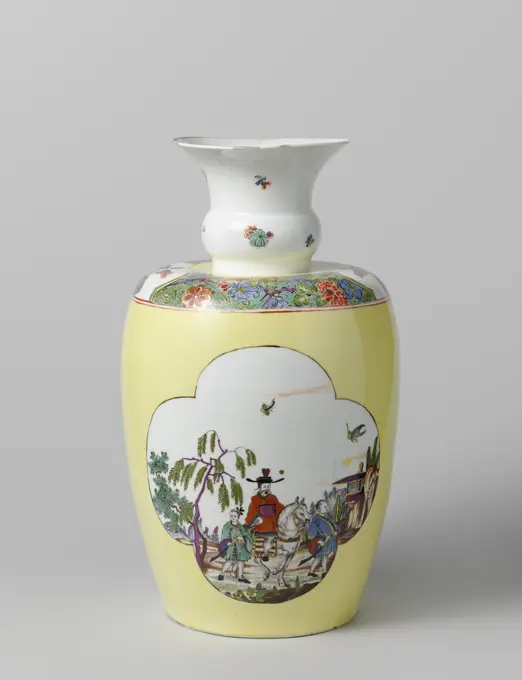
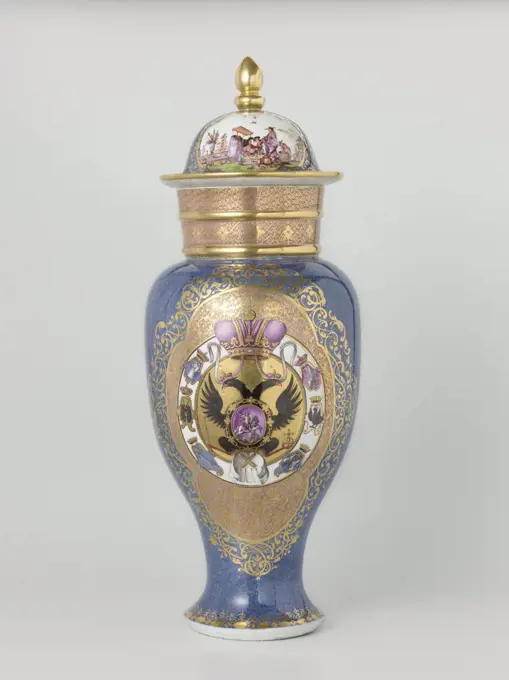
Vase, Meissener porcelain manufactory, c. 1730 - c. 1735 Vase of painted porcelain. The vase is almost completely covered emet a yellow stock in which two four -steps saved. In one four pass, a Chinese man on horseback is with two armed servants in a landscape with two trees on the right and a house on the right painted on rocks, in the other four pass a house on the water with three Chinese figures. On the shoulder a Frisian of Indianic Blumen is painted on black speckled green stock in which two fields with stylized birds. The vase is marked. Float porcelain Vase of painted porcelain. The vase is almost completely covered emet a yellow stock in which two four -steps saved. In one four pass, a Chinese man on horseback is with two armed servants in a landscape with two trees on the right and a house on the right painted on rocks, in the other four pass a house on the water with three Chinese figures. On the shoulder a Frisian of Indianic Blumen is painted on black speckled green stock
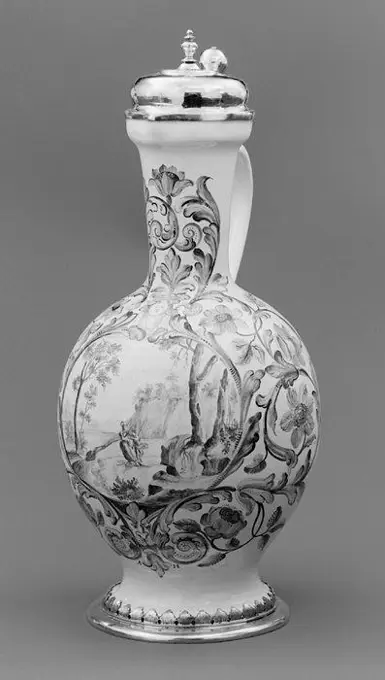
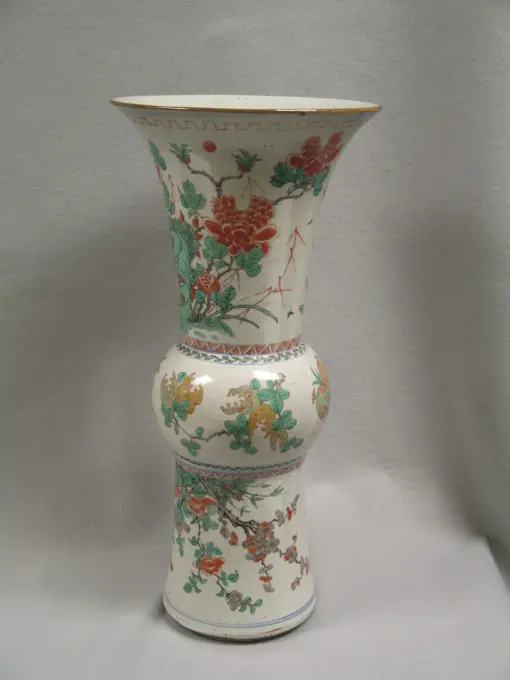
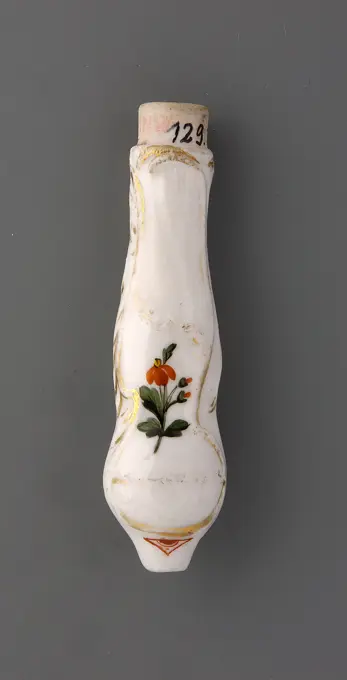
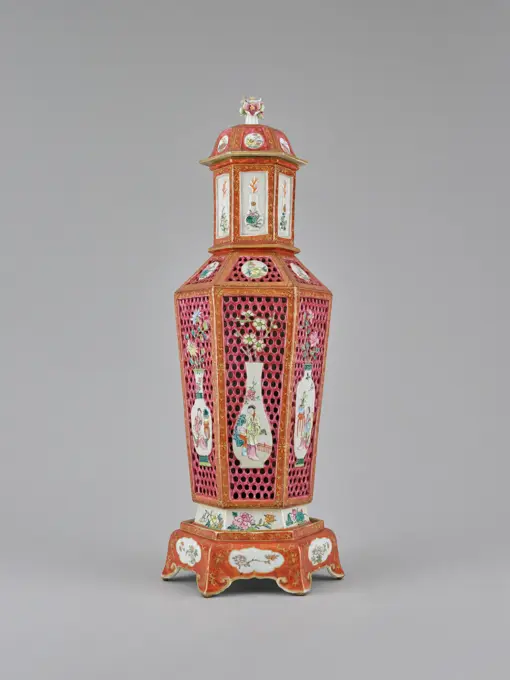
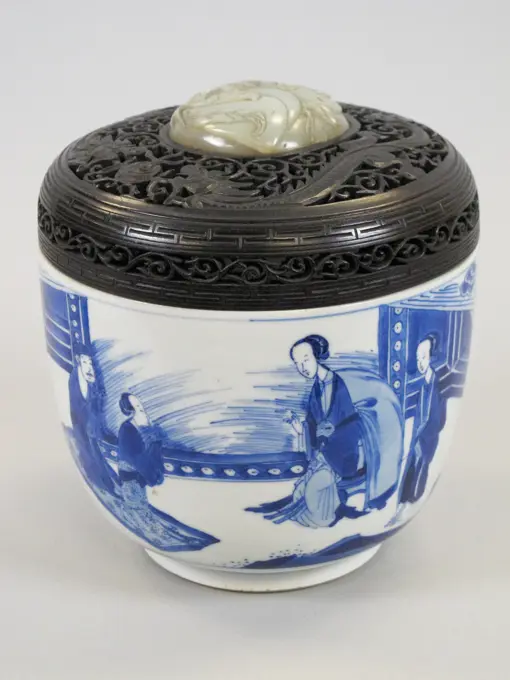
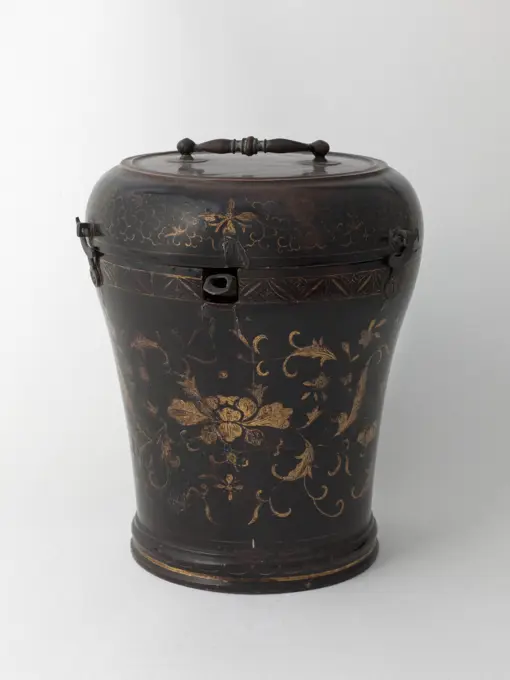
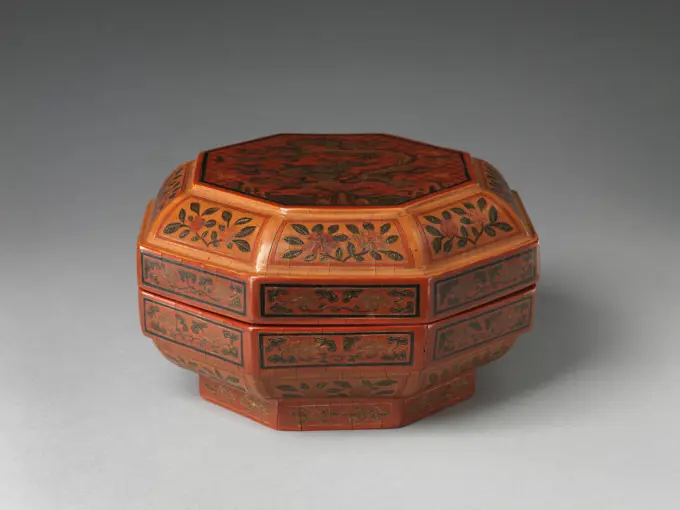
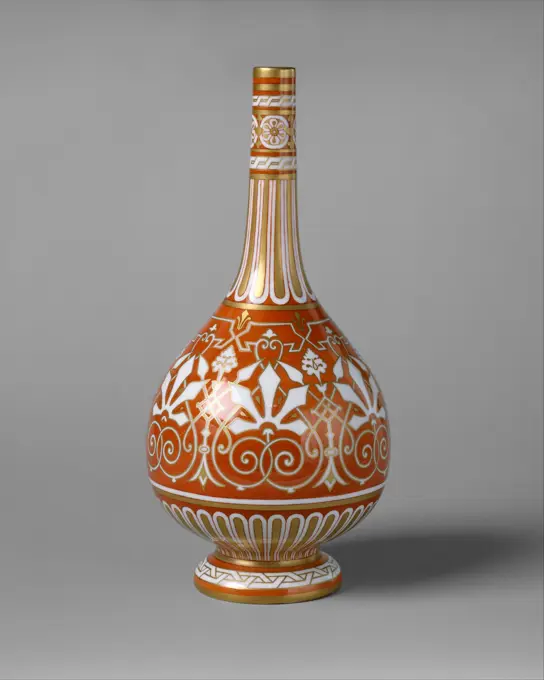
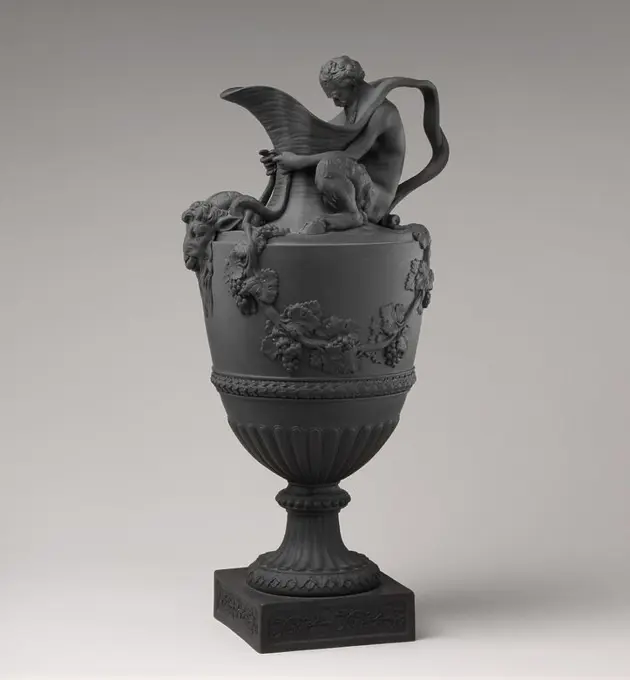
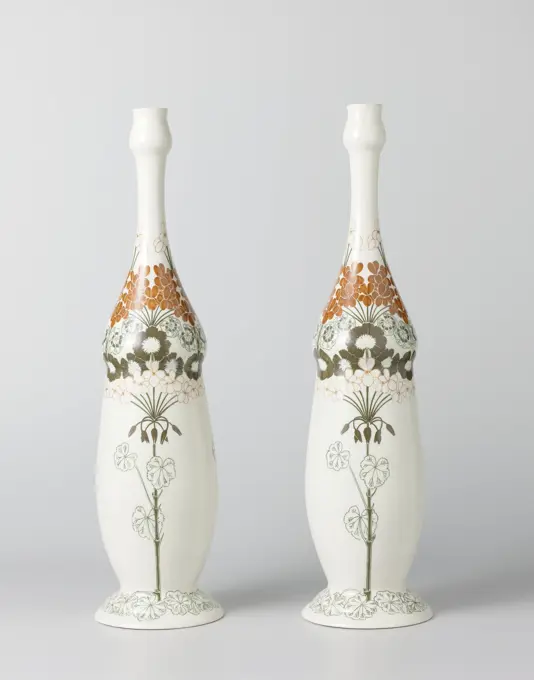
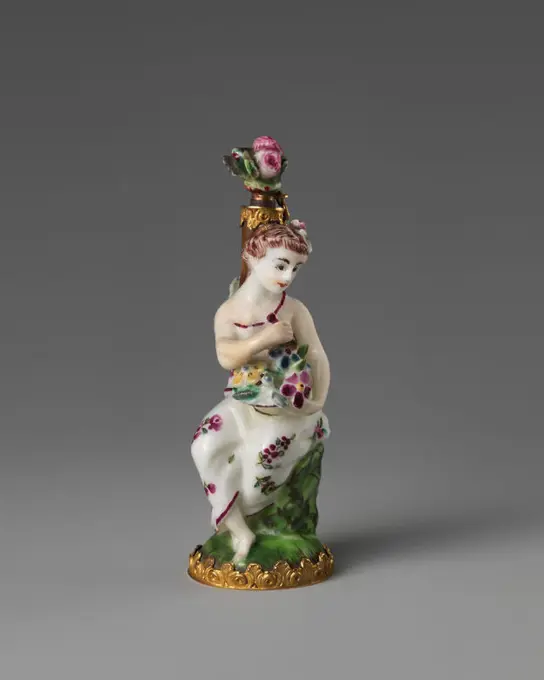
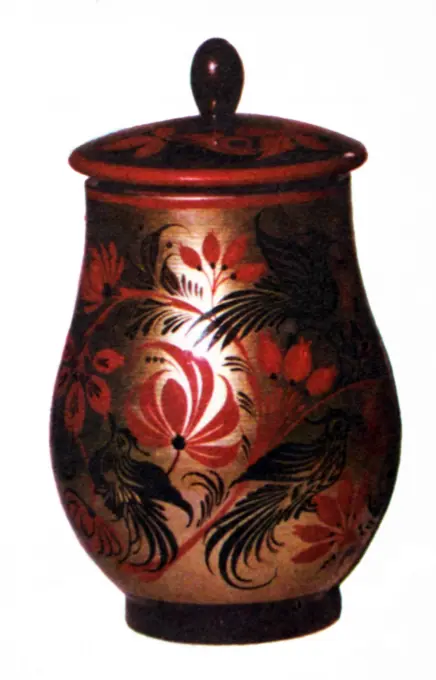
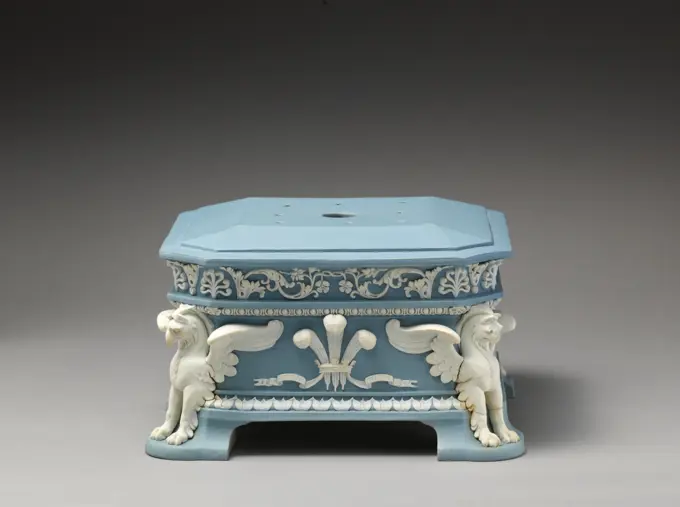
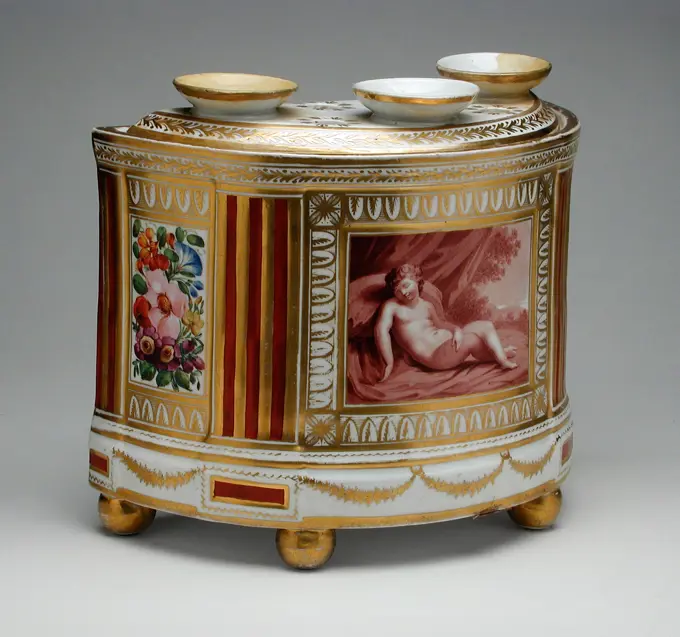
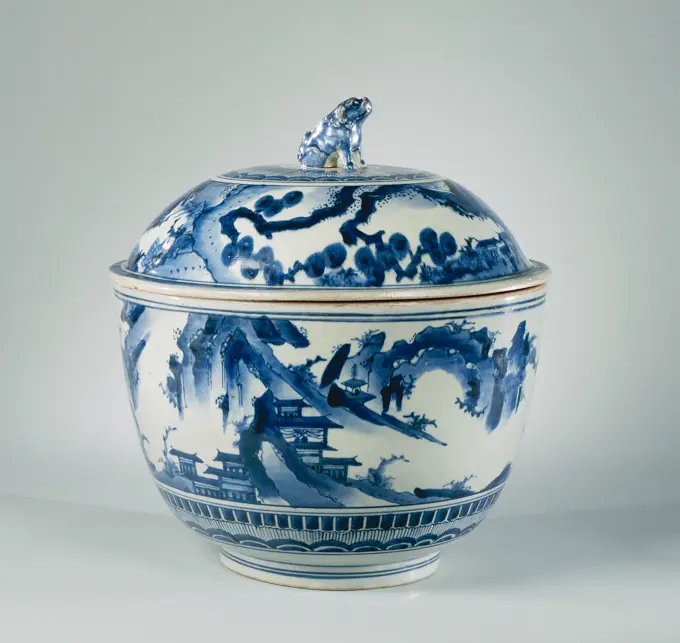
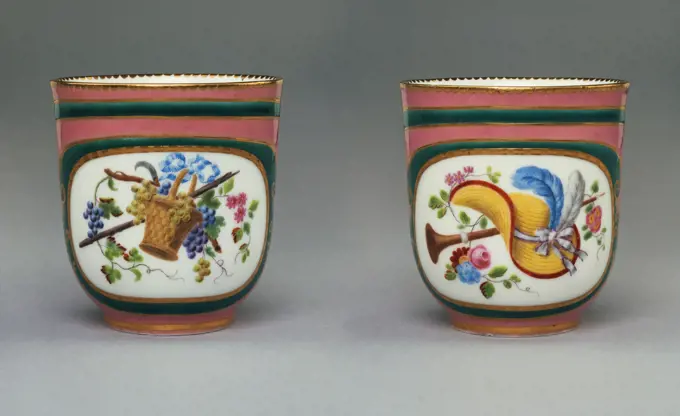
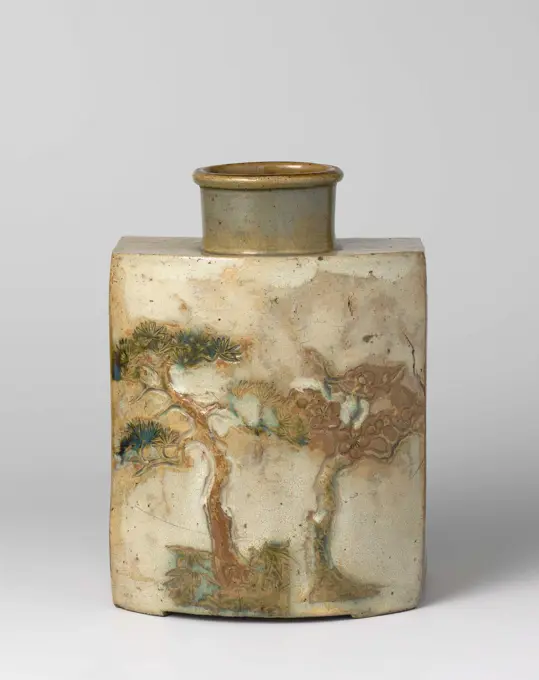
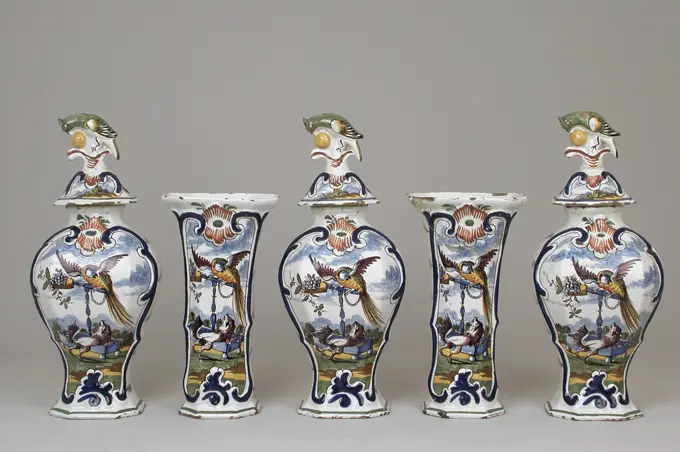
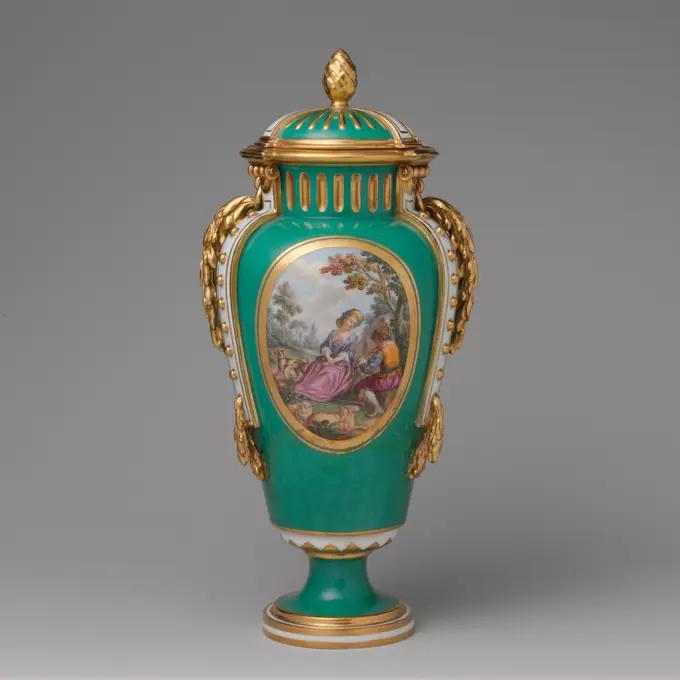
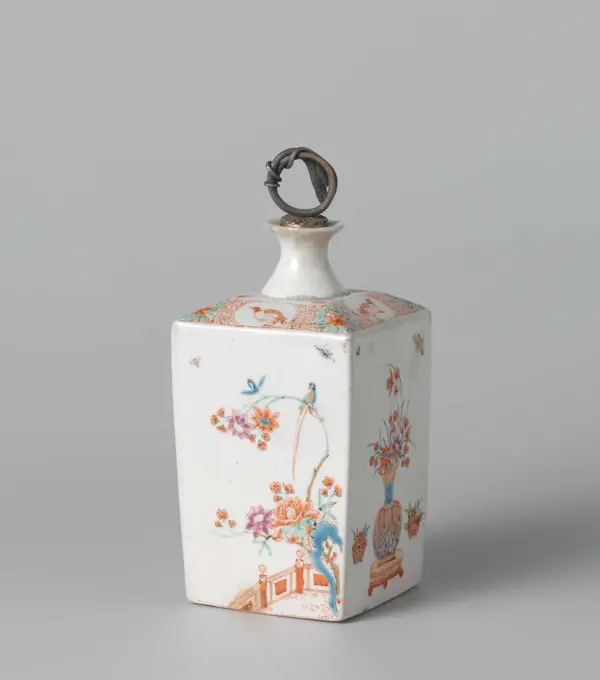
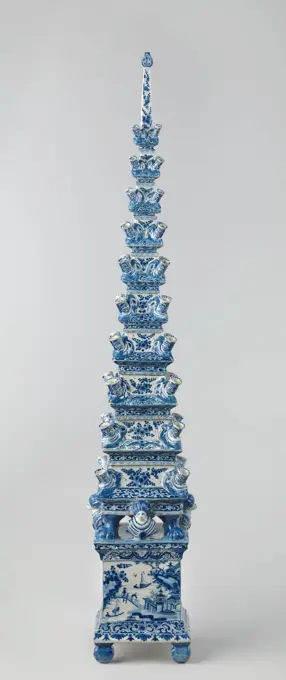
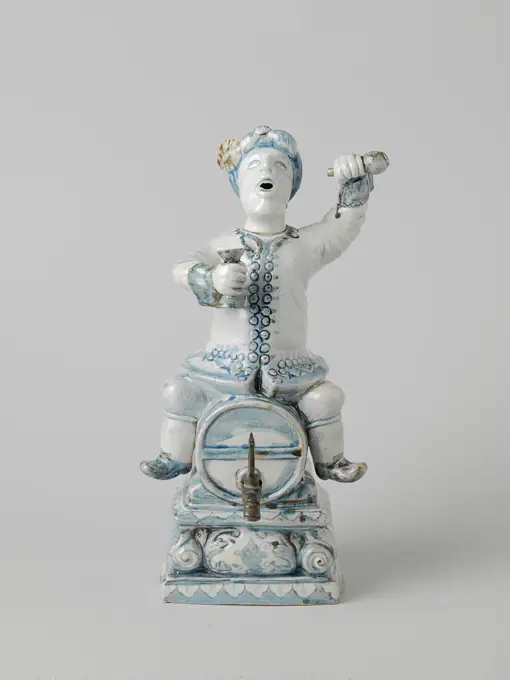
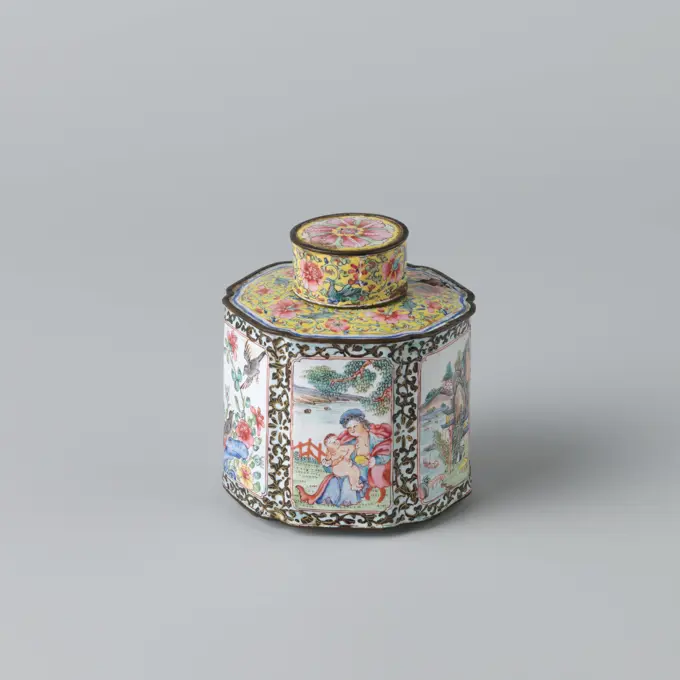
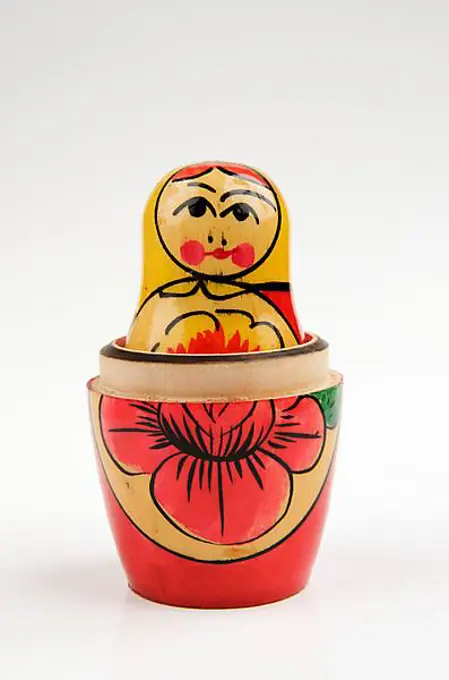
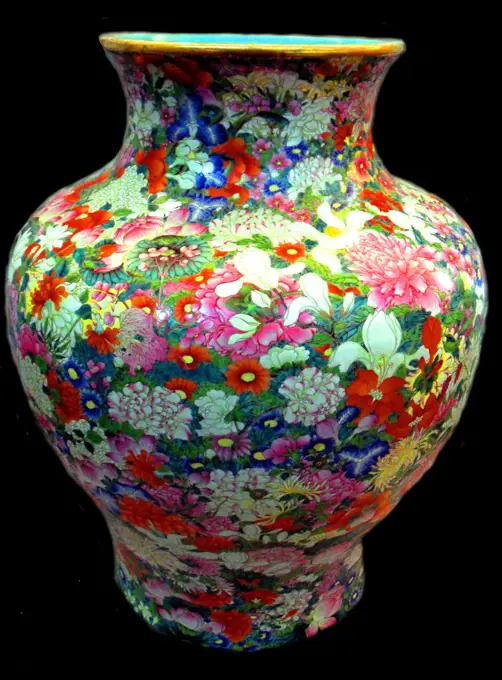
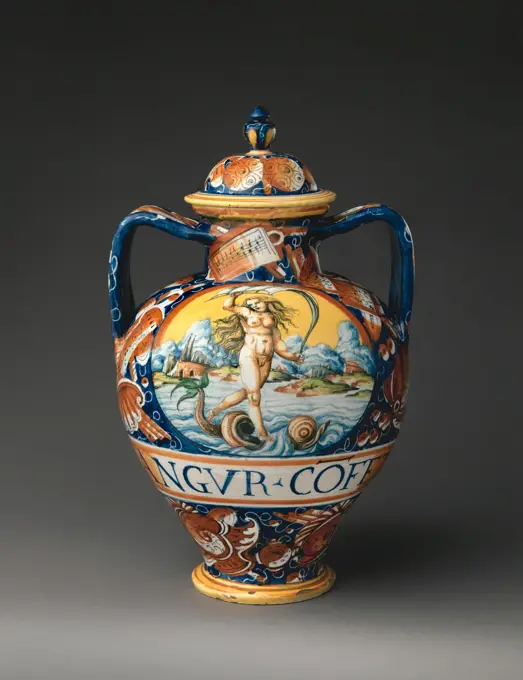
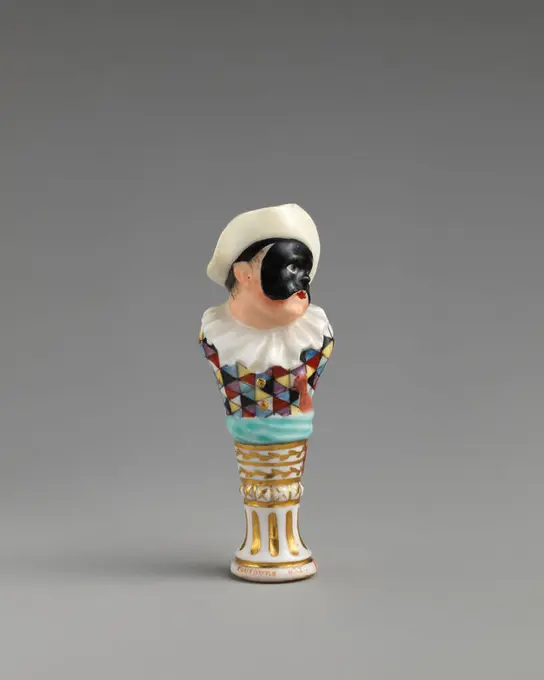
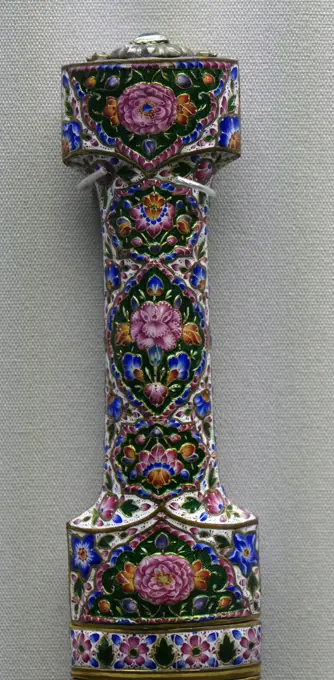
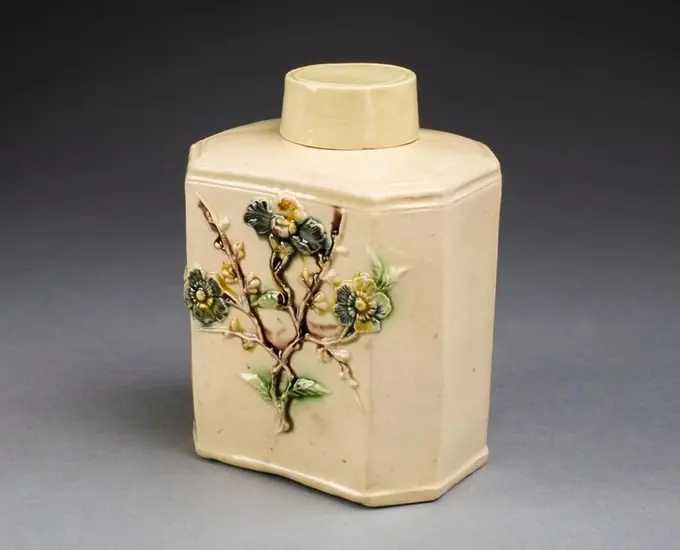
Bird-cage cup 1662-1722 Chinese. Bird-cage cup 461495Candlestick. modelled by Johann Gottlieb Kirchner (c. 1706-after 1737)Meissen, 1727hard-paste porcelainFlagon (one of a pair) ca. 1690 Abraham Helmhack. Flagon (one of a pair) 207988Jar. Culture: China. Dimensions: H. 8 1/2 in. (21.6 cm). Museum: Metropolitan Museum of Art, New York, USA.. Square bottle of porcelain, painted on the glaze in blue, red, green, yellow, eggplant, black and gold. On the wall twice a bird on a pouring branch and twice a bird on a chrysanthemun branch at a prunus, assembled hedges and two quail. On the shoulder a band with napkin with flowers interrupted by four cartouches with a quail. The bottom is unglazed. To the edge a gilt, bronze frame. Arita, decorated in the Japanese Kakiemon style in Europe.Vessel with Gods ofDrunkenness.  Artist: UnknownVase 1825-1855 Bohemia. Glass; green, blown, cut and gilded . Glassworks Harrachov Czechoslovakia (Manufacturer)Beaker ca. 1840 Harrachsche Hütte The distinctive effect of this piece is achieved by "windows" cut through a white glass overlay to the clear glass below, with decorative enameling on the white glass. This piece was possibly made for the Turkish market.. Beaker 196033Vase China. Vase 52806Cutlery holder. Korzec (manufaktura porcelany ; 1790-1832), factoryUnknown, vase cover (common name). Ceramics, porcelain, moufle fire enamels. Petit Palais, Museum of Fine Arts of the City of Paris.. Eyso de Wendt was employed by the VOC. He left for the East Indies in 1734 and held various offices in Canton between 1746 and 1757. While there he ordered various armorial porcelain services as well as this copper tea caddy.FIne examples of bowls from Ottoman Palace ceramic collection. Cylindrical vase of painted porcelain. The vase is decorated with a boy in green and blue standing on a checkered blue ground, a bouquet of flowers in blue and violet tied together with a blue ribbon and a green kylin. The bottom is unglazed. The vase has not been marked.Punchkom, lid and underput with show William Hogarths "A Midnight Modern Conversation", Porcelain factory The Hague (Attributed To), 1780 - 1790 Punchy bowl with lid, presumably made in Ansbach, decorated in The Hague, with a performance by William Hogarth "A Midnight Modern Conversation". Around the edge of the bowl and the lid a gilding inspired by embroidery. On the lid two identical representations of fishing figures in a landscape. The button is formed by a rose. Around the stand ring and the edge a smoothly gold -plated edge. At the bowl, a Meissen dish with a similar backdrop for landscapes and gilded embroidery, which probably comes from the 19th century. The Hail Hate Company: Ansbach porcelain painting Punchy bowl with lid, presumably made in Ansbach, decorated in The Hague, with a performance by William Hogarth "A Midnight Modern Conversation". Around the edge of the bowl and the lid a gilding inspired by embroidery. On the lid two identical representations of fishing figureJar with theatrical scene 1668-1722 China. Jar with theatrical scene 47609Anonymous. Round box with lid. Wood, Far East black lacquer, bronze, 1776. Paris, Carnavalet museum. 77642-4 Anse, Asian, round box, bronze, lid, Louis XV time, extreme-East, black lacquer, decorative pattern, ornament, handle, louis XV style, 18th century, woodOctagonal box with dragon pine” dated 1595 China The designer of this box transformed the pine tree into a fanciful dragon, symbol of the emperor. This combination probably expressed a wish that the emperor live as long as the pine, an emblem of longevity. The box was made with the same technique as the adjacent dragon dish, and they bear identical dated marks, which implies that they were made in the same imperial workshop, if not by the same hands.. Octagonal box with dragon pine”. China. dated 1595. Polychrome lacquer with filled-in and engraved gold decoration. Ming dynasty (1368-1644), Wanli period (1573-1620). LacquerVerziertes chinesisches glasiertes Zinngefäß - Tempelritualobjekt aus dem 16. Detailed green and gold glazed ceramic censer from 1512 China. Features intricate carvings and a rich texture, reflecting ancient craftsmanship and spiritual tradition. LicenseRF Copyright: xZoonar.com/GallóxGusztávx 23406741Bottle ca. 1862 Design attributed to Christopher Dresser British, Scottish The central pattern of scrolling interlaced foliage in orange edged in gold on a white ground harkens back to Islamic decorative motifs frequently found on ceramics. The vertical designs on the neck and under the bowl of the bottle are in imitation of fluting and gadrooning frequently found on silver hollowware. The bulbous shape of the vase, with a tall, narrow neck, takes its inspiration from Persian and Chinese examples.Attributed to Christopher Dresser (1834-1904), the vase's decorative scheme follows his idea that "the ornament must tend to emphasise sic the beautiful quality of the object and not destroy the form." By the early 1860s, Dresser was working for the Minton factory as a freelance designer and his early work for the company was often inspired by Persian examples. Some of these designs were presented in Minton's display at the International Exhibition, London (1862).The stylized geometric motifGourd with his cap: busts of men in medallion, Italian majolica of Urbino, between 1570 and 1580 (old bearded man). Square bottle of porcelain with a gilt, painted on the glaze in red, green, yellow, purple, black and gold. On the walls twice pavilions on an island with rocks and flowering plants (bamboo), a bird on a branch, and twice a flying bird at a prunus branch and bamboo. On the shoulder a band with prunus branches and a leaf motif; Running around the neck. A meander pattern on the neck. The edge has been ground. Arita, decorated in Europe ? In the Japanese Kakiemon style.Wine Jug with the Lamb of God 1625-1635 Germany. Glass with enamel decoration .Ewer. Culture: British, Etruria, Staffordshire. Dimensions: Height: 15 3/4 in. (40 cm). Maker: Josiah Wedgwood (British, Burslem, Stoke-on-Trent 1730-1795 Burslem, Stoke-on-Trent). Modeler: John Flaxman (British, York 1755-1826 London). Date: 19th century. Museum: Metropolitan Museum of Art, New York, USA.Beaker ca. 1830-40 Bohemian. Beaker 207892Vase with decor of geraniums, N.V. Plateelbakkerij Zuid-Holland, c. 1905 - c. 1915 Vase of earthenware, slender shape with long neck. Painted in green, black-gray and brown, with geraniums. Marked: Made in South Holland and factory brand with left "p/a." And right "C.J.V M. Inganglift Model no. 5012. Gouda earthenware Vase of earthenware, slender shape with long neck. Painted in green, black-gray and brown, with geraniums. Marked: Made in South Holland and factory brand with left "p/a." And right "C.J.V M. Inganglift Model no. 5012. Gouda earthenwareGirl with a basket of flowers. Culture: British, London. Dimensions: 2 7/8 × 1 in. (7.3 × 2.5 cm). Maker: Saint James's Factory (British, ca. 1748/49-1760). Date: ca. 1760. Museum: Metropolitan Museum of Art, New York, USA.Khokhloma vase a Russian wood painting handicraft style and national ornament, known for its curved and vivid mostly flower, berry and leaf patterns. Often Firebird, the figure from the Russian fairy-tale, is also depicted.Snuff Bottle. Culture: China. Dimensions: 2 1/2 x 1 3/8 in. (6.4 x 3.5 cm). Museum: Metropolitan Museum of Art, New York, USA.Chocolate with lid, Wooden r Czk; Koenigliche Porcellain Fabrique, Meissen (1710-1763); around 1750 (1745-00-00-1755-00-00);Lidded vase.Pedestal or base ca. 1783 Josiah Wedgwood British. Pedestal or base. British, Etruria, Staffordshire. ca. 1783. Jasperware. Josiah Wedgwood (British, Burslem, Stoke-on-Trent 1730-1795 Burslem, Stoke-on-Trent). Ceramics-PotteryBeaker 1845-1855 Bohemia. Glass; colorless, blown, cut, overlaid with opaque white glass, enameled and gilded .Vase; Yasuda Kyoto Tokiji Goshigish; 19th/20th century (1880-00-00-1905-00-00);Bough Pot and Cover. Thomas Baxter, Jr. (England, London, 1782-1821)Chamberlain's Factory (England, Worcester, 1788-1852). England, 1802. Furnishings; Cookware. Porcelain, gilding. Lid of large lid cup made of porcelain, painted in underglaze blue. The outer wall with a continuous landscape with pavilions, mountains and trees. Below a decorative band. Lid knob in the shape of a shishi (lion dog). Arita, blue-white.Wall Vase 18th century China. Wall Vase 40697Pair of Cups and Saucers; Painted by Charles Buteux père (French, 1719 - 1782, active Sèvres, France 1756 - 1782), Sèvres Manufactory (French, active 1756 - present); Sèvres, France; 1759; Soft paste porcelain, pink and green ground colors, enamelled decoration and gilding;. Semicircular, rectangular vase of stoneware with a short, wide neck, covered with a white sludge, green and brown glaze. Flowering plants modeled on the wide walls. The convex wall with a pine and a prunus, the hollow wall with a lotus. Old label collector label on the bottom with 'B.H. Benson esq '. Satsuma.Vase with cover (vase pot-pourri triangle) (one of a pair). Culture: French, Sèvres. Dimensions: H. 12 7/8 in. (32.7 cm.). Factory: Sèvres Manufactory (French, 1740-present). Modeler: Attributed to Jean-Claude Duplessis (French, ca. 1695-1774, active 1748-74). Date: ca. 1761.This unusual form of vase, which appears to have been used either for pot pourri or for growing small bulbs, was produced in very small quantities. Only two other pairs of this model are known today. Museum: Metropolitan Museum of Art, New York, USA.Pharmacy Jar 1435-1465 Spanish. Pharmacy Jar. Spanish. 1435-1465. Tin-glazed earthenware. Made in Manises, Valencia, Spain. CeramicsPair of beakers (part of a garniture) second half 18th century De Porceleyne Claeuw. Pair of beakers (part of a garniture). Dutch, Delft. second half 18th century. Tin-glazed earthenware. De Porceleyne Claeuw. Ceramics-Pottery. Vase with lid of painted porcelain. The vase rejuvenates down and has a slightly outstanding foot. The vase is painted in underglazing blue with flowering plants and an insect. The vase has been marked.Caddy with cover ca. 1740 Decorated by the Hausmaler Abraham Seuter. Caddy with cover 200929Anonymous, CHANGE CHANGE OF CHINEN LANDS (DOSTICE TITLE), 1701. Chinese porcelain. Carnavalet museum, history of Paris.Baluster Vase with Figures and Pavillions amid Moutaineous Landscape 1662-1722 China. Porcelain painted in underglaze blue .Snuff Bottle China. Snuff Bottle. China. Porcelain. Qing dynasty (1644-1911), Qianlong period (1736-95). Snuff BottlesVase with cover (vase à bandes) (one of a pair) ca. 1770-75 Sèvres Manufactory French The bucolic scenes on the front of these vases (see also 58.75.68a, b) are after compositions by the French painter Jean-Antoine Watteau (1684-1721). Engraved together on one copper plate by Louis Crépy in 1729, L'heureux moment (the happy moment) and Le berger content (the content shepherd) were, as a result, printed on the same sheet of paper and often used as a pair.Jeffrey H. Munger, 2006. Vase with cover (vase à bandes) (one of a pair) 202173Ceramic jug. Talavera, Ruiz de Luna museum. Province of Toledo, Spain. Location: MUSEO RUIZ DE LUNA. TALAVERA DE LA REINA. Toledo. SPAIN.. Square bottle of porcelain, painted on the glaze in blue, red, green, yellow, eggplant, black and gold. On the wall a flower vase on a stool with two flower baskets and insects; a bird on a flower branch at a rock and a fence; a flower vase on a stool with a second vase, lid pot with handle, bird and insects; A hay-bird on a blooming chrysanthemum at a rock, bound hedges and an insect. On the shoulder a band with napkin with flowers interrupted by four cartouches with a quail. The bottom is unglazed. Two cracks in the edge. Arita, decorated in the Japanese Kakiemon style in Europe.Teapot China. Teapot. China. Porcelain with relief decoration, painted in overglaze polychrome enamels. Qing dynasty (1644-1911). CeramicsA cylindrical mug with floral flagella and medallions with floral motifs unknownPart Bloempyramid of Delft pottery, Anonymous, c. 1700 Articles of flower pyramid from Faience. Decorated with flower branches and with four streams. Delft . Articles of flower pyramid from Faience. Decorated with flower branches and with four streams. Delft .Lidded vase, Meissener Porzellan Manufaktur, 1727, Meissen GermanySpirit Keg in the shape of a dutchman sitting astride a barrel. Genkar of porcelain, painted in underglaze blue. The jug is in the form of a husband Dutch man sitting on a ton, a bottle of persistent in his raised left hand and a glass in his other hand. The head is separate from the body and serves as a cap; On the head a sprung hat. In the front of the ton is a hole made for a brass tap. The ton rests on a pedestal with with plot ornaments in European style; The pedestal is decorated with leaf raft. Blue White.Close-up of a lanternPharmacy Jar. Italy, probably Savona. Date: 1735-1745. Dimensions: H. 18.4 cm (7 1/4 in.); diam. 12.7 cm (5 in.). Tin-glazed earthenware. Origin: Savona. Museum: The Chicago Art Institute, Chicago, USA.Hexagonal tea liability, painted email, anonymous, 1740 - 1760 Hexagonal tea liability with nipples on three very low unglazed legs and with flat shoulders and round, flat cap. On the six sides three different representations, painted in pink, blue, green (2 shades), brown, orange and yellow enamel: a water landscape, two birds in flowering plants and a rock, a woman with bare chest and a child on their lap at The waterfront (Maria). Between the fields of black lods with golden details on a very light blue surface. A European flower drink in blue on the bottom. China copper (metal). Hexagonal tea liability with nipples on three very low unglazed legs and with flat shoulders and round, flat cap. On the six sides three different representations, painted in pink, blue, green (2 shades), brown, orange and yellow enamel: a water landscape, two birds in flowering plants and a rock, a woman with bare chest and a child on their lap at The waterfront (Maria). Between the fields of black lods wiAnonymous / 'Pocket tool case'. Third quarter of the XVIII century. Copper alloy. Museum: Museo del Prado, Madrid, España.Bottle 1763-79. Bottle 590. Porcelain vase on square ground surface, with a bumped body with a rib in the middle of the four walls and a slim round neck. Painted with purple lilacs and a bird on one wall. The colors are purple, blue, green and red; The bird in black, yellow, green, brown, blue and red.Cylindrical vase in blue and red for a mantelpiece ornament, festoon style. Potiche cylindrique pour ornement de cheminee, style rayonnant. Chromolithograph after an illustration by Emilie Pottier from Andre Pottier's Histoire de la Faience de Rouen, Auguste le Brument, Rouen, 1870.Russian dollJar with Dragons and Floral Designs late 17th-early 18th century China. Jar with Dragons and Floral Designs. China. late 17th-early 18th century. Porcelain painted with cobalt blue under a transparent glaze (Jingdezhen ware). Qing dynasty (1644-1911), Kangxi period (1662-1722). CeramicsCandlestick (one of a pair). Culture: British, Derby. Dimensions: Overall: 10 1/4 × 8 1/4 in. (26 × 21 cm). Factory: Derby Porcelain Manufactory (British, 1751-1785). Date: 1769-70. Museum: Metropolitan Museum of Art, New York, USA.Philippe-Joseph Brocard. "Mosque lamp". Enamelled glass. 1868. Museum of Fine Arts of the City of Paris, Petit Palais. 57907-2 Vegetal decor, flower, mosque lamp, decorative object, Slum glassVase Thousand Flowers. reign of Qianlong (1736-1795) porcelain vase dated 1709, ChineseHead of Columbine. Culture: British, London. Dimensions: 4 7/8 × 1 1/2 in. (12.4 × 3.8 cm). Maker: Saint James's Factory (British, ca. 1748/49-1760). Date: ca. 1750-55. Museum: Metropolitan Museum of Art, New York, USA.Lidded pharmacy jar with the personification of Fortuna 1579-80 Italian, probably Pesaro The goddess Fortuna is depicted standing astride a sea-monster on each of these five jars (see 41.190.343a, b-.345a, b and 53.225.83, .84). She is likely a symbol identifying the pharmacy to which the objects belonged. It is clear from subtle differences in the decoration that a number of artists were involved in making this set. On the three lidded jars, the roundel creates an illusion of a window opening onto a deep pictorial space. The painters have achieved an ambitious perspectival viewmore impressive still on the two vessels with convex surfaces. On one, there is an amusing modification to the representation of Fortuna, who puckers her lips to blow wind into her own sail. The three lids are original, a rare survival.. Lidded pharmacy jar with the personification of Fortuna 198974Bust of Harlequin. Culture: British, Chelsea-Derby. Dimensions: Overall: 2 3/8 × 7/8 in. (6 × 2.2 cm). Factory: Derby Porcelain Manufactory (British, 1751-1785). Date: ca. 1770s. Museum: Metropolitan Museum of Art, New York, USA.Ceramic Art, European. Artist: UnknownQuadrangular vase. Carnavalet museum, history of Paris.Large dagger known as a Khanjar, made from Damascus Steel with an enamel hilt and scabbard. From Qajar, Iran. Dated 19th CenturyBandbox (USA); block-printed on handmade paper, pasteboard support; 38.5 x 30.5 x 26.5 cm (15 3/16 x 12 x 10 7/16 in.)Tea Canister. Staffordshire, England. Date: 1765-1775. Dimensions: 11.4 x 8.9 x 7 cm (4 1/2 x 3 1/2 x 2 3/4 in.). Lead-glazed earthenware (creamware). Origin: Staffordshire. Museum: The Chicago Art Institute, Chicago, USA.Bandbox. Dated: 1935/1942. Dimensions: overall: 22.4 x 30.2 cm (8 13/16 x 11 7/8 in.). Medium: watercolor, gouache, and graphite on paper. Museum: National Gallery of Art, Washington DC. Author: Gilbert Sackerman.Snuff Bottle, 17th-19th century, 2 7/8 x 2 1/8in. (7.3 x 5.4cm), Glass, China, 17th-19th century16th Century Mosque lamp from Turkey, associated with the Mausoleum of Bayezid II. Dated 16th CenturyFour-sided vase with two handles. unknown, craftsmanUnknown (n. - d.), Cornets vases (title of the whole). Porcelain, polychrome enamels of canton. Petit Palais, Museum of Fine Arts of the City of Paris.Gilbert Sackerman, Bandbox, c 1939 BandboxStewart Wheeler, Bonnet Box, c 1936 Bonnet BoxHinged Snuff Bottles 19th century China. Hinged Snuff Bottles 41568Lid of a tobacco jar, Gebr. Tichelaar, c. 1950 - c. 1960 Copper lid, belonging to a tobacco spot of faience. Makkum copper (metal) Copper lid, belonging to a tobacco spot of faience. Makkum copper (metal)Exhibition hall of the Meissen porcelain manufactory