Decorative Porcelain Vases

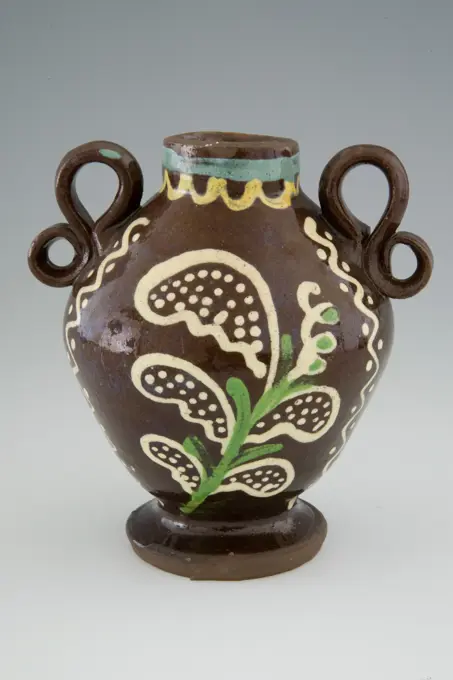
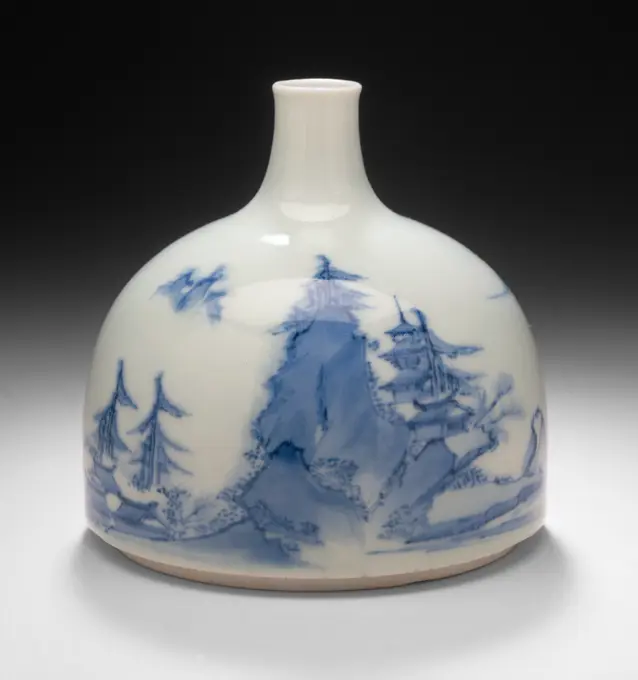
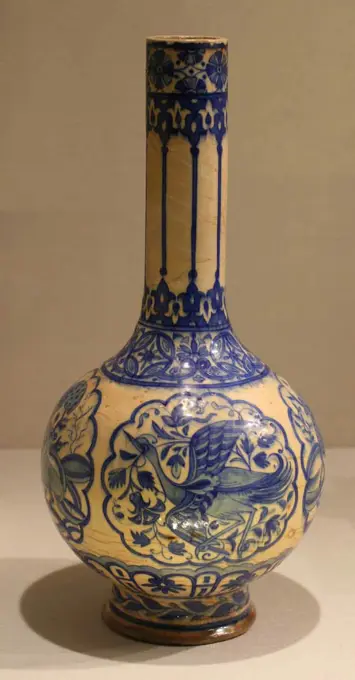
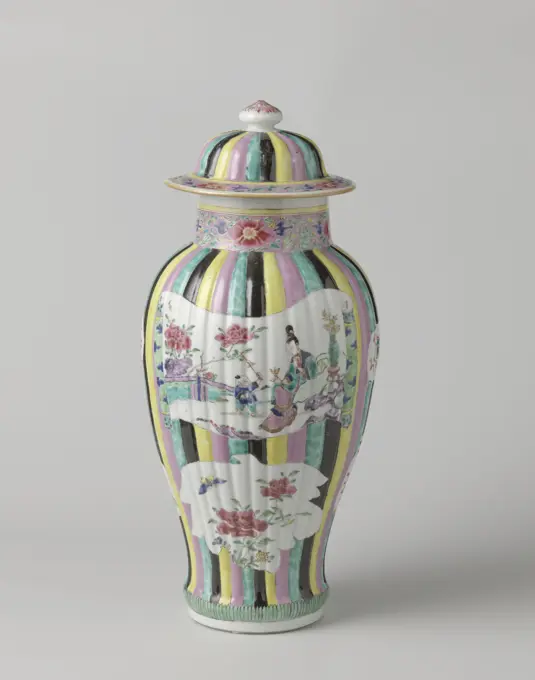
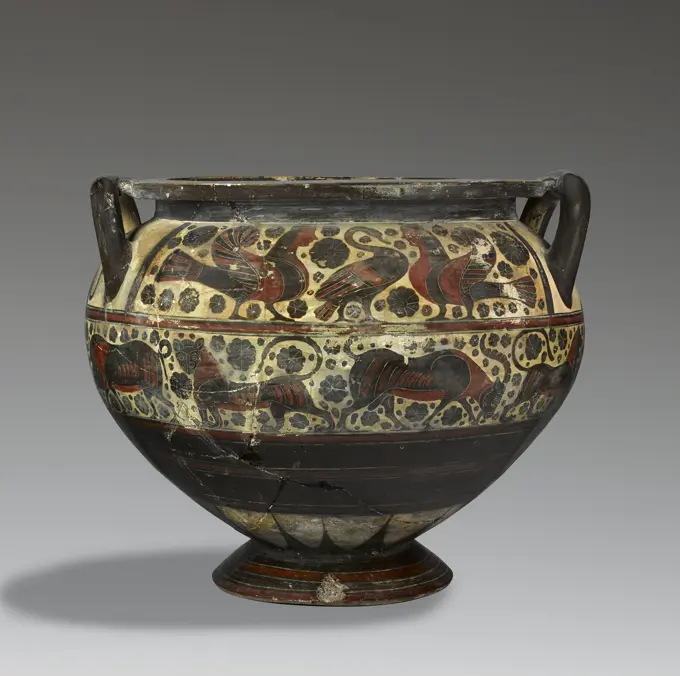
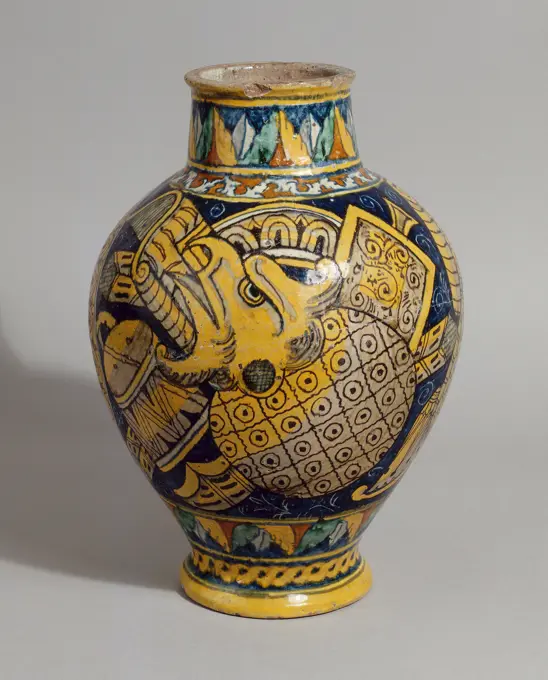
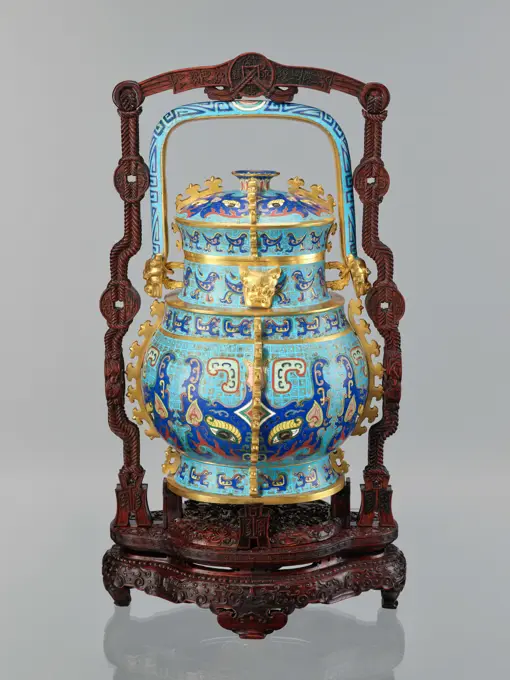
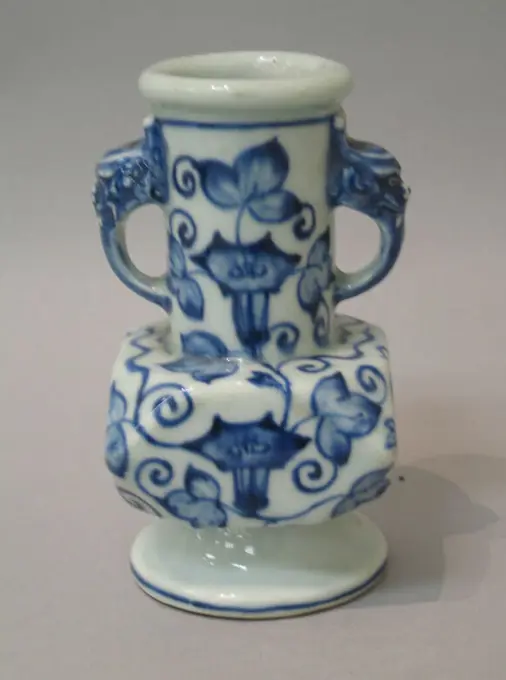
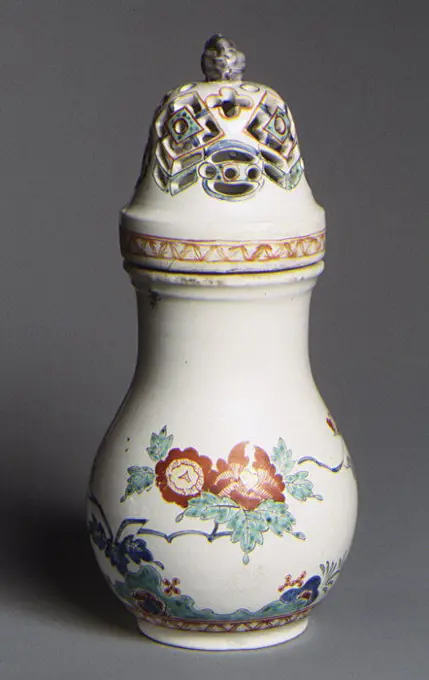
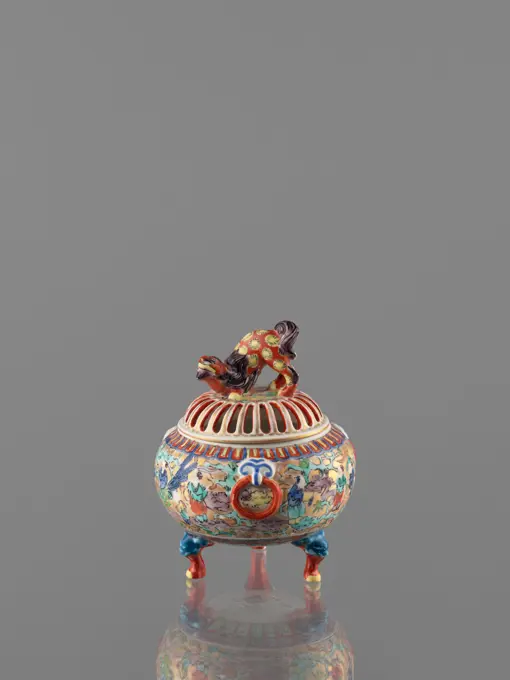
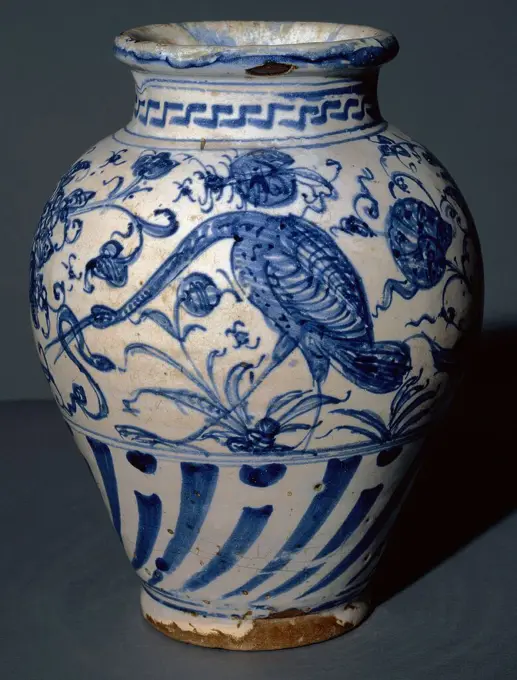
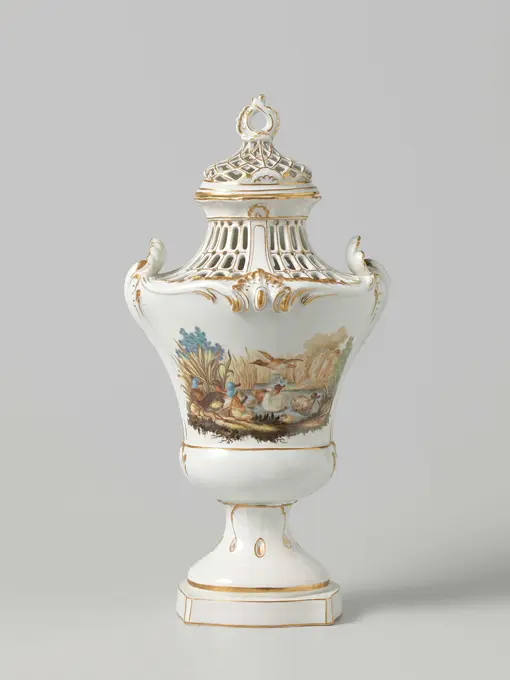
An array of beautifully painted porcelain vases adorned with floral patterns and intricate motifs, highlighting artistic styles from various periods.
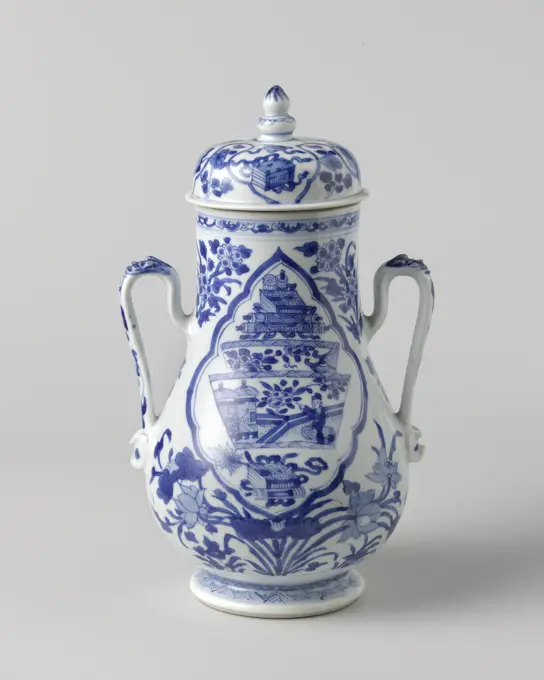
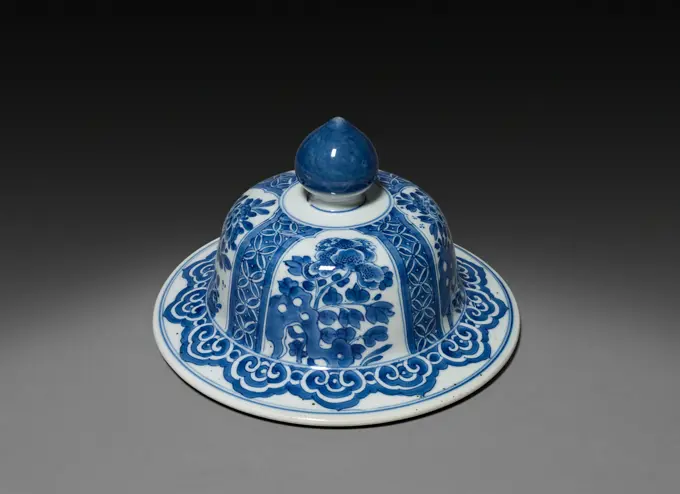
Pear-shaped covered jar with precious objects and flower sprays, anonymous, c. 1700 - c. 1724 Cover of pear -shaped lid jar of porcelain, painted in underlaze blue. On the lid with valuables (pearl, window) and lucky symbols and flower branches, separated by a wavy line. Blue White. China porcelain. glaze. cobalt (mineral) painting / vitrification Cover of pear -shaped lid jar of porcelain, painted in underlaze blue. On the lid with valuables (pearl, window) and lucky symbols and flower branches, separated by a wavy line. Blue White. China porcelain. glaze. cobalt (mineral) painting / vitrification
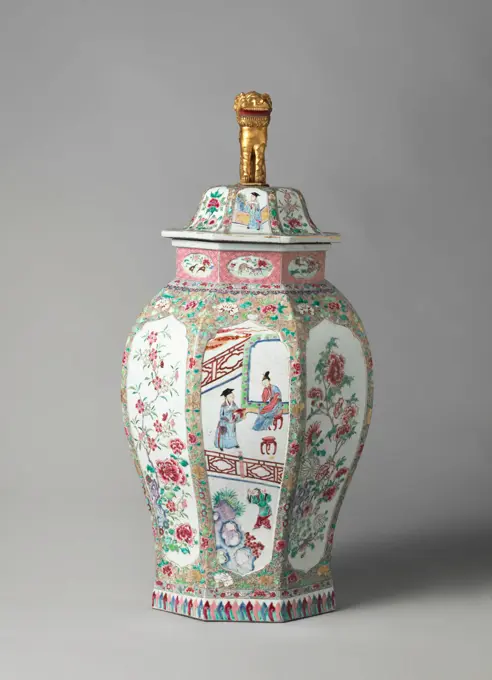
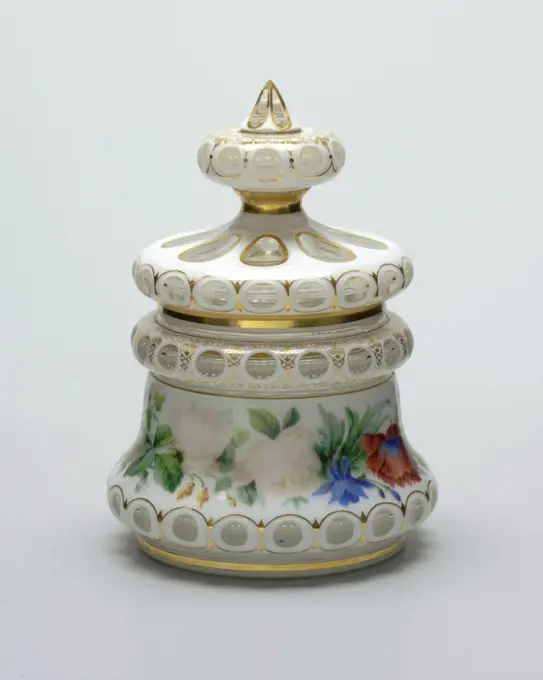
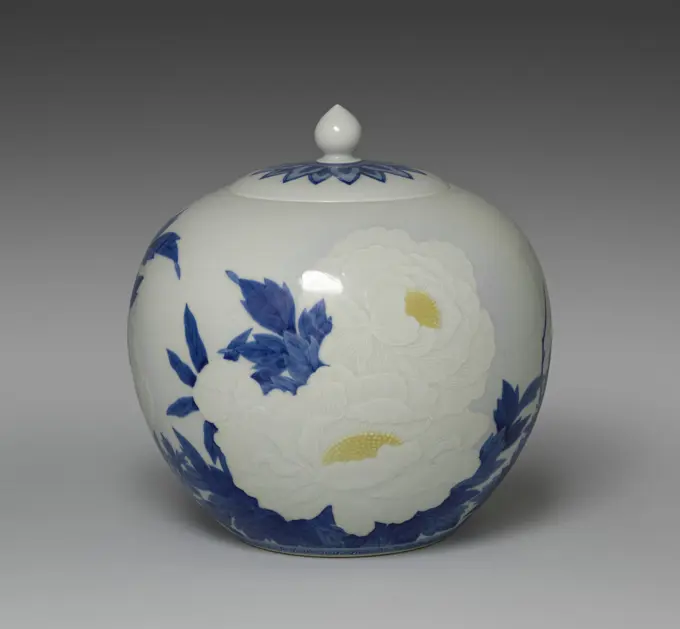
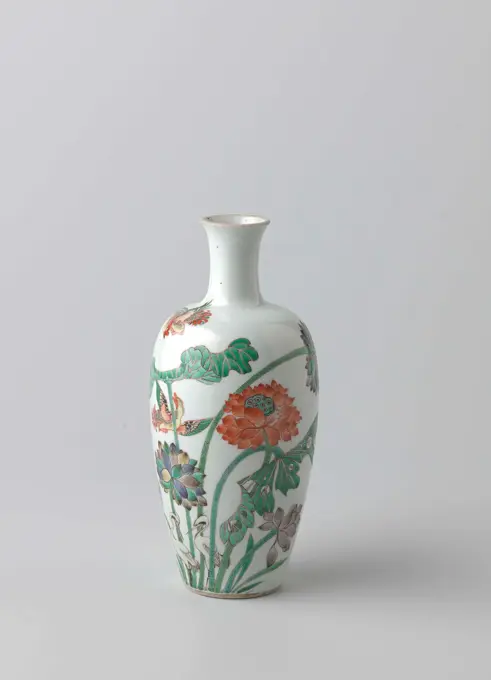
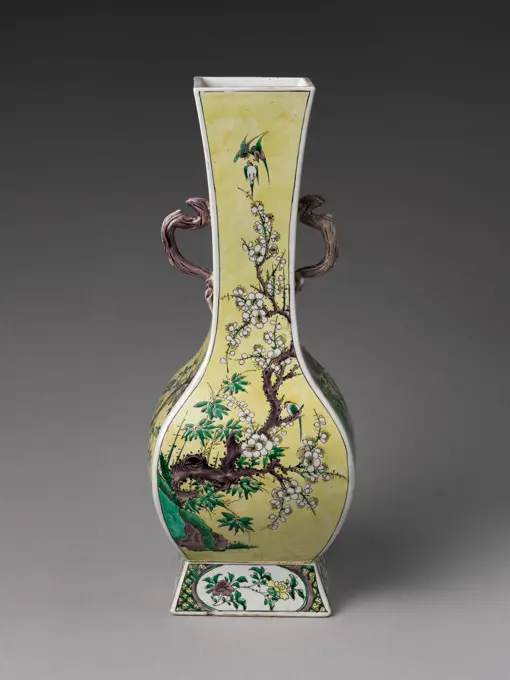
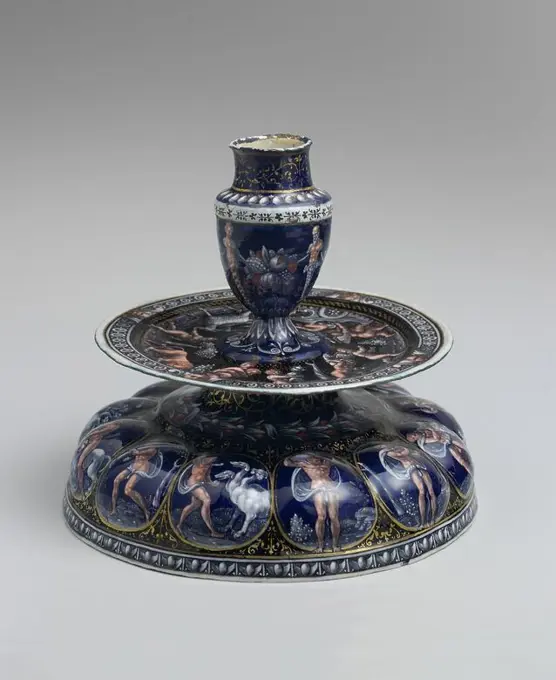
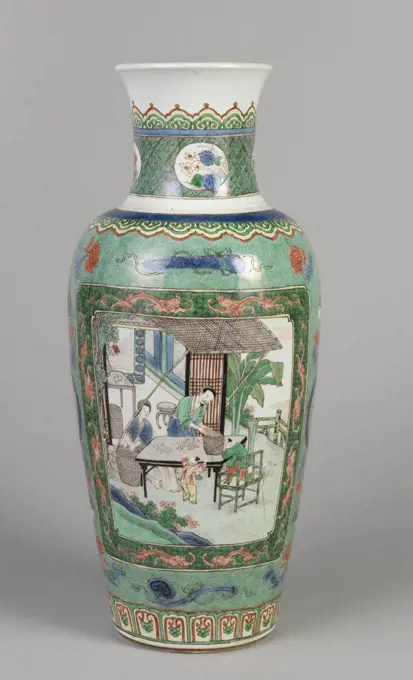
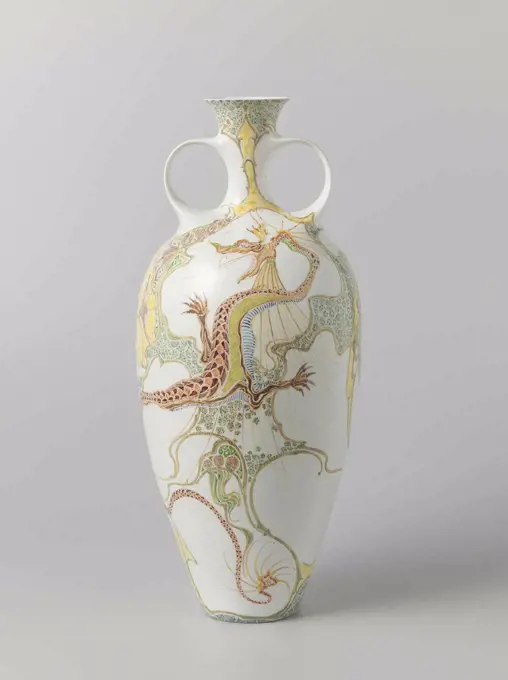
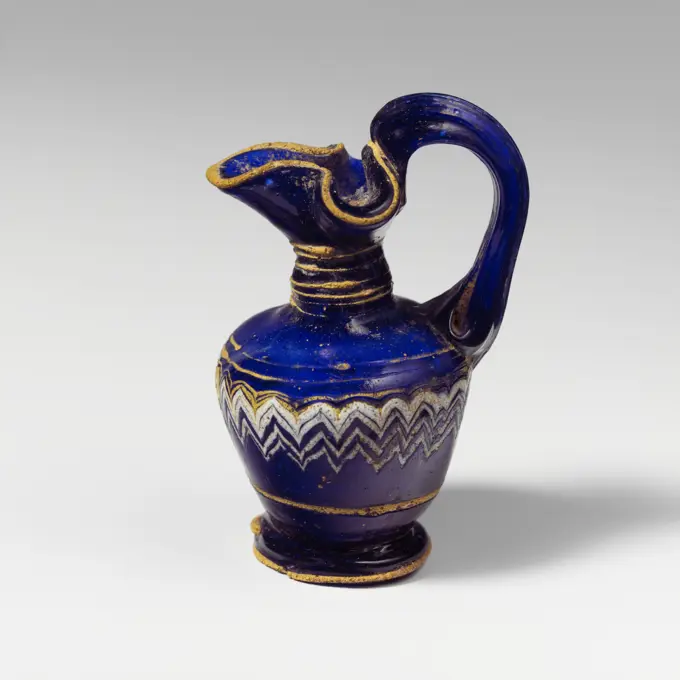
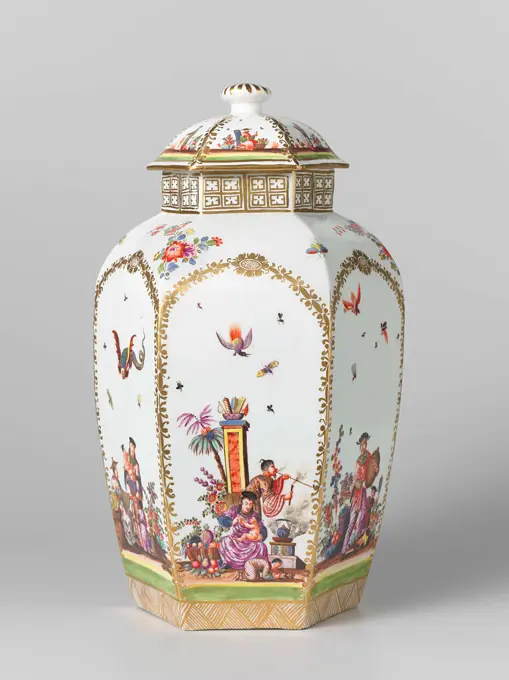
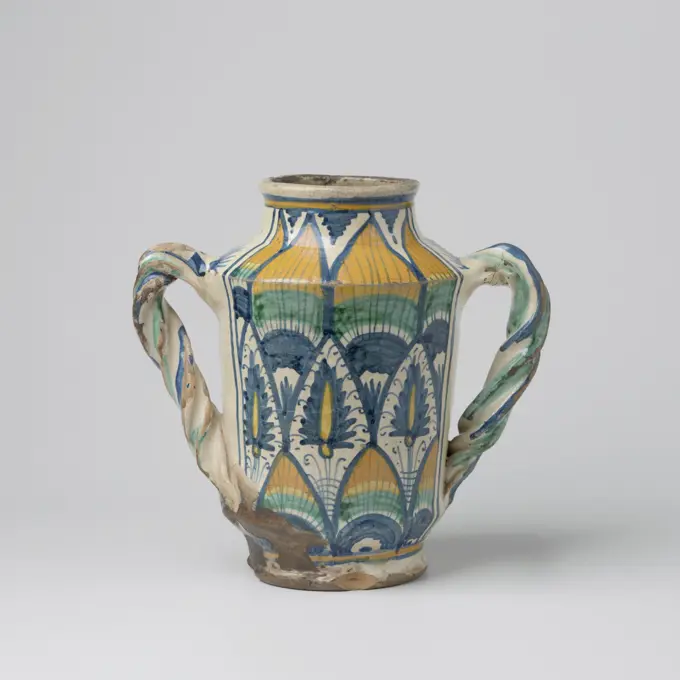
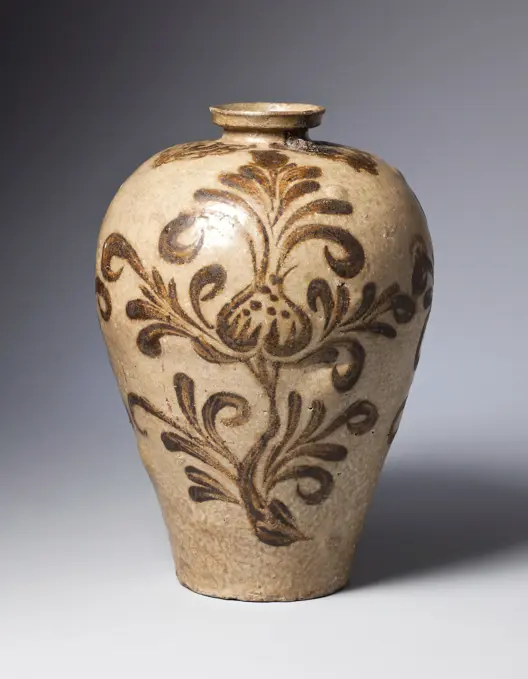
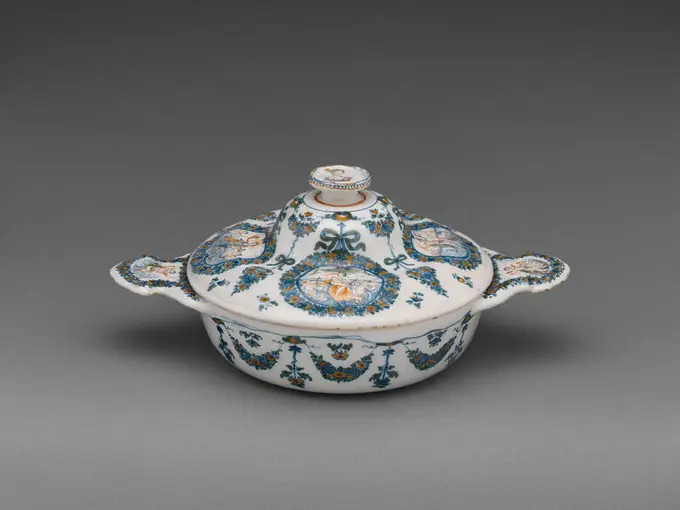
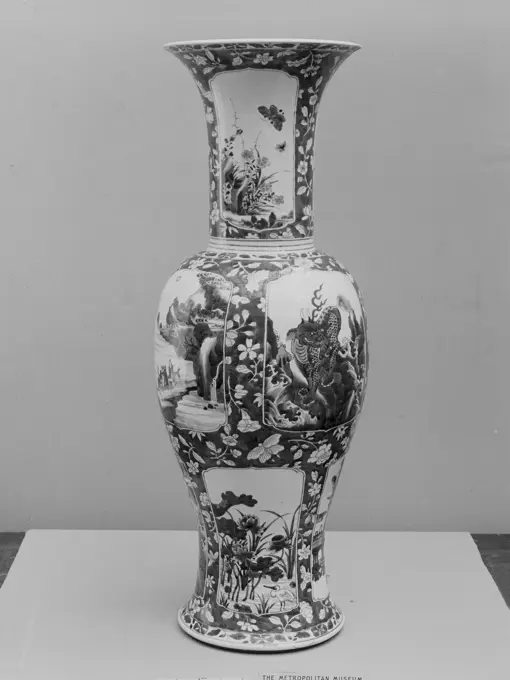
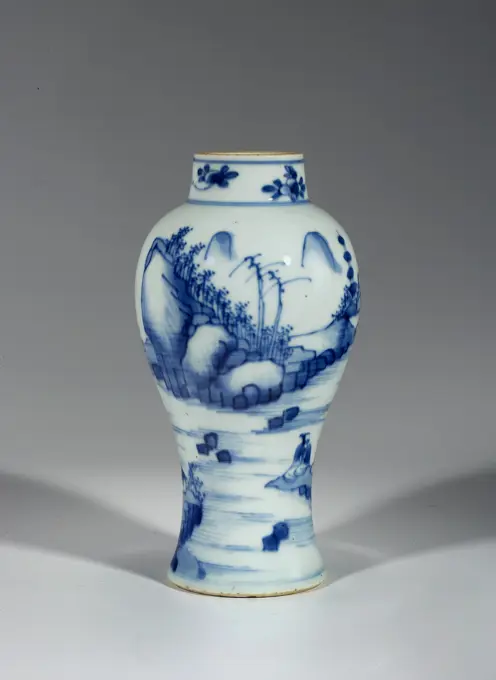
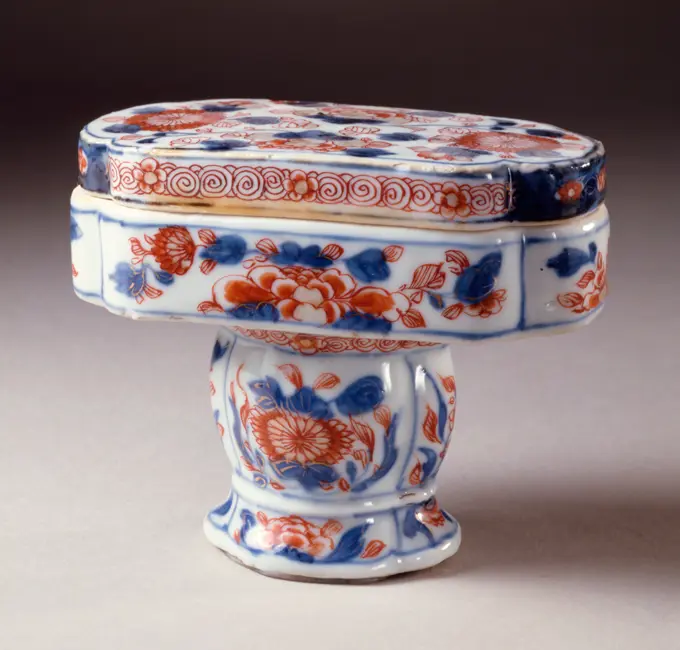
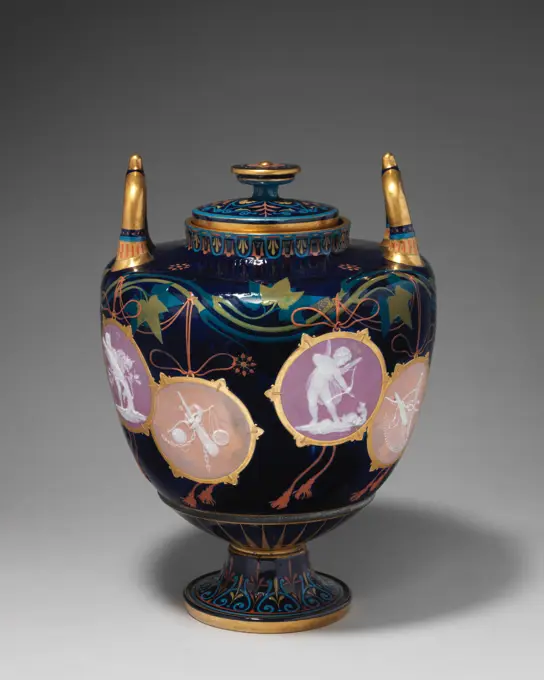
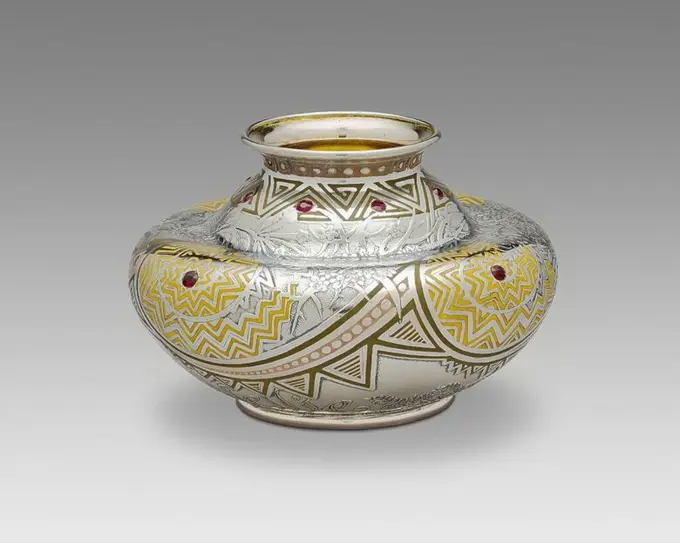
Vase;  early 18th century (1701-00-00-1720-00-00);Octagonal, Ovoid Covered Jar With Flowering Plants And Figures in a Fenced Garden in panels. Octagonal, egg-shaped lid pot of porcelain, painted on the glaze in blue, red, pink, green, purple, black and gold. The belly is covered with piping branches against a background of a spiral pattern. On each of the eight sides a saved, scalloped cartouche with varied flower branches (peony, chrysanthemum, aster, prunus) at a rock or one or more people on a terrace or in a fenced garden in blooming plants and rocks. The neck with napkin interspersed with lobby cartouches with deer or birds at a peony plant. A decorative band around the foot. The lid with the same decoration; The lid knob is in the shape of a shishi (lion dog). Lid knob is not original. Lid pot is part of cabinet set AK-NM-11497. Family Rose.Jug. Fragment of a jug of stoneware. Performances from the history of ... depicted on the gray with blue jug.Small cilindrical vase with a flowering plant near a rock, anonymous, c. 1680 - c. 1720 Small, cylindrical vase made of porcelain with a short neck and flat edge, painted in underlaze blue. On the wall a flowering plants (Camelia) in a rock and two flying insects. A band with a spiral pattern on the shoulder. The neck with two flower branches. A shard from the neck. Blue White. China porcelain. glaze. cobalt (mineral) painting / vitrification Small, cylindrical vase made of porcelain with a short neck and flat edge, painted in underlaze blue. On the wall a flowering plants (Camelia) in a rock and two flying insects. A band with a spiral pattern on the shoulder. The neck with two flower branches. A shard from the neck. Blue White. China porcelain. glaze. cobalt (mineral) painting / vitrificationScent bottle and lid, Enameled and gilt glass, White glass jar and cover with an undulating form and pointed knob. Lower section of jar has a floral pattern around the bottom. Very bottom of jar has repeating clear circles outlined in gold, which is repeated on the top and lid of the jar. Part of a set., Bohemia, ca. 1870, glasswares, Decorative Arts, Scent bottle and lidFlower Pot Mexican ca. 1830Jug, Het Moriaanshooft (attributed to), after Jacob Wemmersz. Hoppesteijn, after Jannitge Claesdr Hoppesteijn-van Straten, c. 1660 - c. 1680 Can from fowence with a chinoiserie decoration. Delft . Can from fowence with a chinoiserie decoration. Delft .. Kwispoor van Faience, painted in blue with the portrait of Stadholder William IV.. Porcelain tea bus with an egg-shaped body, on a foot with cut-away curl work, painted on the glaze in black and gold. On the wall, two oval cartouches in which a European farmland landscape with working people, cattle, a farm and a village in the background; between the cartouches a flower branch; On the shoulder a band with tendrils in Meissen-style. European performance in Encre de Chine.Vase 1886-90 Faience Manufacturing Company American. Vase. American. 1886-90. Painted and glazed earthenware with overglaze raised gold paste decoration. Made in Brooklyn, New York, New York, United StatesWaza z nakrywą, zdobiona feniksami, peoniami, zającami. unknown, ceramistTankard With Light Brown And Panels With Flower Scrolls. Beer mug made of porcelain with lid, painted in underglaze blue and with café-au-lait glaze. The lower, spherical part of the body is slightly absorbed lines and covered with a light brown glaze, a brown band above; the upper, straight part of the body with lobby cartouches in underglaze blue with flower reflections in reserve; On the lid cartouches with flower drinks in reserve. Marked on the bottom with an artemisia leaf. Ear is missing. Monochrome brown with blue and white.Lidded Bowl. Terrine with faience lid. Many color painted with floral baskets and landscapes.Jug, anonymous, c. 1650 - c. 1675 Can from faience with a decoration to Chinese porcelain from the transition period Delft . Can from faience with a decoration to Chinese porcelain from the transition period Delft .One of Seif Yohei III’s most visually impactful techniques, seen in this work, was to combine complex low-relief designs in clay surrounded by diffused underglaze blue or pink, which he then covered with a transparent or translucent glaze. Yohei III also experimented with clay bodies ranging from bluish white to ivory combined with translucent cream-colored glazes. The atmospheric effects he achieved were considered remarkable. Lidded Jar with Peonies, 1897-1912. Seifū Yohei III (Japanese, 1851-1914). Porcelain with molded and carved design and underglaze color; height: 27 cm (10 5/8 in.); diameter: 26.4 cm (10 3/8 in.); height with stand: 30.5 cm (12 in.).Jug 1755-1765 Staffordshire .Ovoid Vase With Lotus, Cranes, Mandarin Ducks And Inscription. Egg-shaped vase of porcelain with short neck and spreading edge, painted on the glaze in blue, red, green, yellow, eggplant and black. On the wall large lotus plants between which two cranes and two flying mandarin ducks; On the other hand, an inscription dated the 8th month of 1888, signed with Yun Shui ... Zhu. Edge sanded. Old label on the underside with 'Lot 20 24/2/04 6123.'. Famille Verte.Vase in Form of Archaic Bronze late 18th-19th century China. Vase in Form of Archaic Bronze. China. late 18th-19th century. Porcelain painted with colored enamels over transparent glaze (Jingdezhen ware). Qing dynasty (1644-1911), Kangxi period (1662-1722). CeramicsJar with tires horizontal and vertical. Jug of stoneware. Decorated with vertical and horizontal tires, between which ornaments. The ear is missing.Vase (rolwagen) with a warrior waiting on his horse, anonymous, c. 1635 - c. 1650 Vase (roller car) made of porcelain with a cylindrical body and spreading neck, painted in underly glaze blue. On the wall in a landscape a warrior in front of his tent, surrounded by his entourage. A servant leads his horse to him. Rots and banana trees in the landscape. On the neck a tire with hanging, pointed leaf motifs. The shoulder with a bond with broken -in ranks; Around Arcewerk around the foot. The underside is unglazed. Some chips in the edge; A baking tear in the bottom. Transitional porcelain in blue and white. China porcelain. glaze. cobalt (mineral) painting / vitrification Vase (roller car) made of porcelain with a cylindrical body and spreading neck, painted in underly glaze blue. On the wall in a landscape a warrior in front of his tent, surrounded by his entourage. A servant leads his horse to him. Rots and banana trees in the landscape. On the neck a tire with hanging, pointed leaf motAnonymous, Vase Cornet (main title). Porcelain, polychrome enamels. Petit Palais, Museum of Fine Arts of the City of Paris.Covered jar with floral scrolls, anonymous, c. 1700 - c. 1799 Lid of lid jar of stoneware, painted in under -glaze blue. On the lid a strap with petal -shaped compartments with flowering plants. Hanging, pointed leaf motifs on the edge. The glaze is slightly gray. Blue White. Thailand stoneware. glaze. cobalt (mineral) painting / vitrification Lid of lid jar of stoneware, painted in under -glaze blue. On the lid a strap with petal -shaped compartments with flowering plants. Hanging, pointed leaf motifs on the edge. The glaze is slightly gray. Blue White. Thailand stoneware. glaze. cobalt (mineral) painting / vitrificationLid, anonymous, c. 1775 - c. 1800 A ball of lid with a round lid button. Painted with flower branches in pink and gold and with tires with geometric patterns. glassblower: IndiaGujarat (possibly) glass. gilding (material) glassblowing / gilding A ball of lid with a round lid button. Painted with flower branches in pink and gold and with tires with geometric patterns. glassblower: IndiaGujarat (possibly) glass. gilding (material) glassblowing / gildingVase;  beginning of the 19th century (1800-00-00-1810-00-00);Vase. unknown, craftsmanCandlestick (one of a pair). Artist: Master I. C. (probably Jean Court or Jean de Court) (working in the second half of the sixteenth century). Culture: French, Limoges. Dimensions: Height: 6 in. (15.2 cm); Diameter: 7 1/4 in. (18.4 cm). Engraver: After engravings by Heinrich Aldegrever (German, Paderborn ca. 1502-1555/1561 Soest). Date: ca. 1560-70.The processions of infants on the drip pans were taken from engravings by the anonymous Italian Master of the Die (active ca. 1532). The labors of Hercules depicted on the repoussé medallions around the base of one of the candlesticks are after engravings by the German Heinrich Aldegrever (1502-after 1555); gods of classical antiquity fill the medallions on the other example. Museum: Metropolitan Museum of Art, New York, USA.Baluster vase with a hunting scene and borders with floral scrolls, anonymous, c. 1700 - c. 1724 Large, baluster -shaped vase of porcelain, painted in undermglaze blue and on the glaze gold. On the belly a hunting scene with hunters on horseback and on foot with weapons and dogs in a landscape with trees, mountains and rocks. Below a bond with Lotusranken. Above the foot a band with standing leaf motifs. On the shoulder a band with lambrequins with alternating lotus and flower vines. Above it a band with server work with a flower rod interrupted by cartouches with flowering plants (Lotus, peony, bamboo, chrysanthemum, prunus). The neck with a bond with Lotusranken. On the edge a band with Ruyi motif. Blue White. China porcelain. glaze. cobalt (mineral). gold (metal) painting / gilding / vitrification Large, baluster -shaped vase of porcelain, painted in undermglaze blue and on the glaze gold. On the belly a hunting scene with hunters on horseback and on foot with weapons and dogs in a Decorative object, De Metaale Pot (attributed to), c. 1680 - c. 1690 Decorative object of earthenware, painted in blue on white tinglaze with chinoiserien in the style of Chinese transition porcelain. Ornaments on top and on the foot. Delft . Decorative object of earthenware, painted in blue on white tinglaze with chinoiserien in the style of Chinese transition porcelain. Ornaments on top and on the foot. Delft .Vase, Enameled and glazed porcelain, Designed with 'famille verte' decoration. Tall oviform vase with flared neck; the sides with two oblong reserves depicting figures harvesting tea; in a speckled green ground with vases and lotus blossoms centering character medallions; the neck with small floral reserves in a latticed green ground., China, 17th-18th century, ceramics, Decorative Arts, VaseVase, from a five-piece garniture set, c. 1710, 14 11/16 x 6 15/16 x 6 5/8 in. (37.3 x 17.6 x 16.8 cm), delftware with polychrome glazing, Netherlands, 18th centuryPewter-Mounted Tankard Tankard; Manufactured by Meissen Porcelain Factory (Germany), Meissen Porcelain Manufactory (Germany); Painted by J. G. Horoldt (German); Germany; hard paste porcelain, vitreous enamel, pewterVase of porcelain decorated with dragon, N.V. Haagsche Plateelfabriek Rozenburg, J.L. Verhoog, 1900Three Vases, Meissener Porcelain Manufaktur, c. 1735 Vase of painted porcelain. The vase is covered with a red stock on the neck and the foot ring in which two accolade -shaped four -passes are saved. The neck has a ring decorated with a golden band above the shoulder and is painted with Indianic blums. In one of the four passes, two figures at a tent on the banks of a bay with a ship are painted with a man leaning against a pack of a pack of a pack. The vase is marked. Float porcelain Vase of painted porcelain. The vase is covered with a red stock on the neck and the foot ring in which two accolade -shaped four -passes are saved. The neck has a ring decorated with a golden band above the shoulder and is painted with Indianic blums. In one of the four passes, two figures at a tent on the banks of a bay with a ship are painted with a man leaning against a pack of a pack of a pack. The vase is marked. Float porcelainGlass oinochoe (perfume jug) 4th-3rd century B.C. Greek, Eastern Mediterranean Translucent cobalt blue, with handle in same color; trails in opaque yellow and opaque white.Applied large trefoil rim-disk; short cylindrical neck, tapering upwards; broad rounded shoulder; stright-sided body with pronounced downward taper; applied low circular coiled pad-base, with flattened bottom; strap handle attached to shoulder, drawn up and round in a curve, arching above the rim-disk, and pressed on to top of neck behind rim-disk.A yellow trail attached at edge of rim-disk; another fine yellow trail wound spirally more than six times around neck; a third fine yellow trail wound around outer edge of shoulder, then intermingling with a white trail on upper body; both tooled into a close-set zigzag pattern; below, a fourth yellow trail wound horizontally in a single turn; a fifth yellow trail attached at edge of pad-base.Intact, but some internal cracks in body; some of trails completely weathered, leaDing censer with an openwork lid and handles in the shape of stylized dragons unknownCup. Nieborów (manufaktura majoliki ; 1881-1899), factoryLidded vase. Meissen porcelain manufactory ice cream, c. 1730-1735Hard paste porcelainAlbarello with two twisted ears, anonymous, c. 1500 - c. 1525 Albarello of multicolored painted Majolica. The pot has a constricted base, a sloping shoulder and a short neck. The two ears are tordeered and C-shaped. Circles and windows are painted within the pot within which lines and leaf motifs are painted. Tuscan earthenware. tin glaze. lead glaze majolica Albarello of multicolored painted Majolica. The pot has a constricted base, a sloping shoulder and a short neck. The two ears are tordeered and C-shaped. Circles and windows are painted within the pot within which lines and leaf motifs are painted. Tuscan earthenware. tin glaze. lead glaze majolicaAnonymous. "Vase (of a pair)". Ceramic. Paris, house of Victor Hugo. 122591-7 Asian art, Chinese art, art of extreme-East, Ceramics, Chinese, Decor, Flower, Character, VaseMaebyeong with peonies, 11th-12th century, Unknown Korean, 9 1/2 × 6 3/4 × 6 3/4 in. (24.13 × 17.15 × 17.15 cm), Porcelaneous stoneware with iron oxide designs under celadon glaze, Korea, 11th-12th century, The elongated tapering body, short neck, and narrow mouth identify this vessel as a type of vase known as a 'plum vase.' Informed by similar vases imported from China, this style of vase took its Korean name, maebyeong, from the transliteration of the Chinese name, meiping..Vase Necel, Franciszek (1868 1935)Sake Bottle with Landscape Design. Japan, late 18th-early 19th century. Ceramics. Hirado Mikawachi ware; porcelain with blue underglazeWaza z nakrywą. unknown, craftsmanPot (without lid), Anonymous, 1655 - 1670 Pot (without lid) from Faience. Blue painted with leaf vines. Delft . Pot (without lid) from Faience. Blue painted with leaf vines. Delft .Bottle 16th century This dish belongs to a group of ceramics known as Kubachi ware. Named after a village in the Caucasus where this pottery was discovered in quantity, Kubachi wares are now thought to have actually been produced in Tabriz. One attribute of the Kubachi style is an uneven application of the glaze that has resulted in a surface-wide crackle. Dirt has seeped into the cracklure, discoloring the underlying body to a brownish tint.Like so many ceramics produced in Iran during the Safavid Period, the style and decoration of this dish shows an attempt to emulate the highly-regarded Chinese porcelain. The lobed medallions with depictions of animals and the blue and white illustrate the artists fascination with Chinese porcelain.. Bottle 446695Covered jar with figures, flower sprays and auspicious symbols in shaped panels on a multi-colored ground, anonymous, c. 1725 - c. 1740 Porcelain lid jar with baluster -shaped body and ribbed wall, painted on the glaze in blue, red, pink, green, yellow, purple, black and gold. On the wall cartouches against a frequently colored background of vertical tires (Harlequin pattern); Two cartouches in the form of open rolls with a woman (long lijs) with young (fool) in a fenced garden with flowering plants, underneath two leaf-shaped cartouches with peony branch and butterfly, a smaller pomegranate and fingercitren-shaped compartment on either side of the large courses with lucky symbols; On the neck a band with flower vines. Belonging to a five -part cupboard. Famle Rose. China porcelain. glaze. gold (metal) painting / gilding / vitrification Porcelain lid jar with baluster -shaped body and ribbed wall, painted on the glaze in blue, red, pink, green, yellow, purple, black and gold. On the waCarafe with stop, with bouquets, insects and spreader flowers. Flat cut bottom. It goes up slightly outwardly through a rounded shoulder in a straight neck. On the body and neck in gilt bouquets, insects and spreader flowers. Pointy, faceted Stop with in gilt bouquets.Ovoid Covered Jar With Flowering Plants in Panels. Egg-shaped lid pot of porcelain with hexagonal body and flat, unglazed underside, painted in underglaze blue. On the wall Six elongated cartouches with squeezed corners with plants blooming in a rock. The lid with a dancing boy (ocean) in a landscape. Lid is not matching. A crack in the edge of the pot. Blue White.Vase, Enameled and glazed porcelain, 'Famille verte' decoration; oviform vase; the sides depicting women watching from a doorway as a nobleman departs in a rickshaw., China, 17th-18th century, ceramics, Decorative Arts, VaseEnameled bottle vase 1736-1795 China. Porcelain with yellow glaze and overglaze enamel .Meiping (Plum Blossom Vase): Cizhou Ware, 12th-13th Century. China, Northern Song dynasty (960-1127) - Jin dynasty (1115-1234). Buff stoneware, slip coated with painted underglaze decoration; overall: 35.9 cm (14 1/8 in.).Vaas lid, Manufactuur Oud-Loosdrecht, c. 1774 - c. 1784 Porcelain lid. Loosdrecht porcelain Porcelain lid. Loosdrecht porcelainVase. unknown, craftsmanBowl;  2. PO. 19th century (1851-00-00-1900-00-00);Ovoid covered jar with fluted sides and figures in medallions, anonymous, c. 1700 - c. 1724 Flat lid of egg -shaped lid jar of porcelain, painted in underlaze blue. On the edge of the lid with fruit branches (peach), the top with three playing boys (fools) in a fenced garden. Blue White. China porcelain. glaze. cobalt (mineral) painting / vitrification Flat lid of egg -shaped lid jar of porcelain, painted in underlaze blue. On the edge of the lid with fruit branches (peach), the top with three playing boys (fools) in a fenced garden. Blue White. China porcelain. glaze. cobalt (mineral) painting / vitrificationElephant-Shaped Kendi second quarter 17th century This object in the shape of a seated elephant with cobalt blue and white designs is clearly modeled on a kendi, a type of Chinese drinking vessel. Unlike the Chinese originals, this Safavid example is made of stonepaste rather than porcelain and the elephants features are not as naturalistic. Listen to experts illuminate this artwork's story Listen Play or pause #6723. Elephant-Shaped Kendi, Part 1 Play or pause #6723. Elephant-Shaped Kendi Supported by Bloomberg Philanthropies We're sorry, the transcript for this audio track is not available at this time. We are working to make it available as soon as possible.. Elephant-Shaped Kendi. second quarter 17th century. Stonepaste; painted in shades of blue under transparent glaze. Made in Iran, probably Kirman. CeramicsHexagonal, covered cup with flower sprays, birds and insects, anonymous, c. 1725 - c. 1749 High, hexagonal lid head of porcelain, painted on the glaze in blue, red, pink, green, yellow, black and gold. A flower rosette in a medallion; around six courses with flowering plants (including Lotus, Chrysanthemum, peony) with bird or insect; The back with six times a flower branch. Famle Rose. China porcelain. glaze. gold (metal) painting / gilding / vitrification High, hexagonal lid head of porcelain, painted on the glaze in blue, red, pink, green, yellow, black and gold. A flower rosette in a medallion; around six courses with flowering plants (including Lotus, Chrysanthemum, peony) with bird or insect; The back with six times a flower branch. Famle Rose. China porcelain. glaze. gold (metal) painting / gilding / vitrificationRhinoceros-Shaped Incense Burner in the Cochin (Kchi) Style second half of the 18th century Attributed to Okuda Eisen This rare work, attributed to Okuda Eisen, one of the most well-known potters of the late Edo period, is an example of revived interest in Chinese culture in eighteenth-century Kyoto. Its shape is based on ancient Chinese bronze spouted wine vessels (gong), and its decoration of dragons and other mythical animals is reminiscent of Chinese Cochin or Jiaozhi (Kchi) ware. The only other known example of this type of refined censer is preserved at the Ninnaji Temple in Kyoto.. Rhinoceros-Shaped Incense Burner in the Cochin (Kchi) Style. Attributed to Okuda Eisen (Japanese, 1753-1811). Japan. second half of the 18th century. Stoneware with polychrome overglaze enamels (Kyoto ware). Edo period (1615-1868). CeramicsVase;  19th/20th century (1896-00-00-1905-00-00);Brush Holder China. Brush Holder. China. Porcelain painted in underglaze blue and overglaze polychrome enamels. Qing dynasty (1644-1911), Qianlong mark and period (1736-95). Ceramicsvase of faience. Multicolored representation of Jesus with the Samaritan woman. The vase has been marked: B-p.Blowjob plum, painted in blue with flowers and insects, anonymous, 1710 - 1740 Blowjob from Faience. Blue painted flowers and insects. Delft . Blowjob from Faience. Blue painted flowers and insects. Delft .Krater kolumienkowy orientalizujący. unknown, authorGirolamo Lazzaro. Ermite vase. Italian majolica of Palermo, 1601 (animal head side). Museum of Fine Arts of the City of Paris, Petit Palais. 27013-20 Ceramic, hermit, Italy, Majolique de Palermo, monster, Italian rebirth, dishes, vase, animalPitcher British 19th century View more. Pitcher. British. 19th century. Lustreware. Ceramics-PotteryThe past of the future unknownLarge Bowl with Plum Blossoms and Openwork Hemp Leaves. Culture: Japan. Dimensions: Diam. 13 in. (33 cm). Date: 18th century. Museum: Metropolitan Museum of Art, New York, USA.You-type vessel. unknown, craftsmanJar. Culture: China. Dimensions: H. 5 3/4 in. (14.6 cm); W. 2 1/4 in. (5.7 cm). Museum: Metropolitan Museum of Art, New York, USA.Fili Anka from the set with a saucer; Nieborów (Manufaktura Majoliki; 1881-1899); Kon. XIX W (1881-00-00-1899-00-00);Dish with cover (Écuelle). Culture: French, Moustiers. Dimensions: Width: 11 in. (27.9 cm). Maker: Olérys Factory (French, established Moustiers, 1738). Date: ca. 1745-50.Faience, or tin-glazed and enameled earthenware, first emerged in France during the sixteenth century, reaching widespread usage among elite patrons during the seventeenth and early eighteenth centuries, prior to the establishment of soft-paste porcelain factories. Although characterized as more provincial in style than porcelain, French faience was used at the court of Louis XIV as part of elaborate meals and displays, with large-scale vessels incorporated into the Baroque garden designs of Versailles. Earlier examples of French faience attest to the strong influence of maiolica artists from Italy. Later works demonstrate the ways in which cities such as Nevers, Rouen, Lyon, Moustiers, and Marseille developed innovative vessel shapes and decorative motifs prized among collectors throughout Europe.While faience can Hexagonal tea caddy with floral scrolls and petal borders, anonymous, c. 1680 - c. 1720 Hexagonal porcelain tea lease on six short feet, painted in underlaze blue. On each side a lobed cartouche with flower vines saved in a blue background. On the top and bottom three decorative tires: one blue, one with teases saved in blue and one with standing or hanging, pointed leaf motifs. The lid with flower vines saved in blue. Blue White. China porcelain. glaze. cobalt (mineral) painting / vitrification Hexagonal porcelain tea lease on six short feet, painted in underlaze blue. On each side a lobed cartouche with flower vines saved in a blue background. On the top and bottom three decorative tires: one blue, one with teases saved in blue and one with standing or hanging, pointed leaf motifs. The lid with flower vines saved in blue. Blue White. China porcelain. glaze. cobalt (mineral) painting / vitrificationVase with Decoration of Figures in Chariots, 1622-1722. China, Qing dynasty (1644-1912), Kangxi reign (1661-1722). Porcelain with famille verte overglaze enamel decoration;Cup with cover 19th century, after 17th century original Elkington & Co. British This electrotype is after a seventeenth-century original in the Imperial armory, Tsarskoe-Selo, at the time of reproduction.. Cup with cover 186563Cup with cover ca. 1730-35 Vienna. Cup with cover 200741Vase with birds and trees 19th century China. Vase with birds and trees. China. 19th century. Porcelain painted in underglaze cobalt blue and copper red, with dark brown slip (Jingdezhen ware). Qing dynasty (1644-1911). CeramicsVase China. Vase. China. Porcelain. Qing dynasty (1644-1911), Kangxi period (1662-1722). CeramicsMeiping vase;  XVII century (1600-00-00-1700-00-00);Minc, Bronisław (1913-2004), Minc, Bronisław and Elżbieta-collection, minc-kawenoki, Elżbieta (1910-2008), Qing (style), ceramics, Chinese (culture), gift (provenance), flowers, landscape motive, White-blue porcelain, Chinese artSpice Box and Lid. China, Kangxi period, circa 1715. Furnishings; Accessories. Porcelain with underglaze blue, enamel, gilt"Pompeian" vase with cover (one of a pair) ca. 1874 Minton(s) This vase demonstrates the wealth of ornamental motifs available to designers at industrial manufactories such as Mintons, where Solon worked for much of his career. The results were at times startlingly eclectic. On this pair of Pompeiian vases,” the asymmetrically hung medallions evoke Japanese designs, while the delicate pink hue of the ornaments and Solon’s cameo decoration call to mind a neo-Rococo aesthetic. "Pompeian" vase with cover (one of a pair). British, Stoke-on-Trent, Staffordshire. ca. 1874. Pte-sur-pte with gilding and enamel decoration. Ceramics-PotteryVase with Cover (lid), 1661-1722. China, Jiangxi province, Jingdezhen kilns, Qing dynasty (1644-1911), Kangxi reign (1661-1722). Porcelain with underglaze blue decoration; lid: 15.1 cm (5 15/16 in.).Garden vase with coat of arms of William III and Mary II. Kocks, Adrianus (fl. 1686-1701), company owner, De Grieksche A (wytwórnia fajansu ; 1658-1818), factoryPueblo Vase. George Paulding Farnham; American, 1859-1927; Tiffany and Company; American, founded 1837; New York, New York. Date: 1893. Dimensions: 6.4 × 9.2 × 9.2 cm (2 1/2 × 3 5/8 × 3 5/8 in.). Sterling silver inlaid with yellow, green, and pink enamel, set with twelve faceted rubies. Origin: New York City. Museum: The Chicago Art Institute, Chicago, USA. Author: George Paulding Farnham.Vase (part of a set) ca. 1740-50 Meissen Manufactory German. Vase (part of a set) 203154Vase. Culture: Late Roman. Dimensions: Overall: 4 13/16 x 4 5/8 in. (12.3 x 11.8 cm)Overall (with mount): 5 x 4 5/8 in. (12.7 x 11.8 cm). Date: 250-300.This vase, part of a larger treasure, was excavated in 1849 in a French village only thirty-five miles from Limoges, a city that became synonymous with champlevé enamel work later in the Middle Ages. Now dispersed, the original find included numerous Roman coins, several other vessels, as well as gold and silver jewelry, some of which is housed in the Musée Dobrée in Nantes. Museum: Metropolitan Museum of Art, New York, USA.Large Wine Bottle mid-17th century Japan. Large Wine Bottle 50187Jug. Worcester Porcelain Factory; Worcester, England, founded 1751. Date: 1770-1780. Dimensions: 29.2 x 24.2 cm (11 1/2 x 9 1/2 in.). Soft-paste porcelain, transfer-printed decoration. Origin: Worcester. Museum: The Chicago Art Institute, Chicago, USA. Author: Worcester Royal Porcelain Company.Round Box with Phoenixes. Vietnam, circa 1400-1600. Furnishings; Accessories. Wheel-thrown stoneware with painted decoration and clear glazeFernand Thesmar. Vase. Porcelain, tender dough, enamels partitioned on gold. Around 1913. Museum of Fine Arts of the City of Paris, Petit Palais. Ceramic, email, porcelain, pottery, vase, 19th 19th 19th 19th 19th 19th centuryCaster with cover ca. 1735-40 Chantilly The Chantilly factory was founded to imitate and rival Japanese porcelain. Its artists were exceptionally successful in harmonizing the kakiemon style with European forms.. Caster with cover 200820Covered Water Jar with Kirin (Mythical Chimera) first half of the 18th century Japan. Covered Water Jar with Kirin (Mythical Chimera) 47169'Hsuan Te Stem-Cup', 1425-1435, (1927). Artists: Edward F Strange, Unknown.Chinese, Snuff Bottle, porcelain.Sugar Bowl and CoverTobacco Jar. Tobacco jar of multicolored painted faience, painted with colored bouquets. The tobacco spot is square with knotted corners and has a lid and inside cover with button. The tobacco spot is marked.Vase painted with portrait of Ds. Mol back, manufacture Oud-Loosdrecht, c. 1774 - c. 1784 Vase with porcelain lid. On the square pedestal rests the high, round base that the vase carries. On the vase, lion masks as ears. is completely open. Painted with the portrait of Ds. Mole in a garden next to an amphorous. Loosdrecht porcelain Vase with porcelain lid. On the square pedestal rests the high, round base that the vase carries. On the vase, lion masks as ears. is completely open. Painted with the portrait of Ds. Mole in a garden next to an amphorous. Loosdrecht porcelainCenser with lid. Kutani, manufactureORZA DE PUENTE DEL ARZOBISPO (TOLEDO) EN LA QUE EL TEMA DE LA ZANCUDA SE ALIA CON MOTIVOS FLORALES PLATERESCOS - SIGLO XVI. Location: INSTITUTO VALENCIA DE DON JUAN-COLECCION. MADRID. SPAIN.Bottle. Netherlands, Delft, early 18th century. Furnishings; Accessories. Earthenware with tin glaze and enamel (Delft)Group of vases. Two of the vases in this group bear the mark of the Porceleinfabriek aan den Amstel, the successor of the Loosdrecht porcelain factory. Just as the factory at Loosdrecht had earlier bought up the stock and moulds of its predecessor in Weesp, so did the factory in Ouderkerk aan de Amstel take over the inventory of Loosdrecht.