Decorative Porcelain Vases

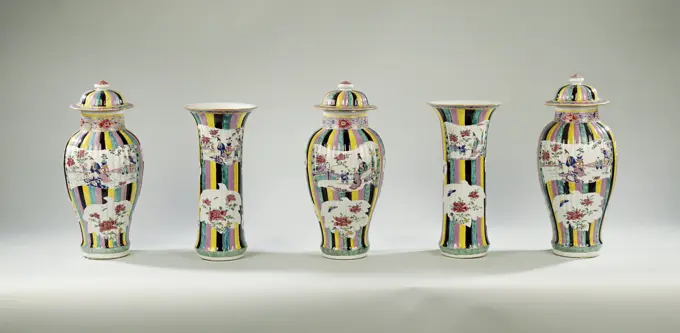
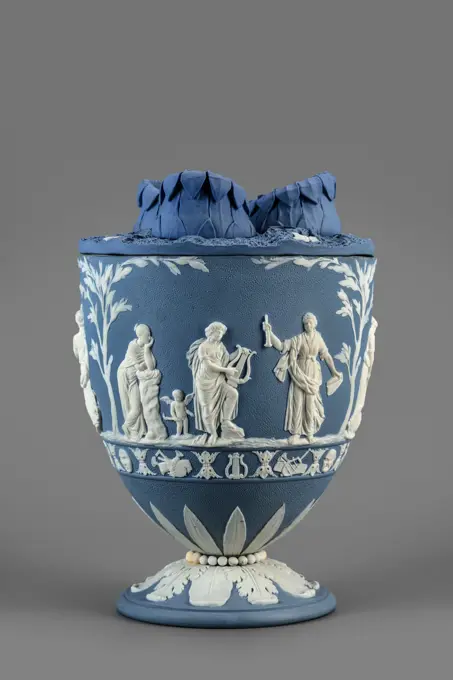
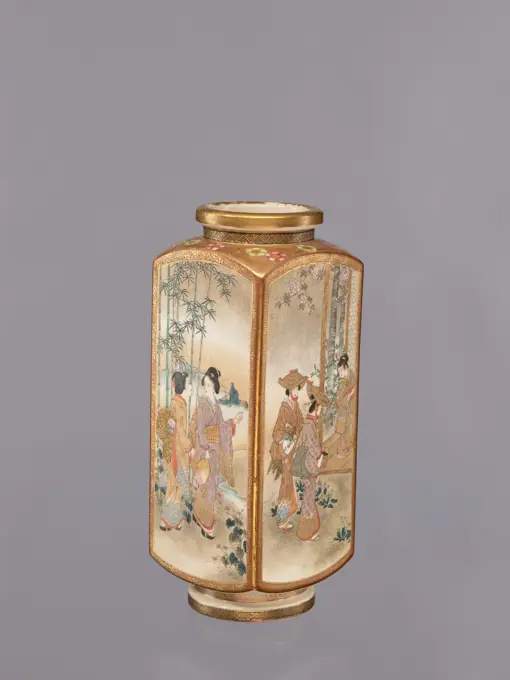
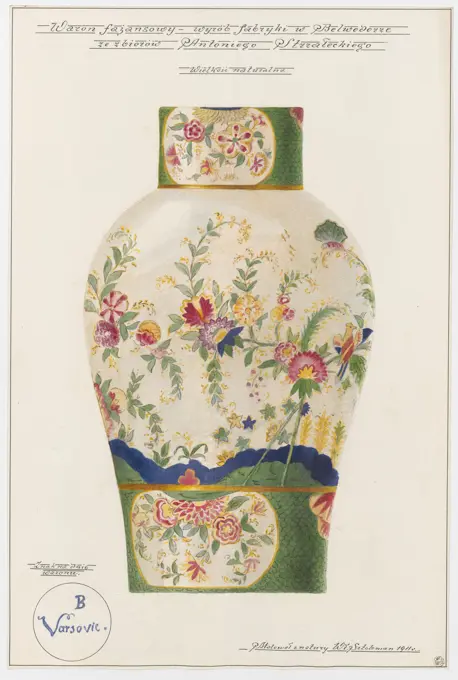
An array of beautifully painted porcelain vases adorned with floral patterns and intricate motifs, highlighting artistic styles from various periods.
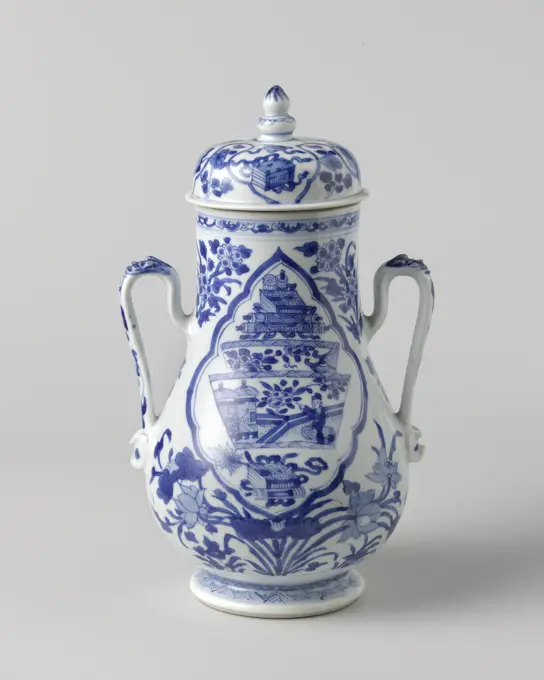
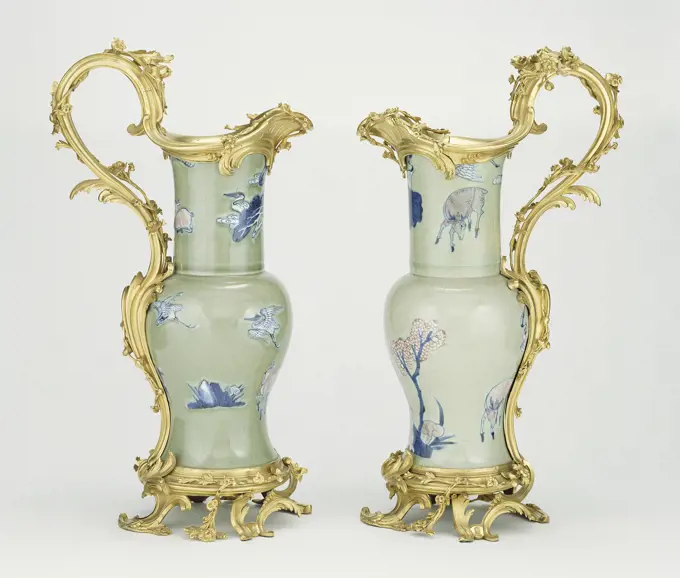
Pear-shaped covered jar with precious objects and flower sprays, anonymous, c. 1700 - c. 1724 Cover of pear -shaped lid jar of porcelain, painted in underlaze blue. On the lid with valuables (pearl, window) and lucky symbols and flower branches, separated by a wavy line. Blue White. China porcelain. glaze. cobalt (mineral) painting / vitrification Cover of pear -shaped lid jar of porcelain, painted in underlaze blue. On the lid with valuables (pearl, window) and lucky symbols and flower branches, separated by a wavy line. Blue White. China porcelain. glaze. cobalt (mineral) painting / vitrification
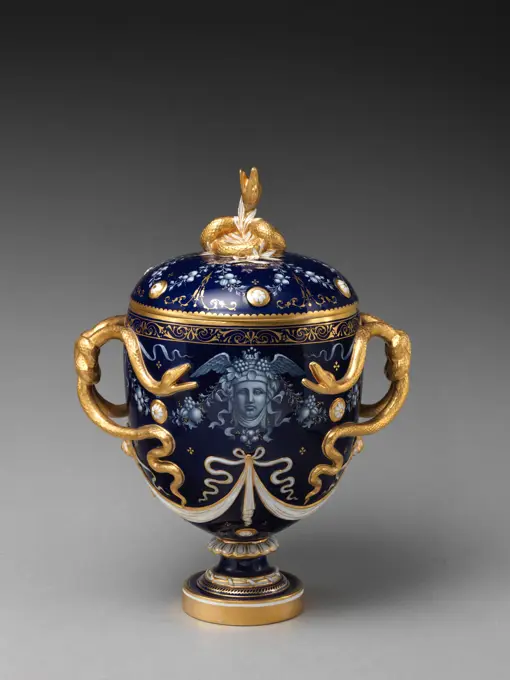
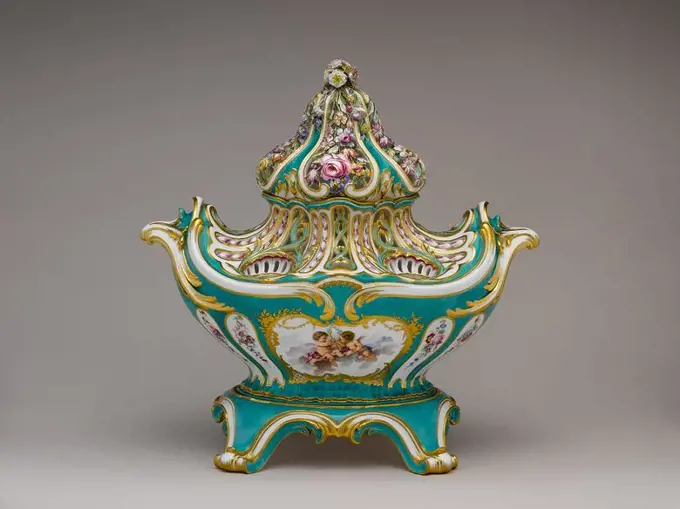
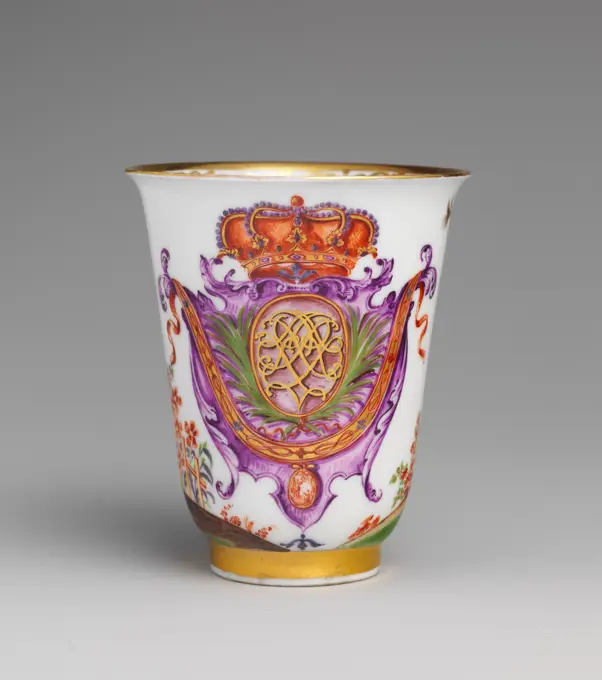
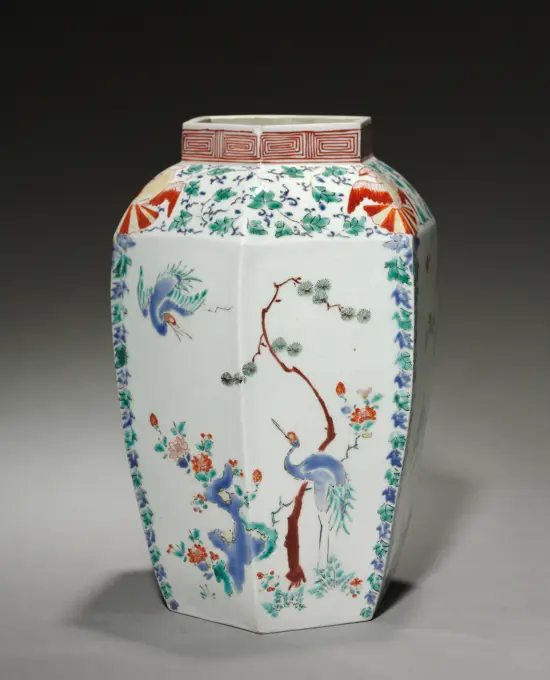
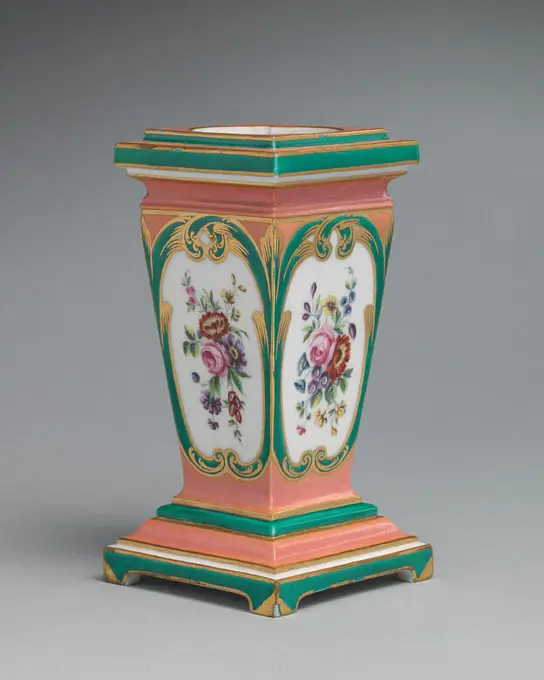
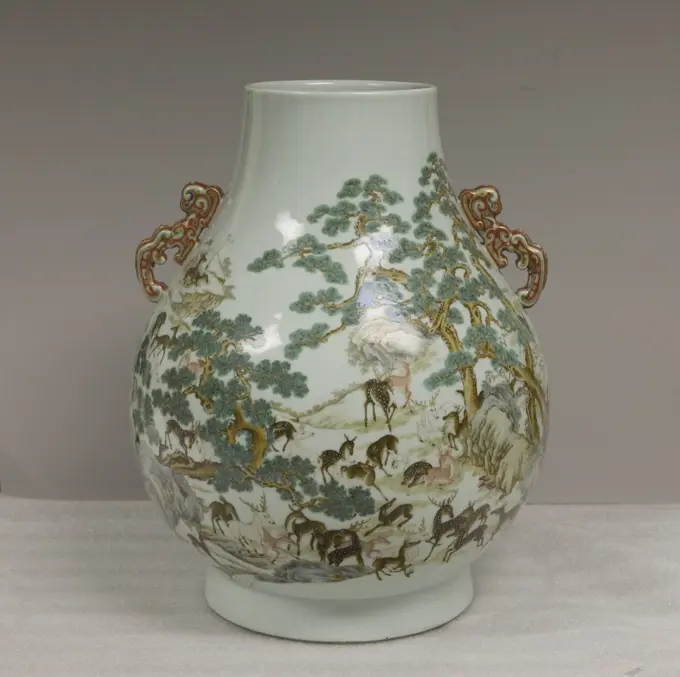
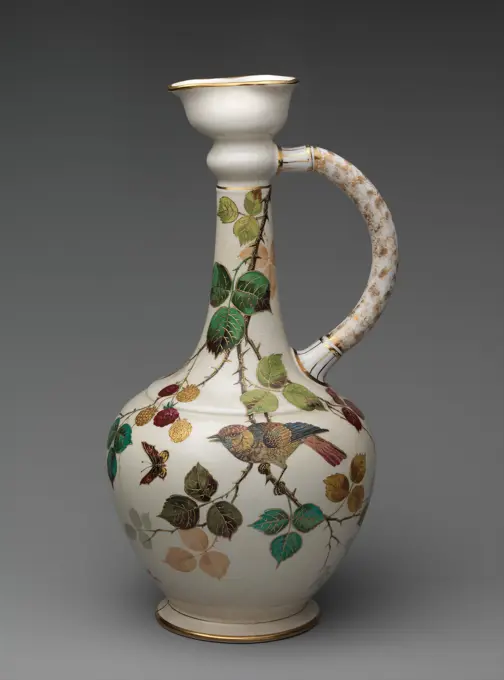
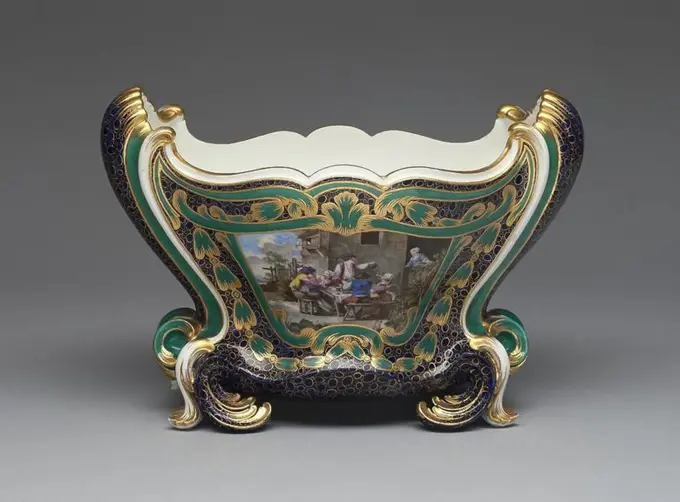
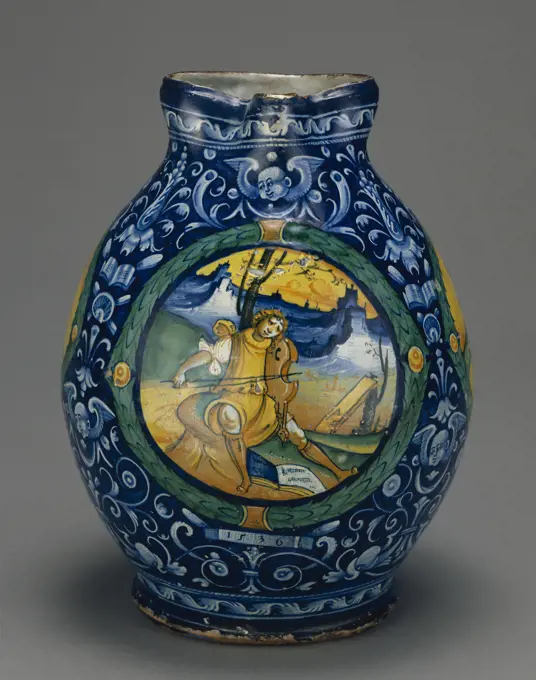
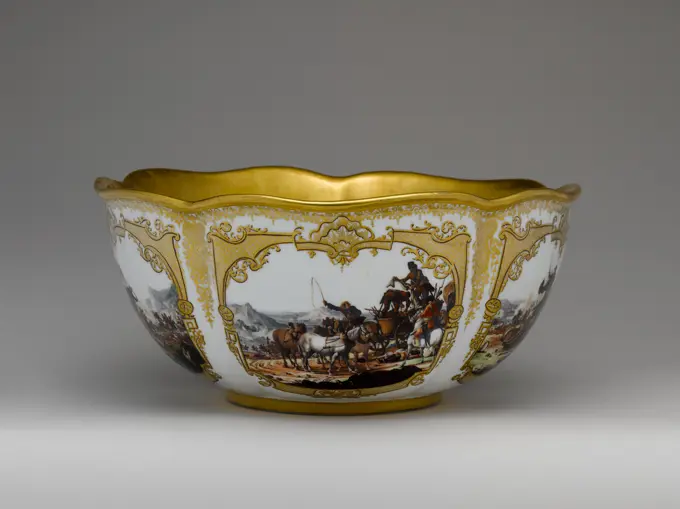
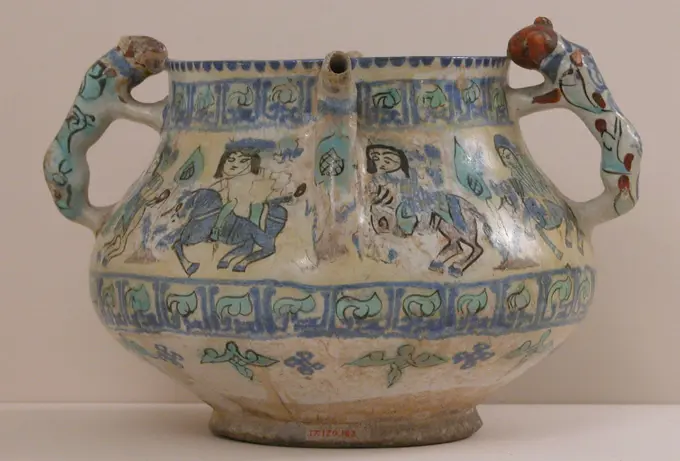
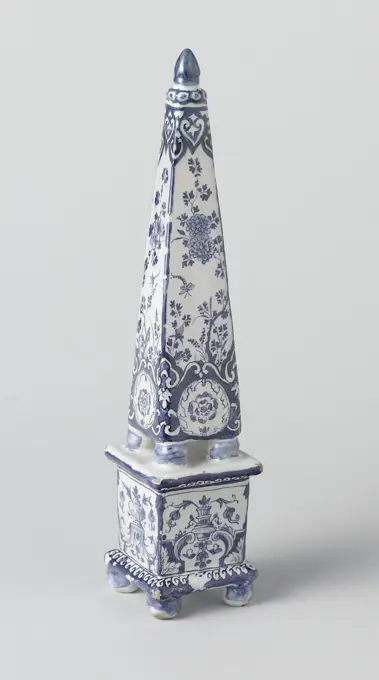
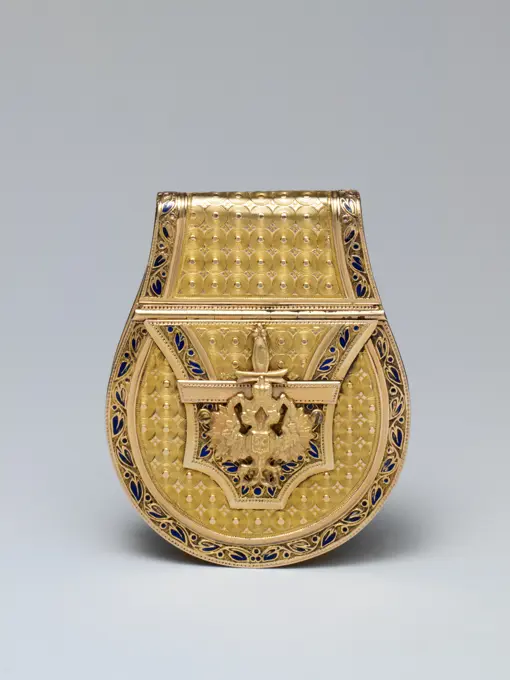
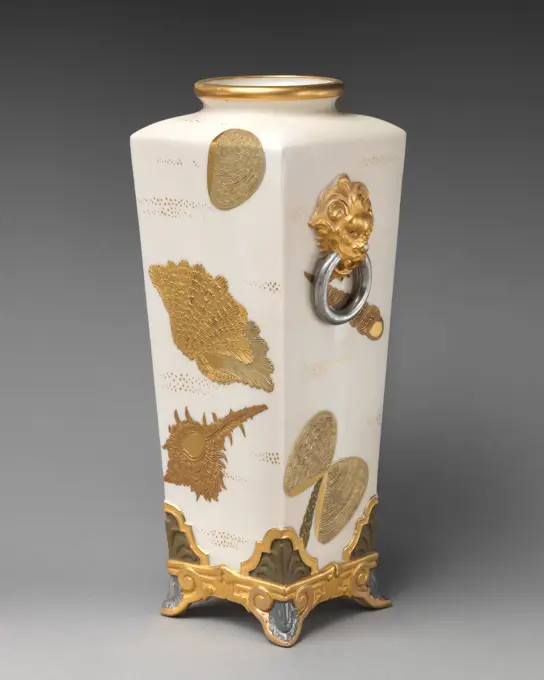
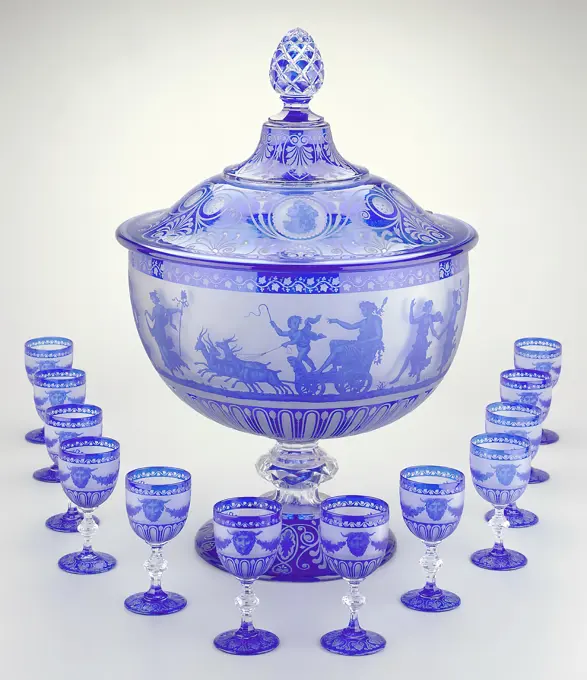
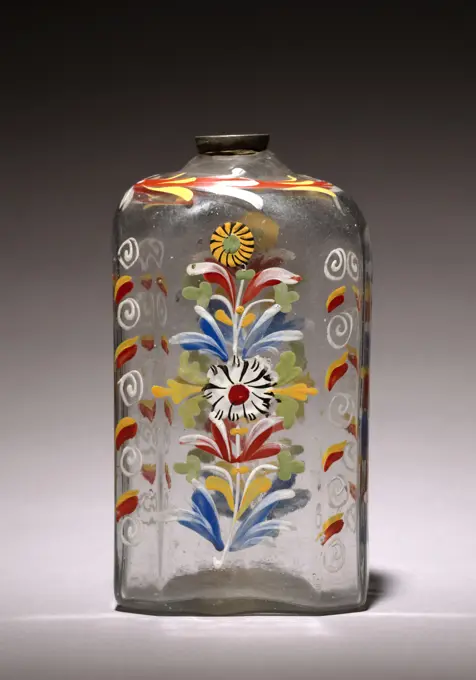
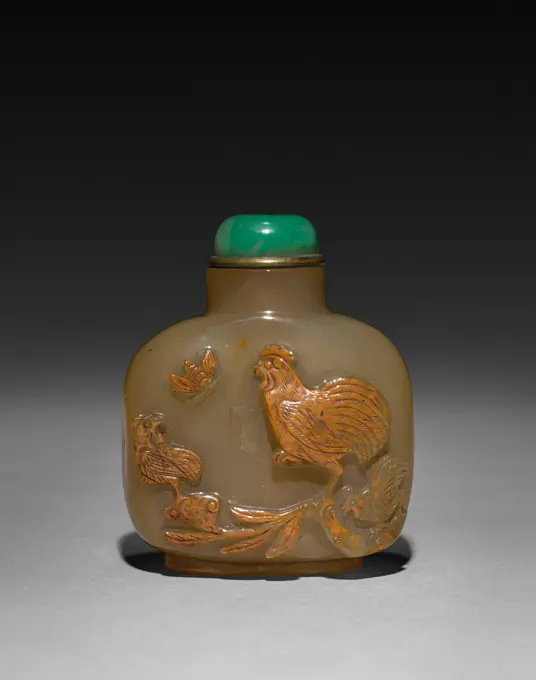
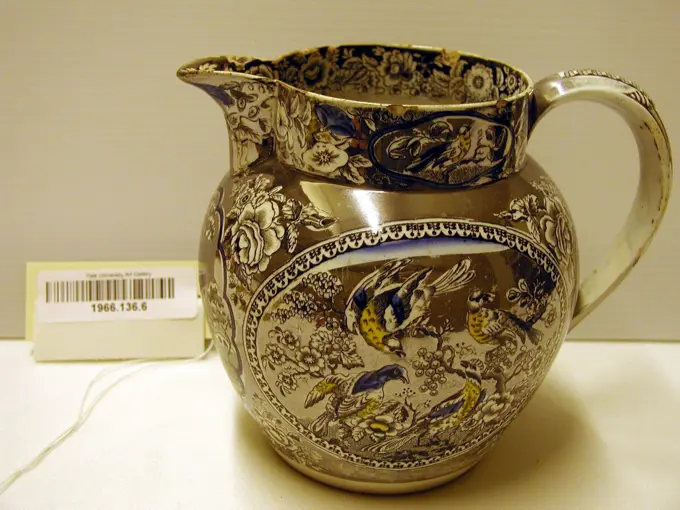
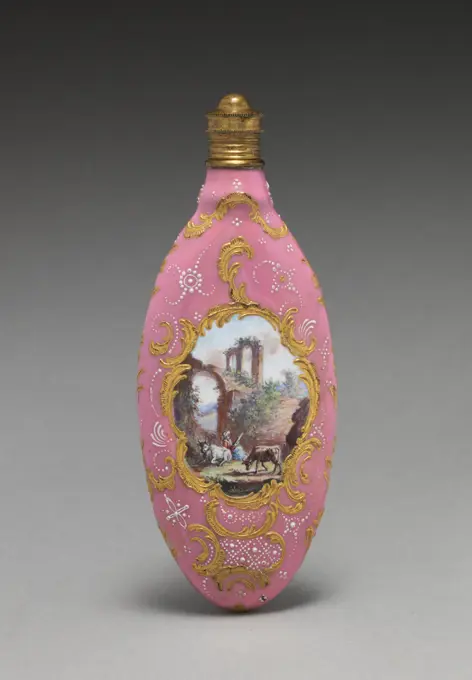
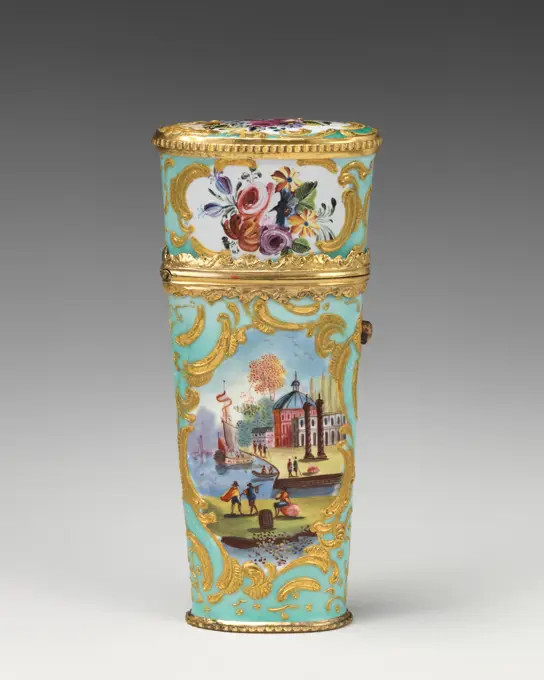
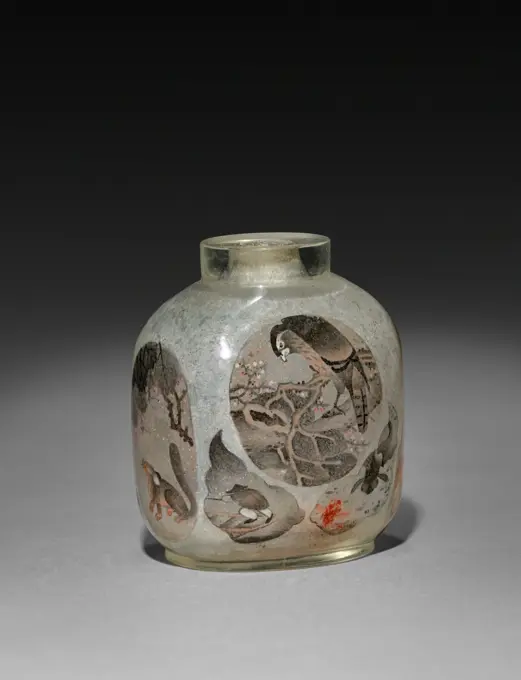
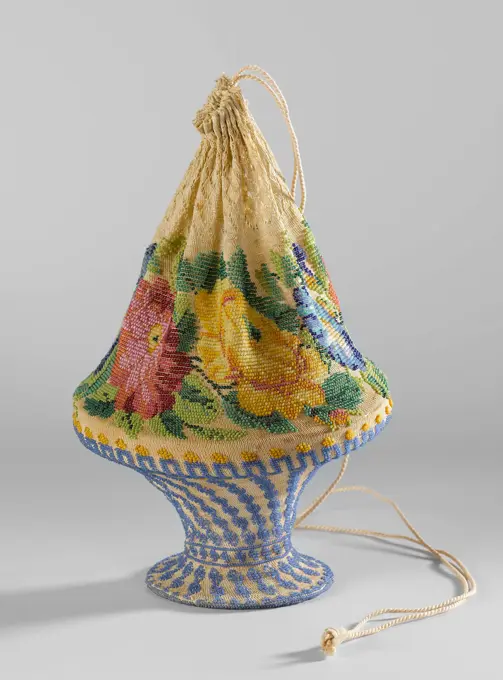
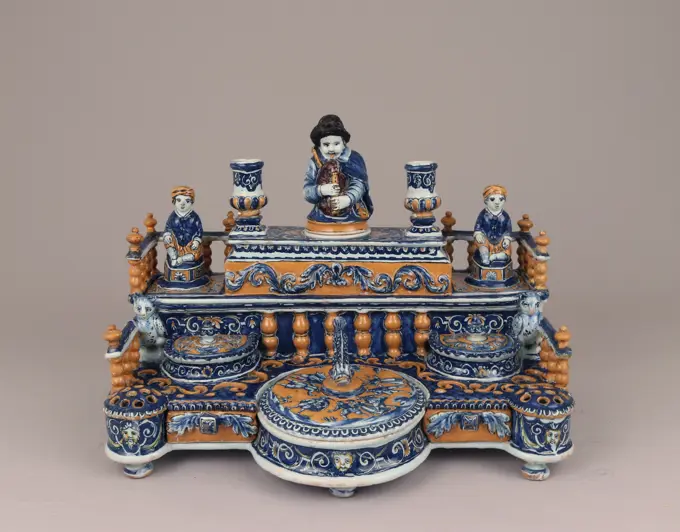
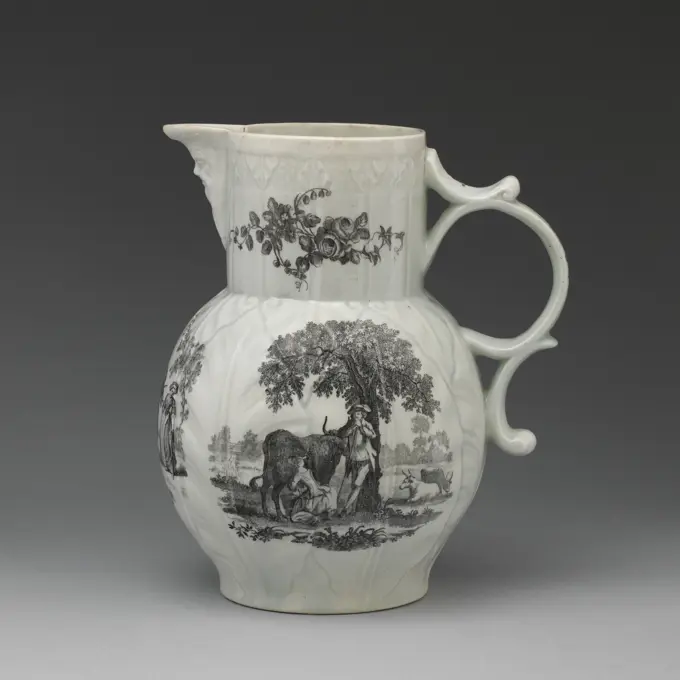
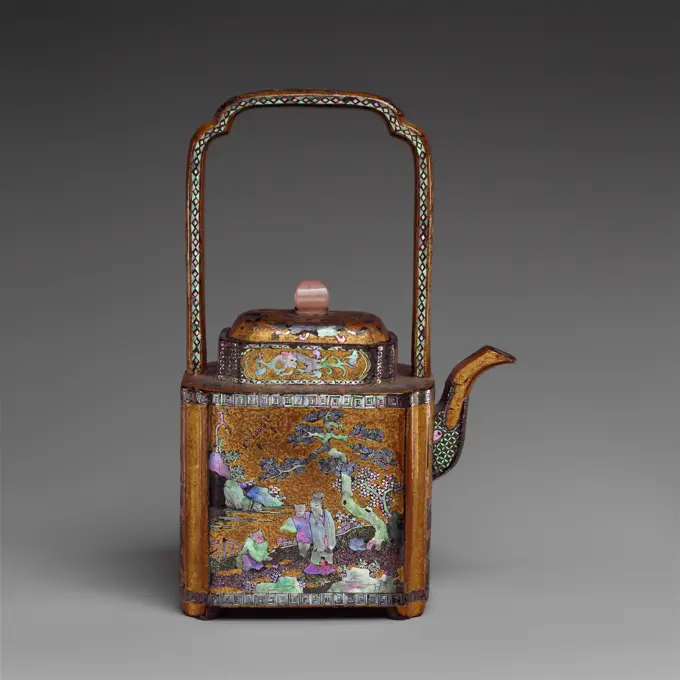
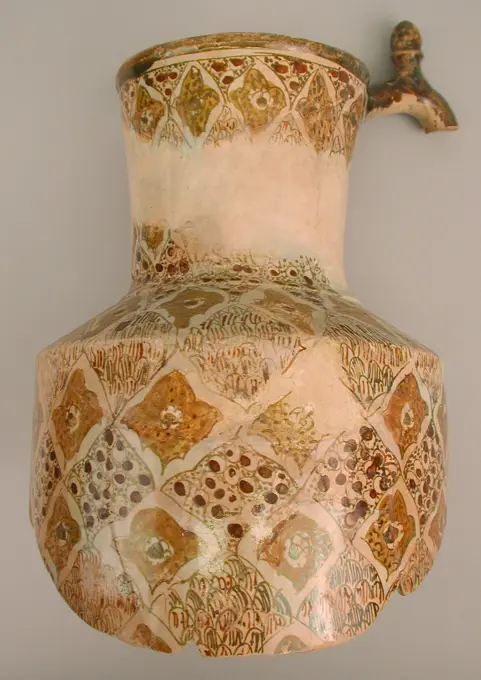
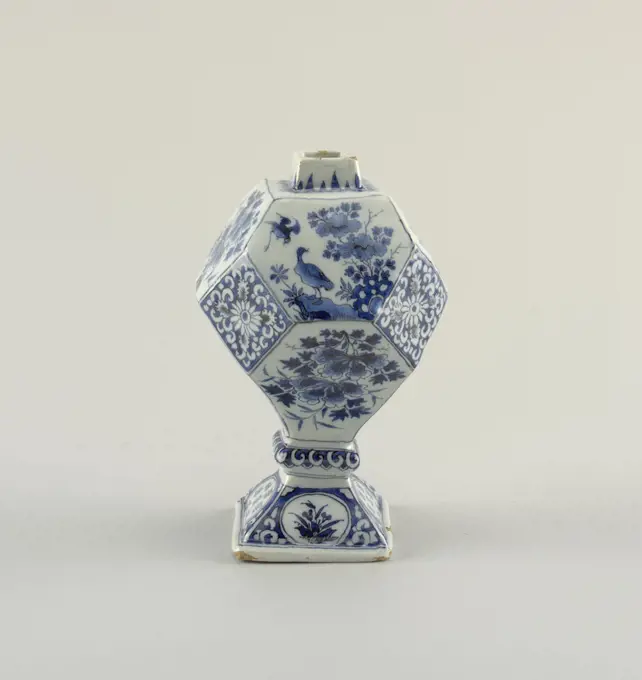
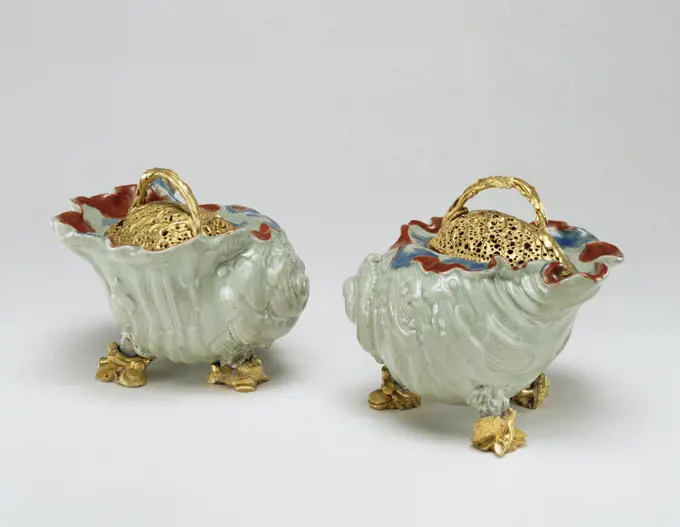
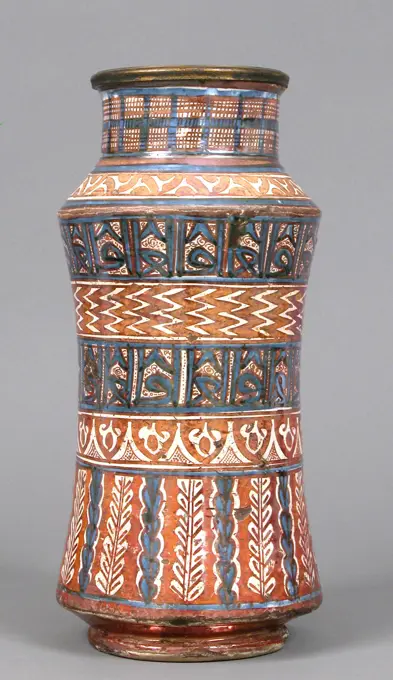
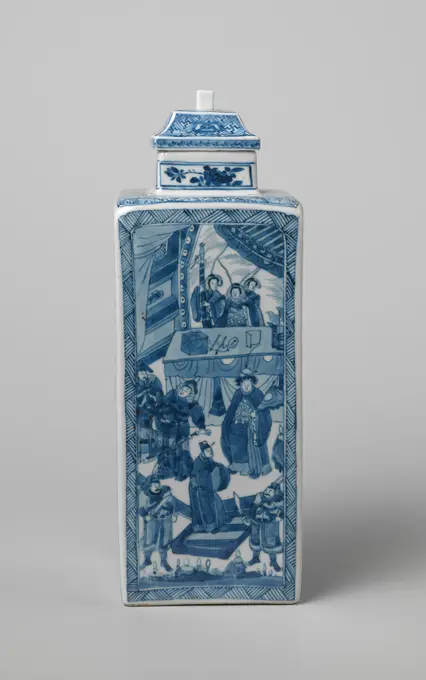
Chinese, Snuff Bottle, porcelain.Lantern and StandLidded vase with Medusa decoration and snake handles ca. 1891 Minton(s) Minton was the most important ceramics factory during the Victorian period and began exhibiting products at the first Great Exhibition of 1851. Founded in 1793 by Thomas Minton at Stoke-on-Trent, the firm initially specialized in transferware pottery before expanding under the ownership of Thomass son Herbert Minton, beginning in 1836. Under the ownership of Colin Minton Campbell, who succeeded his uncle in 1858, the factory became recognized as a specialist producer of Aesthetics movement porcelain, which were inspired by a rich array of exotic and eclectic decorative motifs.. Lidded vase with Medusa decoration and snake handles. British, Stoke-on-Trent, Staffordshire. ca. 1891. Bone china. Ceramics-PorcelainBox with diaper patterns and flowering plants in a panel decoration, anonymous, c. 1400 - c. 1599 Box with lid made of stoneware, painted in underly glaze blue and on the glaze red and green. The wall of the box and edge of the lid are modeled in compartments with alternating servetwork or a flowering plant. The top of the lid with a modeled, scalloped cartouche with a landscape with mountains and trees. A chip in the edge of the box. Vietnam stoneware. glaze. cobalt (mineral) painting / vitrification Box with lid made of stoneware, painted in underly glaze blue and on the glaze red and green. The wall of the box and edge of the lid are modeled in compartments with alternating servetwork or a flowering plant. The top of the lid with a modeled, scalloped cartouche with a landscape with mountains and trees. A chip in the edge of the box. Vietnam stoneware. glaze. cobalt (mineral) painting / vitrificationGoldsmith's art, Italy, 16th century.  Lapis lazuli and enamelled gold cup with pearls. Height cm. 15.4 cm. Miseroni Workshop manufacture, 1550-1599.Potpourri vase (pot-pourri gondole). Culture: French, Sèvres. Decorator: Attributed to Charles Nicolas Dodin (French, Versailles 1734-1803 Sèvres). Dimensions: Overall, body with lid (confirmed): 12 3/16 x 14 1/4 x 7 3/4 in. (31 x 36.2 x 19.7 cm); Overall, base (confirmed): 2 5/16 x 9 x 5 1/4 in. (5.9 x 22.9 x 13.3 cm); Height assembled (confirmed): 14 1/8 in. (35.9 cm). Factory: Sèvres Manufactory (French, 1740-present). Modeler: Jean-Claude Duplessis (French, ca. 1695-1774, active 1748-74). Date: 1757.The French royal manufactory at Sèvres became the most influential and prestigious porcelain factory in Europe in the second half of the eighteenth century. Its products were characterized by innovation in both form and decoration, and by a consistently high level of technical skill. These qualities are evident in the complex pierced design of the cover and shoulder of this gondola-shaped vase, in the rich turquoise ground color, and in the detailed painted and gilded decoration. DesigBeaker 1724-25 Meissen Manufactory German The elaborate coat of arms and monogram of Victor Amadeus II (1666-1732), king of Sardinia, serve as the primary decoration of this beaker and saucer (54.147.75, .76), which belong to a tea and chocolate service presented as a gift by August II (1670-1733), commonly known as Augustus the Strong, elector of Saxony, king of Poland, in 1725. The porcelain service was part of a much larger diplomatic gift sent to Victor Amadeus II by the Saxon court, and due to its artistic and diplomatic significance, it has been well documented.1 This beaker and saucer belong to one of nine tea, coffee, and chocolate services that Victor Amadeus II received, and the gift included two small services for dining, five garnitures of vases, and a variety of other pieces of Meissen porcelain, some of which were part of the Saxon royal collections but nevertheless were selected to be presented to the Sardinian king.2 As has been noted by Maureen Cassidy-Geiger, the Hexagonal Jar, late 1600s. Japan, Edo period (1615-1868). Porcelain with overglaze enamel and gold decoration (Hizen ware, Kakiemon type); overall: 26.8 x 18.6 cm (10 9/16 x 7 5/16 in.). This pair of jars originally possessed domed lids. Their imposing size, shape, and Chinese-style décor identify them as products made for the European markets in England, Holland, France, and Germany. Indeed many similar examples can be seen in museum and historic house collections in those countries. Such Kakiemon ware also inspired domestic porcelain production in Europe in the 18th and 19th centuries.Globular vase late 16th century Style of Domenico Veneziano Italian. Globular vase. Italian, Venice. late 16th century. Maiolica (tin-glazed earthenware). Ceramics-PotteryThree Quart Beer Pitcher. Dated: c. 1940. Dimensions: overall: 40.6 x 30.5 cm (16 x 12 in.) Original IAD Object: Rendered exact size: (Approx 11 3/4" High x 4 1/4" Wide base). Medium: watercolor and graphite on paper. Museum: National Gallery of Art, Washington DC. Author: Carl Buergerniss.Pedestal vase and bulb pot (piédestal en gaine) (one of a pair). Culture: French, Sèvres. Decorator: Master of the Luminous Leaves. Dimensions: Height: 6 in. (15.2 cm);Height (with flowers): 10 in. (25.4 cm). Factory: Sèvres Manufactory (French, 1740-present). Date: 1760. Museum: Metropolitan Museum of Art, New York, USA.Vase with "One Hundred Deer" Motif 18th century China Deer were considered supernatural creatures in premodern China, and they appear frequently in scenes of immortals and magical lands. Here, one hundred deer cavort in a magical landscape of towering pines. This imposing vase carries a second layer of meaning thanks to wordplay: the term for one hundred deer,” bai lu (百鹿), is a homonym for bailu (百祿), the economic, cultural, and social benefits that could accrue during the course of an official career. The theme can thus be read as a wish to attain a position in government.. Vase with "One Hundred Deer" Motif 46105Ewer 1886-90 Faience Manufacturing Company American A long-necked ewer with a pinched spout displays the synthesis of Near and Far Eastern shape and decoration characteristic of the Faience Manufacturing Company's vessels. The decoration of bird and butterfly amid raspberry branches is simultaneously indebted to Japanese motifs as well as those of the much-admired English artists at the Worcester Royal Porcelain Company. By leaving some of the raspberry leaves ungilded, the decorator created a subtle illusion of depth on the surface. The ungilded leaves seem to recede into the background.. Ewer 3571Vase (Cuvette Mahon). Sèvres Porcelain Manufactory; French, founded 1740; Designed by Jean-Claude Duplessis (probably); (French, fl. 1745/48-1774, died 1783); Painted by Charles Nicolas Dodin (attributed to); (French, 1734-1803). Date: 1755-1765. Dimensions: 24 × 28.9 × 16 cm (8 × 11 3/8 × 6 1/4 in.). Soft-paste porcelain, polychrome enamels, and gilding. Origin: Sèvres. Museum: The Chicago Art Institute, Chicago, USA. Author: Manufacture nationale de Sevres.Berretino Jug with a Musical Theme; Faenza, Emilia-Romagna, Italy; 1536; Tin-glazed earthenware; 32.5 x 13.3 x 26 cm (12 13,16 x 5 1,4 x 10 1,4 in.)Two-Handled Jar with Lions' Heads. Culture: Italian. Dimensions: Overall: 9 7/16 x 12 11/16 x 11 1/4 in. (24 x 32.3 x 28.5 cm). Date: early 15th century.This jar, made early in the fifteenth century, includes bold relief ornament of pine cones or grapes and impressive lion masks. It may have been made near Florence, or further south near the towns of Viterbo or Orvieto. Museum: Metropolitan Museum of Art, New York, USA.. Square bottle of porcelain, painted on the glaze in red, green, yellow, purple, black and gold. On the walls twice pavilions on an island with rocks and flowering plants (bamboo), a bird on a branch, and twice a flying bird at a prunus branch and bamboo. On the shoulder a band with prunus branches and a leaf motif; Running around the neck. A meander pattern on the neck. The edge has been ground. A chip in the foot and a few cracks. Arita, decorated in Europe ? In the Japanese Kakiemon style.Pitcher; Manufactured by Masons (England, founded 1806); glazed stoneware (ironestone china)Black -painted fowence lid jar with the presentation of two board players and rocks, Anonymous, 1860 - 1895 FaiMence lid jar. Blue painted with 2 figures playing a board game and rocks. Delft . FaiMence lid jar. Blue painted with 2 figures playing a board game and rocks. Delft .Vase. Culture: China. Dimensions: 25 1/4 × 16 1/4 in. (64.1 × 41.3 cm)Diam. of rim: 11 1/4 in. (28.6 cm)Diam. of foot: 11 1/8 in. (28.3 cm)Height (incl. base): 29 7/8 in. (75.9 cm). Date: 19th century. Museum: Metropolitan Museum of Art, New York, USA.Covered Box. Thailand, Sawankhalok, 16th century. Furnishings; Accessories. Stoneware with underglaze brown painted decorationSnuff Bottle, 19th century, 3 1/8 x 2 1/4in. (7.9 x 5.7cm), Ivory, China, 19th centuryLarge spill vase ca. 1872 Minton(s) Minton was the most important ceramics factory during the Victorian period and began exhibiting products at the first Great Exhibition of 1851. Founded in 1793 by Thomas Minton at Stoke-on-Trent, the firm initially specialized in transferware pottery before expanding under the ownership of Thomass son Herbert Minton, beginning in 1836. Under the ownership of Colin Minton Campbell, who succeeded his uncle in 1858, the factory became recognized as a specialist producer of Aesthetics movement porcelain, which were inspired by a rich array of exotic and eclectic decorative motifs.. Large spill vase. British, Stoke-on-Trent, Staffordshire. ca. 1872. Bone china. Ceramics-PorcelainJARRA VIDRIADA Y PINTADA CON ESCUDO ECLESIASTICO-S XX CERAMICA. Location: ALFARERIA. TALAVERA DE LA REINA. Toledo. SPAIN.Pelvic jug; Creil (ceramic family; 1600-); 2 19th century (1850-00-00-1875-00-00);Ovoid vase with three women and an attendant surrounded by precious objects, anonymous, c. 1800 - c. 1899 Egg -shaped vase of porcelain with a wide, short neck, painted on the glaze in blue, pink, green, yellow, black and gold. On the wall a scene of two women behind a table surrounded by vases, tables and antiques (scepter, books, tripod, vase with peacock springs, coral); Next to this group a servant with a flower vase, in front of her is a cat; A third woman in front of the table, who apparently paints the scene on the vase. Famle Rose. China porcelain. glaze. gold (metal) painting / gilding / vitrification Egg -shaped vase of porcelain with a wide, short neck, painted on the glaze in blue, pink, green, yellow, black and gold. On the wall a scene of two women behind a table surrounded by vases, tables and antiques (scepter, books, tripod, vase with peacock springs, coral); Next to this group a servant with a flower vase, in front of her is a cat; A third woman in front of the table,Bowl ca. 1740 Meissen Manufactory German Battle scenesbased on, if not copied from, engravingswere popular towards the middle of the century. Most have been attributed to Georg Philipp Rugendas (1666-1772), but as the scenes on this bowl have not been traced to him they may represent the work of an intermediate artist.. Bowl. German, Meissen. ca. 1740. Hard-paste porcelain. Ceramics-PorcelainVase with a lid. Prószków Śląski (fabryka fajansu ;1763-1853)Flower Pot and Flowers, 1811-1848. Derby Porcelain Factory (Bloor Period) (British). Artificial porcelain; overall: 16.9 x 10.8 x 10.7 cm (6 5/8 x 4 1/4 x 4 3/16 in.).Water Dropper in the Shape of a PufferFishVase (USA); Caroline Virginia (Rich) McGuffey (American, 1839 - 1905); gilt, enameled porcelainLid. Lid of a butter dish, faience. Decorated with highly recovering leaves and flowers and a pear as a handle.Flask and stopper, Glass, Light blue/white milky glass, painted love birds painted on body., Switzerland, 18th century, glasswares, Decorative Arts, Flask and stopperA vessel for brushes;  19th century (1801-00-00-1900-00-00);Pear-shaped wine ewer with peach and spout ending in a bird's head, anonymous, c. 1800 - c. 1899 Wine can be porcelain with a square pear shape, covered with a turquoise glaze. A modeled peach on both side walls; S-shaped ear and bent spout ending in a bird head. Monochrome. China porcelain. glaze. vitrification Wine can be porcelain with a square pear shape, covered with a turquoise glaze. A modeled peach on both side walls; S-shaped ear and bent spout ending in a bird head. Monochrome. China porcelain. glaze. vitrificationMilk jug with flower basket and water landscape in panels, anonymous, c. 1700 - c. 1799 Small porcelain milk jug with pear-shaped body, triangular spout from the edge and C-shaped ear, painted in underly glaze blue and on the glaze red, green, black and gold. On the edge of the can a Japanese decorative tire in underly glaze blue. In the Netherlands a decoration added in email colors. On the abdomen a wide decorative band with architecture with four cartouches saved with a river landscape with a man in a boat and a flower basket with two insects; On the edge of the curl. Overecored (Amsterdam Bont). Japan porcelain. glaze. cobalt (mineral). gold (metal) painting / gilding / vitrification Small porcelain milk jug with pear-shaped body, triangular spout from the edge and C-shaped ear, painted in underly glaze blue and on the glaze red, green, black and gold. On the edge of the can a Japanese decorative tire in underly glaze blue. In the Netherlands a decoration added in email colors. On Vase. unknown, craftsmanJar 12th-13th century. Jar. 12th-13th century. Stonepaste; polychrome inglaze and overglaze painted (mina'i). Attributed to Iran. CeramicsPair of Ewers. UnknownPair of vases 19th century Dutch. Pair of vases. Dutch. 19th century. Tin glazed earthenware. CeramicsCloisonne Pricket Candlestick, one of a pair, 18th century, 15 3/4 x 7 7/16 in. (40 x 18.89 cm), Gilt bronze, enamel, China, 18th centuryJug with lid; Plaue A.D.HAVEL; 1710-1719 (1710-00-00-1710-00-00);Scent bottle late 18th century Josiah Wedgwood British. Scent bottle. Josiah Wedgwood (British, Burslem, Stoke-on-Trent 1730-1795 Burslem, Stoke-on-Trent). British, Etruria, Staffordshire. late 18th century. Jasperware. Ceramics-PotteryObbelisk, the metal pot, c. 1690 - c. 1720 Obelisk van faience Delft . Obelisk van faience Delft .Deep sign from V.O.C. ship De 'Witte Leeuw', Anonymous, Before 1613 plate (dishes) Deep sign from V.O.C. ship the 'Witte Leeuw', 70 present. Jingdezhen bone china (material)   Sint-HelenaKrug ca. 1700 Rose factory. Krug 207991Vase; Manufactured by Derby Porcelain Factory (England, GB, United Kingdom); molded porcelain, overglaze enameling and gilding; 17.4 x 11 cm (6 7/8 x 4 5/16 in.)Garniture with figures, flower sprays and auspicious symbols in shaped panels on a multi-colored ground, anonymous, c. 1725 - c. 1740 Five -piece porcelain cabinet with three baluster vessels with lid and two cups with ribbed wall, painted on the glaze in blue, red, pink, green, yellow, purple, black and gold. On the wall cartouches against a frequently colored background of vertical tires (Harlequin pattern); Two cartouches in the form of open rolls with a woman (long lijs) with young (fool) in a fenced garden with flowering plants, underneath two leaf-shaped cartouches with peony branch and butterfly, a smaller pomegranate and fingercitren-shaped compartment on either side of the large courses with lucky symbols; On the neck a band with flower vines. The lid with the same decoration. Famle Rose. China porcelain. glaze. gold (metal) painting / gilding / vitrification Five -piece porcelain cabinet with three baluster vessels with lid and two cups with ribbed wall, painted on the glaze Vessel with openwork design 18th century Japan. Vessel with openwork design. Japan. 18th century. Stoneware with polychrome enamels (Ko-Kiyomizu). Edo period (1615-1868). CeramicsBouquet with sleeves and inserts. Flaxman Mł., John (1755-1826), sculptor, Wedgwood, Josiah (1730-1795), factory owner, Etruria Factory (Staffordshire ; wytwórnia ceramiki ; 1769-1950), factoryVase. Hozan, Matsumoto (fl.ca 1880-1920), ceramistVase decorated in far-eastern style, from the collection of Antoni Strzałecki ; drawing for the publication: `CERAMIKA POLSKA ZEBRANA STARANIEM DOMINIKA WITKE JEŻEWSKIEGO, MALOWAŁ WŁ. SZTOLCMAN` Polish ceramics collected by the effort of Dominik Witke-Je???????????????????. Sztolcman, Władysław Roman (1873-1950), painterTaperstick Possibly Michael Edkins 1760-70Vase;  19th century (1801-00-00-1900-00-00);Music Box ca. 1810 Swiss Purse-form gold music box with blue enamel borders. Decorated with the Russian Imperial Eagle and sword.. Music Box. Swiss. ca. 1810. Various materials. Geneva(), Switzerland. IdiophoneVase with gold sea shell motifs 1878 Worcester factory After the end of the Flight, Barr & Barr ownership of the Worcester factory in 1840, the firm went through a succession of owners and mergers before falling under the ownership of Kerr & Binns in 1852. During the partnership, the factory sought to rebuild its former eighteenth-century reputation in porcelain and known for Renaissance-inspired designs. With the establishment of the Royal Worcester Porcelain Company in 1862, the company gradually gained recognition for its Japanese-inspired designs, which formed part of Japonisme, a collective fascination with Japan that took place in Europe and the United States following the opening of Japanese markets to the West by Commodore Perry in 1853.. Vase with gold sea shell motifs. British, Worcester. 1878. Porcelain. Ceramics-PorcelainObelisk of multi-colored painted faïence. Obelisk of Faïence. Multicolor painted with floral drinks.JARRAS DE TALAVERA S XVII Y XVIII. Location: MUSEO ARQUEOLOGICO NACIONAL-COLECCION. MADRID. SPAIN.Punch goblet, 1867, Cristalleries de Baccarat, Baccarat, France, est. 1764, 4 3/4 x 2 7/16 in. (12.07 x 6.19 cm), Cased lead glass, France, 19th centuryEnameled Bottle, 1700s. America, Stiegel Type, 18th century. Glass; diameter: 1.6 cm (5/8 in.); overall: 15.9 x 6.6 x 8.5 cm (6 1/4 x 2 5/8 x 3 3/8 in.).Circular Cosmetic Box with Figures in Landscape. China, Chinese, Late Ming dynasty, circa 1550. Furnishings; Accessories. Black lacquer on wood core with mother-of pearl inlayVase multicolored painted with flower motifs, N.V. Haagsche Plateel Factory Rozenburg, 1886 Vase with lid (b) of earthenware, painted in green, yellow, brown and dark blue with stylized floral motifs. Marked with: w v with flag g / The Hague / b, in black. The Hague earthenware Vase with lid (b) of earthenware, painted in green, yellow, brown and dark blue with stylized floral motifs. Marked with: w v with flag g / The Hague / b, in black. The Hague earthenwareEwer in the shape of a bird, anonymous, c. 1170 - c. 1199 Can be decorated from quartz-fritry in the form of bird with polychrome luster on the surface of transparent alarm laze. is the earthenware. glaze. luster (textile) painting / vitrification Can be decorated from quartz-fritry in the form of bird with polychrome luster on the surface of transparent alarm laze. is the earthenware. glaze. luster (textile) painting / vitrificationSnuff Bottle, 1644-1911. China, Qing dynasty (1644-1911). Glass and jade; overall: 7.7 cm (3 1/16 in.).Taperstick 1760-70 Possibly Michael Edkins. Taperstick 8251Cover With Rocks, Flowering Plants and a Finial Molded in the Shape of a Tea Drinking Company. Porcelain lid, painted in underglaze blue and on the glaze red, black and gold. On the lid flowering peony and chrysanthemum plants at rocks. The lid knob consists of a modeled, tea crying company. Imari.Globular jar late 16th century Style of Domenico Veneziano Italian. Globular jar. Italian, Venice. late 16th century. Maiolica (tin-glazed earthenware). Ceramics-PotteryVase. unknown, craftsmanVase with cover (probably vase à btons rompus) 1771 Sèvres Manufactory French. Vase with cover (probably vase à btons rompus). After a painting by Jean Honoré Fragonard (French, Grasse 1732-1806 Paris). French, Sèvres. 1771. Soft-paste porcelain. Ceramics-PorcelainSpill Vase 1830-70 American. Spill Vase. American. 1830-70. Parian porcelain. Probably made in Bennington, Vermont, United StatesPitcherVase. unknown, craftsmanScent bottle ca. 1760-1800 British, Staffordshire. Scent bottle. British, Staffordshire. ca. 1760-1800. Enameled copper. EnamelsIncense burner with cover 18th century China. Incense burner with cover 44245Vanity case ca. 1760-1800 British, Staffordshire. Vanity case. British, Staffordshire. ca. 1760-1800. Enameled copper. EnamelsSnuff Bottle with Stopper, 1736-95. China, Qing Dynasty (1644-1911), Qianlong reign (1736-95). Crystal; with cover: 8.4 cm (3 5/16 in.).Tea Caddy. China, Qianlong reign; Chinese, made for the American market. Date: 1785-1800. Dimensions: 13.7 × 8.3 × 3.5 cm (5 3/8 × 3 1/4 × 1 3/8 in.). Porcelain. Origin: United States. Museum: The Chicago Art Institute, Chicago, USA.Vase with cover (vase à dauphins) Manufactory Sèvres Manufactory French Decoration attributed to Charles Nicolas Dodin French ca. 1765-70. Reticule in the form of a floral basket, of ecru-colored cotton, which includes multicolored beads. At the top a job in Wybertjes patron, including large layers of flowers in red, blue and yellow beads, with leaves around in green beads. Halfway through the reticule a paved hoop with a round, paved bottom of thick paper at the bottom, making the lower part of the bag a sand lump model. From this hoop diagonal lines of contiguous blue beads. On top of the bag an eight-pointed star in blue beads. An ecru-colored rotated cord was strung by openings on the top edge. The cord was probably added later. The reticule is unfinished.Inkstand (Écritoire) 18th century French, possibly Lille Round the central disc are figures representing the recreations of the Four Seasons: skating, country dancing, music making and toasting with new wine.. Inkstand (Écritoire). French, possibly Lille. 18th century. Faience (tin-glazed earthenware). Ceramics-PotteryJug ca. 1760 Worcester factory. Jug. After a print of "The Rural Lovers" by François Vivares (French, Saint-Jean-du-Bruel 1709-1780 London). British, Worcester. ca. 1760. Soft-paste porcelain. Worcester factory (British, 1751-2008). Engraved by Robert Hancock (British, Burslem 1730-1817 Bristol). Ceramics-PorcelainPharmacy Jar. Culture: Spanish. Dimensions: Overall: 12 3/8 x 7 1/4 in. (31.4 x 18.4 cm). Date: early 15th century. Museum: Metropolitan Museum of Art, New York, USA.Vase with decor of geraniums, N.V. Plateelbakkerij Zuid-Holland, c. 1905 - c. 1915 Vase of earthenware, slender shape with long neck. Painted in green, black-gray and brown, with geraniums. Marked: Made in South Holland and factory brand with left "p/a." And right "C.J.V M. Inganglift Model no. 5012. Gouda earthenware Vase of earthenware, slender shape with long neck. Painted in green, black-gray and brown, with geraniums. Marked: Made in South Holland and factory brand with left "p/a." And right "C.J.V M. Inganglift Model no. 5012. Gouda earthenwareVase. Culture: American. Decorator: Probably decorated by Thomas Tucker (1812-1890). Dimensions: H. 14 in. (35.6 cm). Manufacturer: Tucker Factory (1826-1838). Date: 1828-38. Museum: Metropolitan Museum of Art, New York, USA.Pair of Ewers; porcelain 1662 - 1722; mounts 1745 - 1749; Hard-paste porcelain, celadon ground color, underglaze blue and copper red decoration; gilt bronze mounts;Pharmacy Jar 1420-1430 Spanish. Pharmacy Jar. Spanish. 1420-1430. Tin-glazed earthenware. Made in probably Manises, Valencia, Spain. CeramicsWine pot with figures in a landscape 18th century China While lacquer on metal is an aspect of the revival of metalworking in China during the seventeenth century, the combination of thin, tinted pieces of mother-of-pearl with gold foil derives from refinements in lacquer technology that can be dated somewhat earlier, to the late fifteenth and sixteenth centuries. An inscription on the base of this pot indicates that it was produced by, or under the supervision of, an artist named Shang Yiliang. Although details of his identity remain unclear, Shang is one of a handful of metal artists who signed their works. It is reasonable to assume that his work was well regarded, and probably collected, during his lifetime.. Wine pot with figures in a landscape 59031Apothecary Jar (Albarello) 1505-1525 Siena. Tin-glazed earthenware (maiolica) .CERAMICA DE TALAVERA (TOLEDO) - JARRA DECORADA EN AZUL. Location: MUSEO DEL PUEBLO ESPAÑOL. MADRID. SPAIN.Fragmentary Ewer with Polychrome Luster Decoration 9th century The small circles filling some of the sections on this two-toned luster ewer might have been inspired by millefiori mosaic glass, since they seem to imitate the designs on such pieces. Although the ewer is fragmentary, it is possible to visualize its original large size and unusual angular profile.. Fragmentary Ewer with Polychrome Luster Decoration 451188Jar with floral scrolls 18th century China. Jar with floral scrolls 48465Bottle, Grieksche A de (the Greek A Factory), Delft, Netherlands, founded 1658, Tin-glazed earthenware, Twelve-faceted body with short square-sided neck on a 4-sided domed foot with knop; painted in underglaze blue on white with chinoiserie designs of flowers and birds, leaves, pseudo-Chinese characters in reserve on base., Delft, Netherlands, 1678-1686, ceramics, Decorative Arts, BottlePair of Pot-pourri Bowls; porcelain about 1660 - 1680; mounts about 1750; Hard-paste porcelain, celadon ground color, and polychrome enamel decoration; gilt-bronze mounts;TAZON DE PORCELANA S XVIII. Location: CONVENTO DE SAN CLEMENTE-MUSEO. Toledo. SPAIN.GlassBeaker 1573 Germany. Colorless glass and enamel .Pharmacy Jar 1400-1450 Spanish This work is decorated with many of the motifs favored for pharmacy jars, including two bands bearing an alafiaa stylized inscription of the Arabic word for "health and happiness.". Pharmacy Jar. Spanish. 1400-1450. Tin-glazed earthenware. Made in probably Manises, Valencia, Spain. CeramicsSalt or Pepper Made 1810-1820 Sunderland. Lead-glazed earthenware with lustre decoration .Square Bottle with narrative scenes or warriors in a landscape. Square bottle of porcelain, painted in underglaze blue. On the walls elongated cartouches with pinched corners with different fighting scenes: warriors in a landscape in a battle on a horse, or warriors on a terrace standing in front of a table behind which sitting magistrates. To make the cartouches a band with arrearing. On the shoulder a band with a Swastika pattern and four times a flowering plant on the neck. Marked on the bottom with an artemisia leaf. Blue White.Sugar bowl with a view of Washington Standing at Tomb, Scroll inHand..  Manufacturer: Enoch Wood and Sons, British, 1820-1846Engraver Source material by: Cornelius Tiebout, American, ca. 1773-1830After Source material after a drawing by: Dr. Charles Buxton, M.D., American, active 1783Publisher source material by: Charles Smith, American, 1768-1808Honorand: George Washington, American, 1732-1799, LL.D. 1781