Decorative Porcelain

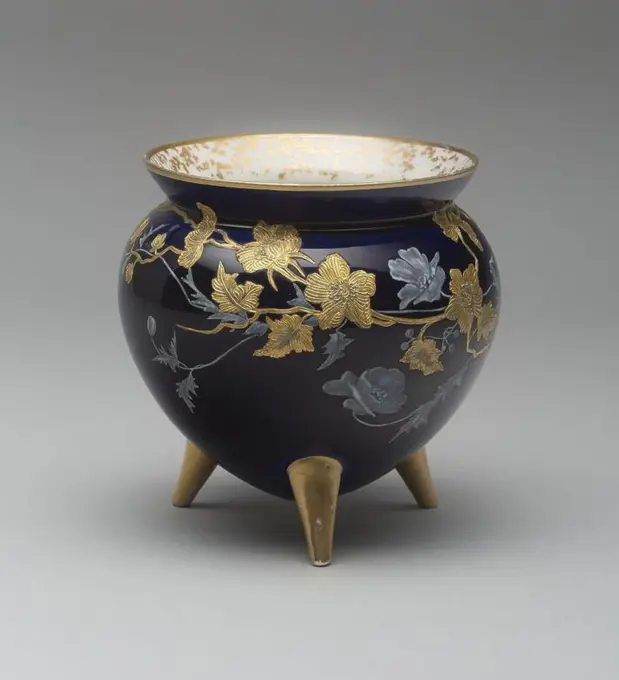
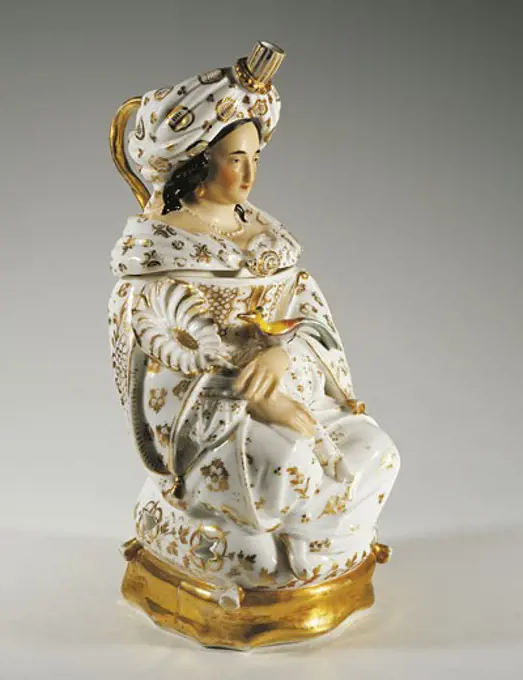
Elegant porcelain items including tea caddies and vases with intricate floral designs and gilded accents, showcasing craftsmanship and artistic detail.

Covered baluster jar with figures in an interior behind framework, prunus trees and floral scrolls, anonymous, c. 1650 - c. 1699 Balus -shaped porcelain lid jar with a spreading base, painted in underly glaze blue and on the glaze red, black and gold. On the wall twice two people sitting in an interior behind modeled and painted grille work. This grille is decorated with modeled and decorated prunus trees and tires with flower vines. Under the grille work a band with flower vines. Around the foot a bond with lotus drinks. On the neck three cartouches with lotus vines. Imari. Japan porcelain. glaze. cobalt (mineral). gold (metal) painting / gilding / vitrification Balus -shaped porcelain lid jar with a spreading base, painted in underly glaze blue and on the glaze red, black and gold. On the wall twice two people sitting in an interior behind modeled and painted grille work. This grille is decorated with modeled and decorated prunus trees and tires with flower vines. Under the grille wo
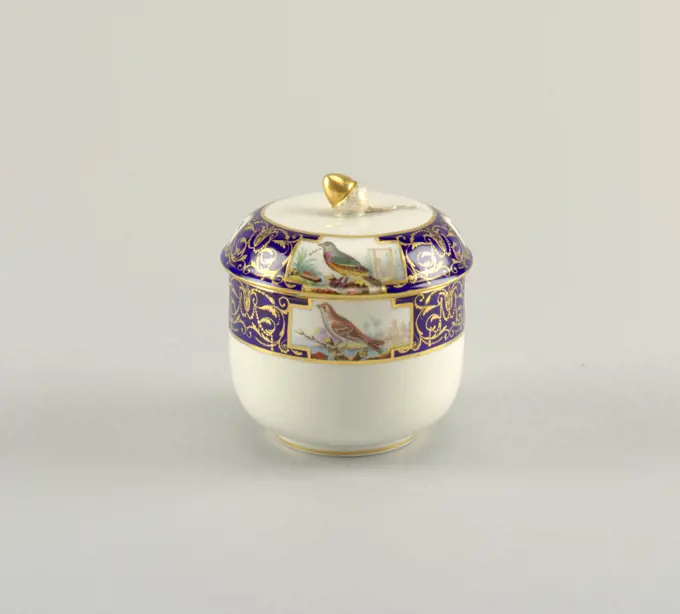
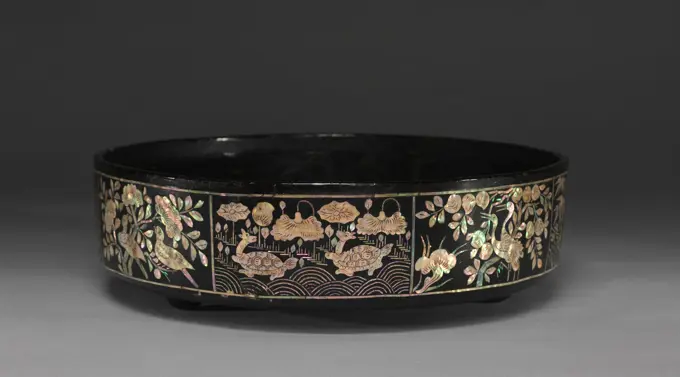
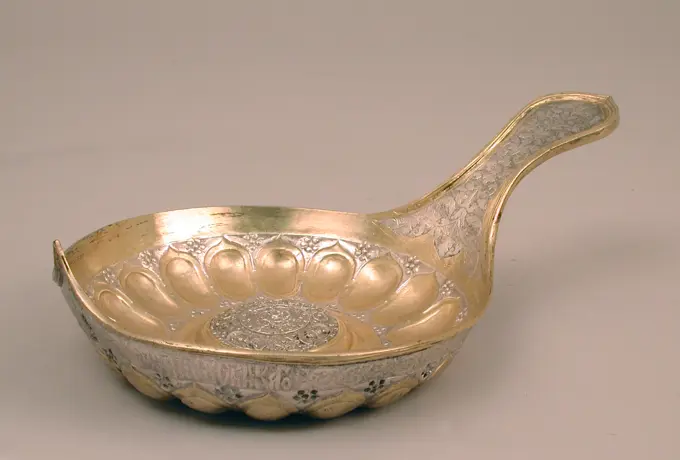
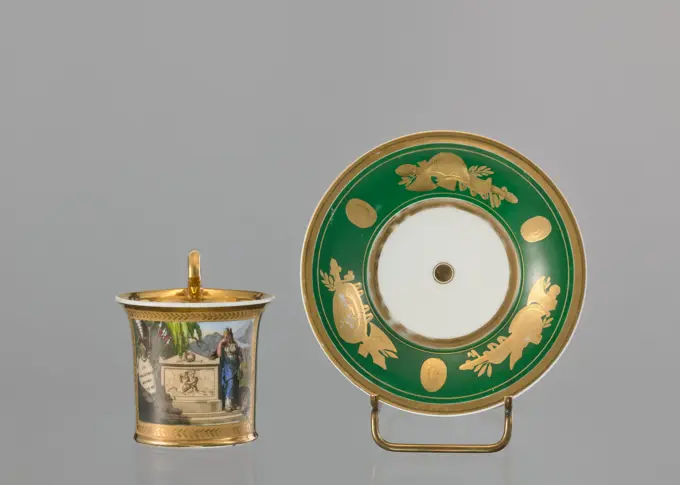
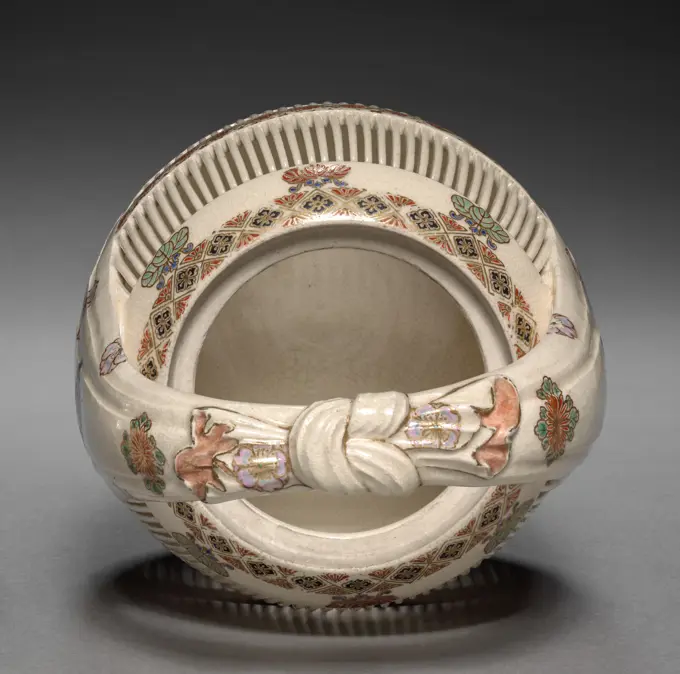
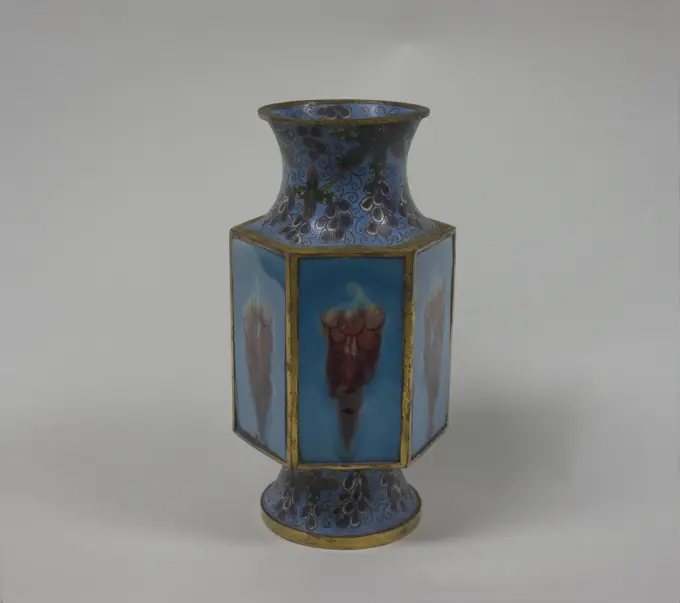
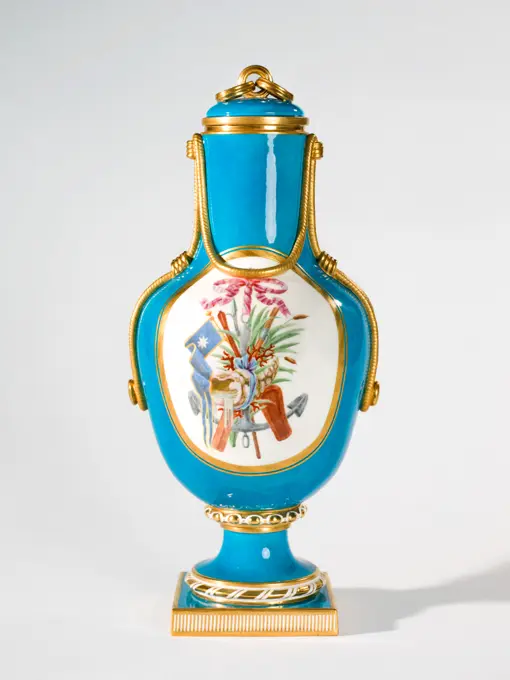
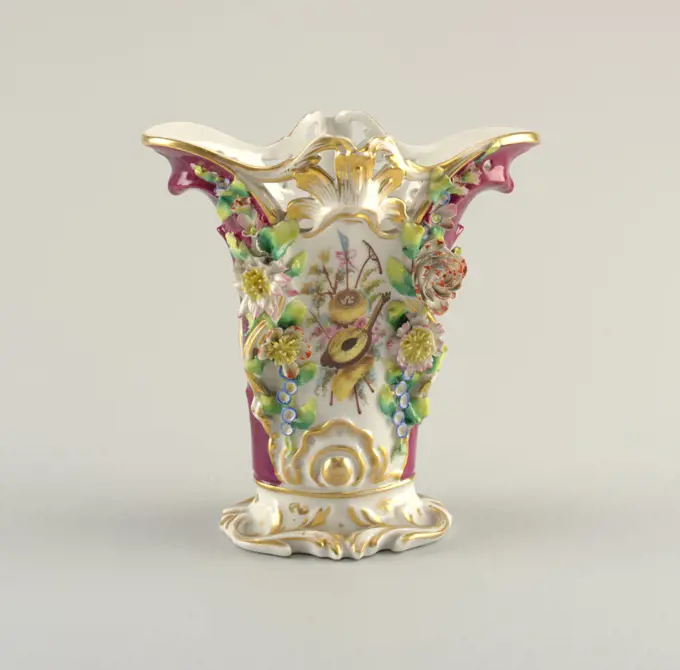
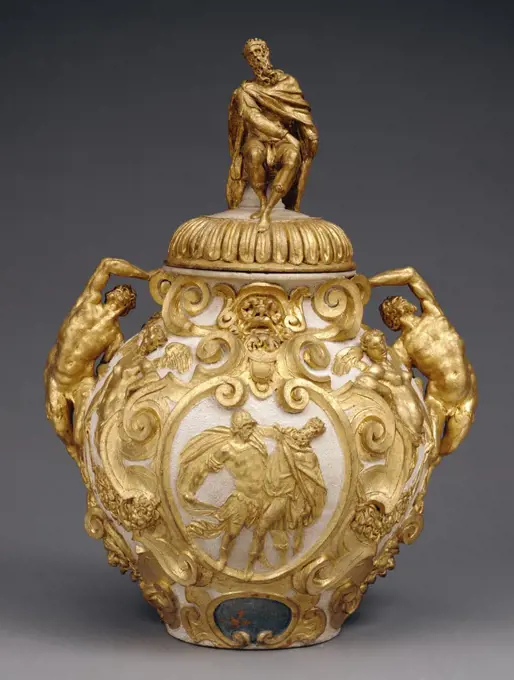
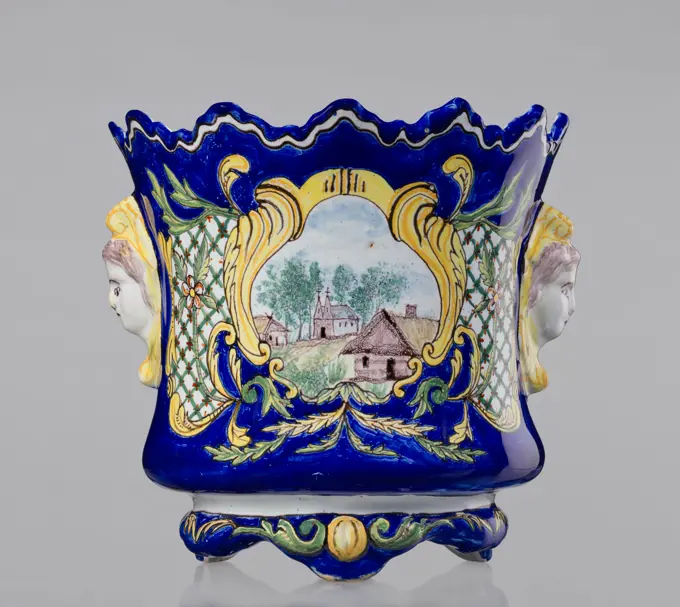
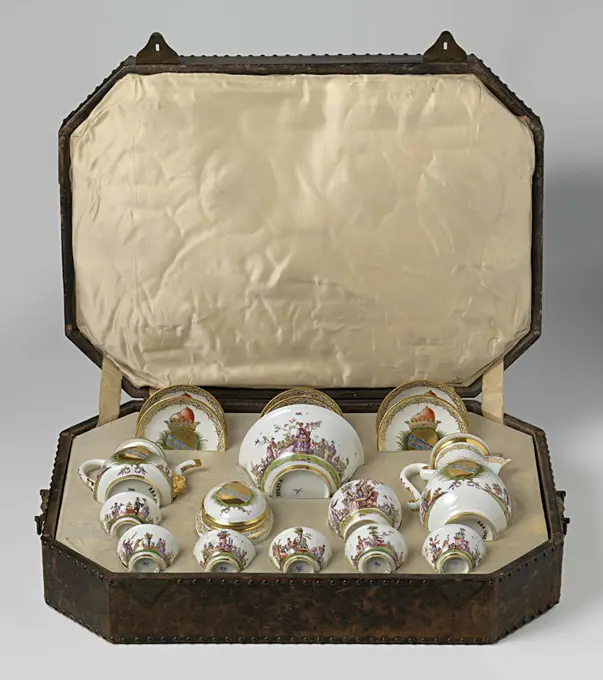
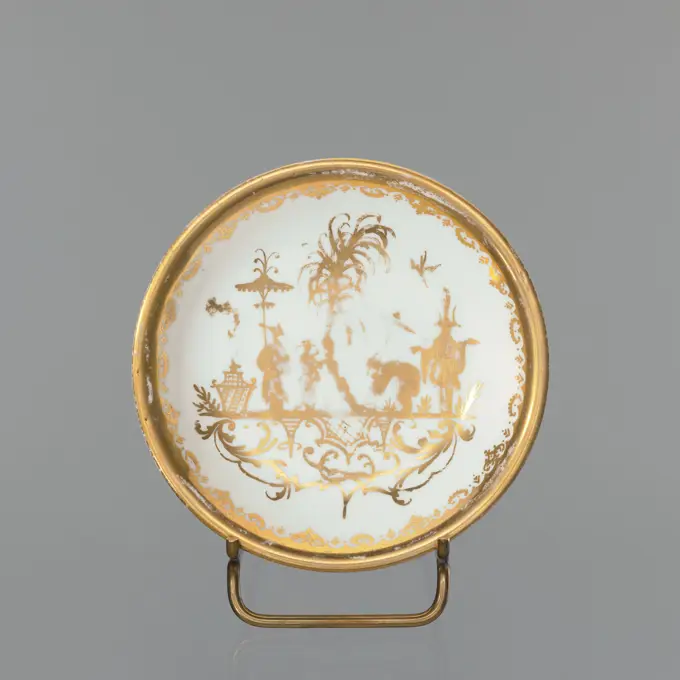
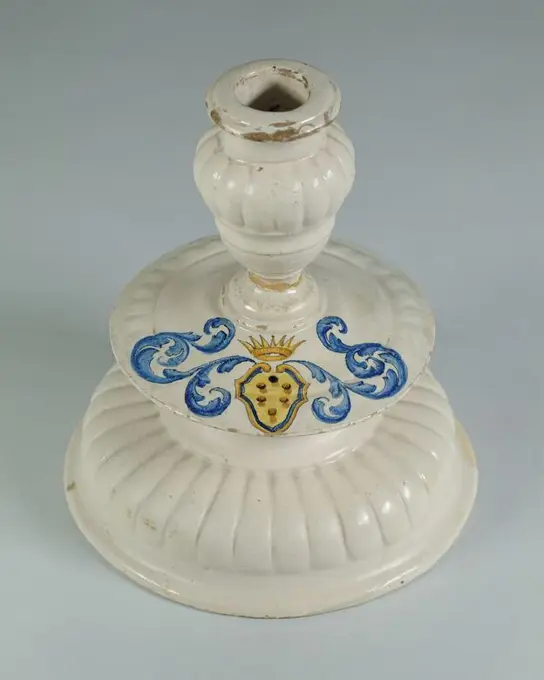
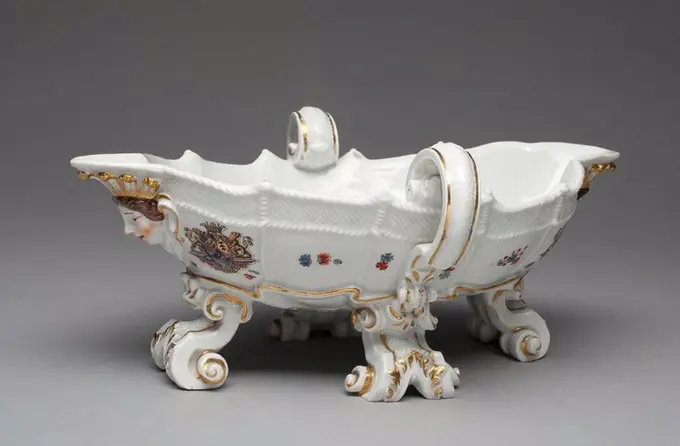
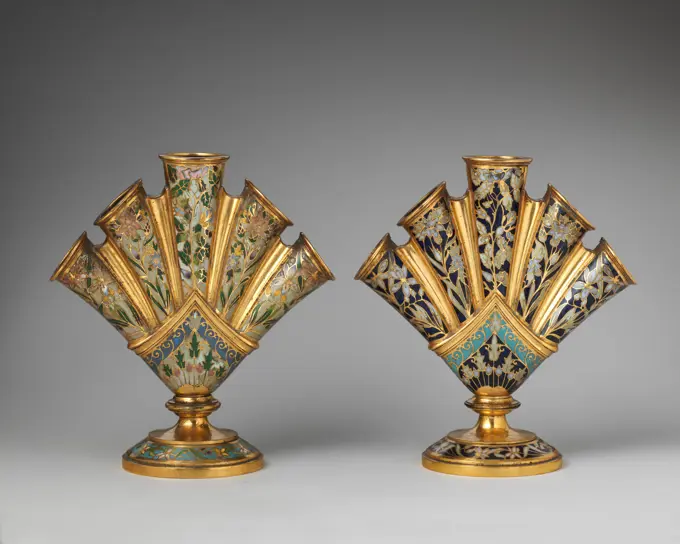
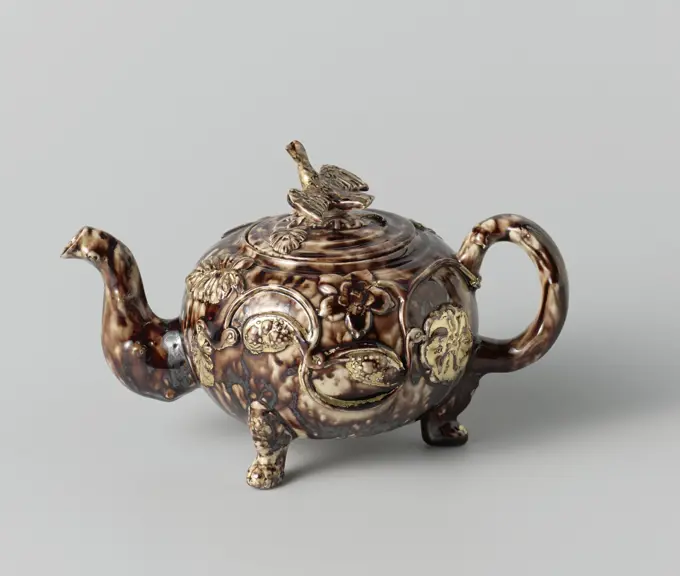
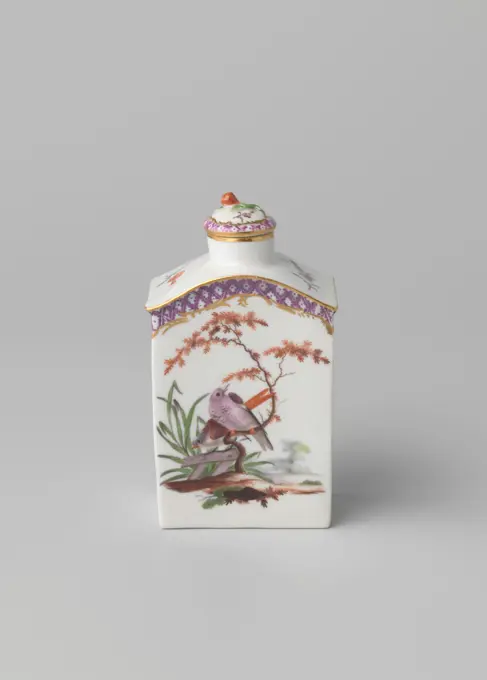
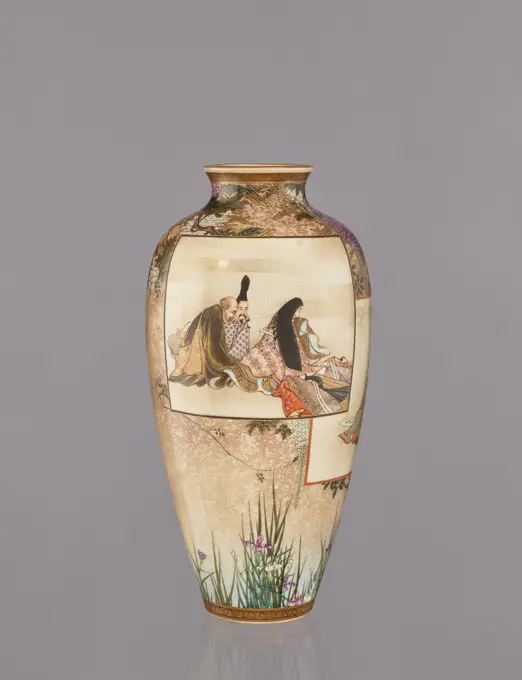
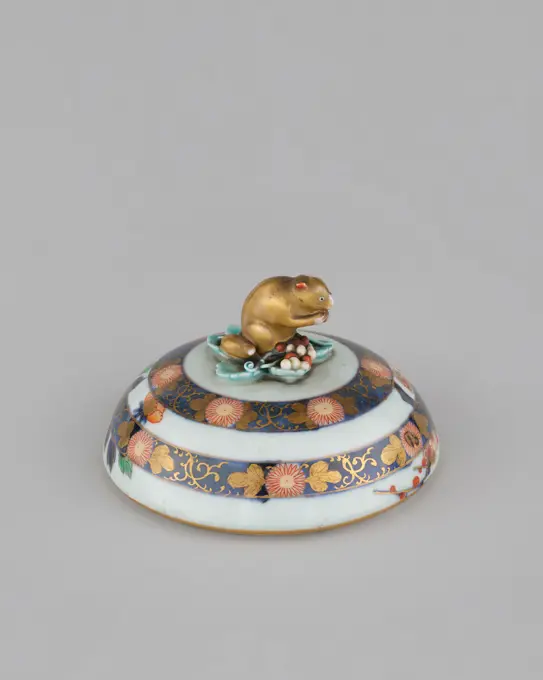
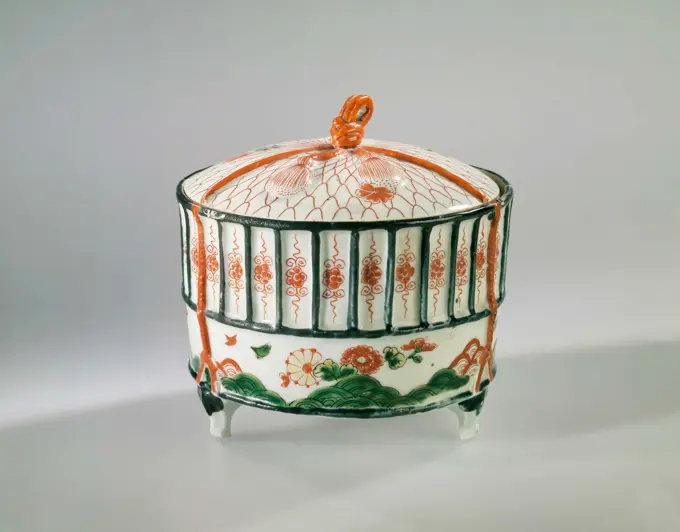
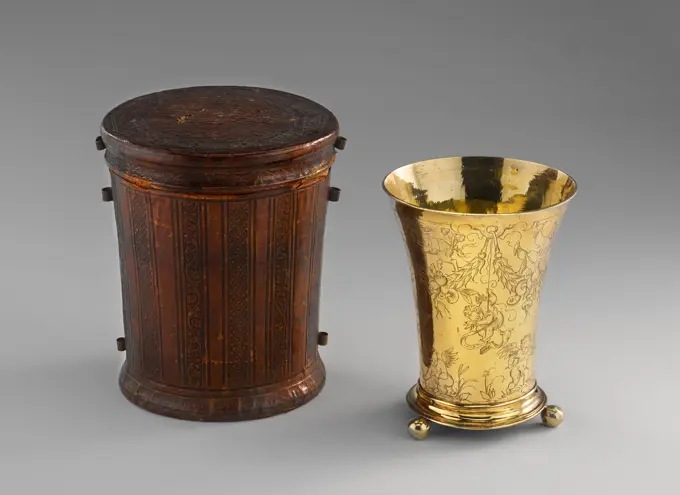
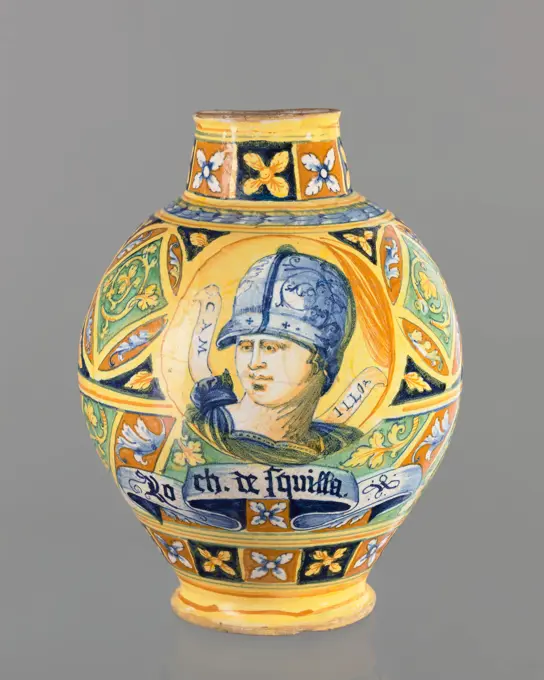
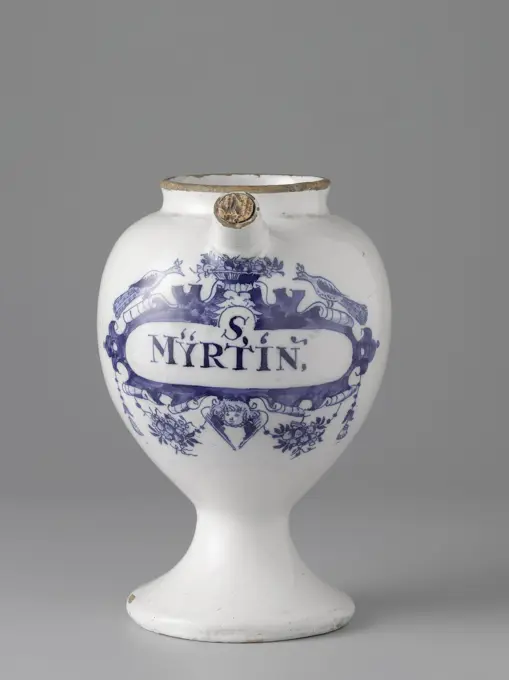
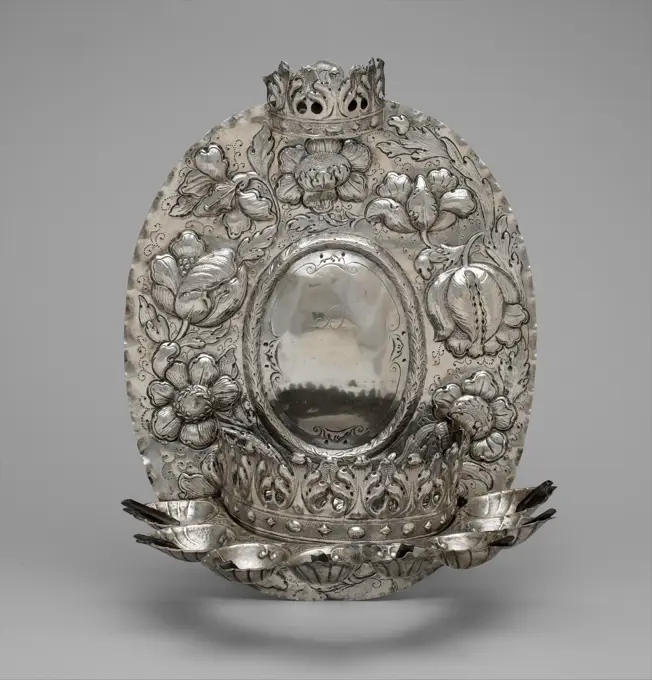
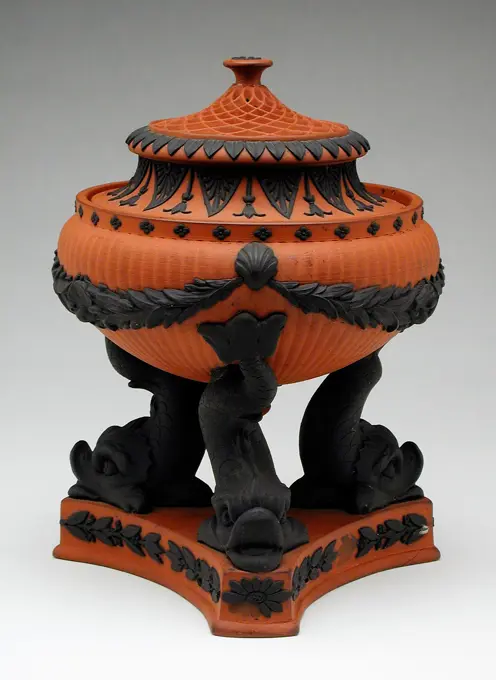
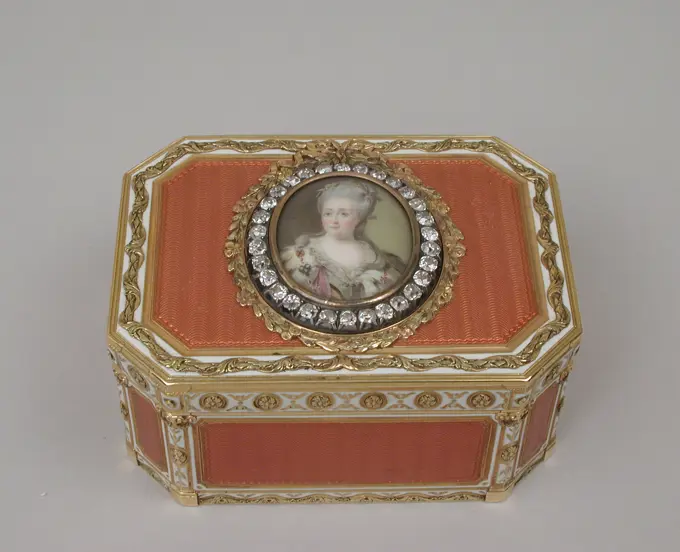
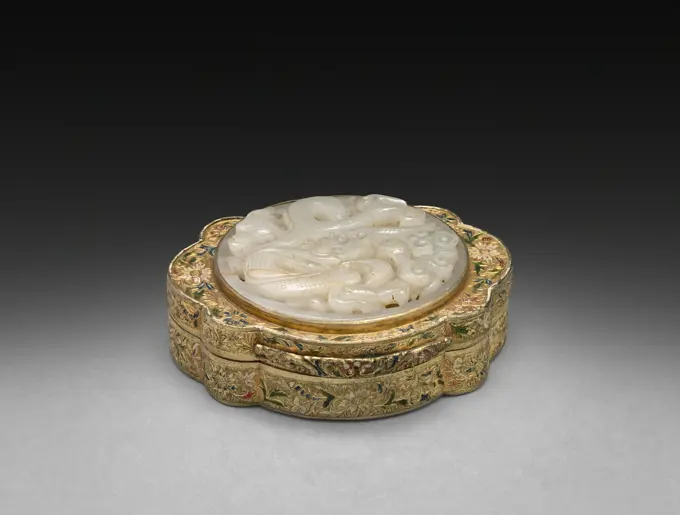
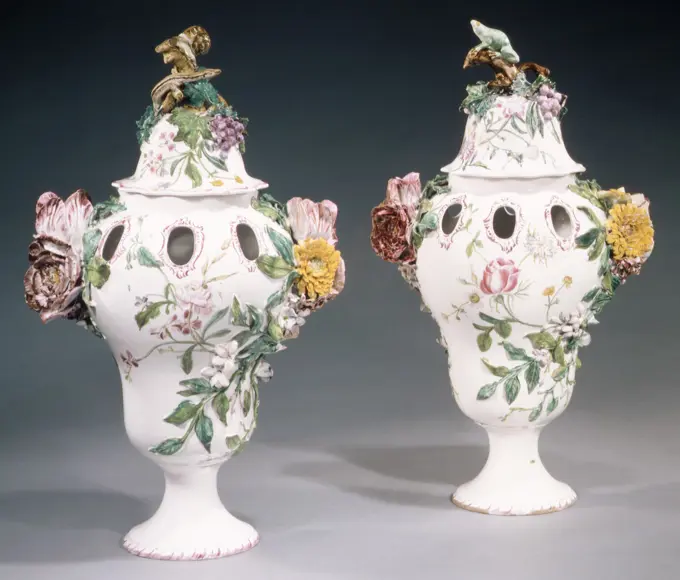
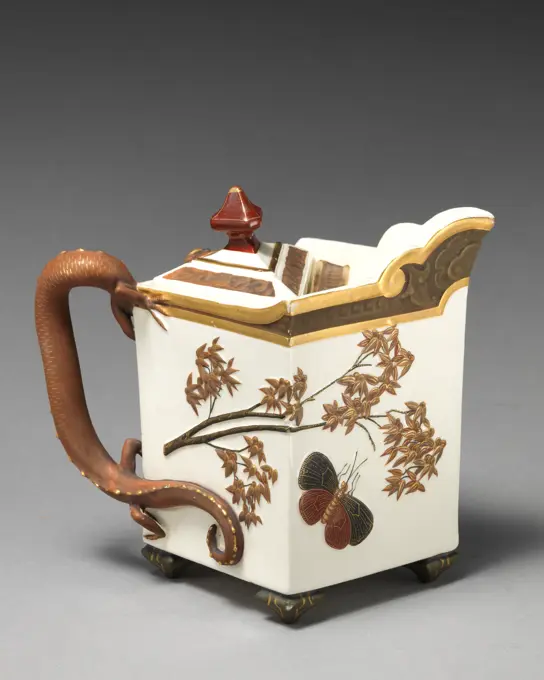
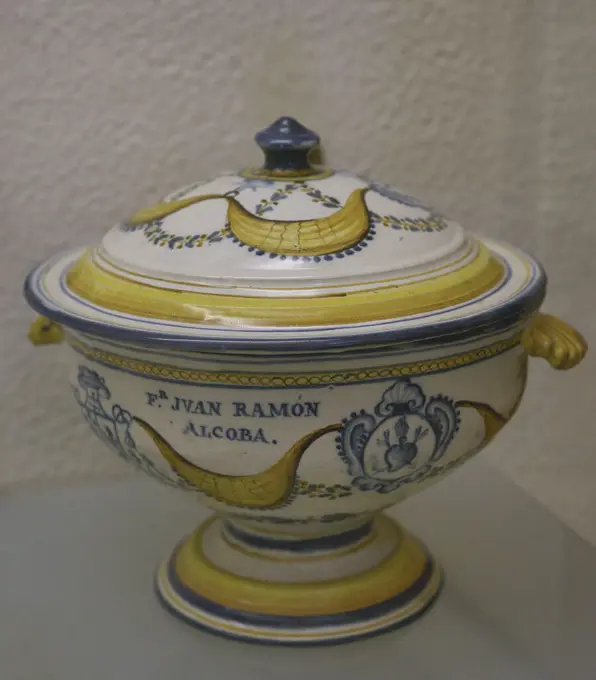
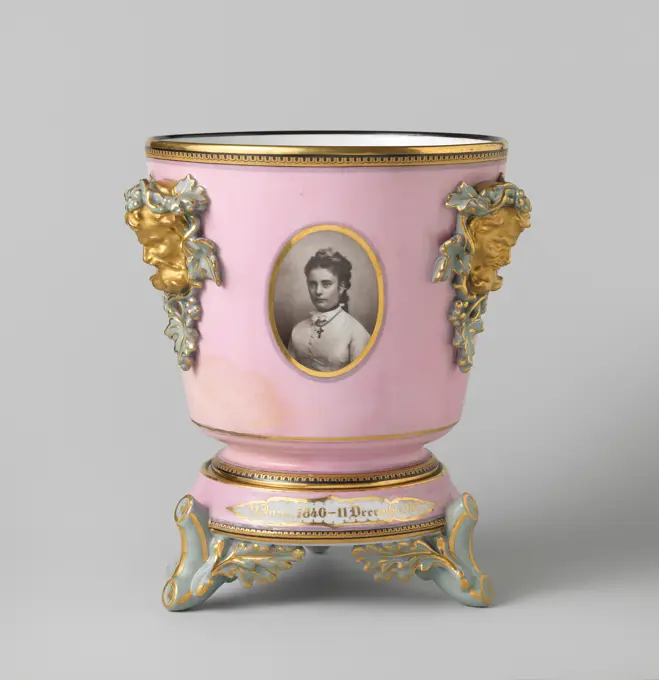
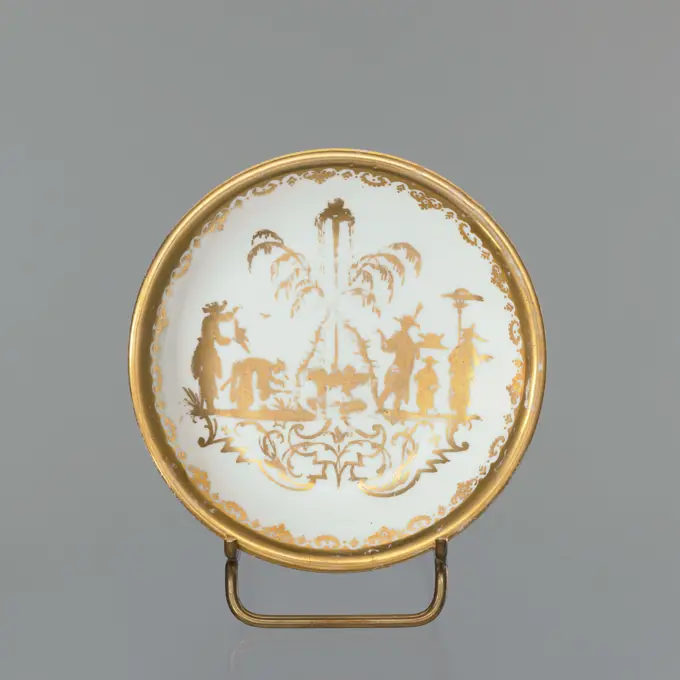
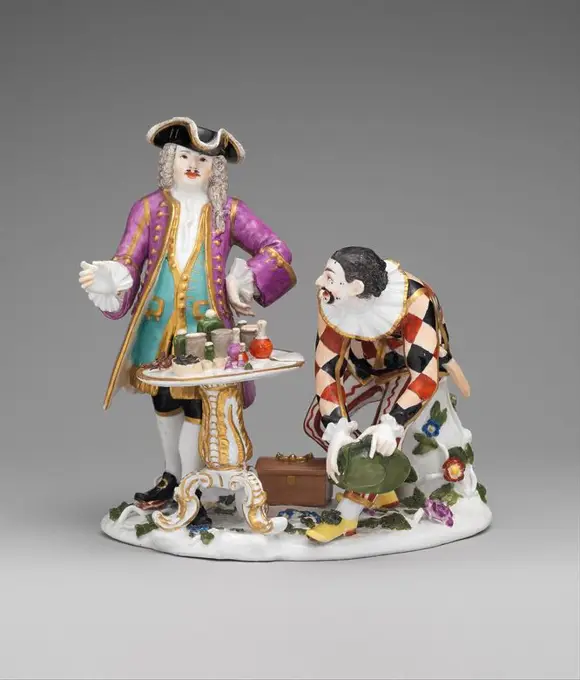
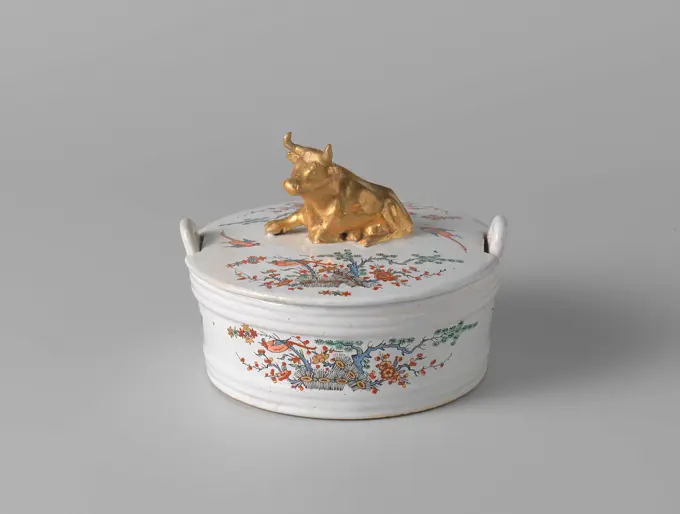
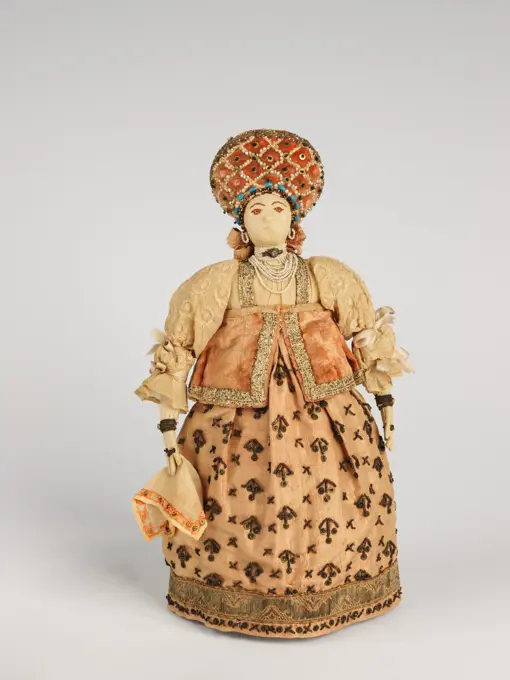
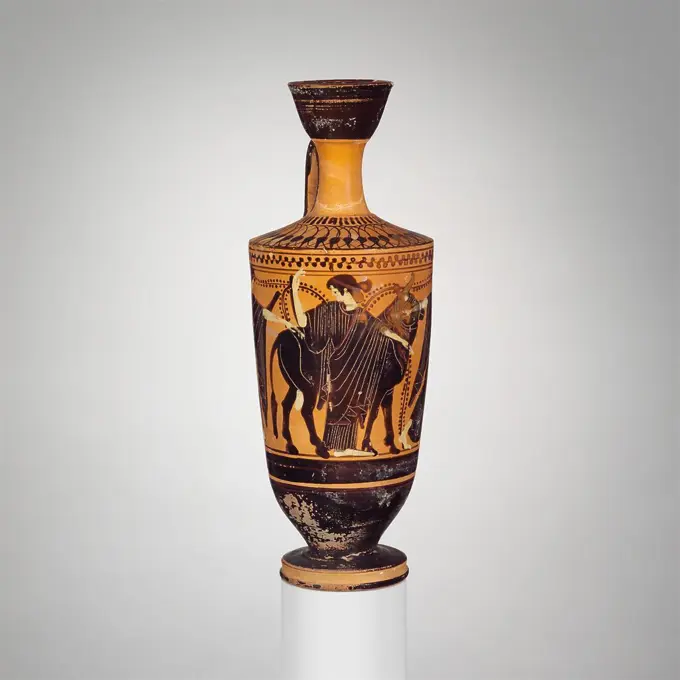
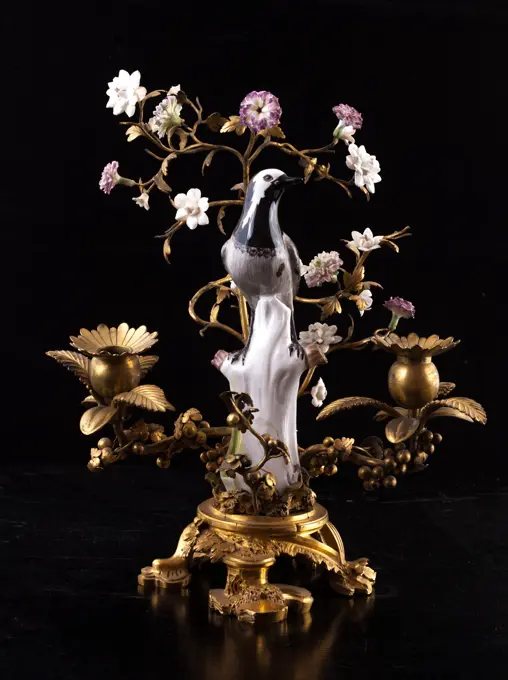
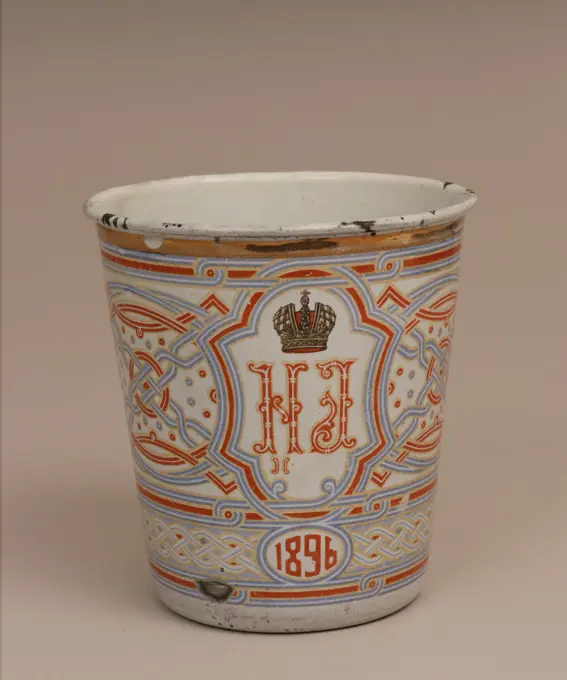
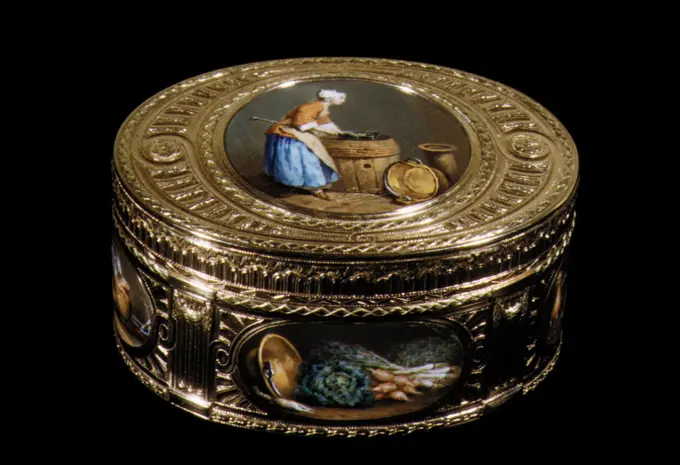
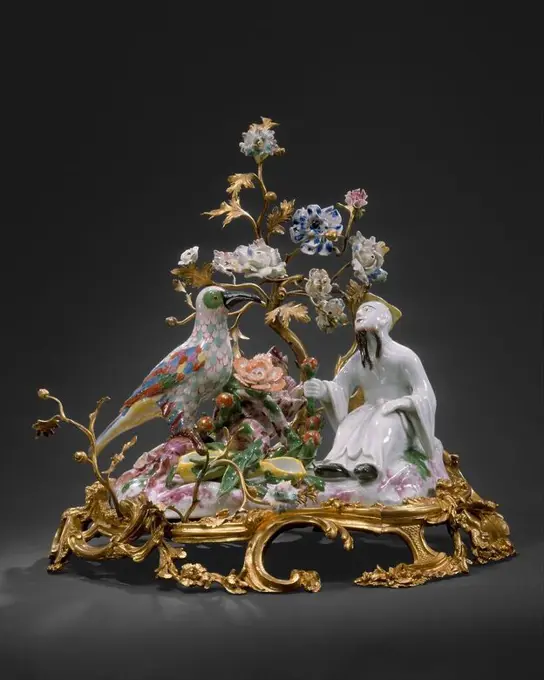
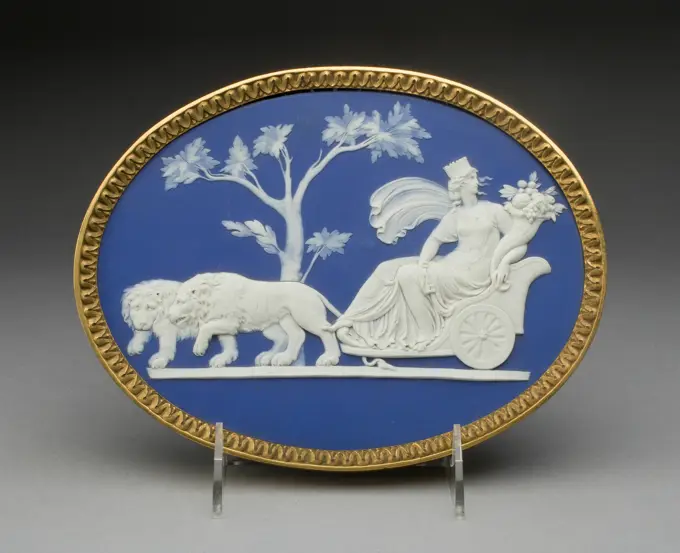
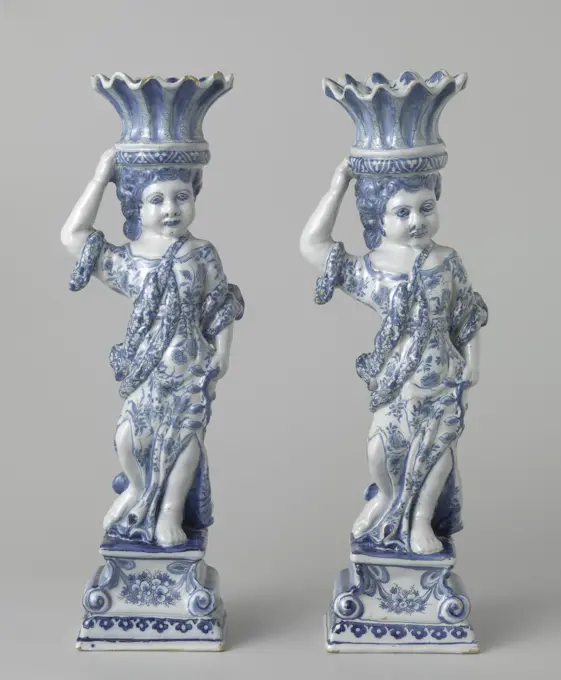
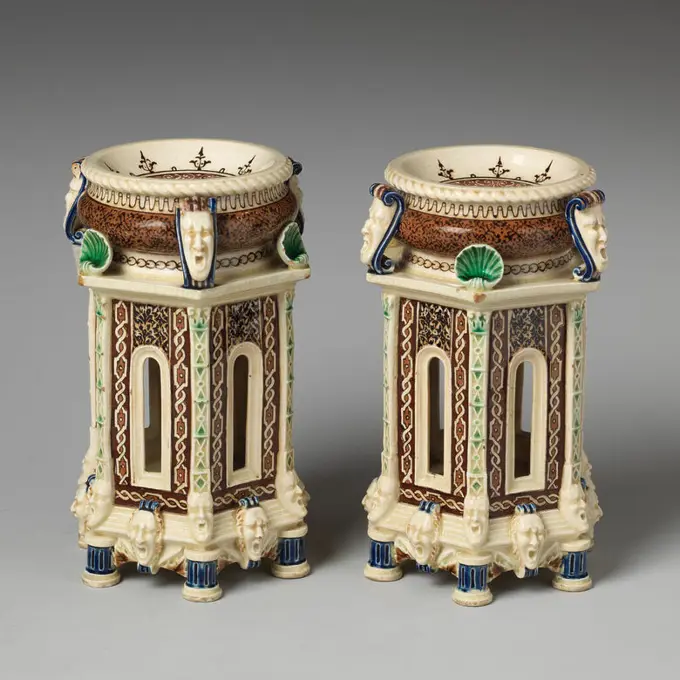
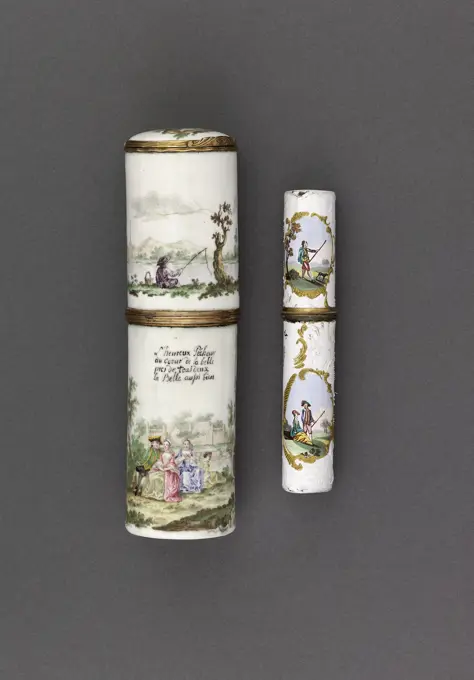
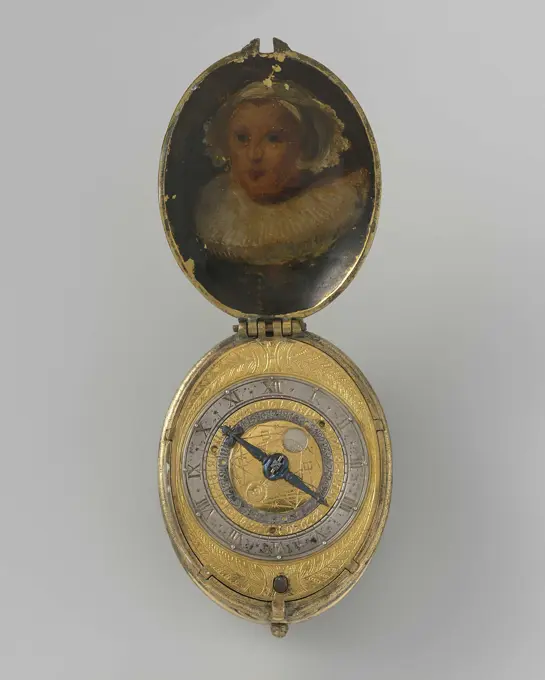
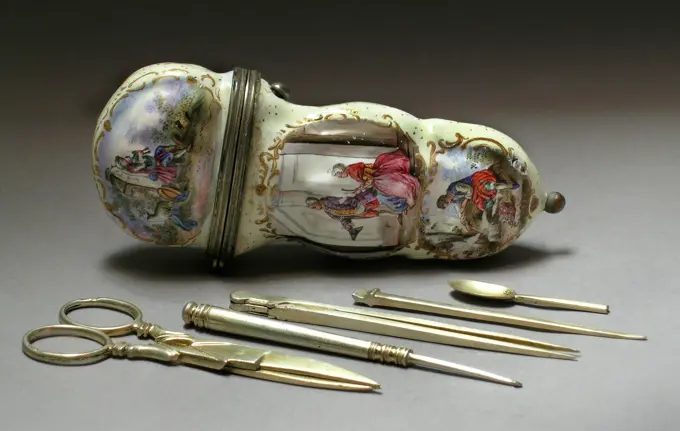
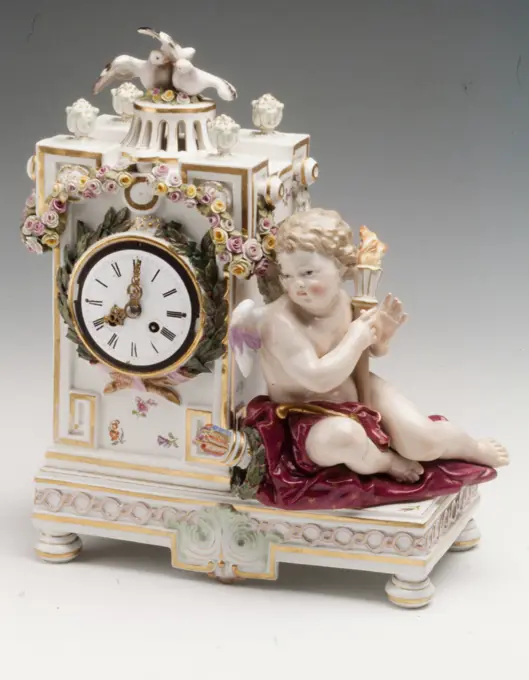
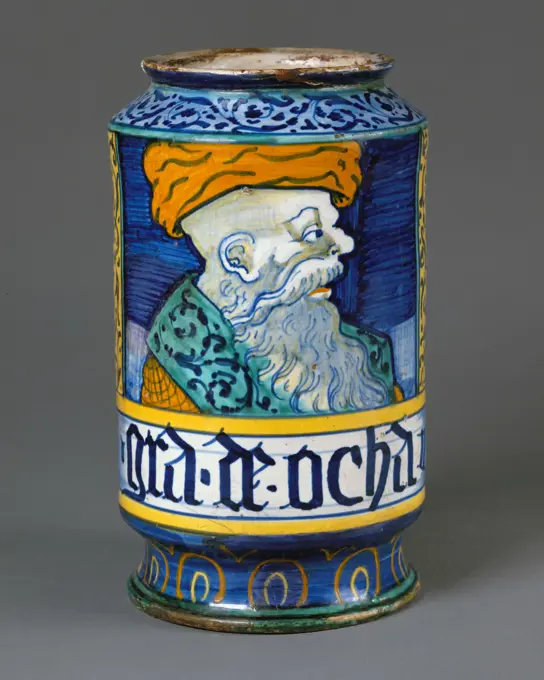
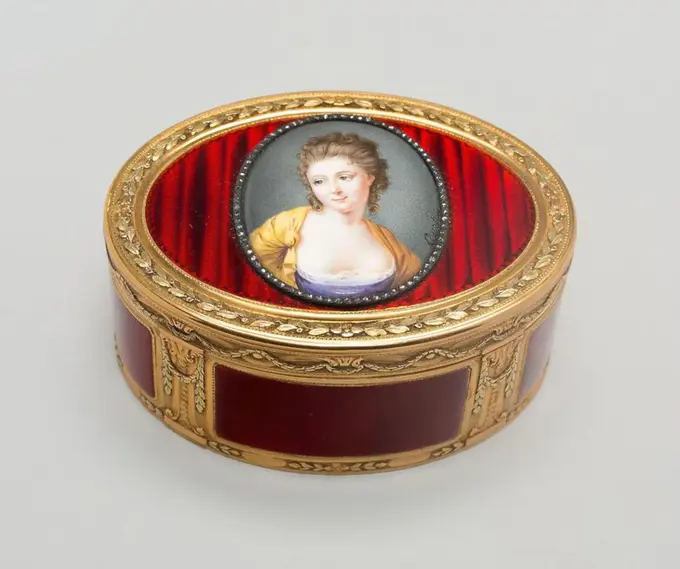
Chocolate pot (part of a service) late 18th century Royal Porcelain Manufactory, Naples. Chocolate pot (part of a service). Italian, Naples. late 18th century. Soft-paste porcelain. Ceramics-PorcelainSugar Bowl, from the Duc d'Orléans Service, Tournai Porcelain Factory, Belgian, established ca. 1750, Jacques de Sève, French, active 1742 - 1788, soft paste porcelain, vitreous enamel, gold, Belgium, 1787-1792, ceramics, Decorative Arts, sugar bowl, sugar bowlPair of vases. UnknownTray for Sewing Tools, 1800s. Korea, Joseon dynasty (1392-1910). Lacquer with mother-of-pearl inlay; diameter: 33.1 cm (13 1/16 in.); overall: 9.6 cm (3 3/4 in.).Coffee Cup and Saucer 1804-1813 Worcester. Soft-paste porcelain with polychrome enamels, gilding, and armorial decoration . Worcester Royal Porcelain CompanyLadle (Puisoir) 19th century, after 17th century original British, after Russian original This electrotype is after a seventeenth-century original a treasure of the Patriarch, Moscow, at the time of reproduction.. Ladle (Puisoir). British, after Russian original. 19th century, after 17th century original. Silver, parcel gilt. Metalwork-ElectrotypeButter from the lid; Korzec (Porcelain and faience manufacture; 1790-1832); 1828 (1828-00-00-1828-00-00);AK" monogram, purchase (provenance), gilded beltFili Anka, Spodek; Paris, Despaz, Rue de Recollets; early 19th century (1800-00-00-1810-00-00);Jar: Satsuma Ware, early to mid-1800s. Japan, Edo period (1615-1868). Pottery; overall: 19.4 cm (7 5/8 in.).Pair of candlesticks. Culture: British, Staffordshire. Dimensions: Overall (each, confirmed): 10 1/2 × 5 3/8 × 5 3/8 in. (26.7 × 13.7 × 13.7 cm). Date: mid-18th century. Museum: Metropolitan Museum of Art, New York, USA.Vase China. Vase 40757Cup with Dragonhead Finial. Bohemia (now Czech Republic), early 17th century. Furnishings; Serviceware. Bloodstone and silver mounts with giltMilk jug in the form of a monkey, anonymous, c. 1760 - c. 1780 Milkkan van Faïence, in the form of a drinking monkey. On his stomach the inscription: Kees is good he gives milk in overfloet if you do his belly full. With loose lid. Delft . Milkkan van Faïence, in the form of a drinking monkey. On his stomach the inscription: Kees is good he gives milk in overfloet if you do his belly full. With loose lid. Delft .Jean-Louis Morin (1732-1787). "Vase with celestial blue strings and its lid". Sèvres. Ceramics, tender dough porcelain, blue background, gilding, polychrome enamels. 1771. Museum of Fine Arts of the City of Paris, Petit Palais. 112503-17 Decorative art, French art, ceramic, sevre porcelain, container, German rebirth, vase, 18th 18th 18th 18th 18th 18th 18 centuryVase with Porcelain Flower Appliqués, porcelain, vitreous enamel, gold, England, ca. 1840-60, ceramics, Decorative Arts, vase, vaseVase; Korzec (Porcelain and faience manufacture; 1790-1832); around 1830 (1835-00-00-1840-00-00);Drug Jar for Mithridate; Attributed to Annibale Fontana, Italian, about 1540 - 1587; Milan (possibly), Italy, Northern Italy, Europe; about 1580; Terracotta with white paint and gilt exterior and glazed interior; Object (with lid): H:  59.9 cm (H:  23 5/8 in.), Object (without lid): H:  32.4 cm (H:  12 3/4 in.), Object (lid): H:  21 cm (H:  8 1/4 in.)Decorative object: man with bottle in hand, on tub. Decorative object of multicolored painted faïence. There is a tub on a four-legged chassis. On the ton a man with a bottle in his right hand. The man has a blue jacket.Cache-pot. Nieborów (manufaktura majoliki ; 1881-1899), factoryTIBOR CHINO CON DECORACION FLORAL S XVIII. Location: PALACIO REAL-INTERIOR. LA GRANJA DE SAN ILDEFONSO. SEGOVIA. SPANIEN.Cachepot. Greenwood Pottery Company; American, 1868-1933. Date: 1883-1886. Dimensions: 11.4 × 12.7 cm (4 1/2 × 5 in.). Porcelain. Origin: Trenton. Museum: The Chicago Art Institute, Chicago, USA.lamp shed, rajasthan, india Copyright: xShivjixJoshi/DinodiaxPhotoxPair of ewers. After designs by Sigisbert-François Michel (French, 1728 - 1811)Milk Jug or Coffeepot, Doccia Porcelain Factory, Italian, established 1735, hard paste porcelain, vitreous enamel, Pear form body decorated in manganese palette over white glaze with sprigs of flowers. C-scroll handle with back scroll terminal. On the side, a female classical caryatid figure with basket of fruit on her head in an oval reserve. The lid decorated in manganese with scrolls and dots., Italy, ca. 1800, ceramics, Decorative Arts, milk jug or coffeepot, milk jug or coffeepot. Eight-part coffee and tea sets, painted multi-colored with Höroltt-chinoiseries and the coat of arms of the Venetian Morosini family, in a rectangular pouch of leather lined wood.Lion and cock. Culture: British, Chelsea. Dimensions: 2 × 2 5/8 in. (5.1 × 6.7 cm). Factory: Chelsea Porcelain Manufactory (British, 1745-1784, Gold Anchor Period, 1759-69). Date: ca. 1760. Museum: Metropolitan Museum of Art, New York, USA.Saucer with chinoiseries; Koenigliche Porcellain Fabrique, Meissen (1710-1763), Augsburg (city); around 1715-1725 (1715-00-00-1725-00-00);Candlestick (candeliere). Culture: Italian, possibly Montelupo. Dimensions: Height: 7 3/8 in. (18.7 cm). Date: mid-17th century. Museum: Metropolitan Museum of Art, New York, USA.Sauceboat from the Sulkowsky Service. Meissen Porcelain Manufactory; German, founded 1710. Date: 1735-1738. Dimensions: 11.4 × 25.7 × 19.1 cm (4 1/2 × 10 1/8 × 7 1/2 in.). Hard-paste porcelain, polychrome enamels, and gilding. Origin: Germany. Museum: The Chicago Art Institute, Chicago, USA.Tulip vases (2) ca. 1885 Elkington & Co. British. Tulip vases (2). British, Birmingham, Warwickshire. ca. 1885. Gilt bronze and cloisonné enamel. Elkington & Co. (British, Birmingham, 1829-1963). EnamelsTeapot with lid of hard baked pottery; Staffordshire., Anonymous, c. 1750 Teapot with lid of hard baked pottery. The teapot is covered with a brown -marbled lead glaze and decorated in relief with partly gilded vines with leaves and grape bunches. The lid has a bird as a button. The teapot belongs to a milk jug (BK-1977-245-B) and a coil (BK-1977-245-C). England earthenware. lead glaze marbled paper / gilding Teapot with lid of hard baked pottery. The teapot is covered with a brown -marbled lead glaze and decorated in relief with partly gilded vines with leaves and grape bunches. The lid has a bird as a button. The teapot belongs to a milk jug (BK-1977-245-B) and a coil (BK-1977-245-C). England earthenware. lead glaze marbled paper / gildingTea caddy with birds in a landscape, Ansbach, c. 1765 Porcelain tea with with a rectangular body, short, round neck and sloping, slightly excellent shoulder. Painted on the glaze in email colors and gold. Two birds in a landscape on the wide courses of the abdomen. The narrow compartments and the shoulder with sprinkling flowers. On the edge just below the shoulder a band with servetwork, including Golden Ranks. Golden line on the neck. The lid with sprinkling flowers has the same tire with servetwork; Lid button in the form of a fruit branch (pear). Marked on the underside with the A. Ansbach porcelain. glaze. gold (metal) painting / gilding / vitrification Porcelain tea with with a rectangular body, short, round neck and sloping, slightly excellent shoulder. Painted on the glaze in email colors and gold. Two birds in a landscape on the wide courses of the abdomen. The narrow compartments and the shoulder with sprinkling flowers. On the edge just below the shoulder a band with servetw. Tea bus from painted porcelain. The bus is square with rubbed corners and almost entirely covered with a yellow part. In the fond, four-accolo-shaped four passes were saved on the bus and the lid, in which contour chinoiseries have been painted on two sides of the bus, in the other recesses flowers. The chinoiseries consist of a man and two children dancing and a dancing man and woman. The tea bus has been marked.Perfume Bottle 1830-70 American. Perfume Bottle 5592Vase. Kanzan, ceramist, Yasuda Kyoto Tokiji Goshigaisha, companyRomania, Gold octagonal vase with gems and zoomorphic handles from the Pietroasele treasure, found in 1837Arita (Ceramic Production Center), Pot cover, Imari decor (common name). Porcelain, polychrome enamels. Petit Palais, Museum of Fine Arts of the City of Paris.. Cylindrical box of porcelain on three legs and held together in the form of a crinkle cage by three modeled cords, ending in a raised button as a lid knob. Painted in underglaze blue and on the glaze red, green, yellow and black. The lower half of the box with waves, birds and flower branches; The upper half has been modeled in railing with a floral drink in each compartment. On the lid a fishing net pattern with loose flowers. Imari.A mug of the Wroclaw Strzelecki Brotherhood in a leather case + 1 Player without concluding; Hiller, Joachim (fl. 1573-1610),  1509; 1579 (engraved decoration) (1509-00-00-1509-00-00);Wrocław (Shooting Brotherhood), Strzeleckie Brotherhood, Festony (Ornament), Groteska, Fruit, Putta, AnimalsArmorial Beaker. Probably Central Germany, 1652. Furnishings; Serviceware. Glass, enamelTea Caddy with Chinoiserie Vignettes Tea Caddy; Manufactured by Royal Porcelain Manufactory, Berlin (Germany); Style of Jacques-Gabriel Huquier (French, 1730 - 1805), François Boucher (French, 1703-1770); Germany; hard paste porcelain, vitreous enamel, goldVase, one of a five-piece garniture, 19th century, 6 1/4 x 3 1/4 in. (15.9 x 8.26 cm), Porcelain, England, 19th centuryGame Pie Dish, c. 1860-80. Minton Pottery and Porcelain Factory (British). Earthenware; overall: 18.6 x 34.5 x 21.5 cm (7 5/16 x 13 9/16 x 8 7/16 in.).Tea with cover;  19th century (1801-00-00-1900-00-00);Pharmacy vase;  around 1530 (1525-00-00-1535-00-00);Apothekerspot 'S,/ MYRTIN', anonymous, c. 1750 - c. 1800 Pharmacist's pharmacy. Ear and spout and blue painted label with inscription: s,/ mytrin. Delft cork (bark) Pharmacist's pharmacy. Ear and spout and blue painted label with inscription: s,/ mytrin. Delft cork (bark)Sugar bowl (part of a service) 1743-59 Capodimonte Porcelain Manufactory The gift of the Hans Syz Collection in 1995 endowed the Museum with nearly three hundred examples of European and Asian ceramics meticulously acquired by Swiss-born collector Dr. Syz (1894-1991) to chart the migration of models and patterns from East to West. Documenting a continuous process of influence and adaptation, these pieces provide a discriminating review of the nuances of stylistic change resulting from three centuries of trade.. Sugar bowl (part of a service) 208497Urn with cover China. Urn with cover 43971Hanukkah lamp late 17th century German, Hamburg Inspired by Dutch tulip decoration, the large blossoms that fill the wide frame became fashionable ornament across Europe during the 1660s to 1700. Like a wall sconce, the polished backplate would reflect the flickering light of the flames. The semicircular crowns at top and bottom may allude to the crown worn by the High Priest at Jerusalem's temple. The flourishing Free City and major port of Hamburg was a hub for Jewish refugees leaving the Iberian Peninsula. Purchased in 1913, this Hanukkah lamp is one of the earliest purchases of Judaica to enter the museum's encyclopedic collection.. Hanukkah lamp 192064Dolphin Tripod Pastille Burner. Josiah Wedgwood (England, 1730-1795)Wedgwood (England, Staffordshire, founded 1759). England, Staffordshire or Europe, circa 1830-1850. Tools and Equipment; burners. Stoneware with metallic-oxide stainSnuffbox with portrait of Catherine II (1729-1796), Empress of Russia 1774-75, minaiture ca. 1786 Joseph Etienne Blerzy French In eighteenth-century Europe, Paris led the production of high-quality luxury goods. Parisian goldsmiths made a wide range of small, personal articles such as snuffboxes; étuis to hold sealing wax, tweezers, or utensils for sewing; souvenirs, which contained thin ivory tablets for note taking; and shuttles for knotting lace. Gold snuffboxes and boxes decorated with portrait miniatures were prized and frequently given as royal gifts, often to ambassadors or members of the court in lieu of cash payments for their services. Coveted and admired, these boxes were produced from a variety of materials. The best were skillfully made of gold and embellished with diamonds, enameled decoration, lacquer, and other luxurious materials. By the middle of the century, the taking of snuff had become an entrenched social ritual, and the snuffbox, too, had become an important socBox, 1900-1916. China, Qing dynasty (1644-1911) or Republican period (1912-49). Gilt and enamel with with jade medallion in cover; diameter: 8.7 cm (3 7/16 in.).Mantel clock ca. 1780-90 probably Austrian. Mantel clock. probably Austrian. ca. 1780-90. Case: carved and gilded wood; Revolving rings for hours and minutes: gilded brass; Movement: brass and steel. HorologySoup tureen and stand, c. 1817, 2 1/4 x 14 1/16 x 10 7/8 in. (5.72 x 35.72 x 27.62 cm) (stand), Porcelain, China, 19th centuryPair of potpourri vases ca. 1760 Veuve Perrin Factory Faience, or tin-glazed and enameled earthenware, first emerged in France during the sixteenth century, reaching widespread usage among elite patrons during the seventeenth and early eighteenth centuries, prior to the establishment of soft-paste porcelain factories. Although characterized as more provincial in style than porcelain, French faience was used at the court of Louis XIV as part of elaborate meals and displays, with large-scale vessels incorporated into the Baroque garden designs of Versailles. Earlier examples of French faience attest to the strong influence of maiolica artists from Italy. Later works demonstrate the ways in which cities such as Nevers, Rouen, Lyon, Moustiers, and Marseille developed innovative vessel shapes and decorative motifs prized among collectors throughout Europe. While faience can be created from a wide mixture of clays, it is foremost distinguished by the milky opaque white color achieved by the Teapot with salamander handle 1874 Worcester factory After the end of the Flight, Barr & Barr ownership of the Worcester factory in 1840, the firm went through a succession of owners and mergers before falling under the ownership of Kerr & Binns in 1852. During the partnership, the factory sought to rebuild its former eighteenth-century reputation in porcelain and known for Renaissance-inspired designs. With the establishment of the Royal Worcester Porcelain Company in 1862, the company gradually gained recognition for its Japanese-inspired designs, which formed part of Japonisme, a collective fascination with Japan that took place in Europe and the United States following the opening of Japanese markets to the West by Commodore Perry in 1853.. Teapot with salamander handle. British, Worcester. 1874. Bone china. Ceramics-PorcelainTureen. 18th century. Ceramic. From Talavera de la Reina (Toledo province, Spain). The owner's name appears: Juan Ramón Alcoba. Sephardic Museum. Toledo. Castile-La Mancha. Spain.Close-up of a female figurine, Paris, FranceCache depot on foot with three portraits, '11 June 1840 - December 11, 1877 '. .Candelabrum (one of a pair) ca. 1765 Chelsea Porcelain Manufactory. Candelabrum (one of a pair). British, Chelsea. ca. 1765. Soft-paste porcelain. Chelsea Porcelain Manufactory (British, 1745-1784, Gold Anchor Period, 1759-69). Ceramics-PorcelainFibri Venus in Puzzola; Kaiserliche Porzellanmanufaktur in Wien (1744-1864); 1792 (1792-00-00-1792-00-00);Saucer with gilded chinoiseries. Augsburg (miasto), atelier, Koenigliche Porcellain Fabrique, Meissen (1710-1763), factoryHarlequin and the Quack Doctor. Culture: German, Meissen. Dimensions: Overall (confirmed): 8 1/16 x 8 1/16 x 5 3/4 in. (20.5 x 20.5 x 14.6 cm). Factory: Meissen Manufactory (German, 1710-present). Modeler: Johann Joachim Kändler (German, Fischbach 1706-1775 Meissen). Date: ca. 1745. Museum: Metropolitan Museum of Art, New York, USA.Butter dish. Round butter shot of multicolored padded faience, with kakiemon decor. The parts are painted in the blue, red, green, black and gold with two tied hedges, a flowering tree, a bird on a branch and loose birds. The butter dish has been marked and the butterfish is part of an identical copy with Invnr. BK-1968-199-a.Pot MieleówTea caddy ca. 1735 Meissen Manufactory German. Tea caddy 197667Inkstand second half 16th century Italian, Urbino. Inkstand. Italian, Urbino. second half 16th century. Maiolica (tin-glazed earthenware). Ceramics-PotteryOriental with Jar ca. 1735 French, Chantilly. Oriental with Jar. French, Chantilly. ca. 1735. Tin-glazed soft-paste porcelain. Ceramics-PorcelainInkwell; glazed earthenware; a) H x W x D: 22.2 × 14.5 × 24.5 cm (8 3/4 × 5 11/16 × 9 5/8 in.) b) H x diam.: 2.7 × 6.4 cm (1 1/16 × 2 1/2 in.) c) H x diam.: 2.7 × 6.4 cm (1 1/16 × 2 1/2 in.) d) H x diam.: 4.6 × 6.3 cm (1 13/16 × 2 1/2 in.) e) H x diam.: 3.6 × 6 cm (1 7/16 × 2 3/8 in.) f) H x diam.: 4.8 × 4.5 cm (1 7/8 × 1 3/4 in.); 1951-164-5-a/fDoll late 18th century Russian This object is from the collection of Natalia de Shabelsky (1841-1905), a Russian noblewoman compelled to preserve what she perceived as the vanishing folk art traditions of her native country. Traveling extensively throughout Great Russia, she collected many fine examples of textile art of the wealthy peasant class. From the 1870s until moving to France in 1902, Shabelsky amassed a large collection of intricately embroidered hand-woven household textiles and opulent festival garments with rich decoration and elaborate motifs. The Brooklyn Museum holdings include many fine examples including the majority of the garments. Portions of Shabelsky's collection are also housed at the Museum of Fine Arts, Boston, the Cleveland Art Museum, and the Russian Museum of Ethnography in St. Petersburg.This doll, along with 2009.300.1719 offers a true representation of a traditional costume with all of the details. They are very rare objects, characterizing costumes wornTerracotta lekythos (oil flask). Culture: Greek, Attic. Dimensions: H. 7 7/8 in. (20 cm). Date: 1st quarter of 5th century B.C..Sacrificial procession with bull and three women. Museum: Metropolitan Museum of Art, New York, USA.Blind Men Fighting. Zemin (Japan, active mid-19th century). Japan, mid-19th century. Costumes; Accessories. Ivory with staining, sumi, red and white pigments; manjū typeCandelabra with two branches lined with a bird and flowers. Chiseled and gilded bronze, Saxony porcelain. Between 1715 and 1774. Paris, Cognacq-Jay museum. Candelabre, furniture, animal motif, bird, saxe porcelain, 18th 18th 18th 18th 18th 18th 18th century. Pharmacist spot from faience. With ear and spout and blue painted label with inscription: S, / Fumar, comp,.Coronation beaker Russian, Moscow 1896 As a historical piece it is indicative, with its companion ladies' scarf (1991.414.2) of "official taste" in Imperial Russia in the last decade of the nineteenth century. Both beaker and scarf were issued to the public in very large numbers at the time of the coronation of Czar Nicholas II. View more. Coronation beaker. Russian, Moscow. 1896. Enameled copper. Metalwork-CopperAntique Portuguese clay pots with blue tile backgroundBeaker with Hunting Scene. Probably Central Germany, 1705. Furnishings; Serviceware. GlassWoman with Jug on Head 1800-1899 France. Glass; lampwork (verre de Nevers), metal armature .Snuffbox with kitchen scenes 18th century () French, Paris In eighteenth-century Europe, Paris led the production of high-quality luxury goods. Parisian goldsmiths made a wide range of small, personal articles such as snuffboxes; étuis to hold sealing wax, tweezers, or utensils for sewing; souvenirs, which contained thin ivory tablets for note taking; and shuttles for knotting lace. Gold snuffboxes and boxes decorated with portrait miniatures were prized and frequently given as royal gifts, often to ambassadors or members of the court in lieu of cash payments for their services. Coveted and admired, these boxes were produced from a variety of materials. The best were skillfully made of gold and embellished with diamonds, enameled decoration, lacquer, and other luxurious materials. By the middle of the century, the taking of snuff had become an entrenched social ritual, and the snuffbox, too, had become an important social prop. Snuffboxes were considered highly fashionable accessoriesVase (China); enameled and glazed porcelainChinese figure with bird. Artist: Meissen Manufactory (German, 1710-present). Culture: German, Meissen with French mounts and French, Vincennes flowers. Dimensions: Height: 12 in. (30.5 cm). Modeler: Attributed to George Fritzsche (German, 1698-1756). Date: ca. 1727, mounts and flowers ca. 1750. Museum: Metropolitan Museum of Art, New York, USA.Plaque with Triumph of Cybele 1794 Burslem. Stoneware (jasperware) . Wedgwood Manufactory (Manufacturer)Two Flower Holders, De Greek A, c. 1690 - c. 1700 Flower holder Van FaiSence in the form of a child with a basket on the head Delft . Flower holder Van FaiSence in the form of a child with a basket on the head Delft .Pair of salts. Artist: Charles Toft (active ca. 1868-1882). Culture: British, Stoke-on-Trent, Staffordshire. Dimensions: Overall (.1, wt. confirmed): 5 1/4 × 3 3/16 in., 1 lb. (13.3 × 8.1 cm, 0.5 kg);Overall (.2, wt. confirmed): 5 3/16 × 3 1/4 in., 1 lb. (13.2 × 8.3 cm, 0.5 kg). Factory: Minton(s) (British, Stoke-on-Trent, 1793-present). Date: 1870s. Museum: Metropolitan Museum of Art, New York, USA.German and English anonymous. Case. E-mail . 18th century. Paris, Cognacq-Jay museum. 56642-4 Email, etPouch for a note booklet of gold and email. Pouch for a note booklet of gold and email. At the front a man and a girl at an enamelled oval picture. On the other side an oval with hair in it and surrounded by flowers and 2 pierced hearts. Content: a picture of ivory.Neck watch with date indicator, moon ring and asparium. Oval copper watch, Carrare with hammered silver tendrils and relief decorated. In both lids, women's houses are painted, one with wing hat and mill collar, the second with a diadem and a collar closing to the shoulders (from later date). The oval dial ventured with leaf form is equipped with a silver digit ring with ingrangled Roman numerals and a rotatable pinion with the monthly figures. One wiser. The platine, with a long gap has been marked: W. ViBrandi Leoardice.Harlequin and Columbine with birdcage ca. 1762 Ansbach Pottery and Porcelain Manufactory. Harlequin and Columbine with birdcage 203235Cover for a Tureen in the Form of a Turtle, c. 1745-65. France, mid 18th century. Faience; overall: 17.8 x 29.2 x 22.3 cm (7 x 11 1/2 x 8 3/4 in.).Group with a Pedlar (<heart dose>), Meissener porcelain manufactory, c. 1738 Group of painted porcelain. On an irregular oval pedestal, overgrown with flowers and leaves, a woman sits in a hoop skirt on a chair with a high back. On her right side is a female marskramer, an open box with wares in front of herself. Behind the woman is a man with a bottle in one hand and in his other a tray on which a cup and cookies. A man is on the left side of the woman. The man and the woman give each other a heart. The image is not marked. Float porcelain Group of painted porcelain. On an irregular oval pedestal, overgrown with flowers and leaves, a woman sits in a hoop skirt on a chair with a high back. On her right side is a female marskramer, an open box with wares in front of herself. Behind the woman is a man with a bottle in one hand and in his other a tray on which a cup and cookies. A man is on the left side of the woman. The man and the woman give each other a heart. The image is not marked.EtuiCup 9th century. Cup 452702St. George and the Dragon, Francesco Fanelli, born 1577, Italian, active in Britain (from ca. 1632), ca. 1635, Bronze, on a later wooden base with tortoiseshell veneer and gilt bronze mounts, Overall: 11 1/2 × 11 1/2 × 8 inches (29.2 × 29.2 × 20.3 cm), dragon, religious and mythological subject, spear, St. George and the dragonSt. George and the Dragon ca. 1750 Style of Whieldon type. St. George and the Dragon. Style of Whieldon type. British. ca. 1750. Glazed pottery. Ceramics-PotteryBracket clock, c. 1820, Meissen Porcelain Factory, Meissen, Germany, est. 1710, Hard paste porcelain, Germany, 19th centuryApothecary jar (albarello) ca. 1530-40 Italian, Castelli. Apothecary jar (albarello). Italian, Castelli. ca. 1530-40. Maiolica (tin-glazed earthenware). Ceramics-PotterySnuff Box: Portrait of Duchess of Marlborough. Nicolas André Courtois; French, 1734-1806; Paris, France. Date: 1770-1780. Dimensions: 3.5 x 7.9 x 6 cm (1 3/8 x 3 1/8 x 2 3/8 in.). Gold, enamel, and diamonds. Origin: Paris. Museum: The Chicago Art Institute, Chicago, USA.Horsemen with castle vista ca. 1730 Bohemian. Horsemen with castle vista 195951Snuff Bottle, 19th century, 6 1/2 x 3 3/4in. (16.5 x 9.5cm), Glass, China, 19th century