Decorative Porcelain

Elegant porcelain items including tea caddies and vases with intricate floral designs and gilded accents, showcasing craftsmanship and artistic detail.

Covered baluster jar with figures in an interior behind framework, prunus trees and floral scrolls, anonymous, c. 1650 - c. 1699 Balus -shaped porcelain lid jar with a spreading base, painted in underly glaze blue and on the glaze red, black and gold. On the wall twice two people sitting in an interior behind modeled and painted grille work. This grille is decorated with modeled and decorated prunus trees and tires with flower vines. Under the grille work a band with flower vines. Around the foot a bond with lotus drinks. On the neck three cartouches with lotus vines. Imari. Japan porcelain. glaze. cobalt (mineral). gold (metal) painting / gilding / vitrification Balus -shaped porcelain lid jar with a spreading base, painted in underly glaze blue and on the glaze red, black and gold. On the wall twice two people sitting in an interior behind modeled and painted grille work. This grille is decorated with modeled and decorated prunus trees and tires with flower vines. Under the grille wo
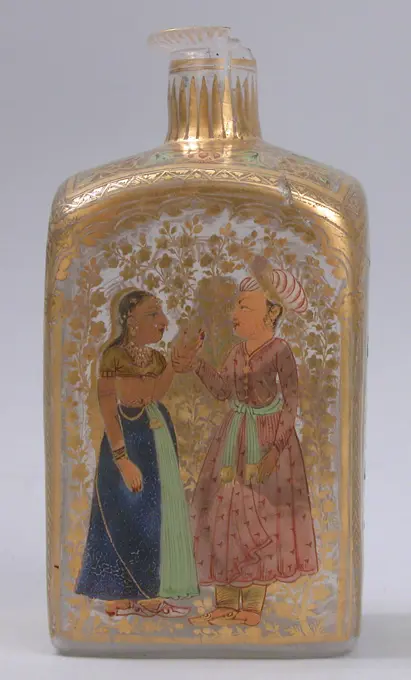
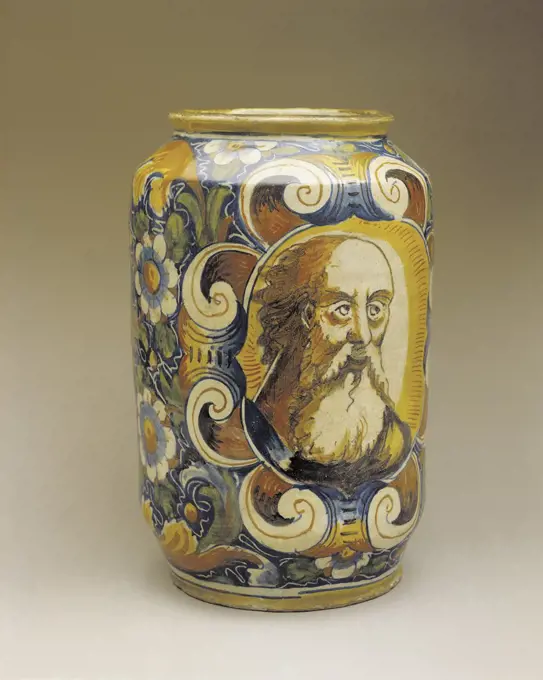
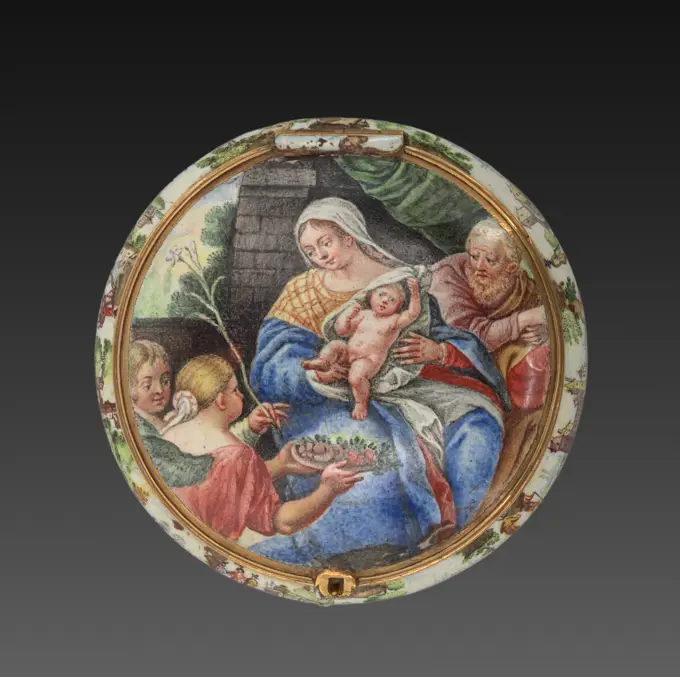
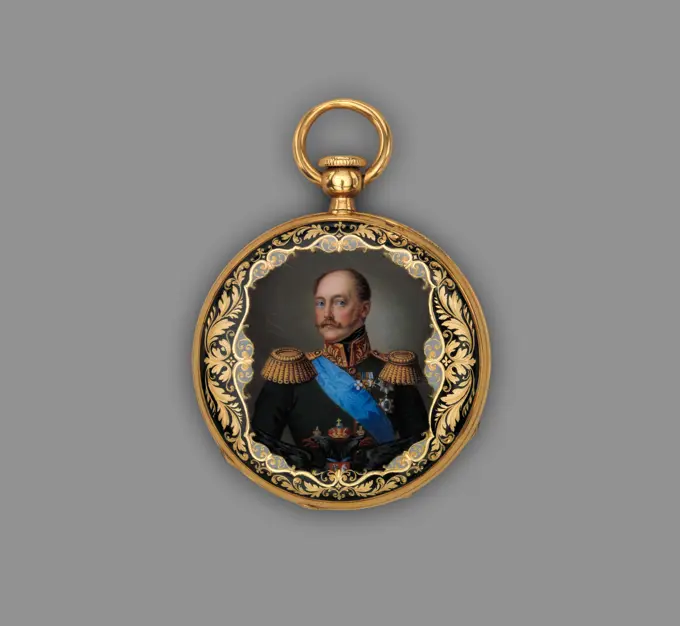
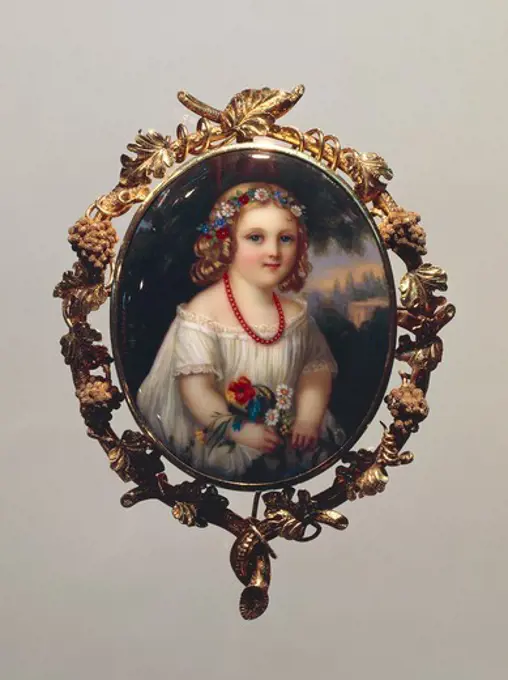
Snuff Bottle, 17th-19th century, 2 3/8 x 1 1/2in. (6 x 3.8cm), Crystal, jade, China, 17th-19th centuryCase Bottle with an Amorous Couple and a Lady with a Deer first half 18th century Gilding and enameling were the most popular form of decorating glass in the eighteenth century, and the most common form was a square-shaped bottle, called a "case bottle" because of its similarity to European transport bottles made to fit in wooden cases. In fact, many case bottles were actually made in Europe and later painted in India. They were usually decorated with floral motifs on two sides, and with figural scenes similar in style and subject matter to contemporary paintings on the other two sides.. Case Bottle with an Amorous Couple and a Lady with a Deer 447365Vase ca. 1824 French. Vase 9510CANTARO PARA AGUA VIDRIADO Y DECORADO A MANO(JINETE)-CERAMICA S XX. Location: ALFARERIA. PUENTE DEL ARZOBISPO. Toledo. SPAIN.Pink side with rosette stricken, silver wire torsades, anonymous, c. 1740 - c. 1770 Pink side with rosette bows, silver wire torsades. Netherlands (possibly) geheel: silk. torsade: silver thread Pink side with rosette bows, silver wire torsades. Netherlands (possibly) geheel: silk. torsade: silver threadJohan de Witt (1625-1672), Manufactuur Oud-Loosdrecht, After Jacob Houbraken, After Aert Schouman, c. 1782 - c. 1784 Bust van Johan de Witt (1625-1672), biscuit, on glazed column with cannelures in green and gold, standing on round-profiled plinth, decorated with piping, intersecting leaf garlands and leaf guirlandes in gold. Loosdrecht porcelain. biscuit (porcelain, material) Bust van Johan de Witt (1625-1672), biscuit, on glazed column with cannelures in green and gold, standing on round-profiled plinth, decorated with piping, intersecting leaf garlands and leaf guirlandes in gold. Loosdrecht porcelain. biscuit (porcelain, material)Close-up of an Apothecary jar, Venice, Veneto, ItalyWatchcase (Boîtier de montre), c. 1640. France, 17th century. Gold and enamel; diameter: 5.8 cm (2 5/16 in.).Beaker of the Guild of Smiths and Locksmiths (Humpen). Bohemia (now Czech Republic) or Central Germany, 1614. Furnishings; Serviceware. Glass, enamel, giltDecorative vase in Linderhof Palace in Bavaria, Germany Ettal, Germany - June 5, 2016: Copyright: xZoonar.com/YurixDmitrienkox 10600911Watch ca. 1850-55 Watchmaker: François Czapek On the back cover of the case is a portrait of the Russian czar Nicholas I (r. 1825-55) in painted enamel, indicating that the watch was probably commissioned as a present to a subject in recognition of loyalty or service. The movement, with separate cocks for the train of wheels, has jeweled end stones, a lever escapement, a temperature-compensated balance wheel, and a keyless stem-winding mechanism. It is a very early example of a stem-winding movement, made by the original partner in the firm that became Patek-Philippe, still in existence in Geneva. The mechanism is the earliest practical one to have been produced in quantity. It was invented by Antoine Norbert de Patek's subsequent partner Jean-Adrien Philippe (1815-1894) and patented in 1845.. Watch 207365Box Admiral Lord St Vincent 1805-1815 South Staffordshire. Polychrome enamel on copper with metal mounts .Work bag. 1890.Goldsmith's art, England, 19th century. Gold pendant with enamel miniature, around 1850.Albarello, painted multi-colored with a weapon with on either side the head of a griffin and a banderole with inscription: Da Prassio. Cylindrical pot with concave walls, multi-colored painted majolica. The pot has a banderole in the middle of the belly with inscription "Da Prassio". Above the banderole, a weapon with the head of a griffin is painted on either side. Under the banderole a winged mask is painted, flanked by ornaments that end up in horned masks. At the pot a second pot comes with Invnr. BK-15346-a.