Decorative Silk Fabrics

Textiles featuring vibrant floral patterns and intricate designs, showcasing historical silk and cotton materials from various periods.
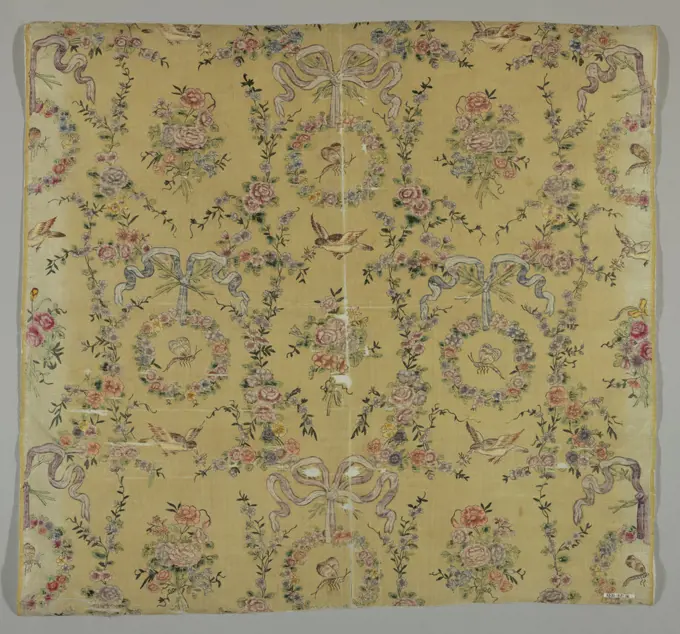
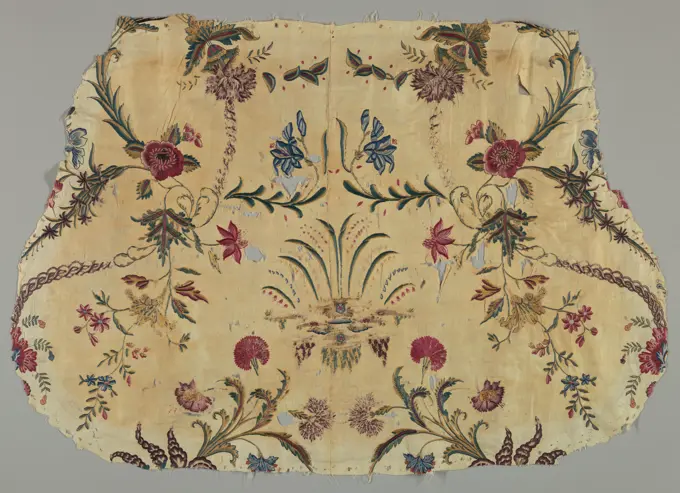
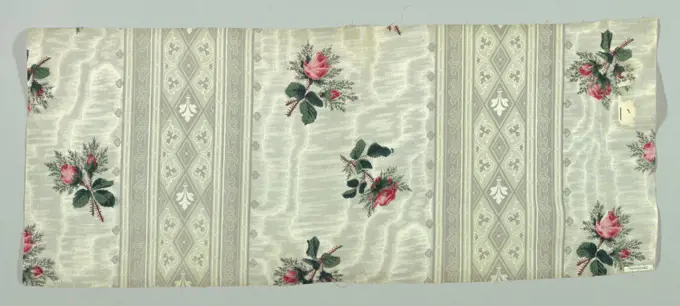
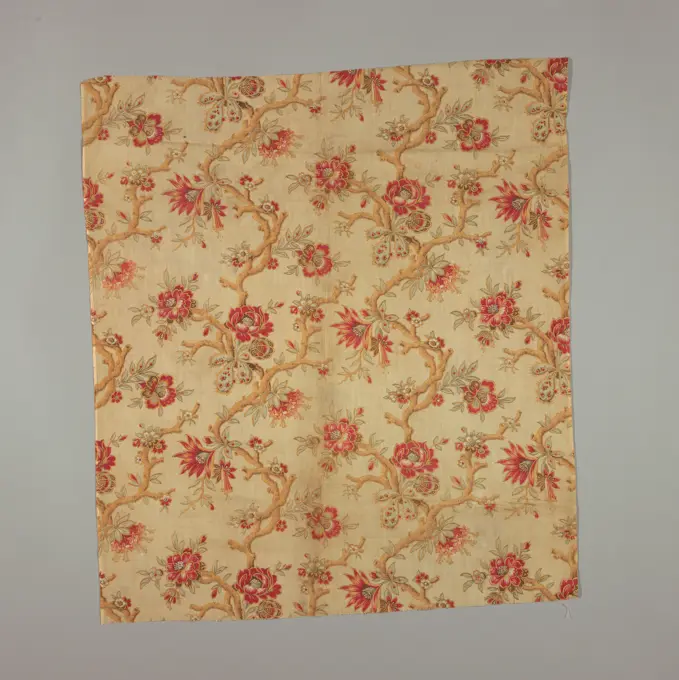
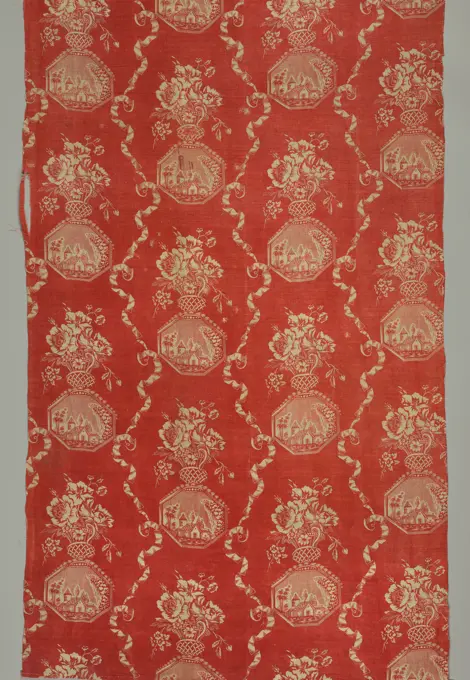
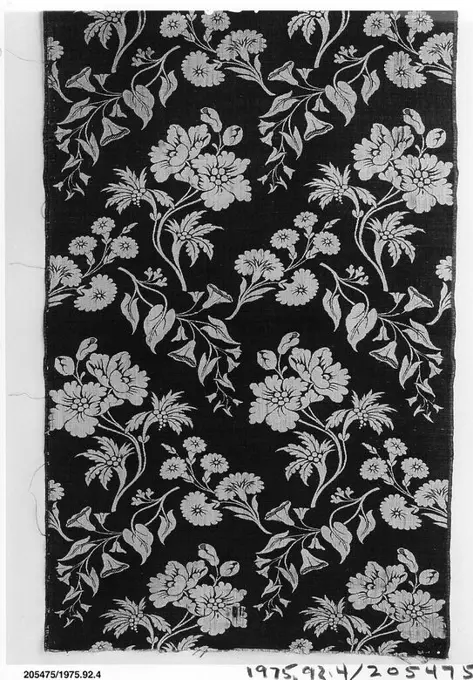
Fragment, Medium: silk; tempera Technique: painted on plain weave, Textile fragment. Cream-colored (originally white) silk with design painted in polychrome tempera. Design of vertical repeat of flower wreaths and garlands, held in place by ribbons, and with birds and insects scattered through the spaces., China, 18th century, printed, dyed & painted textiles, Fragment
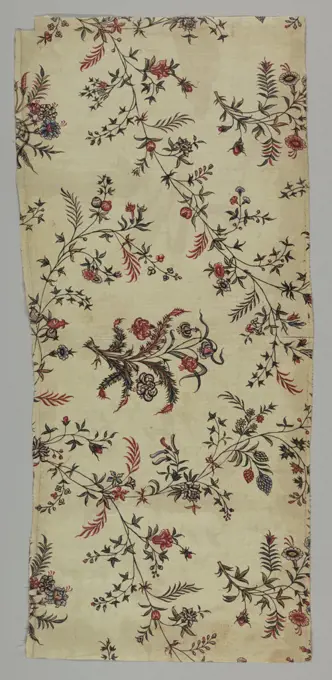
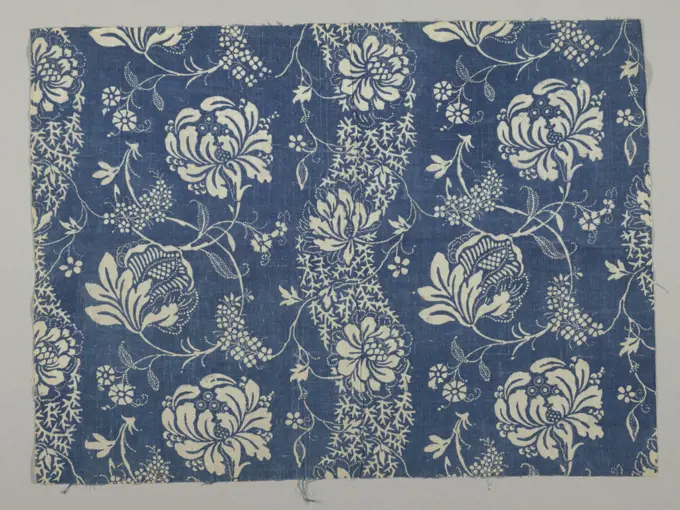
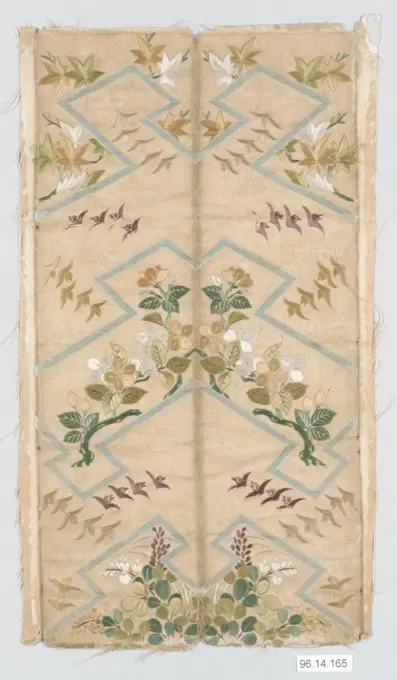
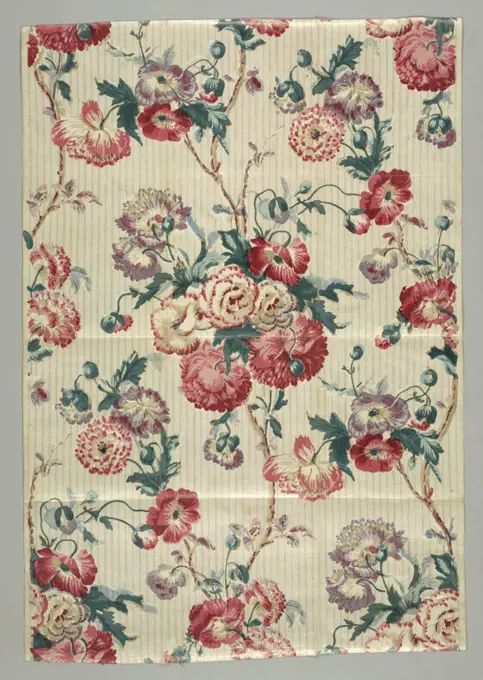
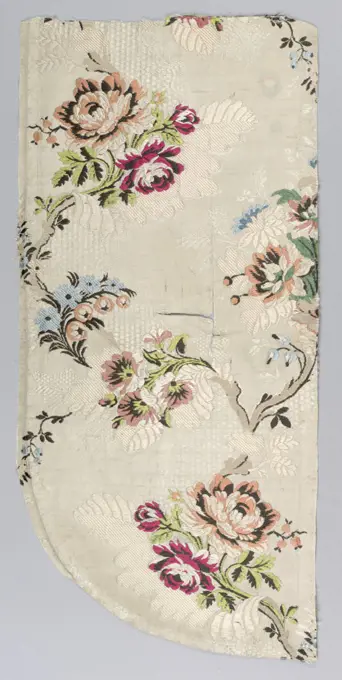
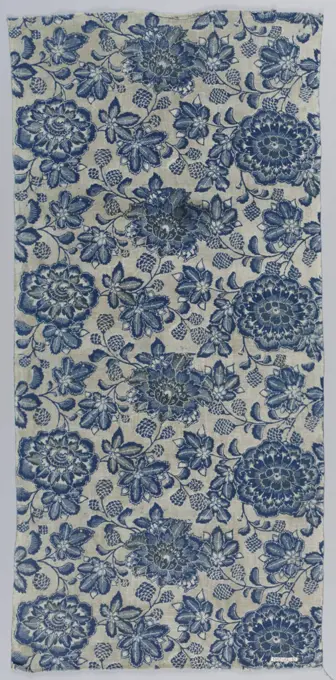
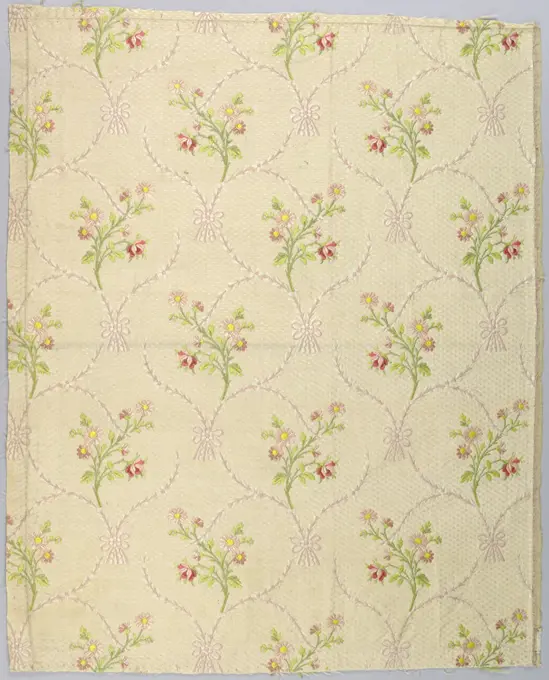
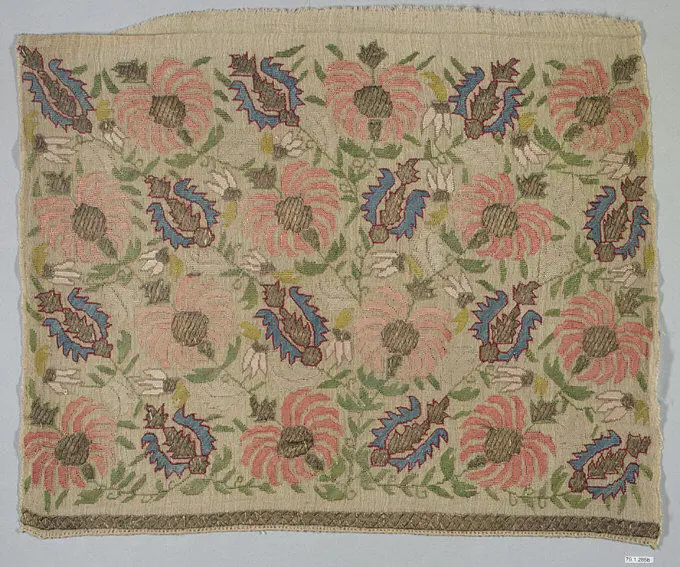
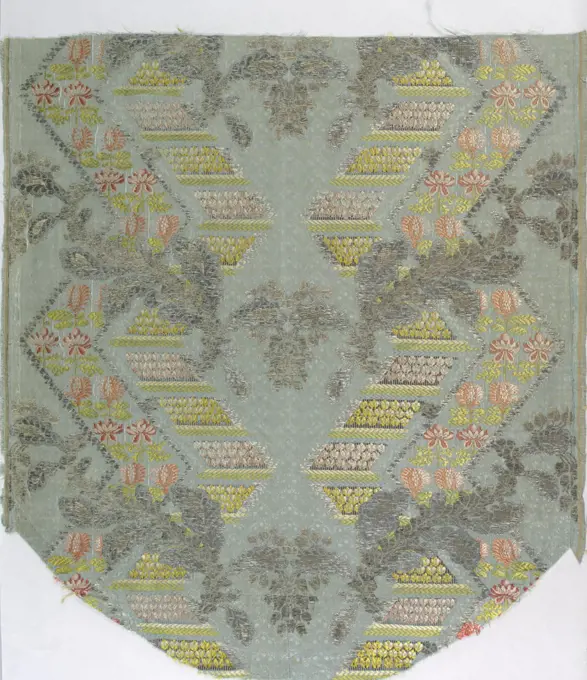
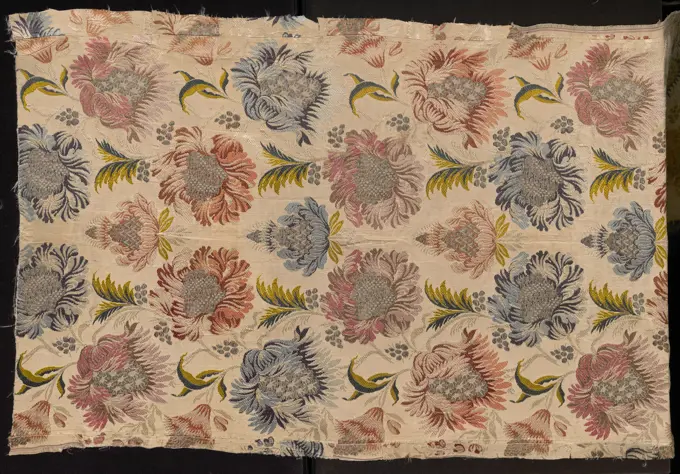
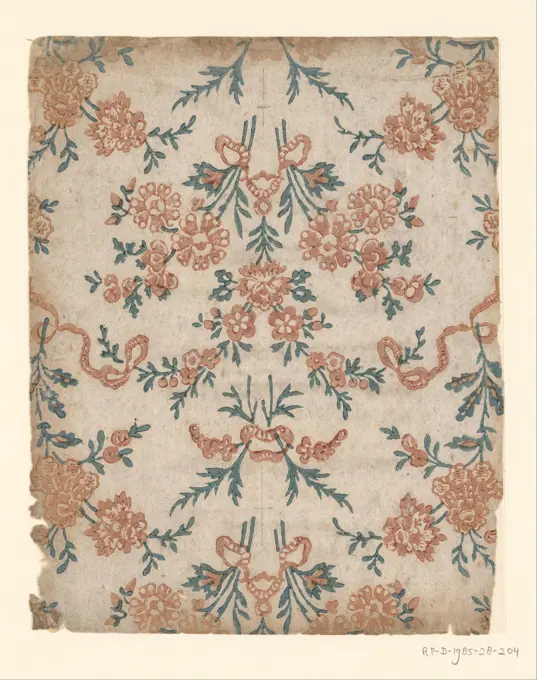
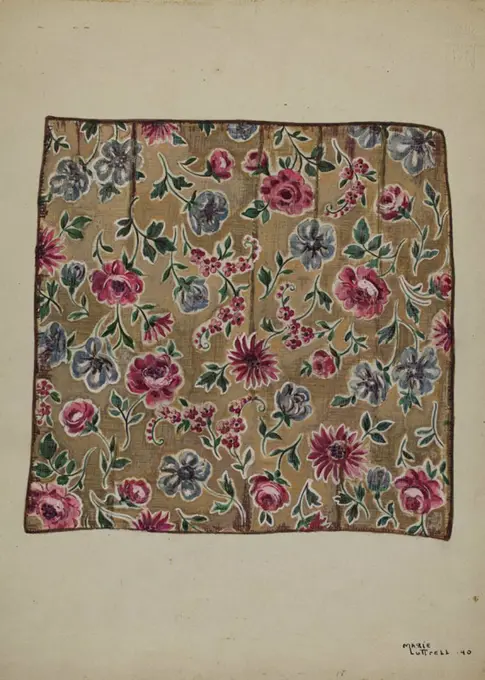
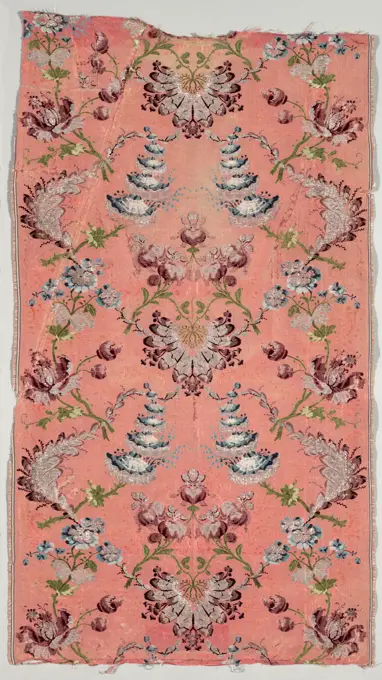
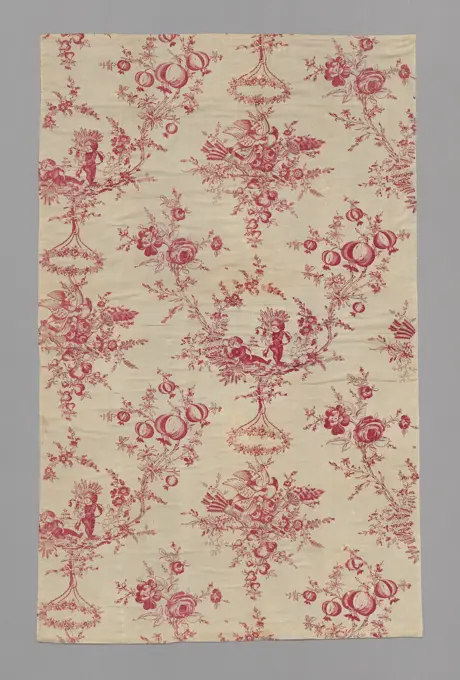
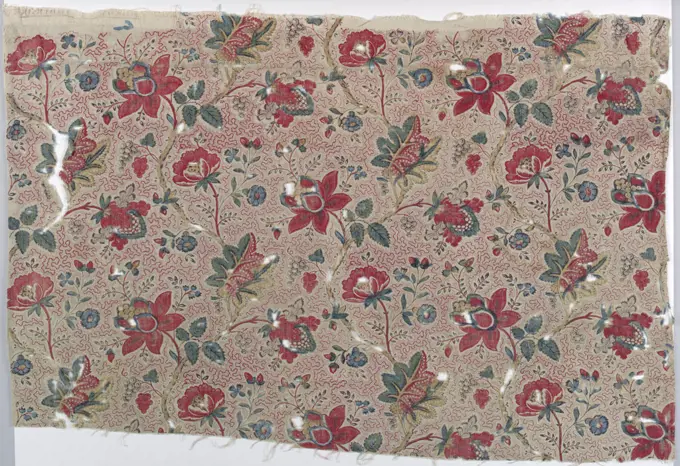
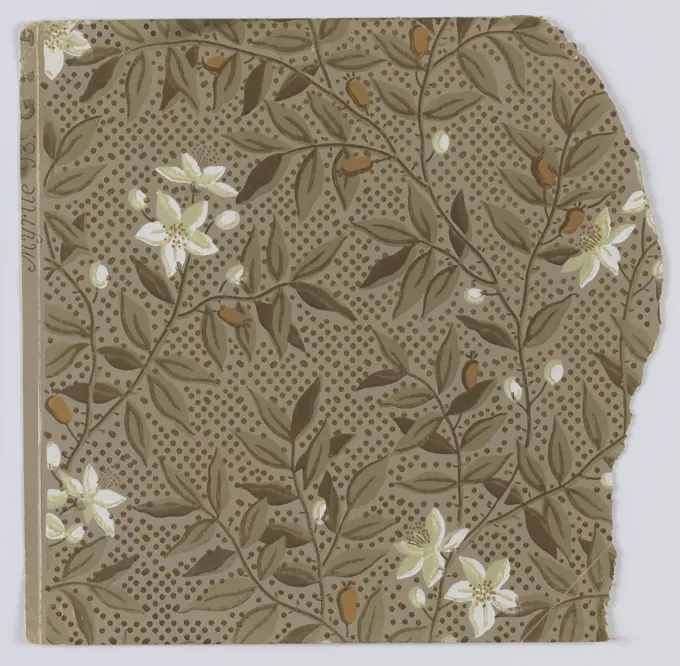
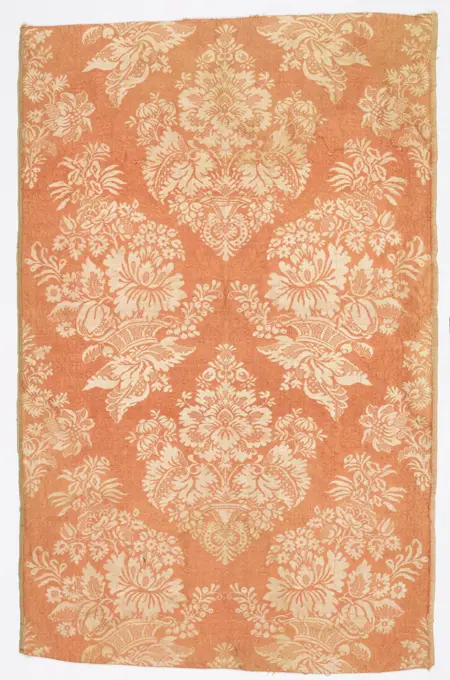
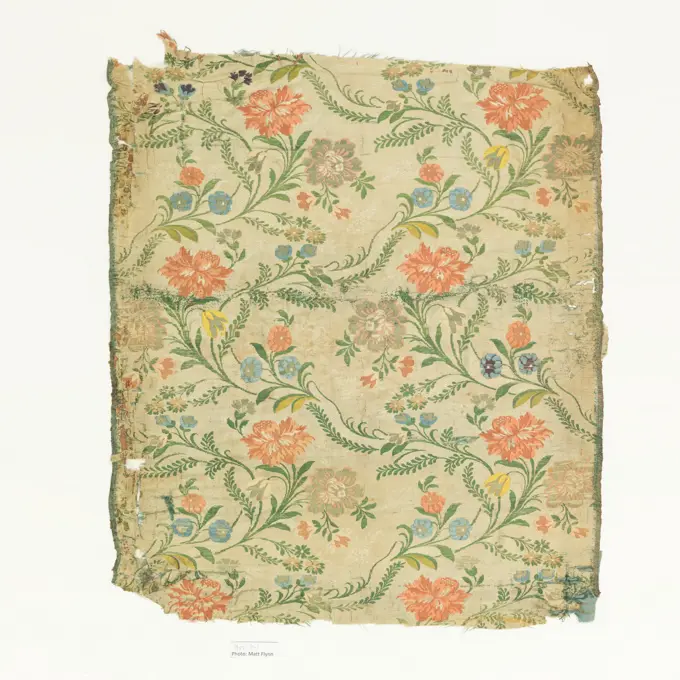
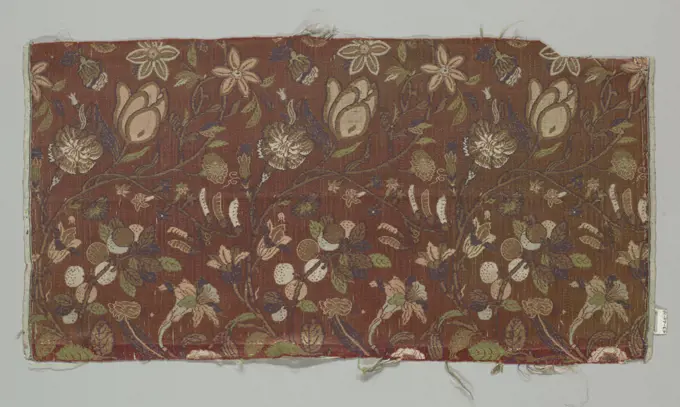
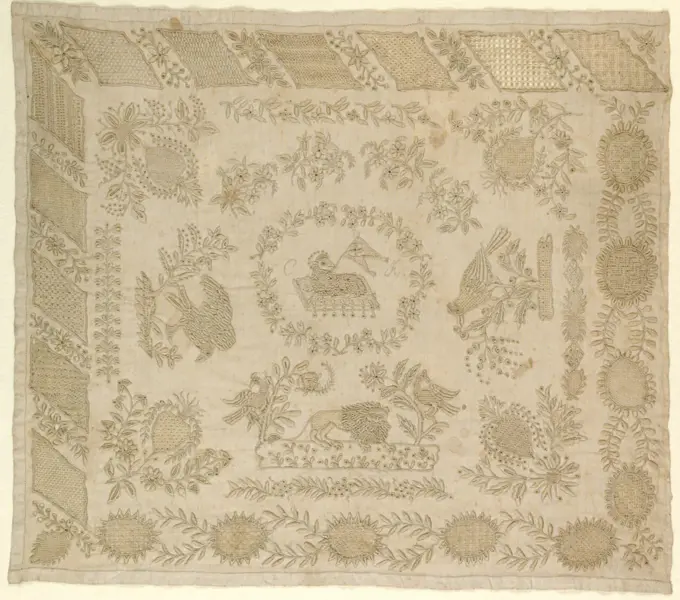
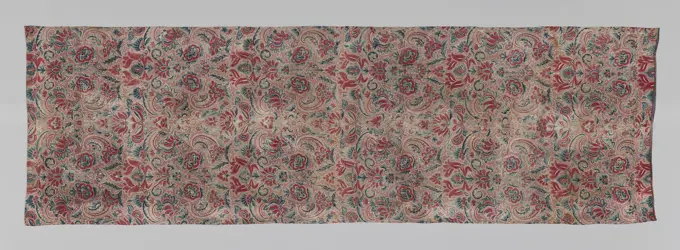
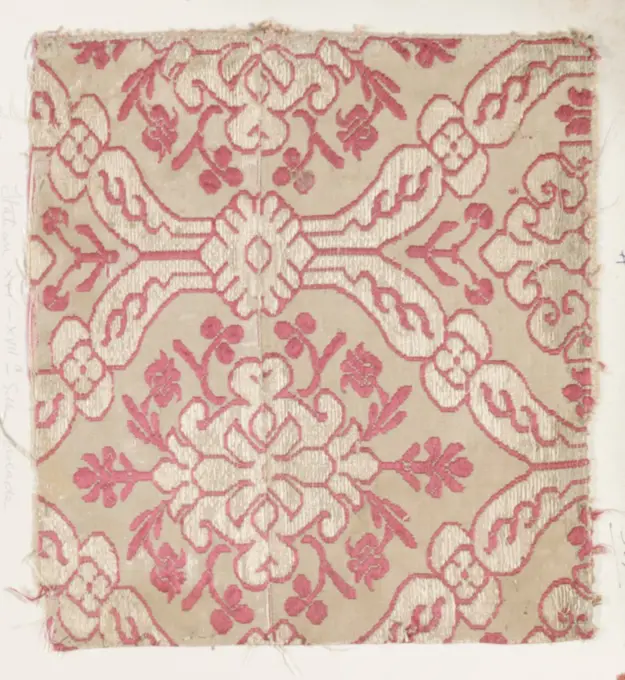
Track of two silk tissues with flower design, c. 1735 - c. 1745 Baan of two launched and browned silk tissues, Canntillé, Liseré. Dessin: couples to each other very large-scale arrangements of flowers and leaves between which a centrally, smaller, symmetrical built-up flower arrangement in yellow, mustard color, green and two colors of blue (brochure) and écru (launch) on pink stock with Liseré effect in beige. At the top label with 22576 Rose Ground Brocade 1 1/3 YRDS 35.00 Yard. At the back of the fabric: 22576. Painted paper with letter Z. State: good, matte a bit worn. France silk. Baan of two launched and browned silk tissues, Canntillé, Liseré. Dessin: couples to each other very large-scale arrangements of flowers and leaves between which a centrally, smaller, symmetrical built-up flower arrangement in yellow, mustard color, green and two colors of blue (brochure) and écru (launch) on pink stock with Liseré effect in beige. At the top label with 22576 Rose Ground Brocade 1 1/3 YRTextile (England); silk, metallic threadsFragment, Medium: silk; tempera Technique: painted on plain weave, Textile fragment. Cream-colored (originally white) silk with design painted in polychrome tempera. Design of vertical repeat of flower wreaths and garlands, held in place by ribbons, and with birds and insects scattered through the spaces., China, 18th century, printed, dyed & painted textiles, FragmentFragment, Medium: cotton Technique: block printed on plain weave, Diagonal bands with fret and leaf patterns create diamond shapes that are filled with floral bouquets. Background of small circles with a stipple pattern. Predominantly in shades of red, blue, mauve, brown and black., France, ca. 1780, printed, dyed & painted textiles, FragmentChintz fragment, Medium: cotton Technique: mordants (2 reds, black and purple) applied by pen or brush; madder dyed; blue brushed over resist; yellow applied by brush; chintz on plain weave, Flowering vines and floral clusters. Indian adaption of a European woven fabric., India, 18th century, printed, dyed & painted textiles, Chintz fragmentFragment; silk, metallic yarnsFragment, Medium: cotton Technique: plain weave foundation. block-printed: a resist medium. Dyed blue., Alternation of a slightly curving with a fine flowering vine superposed on it with units containing two peony-like flowers., France, 18th century, printed, dyed & painted textiles, FragmentFragments; silk, metallic; 1901-26-1-a,bFragment of silk fabric  spray of flowers motifs in twig composition unknownFragment of an obi for a Noh costume late 18th-early 19th century Japan. Fragment of an obi for a Noh costume 65891Textile; silkSidewall - Fragment (USA); machine-printed ; 25 x 17.5 cm (9 13/16 x 6 7/8 in.)Fragment silk tissue with lace pattern and flower vines, Unknown, 1760 - 1780 Fragment of two pieces of a opposite pattern of vertical wavy band work (side) between which flower vines interspersed with two entangled flower branches.  silk. Fragment of two pieces of a opposite pattern of vertical wavy band work (side) between which flower vines interspersed with two entangled flower branches.  silk.Textile, Medium: cotton Technique: printed on plain weave, glazed, Large-scale floral motifs in polychrome on an off-white, striped ground., England, late 19th century, printed, dyed & painted textiles, TextileTextile, Medium: cotton Technique: printed by engraved roller on plain weave, Bunches of roses and other flowers in red, tan, and black on light background with stippling. Color in leaves has faded out. Probably had glaze but it is now worn off., England, 19th century, printed, dyed & painted textiles, TextileFragment, Medium: silk Technique: plain weave with supplementary wefts, Serpentine pattern of polychrome branches on off-white. Many tears in the fabric., 18th century, woven textiles, FragmentTextile, Medium: cotton Technique: stencil resist (katazome) on plain weave, Allover pattern of flowers and seed pods in deep blue and tan on a lighter tan ground. Touches of white., Japan, late 19th century, printed, dyed & painted textiles, TextileFragment early 18th century Italian, Venice. Fragment 230437Piece ca. 1750 French. Piece 223243Textile (France); cotton or linenFragment, Medium: silk Technique: plain weave with continuous and discontinuous supplementary weft floats, Floral sprays on patterned white ground. A selvage present., 18th century, woven textiles, FragmentFragment of silk fabric  vertical stripes and colourful, pseudo naturaIIstic flower patterns unknownTowel End 18th-19th century. Towel End 455294Textile, Medium: silk, metallic yarns Technique: compound weave with supplementary weft patterning (brocade), Textile fragment with faded blue ground figured with pattern of ogee arches and clusters of three dots. Brocaded with design of large vertical zigzags outlined by minute ornaments in silver yarns and containing a large variety of flower forms in polychrome silks. The zigzags are interrupted by undulating branches in silver thread., France, late 17th century, woven textiles, TextileFragment of the fabric;  1. PO. 18th century (1735-00-00-1740-00-00);Fabrics, purchase (provenance)Towel Made 1750-1850 Turkey. During the 17th century, Ottoman artists in Turkey developed a taste for flowers presented in clusters and in profileóa trend also seen in works made by the Safavids, in Iran, and the Mughals, in India. The motif can be traced to the introduction of European herbals, books that illustrated flowers in this fashion. This particularly sumptuous example has a ground fabric, usually plain in Turkish production, which was woven with a subtle and beautiful repeat pattern of diamonds.. Cotton, plain weave with supplementary brocading wefts; embroidered with silk and metal-strip-wrapped silk .Uchishiki (Altar Cloth). Japan. Date: 1801-1825. Dimensions: 68 x 67.3 cm (26 3/4 x 26 1/2 in.). Fancy compound satin, silk and gilt paper. Origin: Japan. Museum: The Chicago Art Institute, Chicago, USA.Textile; silk, metallic thread; Warp x Weft: 36.5 x 52 cm (14 3/8 x 20 1/2 in.); Bequest of Richard Cranch Greenleaf in memory of his mother, Adeline Emma Greenleaf; 1962-58-32Piece 18th-19th century Japan. Piece 66794Sidewall (USA); Manufactured by S.A. Maxwell & Co.; machine-printed paper, liquid mica; 82 x 47 cm (32 5/16 x 18 1/2 in.)Seat Covers (India); cotton, silkLeaf with spreading pattern of flowers and ribbons, Anonymous, 1750 - 1900  Leaf with spreading pattern of flowers and ribbons. Probably half a cover.  paper. block printing (relief printing process) ornament derived from plant formsVelvet Fragment (of a Chasuble ), 1400s. Italy, 15th century. Velvet (cut, voided, and brocaded): silk and gold thread; overall: 76.5 x 25.7 cm (30 1/8 x 10 1/8 in.).Chintz (India); cotton; Warp x Weft: 71 x 74 cm (27 15/16 x 29 1/8 in.)Fragment. Japan. Date: 1775-1800. Dimensions: 31.1. x 18.8 cm (12 1/4 x 7 3/8 in.). Plain double cloth, silk. Origin: Japan. Museum: The Chicago Art Institute, Chicago, USA.Textile ca. 1400 Italian. Textile. Italian. ca. 1400. Linen. Made in probably Umbria, Italy. Textiles-WovenSample, Orinoka Mills, (Philadelphia, Pennsylvania, USA), light blue/green with pinks and oranges, columns of ribbons and flowers, USA, ca. 1910, woven textiles, SampleTextile; silkTextile (France); cotton; Warp x Weft: 236.1 x 103 cm (7 ft. 8 15/16 in. x 40 9/16 in.); Bequest of Elinor Merrell; 1995-50-315Fragments of silk fabric  a colorful pattern of floral flagella unknownFragment ca. 1640 () European. Fragment 216606Sidewall Sample; machine-printed on paper; 22.5 x 22.5 cm (8 7/8 x 8 7/8 in.)Sidewall Sample; machine-printed on paper; 22.5 x 22.5 cm (8 7/8 x 8 7/8 in.)Fragment 17th century Italian. Fragment 230560Calico. Dated: 1940. Dimensions: overall: 34.6 x 24.5 cm (13 5/8 x 9 5/8 in.). Medium: watercolor, graphite, and gouache on paper. Museum: National Gallery of Art, Washington DC. Author: Marie Lutrell.Length of Textile, 1723-1774. France, 18th century, Period of Louis XV (1723-1774). Brocade; silk and metal; overall: 100.7 x 54.6 cm (39 5/8 x 21 1/2 in.).Fragment (Iran); silk, metallicChildren Harvesting (Furnishing Fabric) Made 1701-1800 Orléans. Linen, printed .Ecclesiastical Ensemble (Chasuble and Stole). France, Lyon, 1730-1740. Costumes; ecclesiastical. Silk satin with silk supplementary-weft patterning bound in twill (lampas), with silk and metallic-thread passementerieFragment, Medium: silk, metallic thread Technique: warp-faced plain weave patterned by continuous and discontinuous weft floats, Fragment of a cream-colored silk with diagonally intersecting lattice of silver and cream-colored threads. Over this lattice are yellow pieces of fruit and delicate curving floral vines in green, red and blue-gray., France, late 18th century, woven textiles, FragmentCarpet Fragment; woolFragment multicolored seals, c. 1730 - c. 1760 Two fragments of multi -colored silk tissue. The pattern has white leaf vines with heart -shaped leaves and multicolored flower branches. Netherlands silk Two fragments of multi -colored silk tissue. The pattern has white leaf vines with heart -shaped leaves and multicolored flower branches. Netherlands silkCravat end, Medium: linen Technique: needle lace with ground of loop and twist with twist return, Cravat end with a central heart-shaped motif surrounded by strapwork pattern of bands, floral and foliated forms., Italy, 1700-1750, lace, Cravat endTextile (France); wool, linenTextile, Medium: linen warp, cotton weft Technique: block printed on plain weave, Polychrome design of flowers and stems on a vermicular background., France, 1785-95, printed, dyed & painted textiles, TextileSidewall Sample; machine-printed on paper; 22.5 x 22.5 cm (8 7/8 x 8 7/8 in.)Floral design for printed textiles, Louis-Albert DuBois, Swiss, 1752-1818, Fabrique de Fazy aux Bergues, Brush and gouache, graphite on white wove paper, Floral design, purple and black, upper portion, tan ground with white vines, lower portion, white ground with tan vines., France, 1800-1818, textile designs, Drawing, DrawingRibbon 18th century French. Ribbon 215673Sample (USA); Company: F. Schumacher & Co. (United States); silk, cotton; Warp x Weft: 54.5 x 61.5 cm (21 7/16 x 24 3/16 in.)Textile (England); silkFragment; silkBritain of fabric;  16th century (1501-00-00-1600-00-00);Fabrics, Turkish fabricsEmbroidered sampler 1651 German This long and narrow sampler is divided up into five square sections, two small and three large, on top of which is an alphabet. Four of the squares consist of floral motifs along the borders and facing the middle, while the fifth features banded geometric patterns. The letters SM and the year 1651 are stitched onto the linen, most likely the initials of the maker and the year in which she completed her work. Flanking these initials are a ships wheel and an unidentified animal.. Embroidered sampler 228599Sidewall, Machine-printed paper, Stylized large damask pattern of green floral motifs alternating with hexagonal medallions of pineapples and foliage in lavender, linked by lavender foliage, against white background., England, 1835-1845, Wallcoverings, SidewallEva Wilson, Linen Table Cloth, c 1937 Linen Table ClothTextile (Italy); silkCeiling Paper (USA); Manufactured by Maxwell & Co., S.A. (United States); machine-printed paper, liquid mica; 83 x 47.5 cm (32 11/16 x 18 11/16 in.)Fragments (France); silk; Repeat H: 59.5 cm (23 7/16 in.)Textile, Medium: cotton Technique: roller printed, glazed, Floral pattern in blue, pink, purple and white on a light brown ground., England, 19th century, printed, dyed & painted textiles, TextileTapestry. unknown, authorSamples, Orinoka Mills, (Philadelphia, Pennsylvania, USA), a. green ground with pink flowers and dark green leaves and stems, b. beige ground with pink flowers and green leaves, c. dark red ground with gold/beige flowers and dark green leaves and stems, d. rust color ground with gold/beige flowers and dark green leaves and stems, e. orange/pink ground with white flowers and green leaves and stems, f. green ground with gold/beige flowers and dark red leaves and stems, g. gold/beige ground with orange/pink flowers and green leaves and stems, USA, ca. 1910, woven textiles, SamplesTextile (England); cotton; 1953-38-11-aPanel Made 1725-1745 Spitalfields. Silk, silvered-gilt strips, and silvered- and gilt-metal-wrapped silk, plain weave with supplementary binding warps tying some supplementary brocading wefts .Leather (Holland); leather, silvered, varnished and painted; 126 x 63 cm (49 5/8 x 24 13/16 in.); 1913-34-9Textile, Medium: silk and metal Technique: plain compound satin, brocaded, Undulating stems with flowers and fruit in polychrome silks and gold on a rust satin ground. The gold threads are gilded strips of paper cut to fit the desired pattern; not a true brocading technique., Japan, 19th century, woven textiles, TextileSidewall - Sample (USA); Manufactured by Maxwell & Co., S.A. (United States); machine-printed on paperTaffeta, Brocaded, c. 1750. France, mid 18th century, Period of Louis XV (1723-1774). Taffeta, brocaded; silk; overall: 40.2 x 50.8 cm (15 13/16 x 20 in.).Fragment, Medium: silk Technique: satin weave with supplementary weft floats (brocade), White satin ground with symmetrical design of flowers between curving borders of lace and foliage. Red predominating with green, yellow and blue. Two yellow selvages., Spain, early 18th century, woven textiles, FragmentFragment; silkSampler, Medium: linen, cotton Technique: embroidery using satin, padded satin, overcast cord, and chain knot; withdrawn element work with overcasting, looping, interlacing, back, stem, buttonhole, satin and others; cutwork with overcast edges, Initials 'C.F' with religious scenes (including the Pascal Lamb). Floral bordering and accenting throughout., In the center: the Paschal Lamb, with the letter 'c' at left and 'f' at right, encircled by a wreath of flowers. Left and right facing out: a bird in a flowering tree growing from a mound; bottom: lion between flowering trees in which a bird is perched; top: sprigs of flowers. In each corner a vase-like shape enclosed within flowering branches, each corner connected by a flowering band.Border at top and left: a parallelogram alternating with a floral sprig. Border at bottom and right: a floral medallion connected by a double vine. White cotton on white linen and plain weave foundation. Embroidery for pattern only with many shapes filled Fragment, Medium: silk Technique: cut voided supplementary warp pile in a twill foundation (velvet), Small-patterned or 'miniature' velvet with a white horizontally ribbed ground and border design formed by short floats of secondary white silk weft, giving the effect of twill, and over this, garlands and sprays of minute roses in red, pink, green, and white pile. Left selvedge present., France, 1750-1800, woven textiles, FragmentTextile (France); Manufactured by Oberkampf & Cie. (France); linen warp, cotton weftCeremonial Hanging Made 1700-1800 India. Cotton, plain weave; painted and resist dyed .Fragment 16th-17th century Italian. Fragment 230602Textile, Medium: cotton Technique: printed by engraved roller and block printed, Ground printed in grey in alternate stripe pattern; one stripe, molette printed in moire effect, is over-printed with scattered rose clusters in pinks and greens. Alternate stripe, probably roller printed, consists of symmetrical pattern of stylized floral motifs and diamond shapes., 1850-63, printed, dyed & painted textiles, TextileTextile; silk, metallic thread; Bequest of Richard Cranch Greenleaf in memory of his mother, Adeline Emma Greenleaf; 1962-56-77Textile (England); cottonTextile (France); cotton; Warp: 184.5cm (72 1/2in.). Weft: 93cm (36 1/2in.) Both selvedges present. Height of repeat: 36cm (14 1/8in.); Bequest of Elinor Merrell; 1995-50-219Fragment 16th century Spanish or Italian. Fragment 230598Piece. Culture: French, probably Jouy-en-Josas. Dimensions: L. 51 x W. 31 inches129.5 x 78.7 cm. Manufactory: Probably Oberkampf Manufactory (French, active 1760-1843). Date: late 18th century. Museum: Metropolitan Museum of Art, New York, USA.Piece 16th-17th century Italian. Piece 223373Length. Culture: British, London, Spitalfields. Dimensions: H. 41 1/2 x W. 18 3/4 inches (105.4 x 47.6 cm). Date: ca. 1730-40. Museum: Metropolitan Museum of Art, New York, USA.Piece 17th century Japan. Piece 71513Textile; silk, metallic yarnsTextile; Manufactured by Schwartz-Huguenin; cottonPiece 18th-19th century Japan. Piece 66321Baan crèmekleurige zijdedamast, met ingeweven bloemslingers en verticale banen met stippen, waarover een strooimotief van grote en kleine rozen in veelkleurige zijde is gebrocheerd, oorspronkelijk deel van rok.Job cream-colored silk damest, with woven flower garlands and vertical courses with dots, over which a spreamother of large and small roses is broke into multicolored silk. Provided with a narrow green hiding side on both sides. In 1956 the skirt has been entertained into a tablier and remained that this web side, after manufacture of new, double pagodoidal cuffs and a two-piece roof piece, over. On the 'top' of the track there is a fold with pin holes over the entire width, where the waistband of the skirt has been originally.Piece 18th-19th century Japan. Piece 66078Welum;  2nd half 18th century (1751-00-00-1800-00-00);Fragment Italian 18th century