Decorative Silver Spoons

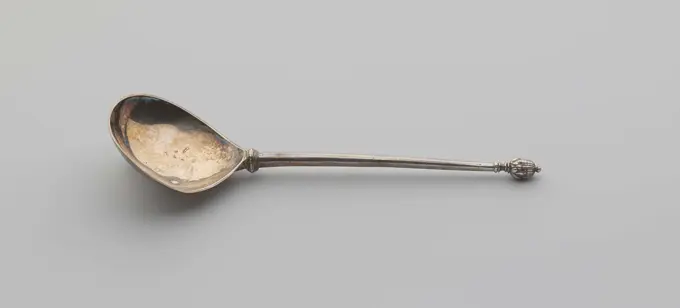
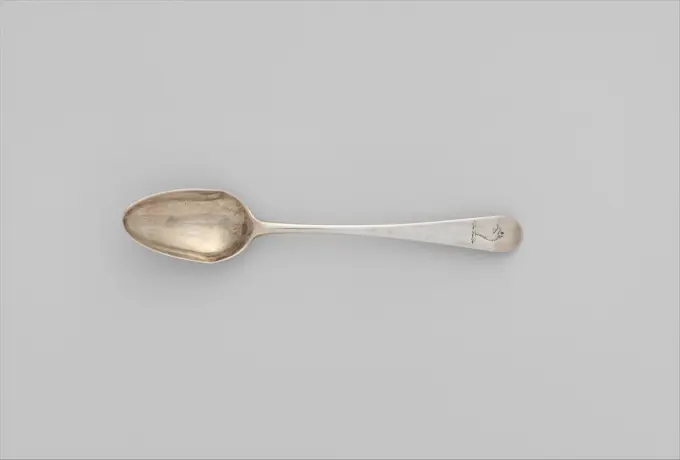
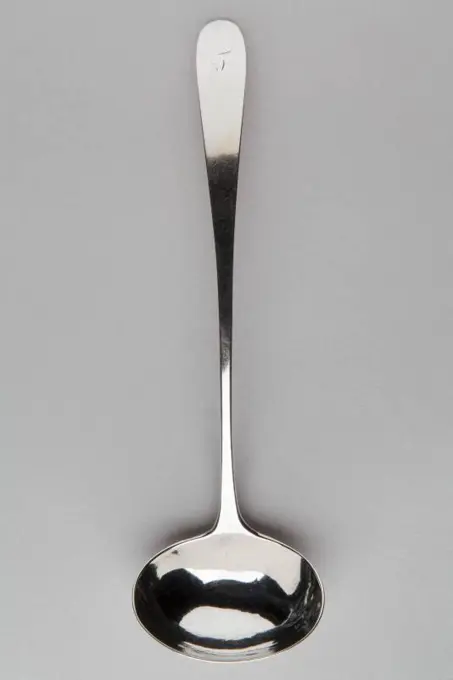
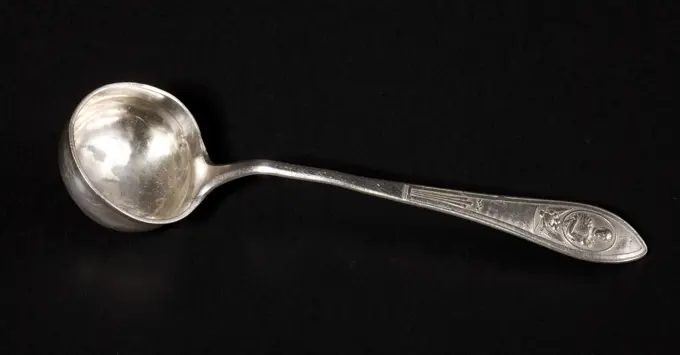
Elegant historical silver spoons showcasing intricate designs and craftsmanship, ranging from the 16th to 20th centuries with unique features.
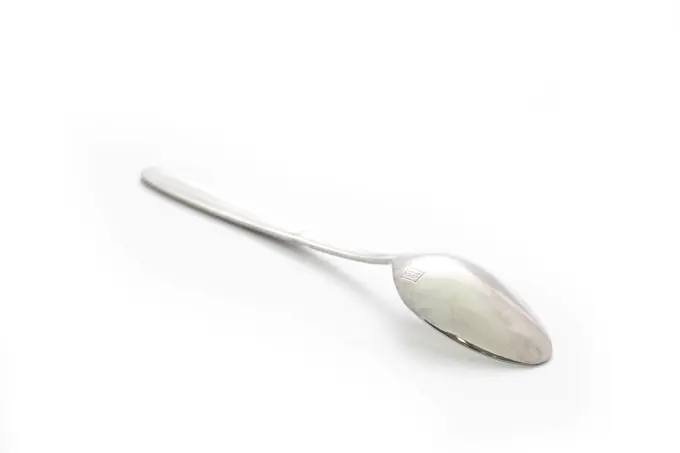
top view of tablespoon with grained Rock Salt top view of tablespoon with grained Rock Salt isolated on white background Copyright: xZoonar.com/ValeryxVoennyyx 13599941
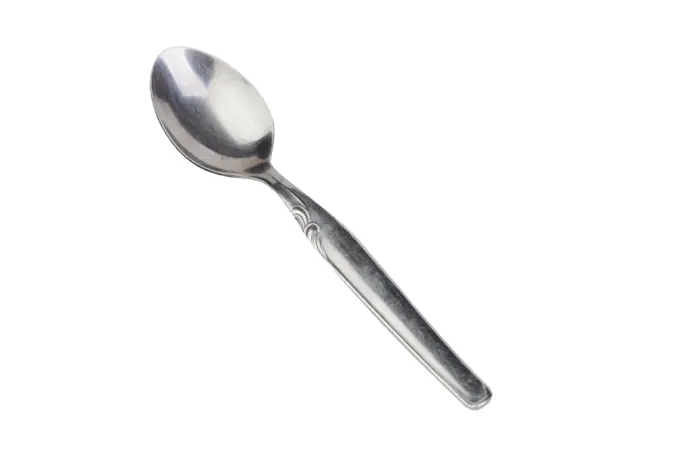
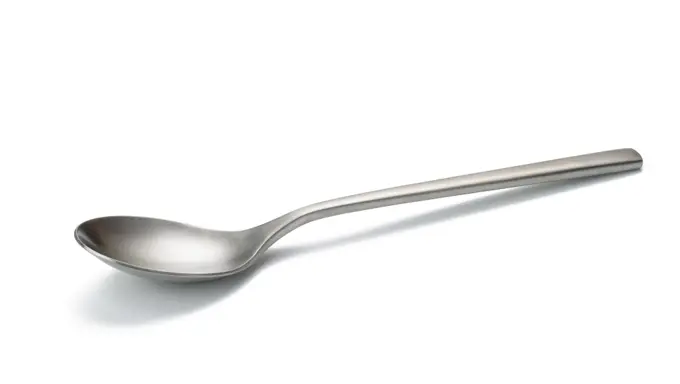
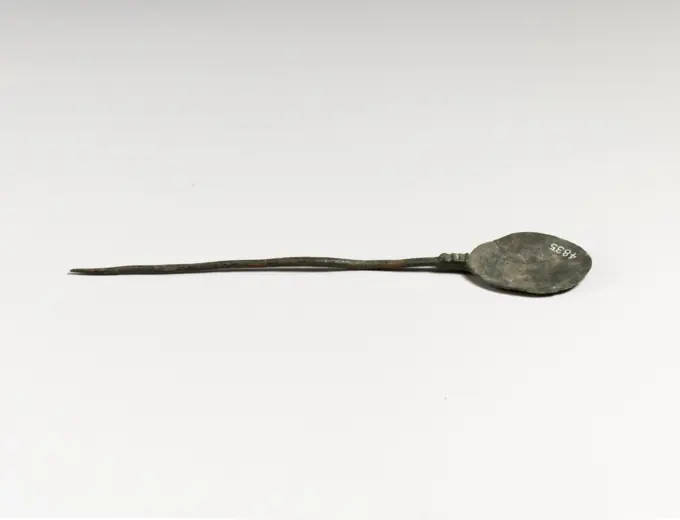
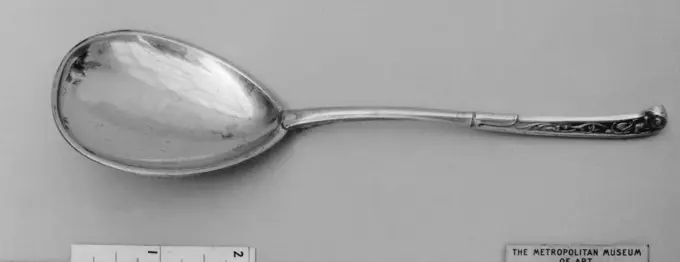
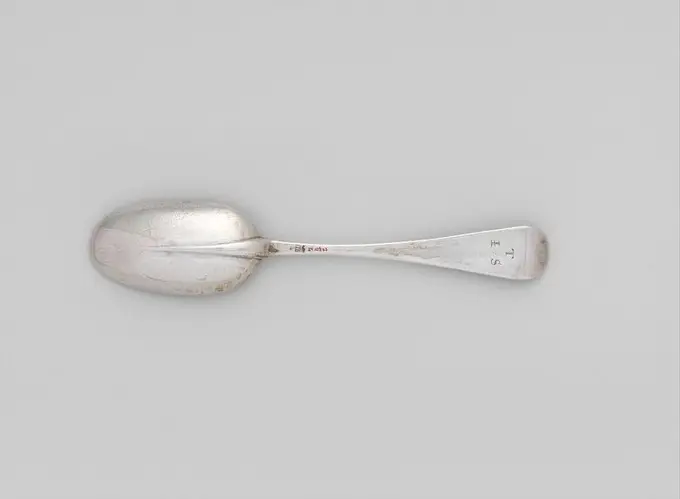
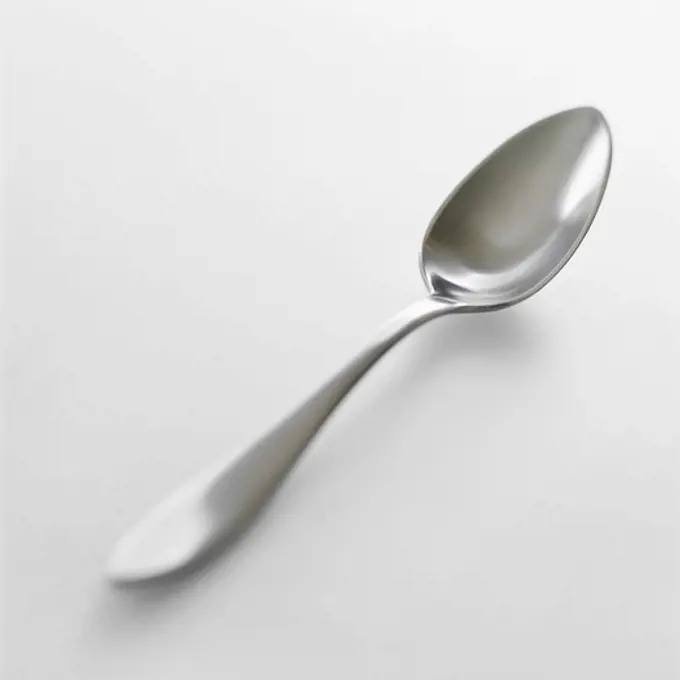
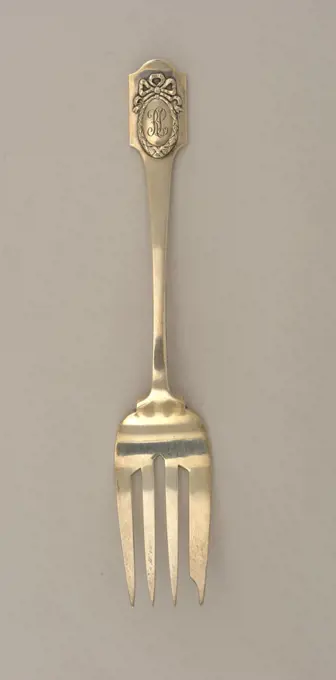
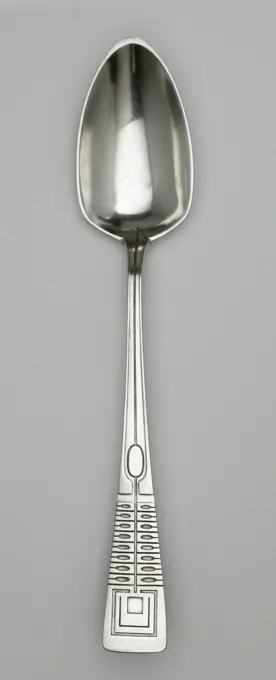
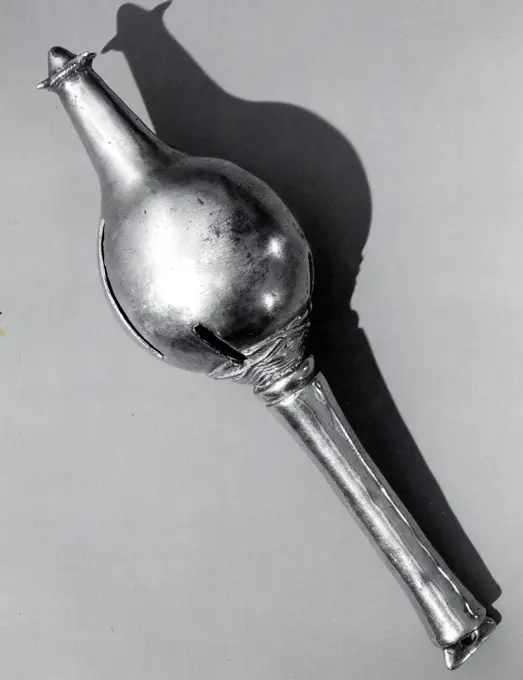
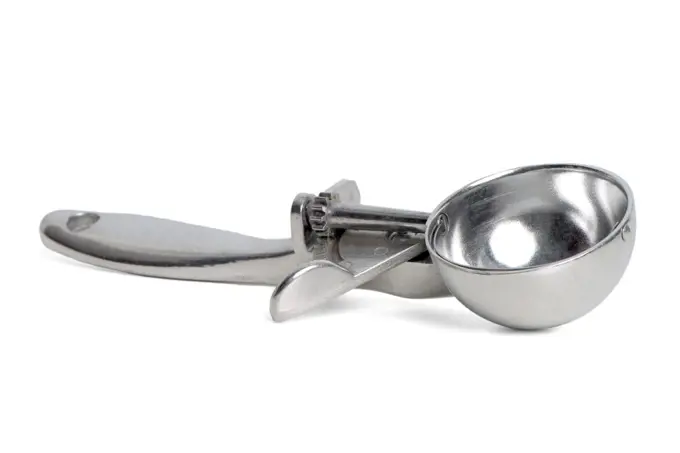
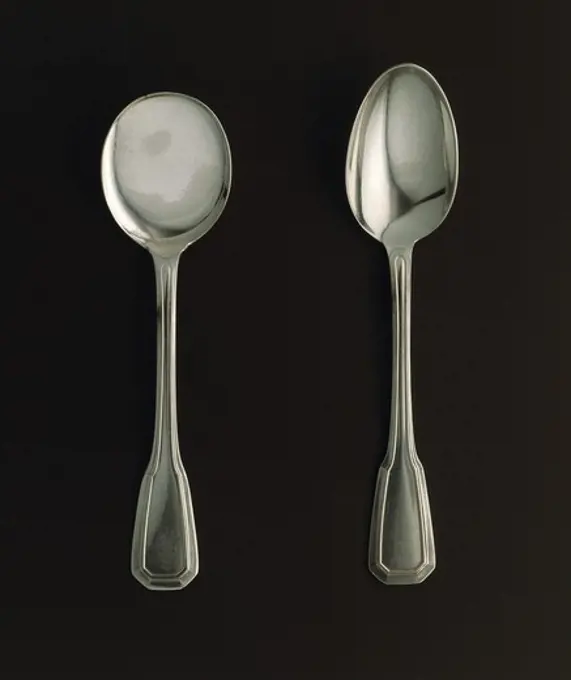
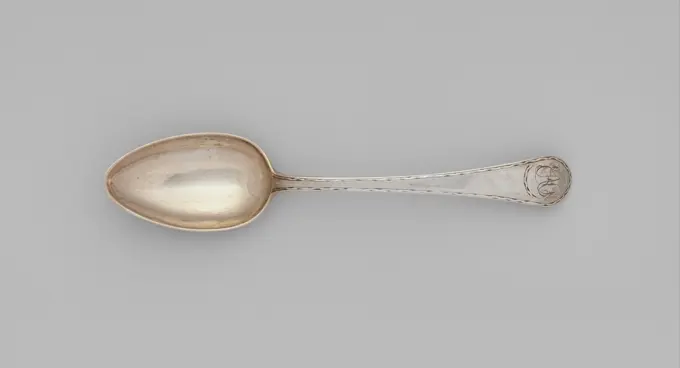
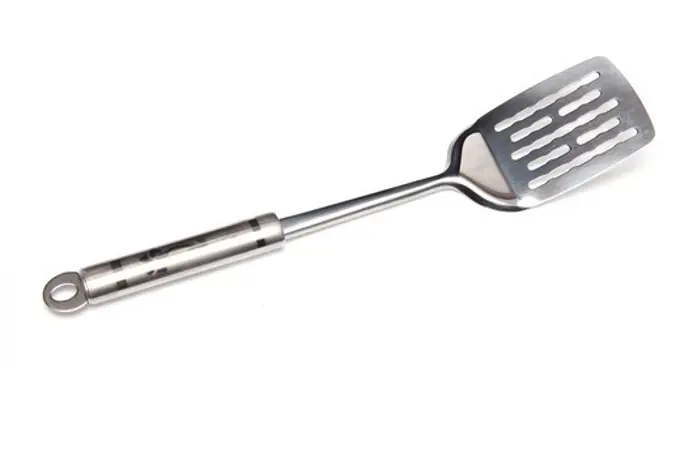
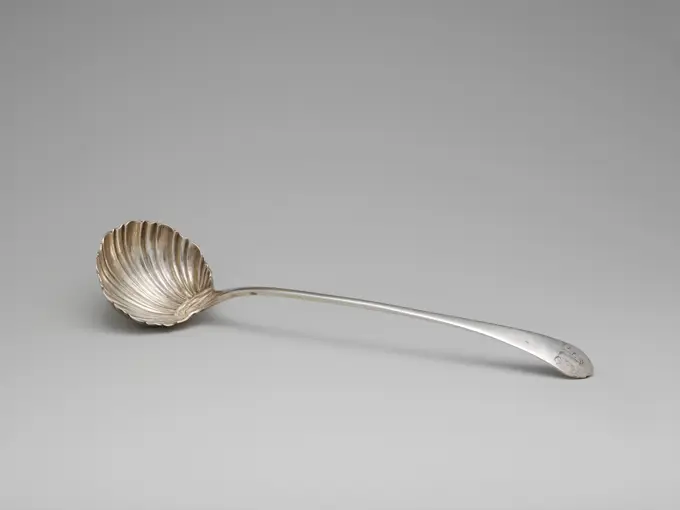
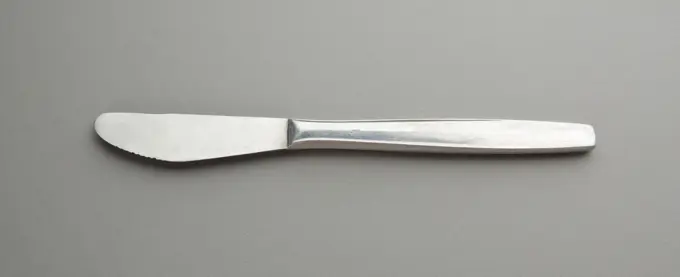
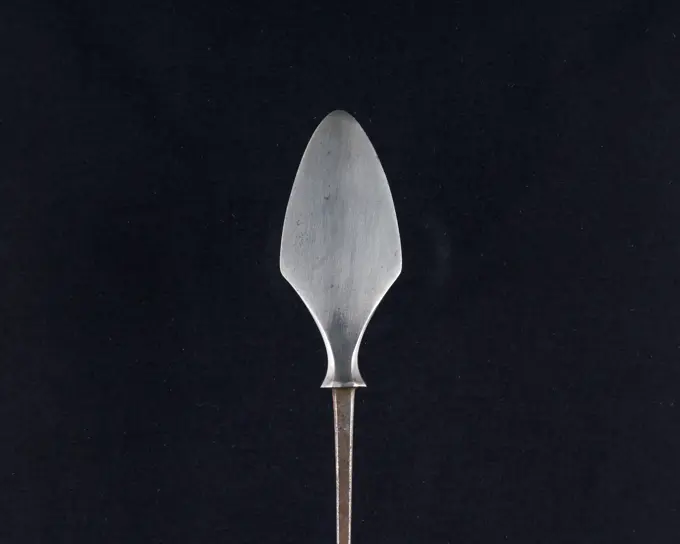
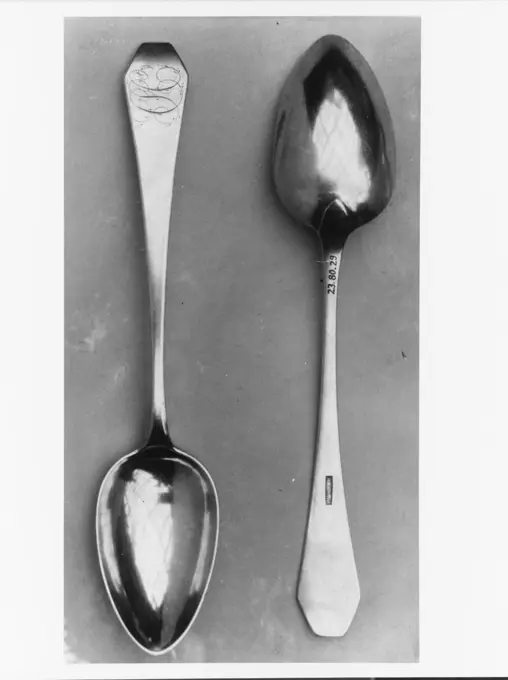
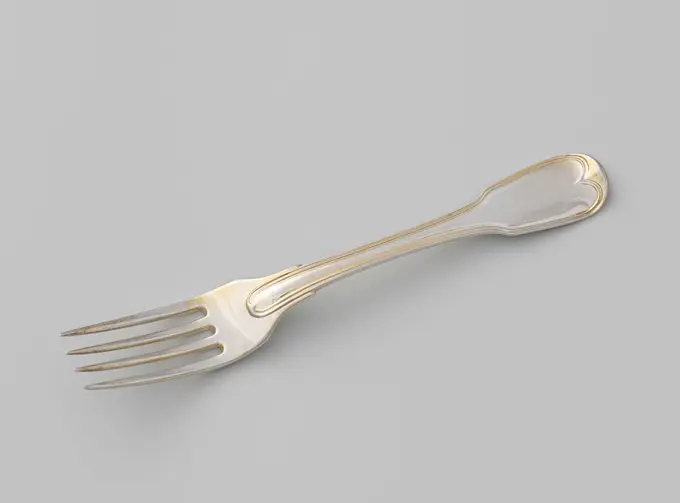
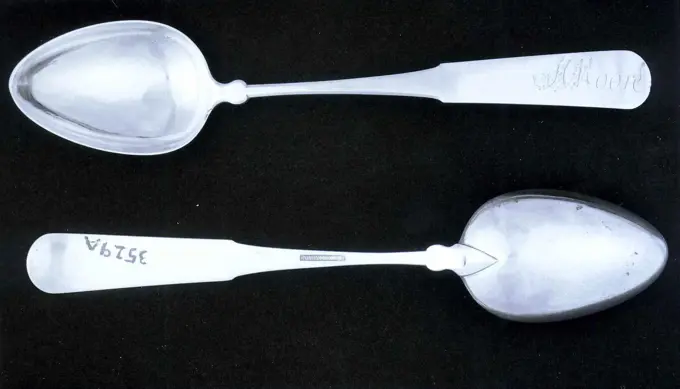
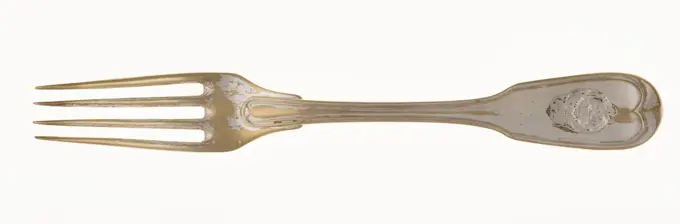
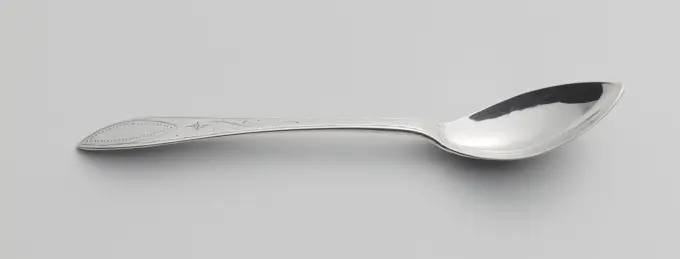
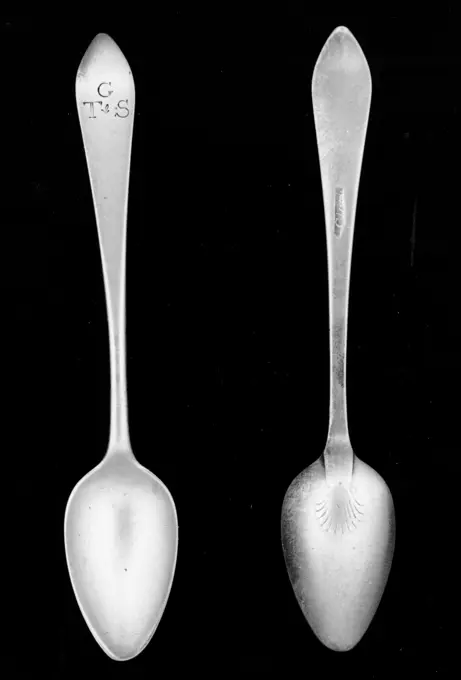
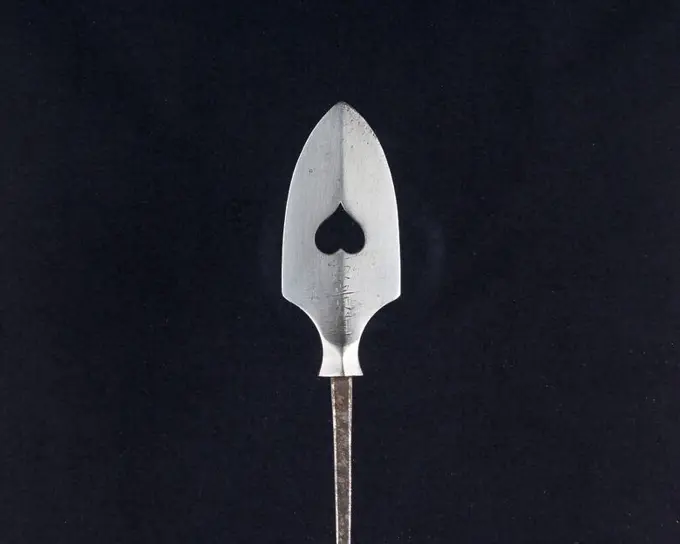
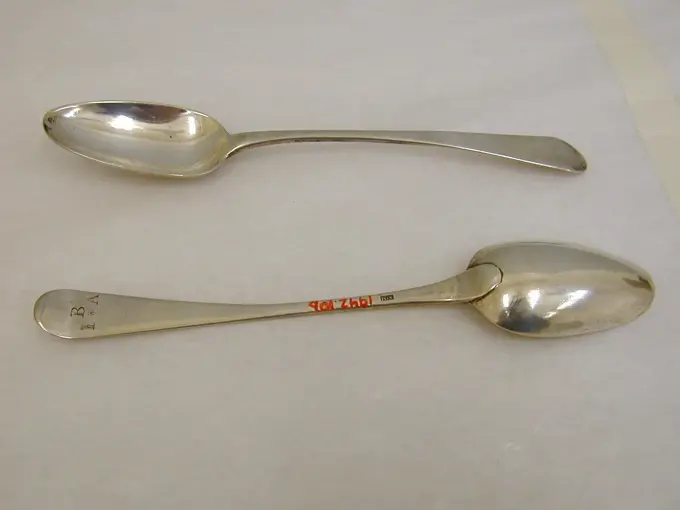
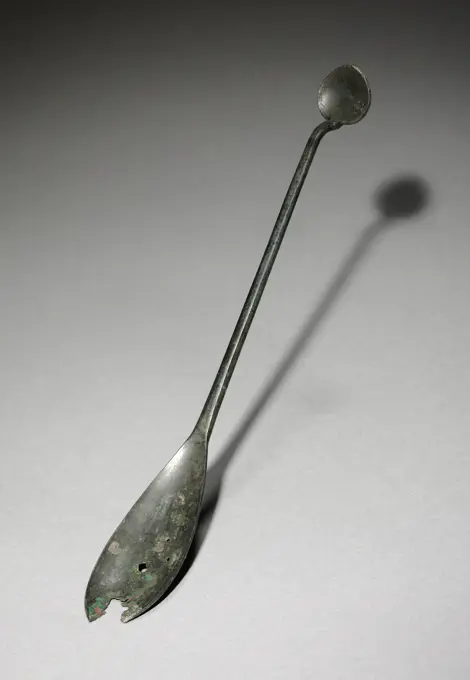
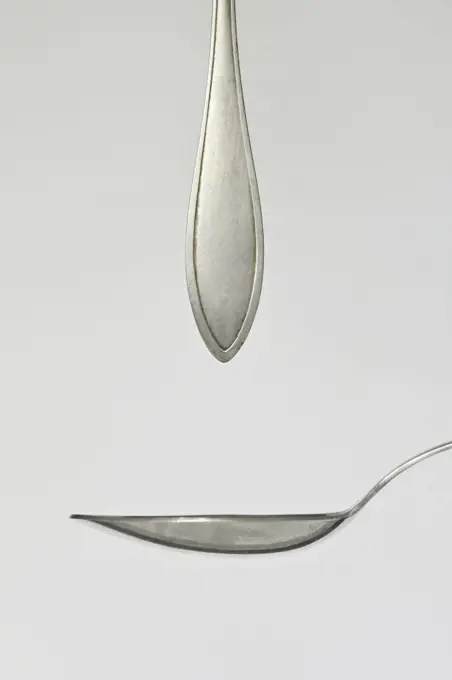
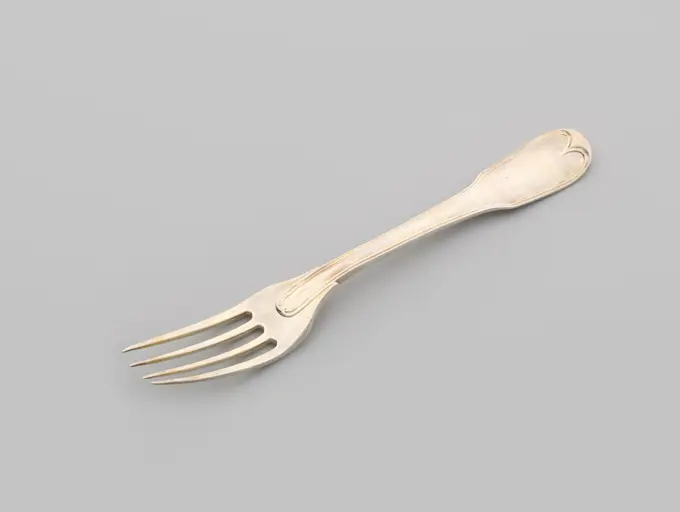
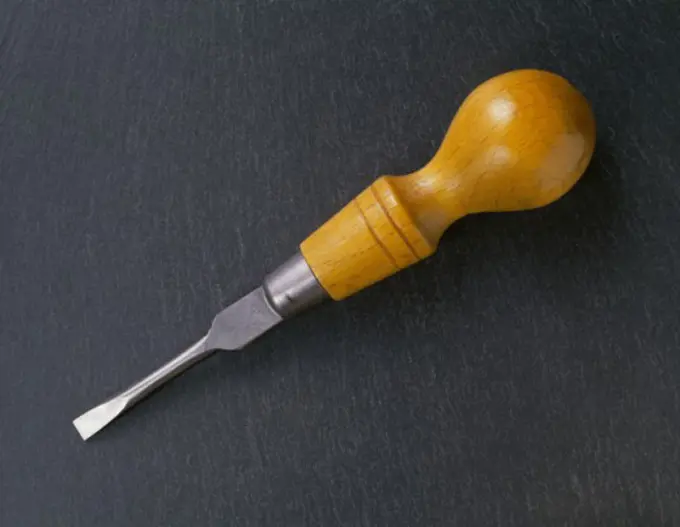
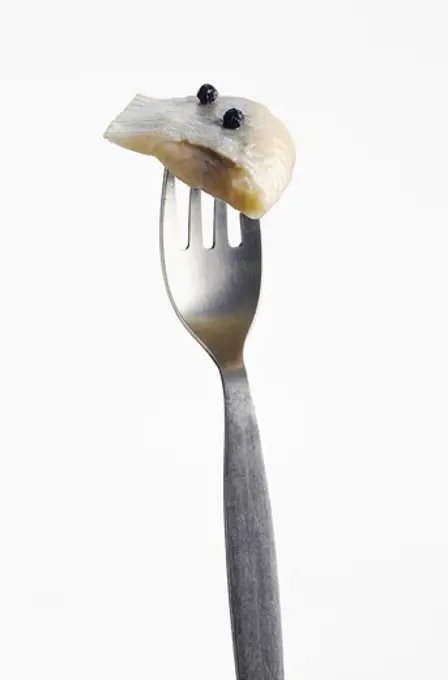
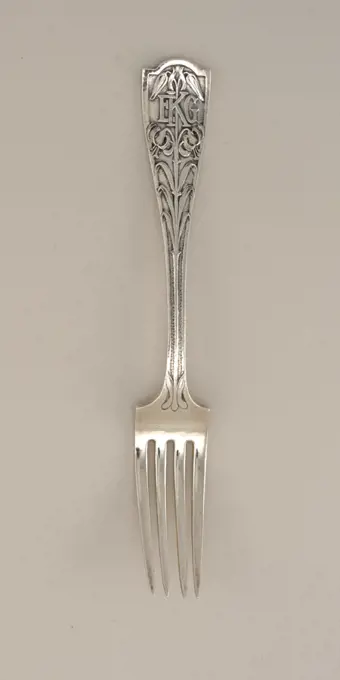
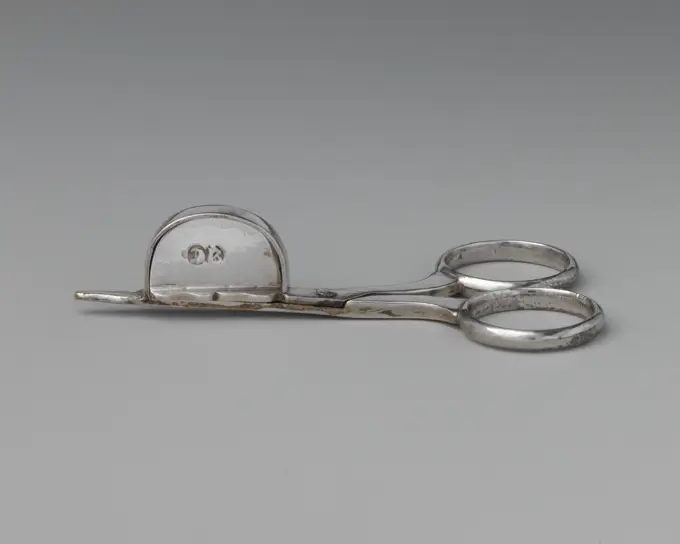
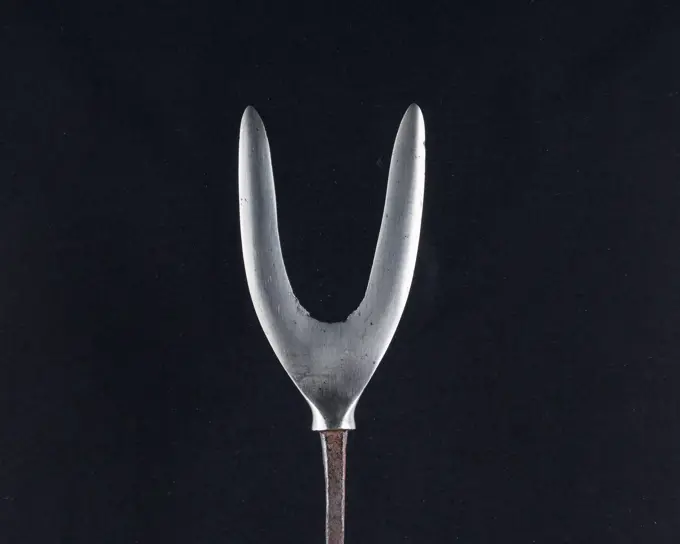
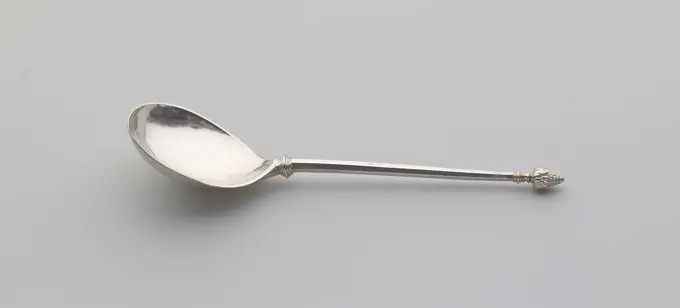
Spoon. Silver spoon with a straight, hexagonal stem ending in a humanry button. At the rear two very worn shields with a helmet with fish as a helmet sign. Brands: R.B.A.i. Crowned with a lily of Jarich Gerrits / van der Lely. Friesland. 1628.Spoon Made 1902-1903 Chipping Campden. Silver with dyed green chalcedony . Charles Robert Ashbee (Designer)Spoon. Spoon of silver, with pear-shaped container. The straight stem is crowned by a pine cone. On the bottom of the container, the letters TD and GT are engraved, above an alliance weapon.Teaspoon (Four of six). England, circa 1760. Furnishings; Serviceware. SilverTea Spoon 1775-1800 Daniel Van Voorhis. Tea Spoon 8477Vork van zilver.Fork of silver, with 4 teeth. The flat, curved stem wise to the rounded end.SpoonToddy Ladle, James Erskine (Aberdeen, Scotland, active 1790 - 1818) 1792 - 1820Vase spoon Suck, Johann Friedrichtop view of tablespoon with grained Rock Salt top view of tablespoon with grained Rock Salt isolated on white background Copyright: xZoonar.com/ValeryxVoennyyx 13599941Spoon 1770-1800 Joseph Dubois. Spoon 7778Spoon with pear -shaped container and pilasty -shaped steel, crowned with Johannes the Evangelist with the chalice., Lolle Jeltes, 1625 - 1650 Spoon of silver, with pear -shaped container. The straight stem is crowned by John the Evangelist with the chalice. The letters as and bra are engraved on the underside of the container as well as an alliance weapon. Marked with master sign L.S. Lolle Jeltes, Bolsward. Bolsward silver (metal) Spoon of silver, with pear -shaped container. The straight stem is crowned by John the Evangelist with the chalice. The letters as and bra are engraved on the underside of the container as well as an alliance weapon. Marked with master sign L.S. Lolle Jeltes, Bolsward. Bolsward silver (metal)Lepel.Oval spoon with double praise and a handle with middle clad. The spoon has not been marked.Spoon with the Helmet helmet, Roelof Helweg, 1806 The egg-shaped container of the spoon is connected to the flat, bent stem on both the top and bottom by means of a single praise, which broadens to the spatula-shaped end. At the top and bottom of the handle are surrounded by a double file edge, which has been swept up at the end. The Clifford helmet is engraved on the underside of the spatula. Amsterdam silver (metal) The egg-shaped container of the spoon is connected to the flat, bent stem on both the top and bottom by means of a single praise, which broadens to the spatula-shaped end. At the top and bottom of the handle are surrounded by a double file edge, which has been swept up at the end. The Clifford helmet is engraved on the underside of the spatula. Amsterdam silver (metal)Two Teaspoons, James Erskine (Aberdeen, Scotland, active 1790 - 1818) 1792 - 1820Spoon with clifford helmet sign. The egg-shaped bin of the spoon is on both upstairs and bottom by means of single praise connected to the flat, curved stem, which widened to the spatula-shaped end. Upper and bottom of the handle are surrounded by a double fillet edge, which is injected at the end. The Clifford Helmet is engraved on the underside of the spatula.Small stainless steel spoon isolated on white backgroundempty metal spoon on a white isolated background. Brushed steel textureDessertSpoon.   Maker: A. Paxson, active ca. 1840STOP fork; Malcz, Karol (1797-1867), Silver Products Factory K.F. Malcza (Warsaw; Sreber label; 1828-1864); 1852 (1852-00-00-1860-00-00);Spoon probe Cypriot. Spoon probe 244368Seal-top spoon 1735-36 Edward Pocock. Seal-top spoon. British, London. 1735-36. Silver. Metalwork-SilverSpoon 1870 V. Christensen. Spoon 188107 Maker: V. Christensen, Spoon, 1870, Silver, parcel-gilt, 6 3/4 in. (17.1 cm). The Metropolitan Museum of Art, New York. Gift of Mrs. Samuel P. Avery, 1897 (97.2.72)spoon spoon isolated on white background ,model released, Symbolfoto ,property released Copyright: xZoonar.com/OleksandrxPakhayx 6782259 ,model released, Symbolfoto ,property releasedSteel teaspoon isolated on white Apostle Spoon: St. James the Greater. London, England. Date: 1599-1600. Dimensions: 18.3 x 4.9 cm (7 3/16 x 1 15/16 in.). Silver; figure gilded. Origin: London. Museum: The Chicago Art Institute, Chicago, USA.KnifeTable Spoon. Culture: American. Dimensions: L. 7 3/8 in. (18.7 cm). Maker: Jonathon Reed (active ca. 1730-42). Date: 1720-30. Museum: Metropolitan Museum of Art, New York, USA.Close-up of spoon against white backgroundFork (Germany); Designed by Peter Behrens (German, 1868-1940); Manufactured by Martin Josef Rückert (Germany); silver, silver gilt; cm: L: 18 x W: 2Tablespoon.   Maker: Daniel Van Voorhis, American, 1751-1824'Louis XVI' tableware, Joseph E. Birmingham, Shreve & Co., founded 1852, silver, Integral construction. Four tapering tines cut at sharp angle at bowl. One outside tine flatter and wider than others to be used as cutting edge. Handle of rectangular line ending in shouldered, rectangular terminal embossed with oval wreath with ribbon bow, enclosing monogram., ca. 1909, cutlery, Decorative Arts, Fork, ForkDinner Spoon. Peter Behrens (Germany, 1868-1940)Rückert, M.J. (Germany, Mainz). Germany, 1901. Furnishings; Serviceware. SilverVork van Zilver, Dirk van Gameren, 1764 Fork of silver, with 4 teeth. The fork gradually turns into the flat stem that broadens itself to the rounded end. Utrecht silver (metal) Fork of silver, with 4 teeth. The fork gradually turns into the flat stem that broadens itself to the rounded end. Utrecht silver (metal)Teaspoon.   Maker: Bailey and Brothers, American, active ca. 1846 - 1852Figure-top spoon 19th century probably Dutch, possibly Bolsward. Figure-top spoon 188294Pewter spoon with mascarons, c. 1600 - c. 1700 Pewter spoon with a round handle. There is a mascaron at the end and on the transition from Steel to Bak. unknown tin (metal) casting Pewter spoon with a round handle. There is a mascaron at the end and on the transition from Steel to Bak. unknown tin (metal) castingTablespoon.   Maker: Alexander Crouckshanks, American, active ca. 1768-80Spoon. Paul Revere, II; American, 1735-1818; Boston, Massachusetts. Date: 1754-1795. Dimensions: 21.6 × 4.5 cm (8 1/2 × 1 3/4 in.). Silver. Origin: Boston. Museum: The Chicago Art Institute, Chicago, USA.Rattle 300 B.C.-A.D. 1000 Early Quimbaya or Zenú This rattle was likely produced by metalworkers in the middle Cauca Valley and in parts of the Central Cordillera of Colombia, often referred to as the Quimbaya region. At the same time, the rattle bears resemblance to certain objects from the Caribbean Lowlands, part of the Zenú region (please see below). The object adopts the form of a rattle made out of a gourd (calabaza, calabazo, or totuma in Spanish). (For more information on gourd iconography in Quimbaya metalworking, please see Metropolitan Museum of Art 1979.206.776). Its short finial is conical with four pointed protrusions at its base that are spaced evenly apart from one another. Between these protrusions, there is a circumferential band that appears to be cast filigree, but the casting process has blurred some of the filigree design. Starting from the finial, the object gradually widens before taking on a spherical shape, suggesting the form of a gourd. This central sphericaBaroque spoon. unknown, authorTobacco Pipe, late 1800s-early 1900s. Japan, Meiji period (1868-1912). Metal; overall: 20 cm (7 7/8 in.).Metal ice cream scoop isolated on white bbackground.Lepel.Spoon of silver, with an egg-shaped container. The flat, curved stem wise to the rounded end.Silversmith's Art, 20th century. Silver presentation cutlery: spoonsa hundred;  XIX-XX century (1800-00-00-1810-00-00);Spoon ca. 1787 Paul Revere Jr. American. Spoon 7805ka; Silver Products Factory K.F. Malcza (Warsaw; Sreber label; 1828-1864), Malcz, Karol (1797-1867), Kostrz Bski, Walerian (FL.1852-1860); 1856 (1856-00-00-1856-00-00);Cooking shovelSugar Spoon c 1850-1860 Boston. Silver . D. C. AyerDessert Fork (France); Manufactured by Charles Victor Gibert (French); silver; L x W x D: 18.6 x 2.3 x 2.8 cm (7 5/16 x 7/8 x 1 1/8 in.)Spanner, ring spannerT. P. Drown, Tea Spoon, c. 1800, silver.Ladle 1775-1796 Samuel Tingley. Ladle 4674view spoon cartoon. cutlery kitchen, steel cooking, stainless top view spoon sign. isolated symbol vector illustration. view spoon cartoon vector illustrationKnifeArrowhead (Yanone) 18th century Japanese Although today Japanese warriors are renowned most for their swordsmanship, archery, especially from horseback, has been an essential part of samurai warfare and culture for centuries. Arrows were fitted with heads of varying shape according to their intended use in war, the hunt, or target practice. Arrowheads made for use on the battlefield incorporated different designs intended for specialized purposes such as the piercing of armor or to cause maximum damage to horses and unarmored personnel.Large arrowheads, pierced and elaborately chiseled with landscapes, birds, flowers, dragons, and Buddhist divinities, were created to be admired for the beauty of their metalwork and design rather than for use in archery. Such highly elaborate examples may have been made for presentation or as a votive offerings to a shrine.. Arrowhead (Yanone). Japanese. 18th century. Steel. Archery Equipment-ArrowheadsUnknown, Tea Spoon, c. 1790, silver.Table Spoon 1800-1830 William G. Forbes. Table Spoon 8122Figure-top spoon 1639, probably with later additions Dutch, Enkhuizen. Figure-top spoon 192296Tablespoon.   Maker: Palmer, Bachelders and Company, active ca. 1864 - 1884Fork with clifford helmet sign. The four-eddy fork is on both upstairs and bottom by means of single praise connected to the flat, curved stem, which widened to the spatula-shaped end. Upper and bottom of the handle are surrounded by a double fillet edge, which is injected at the end. The Clifford Helmet is engraved on the underside of the spatula.Wooden spoon isolated on white background, Top view. Wooden spoon isolated on white backgroundTablespoon.   Maker: Horace Goodwin, American, 1787-1864TwoTablespoons.   Maker: Benjamin Coleman, Jr., American, 1765-1820STOP fork; Fraget, Józef (Warsaw; Silver and Plated Products Factory; 1824-1945); Years of the 19th century (1880-00-00-1900-00-00);Teaspoon with striker oval container and flat, curved stem, which broadens to the pointed end, Hendrik Overhulsman, 1804 Mokkalpel of silver, with a pointed oval container. The flat, curved stem broadens to the pointed end. Amsterdam silver (metal) Mokkalpel of silver, with a pointed oval container. The flat, curved stem broadens to the pointed end. Amsterdam silver (metal)TwoTeaspoons.   Maker: O. L. Foster, American, active ca. 1820 - 1830SixTablespoons.   Maker: Sanford Boon, American, 1822-1844Lepel, Cornelis Knuysting, 1802 Spoon of silver, with a striker oval container and striker tapered stem. The stem is engraved at the top with a flower drink and an oval medallion. Rotterdam silver (metal) Spoon of silver, with a striker oval container and striker tapered stem. The stem is engraved at the top with a flower drink and an oval medallion. Rotterdam silver (metal)Punch Ladle, William Jamieson (Aberdeen, Scotland, active 1806 - 1841) 1800 - 1849Spoon, Brass, Large circular bowl. Long handle terminating in a robed figure whose head is pierced to receive a loop., France, ca. 1550, metalwork, Decorative Arts, SpoonEleven dessertspoons.   Maker: J. and T. Dubois, active ca. 1795 - 1797Retailer: William Garret Forbes, American, 1751-1840Tablespoon.   Maker:? RustJoseph Clark, Two Tea Spoons, c. 1790, silver.Arrowhead (Yanone). Culture: Japanese. Dimensions: L. 8 7/8 in. (22.6 cm); L. of head 2 1/2 in. (6.4 cm); W. 1 in. (2.5 cm); Wt. 1.2 oz. (34 g). Date: 18th century. Museum: Metropolitan Museum of Art, New York, USA.Raphael, Gorham Manufacturing Company, Providence, Rhode Island, USA, founded 1818, Silver, Ovoid bowl with frosted finish to interior. Tapering stem with small gadrooned knop below the pointed, rounded terminal which is stamped with scrolling vines and a dove on a matted ground. Obverse with monogrammed trefoil-topped heart-shaped reserve., Providence, Rhode Island, USA, patented 1874, produced late 19th century, cutlery, Decorative Arts, 6 spoons, 6 spoonsDisk End Spoon,  c. 1650SixTablespoons.   Maker: Silas Merriman, American, 1734-1805Spoon with Dual Heads, 918-1392. Korea, Goryeo period (918-1392). Bronze; overall: 23.1 cm (9 1/8 in.).Legs spatula, spatula medical_instrument leg, Spatula on one side elongated flat on the other side ending in spoon with round bowl belonging to tobacco squirrel for drowning man drowning water rescue medical care medical treatment health care doctor surgery Arrenberg tobacco inn pub Kistje with various objects used in the last part of the 18th century and the beginning of the 19th century in the attempt to revive the spirits of drowning people. On the box is the name Benjamin Arrenberg. This lived in the last third of the eighteenth century was vendrig in 1788-1791. Leproosmeester 1792-1794 The box will therefore be from the nineteen nineteenth century.3d rendering of a metal spoon in white background. 3d rendering of a metal spoon isolated in white background Copyright: xZoonar.com/HugoxKurkx 14080480Abstract Silver Dessert Spoon Cutlery and spoon like drops fallDessert fork with the Helmet Clifford, Roelof Helweg, 1806 The fourth fork is on both the top and bottom by means of only praise to the flat, curved stem, which broadens to the spatula-shaped end. At the top and bottom of the handle are surrounded by a double file edge, which has been swept up at the end. The Clifford helmet is engraved on the underside of the spatula. Amsterdam silver (metal) The fourth fork is on both the top and bottom by means of only praise to the flat, curved stem, which broadens to the spatula-shaped end. At the top and bottom of the handle are surrounded by a double file edge, which has been swept up at the end. The Clifford helmet is engraved on the underside of the spatula. Amsterdam silver (metal)DessertSpoon.  Maker: Thomas Harland, American, 1735-1807 Subject: George Washington, American, 1732-1799, LL.D. 1781Apostle spoon: St. Andrew 1613-14 Martin Hewitt The set (67.166.1-.13) includes a master spoon with a figure of Christ and twelve apostle spoons. Martin Hewitt who made the Saint Andrew spoon had served his apprenticeship under William Cawdell. Both were specialist spoonmakers.. Apostle spoon: St. Andrew. British, London. 1613-14. Silver, partly gilded. Metalwork-Silverillustration of realistic metal spoon.Tablespoon.   Maker: Zachariah Brigden, 1734-1787a lot of spoons isolated on whiteTimothy Gerrish, Three Tea Spoons, c. 1800, silver.Table utensils isolated on the whiteClose-up of a screwdriverArthur J. Stone, Baby Fork, c.1930, silver.Sixteaspoons.   Maker: George Webb, 1812-1890Close-up of a reflex hammerPiece of herring on fork, studio shotRockledge Silver Service, George Washington Maher, American, 1864-1926, Gorham Manufacturing Company, Providence, Rhode Island, USA, founded 1818, Ernest L. and Grace King, Gilt silver, Of 'Martele' silver, the handle decorated with a native lily motif and initials E.K.G. conjoined. Shank and four tines silver-gilt., 1911-12, cutlery, Decorative Arts, Salad fork, Salad forkBrown & Rusher, Four Tea Spoons, c. 1805, silver.Miniature snuffers ca. 1720-30 David Clayton British. Miniature snuffers. David Clayton (British, active 1689). British, London. ca. 1720-30. Silver. Metalwork-Silver-MiniatureArrowhead (Yanone) 18th century Japanese Although today Japanese warriors are renowned most for their swordsmanship, archery, especially from horseback, has been an essential part of samurai warfare and culture for centuries. Arrows were fitted with heads of varying shape according to their intended use in war, the hunt, or target practice. Arrowheads made for use on the battlefield incorporated different designs intended for specialized purposes such as the piercing of armor or to cause maximum damage to horses and unarmored personnel.Large arrowheads, pierced and elaborately chiseled with landscapes, birds, flowers, dragons, and Buddhist divinities, were created to be admired for the beauty of their metalwork and design rather than for use in archery. Such highly elaborate examples may have been made for presentation or as a votive offerings to a shrine.. Arrowhead (Yanone). Japanese. 18th century. Steel. Archery Equipment-Arrowheads