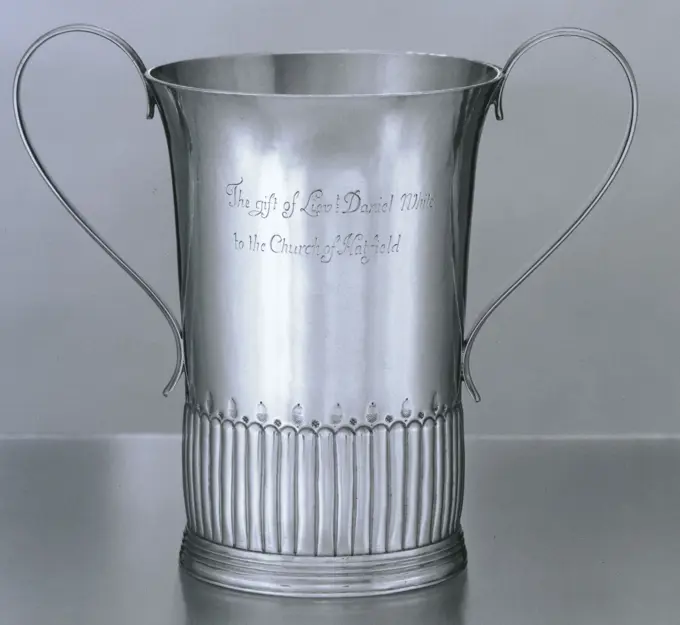
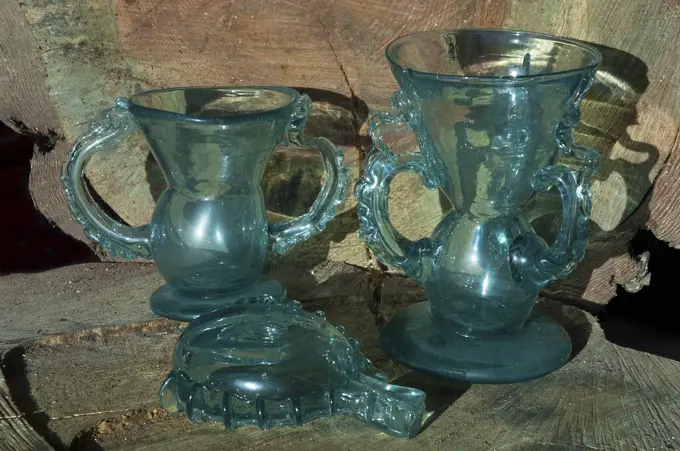
Decorative Silverware

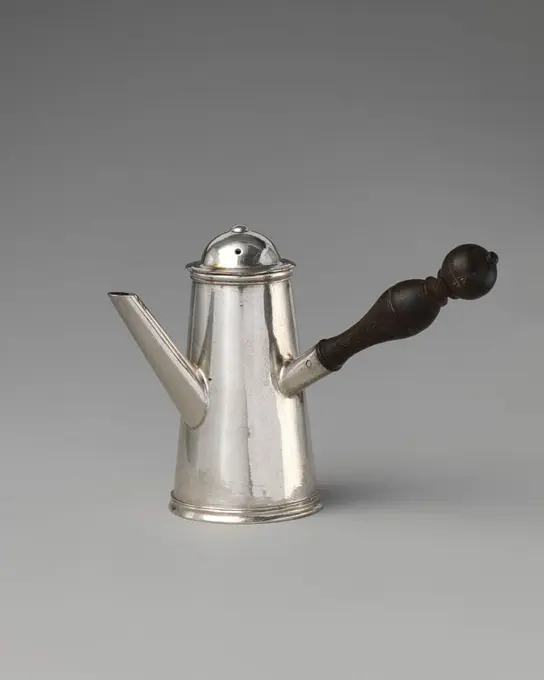
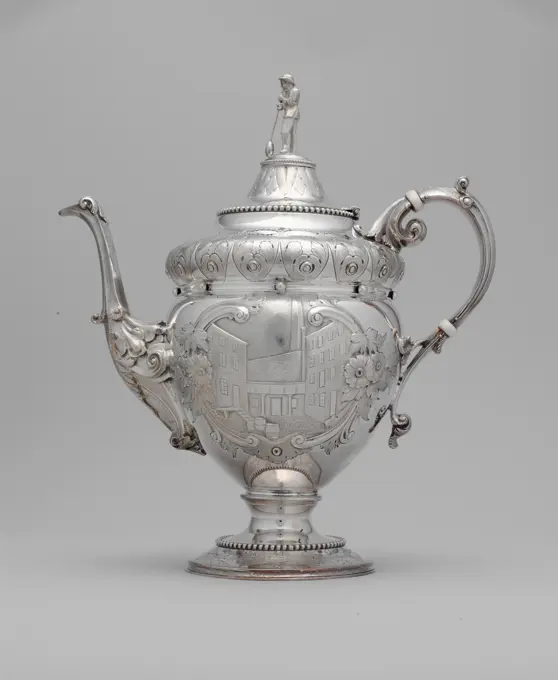
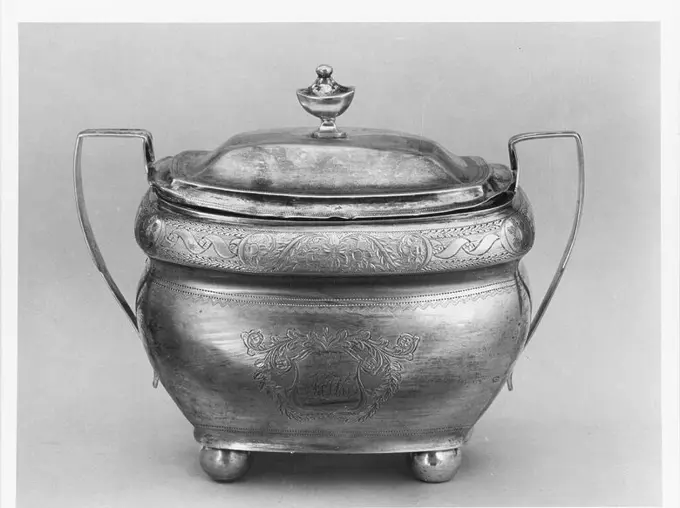
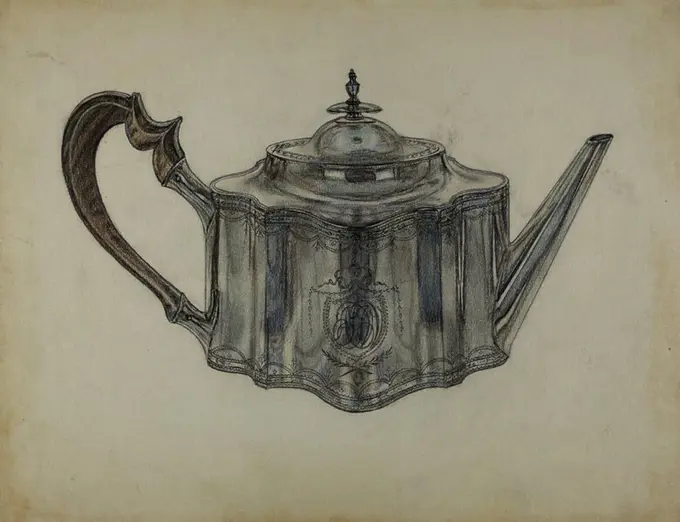
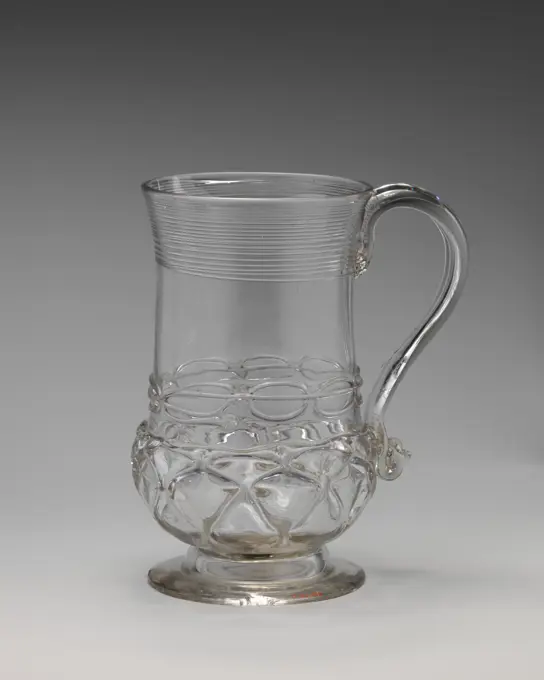
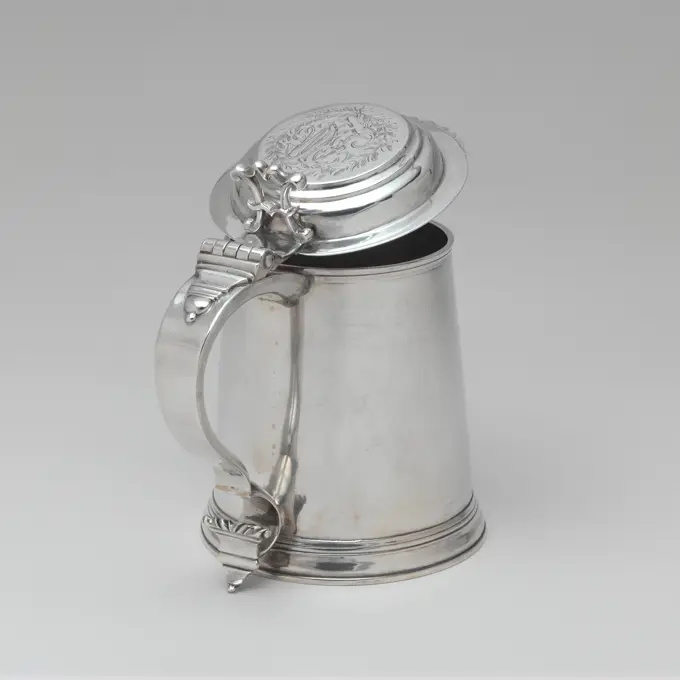
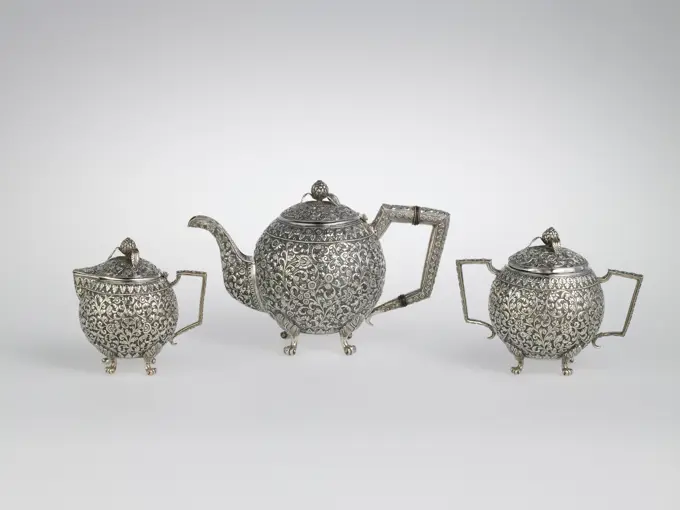
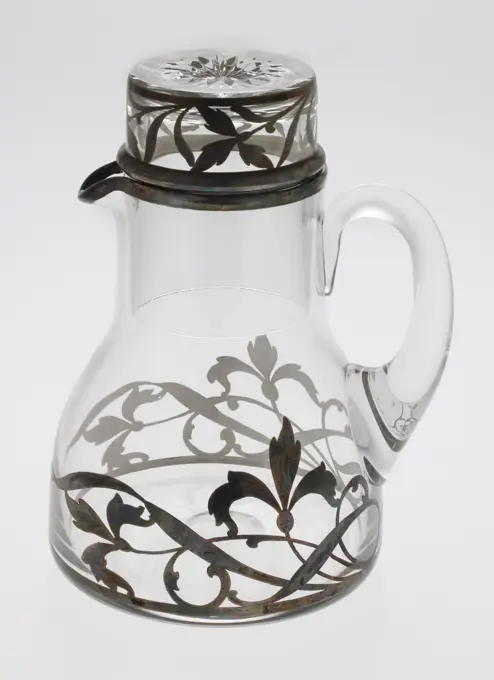
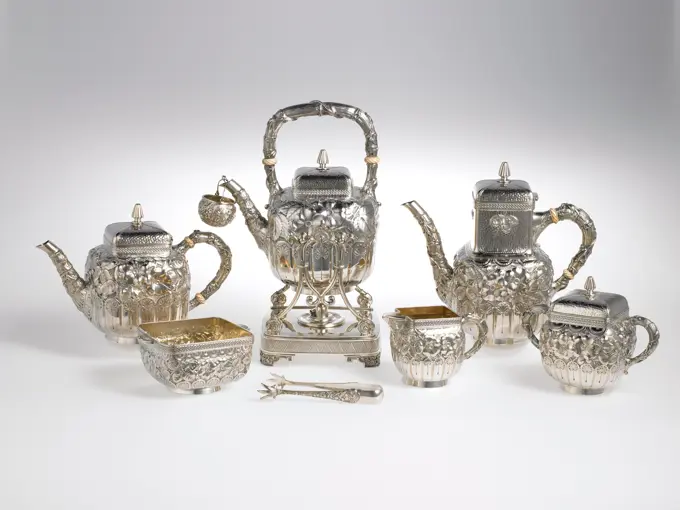
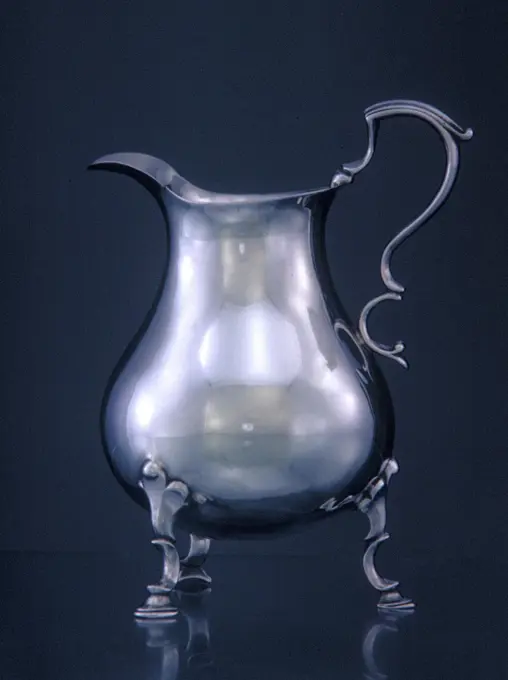
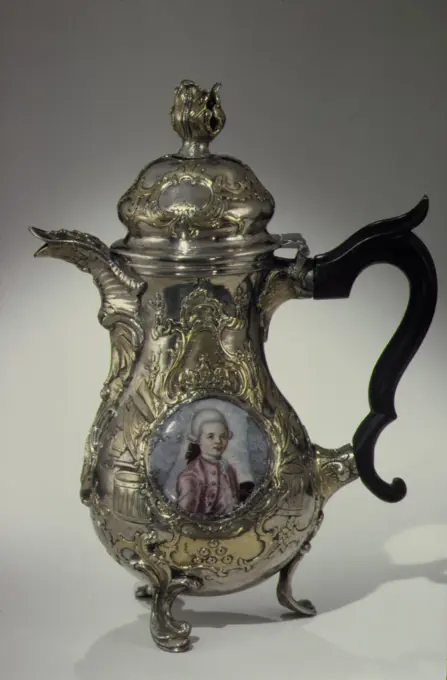
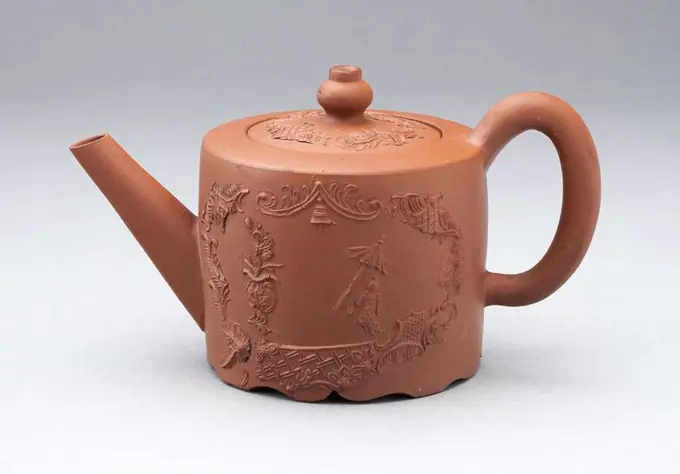
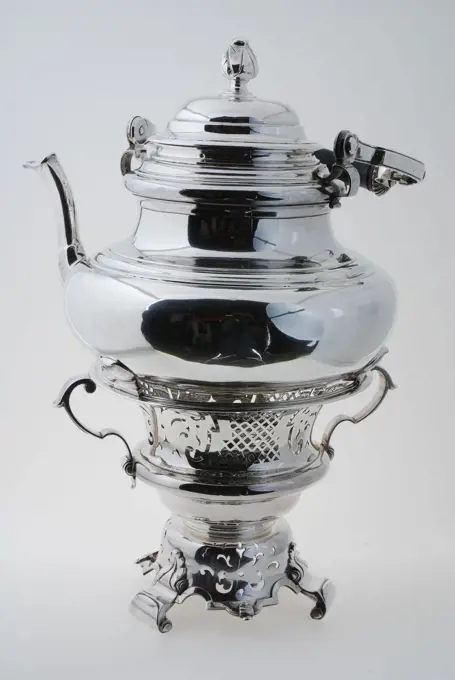
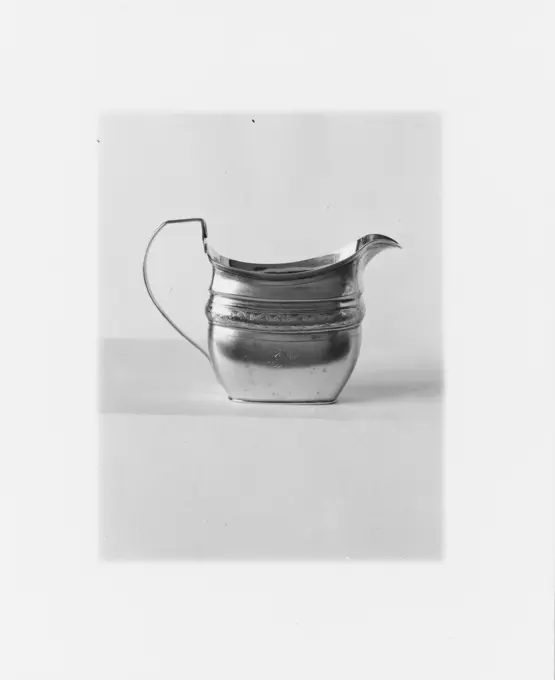
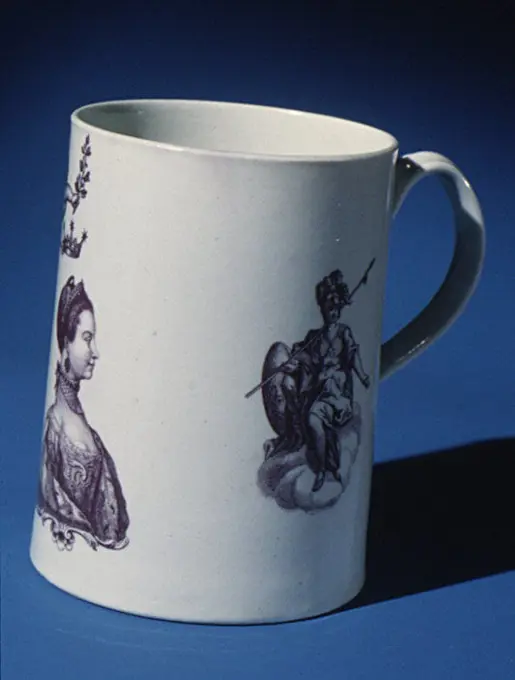
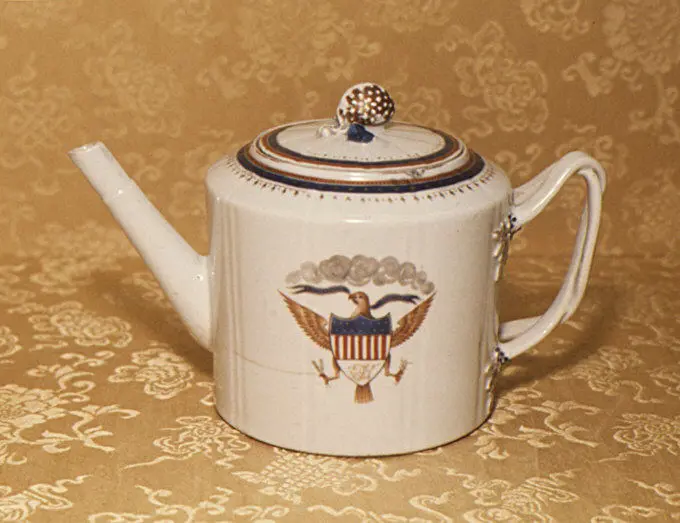
Collection of elegant antique silverware pieces including coffee pots, creamers, and a glass covered dish, showcasing intricate designs and historical craftsmanship.

Teapot and cover, Silver gilt, and wood, a) Teapot with globular body on flaring foot. Leaf and dart relief around foot and on shoulder, laurel wreath around body, fluting around rim. Spout ending in lions head. Wooden handle set in leafy tubes. b) Flat cover with wooden finial. Engraved shield, crowned, of Borghese family., France, 1815-19, metalwork, Decorative Arts, Teapot and cover
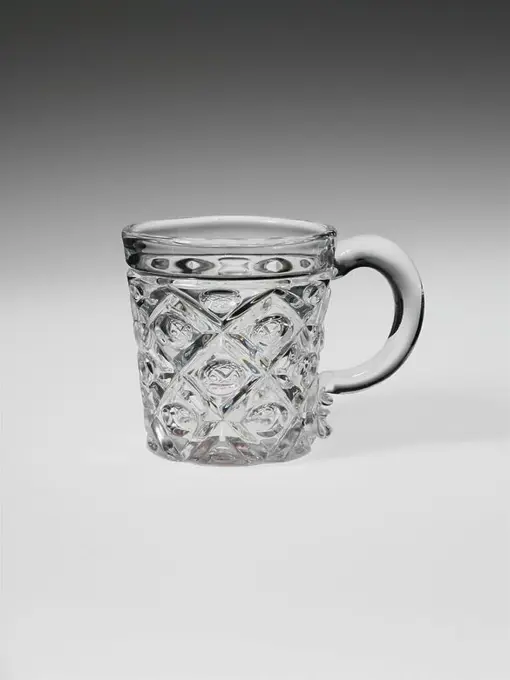
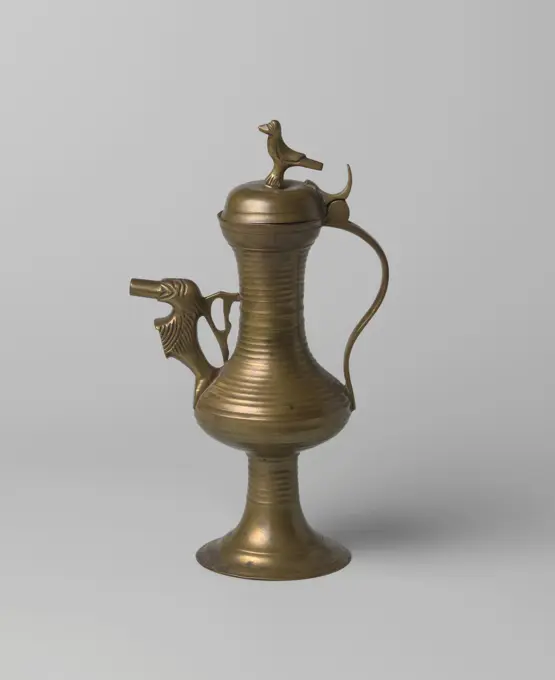
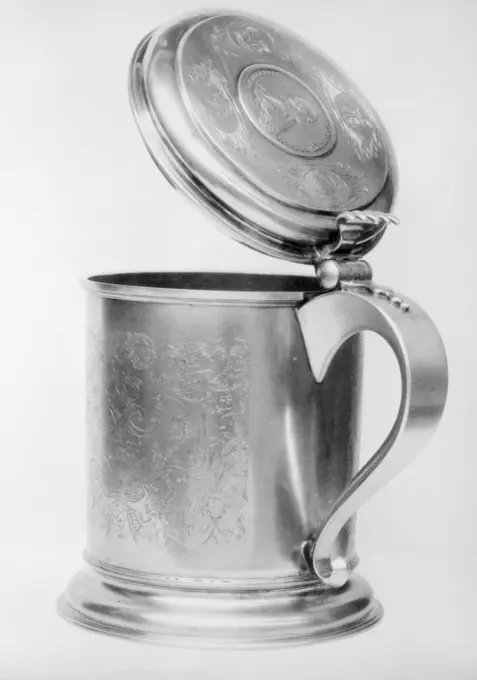
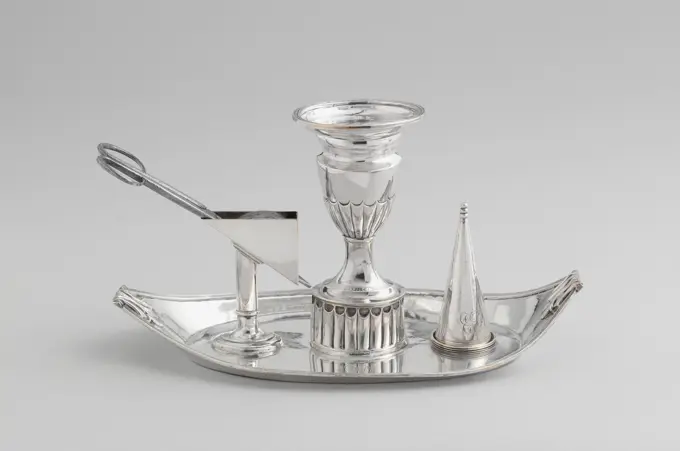
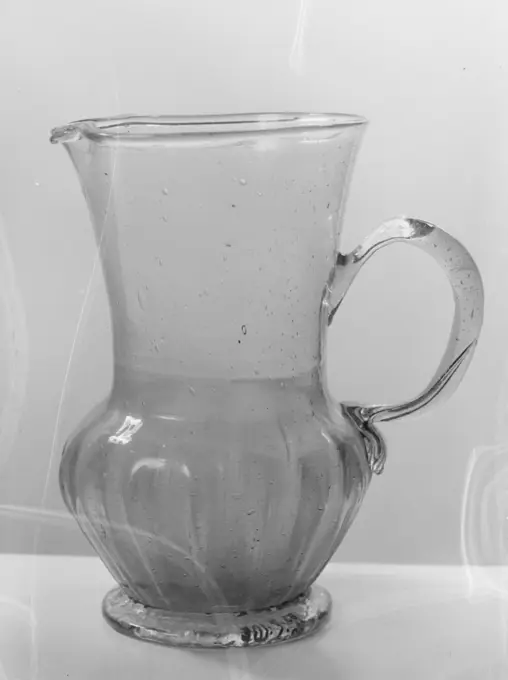
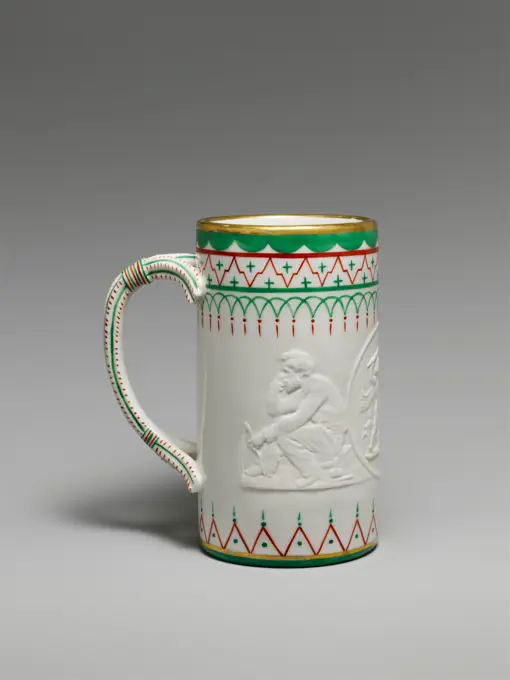
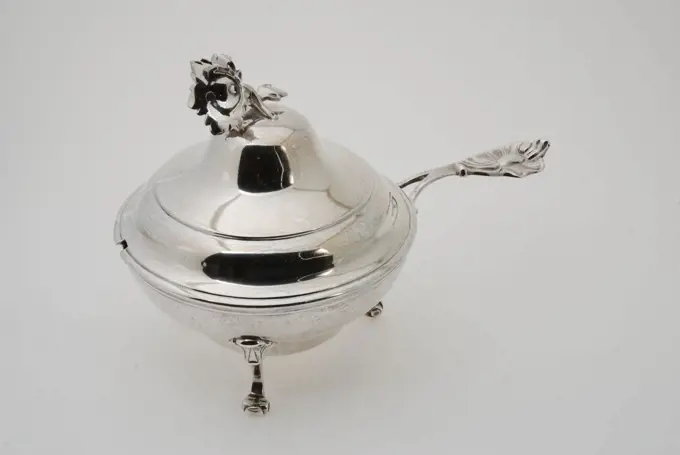
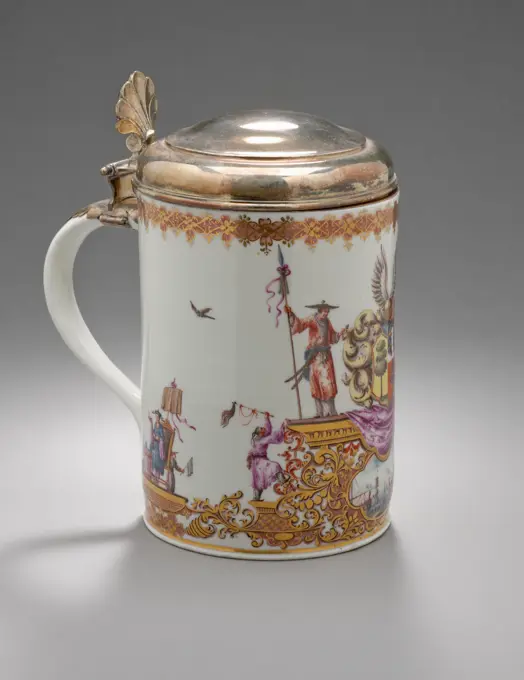
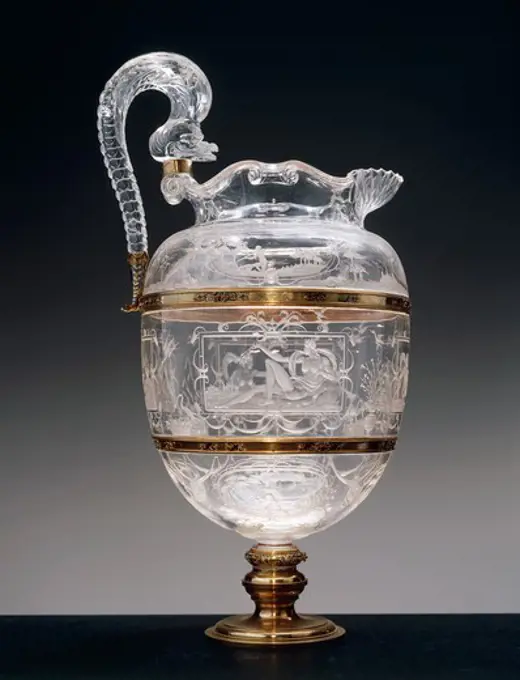
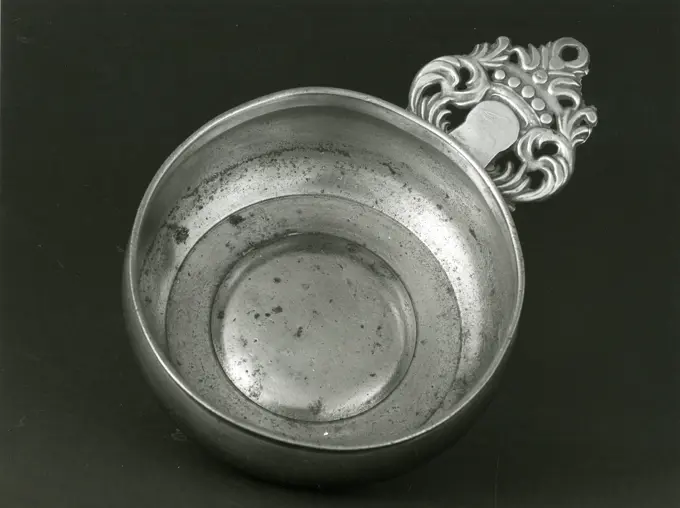
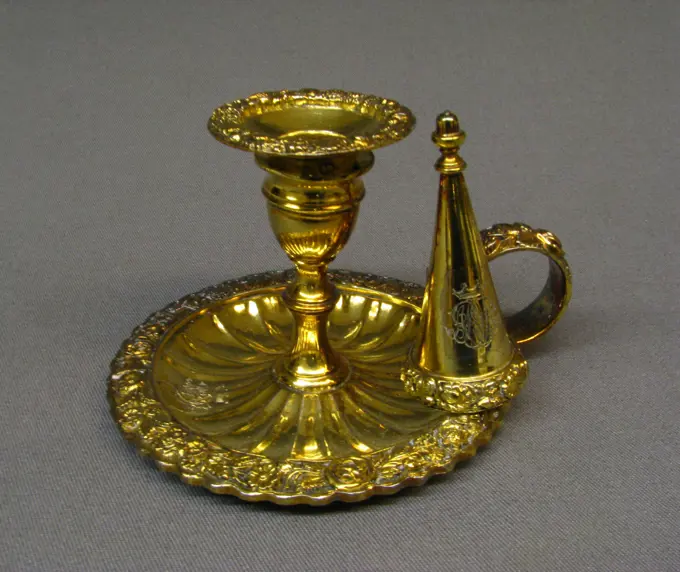
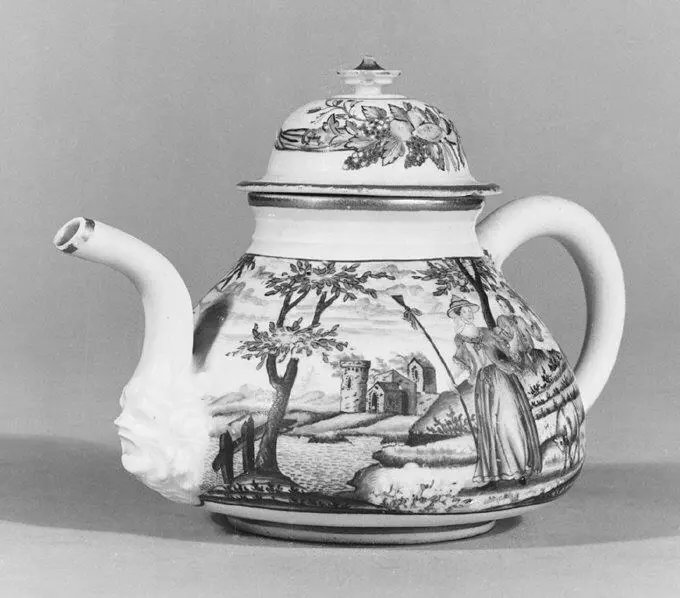
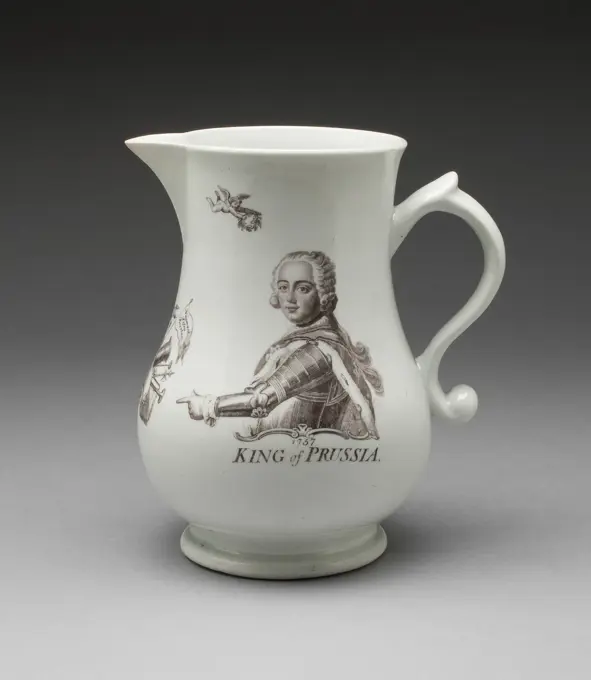
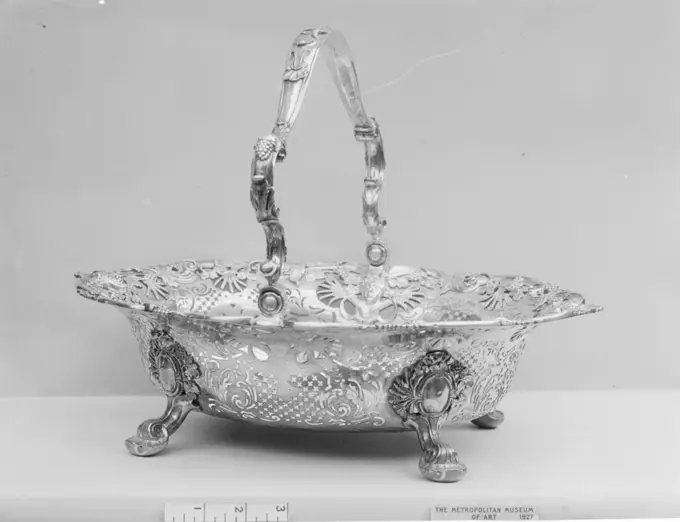
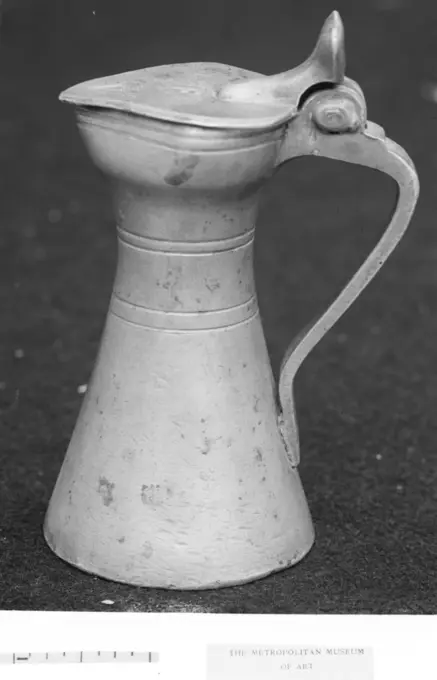
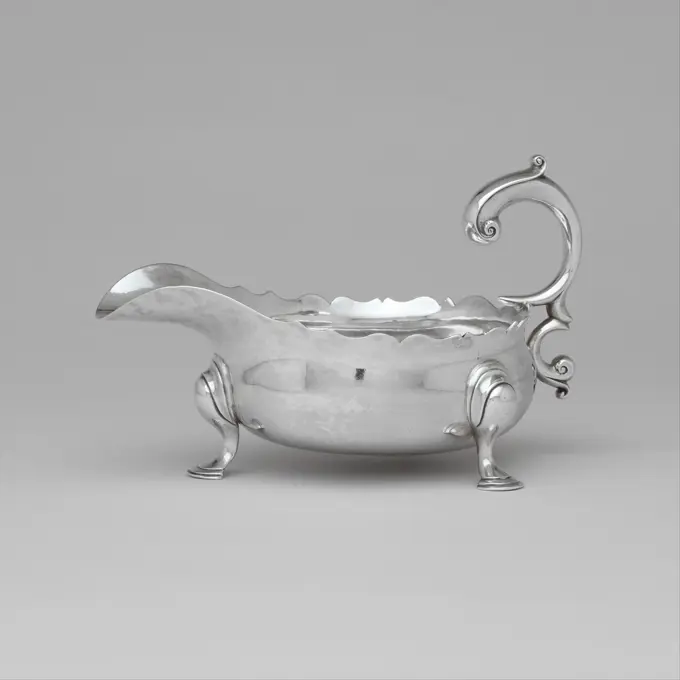
Lazio Viterbo Viterbo Museo Civico22. Hutzel, Max 1960-1990 Views of paintings (Middle Ages through 18th c.), frescoes, a tabernacle, coffin, sculpture reliefs, portal fragments, busts, sculpture, tapestry found in the Pinacoteca, Second floor gallery and Second floor cloister sequences. Antiquities: Many views of Etruscan and Roman fragments, sculpture, sarcophagi, pottery, masks, jewelry and other objects found in the Storeroom sequence (inventory numbers on back of prints), and the Cloister, Second floor Cloister, Valle Giulia, Sala Romana and Sala Etrusca sequences. General Notes: There are eight separate numerical sequences for this location. The cloister as an architectural structure, rather than museum site, is documented in the record and file for S. Maria della Verita, Cloister, all views of which are stored in Medieval core collection. Five views from the Museo Civico Second floor cloister sequence are stored in Medieval. German-born photographer and scholar Max Hutzel (1911-Whiskey Mug. Culture: American. Dimensions: H. 2 7/8 in. (7.3 cm). Date: 1850-60.With the development of new formulas and techniques, glass-pressing technology had improved markedly by the late 1840s. By this time, pressed tablewares were being produced in large matching sets and innumerable forms. During the mid-1850s, colorless glass and simple geometric patterns dominated. Catering to the demand for moderately-priced dining wares, the glass industry in the United States expanded widely, and numerous factories supplied less expensive pressed glassware to the growing market. At the Exhibition of the Industry of All Nations at New York's Crystal Palace in 1853, for example, the New England Glass Company exhibited 130 pieces of one design, "consisting of bowls, tumblers, champagnes, wines, and jelly glasses." This object belongs to one such service. Although the glass manufactory is not known, the glassware is very typical of the large services that were very popular with America's midCan with spout in the form of a lion with coat of arms, anonymous, c. 1475 - c. 1525 The jug is composed of the following parts: the hull (with the foot), the lid (cast and turned), the spout (cast and recessed), the handle, the thumb rest, the lid button (cast). The round hull is on a high round base, which broadens at the bottom to a flat position ring. The hull (with the middle part used in the bottom) has a flat abdomen with the same cross -section as the stand ring and a high narrow conicly flared neck. The lid is BOL-flat and has a bird as a button. The edges of the neck and lid are thoroughly profiled inwards. The spout has the shape of a lion with a coat of arms. The tail of the animal forms the connection with the neck of the jug. The handle, which drains downwards and then slightly inside, has a one -a -a -a -sagging hinge, in which the thumb rest with the lid is attached. Rull and foot are decorated with clearly profiled shivering. Neurenberg (possibly) brass (alloy) castingTerracotta sessile kantharos (deep cylindrical drinking cup with two handles). Culture: Greek, Attic. Dimensions: H. 3 9/16 in. (9.1 cm); diameter of mouth 4 9/16 in. (11.7 cm); diameter of base 2 7/8 in. (7.3 cm). Date: 4th century B.C..With impressed patterns. Museum: Metropolitan Museum of Art, New York, USA.Teapot.   Maker: Joseph Richardson, Jr., American, 1752-1831Patron: Samuel Powell  Maker: Nathaniel Richardson, American, 1754-1827Tankard 1798 Johan Henrik Åkerblom. Tankard. Medalist: Carl Leberecht (1749-1827). Russian, St. Petersburg. 1798. Silver gilt. Metalwork-SilverCoconut Cup, c. 1630. Carved coconut, probably The Netherlands; silver mount, probably England, 17th century. Carved coconut in silver mount; overall: 18.9 cm (7 7/16 in.).Ewer (Germany); Made by Nicolaus Ostertag (1689-1741); silver gilt; a) H: 27 x L: 23.3 x W: 11.2 cm b) H: 6 x Di: 52.6 cmCandle Holder 1790-1810 Joseph Lownes The neoclassical candleholder with a central candle socket with bobeche, a conical douter for extinguishing the flame, and a scissor-shaped snuffer for trimming the wick sits on an elliptical boat-shaped stand. The monogram ESB engraved on the douter, bobeche, and tray possibly belong to the Byrd family.. Candle Holder 1153Miniature coffeepot with cover. Artist: David Clayton (British, active 1689). Culture: British, London. Dimensions: Height: 1 13/16 in. (4.6 cm). Date: ca. 1720-30. Museum: Metropolitan Museum of Art, New York, USA.Coffee Pot, part of Tea and Coffee Service 1878 Connecticut. Silver . Rogers and Smith Company (Maker)Mustard pot 1775-81 Pierre Benardié (or Berardier). Mustard pot 200222Silversmith's art, Germany or Switzerland, 14th century. Silver jugs.Tea orcoffeepot.   Maker: Fletcher and Gardiner, American, 1808-1836Teapot 1862-63 Wood and Hughes Presented to Christian Dorflinger upon his retirement from the Long Island Flint Glass Works in 1863, this service (2006.90.1-4) is ornamented with meticulously chased scenes of the glassworks itself. The teapot depicts a back courtyard of the factory, with a loading dock and packing barrels, while the cream pot (2006.90.2) features a vignette of a gaffer at his bench finishing a blown glass pitcher. The finials, cast in the form of glassblowers, also reference Dorflingers trade. Dorflinger was one of the most successful nineteenth-century American glassmakers, operating several factories in Brooklyn before his retirement. He later established a thriving glasshouse in White Mills, Pennsylvania. The Museum has two important glass items from Dorflinger's Brooklyn period: an 1859 presentation vase (1988.391.1) and an 1861 compote (1972.232.1) made for President and Mrs. Abraham Lincoln.. Teapot 205. Ewers made of carved rock crystal with precious metal mounts were often manufactured for the courts of French kings and Burgundian dukes. The style of this ewers gilded silver mount suggests that it was made for the Burgundian court.Sugar Bowl. Culture: American. Dimensions: Overall: 6 1/8 x 8 x 4 3/16 in. (15.6 x 20.3 x 10.6 cm); 15 oz. 17 dwt. (493.3 g)Body: 5 3/16 in. (13.2 cm); 12 oz. 3 dwt. (377.8 g)Cover: 1 15/16 x 5 1/2 x 3 7/16 in. (4.9 x 14 x 8.7 cm); 3 oz. 14 dwt. (115.5 g). Maker: Hugh Wishart (active ca. 1793-1824). Date: 1800-1830. Museum: Metropolitan Museum of Art, New York, USA.Silver Teapot. Dated: 1935/1942. Dimensions: overall: 22.7 x 29.1 cm (8 15/16 x 11 7/16 in.). Medium: colored pencil and graphite on paper. Museum: National Gallery of Art, Washington DC. Author: Frank Fumagalli.Tea Kettle on Stand. William Gale and Son (United States, New York, New York City, 1843-1860). United States, 1850. Furnishings; Cookware. SilverTeapot.   Maker: Benjamin Frobisher, American, 1797-1862Tea-pot. Sandstone, earthenware, straw (handle). Cernuschi Museum, Asia Museum of Asia in the city of Paris.Tankard 1742-43 Thomas Farren British. Tankard 195231Mug 1750-1800 British. Mug. British. 1750-1800. Glass; coin. GlassTankard ca. 1770 Cary Dunn The interlaced script monogram, RLM, engraved in late rococo taste on the cover of this tankard is contemporary with the date of manufacture, but the heraldic crest and motto-- VIRTUS ET NATALE MEUM (Virtue is my Birthright)-- executed in bright-cut engraving on the body appear to have been added a generation later. Both the tankard and a pair of accompanying beakers (see 13.197.2-.3) descended in the Livingston-Tillotson family.. Tankard. American. ca. 1770. Silver. Made in New York, New York, United StatesSugar Bowl, from a three-piece tea set, before 1888, 5 1/4 x 6 1/2 x 4 1/16 in. (13.34 x 16.51 x 10.32 cm) (overall), Silver, India, 19th centuryWater pitcher -Stein (Germany); Manufactured by Steuler (Germany); earthenware, pewterSugar bowl with lid, 1883, Gorham Manufacturing Company, Providence, Rhode Island, 1865-1967, 5 1/4 x 6 x 3 7/8in. (13.3 x 15.2 x 9.8cm), Silver, United States, 19th centuryPaul Storr, Assembled Tea Service, 1806/7, silver and wood.Pitcher.   Maker: Glenmore and Company, American, 1828-1848  Maker: George Richardson, American, 1782-1848Teapot. Culture: British, Staffordshire. Dimensions: Height: 4 3/4 in. (12.1 cm). Maker: Style of Whieldon type. Date: ca. 1755-60. Museum: Metropolitan Museum of Art, New York, USA.Tankard. John Owen; American, active 1804-1831; Philadelphia, Pennsylvania. Date: 1783-1794. Dimensions: 19.1 × 11.8 cm (7 1/2 × 4 5/8 in.). Silver. Origin: Philadelphia. Museum: The Chicago Art Institute, Chicago, USA.Jug 18th century Spanish, Castile. Jug. Spanish, Castile. 18th century. Glass. GlassAbruzzo L'Aquila Trasacco SS. Rufino e Cesidio87. Hutzel, Max 1960-1990 The original monument was destroyed in 936, rebuilt, modified throughout the 16th century (with an addition to the nave in 1618), and restored in 1969. Exterior views include the bell tower and general building facades. Most views focus on the architectural sculpture of the Portale delle Donne and the Portale degli Uomini. Interior views in the Medieval core collection focus on a statue of St. Catherine in an aedicule (15th century); an ambo lecturn (pluteus) decorated with the four symbols of the Evangelists (c. 1267); a statue of the Virgin and Child under a sculpted baldachin on the entrance wall of the oratory (14th century) and the main altar composed of sarcophagus fragments of lions and peacocks in low-relief (8th-10th centuries). A baptismal font and possibly bas-reliefs (immured spolia) in the Oratory. Interior views in the Hutzel collection include: the altar statue of S. Cesidio, frescoes of the AnnunciaMug ca. 1863 Designed by Karl L. H. Müller American. Mug 14493Silversmith: Anthony Huijs, Silver candy bin on legs with lid, candy bin holder silver, Round bowl on three rollers handle with on end rocaille (); lid with set flower on top notch along the edge, bowl: serve HuysJohn Bayly, Creampot, c. 1755, silver.Tankard 1764-98 William Will. Tankard 8242Tankard with a Chinoiserie Scene. Meissen Porcelain Manufactory (Germany, Meissen, founded 1710)Johann Gregor Heroldt (Germany, 1696-1775). Germany, circa 1730. Furnishings; Serviceware. Porcelain with glaze, enamel, gilding, and gilded silver lidGoldsmith's art, Italy, 16th century.  Annibale Fontana (1540-1587), engraved rock crystal pitcher with enamelled gold bands. Cm. 39,5x18,3 cm.Porringer.   Maker: Samuel Danforth, American, 1770-1803Chamber candlestick 1824-25 Robert Hennell II British. Chamber candlestick 232363Tankard 1722 A. N.. Tankard 195234Teapot with cover ca. 1720-40 Meissen Manufactory German. Teapot with cover 205950Creampot.   Maker: Myer Myers, American, 1723-1795Teapot 1810-20 William B. Heyer. Teapot. American. 1810-20. Silver. Made in New York, New York, United StatesCovered Cup. Myer Myers; American, 1723-1795; New York, New York. Date: 1764-1775. Dimensions: 35.6 × 29.2 × 17.8 cm (14 × 11 1/2 × 7 in.). Silver. Origin: New York City. Museum: The Chicago Art Institute, Chicago, USA.Candlestick 1883 Christopher Dresser British, Scottish. Candlestick. 1883. Brass and wood. Metalwork-BrassTeapot (kyûu);  19th century (1891-00-00-1910-00-00);Basin.  Maker: Henry Will, American, ca. 1735-1802Spice container, c. 1950, 3 1/16 x 1 3/4 x 4 1/4 in. (7.78 x 4.45 x 10.8 cm) (overall), Silver, 20th centuryold copper teapot isolated on white with clipping pathKaraf met instulpingen, Gerard Muller (attributed to), c. 1900 - c. 1925 Flat soil with ground star. Spherical body with four inserts. Short neck with protruding edge and pour. designer: Amsterdamglassblower: Europe glass glassblowing / grinding Flat soil with ground star. Spherical body with four inserts. Short neck with protruding edge and pour. designer: Amsterdamglassblower: Europe glass glassblowing / grindingBrazier possibly Italian 17th century View more. Brazier. possibly Italian. 17th century. Iron, brass. Metalwork-IronCream jug (part of a set) 1773 Johan Henrik Blom Finish The service (47.51.1-.5) is thought to have been given by Empress Catherine II to Count Pyotr Rumiantsev, governor of the Ukraine and leader of the victorious Russian forces in the war with Turkey (1768-74). Enamel portraits on the utensils depict the imperial line from Peter the Great to Catherine II to her son, later Paul I. Facing are: Catherine II on the coffeepot, the empress Elizabeth on the teapot, the empress Anna on the bowl, Peter III on the cream jug, and Catherine I on the sugar-box lid. The shape and decoration recall silver utensils made in northern Germany, especially Berlin. German silver was highly esteemed in Russia, where a large German artistic community had influenced the transmission of Western forms since the time of Peter the Great. The goldsmith, born in Vyborg at the Gulf of Finland, might also have spent time in northern Germany during his journey years.Wolfram Koeppe, 2003. Cream jug (part of a set) Teapot. England, Staffordshire. Date: 1755-1765. Dimensions: 14.6 x 7.6 cm (5 3/4 x 3 in.). Earthenware (redware). Origin: Staffordshire. Museum: The Chicago Art Institute, Chicago, USA.Silver kettle and brazier, bouillary kettle cauldron holder holder kit silver wood, cast sawn Pressed spherical body neck s-shaped spout bottom octagonal and encased in scalloped starter volute shaped handle with baluster-shaped wooden handle (1.) curved and constricted lid with leaf knob (1.). Round chafing dish with two volute-shaped ears standing on bell-shaped foot ending in lambrequin-shaped bottom edge between each of the three lambrequins, curled leg with leaf pattern. Curved profile bands and constrictions around the shoulder and neck of the body and on the bottom of the bottom (smashed) food preparation cooking kitchenJug Decorated 1757-1761 Worcester. Soft-paste porcelain, transfer printed decoration . Worcester Royal Porcelain Company (Manufacturer)Mug 1770-1820. Mug 5287Cake basket 1746-47 William Cripps. Cake basket. British, London. 1746-47. Silver. Metalwork-Silverclay cup isolated on white backgroundPitcher, Mintons, Molded and glazed earthenware ('majolica'), Tall pitcher. Exterior molded with relief figures of a twisted branch at base, surmounted by relief figured (two make, two female) in medieval dress, against simulated stone wall of a tower. Upper portion with branches. Handle formed of twisted ivy branch. All glazed in polychrome., Stoke-on-Trent, England, 1868, ceramics, Decorative Arts, PitcherMagic lamp with smoke on a blue background in a studio settingMeasure 17th century possibly Swiss. Measure. possibly Swiss. 17th century. Pewter. Metalwork-PewterSauceboat ca. 1765 Possibly by Paul Revere Jr. American American silver sauceboats, also called butter boats, first appeared around 1725-30 and were intended to hold the melted butter, gravy, or sauces served with meat and vegetable dishes. Sauceboats were usually made in pairs or occasionally in sets of four, to be placed at either side of the table for easy access. The earliest models, following French and English fashion, had two pouring lips and two handles, but by the 1740s single-lipped vessels became the norm. With their scalloped upper rims, freestanding double-scroll handles, bulbous knees, and pad feet, the Revere sauceboats epitomize Rococo styling. Each is inscribed on its underside with the initials "M" over "M R" for Ruth Coney and Mungo Mackay, who were married in 1763. Mungo Mackay was a Scots sea captain whom the silversmith paid in 1781 for "freight on some goods from France.". Sauceboat 7204Jug with cover 16th century Bohemian. Jug with cover. Bohemian. 16th century. Glass, pewter. GlassCreamer 1800-1810 William G. Forbes. Creamer 2721Mug ca. 1765 Worcester factory. Mug 198433glass of tea in a silver cup isolated on white backgroundJARRAS DE COBRE. Location: PRIVATE COLLECTION. MADRID. SPANIEN.Ice bucket with champagne isolated on white backgroundTeapot 1795-1800 Chinese, for American market. Teapot 201296Two-HandledCup.   Maker: John Edwards, American, 1671-1746Honorand: Daniel White, died 1713Francois van Stapele, Coffeepot, 1752, silver.Sugar-bowl with two landscape miniatures. Baranówka (manufaktura porcelany ; 1804-post 1900 ), PolskaHot Water Urn (in threepieces).   Maker: Francis Batty, English, active ca. 1758-79  Maker: Nickolas Dumee, English, active ca. 1758-79Glass craft, Castril, Granada province, Region of Andalusia, Spain, Europe.