Decorative Silverware

Elegant historical silver and glass pieces, showcasing intricate designs and craftsmanship, including candlesticks and vases.

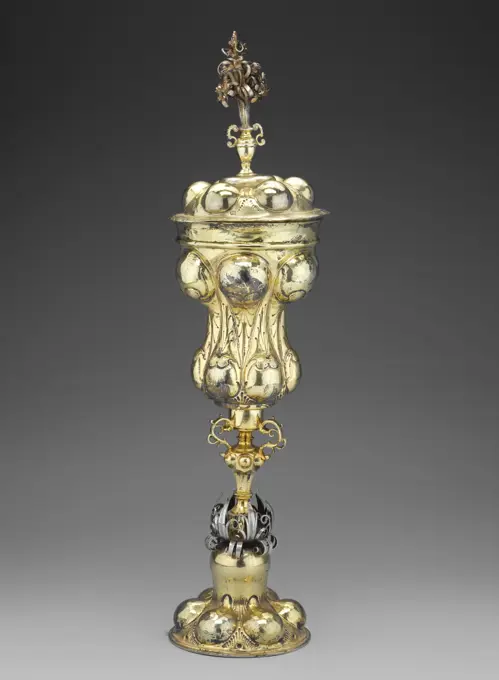
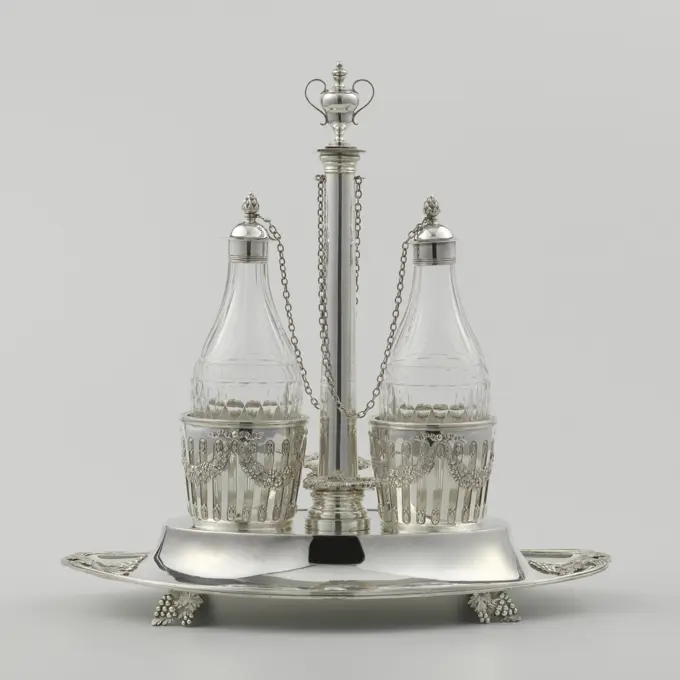
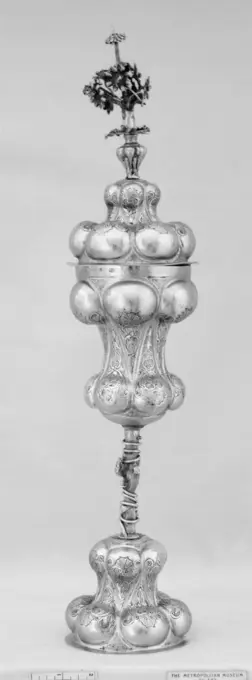
Lidded cup of the Unie Society, 1754 The decorations of the cup relate to the mutual connection of the members of the Amsterdam Society De Unie. The trunk of the round cup is formed as a bundle of twigs, held together by a ribbon that winds over the bell -shaped cuppa and the vaulted lid to end in a bow. On the smooth cuppa, the coat of arms of the twelve members of the society are driven around the coat of arms, placed against a background of whimsical clouds. Fantastic human and animal masks appear under and above every shield, interspersed with flowers. The lid edge is decorated with alternating S and C-volutes, flowers, foliage and the same cloudy surface as on the cuppa, but without masks. Amsterdam silver (metal) gilding The decorations of the cup relate to the mutual connection of the members of the Amsterdam Society De Unie. The trunk of the round cup is formed as a bundle of twigs, held together by a ribbon that winds over the bell -shaped cuppa and the vaulted lid to end in a
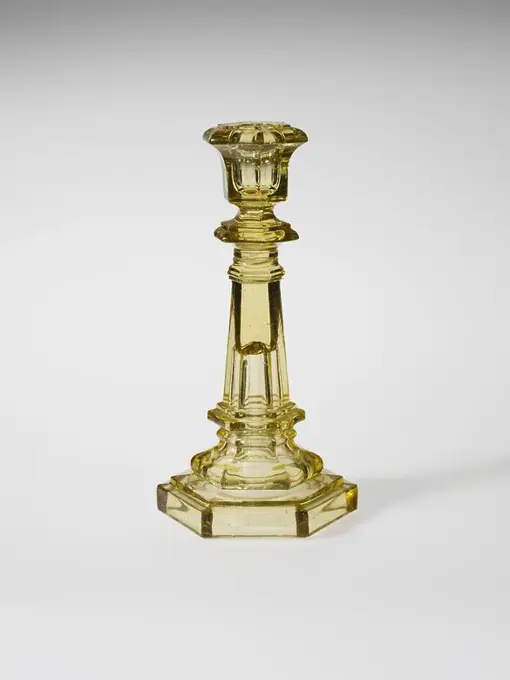
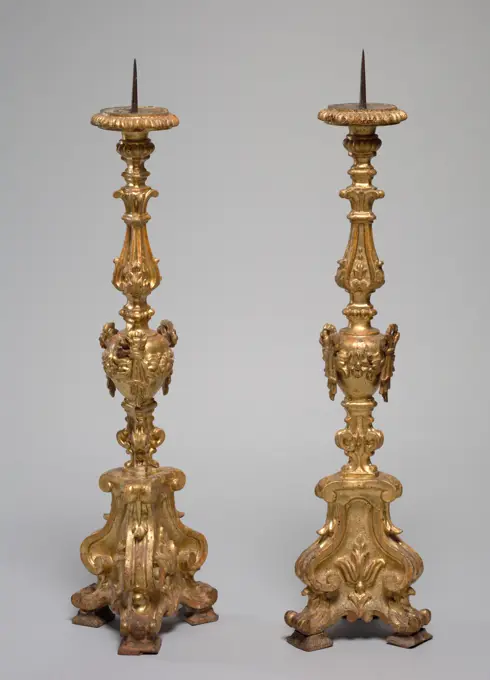
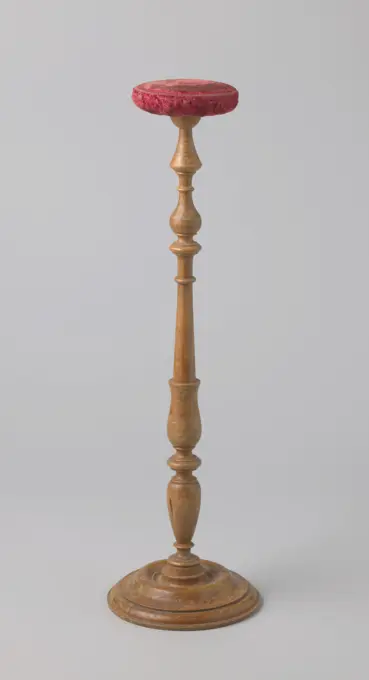
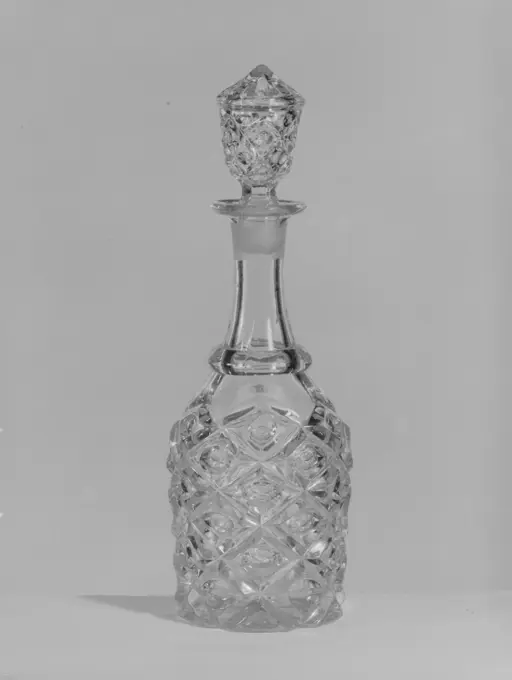
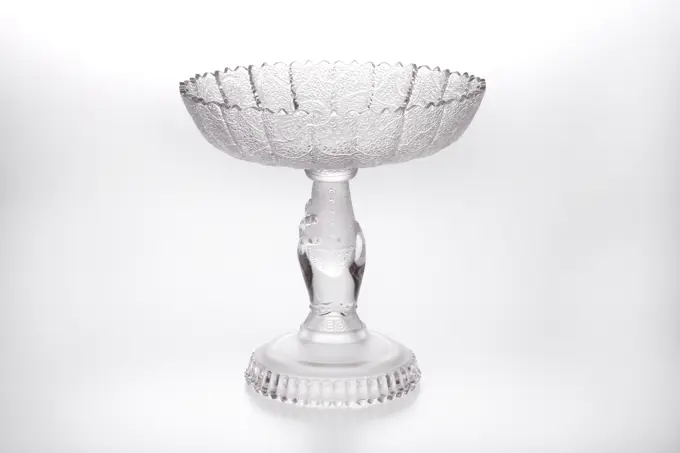
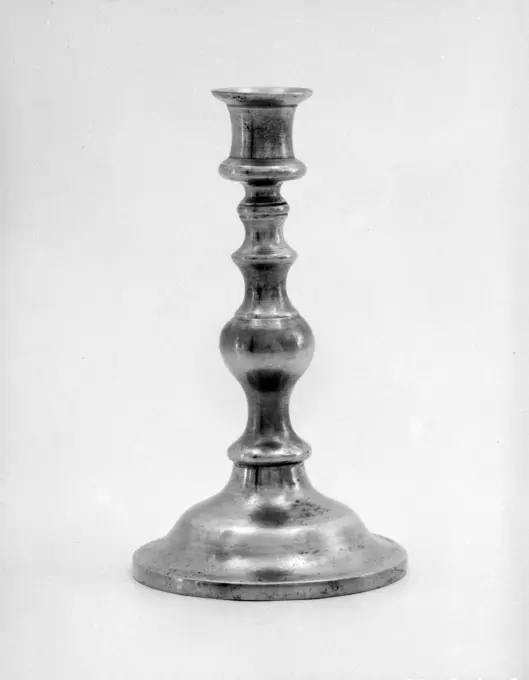
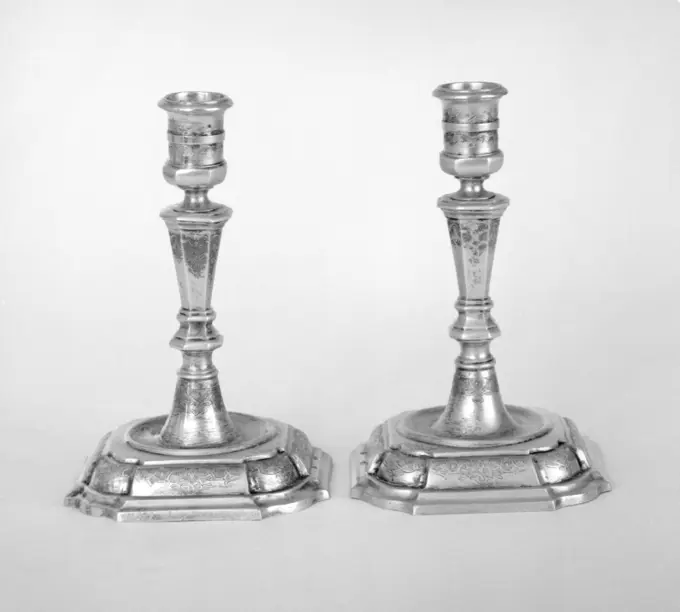
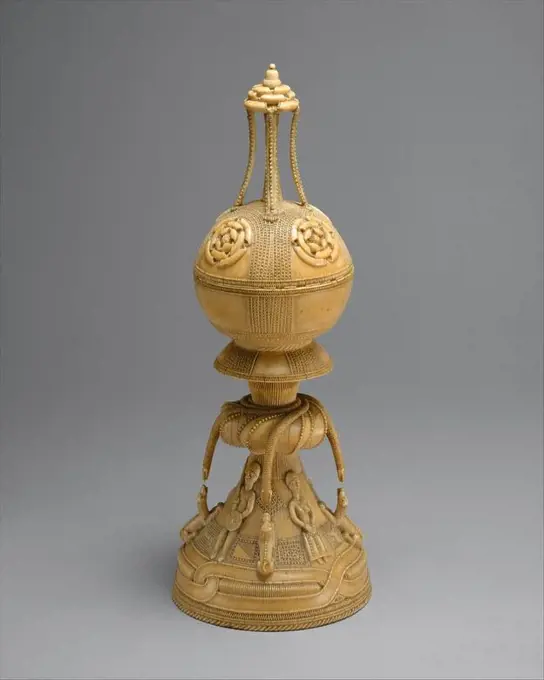
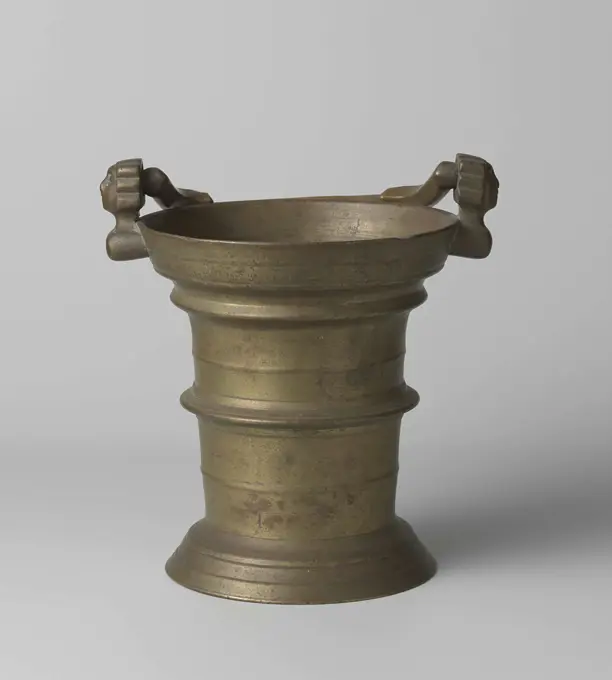
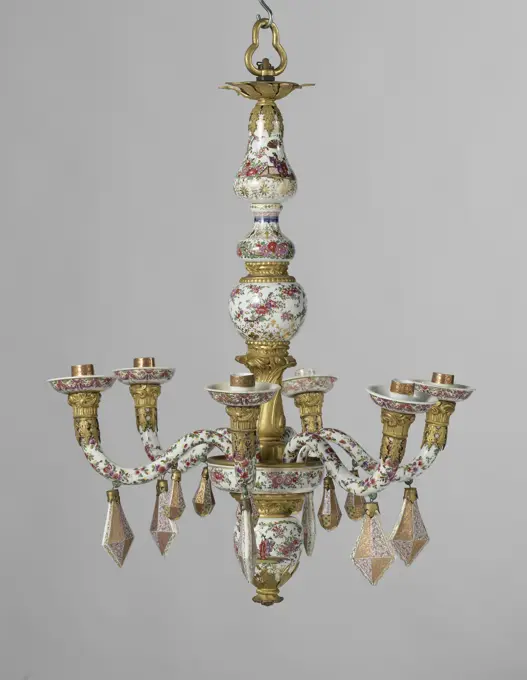
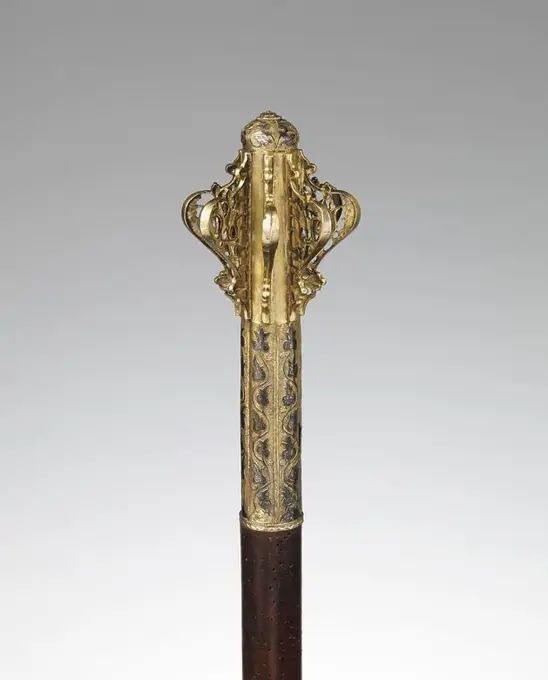
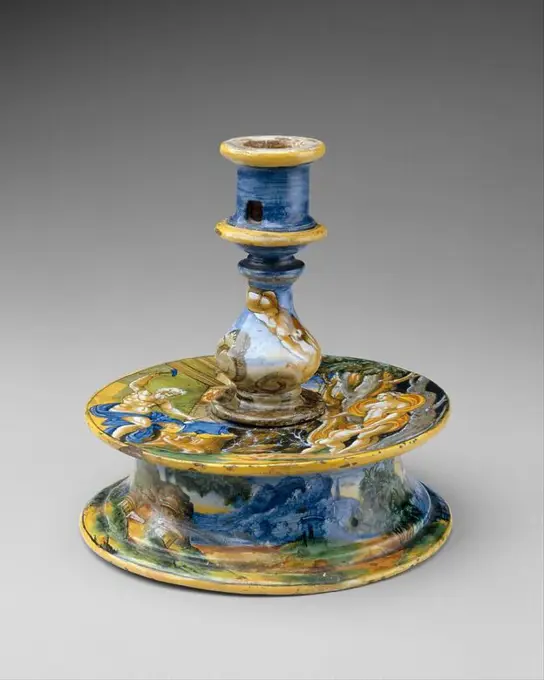
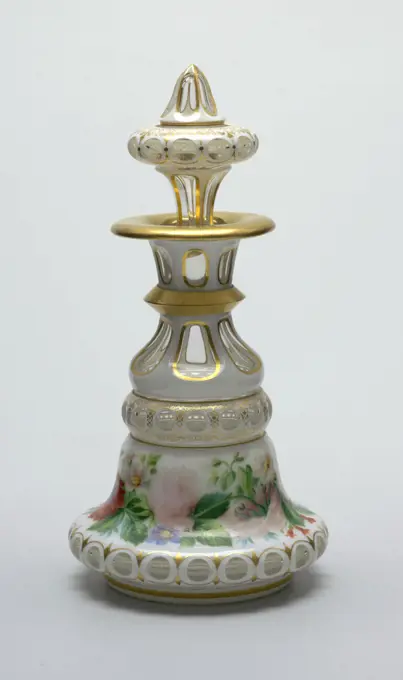
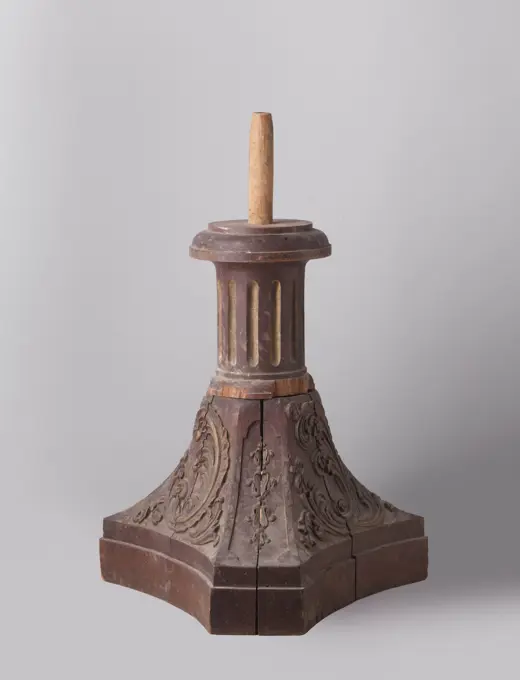
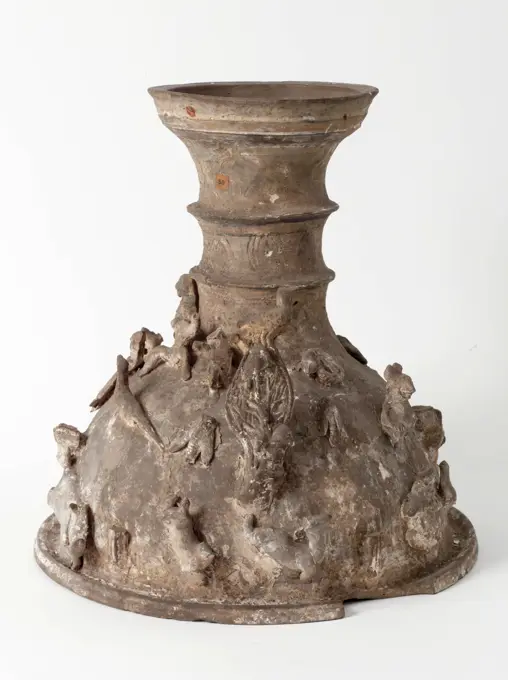
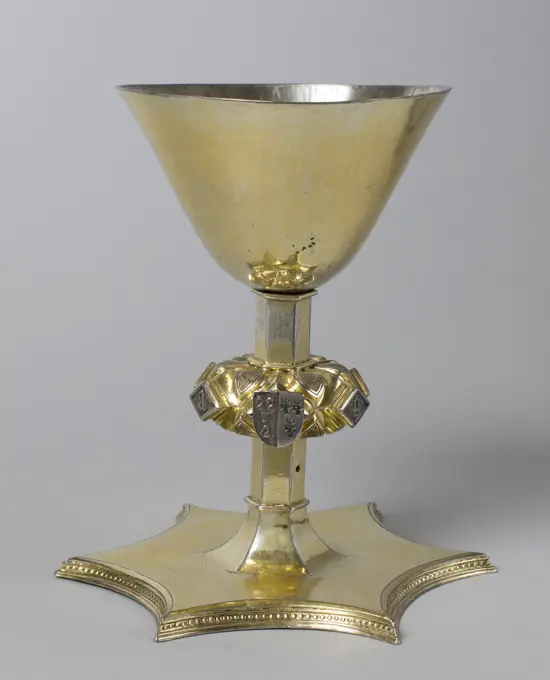
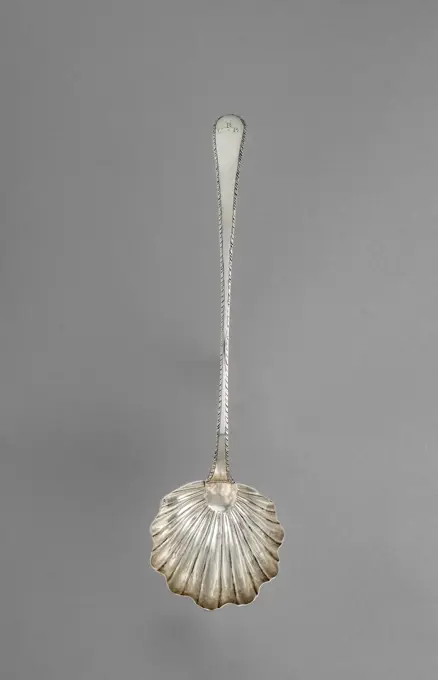
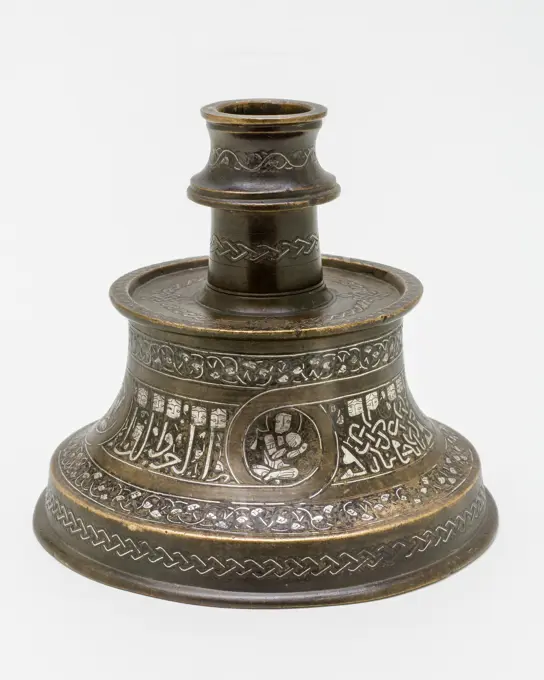
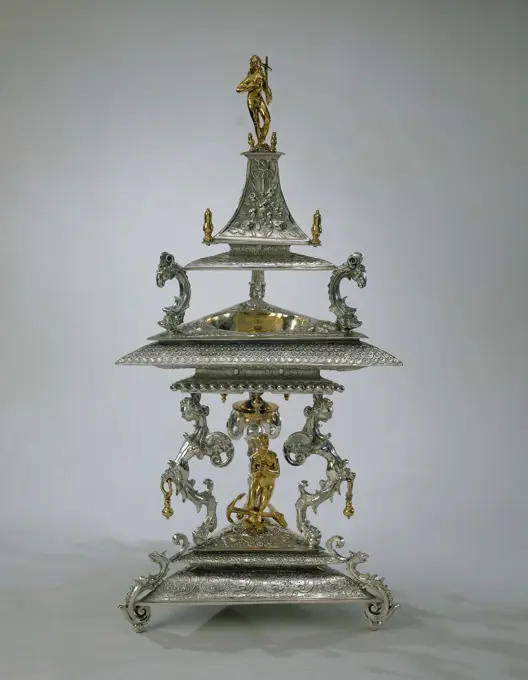
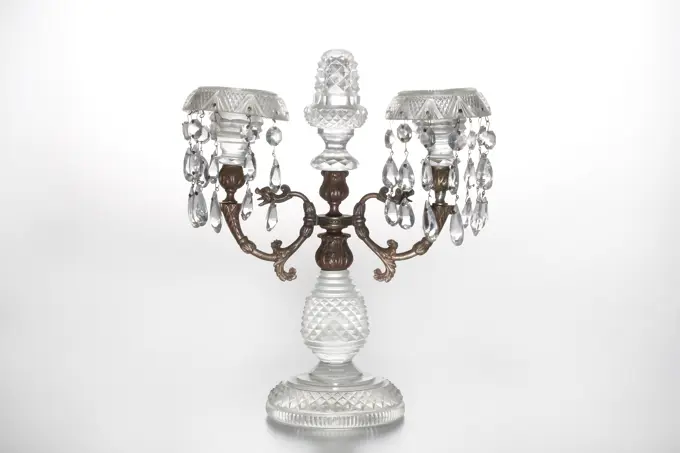
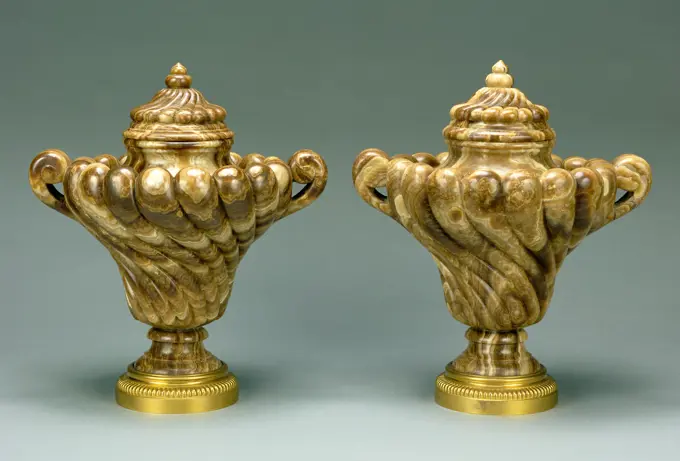
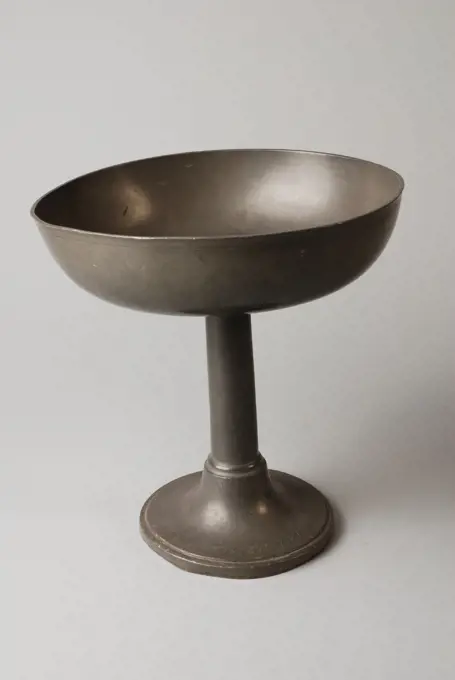
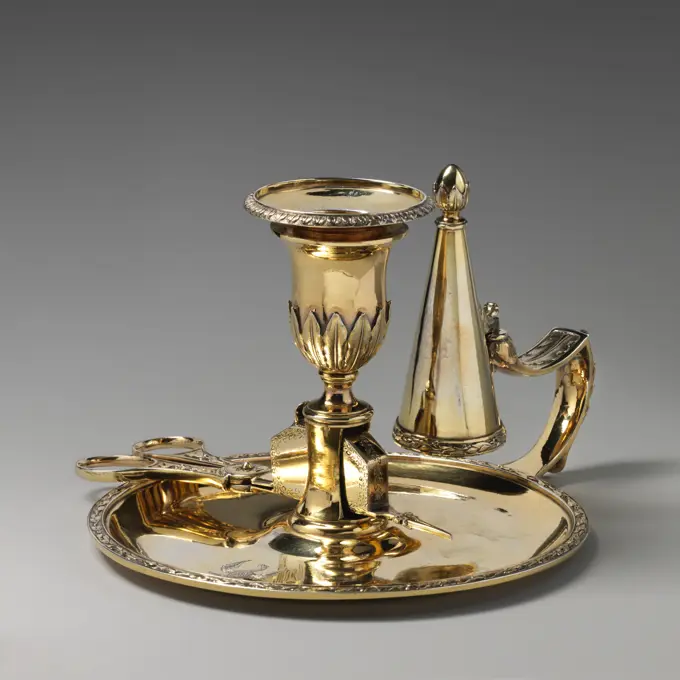
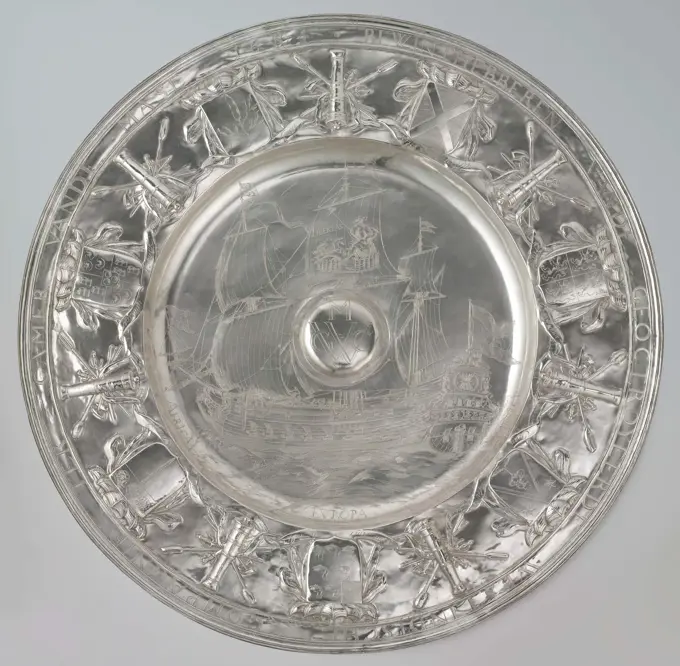
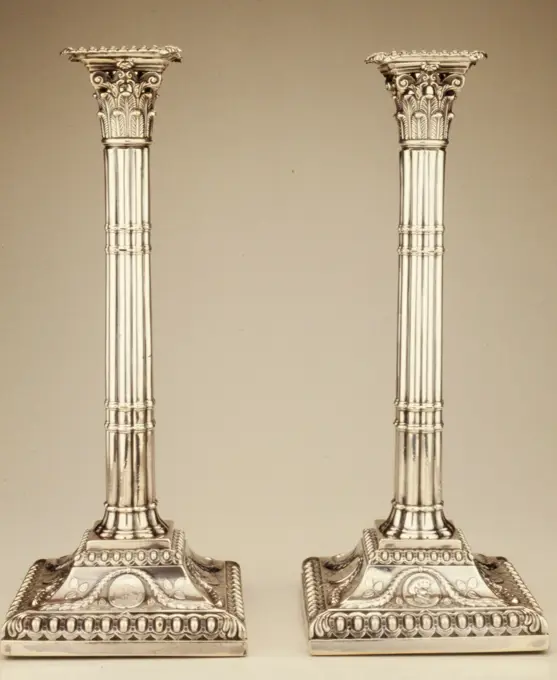
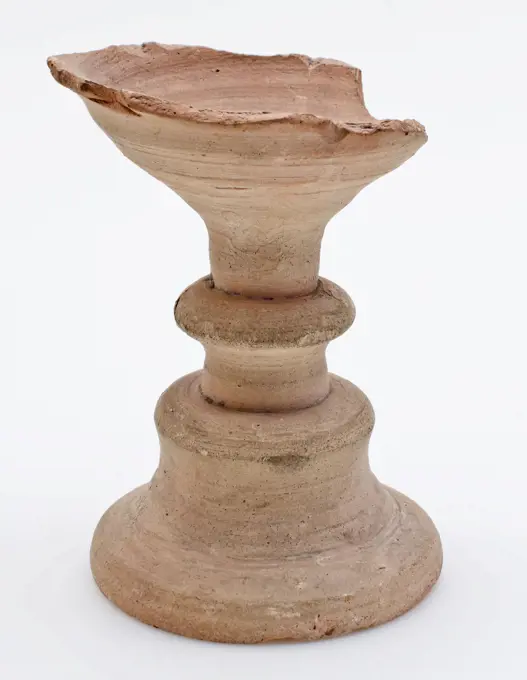
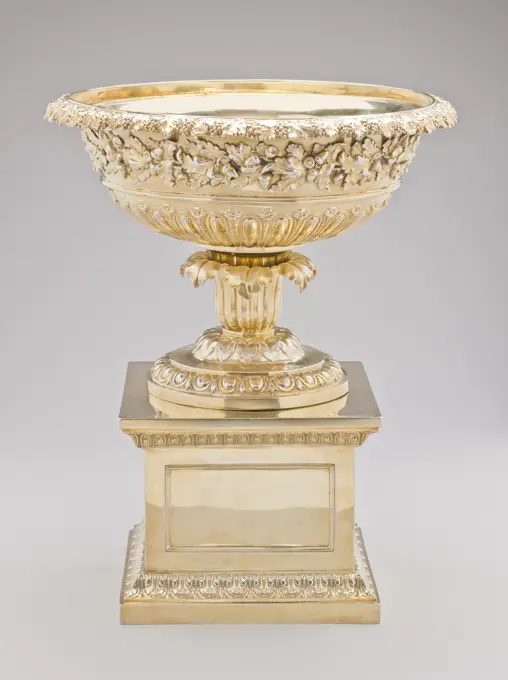
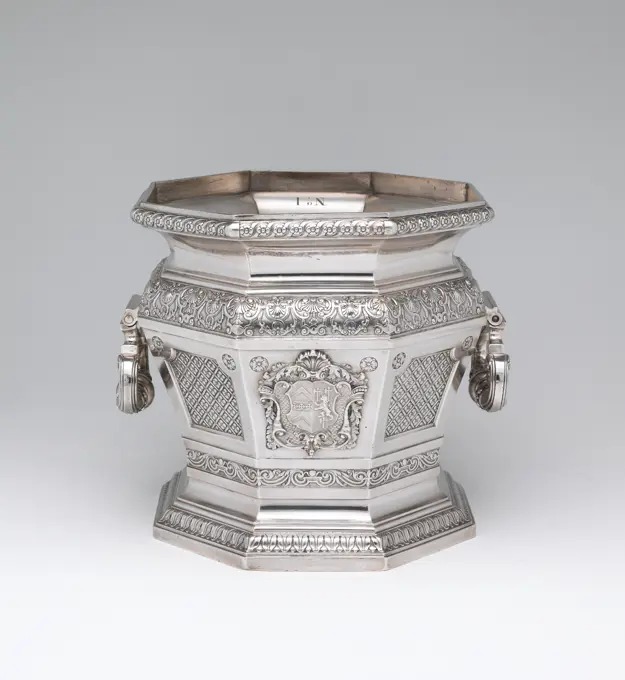
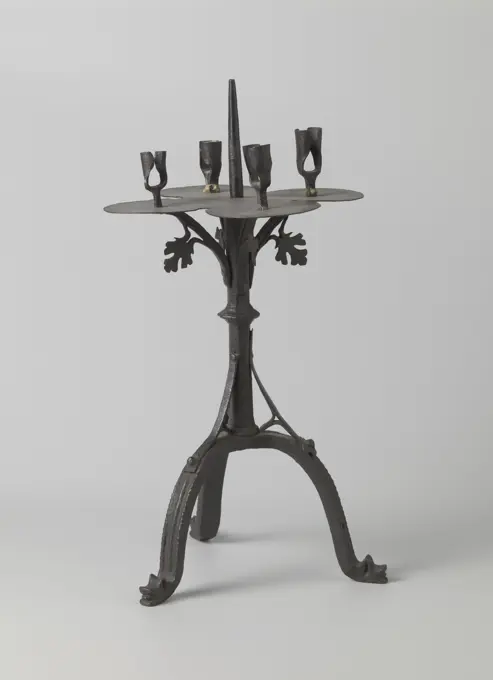
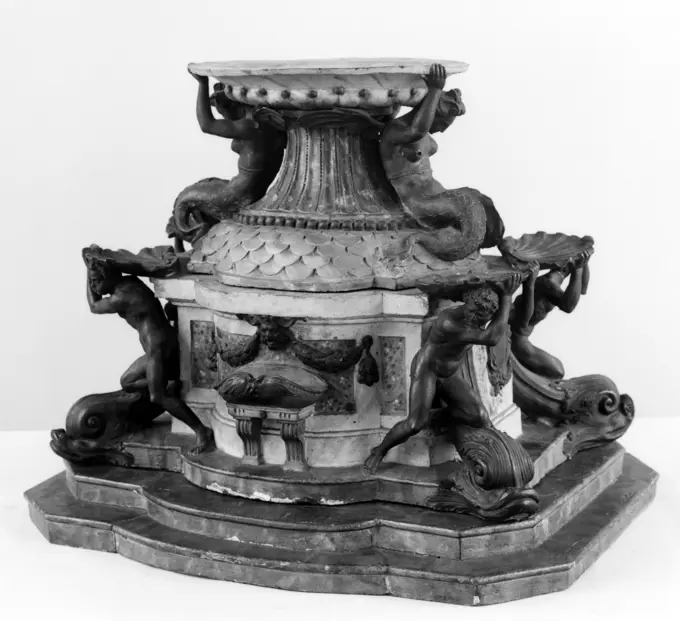
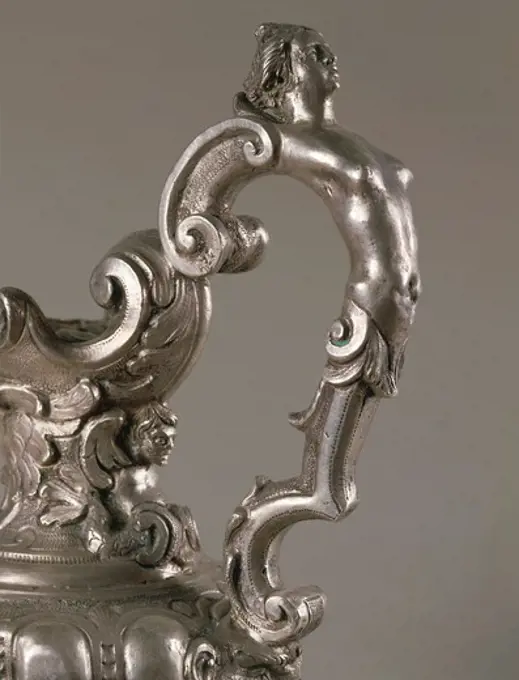
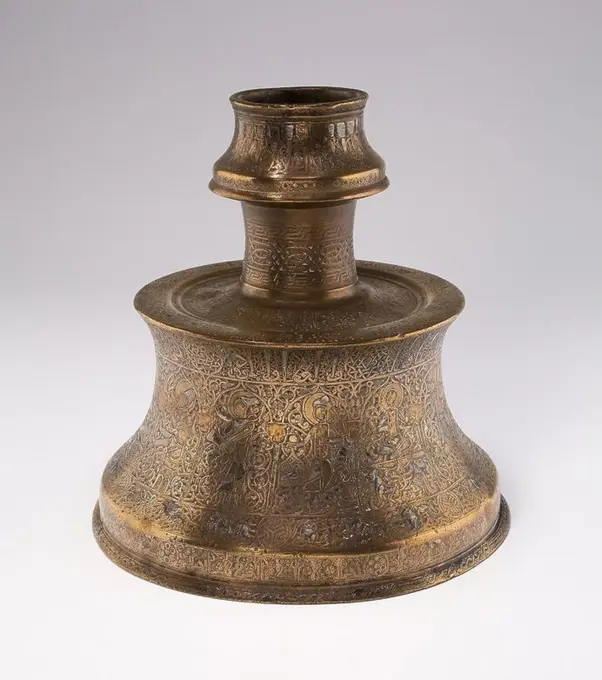
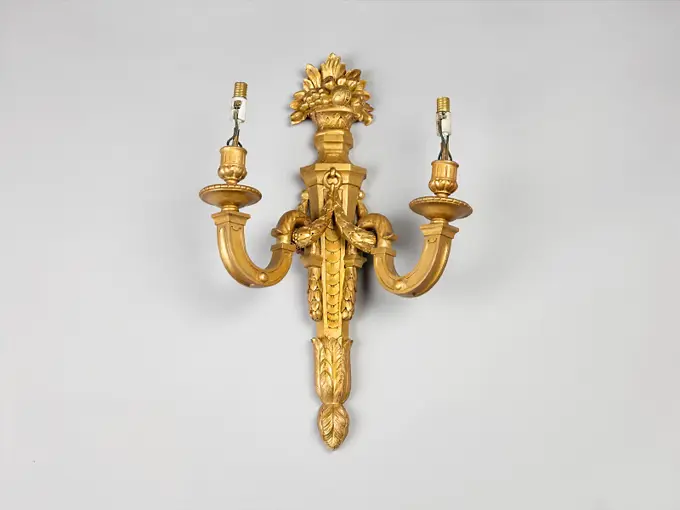
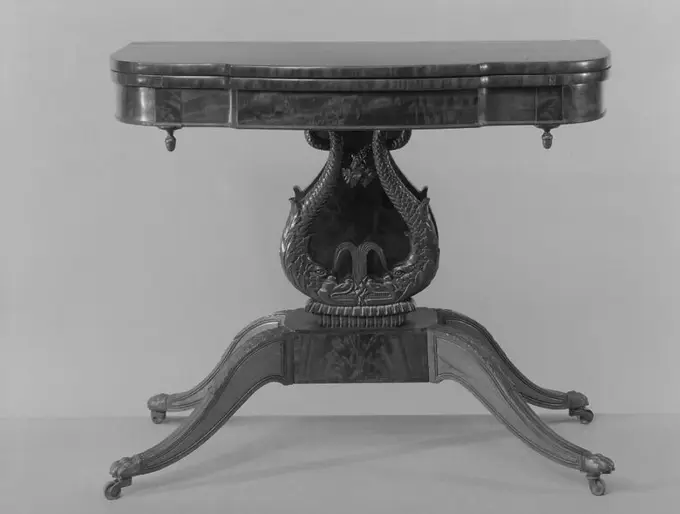
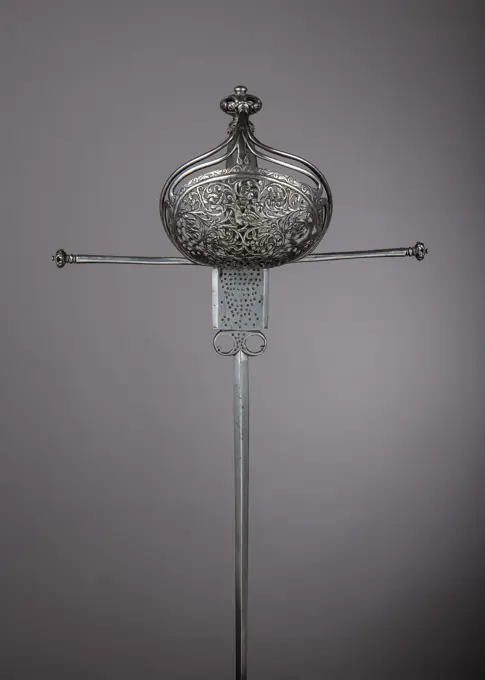
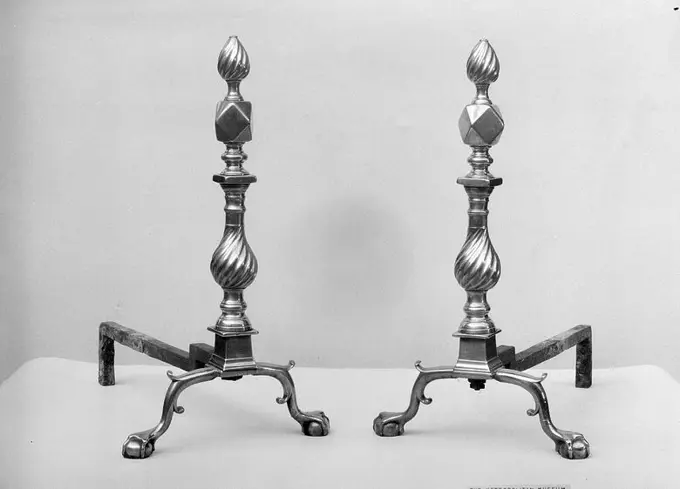
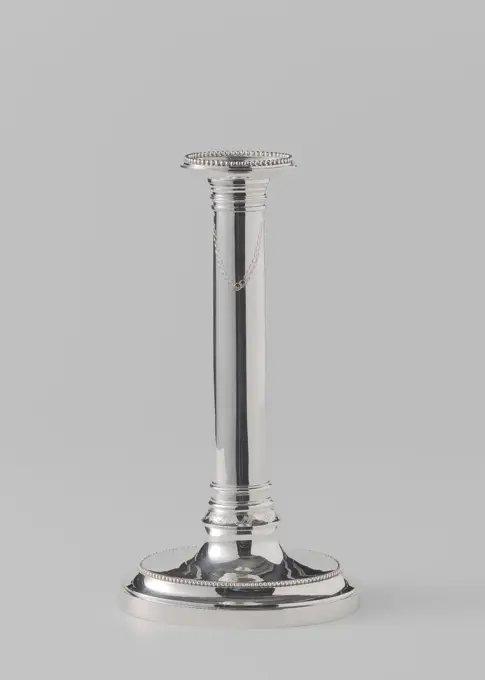
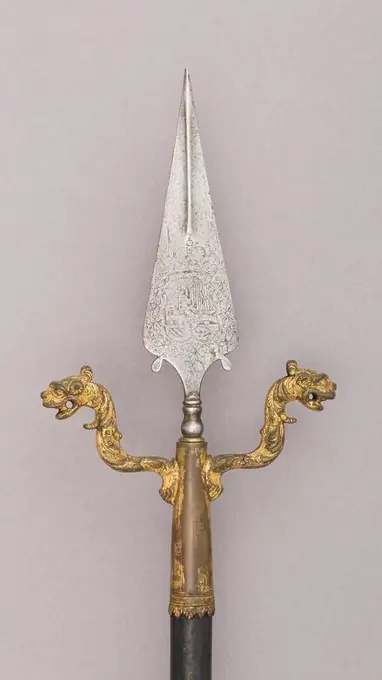
Linstock. Culture: European. Dimensions: L. 74 in. (187.9 cm); L. of head 12 3/4 in. (32.7 cm); W. 6 7/8 in. (17.5 cm); Wt. 2 lb. 2 oz. (964 g). Date: early 18th century. Museum: Metropolitan Museum of Art, New York, USA.Drinkschaal, anonymous, c. 1650 - c. 1700 Drinking scale, round, on baluster -shaped tribe. The foot is arched and decorated. A six -leaf flower is engraved in the dish. The drinking scale is not marked. Netherlands silver (metal) Drinking scale, round, on baluster -shaped tribe. The foot is arched and decorated. A six -leaf flower is engraved in the dish. The drinking scale is not marked. Netherlands silver (metal)Candlestick. Culture: American. Dimensions: H. 9 5/8 in. (24.4 cm). Maker: Boston & Sandwich Glass Company (American, 1825-1888, Sandwich, Massachusetts). Date: 1840-50. Museum: Metropolitan Museum of Art, New York, USA.Candlestick, late 1400s. Italy, probably Tuscany, late 15th century. Carved and gilded wood; overall: 49.6 cm (19 1/2 in.).Salt barrel in diabolith form on vaulted foot with three ball legs. Foot and edge with driven flowers and leaves .. Diabolo-shaped salt barrel of silver, resting on three balls. The wide, vaulted base gradually transmits into a convex benched edge with a comfort-shaped center. Foot and edge decorated with driven flowers and leaves.Pair of Candleholders, mid-late 1600s. Italy, mid-late 17th century. Gilded wood; each: 81.3 cm (32 in.).Vase;  early 19th century (1801-00-00-1810-00-00);Hat standard of twisted beech wood, on a round foot there is an edited trunk on which a round, pink velvet lined support, Stockman, c. 1875 - c. 1925 Hat standard of twisted beech wood. On a round foot there is a processed trunk on which a round, pink velvet lined support is located. Marked on the bottom: Stockman Paris. Paris beech (wood). velvet (fabric weave) Hat standard of twisted beech wood. On a round foot there is a processed trunk on which a round, pink velvet lined support is located. Marked on the bottom: Stockman Paris. Paris beech (wood). velvet (fabric weave)Cup; Non -like Lona Huta; 2. PO. 18th century (1750-00-00-1800-00-00);Candlestick;  around 1810 (1810-00-00-1815-00-00);Wing glass. Flat, foot with a red border. Hollow, baluster-shaped trunk on which two flowers of rose, blue and white glass and two curved wings with a kam ornament. Flat knot, kick-shaped chalice with red border.Pint Decanter 1850-70 American With the development of new formulas and techniques, glass-pressing technology had improved markedly by the late 1840s. By this time, pressed tablewares were being produced in large matching sets and innumerable forms. During the mid-1850s, colorless glass and simple geometric patterns dominated. Catering to the demand for moderately-priced dining wares, the glass industry in the United States expanded widely, and numerous factories supplied less expensive pressed glassware to the growing market. At the Exhibition of the Industry of All Nations at New Yorks Crystal Palace in 1853, for example, the New England Glass Company exhibited 130 pieces of one design, "consisting of bowls, tumblers, champagnes, wines, and jelly glasses." This object belongs to one such service. Although the glass manufactory is not known, the glassware is very typical of the large services that were very popular with Americas middle class in the nineteenth century.. Pint DecanterCompote - Burlington Glass Works Burlington Glass WorksCandlestick 1832-60 Sellew and Company. Candlestick. American. 1832-60. Pewter. Made in Cincinnati, Ohio, United StatesCandlestick (one of a pair) (part of a set) 1735 German, Augsburg. Candlestick (one of a pair) (part of a set) 206246Lidded Saltcellar. Culture: Sapi-Portuguese. Dimensions: H. 11 3/4 x Diam. 4 1/4 in. (29.8 x 10.8 cm). Date: 15th-16th century.This saltcellar is both an extraordinary example of skilled workmanship and an artifact that epitomizes a singularly important convergence of cultures. In the second half of the fifteenth century, Portuguese explorers and traders were impressed by the considerable talent of ivory carvers along the coast of West Africa. As a result, they were inspired to commission works of this kind for their patrons, which ingeniously combine both European and African aesthetics and forms. During this period, salt and pepper were costly commodities and elaborate receptacles were appropriate for their storage in princely homes.This work contains imagery relating to indigenous Sapi belief systems. The four snakes, associated with mystical wealth, appear to confront four growling dogs. According to regional traditions, dogs are considered spiritually astute animals able to see Wood water lining around. The object is composed of the following parts: the bucket (poured and turned), the two attachments (cast and riveted to the bucket), the handle (cast). In the bottom it is located at the bottom the center cat, which is surrounded by two ring profiles twice. There are also both there and on the basis as in the wall on resp. 3, 4 and 5 place the remains visible from the pins, with which the casting core was fixed and the wall has obtained a uniform thickness. The bucket stands on a sloping profiled hollow base. The wall of the bucket is decorated in the middle with a substantial profiled slightly pointed rib, and with a rib on the upper and lower half. The transition to the profiled cutting edge is also formed by a significant more or less spitce rib. The attachments are bastards in the form of a woman. The inner more or less diamond-shaped handle has the shape of a three pass, the top of which is flattened. A piece has been deployed there.Chamber candlestick 1802-3 John Emes. Chamber candlestick 232287Chandelier of gilded bronze and multicolored painted meissen porcelain, Meissener Porzellan Manufaktur, c. 1735 Chandelier with multicolored painted meissen porcelain. The crown consists of a baluster -shaped trunk and six arms, which are stabbed in six round holes in the copper plate, which closes the scale -shaped baluster part at the top. The trunk consists of porcelain, gilded bronze and unadorned copper. The arms with candle holders and fat catchers are made of porcelain. The porcelain parts of the arms and the trunk are painted with Indinic blums. The crown is marked. Float porcelain. copper (metal). bronze (metal) gilding Chandelier with multicolored painted meissen porcelain. The crown consists of a baluster -shaped trunk and six arms, which are stabbed in six round holes in the copper plate, which closes the scale -shaped baluster part at the top. The trunk consists of porcelain, gilded bronze and unadorned copper. The arms with candle holders and fat catchers are made of porcCup with cover 19th century, after 16th century original British, after Portuguese original This electrotype is after a sixteenth-century original, a treasure of the Patriarch, Moscow, at the time of reproduction.. Cup with cover 186600Mace. Culture: Turkish. Dimensions: L. 24 in. (60.96 cm); Diam. of head 3 1/8 in. (8 cm); Wt. 1 lb. 3 oz. (535 g). Date: 1648-87.This delicately crafted mace, with its head of silver-gilt pierced with tulip designs, was not a battle weapon; it was probably an insignia of command in the Ottoman army. Similar examples were taken as booty after the unsuccessful Turkish siege of Vienna in 1683. Museum: Metropolitan Museum of Art, New York, USA.Holder of spice servions in the form of a sheet with screw-on handle. Holder in the form of a blade with a four-pass as a base form with a slight lingering within each circle that fits one of the barrels or spreaders. The leaf is enclosed by a raised profiled edge. A high column rises from the center of the leaf that is equipped with profiled tires on the top and bottom and below. The column is awarded by a standing ring on which a button is placed in the form of a pine cone.Candlestick (candeliere). Artist: workshop of Guido Durantino (Italian, Urbino, active 1516-ca. 1576). Culture: Italian, Urbino. Dimensions: Height: 8 1/16 in. (20.5cm). Date: 1535. Museum: Metropolitan Museum of Art, New York, USA.Arm with candle holder of candle crown of three heights, c. 1675 - c. 1725 Candle belonging to a brass candle crown of three heights. The S-shaped arm has a curl and turns outside into the flat thickening with a screw hole. The candle holder is secured with the fat catcher. The small fat catcher is ribbed at the bottom of the opening and also has twice two grooved rings. The cylindrical candle holder, who has a profiled excellent edge, two grooved rings and a thickening at the bottom, turns into a baluster with thread at the bottom. This is the fourth arm of the lower position ring, unnumbered. The pin, to attach the arm to the stand ring, has a wide baluster shape. Southern Netherlands (possibly) brass (alloy) casting Candle belonging to a brass candle crown of three heights. The S-shaped arm has a curl and turns outside into the flat thickening with a screw hole. The candle holder is secured with the fat catcher. The small fat catcher is ribbed at the bottom of the opening and also hArm with candle holder of candle crown of three heights, c. 1675 - c. 1725 Candle belonging to a brass candle crown of three heights. The S-shaped arm has a curl and turns outside into the flat thickening with a screw hole. The candle holder is secured with the fat catcher. The fat catcher is ribbed at the bottom of the opening and also has twice two grooved rings. The cylindrical candle holder, who has a profiled excellent edge, two grooved rings and a thickening, turns into a baluster with the end of threads at the bottom and a button in which the center hole can be seen. This is the fifth arm of the upper position ring, numbered with 5 round points. The pin, to attach the arm to the stand ring, has a round button on top. Southern Netherlands (possibly) brass (alloy) casting Candle belonging to a brass candle crown of three heights. The S-shaped arm has a curl and turns outside into the flat thickening with a screw hole. The candle holder is secured with the fat catcher. The fat catcArm with candle holder of candle crown of three heights, c. 1675 - c. 1725 Candle belonging to a brass candle crown of three heights. The S-shaped arm has a curl and turns outside into the flat thickening with a screw hole. The candle holder is secured with the fat catcher. The fat catcher is ribbed at the bottom of the opening and also has three times two grooved rings. The cylindrical candle holder, who has a profiled excellent edge, two grooved rings and a thickening, turns into a baluster with the end of threads at the bottom and a button in which the center hole can be seen. This is the first arm of the middle stand ring, numbered with 1 round point. The pin, to attach the arm to the stand ring, has a round button on top. Southern Netherlands (possibly) brass (alloy) casting Candle belonging to a brass candle crown of three heights. The S-shaped arm has a curl and turns outside into the flat thickening with a screw hole. The candle holder is secured with the fat catcher. The fat cTable bubble of silver with engraved seed beads. On the inside the name: Matthes Hoijes. Silver table. Engraved with rocaille motifs. On the inside of the bell engraved: Matthes Hoijer.Probably the workshop of James Giles, Pair of Candlesticks, c. 1775-80, opaque white, yellow, and colorless glass, bronze, and gilding.Cup with cover; Weber, Hans (fl. 1588-1634); 1624 (1624-00-00-1624-00-00);Dedication, subtitles, tileUrn, Ormolu mounted cut glass, gilt bronze, Deep fluted bombe oval mounted with gadroon lip rim, husk collar and two ram's head handles joined by pendant garlands; on a leaf carved round foot, square base., France, 18th century, metalwork, Decorative Arts, UrnScent bottle and lid, Enameled and gilt glass, White glass scent bottle with an undulating form and very decorative lid with pointed knob. Lower section of bottle has a floral pattern around the bottom. Very bottom of bottle has repeating clear circles outlined in gold, which is repeated on the top and lid of the bottle. Part of a set., Bohemia, ca. 1870, glasswares, Decorative Arts, Scent bottle and lidPedestal, anonymous, c. 1900 - c. 1910  Pedim with eight corners, decorated with praise. Netherlands wood (plant material). iron (metal)   NetherlandsSpittoon. Round quis pedal with a wide, flat scalloped edge and a stand ring. The Kwispoor has been labeled: STK. = Amsterdam, Mt. = Feet 430. The quis pedal resembles a quis pedal with the Invnr. BK-NM-11177-148.The Trentham Laver 2nd Century A.D. Marble basin with a fluted bowl supported by two griffins legs and central column. Created by Giovanni Battista Piranesi.Funeral lamp support ". Terracotta, traces of painting. China, Han dynasty (206 BC-220 AD). Paris, Cernuschi museum. Chinese art, Chinese Ceramic, Han dynasty, Han time, bottleneck, funeral lamp, character, support, terracottaCake Plate 1870-90 Adams and Company. Cake Plate. American. 1870-90. Pressed yellow glass. Made in Pittsburgh, Pennsylvania, United StatesChalice with the Arms of Housteyn second quarter 15th century South Netherlandish This chalice, with a hexagonal knop and stellate base, represents a type popular in the Rhineland and the Lowlands around 1400. The underside of the base is engraved with the names of five members of the Housteyn family, including Gryta Housteyn, whose name also appears on the lozenges of the knop. The coat of arms presumably also identifies the Housteyn family, some of whom lived at Frasselt, near Kranenburg, in the duchy of Cleves, in present-day Germany.. Chalice with the Arms of Housteyn. South Netherlandish. second quarter 15th century. Silver, parcel gilt with traces of enamel. Made in Gelderland or Cleves. Metalwork-SilverPaul de Lamerie, Set of Four Candlesticks, 1737/38, silver.Candlestick Krygier, Teodor, Pruszcz Ski, Andrzej (1836 1895)Soup Ladle, c. 1780-1790. America, 18th century. Silver; overall: 10.1 cm (4 in.).Table of Notenhout, Anonymous, 1500 - 1600 Nuthout table with octagonal leaves, which rests on the leg with profiled round discs. This consists of a three -sided, stabbed braid -decorated middle style, to which radiant three flat cheeks, which are decorated with volute curls and end up in claws. The leaf is stabbed in the middle style with the upper disc by means of a pen attached to it and therefore removable and rotatable. The lower ends of the legs are missing. Tuscan wood (plant material). walnut (hardwood) Nuthout table with octagonal leaves, which rests on the leg with profiled round discs. This consists of a three -sided, stabbed braid -decorated middle style, to which radiant three flat cheeks, which are decorated with volute curls and end up in claws. The leaf is stabbed in the middle style with the upper disc by means of a pen attached to it and therefore removable and rotatable. The lower ends of the legs are missing. Tuscan wood (plant material). walnut (hardwood)Miniature tilt-top table. Culture: Dutch, Amsterdam. Dimensions: 3 11/16 × 4 3/4 in. (9.4 × 12.1 cm). Date: 18th century. Museum: Metropolitan Museum of Art, New York, USA.Salt (one of a pair) early 19th century Irish or British. Salt (one of a pair). Irish or British. early 19th century. Glass. GlassBoscoreale treasure, Silver glass, Relief with skeletons representing Greek philosophers and inscriptions advising to enjoy pleasures of life, From Boscoreale (province of Naples)EMPUNADURA DE ESPADA DE ANTONIO BARCELO. Location: MUSEO NAVAL / MINISTERIO DE MARINA. MADRID. SPANIEN.Pair of candlesticks. Culture: French, Paris. Dimensions: Height (each): 8 7/8 in. (22.5 cm). Maker: Charles Petit (master 1659, registered new mark 1680, recorded 1695). Date: 1701-2. Museum: Metropolitan Museum of Art, New York, USA.Candlestick. Iran, 13th century. Metal. Brass, engraved and inlaid with silver. Candle arm belonging to a candle wreath of two heights with maria figure at the top. The arm is bent twice and is decorated with nine grape vegetables and five winger leaves. The round fat catcher is decorated at the bottom with fishing blozen motifs and has a downward edge of cross flowers in the middle, which masks the placement on the arm. The candle holder is sixted, opened, placed on three vertical styles, overtreen in a thread protrusion. This is the second arm of the lower ring, numbered with 2 round points. The candle holder is unnumbered.Dish Ring Made 1772 Dublin. Silver . Charles Harrison TownsendArm with candle holder of candle crown of two heights, c. 1800 - c. 1875 Candle belonging to a brass candle crown of two heights. The S-shaped arm has a curl at the start, halfway through a dolphin head and turns outside into the flat thickening with a screw hole. The candle holder is secured with the fat catcher. The fat catcher is ribbed at the bottom of the opening and has a slightly excellent edge and is decorated with grooved hefty rings. The Cylindrian candle holder has a profiled and a little excellent edge, two grooved rings, a rib and a profiled hollow bottom, which turns into a protrusion with a thread with a center hole. This is the first arm of the lower position ring, numbered with 1 round point. Netherlands brass (alloy) casting Candle belonging to a brass candle crown of two heights. The S-shaped arm has a curl at the start, halfway through a dolphin head and turns outside into the flat thickening with a screw hole. The candle holder is secured with the fat catcher. The Bronze candelabrum in empire style with Egyptian figure, candleholder lighting device bronze gold metal, cast bronze candelabrum or candle holder in empire style. In the column an Egyptian figure Multiple composite gold colored arms. Pedestal. Claw feet interior illuminate Empire EgyptCelectial globe;Le Maire;1786Two-arm candlestick with a figure of a country man. The candlestick consists of four parts: the foot, the men's figure, two fat catchers, two candle holders. The foot and fat catchers have been rotated, the men's figure and candle holders have been poured. The low round profiled base is decorated with grooved rings, and has a flat edge. The horizontal portion of the base is equipped with a upper edge, and can thus serve as a fat catcher. To the middle the base overlooks a bell-shaped increase with an opening, in which the strain is screwed. This has the form of a standing men's figure dressed according to the splitting fashion of the German national nonsense, with mustache and sideburns, who has lifted his arms. The man stands on a pedestal, which has a short thread at the bottom and is flat and more or more oval of circumference. There the brand t is applied between the feet of the man. His hands include two elements in which the profiled candle holders are screwed to the fat catchersHolder of oil and vinegar, Francois Marcus Simons, 1803 The holder consists of an oval container with a profiled border that ends in leaf shapes along the concave base. The legs have the shape of grape bunches. The Ajour edited bottle holders are decorated with garlands and bell -shaped motifs. Between the bottles a column in the form of a Tuscan column, crowned with an amphora. At the base two wreaths with grape vines for the silver caps of the bottles. The Hague silver (metal) The holder consists of an oval container with a profiled border that ends in leaf shapes along the concave base. The legs have the shape of grape bunches. The Ajour edited bottle holders are decorated with garlands and bell -shaped motifs. Between the bottles a column in the form of a Tuscan column, crowned with an amphora. At the base two wreaths with grape vines for the silver caps of the bottles. The Hague silver (metal). Salt was an expensive commodity in the 17th century and therefore took pride of place on the table. Salt-cellars were thus elaborately designed works of art. Here beneath the little dish for the salt is a figure of a nude woman with an anchor, symbolizing Hope. The triangular lid is surmounted by a female figure with a cross, the personification of Faith.Chandelier; Paris, France; about 1715; Gilt bronze; 114.9 x 107.3 cm, 68.4932 kg (45 1,4 x 42 1,4 in., 151 lb.);Candelabrum -Fruit basket; Butal, Sarah (Fl. 1754-1772); 1770/71 (1770-00-00-1771-00-00);Kandelaar van Messing, Anonymous, 1600 - 1700 The object, which is cast in one whole, has a round feet, a somewhat sphere and baluster-shaped tribe, a round fat catcher and a candle pin profiled at the starter. Inside, the round hollow stem is marked by four grooves at the same distance, serving to provide the lathe. The object shows small differences with candlestick BK-NM-2289-B. Northern Netherlands (possibly) brass (alloy) casting The object, which is cast in one whole, has a round feet, a somewhat sphere and baluster-shaped tribe, a round fat catcher and a candle pin profiled at the starter. Inside, the round hollow stem is marked by four grooves at the same distance, serving to provide the lathe. The object shows small differences with candlestick BK-NM-2289-B. Northern Netherlands (possibly) brass (alloy) castingPair of Lidded Vases. UnknownTinsmith: Johannes Daniël Druy, Chalice-shaped bowl with engraved text on round base CHURCH FEASTDUE DELFSHAVEN, bowl scale shell holder tin, cast Round hollow base becoming narrow high stem bowl bowl in foot on bottom of the trunk: angel with palm branch in oval above banderol in which Druy metal casting Delfshaven church guardianship religion church supper church dish protestantism collection religious ceremony ceremony RotterdamBlack -lacered candlestick with flowers decorated, Carel Lodewijk Schurffius, c. 1772 - Before 1812 Candlestick of black lacquered can. On the square base there is a square base, which becomes narrower to the middle, decorated on each side with a painted flower. The Cylindrian trunk runs slightly at the top and is painted with flowers. A loose candle holder has been placed at the top, also made of black -lacquered can, with a wide flared edge that serves as a fat catcher. Amsterdam tin (metal). tin plate. paint (coating) casting / painting Candlestick of black lacquered can. On the square base there is a square base, which becomes narrower to the middle, decorated on each side with a painted flower. The Cylindrian trunk runs slightly at the top and is painted with flowers. A loose candle holder has been placed at the top, also made of black -lacquered can, with a wide flared edge that serves as a fat catcher. Amsterdam tin (metal). tin plate. paint (coating) casting / paintingBeaker 19th century, after 17th centrury original British, after German, Danzig original This electrotype is after a seventeenth-century original in Romanoff House, Moscow, at the time of reproduction.. Beaker 186649Chamberstick with snuffers (one of a pair) 1792 John Scofield This George III silver gilt chamberstick, paired with 2019.283.116a-d, was made by John Scofield, London 1792. Such chambersticks were used at night to circulate within a home. This particular pair retains all its original components, including its snuffers, which often went missing.. Chamberstick with snuffers (one of a pair). British, London. 1792. Gilded silver. Metalwork-SilverPiet Heyn dish. Piet Heyn became famous for his conquest of the Spanish Silver Fleet’ in 1628. The Spanish ships were laden withMexican silver. The sale of the spoils yielded an astronomical fifteen million guilders. It was a painful blow for Spain, particularly because the Netherlands used the money to wage war against the Spanish. This dish was fashioned from the seized silver.Candlestick, one of a pair, 1771-1772, William Cox III, English, 1760-1791, 12 1/4 x 5 x 5in. (31.1 x 12.7 x 12.7cm), Silver, England, 18th centuryEarthenware salt vessel, salt bowl on high foot, salt container salt dish holder soil find ceramic earthenware, foot 8.0 hand turned baked Pottery salt vessel salt bowl on high base. Terracotta Shallow scale with top edge on column with collar in the middle on bell-shaped foot with high soul. Unglazed Semi-finished product from the pottery industry archeology Rotterdam City center Stadsdriehoek Bulgersteyn pottery serve serving table food condiment salt craft pottery earthenware industry Soil discovery: slot Bulgersteyn in Rotterdam.Cover of a cup with leaf wreath, Anonymous, 1800 - Before 1900 Lid of a cup with leaf wreath.  glass Lid of a cup with leaf wreath.  glassCenterpiece. Paul Storr (England, London, 1771-1844). England, 1827-1828. Textiles; centerpieces. Silver with gildingButton, 1800s. Balkans(), 19th century. Silver; average: 8.3 cm (3 1/4 in.).Wine cooler (one of a pair) 1716/17 William Lukin I British These wine coolers in the French style were made for Sir Robert Walpole, Britains first prime minister. They furnished the dining room at Houghton Hall, the grand country house Walpole built for his famous collection of paintings, which was later sold to Catherine II of Russia. Coolers for individual bottles of wine were a novelty in England, and these reflected the fashionable taste and deep pockets of one of the most powerful men in the country. Listen to experts illuminate this artwork's story Listen Play or pause #2138. Silver and Glass from the Sixteenth- to the Eighteenth-Century Supported by Bloomberg Philanthropies We're sorry, the transcript for this audio track is not available at this time. We are working to make it available as soon as possible.. Wine cooler (one of a pair) 204934Terracotta stemmed dish. Culture: Etruscan. Dimensions: 4in. (10.2cm). Date: 6th century B.C..The stemmed dish is a recurrent shape in Etruria as well as in various Archaic fabrics of Eastern Greece and Lydia. While the details of contact between these two areas are very incompletely understood, influence is evident in tangible manifestations such as this. Museum: Metropolitan Museum of Art, New York, USA.. Three-armed candelaber of silver. The foot, tribe and candle holder have been taught. The three branch-shaped, raating arms are uneven by height.. The inscription on the underside of this chalice suggests that this object was commissioned in 1519 by Tilman van Herckenrode. He was a high priest at the church of Saint John the Evangelist in Liège and at the abbey of Ciney in the Ardennes.Candlestick, Anonymous, 1400 - 1600 Tandler of wrought iron with a chassis of three legs, ending in a stylized dragon head. The octagonal trunk with Nodus is placed on the chassis. Three flat decorations sounded on the transition from the three legs to the trunk. At the top of the trunk, three arms spring with a single leaf decoration. Above it a flat, cloverleaf -shaped fat catcher with five holes in it, so that the candle pin and the four candle holders are stuck respectively. The candle holders are sounding on the arms of the trunk. A round hole has been applied in one of the legs. West-Europa iron (metal) forging Tandler of wrought iron with a chassis of three legs, ending in a stylized dragon head. The octagonal trunk with Nodus is placed on the chassis. Three flat decorations sounded on the transition from the three legs to the trunk. At the top of the trunk, three arms spring with a single leaf decoration. Above it a flat, cloverleaf -shaped fat catcher with five holes in it, soModel of a fountain 16th century Attributed to Giambologna Netherlandish. Model of a fountain. Italian, Florence. 16th century. Terracotta. SculptureSANTO GRIAL - CALIZ DE LA ULTIMA CENA CON ORO Y PERLAS. Location: CATEDRAL-INTERIOR. Valencia. SPAIN.silver candelabrum isolated on the white backgroundHanap 18th century Russian. Hanap 192083Bottle of oil and vinegar with four bottles, with the Clifford family crest, Fa. Diemont, 1806 One of the two smaller bottles of colorless glass, decorated in various sharpening, fits. The upper part of the bottle is contained in a silver frame that is decorated with a filet edge, where it ends in a point at the front and back. One handle is provided on the frame, hinged snee -shaped lid. The, presumably English, bottle has a high rising, bent, grooved silver ear, which runs just above the bottle base to below the folding lid. Amsterdam glass One of the two smaller bottles of colorless glass, decorated in various sharpening, fits. The upper part of the bottle is contained in a silver frame that is decorated with a filet edge, where it ends in a point at the front and back. One handle is provided on the frame, hinged snee -shaped lid. The, presumably English, bottle has a high rising, bent, grooved silver ear, which runs just above the bottle base to below the folding lid. Amsterdam glaSilversmith's art, Italy, 17th century. B. Guariniello, silver ewer. From Naples. Detail: handle.Candlestick (Sham'dan) with Scenes of Monthly Labors. Eastern Turkey. Date: 1201-1300. Dimensions: 19.8 × 19.6 × 19.4 cm (7 13/16 × 7 11/16 × 7 5/8 in.). Brass inlaid with silver, with engraved decoration. Origin: Turkey. Museum: The Chicago Art Institute, Chicago, USA. Author: Islamic.Bust of Princess Anna of Hanover 1709-1759, Jan Baptist Xavery, 1736Jacob Margas, Pair of Candlesticks, 1713-14, silver.Sconce. unknown, authorDecanter with stopper Possibly Baccarat French 1890-1900Linnenpers, Anonymous, c. 1700 - c. 1725 Engraved and decorated linen press on four profiled legs. The top line between the legs is open. The linen press is marked with an illegible master sign and twice a boar head. Netherlands silver (metal) Engraved and decorated linen press on four profiled legs. The top line between the legs is open. The linen press is marked with an illegible master sign and twice a boar head. Netherlands silver (metal)Feather and ohm stand;  1 PO. XIXW. (1800-00-00-1850-00-00);Quatrefoil Table 1895-1905 Italy. Indian rosewood, German silver, copper, mother-of-pearl, and replacement glass . Eugenio QuartiCard Table. Culture: American. Dimensions: 28 3/4 x 36 3/8 x 35 7/8 in. (73 x 92.4 x 91.1 cm). Maker: Probably Henry Connelly (1770-1826). Date: 1815-20.The attribution of this card table is based on its similarity to a pair of tables Henry Connelly made for the prominent Philadelphia banker and philanthropist Stephen Girard in 1817. All are distinguished by their elegant proportions, shimmering mahogany surfaces, and fine carving. Dolphins--popular French-inspired motifs in both New York and Philadelphia furniture during the early decades of the nineteenth century--here grace a lyre-shaped central support. Although lyre motifs are common features in furniture designs during this period, it is rare to find one combined with or formed by whimsical creatures. The result is a striking and highly original composition, enlivened by the dolphins' sinuous scaled bodies and interlaced tails. Museum: Metropolitan Museum of Art, New York, USA.Parrying Dagger with Scabbard ca. 1650-75 Italian, probably Naples From the early sixteenth century onward, the practice of wearing a sword or rapier with civilian dress made duels between unarmored opponents more common. Lacking the armor or shield worn in battle, combatants had to block or parry an attack by other means. Methods of defense included the use of a dagger or a buckler (small shield) held in the left hand and an increased reliance on parries made with the rapier itself. During the sixteenth and seventeenth centuries, distinct schools of fencing developed rapidly in Italy, France, Germany, and Spain. Instruction in the art and science of fencing became an indispensable part of a noblemans education. Consequently, accomplished fencing masters were hired to teach at the principal courts and universities of Europe. From about 1525 to about 1625, the rapier was worn regularly in tandem with a parrying dagger. They were sometimes made and decorated as a set. By the mid-seventeSpoon vase with 12 spoons. Spoon vase of silver, with glass inner bin and 12 silver spoons.Candlestick of cast silver with bell -shaped foot, Johannes Schiotling, 1766 The bell -shaped base, the baluster -shaped tribe and the candle holder are all torn (the candle holder in the opposite direction) and they are made up of alternating lobes and ribbed parts. The foot has a continued lower edge. Foot and trunk are decorated with flower branches, rocailles and C-volutes, the candle holder with foam motifs. The trunk is closed on top and bottom by a constricted, octagonal, outward curly part. The loose fat catcher is made up of curling leaves. Engraved on the outer edge of the foot: HDR. A wooden plate is applied to the foot, which follows the irregular contour. Amsterdam silver (metal). wood (plant material) The bell -shaped base, the baluster -shaped tribe and the candle holder are all torn (the candle holder in the opposite direction) and they are made up of alternating lobes and ribbed parts. The foot has a continued lower edge. Foot and trunk are decorated with flower branchAndiron. Dimensions: H. 23 1/2 in. (59.7 cm). Date: 1760-80. Museum: Metropolitan Museum of Art, New York, USA.Komfoor on tripod. Standard on a twisted strain, which runs into a four-leg. Four profiled arms come together on the trunk that support two support rings. The standard is labeled: boar head.ARTE IRANI- LAMPADARIO DE BRONCE FUNDIDO-DECORACION CALADA Y GRABADA. Location: MUSEO ARQUEOLOGICO NACIONAL-COLECCION. MADRID. SPAIN.Compote c 1876 Philadelphia. Glass . Gillinder and Sons (Manufacturer)Book Illustration, Novelties in Laces for Furniture and Decoration, Gland, Guaste, Fassel, (Tassel), Heft XI, Blatt 107Kandelaar, Hendrik Boshart, 1789 - 1790 Oval candlestick of silver. The foot and fat catcher decorated with a pearl edge. Middelburg silver (metal). voet: wood (plant material). velvet (fabric weave) Oval candlestick of silver. The foot and fat catcher decorated with a pearl edge. Middelburg silver (metal). voet: wood (plant material). velvet (fabric weave)Hat, 9 x 9 x 15 in. (22.86 x 22.86 x 38.1 cm) (measured with chains hanging), Silver, China