Decorative Teapots

An array of uniquely designed teapots made from various materials, featuring intricate patterns and styles, suitable for tea enthusiasts.

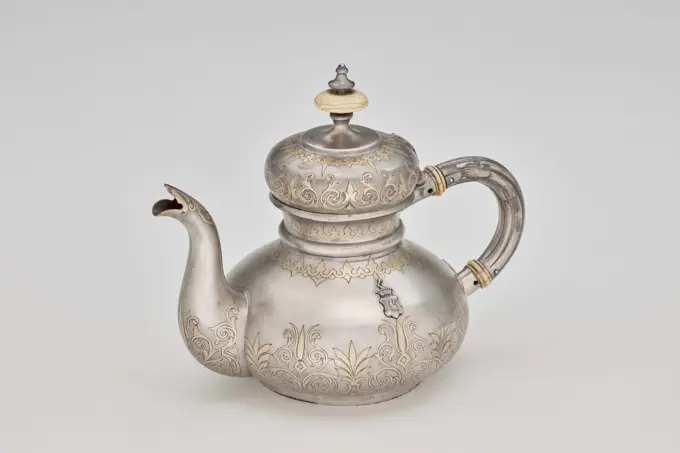
Teapot of stoneware with salt glaze; Staffordshire .. teapot of stoneware with salt glaze. The teapot is octagonal and has on the eight sides relief decorations, consisting of trees, figures, animals and a weapon. The spout has a flower branch on both sides.
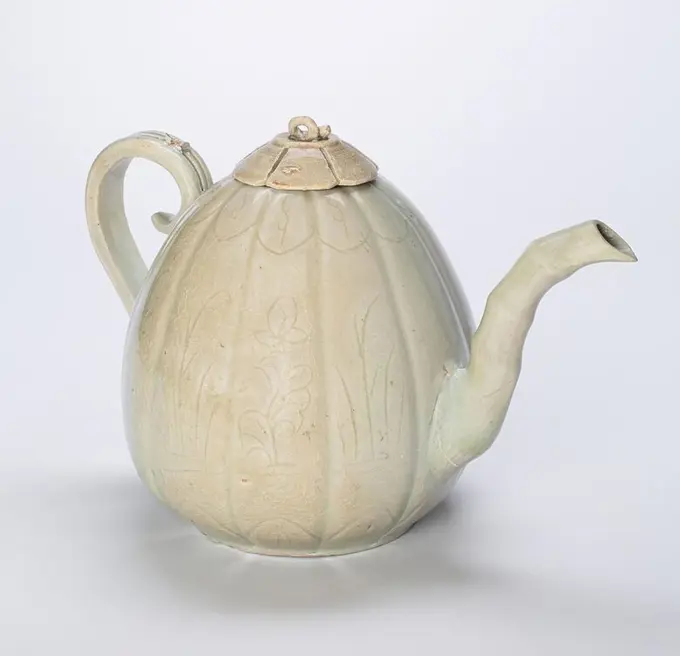
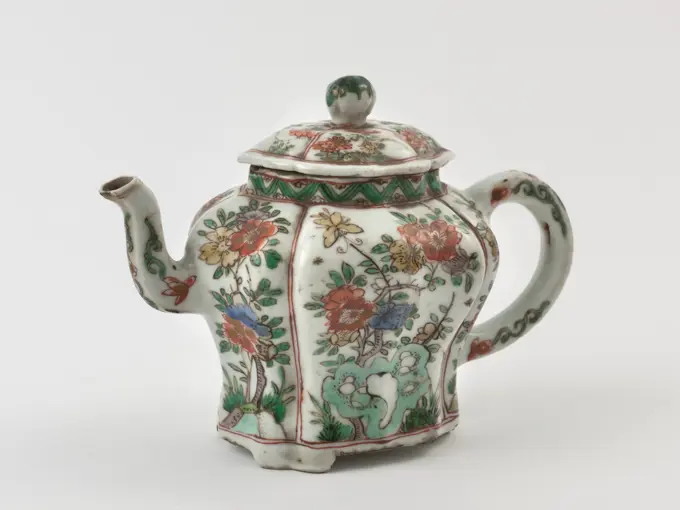
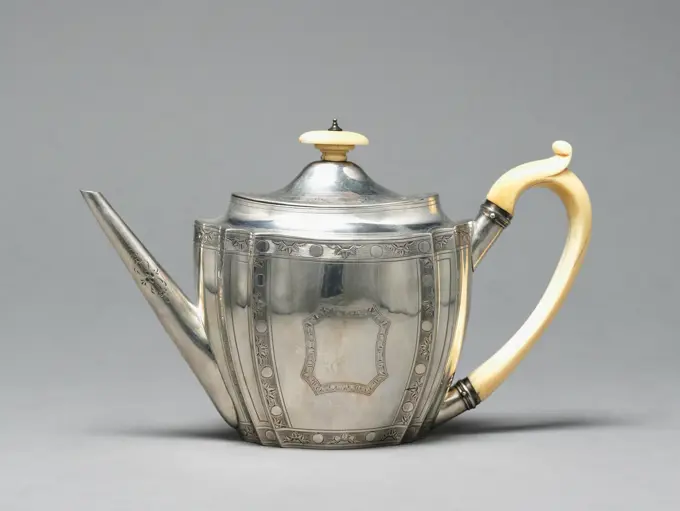
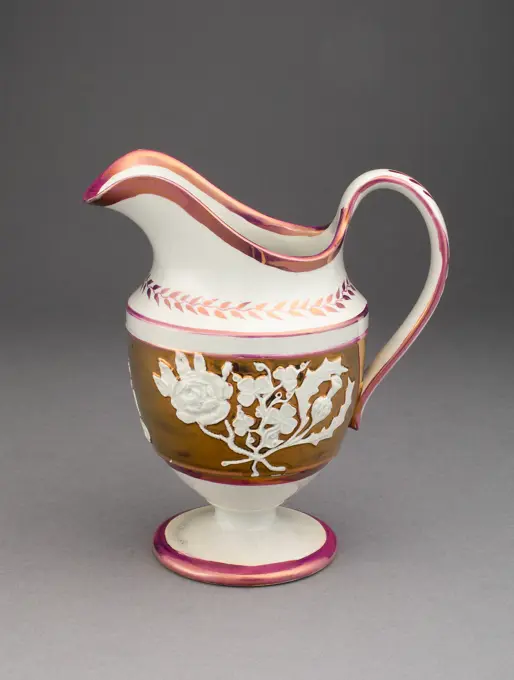
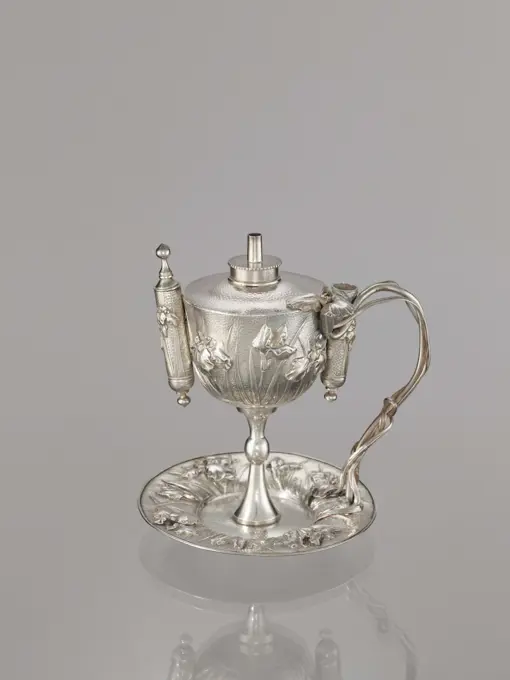
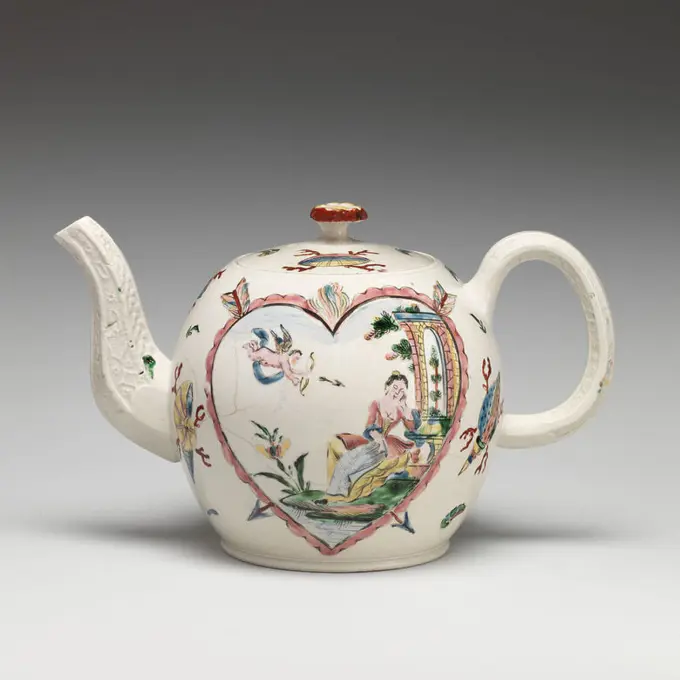
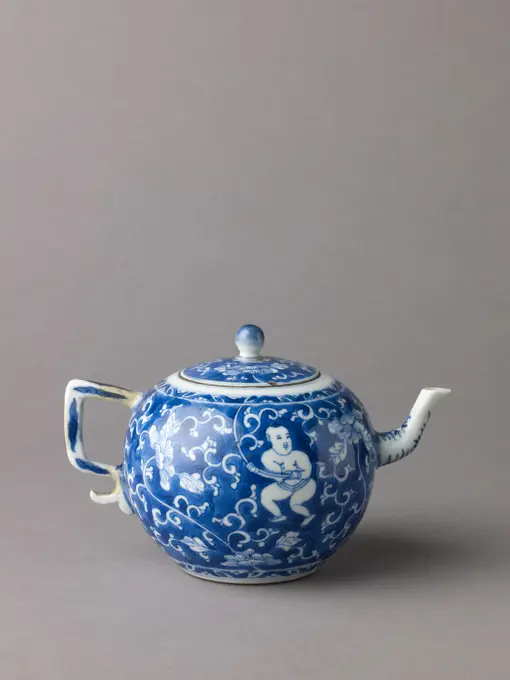
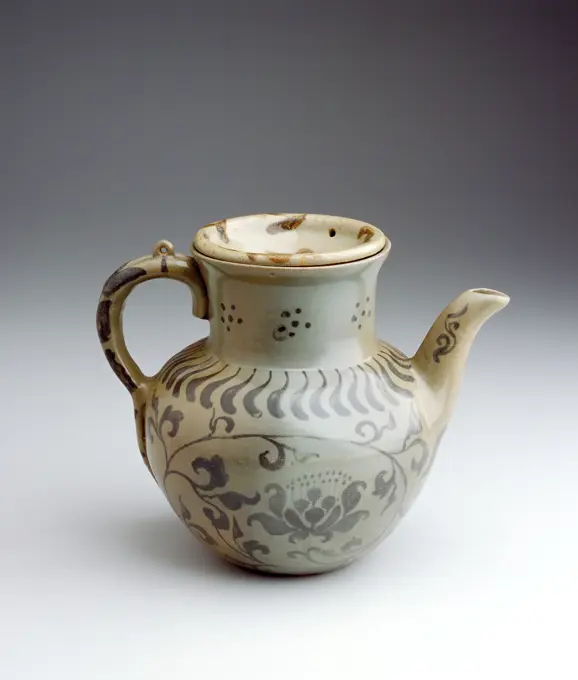
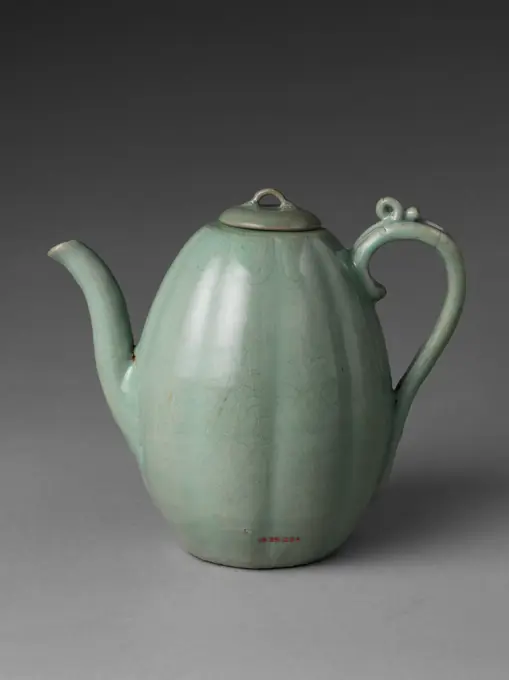
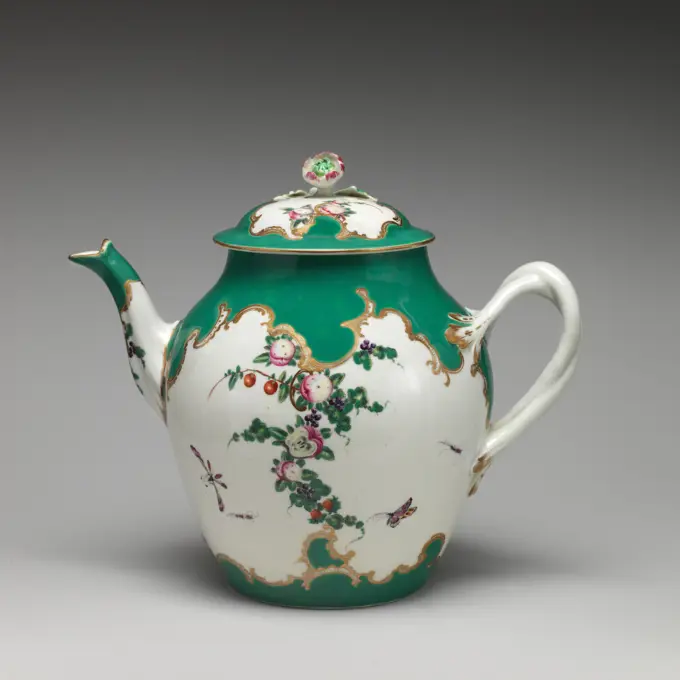
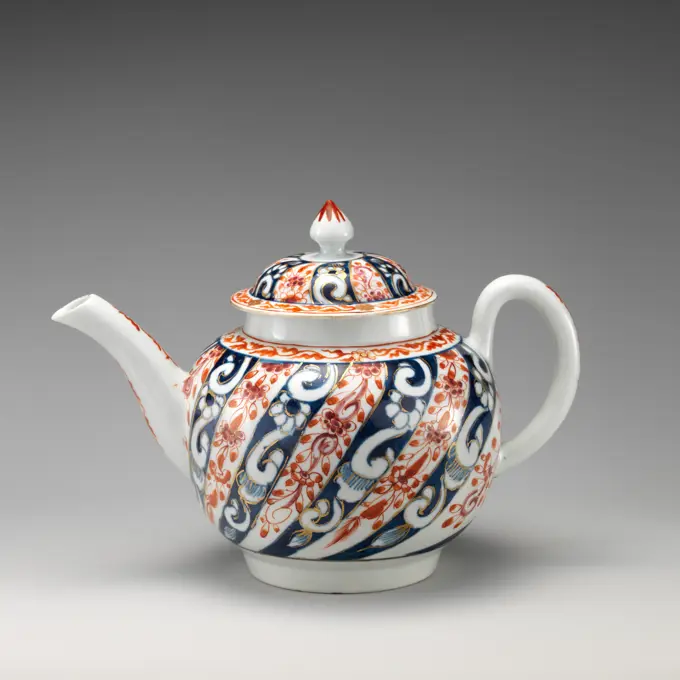
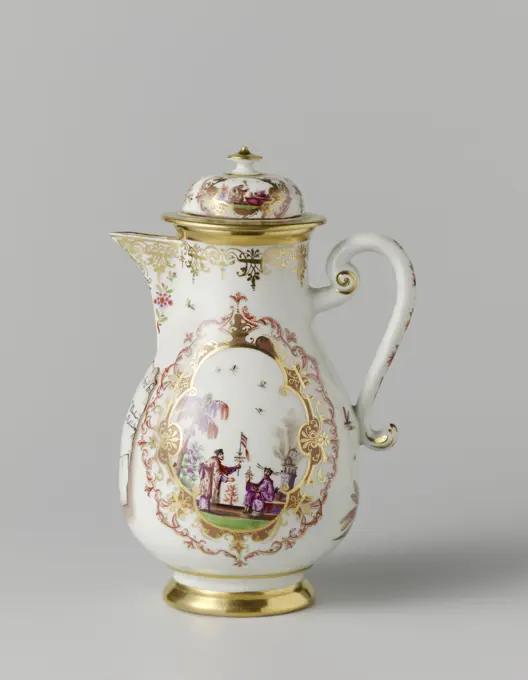
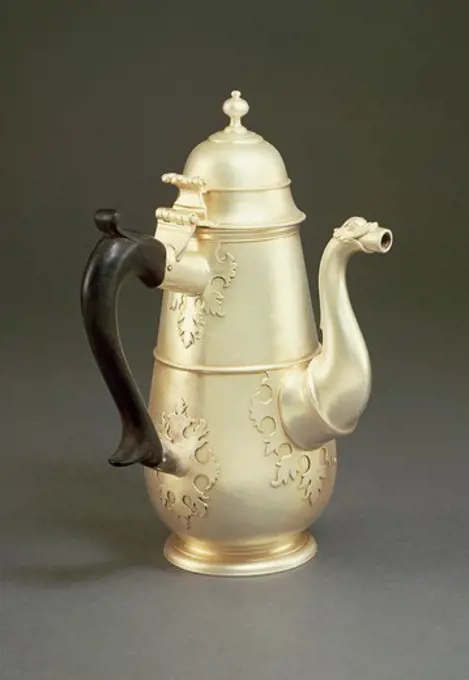
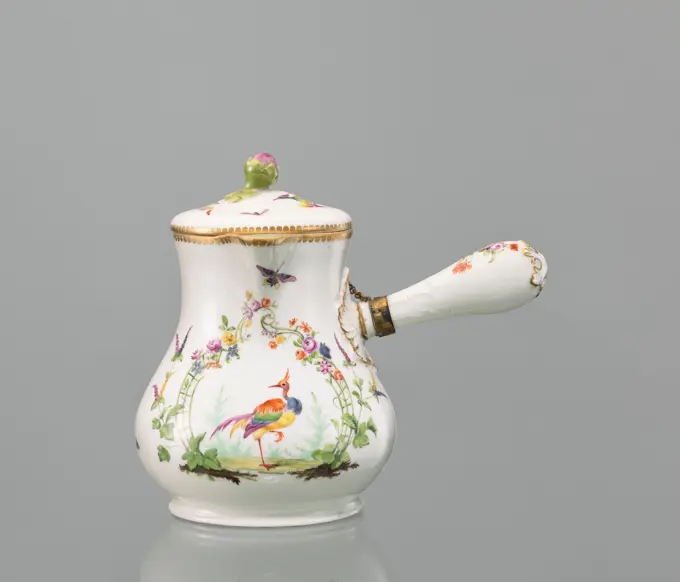
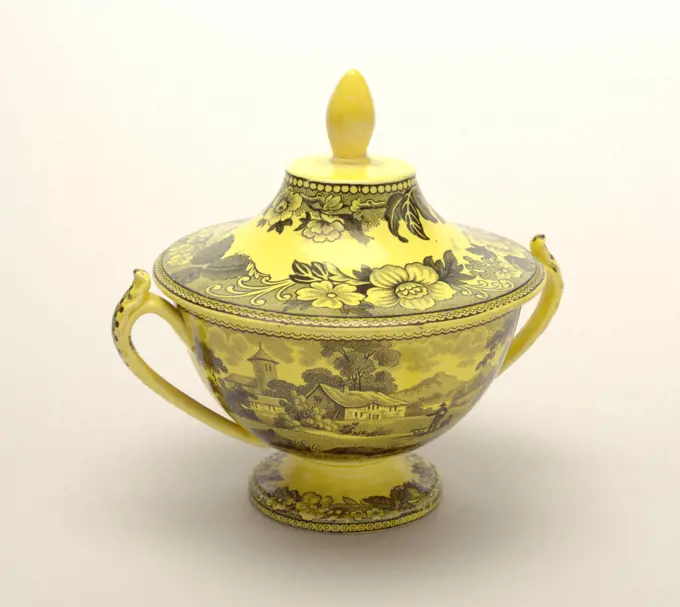
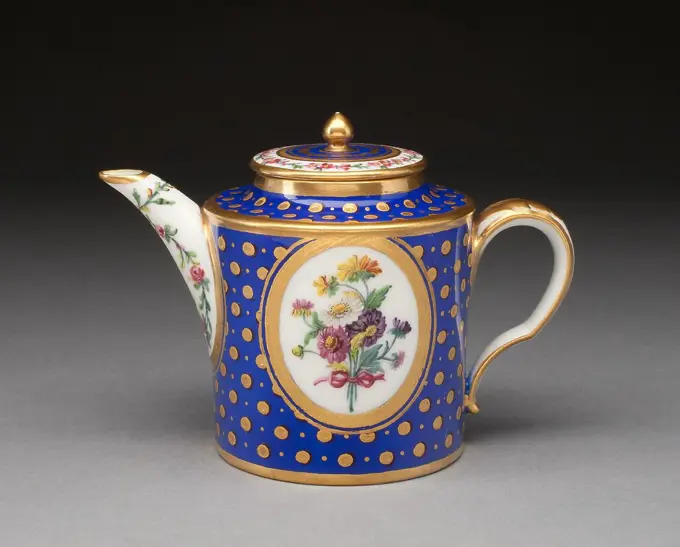
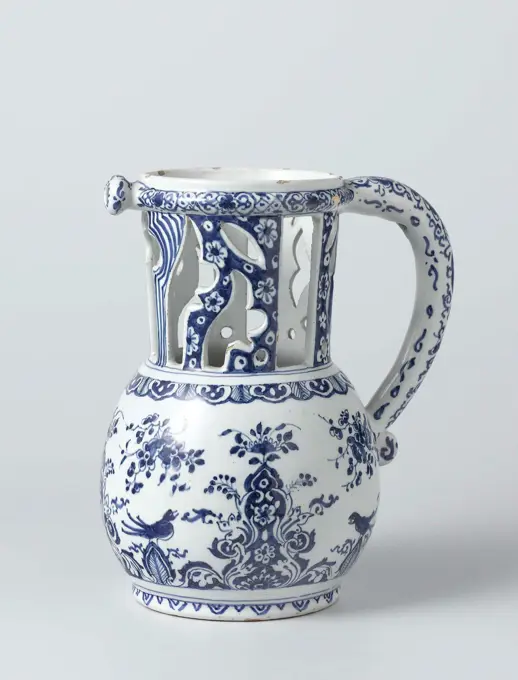
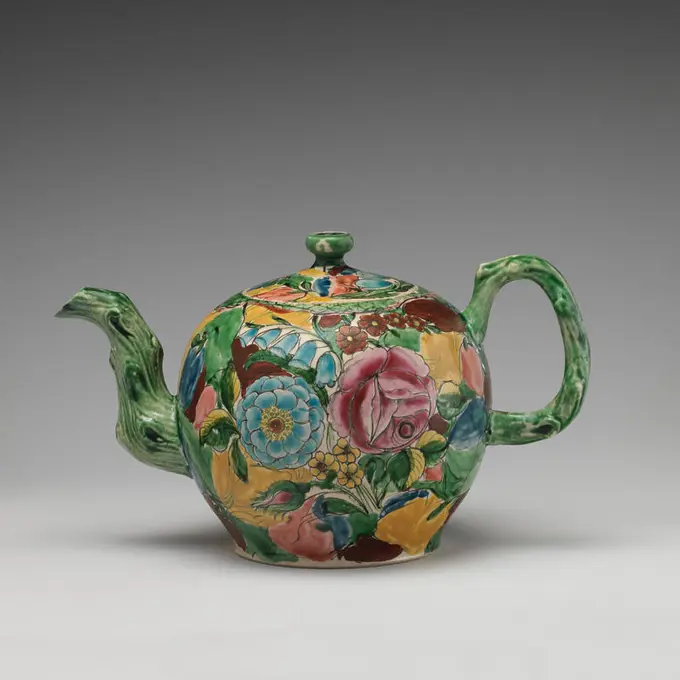
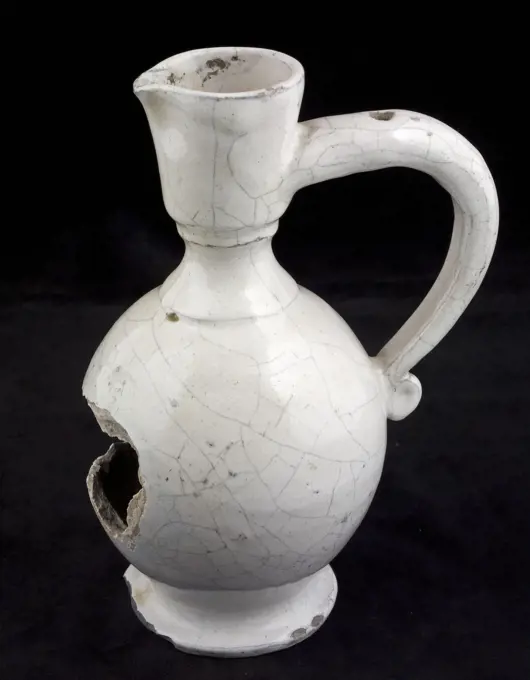
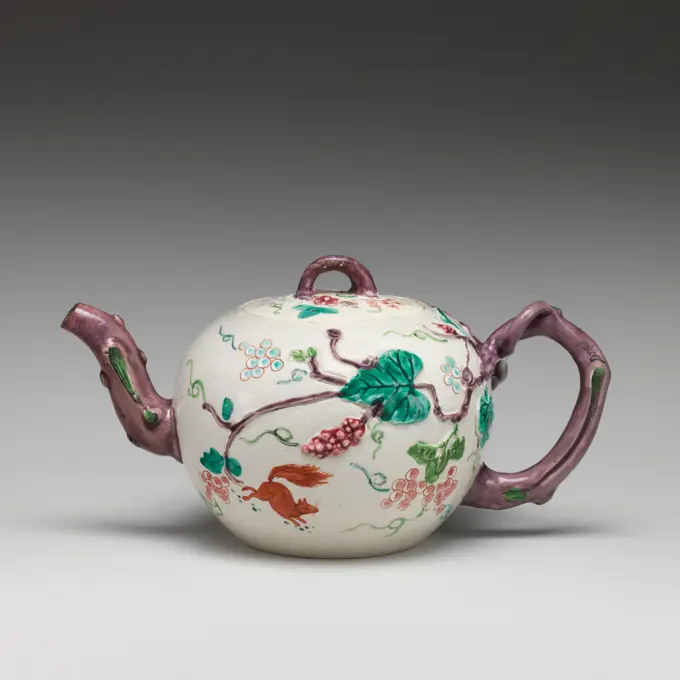
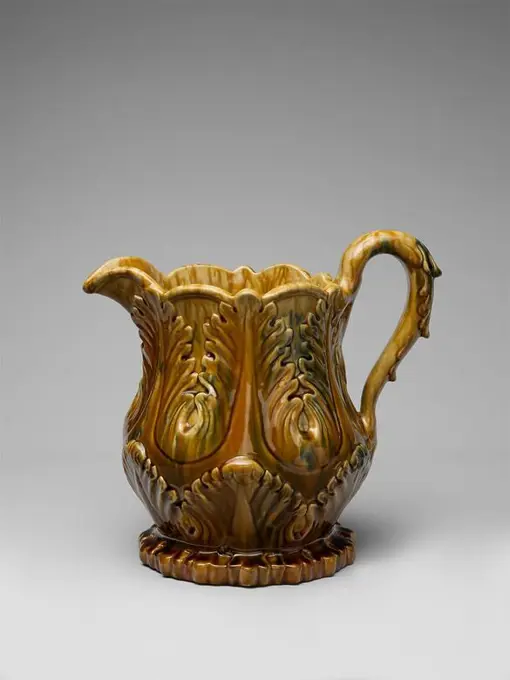
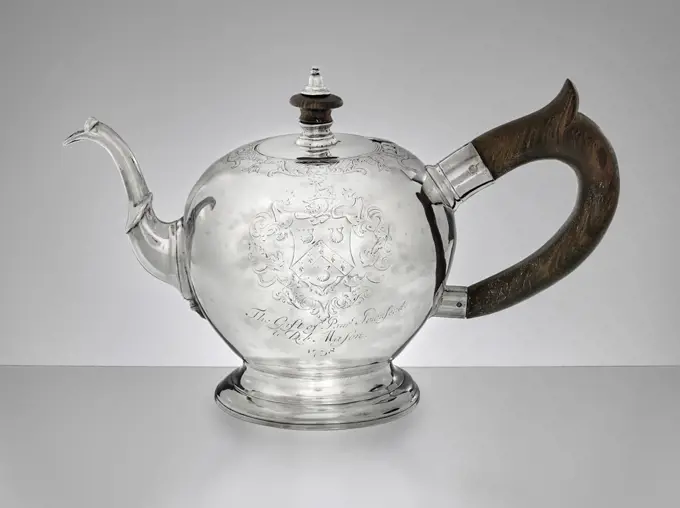
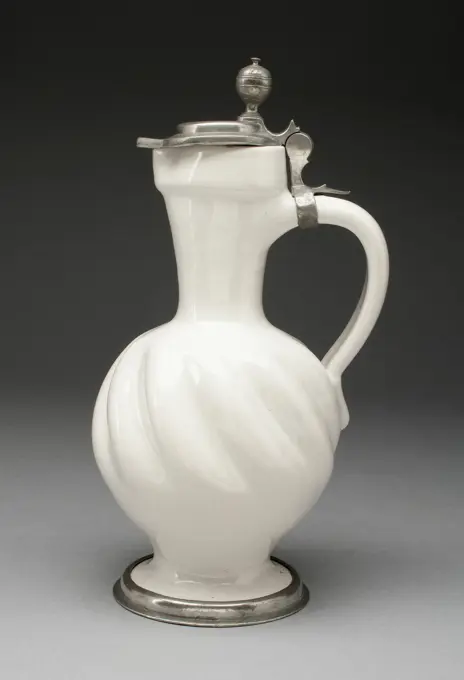
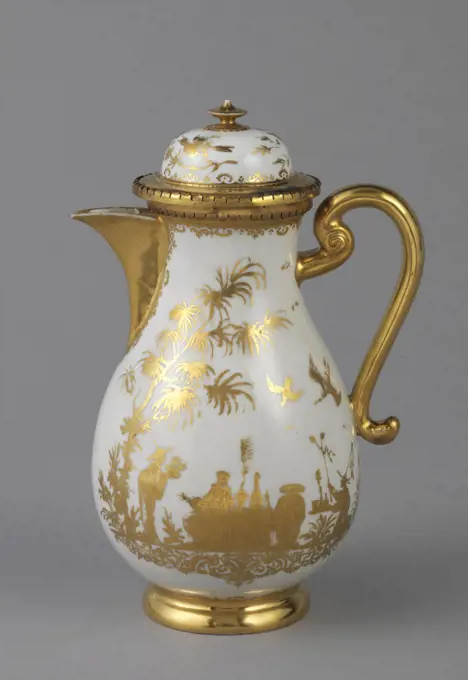
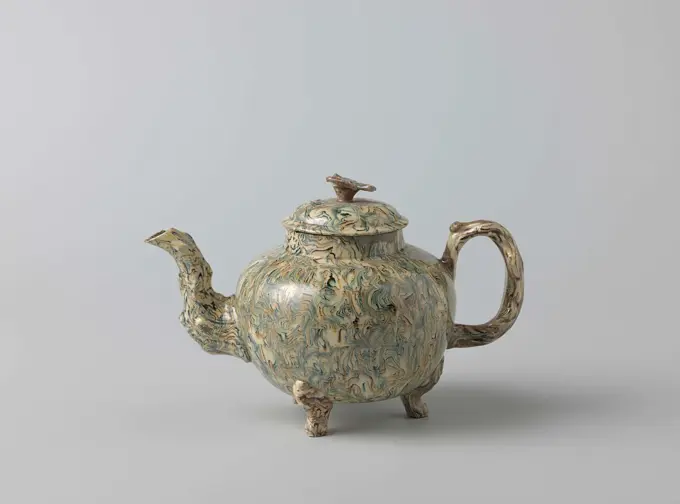
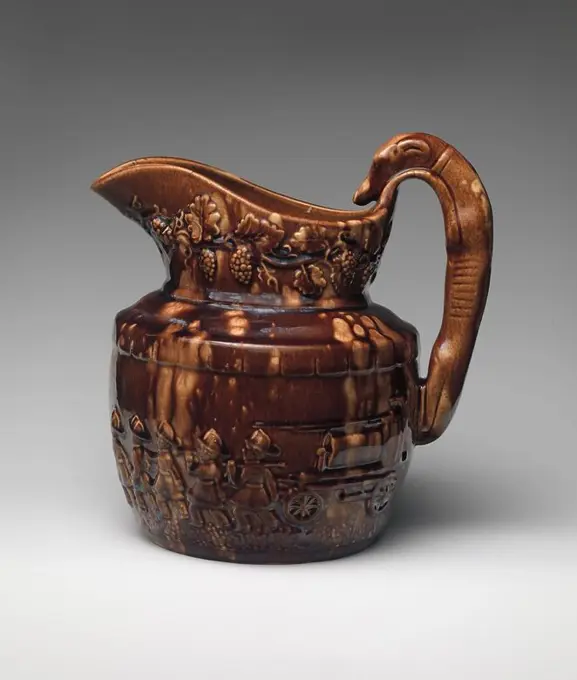
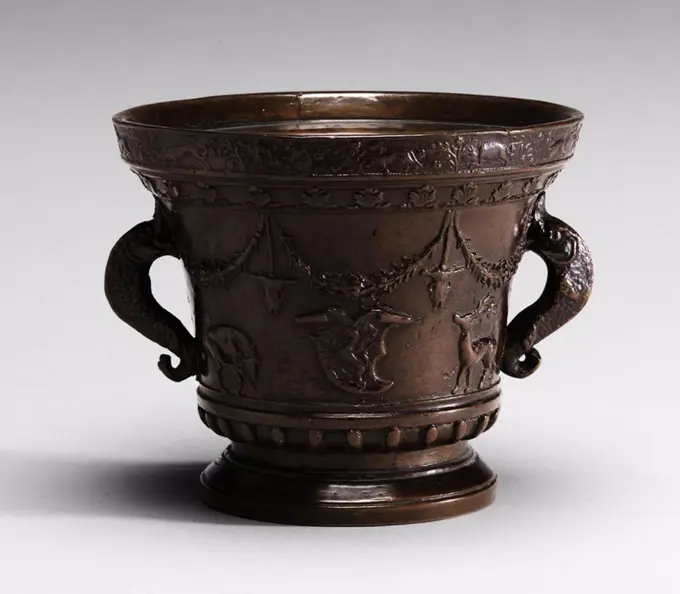
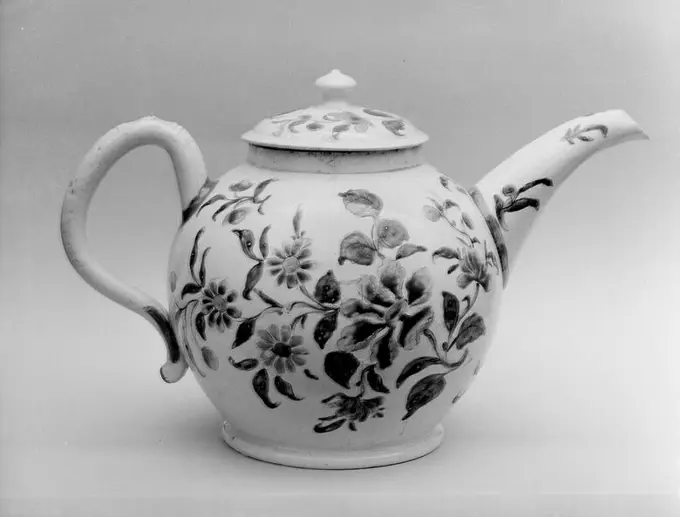
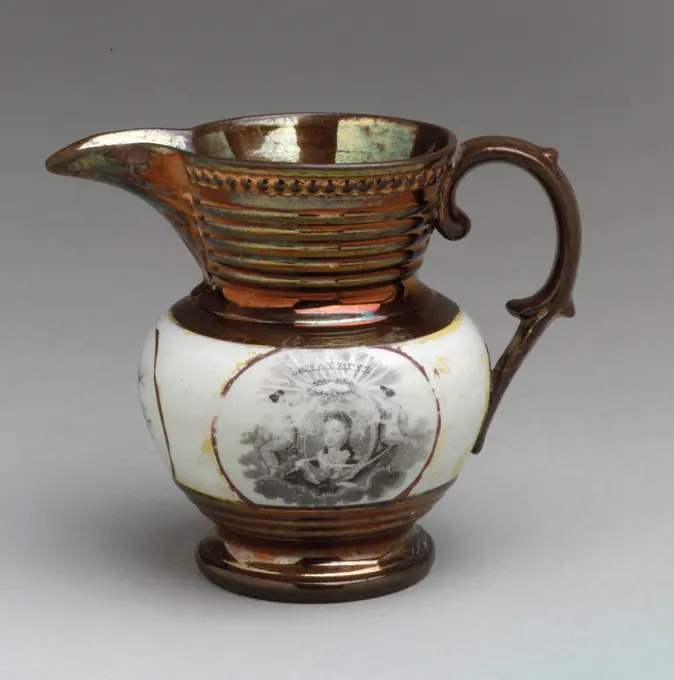
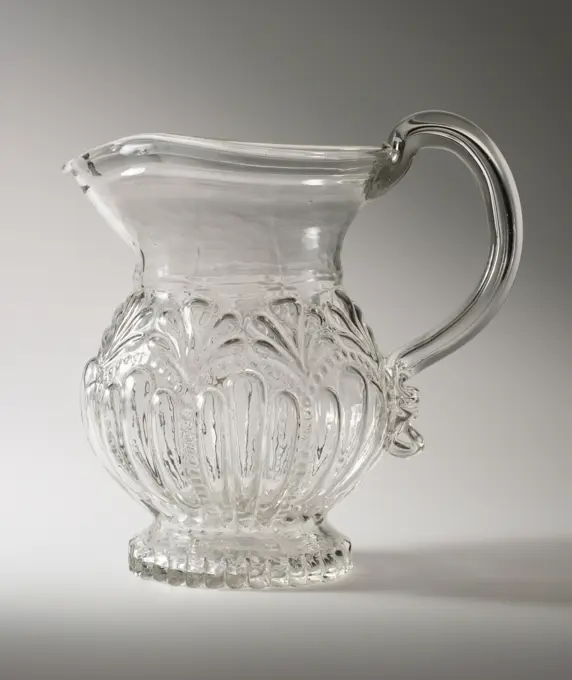
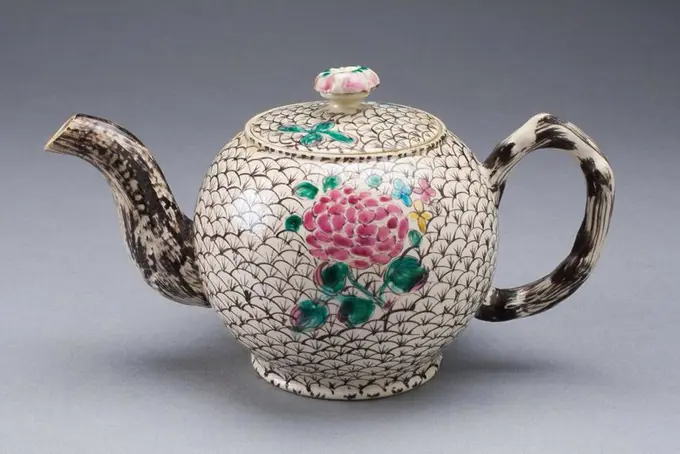
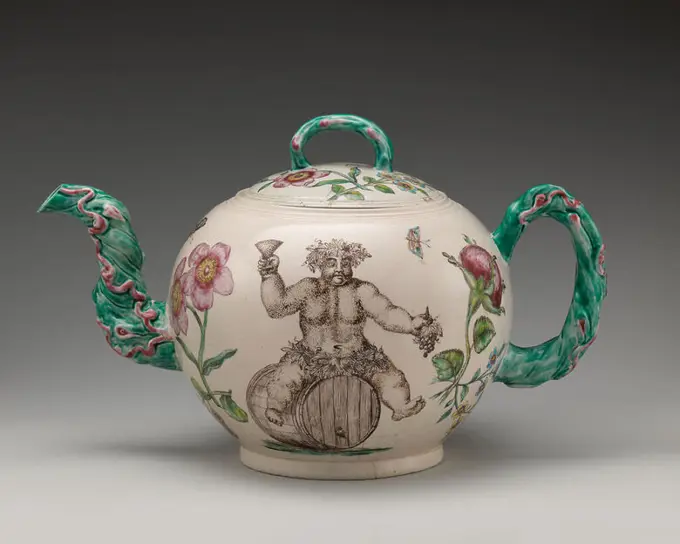
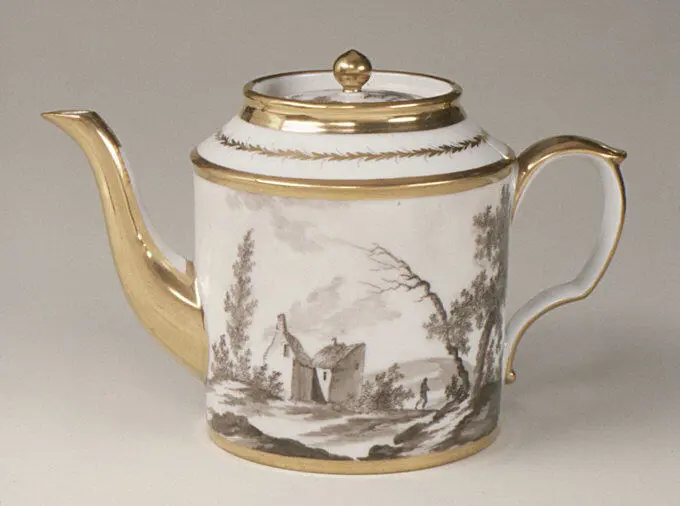
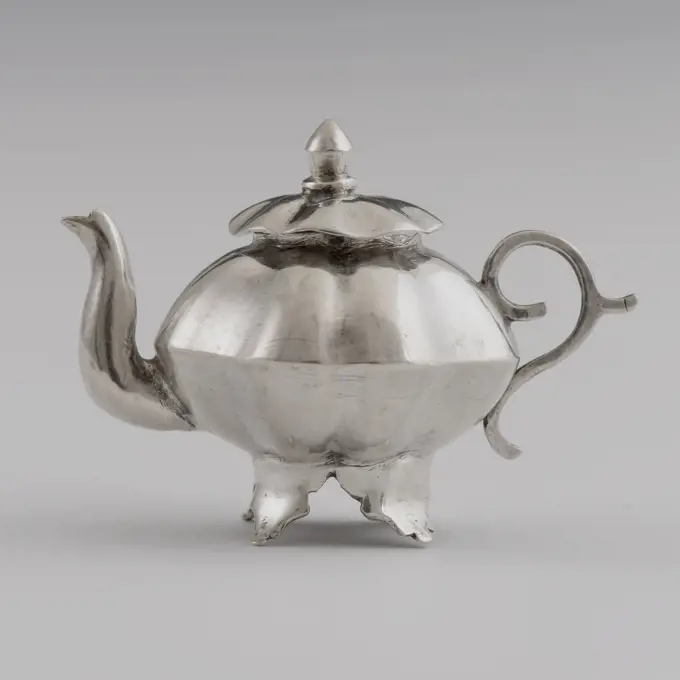
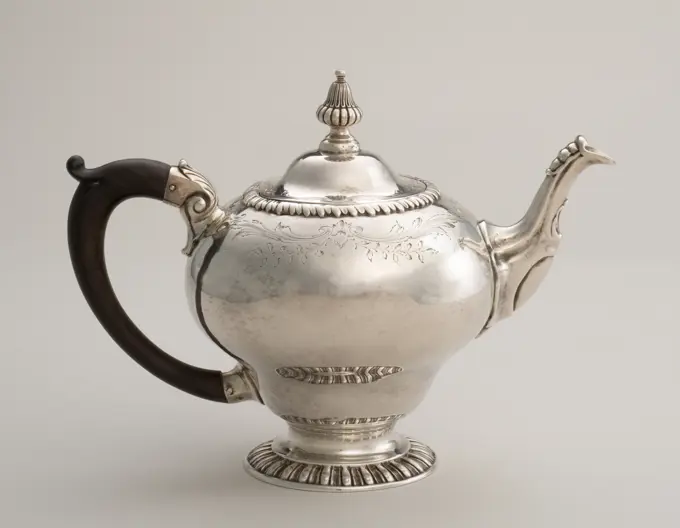
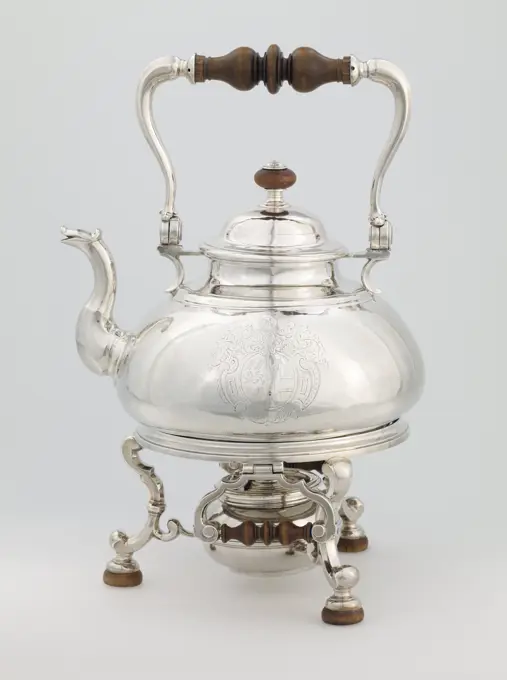
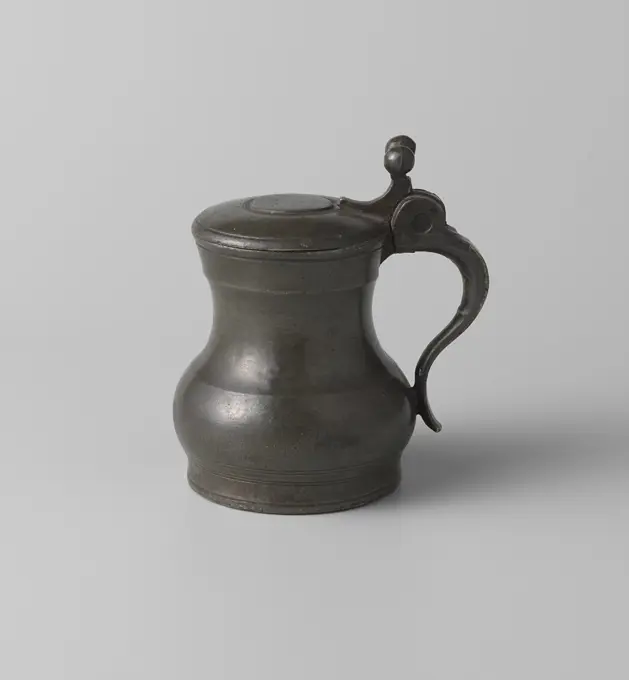
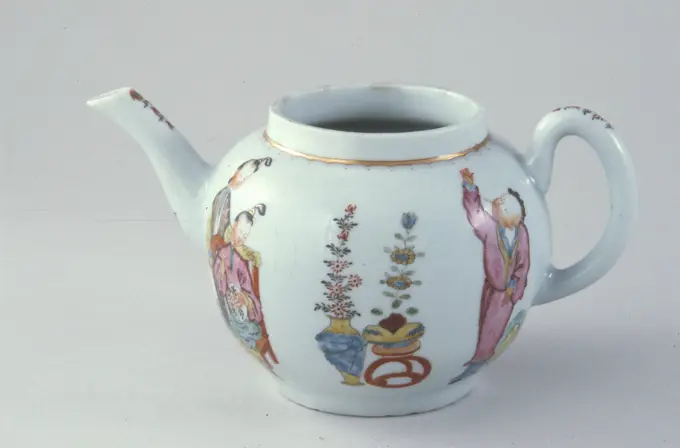
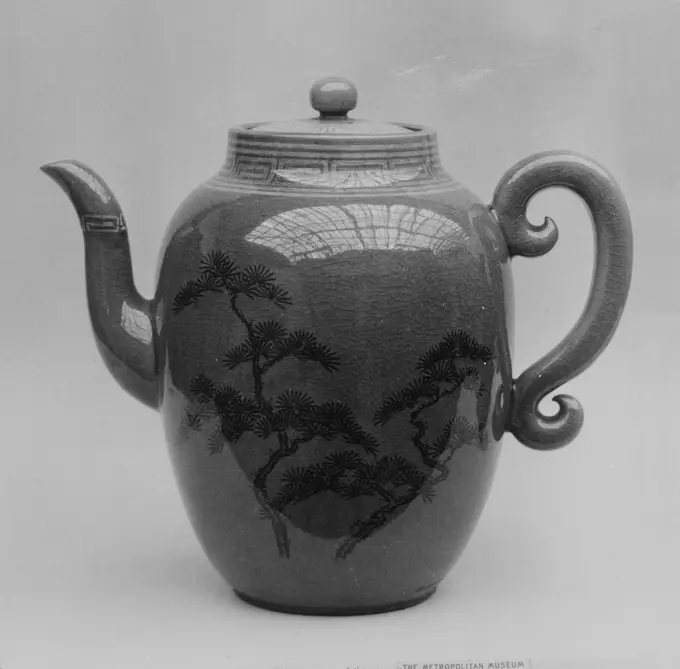
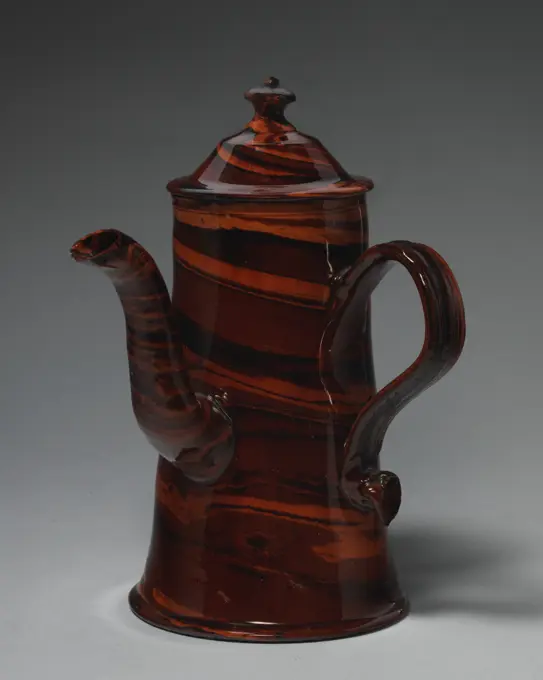
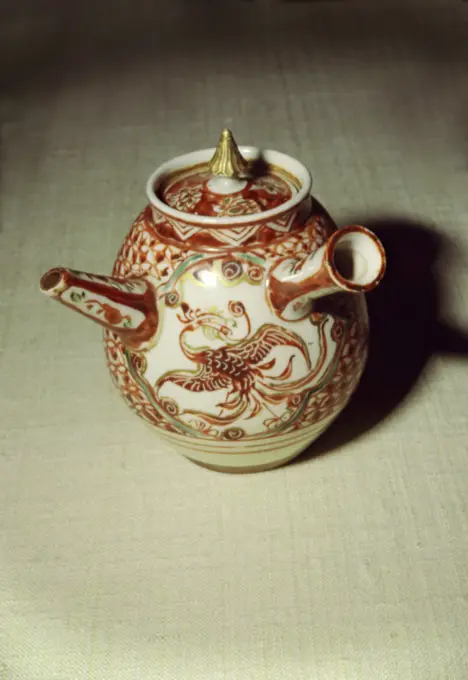
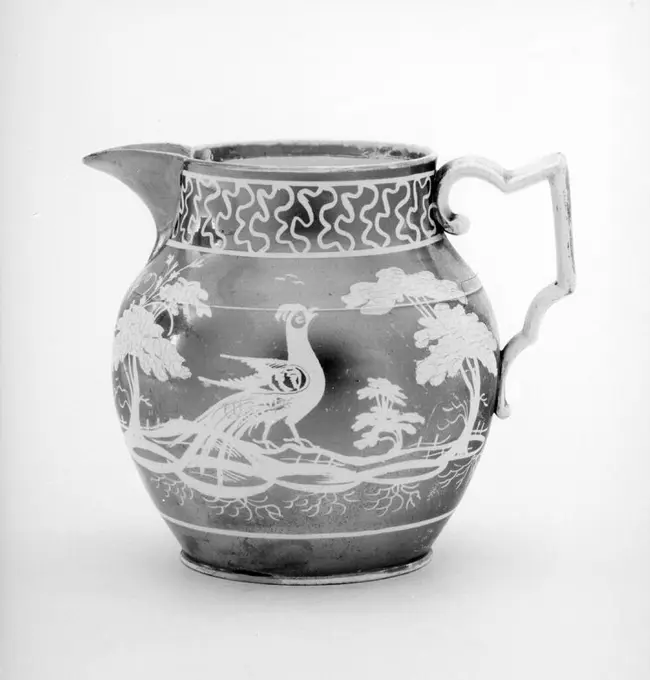
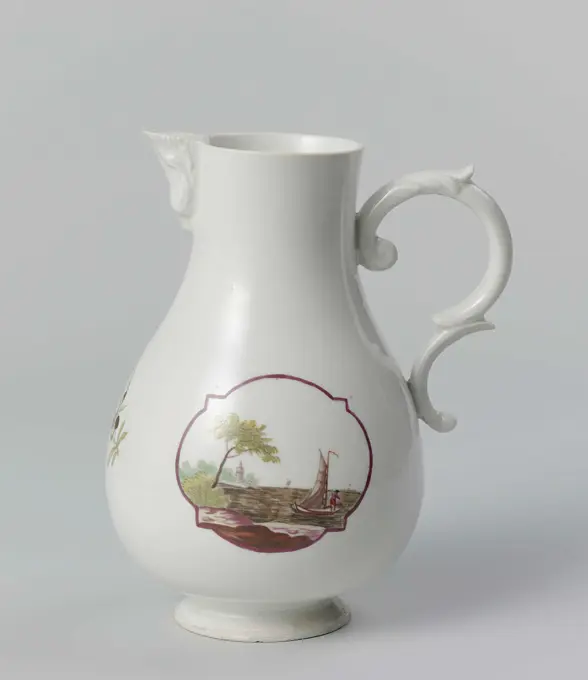
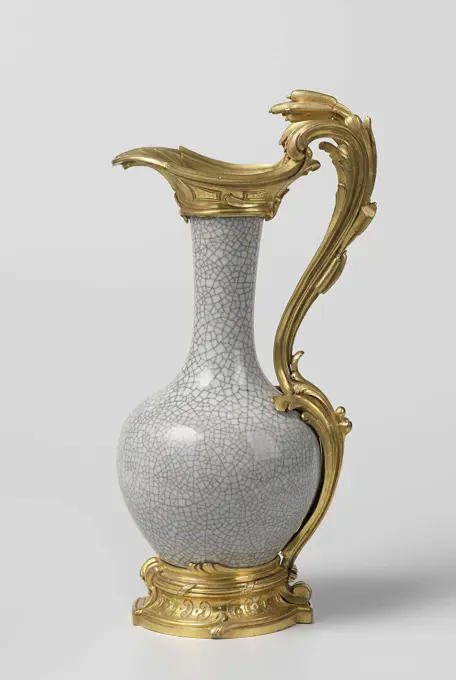
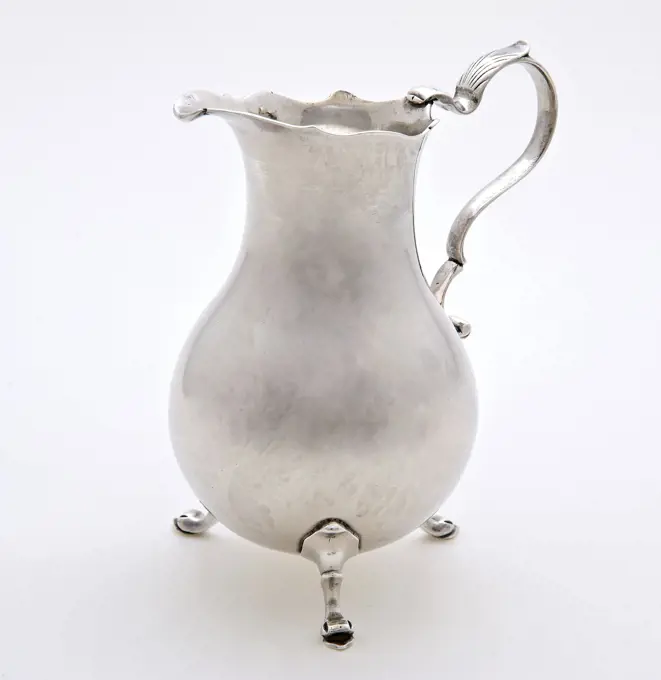
Teapot. Werner, Teodor August (1836-1902), goldsmithEwer in the Form of a Melon with Bamboo Spout. Korea. Date: 1100-1199. Dimensions: H. 16.6 cm; diam. 26.6 cm(including spout); diam. 16.1 cm (without spout); Lid: H. 3.8 cm; diam. 6.4 cm. Celadon-glazed stoneware with underglaze molded decoration. Origin: Korea. Museum: The Chicago Art Institute, Chicago, USA.Teapot, c. 1830. Wedgwood Factory (British). Stoneware; overall: 11.8 cm (4 5/8 in.).Teapot of stoneware with salt glaze; Staffordshire .. teapot of stoneware with salt glaze. The teapot is octagonal and has on the eight sides relief decorations, consisting of trees, figures, animals and a weapon. The spout has a flower branch on both sides.Teapot belonging to a tea set of chromolith stoneware, decorated in blue and tan. Teapot, hexagonal belonging to a tea set from Chromolith Stoneware. Decoration in blue and tan. With a loose lid.Paul de Lamerie, Coffeepot, 1731/32, silver and wood.Tea-pot. Porcelain with "green family" enamels decor, Qing dynasty (1644-1912). Provenance: China. Paris, Cernuschi museum. 78836-3 Asian art, Chinese art, art of living, Ceramic Fine, Decor Emaille, Ching Dynasty, Qing dynasty, Tsing dynasty, porcelain, Emaillee porcelain, service to the, theiere, dishesTeapot with a lid. Koenigliche Porcellain Fabrique, Meissen (1710-1763), factoryTeapot, 1795. Firm of George Smith (British), firm of Thomas Hayter (British). Silver and ivory; overall: 16.5 x 27.7 x 10.7 cm (6 1/2 x 10 7/8 x 4 3/16 in.).Creamer with Symbols of England, Ireland, and Scotland 1825-1835 Staffordshire. Earthenware with copper lustre decoration .. Coffee pot, purple painted with winged putti floating on clouds. Along the edge a guilloches band with dependent flour glulands. Marked with a stork in blue under the glaze. N.B. German porcelain painted in The Hague.Jug. Egg-shaped jug of stoneware with a pewter lid and foot edge. The jug has a wide neck with a squeezed spout and a C-shaped ear. On the abdomen have been installed in relief weapons and other ornaments.Teapot, blue-white marbled, Jacobus de Caluwe (Possible), c. 1720 - c. 1780 Teapot of lead glaze pottery. The teapot is marbled blue and white. Delft earthenware. lead glaze Teapot of lead glaze pottery. The teapot is marbled blue and white. Delft earthenware. lead glazeTeapot ca. 1760 British (American market). Teapot. British (American market). ca. 1760. Stoneware. Made in Staffordshire, EnglandTable cigar lighter. Wakayama, Yoshikatsu, craftsmanTeapot. Culture: British, Staffordshire. Dimensions: Overall: 4 1/4 × 7 in. (10.8 × 17.8 cm). Date: ca. 1760. Museum: Metropolitan Museum of Art, New York, USA.Tankard.   Maker: Peter Van Dyck, American, 1684-1751Covered wine pot or teapot 1662-1722 Chinese. Covered wine pot or teapot. Chinese , Qing Dynasty, Kangxi period. Chinese. 1662-1722. Porcelain painted in underglaze blue.. CeramicsTeapot 1745-1755 Staffordshire. Salt-glazed stoneware .Teapot, belonging to a tea set (Déjeuner Bolvry), Manufacture de Sèvres, 1779 Spherical teapot made of multicolored painted porcelain, with a lid, a spout and a nodded C-shaped ear. The gilt button of the lid has the shape of a fruit on a branch. On the pot a soil is painted on which a tree and flowers, with birds in the tree, on the ground and in the air. The teapot is marked. Sèvres porcelain. silver (metal). gilding (material) Spherical teapot made of multicolored painted porcelain, with a lid, a spout and a nodded C-shaped ear. The gilt button of the lid has the shape of a fruit on a branch. On the pot a soil is painted on which a tree and flowers, with birds in the tree, on the ground and in the air. The teapot is marked. Sèvres porcelain. silver (metal). gilding (material)Ewer with floral design, 12th-13th century, Unknown Korean, 7 3/8 x 8 5/8 x 6 1/4 in. (18.73 x 21.91 x 15.88 cm), Porcelaneous stoneware with iron oxide designs under celadon glaze, Korea, 12th-13th century, Korean potters produced celadons with underglaze iron-brown designs as early as the eleventh century. The majority of these pieces seem to have been created at local kilns which were not capable of producing the reduction (oxygen-free) atmosphere necessary to achieve celadon blue-green hues. Nevertheless, the elegant shapes and vigorous designs of Koryo iron painted wares are greatly admired.Lid, brown with light spots. Cover of pottery with brown lust grab. Light spots on the lid.Cover of ewer with the 'three friends of winter', anonymous, c. 1700 - c. 1724 Porcelain lid, painted on the glaze in blue, red, green, yellow and black. On the lid a pine and a bird. Decorated in Europe in the Japanese Kakiemon style. Chinapainter: Europe porcelain. glaze. gold (metal) painting / gilding / vitrification Porcelain lid, painted on the glaze in blue, red, green, yellow and black. On the lid a pine and a bird. Decorated in Europe in the Japanese Kakiemon style. Chinapainter: Europe porcelain. glaze. gold (metal) painting / gilding / vitrification. Salt-glazed stoneware, polychrome enamels .Teapot 1871-92 Ott and Brewer. Teapot. American. 1871-92. Earthenware. Made in Trenton, New Jersey, United StatesWine Ewer with Lotuses 12th century Korea Ceramics with green glazes were the only high-fired wares produced in Korea during the Goryeo dynasty. The tradition of such high-fired green-glazed wares was first introduced from China around the tenth century. However, by the middle of the twelfth, Korean potters had developed distinctive traditions with shapes and designs that reflect native taste. These Korean wares were extolled in contemporaneous Chinese writings as having the radiance of jade and the clarity of water.. Wine Ewer with Lotuses. Korea. 12th century. Stoneware with incised decoration under celadon glaze. Goryeo dynasty (918-1392). CeramicsTeapot (part of a service) ca. 1770 Worcester factory Listen to experts illuminate this artwork's story Listen Play or pause #407. Teapots Supported by Bloomberg Philanthropies We're sorry, the transcript for this audio track is not available at this time. We are working to make it available as soon as possible.. Teapot (part of a service). British, Worcester. ca. 1770. Soft-paste porcelain with enamel decoration and gilding. Worcester factory (British, 1751-2008). Ceramics-PorcelainTeapot ca. 1770-80 Worcester factory Listen to experts illuminate this artwork's story Listen Play or pause #407. Teapots Supported by Bloomberg Philanthropies We're sorry, the transcript for this audio track is not available at this time. We are working to make it available as soon as possible.. Teapot. British, Worcester. ca. 1770-80. Soft-paste porcelain with enamel decoration and gilding. Worcester factory (British, 1751-2008). Ceramics-PorcelainTEAPOT, the Greek A, c. 1705 - c. 1720 Trekpot from Faïence. Multicolored painted with leaf and flower decorations. Delft metal Trekpot from Faïence. Multicolored painted with leaf and flower decorations. Delft metalCoffee pot, multicolored painted with chinoiseries and a trumpet l'Ouil, Meissener Porzellan Manufaktur, 1729 Coffee pan of painted porcelain. The ear is C-shaped and the foot, mouth and spout edge are gilded. The jug is on both sides on body. Indianic blumes are painted between the four -passes of the lid and on the ear and the spout. Under the spout is a letter fragment and trompe l'Ouil with the text: "Votre Très Hu Mble Johann Martin Bottfridm ... Nebst 1. Balln mit dem Sigl: CZ Zur fracht ... 6 FEV". The jug is not marked. Float porcelain Coffee pan of painted porcelain. The ear is C-shaped and the foot, mouth and spout edge are gilded. The jug is on both sides on body. Indianic blumes are painted between the four -passes of the lid and on the ear and the spout. Under the spout is a letter fragment and trompe l'Ouil with the text: "Votre Très Hu Mble Johann Martin Bottfridm ... Nebst 1. Balln mit dem Sigl: CZ Zur fracht ... 6 FEV". The jug is not marked. Float porcelainMilk jug, Weesper porseleinfabriek, c. 1759 - c. 1771Pitcher ca. 1832 Tucker and Hemphill. Pitcher 5850Mustard Pot 1757 Sèvres. Soft-paste porcelain, underglaze blue ground, polychrome enamels, and gilding . Manufacture nationale de Sèvres (Manufacturer)Silversmith's Art, England 18th century. Silver coffeepot with ebony handle. London.Lid jug; Koenigliche Porcellain Fabrique, Meissen (1710-1763); after. XVIII (1745-00-00-1755-00-00);Souvenir of Józef Czapski  Jug Chodzież, Porcelite factoryPitcher British 19th centuryTeapot 1765-1775 Worcester. Soft-paste porcelain with turquoise ground and gildingBowl with cover, Glazed earthenare, transfer printed decoration, Pedestal bowl with two strap handles; shallow, bell-shaped lid with ovoid finial; circular under-plate; all having yellow ground with black transfer decoration, bowl showing house in landscape; floral decoration on foot and lid., France, 18th-mid-19th century, ceramics, Decorative Arts, Bowl with coverMilk jug. Malcz, Karol (1797-1867), goldsmithTeapot with powder blue and pearl chasing dragons in gold, anonymous, c. 1700 Teapot of porcelain with a curved spout and high upright handle, covered with underly glaze blue and on the biscuit green and black and on the glaze gold. On the wall twice a pearl -chasing dragon between flames. On the shoulder a tire with dots and one with servetwork interrupted by a cartouche with a flower. The handle with geometric motifs. Bleu Poudré with email sur biscuit. China porcelain. glaze. gold (metal) painting / gilding / vitrification Teapot of porcelain with a curved spout and high upright handle, covered with underly glaze blue and on the biscuit green and black and on the glaze gold. On the wall twice a pearl -chasing dragon between flames. On the shoulder a tire with dots and one with servetwork interrupted by a cartouche with a flower. The handle with geometric motifs. Bleu Poudré with email sur biscuit. China porcelain. glaze. gold (metal) painting / gilding / vitrificationTeapot. Sèvres Porcelain Manufactory; French, founded 1740; Painting attributed by Buteux (French, 18th century). Date: 1788. Dimensions: 10.2 x 14 x 7.6 cm (4 x 5 1/2 x 3 in.). Soft-paste porcelain with polychrome enamels and gilding. Origin: Sèvres. Museum: The Chicago Art Institute, USA. Author: Manufacture nationale de Sevres.Teapot with portraits of William V and Wilhelmina of Prussia.Tablespoon.   Maker: C. S., 1780-1800. Fopkan of faience. Blue painted with floral decorations.Teapot. Koenigliche Porcellain Fabrique, Meissen (1710-1763), factoryTeapot with stylized lotus scrolls, ruyi-motif and ornamental borders, anonymous, c. 1700 - c. 1724 Lid of teapot made of soft-paste porcelain (pâte tendre), painted in underly glaze blue. The lid with a meander and spiral band. Lid is not matching. Blue White. China porcelain. soft-paste porcelain. glaze. cobalt (mineral) painting / vitrification Lid of teapot made of soft-paste porcelain (pâte tendre), painted in underly glaze blue. The lid with a meander and spiral band. Lid is not matching. Blue White. China porcelain. soft-paste porcelain. glaze. cobalt (mineral) painting / vitrificationTeapot ca. 1760 British, Staffordshire Listen to experts illuminate this artwork's story Listen Play or pause #407. Teapots Supported by Bloomberg Philanthropies We're sorry, the transcript for this audio track is not available at this time. We are working to make it available as soon as possible.. Teapot. British, Staffordshire. ca. 1760. Salt-glazed stoneware with enamel decoration. Ceramics-PotteryTeapot. Culture: British, Staffordshire. Dimensions: Overall: 4 1/4 × 7 1/4 in. (10.8 × 18.4 cm). Date: ca. 1760. Museum: Metropolitan Museum of Art, New York, USA.Pottery jug on stand foot, white glazed, ball model, neck with cuff and pouring clip, jug crockery holder soil find ceramic earthenware glaze tin glaze, hand-turned baked glazed baked Pottery jug on stand foot. Round belly. Profile rings around the shoulder on the transition from the belly to the neck. Neck with cuff and shawl Graceful sausage thinning with hole at the top for the attachment of tin lid. Stand with soul likewise glazed Whole white glazed coarse craquelé in glaze layer Delftware archeology Rotterdam serve serving table drink Soil discovery Rotterdam 1940.Teapot ca. 1760 British, Staffordshire Listen to experts illuminate this artwork's story Listen Play or pause #407. Teapots Supported by Bloomberg Philanthropies We're sorry, the transcript for this audio track is not available at this time. We are working to make it available as soon as possible.. Teapot. British, Staffordshire. ca. 1760. Salt-glazed stoneware with enamel decoration. Ceramics-PotteryJug 1715-1725 Hanau. Tin-glazed earthenware (faience) and pewter .Mustard Pot and Beer Jug, anonymous, c. 1690 - c. 1730 Porcelain beer with a C-shaped ear, painted in underlaze blue and on the glaze red and gold. The body of the KAN is covered with raised blue dots with a worn gold decoration on a few dots. A decorative band around the foot and shoulder. On either side of the ear and on the ear flower vines in red and gold. The lid of gilded copper has an engraved flower. The form is following German stoneware. European forms. Japan porcelain. glaze. cobalt (mineral). gold (metal) painting / gilding / vitrification Porcelain beer with a C-shaped ear, painted in underlaze blue and on the glaze red and gold. The body of the KAN is covered with raised blue dots with a worn gold decoration on a few dots. A decorative band around the foot and shoulder. On either side of the ear and on the ear flower vines in red and gold. The lid of gilded copper has an engraved flower. The form is following German stoneware. European forms. Japan porcelain. glaze. cobalMelkus lid, painted with flower branches. Porcelain lid. Lid decorated with ribs in relief in two. Painted in underglazing blue with flower branches, depending on the lid from a painted seediller land. A rosette on the ribbed button.Pear-shaped ewer with a scholar and attendant in a fenced garden, floral scrolls and tulip motif, anonymous, c. 1635 - c. 1650 Porcelain pour, with pear-shaped abdomen, C-shaped ear and s-shaped spout connected to the body. Painted in underlaze blue. On the belly a continuous representation of a scholar sitting against a rock in a fenced garden in bamboo and plants; He looks at a servant with an object in his hands for a pavilion. On the shoulder a band with flower vines; The neck with tulip motifs. Around the foot a band with hanging leaf motifs. On the ear and spout flower branches. A chip in the ear and the spout. Transition porcelain with European forms. China porcelain. glaze. cobalt (mineral) painting / vitrification Porcelain pour, with pear-shaped abdomen, C-shaped ear and s-shaped spout connected to the body. Painted in underlaze blue. On the belly a continuous representation of a scholar sitting against a rock in a fenced garden in bamboo and plants; He looks at a servant witThis teapot with begonias combines underglaze blue with subtle use of yellow and white enamels. Teapot with Begonias, 1897-1914. Seifū Yohei III (Japanese, 1851-1914). Porcelain with underglaze and overglaze colors; diameter: 9 cm (3 9/16 in.); width with handle: 10.5 cm (4 1/8 in.).Pitcher. Culture: American. Dimensions: H. 11 3/4 in. (29.8 cm). Manufacturer: Probably Woodward and Blakely Company (1848-57). Date: 1848-57. Museum: Metropolitan Museum of Art, New York, USA.. Can of faience with lid of silverMaker: C. S., 1780-1800, Tablespoon, ca.1790-1800, Silver, 8 1/8 in. (20.6cm), Made in United States, American, 18thcentury, FlatwareJug Made 1695-1710 Hanau. Tin-glazed earthenware (faience) and pewter .Coffeepot with 'Hausmaler' Decor, Meissen Porcelain Manufactory, German, active from 1710 to the present, hard paste porcelain, gold, Pear-shaped, on rounded flaring circular foot, scrolled handle, simple triangular spout, domed cover with round finial. Solid gilding on foot, handle, spout, edge of mouth and cover, and finial. Engraved gilt chinoiserie decoration of figures, birds and trees, with scrollwork. Cover attached with siver-gilt mounting., Germany, 1725-1735, ceramics, Decorative Arts, coffeepot, coffeepotTeapot of hard-baked pottery; Whellow Ware, Agate Ware ("Kievit"). Bulb-shaped teapot of hard-baked pottery. The teapot has an S-shaped spout, a C-shaped ear. The pot stands on three out bent legs. The teapot has a marbled appearance.Pitcher 1700-1800 American. Pitcher 5685Pitcher. Culture: American. Dimensions: H. 9 1/2 in. (24.1 cm). Maker: Probably Congress Pottery (1848-1854). Date: 1849-54. Museum: Metropolitan Museum of Art, New York, USA.Teapot with powder blue and pearl chasing dragons in gold, anonymous, c. 1700 Teapot of porcelain with a curved spout and high upright handle, covered with underly glaze blue and on the biscuit green and black and on the glaze gold. On the wall twice a pearl -chasing dragon between flames. On the shoulder a tire with dots and one with servetwork interrupted by a cartouche with a flower. The handle with geometric motifs. Bleu Poudré with email sur biscuit. China porcelain. glaze. gold (metal) painting / gilding / vitrification Teapot of porcelain with a curved spout and high upright handle, covered with underly glaze blue and on the biscuit green and black and on the glaze gold. On the wall twice a pearl -chasing dragon between flames. On the shoulder a tire with dots and one with servetwork interrupted by a cartouche with a flower. The handle with geometric motifs. Bleu Poudré with email sur biscuit. China porcelain. glaze. gold (metal) painting / gilding / vitrificationLid belonging to conically ribbed and multicolored painted coffee pot, the metal pot, c. 1695 - c. 1715 Lid belonging to conically ribbed and multicolored painted coffee pot. Delft . Lid belonging to conically ribbed and multicolored painted coffee pot. Delft .Pitcher, glass, Clear glass pitcher, 19th century, glasswares, Decorative Arts, PitcherMortar with Shields of Badoer Arms. Dated: 16th century. Dimensions: overall: 13.4 x 16.8 cm (5 1/4 x 6 5/8 in.). Medium: bronze//Medium brown bronze. Museum: National Gallery of Art, Washington DC. Author: Probably Venetian 16th Century.Milk jug with cover ca. 1760-80 Chinese, for European market. Milk jug with cover 201054Punch Pot. Culture: British (American market). Dimensions: 8 1/4 x 12 3/4 in. (21 x 32.4 cm). Date: ca. 1760. Museum: Metropolitan Museum of Art, New York, USA.Pitcher British 19th centuryprobably Boston and Sandwich Glass Works, Pitcher, c. 1826-40, colorless lead glass.Teapot. Staffordshire, England. Date: 1755-1765. Dimensions: 9.2 x 15.9 x 7.8 cm (3 5/8 x 6 1/4 x 3 1/16 in.). Salt-glazed stoneware, polychrome enamels. Origin: Staffordshire. Museum: The Chicago Art Institute, Chicago, USA.Can of faience with the weapon of Delft, Anonymous, c. 1640 - c. 1680 Can from Faience. Blue painted with the Wapen van Delft. Delft . Can from Faience. Blue painted with the Wapen van Delft. Delft .Pitcher.   Maker: Roswell Gleason, American, 1799-1887Teapot: Yixing ware, 1644-1911. China, Qing dynasty (1644-1911). Stoneware; diameter: 12.8 cm (5 1/16 in.); overall: 8.6 cm (3 3/8 in.).Punch pot. Culture: British, Staffordshire. Dimensions: Height: 8 in. (20.3 cm). Date: ca. 1760-65. Museum: Metropolitan Museum of Art, New York, USA.Teapot (part of a tea set) ca. 1805 French, Paris. Teapot (part of a tea set) 188706 French, Paris, Teapot (part of a tea set), ca. 1805, Hard-paste porcelain, Height: 5 3/4 in. (14.6 cm). The Metropolitan Museum of Art, New York. Gift of Alfred Duane Pell, 1902 (02.6.194a, b)Jug;  End of the 19th century (1885-00-00-1890-00-00);Silver miniature teapot, teapot crockery holder dolls toy relaxing medium miniature model silver, struck Lobed body and lid volute shaped handle four in points fluttering feet pouring play adorn serving tea drinking drink tea making house interior dollhouse Bishop RotterdamThomas Whipham II and Charles Wright, Teapot, 1759/60, silver and wood.Communion jug and two cups, anonymous, c. 1630 Supperkan van Tin. The unadorned belly of the KAN gradually passes into the cylindrical neck and is only separated from this separate line, as well as the base, which is cast around the bottom like a cylindrical tire. Around the upper edge a profile that runs out wider. The faintly curved lid has a thumb piece and is attached to the rectangular curved handle by means of a bipping hinge. Northern Netherlands tin (metal) casting  Westerkerk Supperkan van Tin. The unadorned belly of the KAN gradually passes into the cylindrical neck and is only separated from this separate line, as well as the base, which is cast around the bottom like a cylindrical tire. Around the upper edge a profile that runs out wider. The faintly curved lid has a thumb piece and is attached to the rectangular curved handle by means of a bipping hinge. Northern Netherlands tin (metal) casting  WesterkerkPot-Pourri vase; Imperial Manufaktura Aleksandra II; 1855-1881 (1855-00-00-1881-00-00);Teapot Made 1740-1750 Staffordshire. Salt-glazed stoneware . Staffordshire PotteriesTea kettle with warming stand, 1714-1715, Edmund Pearce, English (London), English, active c. 1704-1722, H.20-3/4 x Dia.8-1/4 in. (overall), Silver, wood, England, 18th century, The task of heating water for brewing tea was considered anything but mundane in the early 18th century, as illustrated by the elaborate design of this kettle. From the proudly arched 'swan-neck' spout to the swelled form of the body, every element is as decorative as it is functional. The lathe-turned wooden handles and lid's finial protect the user's hand from heat; the feet protect the tabletop. Ornately scrolled feet of the spirit lamp stand elevate this kettle to a vessel as stylish as tea drinking itself.Drinking jar of tin. Drinking jar of tin. The underside of the belly is decorated with a double profiled tire. The transition from Bolle belly to the wide neck and from the neck to the lip edge are characterized by a slight angle. The jug is closed with a vaulted, profiled lid. The thumbs of thumb with two fucks is connected to the handle via a single-haired hinge, which curls outside.Milk Jug. Worcester Porcelain Factory; Worcester, England, founded 1751. Date: 1765-1775. Dimensions: 8.6 x 10.2 x 8.6 cm (5 3/8 x 4 x 3 3/8 in.). Soft-paste porcelain with purple enamel and gilding. Origin: Worcester. Museum: The Chicago Art Institute, Chicago, USA. Author: Worcester Royal Porcelain Company.Pitcher Fenton's Works American 1847-48Lid of teapot of white stoneware with relief decorations; Staffordshire, Anonymous, c. 1750 - c. 1765 The lid has a flower () As a button. England stoneware. salt glaze The lid has a flower () As a button. England stoneware. salt glazeTeapot with lid, multicolored painted with harbor faces, Meissener Porzellan Manufaktur, 1804 Teapot with lid of painted porcelain. The pot is painted with harbor faces within oval, which have been saved in a yellow stock. The teapot is marked. Float porcelain Teapot with lid of painted porcelain. The pot is painted with harbor faces within oval, which have been saved in a yellow stock. The teapot is marked. Float porcelainWorcester Porcelain Manufactory, Teapot, c. 1760-70, soft-paste porcelain.Wine pot with cover 1875 Japan. Wine pot with cover. Japan. 1875. Brown pte, with decoration on one side, glaze, craquelé (Yatsushiro ware). Meiji period (1868-1912). CeramicsCoffeepot ca. 1745 John Astbury. Coffeepot. British, Staffordshire. ca. 1745. Lead-glazed earthenware. Ceramics-PotteryJapanese teapot.Fopkan of faience. Fopkan of multicolored painted faience. The neck open and on the belly is a yellow flower painted with blue leaves.Kettle 1700-1900 View more. Kettle. 1700-1900. IronJug. Culture: British. Dimensions: 5 1/16 x 7 1/8 in. (12.9 x 18.1 cm). Date: ca. 1835. Museum: Metropolitan Museum of Art, New York, USA.Milk Jug. Weesper Porcelainfabriekweesp, c. 1759-1771Hard-Paste Porcelain. A Paris craftsman transformed this Chinese vase into a ewer. It is an example of European chinoiserie, in which an oriental object acquires a new character through the addition of Western elements. The greyglazed porcelain gives the impression of having tiny cracks all over it. This type of porcelain - called crazed’ or crackle glazed’ - was greatly admired in Paris in the mid-18th century.Silversmith: Douwe Eysma, Silver milk jug, milk jug serve tableware container silver, serving dairy