Decorative Teapots and Jugs

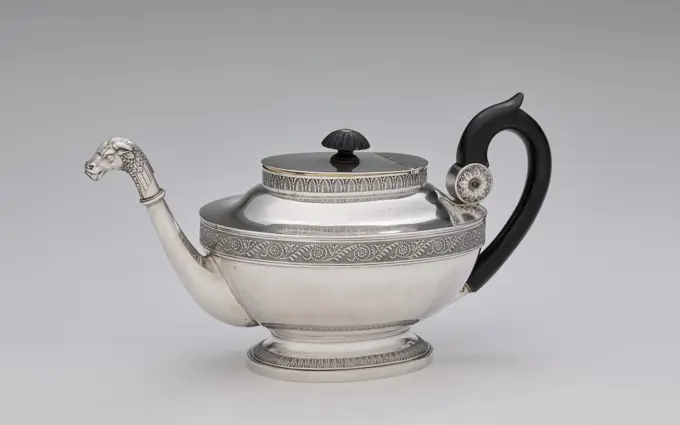
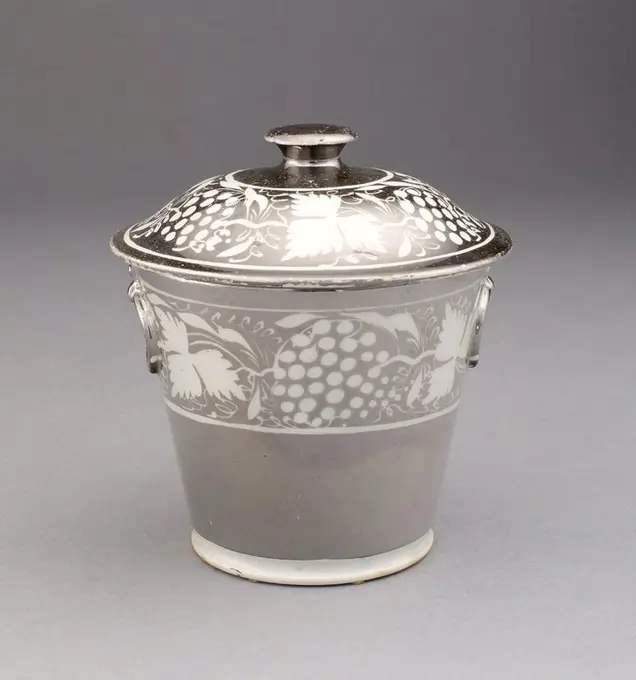
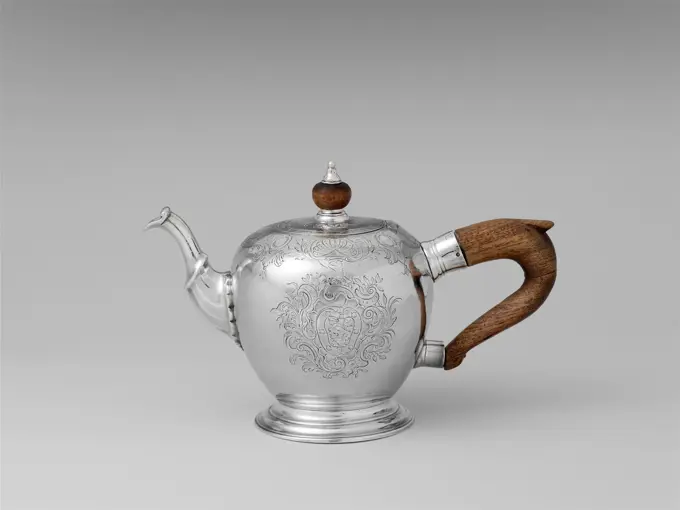
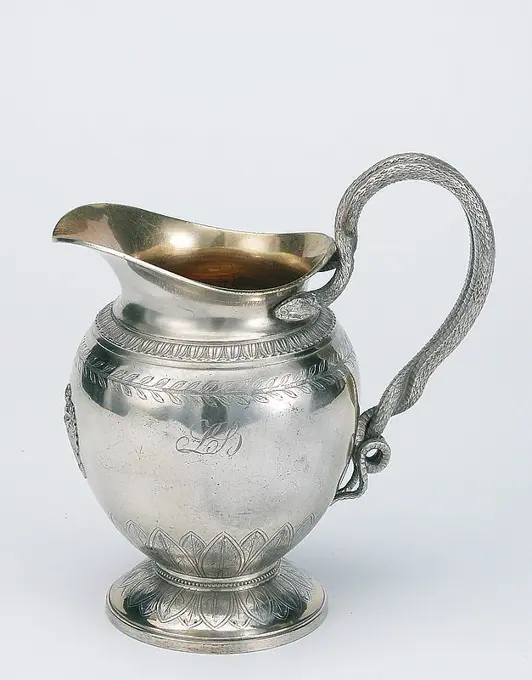
A collection of vintage teapots and jugs in various materials, showcasing intricate designs and craftsmanship with a classic elegance.

Jug with chip carving and masks, anonymous, c. 1550 - c. 1599 Jug of stoneware on stand ring with a spherical body and wide neck. The C-shaped ear is attached to the neck and shoulder. Profiles on the neck, belly and foot. Covered with a brown Engobe. The lower part of the abdomen with an entered professional decoration and is separated from the shoulder with a lot of cut by a tire with profiles. On the neck in relief, a printed and laid bond with masks and ranks. Raeren. Rae stoneware. glaze. engobe vitrification Jug of stoneware on stand ring with a spherical body and wide neck. The C-shaped ear is attached to the neck and shoulder. Profiles on the neck, belly and foot. Covered with a brown Engobe. The lower part of the abdomen with an entered professional decoration and is separated from the shoulder with a lot of cut by a tire with profiles. On the neck in relief, a printed and laid bond with masks and ranks. Raeren. Rae stoneware. glaze. engobe vitrification
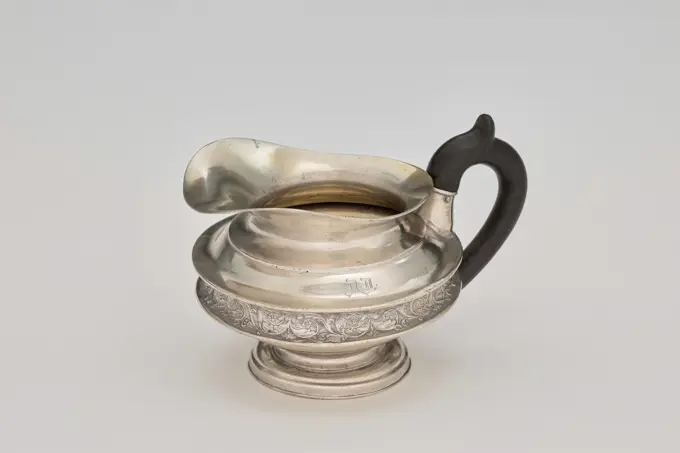
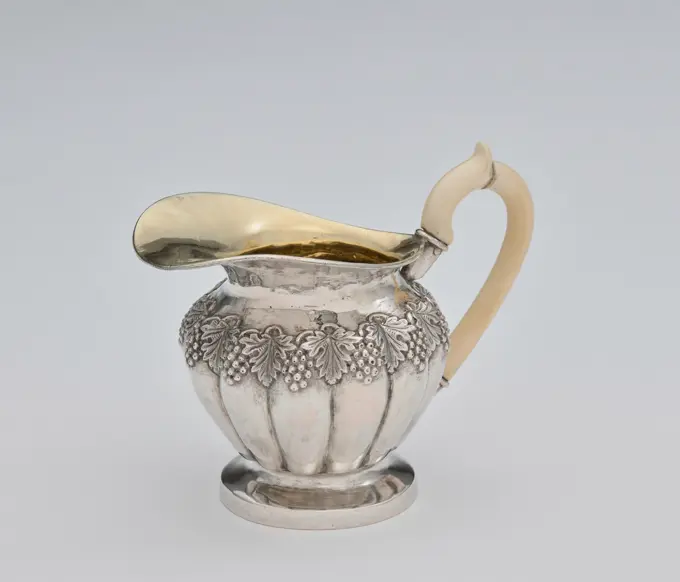
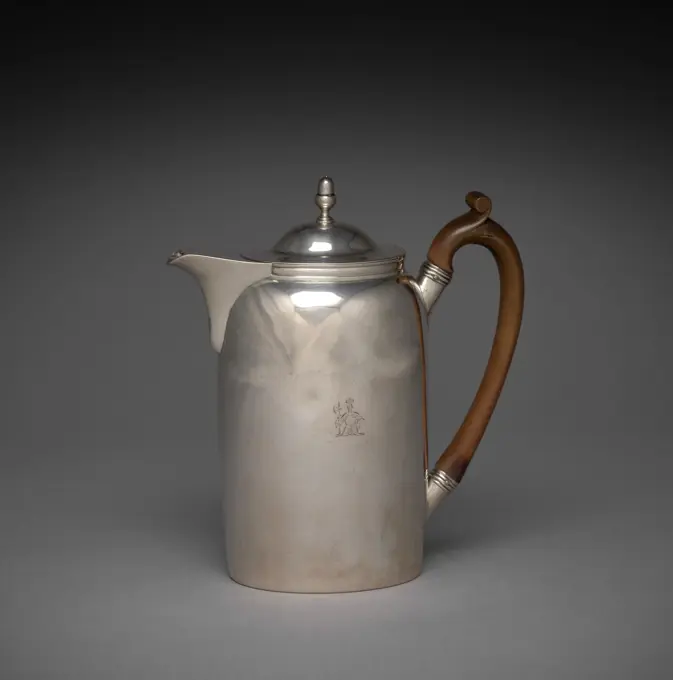
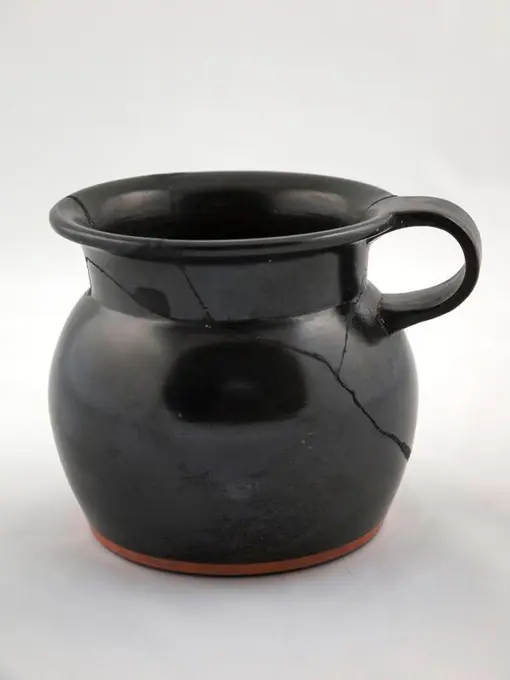
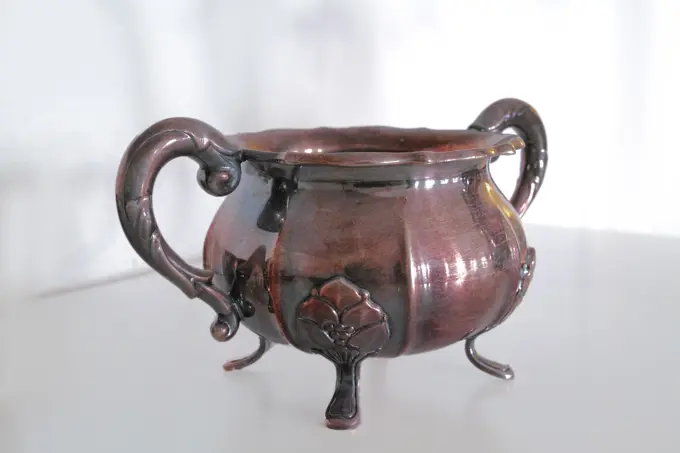
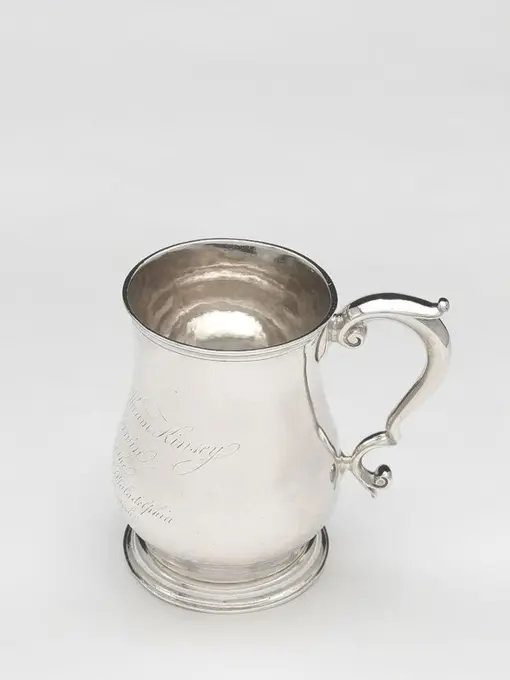
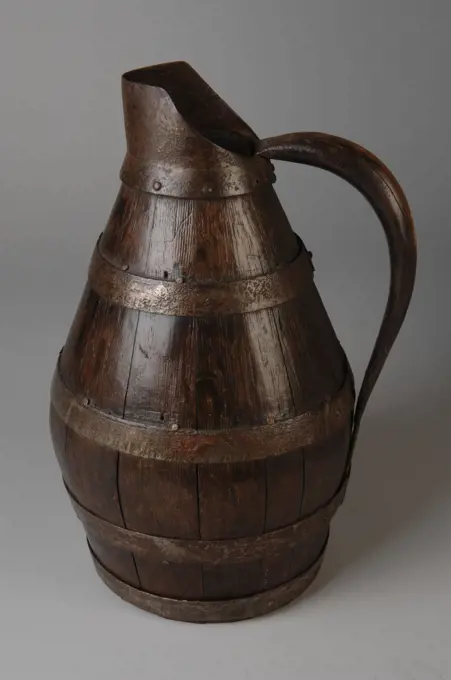
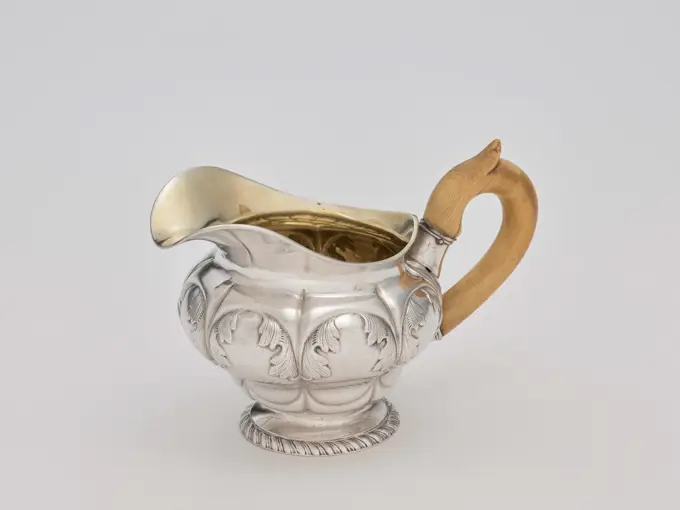
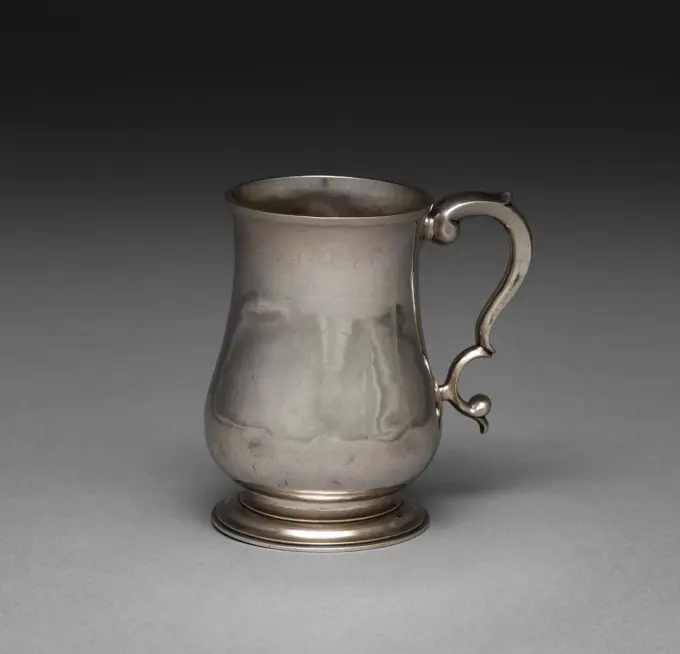
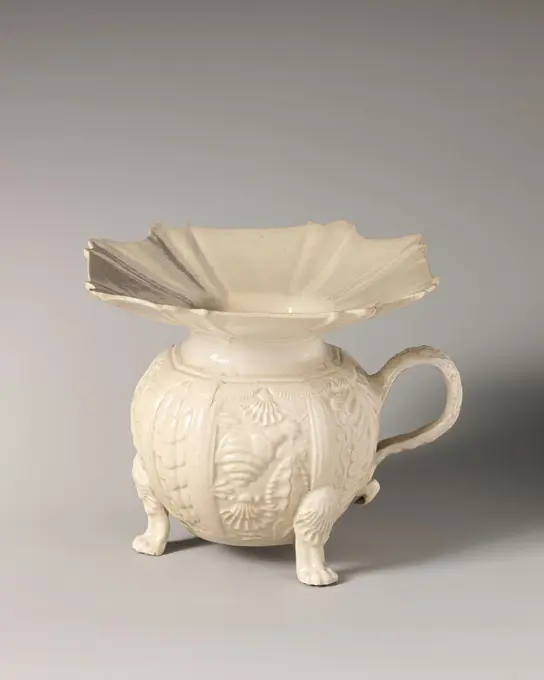
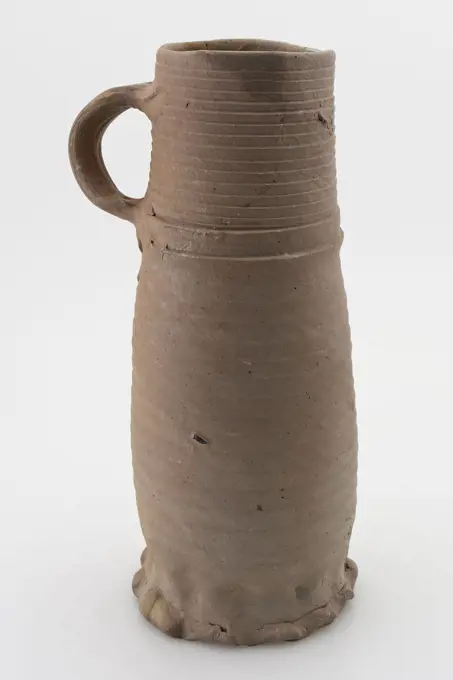
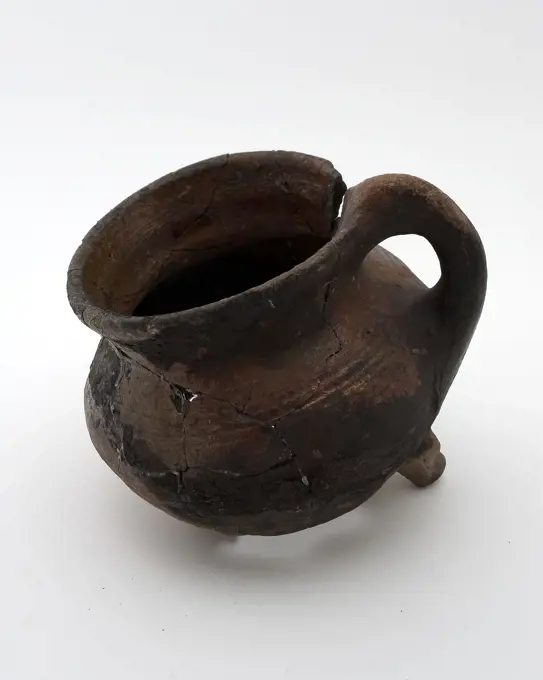
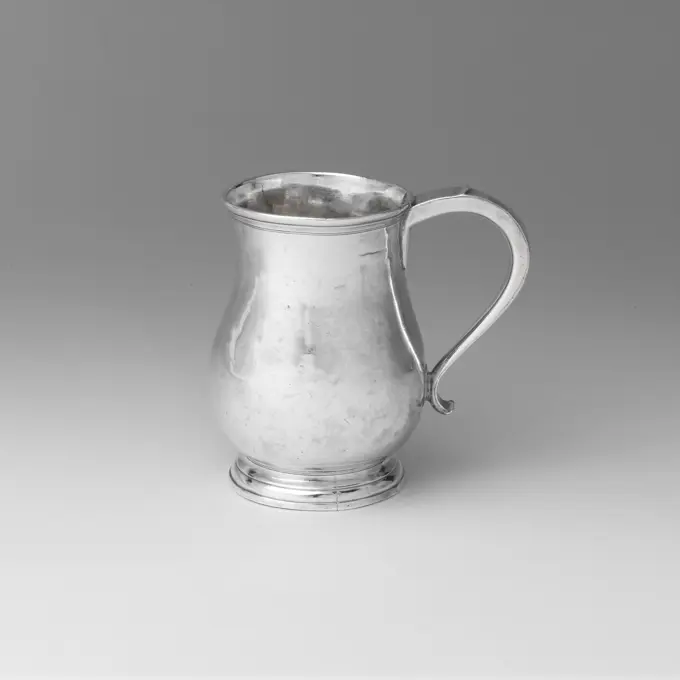
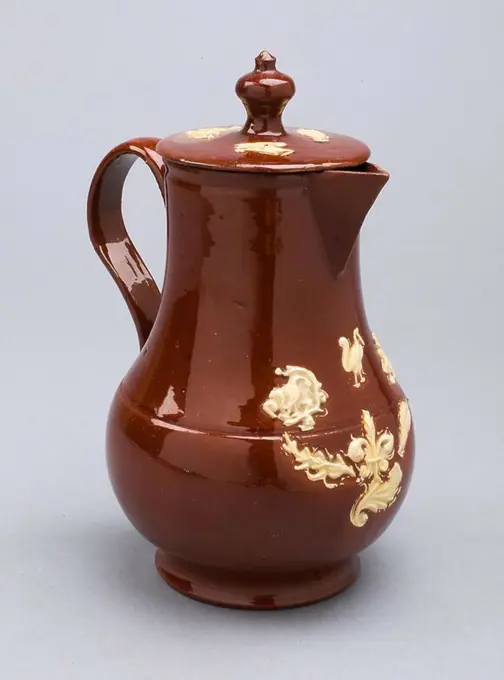
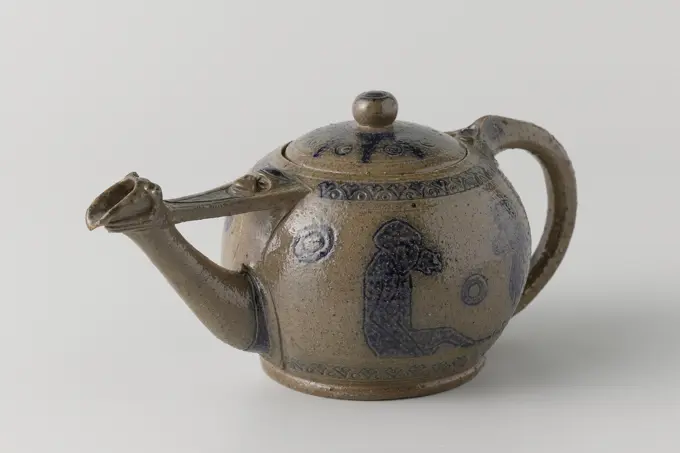
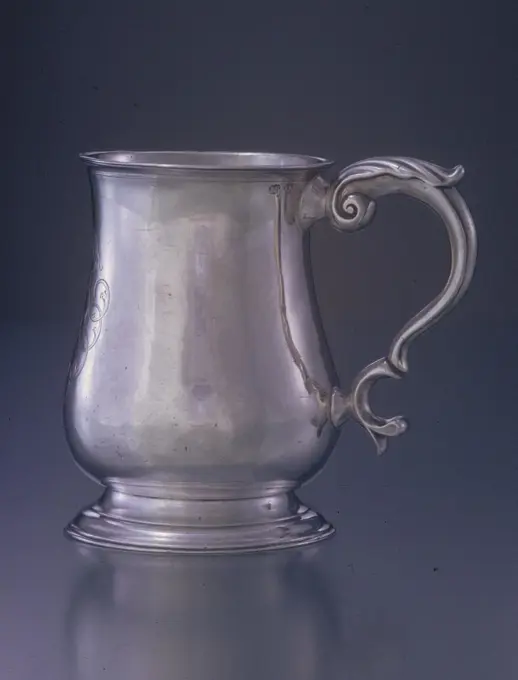
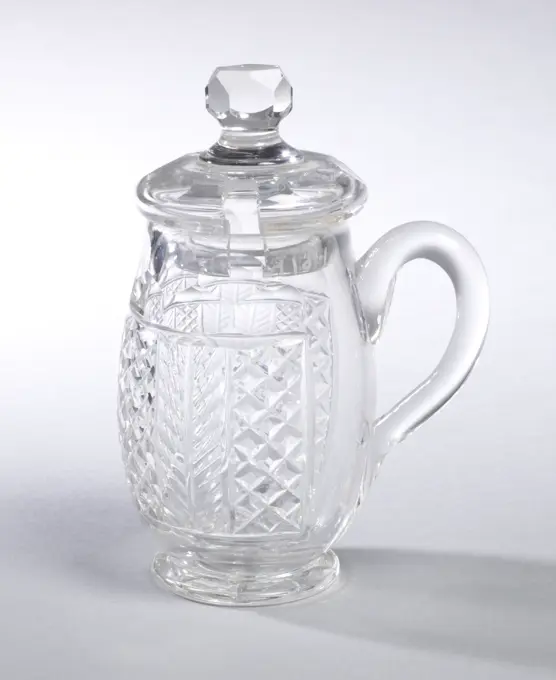
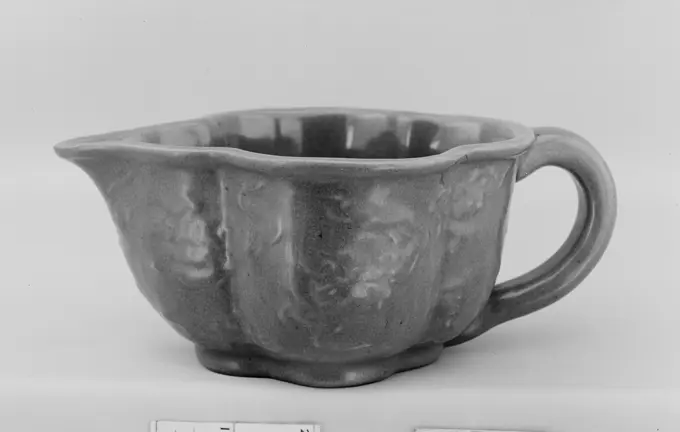
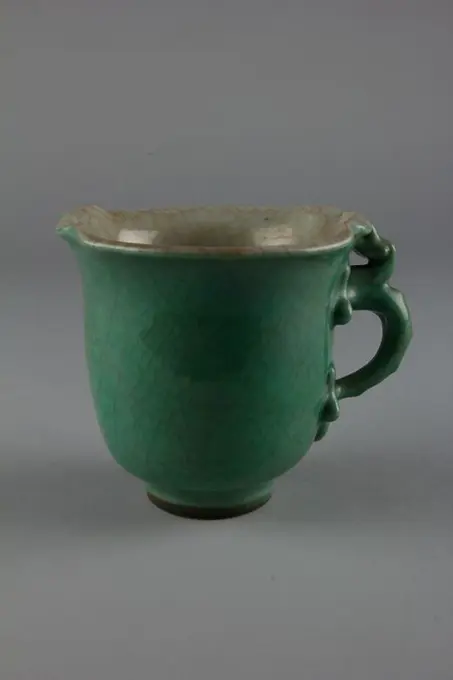
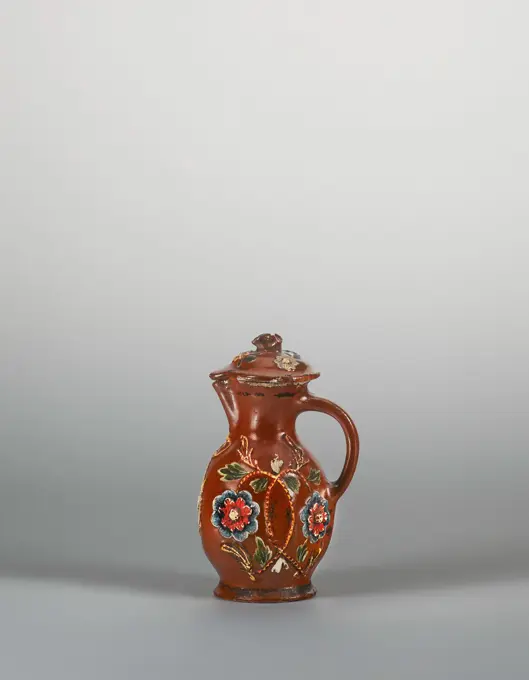
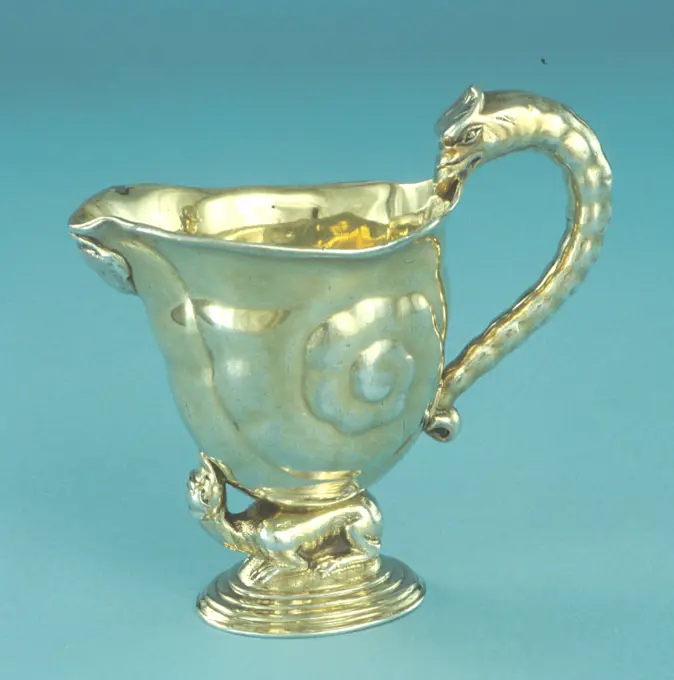
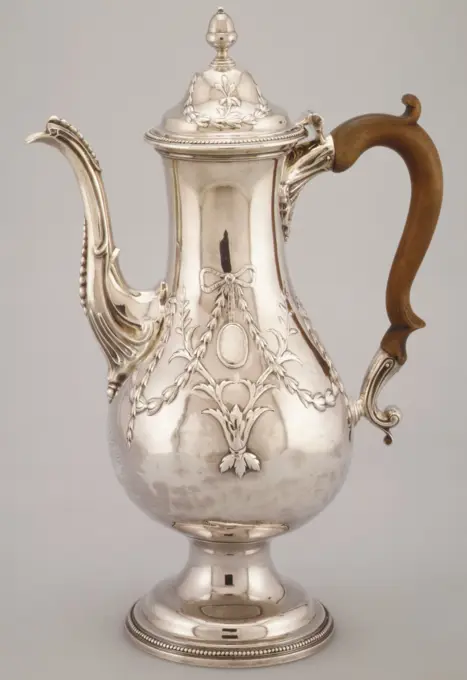
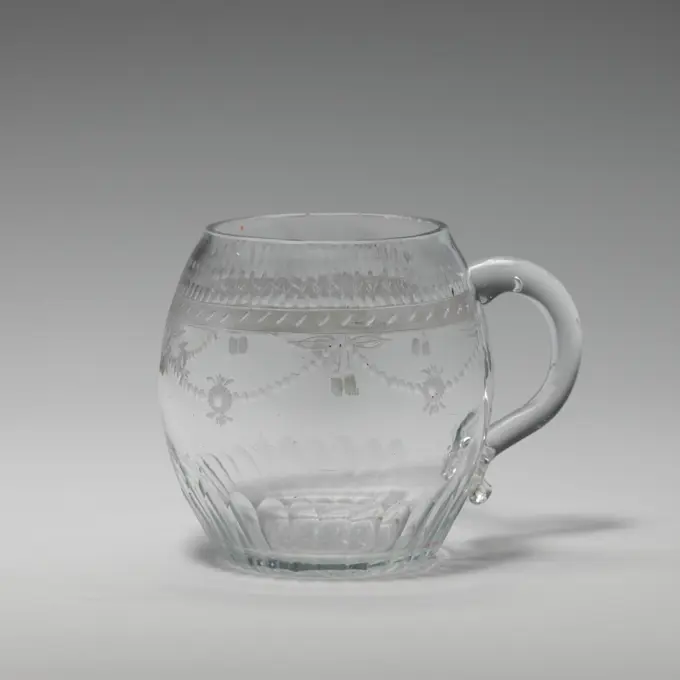
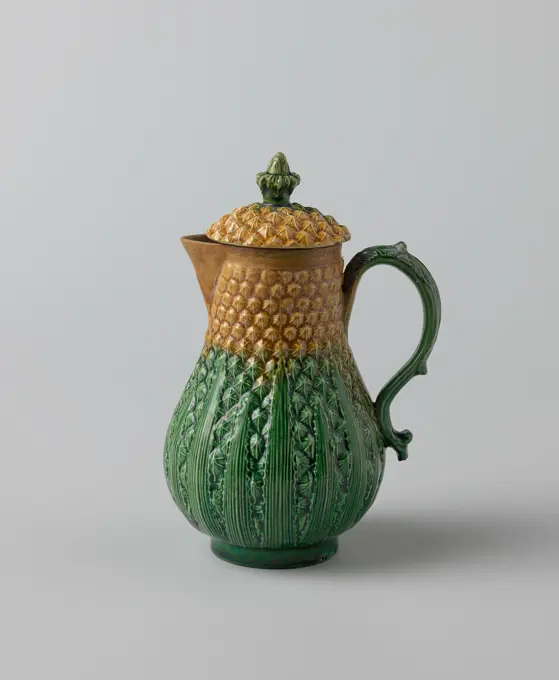
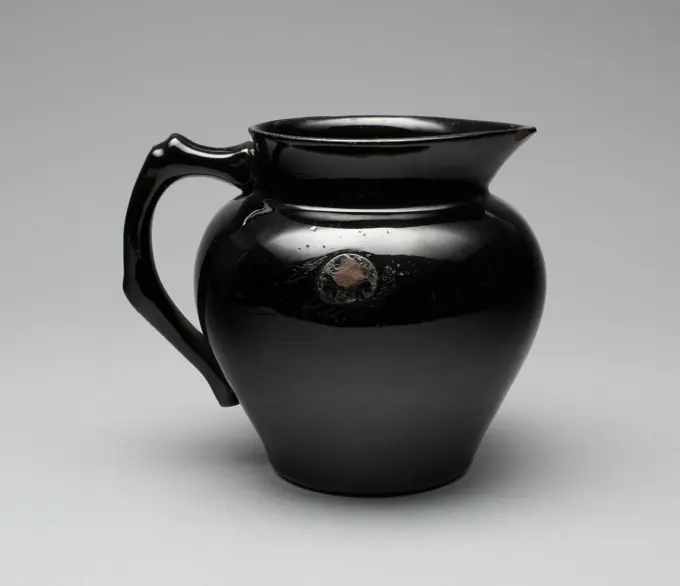
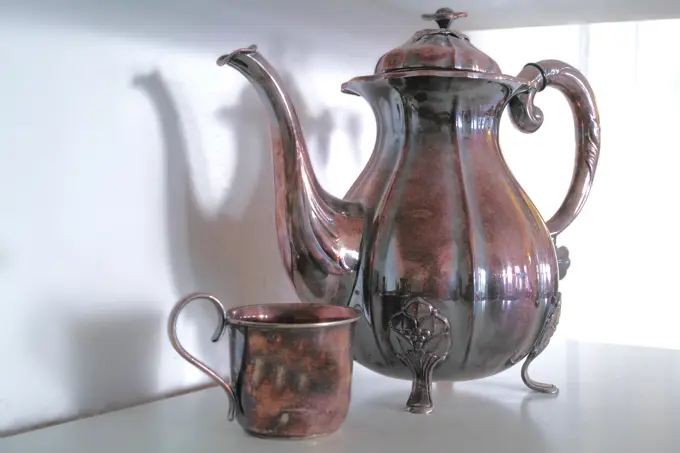
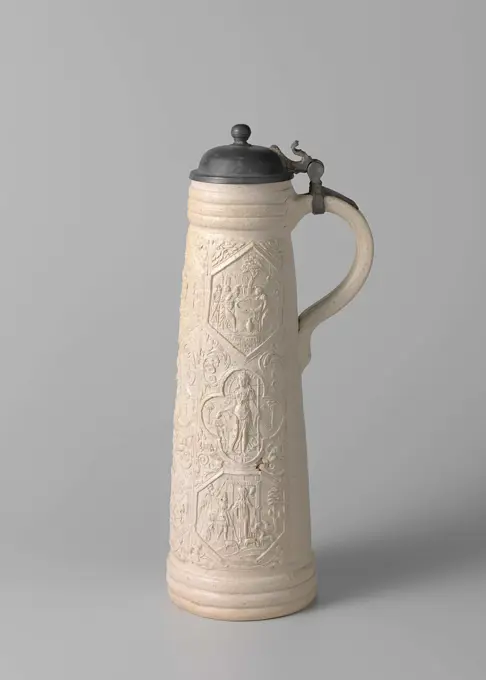
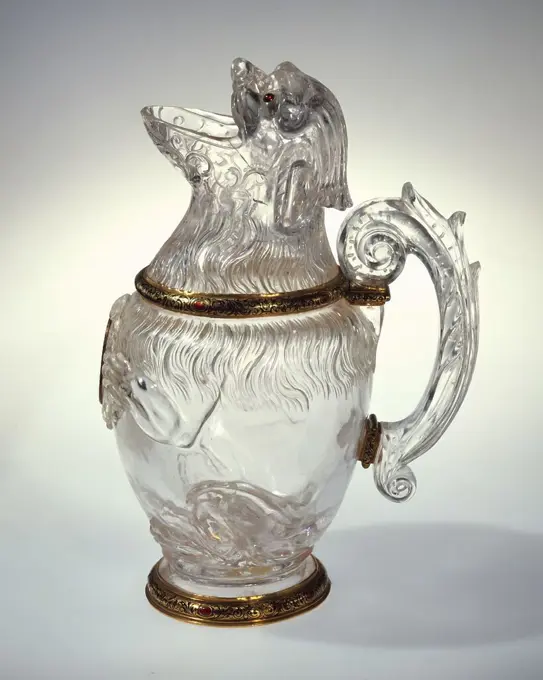
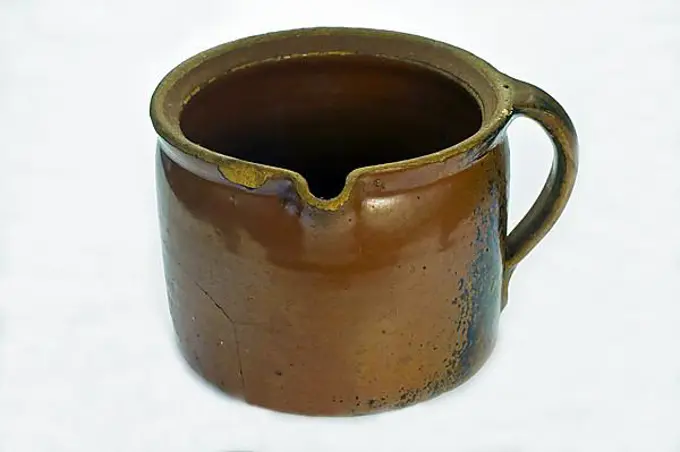
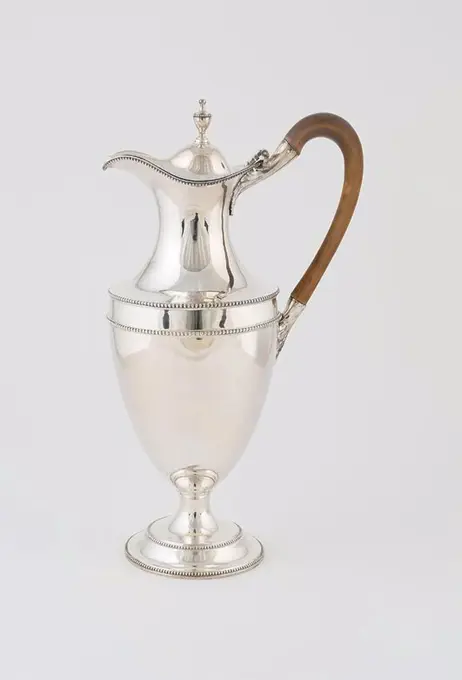
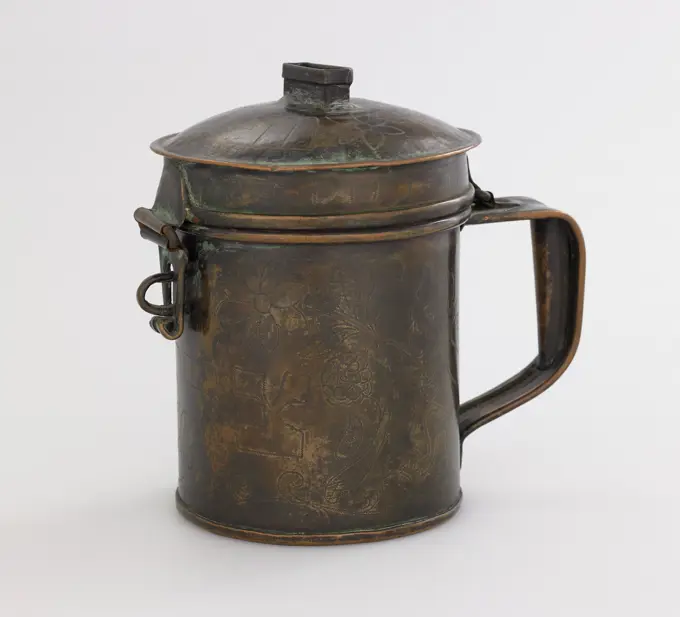
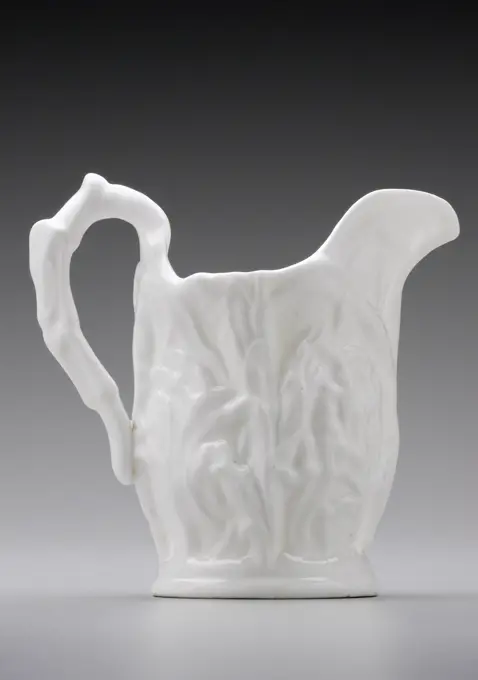
CAN from FAMANCE, Anonymous, c. 1675 - c. 1725 Lid with round button of undecorated faience. Delft (possibly) earthenware. tin glaze. Lid with round button of undecorated faience. Delft (possibly) earthenware. tin glaze.Teapot. Malcz, Karol (1797-1867), goldsmithJug, Anonymous, c. 1660 - c. 1700Milk jug with a bone handle. Radke, Emil (fl. 1830-ca 1867), goldsmithHot Water Jug, 1800. John (British) Edwards (British). Silver; average: 17.2 cm (6 3/4 in.); container: 21.3 x 20 cm (8 3/8 x 7 7/8 in.); stand: 8.4 x 10.9 cm (3 5/16 x 4 5/16 in.).Jug with chip carving and masks, anonymous, c. 1550 - c. 1599 Jug of stoneware on stand ring with a spherical body and wide neck. The C-shaped ear is attached to the neck and shoulder. Profiles on the neck, belly and foot. Covered with a brown Engobe. The lower part of the abdomen with an entered professional decoration and is separated from the shoulder with a lot of cut by a tire with profiles. On the neck in relief, a printed and laid bond with masks and ranks. Raeren. Rae stoneware. glaze. engobe vitrification Jug of stoneware on stand ring with a spherical body and wide neck. The C-shaped ear is attached to the neck and shoulder. Profiles on the neck, belly and foot. Covered with a brown Engobe. The lower part of the abdomen with an entered professional decoration and is separated from the shoulder with a lot of cut by a tire with profiles. On the neck in relief, a printed and laid bond with masks and ranks. Raeren. Rae stoneware. glaze. engobe vitrificationMug. Greek; Athens. Date: 460 BC. Dimensions: 9.2 × 11.7 × 10.2 cm (3 5/8 × 4 5/8 × 4 in.). Terra-cotta, decorated in the black-glaze technique. Origin: Greece. Museum: The Chicago Art Institute, Chicago, USA. Author: ANCIENT GREEK.Shelf, retro or brass milk pot for coffee, victorian drinkware or tools in kitchen at home. Metal, antique creamer or container for tea with copper, vintage decor or rustic design with patinaJug with a mask and stylized leaves, anonymous, c. 1640 - c. 1660 Can be made of stoneware on a high base with a bullet -shaped belly and narrow neck with a pinched spout. The C-shaped ear is attached to the neck and shoulder. Profiles on the neck and foot. The front of the abdomen with a relief decoration in the shape of a printed and imposed mask, surrounded by four stylized leaves with small flower rosettes ending in a flower. Tires on the shoulder and neck. A pewter frame is attached to the ear; Lid is missing. Westerwald. Westerwald Stoneware. Glaze. frame: tin (metal) vitrification Can be made of stoneware on a high base with a bullet -shaped belly and narrow neck with a pinched spout. The C-shaped ear is attached to the neck and shoulder. Profiles on the neck and foot. The front of the abdomen with a relief decoration in the shape of a printed and imposed mask, surrounded by four stylized leaves with small flower rosettes ending in a flower. Tires on the shoulder and neck. A pewMeasure 18th century C. B. S., Rouen. Measure. French, Rouen. 18th century. Pewter. Metalwork-PewterMug 460 BCE Greece. During the course of the 5th and 4th centuries B.C., black vessels (commonly called black-glaze vessels) were made with increasing frequency in both Greece and South Italy. Many of them replicate the shape of metal vessels. Others have detailing that is molded or incised. While the quality of these vessels varies greatly, all would have been less expensive than vessels decorated in other contemporary techniques, for example, in red-figure.. terracotta, decorated in the black-glaze technique . Ancient GreekJug with ribbed neck and coat of arms, anonymous, c. 1550 - c. 1599 Jug of stoneware on stand ring with a spherical body and wide, ribbed neck. The C-shaped ear is attached to the neck and shoulder. On the abdomen in relief three times a printed and imposed weapon with an illegible inscription. Raeren. Rae stoneware. glaze vitrification Jug of stoneware on stand ring with a spherical body and wide, ribbed neck. The C-shaped ear is attached to the neck and shoulder. On the abdomen in relief three times a printed and imposed weapon with an illegible inscription. Raeren. Rae stoneware. glaze vitrificationStudio, vintage or brass milk pot for coffee, victorian drinkware or decor on white background. Metal, antique creamer or container for tea with copper, retro collectable or rustic design with patinaStockboard with ear and lid, painted in light and dark brown. Stockspot with one ear, turned wood; Brunette and further light brown painted on the inside and top edge. Turned from two pieces.Cann. John Bayly; American, active 1754-1783; Philadelphia, Pennsylvania. Date: 1755-1785. Dimensions: 12.7 × 13.3 × 8.9 cm (5 × 5 1/4 × 3 1/2 in.); 398 grams. Silver. Origin: Philadelphia. Museum: The Chicago Art Institute, Chicago, USA.JARRA DE AGUA CON INTERIOR VIDRIADO-ARTE POPULAR DEL S XX. Location: ALFARERIA. SALVATIERRA-MEDER. Pontevedra. SPAIN.Beer walk, wooden drink kit or jug, jug crockery holder wood iron, Rotterdam beer cooperage cooper inn restaurant drink gelag donate company Rotterdam distilleryMilk jug with a bone ear. Malcz, Karol (1797-1867), goldsmithCann, c. 1775. Samuel Bartlett (American, 1752-1821). Silver; overall: 14 cm (5 1/2 in.); with handle: 14.8 cm (5 13/16 in.); without handle: 10.1 cm (4 in.).Jug of tin with lid. Jug of tin. There is a baluster-shaped body on the stand ring, the lip edge of which is slightly wider than the neck. The neck and the lip edge are decorated with a profiled tire. The slightly vaulted lid is equipped with profiled circle. The thumb trust is formed by two bullets and runs over to the handle via a one-case hinge. A pile under a profiled edge on the inside.Spitoon. Culture: British, Staffordshire. Dimensions: Overall: 1 5/8 × 2 3/4 in. (4.1 × 7 cm). Date: ca. 1750. Museum: Metropolitan Museum of Art, New York, USA.Teapot, c. 1790. John David (American, 1736-1793). Silver; with handle: 16.2 x 25.8 cm (6 3/8 x 10 3/16 in.). This teapot may have belonged to Dr. Enoch F. Edwards, George Washingtons personal physician.Mug MieleówJug -. .dish, ear bowl with standing and pinched band ear on narrow foot, porcelain dish holder holder earthenware ceramic earthenware glaze lead glaze, hand-turned glazed baked Porcelain bowl of red earthenware one pinched ear brown glazed stand ring used as decoration Taps of shape with narrowing just above the foot archeology Valckensteyn Poortugaal Albrandswaard indigenous pottery kitchen food nutrition food porridge porridge food serve Soil discovery: canal at kitchen castle Valckensteyn at Poortugaal now Albrandswaard 1961.Stoneware jug, conical model with wide band ear, on squeeze foot, jug crockery holder soil find ceramic stoneware, hand-turned glazed baked Stoneware jug conical model with wide vertical band ear on squeeze foot. Pivotal spirals over the entire height of the jug have thickened ring on the transition from neck to abdomen Restoration is repainted archeology Rotterdam City Triangle Groenendaal indigenous pottery import donate serve table room drink Soil discovery: Mariniersweg Groenendaal Rotterdam June 1983.Pottery cooker on three legs, grape-model with sausage ear, rotations over the shoulder, grape cooking pot tableware holder kitchenware earthenware ceramics earthenware glaze lead glaze, hand turned glazed baked Pottery cooking jug on three legs Grape-model. Double conical shape Over the shoulder wide band of turns Lightly spaced funnel-shaped top edge. Standing sausage ear. Red shard sparsely glazed. Heavy on the bottom and baked burnt food remains on the inside. Pinched lip at the location of the attachment of one missing leg. Small dent to the left of the ear archeology Geervliet Bernisse indigenous pottery cooking kitchen nutrition food preparation Soil discovery: Geervliet pit 1 underlayer demolition Trouw.Cann 1750-60 John Coverly. Cann 5325Milk Jug. Staffordshire, England. Date: 1720-1745. Dimensions: 15.2 x 10.8 x 8.9 cm (6 x 4 1/4 x 3 1/2 in.). Lead-glazed earthenware (redware). Origin: Staffordshire. Museum: The Chicago Art Institute, Chicago, USA.Teapot of stoneware with salt glaze, 1901 Teapot of stoneware with salt glaze, part of a service Amsterdam stoneware vitrification Teapot of stoneware with salt glaze, part of a service Amsterdam stoneware vitrificationJug with the Four Evangelists. This jug is an example of the new stoneware forms that arose in Raeren during the second half of the 16th century. The body of this jug is less globular and more cylindrical in shape. Incised lines decorate the lower body and shoulders. The relief with the Four Evangelists on the belly of the jug is based on contemporary prints.Cann.   Maker: John Bayly Sr., American, active 1750-89Pitcher; molded and glazed stonewareJar And Lid; glass; 10.5 x 7.5 x 5.3 cm (4 1/8 x 2 15/16 x 2 1/16 in.); Bequest of Walter Phelps Warren; 1986-61-161-a,bPitcher 19th century Japan. Pitcher. Japan. 19th century. Pottery moulded with design of paste and covered with glaze (Banko ware). Edo (1615-1868) or Meiji period (1868-1912). CeramicsCann c 1735-1750 Boston. Silver . William Cowell Jr.Cup. Culture: China. Dimensions: H. 4 1/8 in. (10.5 cm); W. 4 1/4 in. (10.8 cm). Museum: Metropolitan Museum of Art, New York, USA.Small jug and lid, eagle and flowers decoration. Bolesławiec (ośrodek ceramiczny ; ca 1400- ), potter's workshopTerracotta kantharos: karchesion (deep cylindrical drinking cup). Culture: Greek, Attic or Boeotian. Dimensions: H.: 4 9/16 in. (11.6 cm). Date: 4th century B.C..Black glaze cup with handles and ribbing around the base. Museum: Metropolitan Museum of Art, New York, USA.David Willaume, Cream Jug (gilt), 1719/20, silver gilt.Coffeepot 1780-81 Possibly by William Garrard. Coffeepot 207694Punch cup (one of two) late 18th century probably Irish. Punch cup (one of two). probably Irish. late 18th century. Glass. GlassMug. Culture: British, London. Dimensions: Height: 4 3/4 in. (12.1 cm). Maker: William Grundy (active 1743-79). Date: 1778-79. Museum: Metropolitan Museum of Art, New York, USA.Cup, purple red fond with golden piping and ear. Cup of porcelain, part of a coffee set, with purple red fond and golden piping and ear. On top of a broad golden trim in which engraved leaf drink. No brand.Lid of hard-baked pottery; Whieldon Ware, Pineapple Ware. Lid of hard-baked pottery with flower shaped bud.Cream Jug (USA); Made by Christopf Christian Kuchler (American); Retailed by Hyde + Goodrich; silver (coin)Pitcher c 1800-1830 United States. Earthenware . Artist unknownShelf, vintage and brass coffee pot, Victorian drinkware and decor in kitchen at home. Metal, antique container and tools for tea with copper cup, retro collectable and rustic design with patinaPUCHERO CON DOS ASAS PARCIALMENTE VIDRIADO Y CON TAPA-CERAMICA POPULAR S XX. Location: ALFARERIA. CONSUEGRA. Toledo. SPAIN.Tankard (fast) with Biblical Scenes, H. Hilgers, 1570 Jug (schnelle) of stoneware with cylindrical, tapered body and C-shaped ear. Profiles under the edge and above the foot. On the body in relief three times a printed and imposed, elongated box with three medallions with biblical performances. The upper with Christ and the Samaritan woman, including the inscription 'Die Fraigen an DM Pvicht IOA 4'. The middle one with the Holy Helena, 'S. Helena 1570 ', and the brand' H.H. '. The lower medallion with Christ as a good shepherd for the sheep with the inscription 'Iohannis X'. The jug is caught in a pewter frame with lid. Siegburg. Siegburg Stoneware. Glaze. frame: tin (metal) vitrification Jug (schnelle) of stoneware with cylindrical, tapered body and C-shaped ear. Profiles under the edge and above the foot. On the body in relief three times a printed and imposed, elongated box with three medallions with biblical performances. The upper with Christ and the Samaritan woman, including theFast with pewter lid, decorated with nine medallions over three rows, including Christ and Samaritan woman. Jaartal 1570 .. Fast from stoneware with pewter lid. The cylindrical body narrowed upwards. The fast is decorated with 9 medallions, placed in 3 rows. In the upper row in each of 3 medallions Christ and the Samaritan woman. In the second row the image of Helena and Year 1570. In the third row of Christ as a door for the sheep. Above the door is the reference to the Bible verse in Joh. 10.Ewer in the Shape of a Sitting Dog. Artist: Italian , Milan, second half of the 16th century; possibly Reinhold Vasters (German, Erkelenz 1827-1909 Aachen) or; Alfred André (French, 1839-1919) , Paris. Culture: Italian, Milan and German (Aachen) or French (Paris). Dimensions: H. 24 cm. Date: second half 16th century and second half 19th century. Museum: Metropolitan Museum of Art, New York, USA.Tincture; Schmidt, Karol; 1820-30 (1820-00-00-1830-00-00);Lazio Viterbo Viterbo Museo Civico60. Hutzel, Max 1960-1990 Views of paintings (Middle Ages through 18th c.), frescoes, a tabernacle, coffin, sculpture reliefs, portal fragments, busts, sculpture, tapestry found in the Pinacoteca, Second floor gallery and Second floor cloister sequences. Antiquities: Many views of Etruscan and Roman fragments, sculpture, sarcophagi, pottery, masks, jewelry and other objects found in the Storeroom sequence (inventory numbers on back of prints), and the Cloister, Second floor Cloister, Valle Giulia, Sala Romana and Sala Etrusca sequences. General Notes: There are eight separate numerical sequences for this location. The cloister as an architectural structure, rather than museum site, is documented in the record and file for S. Maria della Verita, Cloister, all views of which are stored in Medieval core collection. Five views from the Museo Civico Second floor cloister sequence are stored in Medieval. German-born photographer and scholar Max Hutzel (1911-Jar 2nd millennium B.C.. Jar 324310Fragment stoneware with slightly curved body and cylindrical neck, drinking jug jug crockery holder fragment soil found ceramic stoneware, hand turned fired Fragment of stoneware jug pinched on foot Lightly curled body and cylindrical neck. Standing ribbon ear. Rotating lips over the lower half of the abdomen. Narrow ridge over the shoulder under the attachment of the ear Darts around the neck. Completed parts are blank archeology House in Woude Slikkerveer Ridderkerk indigenous pottery import drinking wine beer water Soil discovery: Huis te Woude Slikkerveer 1969.Lid, oval, cream -colored, with a button in the form of a flower, Peter Regout, c. 1860 - c. 1890 Cover of earthenware, cream -colored glazed. The vaulted lid is decorated at the top with leaves in relief and is crowned by a button in the shape of a flower. Maastricht . vitrification Cover of earthenware, cream -colored glazed. The vaulted lid is decorated at the top with leaves in relief and is crowned by a button in the shape of a flower. Maastricht . vitrificationBurette. 2nd half of the 17th century, produced in Venice (Italy). Crockery, glass buret imitating calcédonia. Calcedon glass. Museum of Fine Arts of the City of Paris, Petit Palais. 28845-7 Burette, imitation Calcedon, realizes Venice, dishes, glassJug Made 1810-1820 Staffordshire. Lead-glazed earthenware with lustre decoration .Coffee Pot, 1702. John Chartier (British). Silver, wooden handle; overall: 24.6 x 15.3 x 15 cm (9 11/16 x 6 x 5 7/8 in.); diameter of base: 11 cm (4 5/16 in.).Teapot. Lilpop Sukcesorowie po 1833 (Jakub Marcińczyk), goldsmiths companyTeapot probably 1753 Jean-Martin Winoc Du Moulin. Teapot 200113Skeilous jar of tin. Skeilous jar of tin. The three legs are formed by lions on which the jug rests. The jar are shown in courses and floral motifs and a fifth female saints. The light vaulted lid runs freely straight up and has been profiled. The button is formed by an angel head with wings. The simple thumbs of thumb goes over in the handle via a double-headed, dedicated hinge. The handle curls down and ends in a beetle head. On the inside the lid and the soil are decorated with a rosette surrounded by a pearl edge.Jar. England, Staffordshire. Date: 1815-1825. Dimensions: H. 7.6 cm (3 in.). Lead-glazed earthenware with lustre decoration. Origin: Staffordshire. Museum: The Chicago Art Institute, Chicago, USA.Teapot 1745-55 Josiah Austin American One of three extant teapots marked by silversmith Josiah Austin, its satisfying apple shape is characteristic of mid-eighteenth-century Boston examples. Teapots of this design were raised from the top down, so that the lid was eventually cut out of the lower surface and attached to the body with a flat three-part hinge, creating a flush fit. A separate circular plate was then inserted to seal the lower opening, surrounded by a stepped flared foot. The armorial engraving on the body is livelier and more fluid than that on the cover and shoulder, and could have been executed by another hand. The coat of arms and crest are those of the Ware family, as used by descendants of the English immigrant Robert Ware, who died in Dedham, Massachusetts, in 1699. However, earlier initials engraved on the upper handle socket, S / R* E, appear to predate the Ware arms, suggesting an even earlier ownership. A particularly charming aspect of this teapot is the interiJug with floral ornamentation in medallions, anonymous, c. 1780 - c. 1830 Jug of stoneware on stand ring with a hexagonal belly and wide neck. The C-shaped ear is attached to the neck and just above the shoulder. Partly covered with cobalt blue. On the abdomen an entry decoration of flower motifs in medallions. Below and above a bond with a pressed zigzag line (Knibis). The neck is divided into three tires: stamped windows, zigzag line and stylized flowers. A band with dots on the foot. A pewter frame is attached to the ear whose lid is missing. Westerwald. Westerwald stoneware. glaze. cobalt (mineral). tin (metal) vitrification Jug of stoneware on stand ring with a hexagonal belly and wide neck. The C-shaped ear is attached to the neck and just above the shoulder. Partly covered with cobalt blue. On the abdomen an entry decoration of flower motifs in medallions. Below and above a bond with a pressed zigzag line (Knibis). The neck is divided into three tires: stamped windows, zigzag liPitcher, c. 1900. Reinhold Merkelbach, Grenzhausen (German), Richard Riemerschmid (German, 1868-1957). Stoneware, salt-glaze; overall: 27.5 x 25.8 x 25.3 cm (10 13/16 x 10 3/16 x 9 15/16 in.).. Stoneware incense burner in the form of an archaic bronze vessel (KUEI), covered with a gray-green enamel. The vessel has a wide pear shape and two ears. Celadon (Longquan).PERULA PARA ACEITE VIDRIADA EN VERDE - S XX ARTE POPULAR. Location: BARRIO TRIANA. Sevilla. Seville. SPAIN.Milk jug. Lilpop, Karol Jerzy (fl. 1820-1833), goldsmithJARRA DE MESA CON ESMALTADO TIPO BABERO EN BLANCO - ARTE POPULAR S XX. Location: ALFARERIA. Navarrete. LA RIOJA. SPAIN.Jar with carpholine cure. Jug of stoneware with pewter lid. The pear-shaped body is over in the wide neck. Completely decorated with incised net decoration. The lid is marked with a crowned rose and D.M.Tankard 1661-62 Probably by Henry Greenway. Tankard 205204Kettle with lidCan. Can from stoneware with spout. The bullet-shaped belly is over in the high, round slightly removing neck. On the belly 2 grooved tendrils in blue with flowers in manganese.CAZUELA CON VERTEDERO PARA EL AGUA CON DOS ASAS Y PARCIALMENTE VIDRIADA. Location: ALFARERIA. SPAIN.Jug with chip carving and flowers, anonymous, c. 1650 - c. 1675 Jug of stoneware on high foot with a pear -shaped body and wide neck. The C-shaped ear is attached to the neck and belly. Profile on the edge and lines on the shoulder, abdomen and foot, caught in a pewter strap. Covered with a brown Engobe. On the belly nursery with a tire semi-circles with a lot of cut at the top and bottom. Above the foot a band with medallions and on the neck and the ear a band with stamped, small flowers. Attached to the ear a pewter frame with lid. The lid has a wavy edge and beaten flowers. Freiberg. Freiberg Stoneware. Glaze. Engobe. frame: tin (metal) vitrification Jug of stoneware on high foot with a pear -shaped body and wide neck. The C-shaped ear is attached to the neck and belly. Profile on the edge and lines on the shoulder, abdomen and foot, caught in a pewter strap. Covered with a brown Engobe. On the belly nursery with a tire semi-circles with a lot of cut at the top and bottom. Above theChamber pot MieleówMeasure late 18th-early 19th century Dutch. Measure 193305Clarinet barrel. Ton or baril from a clarinet of palm wood. Horse with a ton or baril with Invnr. BK-NM-11430-123-A.Old clay jugHot Water Jug. Hester Bateman; English, 1708-1794; London, England. Date: 1785-1786. Dimensions: 31.8 x 17.5 cm (12 1/2 x 6 7/8 in.). SIlver and beechwood. Origin: London. Museum: The Chicago Art Institute, Chicago, USA.Teapot of red pottery. Hexagonal teapot of red pottery. The pot has a hexagonal spout, a hexagonal lid and a solid handle. The sides of the pot are embossed with Chinese dragons. The lid has a button in the shape of a lion. The handle ends from above in two jammed animals. The origin of the spout is a fishing cup. The pot has been marked.A cup with a saucer unknownCoffee service NicolauTzedakah (justice or charity) box, early 20th century, 7 x 5 in. (17.78 x 12.7 cm), Copper, 20th century, This tzedakah box is based on the traditional 18th century form of a converted tankard or cup, which were often made of copper or pewter.Coffeepot.   Maker: Joseph Richardson, Sr., American, 1711-1784Pitcher.  Maker: Charles Cartlidge and Company, American, 1848-1856Modeler: Josiah Jones, 1801-1887Cover of teapot, part of a tea set, Petrus Regout & Co., 1934 Cover of teapot of earthenware, part of a tea set. Brown distance on the outside, with red buttons, spouts, ears and edges. Marked with sphinx stamp; Petrus Regout & Co Maastricht in a lying rectangle; Made in Holland. Maastricht earthenware Cover of teapot of earthenware, part of a tea set. Brown distance on the outside, with red buttons, spouts, ears and edges. Marked with sphinx stamp; Petrus Regout & Co Maastricht in a lying rectangle; Made in Holland. Maastricht earthenwareTeapot with lid, part of a tea set, Petrus Regout & Co., 1934 Teapot with pottery lid, part of a tea set. Brown distance on the outside, with red buttons, spouts, ears and edges. Marked with sphinx stamp; Petrus Regout & Co Maastricht in a lying rectangle; Made in Holland. Maastricht earthenware Teapot with pottery lid, part of a tea set. Brown distance on the outside, with red buttons, spouts, ears and edges. Marked with sphinx stamp; Petrus Regout & Co Maastricht in a lying rectangle; Made in Holland. Maastricht earthenwareCovered Tankard Tankard; stoneware, pewterCup 1800-1850 American. Cup 2760Tea ();  19th/20th century (1890-00-00-1910-00-00);Ewer probably 18th-19th century. Ewer 443130Teapot 1854-65 Thomas Danforth Boardman. Teapot 13405Campania Napoli Naples S. Lorenzo Maggiore47. Hutzel, Max 1960-1990 Medieval: Sculpture, architecture, architectural sculpture (including Roman spolia) 13-14th century Chapter house; sarcophagi, gravestones; wall painting. Fragment of mosaic; sculptural fragments in the Sala Capitolare. Post-medieval: Architecture, architectural sculpture, ceiling painting fresco cycle; prints depicting Venice c. 1845 (4), sculpture; life-size creche figures dressed in original Neapolitan costume Church restored in 1882, 1926, 1944; excavations under the transept undertaken between 1958-1962, and in the cloister in 1976, have revealed remains of a Roman macellum (market), street, and the paleochristian basilica of the 6th c. AD. Antiquities: Pottery: black-glazed, archaic banded, domestic wares, bucchero; architectural terracottas, statuettes, lamps, sculpture fragments Object Notes: 3 color negatives with no prints at the end. General Notes: Most objects/paintings/frescoes unidentified. Three batches Cyathos; terra-cottaEarthenware head with band ear, bottom tapered, on stand ring, cup crockery holder soil find ceramic earthenware glaze, hand-turned glazed baked earthenware cup. Red shard Fully glazed. Bandoor Slightly sloping sidewall narrowing to small foot Stand with stand ring. Rotations between the edge and the kink on the transition to the foot Restoration is repainted archeology Rotterdam City Triangle Oostplein underground pit indigenous pottery drink food serving table serve Soil discovery Rotterdam underground pit Oostplein 1976.Pitcher, Stoneware, A brown colored pitcher with a very small spout and a handle. The piece is decorated with outdoor scene depicting water and birds flying above along with some flower detail around the top., France, 1882-85, ceramics, Decorative Arts, Pitcher