Decorative Textile Fragments

A collection of vibrant textile fragments showcasing intricate embroidery and designs in various mediums from different cultures and centuries, featuring floral and geometric patterns.
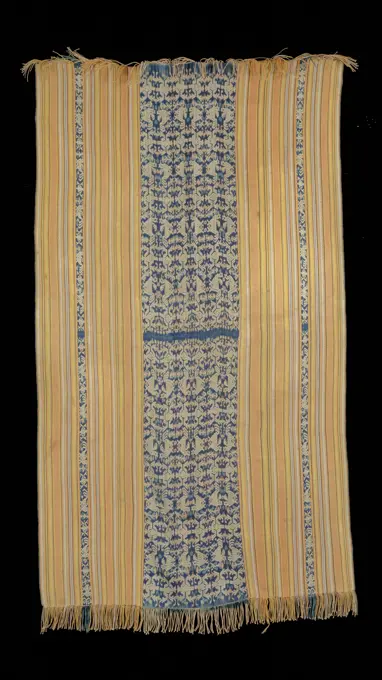
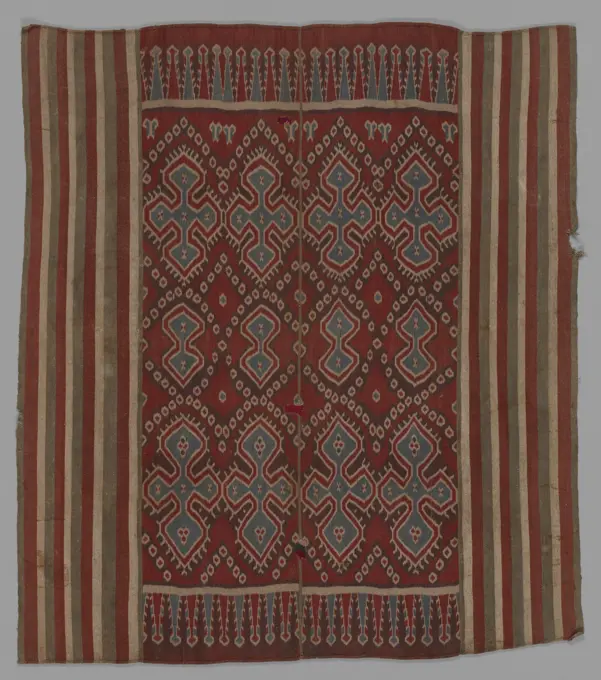
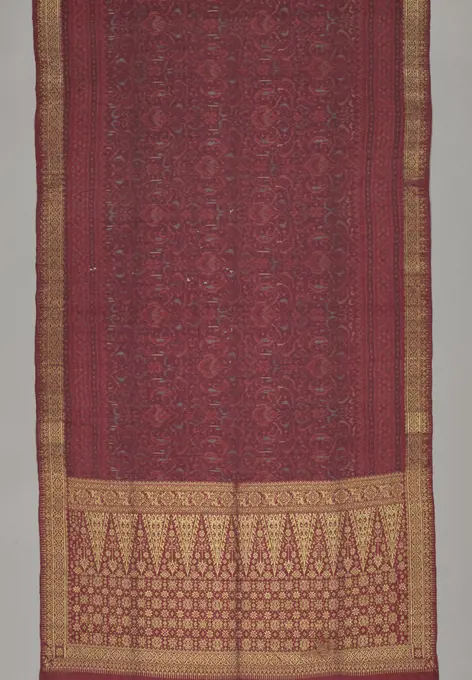
Man's textile (Selimut), 20th century, 64 x 39 1/8 in. (162.56 x 99.38 cm) (without fringe), Cotton, Indonesia, 20th century
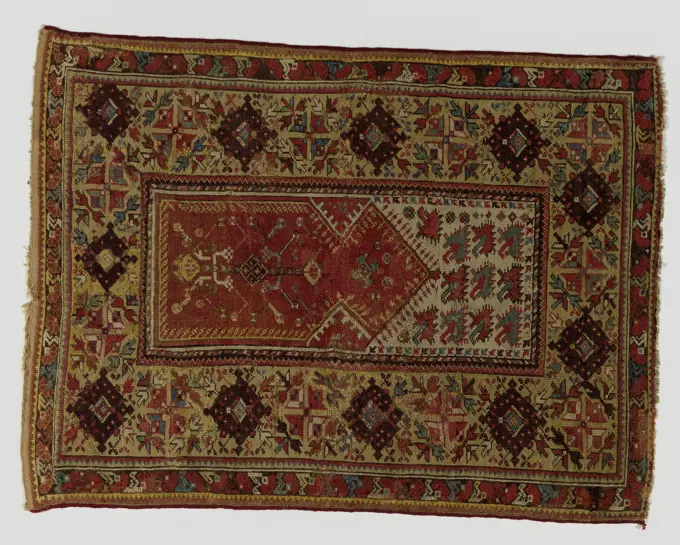
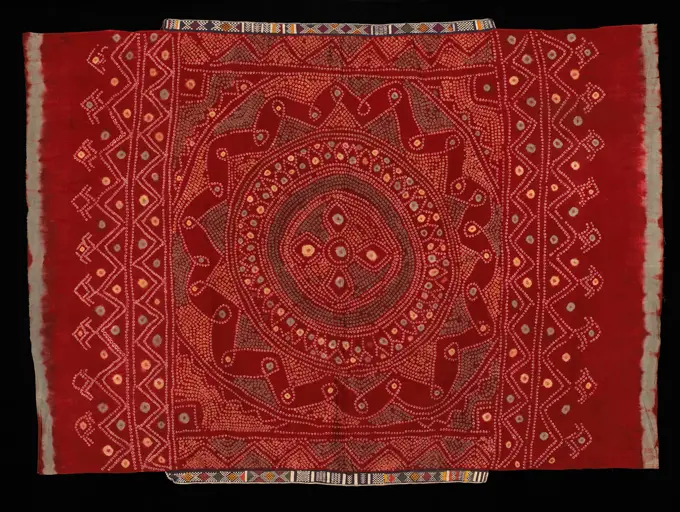
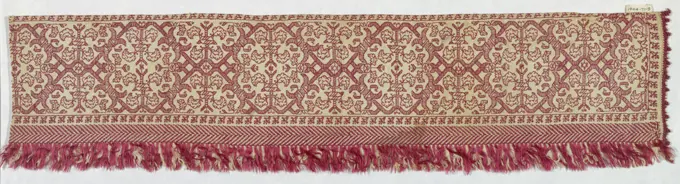
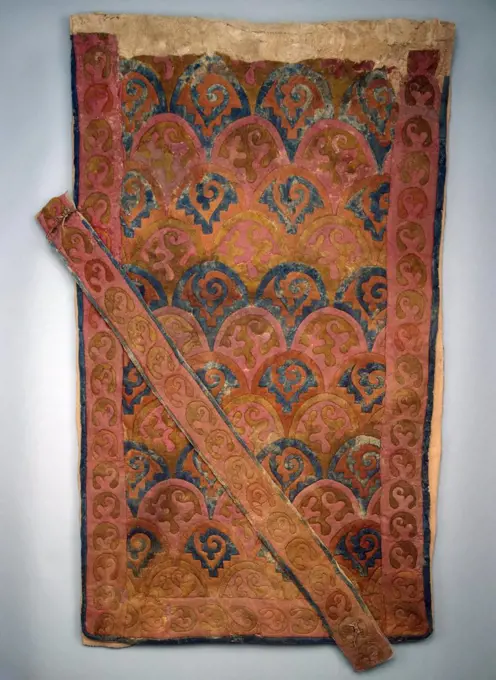
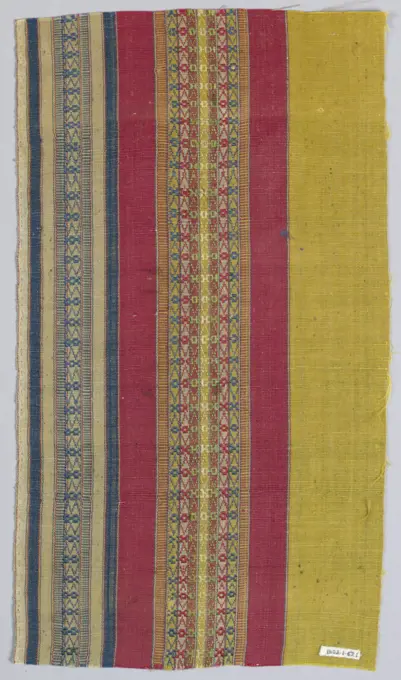
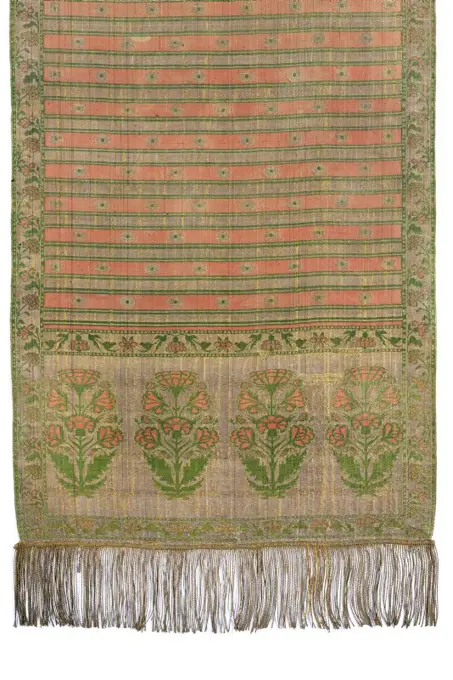
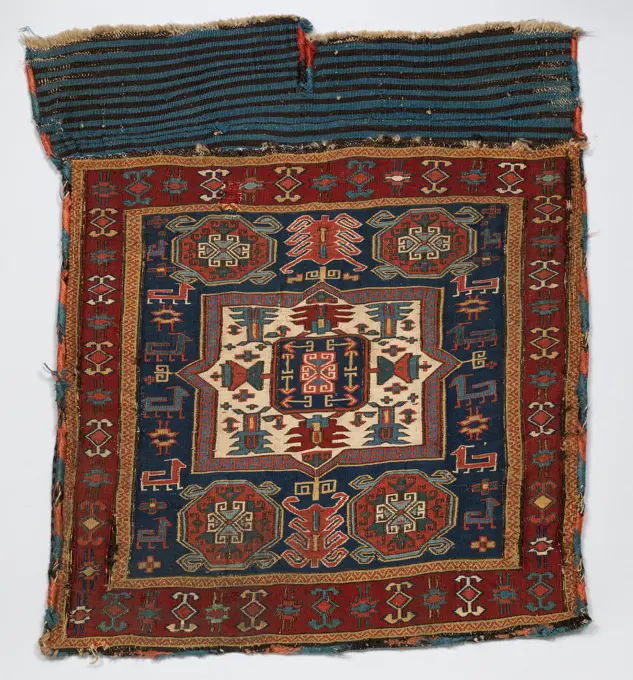
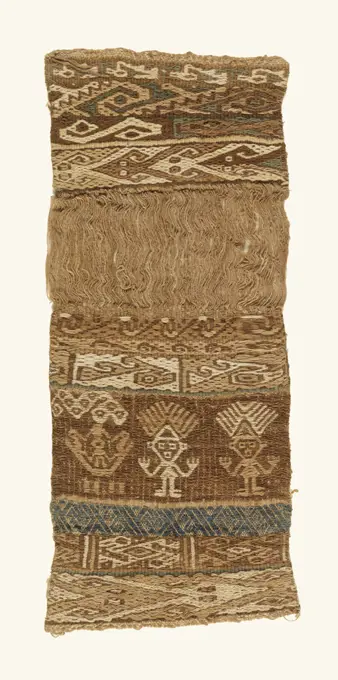
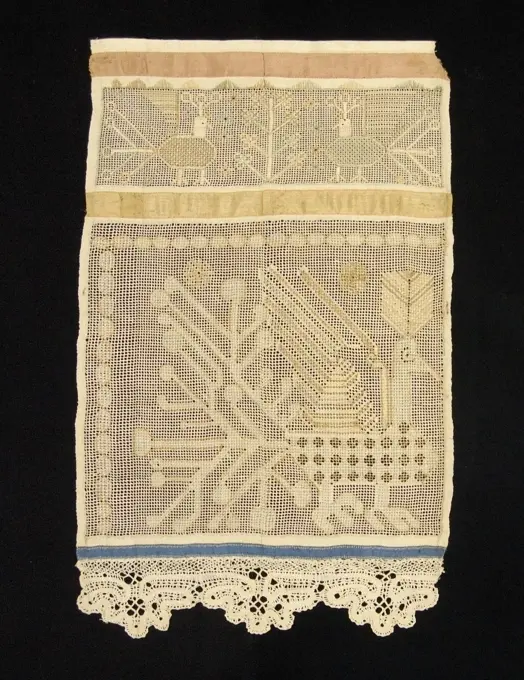
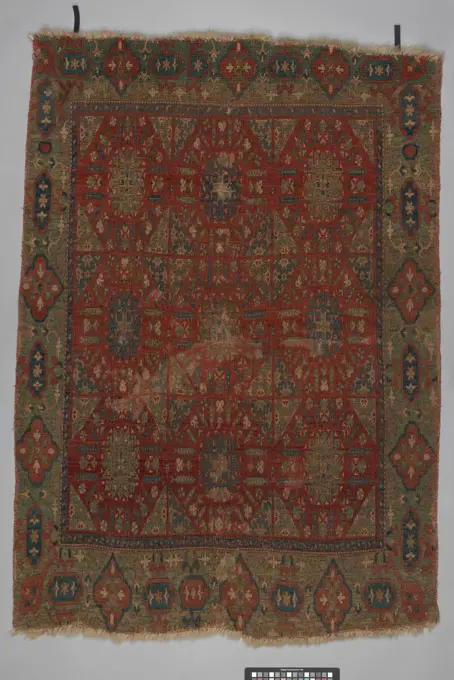
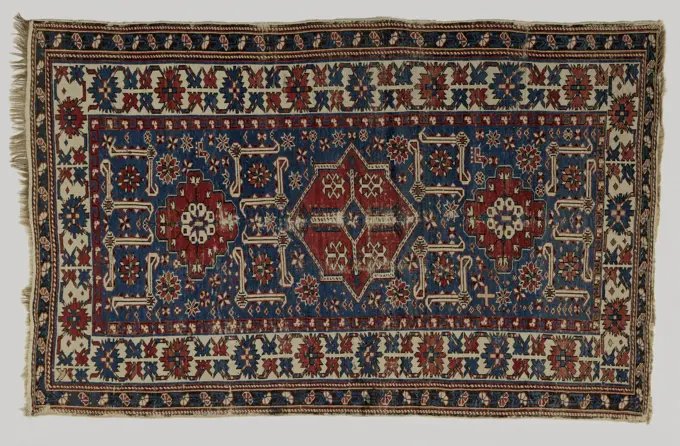
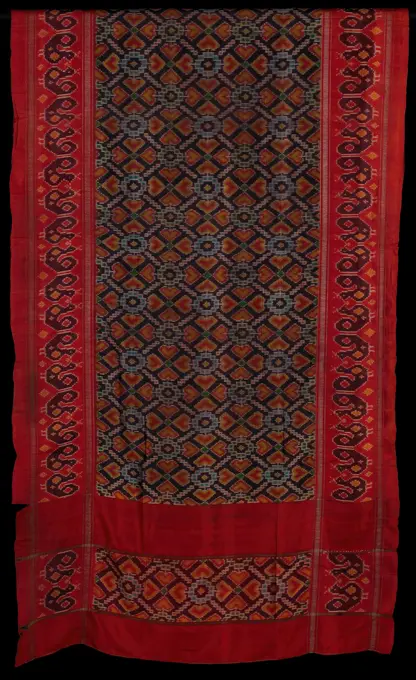
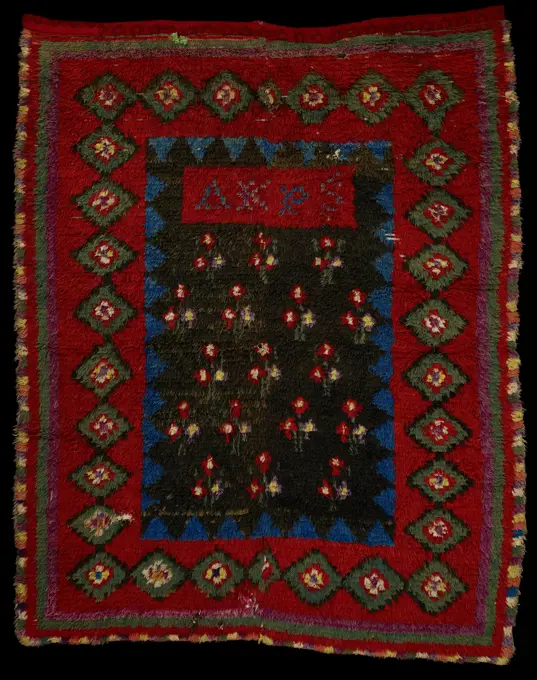
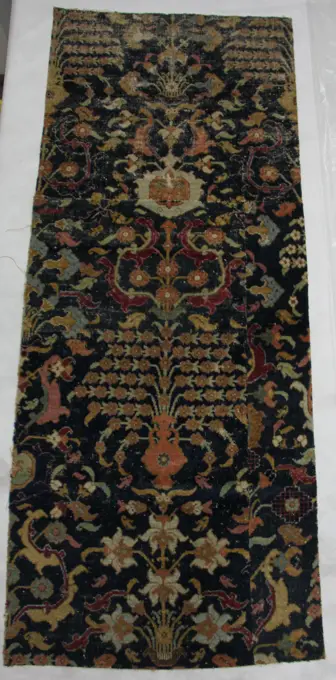
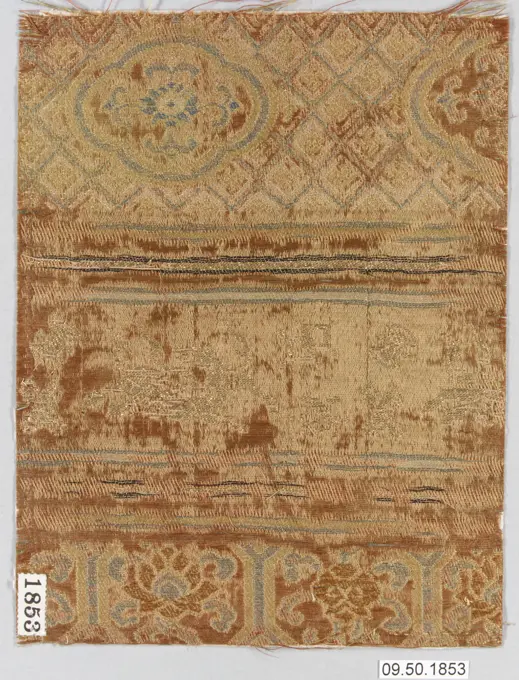
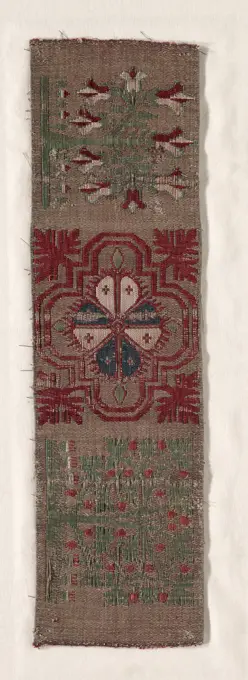
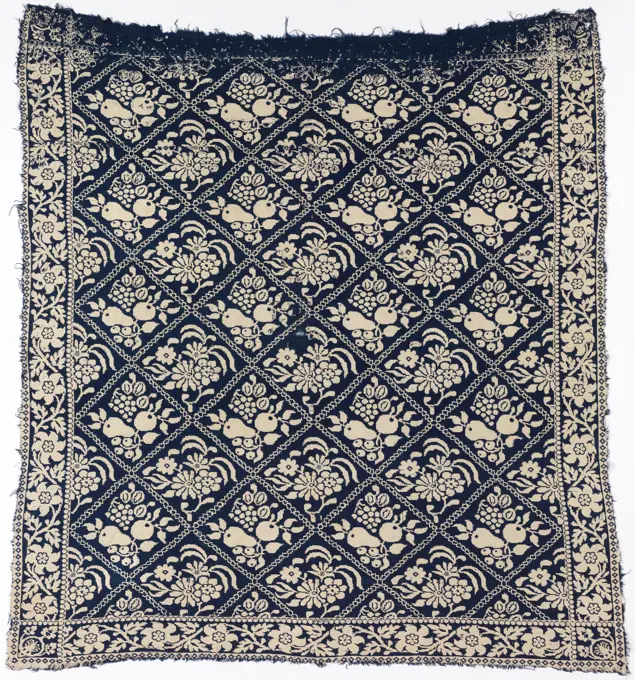
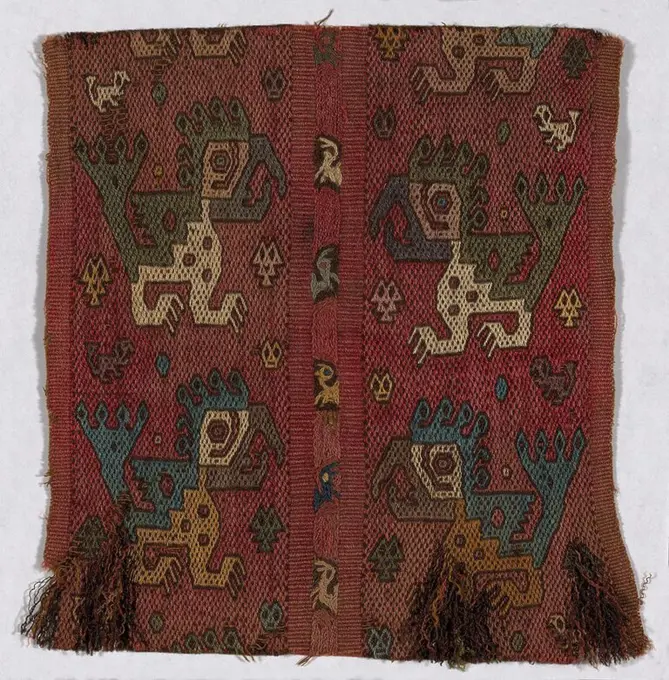
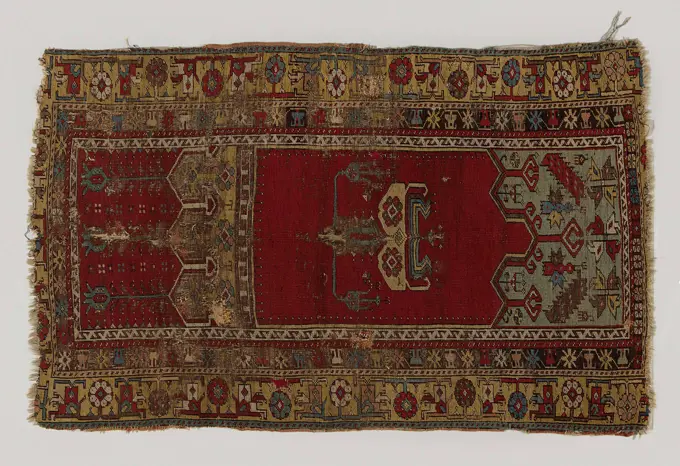
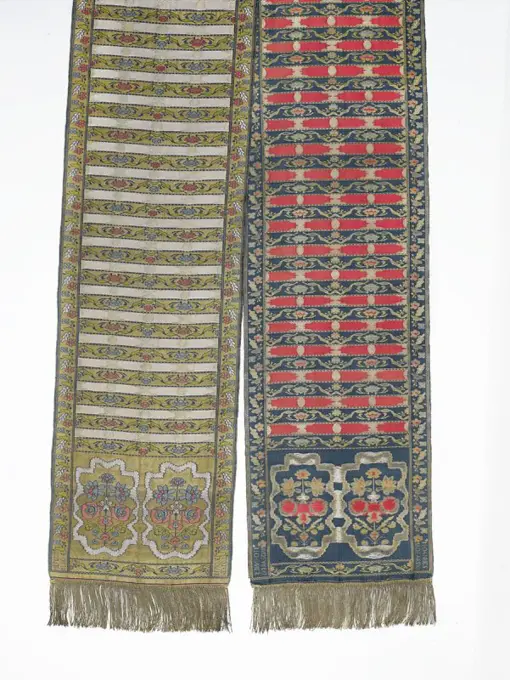
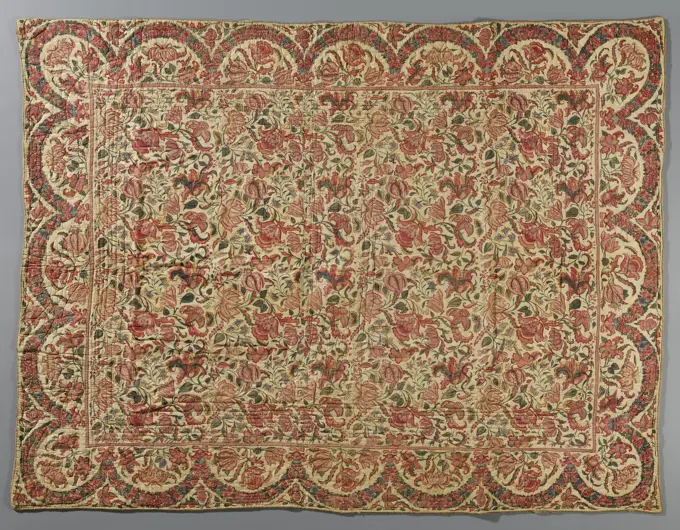
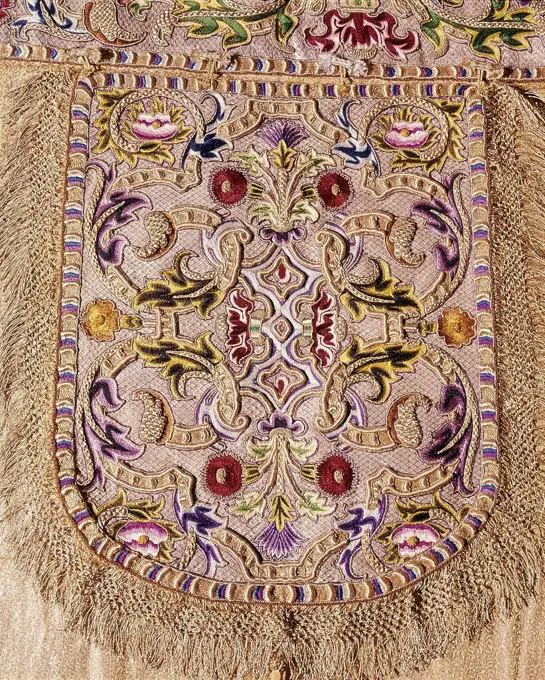
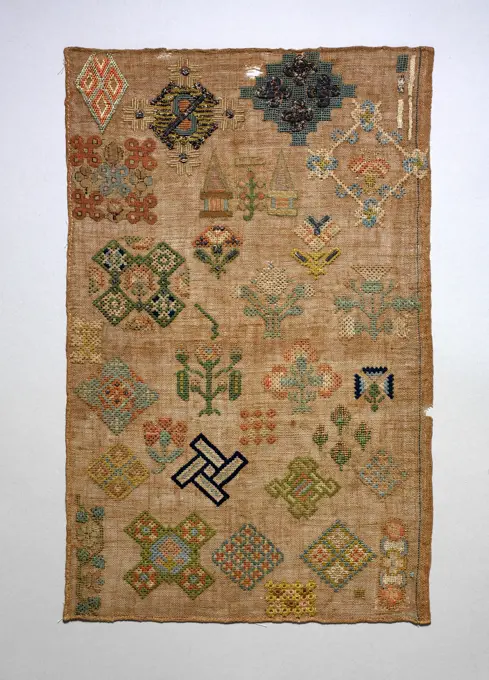
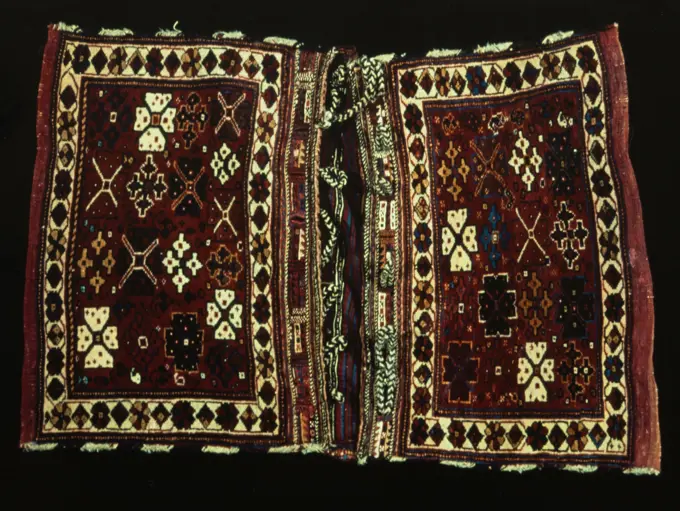
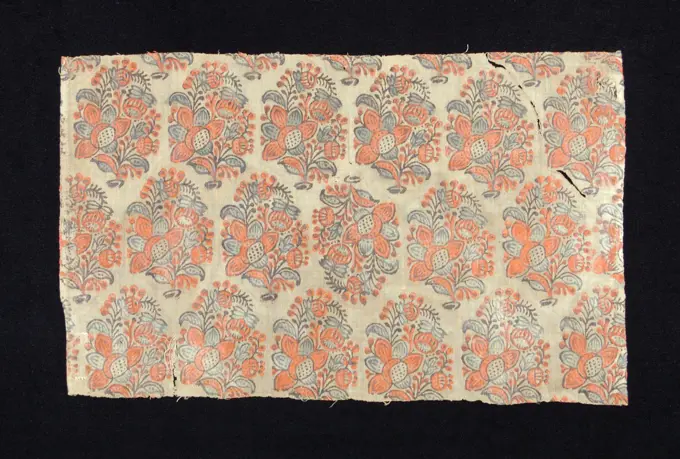
Fragment; silk on linen; Bequest of Marian Hague; 1971-50-11Sleeve fragment, c. 1980s, 13 x 19 7/8 in. (33.02 x 50.48 cm), Cotton, silk; needlework, China, 20th centurySampler, Medium: linen embroidery on linen foundation Technique: embroidered in satin, stem, cross and darning stitches on plain weave foundation, Vertical rectangle embroidered with seventeen horizontal bands of geometric or stylized floral design, in blue, green, pink and cream, now faded., Spain, 17th century, embroidery & stitching, SamplerCoverlet. Dated: c. 1940. Dimensions: overall: 35.7 x 26.8 cm (14 1/16 x 10 9/16 in.). Medium: watercolor and gouache on paper. Museum: National Gallery of Art, Washington DC. Author: Cornelius Christoffels.Bliżej Kultury unknownMan's textile (Selimut), 20th century, 64 x 39 1/8 in. (162.56 x 99.38 cm) (without fringe), Cotton, Indonesia, 20th centuryCarpet with Animal Design. Date/Period: 1100 - 1300. Carpet. Author: Turkey Unknown.Fragment (Spain); wool warp, silk weft; Warp x Weft: 8.3 x 17.7 cm (3 1/4 x 6 15/16 in.)Medaillon sufferer or diamonds, Anonymous, 1850 - 1900 Medailla rug or window medal rug, Kurdistan Midfield: Dark terrarood long distance in which two green blocks between which a large double tilt with top façade in green with red flower and orange star in the heart. The corners with large halved façade tops; Two in green and two in brown and strewn with floral motifs. Rand: in the same red color with branched star flowers. Inner and outdoor fores with speckles. East-Great Asia (Possible) wool Medailla rug or window medal rug, Kurdistan Midfield: Dark terrarood long distance in which two green blocks between which a large double tilt with top façade in green with red flower and orange star in the heart. The corners with large halved façade tops; Two in green and two in brown and strewn with floral motifs. Rand: in the same red color with branched star flowers. Inner and outdoor fores with speckles. East-Great Asia (Possible) woolSampler (Spain); Embroidered by Marya Lopez; silk embroidery on linen foundationFloral rug, Talish or Karabagh. Floral rug, Talish or Karabagh. Midfield: narrow ocher yellow field with log grid with re-angles connected. Within the mesh one star flower in red, bleu and brown. Edge: Quadruple. The second and widest is solid ice blue with wide-dialed volute flowers in red, white, omber and green. Equal indoor and outdoor dream of red with square flowers. The outer edge of tilting in blue and dark brown.Bidkleed, MELAS, , c. 1900 Bid rug, melas. Midfield: Narrow Oranjerode Mihrab in a congested gable and a flower stalk in white, brown, soft yellow, light blue and eggplant. Rows of sloping anjelieren or plate leaves are on white swallings that are floating above the gable top. Edges: double. On a very wide gold tube inner edge are diamond-shaped and four-part flowers, the one in eggplant, the other in light and dark red, white and light green. There is one outdoor zoom, in eggplant, with climbing carnations to the left and right. Midfield and outside zoom surrounded by interlocking triangles. Melas wool Bid rug, melas. Midfield: Narrow Oranjerode Mihrab in a congested gable and a flower stalk in white, brown, soft yellow, light blue and eggplant. Rows of sloping anjelieren or plate leaves are on white swallings that are floating above the gable top. Edges: double. On a very wide gold tube inner edge are diamond-shaped and four-part flowers, the one in eggplant, the other in light and dRitual Cloth(Osap)Fringe early 19th century Italian. Fringe 224933Oriental carpet decorated with flower vines. Oriental tape of knotted wool. Midfield: Infinite report of brick red and white zigzag tires, about the width, with dark blue rank and flower. Three edges: the middle and widest has a dark blue fond on which multicolored octos, with rubbing contours and diamond filling, connected by a straight stem with cross-tight. The inner edge is light yellow, the outer edge brick red with anjerrankines. On the short sides, three narrow hems of flat weave ("beard") with squares, the middle in red and green, which has white and dark blue on either side. Long braided fringes with colored brushes. In excellent condition. High pool, gift sides.Woman's head covering, c. 1925, 82 x 58 in. (208.28 x 147.32 cm), Cotton; tie-dye, India, 20th centuryBand, Medium: silk on linen Technique: counted stitch, double running and running (darning) stitch embroidery on plain weave; long end of a wrapping stitch used for fringe, Band with a red embroidered design of angular lines forming hexagons and conventionalized leaves. Border, fringe and edging in red silk., Italy, 16th century, embroidery & stitching, BandSaddle cloth, Ancient Altaian, Pazyryk Burial Mounds  Brocade, late 1800s. Indonesia, Bali, late 19th century. Brocade, silk; overall: 140.3 x 76.2 cm (55 1/4 x 30 in.).Fragment, Medium: silk, linen Technique: warp-faced plain weave with supplementary warp forming float patterning, Vertical stripes of varying width. Broad band of deep yellow at one side., North Africa, 17th-18th century, woven textiles, FragmentShroud (Sekomandi,Lelesepun)Kontusz sash. Madżarski, Jan (fl. ante 1757-ca 1800), manufacturer, Persjarnia Michała Kazimierza Radziwłła (Nieśwież ; wytwórnia pasów ; ante 1743-1768), factoryFace of half a Double Saddlebag (Khorjin) ca. 1850 This face, together with # 2015.490.36, once formed a double saddlebag of the Shahsevan tribe, whose name means "those who love the king." The historical migratory range of these Turkic nomads reaches from the southwest shores of the Caspian Sea to the southern part of Transcaucasia. Art historians have identified Shahsevan weavings, including a variety of small-format bags, only in the past half century.Many Shahsevan weavings from the nineteenth and twentieth centuries, especially those with centralized geometric designs - such as seen here - show a striking relationship with Anatolian carpets from the fifteenth and sixteenth centuries. Often compositions are dominated by an octagonal star-like central medallion. Many of the motifs found on Shahsevan textiles are thought to be centuries-old tribal emblems, a symbolic language that today we are frequently unable to decipher.. Face of half a Double Saddlebag (Khorjin). ca. 1850. Wool (Textile, Medium: cotton Technique: plain weave with paired warp and supplementary weft, Unfinished woven sampler with bands of geometric pattern, figures, and birds., Peru, 11th-15th century, woven textiles, TextileTowel border 1800-1850 Russian. Towel border 173361'Chessboard' Carpet late 16th-early 17th century The field of the so-called "Chessboard" carpet is usually applied on a vermillion ground and divided into rectangular compartments, each containing an eight-pointed star composed of an endless knot of interlaced bands. The stars are encircled by small abstract radiating trefoil ornaments resembling fleur-de-lys, cypresses, and rosettes. On the large border that frames the central compartments of this design, poly-lobed lozengelike medallions alternate with cartouches. Stylized fleur-de-lys fill these motifs as well as the blue-green background.. 'Chessboard' Carpet 452067Shawl 1851 French. Shawl 104816Ceremonial Weaving(Paporitonoling)Cushion Cover, 1700s. Dagestan, 18th century. Embroidery, silk; overall: 104.5 x 63.2 cm (41 1/8 x 24 7/8 in.).Sampler, Medium: cotton embroidery on linen foundation Technique: embroidered in back, chain, stem, running, and cross stitches with withdrawn element work on plain weave foundation, Long horizontal sampler with geometric pattern bands arranged in three columns. The left column has a lion and a male figure worked in black with withdrawn element work above. The center column is worked entirely in beige, the right column is worked in beige and orange threads., Spain, 19th century, embroidery & stitching, SamplerEastern carpet ,, 1800 - 1900 Eastern carpet, medailla rug, of which midfield is decorated with three medallions on a blue distance. In the gap rosettes and arabesks and smaller animal, star and cross motifs. The middle edge is decorated with sterroettes. Caucasus wool Eastern carpet, medailla rug, of which midfield is decorated with three medallions on a blue distance. In the gap rosettes and arabesks and smaller animal, star and cross motifs. The middle edge is decorated with sterroettes. Caucasus woolFragment of Border, 1600s. India, 17th century. Velvet; overall: 34.3 x 70.2 cm (13 1/2 x 27 5/8 in.).Sari, 20th century, 98 1/2 x 46 in. (250.19 x 116.84 cm), Silk, metallic threads, ikat, India, 20th centuryDouble Rya, 18th century, 71-1/2 x 55 in. (181.6 x 139.7 cm), Wool, cotton, flax; rya technique, plain weave, Sweden, 18th century, Rya bedcovers were extremely popular in many parts of Sweden from the late 16th century through the 19th century. Placing the woolen pile of a rya next to the body provides an extra layer of insulation that traps the sleeper's body heat, thus increasing its warming capabilities. The earliest ryas featured a relatively plain pile surface and moderately decorative ground fabric. By the end of the seventeenth century, however, the practical use of ryas began to diminish and their decorative possibilities took on increased importance. Elaborately patterned ryas became important as wall hangings and rugs and indicated the wealth and prestige of the owners.Prayer dress. Barred, so-called Kumarju-Kuma / Kümurçü-Kula. Blue mirab stem with flowers in vase, blue border.Close-up of a Salor rug, TurkmenistanSleeve Band Made 401 CE-600 CE Egypt. Wool, tapestry weave . CopticShrub Carpet Fragment 17th century Composed of four individual pieces this fragment once belonged to the center field of a much larger carpet from Khurasan. Although fragmentary, one can identify the overall composition of the original carpet. The overall composition would have been dominated by a tall vertical symmetrical axis composed of a vase, blossoming radiant flowers, and stylized vegetal motifs, including lotuses and scrolling split palmettes, all against a deep blue ground. Textiles with this design are sometimes referred to as "shrub" carpets, after the floral bouquet, and belong to a group known as "vase" or "garden" carpets. The Met collection has only a few such weavings, which illustrate the importance of flowers and gardens in Persian art and culture.. Shrub Carpet Fragment. 17th century. Cotton (warp and weft), wool (pile); asymmetrically knotted pile. Made in Iran. Textiles-RugsSarong, Medium: silk, metallic thread Technique: weft ikat with supplementary weft, Complete sarong with two heavily brocaded ends showing the tumpal motif, triangles, and a small allover pattern of stars and rosettes. Central section of weft ikat predominantly in shades of red. Side borders have metal thread brocading., Palembang, Sumatra, Indonesia, mid- 18th-19th century, printed, dyed & painted textiles, SarongFragment of Gold Cloth, 1800s. India, 19th century. Brocade; silk, gold and silver threads; overall: 188 x 238.8 cm (74 x 94 in.).Square. Germany. Date: 1401-1500. Dimensions: 45.8 x 57.2 cm (18 x 22 1/2 in.). Wool, twill weave; embroidered with silk. Origin: Germany. Museum: The Chicago Art Institute, Chicago, USA.QuiltCotton bedspread with multi -colored embroidery; Tamboering work ,, c. 1650 - c. 1750 Bedspread with multi -colored embroidery; Tamboering work. The pattern has a wide edge filled with spiral vines with various flowers. Midfield has thrown butas (flower branches) and in the middle an oval medallion in which a tantrian and flower pattern. The corners of midfield are filled with half oval medallions also filled with a tantrian and flower pattern. Eastern textile. In the cotton (textile). silk embroidering Bedspread with multi -colored embroidery; Tamboering work. The pattern has a wide edge filled with spiral vines with various flowers. Midfield has thrown butas (flower branches) and in the middle an oval medallion in which a tantrian and flower pattern. The corners of midfield are filled with half oval medallions also filled with a tantrian and flower pattern. Eastern textile. In the cotton (textile). silk embroideringEastern carpet ,, 1800 - 1900 Eastern carpet of knotted wool with Herrati pattern and seven edges, the widest of which is decorated with lotus flower vines enclosed by Arabesken. Ferahan wool Eastern carpet of knotted wool with Herrati pattern and seven edges, the widest of which is decorated with lotus flower vines enclosed by Arabesken. Ferahan woolOriental carpet, Anonymous, 1800 - 1850 Oriental carpet, medailla, with two eight -pointed star forms in midfield, consisting of concentric medallions. Around spreading motifs. The outer edge is decorated with a 'wine glass-and-leaf' pattern. Caucasus wool Oriental carpet, medailla, with two eight -pointed star forms in midfield, consisting of concentric medallions. Around spreading motifs. The outer edge is decorated with a 'wine glass-and-leaf' pattern. Caucasus woolTextile Sample from Sample Book 19th century Japan. Textile Sample from Sample Book. Japan. 19th century. Silk. Textiles-WovenTable cover with fringe ca. 1885 American. Table cover with fringe 20175Shawl ca. 1850 Indian (Kashmiri). Shawl 93881Towel border 1780-1820 Russian. Towel border 175589Trouser Band Made 1875-1900 China. Forty-four pairs and eight odd pieces of embroidered sleeve, ankle bands, etc. on gauze. . Han-ChineseFragment 18th century Japan. Fragment 67903Saddle bag, decorated with rasterwork with swastikas, Jaffi Volk, c. 1800 - c. 1900 Saddle bag with gridwork, Jaffi Kurdistan-Mosul. The midfield is divided into windows that are filled with swastikas. The edge is decorated with rosettes separated by a cross line with block band decor. The back is flat woven with wide stripes. Kurdistan ketting: wool Saddle bag with gridwork, Jaffi Kurdistan-Mosul. The midfield is divided into windows that are filled with swastikas. The edge is decorated with rosettes separated by a cross line with block band decor. The back is flat woven with wide stripes. Kurdistan ketting: woolRugs and Carpets: Azerbaijan - Caucasus region - 19th century. Chaili carpetWoven Band, 1300s - 1400s. Germany, Cologne, 14th-15th century. Compound twill weave, silk; overall: 40.7 x 11.5 cm (16 x 4 1/2 in.).Trouser Band Made 1875-1900 China. Design of dragons, butterflies, dogs, black and white border, embroidered on gauze. . Han-ChineseCoverlet (USA); wool; 1961-178-1Saddle bag, decorated with grid work with hook-crossing flowers. Saddle bag with grid work, Jaffi Kurdistan-Mosul. The midfield is divided into windows that are filled with hook-crossing flowers. The edge is decorated with rosettes separated by a cross line with block tape decor. The back is flat woven with wide stripes.Altar piece (part of a chasuble) Made 1601-1700 Spain. White satin embroidered with couched rose, blue, and gold cord. Red velvet orphrey. .Towel border. Culture: Russian. Dimensions: 16 x 11 in. (40.6 x 27.9 cm). Date: 1840-70.This object is from the collection of Natalia de Shabelsky (1841-1905), a Russian noblewoman compelled to preserve what she perceived as the vanishing folk art traditions of her native country. Traveling extensively throughout Great Russia, she collected many fine examples of textile art of the wealthy peasant class. From the 1870s until moving to France in 1902, Shabelsky amassed a large collection of intricately embroidered hand-woven household textiles and opulent festival garments with rich decoration and elaborate motifs. The Brooklyn Museum holdings include many fine examples including the majority of the garments. Portions of Shabelsky's collection are also housed at the Museum of Fine Arts, Boston, the Cleveland Art Museum, and the Russian Museum of Ethnography in St. Petersburg.Kilim or split tapestry is a hand weaving technique most usually used to produce heavyweight rugs. Kilim weaves Head Cloth for a Man (PiluSaluf)Oosters tapijt.Oriental carpet, runner format, with diamond-shaped tendrils, filled with rosette flowers interspersed by small diamond-shaped medallions with palmets. Three edges of which the inner is decorated with a floral and the outer with a tilting edge.Doek, Anonymous, 1900 - 1949 Cloth with animal figures. Laos cotton (textile) Cloth with animal figures. Laos cotton (textile)Textile with Stars and Swastika 15th century German. Textile with Stars and Swastika 463249Head Cloth(Limar)Fragment (Japan)Floral Caucasian carpet unknownFragment. Probably central coast, Peru. Date: 750 AD-1100. Dimensions: 22.2 x 24.1 cm (8 3/4 x 9 1/2 in.). Cotton and wool (camelid), bands of two-color complementary weft plain weave with inner warps, double cloth, and plain weave; embroidered with wool (camelid) in chain stitches. Origin: Peru. Museum: The Chicago Art Institute, Chicago, USA. Author: Chancay.Oriental carpet. Oriental carpet, prayer cloth, with red mihrab with troul wall. Light blue corner pieces with saw blade motifs. Widest edge is decorated with rosette and arabesk flowers.Kontusz sash. Manufaktura Karola Stanisława Radziwiłła (Słuck ; wytwórnia pasów ; ca 1767-1790), manufacture, Madżarski, Jan (fl. ante 1757-ca 1800), manufacturerTowel; silk embroidery on linen foundationSitsen bedspread with an edge of garlands, anonymous, c. 1700 - c. 1725 Sitsen bedspread with a rectangular midfield filled with flower branches. A border is filled along midfield that is filled with a continuous pendulum garlands between which red bows. The arches are filled with flowers. The bedspread is fed with red taf side. Eastern textile. Coromandelkust cotton (textile). silk. taffeta printing Sitsen bedspread with a rectangular midfield filled with flower branches. A border is filled along midfield that is filled with a continuous pendulum garlands between which red bows. The arches are filled with flowers. The bedspread is fed with red taf side. Eastern textile. Coromandelkust cotton (textile). silk. taffeta printingApron probably 19th century Romanian. Apron 98434Textile Fragment 17th century. Textile Fragment 454544Sampler (Mexico); linen, silkWoman's ceremonial aksu (overskirt), 19th century, 45 11/16 x 47 3/8 in. (116.05 x 120.33 cm), Alpaca, Bolivia, 19th centuryShoulder cloth, Anonymous, 1900 - 1949 Shoulder cloth with geometric motifs. Timor cotton (textile) Shoulder cloth with geometric motifs. Timor cotton (textile)Fragment. Spain. Date: 1201-1400. Dimensions: 10.3 x 13.2 cm (4 1/8 x 5 1/8 in.)Repeat: 8 x 8 cm (3 1/8 x 3 1/8 in.). Silk and gilt animal substrate wrapped silk, weft-faced three and four color complementary weft plain weave with inner warps and areas of detached plain weave of inner warps and complementary ground wefts (red). Origin: Spain. Museum: The Chicago Art Institute, Chicago, USA. Author: Islamic.Sari 18th century. Sari 446810Shawl, Medium: silk and wool Technique: twill weave with supplementary weft patterning, Paisley design on red cloth. Six large cone motifs on both ends of shawl. Plain red silk has been stitched to the paisley borders. A brocaded band is stitched all around the shawl. Light blue, green, dark brown, and red are the predominant colors., France, 19th century, woven textiles, ShawlWaist Wrapper (Sarung,Tambal)Fragment; silk, metallicCurtain, with floral design on yellow fond. Silk curtain with floral design on a yellow fond, from the small dance hall of Palace Noordeinde.Fragment Made 1625-1675 Italy. Silk, plain weave with supplementary patterning warps and supplementary pile warps forming cut, uncut, and voided velvet .Sampler, Medium: silk and metal thread embroidery, linen foundation Technique: cross and gobelin stitches on plain weave, Divided into seven sections, each showing different patterns (four geometric, three floral); fragments of gimp used as edging and as ornament on the embroidery, Germany, 18th century, embroidery & stitching, SamplerCover Made 1601-1700 Turkey. Linen, plain weave; embroidered with silk in running stitches (twill darning); lined with cotton, plain weave .Cover sheet Saddle bag decorated with windows; Outer edge with rectangles and rosette flowers. Cover magazine of a saddle bag, Jaffi-Kurdistan Mosul, of which the midfield is decorated with windows. The outer edge is divided into rectangles with rosette flowers.CASULLA BORDADA NAPOLITANA - SIGLO XVII. Location: CONVENTO DE LAS CLARISAS / MUSEO DE ARTE SACRO. MONFORTE DE LEMOS. LUGO. SPAIN.Sampler Made 1651 England. Linen, plain weave; embroidered with silk and linen . Mary BidgoodBedding Bag Side Panel ca. 1850-75. Bedding Bag Side Panel. ca. 1850-75. Wool and cotton; sumak brocaded, tapestry weave. From Caucasus, probably Karabakh. Textiles-Woven-BrocadeCloth; PA SI. Cloth with geometric motifs.Square scarf with a multi -colored, woven pattern of botas, anonymous, c. 1850 - c. 1855 Wool square scarf, with a multi -colored, woven pattern of botas Paisley (possibly) whole: Wool Wool square scarf, with a multi -colored, woven pattern of botas Paisley (possibly) whole: WoolCoverlet Made 1820-1840 Pennsylvania. Cotton and wool, plain weave with supplementary wefts in composite point twill weave (star work, multiple shaft); two loom widths joined; with attached plain weave strip with weft fringe .Fragment van de rand van een Oosters tapijt.Edge fragment of an oriental carpet. Fine spreads with flowers, rosettes and arabes on a terra surface. White indoor zoom with angular tendrils and cloud tires.Embroidered spot sampler first half 17th century British Spot samplers feature motifs that are scattered in a seemingly random fashion over the surface of the foundation fabric, usually linen. These samplers are rarely signed or dated, and often include motifs that are only partially worked, leading to the conclusion that this type of sampler was made as a personal stitch reference for its maker, and not for display, as band samplers were signed by student embroiderers. The sampler features flowers, obelisks on pedestals, and an "S" motif, in addition to geometric designs that are of the type that would have been used to decorate small purses, cushions, and other accessories.. Embroidered spot sampler 228218Sleeve cloth; Kain Kebat; Bidang. Sleeve cloth with geometric motifs.Woman's garment (Kira), 20th century, 106 x 52 in. (269.24 x 132.08 cm), Silk, cotton; discontinuous supplementary weft patterning, Bhutan, 20th centuryRug, belonging to Ameblement design Jan De Meyer. Violet Fond., Jan de Meijer, 1925 - 1929 Rug, belonging to Ameblement design Jan De Meyer. Violet Fond. Note: A few pieces of the ameblement were already given to us in 1973 by Mr and Mrs Loeb-Levenbach in Voorschoten. Western rug. Deventer (possibly) wool Rug, belonging to Ameblement design Jan De Meyer. Violet Fond. Note: A few pieces of the ameblement were already given to us in 1973 by Mr and Mrs Loeb-Levenbach in Voorschoten. Western rug. Deventer (possibly) woolFragment; silk and metal threadSaddle bag, c. 1890, 45 x 29 1/2 in. (114.3 x 74.9 cm), Wool; woven fabric, embroidery, knotting, twining, Iran, 19th centuryTextile 1700-1899 Russian. Textile 173405