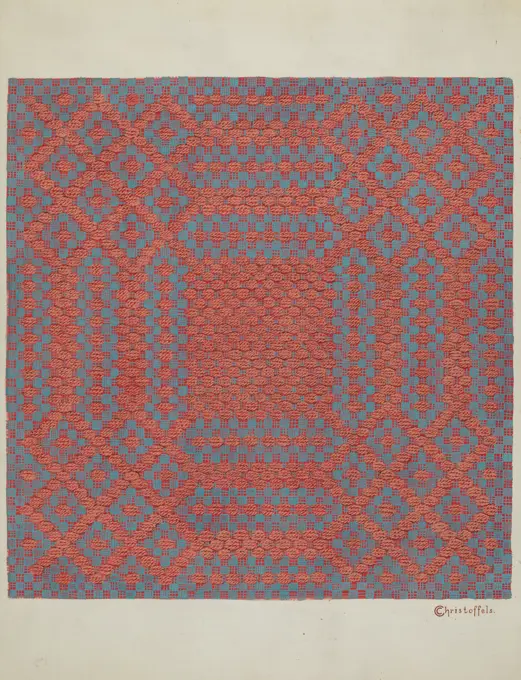
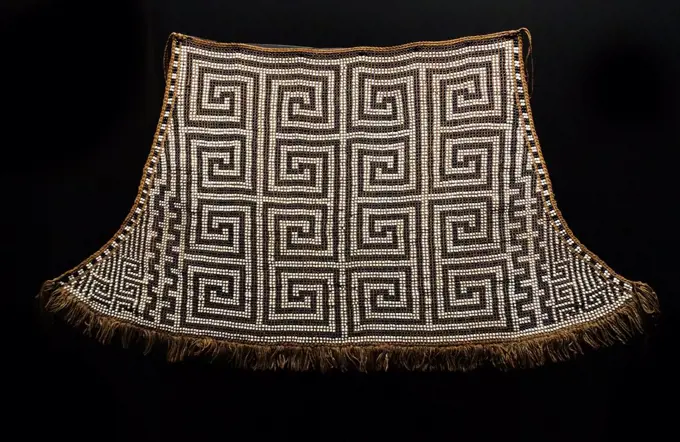
Decorative Textile Fragments

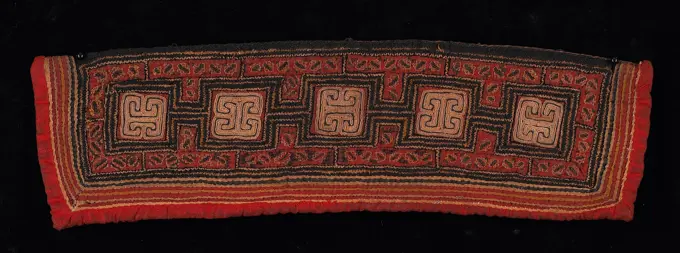
A collection of vibrant textile fragments showcasing intricate embroidery and designs in various mediums from different cultures and centuries, featuring floral and geometric patterns.
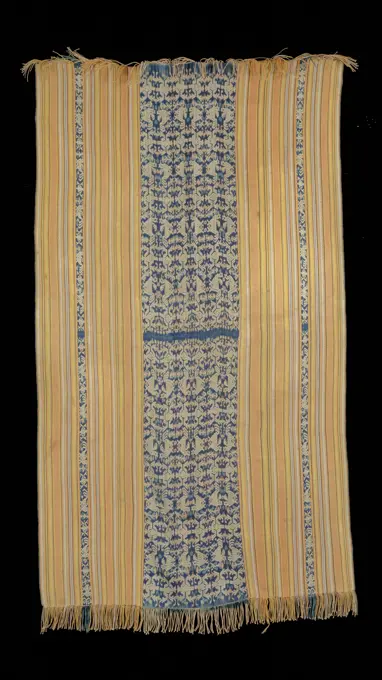
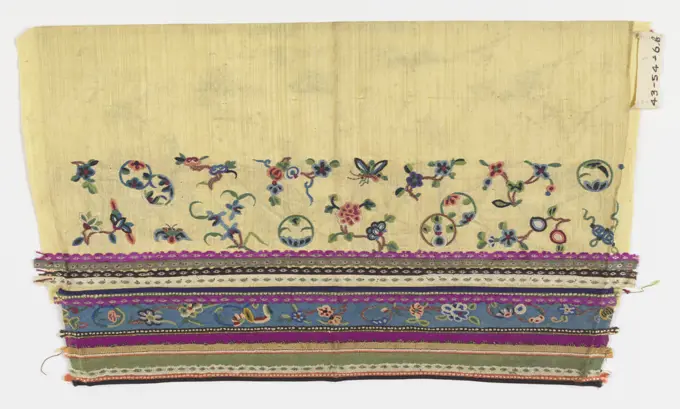
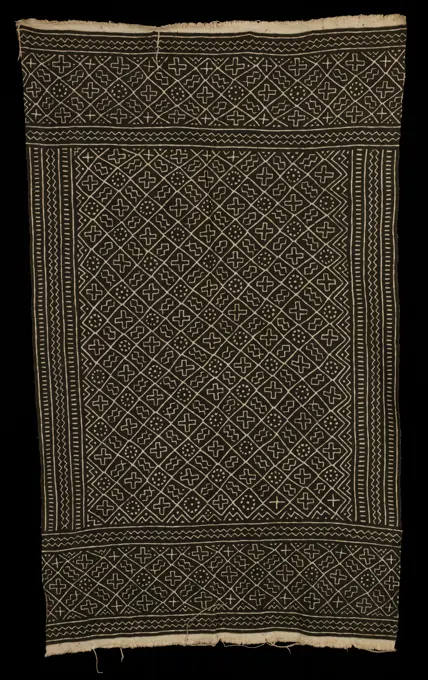
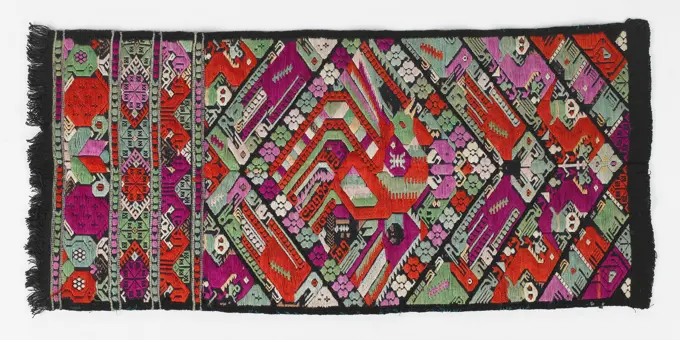
Man's textile (Selimut), 20th century, 64 x 39 1/8 in. (162.56 x 99.38 cm) (without fringe), Cotton, Indonesia, 20th century
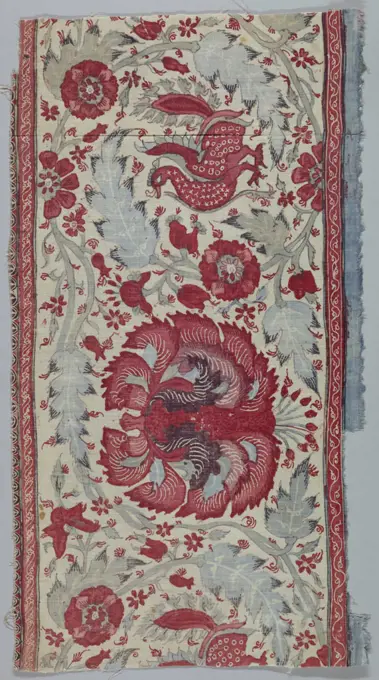
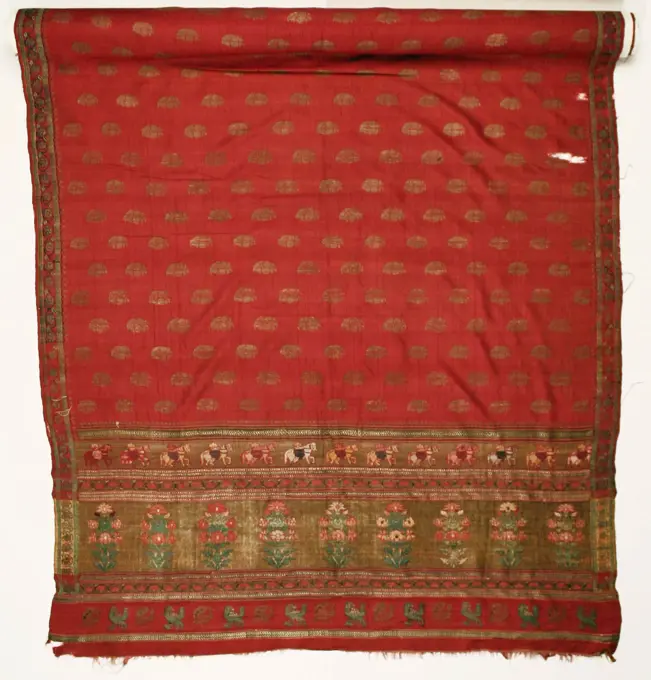
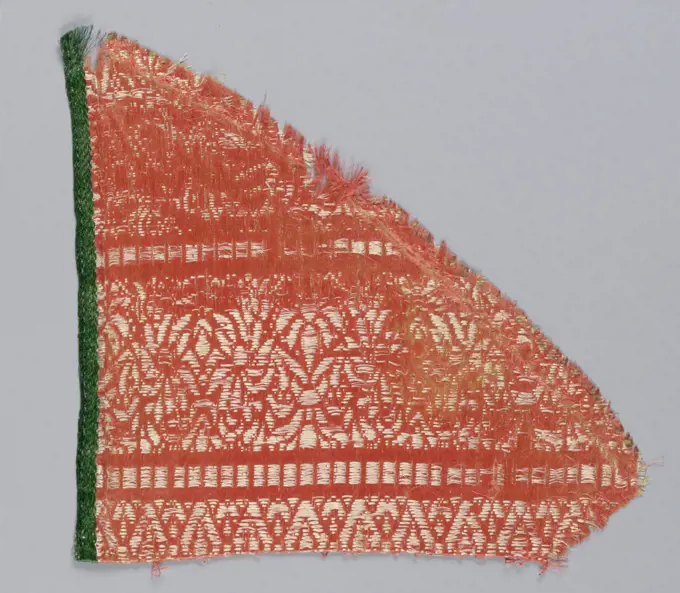
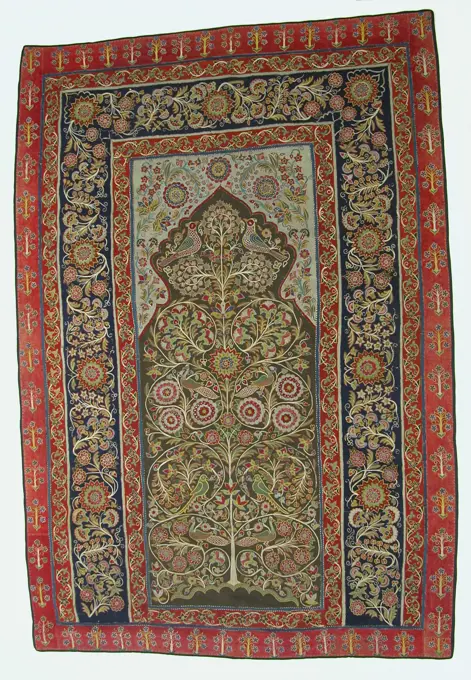
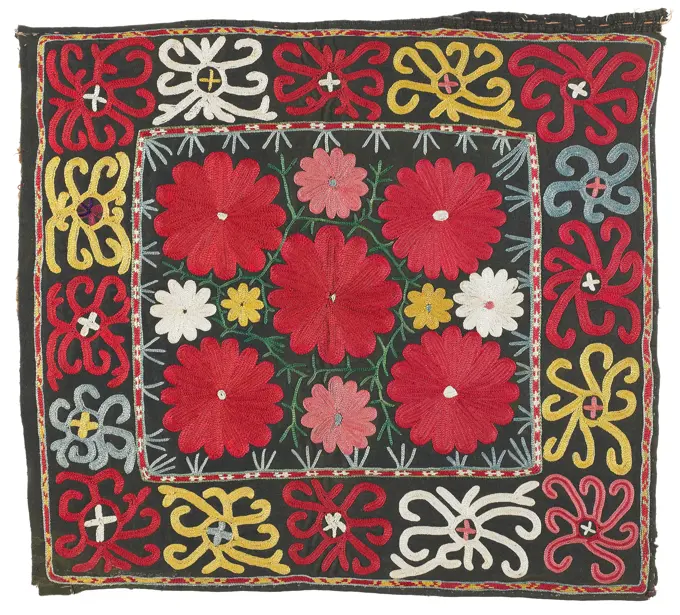
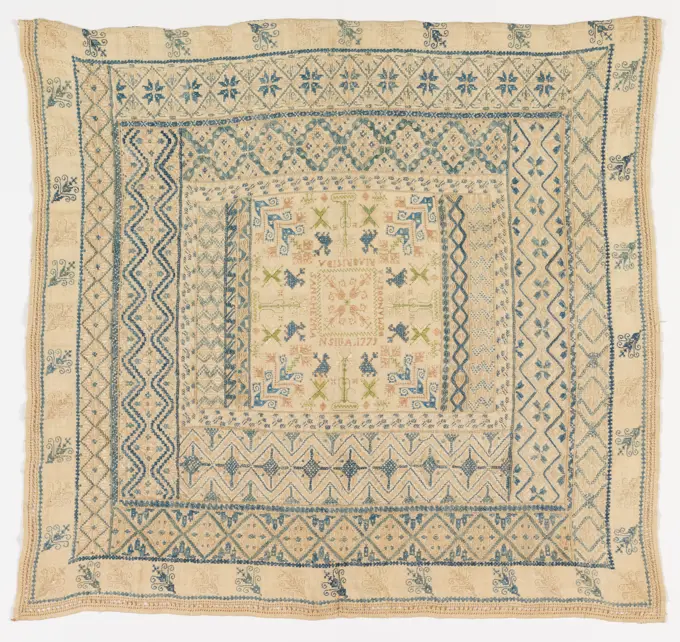
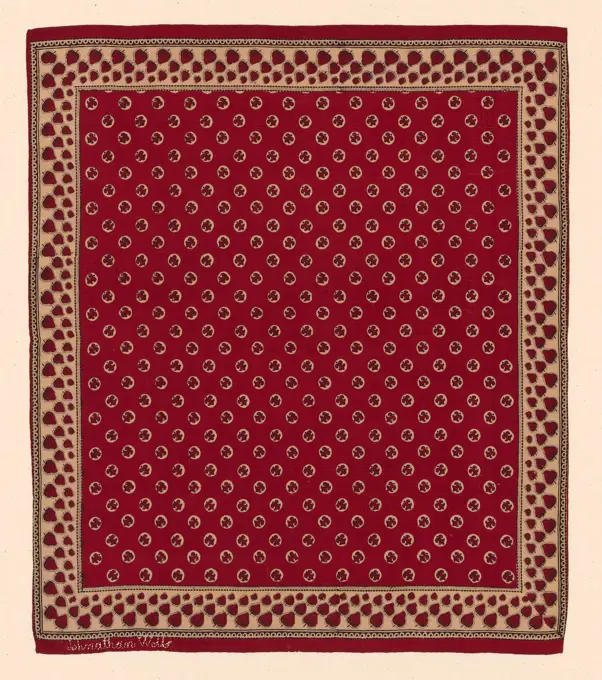
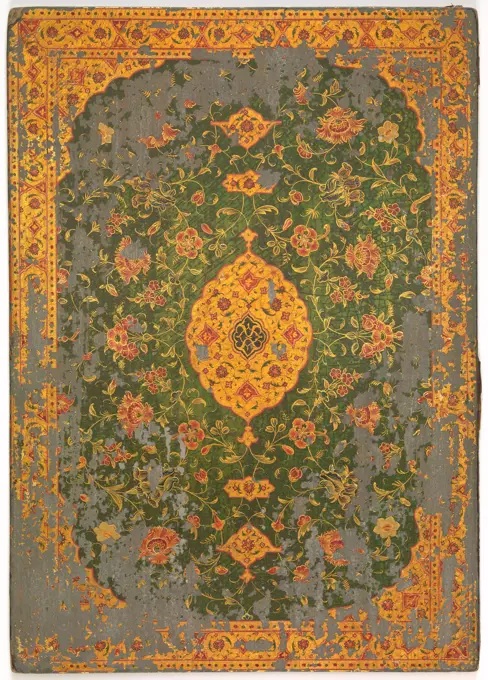
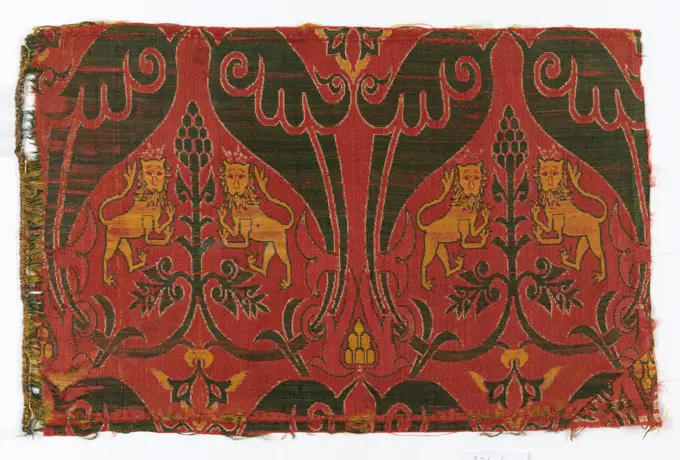
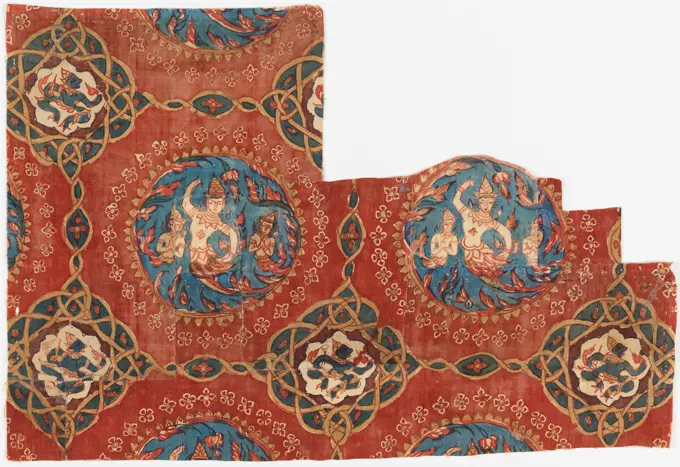
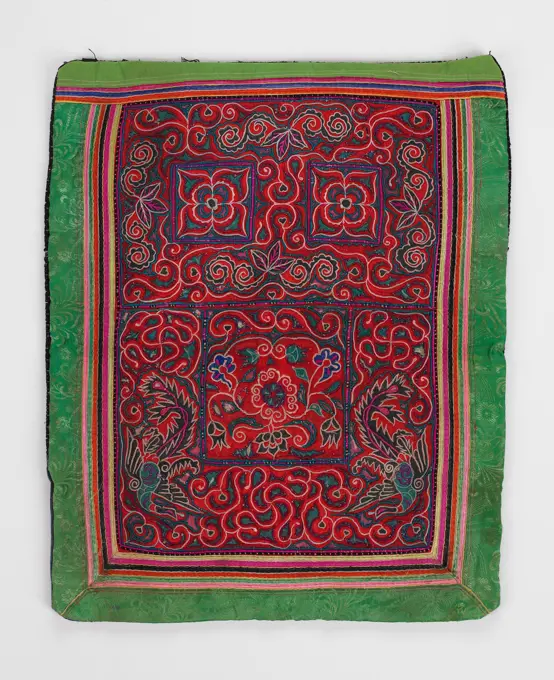
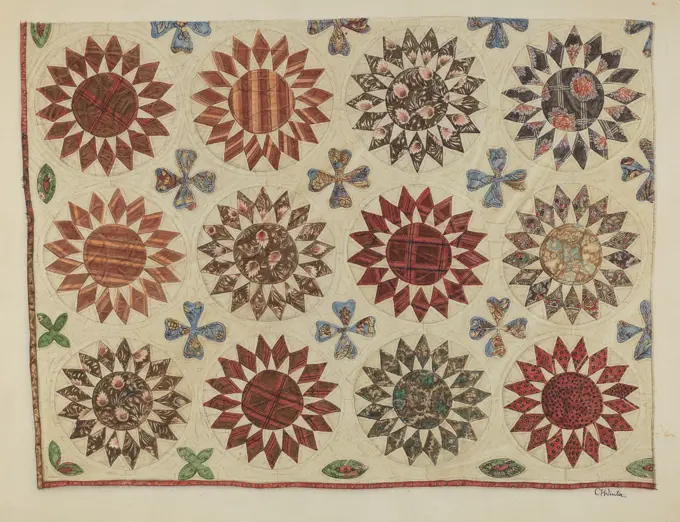
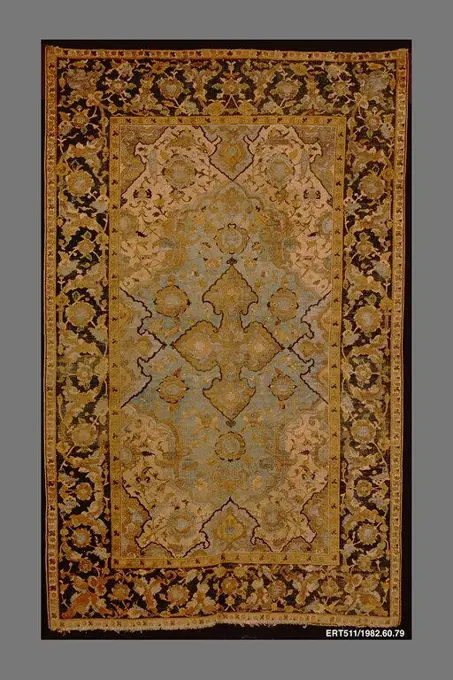
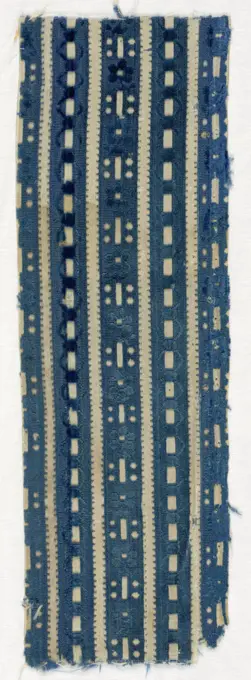
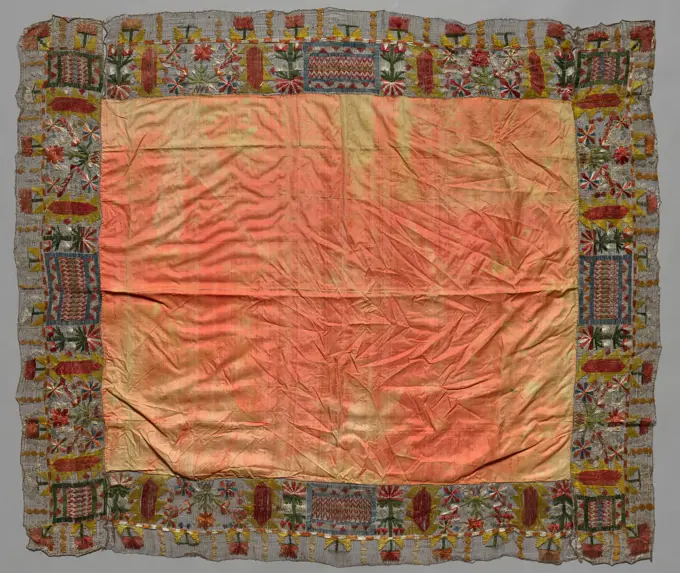
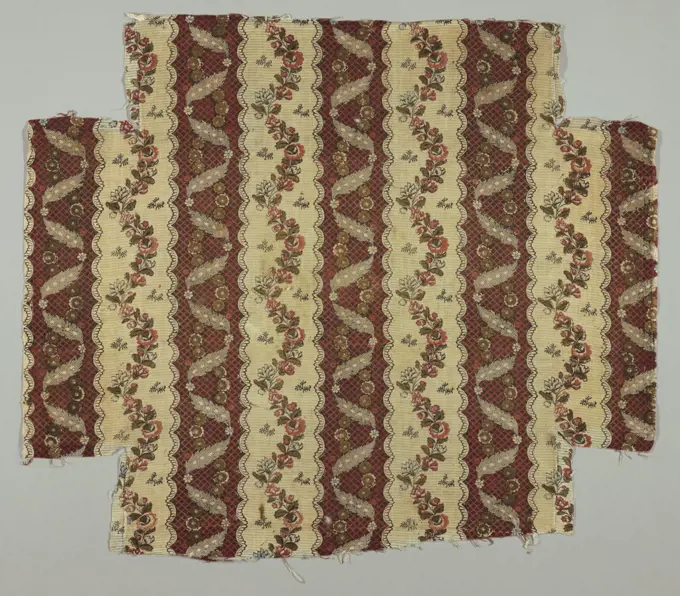
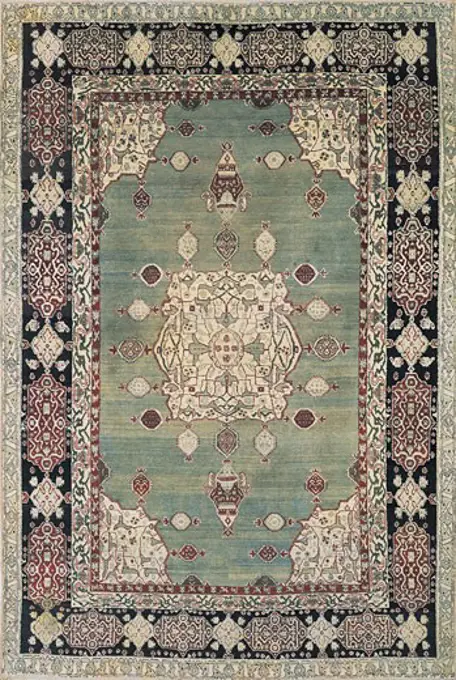
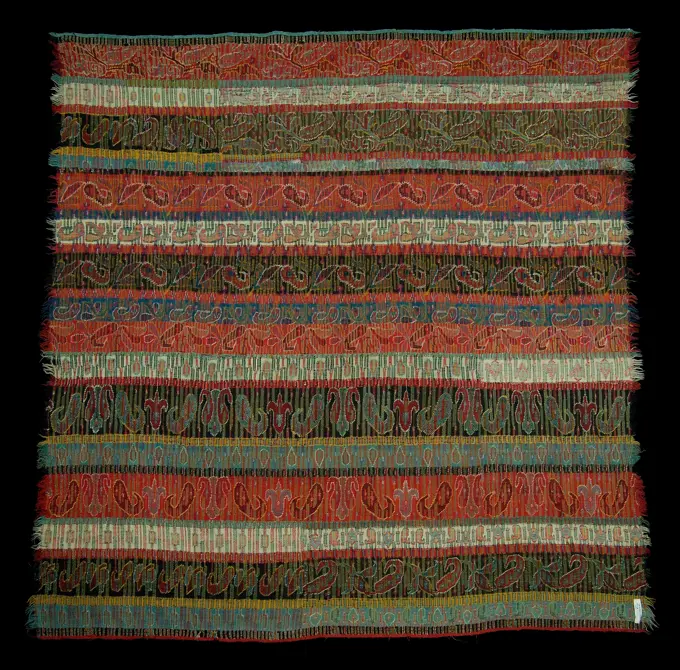
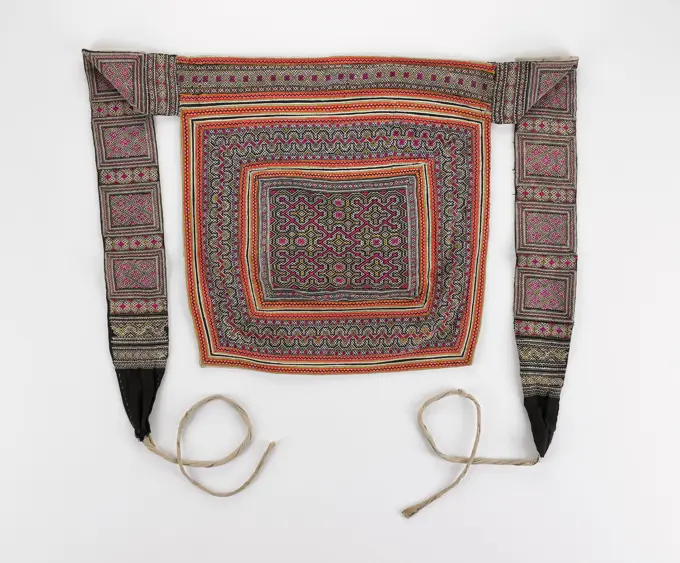
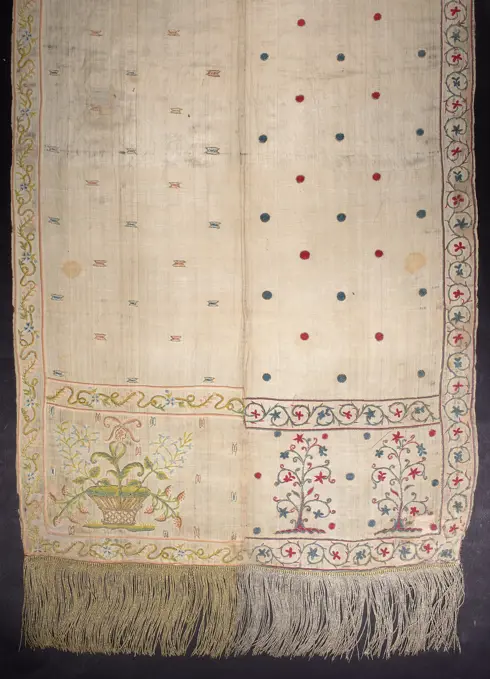
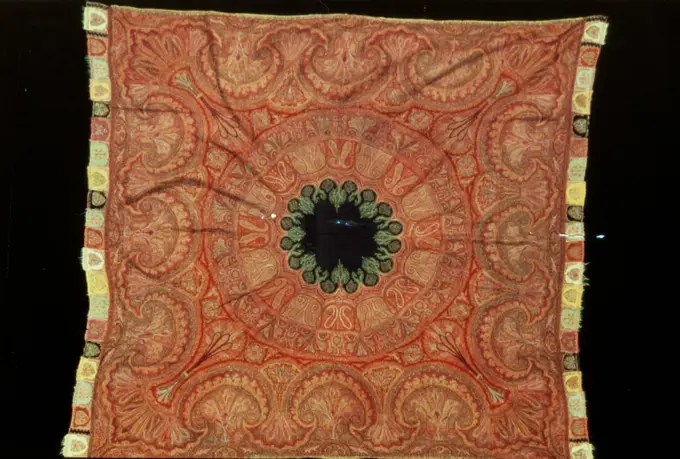
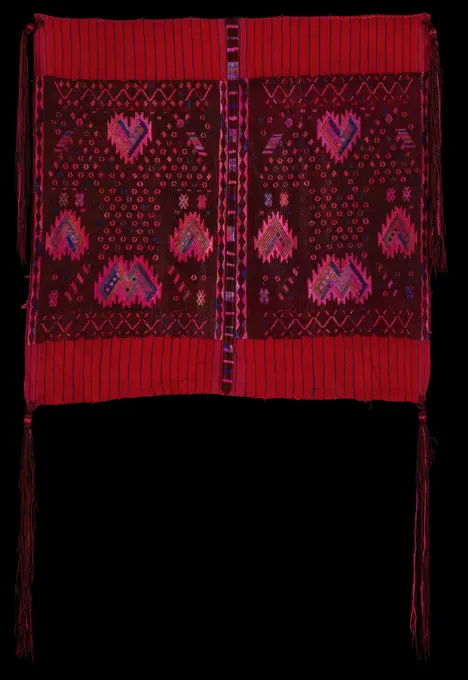
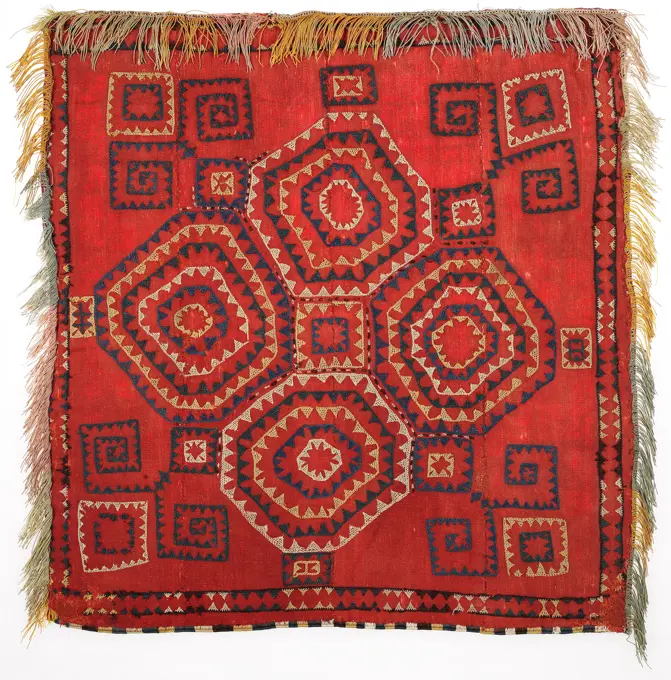
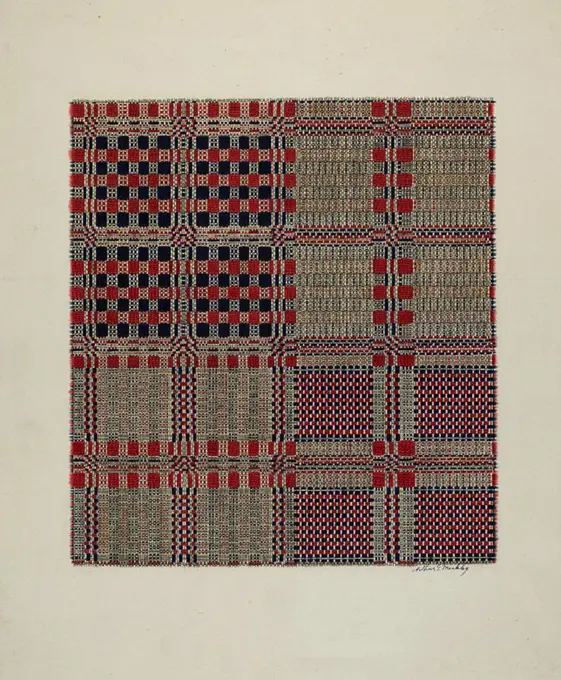
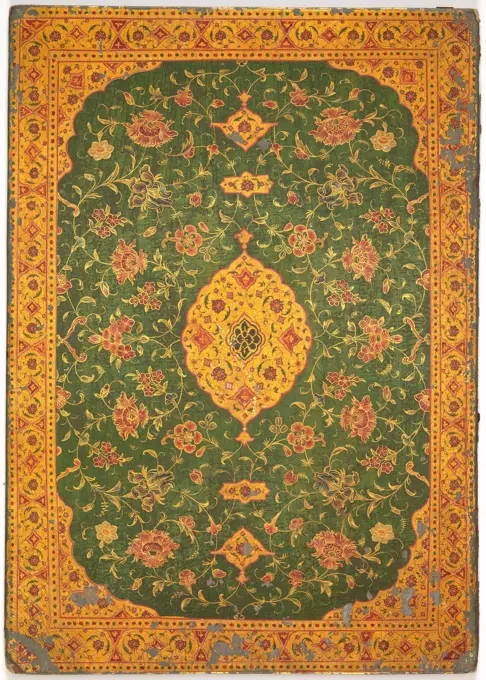
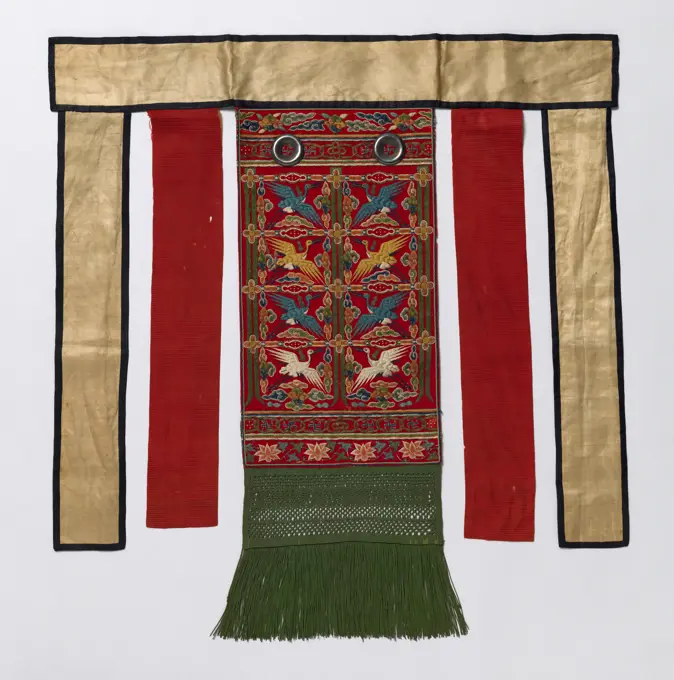
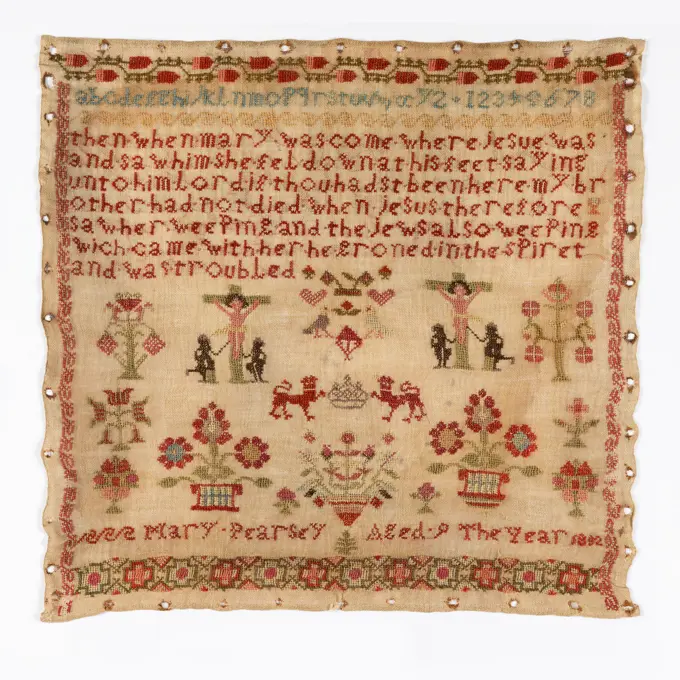
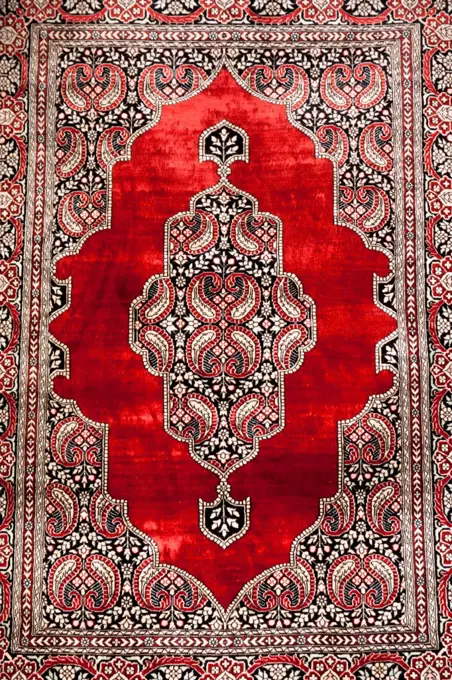
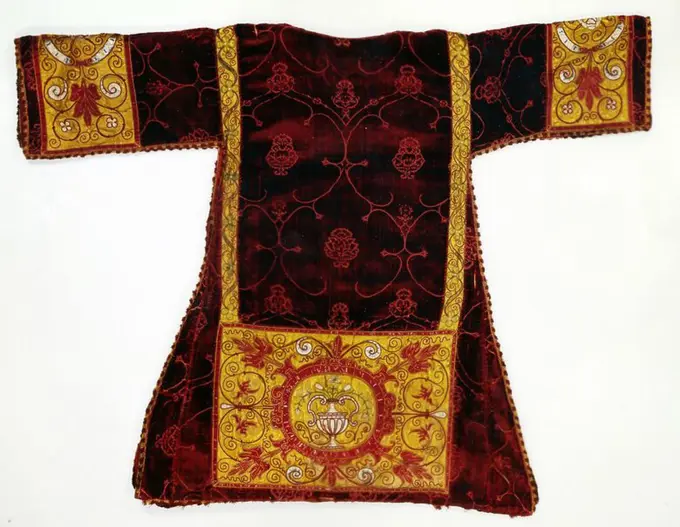
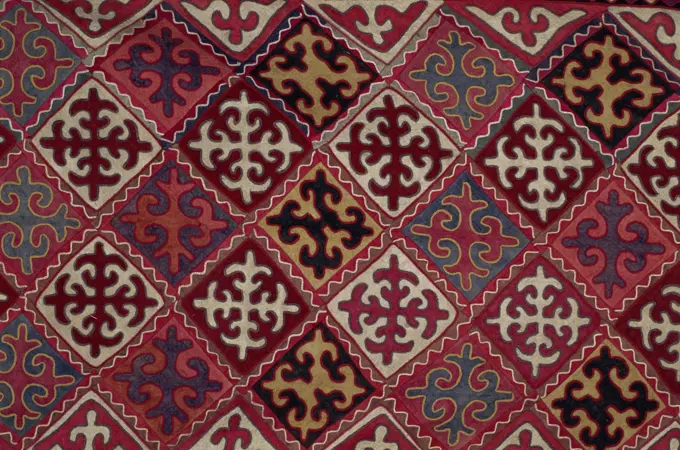
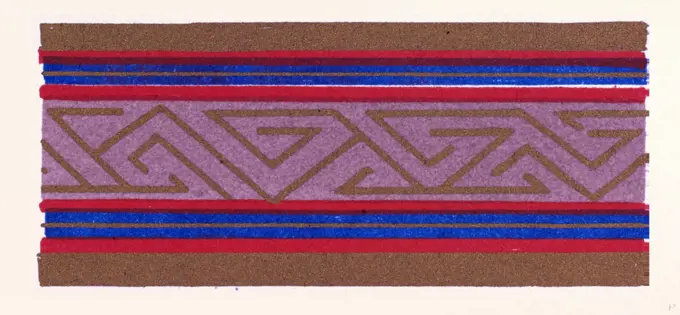
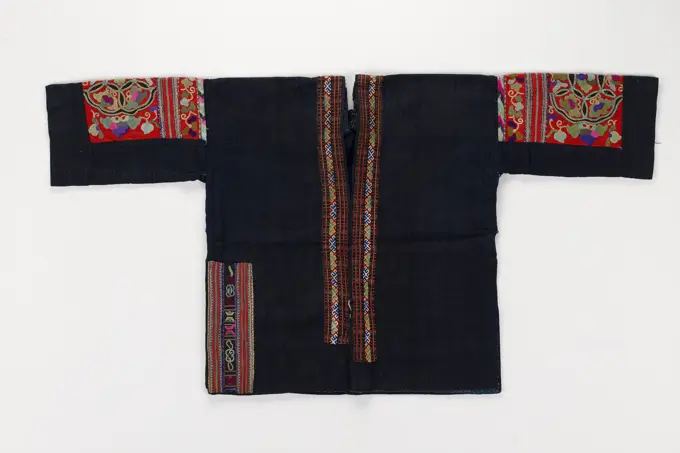
Sleeve cuff, Medium: silk Technique: embroidered on plain weave, China, embroidery & stitching, Sleeve cuffShirt collar, 1930-1960, 12 3/4 x 3 1/2 in. (32.39 x 8.89 cm), Cotton; needlework, Vietnam, 20th centuryTabriz Rug Tapestry/TextilesChintz border, Medium: cotton Technique: mordant for 2 reds, black and purple applied over resist; madder dyed; blue applied by immersion over resist; yellow applied over blue for green; chintz on plain weave, Portion of a border showing a peacock-like bird and an enormous flower., India, ca. 1800, printed, dyed & painted textiles, Chintz borderSari 18th century India. Sari 126455Fragment, Medium: silk Technique: 7&1 weft patterned satin, Deep scrolling border on red satin fabric with patterned white stripes., 17th century, woven textiles, FragmentFragment late 18th century Italian. Fragment 230638Carpet Sample. Dated: c. 1940. Dimensions: overall: 52.2 x 31.9 cm (20 9/16 x 12 9/16 in.) Original IAD Object: 10 1/2" wide; 10" long. Medium: watercolor and graphite on paper. Museum: National Gallery of Art, Washington DC. Author: Alice Braun.Mat, 19th century, 37 x 37 in., woven fabric, Turkey, 19th centuryHanging 19th century Traditionally, the chain stitch (gulab-duzi) was used in much Persian embroidery. The Caspian city of Rasht was known to have supplied the Safavid court at Ardebil and excelled at the art, hence Rasht embroidery (rashti-duzi) developed into a unique craft. Executed by male professional embroiderers in well-organized workshops, the panels were characterized by the use of felted flannel wool (face cloth, often used in military uniforms of the region) for the ground. The designs were pounced with powdered chalk, and chain stitched in firmly twisted colored silks using metal crochet hooks. As in the present hanging, the outer borders were often patched bands of different colors, elaborately worked in a riot of colors. The unique charm of this prayer-niche hanging, however, is in the elegant rendition of the meditative tree design, replete with Sufi symbolism. The layered, symmetrical tree alludes to the stages (maqamat) of Sufism, while the birds, creatures that link tIlgich, early 20th century, 21 3/4 x 19 in. (55.25 x 48.26 cm), Silk, wool, cotton; hook chain stitch, Uzbekistan, 20th centurySampler (Spain); silk, linen; Bequest of Marian Hague; 1971-50-166Middle East, Arabian Peninsula, Oman, Muscat, Muttrah. Rugs for sale at the souk in Muttrah.Mantle (Peru); wool, cottonTextile (Near East); silk, metalHandkerchief Made 1790-1810 United States. Silk, plain weave; block printed .Bookbinding 17th century. Bookbinding 451292Prayer cloth with two transverse panels, kula. Prayer cloth with two transverse panels, kula. Midfield: Gray-white Mihrab with columns in beige, two in the middle-standing oil men and a tree view. The swing is flets blue with rows of beige anjelieren. One upper and one subspanel with zigzag lines in blonde and blue tones. Edge: a wide border with a blonde-colored fond, on which flower branches are suitable in squares, in the same shades. Narrow side lists in lavender gray.Head Scarf, 32 x 8 3/4 in. (81.28 x 22.23 cm) (length including fringe), Cotton, ChinaCamel bag, 20th century, 56 1/2 x 26 1/2 in. (143.51 x 67.31 cm), Wool, Afghanistan, 20th centurySutra Cover Made 1590-1599 China. Silk, warp-float faced 4 1 satin weave with supplementary patterning wefts bound in weft-float faced 1 4 satin interlacings .Fragment Made 1775-1825 Japan. Plain compound twill, silk & gilt paper; 2 strips to m.m. .Fragment 17th century Italian. Fragment 215029Mud cloth skirt, 67 1/2 x 40 1/4 in. (171.45 x 102.24 cm), Cotton, MaliTabriz Rug Tapestry/TextilesSampler. Date/Period: 1826. Sampler. Medium: silk embroidery on linen foundation. Technique: cross, counted satin, square, fishbone and stem stitches on plain weave. Author: Juliana Ximenez Cruz.Fragments (Spain); silkTextile (India, Coromandel Coast (for Thai market)); cotton; Warp x Weft: 25.4 x 38.1 cm (10 x 15 in.) Repeat: 15.2 x 15.2 cm (6 x 6 in.)Apron 19th century Romanian. Apron 98427Silk Kashan Carpet second half 16th century This carpet, possibly woven in the silk trade and carpet manufacturing center of Kashan, has a dark blue quatrefoil medallion at its center. Decorative elements on this and other related carpets from Kashan and Tabriz indicate that weavers may have used pattern books containing popular motifs to guide them in production. These designs are also present in other media, particularly in the arts of the book. The use of metal-wrapped thread in a silk Kashani carpet of this size is unusual, but the high knot count of about 600 knots per inch may have made this expensive material worth its cost given the fine quality of the work.. Silk Kashan Carpet 446636Fragment of embroidery;  19th century (1801-00-00-1900-00-00);embroidery, plant ornamentsBaby Carrier, 22 x 18 1/4 in. (55.88 x 46.36 cm), Cotton, silk; needlework, ChinaMantle Border 5th-2nd century B.C. Paracas. Mantle Border 319266Panel (Furnishing Fabric) Made 1620-1700 China. Silk, warp-float faced 7 1 satin weave self-patterned by ground wefts bound in weft-float faced 1 3 'Z' twill interlacings .Charlotte Winter, Sunburst Quilt, c 1938 Sunburst QuiltRug 17th century Persian, possibly Isfahan. Rug. Persian, possibly Isfahan. 17th century. Foundation: cotton; supplementary weft: metallic thread; pile: silk, Sehna knot. Textiles-RugsHip cloth. Hip cloth with mill wick figures.Cover mid-19th century or later. Cover 447808Skirt, Cotton, ChinaTable carpet with unicorns ca. 1600 Dutch The little unicorns in roundels in the border show that this was made to be placed on a table, with the border hanging down all around.. Table carpet with unicorns 229299Fragment, Medium: silk Technique: cut and uncut supplementary warp pile (velvet) in a satin foundation, Fragment of cut and uncut navy blue velvet in a vertical stripe pattern formed by dashes, dots, and zigzag lines on a cream-colored ground., France, 18th century, woven textiles, FragmentAltar cloth 17th century Italian. Altar cloth 222175Cover with Border of Abstract Floral Motifs, 18th century. Italy , 18th century. Needle lace, burato (twined ground and darned in one direction); silk (est.) and unidentified ground fiber; overall: 133.4 x 114 cm (52 1/2 x 44 7/8 in.). Notable for its bright and valued colors, this cover has a needle lace border of natural and organic motifs attached to a silk cloth. The lace is divided into two registers, possibly representing stylized plants and flowers growing above ground with their roots growing in pots beneath them.Sampler 19th century Spanish. Sampler 228180Skirt (KainKebat)Apron Panel, 19th-20th century, 26 5/8 x 12 1/4 in. (67.63 x 31.1 cm), Cotton, China, 19th-20th centuryShawl Made 1870-1879 India. Wool, patchwork of double interlocking 2 2 'S' twill tapestry weaves; outer border and Harlequin tabs of patchwork in 2 2 'S' twill weaves; embroidered in detached chain, flat, satin, and stem stitches; laid work and couching; main warp fringe .Tapestry. unknown, authorKontusz sash/belt. unknown, authorSampler. Date/Period: 18th century. Sampler. Medium: silk embroidery on linen foundation. Technique: long-armed cross, aztec, satin, double running, and back stitches on plain weave. Height: 375 mm (14.76 in); Width: 885 mm (34.84 in). Author: UNKNOWN.Textile, Technique: block printed on plain weave; size of block: 9 1/2 in. by 7 1/2 in., Alternate dark and light stripes of curving ribbons and flowers., Jouy, France, 1765-70, printed, dyed & painted textiles, TextileCloth (tzute), 1940, 47 x 51 in. (119.38 x 129.54 cm) (including fringe), Cotton, Guatemala, 20th centuryClose-up of a carpet, Agra, Uttar Pradesh, IndiaSampler (Spain); Embroidered by Isidora Taxada; Student of Maria Bacas; silk embroidery on cotton foundationShawl third quarter 19th century American. Shawl 169782Sacred Heirloom Textile (mawa or ma'a). India, Gujarat. Date: 1301-1500. Dimensions: 488.95 x 95.57 cm (192 1/2 x 37 5/8 in.). Cotton, plain weave; block printed resist and mordant dyed. Origin: India. Museum: The Chicago Art Institute, Chicago, USA.Baby Carrier, 24 x 22 1/2 in. (60.96 x 57.15 cm), Cotton; needlework, ChinaShawl. Culture: Scottish. Date: 1860-69.This is a particularly stunning design and color combination presented by the Scottish textile mills of the 19th century. The bi-color field is thematic while the overall pattern is very intricate and vibrant. The pattern follows the traditional Indian jamawar format with an inner border, outer border and large cone patterns at each end.The shawl held a place as a high fashion accessory for a relatively large period between the end of the 18th century to the 1870s. These accessories were originally adopted by men with exposure to India and Persia through the Trading Companies. The changing fashions near the end of the 18th century brought a renewed interest in Indian and Persian shawls as a form of warmth over the thin muslins of fashionable Empire silhouette dresses. The shawls came in many designs which generally incorporated the boteh form. This form, which is mostly known as the paisley now, is an ancient Persian design based upon the tree Trimming (France); silkConciliate belt;  End of the 18th century (1791-00-00-1800-00-00);Gostkowska, Maria (fl. Ca 1949) - collection, flower basket (ornament), flower bushes (ornament), plant ornamentations, Polish belts, Poland (culture), szelążki (ornament), Polish clothing, purchase (provenance)Trimming (France); silkSquare Shawl, 19th century, L.76-3/4 x W.69 in., wool, cotton, India, 19th centuryWoven Cotten saddle cloth; Tuareg, Nigerian, circa 1960. The Tuareg people are a large Berber ethnic confederation. They principally inhabit the Sahara desert, in a vast area stretching from far south-western Libya to southern Algeria, Niger, Mali and Burkina Faso. Traditionally nomadic pastoralistsMan's ceremonial tzute, c. 1940, 29 3/8 x 30 3/8 in. (74.61 x 77.15 cm) (without tassels), Cotton, silk; supplementary weft patterning, embroidery, Guatemala, 20th centuryCushion Cover. Turkey, Bursa. Date: 1601-1650. Dimensions: 100.4 x 63.5 cm (39 1/2 x 25 in.). Velvet. Origin: Turkey. Museum: The Chicago Art Institute, Chicago, USA.Charlotte Angus, Log Cabin Quilt, 1935 1942 Log Cabin QuiltIlgich, 19th century, 30 x 30 in. (76.2 x 76.2 cm), Wool, silk; spaced buttonhole-filling stitch, checkered chain stitch, needle chain stitch, Kyrgystan or Uzbekistan, 19th centuryDarning sampler, Medium: silk embroidery on cotton foundation Technique: embroidered in running, satin, and cross stitches on plain weave foundation, Ten squares of pattern darning and two mended tears. Inset square in the middle with initials and date., Scandinavia, 1825, embroidery & stitching, Darning samplerPurse (USA); wool, hempRed, White & Blue Coverlet. Dated: c. 1940. Dimensions: overall: 44.2 x 36.8 cm (17 3/8 x 14 1/2 in.). Medium: watercolor and graphite on paper. Museum: National Gallery of Art, Washington DC. Author: Arthur G. Merkley.Fragment (Japan)Sleeve cloth; Kain Kebat; Bidang. Sleeve cloth with geometric motifs.Bookbinding 17th century. Bookbinding 451293Back Apron for the Royal Ceremonial Robe, late 1800s-early 1900s. Korea, Joseon dynasty (1392-1910). Red pile weave, wool or silk, embroidered with silk (polychromatic); red silk, gauze weave; white silk, gauze weave; green silk fringe; metal ring embellishments; overall: 73 x 69.2 cm (28 3/4 x 27 1/4 in.). This is a set of royal ceremonial robe and accessories worn by a high-ranking court official for attending special state ceremonies. The set consists of an inner coat, an outer coat, a skirt, a back apron, a crown, a pair of jade tassels, a tablet, and a belt.. Square palm line of woven side with a sapphire blue plain middle, with a row of small left-handed botas in orange, yellow and light blue, interspersed by small flower fittings along the two field edges. The orange outer edge along the entire circumference of the scarf, is decorated with small similar botas in blue, yellow and green, between two tables of white-green and white-orange rosettes. The technique consists of a silk chain and weft. Lown binding in the middle, but in the fund of the edge and lists is linen binding. Balanced pattern, with a pattern of the weft in the lying edges, but in the standing edges is the pattern of the chain. The long threads are flotland on the back.Cushion Cover or Kneeling Mat 18th-19th century China. Cushion Cover or Kneeling Mat 68301Sampler (England); Embroidered by Mary Pearsey (English); wool embroidery on linen foundationColourful woven Chinese carpet, ChinaBorder Fragments Made 100 BCE-200 CE Peru. Cotton, plain weave; embroidered with wool (camelid) in stem stitches . NazcaVeil, first half of 20th century, 171 x 30 in. (434.34 x 76.2 cm) (irregular), Cotton; printed, India, 20th centuryFragment 18th century Northern Hungarian, Slovakian. Fragment 217751Dalmatic. Italy. Date: 1475-1500. Dimensions: 114.3 x 145.6 cm (45 x 57 1/4 in.)Velvet repeat: 52.6 x 29.2 cm (20 3/4 x 11 1/2 in.). Silk, warp-float faced 4:1 satin weave with supplementary pile warps forming cut voided velvet; apparels: silk, warp-float faced 7:1 satin weave; appliquéd with warp-float faced 7:1 satin weave; painted; embroidered and appliquéd with silk in laid work and couching; fringe: silk, warp faced plain weave with extended ground weft fringe; lining: cotton, warp-float faced 4:1 satin weave; underlining: hemp. Origin: Italy. Museum: The Chicago Art Institute, Chicago, USA.Shawl mid-19th century. Shawl 445233Sampler (Netherlands); silk, cotton, and wool on plain weave cotton, knitted cotton, and machine-made cottonTraditional Kirghiz felt wall hanging, Bishkek, Kyrgyzstan, Central Asia, AsiaTable cover 1606-41 French. Table cover 229061Fragment, first half 1900s. China, 20th century. Embroidery, silk; overall: 7.7 x 56.2 cm (3 1/16 x 22 1/8 in.).Border. Italy. Date: 1601-1700. Dimensions: 14.4 x 76.3 cm (5 5/8 x 14 1/8 in.). Linen, plain weave; pulled thread work with silk floss in two-sided Italian cross stitch; embroidered in back stitch. Origin: Italy. Museum: The Chicago Art Institute, Chicago, USA.Bed cover, ChinaWaist Wrapper(Sarung)Medieval ornamentJacket, ChinaCornelius Christoffels, Coverlet  Section of Right Side, c 1937 Coverlet - Section of Right SideSleeve cloth; Sarung. Sleeve cloth with crochet motifs and woven text.Panels For A Bag (Spain); silk, metallic threadKang Rug early 18th century China. Kang Rug 67872Sampler 1811 British. Sampler. British. 1811. Silk on linen canvas. Textiles-EmbroideredDecorative fabric created from cotton and Glass beads. Created by the Wayana people of from the Guiana highlands. Dated 20th CenturyHeupdoek, anonymous, 1900 - 1949 Hip cloth with geometric motifs. Cambodia silk Hip cloth with geometric motifs. Cambodia silkSheet with five bouquets on a blue checkered background late 18th-mid-19th century Anonymous. Sheet with five bouquets on a blue checkered background. Anonymous , Italian, late 18th-mid 19th century. late 18th-mid-19th century. Relief print (wood or metal). Prints