Decorative Textile Patterns

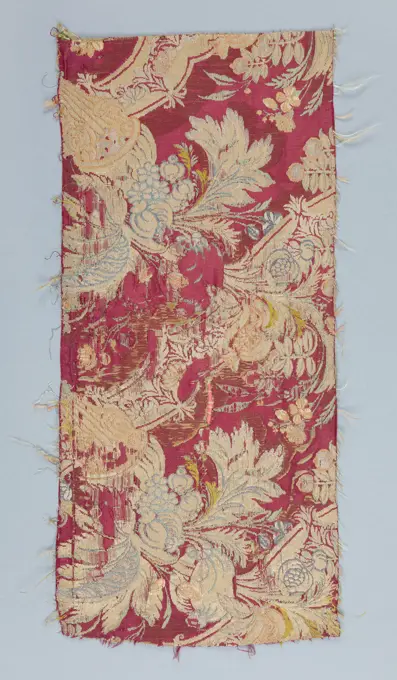
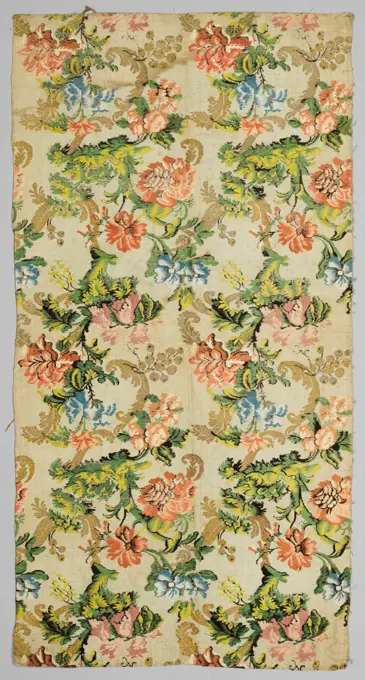
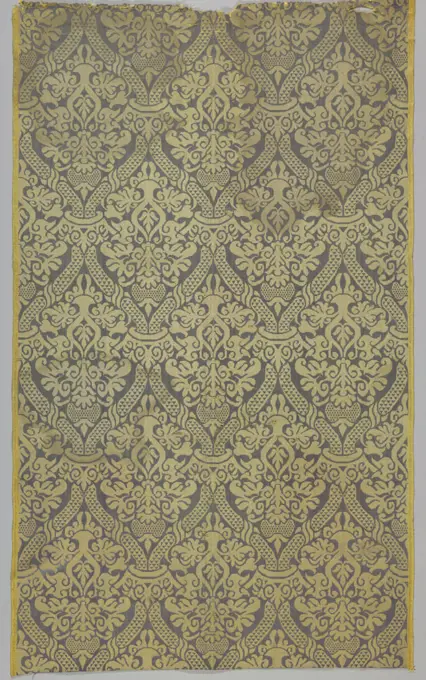
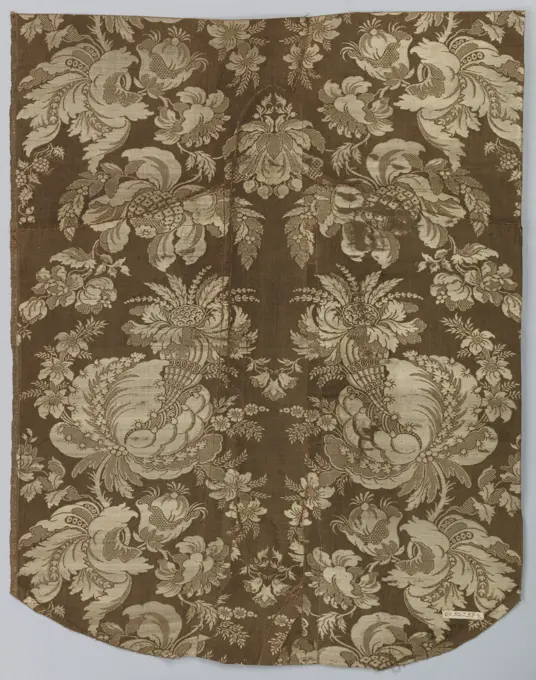
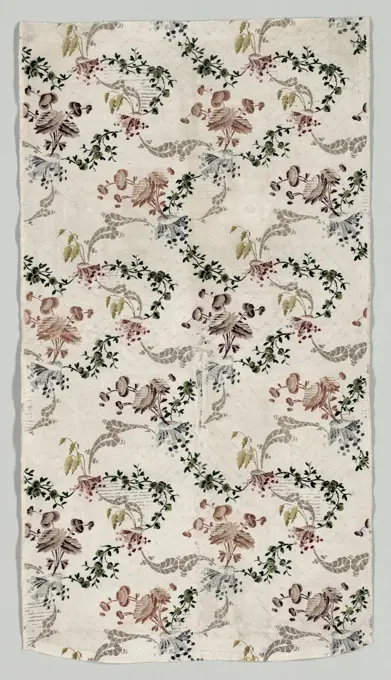
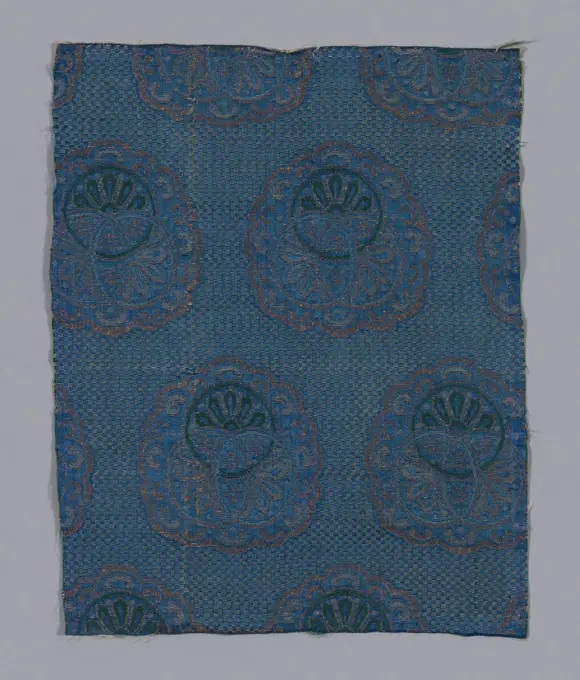
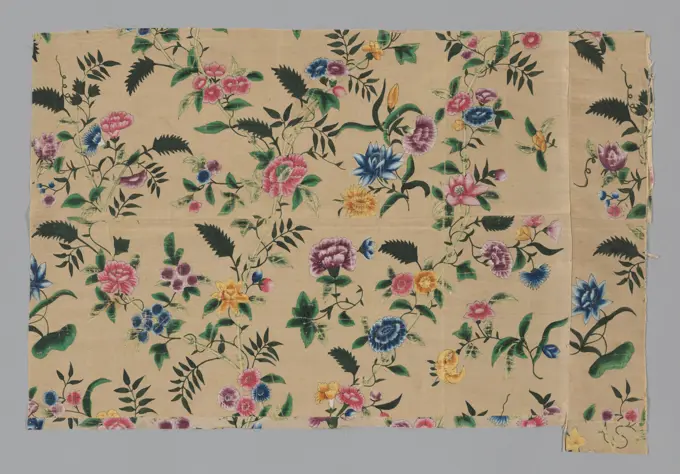
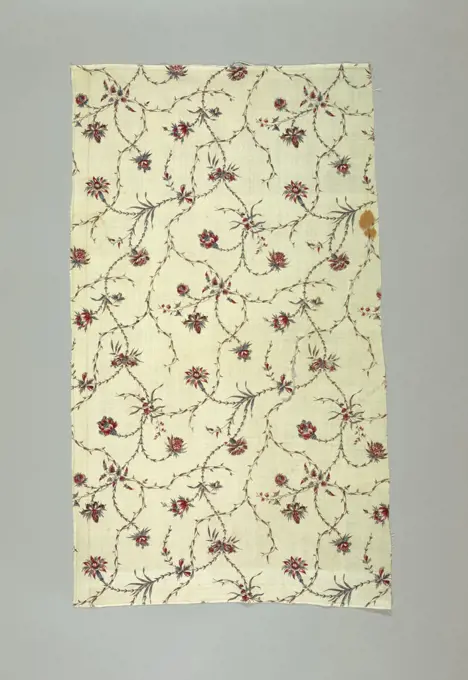
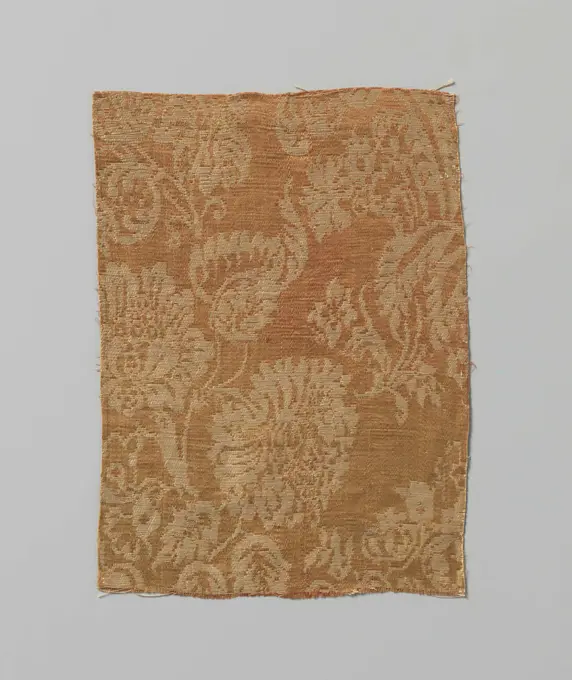
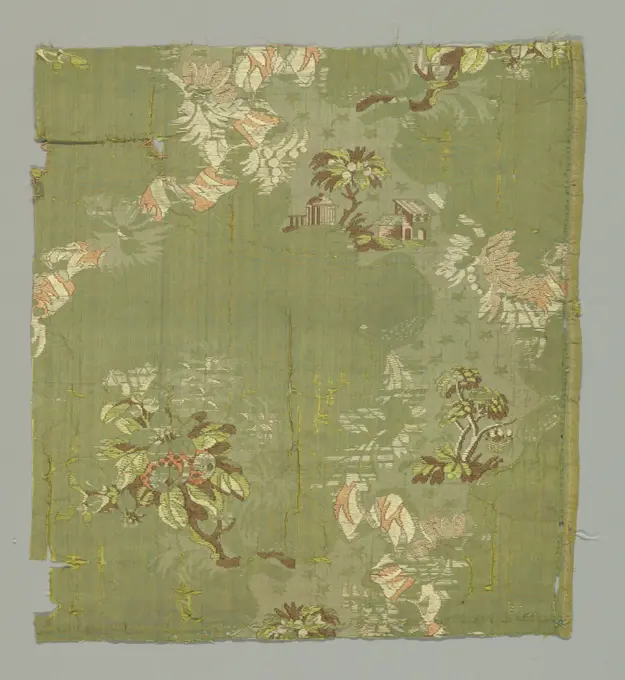
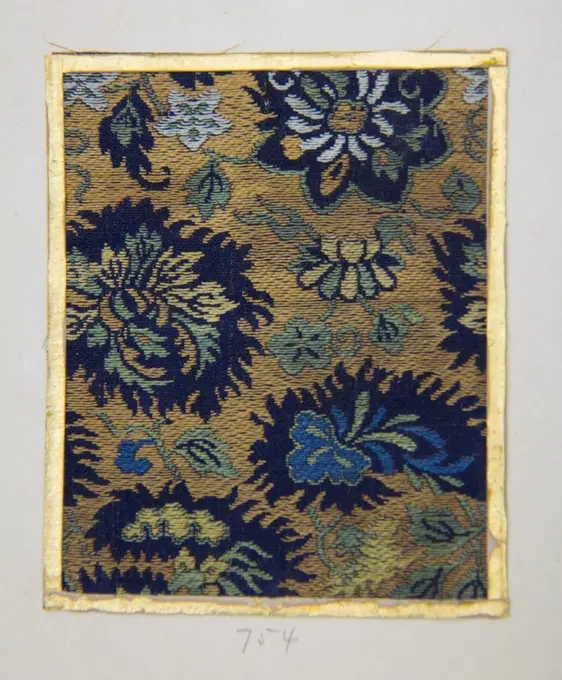
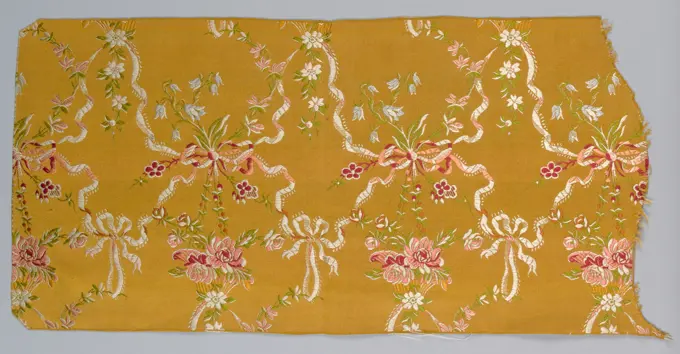
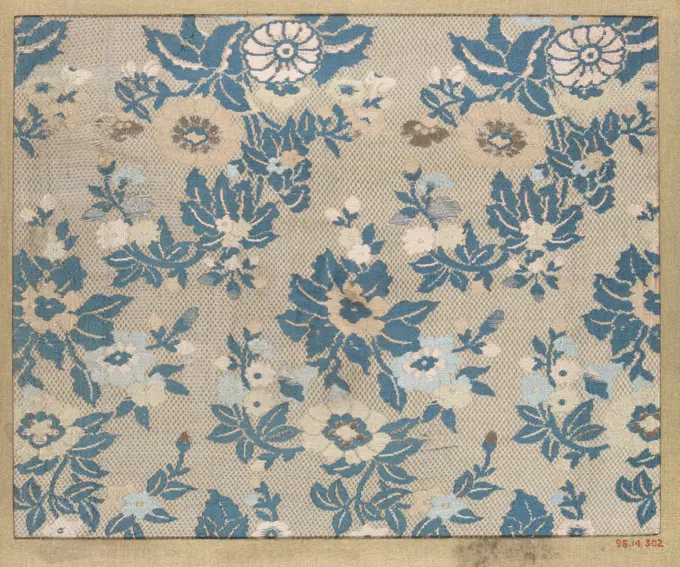
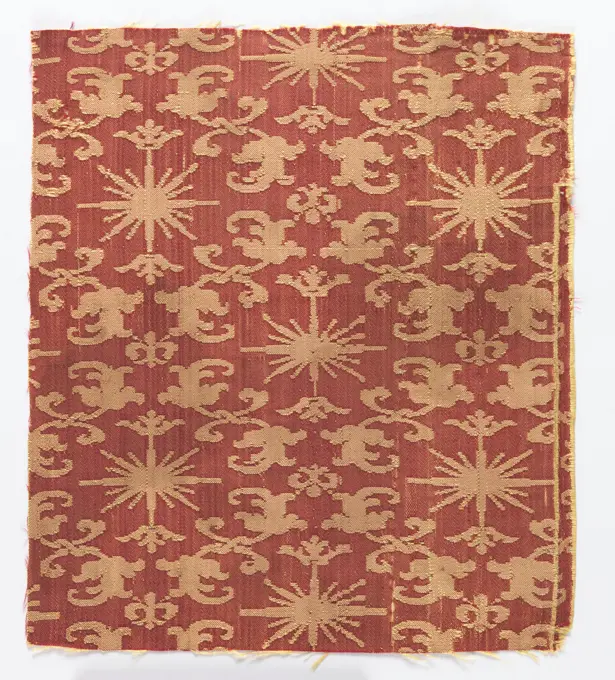
A collection of printed fabrics showcasing floral and ornamental designs. Featuring intricate patterns in various colors, suitable for upholstery or fashion.

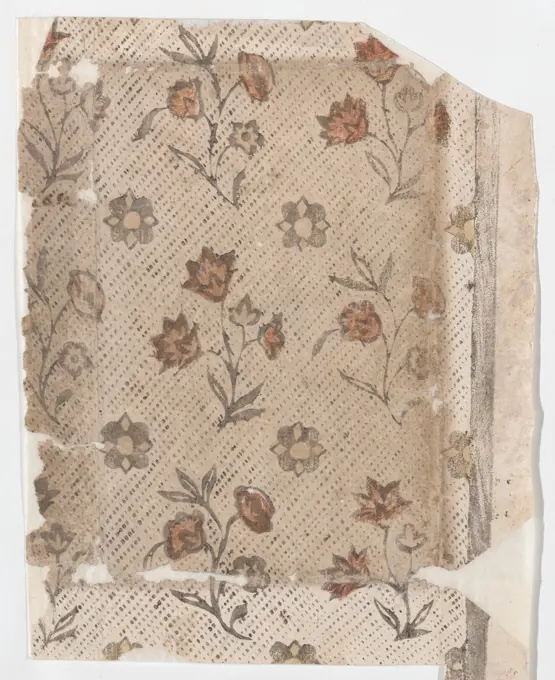
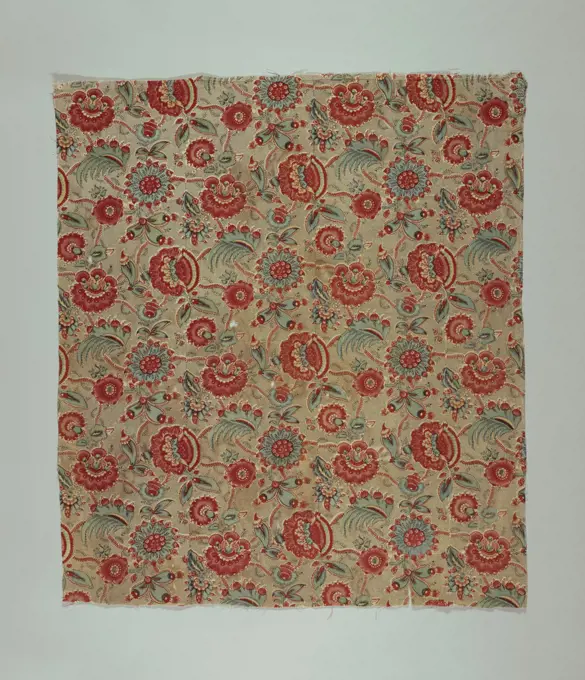
Textile, Medium: cotton Technique: roller (mule) printed on plain weave, England, ca. 1830, printed, dyed & painted textiles, Textile
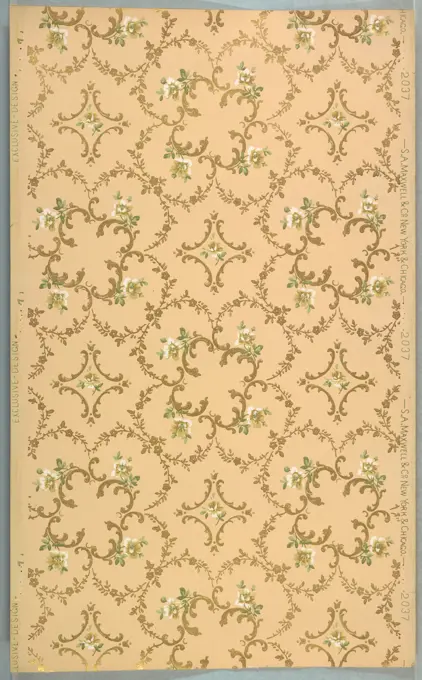
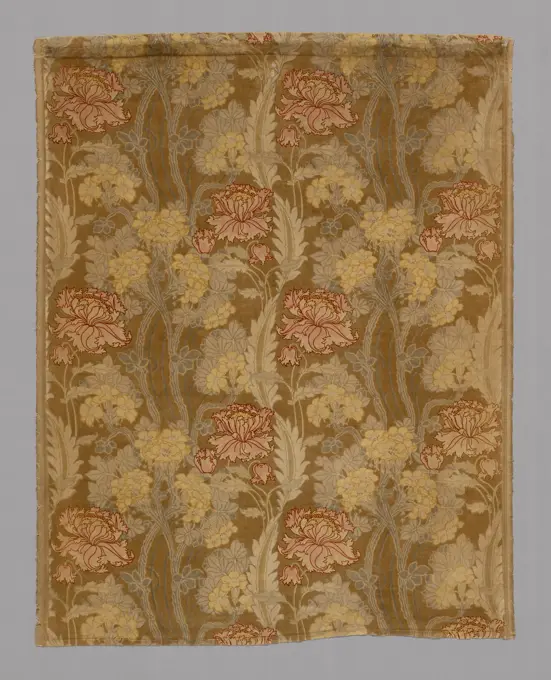
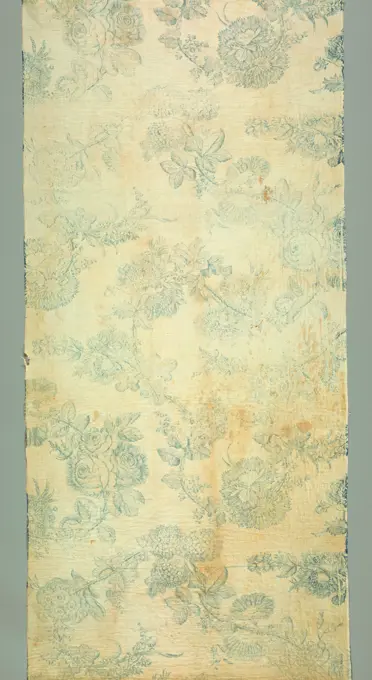
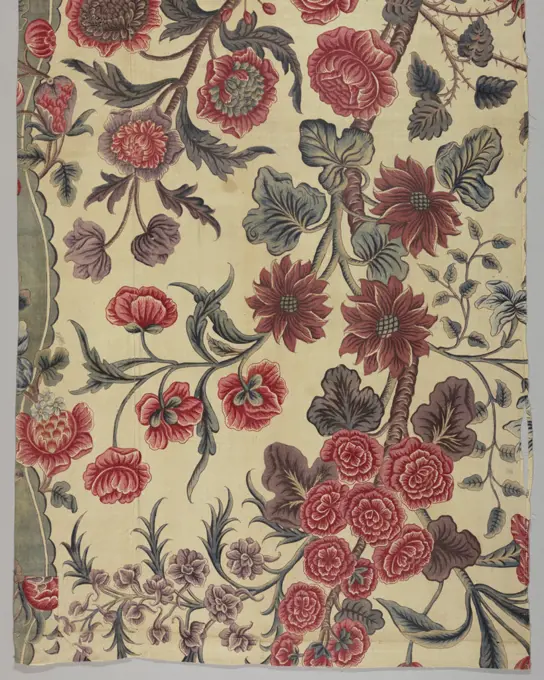
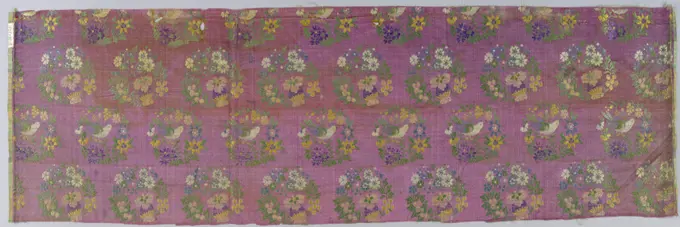
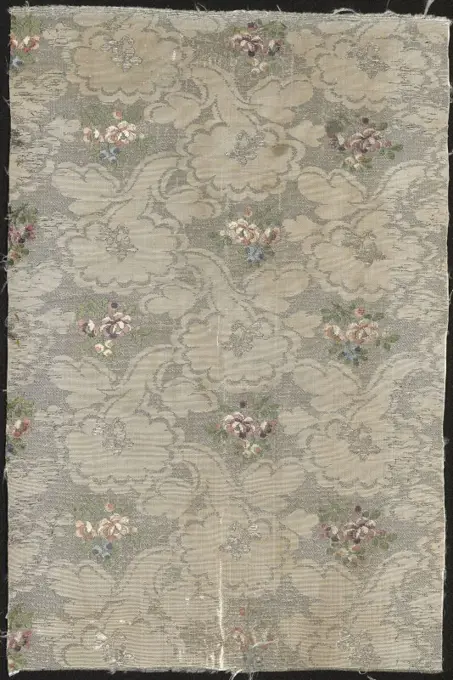
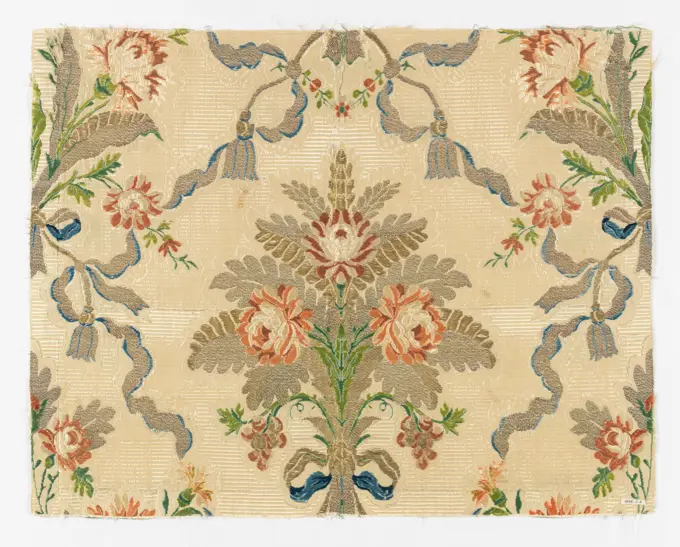
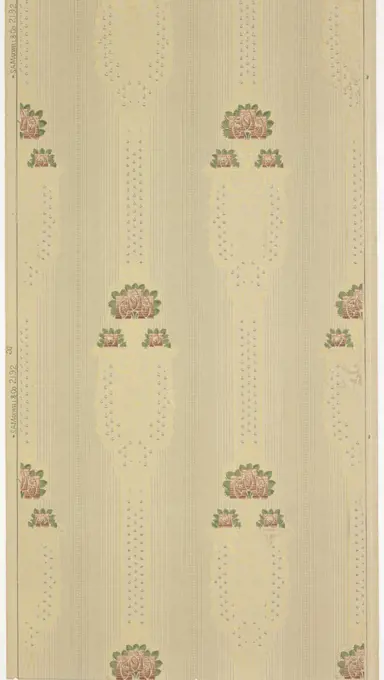
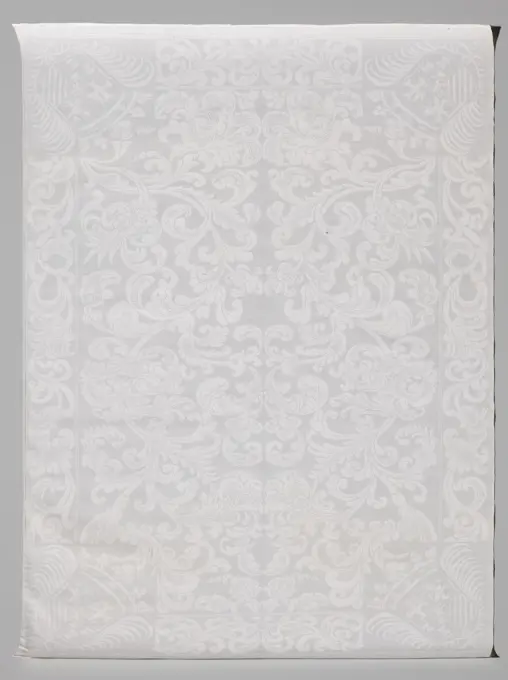
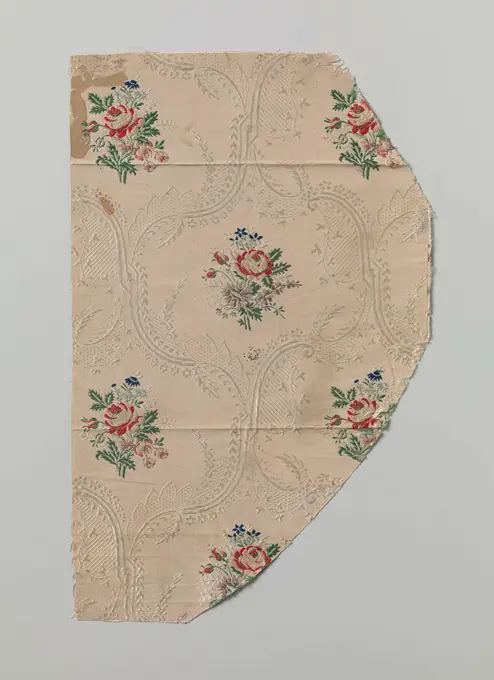
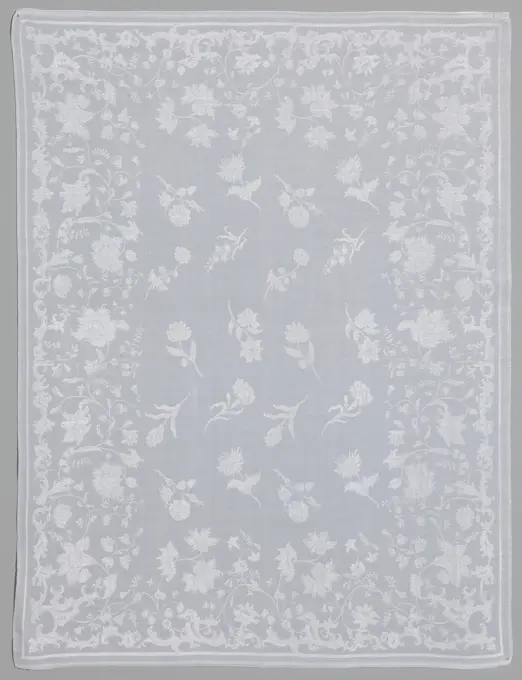
Textile, Medium: cotton Technique: roller (mule) printed on plain weave, England, ca. 1830, printed, dyed & painted textiles, TextileSample (France); Designed by Paul Follot (French, 1877-1941); silkFragment Multicolored silk Mexicainian. Fragment multicolor silk tissue. Part of the fragment has a green striped soil on which scattered pink flowers. The other part has a brown soil on which flower bouquets in red, purple and green, stretched with a blue ribbon and connected to each other.Piece 18th-19th century Japan. Piece 66731Fragment 17th century Italian. Fragment 230622Ceiling Paper (USA); Manufactured by Maxwell & Co., S.A. (United States); machine-printed paper, liquid mica; 81 x 49.5 cm (31 7/8 x 19 1/2 in.)Fragment, Medium: silk Technique: 5-harness satin damask with additional patterning by supplementary wefts bound in 4/1 twill, Large-scale pattern in yellow of rows of floral forms in alternating vertical alignment. Sprigs of flowers in blue, red, green, or ivory., 17th century, woven textiles, FragmentPiece 18th-19th century Japan. Piece 65928Fragment 18th century Italian. Fragment 230381Fragment, Medium: silk, metallic Technique:supplementary warp forming cut pile in a 4&1 satin foundation (velvet), Ogival pattern with twisted banding forming compartments that contain pomegranates in red velvet on yellow gold., 16th century, woven textiles, FragmentCover, 1600s - 1700s. Italy, 17th-18th century. Plain compound satin; overall: 126.3 x 65.4 cm (49 3/4 x 25 3/4 in.).Fleurs Stylises Made 1888-1908 France. Cotton, plain weave with supplementary pile warps forming cut solid velvet; block printed . Arthur Silver (Designer)Piece 18th century French. Piece 216536Fragment (France); cotton; Warp x Weft: 25 x 92 cm (9 13/16 x 36 1/4 in.) Repeat H x W: 22 × 22 cm (8 11/16 × 8 11/16 in.); Bequest of Elinor Merrell; 1995-50-12Piece 18th-19th century Japan. Piece 67803Fragment 18th century Japan. Fragment 67942Canopy (), 1800s. France, 19th century. Embroidery, silk and gold thread; overall: 207.7 x 177.8 cm (81 3/4 x 70 in.).Textile (Italy or Northern Europe); silk, metallic threads; Warp x Weft (a): 104.1 x 54.6 cm (41 x 21 1/2 in.) Warp x Weft (b): 26.7 x 54.6 cm (10 1/2 x 21 1/2 in.)Fragment, Large Flowers; Made by Bromley Hall (United Kingdom); England; cotton; Warp x Weft: 146 x 67.5 cm (57 1/2 x 26 9/16 in.); Bequest of Elinor Merrell; 1995-50-115Textile, Medium: cotton Technique: mordant painted and dyed (chintz), A curving tree trunk rising from a mound, with naturalistic flowers of European character, including roses, carnations, morning glories, columbine, dahlias, and tulips. Tree trunk, mound, and outlines brown; foliage green; flowers, two shades of red, blue, reddish-brown and a violet now faded. All flowers have extensive shading. Along right side and bottom a border in blue-green, in wavy curved outline over which flowers project., Panel cut at top; small patch of self chintz on reverse of top; bottom, small patch of plain white cotton reverse., Colors: two reds, tow blues, two violets, yellow, black brown., India, 1725-50, printed, dyed & painted textiles, TextileFragments, Medium: silk Technique: velvet, Component a: Brown silk velvet, faded from violet, cut and uncut, on yellow ground; geometric pattern. Components b and c: rose-colored silk velvet, cut and uncut, on yellow ground; geometric pattern., Italy, 16th century, woven textiles, FragmentsTextile, Medium: silk Technique: plain compound twill, Navy ground with surface divided into octagonal areas with squares intervening. Both the squares and the octagons contain stylized floral forms. The entire pattern is composed of extra wefts of white, tan, gold, and chartreuse silks., Japan, 19th century, woven textiles, TextileFragment of silk fabric unknownFragment, Medium: cotton Technique: printed on plain weave, Red and green stripes offset tan medallions which enclose a bird and flowering branches., India, ca. 1840, printed, dyed & painted textiles, FragmentTextile, Medium: silk, metallic yarns Technique: Damask weave fragment with discontinuous supplementary weft patterning (brocade), Fragment composed of many pieces sewn together. Light blue damask weave silk brocaded with metallic yarns showing design of fruits and florals with long curving stems in the bizarre’ style., France, late 17th-early 18th century, woven textiles, TextileTrack -browed side with naturalistic design of flowers and leaf vines ,, c. 1735 - c. 1740 Track-browed side with naturalistic design: up rising, well-going flower and leaf vines in two colors of green, pink, salmon color, two colors of blue, black, lilac and soft lila (brochure) and gold (liseré). On the right self-sink a retracted number: 3555. On pinned note (ca. 1978-1990) the letter P. Condition: dirt, but good to exhibit. France silk. Track-browed side with naturalistic design: up rising, well-going flower and leaf vines in two colors of green, pink, salmon color, two colors of blue, black, lilac and soft lila (brochure) and gold (liseré). On the right self-sink a retracted number: 3555. On pinned note (ca. 1978-1990) the letter P. Condition: dirt, but good to exhibit. France silk.Fragment, Medium: silk Technique: 7&1 satin patterned by complementary wefts, Small animals, plants and birds on a blue background., 17th century, woven textiles, FragmentLeaf with flowers and dot stock, anonymous, 1700 - 1850  Leaf with loose flowers and a stock of dots in spirals. Excerpt of a cover.  paper. block printing (relief printing process) ornament derived from plant formsTextile, Medium: silk Technique: 4&1 satin damask, Diamond grid with crowns at the point of intersection with plant motifs in blue and yellow. Both selvages present., 16th-17th century, woven textiles, TextileSampler (Spain); Embroidered by Maria de los Dolores Hollos y Valle; Student of Dolore Motios; silk embroidery on linen foundationSilk 1735-50 British or French. Silk. British or French. 1735-50. Silk. Textiles-WovenPiece 18th-19th century Japan. Piece 65974Textile; silk; Warp x Weft: 136 x 54 cm (53 9/16 x 21 1/4 in.)Cravat end, Medium: linen Technique: bobbin lace, Mechlin ground, Cravat end of Mechlin with a central cartouche filled by a bowl of flowers and surrounded by floral and foliated branches interspersed by volutes, terminating in scrolls., Belgium, mid-18th century, lace, Cravat endPiece 18th-19th century Japan. Piece 66641Fabric gore. unknown, authorLength of Brocaded Silk, 1723-1774. Style of Jean Baptiste Pillement (French, 1728-1808). Brocade; silk, gold and silver threads; overall: 53.3 x 104.1 cm (21 x 41 in.).Fragment Made 1775-1800 Japan. Fancy compound twill, silk and gilt paper; 3 strips to m.m. .Fragment (Dress Fabric) Made 1700-1801 Iran. all-over rose design .Fragment late 17th century Italian. Fragment 230443Fragment (Japan)Border, Medium: cotton Technique: madder colors are block printed, other colors applied by brush, plain weave foundation, Massed flowers in bright colors on a drab background., Europe, ca. 1800, printed, dyed & painted textiles, BorderPanel (Dress Fabric) Made 1701-1800 China. Silk, plain weave; painted .Textile, Medium: cotton Technique: block printed on plain weave, Cream colored cotton, block-printed in design of flowers and delicate intertwining garlands of thin pointed leaves and stems. Blossoms show remains of Indian influence. Some appear to be carnations. Colors red, blue, sepia for stems, and violet. No selvages., France, late 18th century, printed, dyed & painted textiles, TextileFragment 16th century Italian. Fragment 230654Fragment multicolored striped brochure silk, anonymous, c. 1750 - c. 1800 Fragment multicolored silk tissue. The cream -colored soil has stripes consisting of small horizontal stripes, between which thrown flower branches and rosettes.  silk Fragment multicolored silk tissue. The cream -colored soil has stripes consisting of small horizontal stripes, between which thrown flower branches and rosettes.  silkFragment silk satin. Fragment silk with large flower (poppy) And leaf pattern.Samples, Orinoka Mills, (Philadelphia, Pennsylvania, USA), a. green ground with bright pink and dark green floral motifs with ribbons, b. green gound with gold and dark green floral motifs with ribbons, c. dark red ground with white and green floral motif with ribbons, USA, ca. 1910, woven textiles, SamplesFragment (France); silkPiece late 18th century China. Piece 65941Length of Textile, 1723-1774. France, 18th century, Period of Louis XV (1723-1774). Plain twill, brocaded; silk; overall: 99.1 x 54 cm (39 x 21 1/4 in.).Fragment Made 1775-1800 France. brocaded silk .Piece 19th century Japan. Piece. Japan. 19th century. Silk / Compound weave. Textiles-WovenSamples (USA); Manufactured by Orinoka Mills (United States); Warp x Weft (a): 25 × 52 cm (9 13/16 × 20 1/2 in.) Warp x Weft (b): 23 × 31 cm (9 1/16 × 12 3/16 in.)Border (USA); machine-printed; 52 x 49 cm (20 1/2 x 19 5/16 in.)Chintz Fragment (India); cotton; Warp x Weft: 56 x 27 cm (22 1/16 x 10 5/8 in.)Fragment, Medium: linen warp, cotton weft Technique: block printed (two reds, two purples, blue, yellow) on plain weave, Directional allover pattern of small flowers on a deep purple background., Europe, late 18th century, printed, dyed & painted textiles, FragmentFragment, Medium: silk Technique: woven, Polychrome umbrella-like flowers and blobby shapes on white ground., 1750-1800, woven textiles, FragmentPiece ca. 1830 British. Piece. British. ca. 1830. Cotton. Textiles-PrintedSheet with overall floral pattern 19th century Anonymous. Sheet with overall floral pattern. Anonymous , 19th century. 19th century. Relief print (wood or metal). PrintsPiece 18th-19th century Japan. Piece. Japan. 18th-19th century. Silk. Edo (1615-1868). Textiles-WovenTextile (France); silkTextile, Medium: silk Technique: brocade, Small circular floral medallions in brightly-colored weft floats are closely set in staggered rows on faded cerise satin ground. Alternate rows have a crested bird., China, 19th century, woven textiles, TextileFragment Made 1601-1700 France. Linen, plain weave; embroidered with silk floss and gold metal thread wound around a silk fiber core in tent stitch .Fragment; silkMachine-made Openwork Samples (USA); cardboard, linen, silk, metallic; 1971-26-2-38Fragment multicolored silk tampas, anonymous, 1750 A fragment silk tissue with a soil on which swinging lanes in which fine flower vines. The ground is striped between the winding tracks on which multicolored flower branches. Netherlands silk lampas (textile material) A fragment silk tissue with a soil on which swinging lanes in which fine flower vines. The ground is striped between the winding tracks on which multicolored flower branches. Netherlands silk lampas (textile material)Panel (France); silk, metal wire, flat metal strips, metal shapes, metal-wrapped silk; Warp x Weft: 150 x 59 cm (59 1/16 x 23 1/4 in.)Piece of fabric. unknown, authorFragment, Medium: silk Technique: Selectively raised supplementary warps in a 4&1 satin foundation (velvet), Design based on pomegranite form with rosettes as decoration in blue., 15th-17th century, woven textiles, FragmentWilliam McAuley, Coverlet, c 1937 CoverletTegelveld van twaalf tegels.Tile field of 12 tiles (6 x 2) with a saved pattern of acanthus leaves against a purple fond.Sidewall, Block-printed, Floral bouquets with stippled, shaped ground, enclosed in irregular framework of coral-like branches. Printed in red, blue, and gray on rough grayish paper., USA, ca. 1840, Wallcoverings, SidewallFragment 17th century Italian. Fragment 230137Fragment Made 1650-1700 Italy. Silk, plain weave with self-patterning ground wefts .Altar cloth. unknown, authorFragment embroidery, consisting of three together strips, 1800 - 1900 Fragment embroidery, consisting of three sewns. Naturalistic branches with carrots are embroidered on a black soil, the three large whimsical flowers are first applied and then embroidered. The flowers are partially lined red and provided with long stamens with yellow bulbs.  silk. wool. linen (material) Fragment embroidery, consisting of three sewns. Naturalistic branches with carrots are embroidered on a black soil, the three large whimsical flowers are first applied and then embroidered. The flowers are partially lined red and provided with long stamens with yellow bulbs.  silk. wool. linen (material)Piece 1775-1800 French. Piece 220436Bliżej Kultury unknownApron first quarter 18th century British. Apron 102518Fragment; silk, metallic yarnsTextile (France); cotton; Warp x Weft: 60 x 17.5 cm (23 5/8 x 6 7/8 in.) Repeat (straight): 12.1 x 6.4 cm (4 3/4 x 2 1/2 in.) Printing block: 24.1 cm (9 1/2 in.)Fragment multicolored Lampas, Anonymous, 1700 - 1725 A fragment of blue silk tissue, with yellow red flowers and with silver wire. France (possibly) silk. lampas (textile material) A fragment of blue silk tissue, with yellow red flowers and with silver wire. France (possibly) silk. lampas (textile material)Sidewall, Maxwell & Co., S.A., Chicago, Illinois, USA, Machine-printed paper, liquid mica, Art nouveau / mission style. Bands with small floral motifs and large vase-like medallions containing stylized pink flowers alternating with stripes of varying sizes and band of lag and feather. Background of small vertical dashes in groups of three. Printed in green, pinks, blue-grey, light yellow and metallic gold on beige ground. Printed in left selvedge: 'S.A. Maxwell & Co. 2192', USA, 1905-1915, Wallcoverings, SidewallBorder, Machine-printed paper, ungrounded, On tan ground, two registers containing bright blue flowers with green leaves outlined in black scrolls and lavender scrolls throughout., USA, 1905-1915, Wallcoverings, BorderPiece 18th-19th century Japan. Piece. Japan. 18th-19th century. Silk. Edo period (1615-1868). Textiles-WovenTextile; cottonPiece 18th-19th century Japan. Piece 66465Fragment, Medium: silk and metallic thread Technique: continuous supplementary wefts in a satin foundation, Floral shapes, scrolls and diagonal grids in silver and salmon. Two directional., 17th century, woven textiles, FragmentLinnamast napkin with Acanthus voluten and weapons from Bronckhorst and Van der Capellen, Anonymous, c. 1680 Linnamast napkin with a pattern of acanthus fillets and weapons Eustatius van Bronckhorst (1640-1697) and Margaretha van der Capellen (1641-1716), who married in 1680. Belongs to tablecloth BK-1976-112. Flanders (Possible) Holland (Possible) linen (material) damask Linnamast napkin with a pattern of acanthus fillets and weapons Eustatius van Bronckhorst (1640-1697) and Margaretha van der Capellen (1641-1716), who married in 1680. Belongs to tablecloth BK-1976-112. Flanders (Possible) Holland (Possible) linen (material) damaskSpread from oriental textile with embroidery. Multicolor embroidered bedspread, the middle and edges are decorated with branches with leaves and flowers. Note: Skinny in the fabric.Fragment multicolored brochure side. A fragment silk tissue. A white ground has a pattern of lace lingers that form medallions within which multicolored flower bouquets.Fragment 17th-18th century Flemish. Fragment 212335Textile, Medium: cotton Technique: block printed, with blue and yellow applied by brush, on plain weave, Length of printed cotton with exotic blossoms on a twisting vine on a white ground with black picotage., 18th century, printed, dyed & painted textiles, TextileFragment, early 1800s. India, early 19th century. Printed cotton; overall: 72.4 x 50.2 cm (28 1/2 x 19 3/4 in.).Fragments of silk fabric  a naturalistic floral pattern unknownNapkin with a flower pattern, anonymous, c. 1750 Linnamast napkin with a flower pattern. Among other things: Roos, Ranonkel, Lelietje van Dalen, Carnation, Tulp; With stems that are tilted and in rows of the opposite. Standing edge: thin -running volute vines, which among other things, papae flowers, poppy, chrysanthemum, acelei, and is bordered by large asymmetrical rocaillem motifs that are directed on the corners to the middle. Round: Blocking edge. Dresden linen (material) damask Linnamast napkin with a flower pattern. Among other things: Roos, Ranonkel, Lelietje van Dalen, Carnation, Tulp; With stems that are tilted and in rows of the opposite. Standing edge: thin -running volute vines, which among other things, papae flowers, poppy, chrysanthemum, acelei, and is bordered by large asymmetrical rocaillem motifs that are directed on the corners to the middle. Round: Blocking edge. Dresden linen (material) damaskFragment multicolored silk droguet liseré, anonymous, c. 1740 - c. 1760 An excerpt of salmon -colored silk, on which flinged white tires as a lace with black stars. NOTE: Self -sides: Mats binding 0.4 cm. Germany silk An excerpt of salmon -colored silk, on which flinged white tires as a lace with black stars. NOTE: Self -sides: Mats binding 0.4 cm. Germany silkVelvet Brocaded Textile, late 1500s. Italy, late 16th century. Velvet (brocaded); overall: 36.2 x 40 cm (14 1/4 x 15 3/4 in.).Textile (France); silk; Warp x Weft: 67 x 54 cm (26 3/8 x 21 1/4 in.); Bequest of Richard Cranch Greenleaf in memory of his mother, Adeline Emma Greenleaf; 1962-56-73