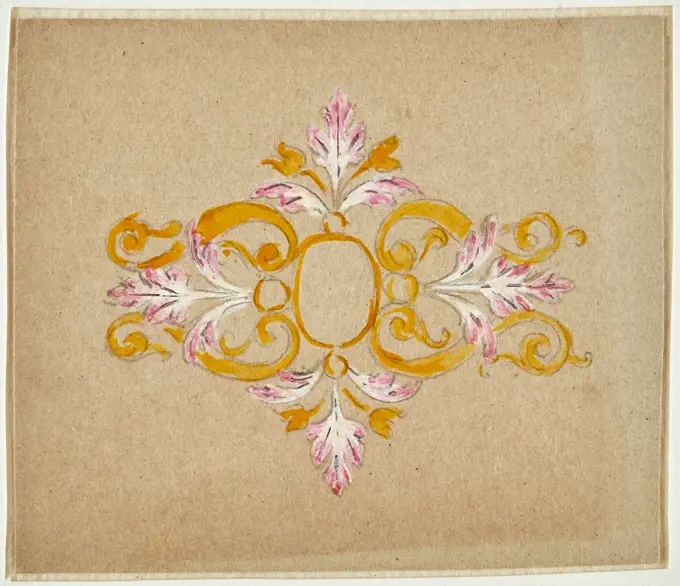
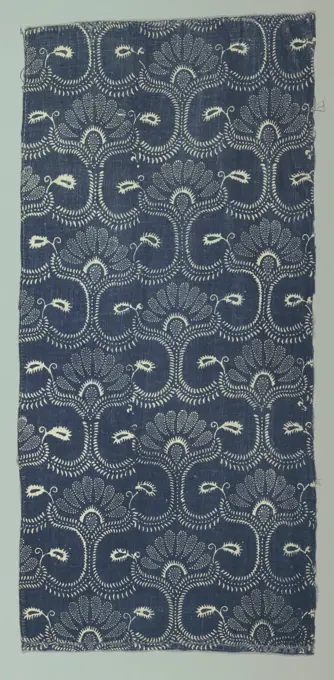
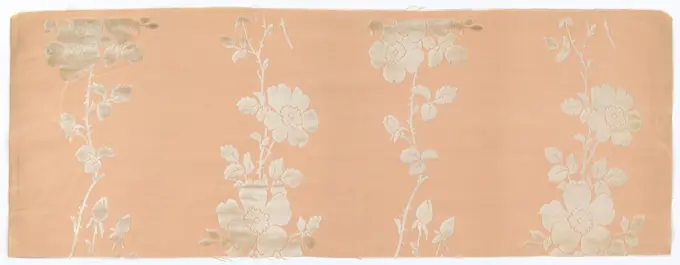
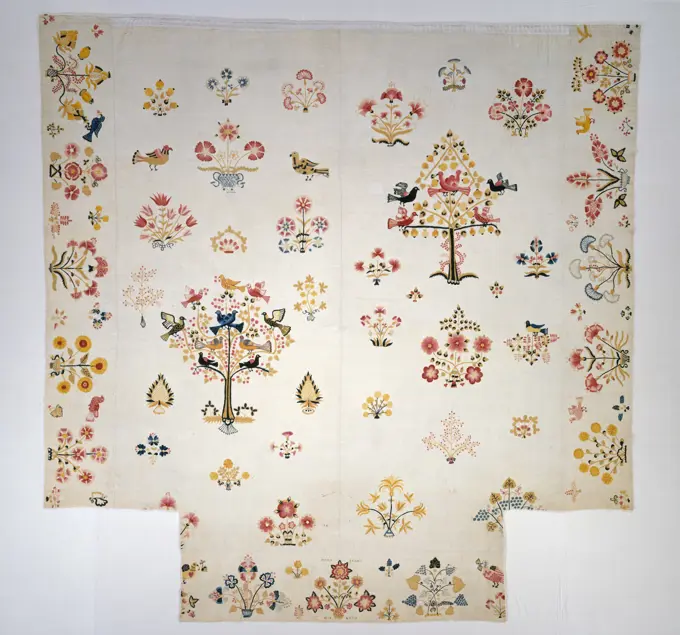
Decorative Textile Patterns

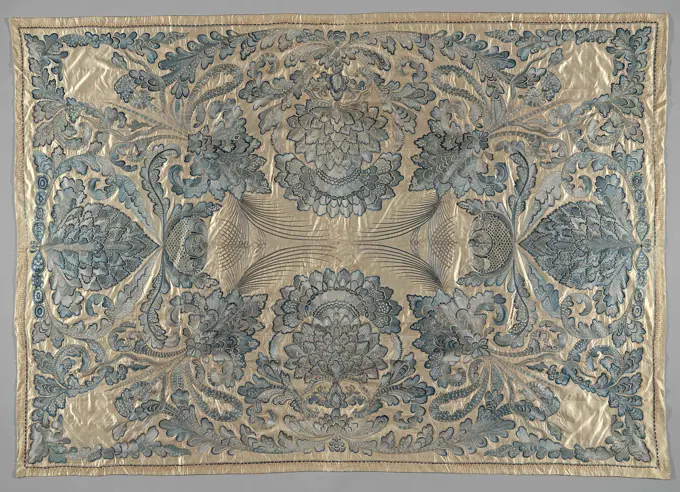
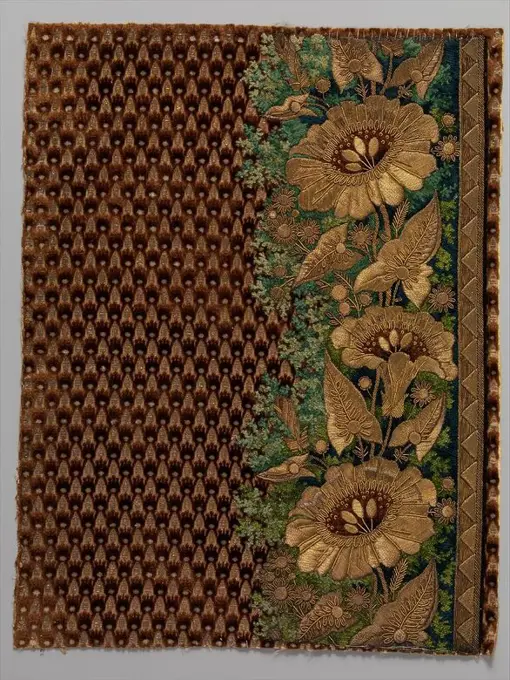
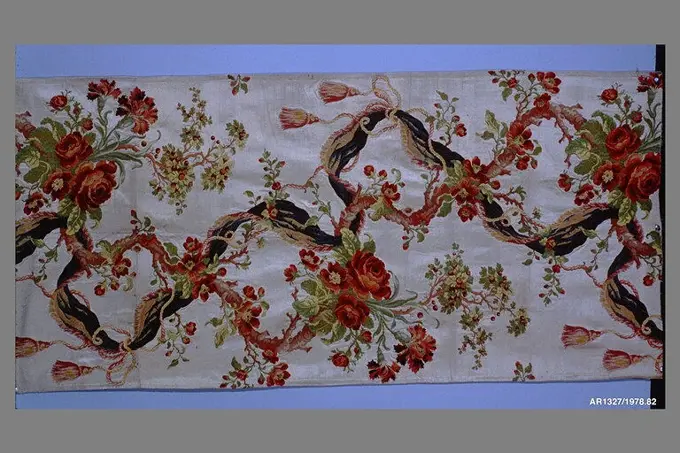
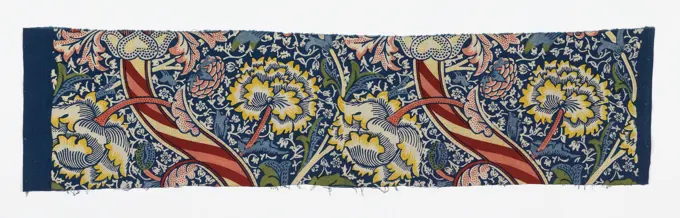
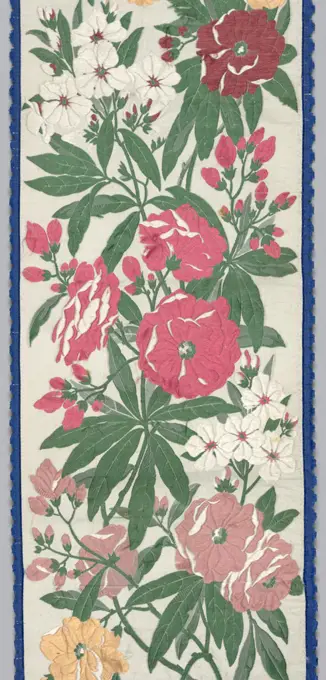
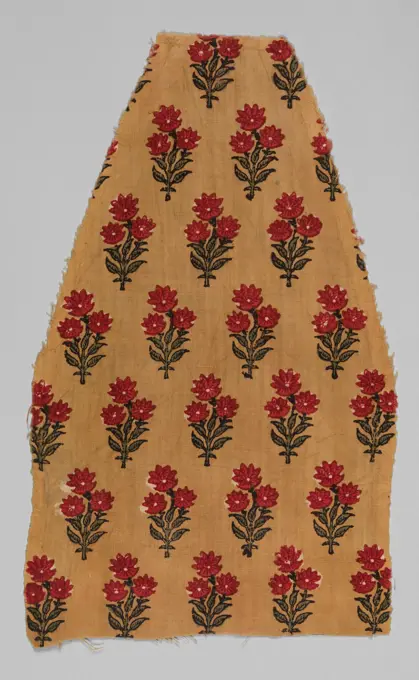
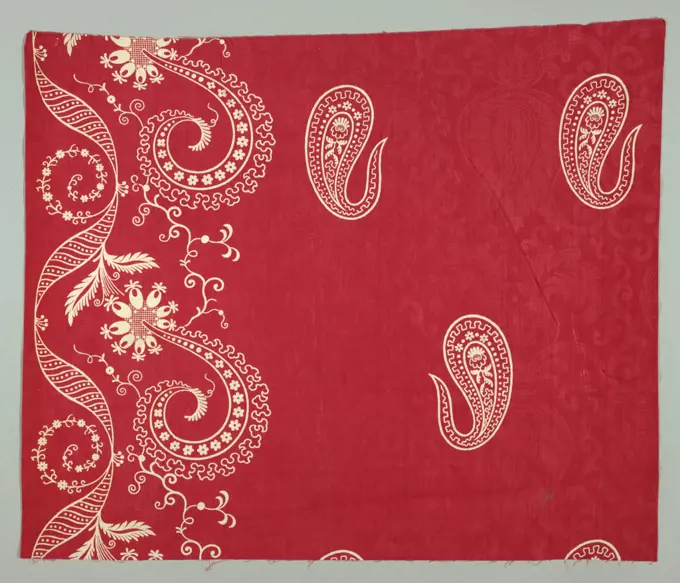
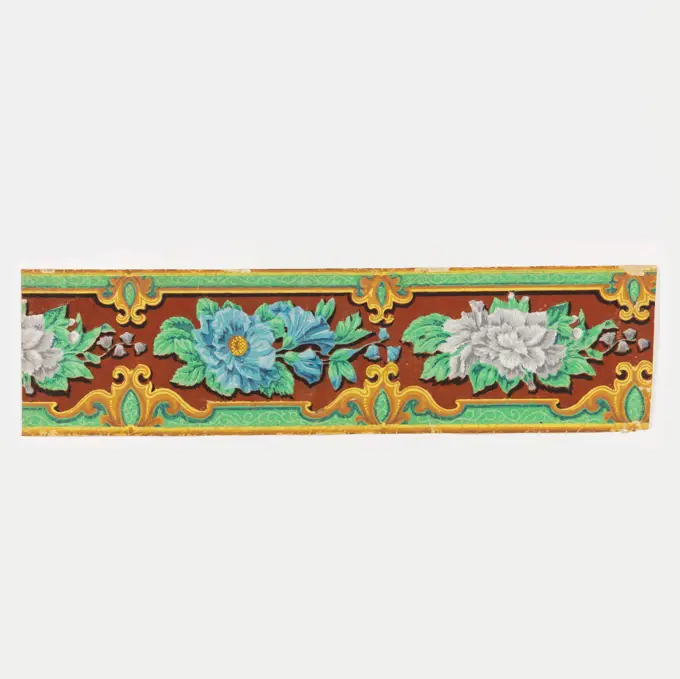
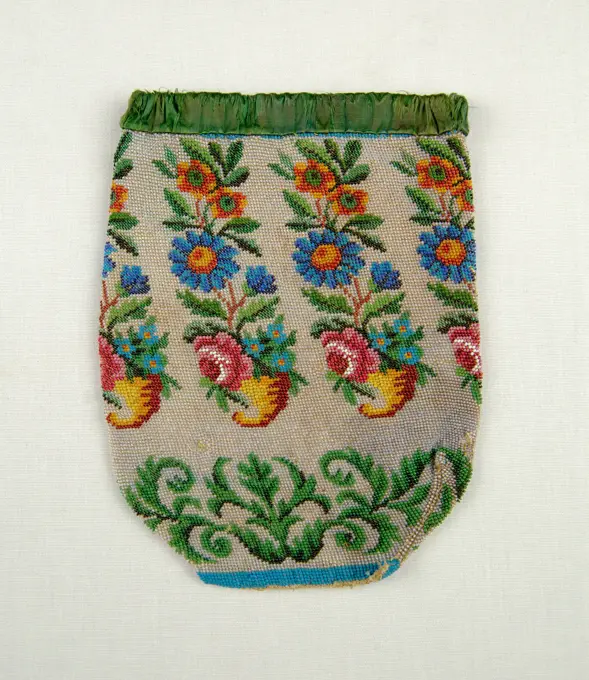
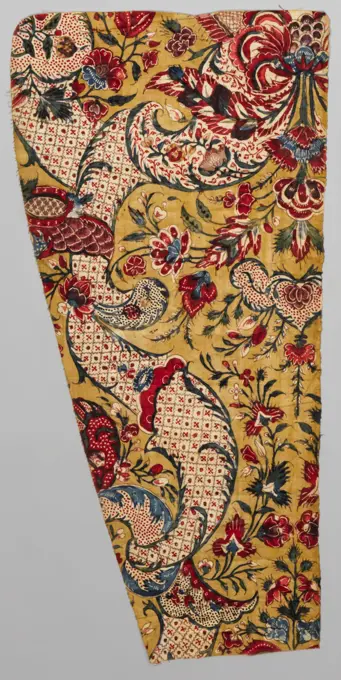
A collection of printed fabrics showcasing floral and ornamental designs. Featuring intricate patterns in various colors, suitable for upholstery or fashion.

Textile, Medium: cotton Technique: roller (mule) printed on plain weave, England, ca. 1830, printed, dyed & painted textiles, Textile
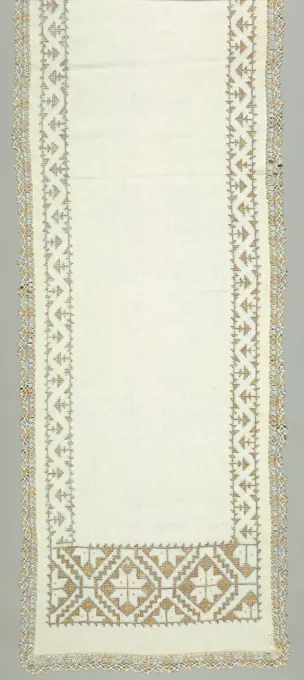
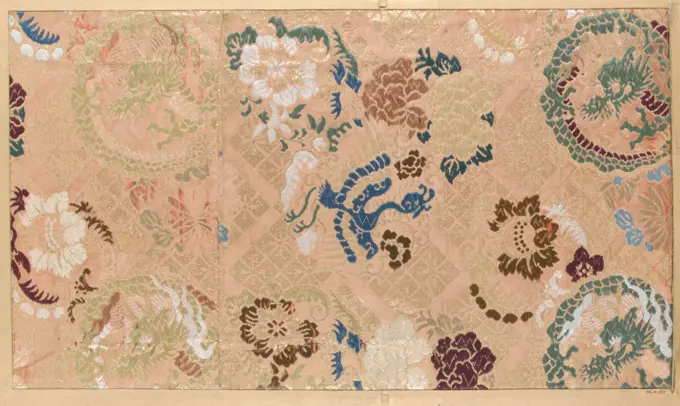
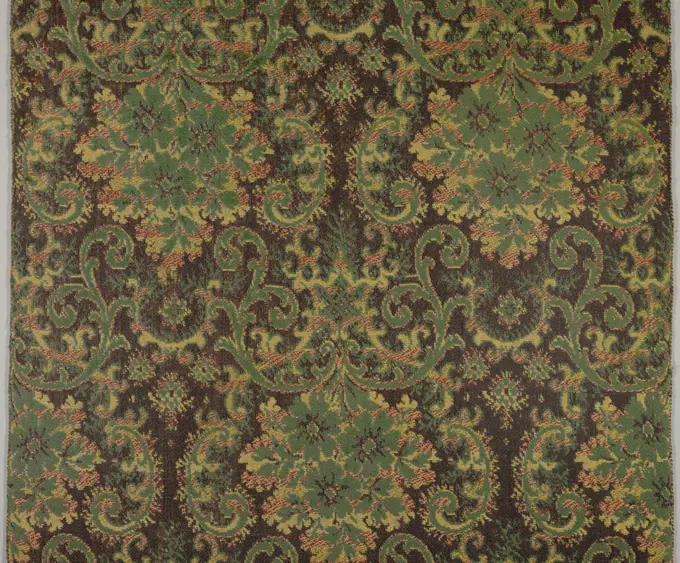
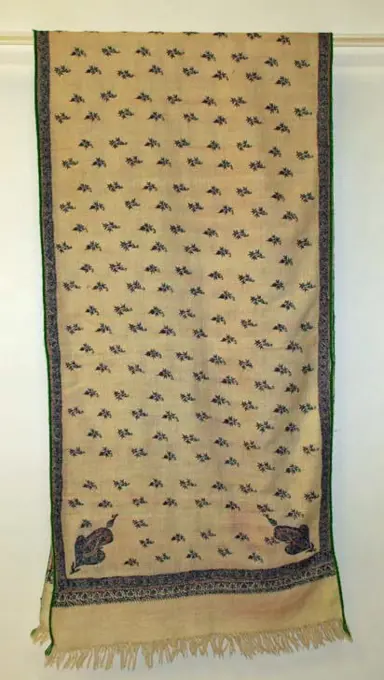
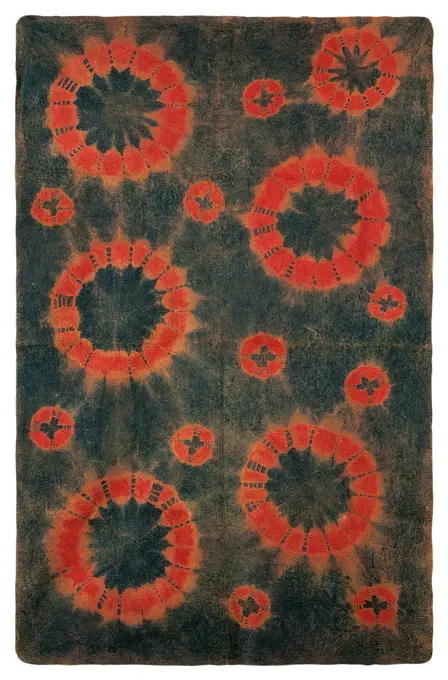
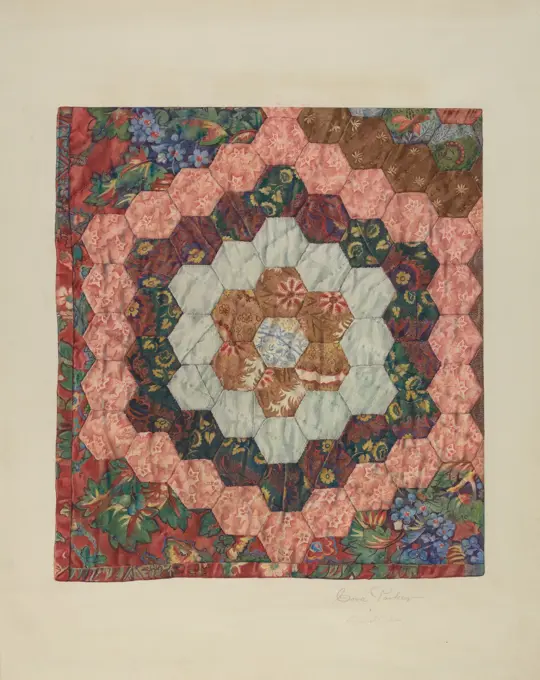
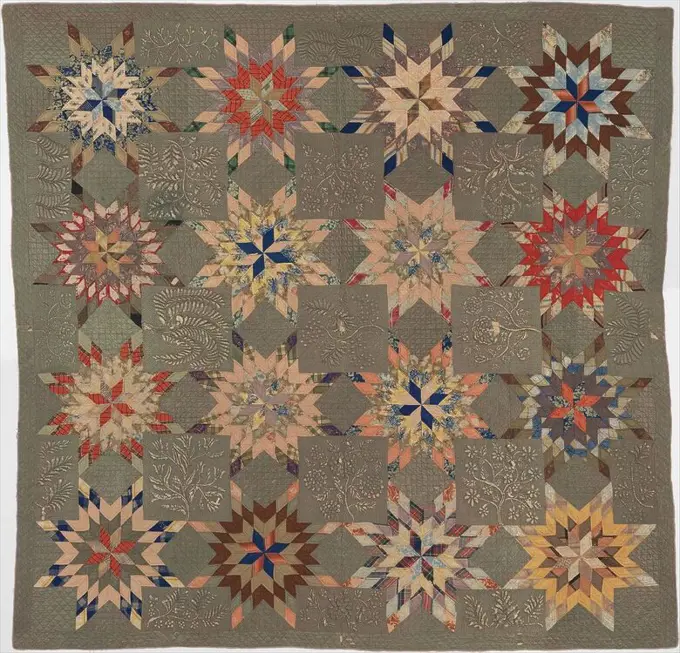
Quilt, Star of Bethlehem pattern variation. Culture: American. Dimensions: 88 1/4 x 87 1/8 in. (224.2 x 221.3 cm). Maker: Ellen Morton Littlejohn (1826-1899); Margaret Morton Bibb (ca. 1832-ca. 1900-1910). Date: ca. 1837-50.Multicolored and patterned silks make up the very finely pieced star blocks. These alternate with unpieced blocks to a pink-and-green changeable silk. The unpieced blocks have been intricately quilted and stuffed, each with a different plant or flower. Carded cotton was used for the stuffed areas and the batting. The edge of the quilt is bound with lavender silk, and the backing is of solid pink glazed cotton.Two sisters, both enslaved African-Americans who worked for Marmaduke Beckwith Morton, made this silk quilt, which combines beautiful workmanship and sophisticated design. It originally adorned one of the beds in Morton's family seat, known as "The Knob". The quilt is composed of pieced blocks in the "Star of Bethlehem" pattern. In the interstices between theShawl (France); silkFragment, 1800s. India, 19th century. Brocade; silk and metal; overall: 41.9 x 22.2 cm (16 1/2 x 8 3/4 in.).Piece 18th-19th century Japan. Piece 67597Piece 18th-19th century Japan. Piece. Japan. 18th-19th century. Silk. Textiles-WovenTable cover, Medium: linen Technique: plain weave with wrapping stitch embroidery and drawn work; bobbin braid attached., Rectangular linen table cover dominated by a complex border combining drawn work and embroidery. Side borders of drawn work in orange with blue trim in a continuous vine design. End borders are wider with drawn work in blue and orange rosette in a diamond lattice. Outer edge is trimmed with a continuous randa of linen bobbin lace in white, blue and orange., Spain, 18th century, embroidery & stitching, Table coverFragment of Silk Damask, 16th century. Spain, 16th century. Silk; overall: 18.5 x 14.6 cm (7 5/16 x 5 3/4 in.).Shawl, 19th-20th century, 96 1/2 x 42 1/2 in. (245.11 x 108 cm), Wool, India, 19th-20th centuryPanel; silk and metal-wrapped silk threads on cotton foundationTextile Fragment early 17th century. Textile Fragment. early 17th century. Silk, metal thread. Made in Turkey, Bursa. TextilesSidewall - Fragment (USA); machine-printed; 22.5 x 14.5 cm (8 7/8 x 5 11/16 in.)Piece mid-17th century Italian. Piece 229120Batist handkerchief with four separate feathered leaves with rosette flower in each corner and trimmed with a border Valenciennes side, anonymous, c. 1850 Natural Batist handkerchief with embroidery - Whitework - and finished all around with bobbin: Valenciennes side. Square model with wavy edges and rounded corners. Four separate feathered leaves are embroidered in each corner with one small rosette flower each. The same leaf with flower is in the middle along each side. The pattern in the lace edge consists of one row of ringed snowflakes, in a square Valenciennes ground. The handkerchief is stored with another handkerchief in a sachet. Europe cotton (textile) Embroidering / Bobbi Lace / Valenciennes Lace Natural Batist handkerchief with embroidery - Whitework - and finished all around with bobbin: Valenciennes side. Square model with wavy edges and rounded corners. Four separate feathered leaves are embroidered in each corner with one small rosette flower each. The same leaf with flFragments; velvetPiece 18th-19th century Japan. Piece. Japan. 18th-19th century. Silk. Edo (1615-1868). Textiles-WovenCarpet, Medium: wool Technique: triple cloth, Scrolls form a large-scale loose ogee lattice which frame palmettes. Colors are green, dark brown, yellow, and red., Europe or USA, 1860-1870, woven textiles, CarpetChudar India 19th centuryIndian silk textile with traditional woven pattern. 21st CenturyTea jacket of mixed side four-pointed shape in the center. Tea rug of natural-colored fatty side with needle lace ground, bars soil and maas soil. Symmetrical pattern from the center, built around a four-point shape. In the corners of the rug a rectangular shape with a flower vase. In the middle along the edges a circle with rosette flower, flanked by voluntaries.Textile Fragment 18th century. Textile Fragment 443036Bliżej Kultury Nidecka studioBedcover. This bedcover was once owned by Petronella van Hoorn. She came from a family of governor-generals in Batavia, and her husband, Jan Trip, too, was a VOC governor. The cover was probably given to her by Anthonie Huysman, an ambitious VOC official who hoped to gain the support of his influential relations. His gesture was not in vain, for he was appointed to the Council of the Indies a year after he sent this giftto Petronella.Chinese ornamentFragment (Spain); silk, cotton(); Warp x Weft: 66 x 26 cm (26 x 10 1/4 in.)Piece late 17th-early 18th century Flemish. Piece 212337Fragment of silk fabric unknownSampler 1753 German. Sampler. German. 1753. Silk on linen. Textiles-EmbroideredEmbroidery sample for a man's suit. Culture: French. Dimensions: L. 13 1/2 x W. 10 1/4 inches (34.3 x 26 cm). Date: 1800-1815. Museum: Metropolitan Museum of Art, New York, USA.Fragment, Medium: silk Technique: damask weave with supplementary weft patterning (brocade), Square fragment of tan damask weave silk brocaded in green, red and blue silk, showing design of scattered florals with serpentine band of ornament in the 'bizarre' style., France, early 18th century, woven textiles, FragmentTextile (France); cottonTable cover, Medium: silk and metal wrapped silk thread, linen foundation Technique: satin, split, stem, and laid work stitches; bobbin lace, Table cover with center scene depicting 'Venus i Cupido' in elaborate frame. Surrounding center is eight scenes, two marked 'La Hermosa Diana,' and at each corner, one showing North American Indians (); border of flowers, scrolls and cactus. Edged with bobbin lace in color., Mexico or South America, mid-late 19th century, embroidery & stitching, Table coverChalice Cover (Italy); linenFlounce Made 1850-1875 Belgium. Cotton and linen, mixed lace known as Brussels application lace bobbin and needle laces applied to machine-made net .Frivolita bag in a flat, almost square model, from blue striped silk with roses and other flower branches. Bag in a flat and almost square model, from blue striped silk with roses and other flower branches. The fabric is folded down and sewn aside. Something under the upper hem is an indoor slot with narrow lilac ribbons. On the down corners a small bow from the same ribbon. Cotton lining with small sprinkled white daisies on a black fond.Sachet van Geel velvet on the front painted with a dash of carnated branches, lined with stitched yellow romdom trimmed with twisted yellow silk cord, Adriana Diderika van Houweninge, c. 1910 Glovesachet of yellow velvet on the front painted with a dash of carnation branches, lined with stitched yellow silk romdom trimmed with twisted yellow silk cord. Model: elongated and narrow. Lining of matted -handed yellow side trimmed with a twisted yellow cord. Decoration: On the front, a dash of carnation branches is painted with oil paint. Nijmegen whole: velvet (fabric weave). Painting: Oil Paint (Paint). Lining: Silk. cord: Glovesachet of yellow velvet on the front painted with a dash of carnation branches, lined with stitched yellow silk romdom trimmed with twisted yellow silk cord. Model: elongated and narrow. Lining of matted -handed yellow side trimmed with a twisted yellow cord. Decoration: On the front, a dash of carnation branches is painted with oil paint. Nijmegen whole: velvet (faCover Made 1701-1800 Turkey. Linen, plain weave with needlework in silk, 3 stripes of five design units each of floral branches with leaves are joined through bobbin lace, linen. .Petrahil, embroidered unknownSidewall (France); machine-printed; 81 x 49.5 cm (31 7/8 x 19 1/2 in.)Panel 18th century Korea. Panel 70398Sample (USA); Manufactured by Orinoka Mills (United States); 1989-80-51Blue felt rug (mōsen) decorated with red circles, late 18th-early 19th century, Unknown Japanese, 44 1/2 × 68 in. (113.03 × 172.72 cm) (overall), Cloth: wool felt; shibori (tie-dyeing), 18th-19th century, Fabric made in Central Asia, dyed in Japan.Sidewall (England or United States); machine-printed; 107 x 55.5 cm (42 1/8 x 21 7/8 in.)Length of upholstery silk 1760-1765 After a design by Philippe de Lasalle French. Length of upholstery silk 229571Border (France); block-printed on paper; 78.5 x 17 cm (30 7/8 x 6 11/16 in.)Fanière brothers, enameled brooch (main title). Graphite, gouache on gray cartonette. Petit Palais, Museum of Fine Arts of the City of Paris.Quilt Top, 'Spiritualists'. Nannie S. Sterrett (United States, active second half of 19th century). United States, Virginia, Highland County, circa 1857. Textiles; quilts. Pieced and appliquéd cotton with inked signaturesFragment, Medium: silk Technique: 5-harness satin damask, Yellow damask showing parts of a long symmetrical repeat of foliage and large-scale plant forms., Italy, 17th century, woven textiles, FragmentTextile (France); cottonSidewall (USA); Manufactured by Maxwell & Co., S.A. (United States); machine-printed paper; 92 x 49 cm (36 1/4 x 19 5/16 in.)Textile, Cheney Brothers, (South Manchester, Connecticut, USA), Medium: silk Technique: compound satin weave, Dark red reproduction textile inspired by a sixteenth century example in the Cooper Union Museum collection. Design has straight rows of circles connected by notched bars. Each circle has two concentric rings of small checkerboard patterning and is filled with scrolling lines. Between circles are diamond shapes with palmettes and vine patterning., USA, ca. 1915, woven textiles, TextileReticule in a flat rectangular model made of knitted ecrukligious cotton with blurred floral pattern made of multicolored glass beads, anonymous, c. 1820 - c. 1850 Reticule in a flat rectangular model made of knitted ecrukligious cotton with fraudulent flower pattern made of multicolored glass beads. Along the entire bottom is a band of five centimeters with white beads knitted, in which a knitted pattern of green branches with larger red pink flowers, interspersed with several small blue flowers. Above the same distance three rows of a few flowers, alternately red pink and blue, with green leaves. Along the top an edge of dark red beads. The reticule is pulled together through a twisted cotton cord, which runs through a tunnel on the inside. The lining is made of unadorned fine ecrinkeur linen. Netherlands (possibly) whole: Cotton (textile). Decoration: Glass. Lining: Cotton (textile) knitting / knitting Reticule in a flat rectangular model made of knitted ecrukligious cotton with fraFragment. Italy. Date: 1501-1600. Dimensions: 78.4 x 57.8 cm (30 7/8 x 22 3/4 in.). Silk and gilt-metal strips, plain weave with supplementary patterning wefts bound by main warps in plain interlacing. Origin: Italy. Museum: The Chicago Art Institute, Chicago, USA.Bed Curtain Made 1750-1770 Connecticut. Linen, plain weave; embroidered with wool in cross, Romanian, running, satin, and stem stitches . Hannah Hinman Twitchell PiercePatchwork and Applique Quilt. Dated: c. 1936. Dimensions: overall: 42.2 x 28.5 cm (16 5/8 x 11 1/4 in.) Original IAD Object: 93" long; 93" wide. Medium: watercolor, gouache, and pen and ink on paperboard. Museum: National Gallery of Art, Washington DC. Author: Irene Schaefer and Mary Berner.Fragments; silkFragment, Medium: silk Technique: woven with supplementary warp pile (velvet), Silk velvet textile showing pattern of green and yellow arabesques with flowers and birds on a red ground. Right selvage present., possibly Turkey, possibly Persia, 18th century, woven textiles, FragmentKazuifel with an appliqued bishop weapon on the back ,, c. 1725 - c. 1750 Kazuifel of silk brokaat with a polychrome (also gold thread) pattern of flower branches against a silver gray foundation. Omboard with woven band. Sewn on the chest and back gold tire. On the back a applied bishop weapon covered by a green hat that brushes on either side. Lined with coarse pink fabric (linen). Italy (possibly) brocade (textile). silk. Kazuifel of silk brokaat with a polychrome (also gold thread) pattern of flower branches against a silver gray foundation. Omboard with woven band. Sewn on the chest and back gold tire. On the back a applied bishop weapon covered by a green hat that brushes on either side. Lined with coarse pink fabric (linen). Italy (possibly) brocade (textile). silk.Border; cottonCover of a support cushion for a doll, of twill cotton with machine embroidery, anonymous, c. 1880 Cover of a support cushion for a doll, of twill cotton with machine embroidery. Netherlands cotton (textile) embroidering / twill Cover of a support cushion for a doll, of twill cotton with machine embroidery. Netherlands cotton (textile) embroidering / twillSpanning fabric with backdrop of branches, leaves, flowers and fruits, anonymous, c. 1750 - c. 1790 A lane multicolored painted cream spancing material from silk. See description at A. China silk printing / painting A lane multicolored painted cream spancing material from silk. See description at A. China silk printing / paintingFragment Made 1801-1900 India. Silk; plain compound cloth .Machine-made Openwork Samples (USA); cardboard, linen, silk, metallic; 1971-26-2-23Fragment Made 1501-1600 Italy. silk, fancy simple satin weave .Textile; cottonTextile (France); silk; Warp x Weft: 28.3 x 75.6 cm (11 1/8 x 29 3/4 in.); Anonymous bequest in memory of Albert and Rebecca Elsberg; 1938-82-206-cPad for workbox, Medium: silk, parchment, metal thread Technique: appliqué, Pad covered with blue satin and ornamented with cut parchment stitched with metal thread in design of urn and tomb under palm trees, surrounded by floral border. Lined in white taffeta and edged in satin ribbon, quilled., Europe, late 18th-early 19th century, embroidery & stitching, Pad for workboxEmbroidered coverlet 1770 Mary Breed American When the panels of this coverlet were embroidered in 1770, they were not meant to be constructed into a bed covering. Originally, they were narrow bed curtains and three bed valances, most likely stitched together in the early nineteenth century. Some of the embroidery was chopped away at the foot end so that the converted coverlet could accommodate bedposts.When the coverlet came into the Museum's collection in 1922, it was attributed to Mary Breed, aged nineteen in 1770, who was said to have lived on Breed's Hill, Charleston (now Boston), Massachusetts. The eighteenth-century inscription embroidered on the piece, which read MARY BREED / AGE 19 Y 1770, is now mostly worn away but can be seen clearly in old photographs. That the piece was stitched on Breed's Hill, where the 1775 Battle of Bunker Hill took place, was particularly appealing to the collectors of the 1920s, who were interested in the historical resonance of all things colonial.Francis Law Durand, Quilt (Crib Quilt), 1935 1942 Quilt (Crib Quilt)Linnamast napkin with strawberries, Chris Lebeau, c. 1878 - c. 1945 Linnamast napkin with design no. 602: Strawberry motif. The napkin is part of five napkins (BK-1979-264-A to BK-1979-264-F) and a tablecloth (BK-1979-263). Eindhoven linen (material) damask Linnamast napkin with design no. 602: Strawberry motif. The napkin is part of five napkins (BK-1979-264-A to BK-1979-264-F) and a tablecloth (BK-1979-263). Eindhoven linen (material) damaskTextile (England); Made by Morris & Co. (United Kingdom); cottonSidewall, Block-printed paper, Rococo-revival style floral stripe design. Assymetrical scrollwork and floral bouquets. Printed in gray, white, blue and pink on gray ground., ca. 1850, Wallcoverings, SidewallSidewall Sample; machine-printed on paper; 22.5 x 22.5 cm (8 7/8 x 8 7/8 in.)Ribbon, Medium: cotton, silk, Polychrome floral pattern on white ground with a blue scalloped edge. Originally part of accessioned numbered object: 1942-23-1-a/h., USA, 1850-99, embroidery & stitching, RibbonTextile Fragment 19th century. Textile Fragment. 19th century. Cotton; printed. Country of Origin India. TextilesFragment of silk fabric  colourful sprays of roses unknownBorder, Medium: cotton Technique: discharge printed on a calendered plain weave, Short length of a calendered red fabric patterned with stylized acanthus scrolls in a lighter shade of red. Discharge printing process leaves a white pattern of a scrolling ribbon with leaves and flowers on the border and butah shapes in the field., Europe, ca. 1850, printed, dyed & painted textiles, BorderFragment; cottonSash -Textile (France); silk, metallic threadWoman scarf isolated on the white backgroundOrnament tile, curled feathers, corner motif quarter leaf, wall tile tile sculpture ceramic earthenware glaze, baked 2x glazed painted Yellow shard square two nail holes purple on white.Fragment (Italy); silk, linen hand knotted netCover 18th century Spanish. Cover 215136Fragment (China); silk; temperaPiece of fabric. unknown, authorKyogen Kataginu Kyogen Kataginu, 19th century. Textile, 34 1/2 x 24 1/2 in. (87.6 x 62.2 cm).   Asian Art 19th centuryPurse, from a four-piece set, 9 13/16 x 5 1/2 in. (24.92 x 13.97 cm) (including top loops), Cotton, silk, sequins, metallic strips, ChinaCarmel Wilson and Cora Parker, Quilt, c 1939 QuiltHandkerchief with a rim of needle with a crown, anonymous, c. 1880 Handkerchief with a border of natural -colored needle side, Brussels mesh side. A batist's center piece is decorated with a large sides rose in the corners; Above one is a small embroidered crown. A lace edge consists of a straight list of tormented column with a chain of florets and within S- and C-Voluten. Brussels linen (material) Brussels Gaze Point Handkerchief with a border of natural -colored needle side, Brussels mesh side. A batist's center piece is decorated with a large sides rose in the corners; Above one is a small embroidered crown. A lace edge consists of a straight list of tormented column with a chain of florets and within S- and C-Voluten. Brussels linen (material) Brussels Gaze PointHandkerchief French 19th centuryShawl Made 1830-1860 Philippines. Pineapple fiber, plain weave (pina cloth), cut and drawnwork embroidered with cotton in cloth, cross, darned points, darned squares, darned wheels, darning, interlocking, overcast, Roman, single faggot, tulle, and twined double running stitches; embroidered with cotton in overcast, raised stem, satin, and twinwed double running stitches; couching; edged with cotton, needle-made edging .Fragment (Italy); silk, linen net foundationBorder (France); block-printed and flocked on handmade paper; 88 x 15.5 cm (34 5/8 x 6 1/8 in.)Fragments, Medium: cotton Technique: printed on plain weave, Fragments of the same design printed in different colorways. One has tiny floral sprigs on a black ground with red, yellow, and white flowers with grey foliage; the other, tiny floral sprigs on a black ground with rose and white flowers and gray-green foliage., Normandy, France, ca. 1850, printed, dyed & painted textiles, FragmentsAlbumPouch 1830-60 American. Pouch 170340Hooked Rug. Dated: c. 1936. Dimensions: overall: 35.8 x 26.7 cm (14 1/8 x 10 1/2 in.) Original IAD Object: 24" wide; 33" long. Medium: watercolor, graphite, and pen and ink on paper. Museum: National Gallery of Art, Washington DC. Author: Ruth M. Barnes.Shawl first quarter 19th century European. Shawl 123126Fragment sits with symmetrical edge pattern and flower vines on ocher yellow stock, c. 1720 - c. 1730 Fragment sits. Dessin: Symmetrically built -up band work, filled with grid pattern, supposedly lace pattern, and flower vines; In the ashes large flower arrangements in red, blue, eggplant, yellow and green against an ocher yellow stock; The stock of the band work is white. Hindeloopens fur. Note: rather other inv.nrs. Got in: BK-NM-3725 and BK-NM-12206-B, with references to the catalog of textile art in the Dutch Museum of History and Art in Amsterdam (1903), Cat.nrs 344 and 345. Coromandelkust cotton (textile). stain (coating). paint (coating) Fragment sits. Dessin: Symmetrically built -up band work, filled with grid pattern, supposedly lace pattern, and flower vines; In the ashes large flower arrangements in red, blue, eggplant, yellow and green against an ocher yellow stock; The stock of the band work is white. Hindeloopens fur. Note: rather other inv.nrs. Got in: BK-NM-3725 and BKBonnet Veil (Spain); silk