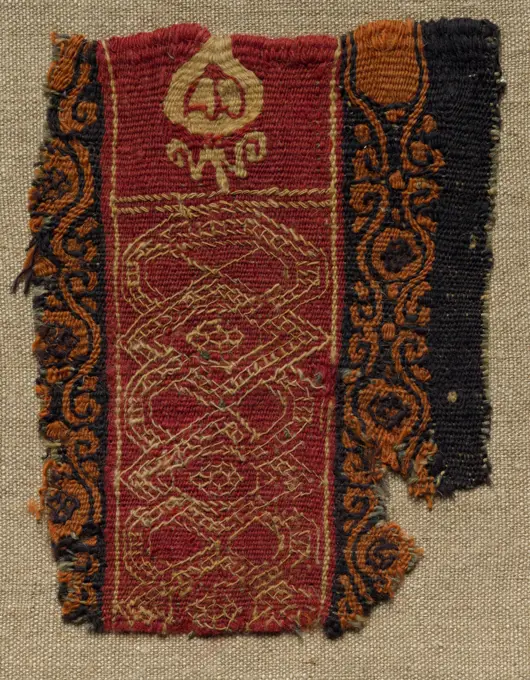
Decorative Textile Samples

Various textile samples including embroidered and woven patterns, showcasing intricate designs and historical craftsmanship in rich colors.
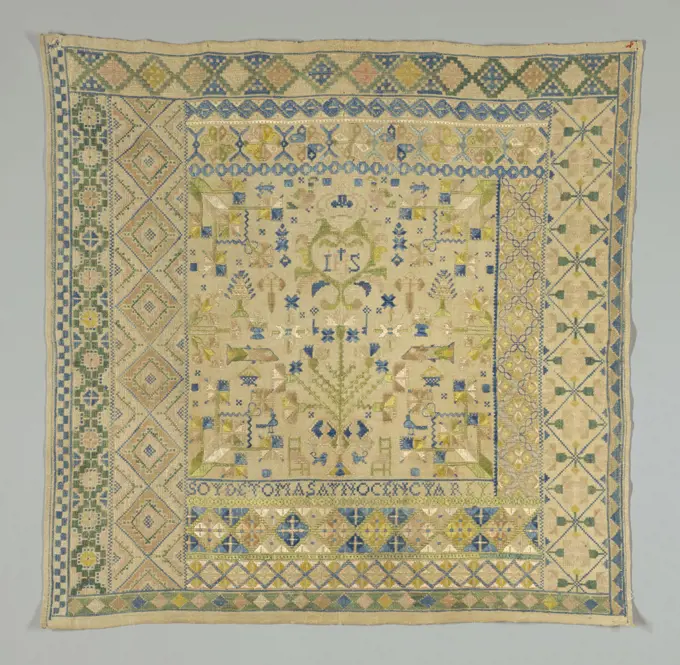
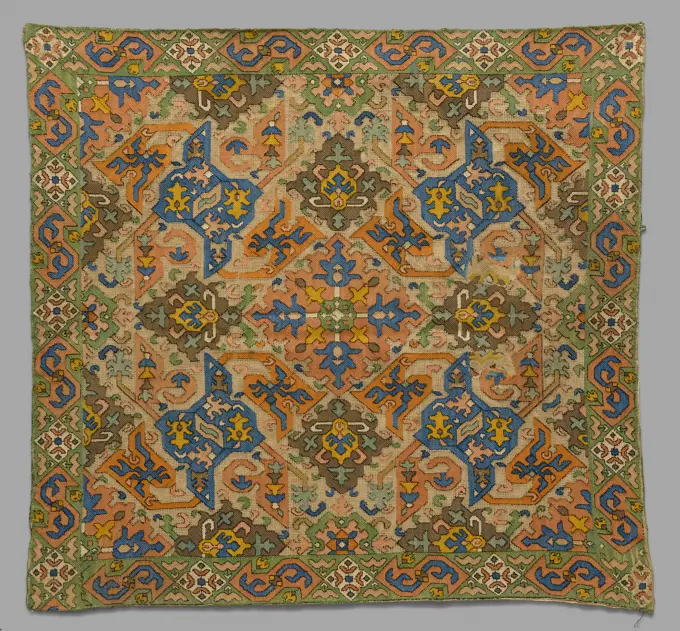
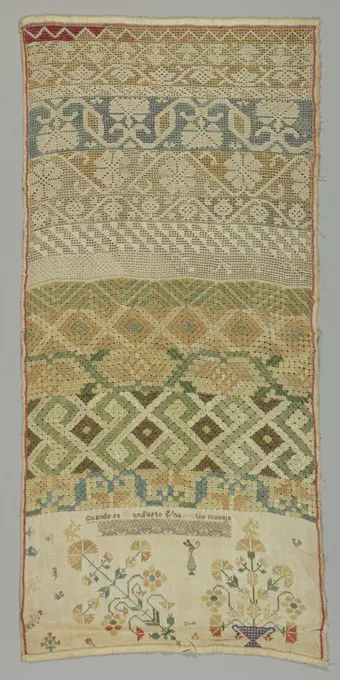
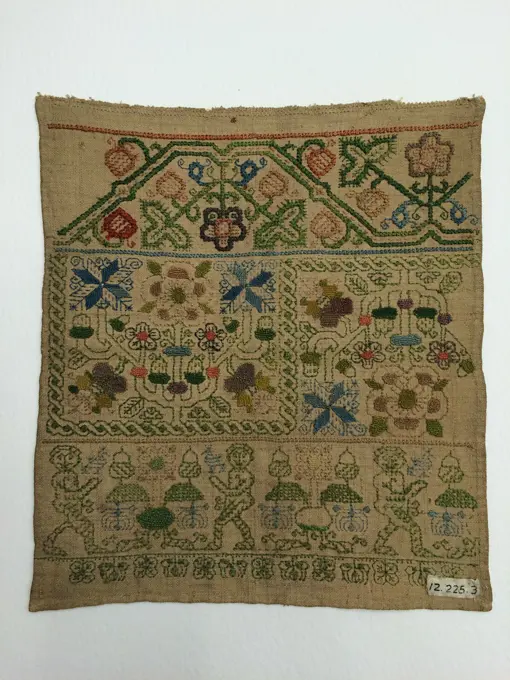
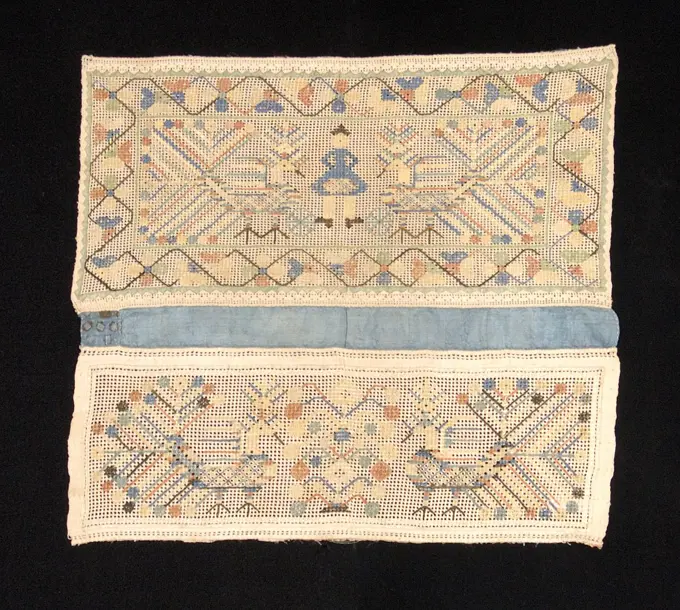
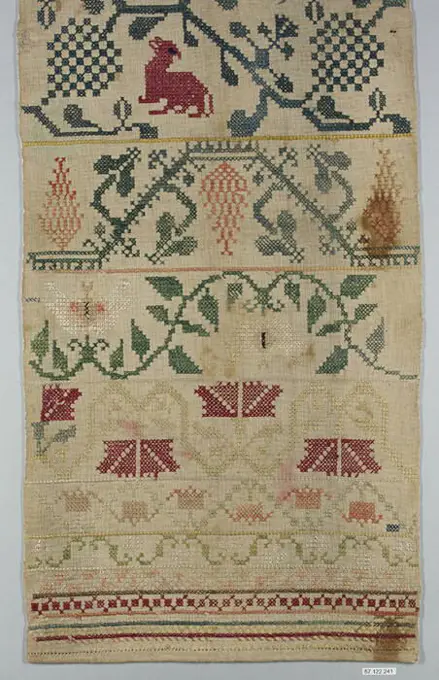
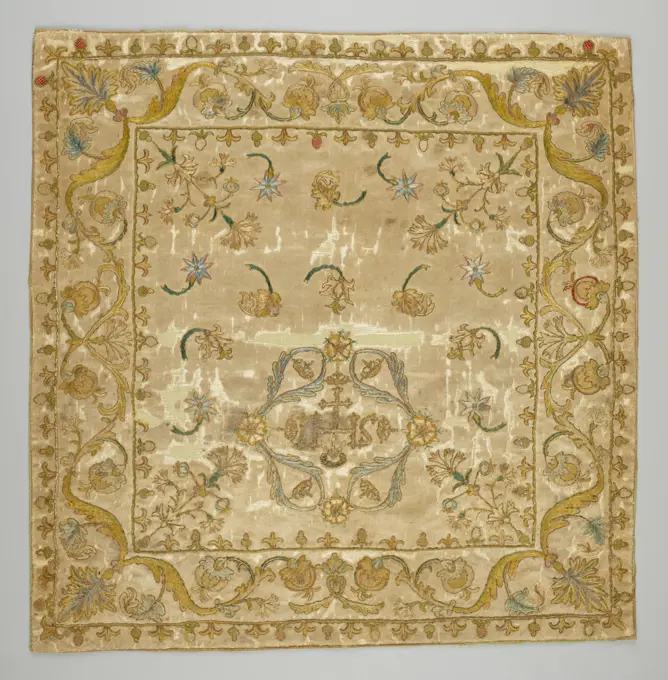
Sampler, Tomasa y Nocenya Rey, Medium: silk embroidery on linen foundation Technique: embroidered in cross, satin, stem, chain, four-sided, and back stitches on plain weave foundation, Center field of spot motifs, surrounded by bands of geometric pattern in concentric squares., Spain, early 19th century, embroidery & stitching, Sampler
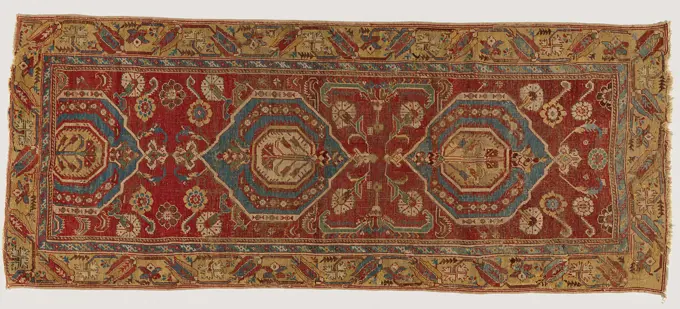
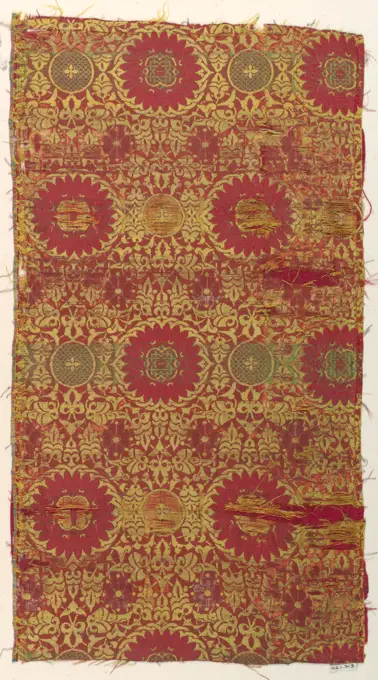
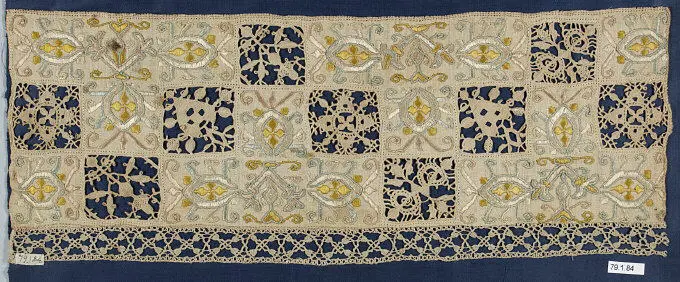
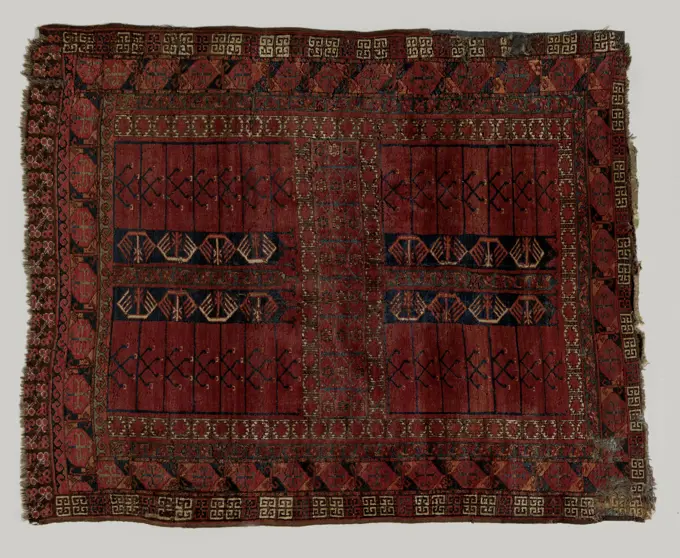
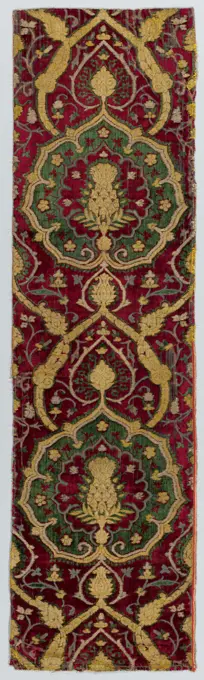
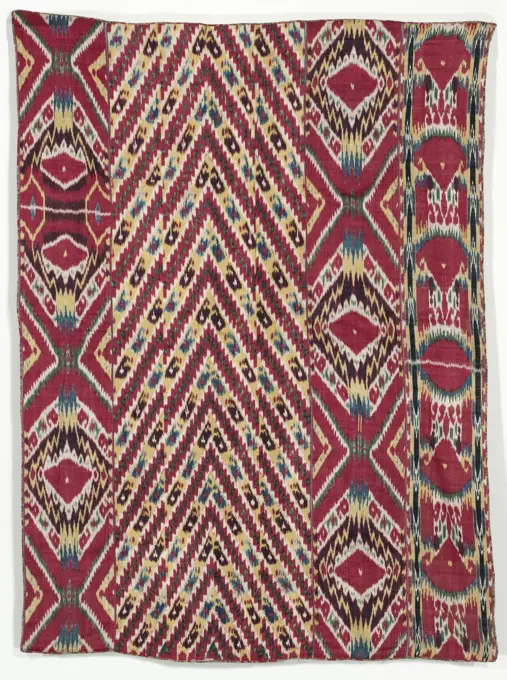
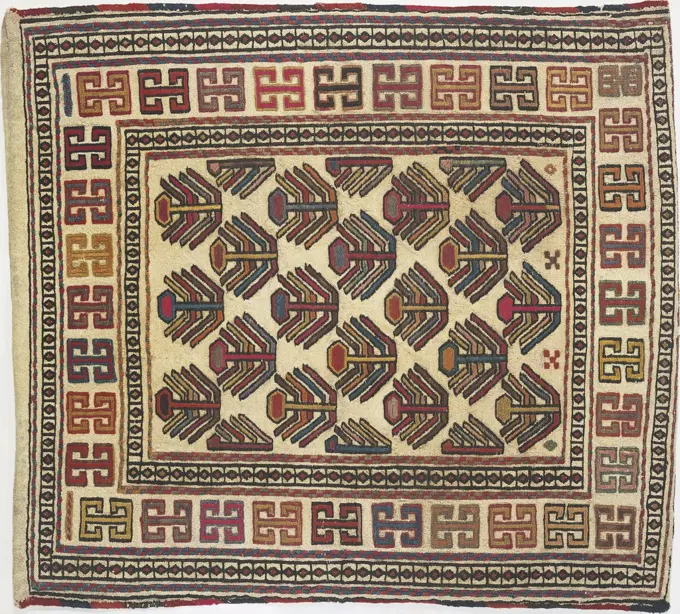
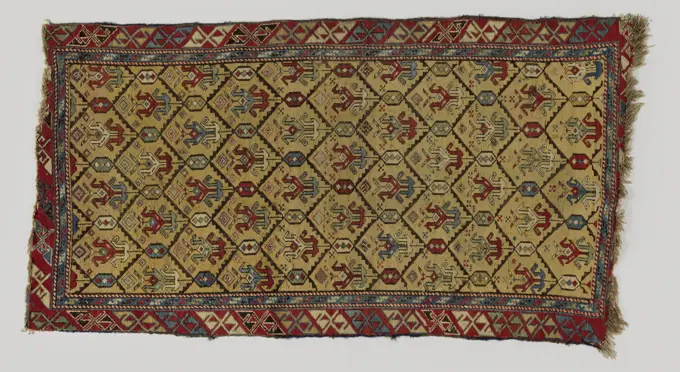
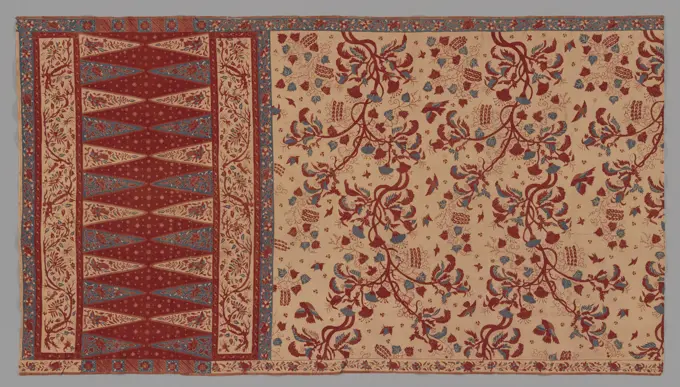
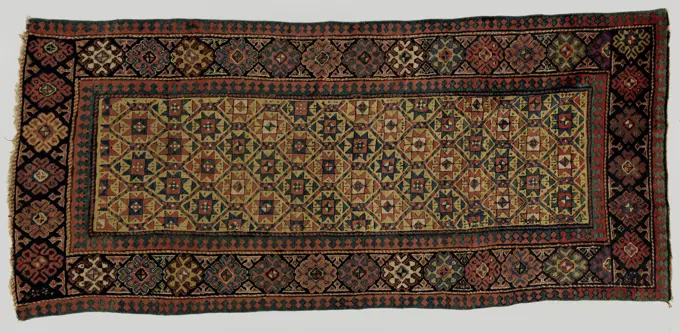
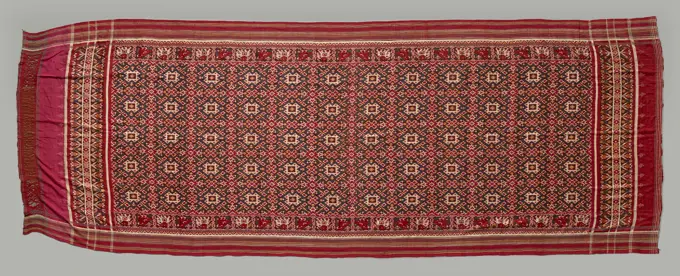
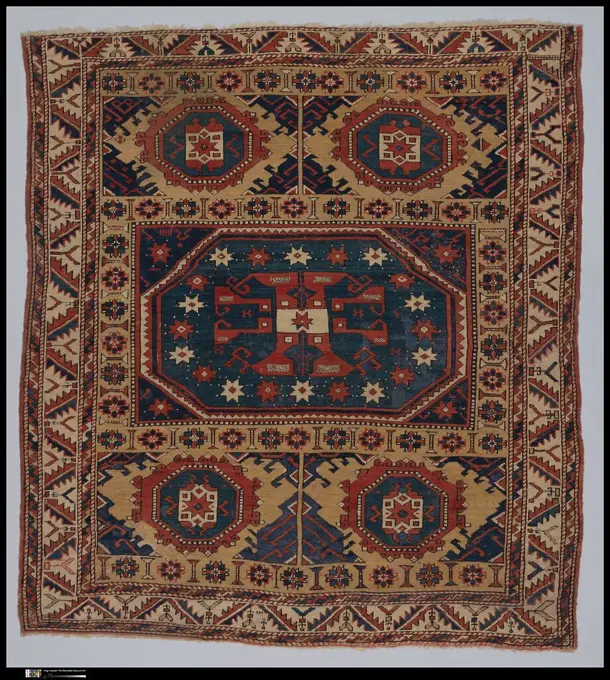
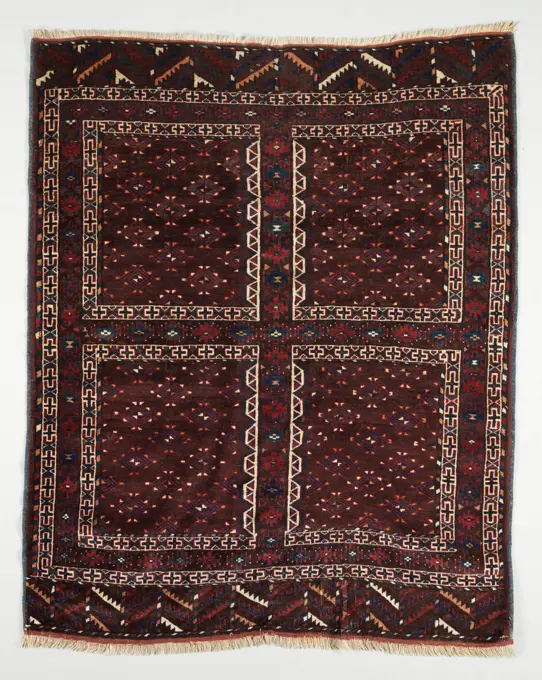
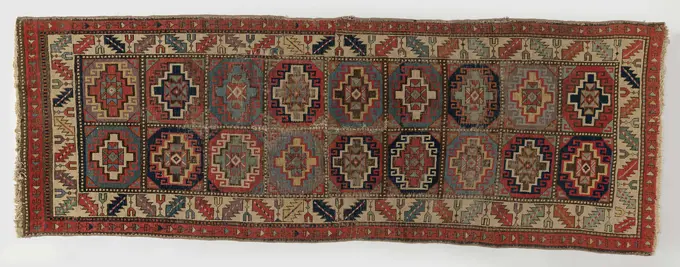
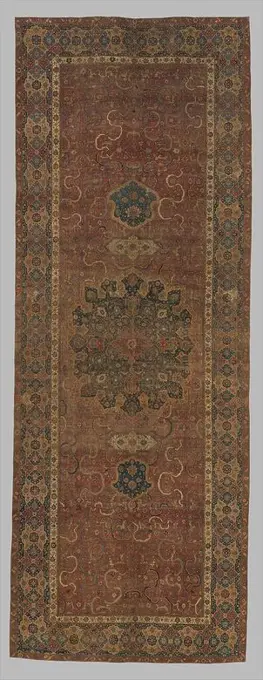
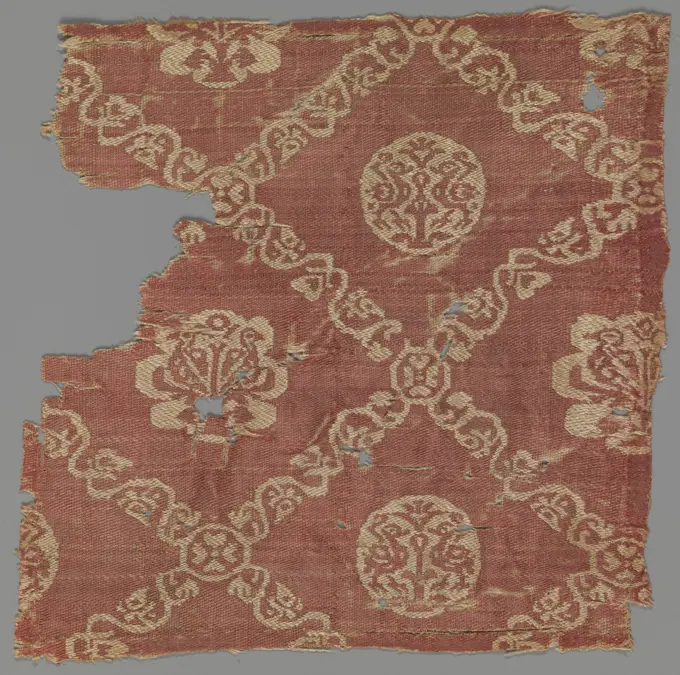
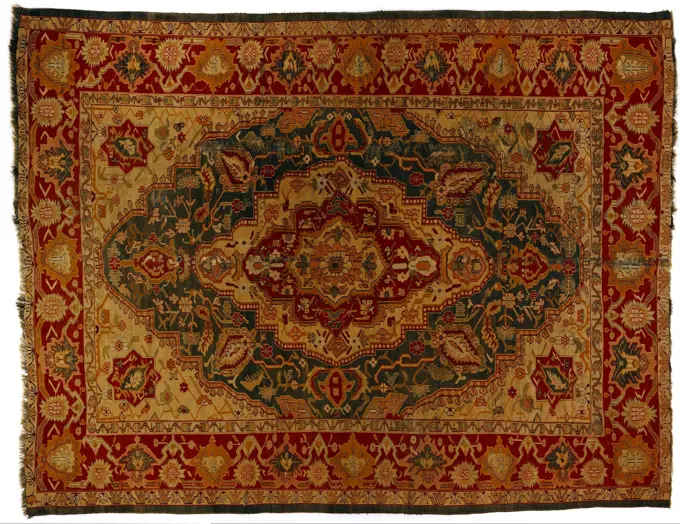
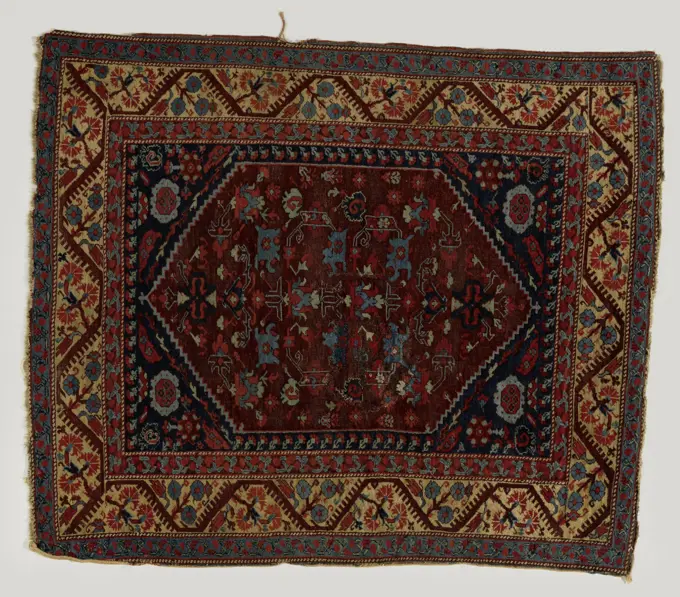
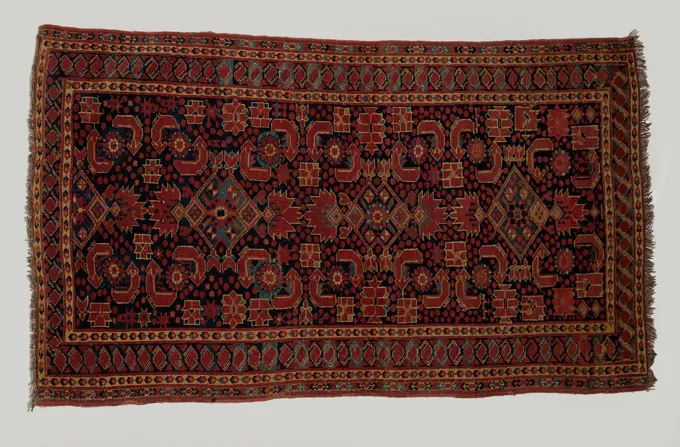
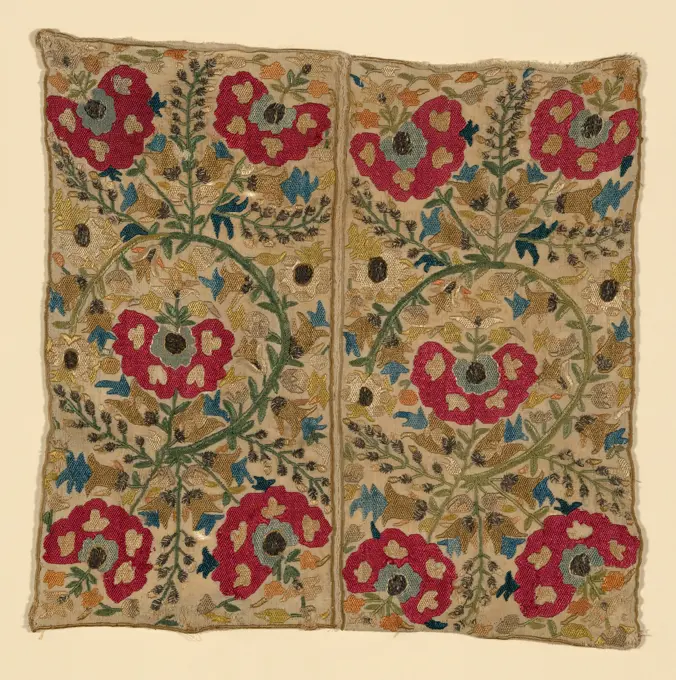
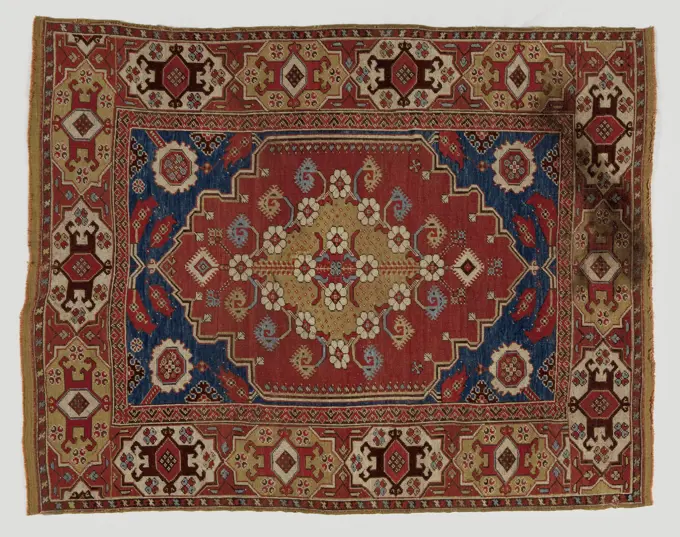
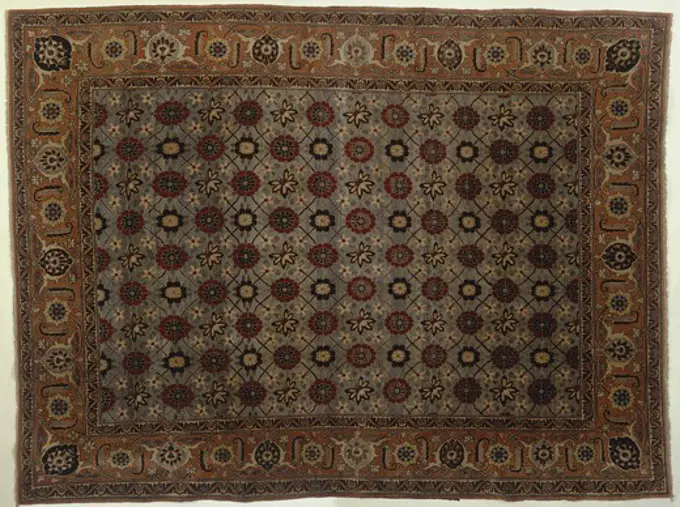
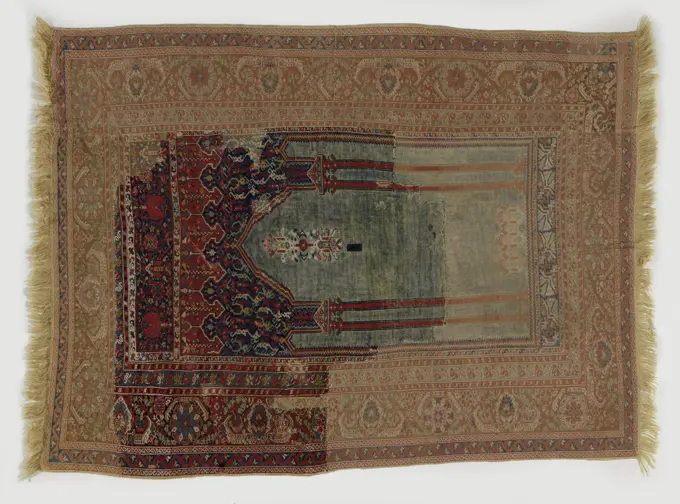
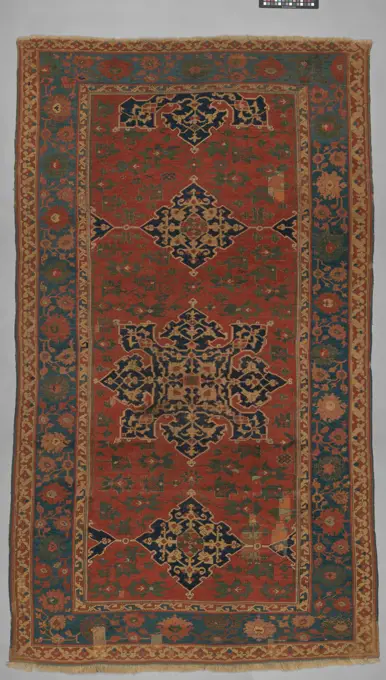
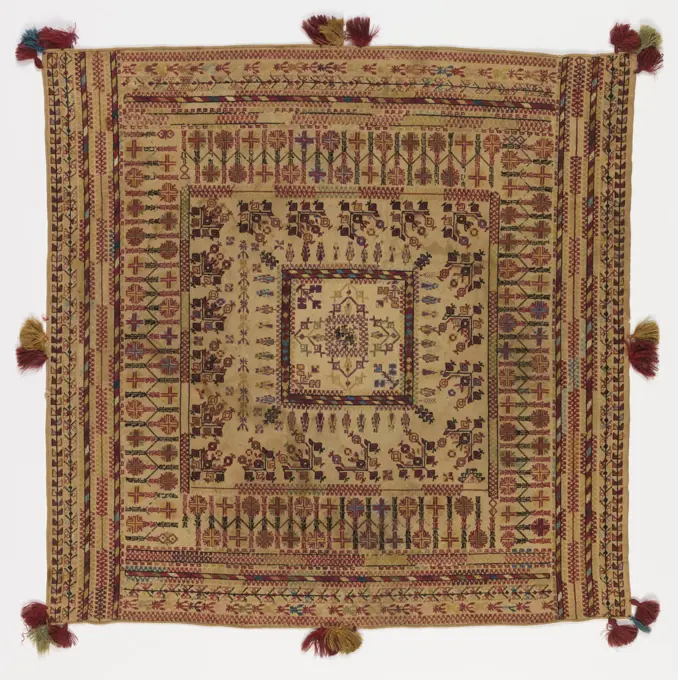
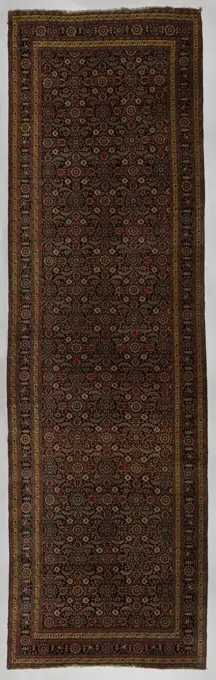
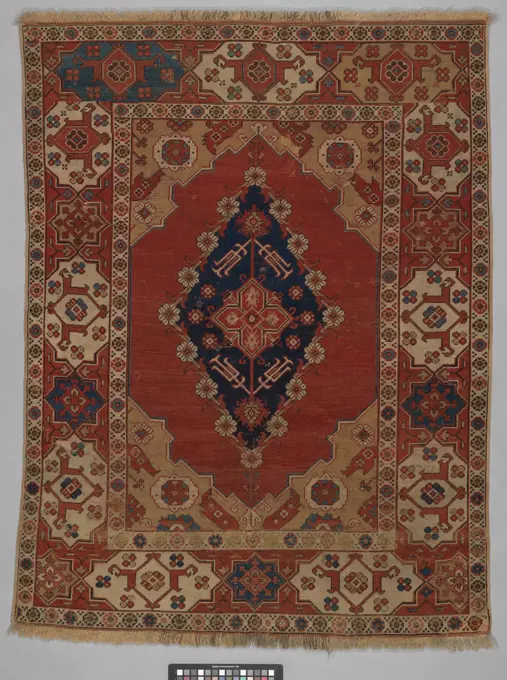
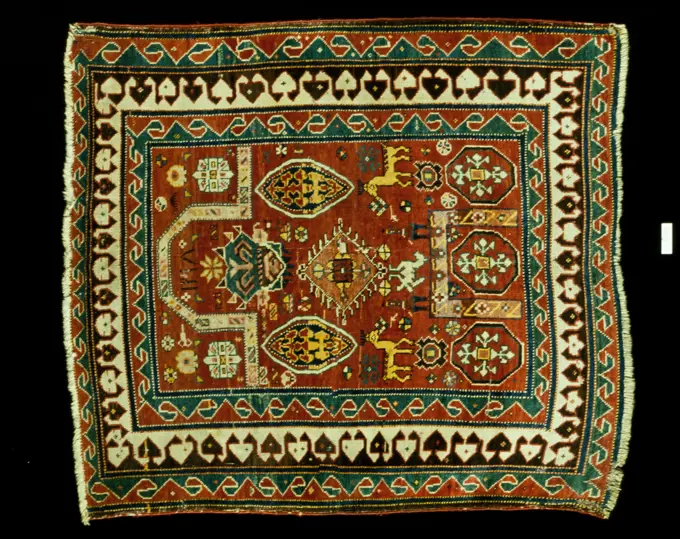
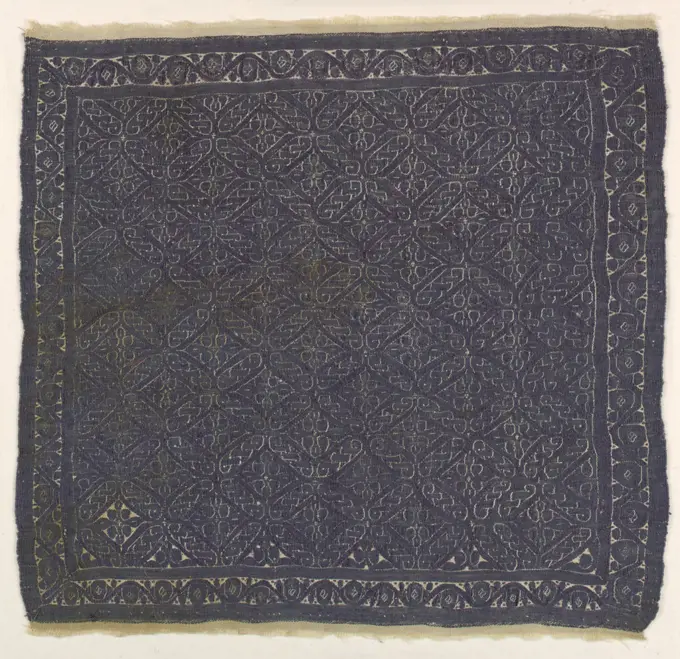
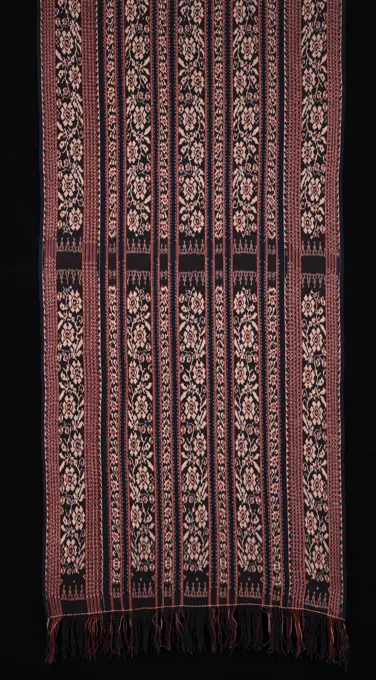
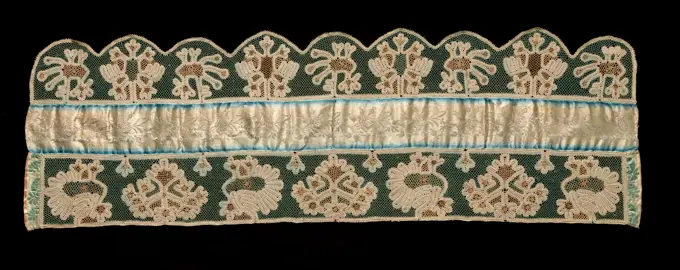
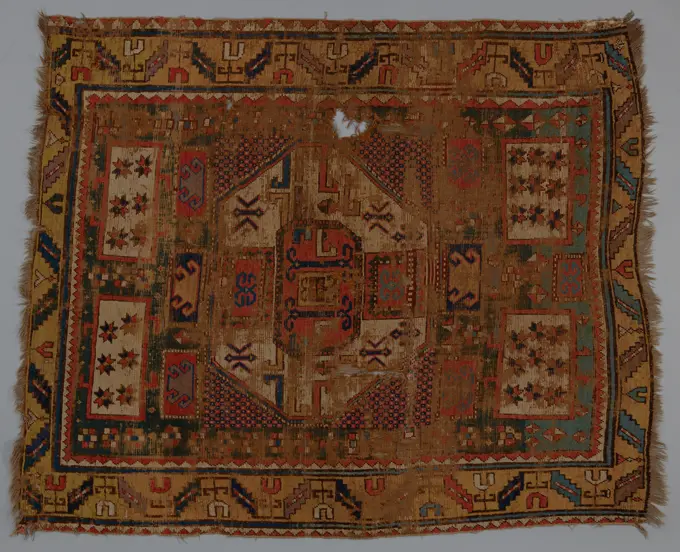
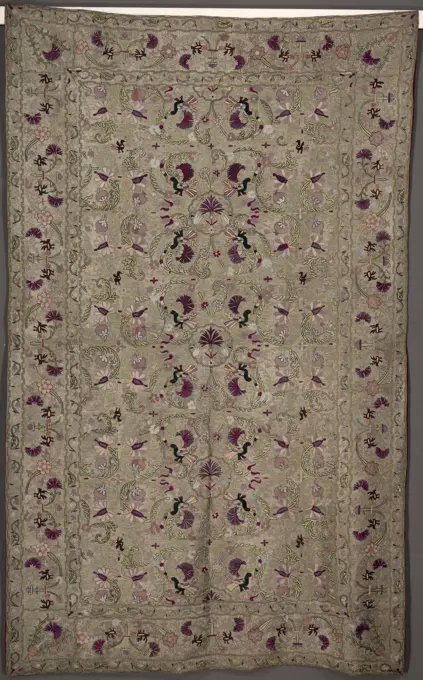
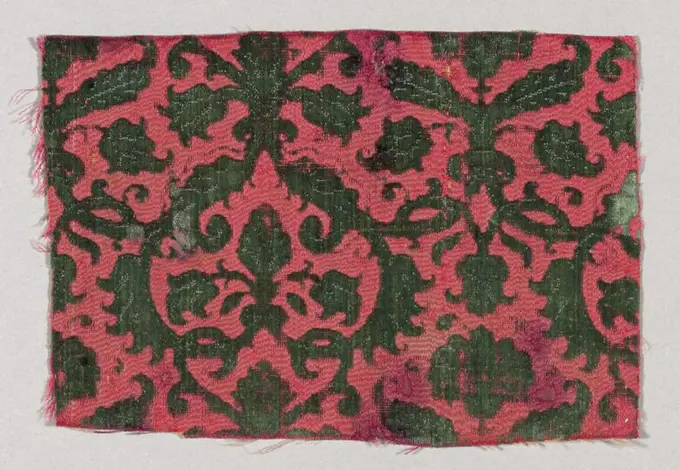
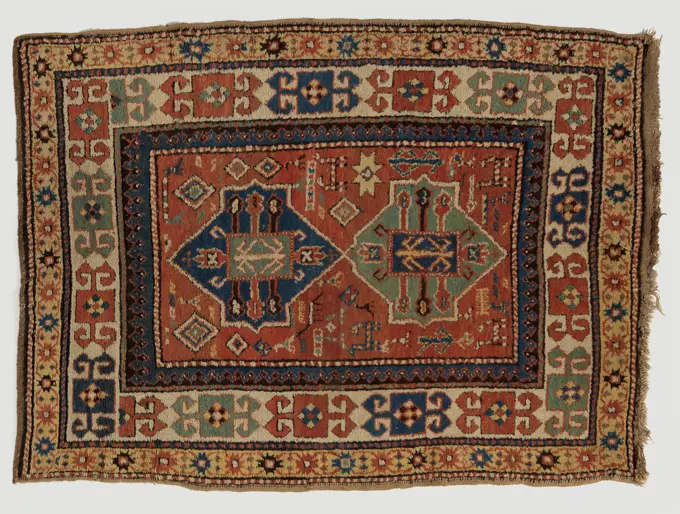
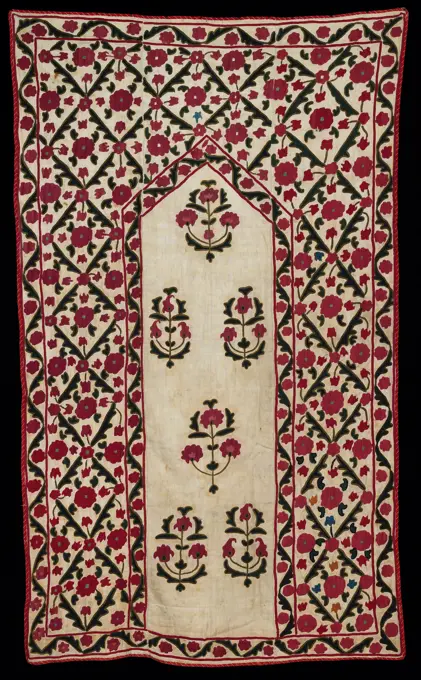
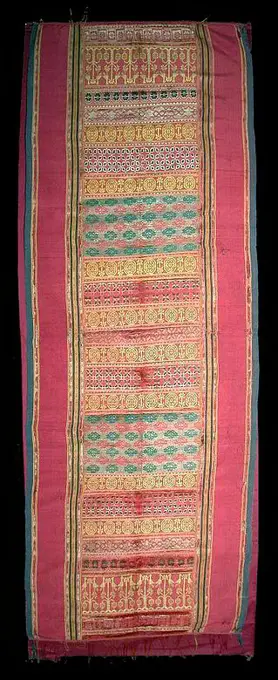
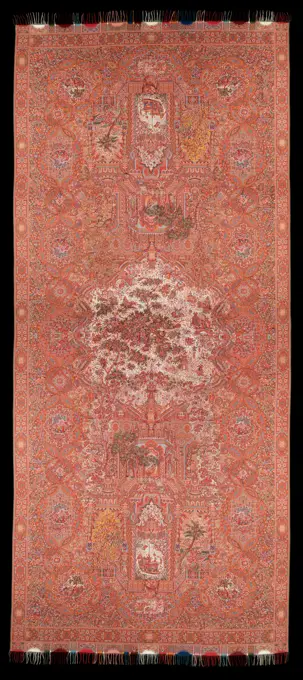
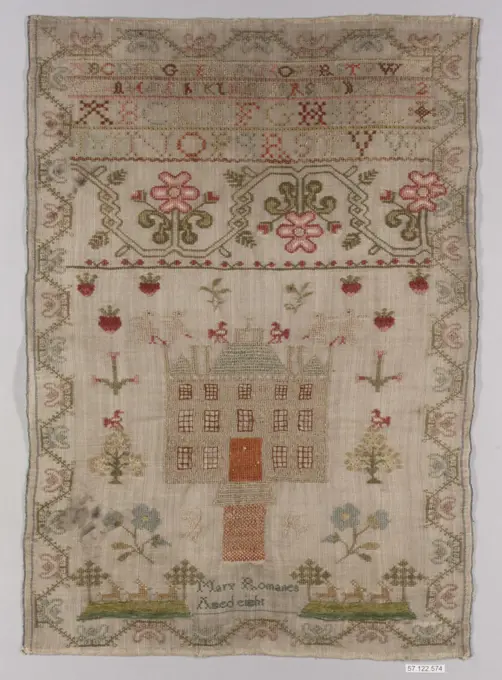
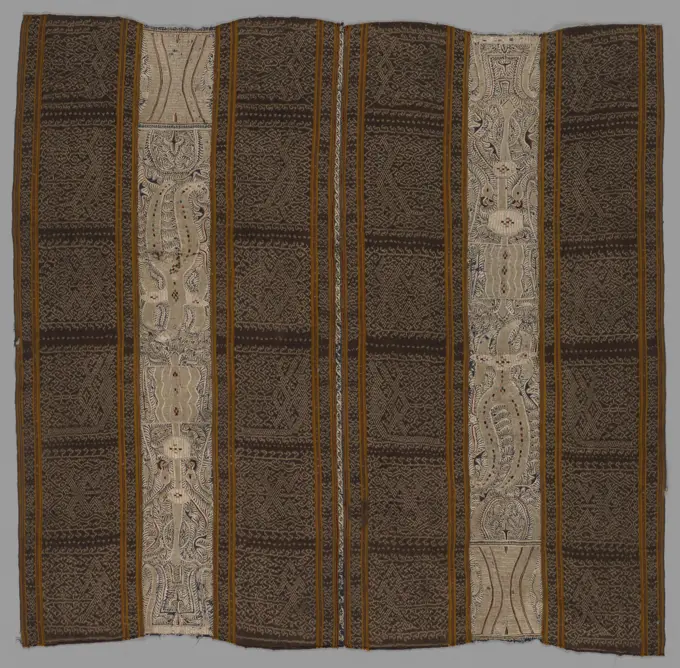
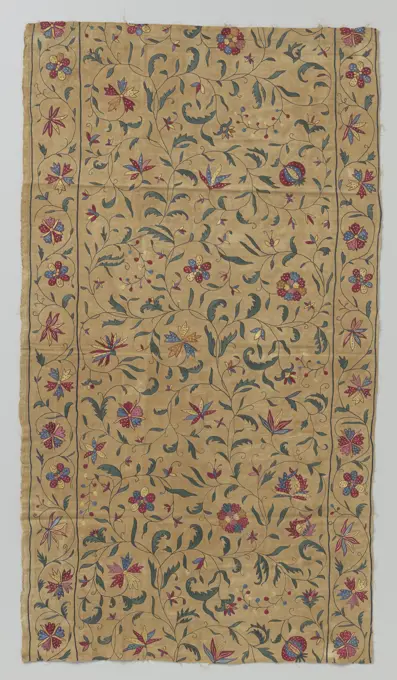
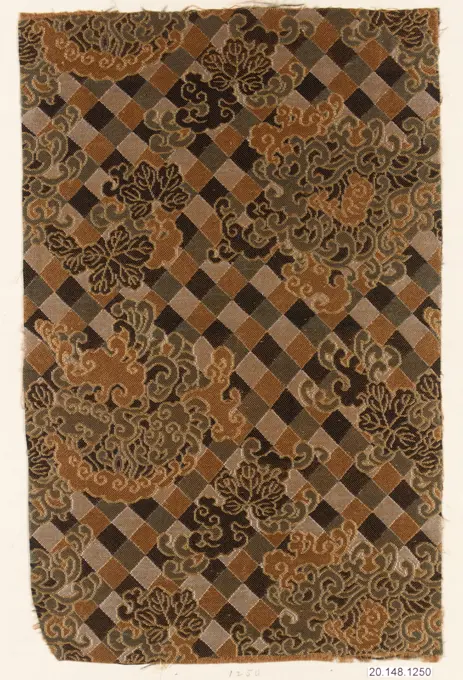
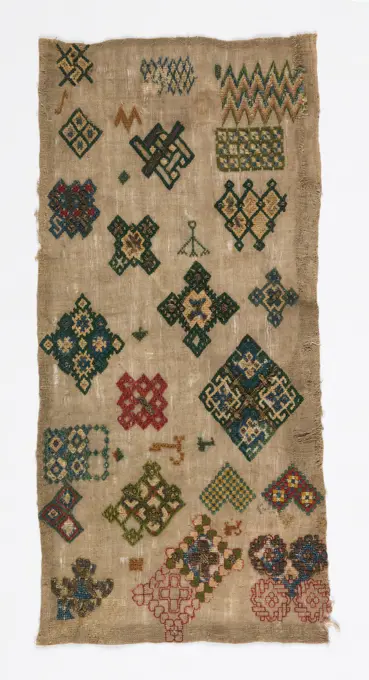
Sampler (England); silk and metallic thread embroidery, linen foundation; 50 x 26.5 cm (19 1/2 x 10 1/2 in.); Bequest of Mrs. Henry E. Coe; 1941-69-194Oriental carpet. Oriental carpet, medalleled. In midfield are two and a half hexagon on a wine-red ground. Here at all a octagon with carnation. On the Anjelieren and Rosettes field. Double edge. The widest ocher yellow with tulips to tulels. Button: Ghiledes knot.Oriental carpet, Anonymous, 1800 - 1860 Oriental carpet, grid rug, in Soumak-Techniek. In midfield a grid pattern against a yellow stock. Directed edge, the middle one with saw blade and wine glass motif. Shirvan (possibly) Chain and impact: Wool. Embroidery: Wool Oriental carpet, grid rug, in Soumak-Techniek. In midfield a grid pattern against a yellow stock. Directed edge, the middle one with saw blade and wine glass motif. Shirvan (possibly) Chain and impact: Wool. Embroidery: WoolFragment, 1600s. India, 17th century. Velvet (brocaded); silk and metal; overall: 75 x 47.3 cm (29 1/2 x 18 5/8 in.).Fragments (Spain); silkBand 19th century Italian. Band 212289Oriental carpet, Ersari Volk, 1800 - 1900 Oriental carpet, prayer rug, tent entrance rug. In midfield four fields, each with a row of stylized horn -bearing animal figures. Two vertical triple beams ending in a point -occupied point. Narrow Elem decorated with clover leaf -like ornaments against a dark brown background. Turkestan wool Oriental carpet, prayer rug, tent entrance rug. In midfield four fields, each with a row of stylized horn -bearing animal figures. Two vertical triple beams ending in a point -occupied point. Narrow Elem decorated with clover leaf -like ornaments against a dark brown background. Turkestan woolBrocaded Velvet, c. 1500. Turkey, early 16th Century. Velvet: silk, brocaded with gold and silver; average: 111.8 x 31.5 cm (44 x 12 3/8 in.).Sampler, Tomasa y Nocenya Rey, Medium: silk embroidery on linen foundation Technique: embroidered in cross, satin, stem, chain, four-sided, and back stitches on plain weave foundation, Center field of spot motifs, surrounded by bands of geometric pattern in concentric squares., Spain, early 19th century, embroidery & stitching, SamplerWall hanging (pardah), 1850-75. Uzbekistan, Bukhara. Warp ikat, warp-faced plain weave; silk warp; cotton weft; 5 panels./ lining: printed cotton, plain weave; 2 panels; overall: 192.4 x 144.2 cm (75 3/4 x 56 3/4 in.).Close-up of a Kilim travel bag, AzerbaijanOriental carpet, so-called tendrils and floral rug. Made with Senneh knot .. Carpet, decorated with large flower-like figures connected by thin branches and surrounded here and there by the chinetic cloud tires (TSHI) form a certain climbing ornament on a background that half tanably yellow, front Half light red tinted. On the edge the same flower characters against a soil of dark indigo.Fragment (Spain); silk, metal wrapped around linen core; Warp x Weft (A): 41 x 19 cm (16 1/8 x 7 1/2 in.) Warp x Weft (B): 7.6 x 34.3 cm (3 in. x 13 1/2 in.)Flower Dress, Daghestan or Shirwan, Anonymous, 1800 - 1850 Flower rug, Daghestan or Shirwan. Midfield: Goudoker Fond with an infinite grid of brown -black -having diagonals that form meshes in which shining chalice in blue, bleu, red, green and white. On the raster nodes there are hexagons in green, red, white and ocher. Edges: double. The outer is red with sloping S-sen in the aforementioned colors. The inner zoom is light blue with sloping S-jes. Caucasus wool Flower rug, Daghestan or Shirwan. Midfield: Goudoker Fond with an infinite grid of brown -black -having diagonals that form meshes in which shining chalice in blue, bleu, red, green and white. On the raster nodes there are hexagons in green, red, white and ocher. Edges: double. The outer is red with sloping S-sen in the aforementioned colors. The inner zoom is light blue with sloping S-jes. Caucasus woolWaist Wrapper (Sarung, Bang BiruLung-Lungan)Star dress, gendje or karabagh, anonymous, 1800 - 1900 Star dress, gendje or karabagh. Midfield: A pale ocher yellow stock is divided into windows by a red/blue block pattern, within which stars are located, diagonally translated with red, blue and dark green points in which colorful blocks are located. Rand: triple. Dark blue headrim with loose rounded star flowers, concentrically colored in brown/white, blue/red, red/cinnamon color and green/red. Zooms of two equal tilting vessels in dark green and red. Gendje (possibly) wool Star dress, gendje or karabagh. Midfield: A pale ocher yellow stock is divided into windows by a red/blue block pattern, within which stars are located, diagonally translated with red, blue and dark green points in which colorful blocks are located. Rand: triple. Dark blue headrim with loose rounded star flowers, concentrically colored in brown/white, blue/red, red/cinnamon color and green/red. Zooms of two equal tilting vessels in dark green and red. Gendje (poIndian Trade Cloth(Patolu)Holbein Ezine Carpet. Dimensions: Rug: L. 68 in. (172.7 cm) W. 60 3/4 in. (154.3 cm)Wt. 21 lbs. (9.5 kg) with cradle. Date: probably early 19th century. Museum: Metropolitan Museum of Art, New York, USA.Door Rug (Ensi), c. 1900. Turkmenistan, Yomud, 19th century. Knotted pile, asymmetrical knot, 117 knots psi; wool; overall: 183 x 142 cm (72 1/16 x 55 7/8 in.).Wollen loper met geometrische figuren.The center compartment is divided into eighteen rectangular compartments, in which geometric figures, surrounded by various edges, the width of which has a beige soil with stylized diagonally placed leaf shapes. Colors: mainly red, further dark and light blue, brown and dull yellow.Carpet. Dimensions: Rug: L. 487 1/2 in. (1238.3 cm)W. 182 3/4 in. (464.2 cm). Date: 16th century. Museum: Metropolitan Museum of Art, New York, USA.Vine Lattice with Birds 6th-9th century This two-toned silk fragment features circular and lobed medallions composed of pairs of birds. These medallions are framed within an overall lattice pattern composed of abstracted vines, scrolls, and leaves. Numerous examples of silks such as this have been found in the cemetery at Panopolis (Akhmim) in Egypt. Large sheets of the textile were cut and applied to unadorned tunics, allowing local elites to ornament their clothing with eye-catching patterns and colors.. Vine Lattice with Birds 446819Sampler, 1600s. England, 17th century. Embroidery; linen and silk on linen; overall: 31.1 x 21.3 cm (12 1/4 x 8 3/8 in.).Prayer Mat, early 1800s. India, early 19th century. Block printed and painted quilted cotton; overall: 85.8 x 125.7 cm (33 3/4 x 49 1/2 in.).CoverSampler, Medium: silk and linen on linen Technique: cross, long-armed cross, double running, stem, 'aztec' and deflected element work on plain weave foundation; counted stitches; hemmed at bottom and top; cut edge at right, Several bands of withdrawn element work including several bands of Aztec stitch. At the bottom, a series of vegetal and animal motifs including a monkey dancing on a tree. Inscription: 'Cuando se un gusto una los maneja' with objects between words, perhaps in the form of a rebus or pictogram., Mexico, early 19th century, embroidery & stitching, SamplerEmbroidered band sampler ca. 1650 British Band samplers are composed of horizontal rows ("bands") of embroidered patterns stitched along the woven linen foundation fabric. The shape of this band sampler is unusual, as it is square rather than rectangular, long to ensure that many bands can be stitched. Many of the patterns stitched onto band samplers can be traced to sixteenth-century pattern books, and often include depictions of fruit, flowers, and geometric patterns. This undated and unsigned sampler consists of three bands, the last of which includes "boxers," male figures who flank a floral motif and hold a "trophy," in this case a bird. The figure of the boxer is probably derived from the motif of a lover offering a flower to his beloved, which is also found in a number of sixteenth-century pattern books.. Embroidered band sampler 219414. Oriental carpet, medalleled. A middle medallion and four quarter corner medallions. A pink star flower in the center. Eight large flowers on the blue fond.BIDKEED, Z.G. In Murcu-in, D.i. Steenbolelekula, 1840 - 1860 Bid rug, so-called Kumurcu-Kula, that is, coal kula. Midfield: Double Mihrab in dark terracotta to purple brown has a vase motif in each of the steps and symmetrically stated small flowers in light blue and red in the middle. There is a light blue rosette in each of the Navy Blue. Edges: triple. The middle one is ocher yellow with angular rank Indonker terracotta with a triple flower in Terra alternately; The outside zoom is cobalt blue with angular slender. Care wool Bid rug, so-called Kumurcu-Kula, that is, coal kula. Midfield: Double Mihrab in dark terracotta to purple brown has a vase motif in each of the steps and symmetrically stated small flowers in light blue and red in the middle. There is a light blue rosette in each of the Navy Blue. Edges: triple. The middle one is ocher yellow with angular rank Indonker terracotta with a triple flower in Terra alternately; The outside zoom is cobalt blue with angular slender. CarOriental carpet. Oriental carpet, tendrils and floral rug. Floral motifs and geometric ornaments styled in dark blue midfield. Quadruple edge, the widest of which is decorated with hexagons.Towel border 1800-1850 Russian. Towel border. Russian. 1800-1850. Linen, silk. Textiles-LacesTextile Fragment 16th-17th century. Textile Fragment 454469Scarf Ends Made 1701-1800 Greece. Linen, plain weave; embroidered with silk and gilt-metal strip-wrapped silk in running (pattern darning), satin, and stem stitches .Cover sheet Saddlebag, decorated with a raster motif. Cover magazine of a saddle bag, Jaffi-Kurdistan-Mosul, of which the midfield is divided into windows through a grid. Dual border whose outer is decorated with rosette flowers. At the top a small part of an embroidered beard with triangles.Carpet. Culture: Spanish. Dimensions: Overall: 108 × 55 in. (274.3 × 139.7 cm). Date: late 15th century. Museum: Metropolitan Museum of Art, New York, USA.Sleeve cloth; Sarung, Lavre. Sleeve cloth with geometric motifs.Bid rug, so -called Zevenburgen, Anonymous, 1650 - 1670 Bid rug, so -called Zevenburgen. Midfield: stone red Double Mihrab with window shapes suitable white rosette flower on an ocher yellow center window and a concentric red window. There are one white rosette flower and red sawtand leaves on corn -blue switches. Rand: triple. The main edge is stone red with equal connected cartouches in white and soft yellow, the filling of which is an H-motif, derived from a few arabesken, resp. In purple brown and brick red. The inner hem of reciproque V-leaves in red and purple brown; The outside zoom is purple brown with a leaf vank. Both hems are caught in a plain piping. Asia Minor (Possible) wool Bid rug, so -called Zevenburgen. Midfield: stone red Double Mihrab with window shapes suitable white rosette flower on an ocher yellow center window and a concentric red window. There are one white rosette flower and red sawtand leaves on corn -blue switches. Rand: triple. The main edge is stone red wFragment (Peru); wool; Warp x Weft: 62 x 80 cm (24 7/16 x 31 1/2 in.)Fragment, Medium: silk, metallic threads Technique: two integrated fabric structures, 4&1 satin patterned by plain weave, Pairs of animals with pseudo-Kufic writing on their bodies and pairs of birds in gold and silver on rose., Italy, 14th-15th century, woven textiles, FragmentSampler 19th century Mexican. Sampler 228168Caucasian Kazak Karachop carpet unknownSampler (Spain); Embroidered by Fabiana Muriel; Student of Cipriana Artan; silk embroidery on linen foundationRugs and Carpets: Iran - 20th century. Varamin carpetBedcover. United States, 1820s. Textiles; bedspreads. Linen plain weave, stenciled-printed.Oriental carpet. Oriental carpet whose blue midfield is decorated with angular flower vases made up of Arabesken. Numerous animal figures and wave motifs. Edge with stylized rank with lotus flowers and rosettes.Contustion sash Manufaktura Paschalis Jakubowicz ( 1816/1817)View of reverse. Embroidered Sampler - Mary Chamberlain, Aston School, 1857Bliżej Kultury unknownPrayer rug with a blue Mihrab, Anonymous, 1700 - 1800 in midfield in midfield Oriental carpet, prayer rug. In midfield a blue mihrab stuck by double red columns. The widest edge is decorated with stylized flowers. One third is original, the rest has been added. Ghiordes ketting: wool. inslag: cotton (textile) Oriental carpet, prayer rug. In midfield a blue mihrab stuck by double red columns. The widest edge is decorated with stylized flowers. One third is original, the rest has been added. Ghiordes ketting: wool. inslag: cotton (textile)Embroided Chairice Voli unknownSampler (England); Embroidered by W.C.; wool embroidery, linen foundationOriental carpet. Oriental carpet, arabic and flower carpet, knotted wool () With herati pattern; Banks, lotuses, palmets in different colors against a carmine red fond.Ceremonial Textile (PuaKumbu)Sampler. Mary S. Burr (American, b. 1825-1894); United States, North Carolina, Wilmington. Date: 1836. Dimensions: 33 x 30.8 cm (13 x 12 1/8 in.). Wool, plain weave; embroidered with silk in cross stitches. Origin: North Carolina. Museum: The Chicago Art Institute, Chicago, USA.Carpet 19th century. Carpet 447477Fabric piece, 20th century, 19 3/4 x 21 1/2 in. (50.17 x 54.61 cm) (length doubled over), Cotton, Guatemala, 20th centuryTablecover, Medium: silk embroidery on cotton foundation Technique: embroidered in cross, satin, running, and double-running stitches on plain weave foundation, Concentric squared of geometric and stylized floral patterns. Trimmed with tassels on all sides., Central Asia or Turkey, 19th century, embroidery & stitching, TablecoverRug. unknown, contractorRoda Island, Old Cairo, Cairo, Egypt. Antique oriental rugs at the Prince Mohamed Ali Palace. (Editorial Use Only)Towel End, 18th-19th century. Russia, Tver province, 18th- 19th century. Cotton or linen (est.) straight (continuous) bobbin lace; ground with interspersed motifs of plant and animal forms in plain weave outlined with metal thread; applied silk (est.) ribbons; overall: 32.5 x 48.5 cm (12 13/16 x 19 1/8 in.). This Russian lace panel was likely used to embellish the end of a bathing towel. Textiles of this type are valuable for their fine lace making including ancient folk motifs, ritual significance, exemplification of the role of textiles in their society, and in this case, connection to a prominent woman collector, Natalia de Shabelsky, without whom this textile and others like it might have been lost.Fragment, Medium: silk Technique: plain compound satin, Floral roundels within squares on a diaper ground. In green and tan on black ground., China, 19th century, woven textiles, FragmentPiece 16th-17th century Italian. Piece 223465Indian Trade Textile(Patolu)Filled rug filled with checkered crosses. Edge with white x-shapes.. oriental carpet, Rice dress. In Midfield A Grid in Which Checkered Crosses. Rand With White X Forms.Drapery fabric. Culture: American. Dimensions: 116 x 93 in. (294.6 x 236.2 cm). Date: 1875-80. Museum: Metropolitan Museum of Art, New York, USA.Saddle bag, 19th century, L.20 x W.20 in., wool, Turkey, 19th centurySampler, 1819. Spain, 19th century. Embroidery; silk on linen; average: 68.6 x 71.1 cm (27 x 28 in.).Doek, Anonymous, 1900 - 1949 Cloth with animal figures. Laos cotton (textile). silk Cloth with animal figures. Laos cotton (textile). silkFloral rug with staggered rows of Botehs against Ceriserode Fond. Rand with rosette flowers .. Oriental carpet, floral rug. In midfield, Rows of Botehs staggered against a Ceriserood Fond. Rand with rosette flowers.Eastern carpet ,, 1885 - 1900 Oriental carpet of knotted wool with Herrati pattern and seven edges, the middle of which is the widest, decorated with lily and rosettes on tenders. Ferahan wool Oriental carpet of knotted wool with Herrati pattern and seven edges, the middle of which is the widest, decorated with lily and rosettes on tenders. Ferahan woolCarpet 18th century Sometimes called "Transylvanian" carpets because many examples were found in central European churches of Hungary and Romania, where they were votive gifts, small carpets like this are often depicted in European portraits of the sixteenth and seventeenth centuries draped over tables; later carpets such as this one are more infrequently encountered in paintings.. Carpet 452567Sampler 19th century Spanish. Sampler 228662Prayer Rug, 19th century, 55 x 49 in. (139.7 x 124.5 cm), Wool, 19th centurySquare, Medium: warp: S-spun linen; wefts: S-spun linen, S-spun wool Technique: plain weave with discontinuous wefts (slit tapestry) with supplementary weft wrapping Label: linen and wool slit tapestry, Monochrome tapestry square with an all-over design of twists and knots in deep purple., Egypt, 3rd-4th century, woven textiles, SquareIkat from Rote, Timor, Indonesia, Southeast Asia, AsiaTowel End, late 18th century. Russia, late 18th century. Cotton or linen (est.); straight (continuous) bobbin lace (Vologda tape lace). The tape forms figural or plant motifs outlined with gimp (heavy cord), polychrome plaited ground links the tape; applied silk (est.) ribbon; overall: 25.8 x 84.5 cm (10 3/16 x 33 1/4 in.).Piece 16th century Italian. Piece 226417Caucasian Kazak Karachop carpet unknownCoverlet, 1800s. India, 19th century. Embroidery; silk and gold filé on linen; overall: 289.6 x 182.3 cm (114 x 71 3/4 in.).Headband 7th-10th century Wari. Headband. Wari. 7th-10th century. Cotton, camelid hair. Peru. Textiles-WovenOriental carpet. Oriental carpet, prayer dress. In midfield a white mihrab with a grid and flowers. Quadruple border whose widest carmine red is and decorated with S motifs.Fragment. Italy. Date: 1601-1650. Dimensions: 13.3 × 19.1 cm (5 1/4 × 7 1/2 in.). Silk, satin weave with supplementary pile warps forming cut, uncut, and voided velvet. Origin: Italy. Museum: The Chicago Art Institute, Chicago, USA.Textile Length with Design of Stylized Carnations and Tulips. Turkey, 17th century. Textiles; textile lengths. Cut and voided silk velvet on metallic groundMedaillon, Kazak, Anonymous, 1900 - 1920 Medaillas, Kazak. Midfield: Fond of fond with two touching star drillets in light green and blue, with white outskirts and filling of a standing rectangle on which long stems with flower buds. Field filling, among other things, from many small four -legged friends and birds. Edges: triple. The middle and bredest white with blocks with doubled hooks on either side. Inner hem of blue and black tilting. Outdoors Light yellow with the star flower or, the "scratching" motif characteristic for Kazak. Jumper wool Medaillas, Kazak. Midfield: Fond of fond with two touching star drillets in light green and blue, with white outskirts and filling of a standing rectangle on which long stems with flower buds. Field filling, among other things, from many small four -legged friends and birds. Edges: triple. The middle and bredest white with blocks with doubled hooks on either side. Inner hem of blue and black tilting. Outdoors Light yellow with the star flower Ribbon, Medium: silk, cotton Technique: plain weave, Red ribbon with self-color leaf and fret design., USA, late 19th century, woven textiles, RibbonSuzani, 1890-1900, 61 x 37 in. (154.94 x 93.98 cm), Cotton; needlework, Uzbekistan, 19th-20th centuryTextile; silk, metallic threadPanel. Hispano-Islamic; Probably Spain or Turkey. Date: 1401-1600. Dimensions: 258.2 x 85.8 cm (101 5/8 x 33 3/4 in.). Silk and gilt-metal-strip-wrapped silk, stripes of plain weave, plain weave with supplementary patterning warps, and bands of two- and three-color complementary weft plain weave with inner warps terminating in a plied warp fringe with bands of supplementary discontinuous bast fiber warps imitating an attached woven fringe. Origin: Spain. Museum: The Chicago Art Institute, Chicago, USA.Carpet. Dimensions: Rug: H. 90 in. (228.6 cm)W. 64 in. (162.6 cm). Date: first half 19th century. Museum: Metropolitan Museum of Art, New York, USA.Curtain (Italy); Designed by Mariano Fortuny (Spanish, active Italy, 1871 - 1949); cottonEmbroidery Sample, 31 x 33 in. (78.74 x 83.82 cm), Cotton, rayon; needlework, ChinaFragment, Medium: silk, Technique: twill with complementary wefts and inner warps (samite), Geometric stars and foliate forms in red and yellow. Twill selvedge at one side., Spain, 13th century, woven textiles, FragmentShawl ca. 1855 Attributed to Anthony Berrus When the punch-card system of the Jacquard loom was perfected in the early 19th century, one of the primary jobs to which it was applied was the weaving of "paisley" or "cashmere" shawls, some of which were made for exhibition. Such exhibition shawls frequently had little to do with common examples which carried the "cone" or "boteh" motif; rather they depicted naturalistic botanical subjects or exotic motifs populated with animal and human forms.The composition and complexity of this shawl point to its having been conceived as an exhibition piece, possibly the harlequin banded border would indicate-the 1855 Universal Exhibition in Paris. In weaving this chinoiserie fantasy, a three-by-one twill, approximately sixty wefts per centimeter was used. The Jacquard loom would have been fitted with about 200,000 punch cards to direct the wave of the pattern, which is unique over two-thirds of the shawl. The central subject is a leak over which hang Sampler(Limar)Sampler 18th century British. Sampler 228498Womans Ceremonial Skirt (Tapis)Fragment of a bedspread () Of cotton with multicolored silk embroidery ,, c. 1690 - c. 1710 Fragment of a bedspread () Of cotton with embroidery. The pattern has spiral vines with flowers and fruits. The fragment is probably from the same bedspread as BK-NM-3614. Persia (possibly) cotton (textile). silk embroidering Fragment of a bedspread () Of cotton with embroidery. The pattern has spiral vines with flowers and fruits. The fragment is probably from the same bedspread as BK-NM-3614. Persia (possibly) cotton (textile). silk embroideringFragment; silk, metallic threadPiece 19th century Japan. Piece 72236Fragment, with Part of a Clavus, from a Tunic, 300s - 600s. Egypt, Byzantine period, 4th - 7th century. Tabby ground, inwoven tapestry ornament; wool; overall: 9 x 11.5 cm (3 9/16 x 4 1/2 in.).