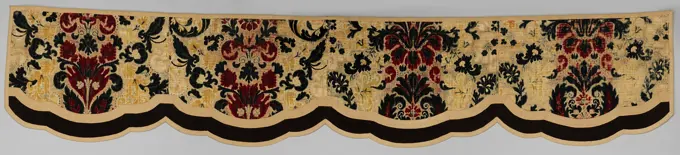
Decorative Textile Samples

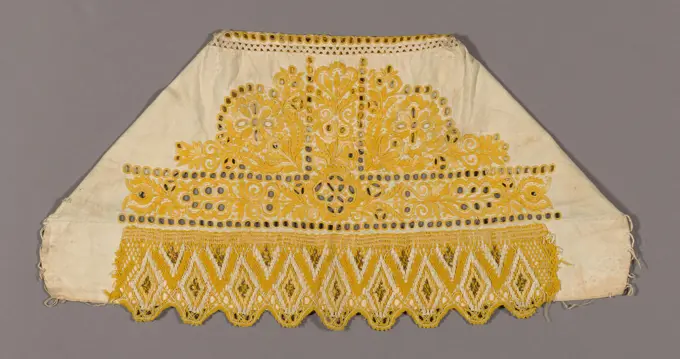
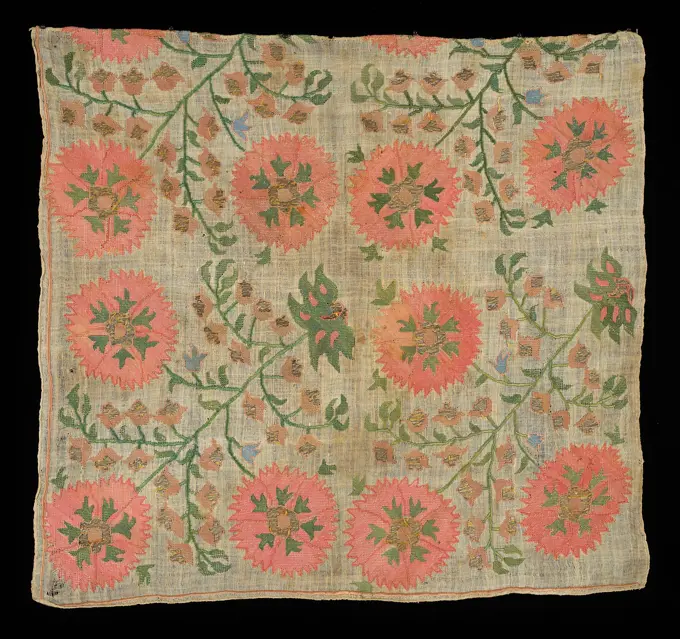
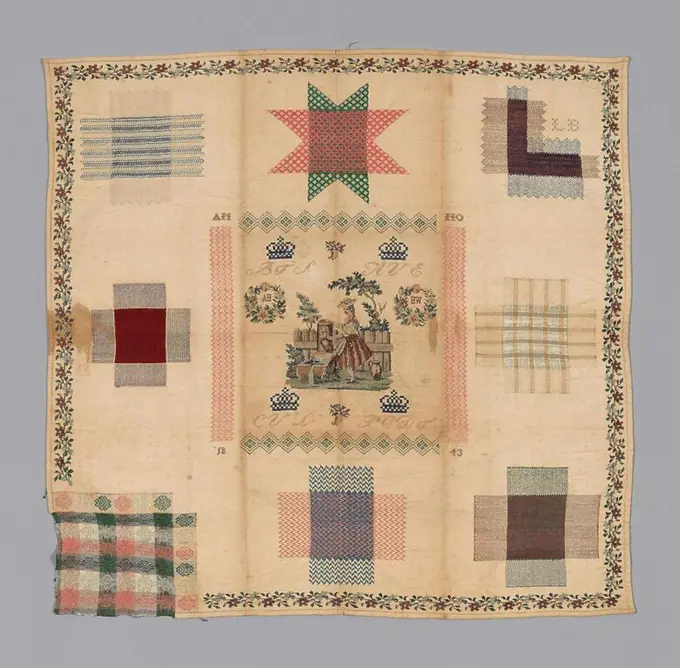
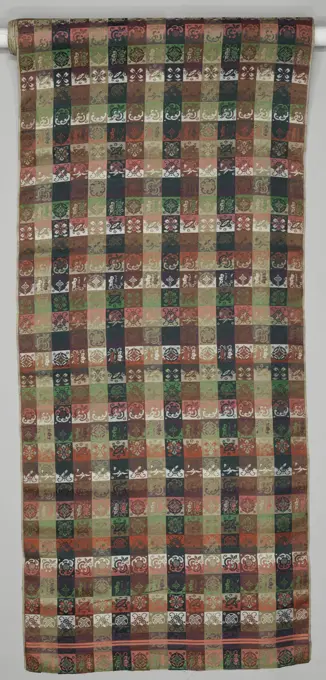
Various textile samples including embroidered and woven patterns, showcasing intricate designs and historical craftsmanship in rich colors.
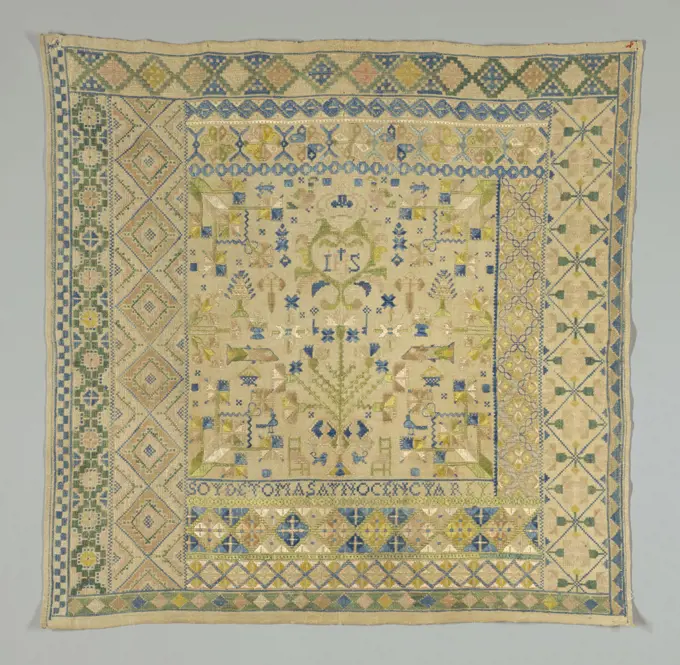
Sampler, Tomasa y Nocenya Rey, Medium: silk embroidery on linen foundation Technique: embroidered in cross, satin, stem, chain, four-sided, and back stitches on plain weave foundation, Center field of spot motifs, surrounded by bands of geometric pattern in concentric squares., Spain, early 19th century, embroidery & stitching, Sampler
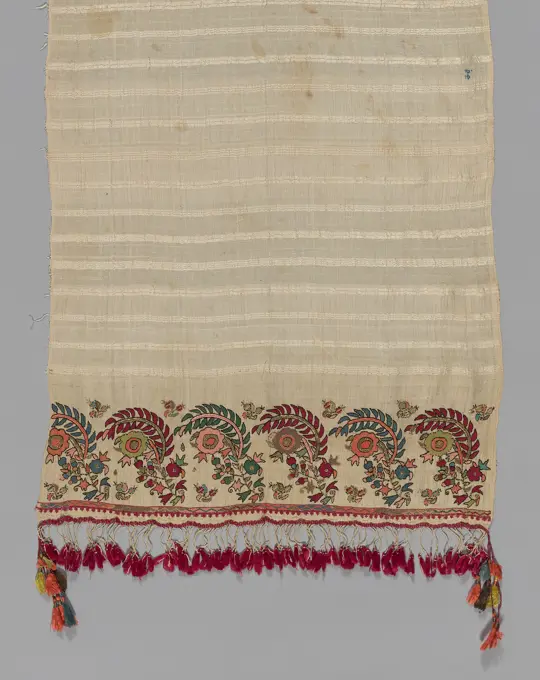
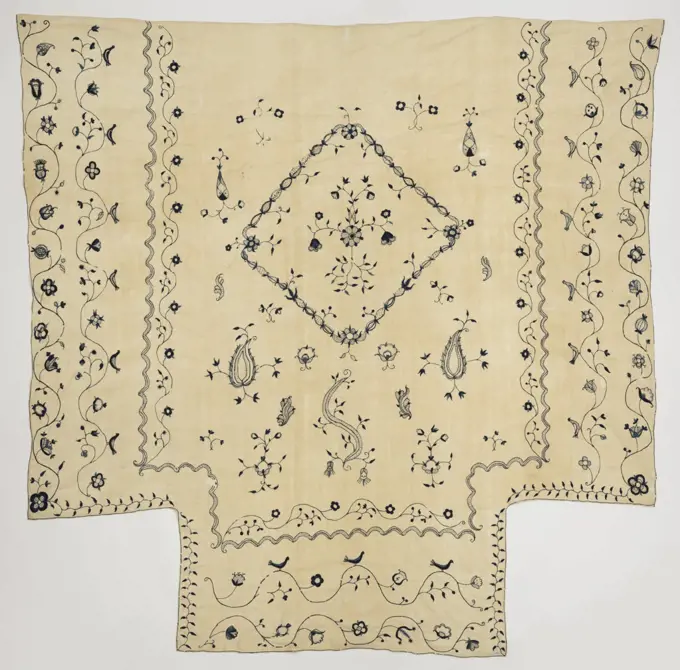
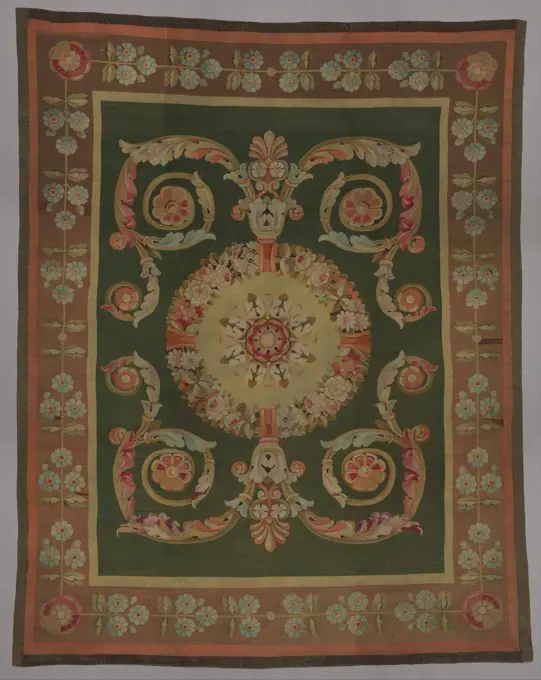
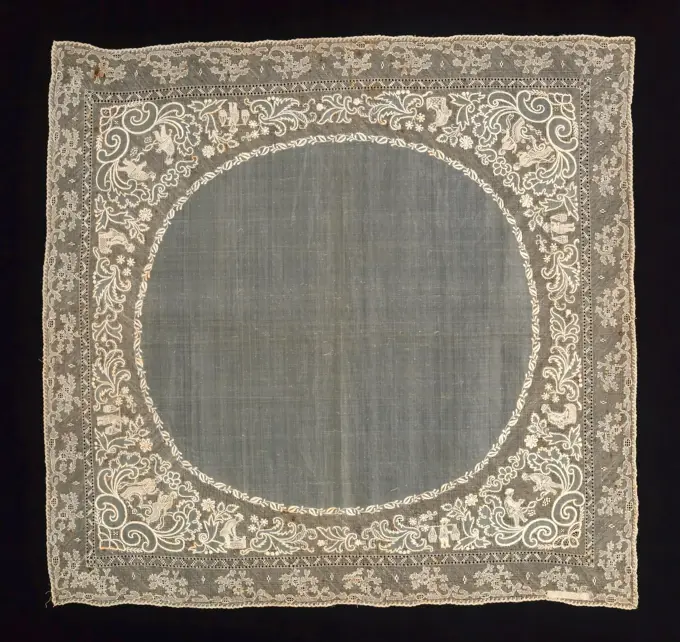
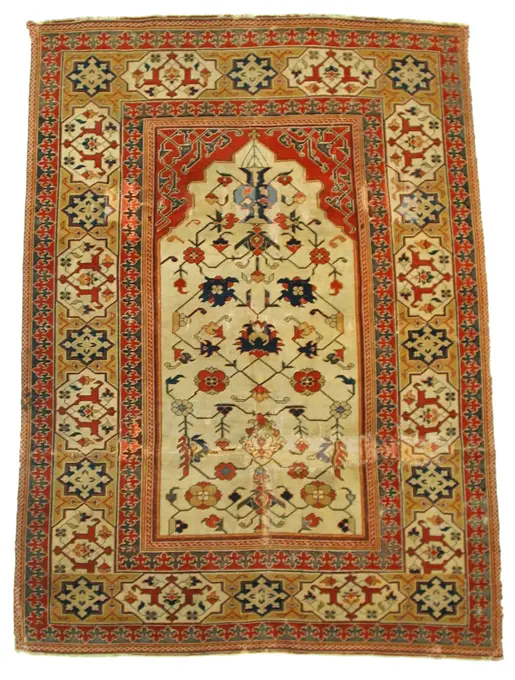
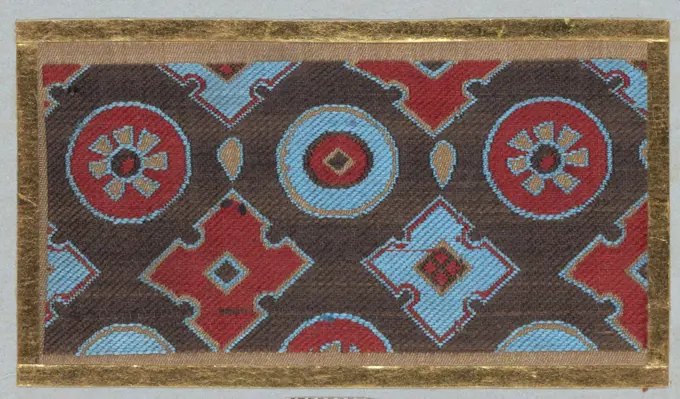
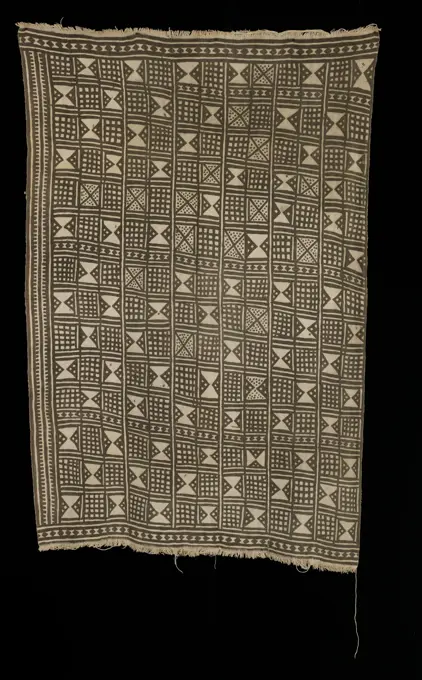
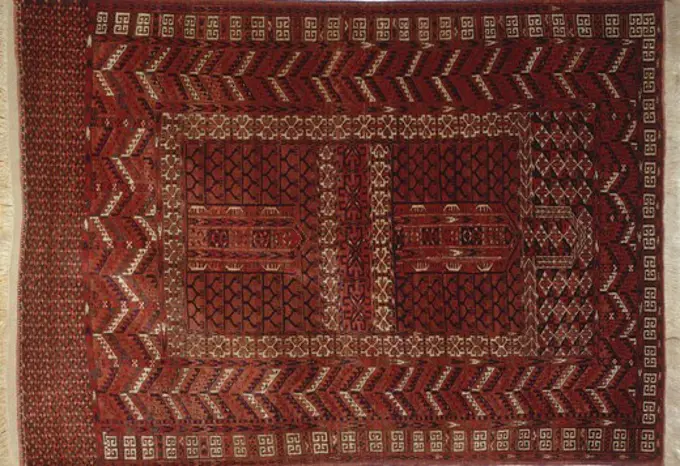
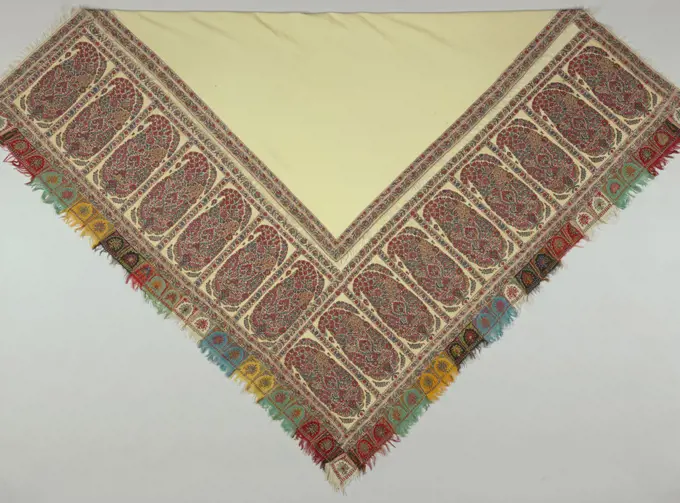
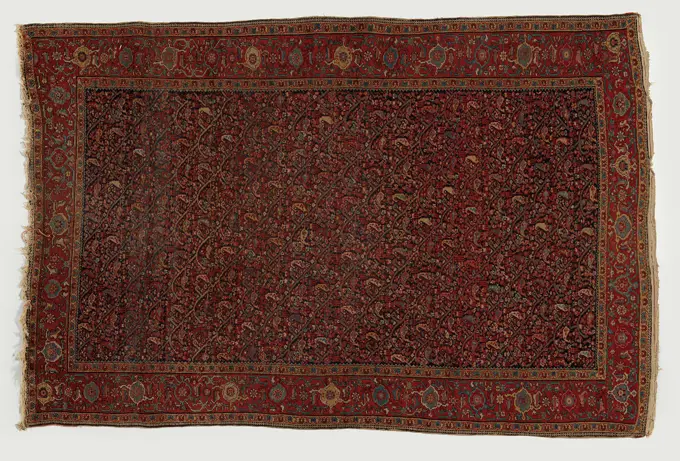
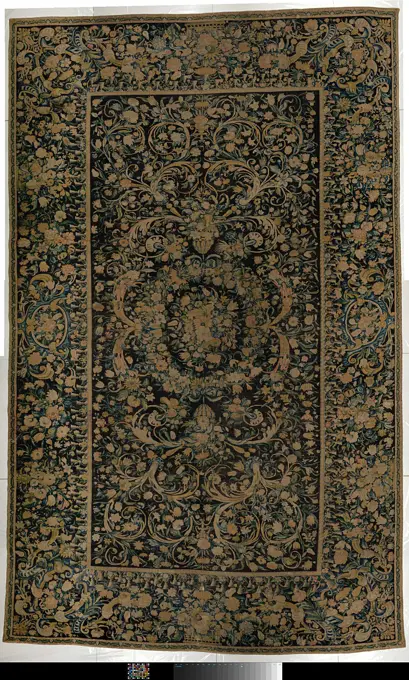
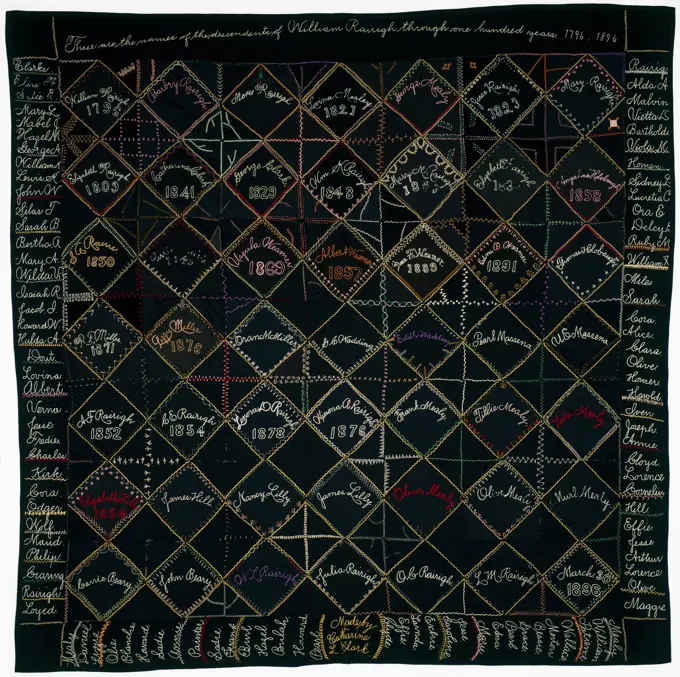
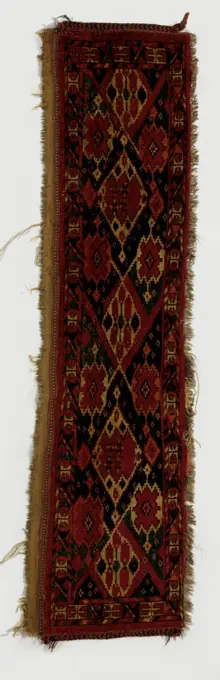
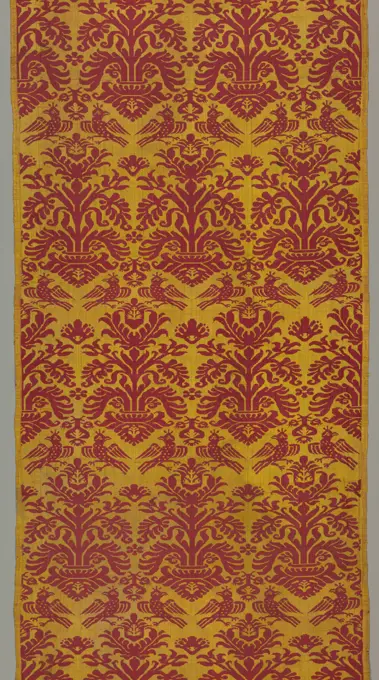
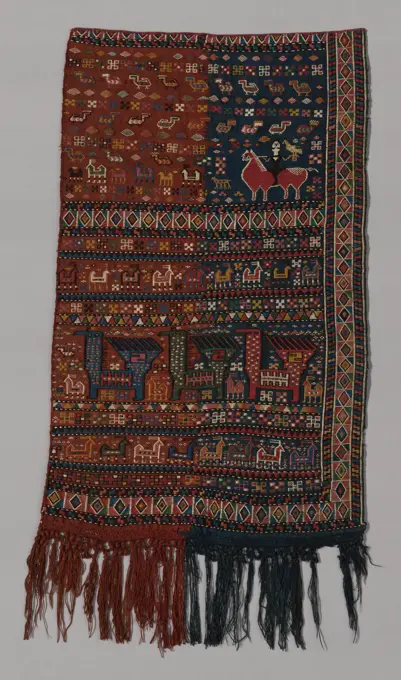
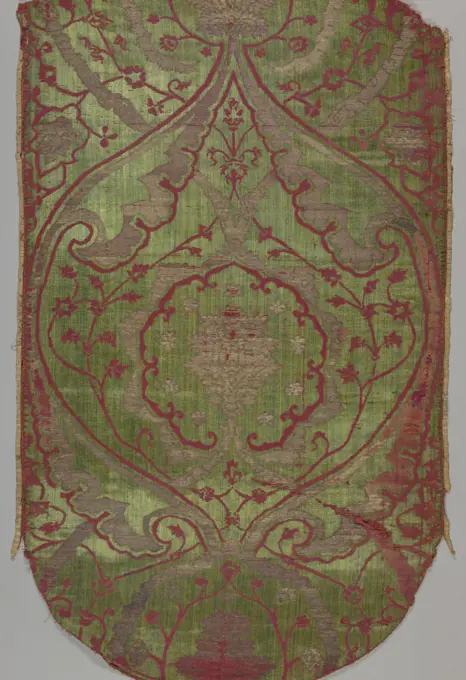
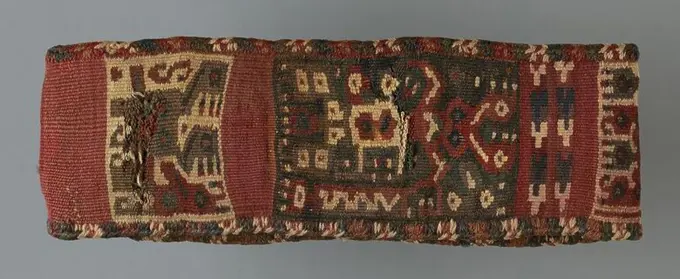
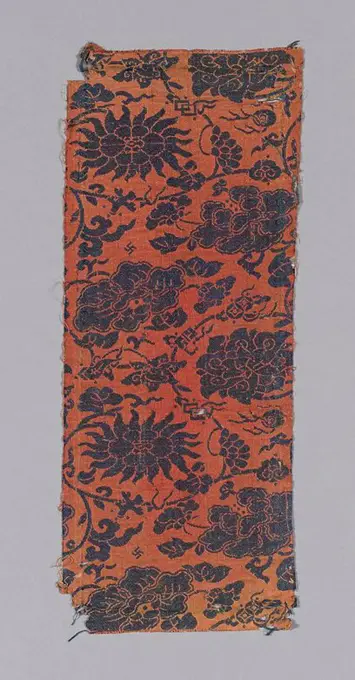
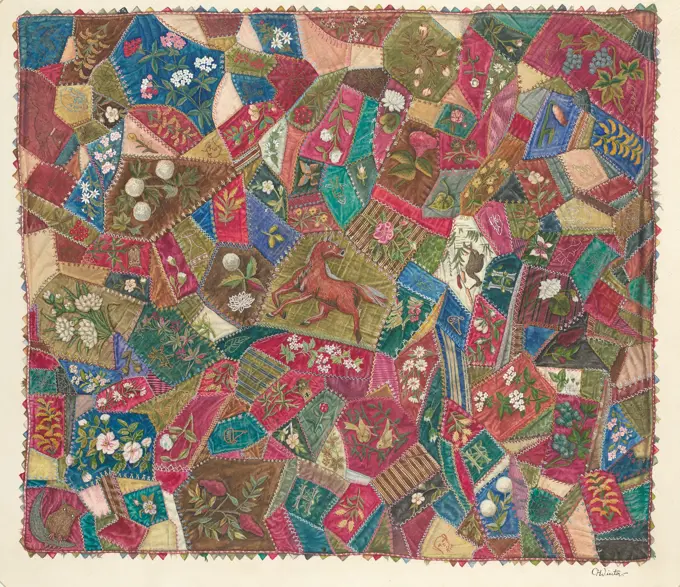
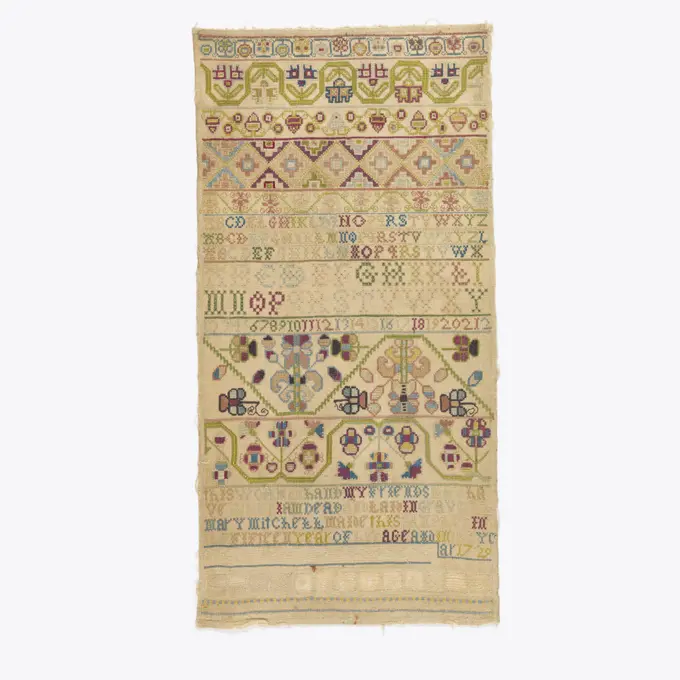
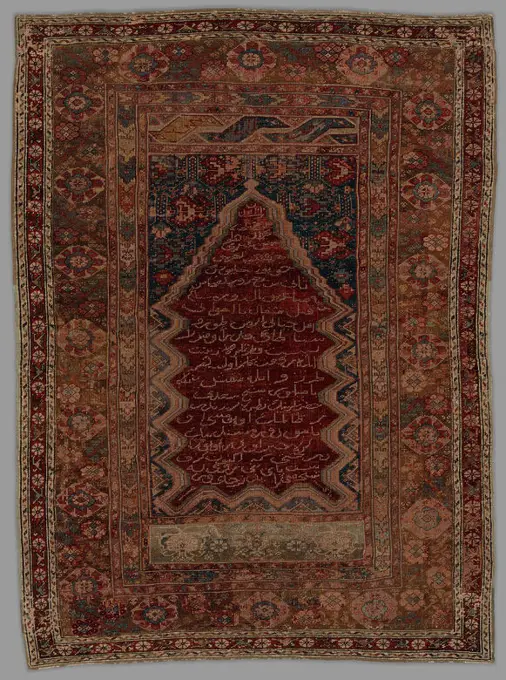
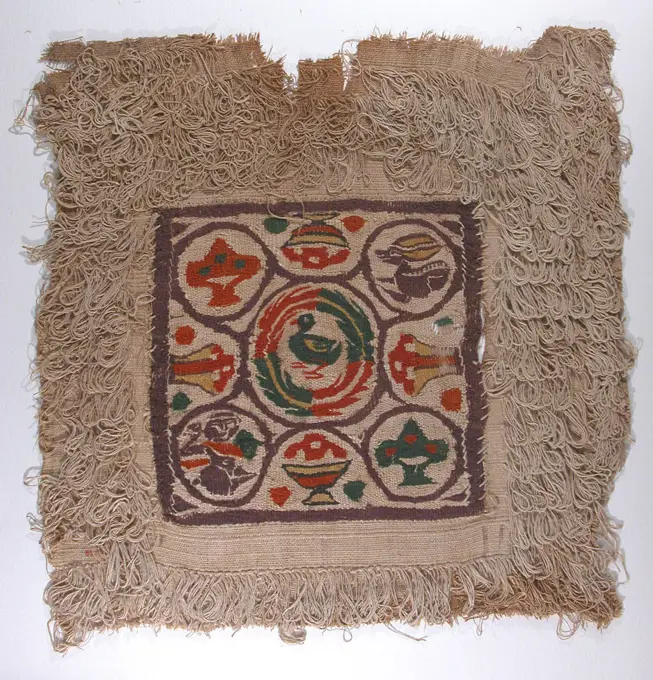
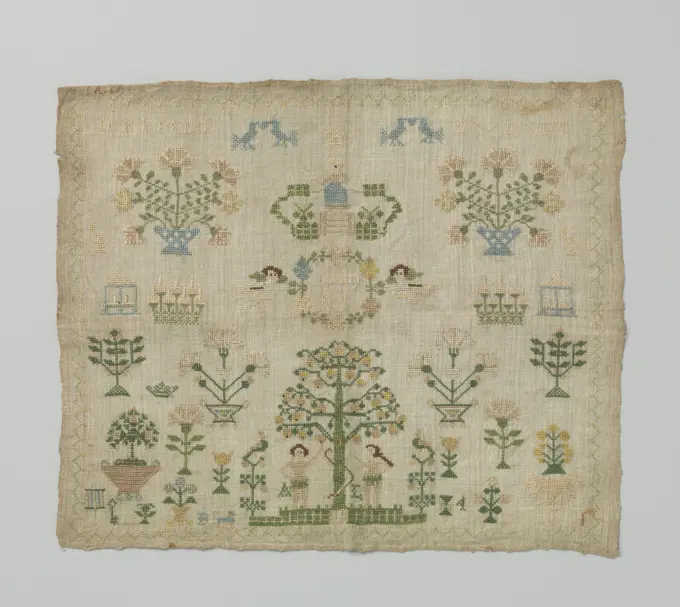
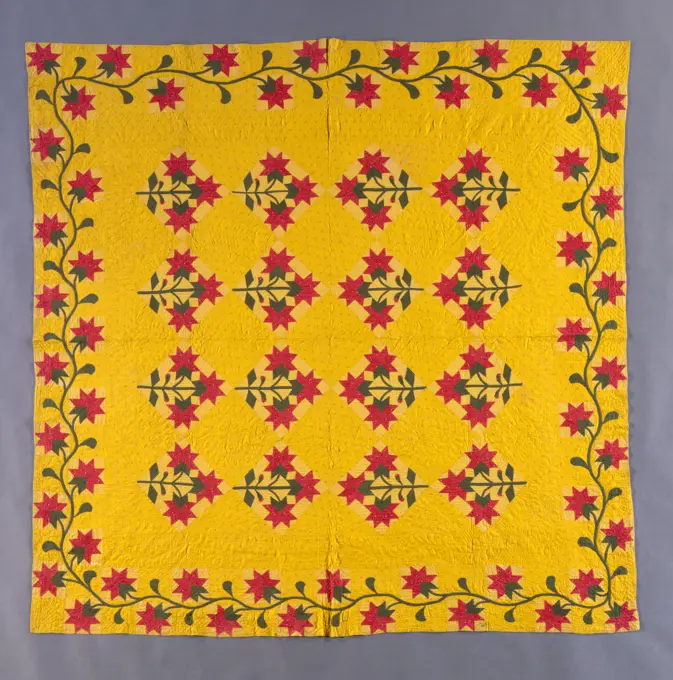
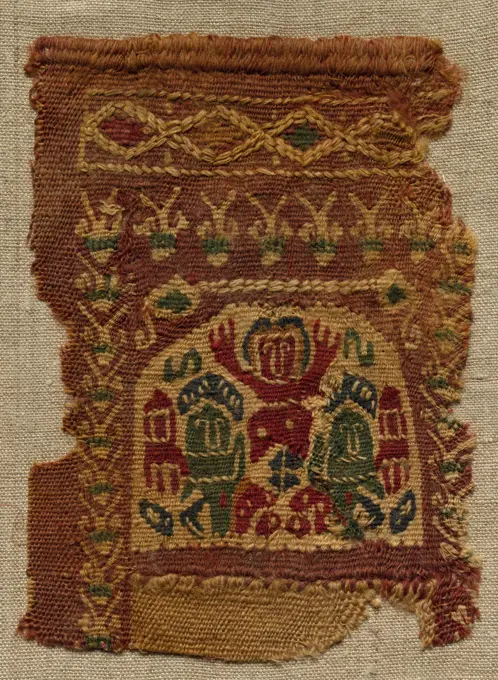
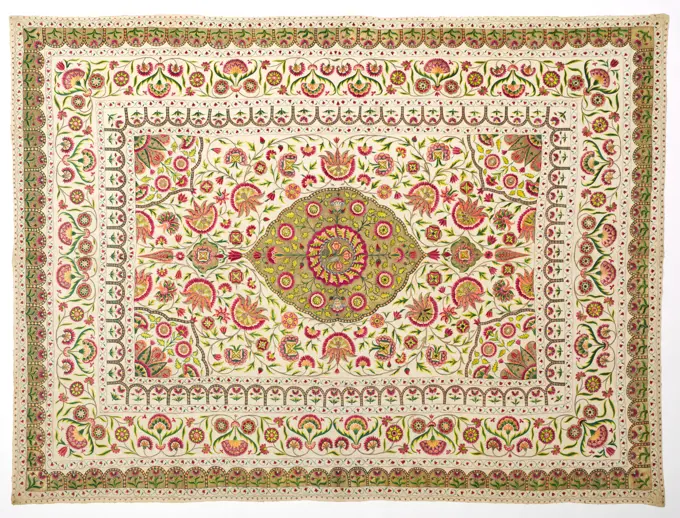
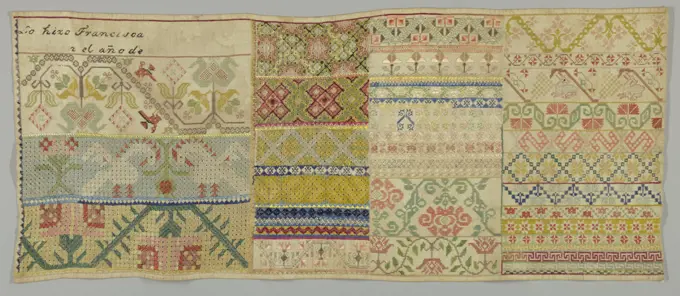
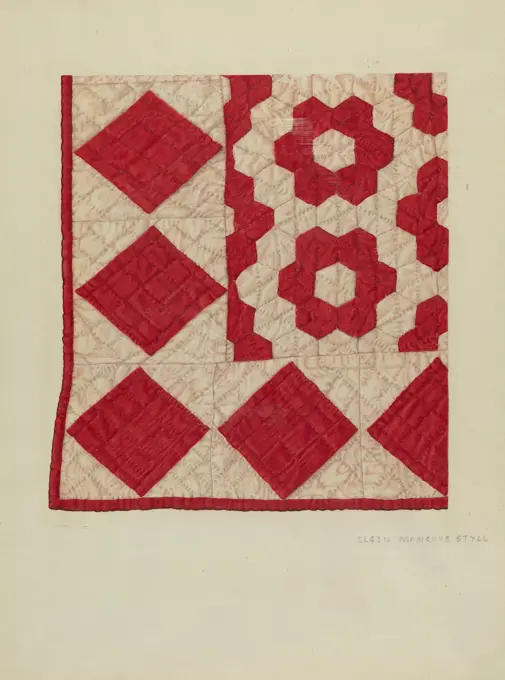
Shoulder Cloth(Limar)Palempore with pattern of vases, anonymous, c. 1725 - c. 1750 Palempore made of cotton with a design in various colors red, eggplant, blue and beige (probably yellow in the past). The decor midfield: on white stock in the length two mirrored pots with left and right mirroring branches with flowers; In the middle of the pots of smells. Four snakes on the flower branches; In the flowers beetles and four crickets. The inner edge is filled with a winding flower branch; The wide edge also has winding branches with flowers on which four snails and four beetles. In the corners of four overhoeks placed pots. Again an edge that is filled with a swinging flower branch. To the whole a blue hem. Coromandelkust cotton (textile) Palempore made of cotton with a design in various colors red, eggplant, blue and beige (probably yellow in the past). The decor midfield: on white stock in the length two mirrored pots with left and right mirroring branches with flowers; In the middle of the pots of smells. Fragment of a Shawl, 1800s. India, Kashmir, 19th century. Tapestry weave: wool; overall: 18 x 56.1 cm (7 1/16 x 22 1/16 in.).Baby Carrier, 34 1/2 x 28 in. (87.63 x 71.12 cm), Cotton; needlework, ChinaSampler, Griet Ruwen, Medium: silk embroidery on cotton foundation Technique: embroidered in cross and eyelet stitches on plain weave foundation, Alphabet, crowned monograms, and field of assorted motifs within an acorn vine., Netherlands, 1810, embroidery & stitching, SamplerTowel Made 1701-1800 Mytilene. Silk, plain weave; embroidered with silk and gilt-metal-strip-wrapped silk in Bosnian, flat, double running, twined double running, and satin stitches; edged with plied warp fringe and silk braided fringe with silk and gilt-metal-strip-wrapped silk tassels .Bedcover, Medium: cotton, wool Technique: crewel embroidery on linen, Bedcover in cream-colored cotton with crewel embroidery in blue wool. Diamond-shaped center design framing flower clusters; detached designs of flowers and foliage. Wide borders for sides, vine and birds, and a separate drop for the foot of the bed in the same design., USA, 1750-1800, embroidery & stitching, BedcoverCarpet 1814-30 Aubusson. Carpet 218949Sampler, Medium: silk and cotton embroidery, linen foundation Technique: cross stitch on plain weave, Alphabets and geometric motifs, primarily black., Germany, 1807, embroidery & stitching, SamplerTentzakvoorblad., Ersari Volk, 1850 - 1890 Tent pocket front leaf in large model, chuval. In midfield are against a brown -red background generous. There are crosses with tau hooks on the widest edge. Turkestan Necklace and impact: Wool Tent pocket front leaf in large model, chuval. In midfield are against a brown -red background generous. There are crosses with tau hooks on the widest edge. Turkestan Necklace and impact: WoolCover 19th century Italian. Cover 212287Handkerchief third quarter 19th century probably Philippine The images seen here depict unusual figures wearing disparate costumes and engaging in various activities, such as cock-fighting. The motifs appear to represent one culture's interpretation of another.. Handkerchief 157648Fragment, Probably a Border from a Large Panel, 500s. Egypt, Byzantine period, 6th century. Brocaded tabby; linen and wool; overall: 14 x 26.1 cm (5 1/2 x 10 1/4 in.).Carpet probably 17th century. Carpet 447550FragmentMud cloth skirt, 20th century, 34 1/2 x 51 in. (87.63 x 129.54 cm) (excluding fringe), Cotton, Mali, 20th centuryRugs and Carpets: Russia - Turkestan - 19th century. Ensi carpet coming from Tekke tribes, used to close the entrance of the yurtShawl, Medium: wool, cashmere Technique: tapestry weave, interlocking twill and embroidery Weave: single faced 2/2 twill tapestry, double interlocked, two color complimentary weave, Square Kashmir shawl with a design of cones primarily in reds, with an open ivory field. Each cone is 10 1/2 inches high, and is compartmented by a narrow border of floral vines. Currently the shawl has wide borders on two adjacent sides and narrow borders on the two remaining sides. It has been re-made from fragments of a long shawl. Originally each end would have had a wide border nine cones in width: one side of the square version has the full nine cone pattern, the other has seven cones. The two remaining cones exist as a separate fragment (1958-148-5b). The narrow guard border of a similar floral vine has been stitched to the two remaining sides. In this way the shawl could be folded diagonally to form the triangular shawl popular in the mid-19th century., India, ca. 1800, woven textiles, ShawlBand Made 1875-1900 China. Forty-four pairs and eight odd pieces of embroidered sleeve, ankle bands, etc. on gauze. . Han-ChineseOriental carpet. Oriental carpet. In the midfield, an infinite pattern of graft branches that carry Botehs and small small flowers against a dark blue field. Triple edge, the widest of which is decorated with a tendrils pattern and flowers.Savonnerie-tapijt met bloem- en acanthuspatroon.Savonnerie carpet with flower and acanthus pattern. On a blue-black fond is a double-sided symmetrical system of acanthus drinks with flowers in blue, white, yellow, flets-rose and green. A dense dough from flowers in the heart, is surrounded by a thick flower wreath, which has been wound in four places with a hanging bow. On the width axis, a pair of horn-shaped bent acanthus sheet hangs; A clock-shaped shell hangs on the length axis (), from which two pairs of flowers occupied tawned acanthus drinks, ending in full-length and on the shaft awarded a vase with emperors crown. Midfield is framed by a narrow zigzag belt with a short and long campanes dependent on the outside of blue tassels. The edge has, again on the blue-black fond, on the corners of rollerwork cartouches, which are sloped and fitted with splits; On the middle of the long sides, an oval medallion with split rollerwork is surrounded, while in the middle of these are low bTextile (England); cotton; Repeat H (straight): 13 cm (5 1/8 in.)Sampler, late 1800s. Italy , late 19th century. Embroidery, silk; overall: 51.5 x 43.8 cm (20 1/4 x 17 1/4 in.).Fragment Broched Gros the Tours, possibly the upper part of a choos. Fragment Broched Gros the Tours, possibly the upper part of a choos. Dessin: in irregular waves opposite rose drinks, of which two in the middle two brushed tendrils, two colors of pink, lilac, cream, two colors of blue, green and gold on a salmon-colored fond. The silk tissue consists of five pieces sewed together in a semicircle shape, with a piece of cerose-colored silk lining on the top. At the top a string that would probably be a French and Co-label. Hanged.25. Pinned paper with the letter V. Condition: Good condition.Bedcover Entitled Genealogy Made 1896 Massachusetts. Wool, cotton, and silk, twill weaves and plain weave cut solid velvet, some stamped; pieced; embroidered with silk in back, single back, buttonhole, chain, detached chain, feather, double feather, herringbone, satin, single satin, and stem stitches; backed stitch couching; edged with cotton, plain weave; backed with cotton, satin weave; sewn with cotton thread . Catharine L. ClarkShawl fragment, Medium: wool Technique: 2/2 twill tapestry weave, embroidered Label: 2/2 wool twill tapestry with wool embroidery, Shawl fragment with a narrow border has a pale green ground covered with paisley motifs, flower clusters and large leaves in shades of red, purple, pink, orange, green, and light blue., India, early 19th century, woven textiles, Shawl fragmentLectern Cover, 1953, 40-1/4 x 60-1/8 in. (102.2 x 152.7 cm), Velvet, silk, metallic thread; embroidered, Morocco, 20th centuryCover for a camel., Ersari Volk, 1875 - 1900 Cover for a camel. Midfield is decorated with windows from which four flowers come. Rand decorated with cartouches and flowers on rectangles. Turkestan Necklace and impact: Wool Cover for a camel. Midfield is decorated with windows from which four flowers come. Rand decorated with cartouches and flowers on rectangles. Turkestan Necklace and impact: WoolSavonnerierietPijt puts medallion, Manufacture de la Savonnerie, c. 1665 - C. 1670 Savonnerie-Timpijt with medallion. Midfield: On a black stock there is a round medallion of white in the middle with four times a scumbled half -circular shield of blue with a hose of yellow (jacket), Interrupted by cross -placed arrow sleeve and helmet; In the heart a green laurel wreath and leaf rosette from Terra; Terra-red edge with double pendulum tire of yellow with acanthus leaf of white and blue. The remaining field is again distributed by a list of beige-brown listed in yellow tires, which is scolded in a circular-shaped half-shaped, and which is filled with Roserode Acanthusspiral and various flowers. The black stock is covered by two-sided symmetrical acanthus vranks, which are based on a pair of a pair of white-yellow acanthus fillets, a yellow shell of whom depends on the inside, while a blue sphere with laurel branches cuts the medallion on the inside. On the middle of the long sides a starHead scarf, second quarter 20th century, 70 x 70 in. (177.8 x 177.8 cm) (without fringe), Silk, cotton; block printed; dyed, Uzbekistan, 20th centurySampler (Spain); Embroidered by Maria Pastraromero (); silk embroidery on linen foundationSampler(Limar)Piece 18th century Japan. Piece 71629Coverlet.   Maker: A. Corsa, AmericanPolonaise Carpet 17th century. Polonaise Carpet 451350Palampore. India, Coromandel Coast for the European market, 1700-1740. Textiles. Cotton plain weave, painted and dyedTextile (Italy); silkSampler with an acrostic reading "Send Your Accounts". Culture: British. Dimensions: H. 13 7/8 x W. 13 3/8 inches (35.2 x 34 cm). Date: 1836.This unusual sampler provided the maker with the opportunity to practice her skill at lettering in cross stitch, albeit with a limited number of alphabetical characters. But the reason behind the choice of an acrostic puzzle, and the phrase "Send Your Accounts" is unknown. Museum: Metropolitan Museum of Art, New York, USA.Kontusz sash/belt. unknown, authorShawl, Medium: wool Technique: twill tapestry, embroidery Label: wool embroidery on wool twill weave, pieced together, Square woven shawl with a red ground and multicolored design in pink, orange, green, blue, purple, and white. A taupe eight-pointed star in the center is surrounded by snake-like forms. From each corner, a yellow pine cone form set on an elaborate vase points toward the center; between these is a smaller, purple cone. An inner guard boder has a repeating design of alternating flowers, and the outer 'harlequin' border is of bands of alternating color. All pattern areas are filled with tiny plants and flowers., India for European market, mid-19th century, woven textiles, Shawl'Transylvanian' Carpet probably 18th century. 'Transylvanian' Carpet 447549Fragment (USA); Manufactured by Duplan Silk Corporation; silk; Warp x Weft: 46.3 x 44.5 cm (18 1/4 x 17 1/2 in.)Saddle Cover Made 1801-1900 Caucasus. Wool; plain weave with supplementary weft wrapping (sumakh); plaited and knotted warp fringe .Piece 18th-19th century Japan. Piece. Japan. 18th-19th century. Silk. Textiles-WovenCarpet decorated with floral motifs and sea creatures, c. 1875 - c. 1900 photograph  Europe cardboard. paper. printing ink collotype tapestry. flowers ~ ornament EuropeShawl, Anonymous, 1900 - 1949 Shawl with geometric motifs on a white center track. Timor cotton (textile) Shawl with geometric motifs on a white center track. Timor cotton (textile)Textile, Medium: silk and metal thread Technique: velvet, voided with supplementary weft, Turkey, 16th-17th century, woven textiles, TextileChair Seat Cushion. Artist: Italian or Spanish (17th century). Culture: Italian or Spanish. Dimensions: 35.5 x 33 cm (14 x 13 in). Date: 17th century. Museum: Metropolitan Museum of Art, New York, USA.Band Fragment (Egypt); warp; s-spun, z-twist linen. wefts; s-spun linen, s-spun woolsCap Made 1801-1900 Czech Republic. .Runner fragment, 19th century, 20 x 18 3/4 in. (50.8 x 47.63 cm), Linen, silk; embroidery, Turkey, 19th centuryBorder Made 1601-1700 Italy. linen and silk, embroidered .ChasublePrayer Carpet (Sarouk Style) Made 1875-1900 Persia. Cotton and wool, plain weave with supplementary wrapping wefts forming cut solid pile through a technique known as Sehna knots . IslamicElongated cashmere scarf completely covered with a pattern of longer -rack spring motifs and flowers, c. 1851 - c. 1865 Elongated scarf completely covered with a pattern of elongated spring motifs and flowers. West-Europa whole: Wool twill Elongated scarf completely covered with a pattern of elongated spring motifs and flowers. West-Europa whole: Wool twillChalice rug of linen with embroidery, c. 1660 Cold rug of linen with embroidery of silk, gold thread and silver thread and sequins. The pattern has a leaf wreath in the middle in which the coronation of Maria. The rug is finished with a narrow strip of gold side.  linen (material). silver thread. silk embroidering Cold rug of linen with embroidery of silk, gold thread and silver thread and sequins. The pattern has a leaf wreath in the middle in which the coronation of Maria. The rug is finished with a narrow strip of gold side.  linen (material). silver thread. silk embroideringSampler. The Netherlands. Date: 1843. Dimensions: 56.5 × 58.4 cm (22 1/4 × 23 in.). Embroidered in multicolored silks on canvas. Origin: Netherlands. Museum: The Chicago Art Institute, Chicago, USA.Baan Zijddamast with a design of horizontal jobs made up of blocks filled with vegetative and abstract ornament, c. 1900 - c. 1920 Baan Zijddamast with a design of horizontal lanes made up of blocks, filled with vegetative and abstract ornament in silver gray, brown, pink, blue, red, purple and green in the same colors but locally contrasting background. Eastern textile. Japan silk damask Baan Zijddamast with a design of horizontal lanes made up of blocks, filled with vegetative and abstract ornament in silver gray, brown, pink, blue, red, purple and green in the same colors but locally contrasting background. Eastern textile. Japan silk damaskHeadband. Provincial Wari; Possibly central coast, Peru. Date: 800 AD-1100. Dimensions: 48.3 x 8.3 cm (19 x 3 1/4 in.). Cotton and wool (camelid), outer band of single interlocking tapestry weave; inner band of two-color complementary weft weave; joined in wool (camelid), cross-knit loop stitches. Origin: Peru. Museum: The Chicago Art Institute, Chicago, USA.Fragment, 1800s. China, 19th century. Silk; overall: 18 x 70.5 cm (7 1/16 x 27 3/4 in.).Sutra Cover. China. Date: 1590-1599. Dimensions: 36.1 × 14.5 cm (14 1/4 × 5 3/4 in.)Warp repeat: 19 cm (7 1/2 in.). Silk, warp-float faced 4:1 satin weave with supplementary patterning wefts bound in weft-float faced 1:4 satin interlacings. Origin: China. Museum: The Chicago Art Institute, Chicago, USA.Fragment (India); silkCharlotte Winter, Crazy Quilt, c 1938 Crazy QuiltSpreads. Spread from half-side tissue with a yellow damask pattern of flowers, finished with a green silk passion. Two corners have been completed. The bedspread is lined with unbleached linen ().Sampler, Mary Mitchell, Medium: silk, linen, and cotton embroidery on linen foundation Technique: embroidered in back, long aremed cross, cross, eyelet, satin stitches and cutwork with needlemade fillings on plain weave foundation, Bands of pattern in polychrome. In middle two alphabets and numbers. At bottom verse, 'This work in hand my friends may have when I am dead and laid in grave Mary Mitchel made this sampler in the fifteenth year of my age in the year 1729.', England, possibly Scotland, 1729, embroidery & stitching, SamplerFragment, 1800s. China, 19th century. Silk; overall: 14.3 x 11.5 cm (5 5/8 x 4 1/2 in.).Border Made 401 CE-600 CE Egypt. Linen and wool, slit tapestry weave .Elizabeth Valentine, Tablecloth, 1935 1942 TableclothPrayer Rug with Inscription in Niche. Dimensions: H. 62 in. (157.48 cm)W. 48 in. (121.92 cm). Date: dated A.H. 1210/A.D. 1795-96. Museum: Metropolitan Museum of Art, New York, USA.. Fragment of red silk with representation from right-handed black sitting winged lion with one constructed leg, blue eyes and nails and with yellow contour.Hanging late 17th-early 18th century possibly Spanish. Hanging 217399Carpet (France); wool, linen or hemp, cottonTextile Fragment 4th-5th century. Textile Fragment 443226Tent Hanging, 19th century, L.130 x W.51 in., wool; needlework, Turkey, 19th centuryMerklap on which embroidered Adam and Eva and the year 1749., Anonymous, 1749 Merklap with colored embroidery. On the LAP, the year 1749 is embroidered and the initials HKT, MD, GVD, LDT and in a KRans KT and 1749 held by Engelen. Furthermore, there is a Dutch virgin in a garden, the tree of life with Adam and Eva , flower pots, a lantern and candlesticks with candles embroidered. Silk on linen mesh. Amsterdam silk. linen (material) embroidering Merklap with colored embroidery. On the LAP, the year 1749 is embroidered and the initials HKT, MD, GVD, LDT and in a KRans KT and 1749 held by Engelen. Furthermore, there is a Dutch virgin in a garden, the tree of life with Adam and Eva , flower pots, a lantern and candlesticks with candles embroidered. Silk on linen mesh. Amsterdam silk. linen (material) embroideringQuilt, 'Peony'. Mary Wallace (United States, active second half of 19th century). United States, Kentucky, circa 1850. Textiles; quilts. Pieced, appliquéd, and quilted cottonSidewall (Japan); fiber composition, embossed; 51 x 36.5 cm (20 1/16 x 14 3/8 in.)Carpet with a millefleur pattern 18th century Indian, Kashmir. Carpet with a millefleur pattern 461527TextileFragment of a Pillow Cover, 1600s - 1700s. Greece, Cyclades Islands, Naxos, 17th-18th century. Embroidery: silk on linen tabby ground; overall: 47 x 46.4 cm (18 1/2 x 18 1/4 in.).Womans Ceremonial Skirt (Tapis)Chalice Veil, 1700s. Italy, 18th century. Embroidered satin and silk; overall: 54.6 x 55.9 cm (21 1/2 x 22 in.).Fragment. Probably north or central coast, Peru. Date: 1000-1476. Dimensions: 35.2 x 14.1 cm (13 7/8 x 5 5/8 in.). Cotton and wool (camelid), slit and single interlocking tapestry weave with eccentric and interlaced outlining wefts. Origin: Peru. Museum: The Chicago Art Institute, Chicago, USA.Textile; cottonKontusz sash. Królewska manufaktura jedwabna w Grodnie (Grodno; wytwórnia tkanin jedwabnych i pasów; 1768-1780), manufactureFragment, Part of the Neck Ornament of a Tunic, 400s - 600s. Egypt, Byzantine Period, 5th - 7th century. Tabby ground, inwoven tapestry ornament; wool; overall: 10.2 x 13.7 cm (4 x 5 3/8 in.).Coverlet Fragment (USA); wool, cotton; Warp x Weft: 42.5 x 46.4 cm (16 3/4 x 18 1/4 in.)Shawl, Anonymous, 1900 - 1949 Cappercase with a row of horses at the bottom, symbols of the upper world. Soemba cotton (textile) Cappercase with a row of horses at the bottom, symbols of the upper world. Soemba cotton (textile)Bed cover with floral medallion pattern, late 1600s to early 1700s. India, Deccan. Plain weave, quilted: cotton; embroidery, couched laid work: silk and gilt-metal thread; overall: 251.5 x 330.2 cm (99 x 130 in.).Sampler, Medium: silk embroidery on linen foundation Technique: long-armed cross, aztec, satin, double running, and back stitches on plain weave, Four panels of pattern with inscription in Spanish., Mexico, 18th century, embroidery & stitching, SamplerSampler, Medium: cotton embroidery, silk ribbon, glazed green paper Technique: embroidery on net, Net embroidered in twenty-four different patterns, edged with pink silk ribbon and backed with glazed green paper, Italy, 19th century, embroidery & stitching, SamplerFragment 17th century Italian. Fragment 214787Fragment shaved velvet, c. 1650 - c. 1700 Fragment shaved velvet with pattern of acanthus leaves in the colors green and red on a cream -colored soil. Probably belongs to the chair with inv.no. BK-KOG-1443-B.  linen (material). velvet (fabric weave). wool Fragment shaved velvet with pattern of acanthus leaves in the colors green and red on a cream -colored soil. Probably belongs to the chair with inv.no. BK-KOG-1443-B.  linen (material). velvet (fabric weave). woolTowel or Napkin Made 1801-1900 Turkey. embroidered . AnonymousHandkerchief 17th century Italian. Handkerchief. Italian. 17th century. Linen and silk, bobbin lace. Textiles-LacesRussian sash Unknown, Manufaktura KupawnoEmbroidered Fragment 5th-2nd century B.C. Paracas. Embroidered Fragment. Paracas. 5th-2nd century B.C.. Camelid hair. Peru. Textiles-WovenCarpet 17th century. Carpet 452566Elgin Moncure Styll, Patchwork Quilt, 1935 1942 Patchwork QuiltLamrequin of velvet velvet. Lice line for the sky of a four-poster bed (top left outside). The lambrequin is made of velvet velvet, wine red, salmon color and fletschel on a white satin fond. The pattern has large symmetrical acanthus leaves, ending in volutes, and with dotted contours and small carried fields. This label belongs to the so-called Rosendaelbed.