Decorative Textiles

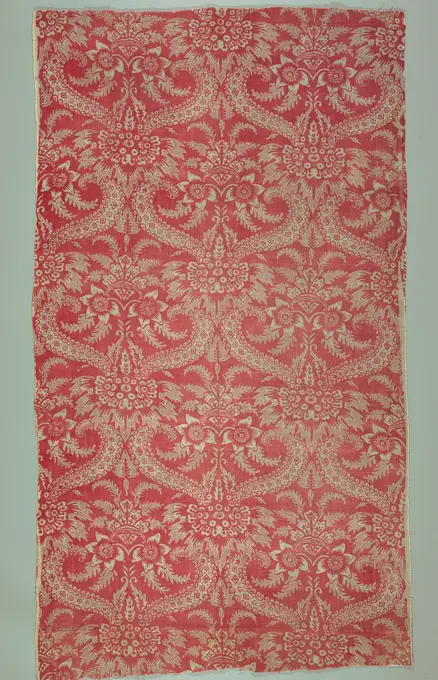
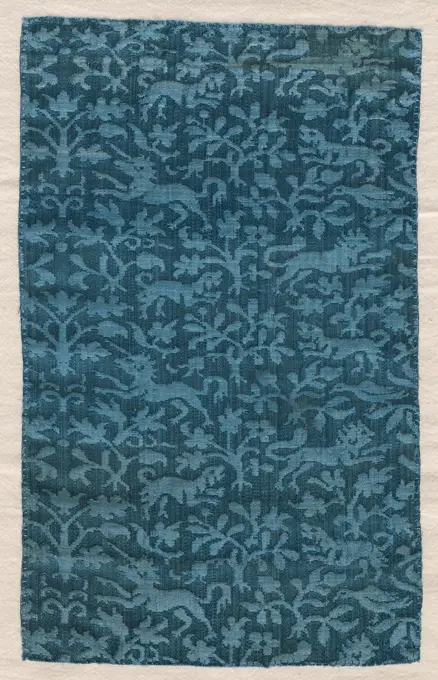
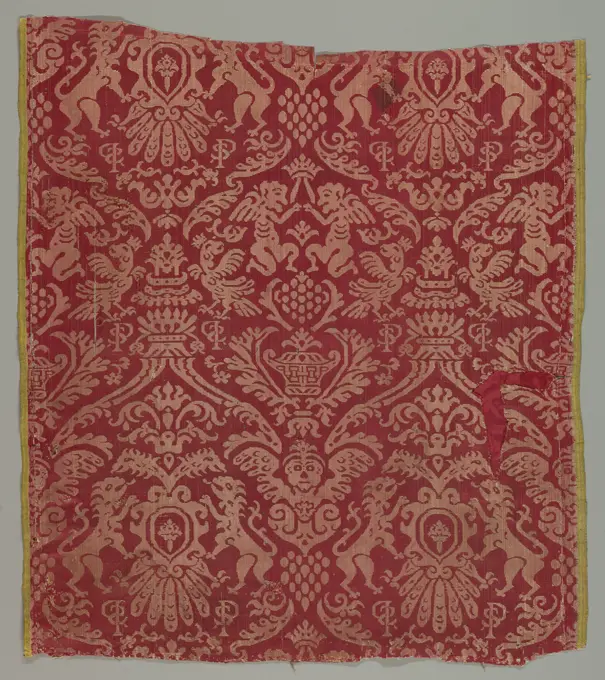
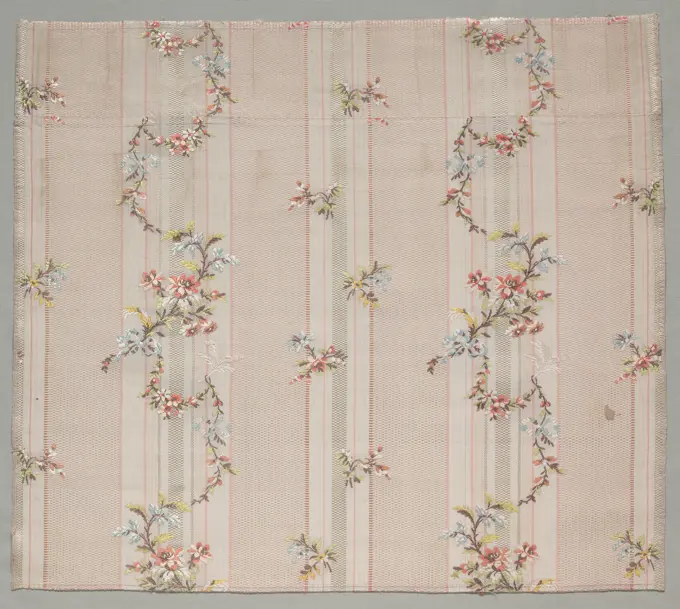
Collection of historical textile pieces featuring intricate floral patterns and designs, showcasing various techniques and materials from different centuries.

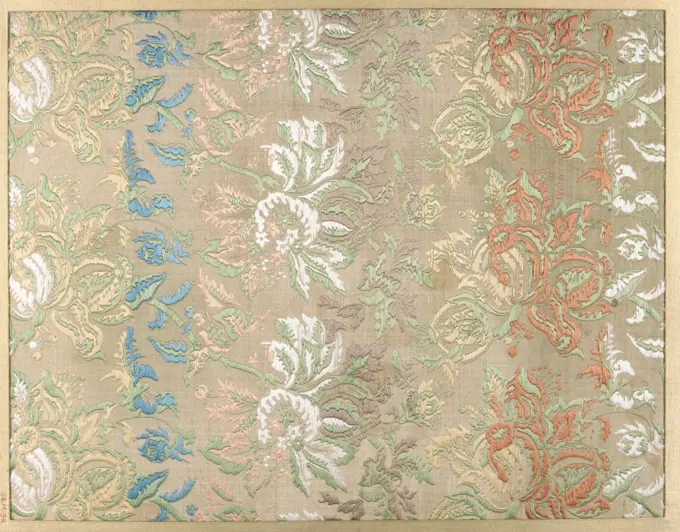
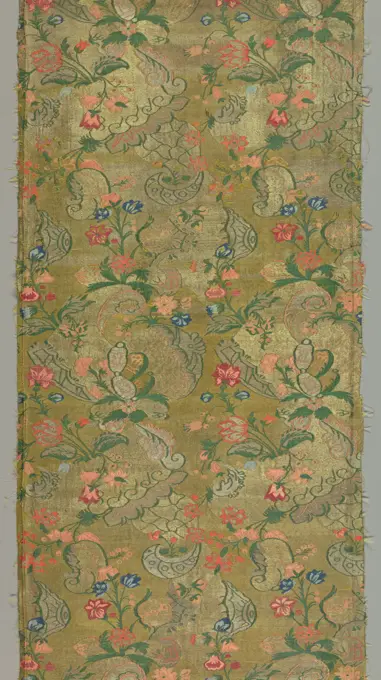
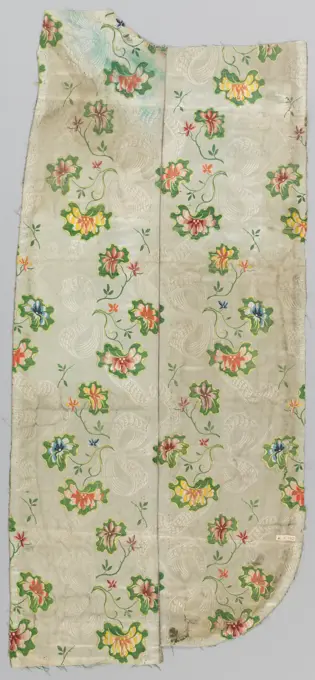
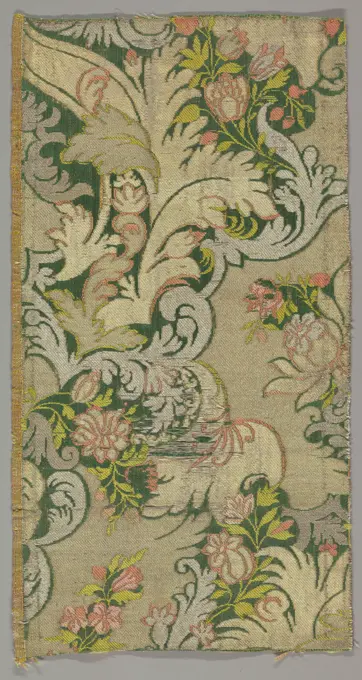
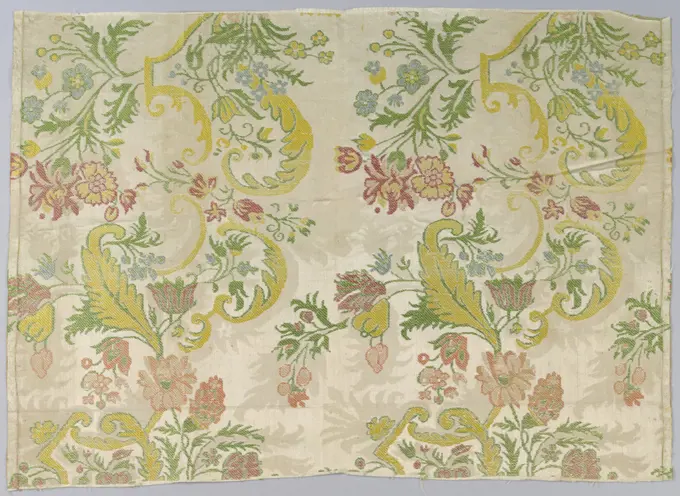
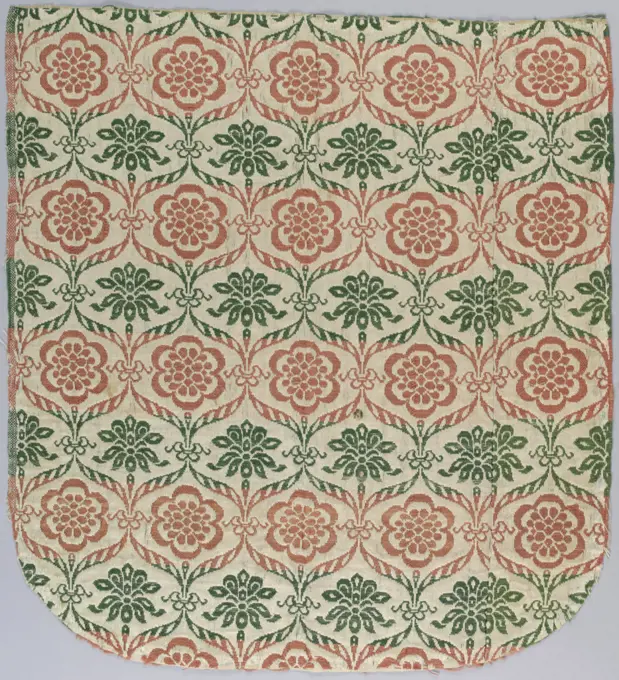
Textile, Medium: silk Technique: woven with continuous and discontinuous supplementary weft patterning (brocade), Silk brocade with a loose lattice framework formed of naturalistic flowers and leaves, in pale greens, pinks and oranges on an off-white ground., France, England, ca. 1740, woven textiles, Textile
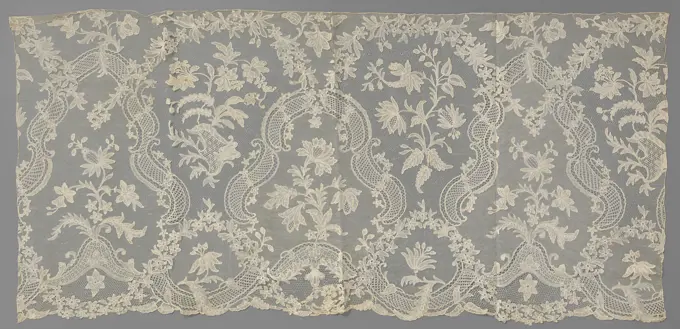
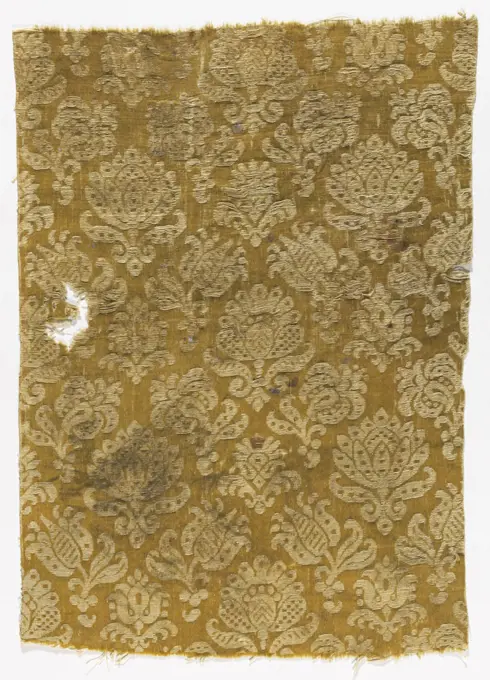
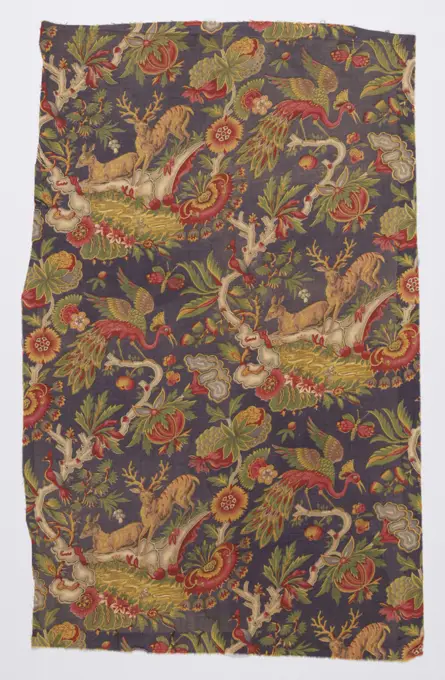
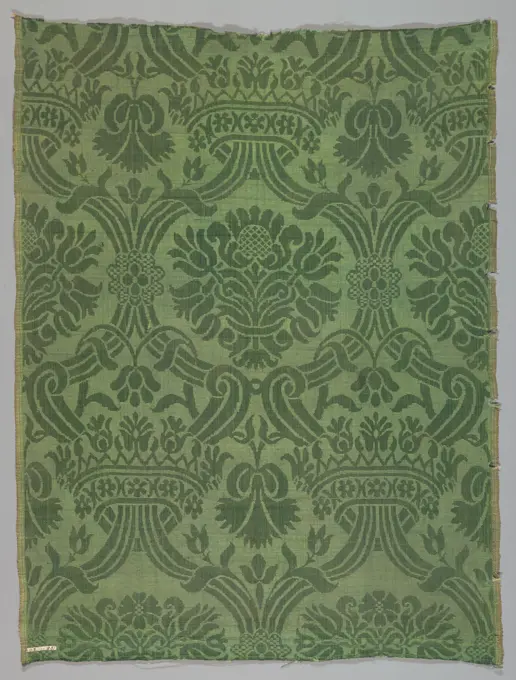
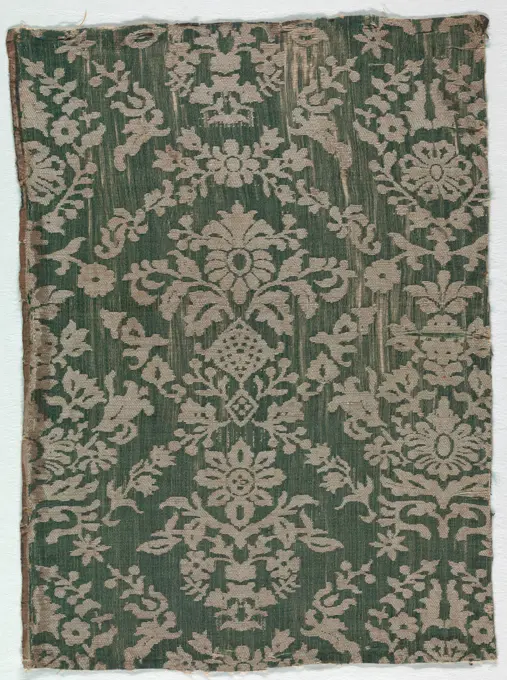
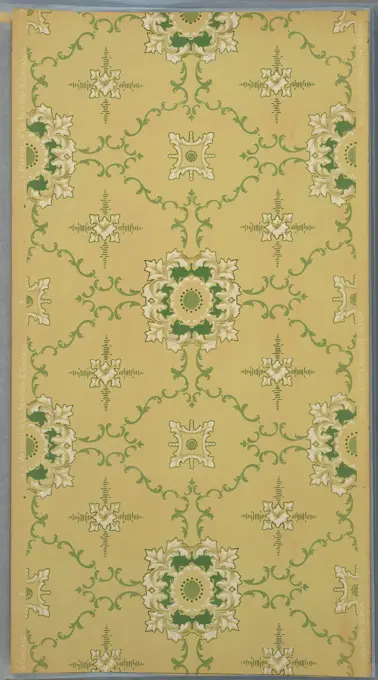
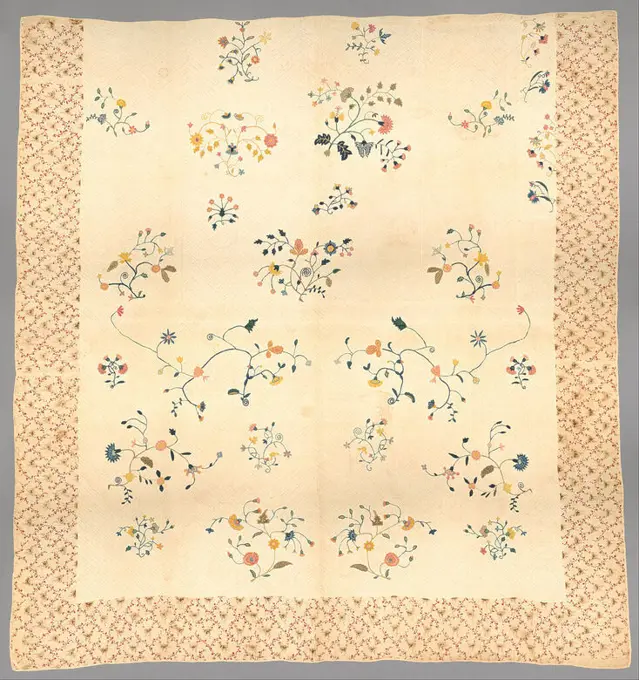
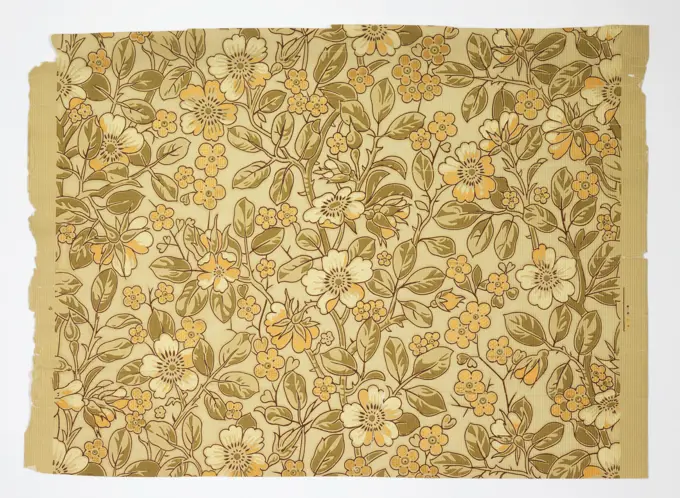
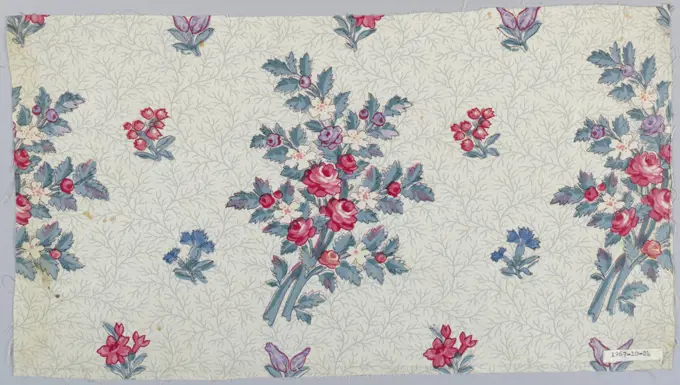
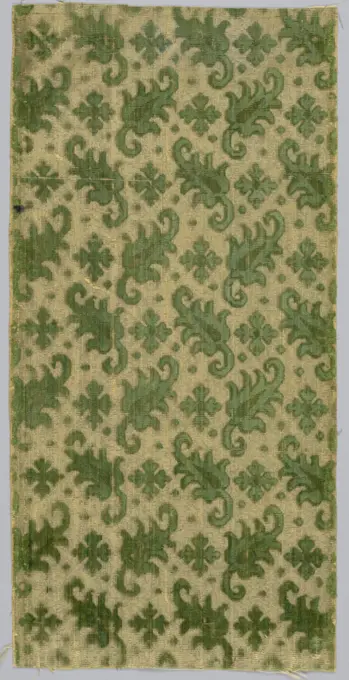
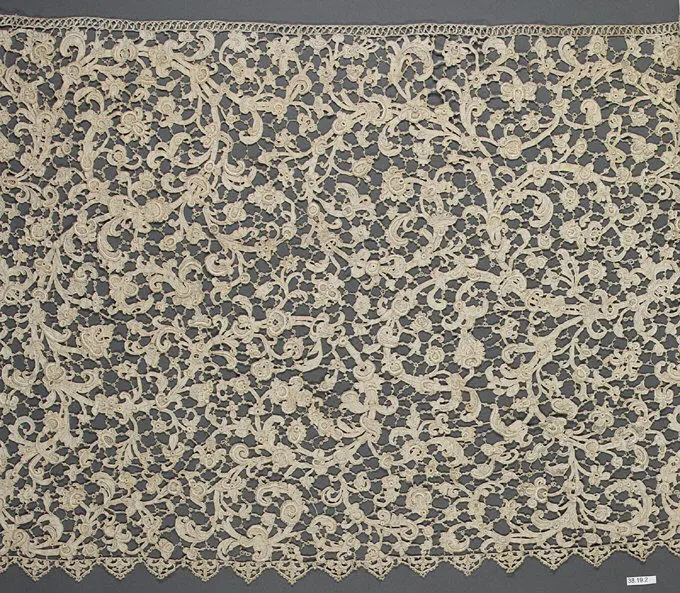
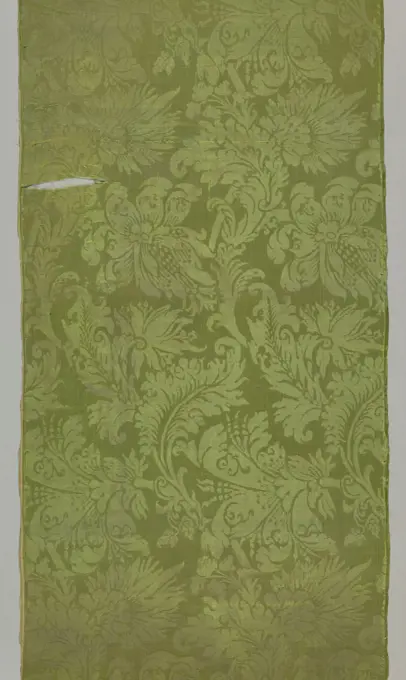
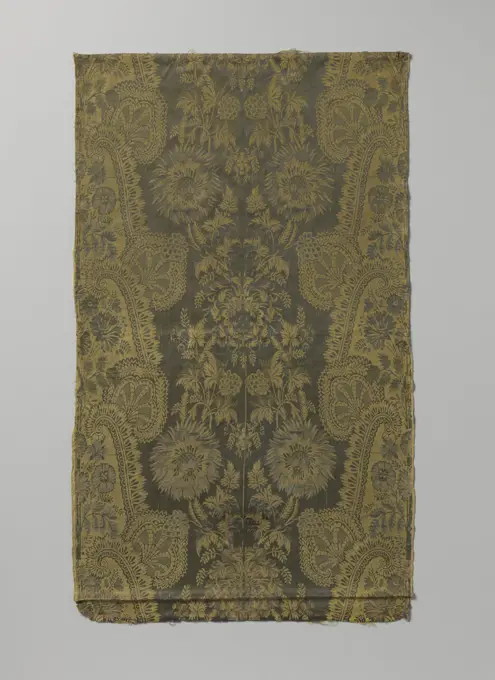
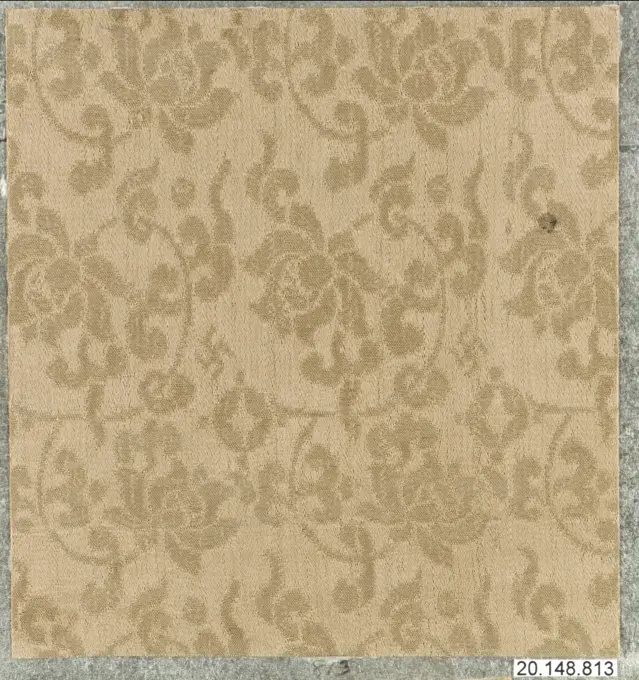
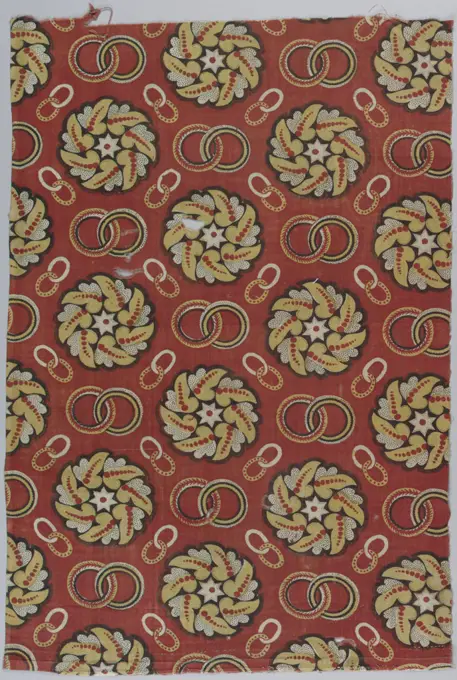
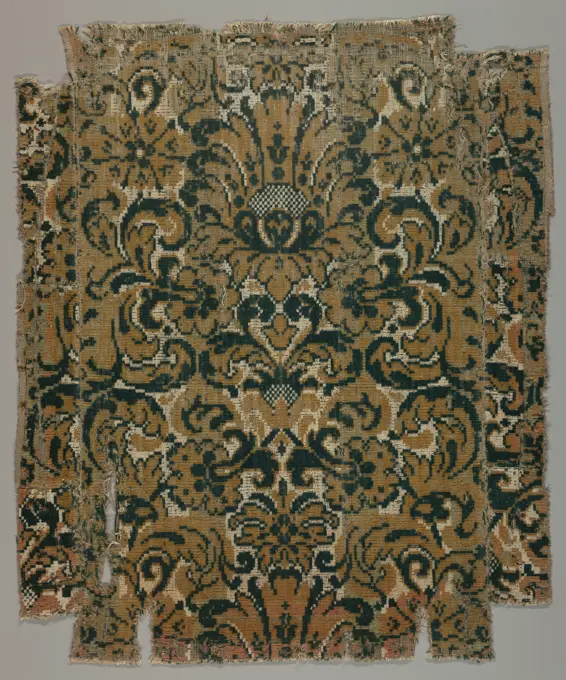
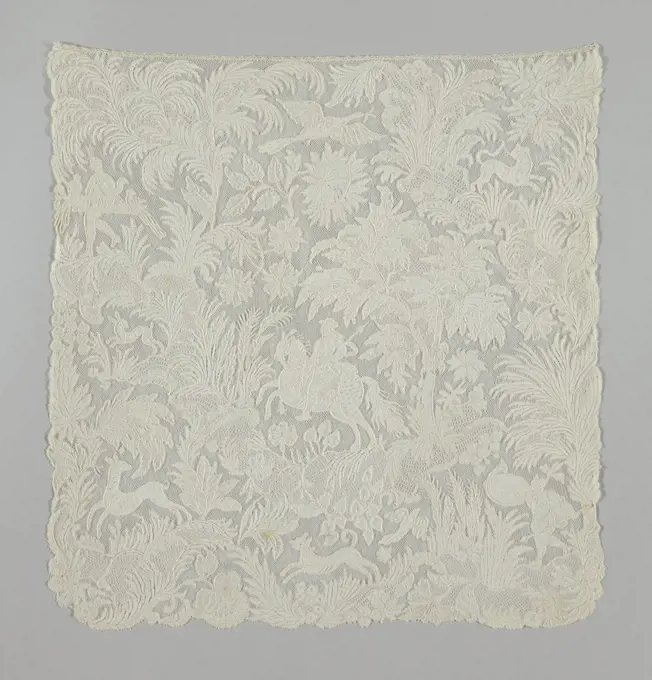
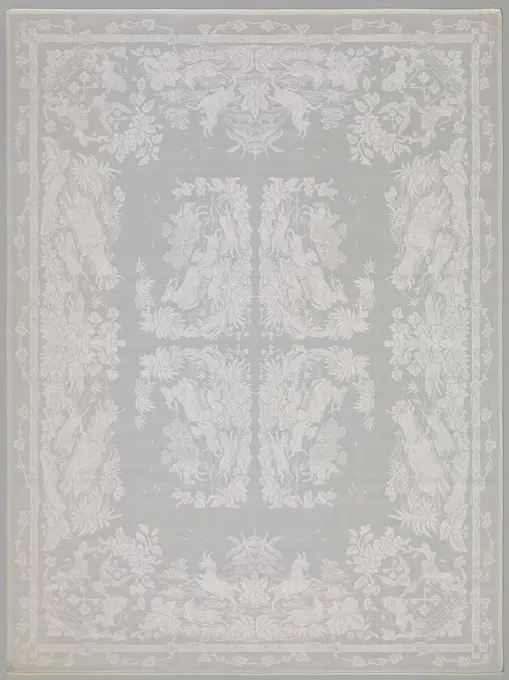
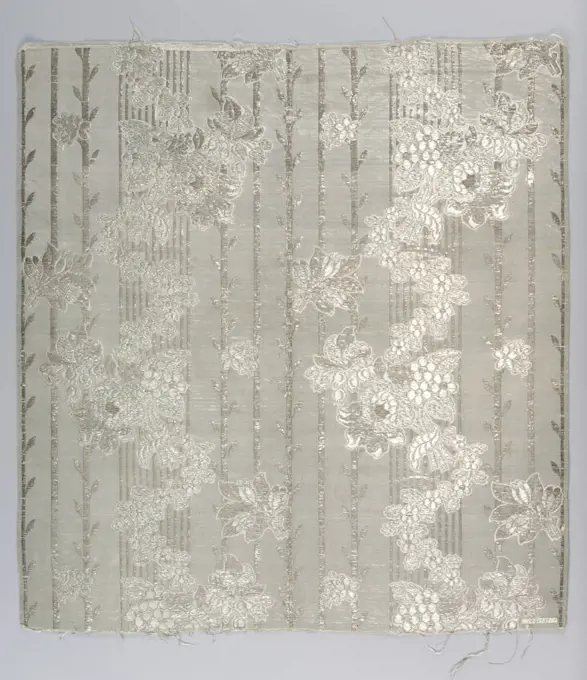
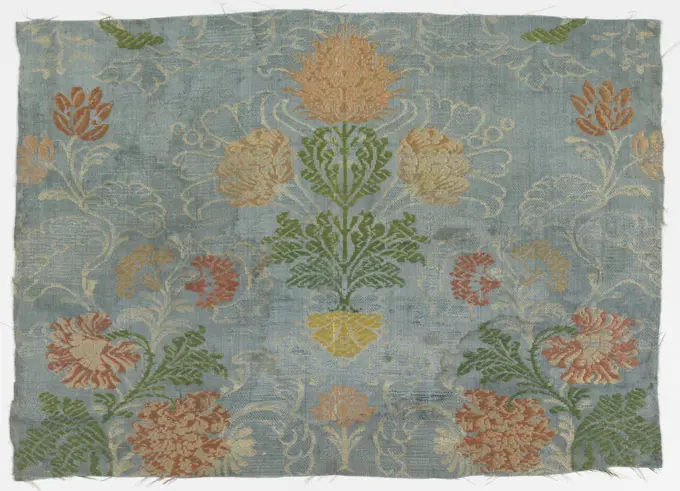
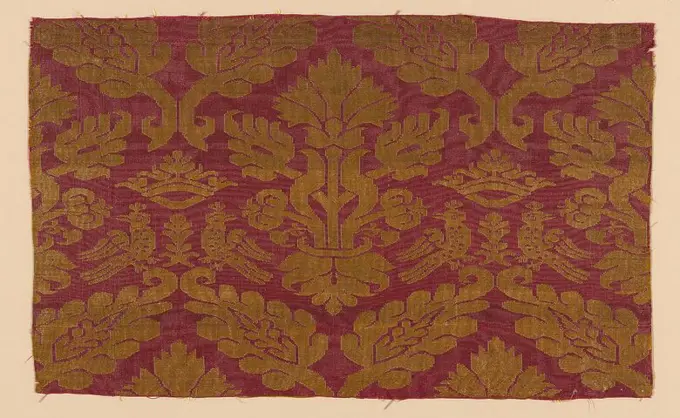
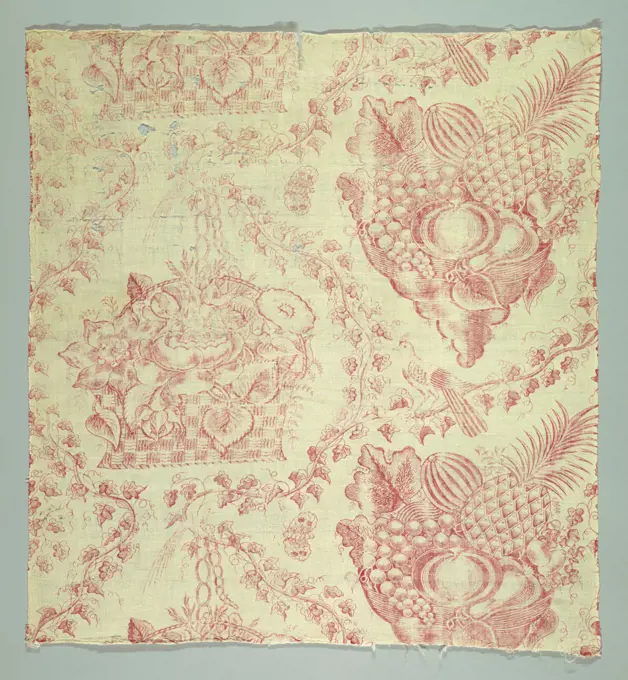
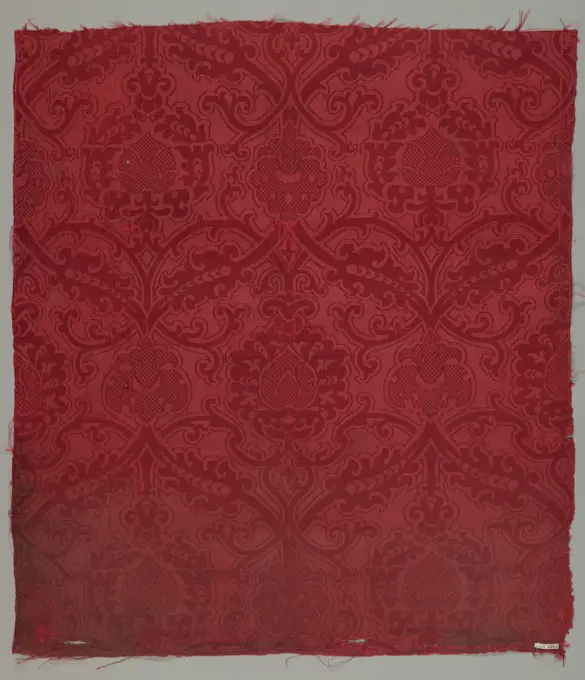
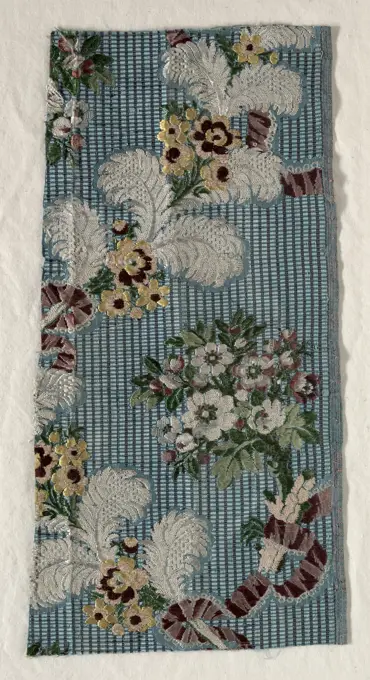
Piece late 18th century Probably Oberkampf Manufactory French. Piece 229512Textile, Medium: silk Technique: damasse: 7&1 satin (4) and 1z7 twill, Tan silk woven with curving ribbon and floral pattern., England or Netherlands, ca. 1710-20, woven textiles, TextileAlternate of a climbing side with wide Rivière.Albarrow of natural colored Brussels climbing side. Four different loose branches of ecclesiastical flowers (lily, pomegranate, grape roos) fill triangular and shield-shaped fields, limited by a river of broad C-Volutes. The triangles are alternately high and narrow and short and thick and exhibit a fine mesh net, while the shield-shaped fields are filled with a coarse ground ground. Along the scalloped edge, a mountain and valley line runs from C-Volutes, which are overcurred by a fine closed flowerguirland, which repeats itself at the top of the strip. The C-voltages are filled with grid work and wound with a fine flower garland or overcures by a feeder.Piece 18th century Japan. Piece 71267Textile, Medium: silk Technique: woven with continuous and discontinuous supplementary weft patterning (brocade), Silk brocade with a loose lattice framework formed of naturalistic flowers and leaves, in pale greens, pinks and oranges on an off-white ground., France, England, ca. 1740, woven textiles, TextileFragment, Medium: silk and metallic Technique: woven, Orange-red ground with vertical stripes of blue silk and silver metallic in a floral pattern., 17th century, woven textiles, FragmentBrocade, 1800s. India, Gulbarga, 19th century. Brocade, "kimkhwab"; silk, cotton, gold thread; overall: 27.9 x 19.1 cm (11 x 7 1/2 in.).Fragment, Medium: silk Technique: brocatelle, Pattern of upright blossoms and curling floral sprigs in cream on a dark yellow ground., Italy or Spain, 16th century, woven textiles, FragmentFragment of fabric unknownTextile, Technique: roller printed, Deer on a rock by a pool with fish and with exotic bird on a branch. Bright colors., England or USA, 1870s, printed, dyed & painted textiles, TextileCeiling Paper (USA); Manufactured by Maxwell & Co., S.A. (United States); machine-printed paper, liquid mica; 83 x 49 cm (32 11/16 x 19 5/16 in.)Panel Made 1725-1775 France. Silk, plain weave with supplementary patterning and brocading wefts .Textile; silkFragments, ; Spain; silkChintz Fragment (India); cotton; Warp x Weft: 112.5 x 55.5 cm (44 5/16 x 21 7/8 in.)Campion, Morris & Company, Decorators Ltd., 1875-1941, Medium: wool Technique: compound weave, Length of so-called 'Kidderminster' or ingrain carpeting with a single repeat of a large-scale symmetrical pattern. An ogival framework with acanthus leaves, twining stems and flowers in shades of green with pale blue and brick red on a dark blue ground. Two narrow plain weave selvages., England, late 19th century, woven textiles, Carpet, CarpetFragment Multicolored Silk Droguet Liseré, Anonymous, 1750 - 1775 A fragment of green silk tissue with lighter narrow and wide white tires and colored bouquets. Note: Different effects: Lancé, Canelé Simpleté with interruption pointed in Keper. Self -sides; (back); 0.5 cm, plain binding (2 impacts in one jump). Netherlands silk A fragment of green silk tissue with lighter narrow and wide white tires and colored bouquets. Note: Different effects: Lancé, Canelé Simpleté with interruption pointed in Keper. Self -sides; (back); 0.5 cm, plain binding (2 impacts in one jump). Netherlands silkTextile; 1975-79-2Ceiling Paper (USA); Manufactured by Maxwell & Co., S.A. (United States); machine-printed paper; 91 x 49 cm (35 13/16 x 19 5/16 in.)Embroidered quilt. Culture: American. Dimensions: 84 3/4 x 78 in. (215.3 x 198.1 cm). Maker: Mildred. Date: ca. 1775. Museum: Metropolitan Museum of Art, New York, USA.Textile; Manufactured by Cheney Brothers (United States); silkSidewall; machine-printed; 51 x 37 cm (20 1/16 x 14 9/16 in.)Ceiling Paper (USA); Manufactured by Maxwell & Co., S.A. (United States); machine-printed paper, liquid mica; 92 x 49 cm (36 1/4 x 19 5/16 in.)Piece 18th-19th century Japan. Piece 65831Piece 18th century China or Japan. Piece 72047Textile (France); cotton; Warp x Weft: 191 x 94.5 cm (6 ft. 3 3/16 in. x 37 3/16 in.); Bequest of Elinor Merrell; 1995-50-259Fragment ca. 1826-30 British. Fragment. British. ca. 1826-30. Cotton. Textiles-PrintedPiece ca. 1725-30 French. Piece 216458Textile Fragment 17th-18th century. Textile Fragment 454516Textile (France); cotton; Warp x Weft: 138 x 78.5 cm (54 5/16 x 30 7/8 in.); Bequest of Elinor Merrell; 1995-50-236Textile (France); linen warp, cotton weftTextile Fragment, 1500s - 1600s. Italy, 16th-17th century. Damask; overall: 24.2 x 15 cm (9 1/2 x 5 7/8 in.).Ceiling Paper (USA); Manufactured by Maxwell & Co., S.A. (United States); machine-printed paper, liquid mica; 85 x 49 cm (33 7/16 x 19 5/16 in.)Textile, Medium: cotton Technique: printed by plate or roller on plain weave Label: printed by plate or roller on cotton plain weave, early 19th century, printed, dyed & painted textiles, TextileFragment of wool fabric  diverging rows of symmetrical carnation motifs unknownEmbroidery, Medium: silk, metal Technique: satin and stem stitch embroidery on taffeta, Red taffeta embroidered in floral design in polychrome silks, and gold and silver wound on silk cord. Satin and stem stitches., Europe, 18th century, embroidery & stitching, EmbroideryTextile fragment with repeating pattern of floral medallions in latticework on swastika-fret ground 18th-19th century Japan. Textile fragment with repeating pattern of floral medallions in latticework on swastika-fret ground 65899Fragment, Medium: silk Technique: cut and uncut supplementary warp pile (velvet), Greenish-gold silk velvet, cut and uncut, on a red foundation in a floral vine pattern with birds and fruit., Italy, 16th-early 17th century, woven textiles, FragmentTextile Fragment, 1774-1793. France, late 18th century, Period of Louis XVI (1774-1793). Droguet; silk and gold thread; overall: 17.2 x 10.8 cm (6 3/4 x 4 1/4 in.).Carpet Fragment; wool on linen and cottonFragment ; silkPiece 17th century Italian. Piece 216271Taffeta Fragment, 1774-1793. France, 18th century, Period of Louis XVI (1774-1793). Taffeta, warp-patterned and brocaded; silk; overall: 51.4 x 47 cm (20 1/4 x 18 1/2 in.).Textile, Medium: silk Technique: plain weave with supplementary weft patterning (brocade), Green textile brocaded with pink and yellow silk showing symmetrical pattern with ribboned bouquets along central vertical axis, and serpentine florals on either side., France, 19th century, woven textiles, TextileTextile (Italy); silk, metal-wrapped silk threadFragment Zijddamast with diagonally constructed design of bizarre flower and leaf work, c. 1710 - c. 1715 Fragment Zijddamast with diagonally constructed design of whimsically, so -called bizarre flowers and leaves in écru on a yellow stock. Eastern textile. China silk damask Fragment Zijddamast with diagonally constructed design of whimsically, so -called bizarre flowers and leaves in écru on a yellow stock. Eastern textile. China silk damaskTextile, Medium: cotton Technique: printed by engraved roller and block printed, Ground molette-printed in grey with an all-over dotted tracery pattern. Over-printed with floral sprays and blossoms, all outlined in black, in red, blue, lavendar, blue-green and white., 1851-63, printed, dyed & painted textiles, TextileFragment, Medium: silk Technique: cut and uncut supplementary warp pile (velvet) in a plain weave foundation, Stylized leaf and flower pattern in green cut and uncut velvet against a dark yellow ground., Italy, 16th-17th century, woven textiles, FragmentFragment; silkFragment 17th century Italian. Fragment 230328Design for a Snuffbox Lid ca. 1750 Anonymous, French, 18th century French. Design for a Snuffbox Lid 343828Fragment, Medium: silk Technique: raised supplementary warp pile in satin foundation (velvet); ciselé voided, Cream-colored ground with pattern of pomegranate sprigs with rampant lions and birds., Italy, 16th-17th century, woven textiles, FragmentPiece 1750-60 possibly British. Piece. possibly British. 1750-60. Silk. Textiles-WovenFlounce 17th century Italian, Venice. Flounce 226251Piece 18th-19th century Japan. Piece. Japan. 18th-19th century. Silk. Textiles-WovenFragment 16th-17th century Italian. Fragment 230642Fragment multicolored brochure side. Fragment multicolor silk tissue. A white ground has a pattern of lace garlands that form medallions in which flower bouquets.Head Cloth (kain Kepala) (Indonesia); cottonLoom Piece, 1700s-1800s. China, Qing dynasty (1644-1911). Silk; overall: 1550.2 x 78.2 cm (610 5/16 x 30 13/16 in.).Fragment (Spain); silkFragment of silk fabric  pattern of motifs made by ogees, spirals and flower motifs unknownFragments, Medium: silk Technique: 5-harness satin damask, Seven lengths of antique silk damask in olive green color; saymmetrical floral pattern of baroque character., Spain, late 17th-early 18th century, woven textiles, FragmentsSidewall (USA); Manufactured by Henry Gledhill & Co.; machine-printed paper, liquid mica; 91 x 49 cm (35 13/16 x 19 5/16 in.)Excerpt green with yellow silk lamas, anonymous, 1700 - 1730 Fragment silk tissue. The symmetrical pattern has vertical garlands with large poppy flowers that cross each other in a flower, completely left and right surrounded by volute ornaments of floured tires. France (possibly) silk lampas (textile material) Fragment silk tissue. The symmetrical pattern has vertical garlands with large poppy flowers that cross each other in a flower, completely left and right surrounded by volute ornaments of floured tires. France (possibly) silk lampas (textile material)Fragment; silk; Bequest of Richard Cranch Greenleaf in memory of his mother, Adeline Emma Greenleaf; 1962-56-83Fragment; medium:silk, metallicFragment (France); silk, metallic yarnsPiece 18th-19th century Japan. Piece. Japan. 18th-19th century. Silk. Textiles-WovenFragment, Medium: silk Technique: damask weave with supplementary weft floats (brocade), Textile fragment in the bizarre’ style showing pattern of grey damask brocaded with polychrome florals and strapwork., France, late 17th-early 18th century, woven textiles, FragmentBook cover with two borders with floral patterns 19th century Anonymous. Book cover with two borders with floral patterns. Anonymous , 19th century. 19th century. Relief print (wood or metal). PrintsCover (Furnishing Fabric) Made 1701-1900 Iran. Stamped brocaded cloth panel, blue ground .Bandbox (USA); block-printed on paper; 44.5 x 24 cm (17 1/2 x 9 7/16 in.)Piece 18th century Japan. Piece 71803Rug;  Ok. PO. 19th century (1845-00-00-1860-00-00);rugTextile, Medium: silk, paper with applied gold foil Technique: plain compound weave, Black ground with large diaper pattern in green with points punctuated with flowers. Diamonds are filled with smaller diaper patterns in blue, green, and metallic gold. Rows of alternating large flowers, squares, and decorative roundels in yellow, red, green, white, and pink silk., China, 19th century, woven textiles, TextileNapkin with lace pattern. White Linen Damask Napkin with a Z.G. Lace pattern, Brand W 18.Tablecloth, embroidered  flower motifs unknownLinnamast napkin with a flower pattern, anonymous, c. 1740 Linnamast napkin with a flower pattern. The napkin is part of five napkins (BK-1973-177-A to BK-1973-177-F) and a tablecloth (BK-1973-176).  linen (material) damask Linnamast napkin with a flower pattern. The napkin is part of five napkins (BK-1973-177-A to BK-1973-177-F) and a tablecloth (BK-1973-176).  linen (material) damaskTextile, Medium: cotton Technique: block printed on plain weave, Red ground with a staggered repeat of whirling rosettes in yellow, black, red, and reserved white. Spaces between rosettes have interlaced circles and links., England or France, 1800-1850, printed, dyed & painted textiles, TextileCarpet Fragment (France); wool, linen on hemp groundFragment; silkPiece 18th-19th century Japan. Piece 67601Fragment, Medium: linen (ivory), silk (lt. rust, tan/ivory), wool (red, green) Technique: plain weave (linen) with supplementary warp (silk) and supplementary wefts (red, green), Small ogives framing alternately red and green palmettes., 17th century, woven textiles, FragmentKennet, Medium: cotton Technique: printed on plain weave, Large-scale design of long-stemmed flowers leaning diagonally, on a ground of small all-over twining vines, leaves and flowers. In two shades of golden tan on white. Wide plain unprinted selvedges., England, designed 1883, printed, dyed & painted textiles, Textile, TextilePiece 19th century China or Japan. Piece. China or Japan. 19th century. Silk / Compound weave. Textiles-WovenCravat end, Medium: linen Technique: bobbin lace, Brussels style Label: linen bobbin lace, Cravat end of Brussels-style lace with a hunter on horseback in the center, surrounded by fantastic foliage, trees and flowers, birds, a rabbit, a deer, and other animals. A figure with a spear blowing a horn in the lower right corner, and two figures carrying birds in the upper left., Belgium, 1700-1750, lace, Cravat endNapkin of Linnendamast with a weapon. Napkin of Linnendamast with the coat of arms of Schimmelpennck. The napkin belongs to Elf Napkins (BK-1973-216-A to BK-1973-216-L) and a tablecloth (BK-1973-215).Textile, Medium: silk, metallic thread Technique: compound weave with supplementary weft, White and silver striped fabric with supplementary weft of flat silver strips whose floats form vertical stripes with leaves at intervals. White floats of the weft form outlines for serpentine floral sprays spread over the striped areas., France, 18th century, woven textiles, TextileFragment, Medium: silk Technique: woven, Woven, symmetrical arrangement of multicolor flowers on a blue background., 17th century, woven textiles, FragmentFragment multicolored brochure silk, c. 1700 - c. 1760 Fragment multicolored silk tissue. The white soil has wavy, lobed tires and fields with a fine striped or a ZIG-Zag pattern. On the white pattern, the pattern has multicolored flower branches with small blue, pink and white flowers and large red flowers. Netherlands silk Fragment multicolored silk tissue. The white soil has wavy, lobed tires and fields with a fine striped or a ZIG-Zag pattern. On the white pattern, the pattern has multicolored flower branches with small blue, pink and white flowers and large red flowers. Netherlands silkFragment late 16th century Italian. Fragment 230504Fragments, Medium: silk Technique: cut voided supplementary warp pile in a five-harness satin foundation (velvet), Red cut velvet pattern on a voided red ground; an ogee lattice formed by a leafy floral vine, the branching leaves and flowers of which fill the ogee shapes defined by the main vine. A bracket or ring encircles the points of the ogee lattice., Italy, 17th century, woven textiles, FragmentsTapestry. unknown, authorPiece 18th century French. Piece 230865Fragment Made 1601-1700 Europe. Linen, compound weave (ie. Beiderwand or Lampas 2 1) .Fragment. Italy. Date: 1501-1600. Dimensions: 30.7 x 49.8 cm (12 1/8 x 19 5/8 in.)Weft repeat: 25.5 cm (10 in.). Silk, plain weave with plain interlacings of secondary binding warps and supplementary patterning wefts. Origin: Italy. Museum: The Chicago Art Institute, Chicago, USA.Textile, Medium: cotton Technique: printed by engraved roller on plain weave, Basket of flowers alternate with cornucopia of fruit. Birds and vines. In red on white., England, ca. 1810, printed, dyed & painted textiles, TextileFragment; medium; silkFragment of Brocade, mid 1700s. England, mid-18th century. Lampas weave, brocaded; overall: 39.7 x 20.3 cm (15 5/8 x 8 in.).Fragment of silk fabric  naturaIIstic flower pattern unknown