Decorative Textiles

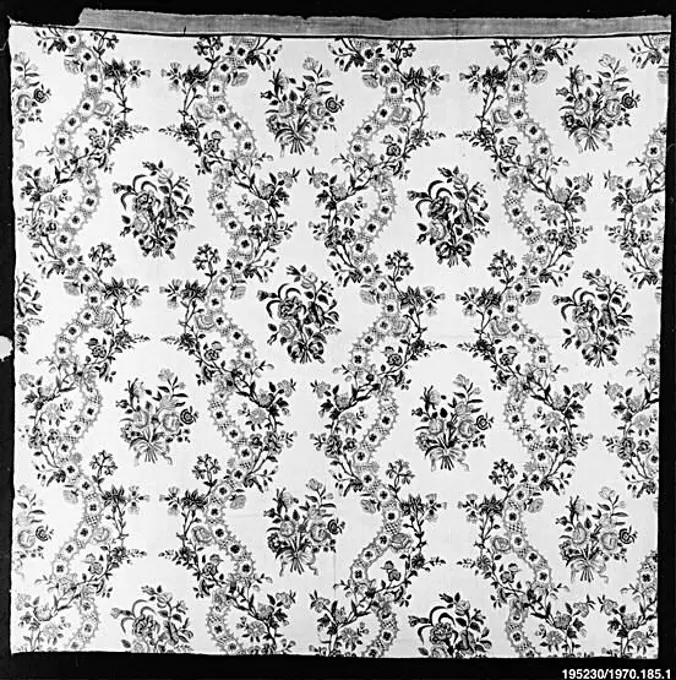
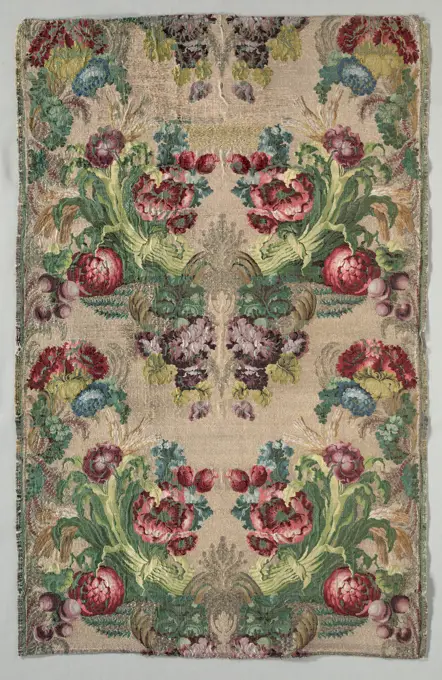
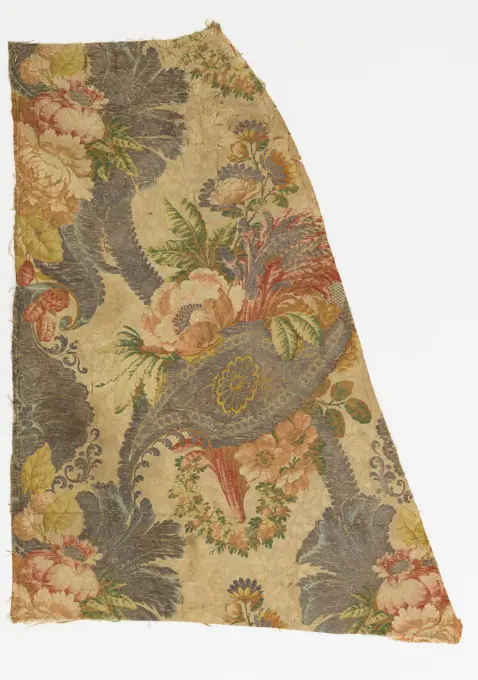
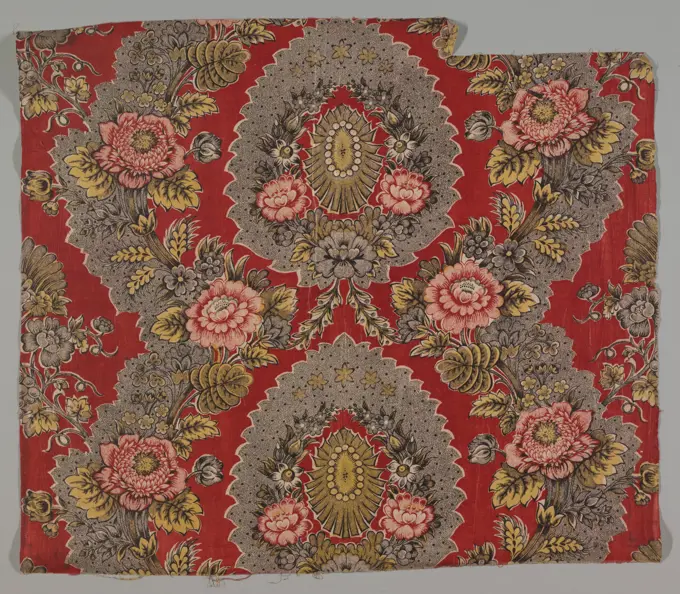
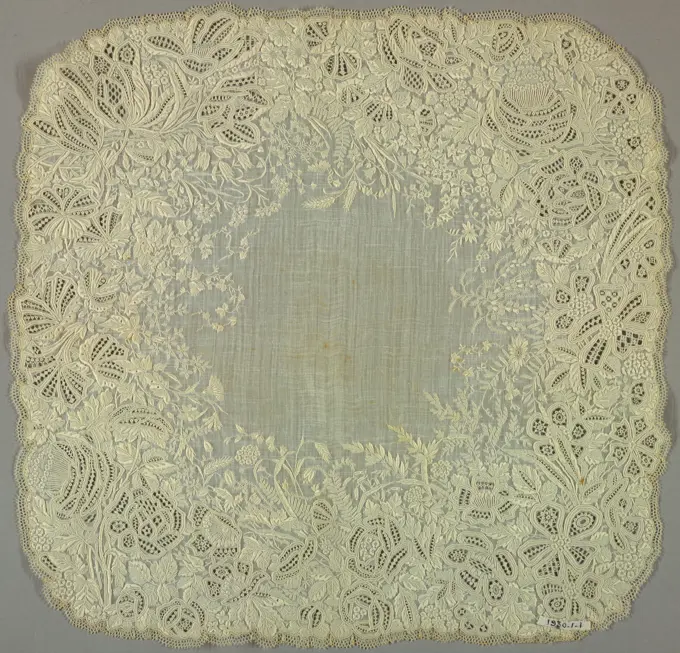
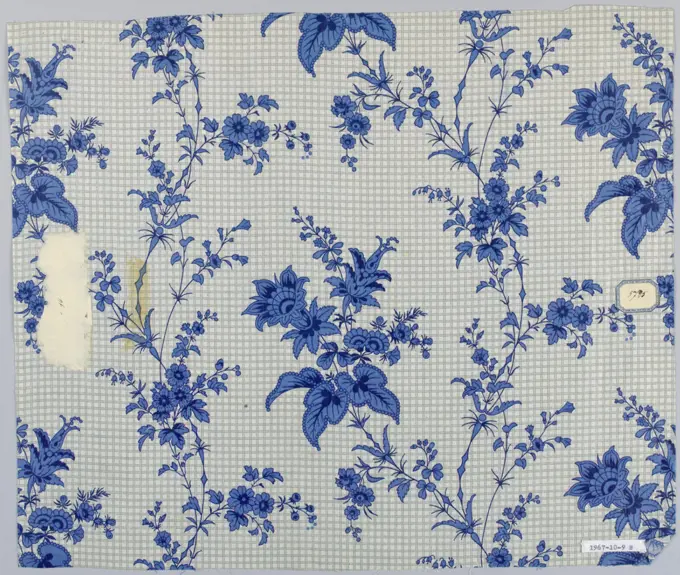
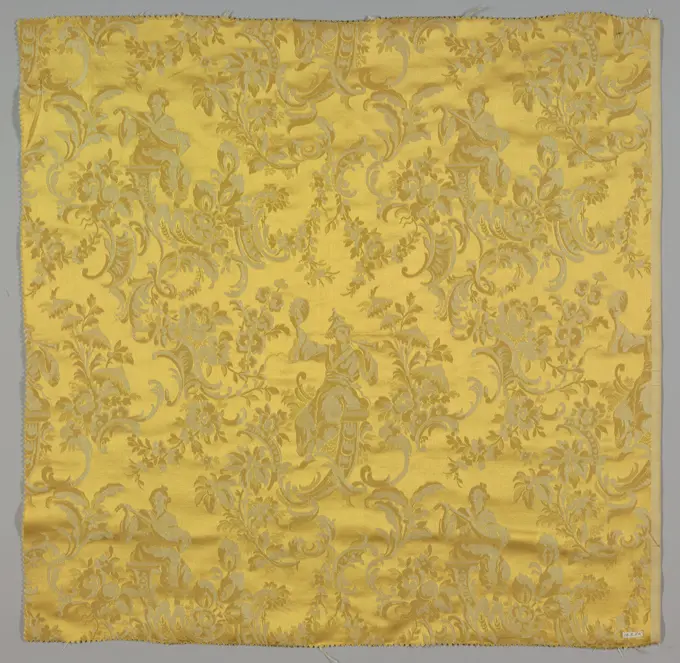
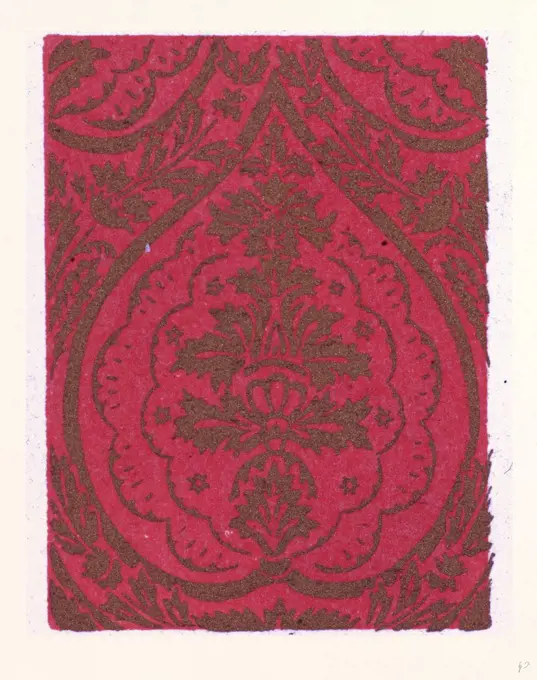
Collection of historical textile pieces featuring intricate floral patterns and designs, showcasing various techniques and materials from different centuries.

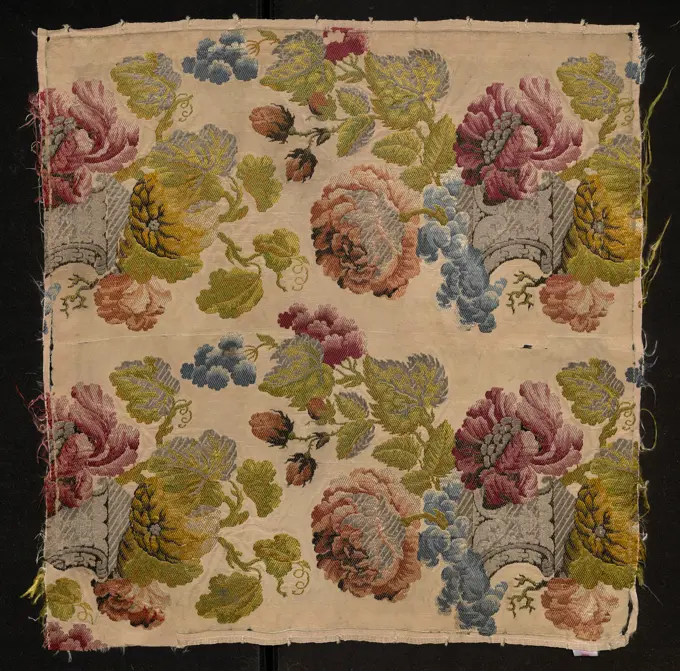
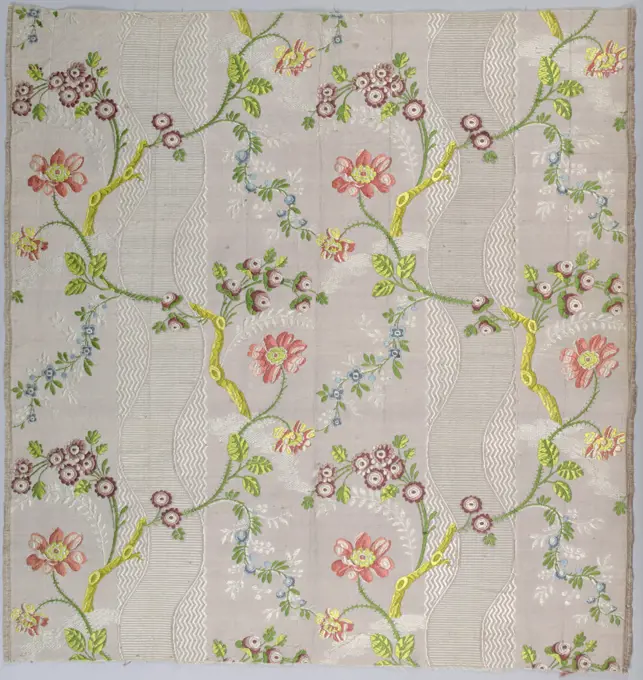
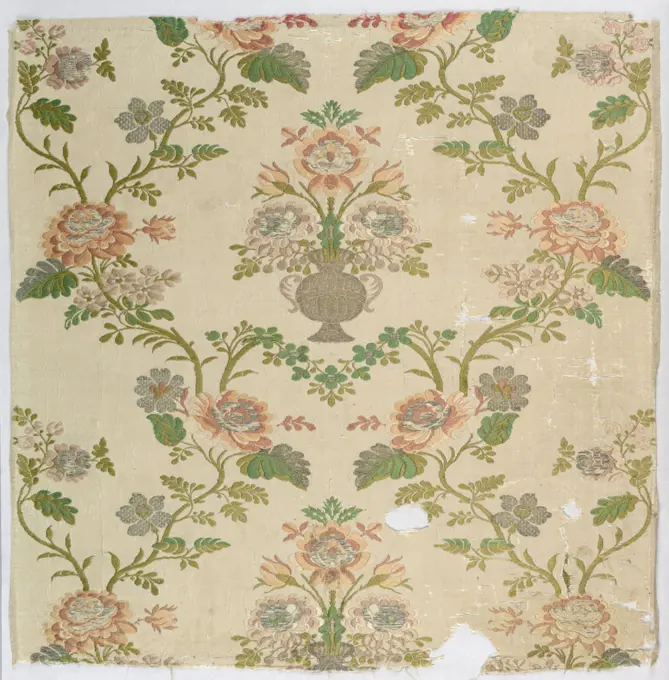
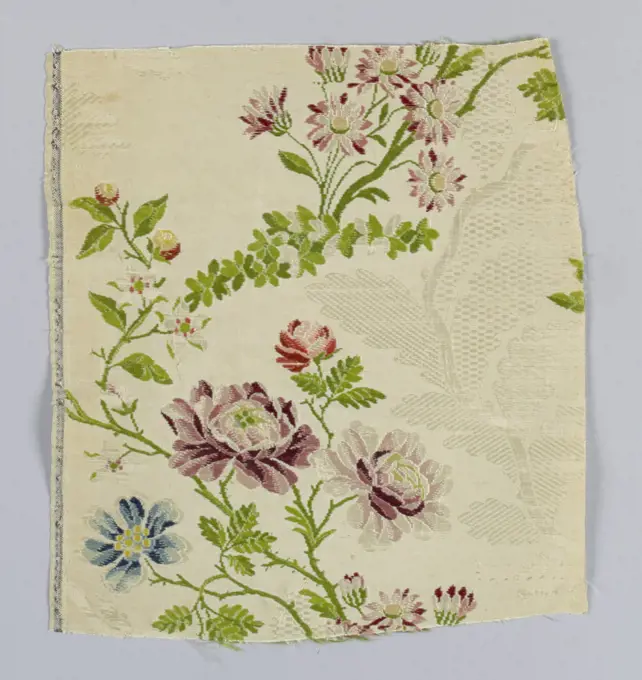
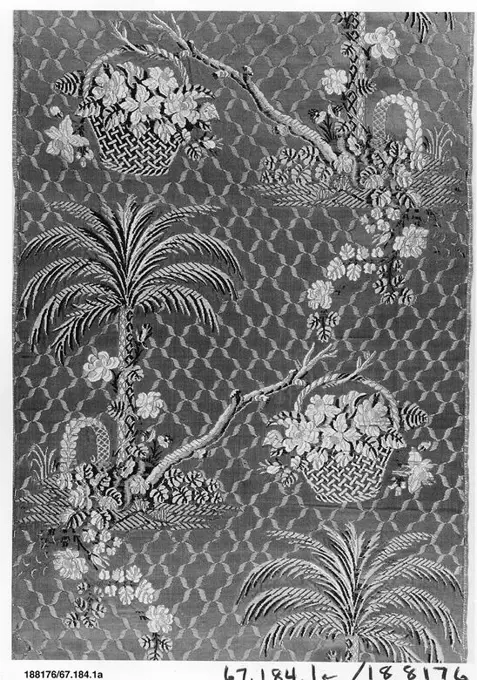
Textile, Medium: silk Technique: woven with continuous and discontinuous supplementary weft patterning (brocade), Silk brocade with a loose lattice framework formed of naturalistic flowers and leaves, in pale greens, pinks and oranges on an off-white ground., France, England, ca. 1740, woven textiles, Textile
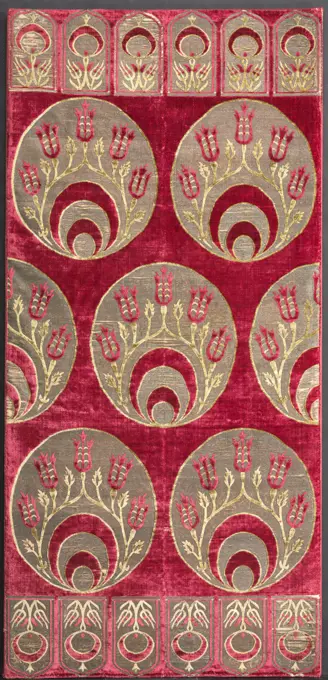
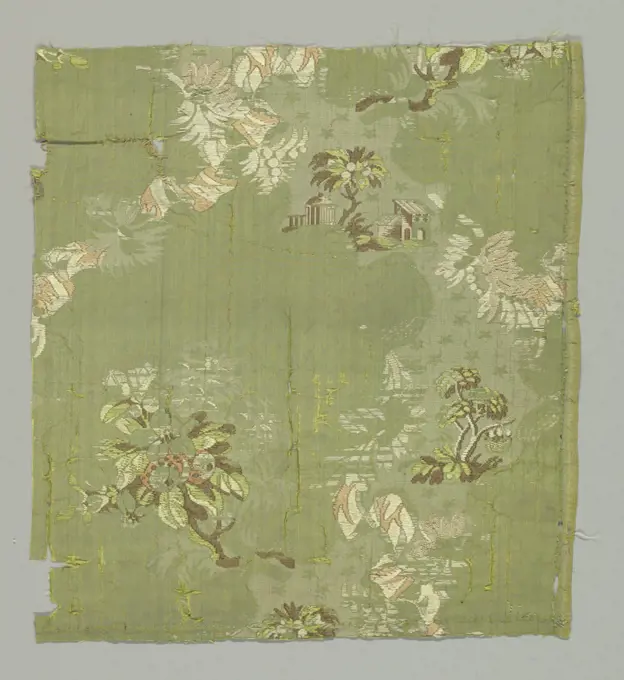
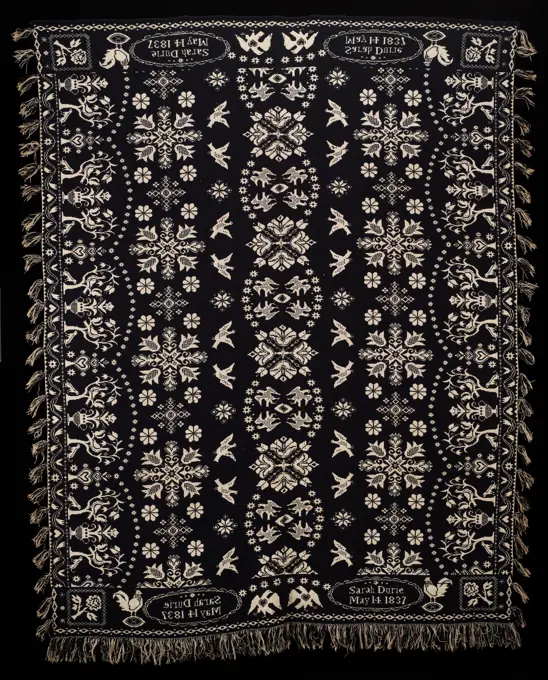
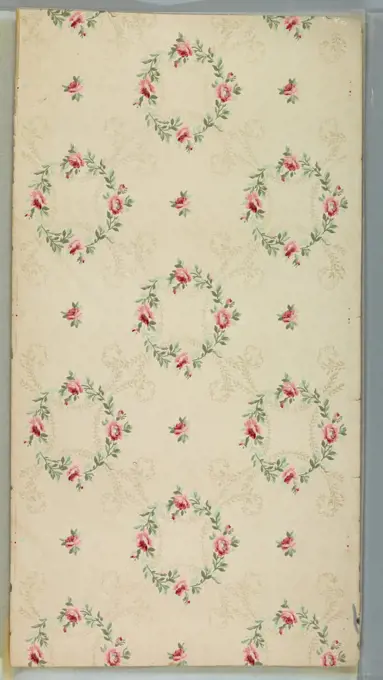
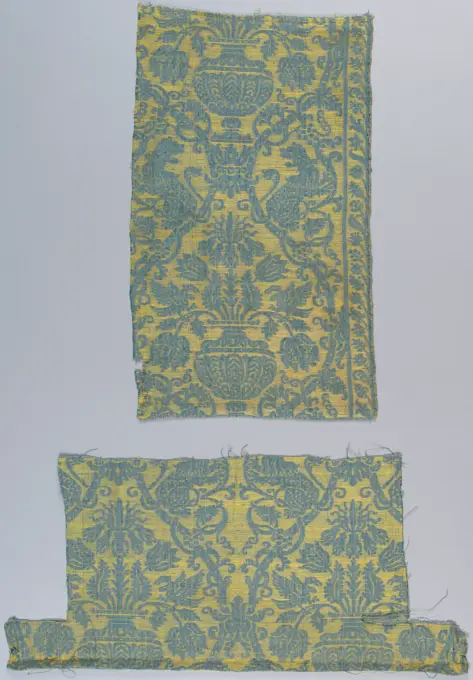
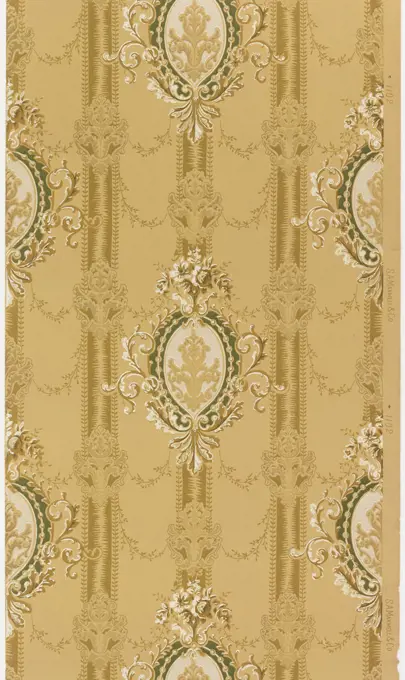
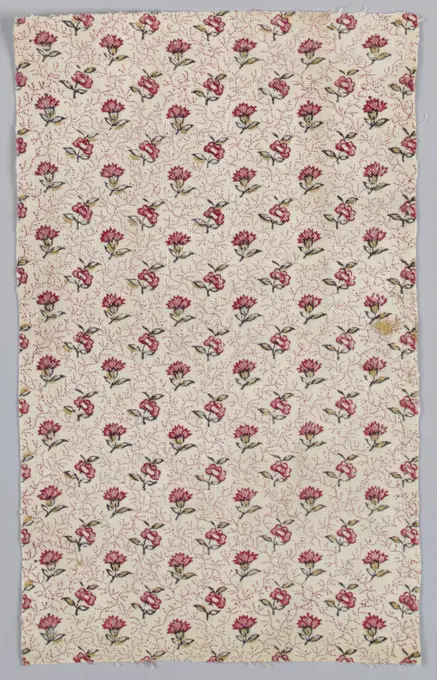
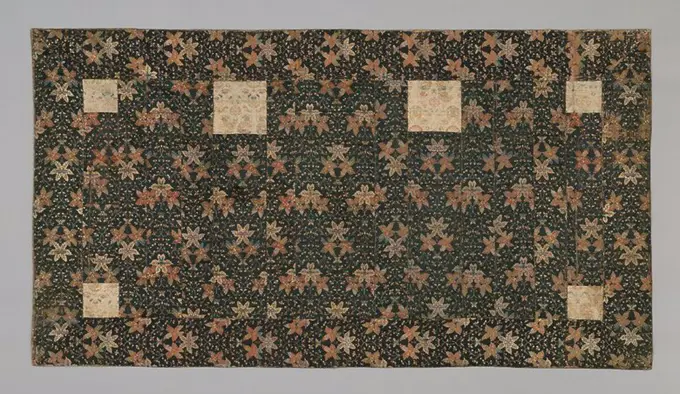
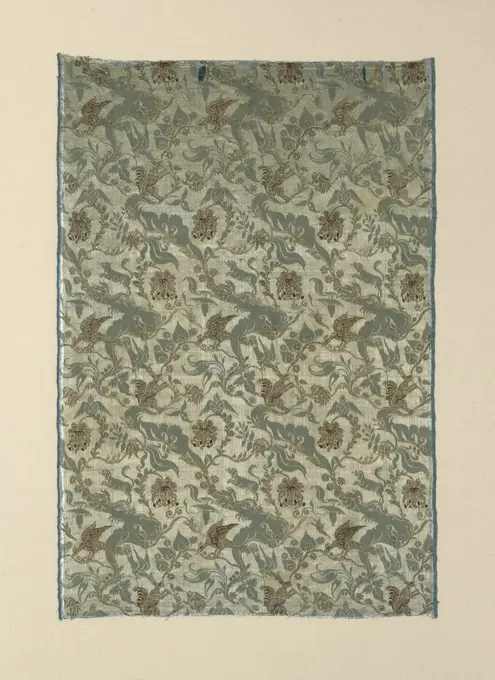
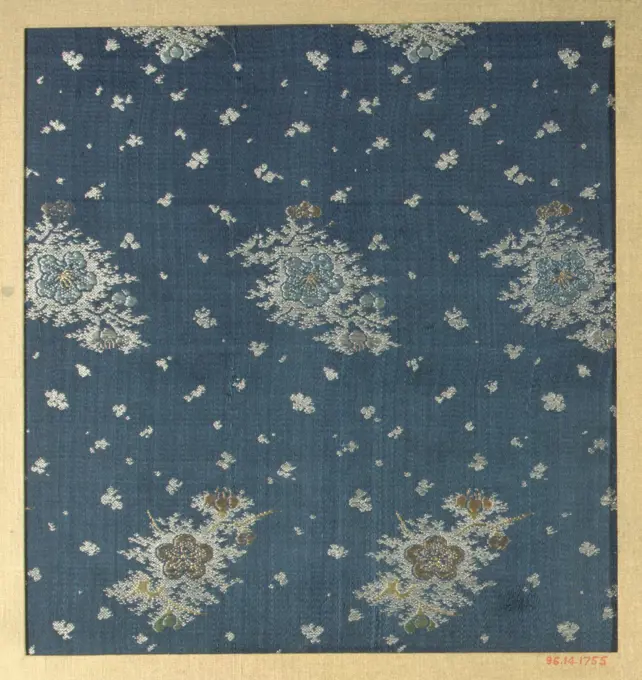
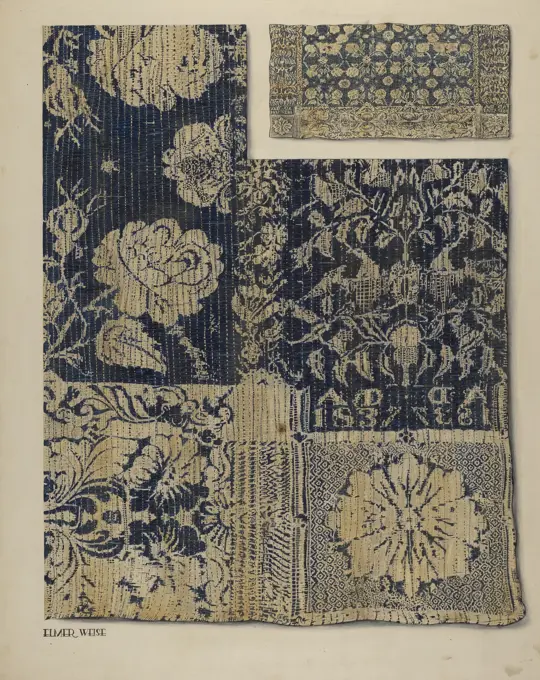
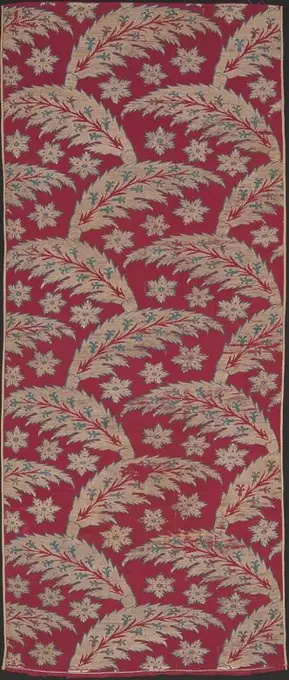
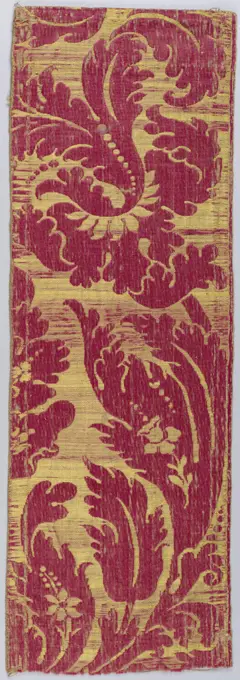
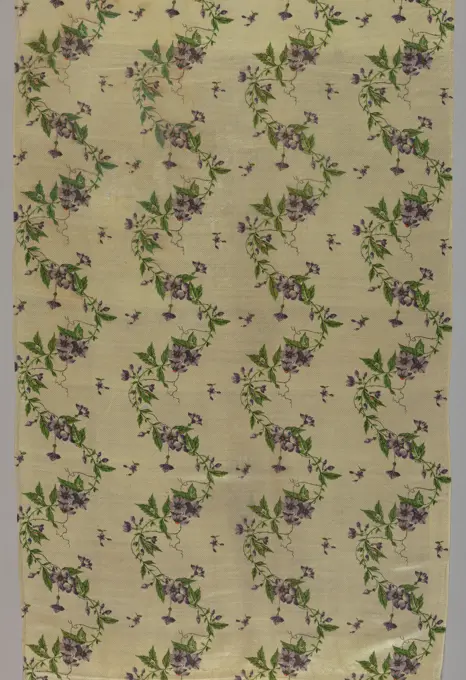
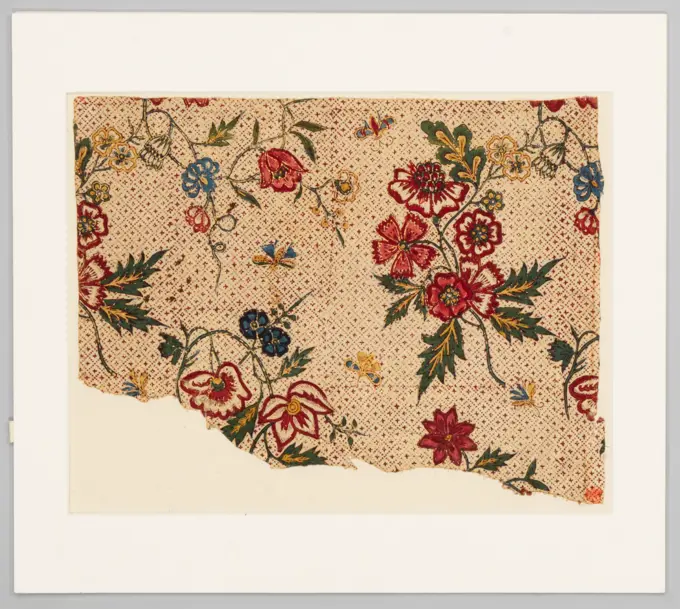
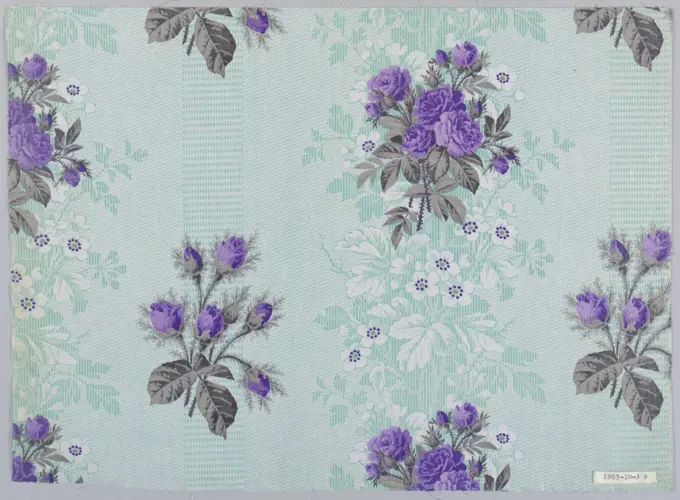
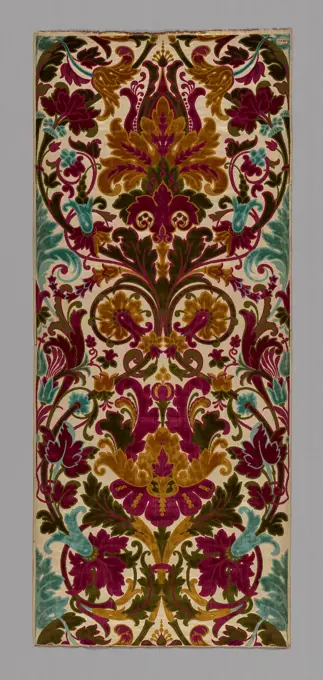
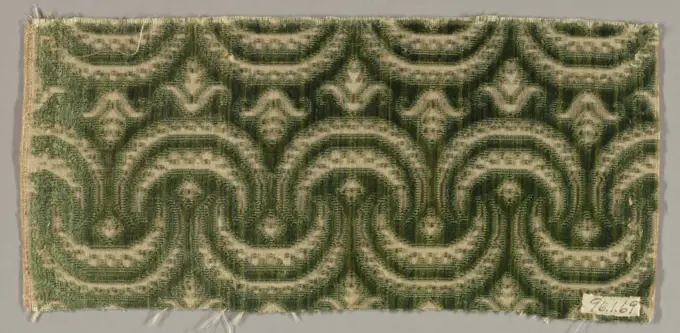
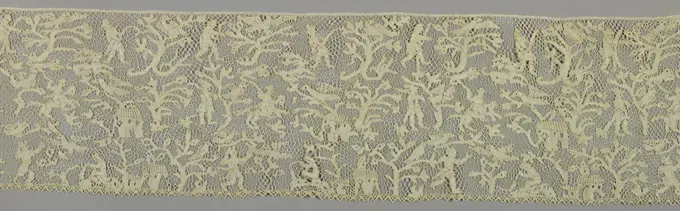
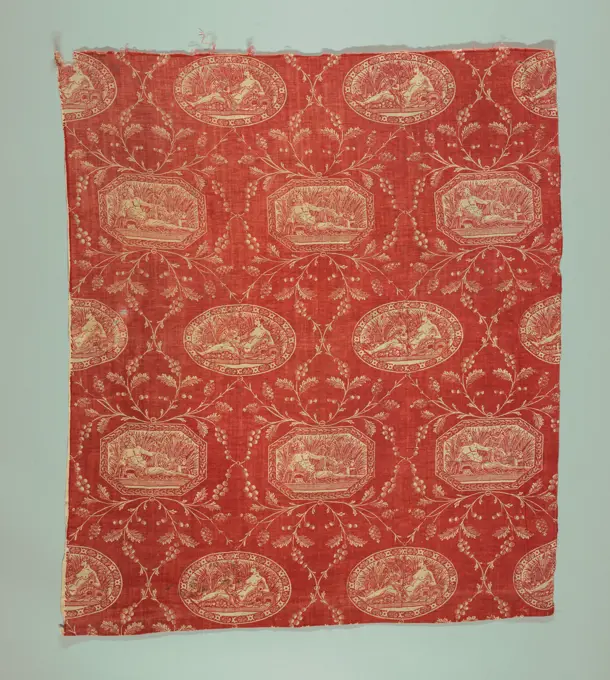
Textile; cotton; Warp x Weft (a): 41 x 60 cm (16 1/8 x 23 5/8 in.) Warp x Weft (b): 89 x 39 cm (35 1/16 x 15 3/8 in.)Piece 18th century China or Japan. Piece 71298Fragment of the fabric;  the 1930s (1735-00-00-1740-00-00);Fabrics, purchase (provenance)Piece 1750-60 French. Piece 224353Brocaded velvet cushion cover with crescents, 1525-75. Turkey, Istanbul or Bursa. Velvet, brocaded: silk, gilt- and silver-metal thread, and cotton; overall: 138.4 x 65.4 cm (54 1/2 x 25 3/4 in.); mounted: 134.6 x 63.5 cm (53 x 25 in.).Christening blanket ca. 1725 British, London, Spitalfields. Christening blanket 222693Piece 18th century Indian. Piece 229290Fragment, Medium: silk Technique: woven, Large scale symmetrical pattern of red leaves on gold background., 17th century, woven textiles, FragmentChintz Fragment (India); cotton; Warp x Weft: 64 x 24 cm (25 3/16 x 9 7/16 in.)Length of Textile, 1700s. Italy, 18th century. Brocade; silk and metal; average: 83.3 x 53.7 cm (32 13/16 x 21 1/8 in.).Sidewall, Robert Graves Co., New York, New York, Machine-printed paper, On beige ground, printed to simulate ebossed linen pattern, stems with roses and purple and blue flowers, bluish leaves with yellow accents. Drop repeat, straight match., New York, USA, ca. 1900, Wallcoverings, SidewallLeaf with alternating spreading pattern of flowers, anonymous, 1700 - 1850  Leaf with alternating spreading pattern of large and smaller saved flowers.  paper. block printing (relief printing process) ornament derived from plant formsPanel Made 1825-1875 France. Cotton, plain weave; block printed .Fragments, Medium: silk, metallic thread Technique: satin weave with supplementary weft, Fragment of yellow-green satin brocaded in multicolored silks and gold metallic thread in a pattern of curving bands with flower sprigs., France, late 18th century, woven textiles, FragmentsTextile; Produced by Oberkampf & Cie. (France); cottonTextile (France); silkSidewall (USA); Manufactured by Maxwell & Co., S.A. (United States); machine-printed paper; 92 x 49 cm (36 1/4 x 19 5/16 in.)Textile, Medium: silk Technique: compound silk with supplementary weft, Pale mauve ribbed silk with bright polychrome flowers and twigs in loose continuous serpentine over broad stripe made up of white cross-hatched serpentine on band of white zigzags. Fine floral, leaf and other details in white weft floats., France, ca. 1775, woven textiles, TextileFragments; silk, metallic yarns; A/ H x W: 62 × 48 cm (24 7/16 × 18 7/8 in.) B/ H x W: 48 × 23.5 cm (18 7/8 × 9 1/4 in.); 1972-81-14-a/bFragment; silkCeiling Paper (USA); Manufactured by Cresswell & Washburn Ltd; machine-printed paper, liquid mica; 85.5 x 49 cm (33 11/16 x 19 5/16 in.)Textile (England); cottonFragment, Medium: silk Technique: plain weave with supplementary weft, Olive green satin ground. Broad ribbon-like white serpentine crossing another serpentine of rose and pink twisted ribbon. Small building and colonnade, and trees in ribbon. Floral sprays in other serpentine. Large floral sprays branch out from serpentines. Brocading in ose, pin, yellow, green, brown, red white silks and peach frise silk. Right sevage present., France, 1750-99, woven textiles, FragmentFragment; silk; Bequest of Richard Cranch Greenleaf in memory of his mother, Adeline Emma Greenleaf; 1962-56-183Piece 18th-19th century Japan. Piece 67436Textile 1700-1899 Russian. Textile 173413Sutra Cover Made 1590-1599 China. Silk, warp-float faced 4 1 satin weave with supplementary patterning wefts bound in weft-float faced 1 4 satin interlacings .Coverlet, May 14, 1837, After David Daniel Haring, American, 1800 - 1889, 91 3/4 × 71 5/8 in. (233.05 × 181.93 cm) (without fringe), Cotton, wool; double weave, United States, 19th century, This double-weave coverlet comprises two layers of interwoven cloth. Its complex weave structure required the use of a newly developed machinethe French-invented Jacquard loom, now regarded as a precursor to the modern computer. This coverlet was made in Bergen County, New Jersey, for Sarah Durie, whose name has been woven into the design. When Western European weavers emigrated to the United States, they brought design preferences with them, and pockets of regionally distinct coverlet styles soon developed. The three-leaved rose woven into the four corners of this coverlet may indicate it was made by I. Christie, who worked in the tradition of master weaver David Daniel Haring.Fragment, Medium: silk Technique: plain weave with discontinuous suypplementary wefts (brocading)., Symmetrical design of curving vines with flowering urn in the center., ca. 1750, woven textiles, FragmentFragment, Medium: silk, metallic Technique: brocaded satin damask, Crimson satin damask forming pattern of broken circles with brocaded silver palmettes in the center of each circle and brocaded silver forming lozenges., Spain, 17th century, woven textiles, FragmentFragment (Spain); silk; Warp x Weft: 180 x 90 cm (5 ft. 10 7/8 in. x 35 7/16 in.); 1961-86-1-a/cFragment (Russia); silk, linen, metallic threadFragment, 1800s. Japan, 19th century. Silk; overall: 11.5 x 14 cm (4 1/2 x 5 1/2 in.).Ceiling Paper (USA); Manufactured by Maxwell & Co., S.A. (United States); machine-printed paper, liquid mica; 84 x 49 cm (33 1/16 x 19 5/16 in.)Panel Made 1720-1729 Lyon. Silk and silvered-metal-strip-wrapped silk, plain weave with brocading wefts .Fragment 17th century Italian. Fragment 230091Length of Brocaded Silk and Chenille, 1723-1774. France, late 18th century, Period of Louis XV (1723-1774). Brocaded silk and chenille on metallic ground; overall: 40 x 40 cm (15 3/4 x 15 3/4 in.).Textile Fragment. Dimensions: L: 6 in (15.2 cm) x W: 6.5 in (16.5 cm). Date: 18th century. Museum: Metropolitan Museum of Art, New York, USA.Ceiling paper, A.M.P. & C.M. of U.S., Machine-printed paper, liquid mica, Pink rose wreaths connected by lag and feather vining and interspersed individual roses. White ground. Printed in pinks, red, greens and white mica. Printed in selvedge: 'M.P. & C. M. of U.S. Union Made' 'AOFL' or 'AFOL' Pattern number '0265', USA, 1905-1915, Wallcoverings, Ceiling paperFragment (Spain); silkTextile Fragment, 1700s. Japan, 18th century. average: 22.9 x 12.7 cm (9 x 5 in.).Alstriple of needle lace symmetrical pattern with floral vases and baldacles. Alstretch of natural needle side, point de france. A recurring pattern of two alternating compositions on axes of symmetry with floral vases, floral baskets, baldacles and voluntaries. The motifs are connected to each other by a hexagonal maas soil with picots. The full work is made with feston stitches with cutouts, some motifs are filled with an ornamental ground. The scalloped lower edge stems from the pattern. The top is trimmed with a border clamping side. The ends of the strip are sewn together.Fragment (Italy); silk, metallicFragment, Medium: silk Technique: compound weave with supplementary weft, Fragment of horizontally ribbed, self-patterned with curving checkered leaves and brocaded with typical Louis XV trimming sprays of flowers in greens, blues, mauves, pinks, white and yellow., France, 18th century, woven textiles, FragmentFragment; cotton; Warp x Weft: 174 x 70 cm (5 ft. 8 1/2 in. x 27 9/16 in.)Fragments; silk, linenSidewall - Sample, Sunflower, 1887; Designed by Morris & Co. (United Kingdom); Manufactured by Jeffrey & Company (United Kingdom); block-printed paperFragment; cotton, wool battingSidewall, Maxwell & Co., S.A., Chicago, Illinois, USA, Machine-printed paper, liquid mica, Medallion stripe design with ovoid medallions with floral bouquet on top, foliate acanthus scrolls at sides, floral motif in the center, and green strung beads around the circumference of the medallion. Printed on stripes that contain smaller floral medallions, each connected by foliate swags. Printed in brown, green, and white on tan ground., USA, 1905-1915, Wallcoverings, SidewallSkirt panel ca. 1740 British, London, Spitalfields. Skirt panel. British, London, Spitalfields. ca. 1740. Silk. Textiles-WovenPiece 17th century Japan. Piece 71619Fragment, Medium: linen warp, cotton weft Technique: block printed (2 reds and black), yellow and blue applied by brush, plain weave foundation., Roses and carnations on picottage diamond grid., France, 1750-1800, printed, dyed & painted textiles, FragmentKesa. Japan. Date: 1801-1825. Dimensions: 193.0 x 105.4 cm (76 x 41 1/2 in.). Silk and gilt-paper strip; satin weave with secondary binding warps and supplementary patterning wefts; silk cords. Origin: Japan. Museum: The Chicago Art Institute, Chicago, USA.Textile (France); silkPiece 18th-19th century Japan. Piece. Japan. 18th-19th century. Silk. Textiles-WovenPiece 18th century French. Piece 216531Panel Made 1701-1800 Italy. Silk and gilt-metal-strip-wrapped silk, warp-float faced 7 1 satin weave with supplementary brocading wefts and self-patterned by areas of plain weave .Piece 18th-19th century Japan. Piece 67468Fragment; silk; Bequest of Richard Cranch Greenleaf in memory of his mother, Adeline Emma Greenleaf; 1962-56-157Napkin with pattern "apple blossom", Theo Nieuwenhuis, c. 1907 Damask napkin with pattern "Apple blossom". Boxtel linen (material) damask Damask napkin with pattern "Apple blossom". Boxtel linen (material) damaskElmer Weise, Handwoven Tapestry Coverlet, c 1938 Handwoven Tapestry CoverletLoom Width with Serrated Leaf Design. Dimensions: Textile: H. 63 1/2 in. (161.3 cm)W. 26 13/16 in. (68.1 cm)Mount: H. 67 5/8 in. (171.8 cm) W. 30 5/8 in. (77.8 cm)D. 1 13/16 in. (4.6 cm). Date: ca. 1600-1625.This lampas-woven fragment features large-scale leaves executed in the saz style, named after the feathery saz leaf. Popularized throughout Ottoman arts by the Iranian émigré and court painter, Shah Qulu, during the reign of Süleyman the Magnificent (1520-66), the saz style found its way from the reed pen of the painters at the royal nakkashane (workshop) into contemporary textile design. In this case, this new artistic aesthetic is characterized by central motifs with serrated edges outlined in a contrasting color. The lampas (kemha) weaving technique incorporates contrasting weave structures with two warps in different colors, creating solid areas of color on the surface of the cloth by floating the unincorporated warp threads in the back. Museum: Metropolitan Museum of Art,Textile (France); cottonFragment, Medium: silk, linen Technique: plain compound weave (brocatelle), Large scale floral forms in red and yellow silk. Linen weft not visible. Textile known as 'brocatelle'., Italy, 17th century, woven textiles, FragmentSidewall And Border (possibly USA); machine-printed sidewall with block printed border; 1972-19-1Piece 1715-20 British. Piece 231078Fragment sides atine, anonymous, c. 1730 - c. 1750 Fragment silk with large flower (poppy) And leaf pattern. France Ketting: Silk. Entry: Linen (Material) twill Fragment silk with large flower (poppy) And leaf pattern. France Ketting: Silk. Entry: Linen (Material) twillTextile; cottonFragments (USA); Made by Unknown; warp silk, weft woolWelum;  18th century (1701-00-00-1800-00-00);Fragment sits with pattern of bouquets. Fragment Sits, Cotton, Dyed by stainless steel and recess technology in two shades of red and two shades of blue, painted in yellow and green, contoursed with gold. Dessin: on a network of dicks that make a diamond-shaped figure, in which a cross, and on the white fond a pattern of large bouquets, the anjelieren. Put in Passe-Partout.Fragment late 16th century Italian. Fragment 230374Textile, Schwartz-Huguenin, Medium: cotton Technique: printed by engraved roller and/or block printed on plain weave; highly glazed, Three samples, same design, different colors. A) Grey ground, probably printed by 'Molette,' in minute geometric patterns with areas of foliage in grey, with white flowers; floral pattern of rose clusters printed over ground, probably by block. B) Green ground, roses red-violet. C) Grey ground, flowers blue with grey foliage. Highly glazed, Mulhouse, Alsace, France, 1851-63, printed, dyed & painted textiles, TextileFragment multicolor silk tissue. Fragment silk tissue with a white checkered fond in which branches and stripes. On the diamond pattern, the pattern has exotic, palm-like shrubs in many colors and gold and silver.Scarf (Near East); silk, metallic thread; 1930-22-13Piece 18th century Japan. Piece. Japan. 18th century. Silk / Compound weave. Edo period (1615-1868). Textiles-Woven. Brown cover. The prints included in the album stem from the actor world in Saka.Panel Made 1860-1880 Lyon. Silk, satin weave with multi-color supplementary pile warps forming cut and uncut voided velvet . Mathevon et Bouvard (Producer)Fragment, Medium: silk Technique: supplemenatry warp forming cut and uncut pile in a plain weave foundation (velvet), Pattern of interlocking crescents and little leaf forms reserved in tan with dark green cut and uncut pile., Italy, 17th century, woven textiles, FragmentFlounce, Medium: linen Technique: bobbin lace, discontinuous tape, Flounce with a design of huntsmen, birds, animals, and elaborate tree pattern., Italy, 17th century, lace, FlounceCushion Cover. Turkey, Bursa, circa 1600. Textiles; covers. Silk cut and voided velvet on silk and cotton satin weave ground with metallic thread supplementary weft patterning bound in twill (çatma)Piece. Culture: Italian. Dimensions: H. 32 x W. 42 1/2 inches (double loom width)81.3 x 108.0 cm. Date: 1735-40. Museum: Metropolitan Museum of Art, New York, USA.Textile (France); linen warp, cotton weft; Warp x Weft: 87 x 75 cm (34 1/4 x 29 1/2 in.); Bequest of Elinor Merrell; 1995-50-256Fragment (Japan); silkHandkerchief (France); linen, cottonTextile, Schwartz-Huguenin, Medium: cotton Technique: printed by engraved roller on plain weave; glazed, Three pieces, same design, different colors. A) Ground printed, possibly by 'molette,' in grey, small check pattern. Design of long sprays of bell-shaped and accented in darker brown, printed over ground design, possibly by surface roller. B) Same design, flowers in dark blue. C) Same with flowers in red with very dark green shadows and accents. Glazed., 1851-63, printed, dyed & painted textiles, TextileSample; Manufactured by Cheney Brothers (United States); silkCover (possibly Turban Cover) Made 1701-1800 Turkey. Linen, plain weave; embroidered with silk and gilt-metal-strip-wrapped silk in fishbone, overcast, and running stitches .Sample Of Textile (USA); Manufactured by Orinoka Mills (United States)Sutra Cover. China. Date: 1590-1599. Dimensions: 36.2 × 12.6 cm (14 1/4 × 5 in.)Repeat: 4.2 × 5.6 cm (1 5/8 × 2 1/4 in.). Silk, 4:1 satin damask weave. Origin: China. Museum: The Chicago Art Institute, Chicago, USA.Samples, Orinoka Mills, (Philadelphia, Pennsylvania, USA), a. grey ground with multi-color floral, b. green ground with multi-color floral, c. pink ground with multi-color floral, d. red gound with multi-color floral, USA, ca. 1910, woven textiles, SamplesFragment (Japan)Medieval ornamentTextile Swatches Onondaga Silk Company, Inc. (1925-1981). , 1948-1959. 81 silk; 19 metal, largest component (a): 23 1/2 x 18 1/2 in. (59.7 x 47 cm).    1948-1959Fragment (Italy); linenPiece early 18th century possibly French. Piece 224268Piece 17th century Italian. Piece 222993Fragment of a "Nakshe" (Woman's Trousering), 1700s. Iran, 18th century. Embroidery, silk; overall: 50.8 x 51.2 cm (20 x 20 3/16 in.).Pieces (8). Culture: possibly Spanish. Dimensions: a) L. 39 1/2 x W. 20 1/2 inches (loom) (100.3 x 52.1 cm)b) L. 114 3/4 x W. 41 inches (291.5 x 104.1 cm). Date: 18th century.Delightfully fanciful silks were produced for the wide-skirted dresses of the eighteenth century, especially in France and England. This one, with its naïve yet striking combination of familiar and unusual motifs, does not fall into any of the established categories. Possibly it was woven in Spain, whose silk industry was revived by weavers from Lyons in the middle of the eighteenth century. Museum: Metropolitan Museum of Art, New York, USA.Elizabethan ornament