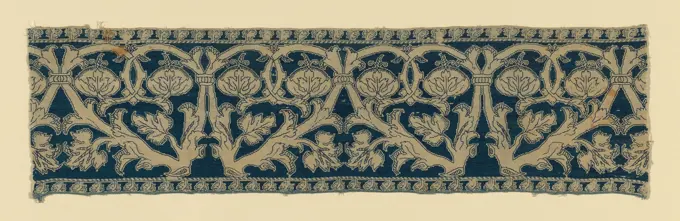
Decorative Textiles

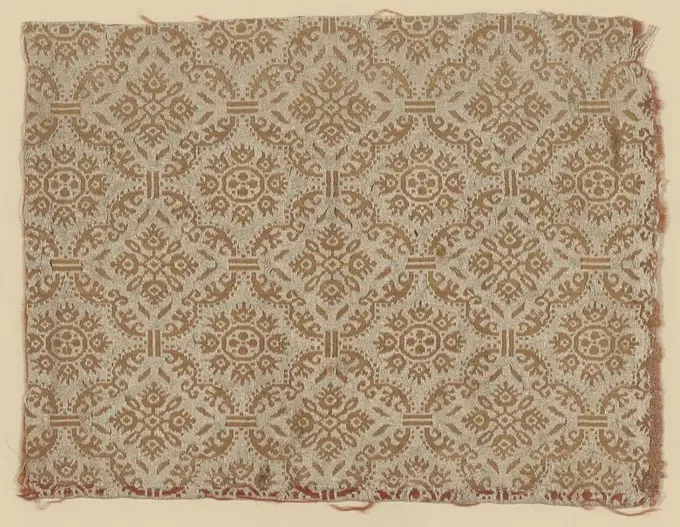
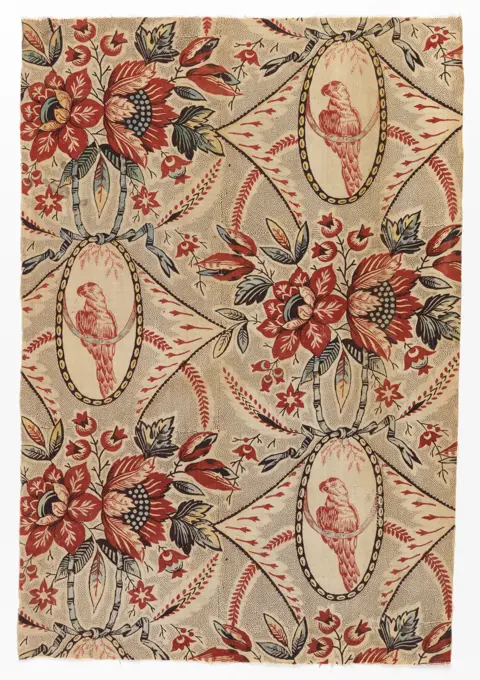
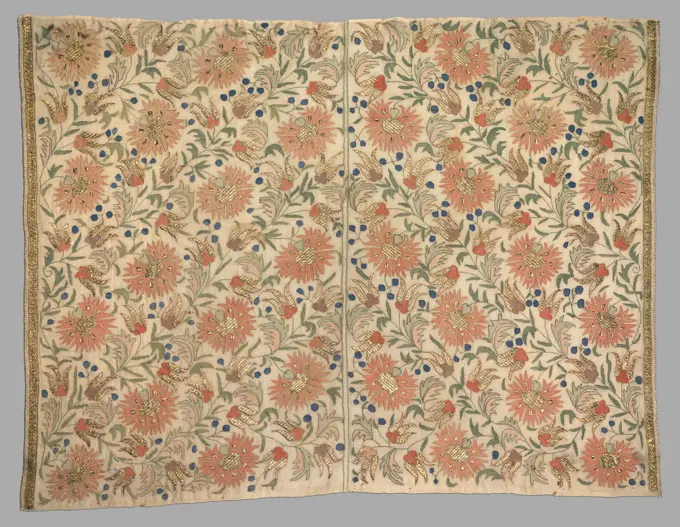
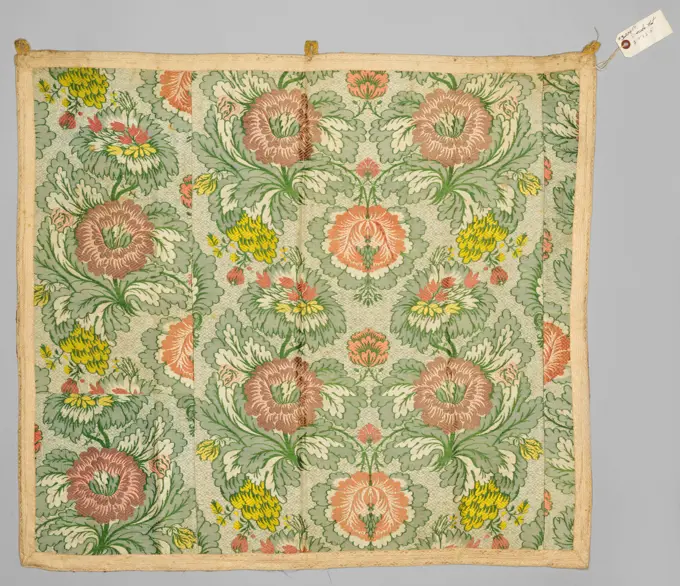
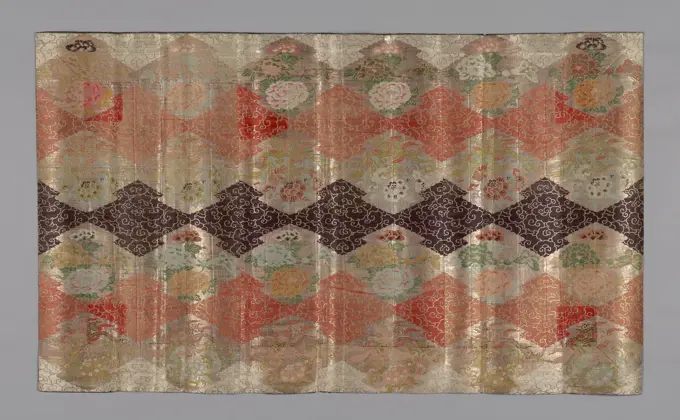
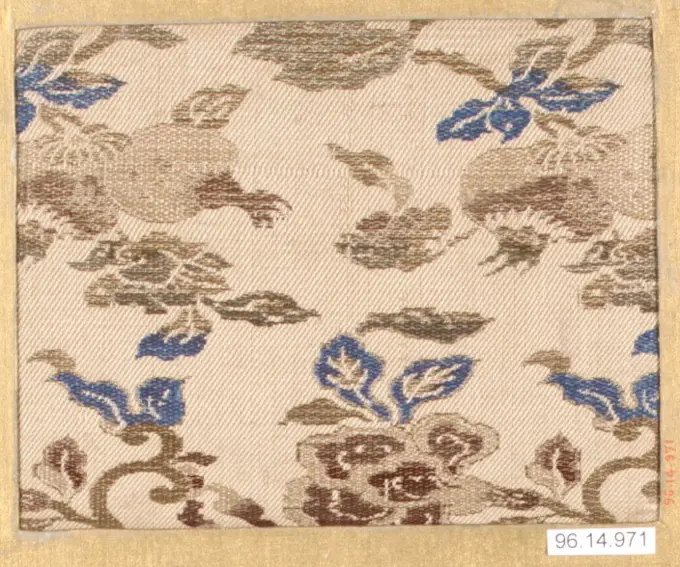
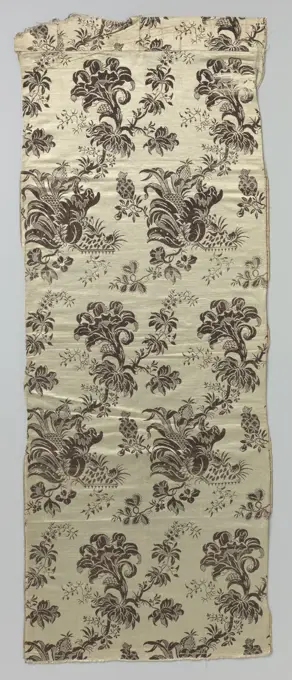
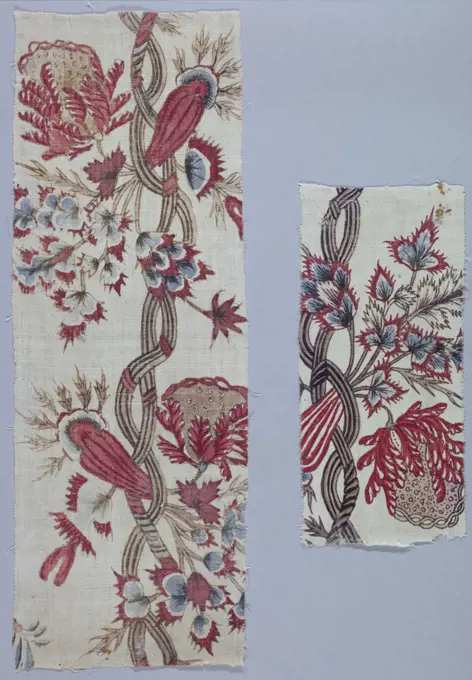
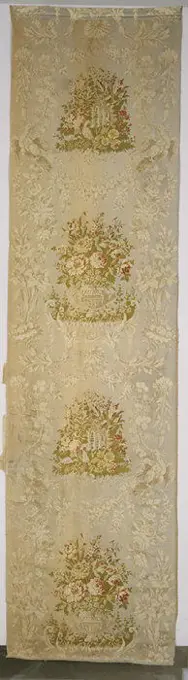
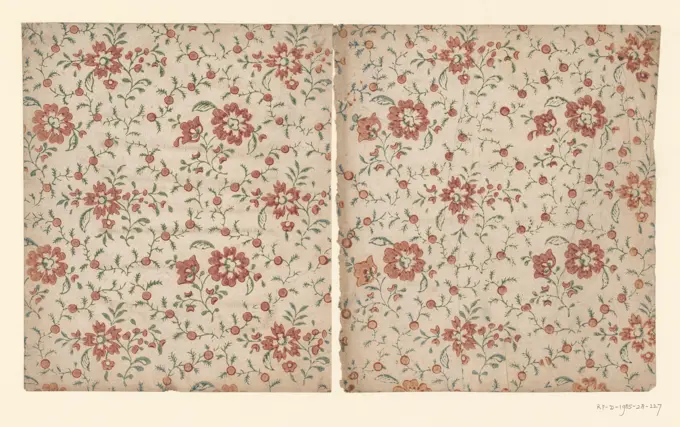
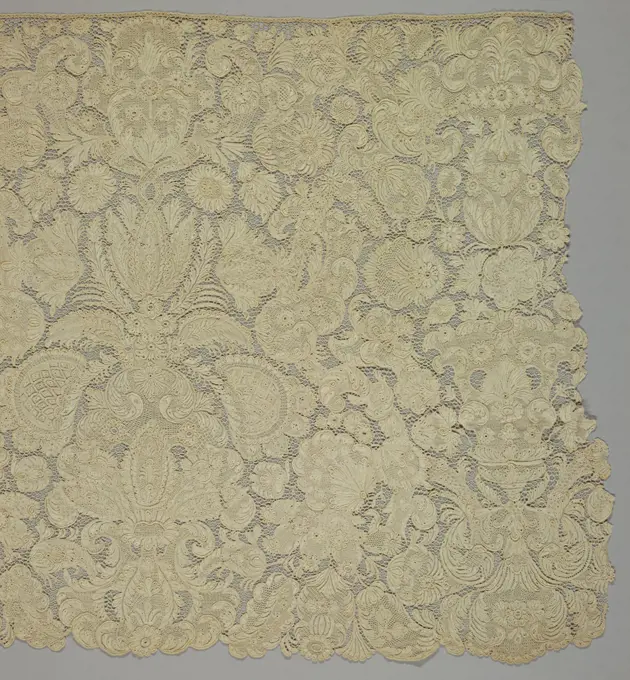
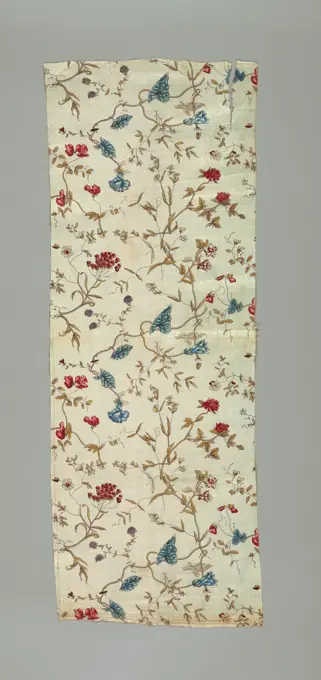
Fabric fragments showcasing floral patterns, brocade techniques, and varied color palettes, reflecting historical textile craftsmanship.
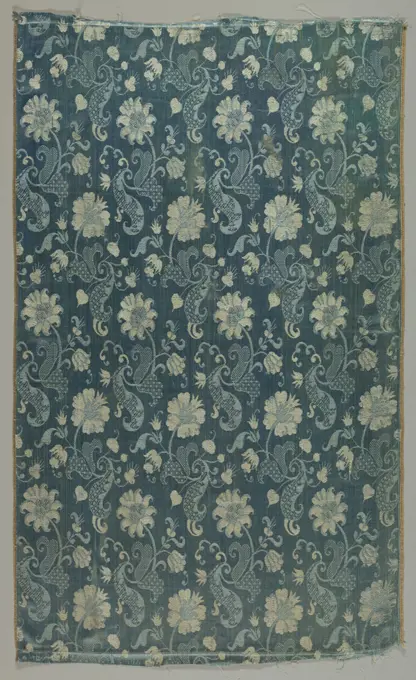
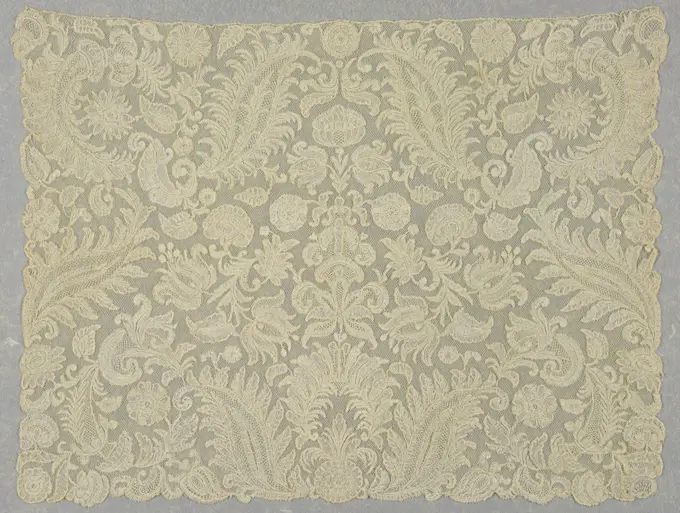
Textile, Medium: silk Technique: float patterned satin; 7&1 satin patterned by weft floats bound on the front as a 1&3 twill, Length of blue silk with a pattern of flowers, leaves and scrolls in pink and light blue. Leaves and scrolls have diaper patterns., probably Italy, 17th century, woven textiles, Textile
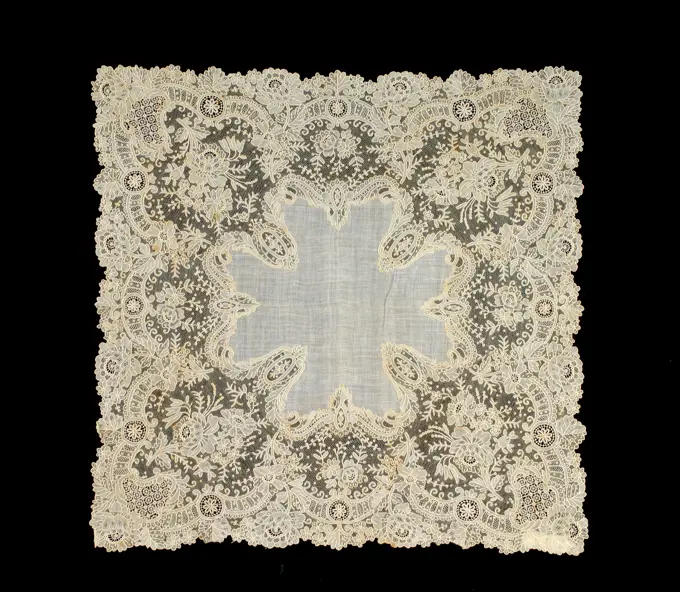
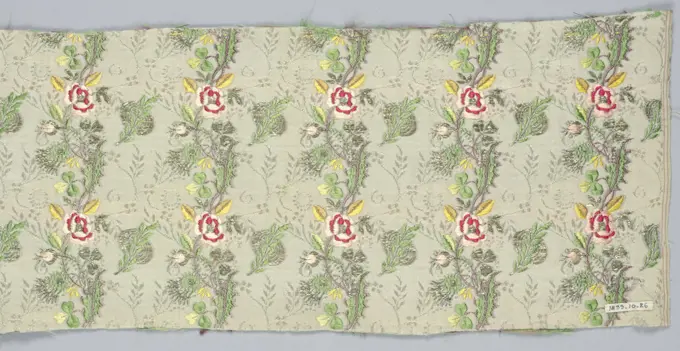
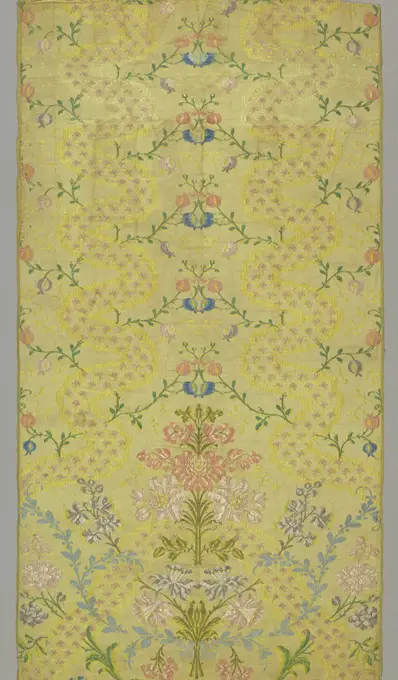
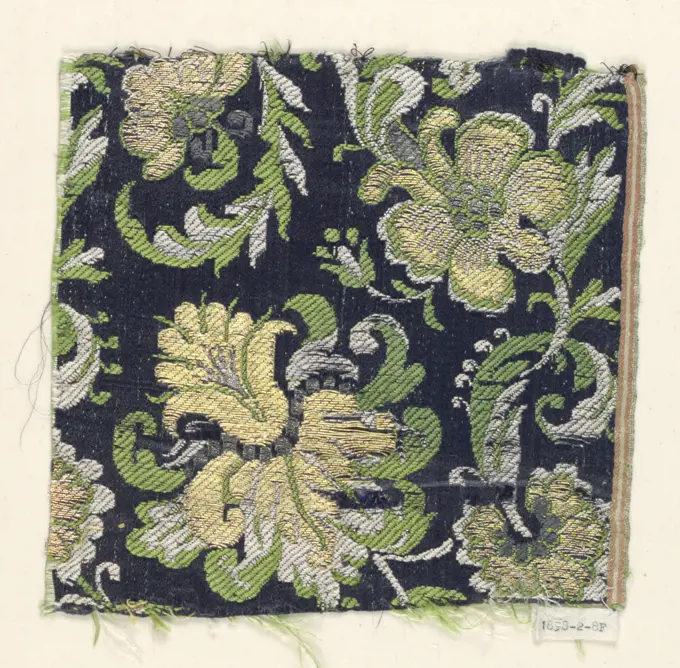
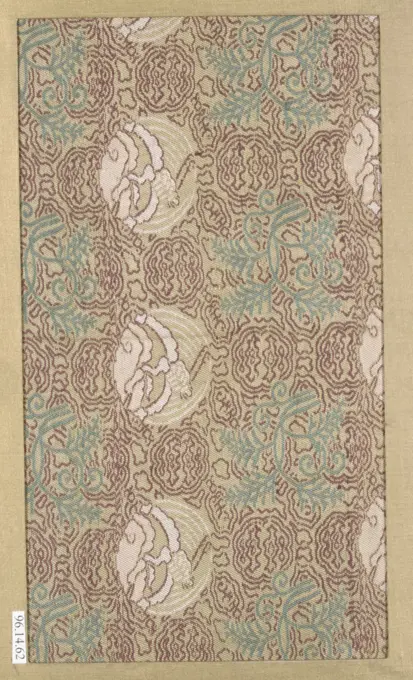
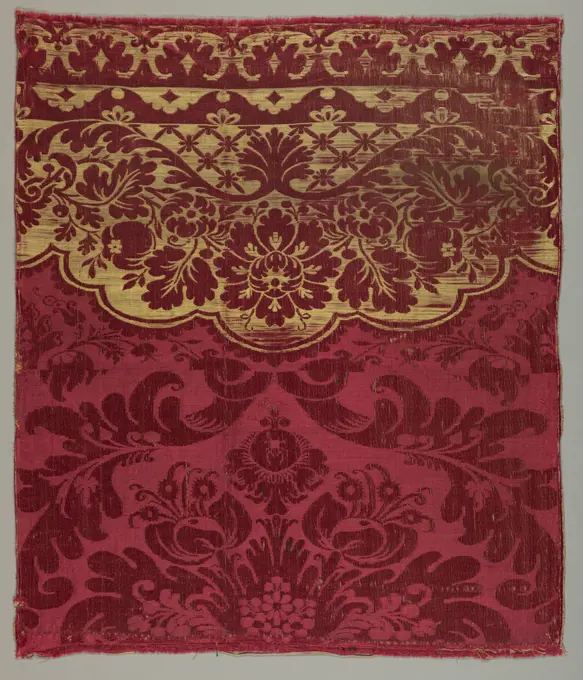
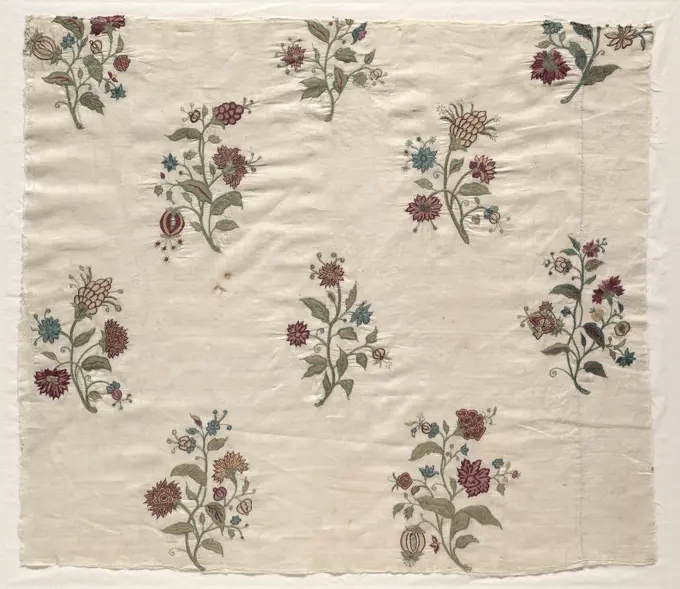
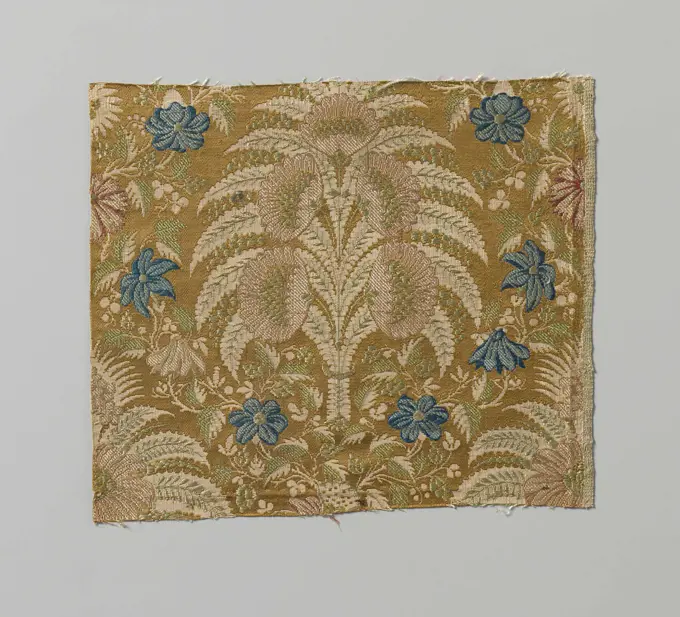
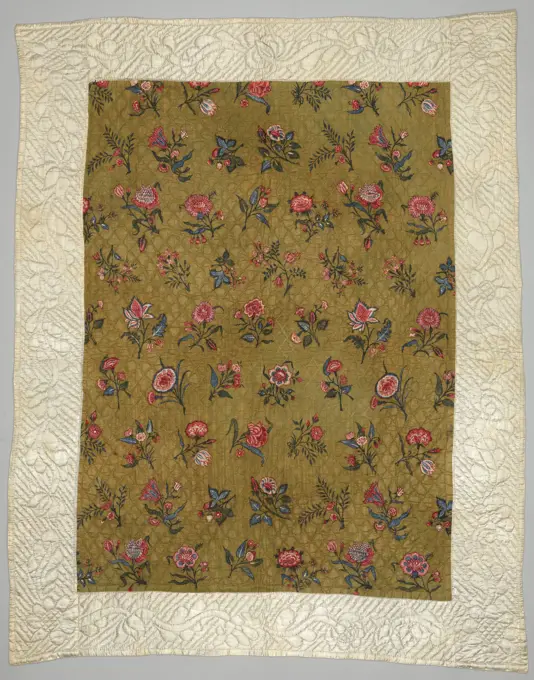
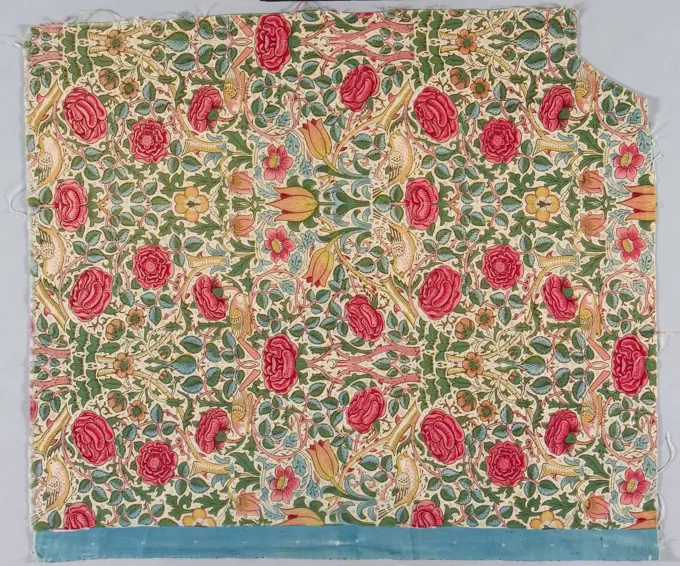
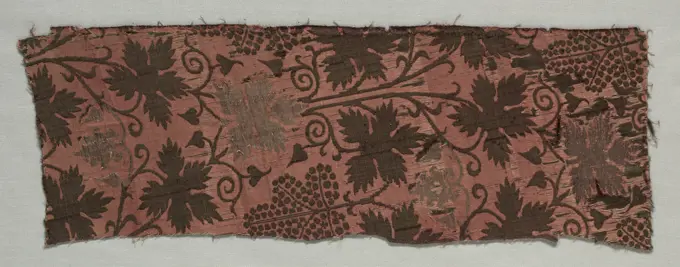
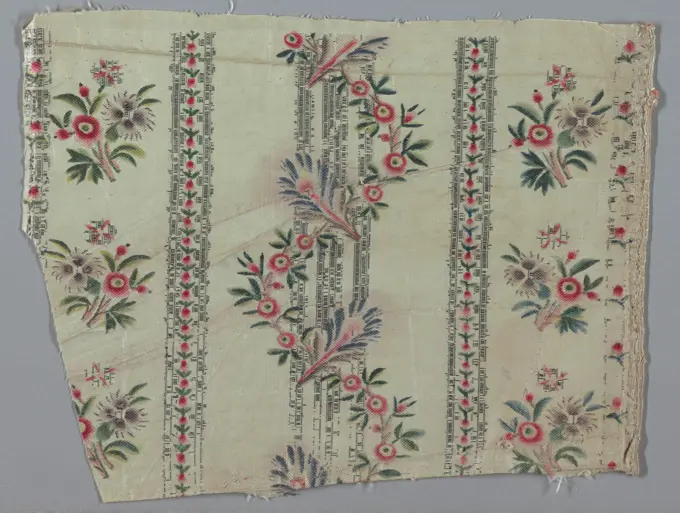
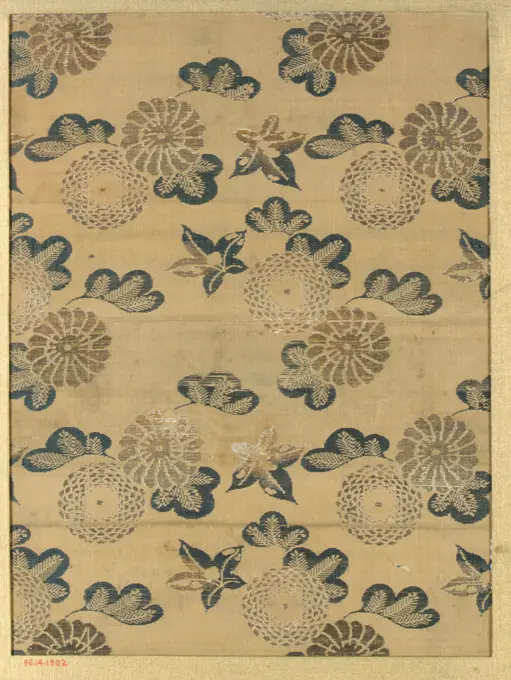
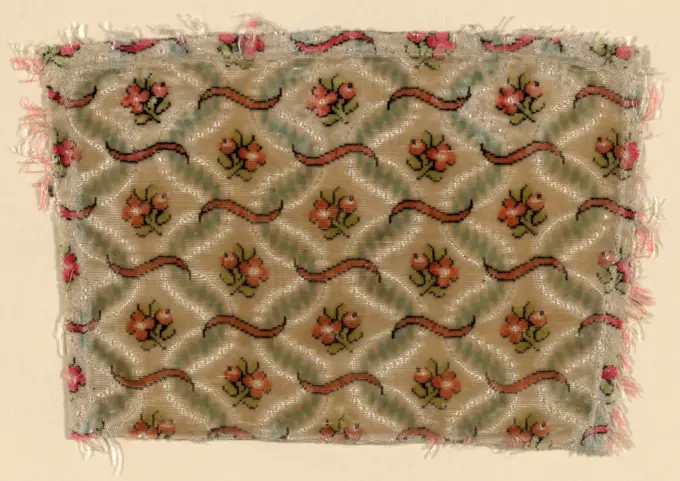
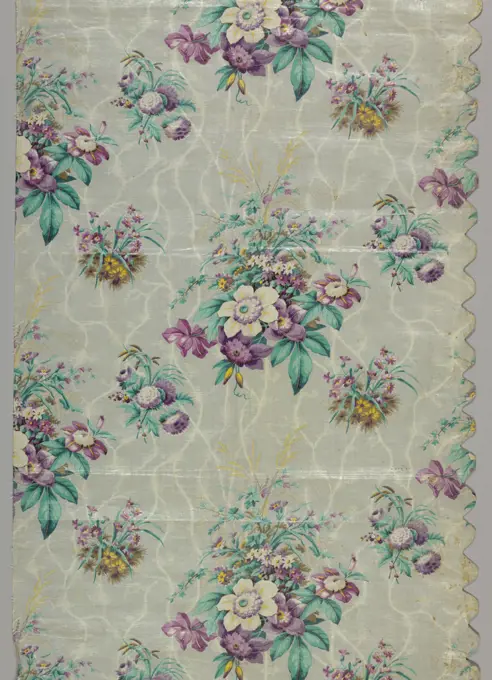
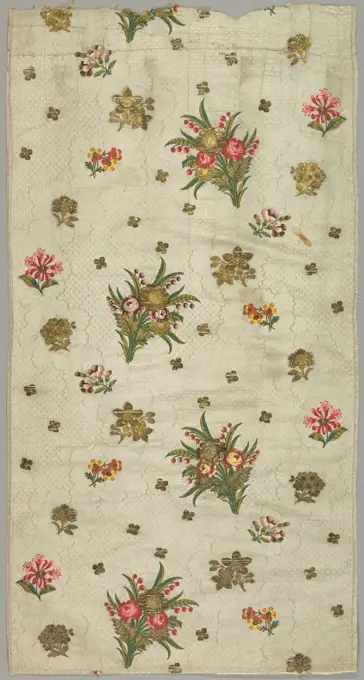
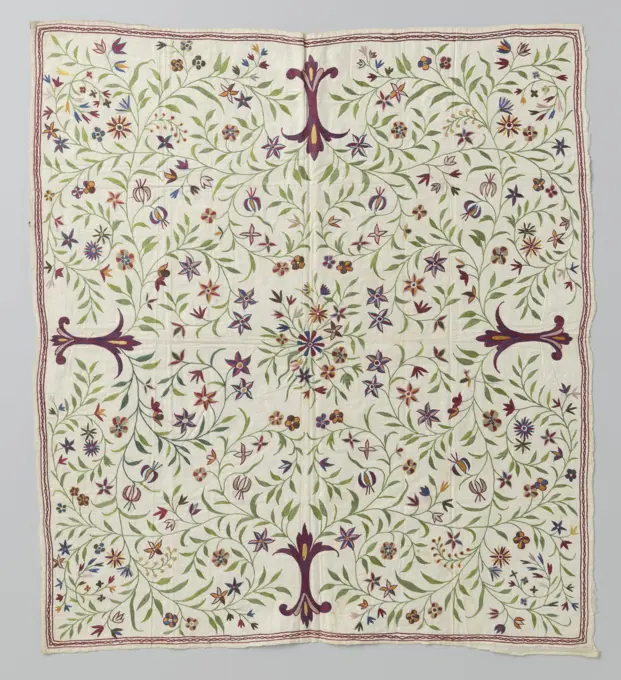
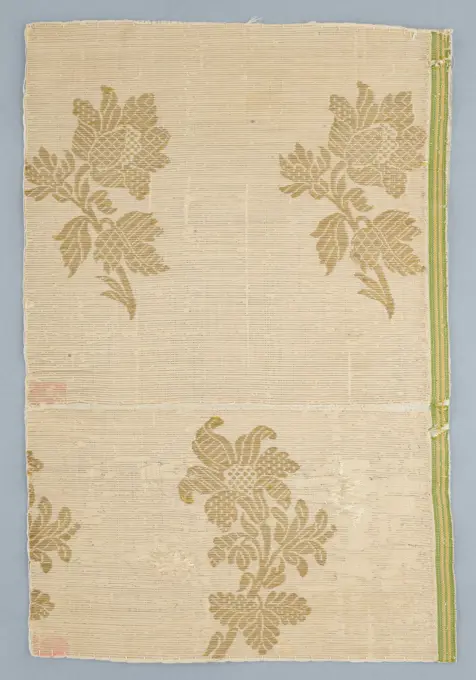
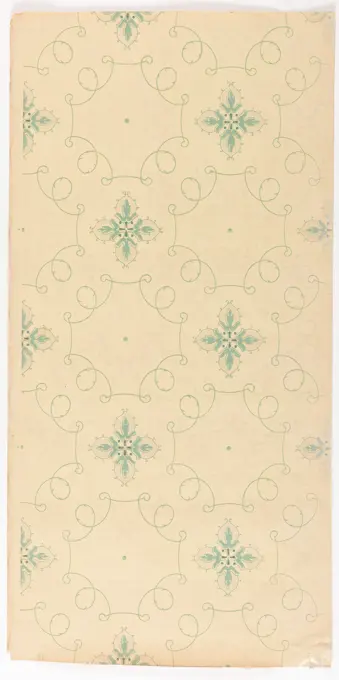
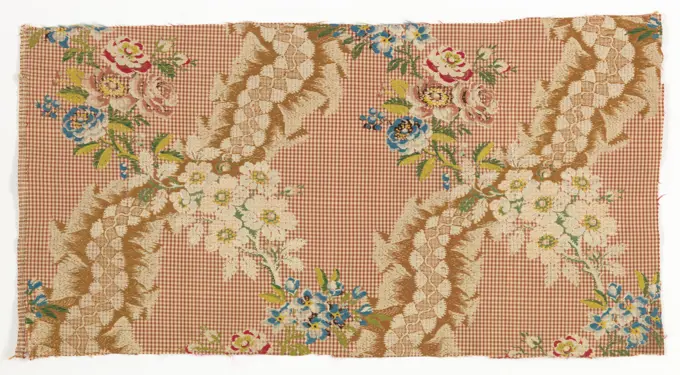
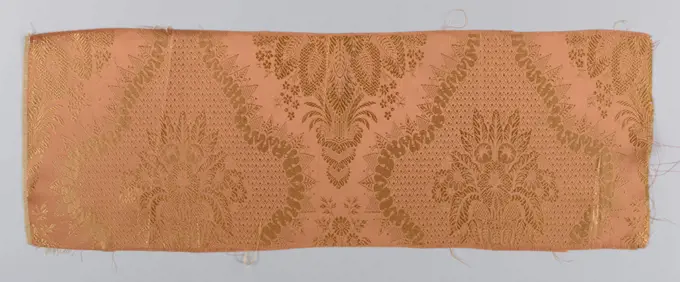
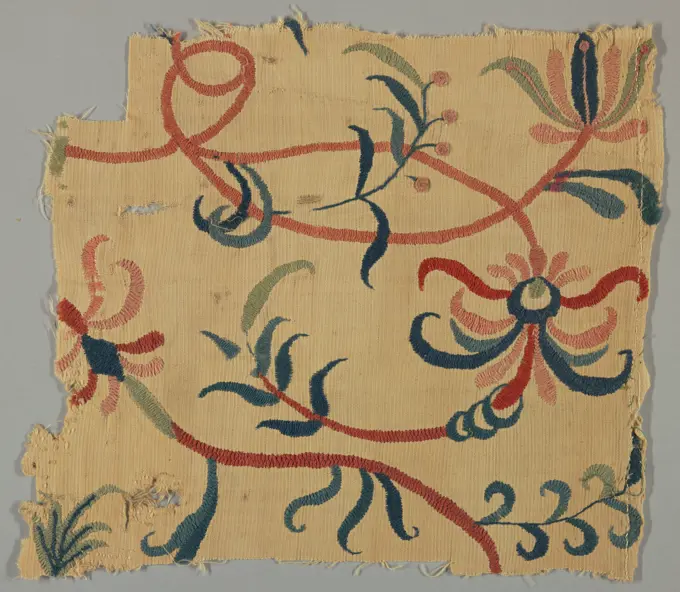
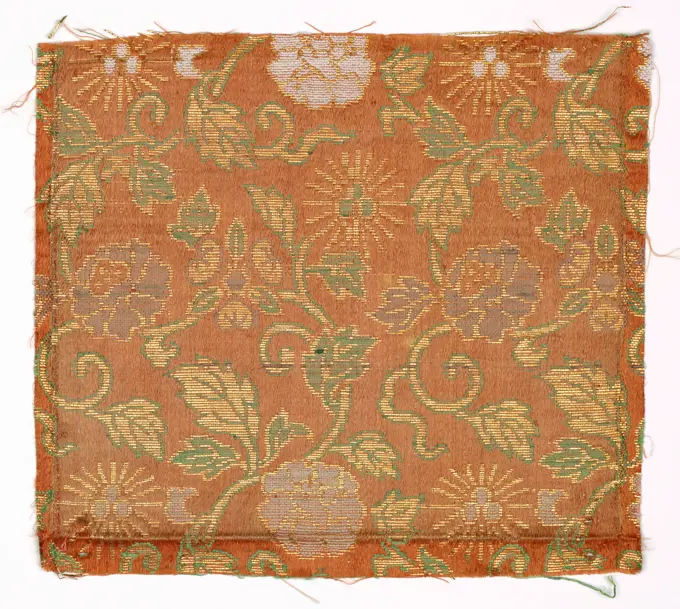
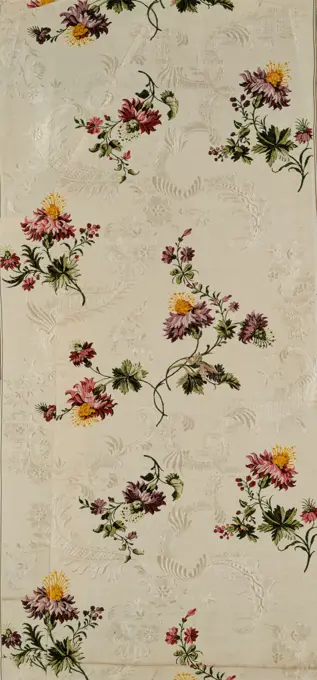
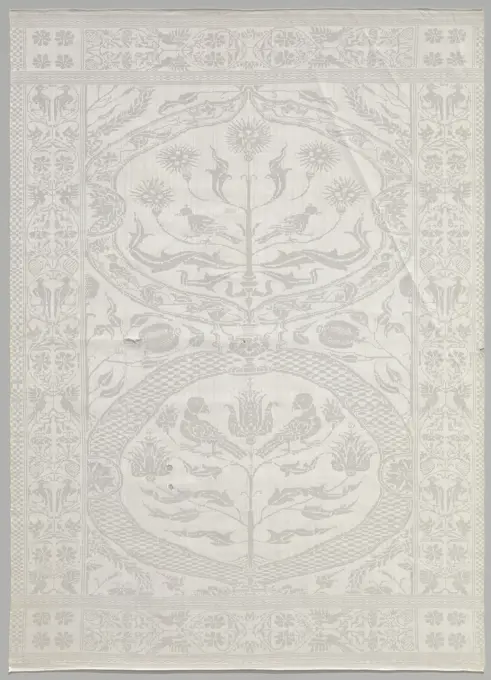
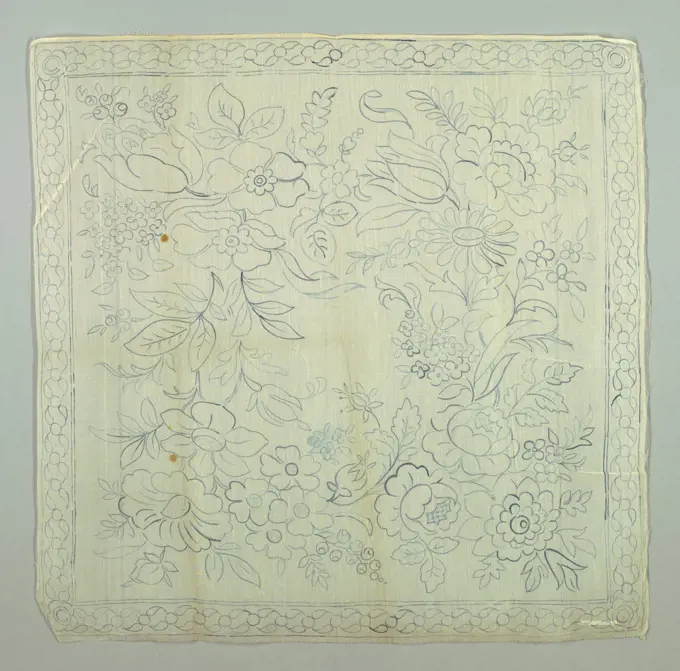
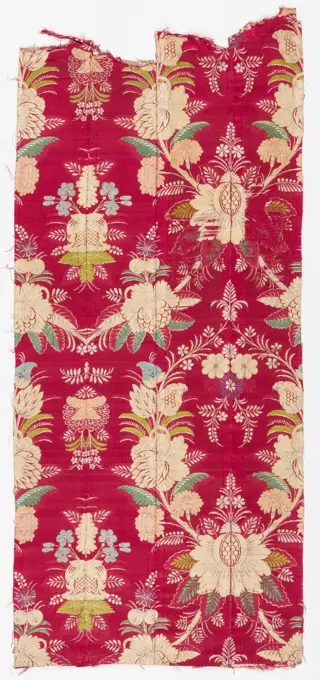
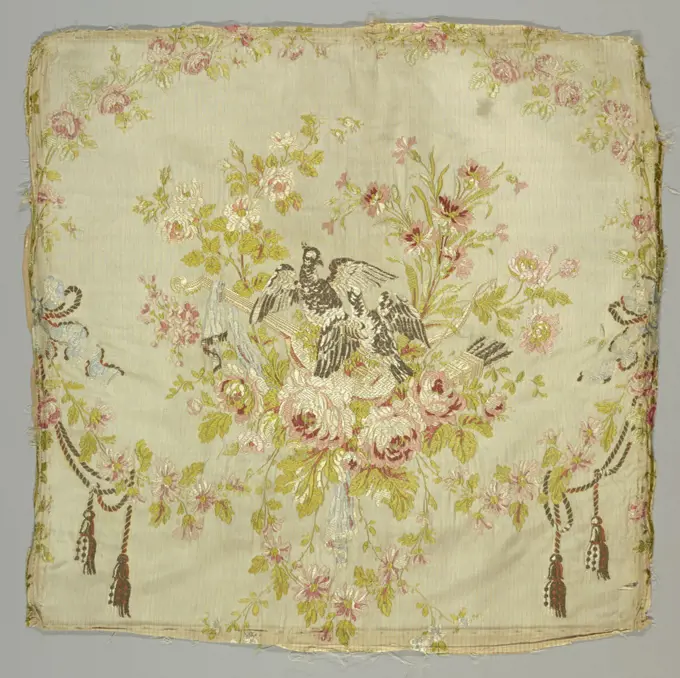
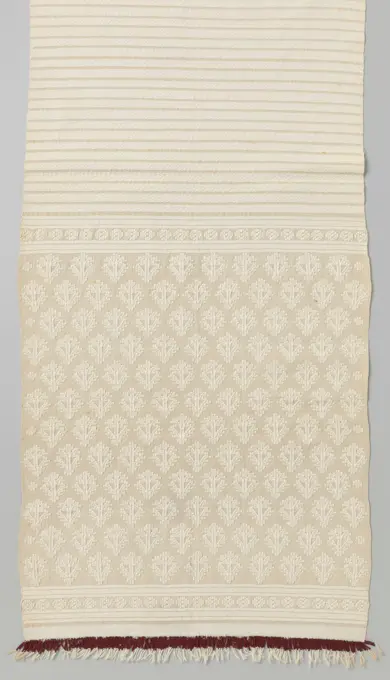
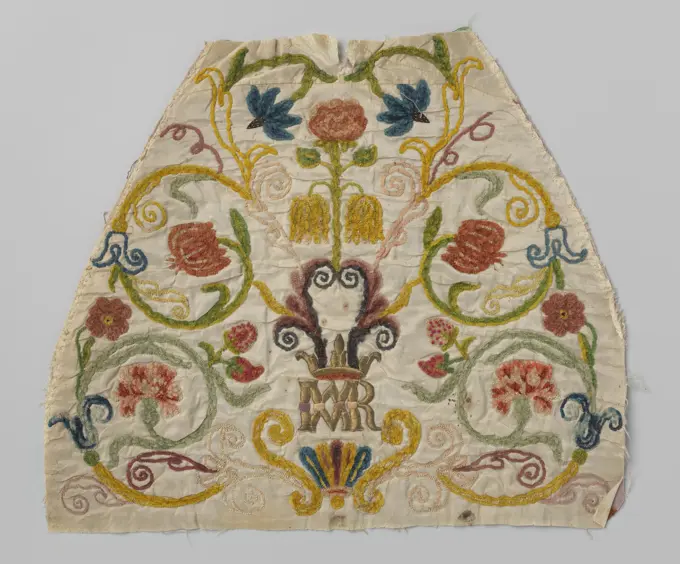
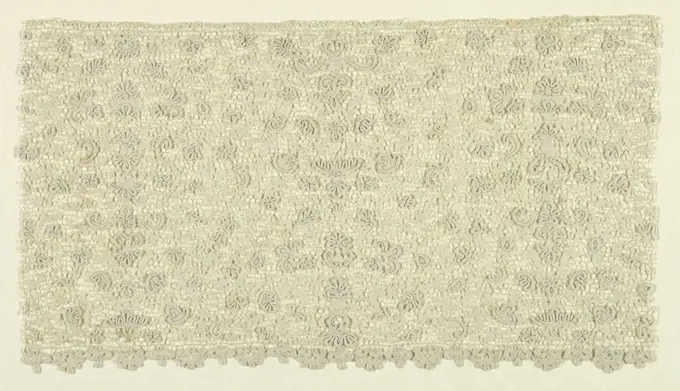
Textile, Medium: silk Technique: float patterned satin; 7&1 satin patterned by weft floats bound on the front as a 1&3 twill, Length of blue silk with a pattern of flowers, leaves and scrolls in pink and light blue. Leaves and scrolls have diaper patterns., probably Italy, 17th century, woven textiles, TextileTextile (France); silk; Warp x Weft: 47 x 53 cm (18 1/2 x 20 7/8 in.); 1953-20-7Length of Textile, 1723-1774. France, 18th century, period of Louis XV (1723-1774). Brocade; silk and metal; overall: 88 x 54.6 cm (34 5/8 x 21 1/2 in.).Fragment, Medium: silk, metallic thread Technique: compound weave with supplementary weft, White horizontally ribbed ground with self-figure of delicate serpentine stems with minute leaves and blossoms. Over these serpentines are roses, clovers, and thistles and various leaves brocaded in brilliant polychrome silks and flat gold strips. Both selvedges present., Turkey, 19th century, woven textiles, FragmentFragment, Medium: silk Technique: compound weave with supplementary weft patterning (brocade), Silk fragment showing detailed pattern in silvery shades of green and off-white with touches of salmon pink and yellow. Design has a symmetrical motif in two variants with a vertical bunch of flowers surmounted by fanning leaves surmounted by decorated pear-shaped cartouche with diaper filling, in a close-set medium sale diagonal repeat giving allover effect., France, early 18th century, woven textiles, FragmentFragment, Medium: linen, silk, wool Technique: two interconnected sructures, plain weave plus plain weave, Motif of grapes and leaves in brown and white., 17th century, woven textiles, FragmentPiece 19th century Japan. Piece 66194Textile (France); silkTextile, Medium: silk Technique: plain weave (yellow) patterned by floats of a continuous supplementary weft (yellow) and discontinuous supplementary wefts (multicolor), Yellow silk grosgrain brocaded with multicolored silks. Design has serpentine ribbons covered with pink cloverleaves and yellow scalloped edges. Between ribbons are symmetrical floral sprays and delicate branches with pink, blue and purple buds., France, 1760s or 1770s, woven textiles, TextileFragments, Medium: silk Technique: brocaded satin, Spain, 17th century, woven textiles, FragmentsReproduction textiles, Medium: silk Technique: fancy satin weave, Ground in satin weave with vertical stripes of various widths. Some stripes in fancy weave. Ivory silk weft forms a design of small-scale spray of roses and fine dots. Each fragment has a different colour scheme - all in pastels. A/ green and pink, B/ pink and blue, C/ pink and green, D/ blue and pink. A/B/C/, have both selvages present. D/ has left selvage present., late 19th century, woven textiles, Reproduction textilesPiece 18th-19th century Japan. Piece 66186Fragments (France); linen, cotton and wool; 1976-70-6-a,bScarf, Medium: linen Technique: bobbin lace (late Valenciennes ground), Scarf of rose sprays with flowers forming a scalloped edge and surrounding stems with rosebuds and leaves on a Valenciennes ground., France or Belgium, ca. 1865, lace, ScarfTextile, Medium: linen, wool Technique: plain weave foundation (linen) with supplementary warp patterning (wool), Vertical stripe: wide bands of ivory patterned in yellow and green with a curving vine on which birds are perched, alternating with narrow stripes with small, regular rosettes in red and purple., Spain, 17th-18th century, woven textiles, TextileLane silk tissue with bizarre pattern, anonymous, c. 1710 - c. 1720 Baan silk tissue of browned and launched Lampas Liséré. Design: bizarre pattern of spring -like leaves filled with geometric motifs (pomegranates) In écru (ground tissue), green (liséré), Écru (launch), écru (launch), pink (launch) and golden wire (gold -colored slat around silk core ) on green soil. Lyon silk lampas (textile material) Baan silk tissue of browned and launched Lampas Liséré. Design: bizarre pattern of spring -like leaves filled with geometric motifs (pomegranates) In écru (ground tissue), green (liséré), Écru (launch), écru (launch), pink (launch) and golden wire (gold -colored slat around silk core ) on green soil. Lyon silk lampas (textile material)Piece 18th century Japan. Piece 65794Fragment 17th century Italian. Fragment 230282Cravat end, Medium: linen Technique: bobbin lace, Brussels style, Cravat with symmetrically placed floral and foliated forms in an allover pattern., Belgium, 1740-55, lace, Cravat endFragment white brochure silk with multicolored flower branches ,, c. 1730 - c. 1760 A fragment of white silk, with different colored flower branches. Netherlands silk A fragment of white silk, with different colored flower branches. Netherlands silkFragments (probably India); cotton; Warp x Weft (a): 55 x 41 cm (21 5/8 x 16 1/8 in.) Warp x Weft (b): 20 x 7 cm (7 7/8 x 2 3/4 in.)Textile; silkSidewall (USA); Manufactured by Maxwell & Co., S.A. (United States); machine-printed paper, liquid mica; 92 x 49 cm (36 1/4 x 19 5/16 in.)Textile, Medium: silk Technique: compound satin weave, White silk with a grosgrain ground with design of large-scale roses in satin weave with outlines and details in the floats of extra white silk weft. Both selvages., France, ca. 1885, woven textiles, TextileEmbroidered Cover, 1700s. France, 18th century. Embroidery, silk; overall: 56 x 64.5 cm (22 1/16 x 25 3/8 in.).Fragment brown-yellow silk. Fragment brown-yellow silk with pattern of a branch with lancet-shaped leaves with five flowers surrounded by a leaf wreath with blue flowers.Fragment. Europe. Date: 1601-1700. Dimensions: 29.9 × 38.7 cm (11 3/4 × 15 1/4 in.). Linen and wool, compound weave (i.e.: Beiderwand or Lampas 2:1). Origin: Europe. Museum: The Chicago Art Institute, Chicago, USA.Fragment, Medium: silk, linen Technique: two integrated fabric structures, 4&1 satin plus 2/1 twill, Urn with framing foliate broad bands in yellow, green and white., 17th century, woven textiles, FragmentFragment (France); linen warp, cotton weft; Warp x Weft: 60.5 x 42 cm (23 13/16 x 16 9/16 in.) Repeat H (half-drop): 37.5 cm (14 3/4 in.)Panel Made 1752-1755 Spitalfields. Silk and silk chenille, satin weave with supplementary brocading wefts and self-patterned by reversing of faces .Textile, Medium: cotton Technique: roller printed on plain weave, Four scenes - three captioned in French - in a diamond grid of leaves in purple and yellow. Showing soldiers taking liberties with the countryside. Under scene of soldiers stealing cooked meat from a sleeping Chinese person:'qui dort dine' (You snooze, you lose). Under a scene of soldiers holding a pig by the tail: 'tiens ferme' (Hold tight). Under a scene of soldiers trying to lure a chicken from its coop so they can kill it: 'petits petits' (chicks chicks)., Alsace, France, ca. 1840, printed, dyed & painted textiles, TextileFragment 18th century French or Italian. Fragment. French or Italian. 18th century. Silk. Textiles-WovenFragment; silk and metallic; Warp x Weft: 15.6 x 13.3 cm (6 1/8 x 5 1/4 in.)Panel of cotton cloth,embroideredLeaf with blade pattern of loose flower vines and decorative frames with alternating straight and winding flower pattern, anonymous, 1700 - 1850  Leaf with blade pattern of loose flower vines and decorative frames with alternating straight and winding flower pattern. Used as a cover.  paper. relief printing ornament derived from plant formsRug or canvas made of brochure silk, c. 1735 - c. 1745 Red or cloth of browned side in satin binding with Liseré effect, trimmed with beige sides band tissue and lined with every cress-colored cotton. Dessin: two opposite tones consisting of large -scale leaves and two ditto flowers between which a large hanging flower and two smaller flowers in green, two colors of pink, salmon, yellow (brochure), white (liseré), blue, green (ground tissue). The design belongs to the so -called naturalistic designs. The fabric consists of four fragments, probably entertained into a rug or cloth in the twentieth century. Stamped at the back with the number 23048; In the corner a linen () Label with inscription: 390348; Brocade Mat 2 - 7 x 2 - 5. Pumped piece of paper with the letter S. Condition: Good, Exposable. France silk. cotton (textile) Red or cloth of browned side in satin binding with Liseré effect, trimmed with beige sides band tissue and lined with every cress-colored cotton. Dessin: two oppoChildren's spread of sits with scattered floral pattern, anonymous, c. 1740 - c. 1750 Children's spread, cotton, painted by means of beits and recess technology; Quilted and stitched; Rand and lining of white silk. Dessin: scattered flower pattern in different shades of red, blue, dark green and with white cut -outs on a yellow/green stock. Note: The bedspread is probably put together in India. India cotton (textile). silk chintz Children's spread, cotton, painted by means of beits and recess technology; Quilted and stitched; Rand and lining of white silk. Dessin: scattered flower pattern in different shades of red, blue, dark green and with white cut -outs on a yellow/green stock. Note: The bedspread is probably put together in India. India cotton (textile). silk chintzFragment of silk fabric  naturaIIstic flower pattern unknownSample, Orinoka Mills, (Philadelphia, Pennsylvania, USA), Green morie effect ground with gold color floral pattern., USA, ca. 1910, woven textiles, SampleFragment of embroidery unknownTextile, 'Rose'. William Morris (England, London, 1834-1896)Morris & Co. (England, London and Merton Abbey, 1861-1940). England, 1883. Textiles; textile lengths. Cotton plain weave, block-printed, indigo discharge dyedTextile (France); technique: block printed with a resist medium on plain weave foundation; immersion dyed in blue; Warp x Weft: 60.5 x 27 cm (23 13/16 x 10 5/8 in.) Repeat H: 26 cm (10 1/4 in.)Brocaded Silk Fragment, c. 1360-1390. Italy, 14th century. Lampas weave, brocaded; silk and metal thread; overall: 41.9 x 15.2 cm (16 1/2 x 6 in.).Fragment; linen, silk, woolFragment Made 1601-1625 Spain. brocaded plain cloth .Piece 18th-19th century Japan. Piece 67522Chasuble;  18th century (1701-00-00-1800-00-00);Flower bouquets (ornament), flowers (ornament)Fragment (France); silk, metal threads, some paintTextile, Medium: cotton Technique: printed by engraved roller on plain weave, Big bunches of lilies and orchids carefully drawn with much lindear detail in pinks, greens, yellow (now faded), in vague serpentine layout of off-white ground. Two plain cloth selvages., ca. 1830, printed, dyed & painted textiles, TextileLeaf with pattern of flowers in wavy frameworks, anonymous, c. 1700 - c. 1850  Leaf with vertical pattern of flowers in wavy frames. Used as a cover.  paper. lacquer (coating) block printing (relief printing process) / lacquering ornament derived from plant formsFragment; silkFragments of silk fabric  a pattern of palmetate flowers unknownPiece 18th-19th century Japan. Piece 67614Fragment Made 1725-1750 France. Silk, cut, and voided velvet with additional patterning wefts tied in twill weave against plain weave foundation .Textile, Medium: cotton Technique: printed by engraved roller on plain weave Mordant painted and dyed and resist dyed (chintz) on plain weave, Panel of thin glazed chintz with ground in grey, with naturalistic flower clusters in lavender, rose and blue-green. Background has a streaked or cracked ice effect. Right side scalloped, France, ca. 1890, printed, dyed & painted textiles, TextileFragments (England); silk and metallic thread; Repeat H: 45 cm (17 11/16 in.) Warp x Weft: 97.8 x 51.4 cm (38 1/2 x 20 1/4 in.)Rug Eastern textile with multi -colored embroidery ,, c. 1800 - c. 1899 Dress of multi -colored tambourized cotton, decorated with flower vines and ornament, lined with cotton. India cotton (textile). silk embroidering Dress of multi -colored tambourized cotton, decorated with flower vines and ornament, lined with cotton. India cotton (textile). silk embroideringTextile (England); cotton; Warp x Weft: 282 x 65 cm (9 ft. 3 in. x 25 9/16 in.) Repeat H: 38.5 cm (15 3/16 in.)Fragments of silk fabric  a golden pattern of asymmetrical floral branches unknownCeiling Paper (USA); Manufactured by Maxwell & Co., S.A. (United States); machine-printed paper, liquid mica; 95.5 x 47 cm (37 5/8 x 18 1/2 in.)Kesa Made 1801-1825 Japan. Silk and silver-leaf-over-lacquered-paper strips, warp-float faced 2 1 'Z' twill weave with weft-float faced 1 2 'S' twill interlacings of secondary binding warps and supplementary patterning wefts; lined with silk, plain weave .Textile, Medium: cotton Technique: printed by engraved roller on plain weave, Length of thin glazed chintz; roller printed; background in two shades of grey; flower design in two shades of strong pink, flower clusters and ascending vine. The background printed in last, as it may be seen printed over parts of the pink. Stuff is 33 1/4' wide. Bound at one side and bottom in pink silk tape., 1850-1900, printed, dyed & painted textiles, TextilePiece 18th-19th century Japan. Piece. Japan. 18th-19th century. Silk. Textiles-WovenPiece 18th-19th century Japan. Piece 67784Fragment of two sides of silk dam mast with, among other things, horizontal rows with large flowers, anonymous, c. 1880 - c. 1920 Fragment of two -sewn tracks launched silk daam mast with a design of horizontal rows of large -scale flowers with upright branch on which flowers and leaves, located on a table top, fell off with a pointed edge in brown on a creme -colored stock. Following French tissues from around 1730. France (possibly) silk lampas (textile material) Fragment of two -sewn tracks launched silk daam mast with a design of horizontal rows of large -scale flowers with upright branch on which flowers and leaves, located on a table top, fell off with a pointed edge in brown on a creme -colored stock. Following French tissues from around 1730. France (possibly) silk lampas (textile material)Textile, Medium: cotton Technique: mordant for 2 reds, lavender and black applied by brush; madder dyed; blue applied over resist; chintz on plain weave, Curving stem with fantastic flora., India, ca. 1800, printed, dyed & painted textiles, TextileFragment; silk; Warp x Weft (left selvedge present): 28.1 x 52.9 cm (11 1/16 x 20 13/16 in.)Textile Fragment 17th-18th century. Textile Fragment 443056Sample, Orinoka Mills, (Philadelphia, Pennsylvania, USA), orange warp and lighter orange weft, USA, ca. 1910, woven textiles, SampleFragment 17th century Italian or Chinese. Fragment 230344Textile (France); Warp x Weft (a): 12 x 39 cm (4 3/4 x 15 3/8 in.) Warp x Weft (b): 8 x 44.5 cm (3 1/8 x 17 1/2 in.) Repeat H (half-drop): 24 cm (9 7/16 in.)Ceiling paper, Maxwell & Co., S.A., Chicago, Illinois, USA, Machine-printed paper, liquid mica, Floral sprig with two flowers within a quatrefoil ornament, with smaller sprigs in spaces between ornaments. Printed in yellow, green, and white mica., USA, 1905-1915, Wallcoverings, Ceiling paperCrewel Wool Fragment (England); wool, cottonTextile Fragment, 1800s. Japan, 19th century. Silk; average: 15.3 x 12.7 cm (6 x 5 in.).Textile Length. Anna Maria Garthwaite (England, 1690-1793). England, Spitalfield, mid-18th century. Textiles; panels. Silk plain weave (file) with silk weft-patterning and silk discontinuous supplementary-weft patterning (brocade).Napkin with birds in wreaths, anonymous, c. 1590 - c. 1610 Linnamast napkin with birds in wreaths. Midfield: The pattern shows two horizontal oval fields: 1 surrounded with a wide chessed tire with left and right half a junction in which rosette. Symmetrical inner drawing of a stem with poured lancet leaves with three palm flowers and two parrots with paving heads. 2 connected to field 1 by a vase; Raised by a rushed band in which branches and birds. A halved node on the left and right. Symmetrical inner drawing of a trunk with lancet leaves and as candlesticks poured side arms, on which sunflowers and on which two aligned birds. In the Zwikken pains and carnations in Krans. The edges show pointed bodies with symmetrically repeated birds, fruits and flowers. Four rosettes in the corners. A block edge along the standing edges. Lying edges caught in hems with stripe and block edge. Haarlem linen (material) damask Linnamast napkin with birds in wreaths. Midfield: The pattern shows two horEmbroidery patterns, Medium: linen Technique: stamped, Five squares each with a design stamped on it and each, except for component a, with net attached, ready to be worked in embroidery and cutwork stitches. Component 'a' has roundels of flowers and leaves forming a border and central ornament. Component 'b' has small flowers and leaves in a border and center ornament. Component 'c' has a border of a large floral design and plain center. Components 'd' and 'e' have flowers and curving bands as border and center ornament., USA, mid- 19th century, embroidery & stitching, Embroidery patternsTextile; silkWaist Wrapper(Sarung)Textile; cotton; Warp x Weft (selvage on right): 149 x 76.5 cm (58 11/16 x 30 1/8 in.) Repeat H: 48.3 cm (19 in.); 1973-25-7Blue sheet with two borders with a white floral and lace pattern late 18th-mid-19th century Anonymous. Blue sheet with two borders with a white floral and lace pattern. Anonymous , Italian, late 18th-mid 19th century. late 18th-mid-19th century. Relief print (wood or metal). PrintsFragment (France); tempera on silkCarpet FragmentLength 1784 French, Lyons. Length 230009Piece ca. 1600 Italian. Piece 226368Leaf with spreading pattern of flowers with fruits, anonymous, 1750 - 1900  Leaf with spreading pattern of flowers with fruits. Two separate halves of a cover.  paper. block printing (relief printing process) ornament derived from plant formsFlounce, Medium: linen Technique: needle lace, France, 1720-30, lace, FlouncePanel Made 1695-1705 France. Silk, integrated compound weave of complementary wefts in plain, satin, and twill interlacings; self-patterned by ground weft floats in satin weave areas; double cloth formed in pattern areas with plain weave on face and twill weave on reverse face; two panels joined .Textile (England); cottonNapkin 'butterfly' from Linnamast, Chris Lebeau, 1905 Linnamast napkin in butterfly motif. The napkin belongs to five equal napkins (BK-1970-81-A to BK-1970-81-F) and a tablecloth (BK-1970-80). Eindhoven linen (material) damask Linnamast napkin in butterfly motif. The napkin belongs to five equal napkins (BK-1970-81-A to BK-1970-81-F) and a tablecloth (BK-1970-80). Eindhoven linen (material) damaskTextile, Medium: silk, metallic thread Technique: plain weave with discontinuous supplementary weft, Square fragment of a brocaded silk with a U-shaped floral garland of roses and carnations; heavy rose blossoms are at the bottom of the wreath. Inside are two birds resting on a stringed musical instrument and a bow and a quiver filled with arrows rests nearby. Garland is surrounded by a more delicate ring of flowers that is entwined with a tasseled cord in the lower corners. Ground is cream-colored with a fine red stripe. In the style of Philippe de la Salle., France, 1750-1850, woven textiles, TextileBuffet runner of Écru cotton, decorated with woven relief motifs with flower field and narrow stripes; Dark red beads have been strung in the tissue. ,, 1885 - 1915  Romania cotton (textile)  Romania cotton (textile)Cover Made 1701-1800 Turkey. Band, linen, with strips of natural silk at the sides. Cloth embroidered in all-over design of rose spray. .Linen fragment on which a silk with silk embroidered, c. 1680 White linen fragment, on which a soil of white side tensed. On the side, ornaments are embroidered and Maria's monogram in gold thread. Netherlands linen (material). silk. embroidering White linen fragment, on which a soil of white side tensed. On the side, ornaments are embroidered and Maria's monogram in gold thread. Netherlands linen (material). silk. embroideringFlounce, Medium: linen Technique: needle lace, 6-sided reworked ground, Flounce fragment in an elaborate candlestick pattern. Design elements emphasized at intervals by tiny, three-dimensional motifs., France or Italy, early 18th century, lace, FlounceBorder Made 1601-1700 Italy. Linen, plain weave; embroidered with silk in back and long-armed cross stitches; lower edge finished with silk, twin cord .Fragment; silk woven; Warp x Weft (left selvedge only): 29.3 x 32.6 cm (11 9/16 x 12 13/16 in.)Piece 18th-19th century Japan. Piece 67110Handkerchief 1870-80 Belgian. Handkerchief 170168Fragment brochureed yellow side with multicolored patterns of bouquets of poppies, Hyacinthen, asters, anonymous, c. 1740 - c. 1760 Fragment yellow silk with multicolored pattern in silver, white, red, purple, brown and blue of bouquets of poppies, hyacinthen, asters etc., surrounded by leaf work. Object is composed of two excerpts sewn together. Lyon silk. Fragment yellow silk with multicolored pattern in silver, white, red, purple, brown and blue of bouquets of poppies, hyacinthen, asters etc., surrounded by leaf work. Object is composed of two excerpts sewn together. Lyon silk.