Decorative Textiles

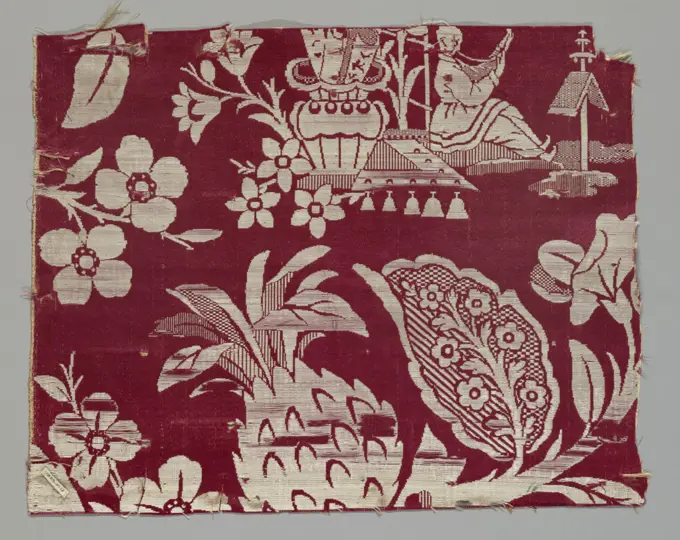
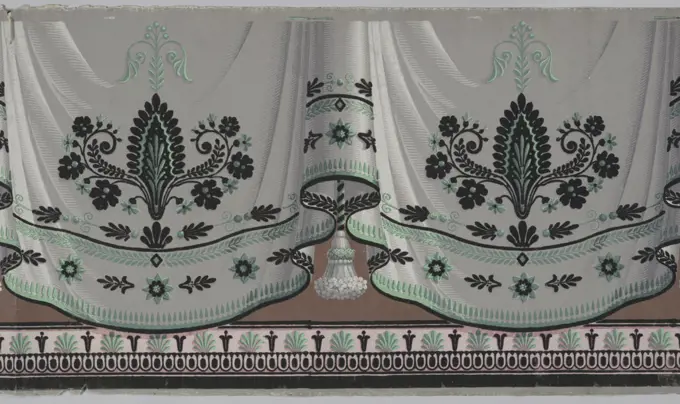
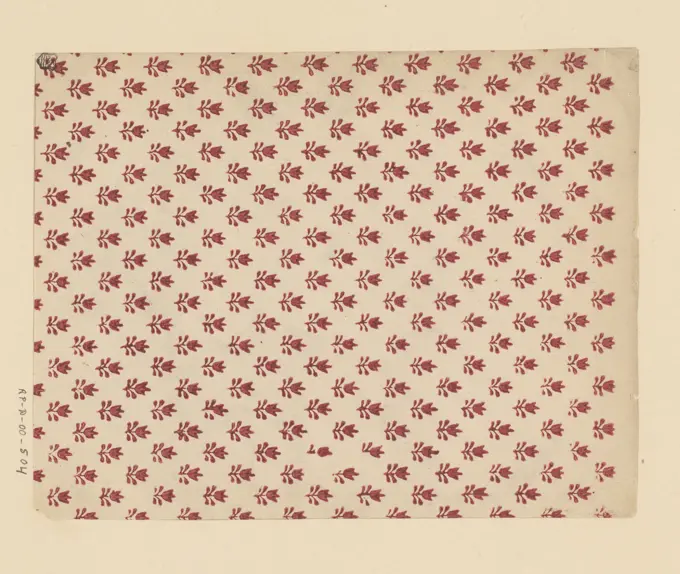
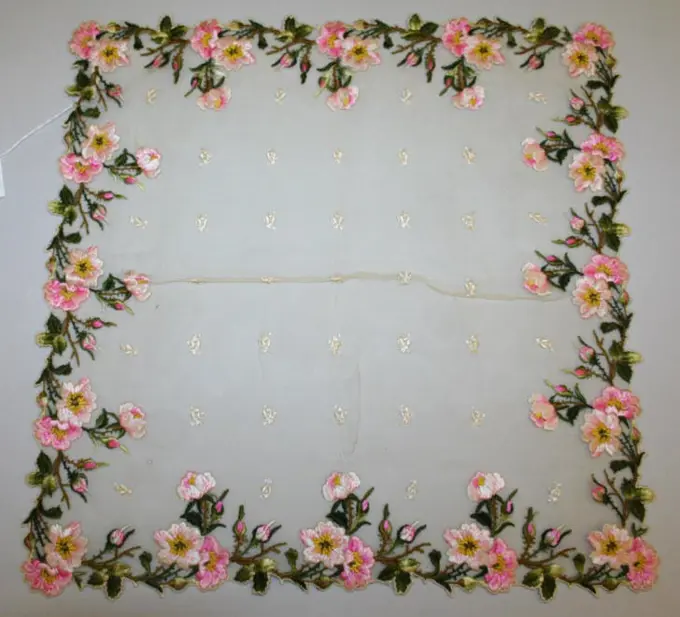
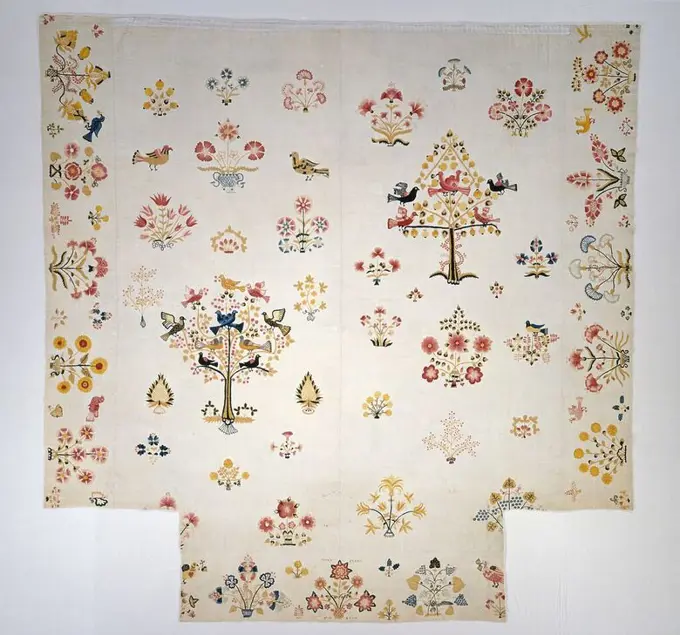
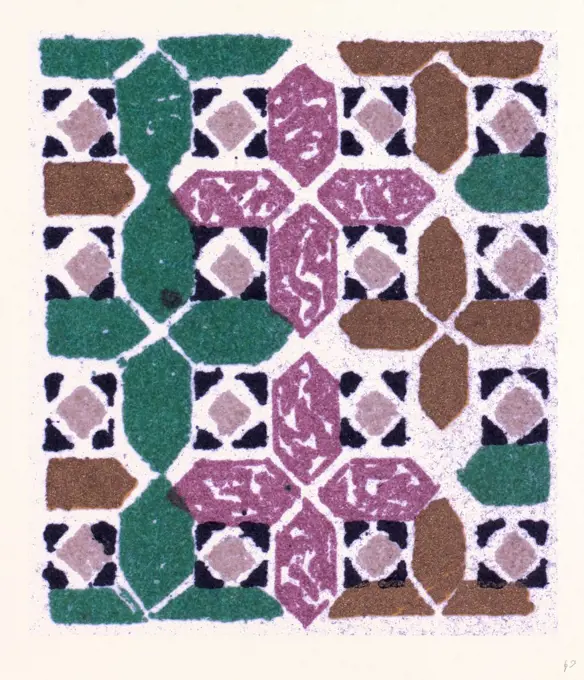
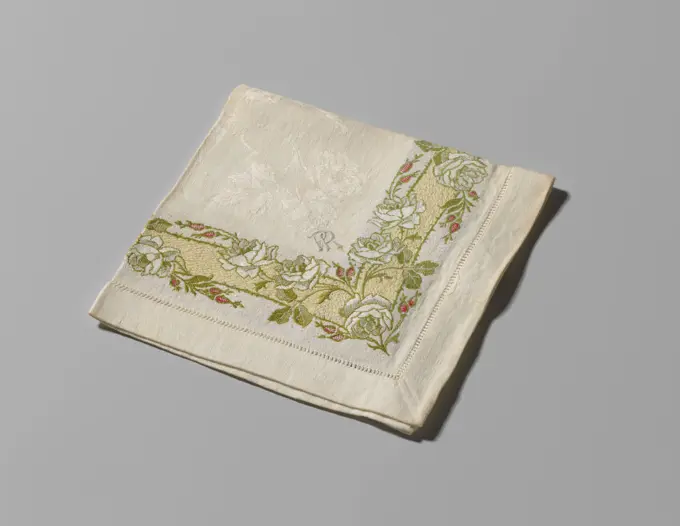
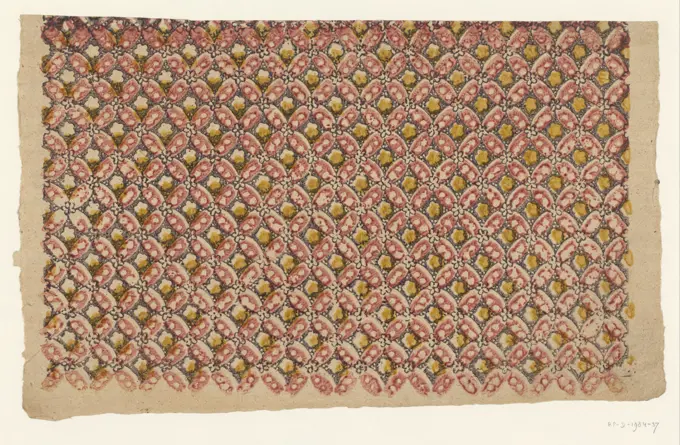
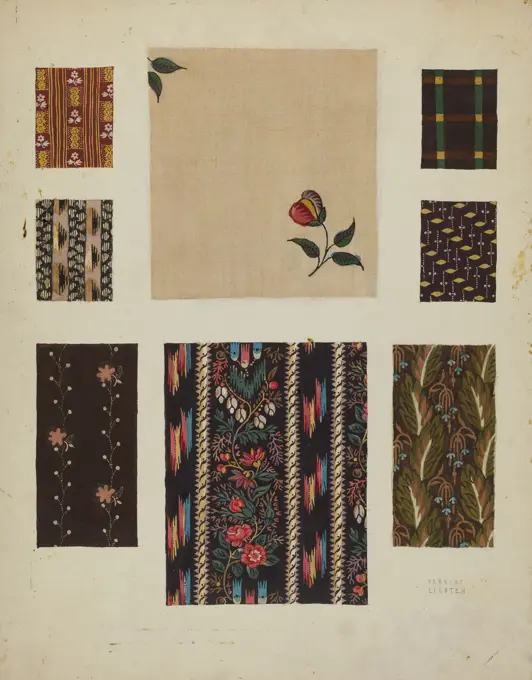
Fabric fragments showcasing floral patterns, brocade techniques, and varied color palettes, reflecting historical textile craftsmanship.
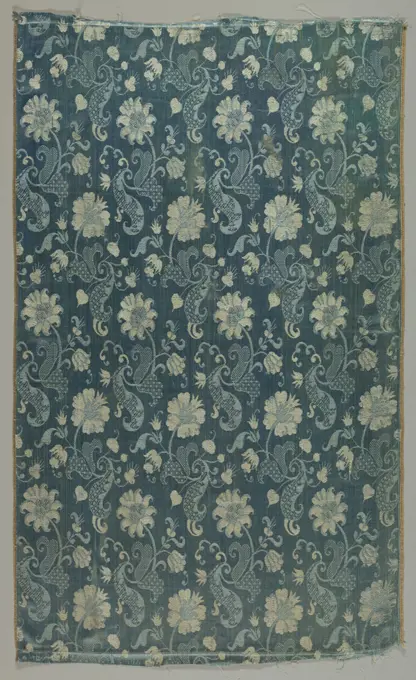
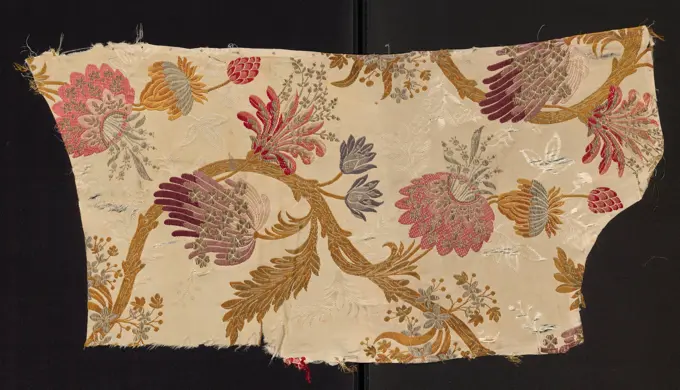
Textile, Medium: silk Technique: float patterned satin; 7&1 satin patterned by weft floats bound on the front as a 1&3 twill, Length of blue silk with a pattern of flowers, leaves and scrolls in pink and light blue. Leaves and scrolls have diaper patterns., probably Italy, 17th century, woven textiles, Textile
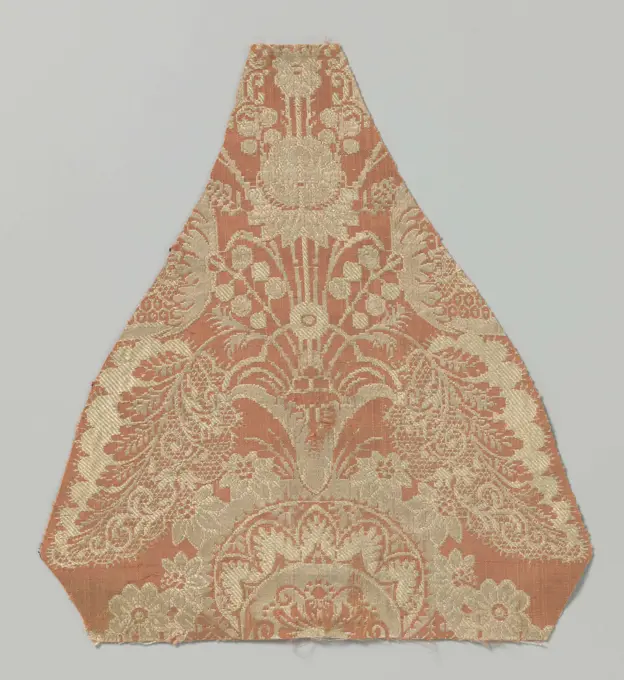
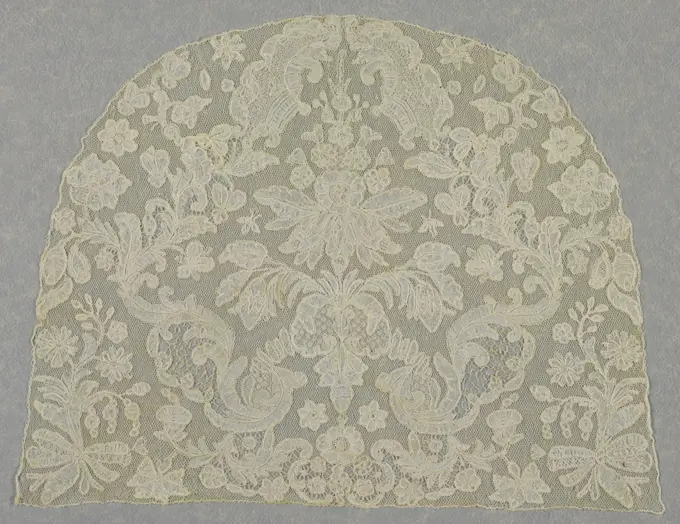
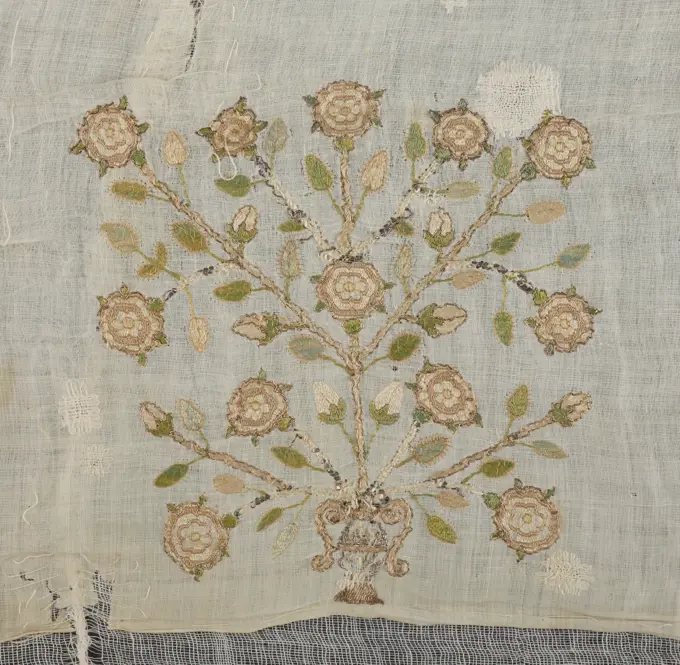
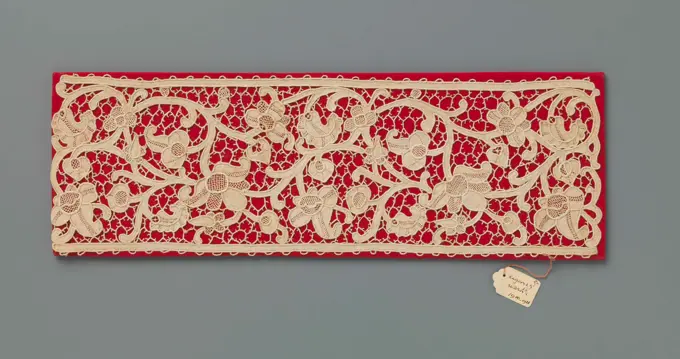
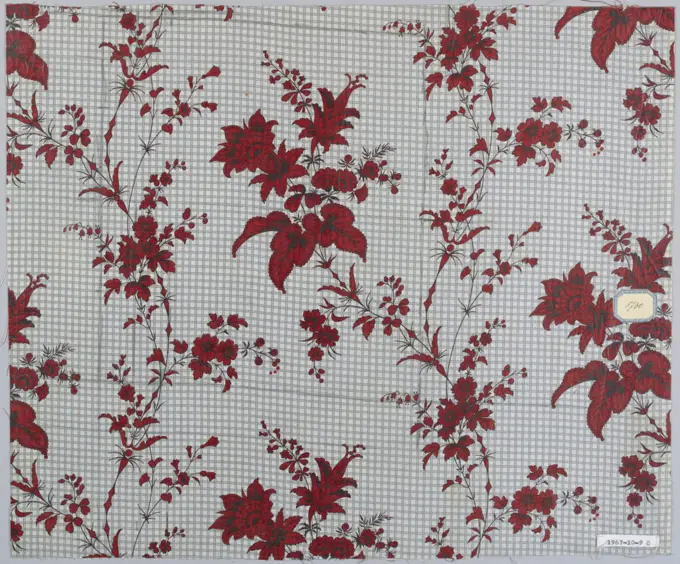
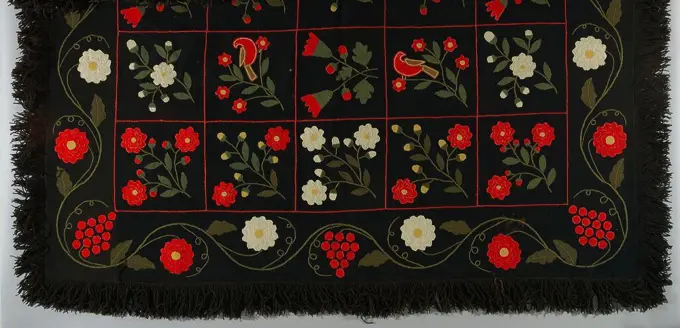
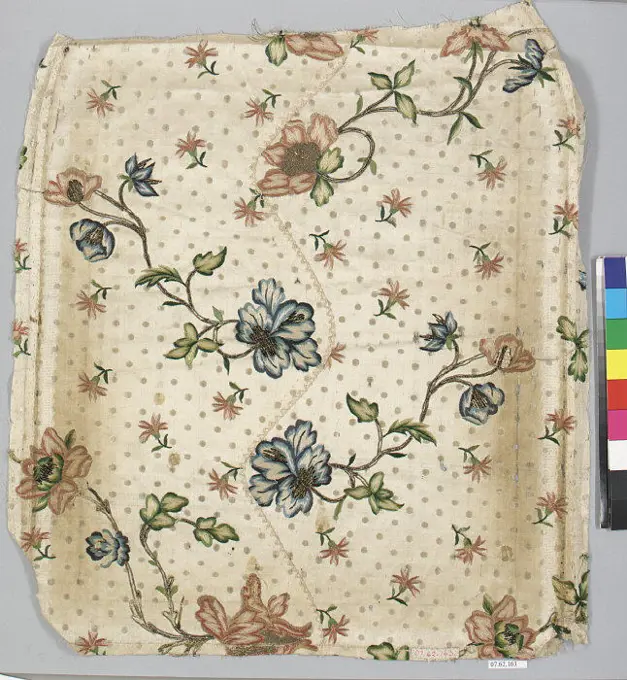
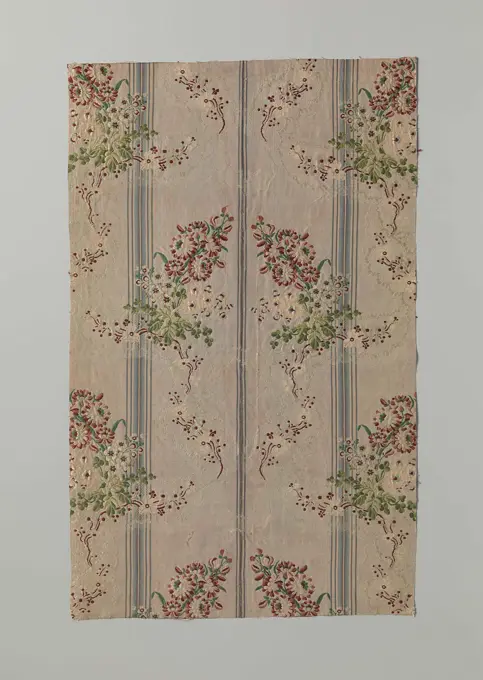
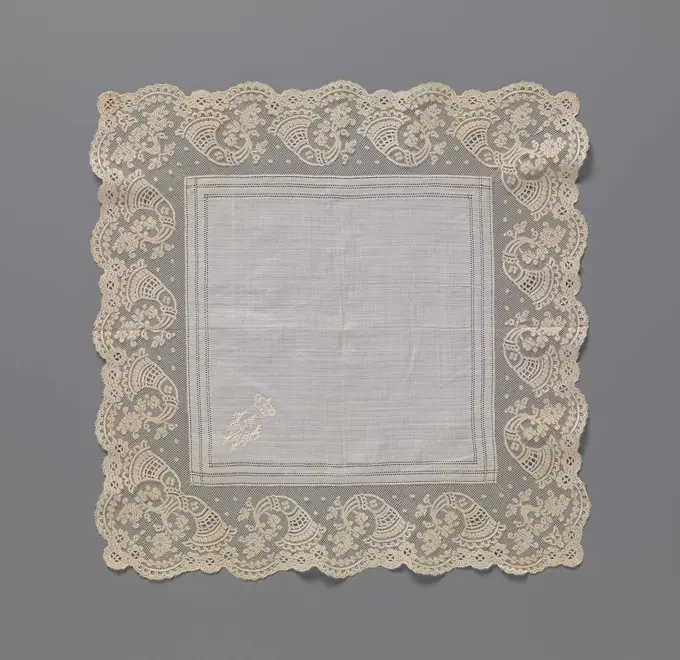
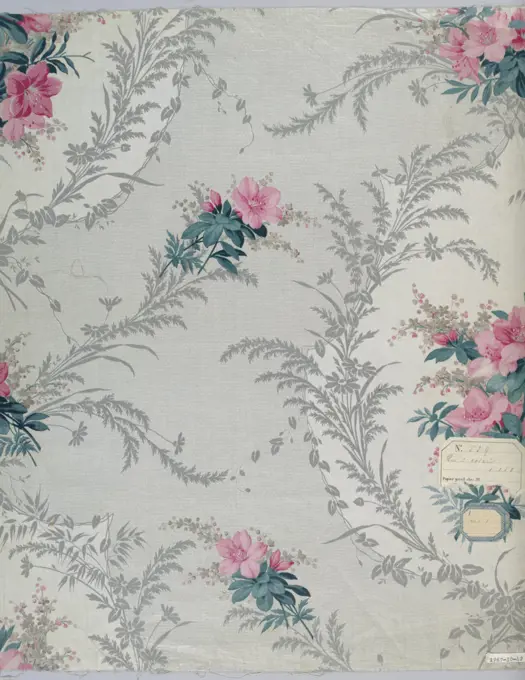
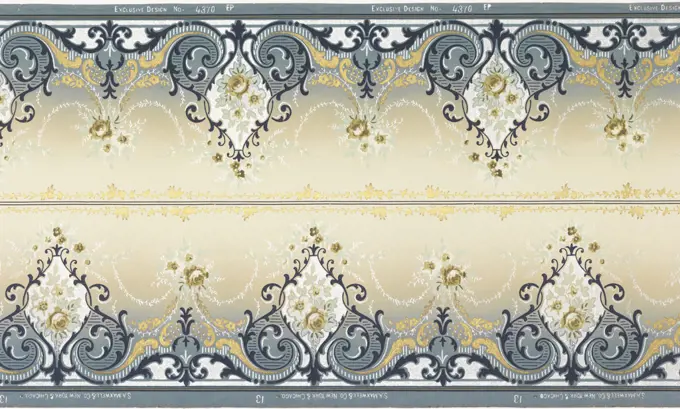
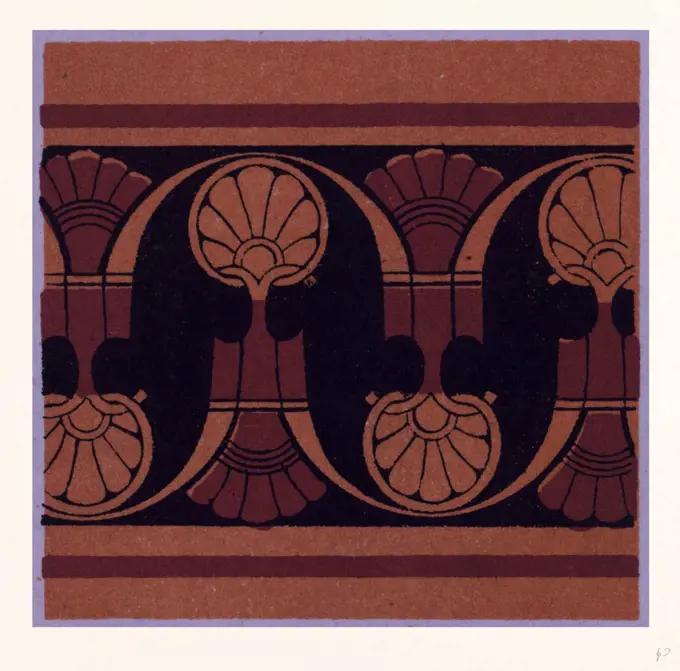
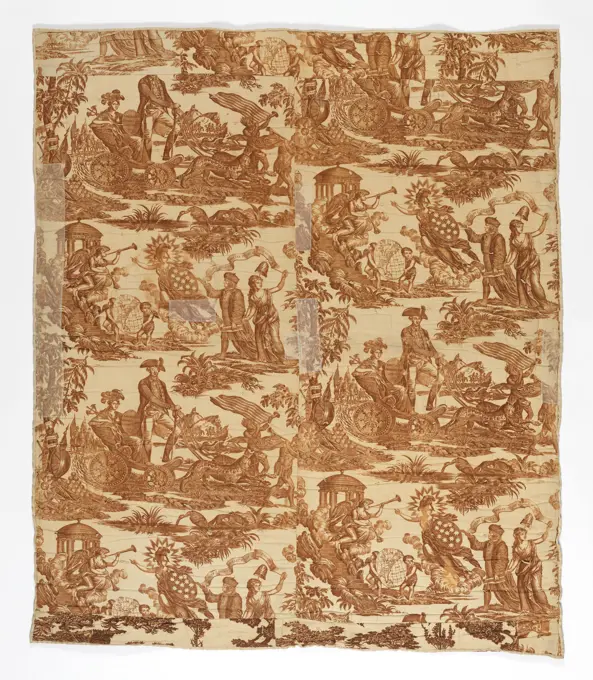
Fragment, Medium: silk Technique: 5-harness satin damask, Light orange and white silk damask used to line a cape (1962-56-64-a/c)., 18th century, woven textiles, FragmentFragments Or Samples (Japan)Pillow Sham (Unfinished) Made 1675-1725 England, southern. Linen, plain weave; underlaid with cotton, plain weave; embroidered with silk . Jane Bolas VaughanTobari (Formerly Katabira) Made 1801-1825 Japan. Hemp, plain weave; resist dyed, stenciled and hand painted (kata kanoko and kanoko shibori); embroidered with silk, gold-and silver-leaf-over-lacquered-paper-strip-wrapped cotton and silk in satin, single satin and surface satin and stem stitches; laidwork and couching .Fragment Made 1801-1900 United States. Silk, satin weave; embroidered in silk floss, silver and pink metal threads wrapped around a fiber core; in long and short split and couching stitches and French knots .Fragment salmon-colored silk with pattern of palmets. Fragment salmon-colored silk with pattern of palmets, spring-shaped leaves and flower.Velvet Fragment, 1400s. Italy, 15th century. Velvet weave (cut with two heights of pile and brocaded): silk and gold thread; average: 113 x 32.4 cm (44 1/2 x 12 3/4 in.).Fragment of upholstery fabric;  18th century (1701-00-00-1800-00-00);fabricsCover 17th-18th century. Cover 443023Cap crown, Medium: linen Technique: bobbin lace, Brussels style, Cap crown with a pattern of floral and foliated forms forming a frame for a central, stylized bouquet., Belgium, 1740-55, lace, Cap crownRiice Vali, Altar Tablecloth unknownCeiling paper, York Card & Paper Co., 1891, Machine-printed paper, liquid mica, Yellow roses on stems are scrolled and form a circle, with each of these floral wreaths separated by a framework resembling moire. Small floral sprigs are scattered throughout. Printed on light colored ground., York, Pennsylvania, USA, 1905-1915, Wallcoverings, Ceiling paperTextile, Medium: cotton Technique: block printed on plain weave, Polychrome pattern of two long-necked birds and a vase, hanging basket and flowers on a black background., Straght repeat. Block edges visible., France, ca. 1795, printed, dyed & painted textiles, TextileStrook naaldkant op een met rood textiel bekleed stuk karton.Strip natural needle side: Venetian relief side. The side is put on a piece of cardboard covered with red textile. The repeating lace pattern consists of wide curling tendrils with different types of flowers. One flower is somewhat smaller than the other but the flowers are all fairly sharply, almost every flower heart is oval. The motifs are connected by a picoted bars soil. Ornamental grounds are applied in the flowers. Upper and bottom of the strip are straight and both scented arches with one row, which are attached to the straight edge at some distance from each other.Fragment silk velvet with cut-outs with styled leaves placed on orange ground green in rows. Interspersed with blocks. Fragment silk velvet with green styled leaves placed in rows on orange ground. Interspersed with blocks. Italy, 16th century.One-half of a Bedspread. Greece, Ionian Islands. Date: 1601-1700. Dimensions: 61 x 206 cm (24 x 81 1/8 in.)Repeat: 30 x 22.5 cm (11 3/4 x 8 7/8 in.). Linen, plain weave; embroidered with silk in running, pattern darning and stem stitches. Origin: Greece. Museum: The Chicago Art Institute, Chicago, USA.Textile, Schwartz-Huguenin, Medium: cotton Technique: printed by engraved roller on plain weave; glazed, Three pieces, same design, different colors. A) Ground printed, possibly by 'molette,' in grey, small check pattern. Design of long sprays of bell-shaped and accented in darker brown, printed over ground design, possibly by surface roller. B) Same design, flowers in dark blue. C) Same with flowers in red with very dark green shadows and accents. Glazed., 1851-63, printed, dyed & painted textiles, TextileTablecover. Culture: American. Dimensions: 79 x 49 in. (200.7 x 124.5 cm). Date: ca. 1840-60. Museum: Metropolitan Museum of Art, New York, USA.Two fragments of embroidery unknownTextile (England); wool; 1951-31-11Piece 18th-19th century Japan. Piece 67012Embroidery: counted stitches, Medium: silk, jute Technique: embroidered, fragment of flame stitch embroidery in silk on jute ground. Worked in shades of pink, blue, yellow, tan, and white., Europe, Italy, 18th century, embroidery & stitching, Embroidery: counted stitchesTrimming (France); silkSamples (USA); Manufactured by Orinoka Mills (United States); Warp x Weft (a): 50 × 33 cm (19 11/16 in. × 13 in.) Warp x Weft (b): 25 × 32 cm (9 13/16 × 12 5/8 in.) Warp x Weft (c): 18 × 32 cm (7 1/16 × 12 5/8 in.) Warp x Weft (d): 31 × 20.5 cm (12 3/16 × 8 1/16 in.)Fragment 18th century Italian, Venice. Fragment. Italian, Venice. 18th century. Silk, metal thread. Textiles-WovenWelum;  XVIII/19th century (1790-00-00-1810-00-00);Suzanne Roy and Arlene Perkins, Coverlet, 1935 1942 CoverletFragment; cottonFragment of silk tissue with a pattern of branches with bouquet in red on white soil, anonymous, 1740 - 1750 Fragment of silk tissue with an incomplete pattern on the Gros de Tours foundation: a bundle of branches with foothills bends to the right and has a bunch of rosette flowers in red, pink, white and dark red, while the hearts are bright red. Left (cut) a large flower in yellow, orange -red, pink, dark red and white. A fine leaf vank in white breaks the empty surface of the background. On the left a blue with purple flower (cut off). Milk. France (possibly) silk. Fragment of silk tissue with an incomplete pattern on the Gros de Tours foundation: a bundle of branches with foothills bends to the right and has a bunch of rosette flowers in red, pink, white and dark red, while the hearts are bright red. Left (cut) a large flower in yellow, orange -red, pink, dark red and white. A fine leaf vank in white breaks the empty surface of the background. On the left a blue with purple flower Embroidery 18th century possibly Spanish. Embroidery 213196Sewing instruction book samples, USA, 1829, sample books, Sewing instruction book samplesFragment multicolor silk tissue. Fragment multicolor silk tissue with a gray soil on which blue stripes. Over the stripes, a white lace garland is walking in which a red with white colored floral drink and between which flower branches in red, green and white.Textile Sample from Sample Book. Culture: Japan. Dimensions: 5 1/4 x 5 1/2 in. (13.34 x 13.97 cm). Date: 19th century. Museum: Metropolitan Museum of Art, New York, USA.Handkerchief with climbing side with horns of abundance. On a square batters center section is a crowned w in plethus embroidery. Comes around and strip of side with square meshes, on which a row with horns of abundance. On the same sides, the horns are directed to the right, on the odd sides to the left. The scivels were alternately formed by a godridge edge and three rosettes that come out of the horns. Valenciennes side.Example of two different lace samples, c. 1890 photograph   paper cyanotype laceRuth M Barnes, Sampler (Stitching), c 1937 Sampler (Stitching)Textile, Medium: cotton Technique: printed by engraved roller and block printed; glazed, Elaborate arrangement of groudn printed by molette, in grey, with areas of white in which appear flower clusters in rose. Sweeping garlands of grey foliage frame white areas; other flower sprays and grey foliage printed over grey ground - glazed., Mulhouse, Alsace, France, 1851-63, printed, dyed & painted textiles, TextileHandkerchief fourth quarter 19th century Belgian. Handkerchief 168331Leaf with spreading pattern of flowers in a point stock, Anonymous, 1750 - 1900  Leaf with spreading pattern of flowers in a point stock. With label with inscription: 'J.J. Loke the precario '. Half of a cover.  paper. block printing (relief printing process) ornament derived from plant formsBliżej Kultury unknownThe Union Forever, Medium: cotton Technique: printed by engraved roller on plain weave Label: cotton printed by engraved roller, Printed cotton with a repeating design of two clasped hands with the words 'The Union Forever' surrouned by a wreath of flowers, on a ground sprinkled with stars. Printed in red on a white ground., The Union Forever was printed for Abraham Lincoln's second Presidential campaign in 1864., USA, 1864, printed, dyed & painted textiles, Textile, TextileTwo Joined Fragments of Figured Silk, 1723-1774. France, 18th century, Period of Louis XV (1723-1774). Taffeta, brocaded; silk; overall: 44.8 x 48.4 cm (17 5/8 x 19 1/16 in.).Piece 18th-19th century Japan. Piece. Japan. 18th-19th century. Silk. Textiles-WovenFragment; silkQuilt, Hexagon or Honeycomb pattern 1846 Rebecca Davis The top of this pieced quilt is composed of hexagons of multicolored and patterned fabrics typical of the 1840s, including some rainbow prints. The hexagons are about two inches per side, except for a small six-pointed star at the center, which is made up of one-half inch- per-side hexagons. There is quilting in parallel diagonal lines in the printed fabric hexagons and in various flower and star forms in the white cotton hexagons. The quilt has a plain white woven cotton back and cotton batting.. Quilt, Hexagon or Honeycomb pattern 13904Piece of fabric. unknown, authorPiece French 19th centuryDado, Block printed and flocked paper, Bottom border of drapery paper. Printed in gray, green, pink, brown with black flock., France, ca. 1810, Wallcoverings, DadoSidewall (USA); Manufactured by Maxwell & Co., S.A. (United States); machine-printed paper, liquid mica; 91.5 x 47.5 cm (36 x 18 11/16 in.)Ceiling Paper (USA); Manufactured by Maxwell & Co., S.A. (United States); machine-printed paper, liquid mica; 94 x 47 cm (37 x 18 1/2 in.)Blade with flower pattern, anonymous, 1800 - 1900  Leaf with regular spray pattern of flower pattern.  paper. block printing (relief printing process) ornament derived from plant formsFragment (England); cotton; A/ H x W: 67 × 116 cm (26 3/8 × 45 11/16 in.); B/ H x W: 66 × 116 cm (26 × 45 11/16 in.)Napkin with design of Garoedas, woven for the Prince Mangkoe Nagoro VII from Surakarta., Chris Lebeau (attributed to), c. 1928 Linen Damas napkin with a crowned bird surrounded by sunflowers in the middle. In the corners, Garaedas and Winged Monogram HB, woven for Prince Mangkoe Nagoro VII from Surakarta. designer: Netherlandsmaker: Eindhoven linen (material) damask Linen Damas napkin with a crowned bird surrounded by sunflowers in the middle. In the corners, Garaedas and Winged Monogram HB, woven for Prince Mangkoe Nagoro VII from Surakarta. designer: Netherlandsmaker: Eindhoven linen (material) damaskTextile; silk; Warp x Weft: 95 x 57.5 cm (37 3/8 x 22 5/8 in.); 1955-34-5Handkerchief ca. 1885 French. Handkerchief 122337Textile (France); cottonIndian ornamentPressed Black Tijp with large stylized flower figures surrounded by leaves and flowers, anonymous, c. 1675 - c. 1700 Pole of black velvet wool on linen fond, with a pressed pattern of large stylized flower figures surrounded by leaves and flowers. Discolored to dark red  velvet (fabric weave). wool. linen (material) Pole of black velvet wool on linen fond, with a pressed pattern of large stylized flower figures surrounded by leaves and flowers. Discolored to dark red  velvet (fabric weave). wool. linen (material)Border, Block-printed on continuous paper, Printed two borders across width, continuous floral garland on gray satin ground., ca. 1830, Wallcoverings, BorderPin or maternity pillow, anonymous, c. 1600 - c. 1699 Number: 1554 (auction number, catalog number). West-Europa Number: 1554 (auction number, catalog number). West-EuropaTextile Length, 'Ispahan'. John Henry Dearle (England, 1860-1932)Morris & Co. (England, London and Merton Abbey, 1861-1940). England, Merton Abbey, circa 1888. Textiles; textile lengths. Wool, compound twill.Card; valentine card. Date/Period: 1860 - 1880. Print. Paper. Author: UNKNOWN.Cover. Turkey. Date: 1601-1700. Dimensions: 160 x 57.4 cm (63 x 22 5/8 in.)Irregular weft repeat: 9.5-11.5 cm (3 3/4-4 1/2 in.). Linen, plain weave; embroidered with silk floss in running stitches, pattern darning; main warp fringe. Origin: Turkey. Museum: The Chicago Art Institute, Chicago, USA.Length of velvet ca. 1710 () probably British. Length of velvet. probably British. ca. 1710 (). Silk; voided, cut and uncut satin velvet. Textiles-VelvetsValentine - Forget Me Not ! WoodHandicraft with a spunny star. Handicraft with six-spunny star in green and yellow sand stitch on white satin square. Belonging to series of eight white and ten colored needlework, manufactured by Aagje tapp for obtaining the deed beautiful and / or useful needlework to the industrial school, BK-1974-105-A to R.Helen E Gilman, Crewel Embroidery, c 1939 Crewel EmbroiderySquare (one of three) 18th century French. Square (one of three) 221802Fragment, Medium: cotton Technique: block printed (red, light purple) with yellow and blue applied by brush on plain weave, Fragment of a fine floral vine on a black background., France, 18th century, printed, dyed & painted textiles, FragmentFragment of silk fabric  band and flower bunch pattern in net composition unknownFrieze, Janeway & Co. Inc., New Brunswick, New Jersey, 1848 - 1914, Machine-printed paper, liquid mica, Printed two across. Pink floral bouquets, alternating low and high. Metallic pink foliate scrolls below. Printed on off-white/yellow ground., New Brunswick, New Jersey, USA, 1905-1915, Wallcoverings, FriezeFragment of silk fabric  colourful motifs of short flower stems unknownTextile (England); cottonChurch servet; Orzechowska from Rusocki, Anna (18th century; Fl. Ca 1743); 1743 (1743-00-00-1743-00-00);Fragment of silk fabric unknownEmbroidered coverlet. Culture: American. Dimensions: 90 3/4 x 89 in. (230.5 x 226.1 cm). Maker: Mary Breed (1751-ca. 1784). Date: 1770.When the panels of this coverlet were embroidered in 1770, they were not meant to be constructed into a bed covering. Originally, they were narrow bed curtains and three bed valances, most likely stitched together in the early nineteenth century. Some of the embroidery was chopped away at the foot end so that the converted coverlet could accommodate bedposts.When the coverlet came into the Museum's collection in 1922, it was attributed to Mary Breed, aged nineteen in 1770, who was said to have lived on Breed's Hill, Charleston (now Boston), Massachusetts. The eighteenth-century inscription embroidered on the piece, which read MARY BREED / AGE 19 Y 1770, is now mostly worn away but can be seen clearly in old photographs. That the piece was stitched on Breed's Hill, where the 1775 Battle of Bunker Hill took place, was particularly appealing to the colleField of thirty tiles with vases, anonymous, c. 1640 - c. 1660 Field of thirty tiles (5 x 6) each with a blue painted vase. In the corners, a lily. Originally this was a field of 48 tiles. Netherlands earthenware. tin glaze majolica Field of thirty tiles (5 x 6) each with a blue painted vase. In the corners, a lily. Originally this was a field of 48 tiles. Netherlands earthenware. tin glaze majolicaGolden Bough. Morris & Co, William MorrisLice mining or strip of embroidery application; Satin and cord side on velvet. Lamb frames or strip of application embroidery; Satin and cord on velvet. On a wine red fond, the pattern yellow, lying S-tanks has a frame of yellow. Silk damask is used for the nodes, for the heart of a palmet flower, for acanthus leaves and for the voluntary termination. The contours and a few adhesive drinks are of cord side in yellow and green. A second strip or lambreway belongs to the strip or lambrek line.Elizabethan No 3 Plate LXXXV From The Grammar of Ornament by Owen Jones published by Day & Son London 1865Byzantine ornamentLinnamast finger cloth with a flower pattern, c. 1920 - c. 1930 Finger cloth from Linnamast with multicolored woven edges (cotton). In the middle rose branches in white, rose branches in the green, red and white rose branches against a yellow stock. Around Ajourzomen. In a corner a green -embroidered monogram pvr. The finger cloth belongs to five finger cloths (BK-1980-168-A to BK-1980-168-F) and a tablecloth (BK-1980-167). Germany (possibly) linen (material) damask Finger cloth from Linnamast with multicolored woven edges (cotton). In the middle rose branches in white, rose branches in the green, red and white rose branches against a yellow stock. Around Ajourzomen. In a corner a green -embroidered monogram pvr. The finger cloth belongs to five finger cloths (BK-1980-168-A to BK-1980-168-F) and a tablecloth (BK-1980-167). Germany (possibly) linen (material) damaskLeaf with windscreen pattern with overhoekse rosettes, 1750 - 1900    paper. lacquer (coating) block printing (relief printing process) / lacquering ornament derived from plant formsFrances Lichten, Materials from Patchwork Bedspread, c 1936 Materials from Patchwork BedspreadFragment; cottonShawl, early 1900s. China, early 20th century. Embroidery, silk; overall: 569 x 116.1 cm (224 x 45 11/16 in.).Napkin (from a set of table linens) Belgian late 19th centuryFrieze, Maxwell & Co., S.A., Chicago, Illinois, USA, Machine-printed paper, Printed two across. Floral medallions alternating with floral bouquets, connected by floral swags. Foliate scrolls along bottom. Printed in shades of blue, metallic gold and silver on ground that shades from blue at bottom to off-white at top., USA, 1905-1915, Wallcoverings, FriezeCoverlet, c. 1700, 61 x 61 in. (154.94 x 154.94 cm), Linen, silk; embroidery, including satin stitch, long and short stitch, brick stitch, couched cord, and french knots, India (probably) for the English market, 17th-18th century, Early homes consisted of a single large room in which all household activities took place. The first bedrooms were little more than a small closet where the lord of the 'manor' could go to escape the hubbub of domestic life and to conduct business in private. As landholders became more prosperous houses grew larger, and the number and size of bedrooms increased accordingly.Quilt. Dated: c. 1937. Dimensions: overall: 55.7 x 50.2 cm (21 15/16 x 19 3/4 in.) Original IAD Object: 99" long; 96" wide. Medium: watercolor, graphite, and gouache on paperboard. Museum: National Gallery of Art, Washington DC. Author: Eva Wilson.Greek Ornament and Etruscan OrnamentTextile Sample from Sample Book 19th century Japan. Textile Sample from Sample Book 68162Textile, Schwartz-Huguenin, Medium: cotton Technique: printed by engraved roller and/or block printed on plain weave; glazed, Three pieces, same design, different colors. A) Ground printed, probably by 'molette,' in two shades of grey in minute zig-zags; darker shade forming trellis pattern. Small flower clusters in rose with green foliage and shadowy grey foliage, printed within trellis, probably by block. B) Same design but ground slightly blue-grey. C) Same design but ground in yellow. Glazed., Mulhouse, Alsace, France, 1851-63, printed, dyed & painted textiles, TextileTextile, Medium: silk Technique: chain stitch embroidery on taffeta, White taffeta embroidered in colored silks in design showing an ornament composed of flowers and leaves., Europe, ca. 1770, embroidery & stitching, TextileFragment (Italy); silkQuilt (England); cottonHandkerchief (France); linenCut Silk Velvet, 1800s. France, 19th century. Velvet; silk; overall: 38.5 x 29.3 cm (15 3/16 x 11 9/16 in.).Panel Made 1725-1775 France. Silk, gilt-and-silvered-metal strips, and gilt-and-silvered-metal-strip-wrapped silk, plain weave with supplementary patterning wefts and supplementary brocading wefts; two loom widths joined . Style of Jean Baptiste PillementSample (USA); Manufactured by Duplan Silk Corporation; silk; Warp x Weft: 35.8 x 49 cm (14 1/8 x 19 5/16 in.)