Decorative Textiles

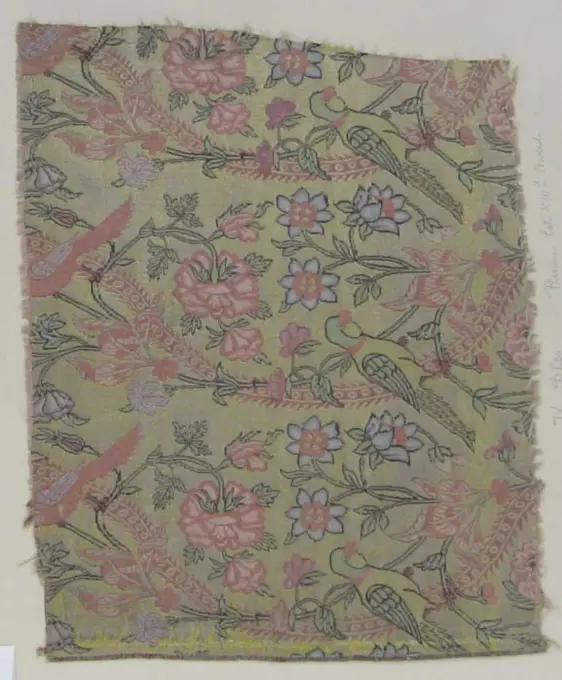
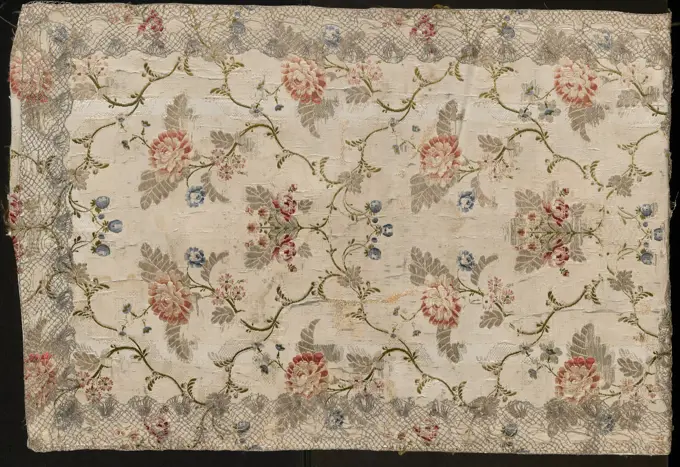
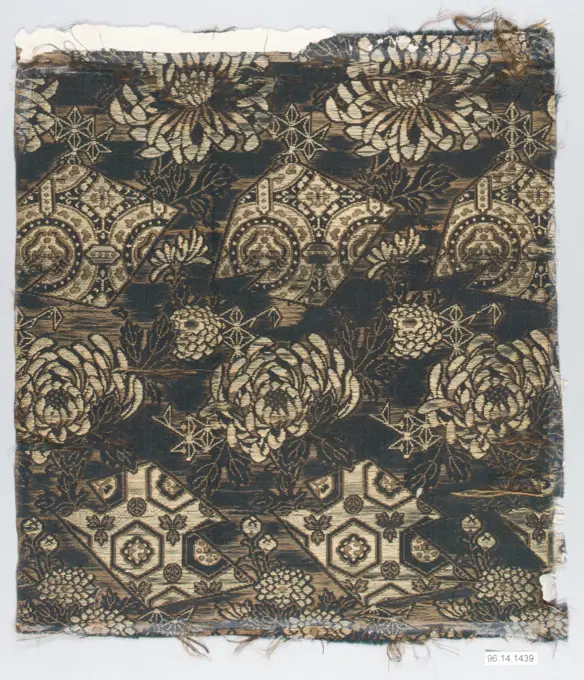
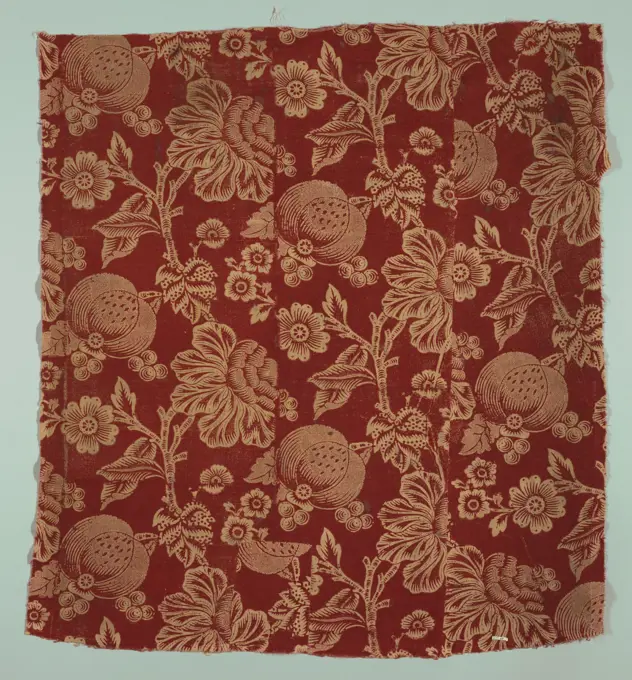
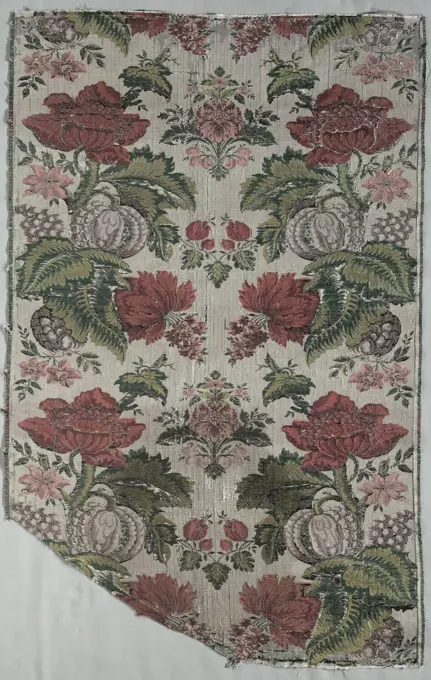
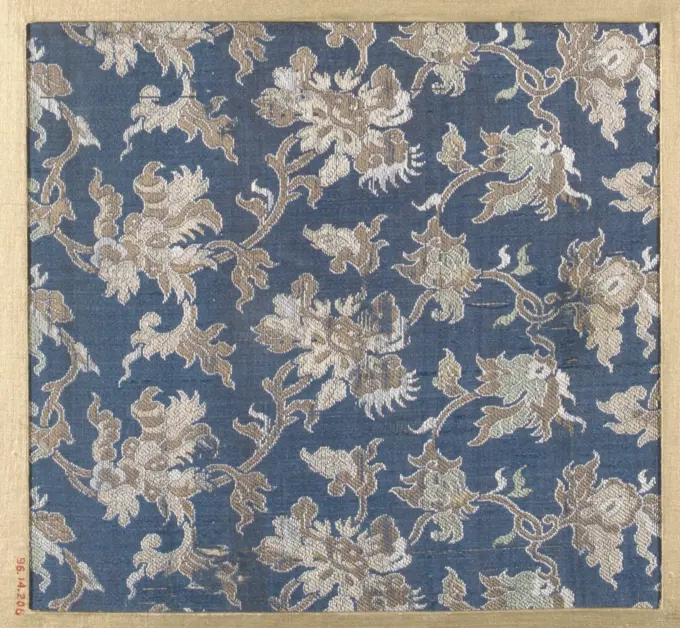
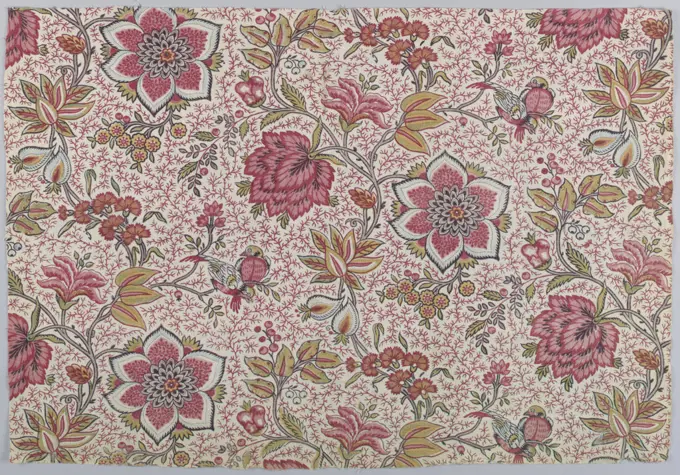
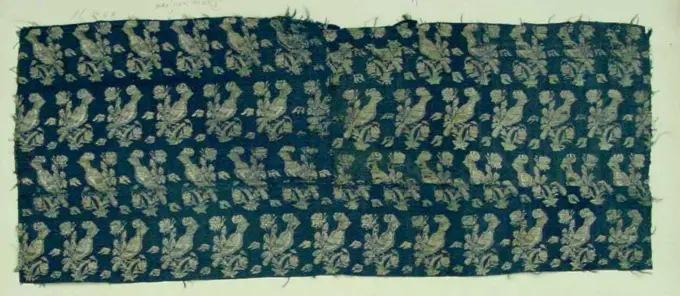
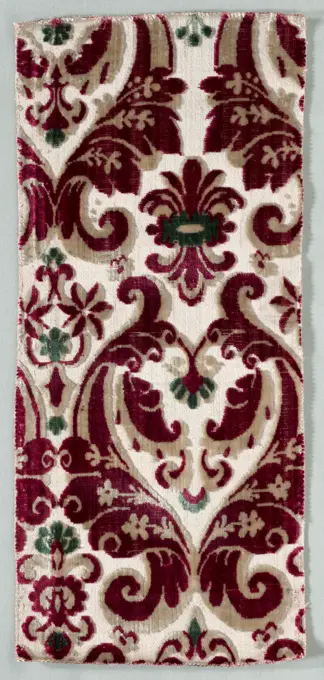
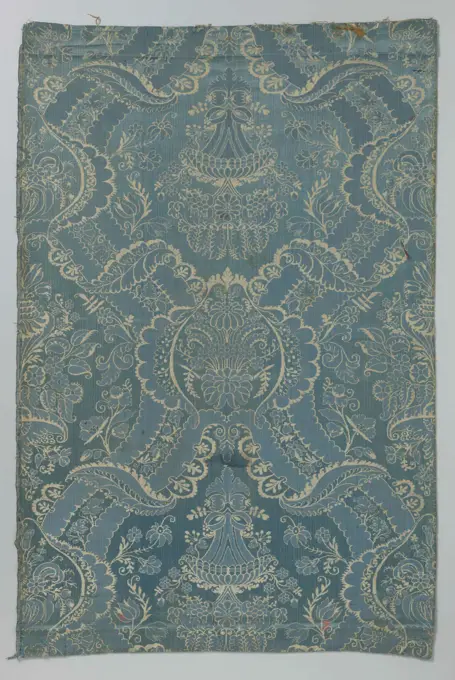
A collection of silk and cotton textiles with intricate floral patterns, showcasing various colors and textures, typical of historical European designs.
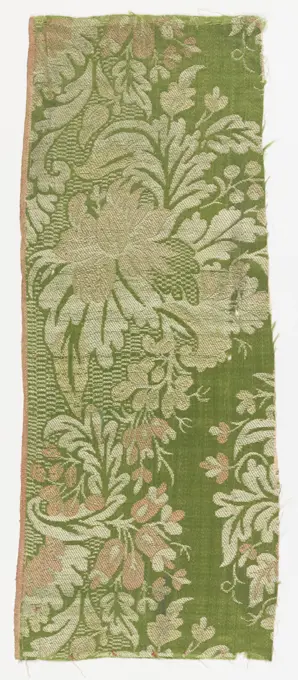
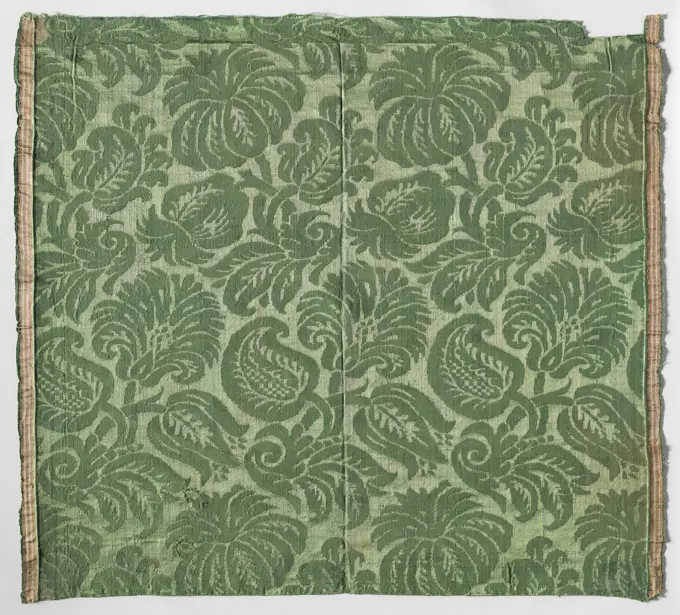
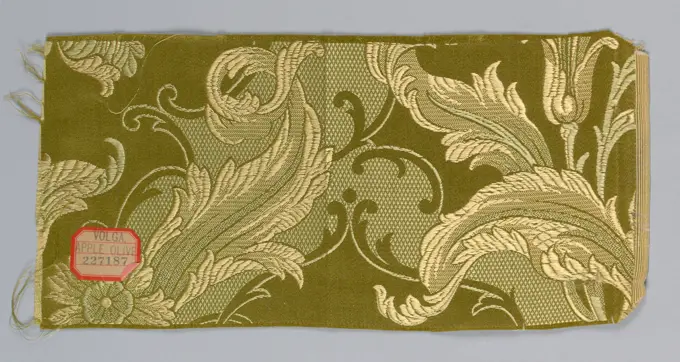
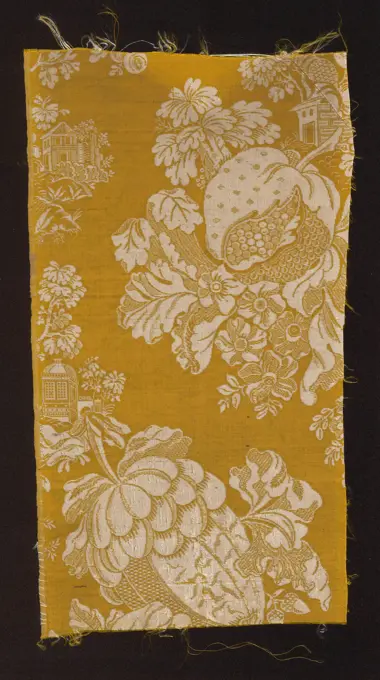
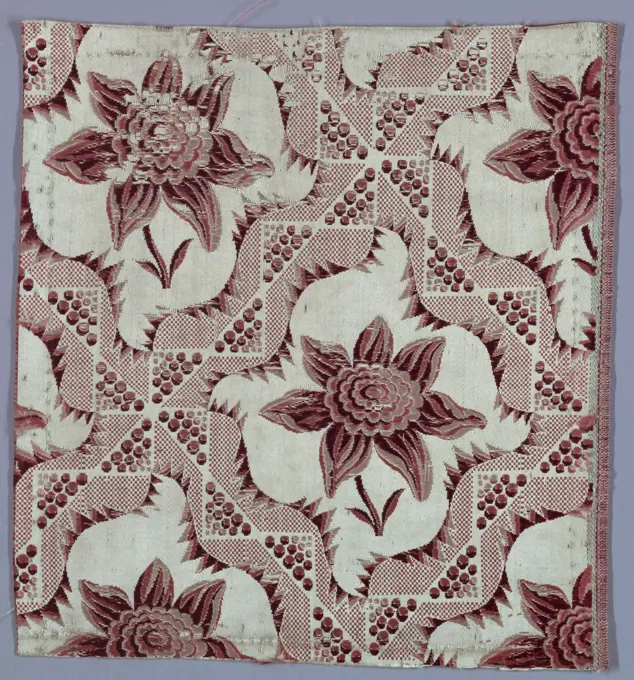
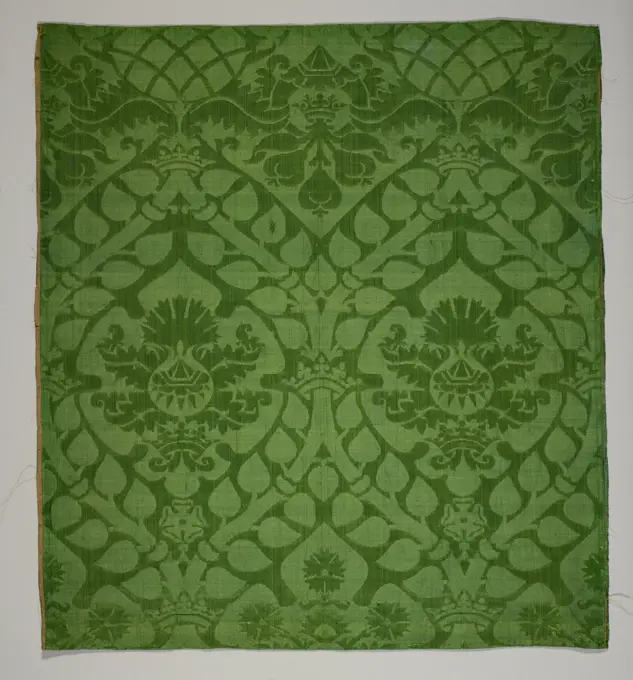
Fragment, Medium: silk Technique: lampas; combination of two structures 7&1 satin plus twill, Green silk weave, lampas, satin filed with leaf scrolls and details of checker motifs in twill weave. Large scale floral design., France or Spain, 17th century, woven textiles, Fragment
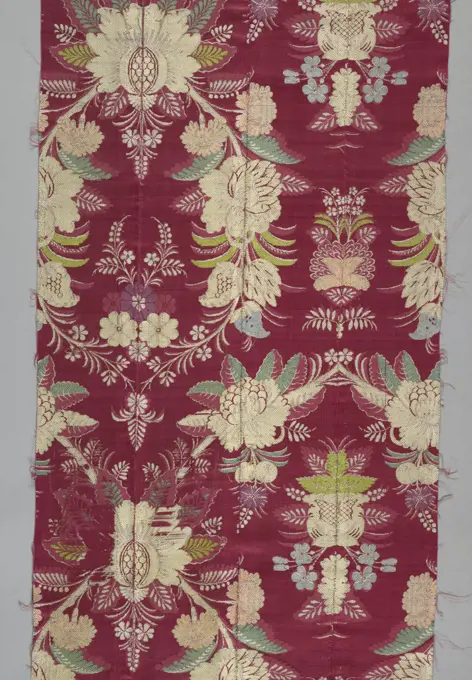
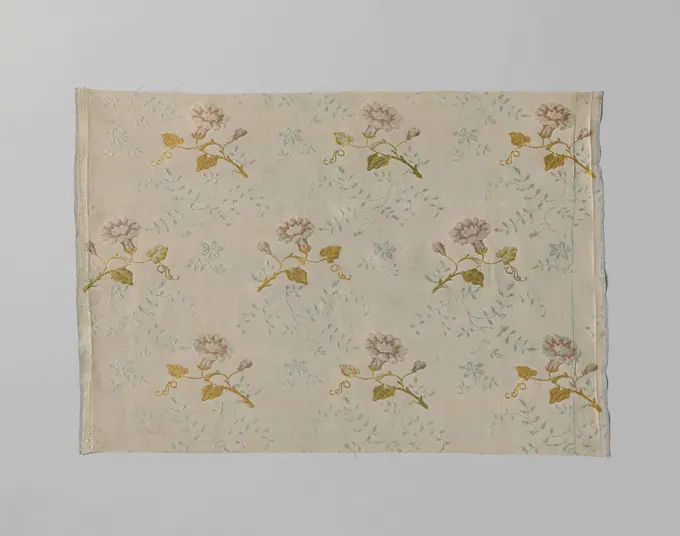
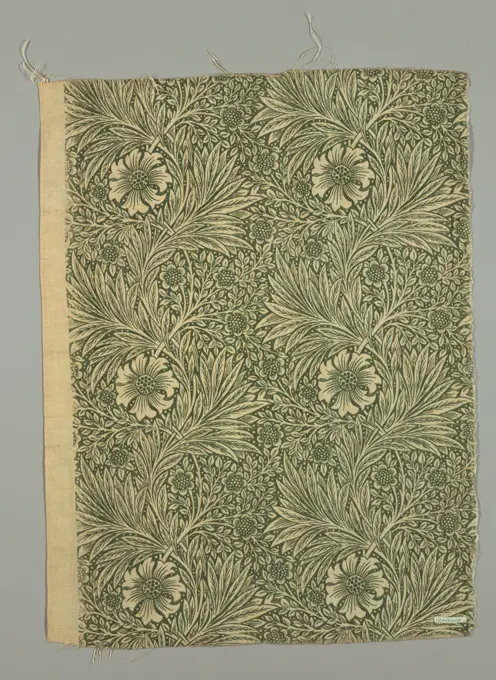
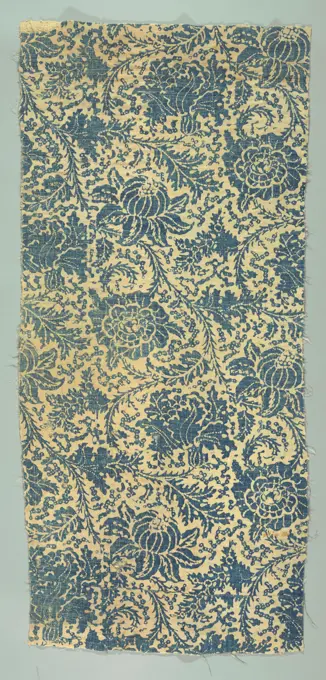
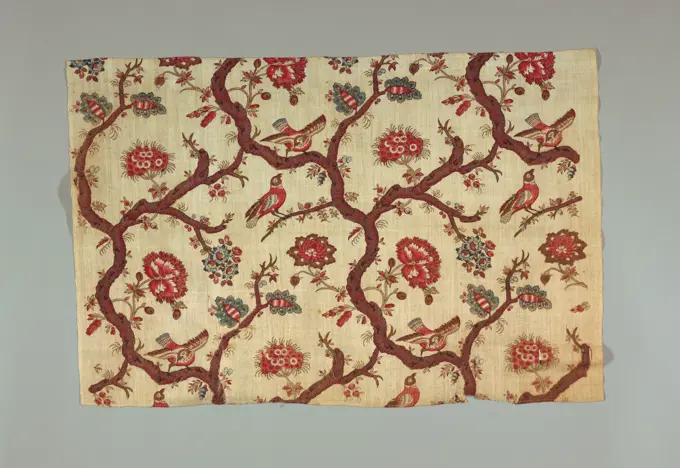
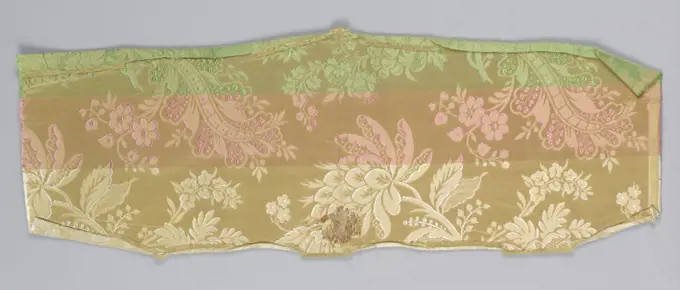
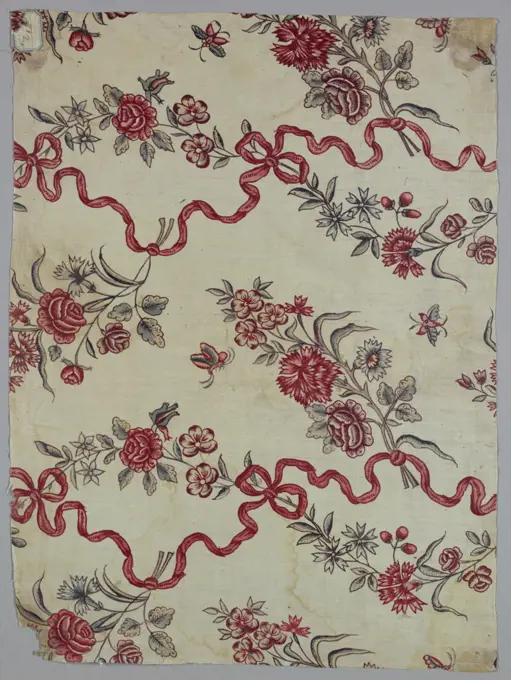
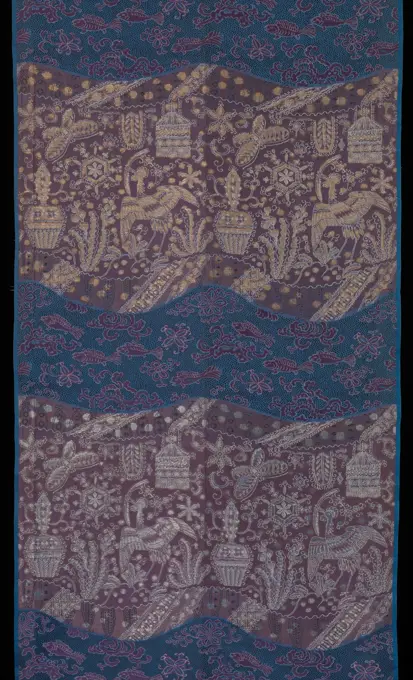
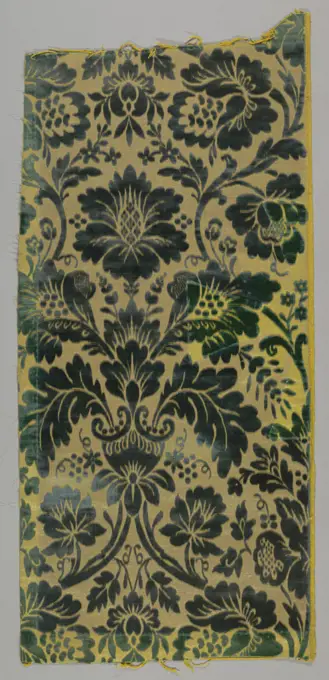
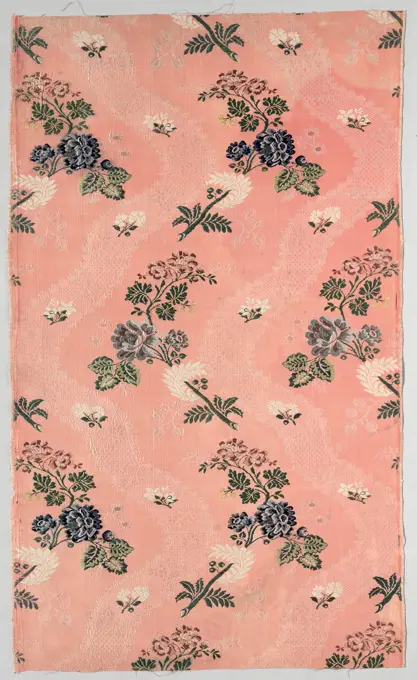
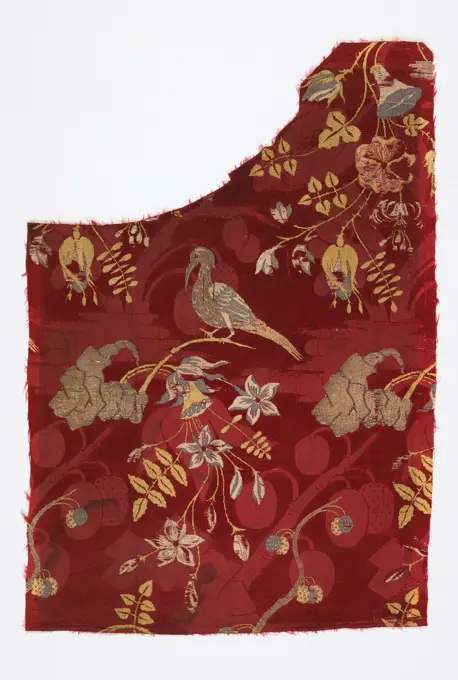
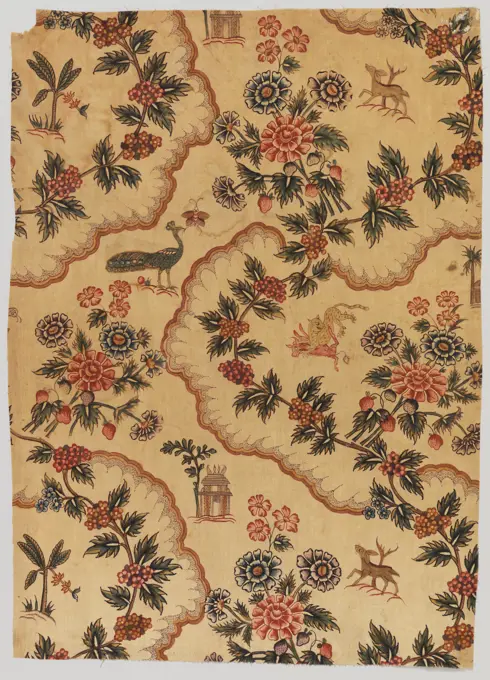
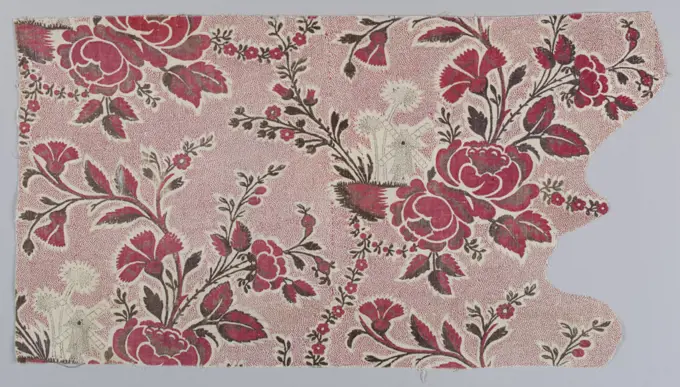
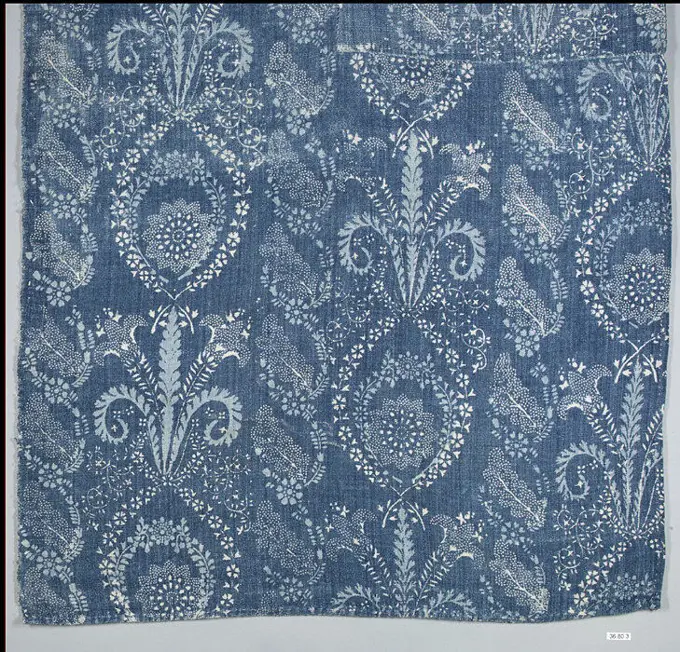
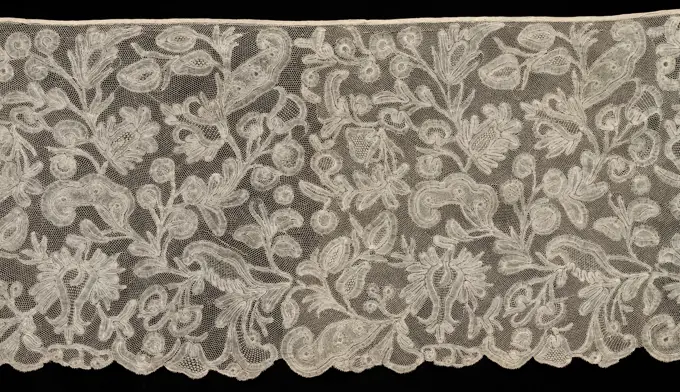
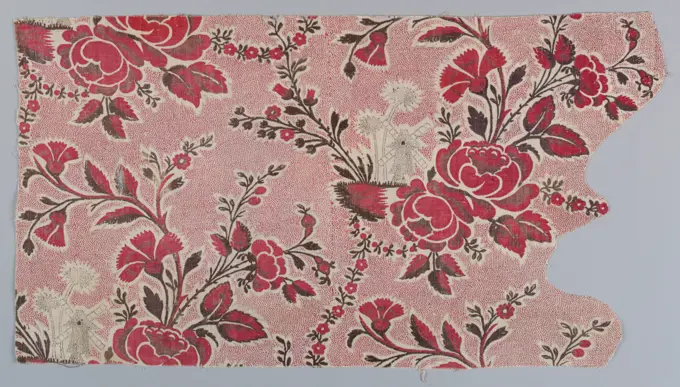
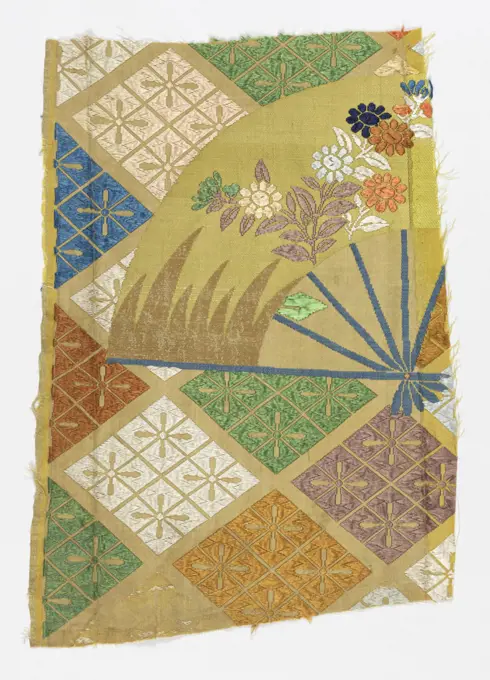
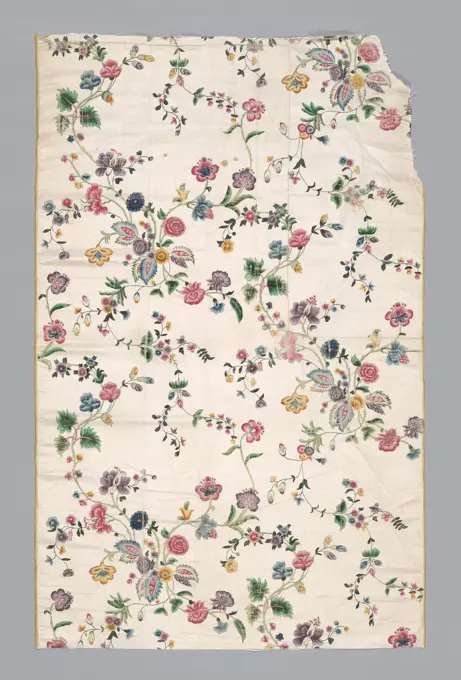
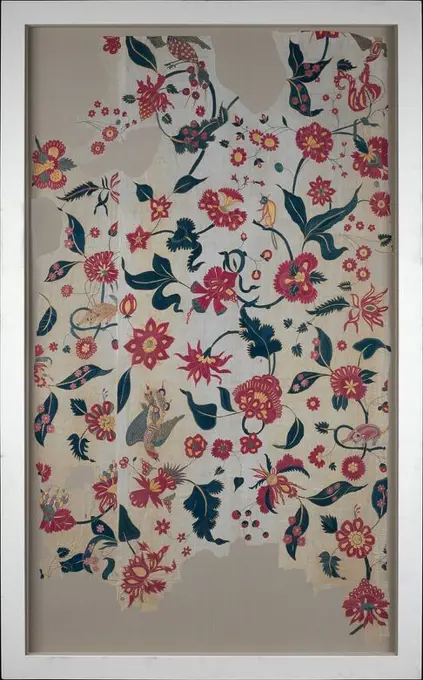
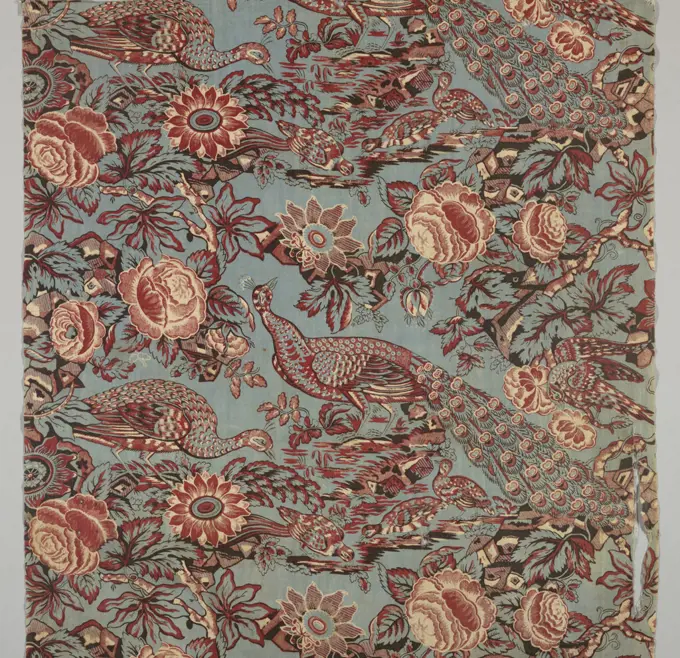
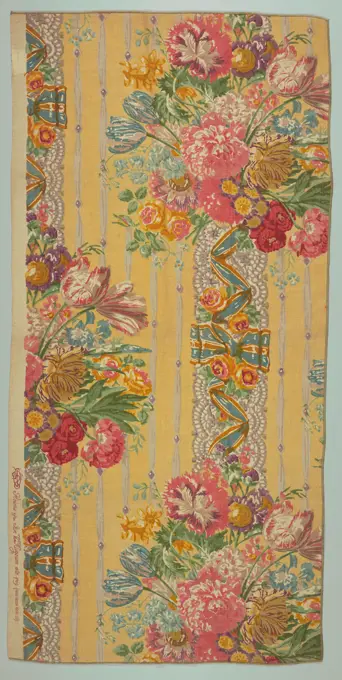
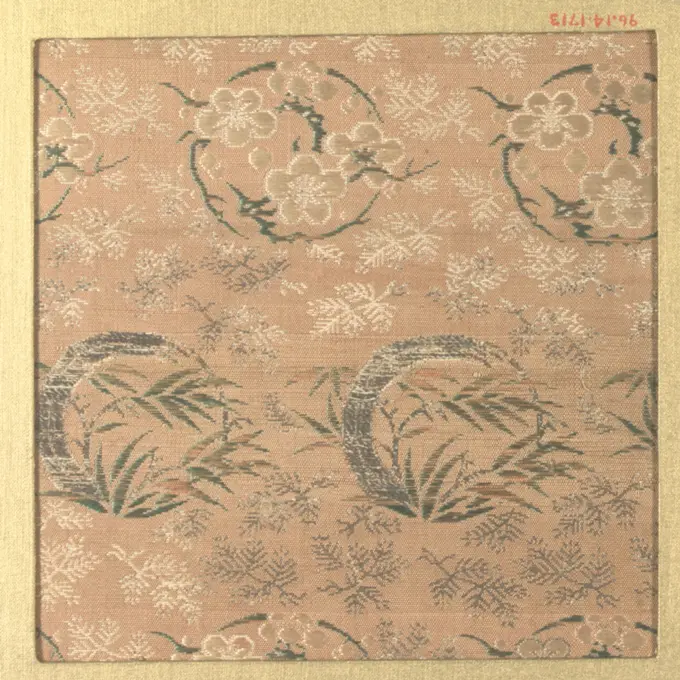
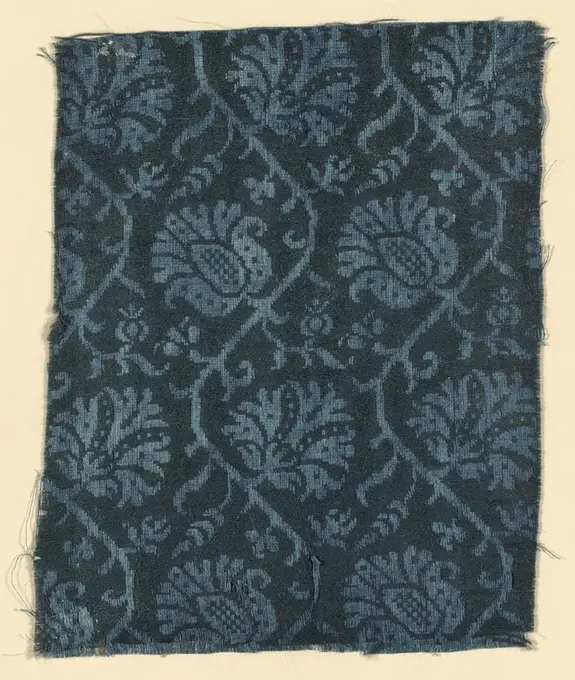
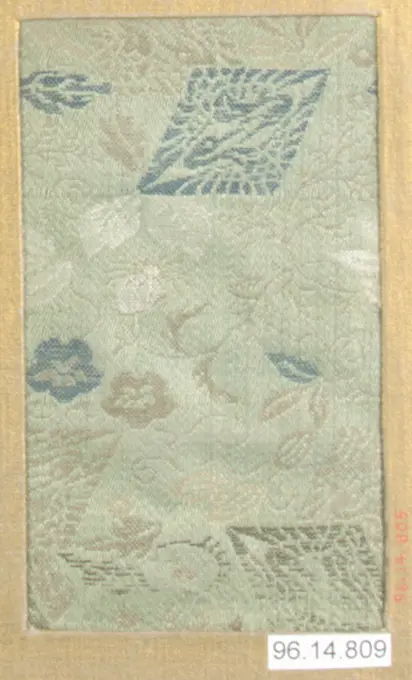
Textile (probably Italy); silk; Warp x Weft (a): 92 x 55 cm (36 1/4 x 21 5/8 in.) Warp x Weft (b): 92 x 55 cm (36 1/4 x 21 5/8 in.); Bequest of Richard Cranch Greenleaf in memory of his mother, Adeline Emma Greenleaf; 1962-56-62-a,bTextile, Medium: silk Technique: compound satin weave with supplementary weft, Crimson satin ground with a symmetrical repeat of large attenuated floral ogives in greens, pale blue, mauve, light orange, yellow, and beige. Smaller symmetrical bouquets in interstices. Motifs woven first in crimson plain weave on the satin ground; then above colors introduced in certain areas., Italy or Spain, 18th century, woven textiles, TextileFragment broached silk. A fragment silk tissue. A light blue ground has a pattern of sprinkled flower branches in purple and yellow, from which light blue wavy leaf drinks sprouts.Fragment (France); cottonTextile, Marigold; Designed by William Morris (British, 1834-1896); Made by Morris & Co. (United Kingdom); England; cottonFragment, Medium: silk Technique: lampas; combination of two structures 7&1 satin plus twill, Green silk weave, lampas, satin filed with leaf scrolls and details of checker motifs in twill weave. Large scale floral design., France or Spain, 17th century, woven textiles, FragmentPiece mid-18th century French. Piece 227399Fragment, Medium: silk Technique: compound satin with supplementary weft patterning (brocade), Fragment of woven silk showing vertical lace-like pattern with scallops in green and grey with pink and orange flowers on thorny stems. Piece made up of six fragments sewn together., possibly Italy, possibly Spain, late 17th-early 18th century, woven textiles, FragmentTextile (USA); cottonTextile Fragment 17th century. Textile Fragment 454557Green Silk Damask second half 17th century Italian, Venice or Genoa Like the nearby crimson example, this is a damask. Its subtle pattern was achieved by contrasting the shiny warp face with the matte weft face of the same weave, a technique that European weavers learned by studying imported Chinese silks. The motifs midsize scale renders this design versatile enough to be used for furnishings, wall coverings, or dress fabric. This green silk damask was displayed in European Textiles and Costume Figures, on view at the Staten Island Institute of Arts and Sciences (visible at center bottom in the photograph of 1938), and at Walton High School (visible at right in the photograph of February 9, 1939).[Elizabeth Cleland, 2020. Green Silk Damask. Italian, Venice or Genoa. second half 17th century. Silk damask weave. Textiles-WovenFragment of the fabric - in the form of tapestry or napkins;  18th century (1701-00-00-1800-00-00);Tarasowicz, Helena and Konstanty - collection, gift (provenance), fabricsWall attenuation of lamp axle with turtle pigeon pattern. Wall attenuation, consisting of three-sewing jobs Lampas.Fragment 17th century Italian. Fragment 230354Piece 19th century Japan. Piece. Japan. 19th century. Silk. Textiles-WovenTextile (England); cottonFragment, Medium: silk Technique: supplementary warp forming raised pile in 4&1 satin foundation (velvet), Rosettes enclosing smaller rosettes in red. Fragment formerly part of a chasuble., Spain, 15th-16th century, woven textiles, FragmentFragment (Italy); silk, metal threadSidewall And Border (possibly USA); machine-printed; 1972-19-2Fragment of an overgrowth of printed cretonne with swans and lissen. Fragment of an overgrowth of printed cretonne with swans and lissen.Textile (Russia); linen; Warp x Weft: 73.7 x 57.6 cm (29 x 22 11/16 in.)Fragment; same as aSamples (USA); Manufactured by Orinoka Mills (United States); Warp x Weft (a): 21.5 × 65 cm (8 7/16 × 25 9/16 in.) Warp x Weft (b): 21 × 33 cm (8 1/4 in. × 13 in.) Warp x Weft (c): 21 × 33 cm (8 1/4 in. × 13 in.) Warp x Weft (d): 15 × 32 cm (5 7/8 × 12 5/8 in.) Warp x Weft (e): 12 × 24 cm (4 3/4 × 9 7/16 in.)Piece 18th-19th century Japan. Piece. Japan. 18th-19th century. Silk. Edo (1615-1868) or Meiji period (1868-1912). Textiles-WovenLength of Textile, 1700s. Italy, 18th century. Plain cloth, brocaded; silk; average: 91.5 x 55.9 cm (36 x 22 in.).Piece 18th century Japan. Piece 71357Fragment veelkleurige gebrocheerde zijde.A fragment silk tissue with a white ground on which white winding tendrils between which gold and multicolored winding tendrils.Piece 18th-19th century Japan. Piece 65931Textile; cottonSample, Orinoka Mills, (Philadelphia, Pennsylvania, USA), Yellow warp with stripes of white weft, then pink weft and then green weft., USA, ca. 1910, woven textiles, SampleCover Made 1601-1700 Turkey. Square, linen, embroidered in a repeated ogival device imitating weaving with a palmette border .Textile, Medium: cotton Technique: stenciled resist on plain weave (katazome), Pattern of two large and two small flowers with leaves and curving stems in reserve on a dark blue ground with fine dots., Japan, 19th century, printed, dyed & painted textiles, TextileFragment, Medium: silk Technique: 41 satin damask Label: silk satin damask, Fragment of yellow silk with a symmetrical design of pomegranates and organic scrolls, with a border along the two sides., Italy, 16th-17th century, woven textiles, FragmentSemi woollen fabric from top of a cope unknownCopy of a Zandaniji Silk, early 1900s. France, Lyon, early 20th century. Compound twill weave woven on Jacquard loom; silk; overall: 40.7 x 57.7 cm (16 x 22 11/16 in.).Textile, Medium: cotton Technique: mordants for 2 reds, purple and black applied by pen and brush; madder dyed; blue applied over resist; yellow applied over blue for green, (chintz) on plain weave., Curving stems of flowers and bow-tied ribbons. European adaption of a European woven fabric design., India, 1750-1800, printed, dyed & painted textiles, TextileFragment 17th century Italian. Fragment 230675Textile (France); silkFragment of silk fabric  colourful motifs of asymmetrical floral twigs unknownWhole-Cloth QuiltCoverlet (USA); cotton, wool; Warp x Weft: 233.7 x 203.2 cm (7 ft. 8 in. x 6 ft. 8 in.); 1962-205-1Obi with Design of Fish and Marine Objects Japan. Obi with Design of Fish and Marine Objects 44624Textile, Oberkampf & Cie., (Jouy-en-Josas, France, 1759-1815), Medium: linen warp, cotton weft Technique: block printed on plain weave foundation, Fragment of printed cotton with an all-over design of intertwining branches with large, exotic flowers and pairs of birds; background is filled with fine red vine. In blue, green, yellow, and several shades of purple, red and pink on an off-white ground., Jouy, France, ca. 1785, printed, dyed & painted textiles, TextileTextile Fragment 17th century. Textile Fragment 454459Velvet Fragment, late 1600s. Italy, late 17th century. Velvet; overall: 43.5 x 19 cm (17 1/8 x 7 1/2 in.).Fragment blue and white colored silk tissue with pattern of stylized flowers and vases and sliced scalloped tires, leaves and flower branches. Fragment, blue-white with pattern of winding tires with floral vases.Fragment of silk fabric  naturaIIstic flower pattern unknownFragment, Medium: silk Technique: 5-harness satin damask, Fairly small scale allover repeat of two stylized floral motifs in staggered horizontal rows., Italy, 17th century, woven textiles, FragmentFragment of the fabric;  1730-1740 (1730-00-00-1740-00-00);on the preserved country, fabric, silk fabrics of the 18th century, purchase (provenance)Textile, Medium: silk Technique: 4&1 satin damask, Bands of arrowhead motif framing leaf device. Both selvages present., 17th century, woven textiles, TextilePiece 18th-19th century China (). Piece 65877Fragment, Medium: silk, linen, metallic thread Technique: cut supplementary warp pile (velvet), Large-scale floral symmetrical design with undulating flowering branches and leaves clasped by stylized urn. In dark blue-green ridged pile on bright yellow ground now largely discolored to tan., Russia, 18th century, woven textiles, FragmentFragment multicolored, striped silk pekin, anonymous, 1750 An excerpt of blue and white striped silk, between which colored bouquets and strokes. Note: 0.2 cm, plain binding. France silk An excerpt of blue and white striped silk, between which colored bouquets and strokes. Note: 0.2 cm, plain binding. France silkLengths of Textile, 1723-1774. France, 18th century, Period of Louis XV (1723-1774). Brocade, silk; average: 88.3 x 53.3 cm (34 3/4 x 21 in.).Border (Italy); linenSquare shawl with Quarter Shawl Layout and Ivory Center, 1848-1851. Austria, England, France, or Scotland, 19th century. 3/1 twill weave; wool; overall: 200.7 x 171.5 cm (79 x 67 1/2 in.).Pair Of Portieres (France); silk, cottonEmbroidered towel, 1800s. Turkey. Plain weave: linen; embroidery, double-running stitch: silk, gilt-metal strips and thread; average: 129.5 x 55.9 cm (51 x 22 in.).Fragments of silk fabric  lace pattern unknownSample (USA); Manufactured by Orinoka Mills (United States); Warp x Weft: 24.5 x 64 cm (9 5/8 x 25 3/16 in.)Fragment; silk, metallic threadTextile, Medium: silk Technique: compound satin weave with supplementary weft, Textile panel woven for a chair seat and back. Design in brocaded multicolored silk of floral and ribbon wreath enclosing a bouquet of realistically-worked flowers. Ground of cream-colored vertically-striped satin., France, ca. 1870, woven textiles, TextileHalf of kerchief with embroidered trimming unknownPiece 18th-19th century Japan. Piece 67415Textile (India); cotton; Warp x Weft: 55 x 39.5 cm (21 5/8 x 15 9/16 in.)Textile, Medium: linen warp, cotton weft Technique: block printed on plain weave, Handblocked textile in an incomplete floral pattern in madder colors of red and brown of floral sprays. Elaborate picotage background in red, and in sepia, a picotage design of windmill and flowers., France, ca. 1760, printed, dyed & painted textiles, TextileFragment late 18th century probably French. Fragment 223106Bobbin Lace Flounce, 18th century. Italy, Milan, 18th century. Lace, bobbin: linen; average: 365.7 x 29.9 cm (144 x 11 3/4 in.).Textile (France); linen warp, cotton weftTextile; silkFragment, Medium: silk, paper with applied gold foil Technique: compound weave, Tan background with multicolor lozenges made of four smaller lozenges with flowers. Large green and gold fan with multicolored flowers and blue sticks. Colors include purple, orange, white, green, blue, and light pink., Japan, 18th century, woven textiles, FragmentFragment of damask with marriage emblems first half 16th century Italian This splendid piece of silk damask features a pattern of ovoid forms framed by a garland of leaves, with the repeat separated into fields including a large diamond ring emerging from a crown from which hang three pears. This pattern, or ones quite similar, range in date from 1516 to well into the seventeenth century; its popularity raises the interesting question of the heraldry's identification. It is often thought to have been designed for the Medicithe diamond ring being one of their symbolsor another family whose name played on the word pera, or pear, such as the Peruzzi or the Peri. However, its widespread use suggests the motif of the ring must have made it appropriate for many families, maybe within the context of a wedding.. Fragment of damask with marriage emblems 227205Fragment 17th century Italian. Fragment 230384Fragments, Medium: cotton; metal threads Technique: embroidered on plain weave, Embroidery in design of curving stems with flowers, buds and leaves in blue, red, brown, and silver thread., France, late 18th century, embroidery & stitching, FragmentsPiece 18th-19th century Japan. Piece 65991Fragment (France); silk; Bequest of Richard Cranch Greenleaf in memory of his mother, Adeline Emma Greenleaf; 1962-56-193Textile (France); Company: J.P.Meiller et Cie.; cotton; Warp: 54 cm (21 1/4 in.). Weft: 82.5 cm (32 1/2 in.). All edges of fabric are cut. Pattern: Height: 25 cm (10 in.). Width: 20 cm (8 in.).Fragment, Medium: silk, metal thread Technique: damassé foundation (8 harness satin plus plain weave). Satin patterned by floats of discontinuous supplementary wefts, Fragment of a pattern of two alternating verticals: architectural motifs, ornamental garden-like buildings, and flowers. Two lances from the top of a building in each row create a loose diamond lattic. Two level patterns; gold and muted colors on an ivory damassé background., France, late 17th century, woven textiles, FragmentCap crown, Medium: linen Technique: bobbin lace, Brussels style, Cap crown with a central design of flowers in a vase, symmetrically framed by floral sprays and cartouches., Belgium, 18th century, lace, Cap crownFragment Made 1700-1800 Japan. Plain compound twill, silk and gilt paper; 2 1/2 strips to m.m. .Length of Painted Silk, Panel (Dress Fabric) Made 1740-1760 China (Object made in), Europe (Exported to), Asia (Object made in), United States (Exported to). Chinese silk producers, like Indian cotton makers, catered to a vast network of international consumers. Here, Chinese artisans emulated English fabrics and created a delicate floral similar to that designed by Anna Maria Garthwaite. Such floral patterns were popular both in Europe and North America. In fact, the first First Lady ofthe United States, Martha Washington, owned a gown of Chinese painted silk.. Silk, plain weave foundation; painted .Fragment early 17th century Italian. Fragment 220112Chintz Fragments (India); cottonPiece of fabric. unknown, authorMallow, Kate Faulkner, British, d. 1898, Block-printed on paper, Vertical repeat of flowers, in serpentine arrangement: b) olive on white; c) blue-green on light green., England, 1879, Wallcoverings, Sidewall, SidewallFragment; silk; Warp x Weft (right selvedge present): 33.2 x 23.6 cm (13 1/16 x 9 5/16 in.)Bed Cover or Wall Hanging. Dimensions: Textile: L. 76 1/2 in. (194.3 cm)W. 45 in. (114.3 cm)Mount: L. 84 5/8 in. (214.9 cm)W. 53 7/8 in. (136.8 cm)D. 2 3/4 in. (7 cm) Wt. 76 lbs. (34.5 kg). Date: 17th century.Foreign travelers from as early as Marco Polo knew of the quality of the embroidery produced in Gujarat, a state on India's northwestern coast, and as soon as European trade with India picked up in the early 1600s, embroidered Gujarati textiles were identified as among the most lucrative goods for export. This fragment from a hanging is one of the earliest examples of this overseas commerce, and comes from the Ashburnham House in Sussex, England. Embroideries like this were probably made at different centers throughout Gujarat, but are usually associated with Cambay, the port from which they were exported. Museum: Metropolitan Museum of Art, New York, USA.Textile, Medium: cotton Technique: block printed on plain weave; yellow applied by brush, Rows of rosettes and swags in a straight repeat on a picotage ground., France, 18th century, printed, dyed & painted textiles, TextileKesa Made 1775-1800 Japan. .Textile, Medium: cotton Technique: roller printed on plain weave, Peacocks and pecking chicks set in a rocky landscape amongst large flowering branches. Primarily red and black on a light blue ground., England, 1850s, printed, dyed & painted textiles, TextileFragments of upholstery fabric  oak branches motifs unknownTextile (United States or England); Warp x Weft: 53 1/4 in. × 26 in. (135.3 × 66 cm)Piece 18th-19th century Japan. Piece. Japan. 18th-19th century. Silk. Textiles-WovenTextile 1700-1899 Russian. Textile 173407Fragment. Europe. Date: 1601-1625. Dimensions: 24.5 × 19.6 cm (9 5/8 × 7 3/4 in.). Linen and wool, plain weave; tied and free double cloth. Origin: Europe. Museum: The Chicago Art Institute, Chicago, USA.Fragment 17th century Italian. Fragment 230211Valance (France); cottonPiece 18th-19th century Japan. Piece 67452Fragment, Medium: silk Technique: woven, Small sprigs contained in a lattice-like framework., Iran, 18th-19th century, woven textiles, FragmentPiece 18th-19th century Japan. Piece 66533