Decorative Textiles

A collection of silk and cotton textiles with intricate floral patterns, showcasing various colors and textures, typical of historical European designs.
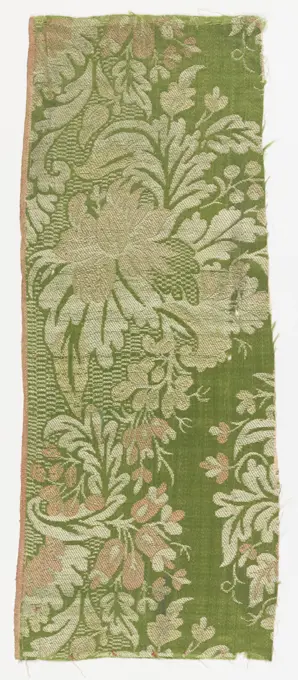
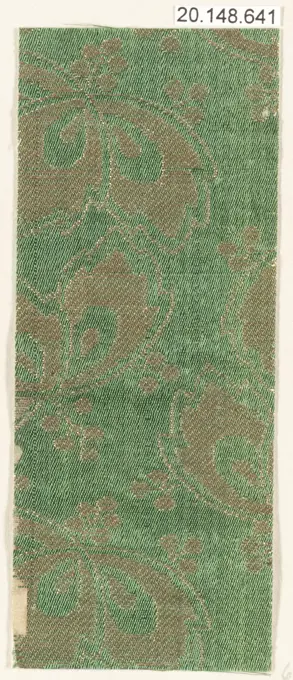
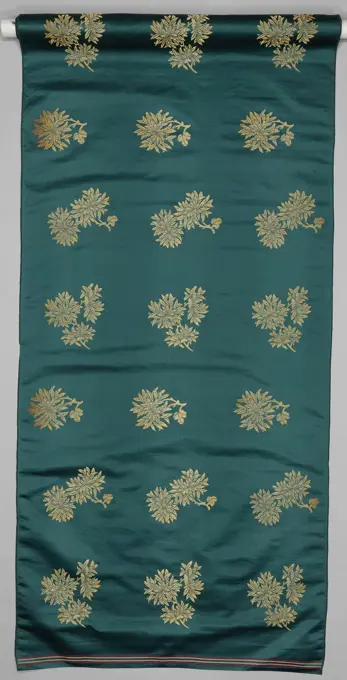
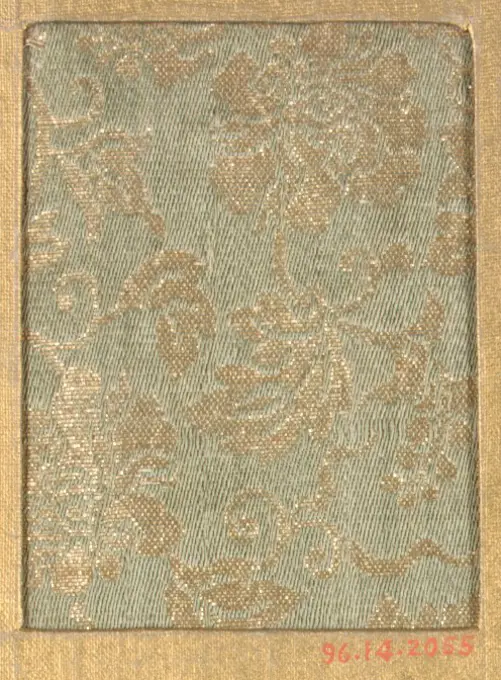
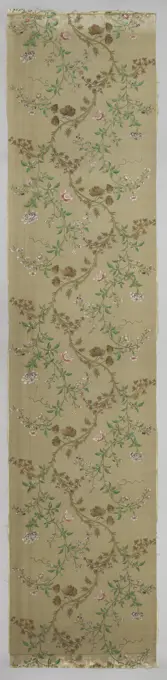
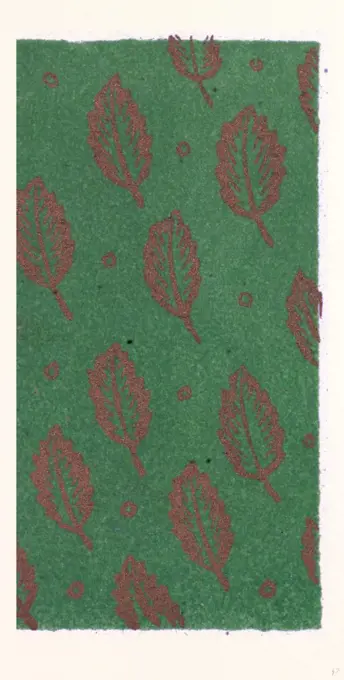
Fragment, Medium: silk Technique: lampas; combination of two structures 7&1 satin plus twill, Green silk weave, lampas, satin filed with leaf scrolls and details of checker motifs in twill weave. Large scale floral design., France or Spain, 17th century, woven textiles, Fragment
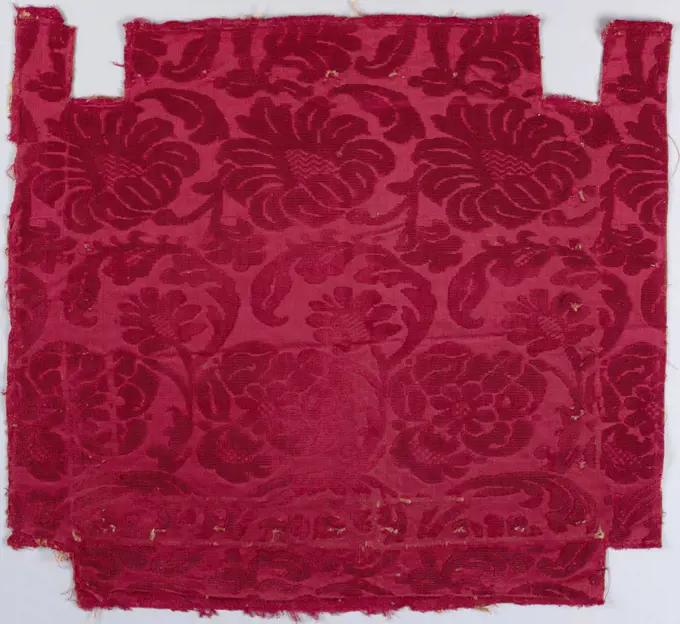
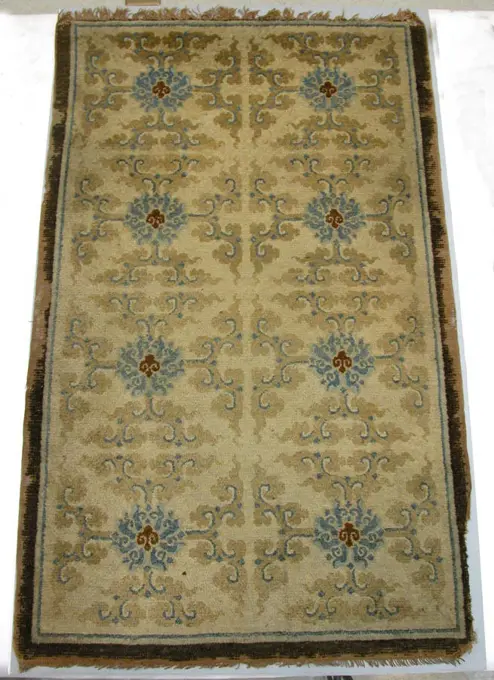
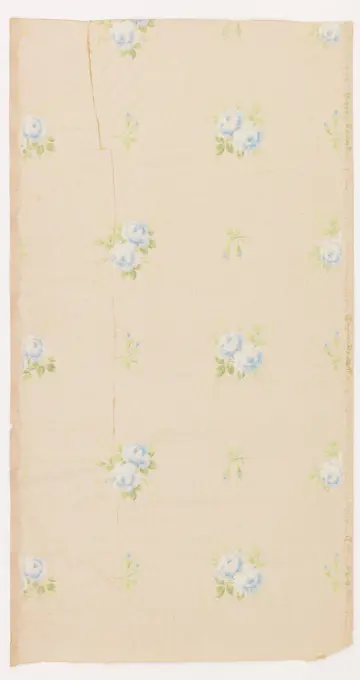
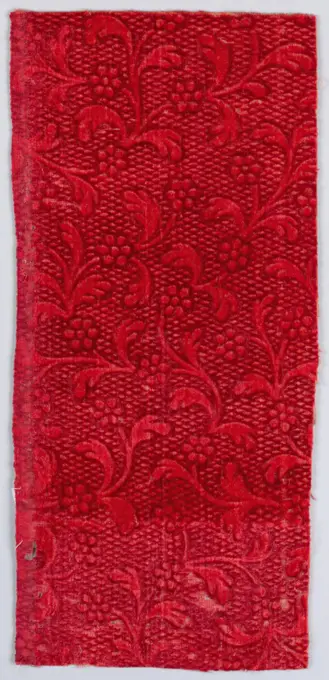
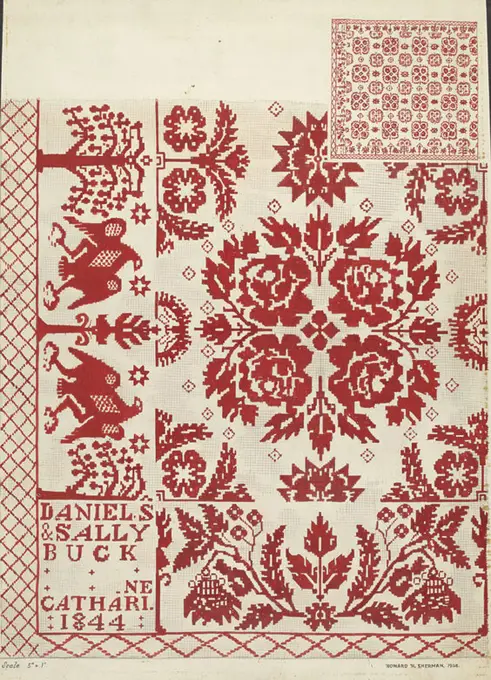
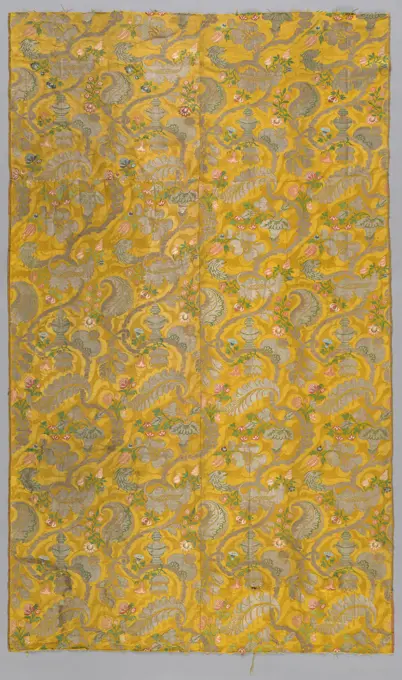
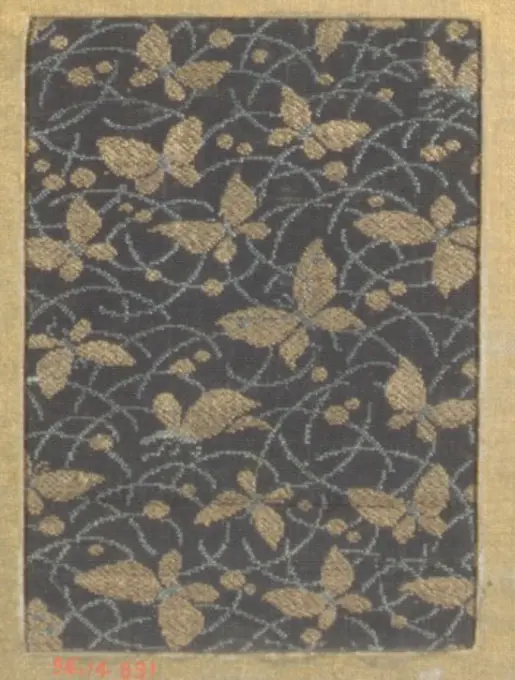
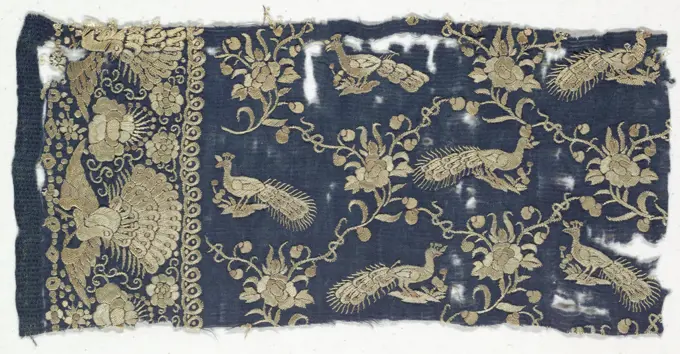
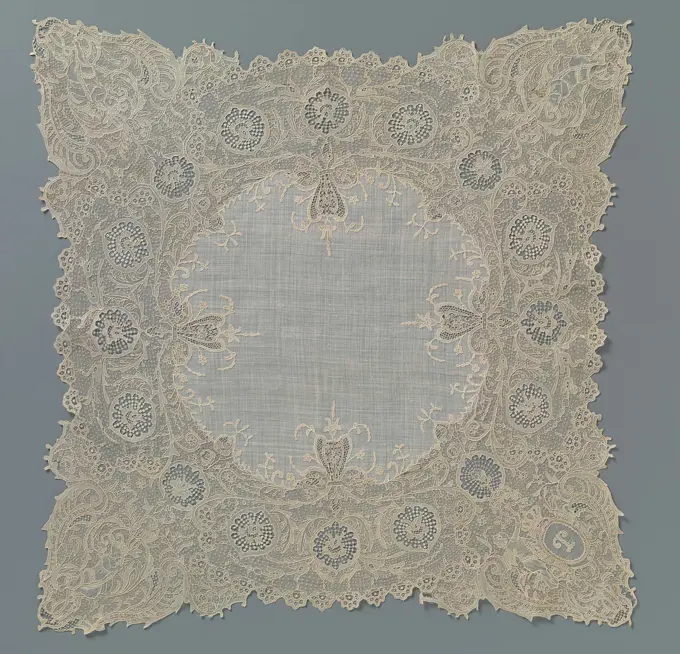
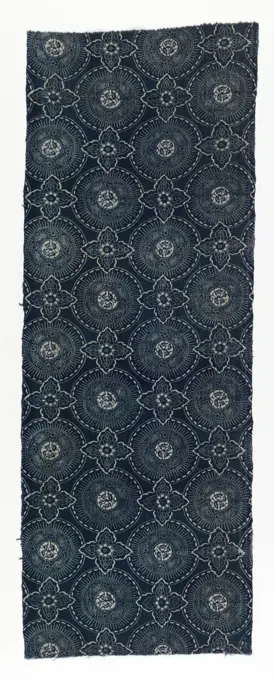
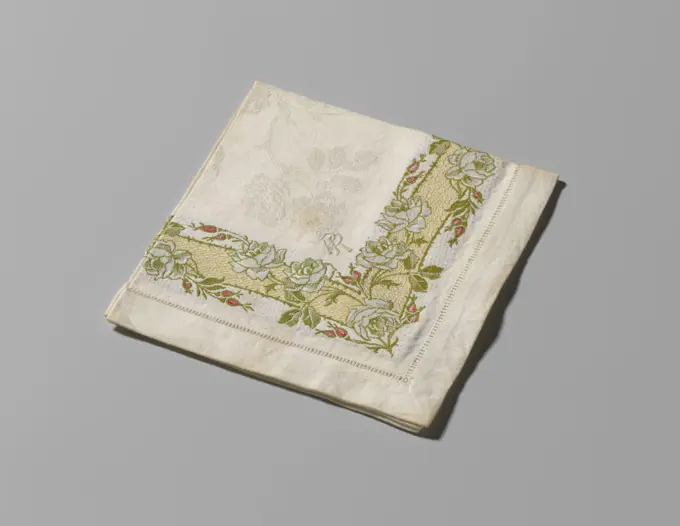
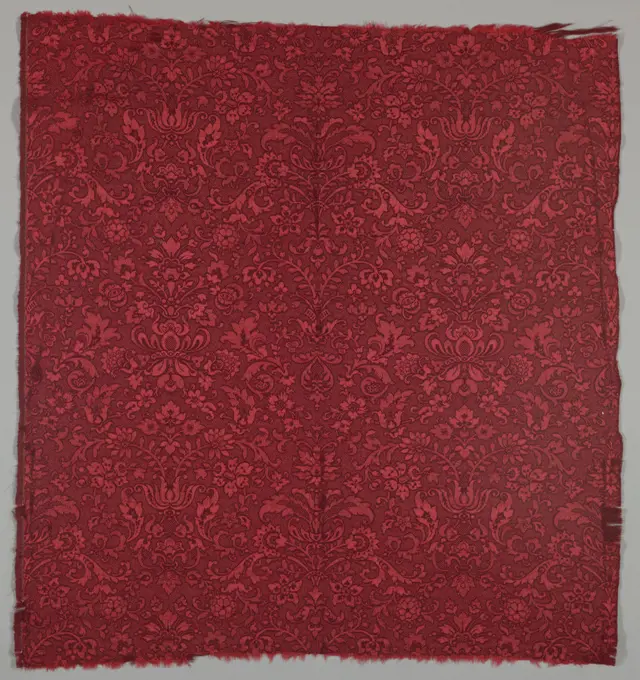
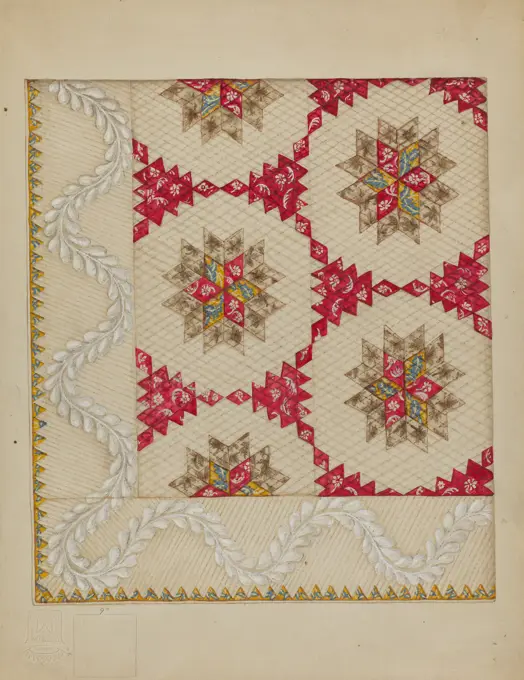
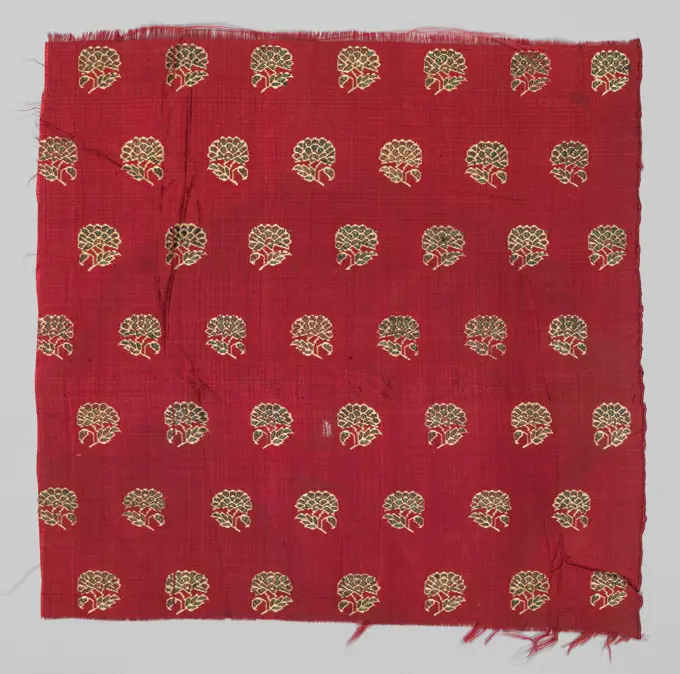
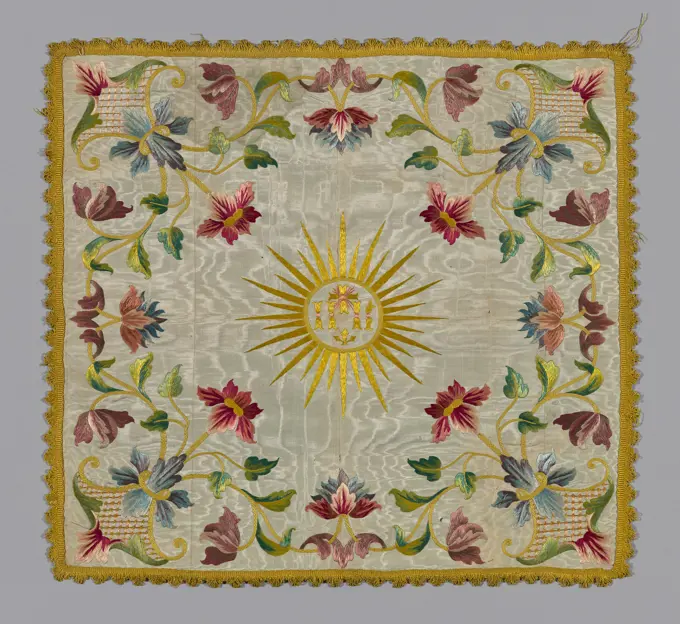
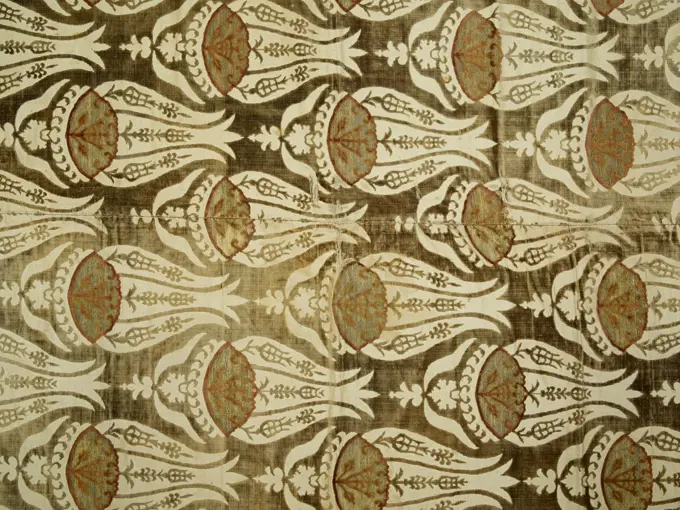
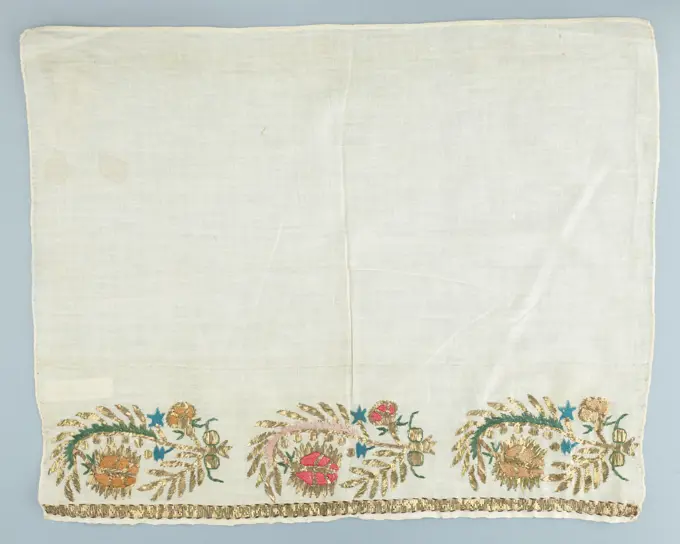
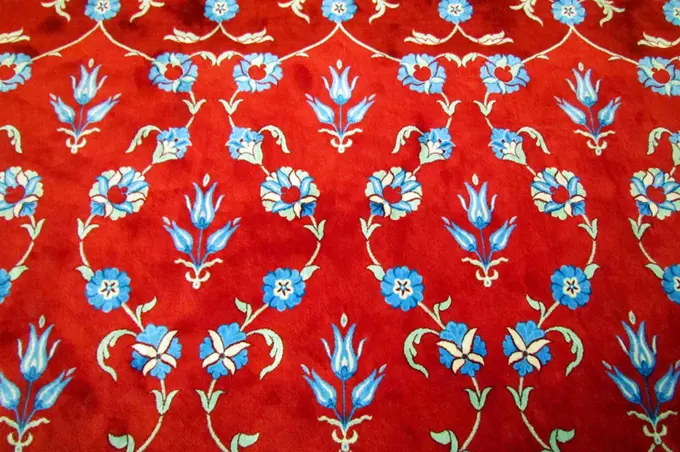
Patchwork, Medium: cotton Technique: patchwork of printed fabric, Piece of patchwork consisting of alternating patches made from two different fabrics, about 4 inches square. One fabric has flowers in red, dark brown and violet with black outlines for stems on a white ground. The other fabric has two shades of violet-brown in vertical stripes with a tiny flower head design reserved in white. Cotton is coarse and heavy., England or USA, 19th century, embroidery & stitching, PatchworkHandkerchief 1886 Hungarian. Handkerchief 168725Textile, Kennet; Made by Morris & Co. (United Kingdom); England; cottonLength of Textile, early 1700s. France or Italy, early 18th century. Brocade on satin; overall: 94.5 x 54.8 cm (37 3/16 x 21 9/16 in.).Sidewall - Fragment (possibly USA); machine-printed; 20.5 x 5 cm (8 1/16 x 1 15/16 in.)Band (Greece); silk embroidery on linen foundationBook cover with overall pattern of stars or flower shapes and dots 19th century Anonymous. Book cover with overall pattern of stars or flower shapes and dots. Anonymous , 19th century. 19th century. Relief print (wood or metal). PrintsBetty Jacob, Coverlet, c 1940 CoverletFragment (Japan)Length Russian 19th centuryPiece 18th-19th century Japan. Piece. Japan. 18th-19th century. Silk. Edo (1615-1868). Textiles-WovenFragment, Medium: silk Technique: raised pile (cut and uncut) made of supplementary warp in a satin foundation, Elongated peony and palm motifs in red., possibly 18th century, woven textiles, FragmentTextile, Powdered; Made by Morris & Co. (United Kingdom); England; cottonRug 18th century China. Rug 67875Textile Length. Italy or France, 1660-1680. Textiles; textile lengths. Silk damask with metallic-thread discontinous supplementary-weft patterning (brocade)Ceiling Paper (USA); Manufactured by Carey Bros. W.P. Mfg. Co.; machine-printed paper, liquid mica; 92.5 x 49 cm (36 7/16 x 19 5/16 in.)Ornament, Medium: linen Technique: early 17th c. needle lace and style, Diamond-shaped fragment of centered sun motif and heart-shaped form connected by elaborate floral and foliated form., Italy, early 17th century, lace, OrnamentPiece 1750-60 French. Piece 220434Chasuble with embroidered orphrey unknownFragment, Medium: silk Technique: supplementary weft forming raised pile, then embossed., Floral sprays on red ground., 18th century, printed, dyed & painted textiles, FragmentSample of textile, Orinoka Mills, (Philadelphia, Pennsylvania, USA), Pink warp with green, red, yellow, blue and pink weft making floral pattern., USA, ca. 1910, woven textiles, Sample of textileFragment Made 1625-1650 Italy. cisele voided cloth velvet .Coverlet. Dated: 1935/1942. Dimensions: overall: 35.4 x 25.4 cm (13 15/16 x 10 in.) Original IAD Object: 79" long; 85 1/2" wide. Medium: watercolor and graphite on paper. Museum: National Gallery of Art, Washington DC. Author: Howard H. Sherman.Piece 18th century Japan. Piece 71636Coverlet Made 1850 New York. Cotton and wool, plain weave double cloth; woven on loom with Jacquard attachment; full loom width; seamless . Charlotte Purchase Thornton (Weaver)Kosode (Kimono) Fragment with Maple Leaves and Water. Japan, Edo period (1615-1868), 18th century. Textiles. Silk figured satin (rinzu) stenciled imitation tie-dyed (kata konoko shibori) and silk- and gilt-paper-wrapped-silk-thread embroideryTable Cover, late 1600s - early 1700s. Italy, Venice, late 17th-early 18th century. Satin weave, brocaded; silk and metal thread; overall: 170.2 x 102.2 cm (67 x 40 1/4 in.).Curtain of eggplant -colored velor, finished with a wide galon of beige and multicolored velor with gold thread, c. 1900 - c. 1925 Curtain of eggplant -colored velor, finished with a wide galon of beige and multicolored velor with gold thread. Model: Velor's stake from two lanes with full width and one narrower track. Vertical sewn decorative edge with wanned bar velor. Along the bottom decorative edge in width. Lining: Dark purple -red satinet, finished with wine red decorative cord. Pattern: decorative edges with motifs such as Caucasian carpetrand, all figures embroidered with gold thread. Marked on white band: front salon and goat for L. Netherlands (possibly) silk velvet (fabric weave) Curtain of eggplant -colored velor, finished with a wide galon of beige and multicolored velor with gold thread. Model: Velor's stake from two lanes with full width and one narrower track. Vertical sewn decorative edge with wanned bar velor. Along the bottom decorative edge in width. Lining: Dark puPiece 18th-19th century Japan. Piece 66555Lane side with a three-time branches design with leaves. Job silk with three times three branches with leaves of gold thread (metal lambs to yellow silk core) on a dark green fond. Oriental textile.Vitrage in Neo Lodewijk-XVI style, with copper rings. Vitrage in Neo Lodewijk-Xvie style, with copper rings.Fragments, Medium: silk Technique: embroidered, Dark blue silk ground with all-over close embroidery in silks which were originally polychrome, but are now tan. Design on body of piece of profile peacocks alternating with flowering branches. Border of blossoms alternating with peacocks with spread feathers., China, 19th century, embroidery & stitching, FragmentsPiece 18th-19th century Japan. Piece 66459Cope with Orphrey Band, Hood and Remnants of a Morse Made 1775-1800 Italy. Silk, plain weave; underlaid with linen, plain weave and embroidered with silk floss, gold gilt strips, and paillettes in satin stitch; laid work, couching, and padded couching .Bliżej Kultury unknownLinnamast napkin with stars, c. 1850 - c. 1875 Linnamast napkin. The pattern has rows with large and small stars that alternate. The edge consists of three lines of which the outerste with flowerguirles and the middle feathers are enclosed with feathers. The napkin is marked in red with a cross stitch: GR 24 and has a sewn number 1193 in red on white. North Brabant (Possibly) linen (material) damask Linnamast napkin. The pattern has rows with large and small stars that alternate. The edge consists of three lines of which the outerste with flowerguirles and the middle feathers are enclosed with feathers. The napkin is marked in red with a cross stitch: GR 24 and has a sewn number 1193 in red on white. North Brabant (Possibly) linen (material) damaskTextile; Manufactured by Schwartz-Huguenin; cottonFragment; silk; 1974-101-30Two fragments of embroidery unknownSampler, Medium: silk embroidery on linen foundation Technique: embroidered on plain weave, Ornamental border enclosing alphabet, vases of flowers, birds, and Adam and Eve., Germany, 1827, embroidery & stitching, SamplerHandkerchief with a border of needle side with amornets. Handkerchief with an edge of natural needle side: Brussels mesh edge. A wide edge looks around a batters in the middle piece with a substantially symmetrical pattern. Sixteen opened spitsavals in a circle are on an extremely fine, with mashed fonds. Along the sides, a wide, braco-shaped branch runs from a motif formed as a French lily, which overcels the circle of the batist. The branches are over in a circular sculpture of palm mining flowers. In the corners there are big points of this circle outside this circle and decided by two lobards. In one of the corners there is an oval shield with a t, enclosed by a rolling cartouche and gtekt through a crown. On the left is a winged amoret with an arrow in the raised hand, the tip of which is directed downwards and that continues upwards in a rank and a torch. In the other corners there is a climbing amoret in an asymmetrical spiral rank.Boetticher Carl (1806-1889), various decorations, fabrics, wallpaper (without date): Detail. Tempera colored on paper, 28.2 x 21.7 cm (including scan edges) Boetticher Carl  (1806-1889): Verschiedene Dekorationen, Stoffe, TapetenFrontage, Medium: linen Technique: needle lace, Horizontal panel of heavy Venetian point lace in relief has a slightly scalloped edge in the center. Scrolling design of flowers and foliage., Venice, Italy, 1650-65, lace, FrontageFragment (France); linen warp, cotton weft; Warp x Weft: 58.5 x 18 cm (23 1/16 x 7 1/16 in.)Fragment, Medium: silk, linen Technique: two integrated structures, Partial design of curving scrolls forming cartouches in blue, white and yellow., 17th century, woven textiles, FragmentTextile (England); cottonFragment (China); silk wovenSampler (Austria); silk and metal-wrapped silk embroidery, linen foundationPiece 18th-19th century Japan. Piece 67722Dress Fragment (China); silk; Warp: 26.5cm (10 3/8 in.). Weft: (selvage to selvage) 74cm (29 in. ).; Bequest of Elinor Merrell; 1995-50-298Textile, Medium: cotton Technique: stenciled resist (katazome) on plain weave, Length of stencil resist (katazome) with ivory pattern on blue ground. Circles (10cm in diameter) connected by smaller flowers with four peatls., Japan, 19th century, printed, dyed & painted textiles, TextilePatterns on a tiled stove in the Bran Muster Castle on a tiled stove in Bran Törzburg Castle in Transylvania, Romania Pattern on a Tilt Stove In The Palace of Bran Toerzburg in TransSylvania, RomaniaFragment of celadon satin  yellow and white pattern made of styIIsed sprays of flowers unknownSample (France); silk; Anonymous bequest in memory of Albert and Rebecca Elsberg; 1938-82-165-cPiece 18th-19th century Japan. Piece 67767Pillow cover Made 1610-1630 England. Linen, plain weave; embroidered with silk, silvered-metal-strip-wrapped silk and silvered-metal coils in stem filling and tent stitches; laid work, couching and French knots; edged with silvered-metal-strip-wrapped silk, bobbin straight lace; backed with silk, plain weave; quilted .Linnamast finger cloth with a flower pattern, c. 1920 - c. 1930 Finger cloth from Linnamast with multicolored woven edges (cotton). In the middle rose branches in white, rose branches in the green, red and white rose branches against a yellow stock. Around Ajourzomen. In a corner a green -embroidered monogram pvr. The finger cloth belongs to five finger cloths (BK-1980-168-A to BK-1980-168-F) and a tablecloth (BK-1980-167). Germany (possibly) linen (material) damask Finger cloth from Linnamast with multicolored woven edges (cotton). In the middle rose branches in white, rose branches in the green, red and white rose branches against a yellow stock. Around Ajourzomen. In a corner a green -embroidered monogram pvr. The finger cloth belongs to five finger cloths (BK-1980-168-A to BK-1980-168-F) and a tablecloth (BK-1980-167). Germany (possibly) linen (material) damaskTextile, Medium: wool, silk Technique: satin weave, Orange silk warp and dark red wool weft. Scrolling symmetrical floral pattern rising vertically., possibly USA, 1850-60, woven textiles, TextileCuff, Medium: linen Technique: needle lace with ground of loop and twist with twist return, Cuff intended for an alb with a design of stylized floral and foliated forms originating in a centrally placed heart-shaped motif. Fond: réseau. Modes: réseau mouché, venises, portes., Italy, mid-18th century, lace, CuffHanging (China); silk, gilded paper, cotton liningIrene Schaefer, Patchwork Quilt, c 1936 Patchwork QuiltCoverlet Made 1868 United States. Cotton and wool, plain weave with plain interlacings of secondary binding warps and supplementary patterning wefts; main warp and supplementary warp fringe (tied double cloth; Biederwand); woven on loom with Jacquard attachment . Daniel Stephenson (Weaver)Textile Fragment 18th century. Textile Fragment. 18th century. Silk; brocaded. Made in India, Benares. Textiles-BrocadesTextile Fragment, 1800s. Japan, 19th century. Silk, metallic thread; average: 24.1 x 21.3 cm (9 1/2 x 8 3/8 in.).Textile (France); cottonChalice Cover Modeled 1801-1900 Italy. Silk, warp faced tabby in moirÈ, with silk, tabby lining and twisted silk fringe.Embroidered in silk floss and twisted silk (2-ply)Stitches Long and short, couching (in pairs), couched filling. satin, (flat), split .Fragment, Medium: silk, 17th century, woven textiles, FragmentFragment; silk, linen(), wool ()_detail. Furnishing fabric, 1600-1700. Velvet decorated with tulip head design in buff, brown, rust and silver. From the collection of William Morris. A note by Miss May Morris, attached to the hanging when received states that it was used as a pall at her father's funeralFragment; silkPanel Made 1675-1700 England. Cotton and linen, weft-float faced twill weave; embroidered with wool in back, buttonhole, coral, Romanian, satin and stem stitches; French knots and couching; Binding wool, plain weave .Sample, Orinoka Mills, (Philadelphia, Pennsylvania, USA), Light green warp with pink and green wefts., USA, ca. 1910, woven textiles, SampleTextile (England); silk; Warp x Weft (a): 107 x 53 cm (42 1/8 x 20 7/8 in.) Warp x Weft (b): 105.5 x 53 cm (41 9/16 x 20 7/8 in.) Repeat H: 36 cm (14 3/16 in.)Piece French 19th centuryVignette with a brist ornament; Aldegrever, Heinrich (Ca 1502-1555 cars 1561); 1532 (1st edition) (1532-00-00-1561-00-00);Trimming from embroidered kerchief unknownSpanning fabric with backdrop of branches, leaves, flowers and fruits, anonymous, c. 1750 - c. 1790 A lane multicolored painted cream spancing material from silk. Description See A. China silk printing / painting A lane multicolored painted cream spancing material from silk. Description See A. China silk printing / paintingTextile (Italy); silkSidewall, Cresswell & Washburn Ltd, Philadelphia, Pennsylvania, 1880 - 1900, Machine-printed paper, Foliate medallion on stripe. Printed in red, black and white on red ground., Philadelphia, Pennsylvania, USA, 1905-1915, Wallcoverings, SidewallTextile, Medium: silk Technique: woven, Length of woven silk with densely arranged flowers in brown and silver-gray on a dark blue ground., Northern Europe, 1660-70, woven textiles, TextileTextile Fragment. Iran or India, late 16th-early 17th century. Textiles; textile lengths. Silk and metallic-thread double weaveQuilt Patches. Dated: c. 1938. Dimensions: overall: 28 x 22.9 cm (11 x 9 in.). Medium: watercolor and gouache on paperboard. Museum: National Gallery of Art, Washington DC. Author: Edward White.Piece 18th-19th century Japan. Piece 65827The Sultan Ahmed Mosque is an historical mosque in Istanbul, the largest city in Turkey and the capital of the Ottoman Empire (from 1453 to 1923). The mosque is popularly known as the Blue Mosque for the blue tiles adorning the walls of its interior. It was built from 1609 to 1616, during the rule of Ahmed I. Like many other mosques, it also comprises a tomb of the founder, a madrassa and a hospice. Although tulips are generally associated with the Netherlands, commercial cultivation of the flower began in the Ottoman Empire. The tulip, or lale as it is also called in Iran and Turkey, is a flower indigenous to a vast area encompassing arid parts of Africa, Asia, and Europe. The word tulip, which earlier appeared in English in forms such as tulipa or tulipant, entered the language by way of French tulipe and its obsolete form tulipan or by way of Modern Latin tulipa, from Ottoman Turkish tulbend.Fragment multicolored brochure silk, 1750 Three fragments multicolored silk tissue. The pattern has multicolored flowers on a blue ground. Spain silk Three fragments multicolored silk tissue. The pattern has multicolored flowers on a blue ground. Spain silkSpanning fabric with backdrop of branches, leaves, flowers and fruits, anonymous, c. 1750 - c. 1790 A lane multicolored painted cream spancing material from silk. Description See A. China silk printing / painting A lane multicolored painted cream spancing material from silk. Description See A. China silk printing / paintingDress of Eastern textile with multi -colored embroidery ,, c. 1800 - c. 1899 Dress of multi -colored tambourized cotton, decorated with flower vines and ornament, lined with cotton. India cotton (textile). silk Dress of multi -colored tambourized cotton, decorated with flower vines and ornament, lined with cotton. India cotton (textile). silkTextile Sample from Sample Book 19th century Japan. Textile Sample from Sample Book 68234Piece 16th century Japan. Piece 72007Welum;  16th century (1501-00-00-1600-00-00);Medieval ornamentWall Hanging, 21 3/4 x 33 3/8 in. (55.25 x 84.77 cm), Cotton; needlework, ChinaPiece French 19th century View more. Piece. French. 19th century. Textiles-TrimmingsBand (Greece); silk embroidery on linen foundationAlbum of Paintings by the Venerable Zeshin, 1847. Shibata Zeshin (Japanese, 1807-1891). Album of twelve leaves; ink, color, and gold on silk; album, closed: 26 x 24.1 cm (10 1/4 x 9 1/2 in.); album, opened: 26.1 x 48.6 cm (10 1/4 x 19 1/8 in.).Back of a chasuble. unknown, authorSample (France); Designed by Herman A. Elsberg (American, 1869-1938); silkSidewall, Frederick Beck & Co., 1860, Machine-printed paper, On white ground vertical stems bearing light blue poppies, with watered glazed area between them. Drop repeat, straight match. On left margin: 'Fr. Beck and Co. / 110 D W'., New York, USA, ca. 1912, Wallcoverings, SidewallCoverlet Made 1847 Indiana. Cotton and wool, plain weave with plain interlacings of secondary binding warps and patterning wefts (Beiderwand); woven on loom with Jacquard attachment; two loom widths joined; fringed . F. A. Kean (Weaver)Sidewall - Sample (USA); machine-printed on paper; 67 x 48 cm (26 3/8 x 18 7/8 in.)