Decorative Textiles and Embroidery

A variety of intricate textile fragments and garments featuring rich embroidery and patterns from different periods and cultural backgrounds.

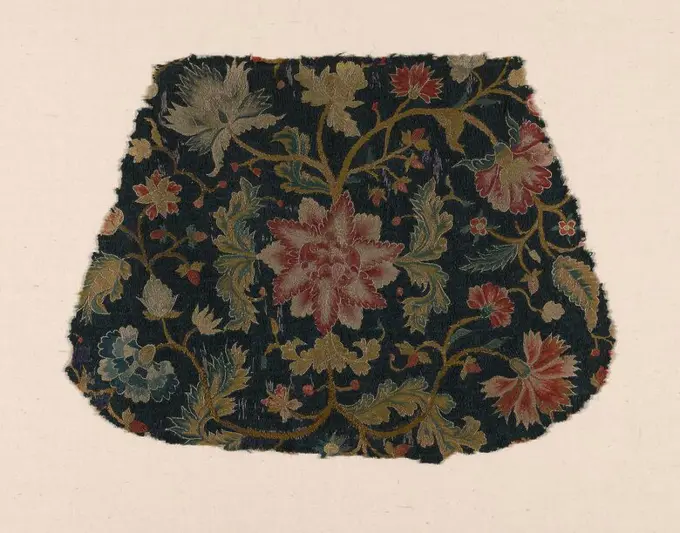
Fragment, Medium: silk Technique: supplementary warp forming raised pile in twill () foundation (velvet), Clusters of carnations and leaves on mounds on blue background., India, 17th century, woven textiles, Fragment
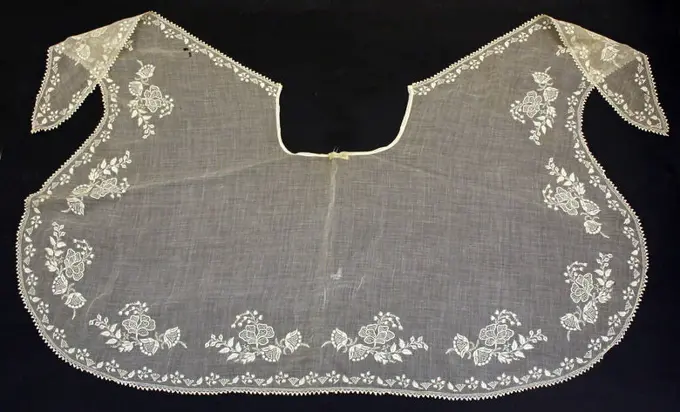
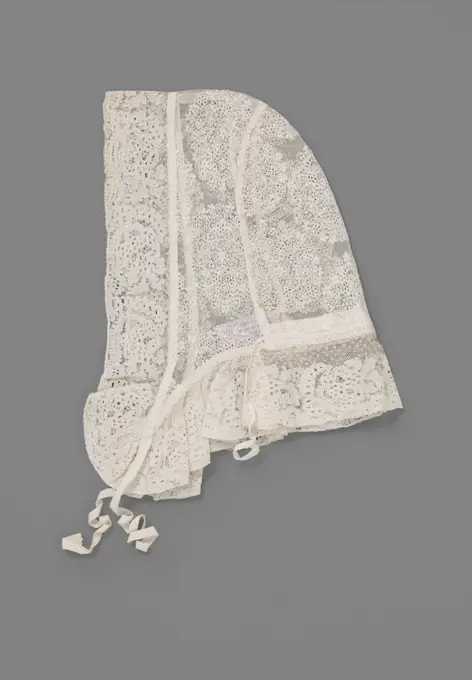
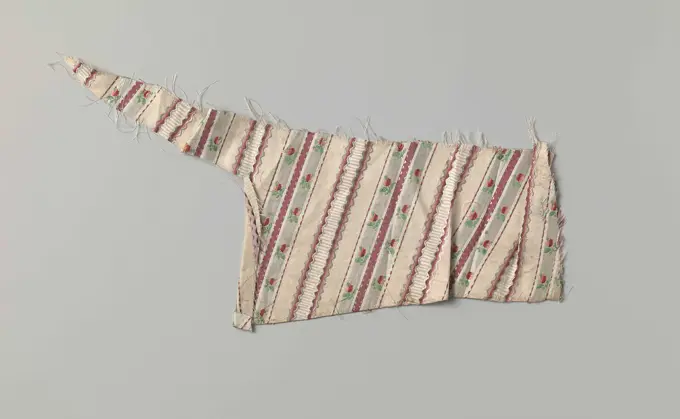
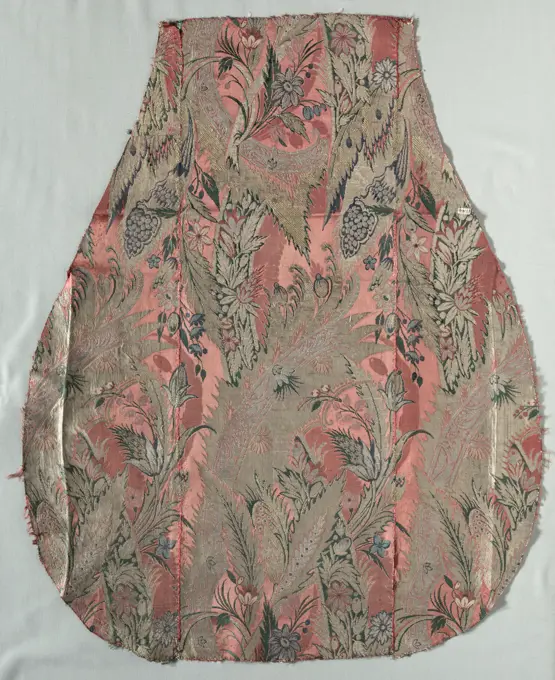
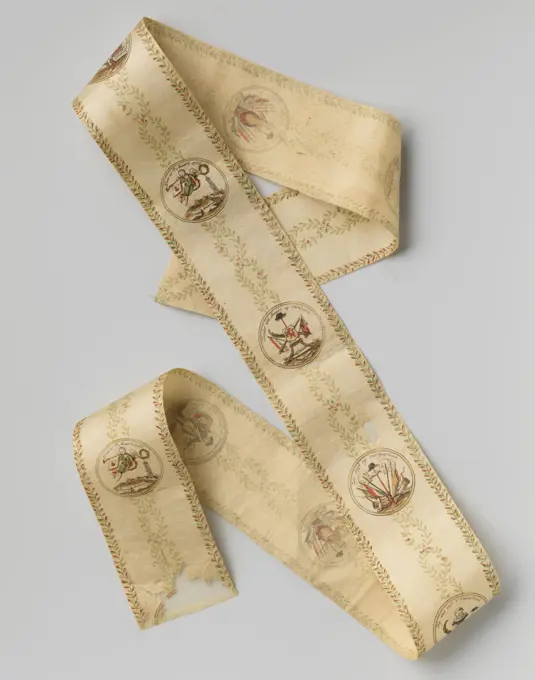
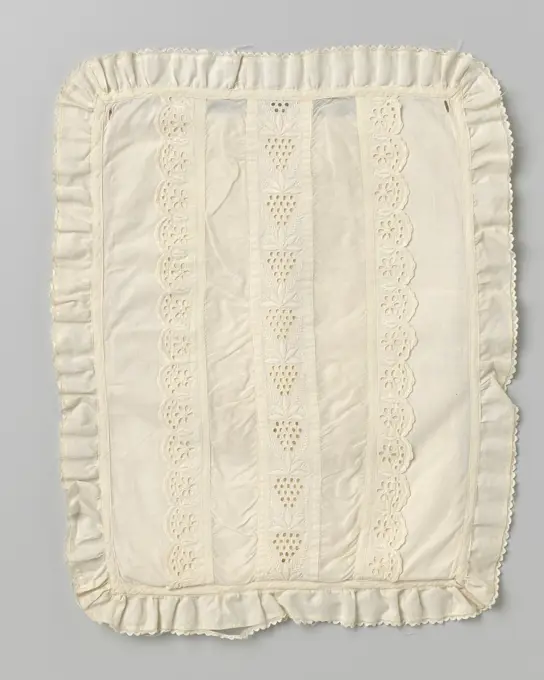
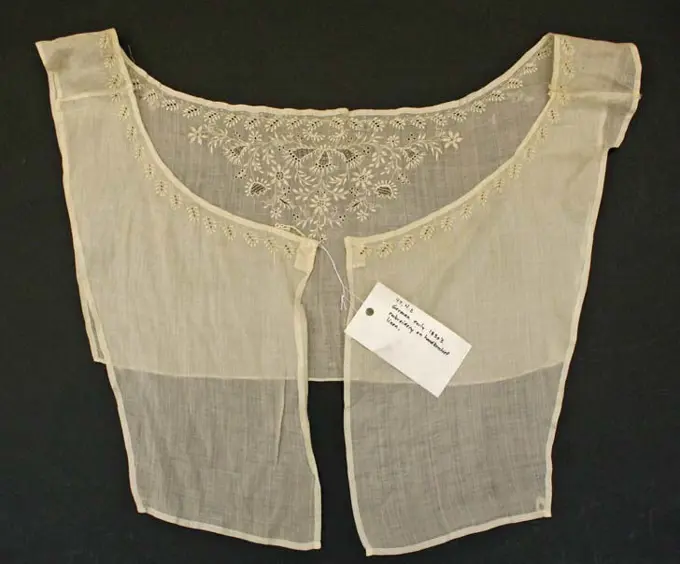
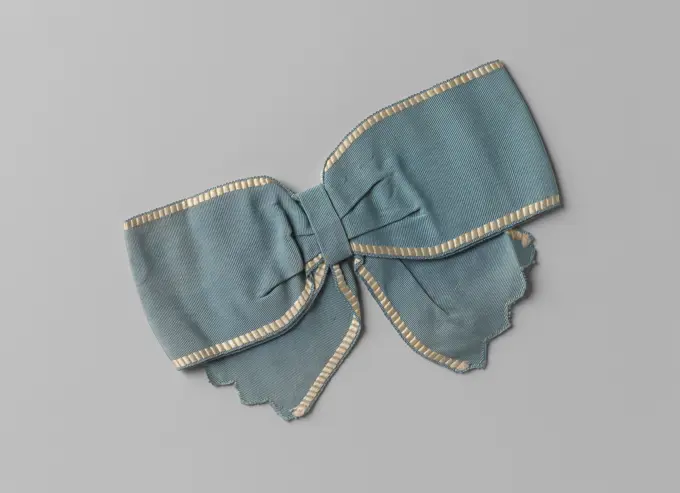
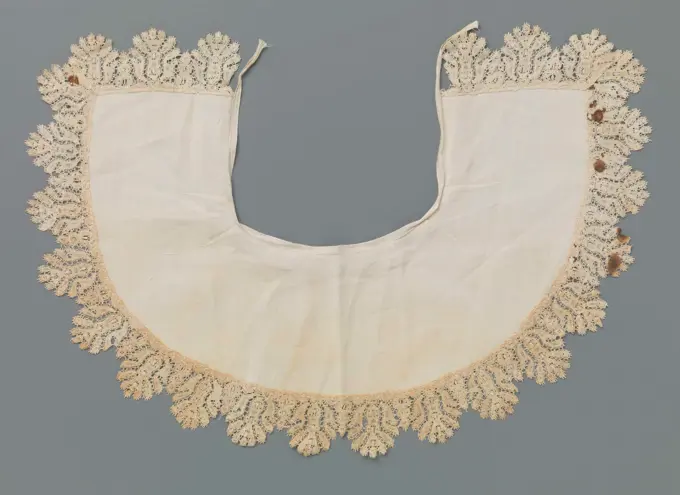
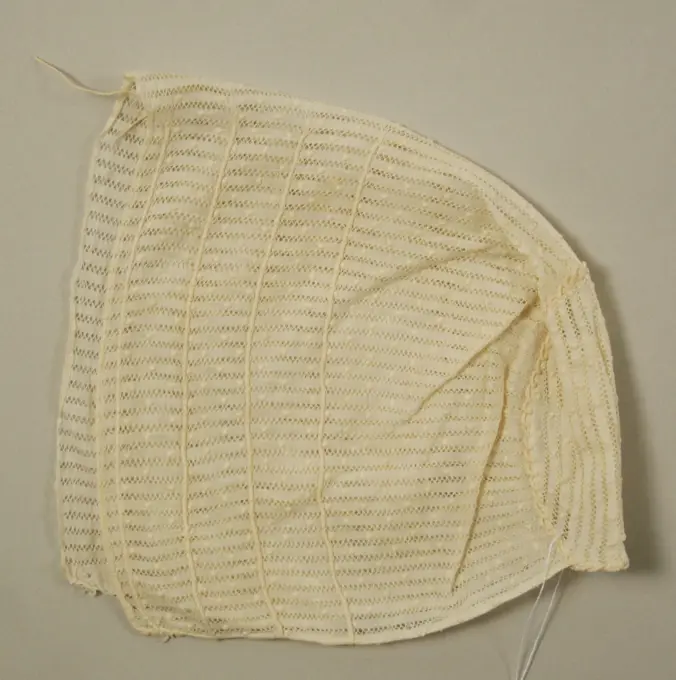
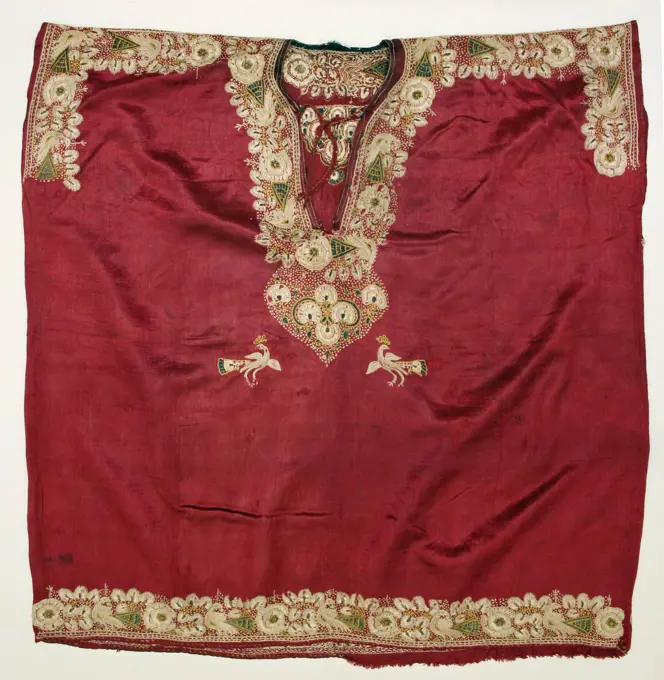
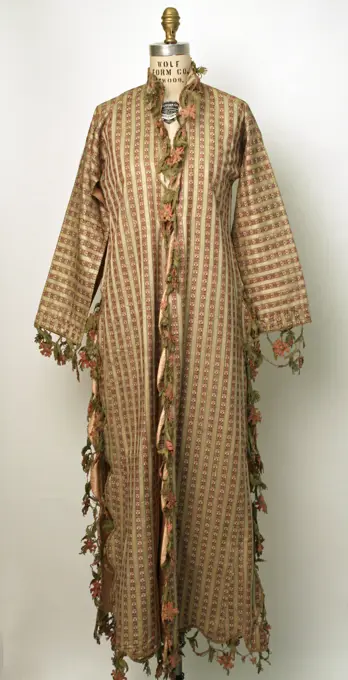
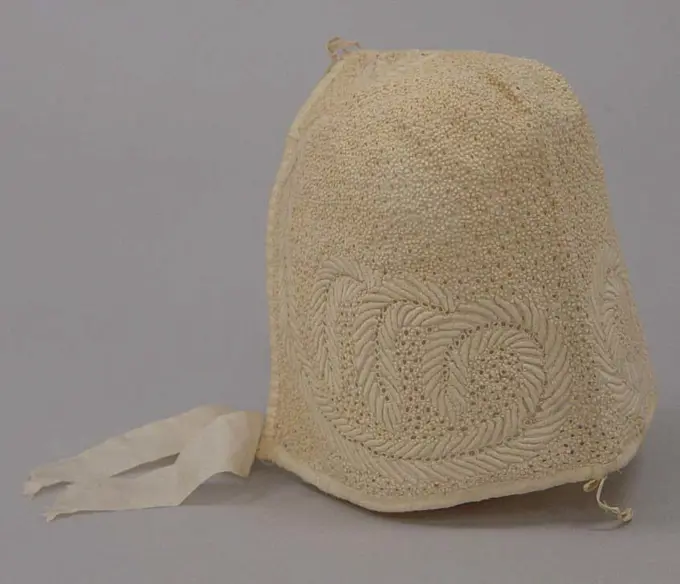
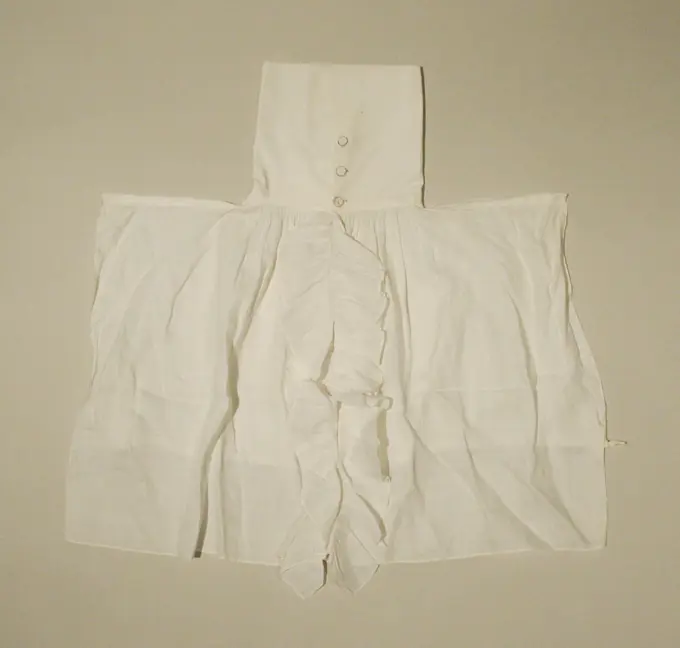
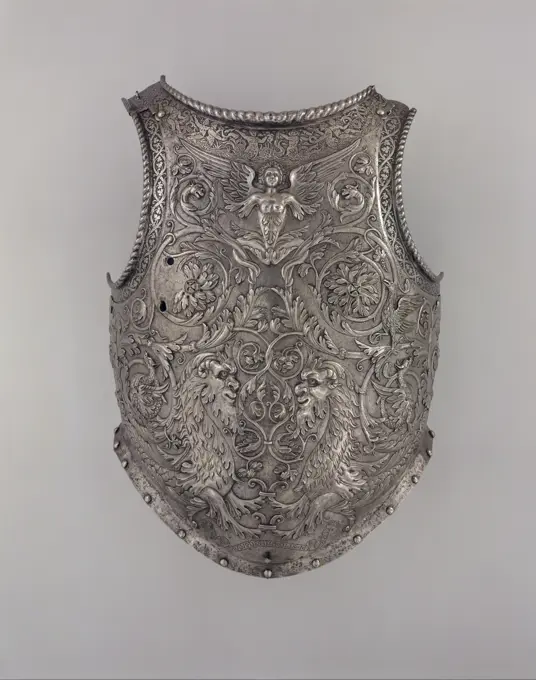
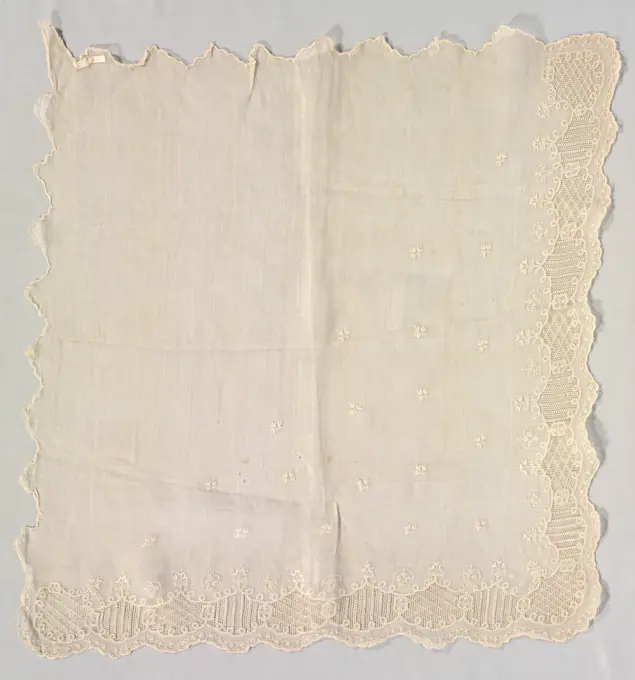
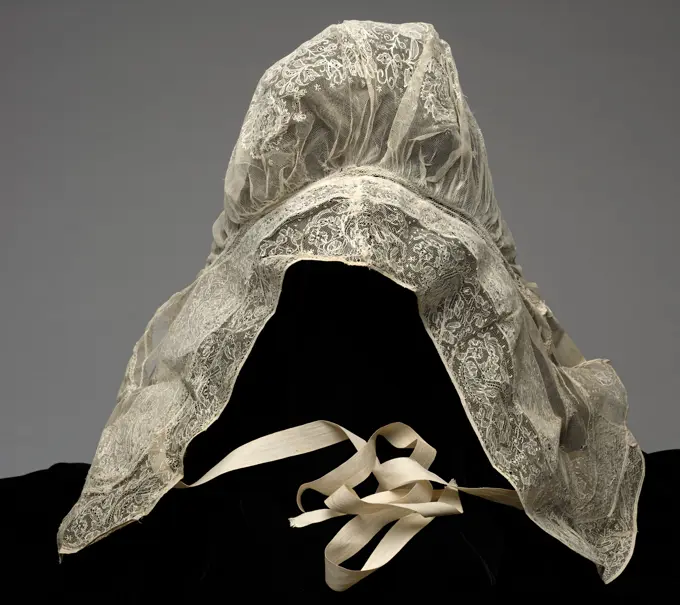
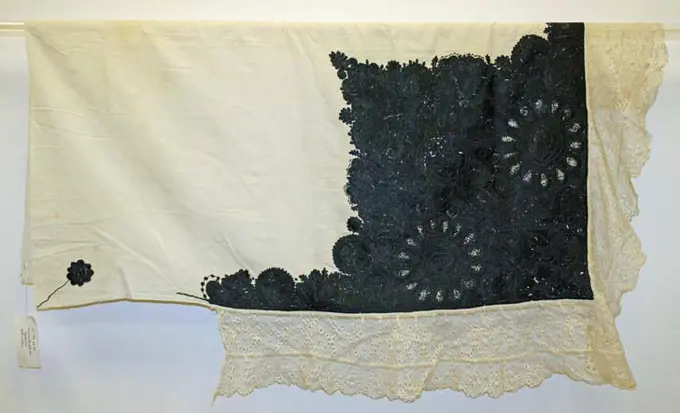
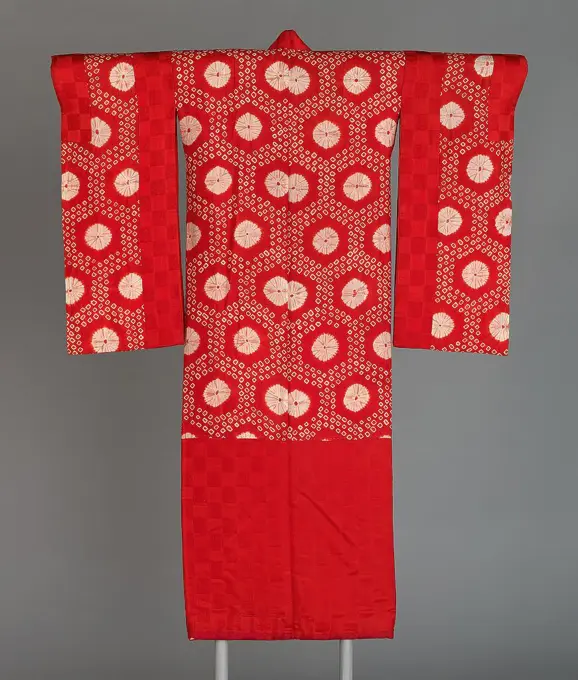
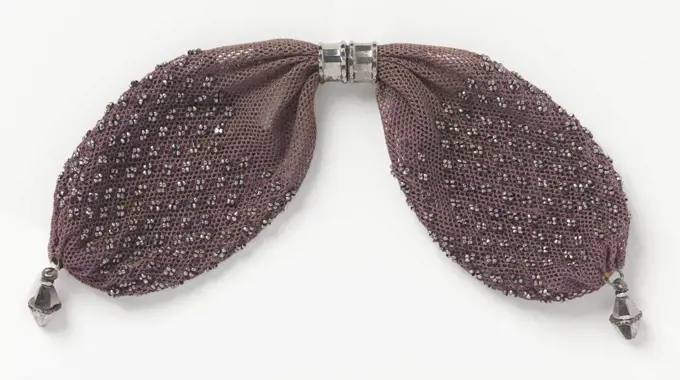
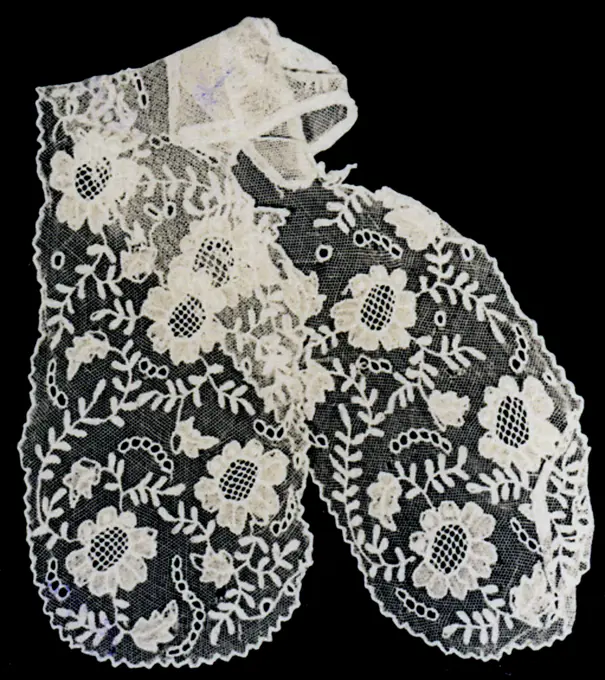
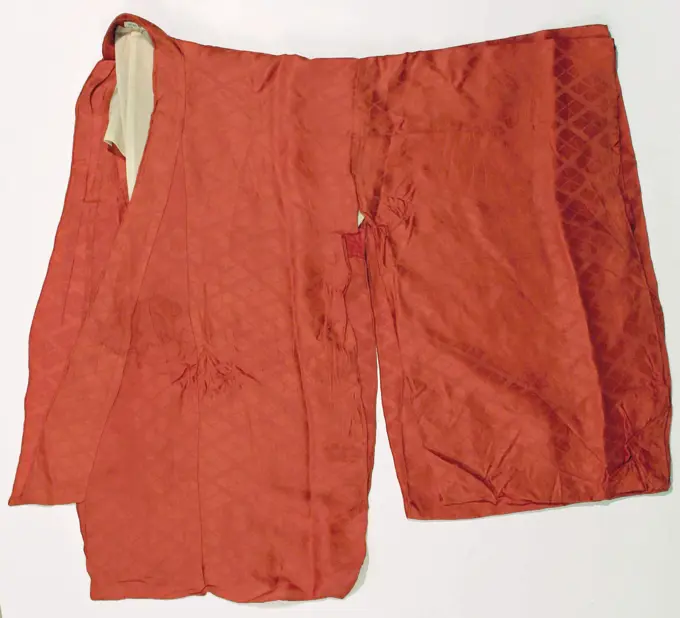
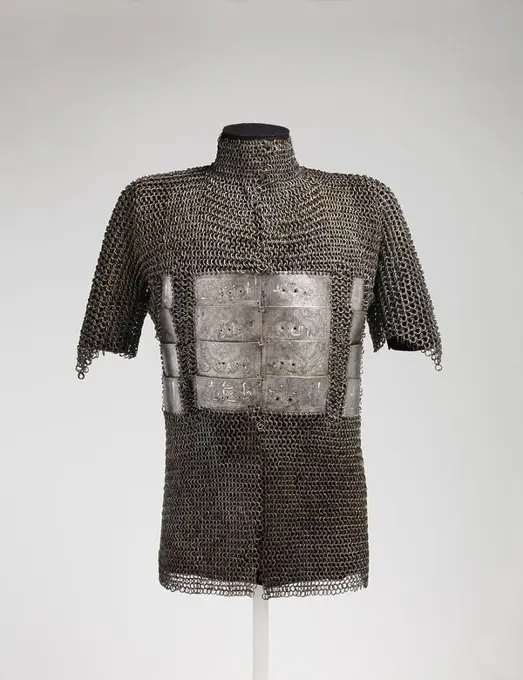
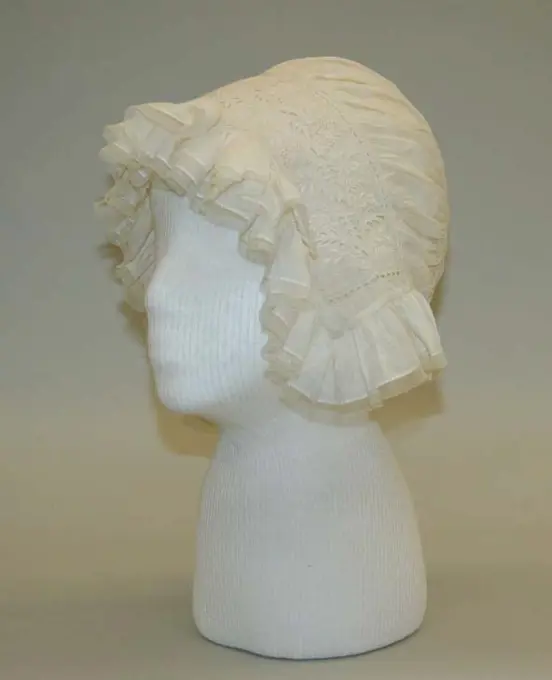
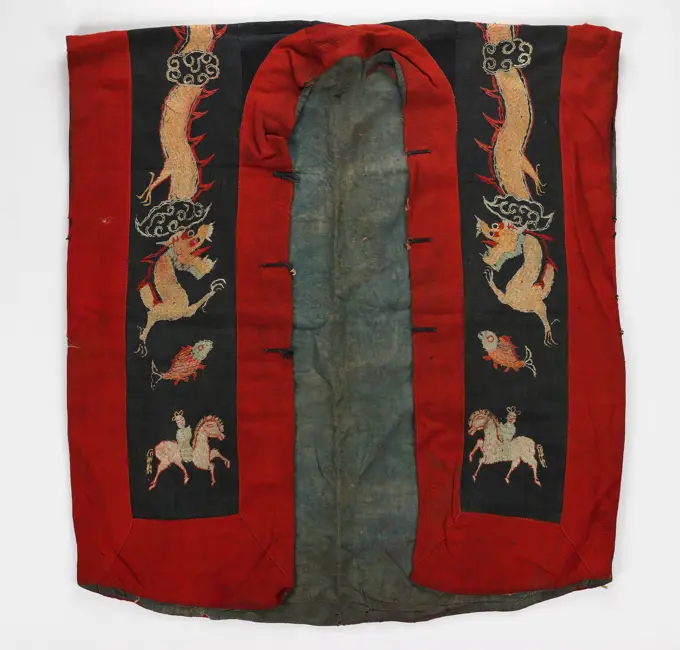
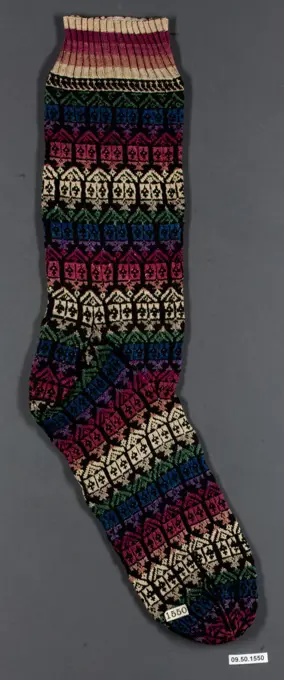
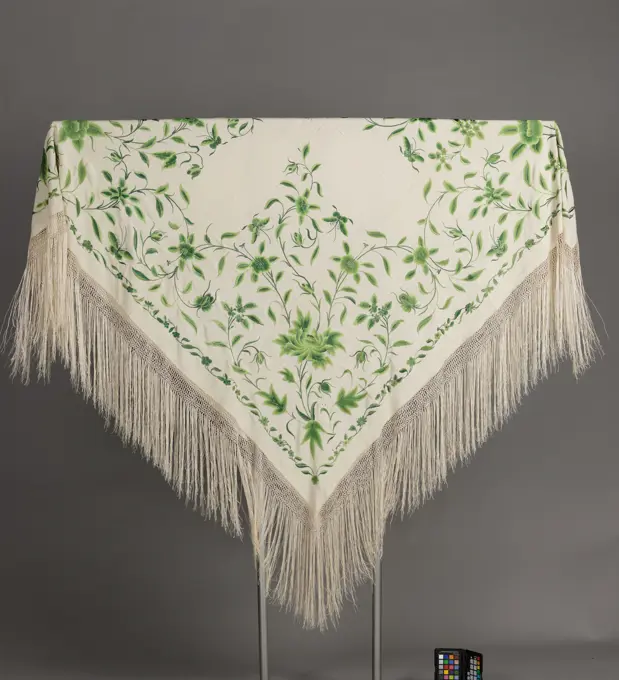
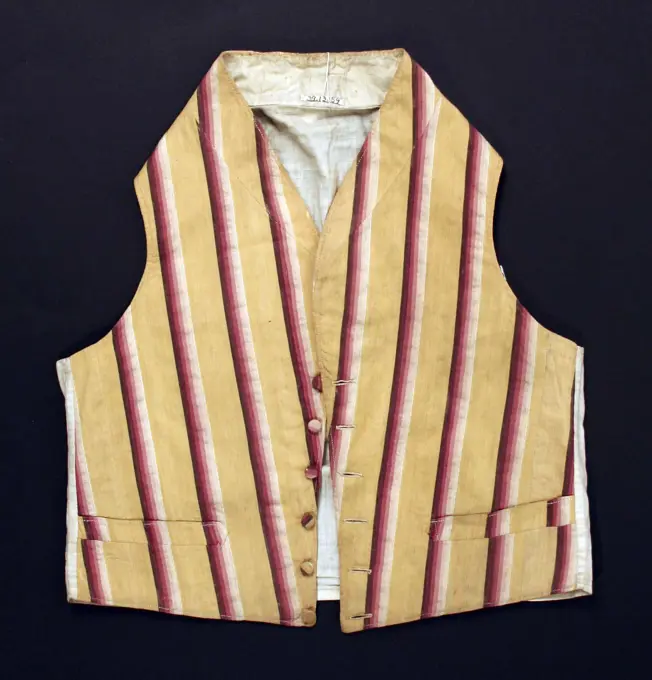
Fragment, Medium: silk Technique: supplementary warp forming raised pile in twill () foundation (velvet), Clusters of carnations and leaves on mounds on blue background., India, 17th century, woven textiles, FragmentCape ca. 1872 American. Cape 103879Batist handkerchief with embroidery with mimosa and a strip of needle side with litter flowers, anonymous, c. 1775 - c. 1799 Natural Batist handkerchief with embroidery in the four corners and finished all around with a border needle side: Alençon side. The embroidery is the same in the four corners. The pattern consists of two slanted and openwork arches, which are cut over by Mimosa branches. The arches are a definition of the other motifs in the corners. These motifs are a fantasy flower, surrounded by fine spiral vines with buttons, leaves and flowers. A fine flower garland with forget-me-nots along the edges of the handkerchief of the pattern in one corner to the pattern in the next corner. The strip of needle side has a pattern with one row of sprinkles and a fine edge of scoops with arches that are finished with picots. The motives are made with feston stitches and equipped with relief contours. Paris cotton (textile) Embroidering / Alençon Lace Natural Batist handkerchief with Curtain of blue and white striped Linnamast, Anonymous, c. 1880 - c. 1900 Curtain of blue and white striped Linnamast. The blue and white stripes both have a running pattern of flower vines; The blue in light blue, the white in white. England linen (material) damask Curtain of blue and white striped Linnamast. The blue and white stripes both have a running pattern of flower vines; The blue in light blue, the white in white. England linen (material) damaskBaby covers of linen with embroidery, anonymous, c. 1815 - c. 1824 Baby hat of linen, cap with round ball, with green, rose and blue beads embroidered with floral motifs. Netherlands linen (material) embroidering Baby hat of linen, cap with round ball, with green, rose and blue beads embroidered with floral motifs. Netherlands linen (material) embroideringLength of LaceTextile. Culture: American or European. Date: 18th century. Museum: Metropolitan Museum of Art, New York, USA.Linen Shirt with long sleeves, split in the middle and raised embroidered, marked 'I.I.'/'1730', Anonymous, 1730 Linen shirt with long, wide sleeves without a cuff and with a key in the arm hole. Long split in the middle of a 'flea step' (torn off on the right). At the top of the split on either side, a border picots. Standing board, embroidered with an alternating pattern of stars and oblique crosses in white cotton and trimmed with picots. Closure in the middle for by means of Two founded buttonholes through which orpinable knots were brought through with a cord. Split in the side seams, reinforced with linen toppings. Under the flea step marked and dated in cross stitch. Netherlands whole: Linen (Material). Embroidery: Cotton (textile). Brand: Silk embroidering / embroidering  Netherlands Linen shirt with long, wide sleeves without a cuff and with a key in the arm hole. Long split in the middle of a 'flea step' (torn off on the right). At the top of the split on either side, a bordePiece ca. 1840-55 British. Piece. British. ca. 1840-55. Cotton. Textiles-PrintedFichu. Culture: American. Date: 1830-40. Museum: Metropolitan Museum of Art, New York, USA.Hat with Frisian lace (removal) and Rijsselse () Kant, Anonymous, c. 1850 - c. 1900 Hat with Frisian lace (removal) with a wrinkled strip of Rijssel side. Two tunnels run over the hat for thread cords. West-Europa cap:. strip: Lille Lace / Mechlin (Lace) Hat with Frisian lace (removal) with a wrinkled strip of Rijssel side. Two tunnels run over the hat for thread cords. West-Europa cap:. strip: Lille Lace / Mechlin (Lace)Fragment of semi silksemi silk fabric, Eastern unknownFragment gestreepte veelkleurig zijdeweefsel met bloemtakken..Fragment multicolor silk tissue. The pattern has straight and zigzag stripes in red and white. The straight, white stripes have flower branches in red and green.Children's hat of white linen () Sayed with lace Linen baby under hats, with side front and sides gem h8.  linen (material). Linen baby under hats, with side front and sides gem h8.  linen (material).Chasuble. unknown, authorStole mid-19th century French. Stole 169885Curtain of blue and white striped linen damask. Curtain of blue and white striped linen damask. The blue and white stripes both have an ongoing pattern of floral drinks; The blue in light blue, the white in white. The curtain belongs to three curtains (BK-1992-26-A to BK-1992-26-D) and two strips (BK-1992-26-E and BK-1992-26-F).Joseph Lubrano, Woman's Pocket, 1935 1942 Woman's PocketHalf of a Chasuble, 1600s. Italy, 17th century. Silk; overall: 78.1 x 63.2 cm (30 3/4 x 24 7/8 in.).Waistcoat front, Technique: Embroidery using satin, stem and knot stitches in twelve colors of floss silk and metal-wrapped silk; coils of metal wire, sequins (paillettes) and paste jewels sewn on silk plain weave foundation. Trimmed with four color woven silk fringe., Waistcoat right front panel with a design of blindfolded Cupid being driven by a bird. Trimmed with polychrome fringe., France, late 18th century, embroidery & stitching, Waistcoat frontFragment, Medium: silk, metallic thread Technique: cut and uncut supplementary warp pile (velvet) with supplementary weft, Fragment of purple cut and uncut velvet on silk ground originally heavily shot with silver metal thread. Design of a small branch with two leaves curving in opposite directions. Horizontal rows of design turn alternately left and right., Italy, 17th century, woven textiles, FragmentWomans spencer unknownCape unknownFragment (Dress Fabric) Made 1501-1700 Italy. cut voided cloth velvet .Patriottenlint, anonymous, 1786 ribbon (material) Ribbon with performances in 6 medallions and continuous leaf rank decorations along the sides and between the medallions. Inscription on the medallions (from top to bottom): "So she remains planted"; "He was for the Fatherland"; "This way she stays in her stand"; "The citizen mocks and sole makes freedom sun rise again"; 'The 20th March 1786'; "Without this she loses". Dated; On medallion: 1786. Netherlands silk printingCover of a tag in front of a doll, made of cherine cotton with machined embroidery. Cover of a tag in front of a doll, made of cherine cotton with machined embroidery.Knitted hat made of white cotton with a finely pleated edge, next to the edge with stretched leaf motif and further decorated with a smaller leaf motif in edges, anonymous Knitted hat made of white cotton with a finely pleated edge, next to the edge with combined leaf motif and further decorated with a smaller leaf motif in edges. White cotton knitted hat with lid edges; A straw in the bulb.  cotton (textile) knitting Knitted hat made of white cotton with a finely pleated edge, next to the edge with combined leaf motif and further decorated with a smaller leaf motif in edges. White cotton knitted hat with lid edges; A straw in the bulb.  cotton (textile) knittingBatist handkerchief all around with a border of bobbin with an elephant, anonymous, c. 1950 - c. 1973 Natural -colored batist handkerchief finished all around with a border of bobbin with an elephant in one corner. Square model. The bobbin side in the corner is made with other yarn and may have been added later. China (possibly) linen (material) bobbin lace Natural -colored batist handkerchief finished all around with a border of bobbin with an elephant in one corner. Square model. The bobbin side in the corner is made with other yarn and may have been added later. China (possibly) linen (material) bobbin laceBasquine ca. 1855 American or European. Basquine. American or European. ca. 1855. silkUndersleeves 1850s American or European. Undersleeves 120024Collar 19th century American. Collar 98045Collar 1830s probably American. Collar 110148Cap 19th century British. Cap 98193Stole embroidered, white unknownHES of white batist with collar, anonymous, c. 1850 - c. 1920 At the bottom a ride slip through a tunnel; At the top of the front, the HES closes with a white knot of plastic. Europe textile materials. knoop: At the bottom a ride slip through a tunnel; At the top of the front, the HES closes with a white knot of plastic. Europe textile materials. knoop:Creams and Lambijn from Mandwieg, Anonymous, c. 1685 - c. 1700 The blue dam absenter cradle rug consists of two parts, both attached to a front lambal. Northern Netherlands silk damask The blue dam absenter cradle rug consists of two parts, both attached to a front lambal. Northern Netherlands silk damaskBonnet ca. 1860 American. Bonnet 169914Chemisette early 1830s German. Chemisette 120392Fragment of Stamped Velvet, early 1600s. France or Spain, early 17th century. Stamped velvet; overall: 62.5 x 45.7 cm (24 5/8 x 18 in.).Blue blows with white or faded orange piping, c. 1700 - c. 1999 Strik made from a blue silk ribbon that is trimmed along both long sides with a white (or faded orange) piping. West-Europa silk Strik made from a blue silk ribbon that is trimmed along both long sides with a white (or faded orange) piping. West-Europa silkPiece 16th-17th century Italian or German. Piece. Italian or German. 16th-17th century. Linen and cotton. Textiles-WovenDemolition of coarse linen with Entre-Deux from Grove bobbin with winding slender with fruits. 1802, 1852 Demolition of coarse linen with Entre-Deux from Grove bobbin with winding slender with fruits. The Netherlands (), 1802. Netherlands (possibly) linen (material). bobbin lace Demolition of coarse linen with Entre-Deux from Grove bobbin with winding slender with fruits. The Netherlands (), 1802. Netherlands (possibly) linen (material). bobbin laceRolsloop, , 1845 - 1852 Rolloop van Linen, brand IS6. Northern Netherlands linen (material) Rolloop van Linen, brand IS6. Northern Netherlands linen (material)Sash or Ordelint () From bright orange ripszijde, pissed off with satin and decorated with silver troettes or end frills of narrow torsades, anonymous, c. 1875 - c. 1890 Sjerp or Ordelint () Of bright orange ripszijde, pissed off with satin and decorated with silver troettes or end frills of narrow torsades. Netherlands silk. satin. linen (material). silver thread Sjerp or Ordelint () Of bright orange ripszijde, pissed off with satin and decorated with silver troettes or end frills of narrow torsades. Netherlands silk. satin. linen (material). silver threadStrip of a climbing side with thistles in symmetrical slot. Strip natural colosside, old lace or Dyck side. The pattern consists of symmetrical slip, which are formed through hanging thistle flowers, always one per scallop. The motifs are connected by a short crossing couples, a ground is missing. The motifs are made in linen battle with recesses and open editors. In different places, leaves are made in shape stroke in the recesses. The shelters are trimmed with picots. The top is finished with a straight edge. The strip is at the beginning of the twentieth century by 'Conservatrice' Mrs. C.J. Hudig used to act as a collar on the mantle of Ernst Casimir. For that reason, the strip is sewn from a U-shaped piece of linen, where it is still stuck.Cap 19th century British. Cap 98208Shirt late 19th century. Shirt 86223White body with raised collar, anonymous, c. 1850 - c. 1920 The body closes at the rear with two metal hooks. Netherlands textile materials. metal The body closes at the rear with two metal hooks. Netherlands textile materials. metalDort Etek Entari 18th century-19th century. Dort Etek Entari 85543Ritual apronChemisette ca. 1887 American. Chemisette 104166Cap early 19th century American. Cap 116432Shirt of Mail. European. Date: 1525-1575. Dimensions: Wt. 19 lb. 13 oz. Iron. Origin: Middle East. Museum: The Chicago Art Institute, Chicago, USA.Sjerp with Great Cross of the Order of the Reunion of I.J.A. Gogel with accompanying box, anonymous, c. 1811 box Ordet mark consisting of a twelve -pointed white enamelled star with gems, in between arrows bundles and ribbon with three times inscription. In the middle in blue circle with inscription; front: a throne for which two kneeled children and lying woolvin; Rail side: the N in green enamelled laurel wreath. At the top of a hinge an openly crown; the basis consisting of a blue band with inscription; the spikes supported by eagles; On the top government apple with a bearing ring. Miter-shaped and colorful (red with gold) flat box in which a piece of paper with inscription 'Order of the reunion'. FranceCap ca. 1860 American. Cap 103315Dickey early-late 18th century American or European. Dickey 90674Pocket ca. 1860 American. Pocket 168681Breastplate ca. 1540-45 Giovan Paolo Negroli Italian Formerly part of a parade armor, this breastplate is the only signed work of Giovan Paolo Negroli, a cousin of the more famous Filippo. Now bright, the breastplate's surface originally was russet-colored, and the raised and etched areas were gilded. Its color probably was very similar to that of the close helmet exhibited nearby, which is also attributed to Giovan Paolo.. Breastplate. Italian, Milan. ca. 1540-45. Steel, gold. Milan. Armor Parts-BreastplatesFichu, c. 1875-1900. Philippines, late 19th century. Plain weave piña cloth with embroidery; overall: 69.9 x 68 cm (27 1/2 x 26 3/4 in.).Crib from straw with mattress and pillow and curtain, anonymous, c. 1400 - c. 1950 Crieg of straw with mattress and pillow and curtain. Netherlands cardboard. linen (material) Crieg of straw with mattress and pillow and curtain. Netherlands cardboard. linen (material)Cap, 1700s - early 1800s. Netherlands, 18th-early 19th century. Embroidered net; overall: 33 x 20.4 cm (13 x 8 1/16 in.).Brocade, 1800s. India, 19th century. Brocade; silk and metal; overall: 12.7 x 12.7 cm (5 x 5 in.).Fragment of fabric unknownWedding sash. Culture: American. Date: 1883. Museum: Metropolitan Museum of Art, New York, USA.Headcloth 18th century European, Eastern. Headcloth 125626Ondermouw van batist afgewerkt met een dubbel strookje kloskant.Batist underworn finished with a two strips of dick. Rectangular model that excludes slightly wider from the shoulder to the arm. The two strips are both placed on the edge of the batist and probably meant to fall over each other. The lower strip is immediately finished on top and bottom. The upper strip has a flat sloping edge along the underside. The repeating pattern of this upper strip consists of an obliquely placed double dot. The repeating pattern of the lower strip consists of a landscape flower, interspersed by a loose dot. The motifs of both strips are made in linen battle with openwork edges and are connected by a grille, a diamond-shaped valenciennes ground. The plump edge of the upper strip is finished with picots.Dônuki. Japan. Date: 1883-1900. Dimensions: 152 x 114.7 cm (59 7/8 x 45 1/4 in.). Upper portion: silk, plain weave; tie-dyed (shibori); lower portion: silk, satin weave, self-patterned by areas of plain weave; lined with silk, plain weave; silk, padding. Origin: Japan. Museum: The Chicago Art Institute, USA.Chair Seat. Abigail Davenport Williams (American, 1696-1766); United States, probably Connecticut, Stamford. Date: 1712-1722. Dimensions: 38.7 × 53.4 cm (15 1/4 × 21 in.). Linen, plain weave; embroidered with wool yarns in bullion, flat, Roman, satin, stem, and surface satin stitches. Origin: United States. Museum: The Chicago Art Institute, Chicago, USA.Fontaneldoek van Linen with a strip of bobbin with a scrap of scales and a hanging flower, anonymous, c. 1700 - c. 1799 Fontaneldoek van Linen with a strip of natural-colored bobbin, binche side. Pattern with a sculpy edge with double slender and a hanging flower against a five -part ground. Europe linen (material) Bobbi Lace / Binche Lace Fontaneldoek van Linen with a strip of natural-colored bobbin, binche side. Pattern with a sculpy edge with double slender and a hanging flower against a five -part ground. Europe linen (material) Bobbi Lace / Binche LaceChasuble; linen; a) H x W: 121 x 55 cm (47 5/8 x 21 5/8 in.) b) H x W: 116 x 58.5 cm (45 11/16 x 23 1/16 in.); Bequest of Richard Cranch Greenleaf in memory of his mother, Adeline Emma Greenleaf; 1962-50-184-a,bPocket 1790-1810 American. Pocket 170339Miser's purse, Medium: silk, metal Technique: crocheted, Crocheted lavender silk ornamented with cut steel beads in pattern of minute squares. Two faceted steel rings control side opening. Steel drop at each end., France, early 19th century, costume & accessories, Miser's purse. Room skirt from yellow cotton with colored flowers. Standing board, sloping oversclag, blanket edge did not segate but immediately accipulated when pickling the substance. The cotton red lining with white diamonds was woven under the name Chelas in both the surroundings of Suratte and Bengal.Cap ca. 1840 American. Cap 116542Childrens underpantsCap Made 1875-1900 France. Cotton, machine-made net; appliquÈd with plain weave and embroidered in buttonhole, darning, eyelet, overcast, and satin stitches; laid work and darned wheels .Ensemble 1800-1957 Japan. Ensemble 88350Fephery hat from application side, anonymous, c. 1825 Freeps hat of natural -colored application side: needle side Applied on drochel soil. The hat has a smooth forehead strip that turns into the bulb on the side without a seam. The sphere is wimped from above. There is a slot in the neck for a white silk ribbon. Formed pointed at the chin. The front strip is held in fine folds by the fine and a thicker laiton that is walled with light blue side (licked front lane with laiton). The hat has a black sides inner hood. The model is a Steedse gestation. Brussels linen (material). silk Freeps hat of natural -colored application side: needle side Applied on drochel soil. The hat has a smooth forehead strip that turns into the bulb on the side without a seam. The sphere is wimped from above. There is a slot in the neck for a white silk ribbon. Formed pointed at the chin. The front strip is held in fine folds by the fine and a thicker laiton that is walled with light blue side (licked front lanRouw almatics, Anonymous, c. 1500 - c. 1999 Mourning almatics, black damask side, trimmed with silverfallon  textile materials Mourning almatics, black damask side, trimmed with silverfallon  textile materialsShirt of Mail and Plate. Culture: Turkey, possibly Istanbul. Dimensions: as mounted, H. approx. 32 in. (81.3 cm); W. approx. 27 in. (68.6 cm); Wt. 22 lb. 2 oz. (10.07 kg). Date: late 15th-16th century.The Arabic inscriptions in praise of an unidentified ruler ("the khan, the wise") are similar to those found on turban helmets attributed to the Ak-Koyunlu (White Sheep Turkoman) in northwestern Iran and Anatolia. Museum: Metropolitan Museum of Art, New York, USA.Fragment of fsilk abric unknownKnitted hat made of white cotton with very fine jersey stitch, a brush on top and turned around with ajour work; marked in Red Cross stitch: VG4, Anonymous, c. 1840 - c. 1850 Three white cotton babymuts. Netherlands cotton (textile) knitting Three white cotton babymuts. Netherlands cotton (textile) knittingCap ca. 1835 American. Cap. American. ca. 1835. cottonCape, ChinaSock 19th century. Sock. 19th century. Silk. Attributed to Turkey. Textiles-CostumesBib ca. 1880 probably American. Bib 104498Bliżej Kultury unknownMantle. Culture: probably French. Date: ca. 1885. Museum: Metropolitan Museum of Art, New York, USA.Stole fourth quarter 19th century Belgian. Stole 170394Vestee 1860s American. Vestee 119210Glass Fragment. Culture: European. Dimensions: Overall: 6 5/8 x 10 in. (16.8 x 25.4 cm). Date: 15th century. Museum: Metropolitan Museum of Art, New York, USA.Woman's ShawlDrawers ca. 1887 American. Drawers. American. ca. 1887. cotton, woolOne hundred;  18th century (1701-00-00-1800-00-00);Society for the Care of the Monuments of the Past (Warsaw - 1906-1944) - collection, church parameters, liturgical clothingTextile Swatches Onondaga Silk Company, Inc. (1925-1981). , 1948-1959. Acetate, rayon, 40 1/2 x 23 in. (102.9 x 58.4 cm).    1948-1959Chemisette ca. 1847 British. Chemisette 120958Evening bag. End XIXth. GAL1987.100.31Bolero van Katoen, P. Titjen boss, c. 1910 Bolero of cotton. Belonging to pop "lilly". Netherlands cotton (textile) Bolero of cotton. Belonging to pop "lilly". Netherlands cotton (textile)Sector of a parasoldek of light blue cotton, 1885 - 1900 Sector of a parasold deck of light blue cotton. With a double row of feasted scallops. Nijmegenfrance cotton (textile) Sector of a parasold deck of light blue cotton. With a double row of feasted scallops. Nijmegenfrance cotton (textile)Vest ca. 1823 American or European. Vest 90995