Decorative Vases and Bottles

Artistic vases and glass bottles from different cultures, featuring various shapes, colors, and historical styles in ceramic and glass materials.

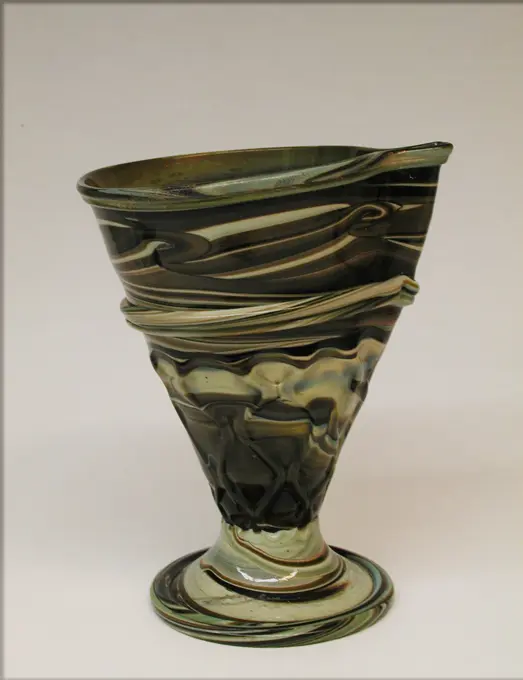
Vase. Covered porcelain striated with brown marbles. Paris, Cernuschi museum. 78841-13 Asian art, container, vase
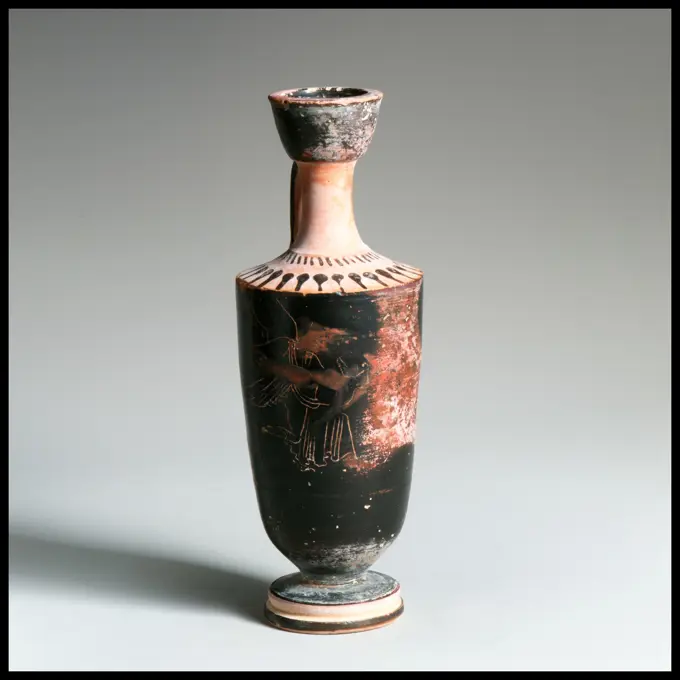
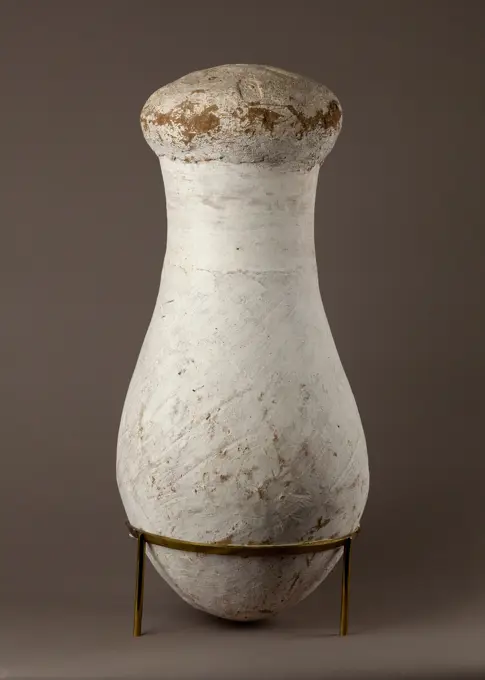
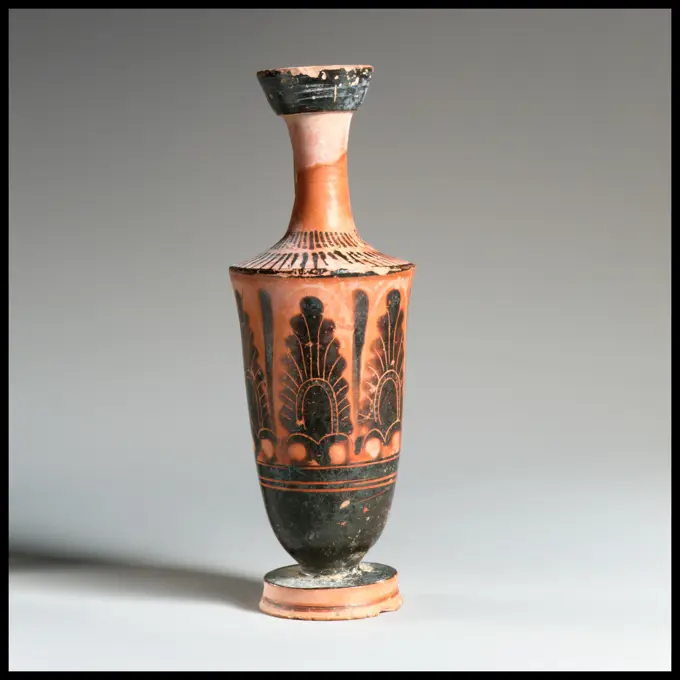
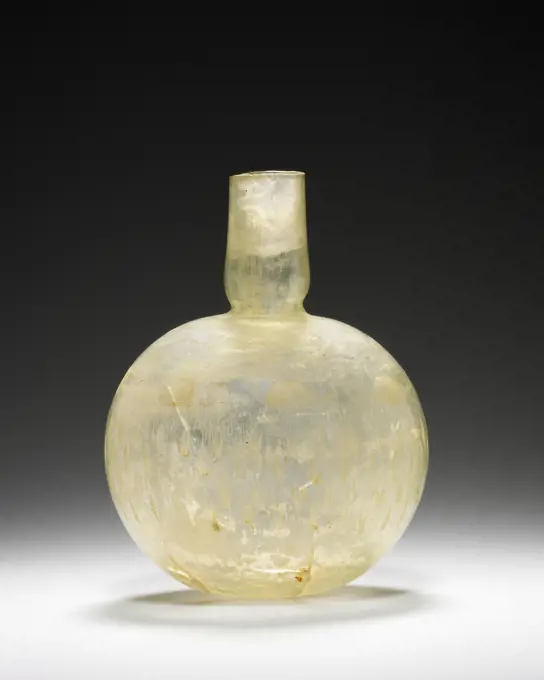
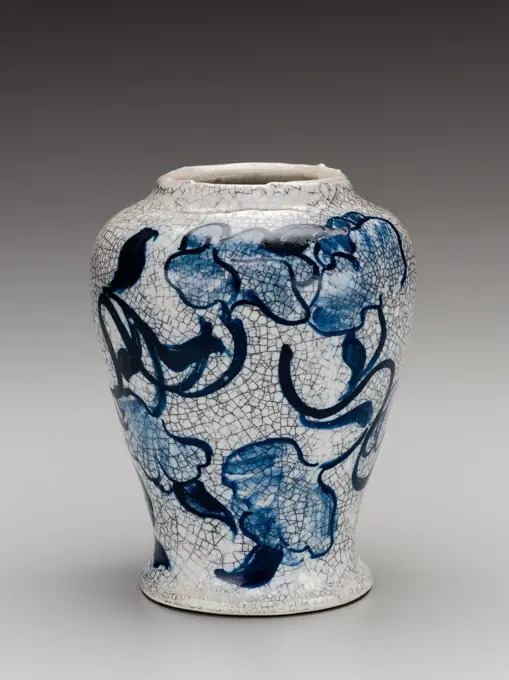
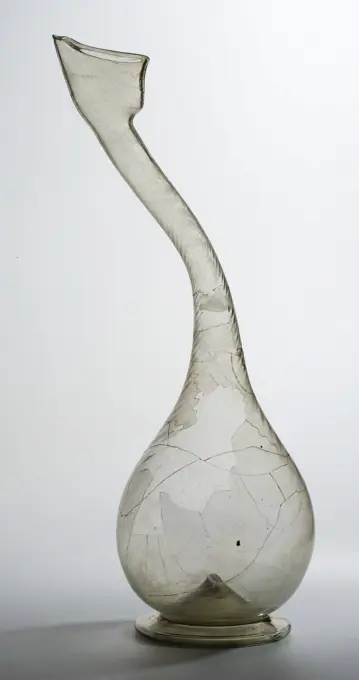
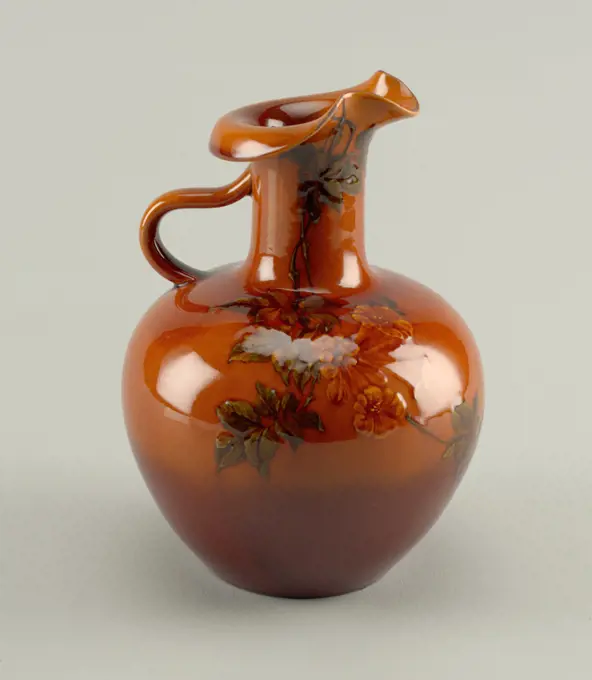
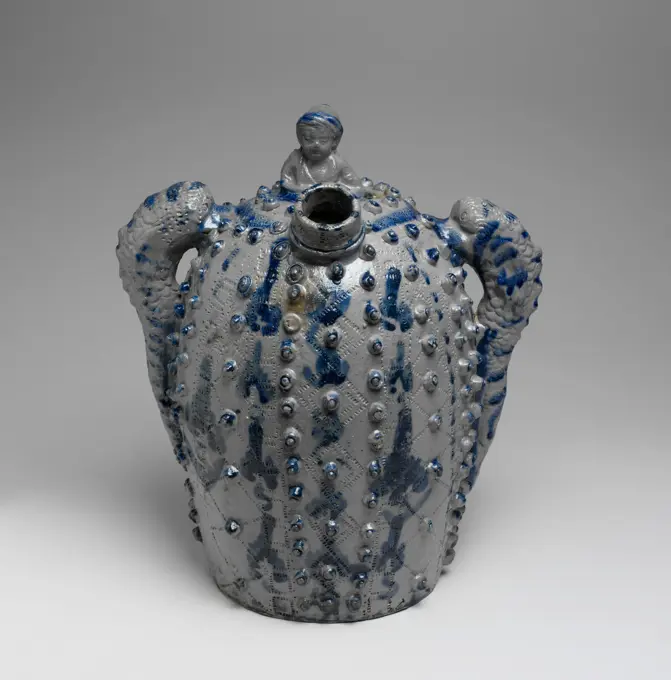
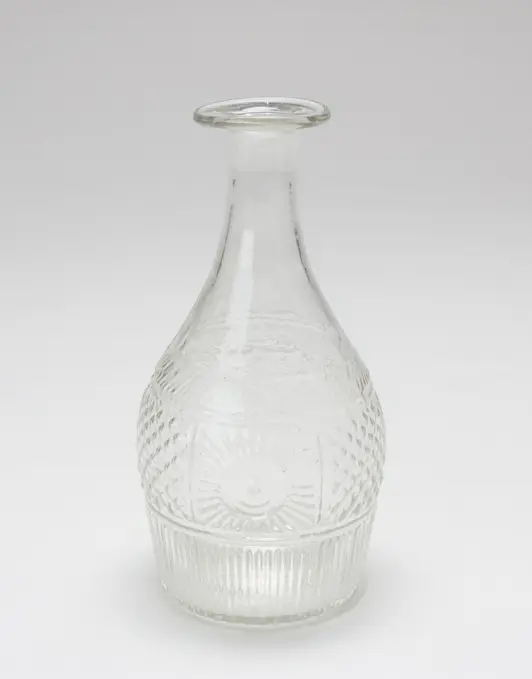
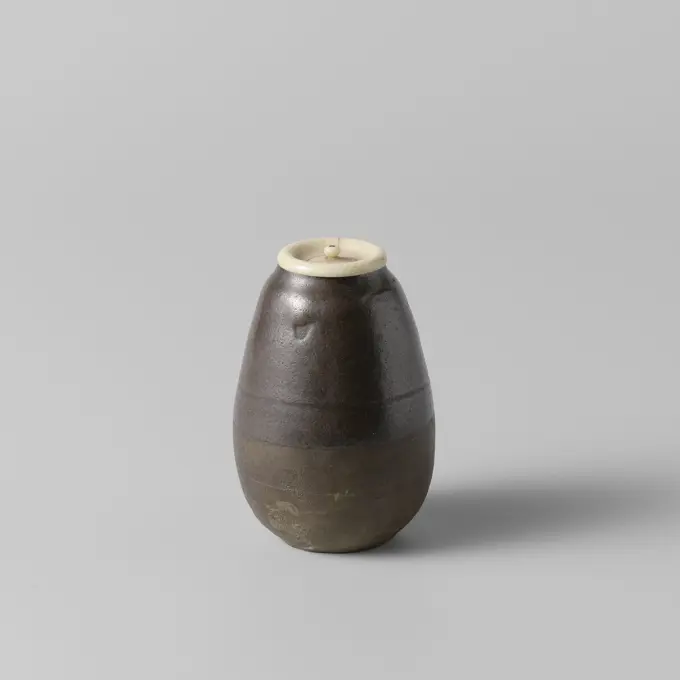
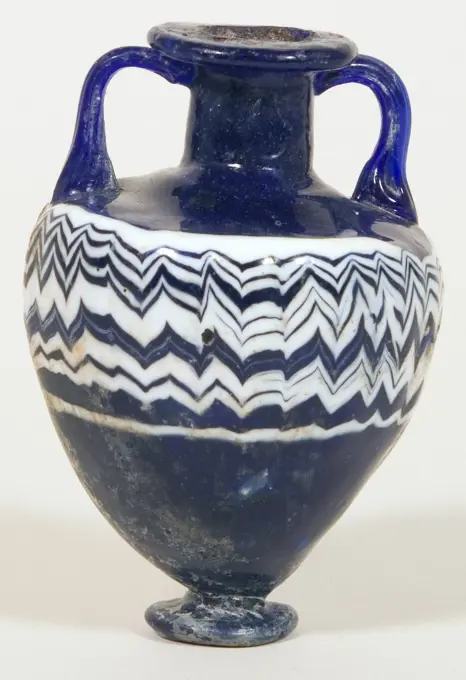
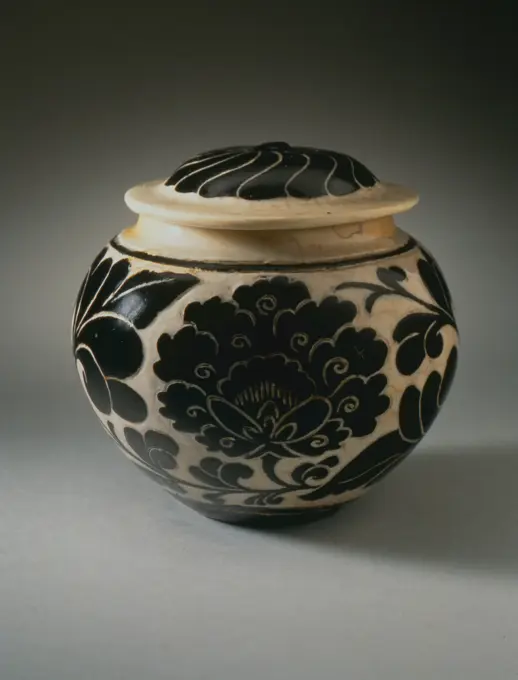
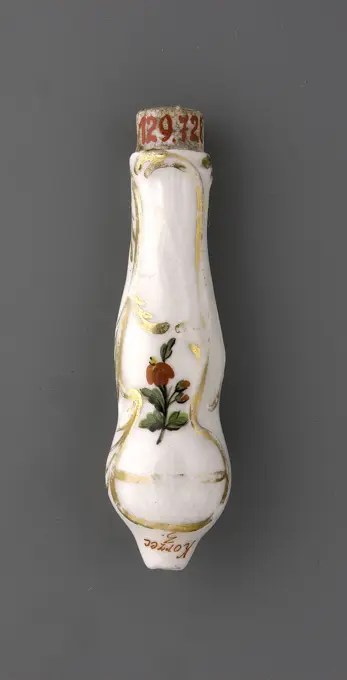
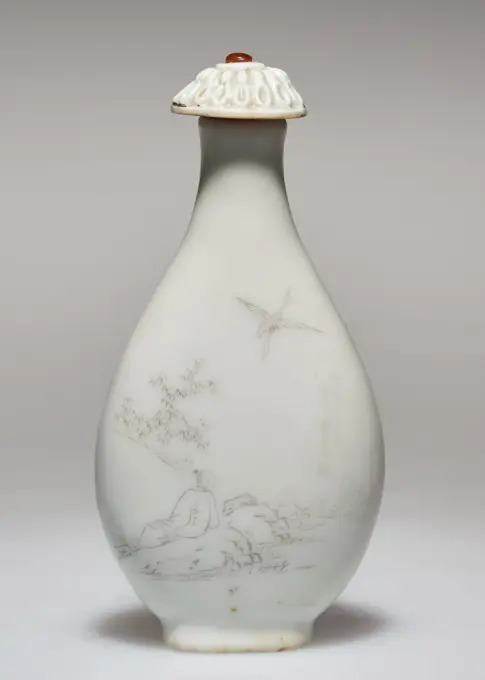
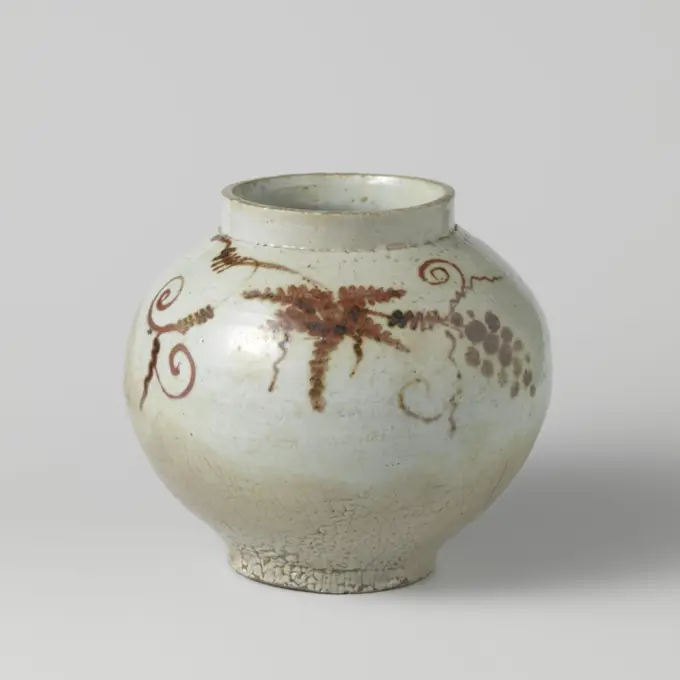
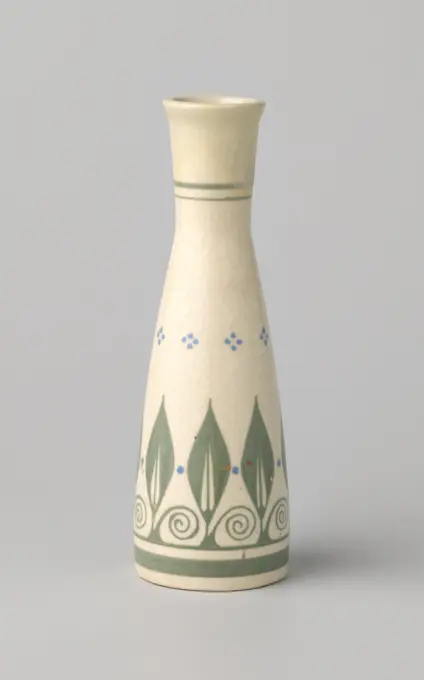
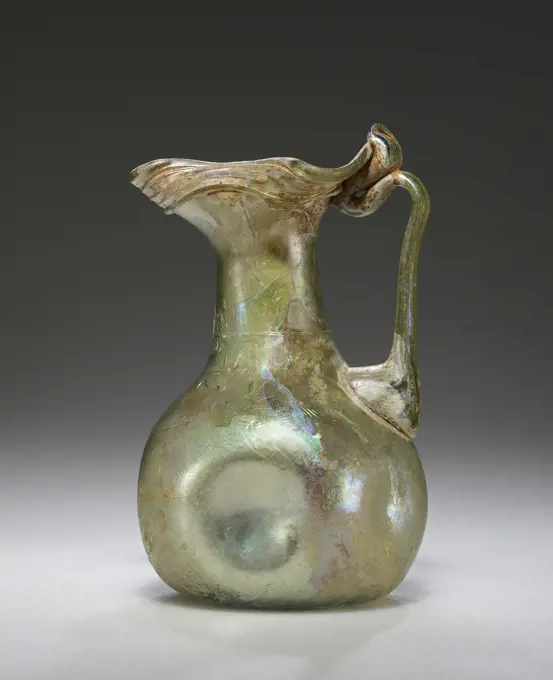
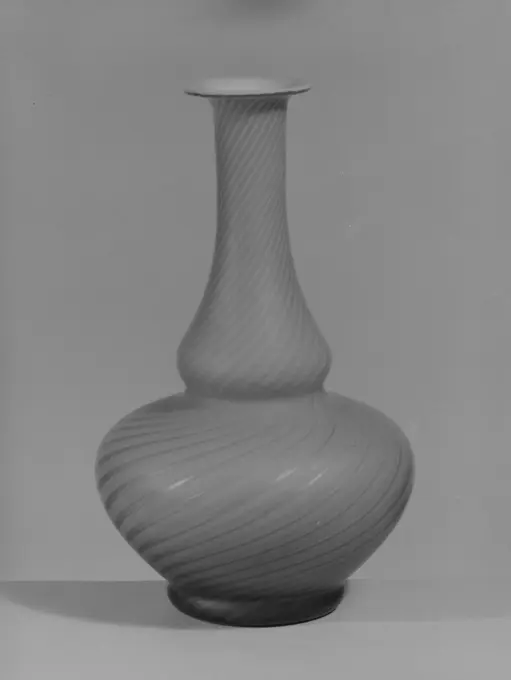
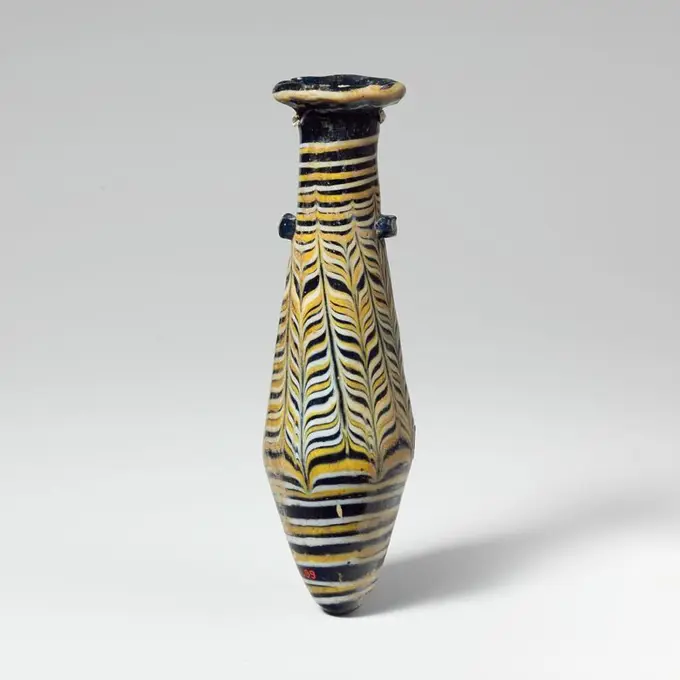
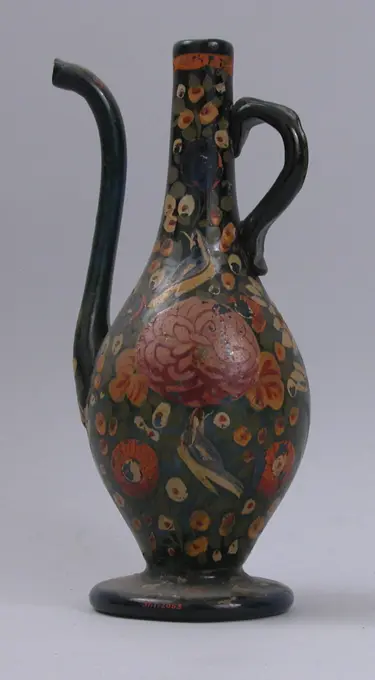
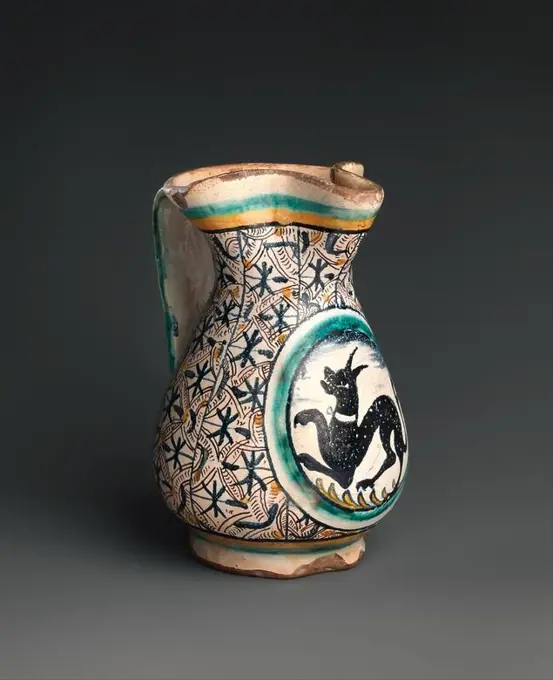
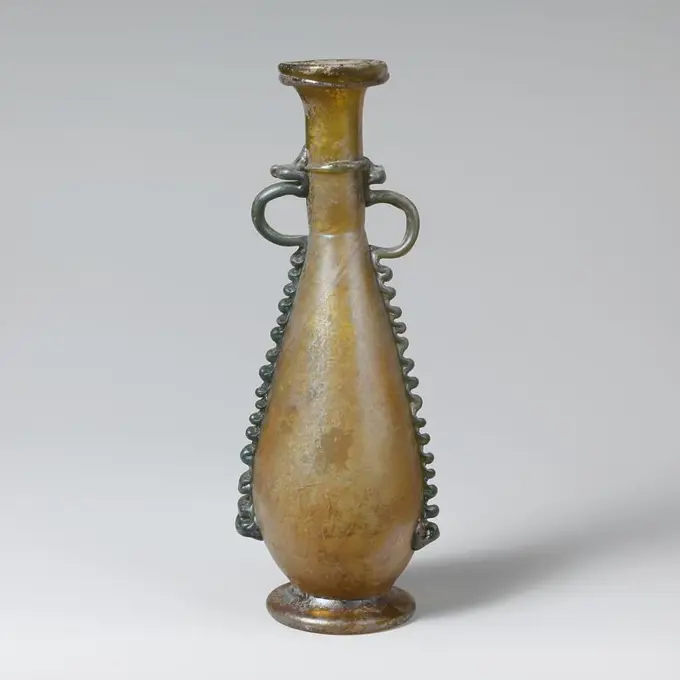
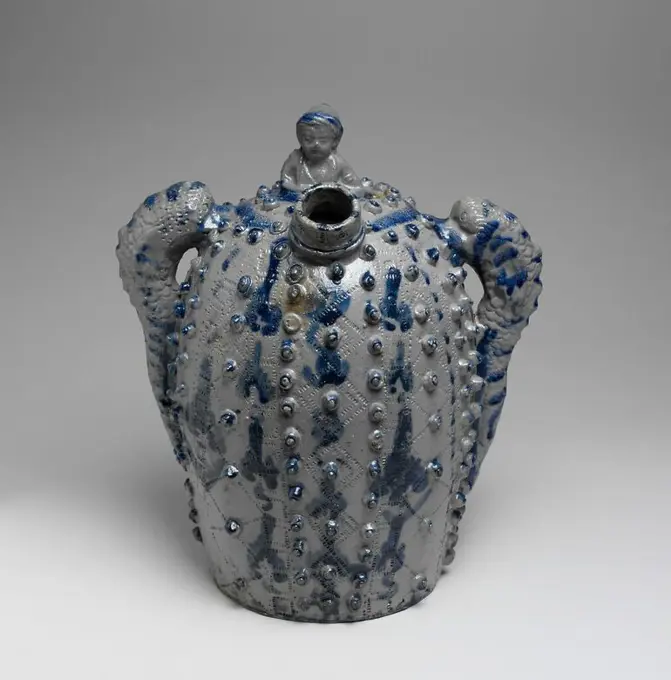
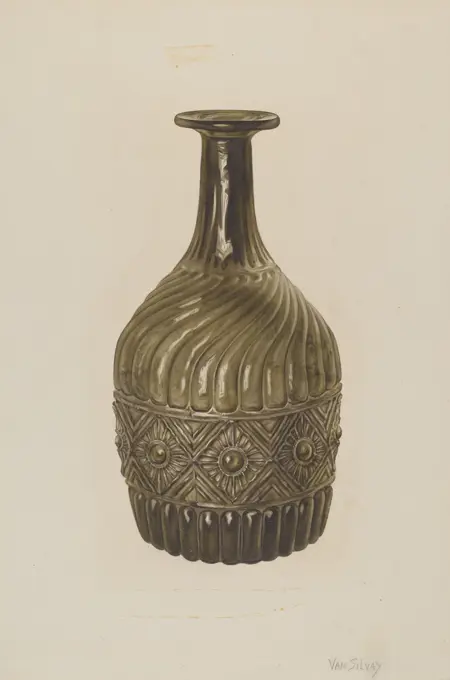
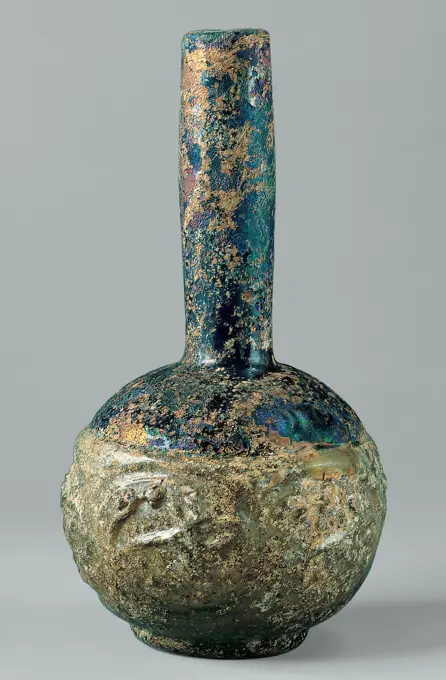
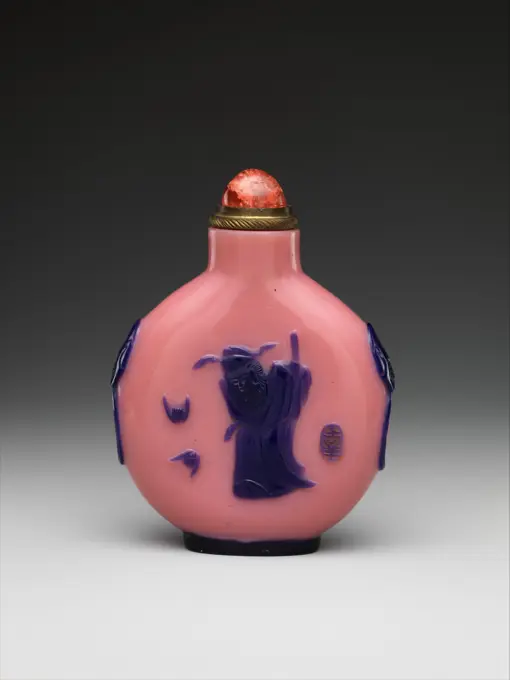
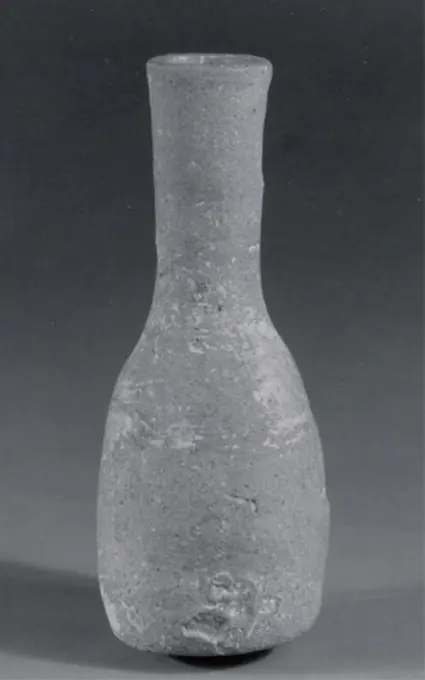
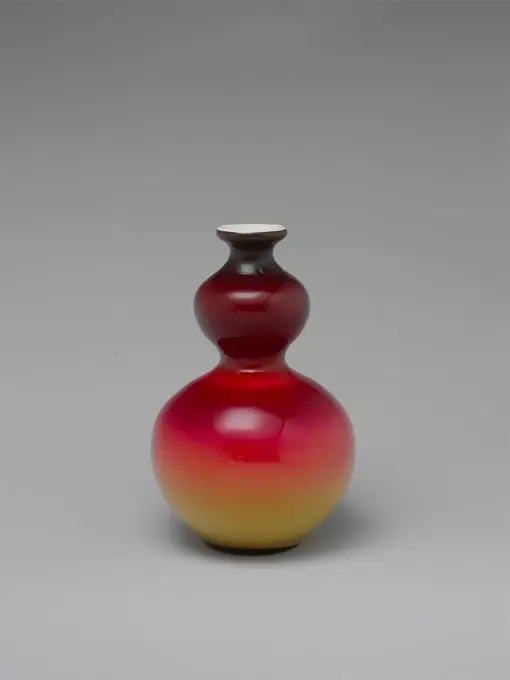
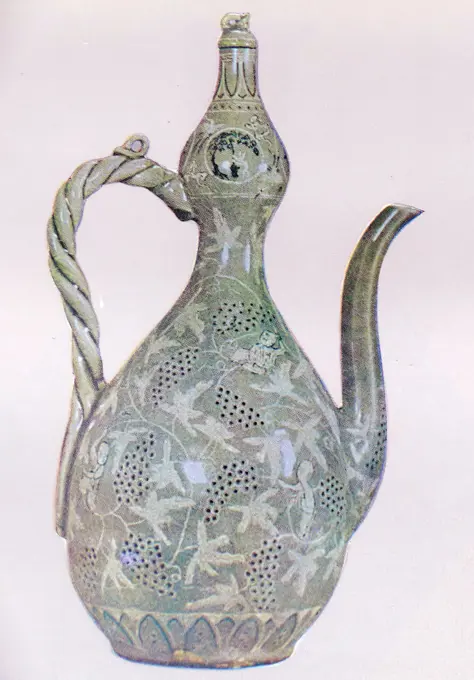
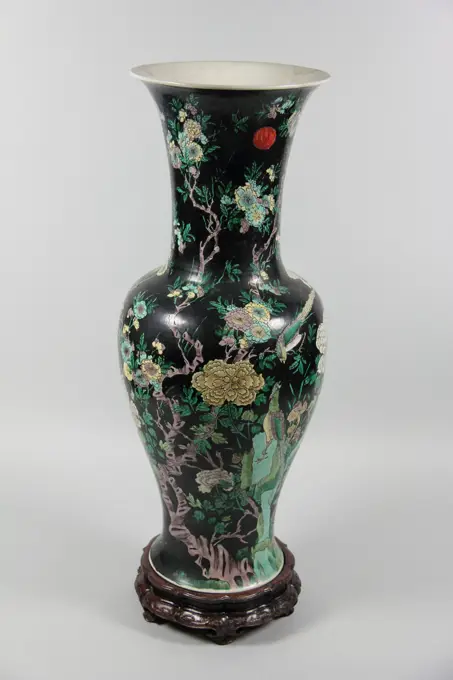
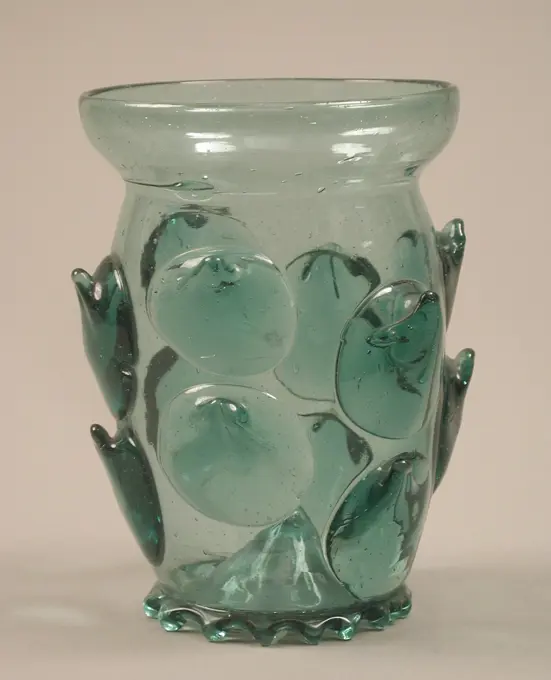
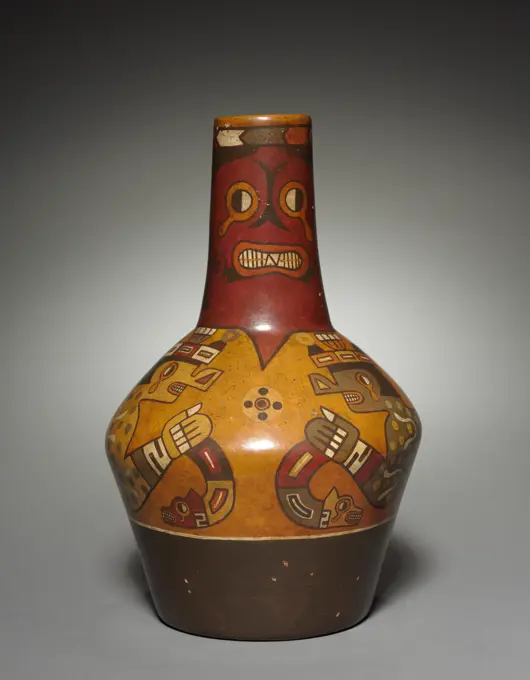
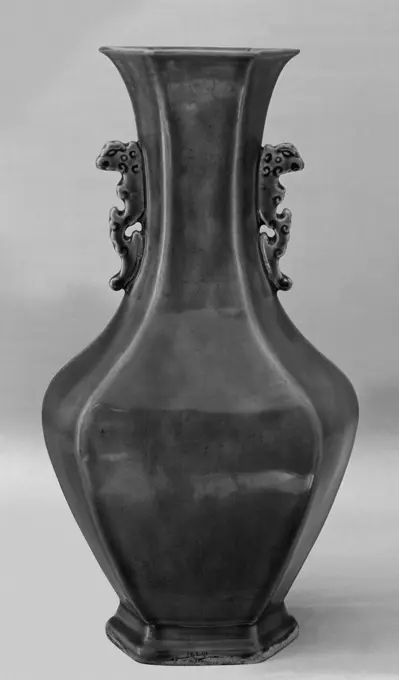
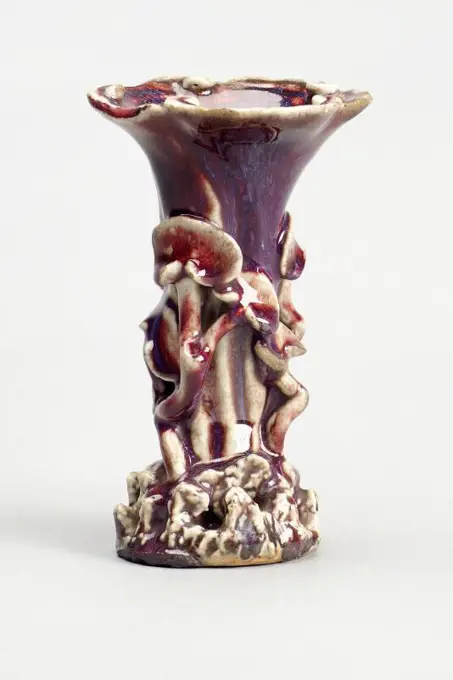
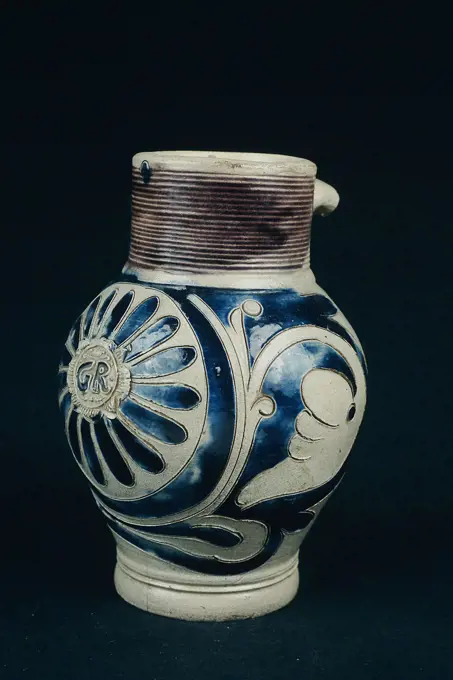
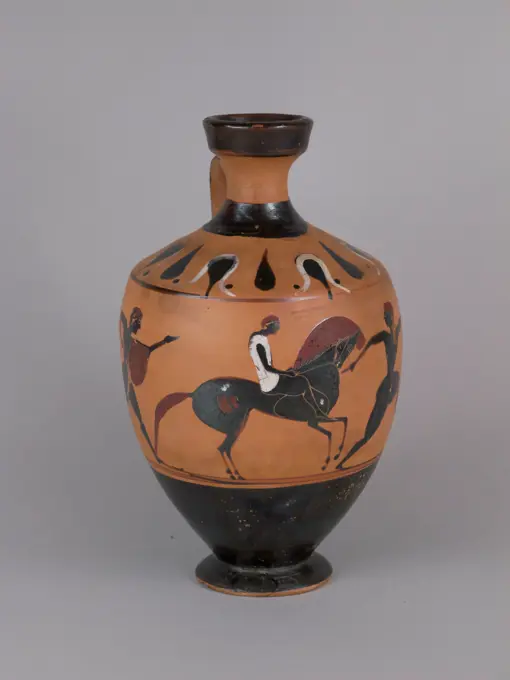
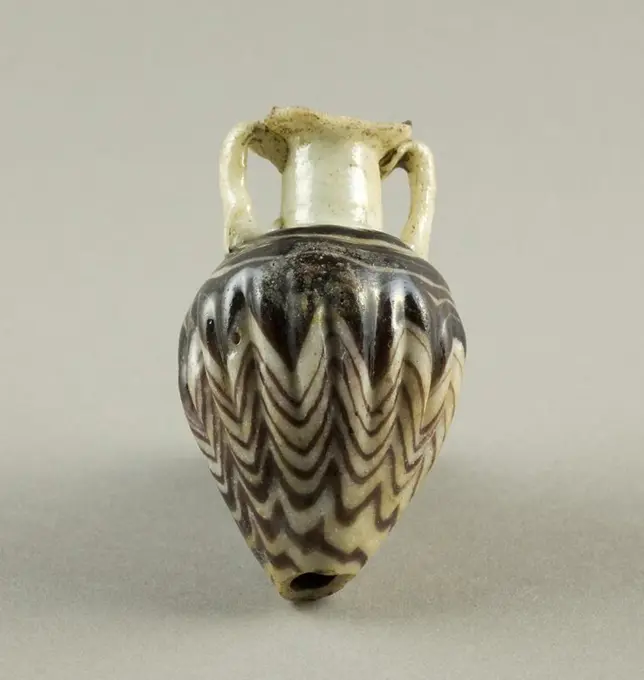
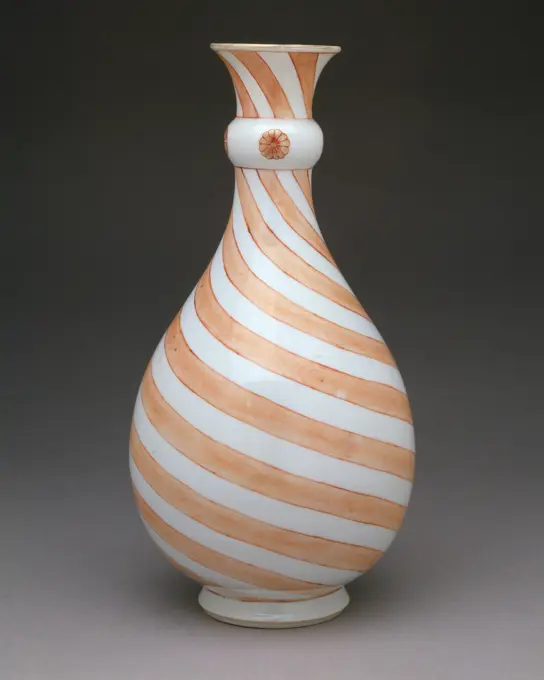
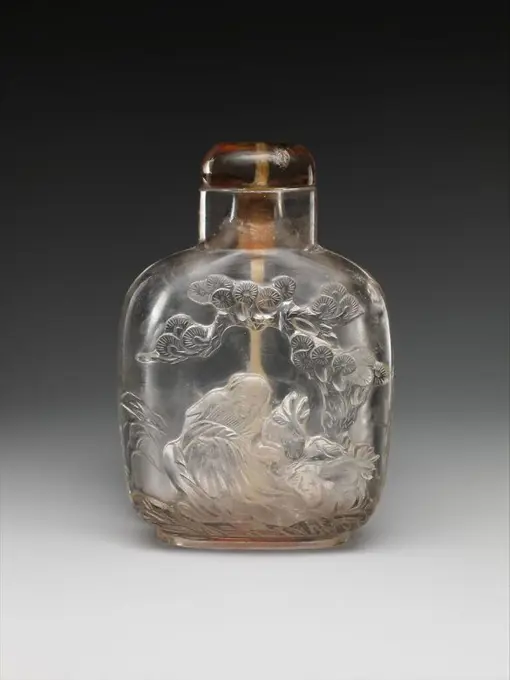
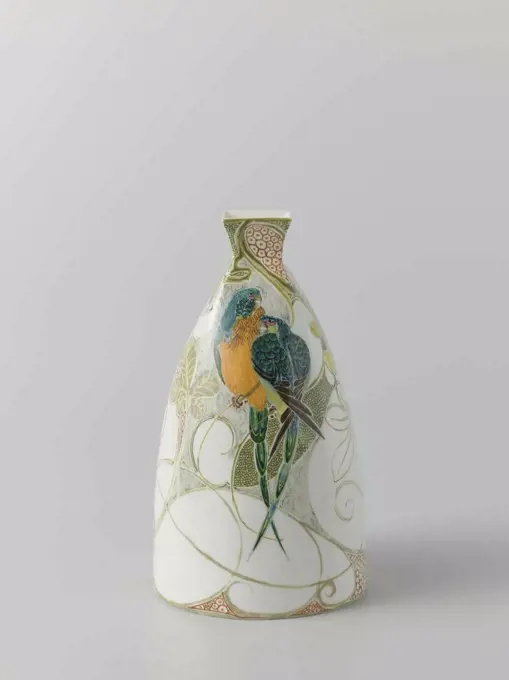
Bottle with figures in a landscape with trees, anonymous, c. 1650 - c. 1700 Bottle of blue glass. Inserted soul with pontil brand. Spherical body, long slender neck with imposed ring around the neck. Above the ring a gilded copper frame with a chain, to which a cork mounted in gildulated copper is attached. On the body, a jar, a dancing man and a gentleman who makes a bow for a mandoline playing lady are engraved on the body. Two flower vines on the neck. glassblower: Low CountriesNorthern Netherlands glass. copper (metal) gilding / glassblowing Bottle of blue glass. Inserted soul with pontil brand. Spherical body, long slender neck with imposed ring around the neck. Above the ring a gilded copper frame with a chain, to which a cork mounted in gildulated copper is attached. On the body, a jar, a dancing man and a gentleman who makes a bow for a mandoline playing lady are engraved on the body. Two flower vines on the neck. glassblower: Low CountriesNorthern Netherlands glass. copper (meLekythos ca. 500 B.C. Attributed to the Diosphos Painter Incised design, Eos and Memnon. Lekythos. Greek, Attic. ca. 500 B.C.. Terracotta; Six's technique. Archaic. VasesPitcher. Culture: American. Dimensions: H. 4 3/4 in. (12.1 cm). Date: 1815-40. Museum: Metropolitan Museum of Art, New York, USA.Sealed Jar from the Tomb of Yuya and Tjuyu ca. 1390-1352 B.C. New Kingdom This storage jar is from a tomb in the Valley of the Kings that was made for the parents of Queen Tiye, the principal the wife of Amenhotep III and grandmother of Tutankhamun. The wide opening of the jar was probably closed with a small dish or a circular rush mat that was then covered with a thick layer of mud. This mud covering was then stamped repeatedly with a small oval seal. The seal impressions are imperfect, but it is possible to make out elements of the official seal of the Theban necropolis: a recumbant jackal with nine captives below.The tomb of Yuya and Tjuyu (KV 46) was excavated in February 1905 by American financier Theodore M. Davis of Rhode Island. In the division of finds, Davies received two large, sealed storage jars, a pair of sandals, two shabti boxes, three superbly crafted shabtis, and a group of shabti tools. Some of these pieces were given to The MET not long after the tomb was discovereBottle Vase (Meiping) with Dragons Rising from Waves 1723-1735 China. Porcelain with underglaze incised decoration .Lekythos 1st quarter of 5th century B.C. Attributed to the Beldam Painter. Lekythos. Greek, Attic. 1st quarter of 5th century B.C.. Terracotta; black-figure. Archaic. VasesGlass perfume bottle. Culture: Roman. Dimensions: Overall: 3 15/16in. (10cm)Diam.: 15/16 x 13/16 in. (2.4 x 2.1 cm). Date: 1st-2nd century A.D..Translucent pale green with bluish tinge.Rounded rim; flaring mouth; cylindrical neck, tapering downwards, with deep tooled indent around base; elongated ovoid body; small, thick, uneven bottom.Intact; many bubbles and blowing striations; dulling, slight pitting, and patches of iridescence with thick creamy brown weathering on neck and mouth. Museum: Metropolitan Museum of Art, New York, USA.Flask; Eastern Mediterranean; second half of 3rd - 4th century; Glass; 12 cm (4 3,4 in.)Vase ca. 1896-1908 Dedham Pottery Steeped in ceramics from birth, Hugh C. Robertson pursued his craft with fierce devotion and a passion for experimentation. From a family of trained English ceramists, he honed his skills in New Jersey before settling in Massachusetts as one of the founders of Chelsea Keramic Art Works and later, Dedham Pottery. Robertsons lifelong explorations in glazes, particularly their color and texture, make him one of the key figures of American art pottery at the turn of the twentieth century.As all-consuming as his pursuit of the ideal oxblood glaze was, Robertson also pioneered other glazing techniques, among them the craquelé glaze, which he first achieved in 1886. This distinctive type of glaze, with its fine network of visible cracks, was a staple of Eastern ceramics that Westerners tended not to emulate because they considered such crazing a flaw. Appreciating its aesthetic value, Robertson perfected an allover white crackle glaze often enhanced with cobPitcher. Culture: American. Dimensions: H. 6 1/8 in. (15.6 cm). Maker: Probably United States Pottery Company (1852-58). Date: 1849-58. Museum: Metropolitan Museum of Art, New York, USA.Rosewater sprinkler - golabzan. unknown, craftsmanEwer, Rookwood Pottery, American, 1880 - 1967, Glazed earthenware, Cincinnati, Ohio, USA, 1888, ceramics, Decorative Arts, EwerBottle with glass seal, anonymous, c. 1660 - c. 1670 Insented soul, spherical body, transfersing to a tapered neck with drip ring. On the shoulder a seal, stamped with Bacchus astride astrive and the edge shift: prvft.de.wien and travel do. Northwest Europe glass glassblowing Insented soul, spherical body, transfersing to a tapered neck with drip ring. On the shoulder a seal, stamped with Bacchus astride astrive and the edge shift: prvft.de.wien and travel do. Northwest Europe glass glassblowingWater cooler 1870-90 Possibly Richard Franklin (Polk) Bell This highly imaginative water cooler has dolphin handles and a finial in the form of a small boy; similar motifs can be found on other works by the Bell family. The delicate coggled pattern and the applied knobs, or barnacles, give the piece an extraordinary appearance.. Water cooler 9755Decanter, 18th-19th century, 7 5/8 x 3 3/4 x 3 3/4in. (19.4 x 9.5 x 9.5cm), Glass, United States, 18th-19th centuryBelly bottle, belly bottle bottle holder soil find glass, free blown and shaped glass application Circular bottle in clear green glass. Pontil mark underneath wide raised bottom Body with almost vertical ascending wall to convex shoulders and rejuvenated (dm 5.0 - 2 8 cm) neck with imposed circumferential sharp glass wire (2x chip) and flared flattened lip (chip ) to package archeologyTea caddy with a darkbrown glaze, anonymous, anonymous, c. 1600 - c. 1800 Dust bar or Chare of stoneware with an ivory lid, partially covered with a dark brown glaze. The lower part of the bus is unglazed. Old label on the inside with 'Kyushu'. Kyushu. Japan stoneware. glaze. deksel: ivory vitrification Dust bar or Chare of stoneware with an ivory lid, partially covered with a dark brown glaze. The lower part of the bus is unglazed. Old label on the inside with 'Kyushu'. Kyushu. Japan stoneware. glaze. deksel: ivory vitrificationAmphoriskos (Container for Oil) 450 BCE-350 BCE Eastern Mediterranean Region. Glass, core-formed technique . Ancient Eastern MediterraneanGU cup;  18th century (1701-00-00-1800-00-00);Lidded Jar (Guan) with Floral Scrolls. China, probably Henan Province, late Jin dynasty or early Yuan dynasty, about 1200-1300. Furnishings; Serviceware. Cizhou ware type, wheel-thrown stoneware with cream glaze and wax-resist and carved black overglaze decorationA handle for articles; Korzec (Porcelain and faience manufacture; 1790-1832); 19th century (1801-00-00-1900-00-00);Snuff Bottle, 1750-1850, H.3-3/4 x W.1-5/8 in., porcelain, ChinaVase, 1736-95. China, Qing Dynasty (1644-1911), Qianlong reign (1736-95). Carved red amber; overall: 22.3 cm (8 3/4 in.).Two vases, c. 1600 - c. 1699 Egg -shaped pot of stoneware, partially covered with a white sludge and painted in underlaze red. The top of the pot is covered with a white sludge. From the shoulder to the abdomen twice a grape vine. Old label on the bottom with 'Korea, 17th/ Saml. Breuer, Kat 36 '. Korea stoneware. glaze. painting / vitrification Egg -shaped pot of stoneware, partially covered with a white sludge and painted in underlaze red. The top of the pot is covered with a white sludge. From the shoulder to the abdomen twice a grape vine. Old label on the bottom with 'Korea, 17th/ Saml. Breuer, Kat 36 '. Korea stoneware. glaze. painting / vitrificationVase Necel, Franciszek (1868 1935)Vase, decorated in green and blue on light yellow matte soil with a stylized leaf motif, Bert Nienhuis (i), c. 1910 Vase of earthenware, decorated in green and blue on light yellow matte soil with a stylized leaf motif. Amsterdam earthenware Vase of earthenware, decorated in green and blue on light yellow matte soil with a stylized leaf motif. Amsterdam earthenwareSnuff Bottle, 1644-1911. China, Qing dynasty (1644-1911). Glass; overall: 7.4 cm (2 15/16 in.).Trefoil Oinochoe; Roman Empire; 3rd - 4th century; Glass; 8.8 x 5.4 cm (3 7,16 x 2 1,8 in.)Vase ca. 1885 British, probably. Vase. British, probably. ca. 1885. Blown satin cranberry and green glass. Probably made in West Midlands, EnglandGlass alabastron (perfume bottle). Culture: Greek, Eastern Mediterranean. Dimensions: H.: 5 1/16 in. (12.9 cm)Diam.: 1 7/16 x 1 1/4 in. (3.6 x 3.1 cm). Date: 2nd-1st century B.C..Translucent blue, with handles in same color; trails in opaque yellow and opaque white.Broad rim-disk, uneven and sloping inward with radiating tooling marks on upper and lower surfaces, and jagged, projecting inner lip to neck; cylindrical neck; straight-sided fusiform body expanding downward, then tapering in to pointed bottom; two elongated horizontal lug handles applied at top of body over trails; marvered blob of blue applied over trails on one side at point of greatest diameter.Trails attached near bottom, drawn up in a spiral to point of carination, tooled into a close-set feather pattern around side, arranged in seven panels of alternating upward and downward strokes, some slanting and extending onto neck, forming a partial festoon pattern, wound round again in spiral to top of body and on to edge Pot with Stopper (GuriGuri)Bottle probably 18th-19th century. Bottle 444805Ewer probably 18th-19th century. Ewer 444811Jug. Culture: Italian, Florence or environs (probably Montelupo). Dimensions: Overall: 6 15/16 × 4 1/2 in. (17.6 × 11.4 cm). Date: ca. 1480-1500.Jugs ornamented with heraldic animals were very popular and were widespread; the shape of this one is typically Tuscan. Examples like this were traded extensively and one is represented in the famous Merode Triptych, painted in the Netherlands around 1430 and currently on view at the Cloisters (see metmuseum.org/collections). Museum: Metropolitan Museum of Art, New York, USA.Glass flask. Culture: Roman, Syrian. Dimensions: H. 7 13/16 in. (19.8 cm). Date: 4th century A.D..Translucent yellow green; handles and trails in translucent green.Rim folded over and in, and smoothed into flaring mouth; slender cylindrical neck, with horizontal tooling indent around base; elongated piriform body, with horizontal tooling around base; tubular splayed base ring, made by folding; bottom with central knob and pontil scar; two handles applied as trails to lower body, drawn up side to just below base of neck, then drawn up, up, and in, forming loops, and trailed off upwards over decoration around neck.Single horizontal trail wound once around underside of mouth; another trail wound once around neck just below mid-point; handle trails notched fifteen times along length.Intact; some bubbles, elongated in neck; dulling and iridescent weathering, with some soil encrustation on interior.Flasks with two loop handles, each with a long pincered trail down the side of the body, Jar, 618-906, Di.6-3/4 in., Stoneware with blue glaze, China, 7th-10th century, This early stoneware jar does not possess the high translucency of true porcelain. Its form is a product of both native and foreign tradition, but the dynamic contours created by its high shoulders and swollen body are highly characteristic of the Tang Dynasty. Covered with blue lead glaze, this jar may have had an accompanying lid, which has since been lost.Water cooler. Culture: American. Dimensions: 14 1/2 in. (36.8 cm). Maker: Possibly Richard Franklin (Polk) Bell (1845-1908). Date: 1870-90.This highly imaginative water cooler has dolphin handles and a finial in the form of a small boy; similar motifs can be found on other works by the Bell family. The delicate coggled pattern and the applied knobs, or barnacles, give the piece an extraordinary appearance. Museum: Metropolitan Museum of Art, New York, USA.Bottle 100 BCE-100 CE Syria. Glass, blown technique . Ancient RomanVase, decorated with flowers, leaves and butterflies, Theo Nieuwenhuis, c. 1915 Vase of earthenware, decorated with flowers, leaves and butterflies, partly in light blue against a dark blue stock. Amsterdam earthenware Vase of earthenware, decorated with flowers, leaves and butterflies, partly in light blue against a dark blue stock. Amsterdam earthenwareJar 18th century Japan. Jar. Japan. 18th century. Pottery covered with glaze. Edo period (1615-1868). CeramicsOvoid Jar 701 CE-899 CE China. Lushan ware; stoneware with iron-brown and splashed milky-blue ash glazes .Vase. unknown, craftsmanVase ca. 1897-1900 George E. Ohr In many ways George Edgar Ohr was the quintessential Arts and Crafts potter, combining artistic vision with extraordinary skill with his hands. Working in the seaside resort town of Biloxi, Mississippi, he dug the clay, processed and prepared it, threw the shape on the wheel, altered the piece according to his vision, mixed and applied his own glazes, fired the kiln, created his own style of advertising, and took his wares on the road. Ohrs personal mantra was "no two alike," and he was as eccentric as his work was individualistic, with its manipulated forms on ultra-thin thrown vessels, crimping, ruffling, off-centering, and twisting, to create unprecedented forms for the 1890s. To these forms, he applied his own completely new and unusual glazes, applied by sponging, splashing, and spattering, resulting in works that in many ways anticipated the abstract art movements that would find form decades later.Ohr altered his finely thrown pots while they weCore-formed dark blue small Oinochoe; Etruria (perhaps), Italy; 7th century B.C; Glass; 8.8 × 4.4 × 4.2 cm (3 7,16 × 1 3,4 × 1 5,8 in.)Amphoriskos. UnknownVase 12th-13th century China. Vase. China. 12th-13th century. Stoneware with crackled blue glaze (Guan ware). Southern Song dynasty (1127-1279). CeramicsVan Silvay, Bottle, 1935 1942 BottleFlask; Eastern Mediterranean; 1st century; Glass; 10.5 cm (4 1,8 in.)Bottle with Molded Designs of Animals 9th-10th century Abbasid glassmakers continued earlier traditions of glassmaking while incorporating new ornamental motifs. This slightly irridescent bottle showcases several sophisticated glass-making methods. The difficult "incalmo" technique fuses the dark blue glass neck and upper body of the bottle with the lower section of green glass. The lower body is impressed with five medallions, each containing the stylized figure of a running animal with long ears and a tail that ends in a palmette-like motif. The patterns call to mind griffins, birds, gazelles, or rabbits, ornamental motifs popular in Abbasid molded glass and in other media, particularly luster ceramics.. Bottle with Molded Designs of Animals 445282Snuff bottle with demon queller Zhong Kui mid-19th century China. Snuff bottle with demon queller Zhong Kui 41208Globular Bottle, 19th century, Zanesville Glass Manufacturing Company, (Zanesville, Ohio), 7 7/8 x 5 1/8 x 5 1/8 in. (20 x 13.02 x 13.02 cm), Glass, United States, 19th centuryUnguentarium ca. 1st century A.D. Nabataean. Unguentarium 325888Vase with Floral Decoration, anonymous, c. 1575 - c. 1599 Pear -shaped vase of porcelain with a thickening in the neck just below the edge. Covered with a brown glaze and decorated with a white sludge. On the body twice a flowerpot with large, flowering plants. Monochrome brown ming porcelain. China porcelain. glaze painting / vitrification Pear -shaped vase of porcelain with a thickening in the neck just below the edge. Covered with a brown glaze and decorated with a white sludge. On the body twice a flowerpot with large, flowering plants. Monochrome brown ming porcelain. China porcelain. glaze painting / vitrificationVase Japan 18th century View more. Vase. Japan. 18th century. Clay covered with glaze (Kyoto ware). Edo period (1615-1868). CeramicsGlass jug 1st century A.D. Roman Translucent cobalt blue; handle in same color.Rim folded out, down, round, and in, with flattened upper edge; cylindrical neck; conical body with gently curving side; broad, flat, pushed-in bottom; two-ribbed strap handle with two claws extending downwards applied to top of body, drawn up and slightly outwards, turned in and down, and pressed onto neck with upward trail extending back along handle.Intact; some bubbles, elongated in neck, and a few glassy inclusions; faint weathering.. Glass jug 245404Vase. Culture: American. Dimensions: H. 7 1/8 in. (18.1 cm); Diam. 4 3/8 in. (11.1 cm). Maker: Hobbs, Brockunier and Company (1863-1891). Date: ca. 1886. Museum: Metropolitan Museum of Art, New York, USA.Close-up of a decorative pottery vaseRed slip ware piriform jug with appliquédecorationVase. Acquired by the artist at the World's Fair 1900 in ParisVase. Egyptian. Date: 1292 BC-1202 BC. Dimensions: 10.5 × 7.9 × 6 cm (4 1/8 × 3 1/8 × 2 3/8 in.). Glass. Origin: Egypt. Museum: The Chicago Art Institute, Chicago, USA. Author: Ancient Egyptian.Quadripartite Kohl Tube; Roman Empire; 5th - 6th century; Glass; 22.5 x 6 cm (8 7,8 x 2 3,8 in.)A Jug from 13th century Koryo, Korea. Celadon glaze; gourd-shaped jug with inlaid vine and children's design. From the time of Koryo (Goreyo) (Goreyo) dynasty (918 - 1392)Vase with birds and flowers 19th century China. Vase with birds and flowers. China. 19th century. Porcelain painted in polychrome enamels over black ground (Jingdezhen ware, famille noire). Qing dynasty (1644-1911). CeramicsBeaker 15th century German This type of stocky vessel, known as a Krautstrunk (literally, cabbage stalk), was one of the most common forms of drinking glass in Germany during the late Middle Ages; the green color is also characteristically German. The vessel displays applied drops of glass called prunts, used both to decorate its sides and to permit a firm grip.. Beaker 466669Terracotta lekythos (oil flask). Culture: Greek, Attic. Dimensions: H. 17 1/4 in. (43.8 cm)diameter 5 1/8 in. (13.1 cm). Date: ca. 440-430 B.C..Woman and girl at a tombThe young woman at right is bringing an alabastron (perfume vase) and a fillet. The added color of her garments is lost. The woman at left may be her mistress, and may be deceased. The stool on top of the grave monument cannot surely be explained. Museum: Metropolitan Museum of Art, New York, USA.Gallipot. Culture: China. Dimensions: H. 4 3/4 in. (12.1 cm); Diam. 2 3/4 in. (7 cm). Museum: Metropolitan Museum of Art, New York, USA.Glass perfume bottle 1st century A.D. Roman, Cypriot Translucent deep purple.Plain, rounded rim; small, flaring, funnel-shaped mouth; cylindrical neck, with slight tooling around base; globular body; small, pushed-in bottom.Intact; some bubbles; slight pitting, areas of iridescent weathering, and soil encrustation inside neck.. Glass perfume bottle 244581Cricket Container, 5 15/16 x 2 5/8 x 2 5/8 in. (15.08 x 6.67 x 6.67 cm) (overall), Gourd, ivory, tortoise shell, ChinaPocket bottle. Culture: American. Dimensions: H. 9 in. (22.9 cm). Date: 1792. Museum: Metropolitan Museum of Art, New York, USA.Vase Made 1805-1815 Staffordshire. Lead-glazed earthenware (marble pearlware) . Staffordshire PotteriesBird - shaped Flask. UnknownJug between ca. 1500 and ca. 1700 French, Nevers or Italian, Murano. Jug. French, Nevers or Italian, Murano. between ca. 1500 and ca. 1700. Glass. GlassPot with Stopper (GuriGuri)Tall vase ca. 1892-94 Christopher Dresser British, Scottish This vase is one of the largest works that Christopher Dresser created for the Ault Pottery, the ceramic firm to which Dresser supplied designs at the end of his career. Before working with Ault, Dresser supplied designs to the Linthorpe Pottery, and Dressers Linthorpe ceramics are the best known of his production in this medium. However, Dressers best work for Ault rivals that made at Linthorpe.The vase is distinguished not only by its scale but also by the complexity of the glazing, which uses the varying degrees of saturation of the blue glaze for primary decorative effect. The Ault pottery has used the contours of the lower section of the vase to allow the glaze to drip unevenly, thus creating a layered design of dark and light blues. This model of vase is not a common one, and its scale alone marks it as one of Dressers most important works for Ault.. Tall vase. British, Swadlincote, Derbyshire. ca. 1892-94. EarthenwarBottle China. Bottle. China. Porcelain with red glaze. Qing dynasty (1644-1911), Yongzheng period (1723-35). CeramicsGlass jug. Culture: Roman. Dimensions: H.: 3 1/2 in. (8.9 cm)Diam.: 1 7/8 in. (4.8 cm). Date: mid-1st century A.D..Translucent streaky pale purple, with handle in uncertain color.Rim, folded out, over, and in; broad flaring mouth; slender cylindrical neck; convex curving shoulder; cylindrical body, expanding downwards, then cup-shaped lower section; low circular base, with rounded edge and bottom concave at center; rod handle attached in a pad to shoulder, drawn up, round, and in, and folded onto underside of rim with slight fold above rim. A mold seam runs down sides; a separate cup-shaped section probably forms the lower body and base.On shoulder, frieze of indistinct downturned raised tongues and twenty-eight upturned raised tongues on lower body, joined by a broad central band of two facing horizontal laurel sprays with matching pairs of leaves and berries, bordered above and below by a single raised line.Most of rim and part of neck missing; many pinprick bubbles; deep pittinCeladon Vase, one of a pair, 10th-13th century, 5 5/8 x 3 1/4 x 2 3/4 in. (14.3 x 8.3 x 7 cm), Guan ware High-fired stoneware with blue-green glaze and induced crackle, China, 10th-13th centuryVessel (modern version of a Wari-style vessel), before 1955. Peru, modern, 20th century. Pottery; overall: 36.3 x 23.3 cm (14 5/16 x 9 3/16 in.).Mug, c. 1680, 7 3/8 x 6 x 6 in. (18.73 x 15.24 x 15.24 cm), Glazed ceramic, England, 17th centuryHexagonal vase with stylized phoenix handles mid-18th century China. Hexagonal vase with stylized phoenix handles. China. mid-18th century. Porcelain with turqoise glaze (Jingdezhen ware). Qing dynasty (1644-1911), Qianlong period (1736-95. CeramicsVase Gallè, omileChinese Small Red Celadon Vase,  Qing Dynasty, Jiaqing Period, early 19th centuryStoneware bell jar on foot, sgraffito with bouquet, rosette and appliqué, jug crockery holder soil find ceramic stoneware salt glaze enamel, hand twisted stamped sgraffito glazed baked Stoneware jug gray shard with salt glaze sausage ear profiled neck On the belly: GR (George Rex) archeology heraldry import pottery serving serve drinking wine beer elector Hannover king BritainOinochoe ca. 350-325 B.C. Connected with the work of the Ugento Painter. Oinochoe 254414 : Connected with the work of the Ugento Painter, Oinochoe, ca. 350325 B.C., Terracotta, H. 10.46 cm.. The Metropolitan Museum of Art, New York. Rogers Fund, 1941 (41.162.243)Terracotta lekythos (oil jar) ca. 560 B.C. Greek, Euboean Youth on horseback and two runners.. Terracotta lekythos (oil jar). Greek, Euboean. ca. 560 B.C.. Terracotta; black-figure. Archaic. VasesJarVase. Culture: China. Dimensions: H. 5 3/8 in. (13.7 cm). Date: first half of the 19th century. Museum: Metropolitan Museum of Art, New York, USA.Jar ca. 1981-1640 B.C. Middle Kingdom. Jar. ca. 1981-1640 B.C.. Faience, blue glaze. Middle Kingdom. From Egypt, Memphite Region, Lisht South, tomb of Senwosretankh, debris, MMA excavations, 1932-33. Dynasty 12-13Amphora (Storage Jar). Eastern Mediterranean. Date: 500 BC-401 BC. Dimensions: 9.8 × 5.4 × 5.4 cm (3 7/8 × 2 1/8 × 2 1/8 in.). Glass, core-formed technique. Origin: Egypt. Museum: The Chicago Art Institute, Chicago, USA. Author: Ancient Egyptian.Snuff Bottle 19th century China. Snuff Bottle 41409Emile Gallé (1846-1904). "Carafe, eiguière". Glass and bronze, around 1899. Museum of Fine Arts of the city of Paris, Petit Palais. Acute, bronze, flower, symbolism, glass, carafeSake Bottle. Japan, Edo period (1615-1868), late 18th-early 19th century. Ceramics. Agano ware; stoneware with light iron wash and white glazeBottle ca. 1725 Chinese, for European market No better evidence of familiarity with European glass in China need be sought beyond Emperor Kang Hiss own statement that during his reign "we learned in a short time to make glassware that is superior to that made in the West." This bottle, Eastern in shape but Venetian in decorative style, must ow itse existence to this familiarity. It is a remarkable translation into the porcelain medium of the sixteenth-century vetro a fili technique: the incorporation into a clear glass matrix of blown rods—usually white, but sometimes colored—to produce a pattern of vertical or spiraling stripes. The bottle is one of only three known models of export porcelain that evoke glass techniques, but it would not have been copied directly from an Italian example since the shape does not occur until later. Venetian glass was widely imitated in northern Europe in the seventeenth century, and the bottle could have been copied from a Dutch glass adaptation of a Pitcher ca. 1893-1909 George E. Ohr American Listen to experts illuminate this artwork's story Listen Play or pause #4535. Pitcher Supported by Bloomberg Philanthropies We're sorry, the transcript for this audio track is not available at this time. We are working to make it available as soon as possible.. Pitcher. American. ca. 1893-1909. Earthenware. Made in Biloxi, Mississippi, United StatesBottle, 1825-1850. America, Massachusetts, possibly Sandwich, 19th century. Glass; overall: 15.9 x 7 cm (6 1/4 x 2 3/4 in.).Beaker. UnknownGlass alabastron (perfume bottle). Culture: Greek, Eastern Mediterranean. Dimensions: 5 1/4 × 1 9/16 × 1 5/16 in. (13.4 × 4 × 3.4 cm)Diam. of rim: 1 3/16 in. (3.1 cm). Date: 2nd-1st century B.C..Translucent cobalt blue, with handles in same color; trails in opaque white and opaque yellow.Thick slight inward-sloping rim-disk, with radiating tooling marks on upper surface; tall cylindrical neck, slanting to one side; small sloping shoulder; cylindrical body with slightly convex sides; slightly flattened bottom with cross-shaped tooling marks; on upper body, two lug handles, applied over trail pattern, one higher than the other; both have trailed off ends to one side extending towards shoulder.A white trail applied to neck, wound round once horizontally and then down in a spiral to body; a yellow trail attached unevenly around rim-disk, then drawn down in a spiral on neck to body over white trail; both trails tooled into a close-set feather pattern in six vertical panels of upward andSnuff bottle with god of longevity and deer. Culture: China. Dimensions: H. 3 1/8 in. (7.9 cm); W. 2 1/8 in. (5.4 cm); D. 1 1/8 in. (2.9 cm). Date: 18th-19th century. Museum: Metropolitan Museum of Art, New York, USA.Terracotta lekythos (oil flask). Culture: Greek, Attic. Dimensions: H. 11 9/16 in. (29.4 cm). Date: ca. 440 B.C..Two women at a tombAlthough tomb scenes do not usually depict activity, it appears that the woman at the left is about to tie another fillet around the shaft of the monument. The figure on the right holds a situla (bucket) and an alabastron (perfume vase). Representations such as this one are invaluable for showing how specific shapes were used. The situla is quite rare under all circumstances. Museum: Metropolitan Museum of Art, New York, USA.Vase decorated with flowers and parrots, N.V. Haagsche Plateelfabriek Rozenburg, Roelof Sterken, 1904