Decorative Vases and Bottles

Artistic vases and glass bottles from different cultures, featuring various shapes, colors, and historical styles in ceramic and glass materials.

Vase. Covered porcelain striated with brown marbles. Paris, Cernuschi museum. 78841-13 Asian art, container, vase
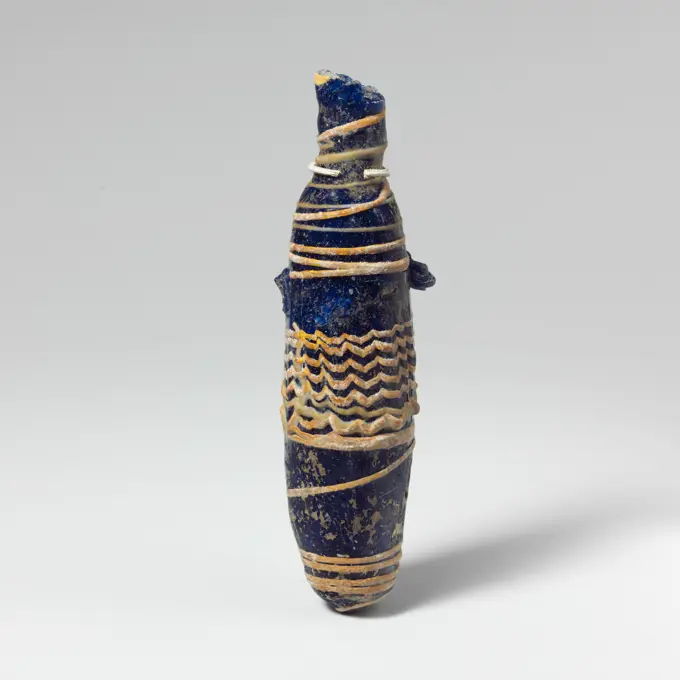
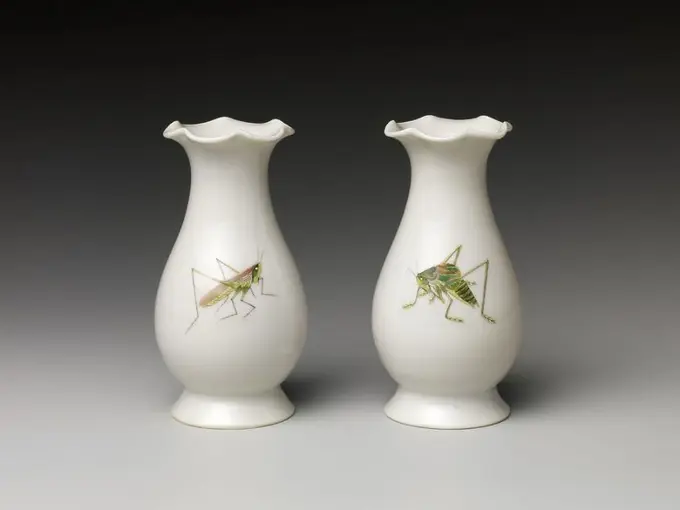
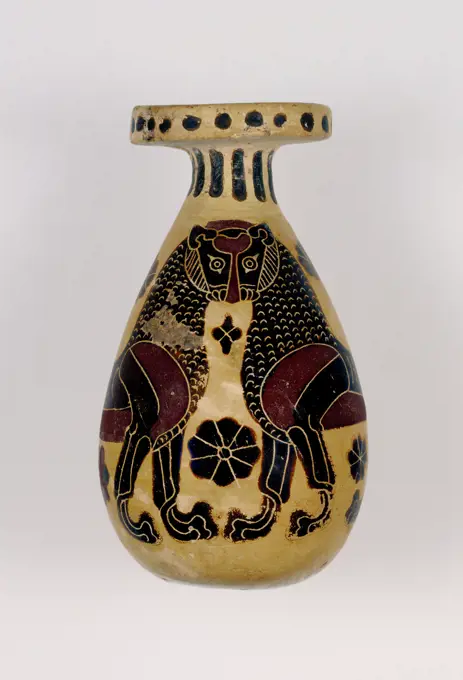
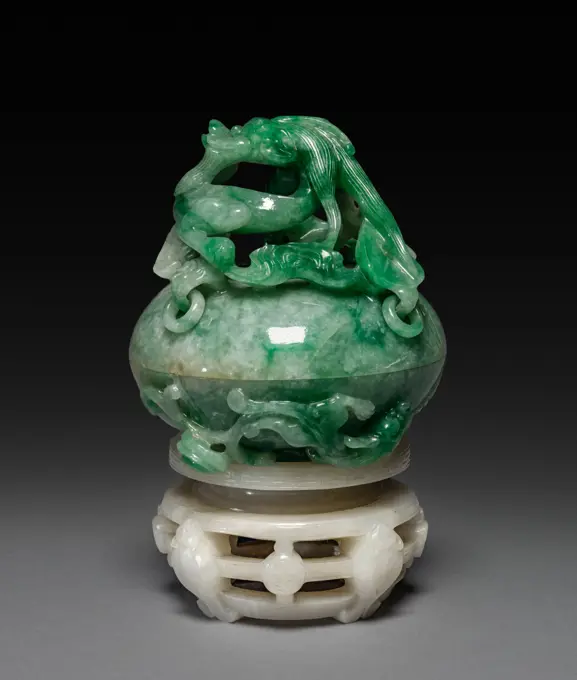
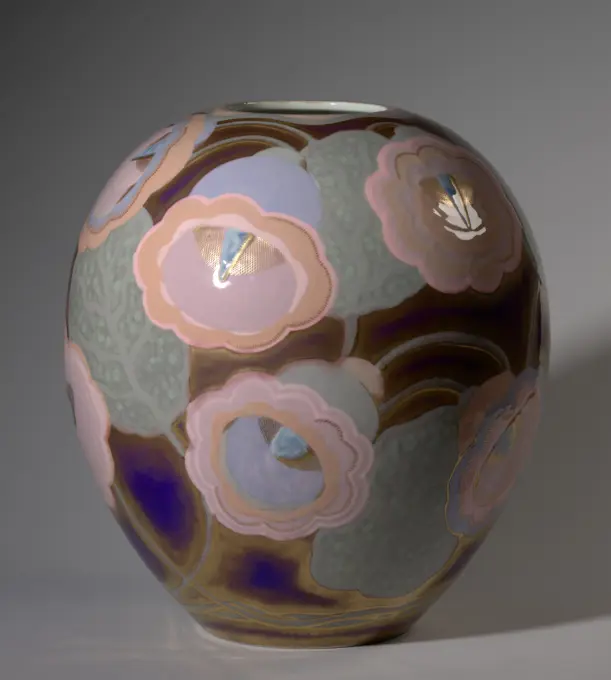
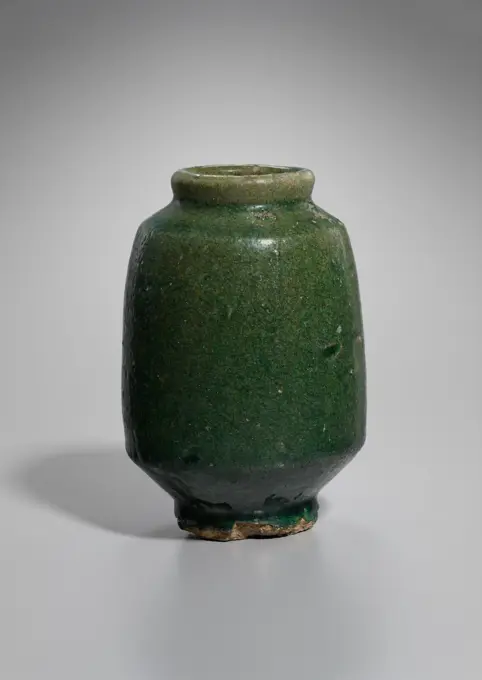
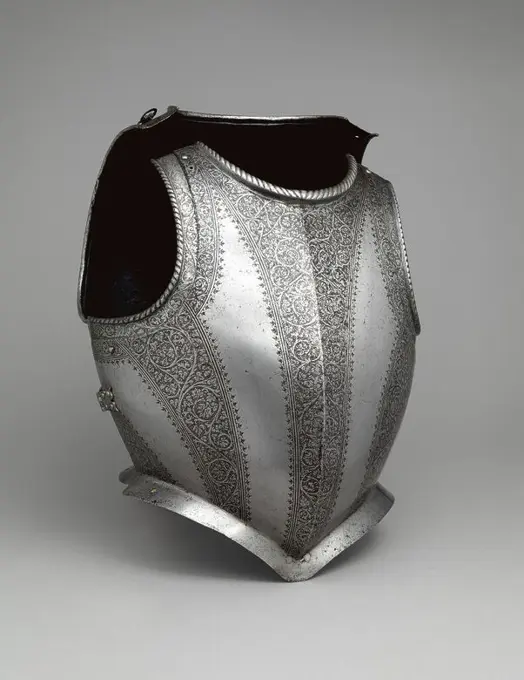
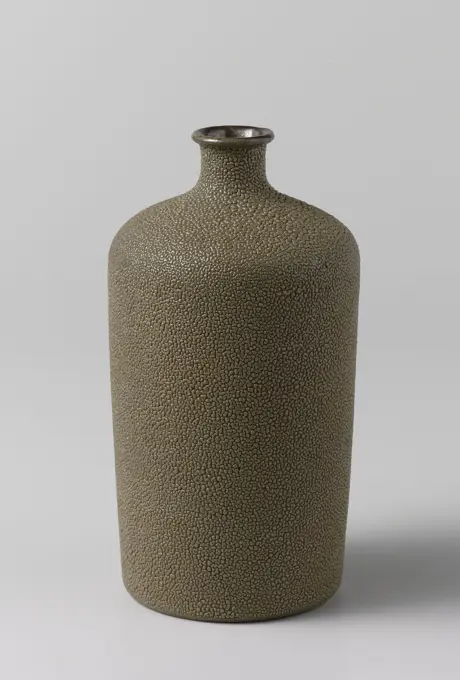
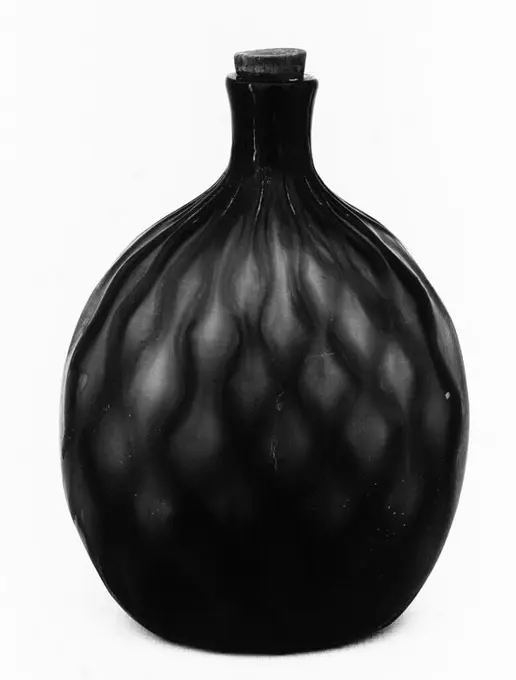
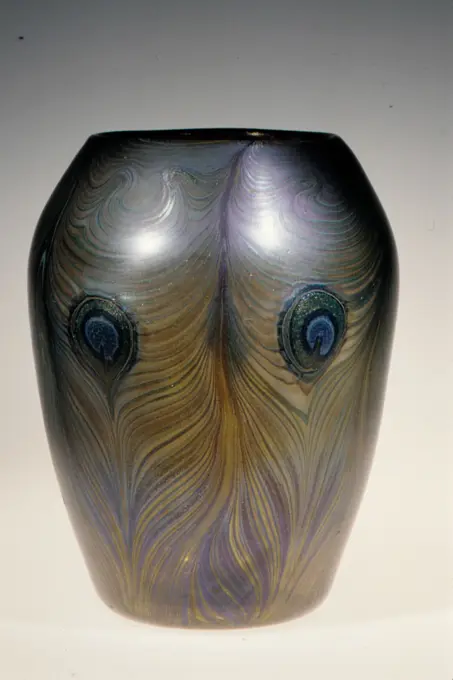
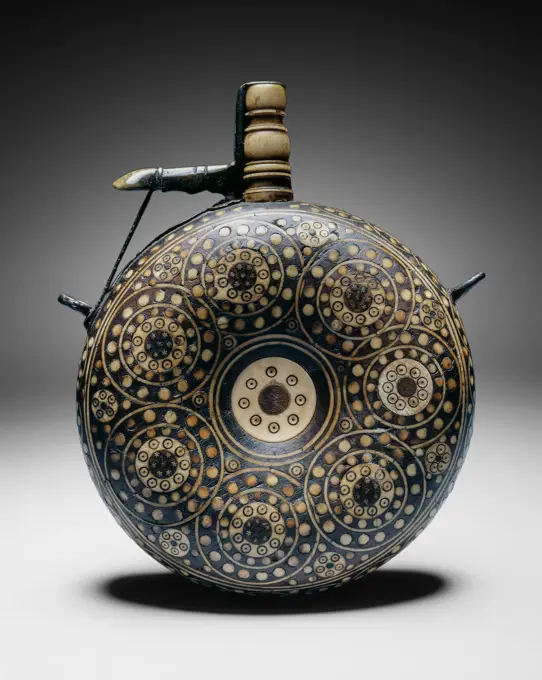
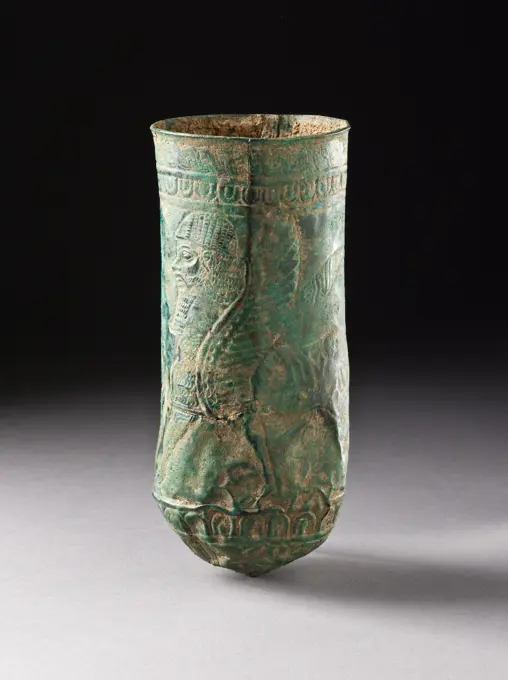
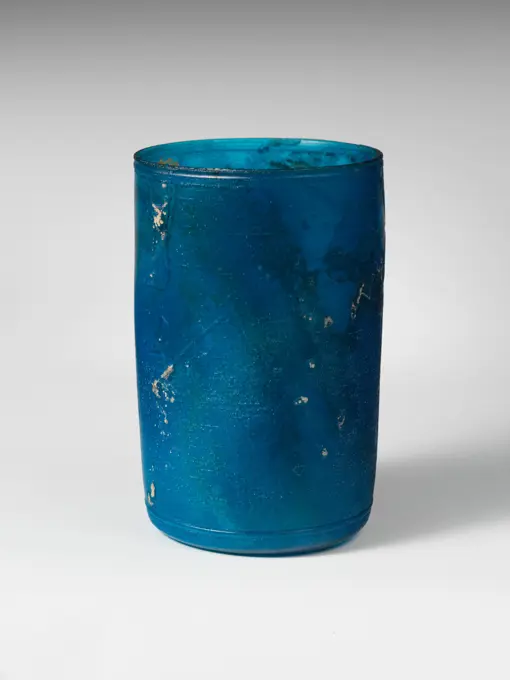
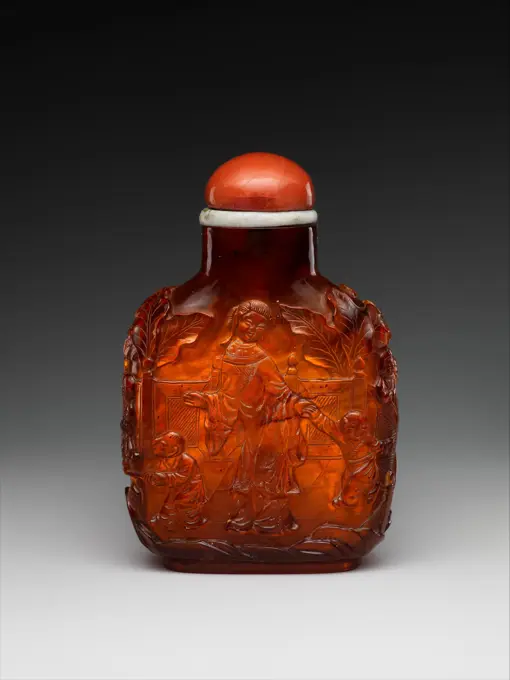
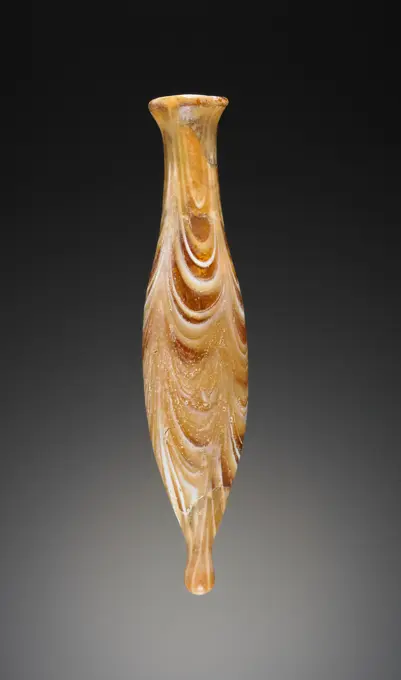
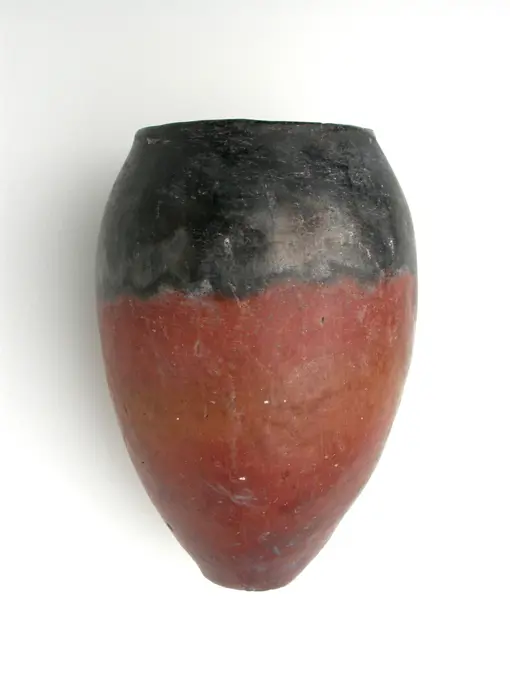
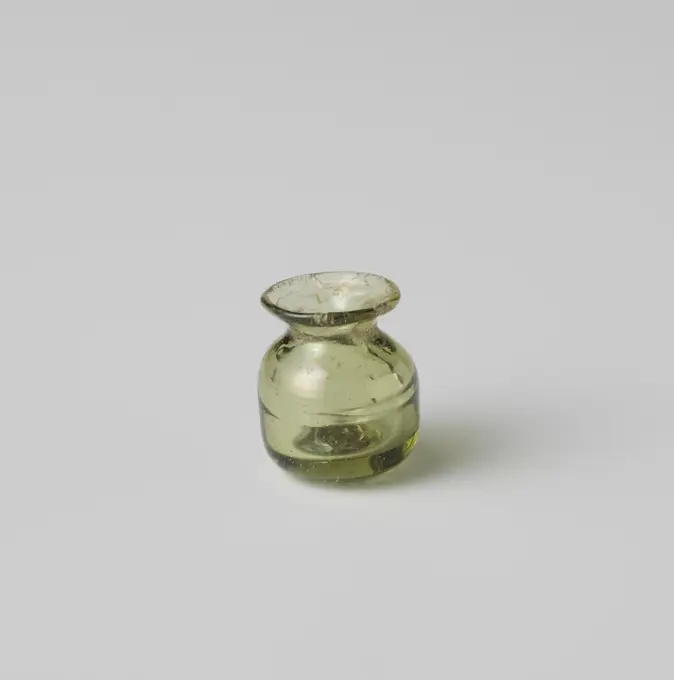
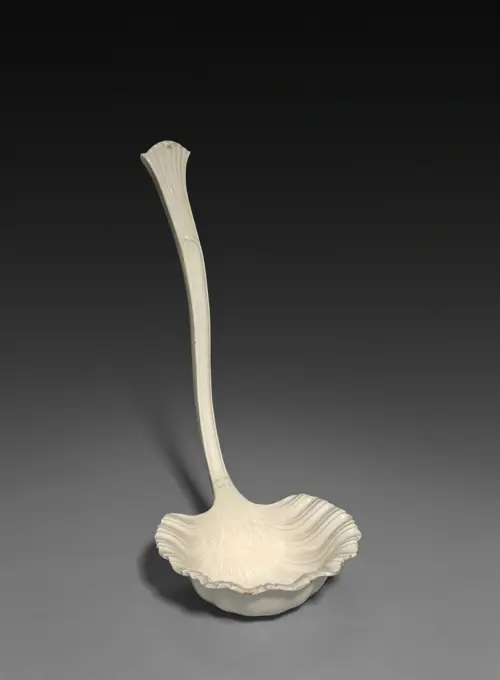
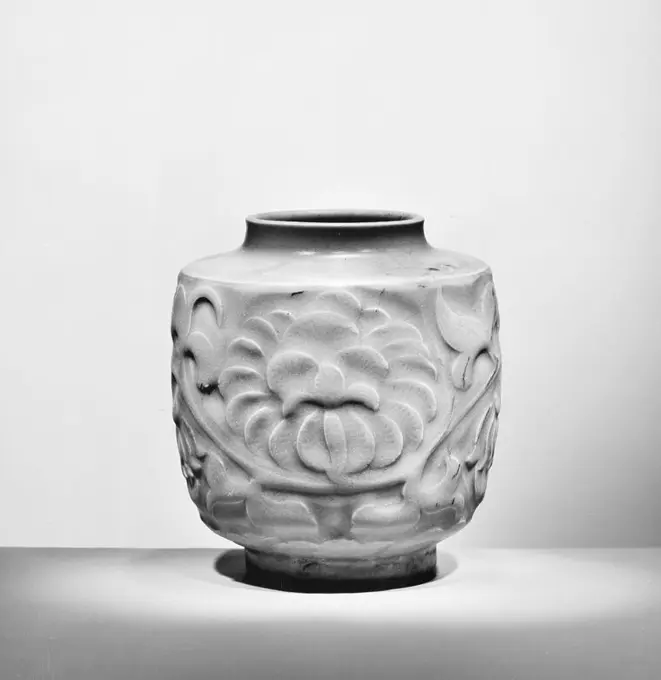
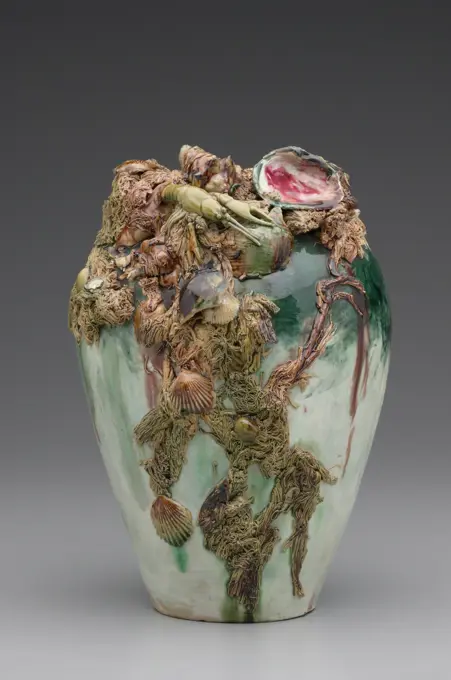
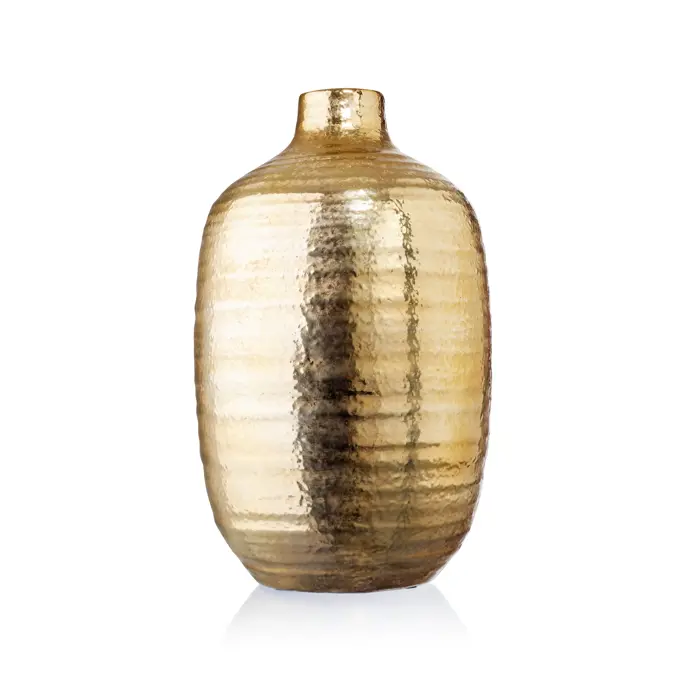
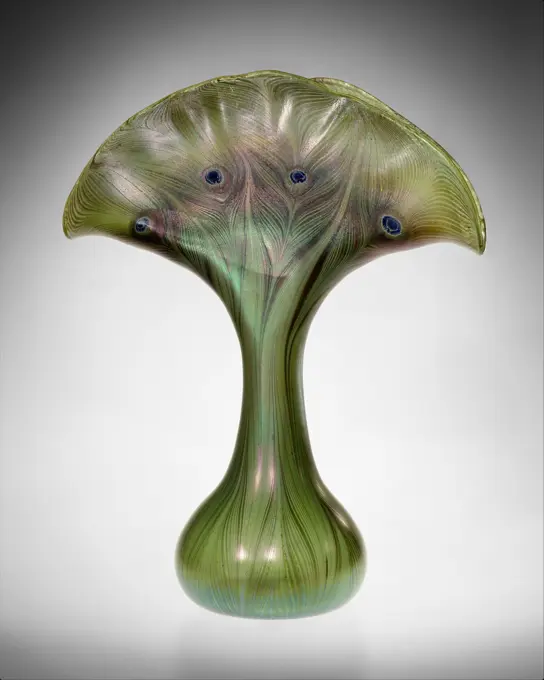
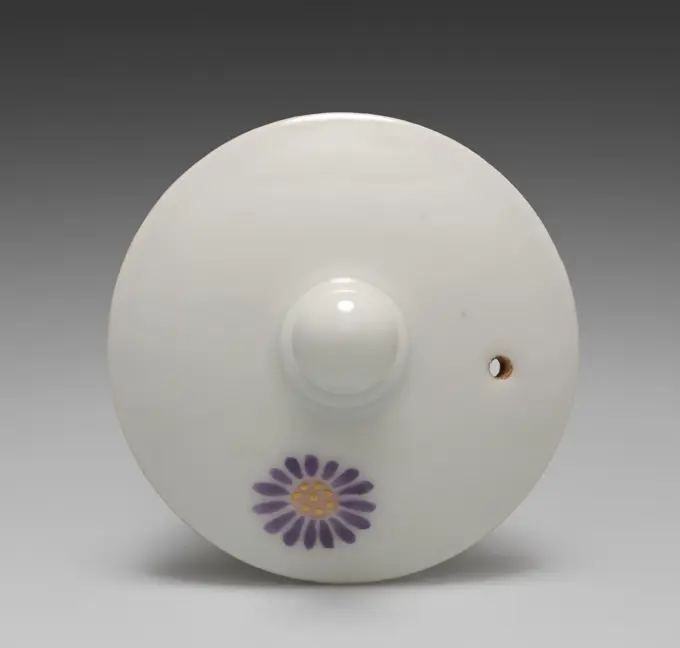
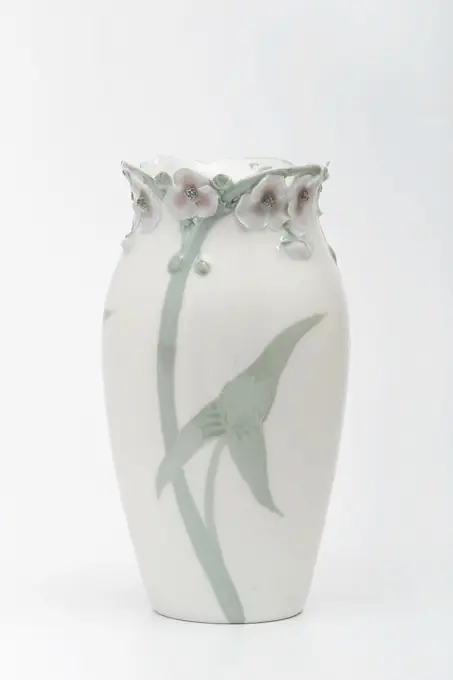
Bottle, pear-shaped, decorated with geometric ornament in yellow, brown and black., Tile and Fayencefabriek Amphora, c. 1910 Pottery bottle, pear -shaped with a long slender neck. The bottle is decorated with geometric ornament in yellow, brown and black. Oegstgeest earthenware Pottery bottle, pear -shaped with a long slender neck. The bottle is decorated with geometric ornament in yellow, brown and black. Oegstgeest earthenwareTerracotta guttus (flask with handle and vertical spout) 3rd century B.C. Greek, South Italian, Apulian On vase, frontal sirenThe guttus was typically filled with oil and used in sacrifices or occasionally for bathing.. Terracotta guttus (flask with handle and vertical spout) 255322Glass alabastron (perfume bottle) 3rd-2nd century B.C. Greek, Eastern Mediterranean Translucent cobalt blue, with handles in same color; trails in opaque white and opaque yellow.Cylindrical neck; small, uneven shoulder; cylindrical body, with slightly convex sides, tapering in to uneven rounded bottom with slightly pointed tip; two lug handles applied over trail at top of body, one horizontal, the other probably vertical.A white trail applied around lower neck and wound down in a spiral slight over four times; a second white trail applied vertically on body and wound round almost horizontally in three irregular lines, and a yellow trail wound down neck in a spiral over white, continuing as a band of close-set horizontal lines around middle of body over second white trail and tooled into a zigzag pattern with carelessly applied tooling strokes, then wound around lower body in another band of five spiral lines and trailed off on bottom. Trails have not been marvered.Complete body, but wiCalcedonio” Vase.   Maker: Antonio Salviati, Italian, 1816-1890Pair of vases with crickets. Culture: China. Dimensions: H. 4 in. (10.2 cm).Crickets, which have long been kept as pets in China, are symbols of happiness (xi) and auspiciousness (xi) in part because one name for these insects is xishuai and the initial character, xi, serves as a homonym for both words. This pair has both a Hongxian mark and a second mark reading jurentang, or the Hall where Benevolence Resides. Jurentang is the name of a house where Yuan Shikai (1859-1916), the autocratic first president of the Republic of China, lived and had his office. Museum: Metropolitan Museum of Art, New York, USA.Perfume Flask with Lions; Painter of Palermo 489 (Greek (Corinthian), active 640 - 600 B.C.); Corinth, Greece; 640 - 625 B.C; Terracotta; 7.4 × 4.3 cm (2 15,16 × 1 11,16 in.)Onion-shaped vase. unknown, craftsmanVase with dragons late 17th-early 18th century China. Vase with dragons 47578Big plummet. plumb bob level with chain used for digging mine shaft in coal mining, close-up on white backgroundThree-Sectional Altar Group: Small Bowl with Carved Dragon with Lid and Base, 1644-1911. China, Qing dynasty (1644-1911). Jade;Clochettes (Bells) and Mauves Jar, 1931. Henri Rapin (French, 1873-1939), Agnes Moreau-Jouin (French, active 1922-36), Sèvres Porcelain Factory (French, est. 1756). Porcelain; diameter: 37.8 cm (14 7/8 in.); overall: 45.1 cm (17 3/4 in.). In addition to a variety of useful wares for the table, the Sèvres factory continued to produce artistic works for its many wealthy clients using abstracted patterns and a colorful palette.Small green-glazedvaseVase with dragon late 17th-early 18th century China. Vase with dragon 48629Vase with Fries van Vlinders, plateel bakery Haga, 1904 - 1907 Vase of earthenware, spherical with long neck, painted with a frieze of butterflies in brown and black on yellow stock. Between the butterflies, one continuously in the foot, black found and above two black ornament edges. Purmerend earthenware Vase of earthenware, spherical with long neck, painted with a frieze of butterflies in brown and black on yellow stock. Between the butterflies, one continuously in the foot, black found and above two black ornament edges. Purmerend earthenwareBottle 19th century China or Japan (). Bottle. China or Japan (). 19th century. Porcelain with incised decoration. Edo (1615-1868) or Meiji period (1868-1912). CeramicsCuirass. Culture: Italian. Date: ca. 1560. Museum: Metropolitan Museum of Art, New York, USA.Vase with a 'shark skin' glaze, anonymous, anonymous, c. 1775 - c. 1824 Vase of stoneware with a slightly spreading, cillindrical body and a narrow neck, covered with a gray, structure of glaze (Shark Skin/Samehada). Two old labels on the underside with 'Satsuma Same/ Morse page 327' and 'W640'. Satsuma. Japan stoneware. glaze vitrification Vase of stoneware with a slightly spreading, cillindrical body and a narrow neck, covered with a gray, structure of glaze (Shark Skin/Samehada). Two old labels on the underside with 'Satsuma Same/ Morse page 327' and 'W640'. Satsuma. Japan stoneware. glaze vitrificationEwer (Iran); glassGourd Vase Vase; France; tin-glazed earthenware with cobalt decorationFlask. Culture: American. Dimensions: H. 5 1/2 in. (14 cm). Date: 1770-1800. Museum: Metropolitan Museum of Art, New York, USA.Vase 1893-96 Designed by Louis Comfort Tiffany American. Vase. American. 1893-96. Favrile glass. Made in New York, United StatesPowder Flask, c. 1620-1650. Germany, 17th century. Walnut inlaid with horn in concentric circles; turned bone funnel with brass spring cap; iron suspension loops; diameter: 12.1 cm (4 3/4 in.); overall: 15.9 cm (6 1/4 in.). Powder flasks are small, portable containers designed to hold gunpowder. From the 1400s to the 1800s, powder flasks were indispensable for charging and priming firearms of all types. Without powder flasks firearms were of little use to their owners. Many highly decorated flasks rank as works of art.Situla. Iran, Luristan, circa 1000-800 B.C.. Furnishings; Serviceware. Bronze, hammeredCoffee can be made of coffee and tea set 'Saxonia', Meissener Porzellan Manufaktur, c. 1904 Porcelain lid, painted in blue and gray. Float porcelain. uranium oxide Porcelain lid, painted in blue and gray. Float porcelain. uranium oxideBrushpot Depicting a Daoist Paradise. China. Date: 1795. Dimensions: H. 17.8 × diam. 16.5 cm (7 × 6 1/2 in.). Jade. Origin: China. Museum: The Chicago Art Institute, Chicago, USA.Glass cylindrical beaker late 1st century B.C.-early 1st century A.D. Roman Translucent deep turquoise blue.Plain, vertical rim; vertical but slightly convex sides, with rounded edge to flat bottom.On exterior, immediately below rim a raised horizontal line flanked by a groove above and below, another raised horizontal line flanked by two grooves at bottom of side; and a broader raised concentric circle flanked by two grooves on bottom .Intact; pinprick bubbles; dulling, deep pitting, and patches of iridescence and creamy brown weathering.Rotary grinding marks on exterior and interior.These cups and bowls represent the class of brightly colored translucent wares that dominated the repertoire of Roman cast glass until they were superseded by vessels made in colorless glass. Unlike mosaic glass, which was made primarily in the Syro-Palestinian region, most translucent monochrome vessels were probably made in Italian workshops and are found mainly in archaeological sites in Italy and the Snuff Bottle, 18th century, 3 5/8 x 1 5/8in. (9.2 x 4.1cm), Porcelain, China, 18th centurySnuff bottle with women and children in a garden China. Snuff bottle with women and children in a garden 41656Sake bottleBottle still bank, c. 1820, 4 1/2 x 2 1/2 x 2 1/2 in. (11.43 x 6.35 x 6.35 cm), Ceramic, United States, 19th centuryFlask in the Shape of a Date 1 CE-100 CE Syria. Initially affordable only among the wealthy, glass was used in ancient Rome as containers for oils, perfume, and tablewares. The variety of glass-making techniques reveals the changing tastes and fashions over the centuries. During the 1st century AD, cast glass was a novel form that was a luxury for the Roman household, but by the end of the century, the innovation of blown glass allowed for less labor-intensive and less expensive production, which meant people of lesser means could afford it. Blown glass became so popular it nearly supplanted ceramic and even bronze wares in the home.With the invention of glass blowing came the possibility of making molds to produce multiples, enabling mass production of popular designs. Whimsical shapes, like this date, enjoyed great popularity. While most molds were made of clay or plaster, it is likely that the mold for this flask was made from an actual dried date. Dates were not only a staple of thFlask. UnknownSnuff Bottle, 19th century, 2 5/8 x 1 1/2in. (6.7 x 3.8cm), Agate, China, 19th centuryCANTARO PARA AGUA VIDRIADO Y DECORADO EN COLORES CON DOS ASAS Y TAPA. Location: ALFARERIA. Nijar. Almería. SPAIN.Wine bottle with lotuses and admonition. Culture: China. Dimensions: H. 12 5/8 in. (32.1 cm); Diam. 9 in. (22.9 cm); Diam. of rim 1 3/8 in. (3.5 cm); Diam. of base 4 1/2 in. (11.4 cm). Date: 13th-14th century.The inscription running in two lines to either side of the dramatic lotus scroll reads:" Drink less wineGain more knowledge". Museum: Metropolitan Museum of Art, New York, USA.Bottle, 1738, 8 1/8 x 4 1/4 x 4 1/4 in. (20.6 x 10.8 x 10.8 cm), Glass, enamel, Switzerland, 18th centuryVessel 3800 BCE-3300 BCE Egypt. Ceramic . Ancient EgyptianBottle, green, with inserted soul and flared neck. Bottle of bright green glass with inserted soul and flared neck.Ladle, 1750-1775. France, Pont-aux-Chous, 18th century. Faience; overall: 29 cm (11 7/16 in.).Jar. Culture: China. Dimensions: H. 4 in. (10.2 cm). Date: 11th-12th century. Museum: Metropolitan Museum of Art, New York, USA.Vase. Designer Thomas Jerome Wheatley, American, 1853-1917 Maker: T. J. Wheatley and Company, American, 1880-1882Design, golden, vase, design, gold, gold-colored, vases ** design, golden, vase, designs, golden, vases ktn-j2nAlabastron. UnknownCeramic tripod Fa-Hua vase, China. Chinese Civilisation, Ming Dynasty, 14th-17th century.Kerosene Table Lamp. New England Glass Company (United States, Massachusetts, East Cambridge, 1818-1888). United States, circa 1850. Furnishings; Lighting. GlassBottleSmall alabastron. UnknownVase 1893-96 Designed by Louis Comfort Tiffany American This vase forms part of a group of more than forty objects given to the Museum in 1896 by Louisine and Henry Osborne Havemeyer (96.17.9-.56), the first American glass to enter the Museum's collection. Most likely prompted by Louis Comfort Tiffany, the Havemeyers presented their collection of Tiffany favrile glass to the Museum only three years after Tiffany started making decorative blown-glass vessels. The shapes, colors, and finishes of Tiffany's vases and plaques were inspired by the natural world and by ancient glass.. Vase. American. 1893-96. Favrile glass. Made in Queens, New York, New York, United StatesThis teapot with chrysanthemum motifs in green, purple, and red with gold centers shows off Seif Yohei III’s technique of enamels painted over the glaze. Lid for a Teapot with Chrysanthemum Motifs, 1912-14. Seifū Yohei III (Japanese, 1851-1914). Porcelain with overglaze color enamel and gold;Light green glass pitcher, House of Maius Castricius, Pompeii, Campania, Italy. Roman civilisation, 1st century AD.Blue toilet glass jars, 1st-3rd century, National Archaeological Museum, Villa Cassis Faraone, UNESCO World Heritage Site, important city in the Roman Empire, Aquileia, Friuli, Italy, Aquileia, Friuli, Italy, EuropeBlown Glass jug blue. Barcelona. Spain 2013Cups. Acquired by the artist at the World's Fair 1900 in ParisAlabastron. Unknown3d volumetric vases. Design element. Vector illustration. EPS 10.. 3d volumetric vases. Design element. Vector illustration.Container in the Shape of a LotusPodModern vase Modern vase in interior in front of a grey wall Copyright: xZoonar.com/IvonnexWierinkx 7061330Vase "pillar". Acquired by S. Bing, Gallery "L'Art Nouveau" at the 1900 World's Fair in Paris