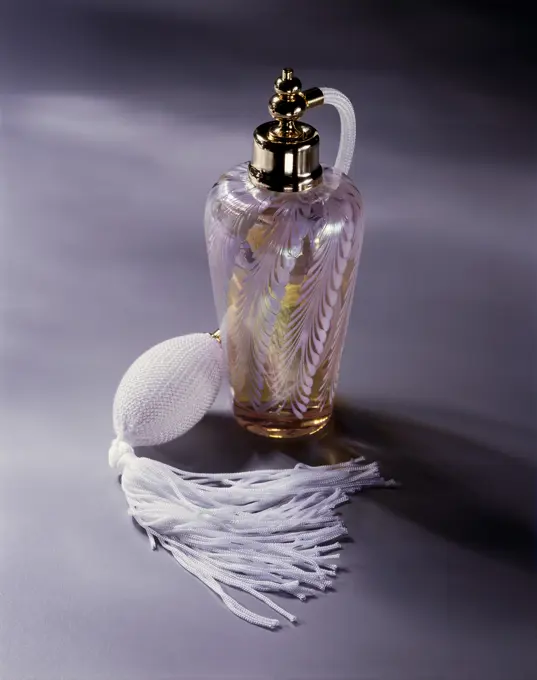
Decorative Vases and Bottles

Images of diverse vases and bottles from different eras, showcasing ceramics and glass in various styles and colors.
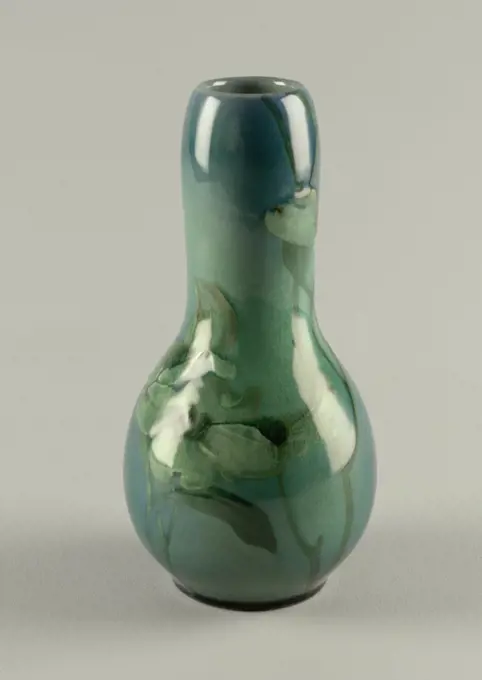
Vase, Sarah Alice Toohey, American, 1872-1941, Rookwood Pottery, American, 1880 - 1967, Glazed earthenware, Sea green bulbous tapered vase with floral decoration., White clay body, thrown. Low bulbous body with tall wide neck, slightly incurving lip; flat foot. Underglaze slip-decorated with branches of dogwood blossoms around body and neck. Light blue background with light green flowers and leaves. Very light green glaze overall; cracklature. Interior and bottom glazed., Cincinnati, Ohio, USA, 1901, ceramics, Decorative Arts, Vase
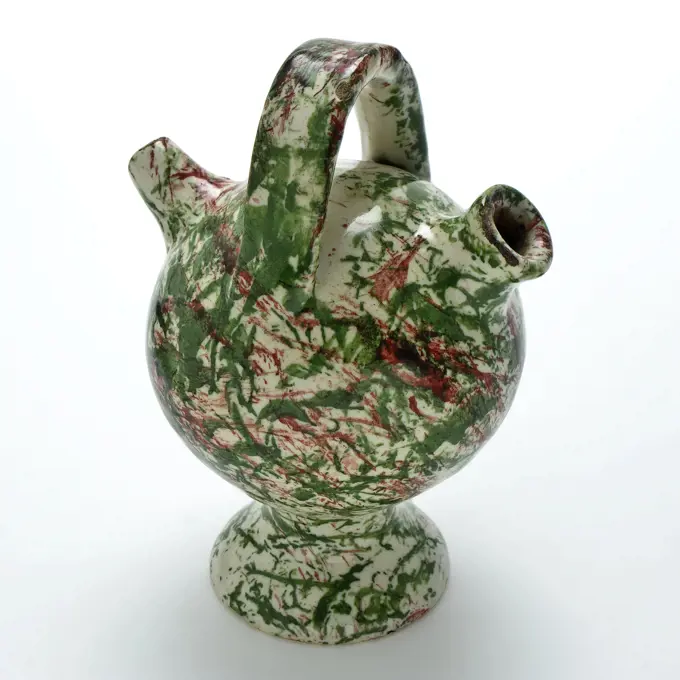
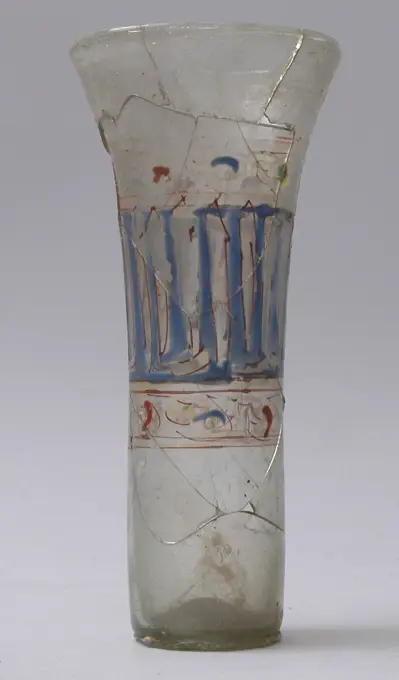
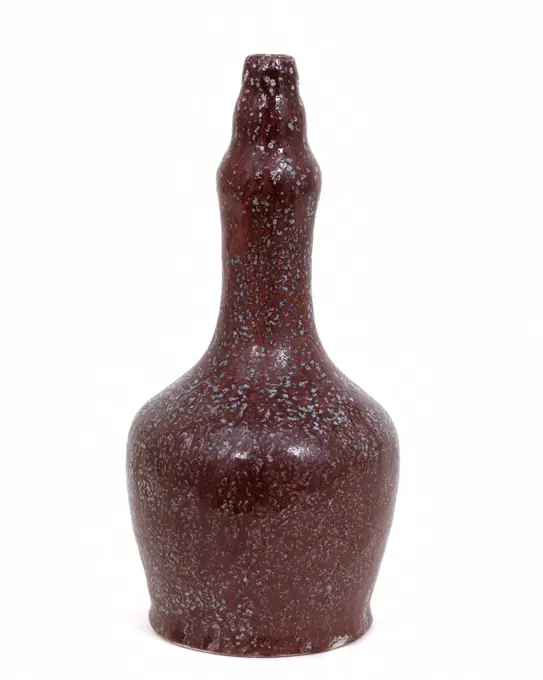
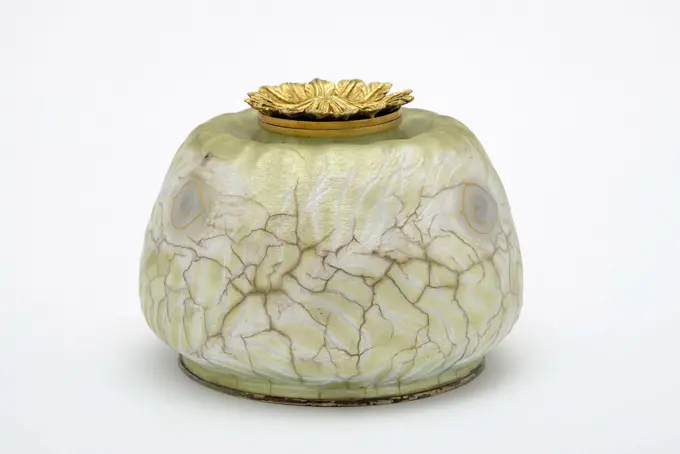
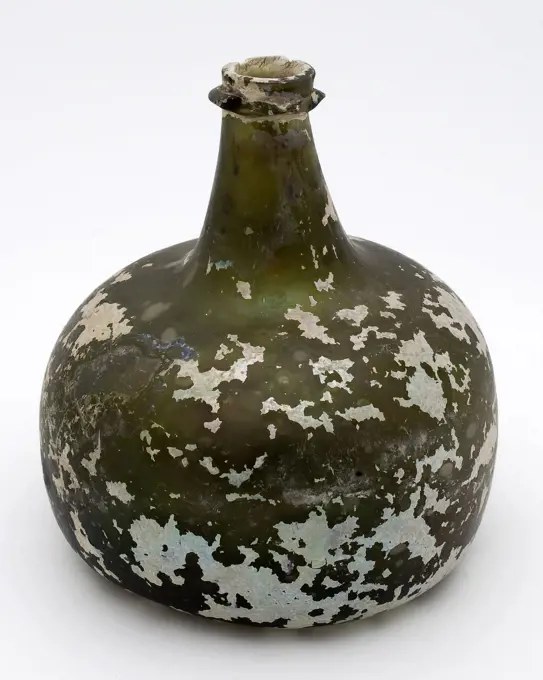
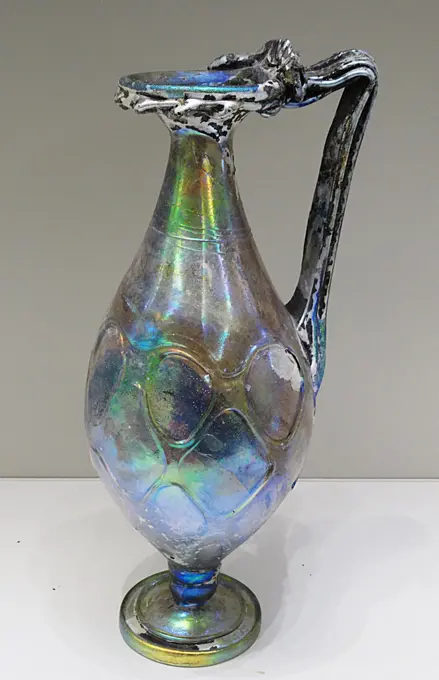
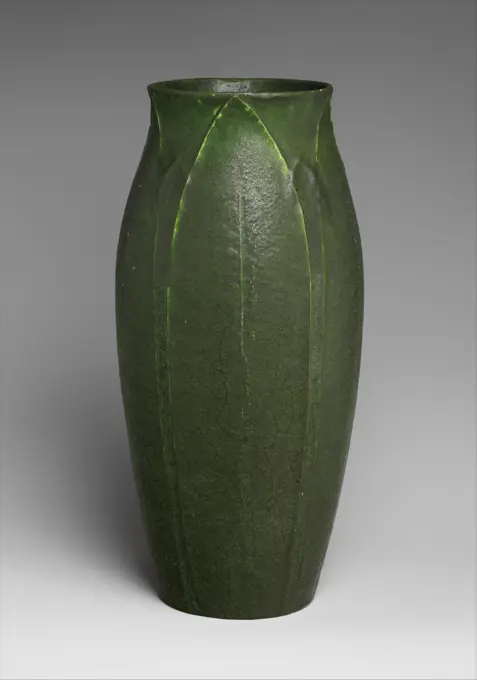
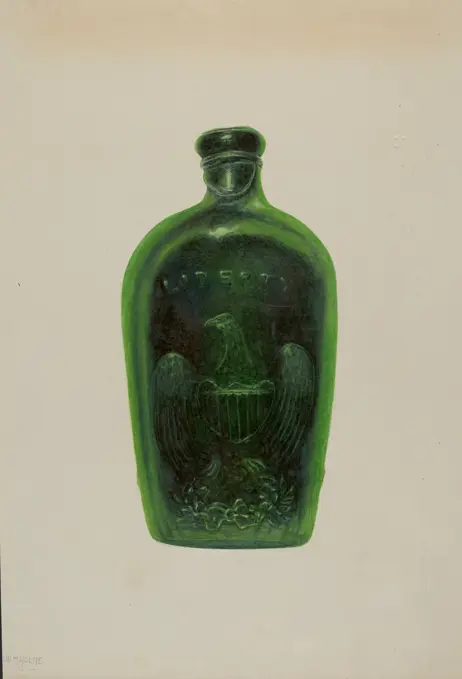
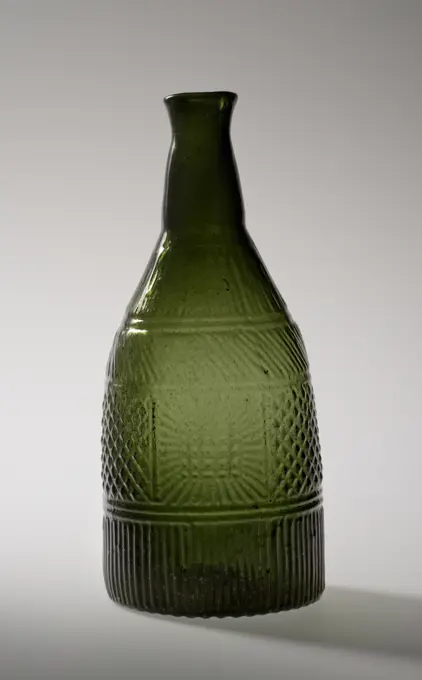
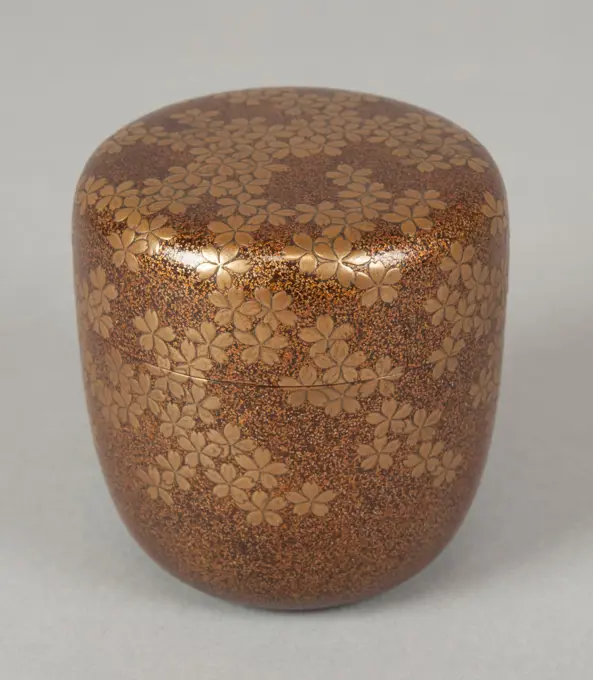
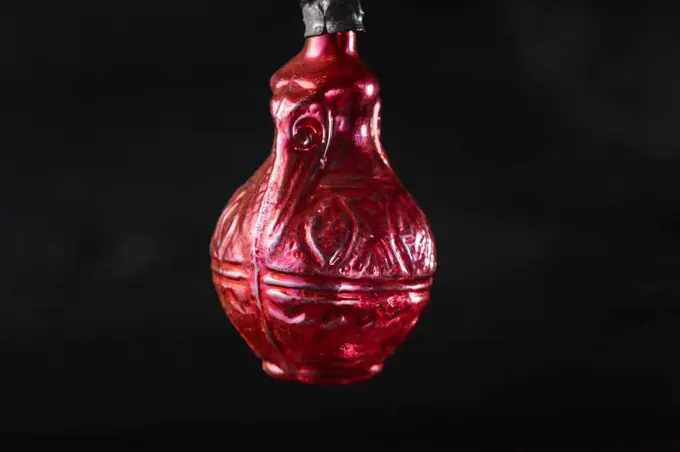
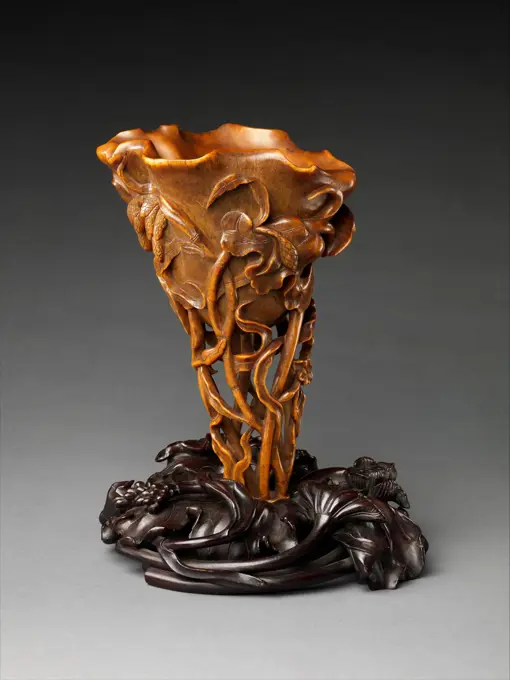
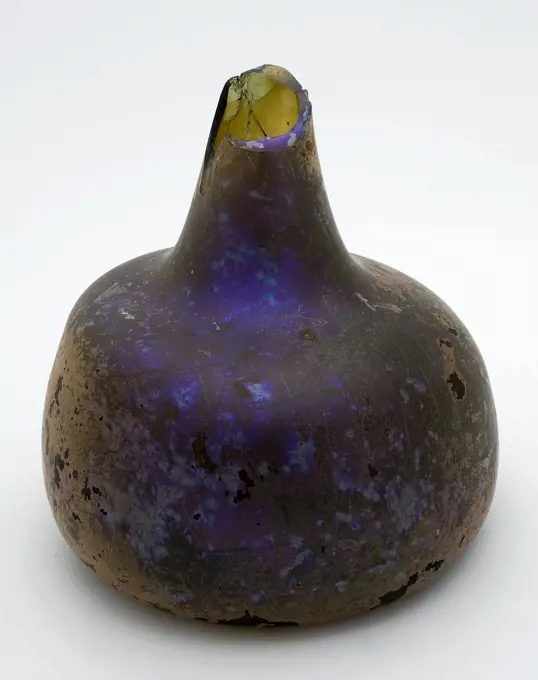
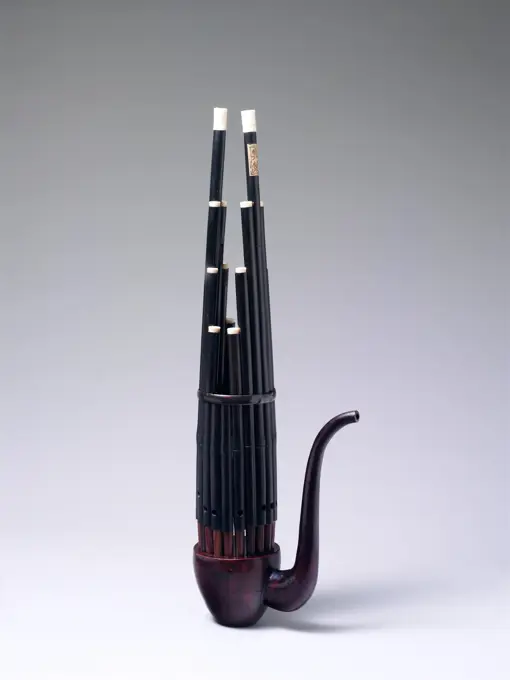
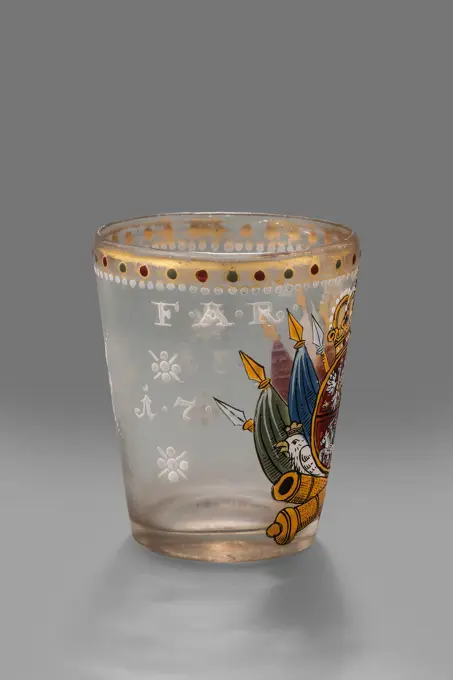
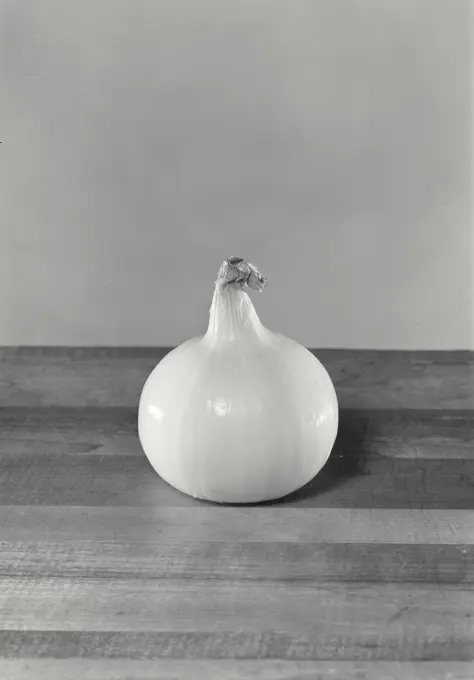
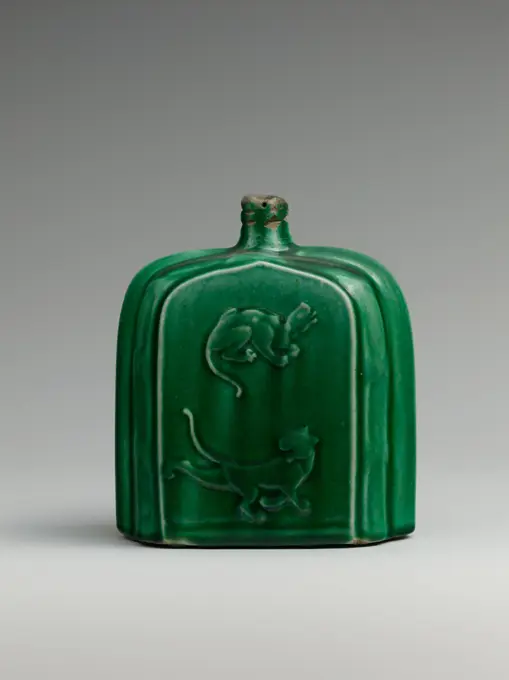
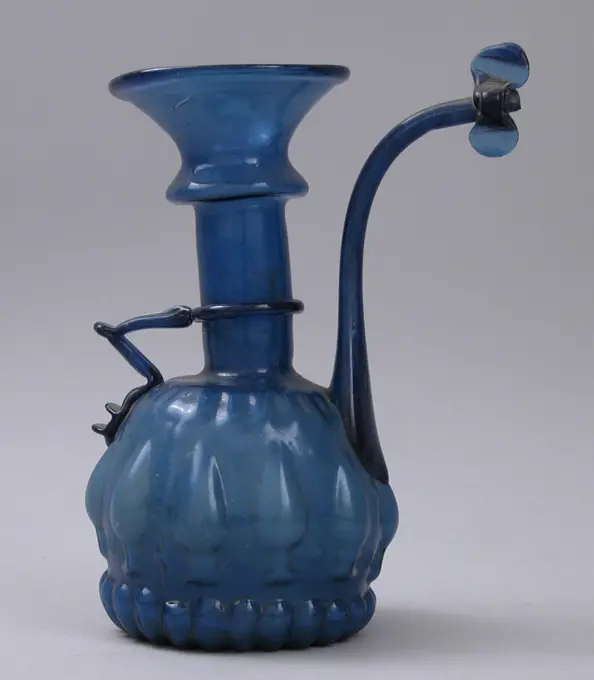
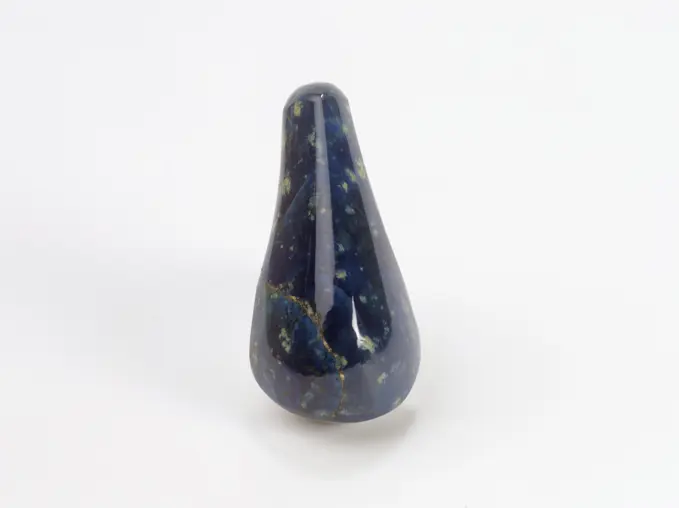
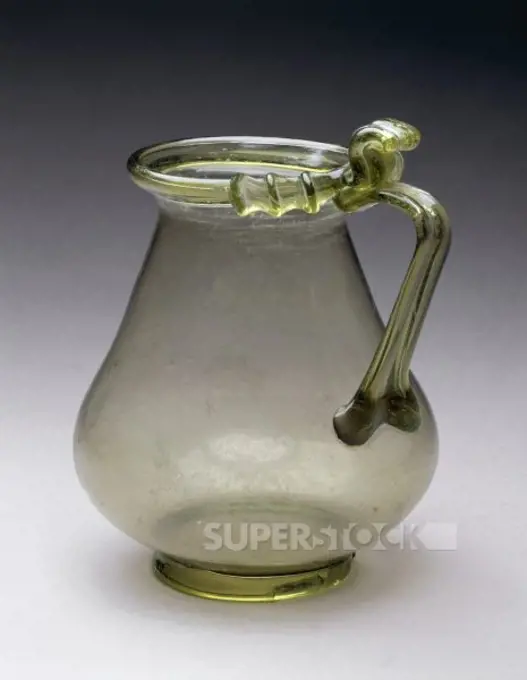
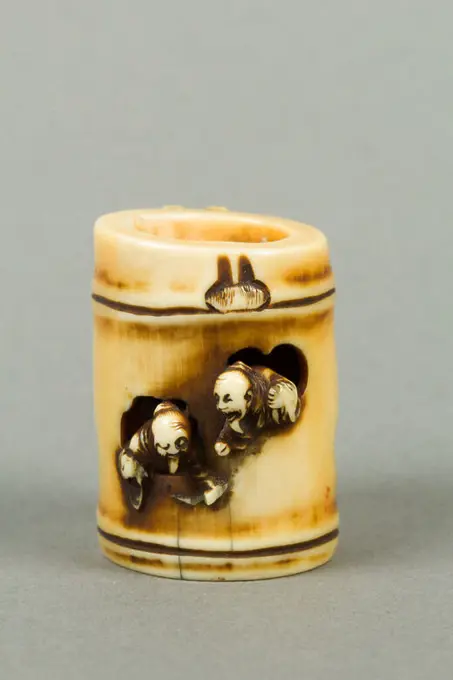
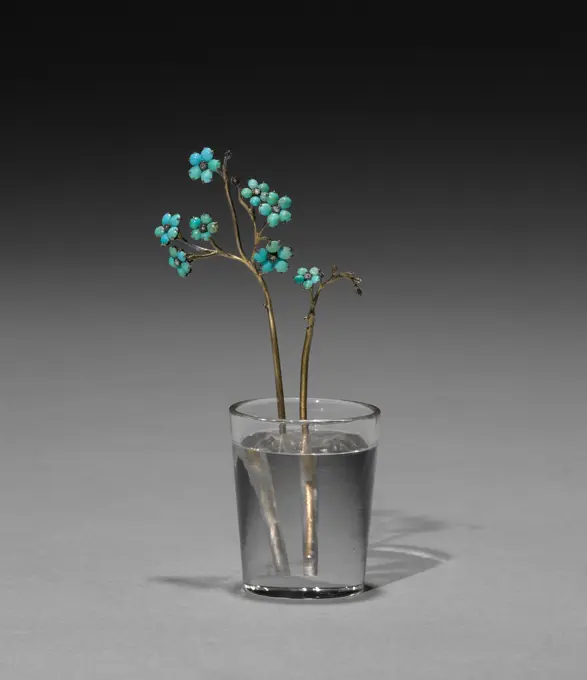
Glassware at the Glass Museum in Passau, Germany.Close-up of a glass vase, USAUmbrella vase;  End of the 19th century (1891-00-00-1900-00-00);Vase. Culture: American. Designer: Designed by Louis Comfort Tiffany (American, New York 1848-1933 New York). Dimensions: 8 1/8 x 6 3/4 in. (20.6 cm). Maker: Tiffany Glass and Decorating Company (American, 1892-1902). Date: 1893-96.This object forms part of a group of over forty given to the Museum in 1896 by Louisine and Henry Osborne Havemeyer (96.17.9-.56). The gift was the first American glass to enter the Museum's collection. Most likely prompted by Louis Comfort Tiffany, the Havemeyers presented their collection of Tiffany Favrile glass to the Museum only three years after Tiffany started making decorative blown-glass vessels. The shapes, colors, and finishes of Tiffany's vases and plaques were inspired by the natural world and ancient glass. Some of Tiffany's earliest glass vases, like this opaque gourd-shaped vase, resemble vegetal forms. Museum: Metropolitan Museum of Art, New York, USA.Lazio Viterbo Viterbo Museo Civico16. Hutzel, Max 1960-1990 Views of paintings (Middle Ages through 18th c.), frescoes, a tabernacle, coffin, sculpture reliefs, portal fragments, busts, sculpture, tapestry found in the Pinacoteca, Second floor gallery and Second floor cloister sequences. Antiquities: Many views of Etruscan and Roman fragments, sculpture, sarcophagi, pottery, masks, jewelry and other objects found in the Storeroom sequence (inventory numbers on back of prints), and the Cloister, Second floor Cloister, Valle Giulia, Sala Romana and Sala Etrusca sequences. General Notes: There are eight separate numerical sequences for this location. The cloister as an architectural structure, rather than museum site, is documented in the record and file for S. Maria della Verita, Cloister, all views of which are stored in Medieval core collection. Five views from the Museo Civico Second floor cloister sequence are stored in Medieval. German-born photographer and scholar Max Hutzel (1911-Roundball faience spout with lying handle, marbled glaze, syrup jug crockery holder soil find ceramic earthenware glaze tin glaze lead glaze, hand turned hand shaped glazed baked Pottery syrup jug white shard covered with tin glaze with underglaze decoration in green and red then covered with lead glaze Marbled with underglaze in green and red Hengseloor. On the foot of archeology, importing exotic earthenware should be served before servingBeaker 14th century. Beaker 448385Ernest Chaplet (1835-1909). Bottle. Flammed porcelain. 1899. Museum of Fine Arts of the City of Paris, Petit Palais. 60190-15 Bottle, flame porcelainEwer, dark blue glass with opaque enamel colors, Blue glass with painted red and yellow decorations; Vessel with long cylindrical neck ,with horizontal rib, prounounced wide lip at top. Stout globlular body; One handle of applied glass and long upturned spout., Iran, 17th-18th century, glasswares, Decorative Arts, EwerCan in the form of a poppy capsule. .Doorn stick. Concave foot with beaten edge. Cylindrical body, slightly tapered and set with three rows of small studs under a double ribbed wire.Figured flask. Culture: American. Dimensions: H. 8 in. (20.3 cm). Manufacturer: Kensington Glass Works (1816-38). Date: 1830-38. Museum: Metropolitan Museum of Art, New York, USA.Bottle vase with light brown and precious object and antiquities, anonymous, c. 1700 - c. 1724 Power bottle of porcelain with pear-shaped body, covered with a cafe-au-lait glaze and painted in underlaze blue. The lower part of the body is covered with a light brown glaze above which a band with a thick cream -colored glaze; the upper part in underlaze blue with servetwork interspersed with a flower in a medallion, above it valuables (pearl, musical stone) and antiques (vase, tripod, scepter, books); The neck with pointed leaf motifs. Edge damaged. Monochrome brown with blue and white. China porcelain. glaze. cobalt (mineral) painting / vitrification Power bottle of porcelain with pear-shaped body, covered with a cafe-au-lait glaze and painted in underlaze blue. The lower part of the body is covered with a light brown glaze above which a band with a thick cream -colored glaze; the upper part in underlaze blue with servetwork interspersed with a flower in a medallion, above it valuables small jar for cosmetics, turquoise glass, 18th dynasty, reign of Thutmose III, 1479-1425 BC, Thebes, Egypt, collection of the British Museum.Small round-bellied bottle, belly bottle bottle holder soil find glass, bottom leftover body Body with convex wall to convex shoulders and rejuvenated neck with imposed all-round sharp glass thread of which about quarter remains and flattened lip with various chips to package archeologyA fine jug, from the Eastern Mediterranean, 4th century.Tumblervase, Joseph Bailey Sr., American, d. 1898, Rookwood Pottery, American, 1880 - 1967, Oxblood, Cincinnati, Ohio, USA, 1899, ceramics, Decorative Arts, vaseBottle with Arms of the Holy Roman Empire (Reichsadler Bottle). Bohemia (now Czech Republic), 1572. Furnishings; Accessories. Glass, enamel, gilt, pewter capEmpty ceramic calich isolated on light gray backgroundSalt or BonnetGlassVase ca. 1900-1910 Grueby Faience Company When selecting American-made ceramics for his interiors, Frank Lloyd Wright gravitated toward geometric silhouettes in muted matte glazes such as those produced by the Grueby Faience Company. Popular among early twentieth-century American Arts and Crafts enthusiasts, Gruebys earthenware pieces and architectural tiles were inspired by Japanese forms and glazed using French techniques. This vase, while not original to the room, is similar to others found in Wright interiors. Wright often designed high shelves around the walls of a room for the display of ceramics and other decorative objects.. Vase 9336Ernest Chaplet (1835 -1909). Vase. Flammed porcelain. 1894. Museum of Fine Arts of the City of Paris, Petit Palais. 60190-6 Flamee porcelain, vaseMaud M Holme, Liberty Bottle, 1935 1942 Liberty BottleVase(Maebyong) with Lotus Sprays and Cloud Scrolls. Korean. Date: 1099-1199. Dimensions: 13 5/8 in. Stoneware with celadon glaze and carved and incised decoration. Origin: Korea. Museum: The Chicago Art Institute, Chicago, USA.Probably Keene (Marlboro Street) Glass Works, Decanter, c. 1820-41, olive green glass.Tea Caddy with Cover late 18th century Japan. Tea Caddy with Cover. Japan. late 18th century. Gold lacquer. Edo period (1615-1868). LacquerVaginal speculumBeaker decorated with flying birds. First half of the 14th century. Mamluk period (1250-1517). Egypt (or Syria). Gilded and enamelled glass. Calouste Gulbenkian Museum. Lisbon, Portugal.Soviet Christmas toy on a black wooden background, retroCista in cordoned bronze, from Santa Lucia di Tolmino, Slovenia. Castellieri Culture, 6th Century BC.Elements from shrine: door latches. Dimensions: Latch 1: H. 11.3 × W, 2.5 × D. 1.6 cm (4 7/16 × 1 × 5/8 in.)Latch 2: L. 10.8 × H. 2.6 × D. 2.8 cm (4 1/4 × 1 × 1 1/8 in.). Date: 380-30 B.C.. Museum: Metropolitan Museum of Art, New York, USA.Fragment of a Roman glass ampoule, 1st century BC, in the Roman Villa of Torre Llauder or Can Llauder, Mataró, Barcelona, Catalonia, Spain. Museum: Museo de Mataró, Mataró, Barcelona, Cataluña, España.Muller brothers. Vase the berries. Glass. Museum of Fine Arts of the City of Paris, Petit Palais. 54218-16 Art Nouveau, Baie, Vase, Glass, Glassry, FruitCup in the shape of a magnolia blossom 18th century China The rhinoceros was once widespread in China, but by the first century A.D. it had become an exotic species whose skin was sought after to make armor and whose horns were carved into drinking cups. During the Tang dynasty (618-907), rhinoceros horns were imported into China along with other foreign goods, such as pearls, sandalwood, and camphor. Elaborate rhinoceros-horn cups for drinking wine and other libations were produced widely from the sixteenth century onward.. Cup in the shape of a magnolia blossom 41888Belly bottle, dutch straight sided onion, hammer bottle, wine bottle abdominal bottle bottle holder bottomfound glass, free blown and shaped Bolbiscull bottle hammer bottle in clear green glass Pontil mark under slightly raised bottom Body with straight ascending wall to sloping flat shoulders and onset to rejuvenated neck archeology Rotterdam Kralingen -Crooswijk Struisenburg Buizengat packing Soil discovery Buizengat 1983.Snuff Bottle with Stopper, 1736-95. China, Qing Dynasty (1644-1911), Qianlong reign (1736-95). Crystal; with cover: 8.4 cm (3 5/16 in.).Sheng (  ) ca. 1850-89 Chinese Southeast Asian in origin and used before the twelfth century b.c., the sheng played an important role in Confucian music. Now it accompanies folk songs and is occasionally used in the Beijing opera to add harmony. The arrangement of its bamboo pipes symbolizes the folded wings of the mythical phoenix, whose cry the sheng’s sound is said to represent.. Sheng (  ). Chinese. ca. 1850-89. China. Aerophone-Free Reed-mouth organGlass; Heckert Fritz (Petersdorf; 1866-1918); End of the 19th century (1880-00-00-1900-00-00);August II Mocny (King of Poland - 1670-1733), Rzeczpospolita both nations (coat of arms), Saxony, Wettyn (coat of arms), electorate (coat of arms), coats of arms, rulers, Silesia (Prussia - 1740-1918)Vase with a lid Royal CopenhagenPedestal. Italy, Venice. Date: 1765-1775. Dimensions: 7.6 x 6.5 x 3.7 cm (3 x 2 9/16 x 1 7/16 in.). Porcelain with polychrome enamels and gilding. Origin: Venice. Museum: The Chicago Art Institute, Chicago, USA.Amphora-Shaped Vase 1662-1722 China. Porcelain painted in overglaze enamel .Sherbet Dish ca. 1885 British. Sherbet Dish 7426Scent Bottle. Culture: American. Dimensions: H. 2 5/8 in. (6.7 cm). Maker: Boston & Sandwich Glass Company (American, 1825-1888, Sandwich, Massachusetts). Date: ca. 1840. Museum: Metropolitan Museum of Art, New York, USA.Brush Holder 1799-1850 China. Wood (huanghuali) . Ming GuozhenCup; Huta Kryszta around 1725-1735 (1720-00-00-1740-00-00);1939, Chest No. 1, 1948, gearbox No. 256, st.bibl.krakau No. 58, Rusiecki Stanisław Ursyn, Dar, RequignationMATE ARGENTINO - SIGLO XIX - 13x8 cm. Location: MUSEO DE AMERICA-COLECCION. MADRID. SPANIEN.Bowling pinVintage Photograph. A still life of an onion.Moroccan wooden cosmetic kohl bottles on white backgroundBottle mid-17th century Relief images of two felines in motion ornament this flask, which has been coated with a green glaze. The lower coursing feline extends its hind leg mid-stride, turning its head to gaze behind. The feline above is depicted in a low crouch as if ready to pounce. This object is one of a small group which is notable for flat sides, emerald color and molded decoration. Scholars believe these wares were produced in Iran, though the imagery may have been influenced by Chinese or European sources.. Bottle. mid-17th century. Stonepaste; molded and glazed. Made in Iran, probably Isfahan. CeramicsGlass;  19th/20th century (1890-00-00-1910-00-00);Ewer probably 18th-19th century. Ewer. probably 18th-19th century. Glass; mold blown and applied decoration, tooled on the pontil. Attributed to Iran. GlassShell of Japanese Wonder Shell in studioEwer probably 18th-19th century. Ewer. probably 18th-19th century. Applied glass. Attributed to Iran. GlassEva Wilson, Salt Shaker, c 1937 Salt ShakerlazuriteFlaskLight green glass jug with pear-shaped body, everted rim and vertical ribbon-shaped handle, Pompeii, Campania, Italy. Roman civilisation, 1st century AD.Waszek with a plastic dragon unknownBOTES O ESPECIEROS PINTADOS Y VIDRIADOS. Location: ALFARERIA. ALHABIA. Almería. SPAIN.Close-up of collection of blue glass vasesVase, multi -colored painted with women's heads and an abstracted vegetative motif, Meissener Porzellan Manufaktur, c. 1902 Vase of painted porcelain. The vase is decorated on both sides in Pâte-sur-Pâte technology with a Face-seen women's head in Rose and Blue with long beige-brown hairs. The head has a white rosette with a beige-brown heart on either side. The rest of the vase is decorated with an abstracted vegetative motif in blue on green stock. The vase is marked. Float porcelain Vase of painted porcelain. The vase is decorated on both sides in Pâte-sur-Pâte technology with a Face-seen women's head in Rose and Blue with long beige-brown hairs. The head has a white rosette with a beige-brown heart on either side. The rest of the vase is decorated with an abstracted vegetative motif in blue on green stock. The vase is marked. Float porcelainNetsuke of Section of Bamboo Containing Two Men. Culture: Japan. Dimensions: H. 1 5/16 in. (3.3 cm); W. 1 in. (2.5 cm); D. 1 1/8 in. (2.9 cm). Date: 19th century. Museum: Metropolitan Museum of Art, New York, USA.Beaker. Iran, 9th-10th century. Glass. Glass, blown, with applied and cameo-cut decorationStripWine cup stand and cover 19th century Italian, Venice (Murano). Wine cup stand and cover 186005Flower Study of Forget-Me-Nots, c. 1885-1915. House of Fabergé (Russian, 1842-1918). Turquoise, diamonds, rock crystal, silver gilt; overall: 8.9 x 3.1 cm (3 1/2 x 1 1/4 in.). These delicate flowers, resembling a bouquet of forget-me-nots, are composed of finely rounded turquoise stones set around rose-cut diamonds on silver-gilt stems placed in rock crystal pots. Fabergés inspiration for his flower studies is said to have come from the floral brooches of precious stones that were made in the 1700s for Catherine the Great as well as from the Japanese art of flower arranging, known as ikebana. Fabergés flower studies were given as intimate gifts to friends by the tsarina and others in the court. She also liked to take them around to wherever the imperial family was residing as a reminder of spring during the harsh Russian winters.Close-up of a perfume bottleFeathered Crown. Culture: Chimú. Dimensions: H. 10 1/4 in. (26 cm). Date: 14th-15th century. Museum: Metropolitan Museum of Art, New York, USA.