Decorative Vases Through History

An array of artistic vases from different cultures and time periods, showcasing intricate designs and colors, perfect for home decor.
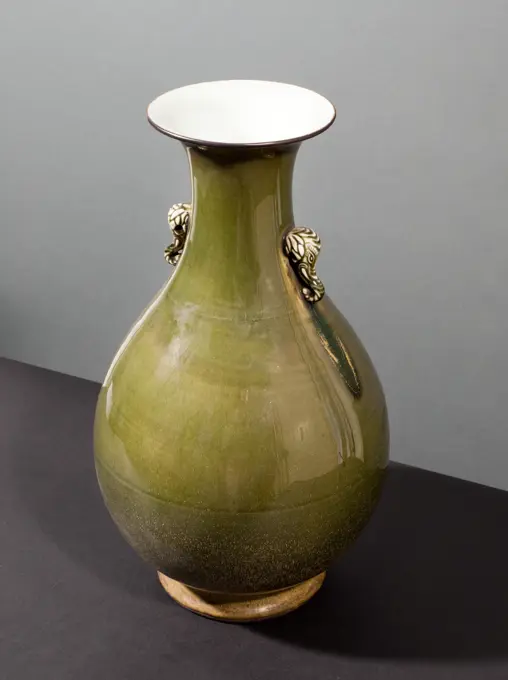
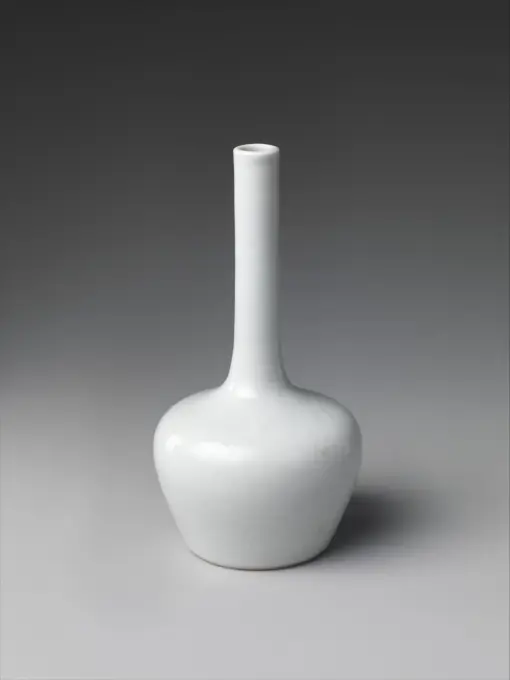
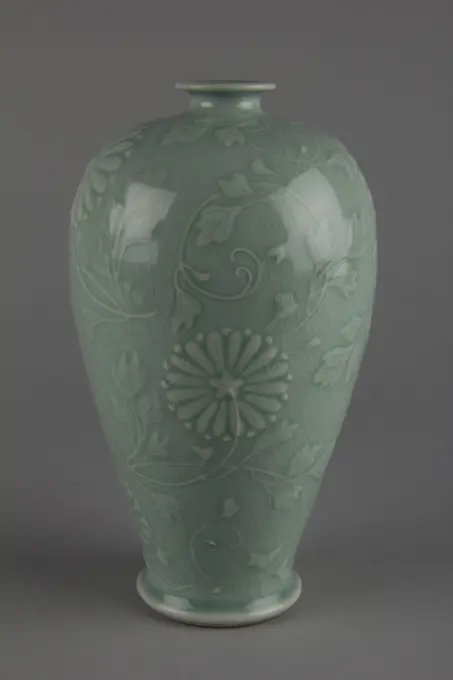
Vase. Porcelain with speckled green cover, Qing dynasty (1644-1912). Provenance: China. Paris, Cernuschi museum. 78839-23 Asian art, Chinese art, art of living, ceramic, fine ceramic, Ching dynasty, Qing dynasty, tsing dynasty, porcelain, container, vase
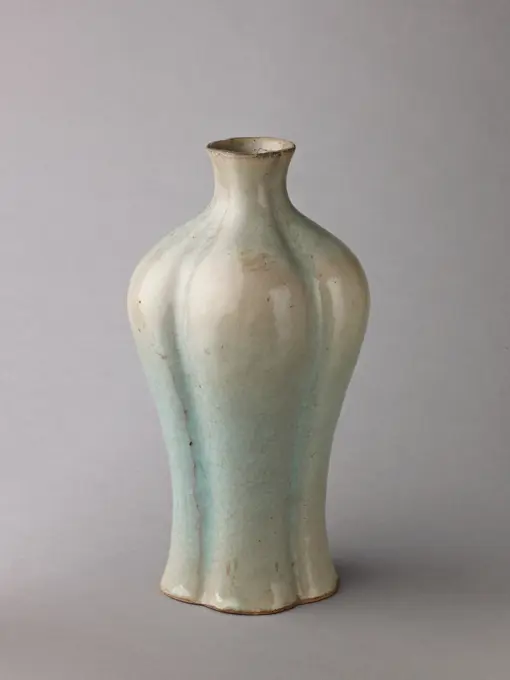
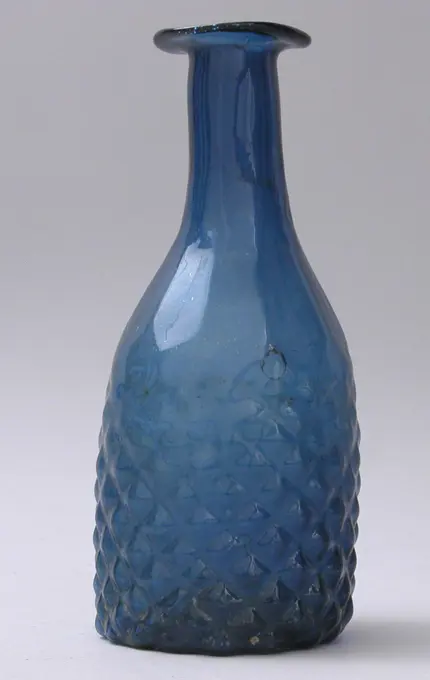
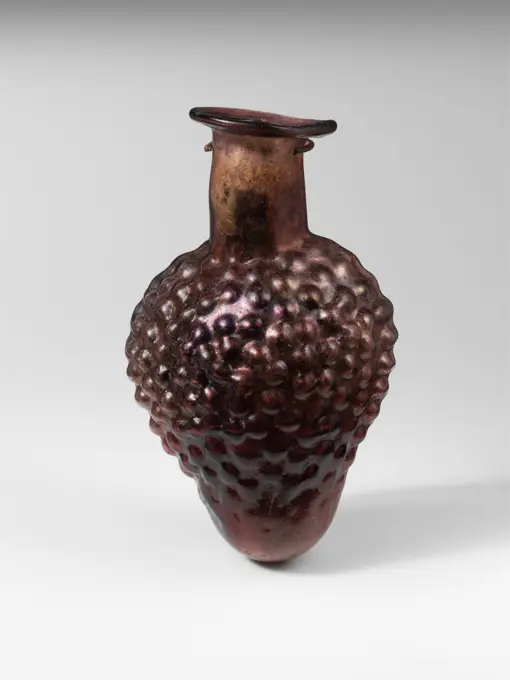
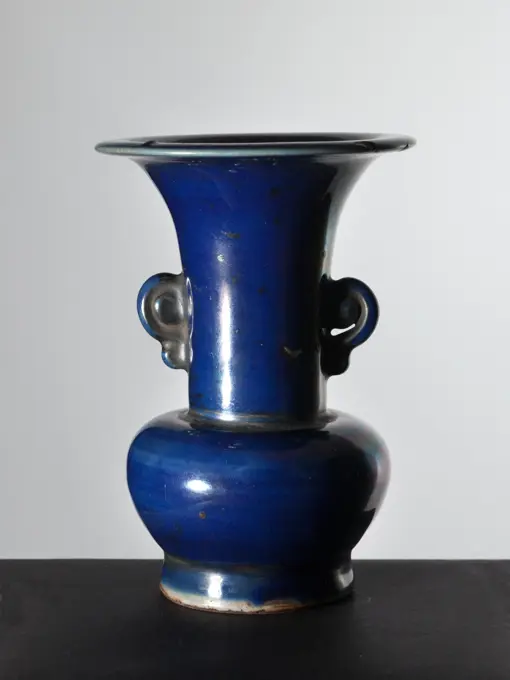
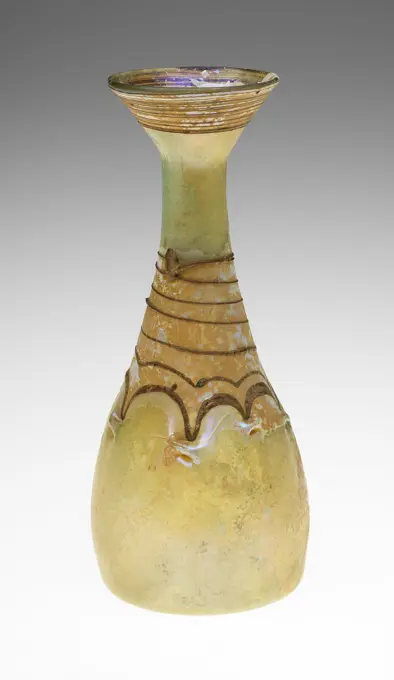
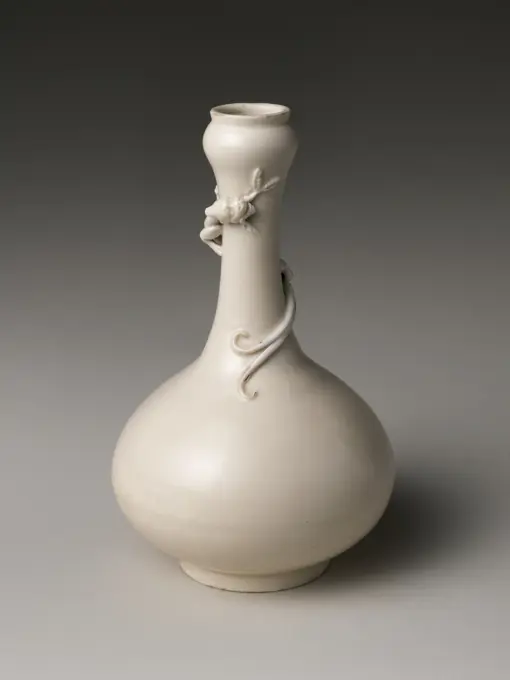
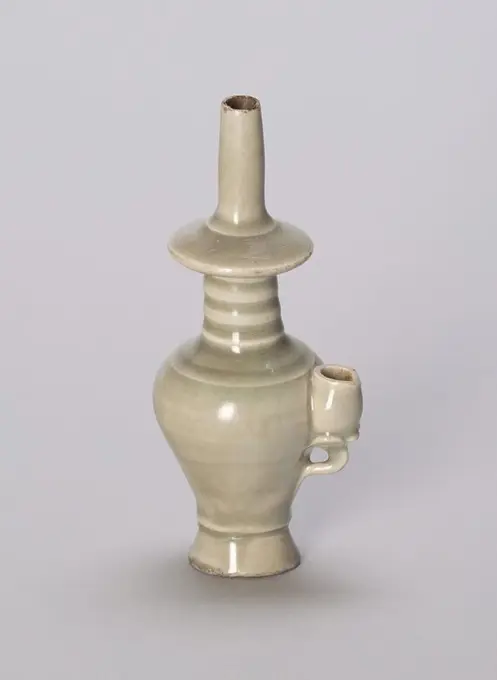
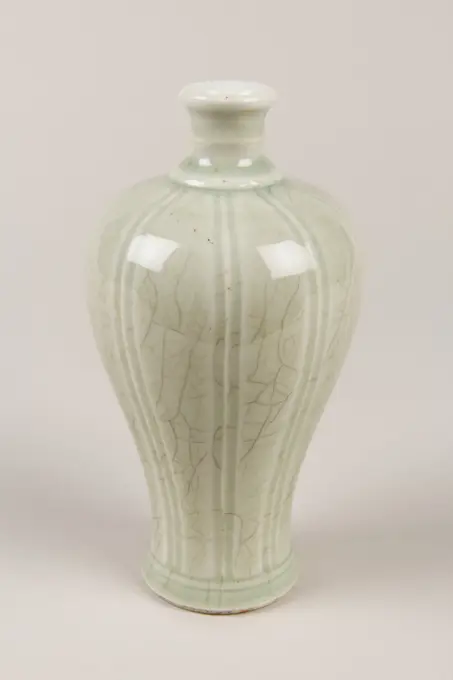
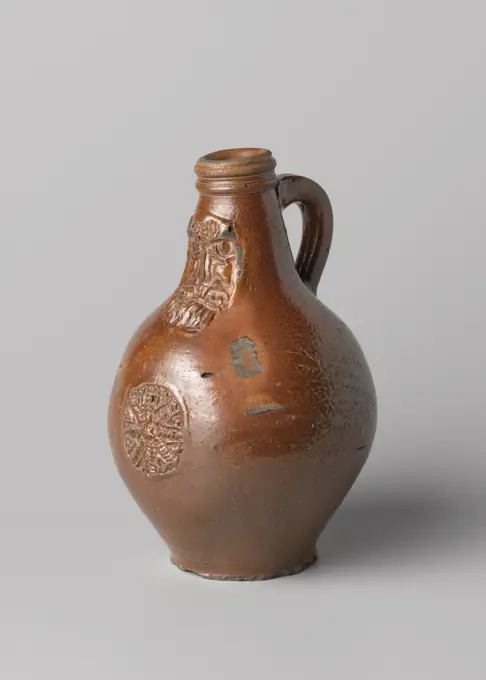
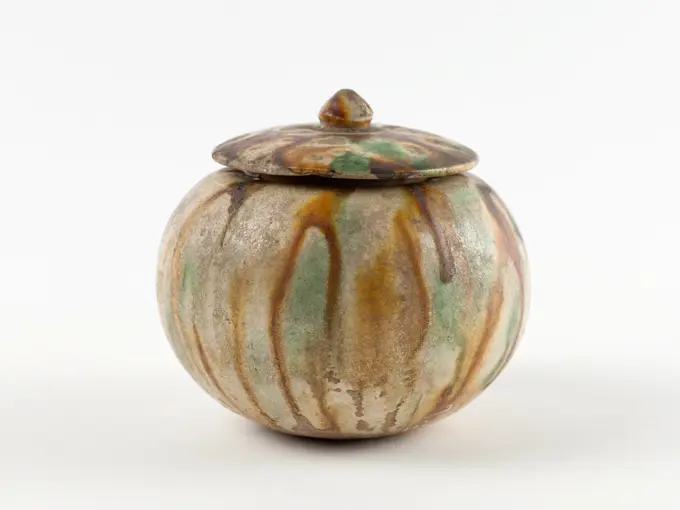
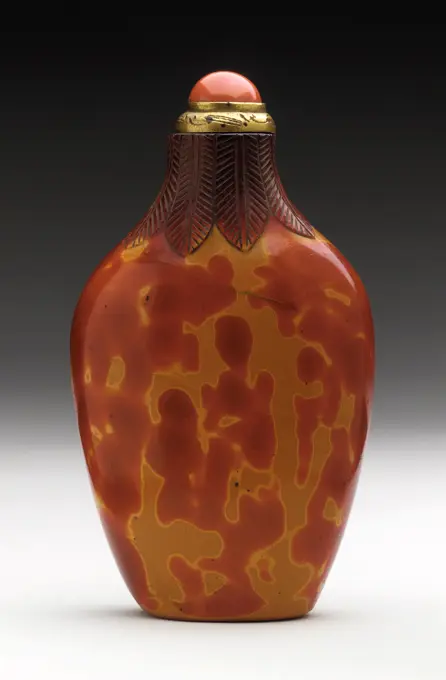
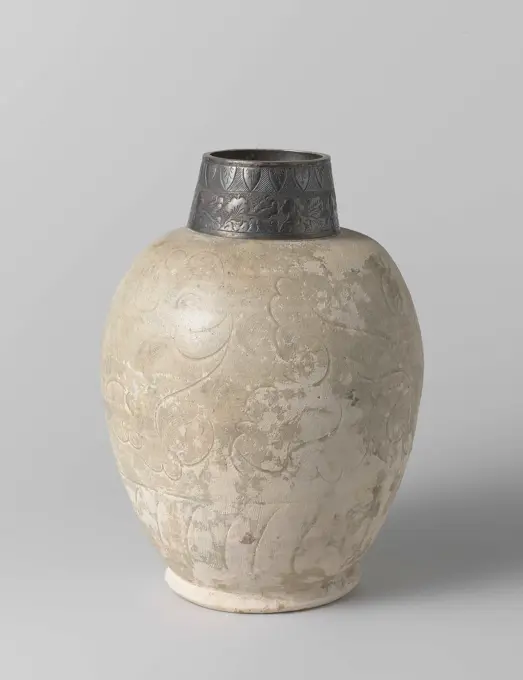
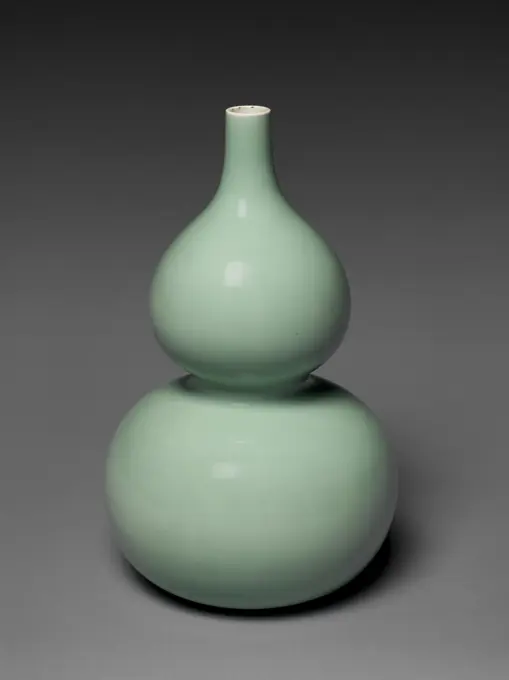
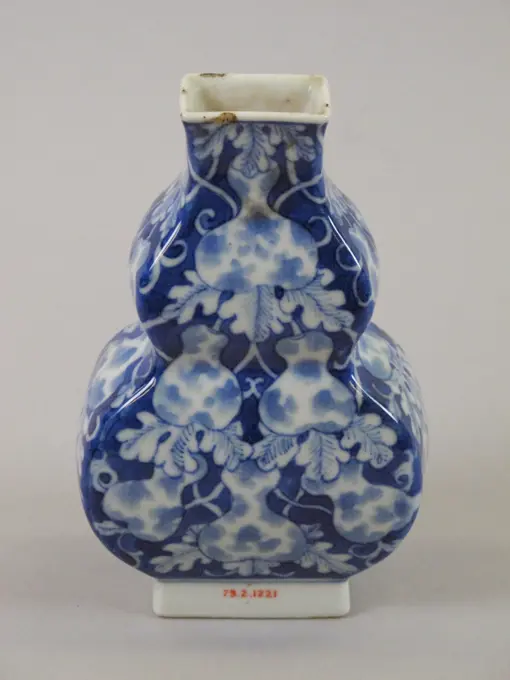
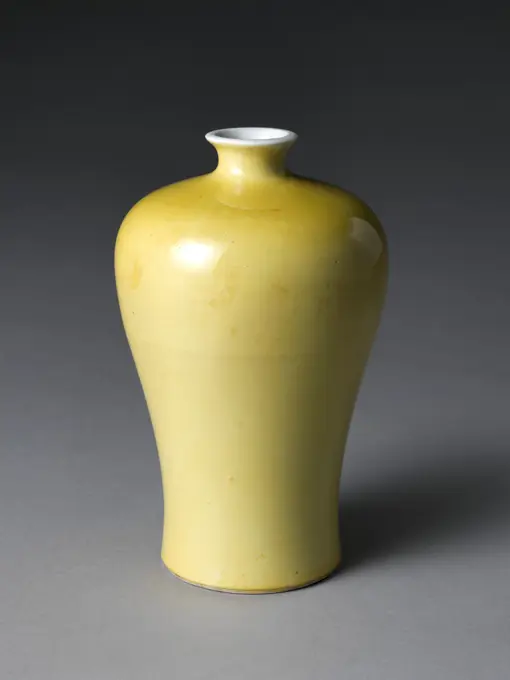
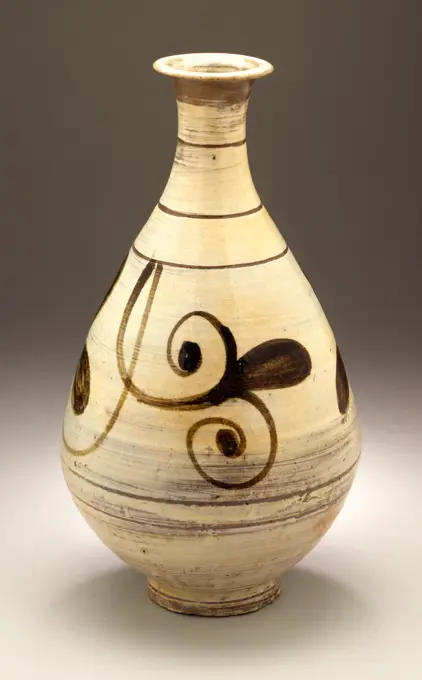
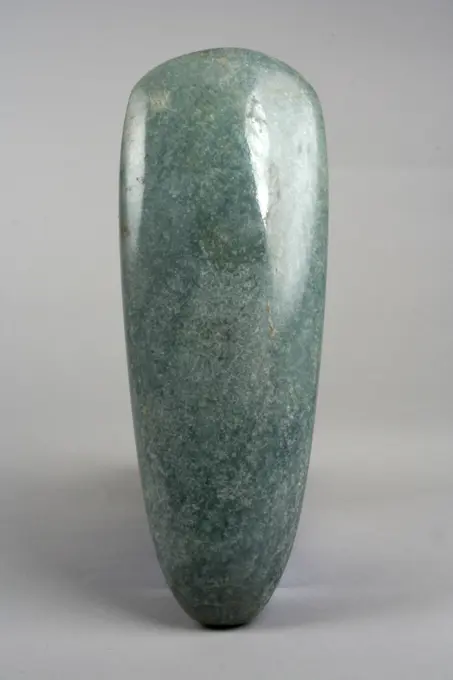
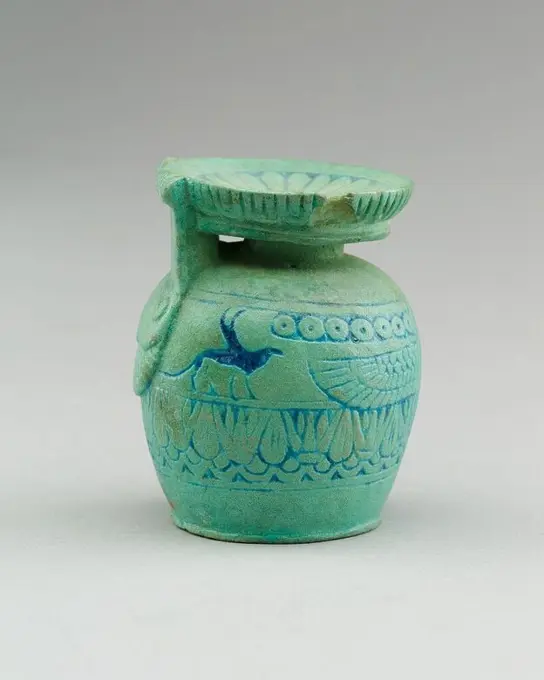
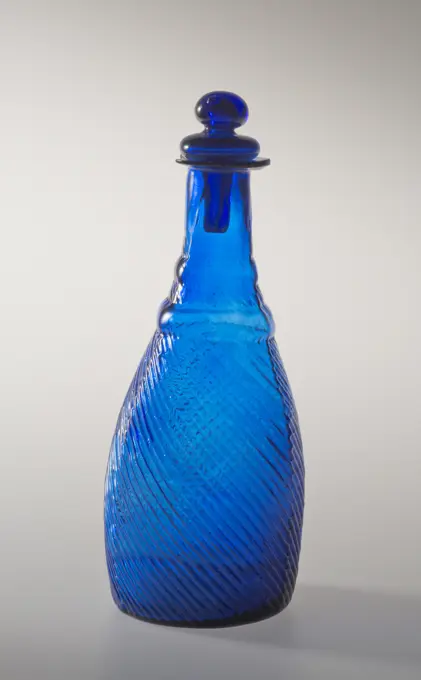
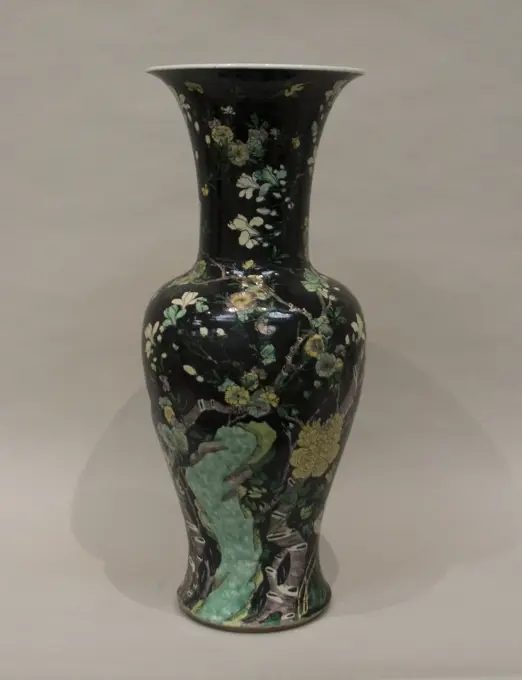
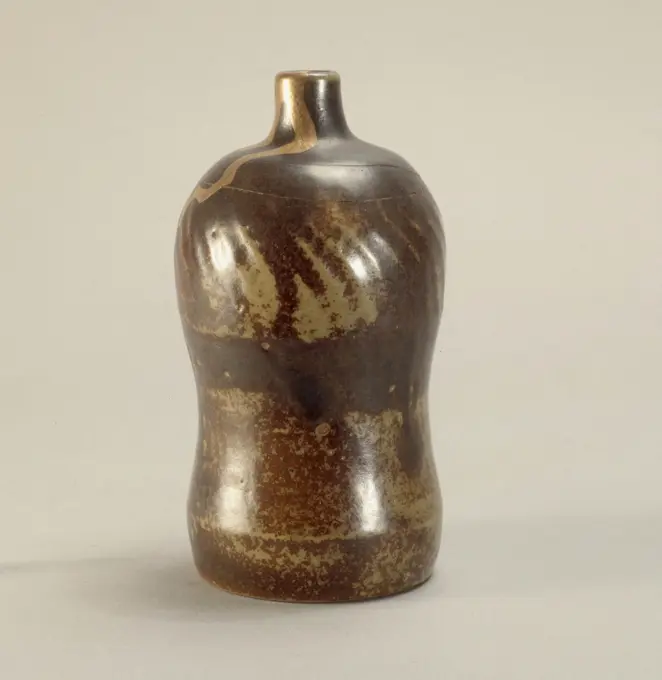
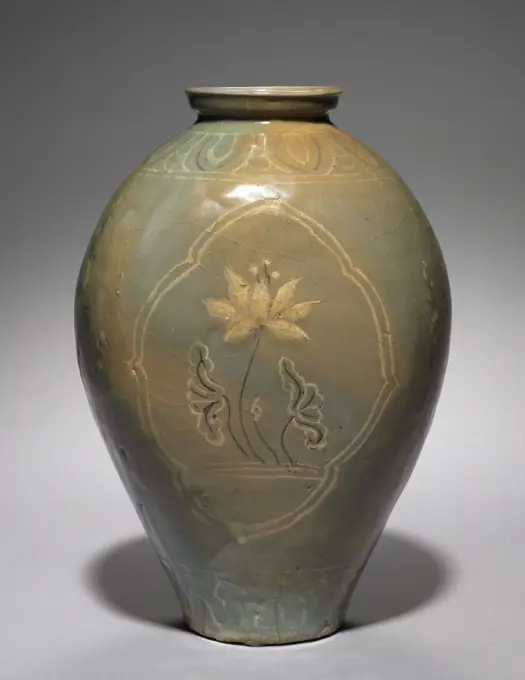
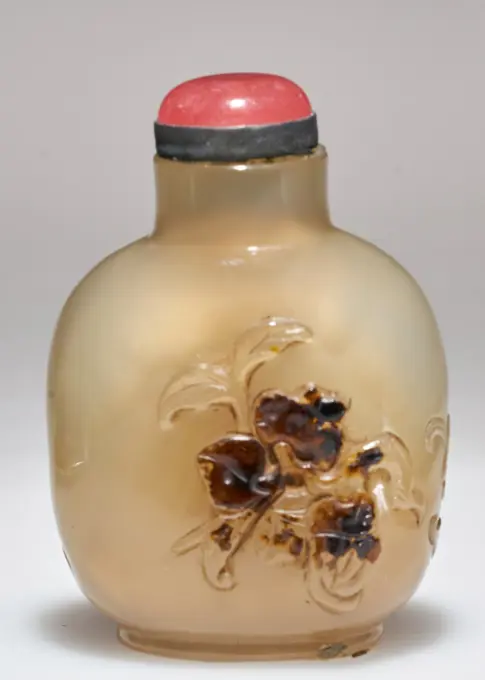
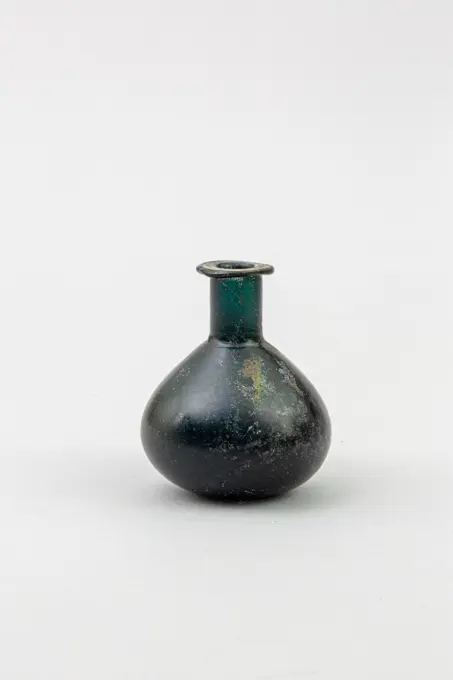
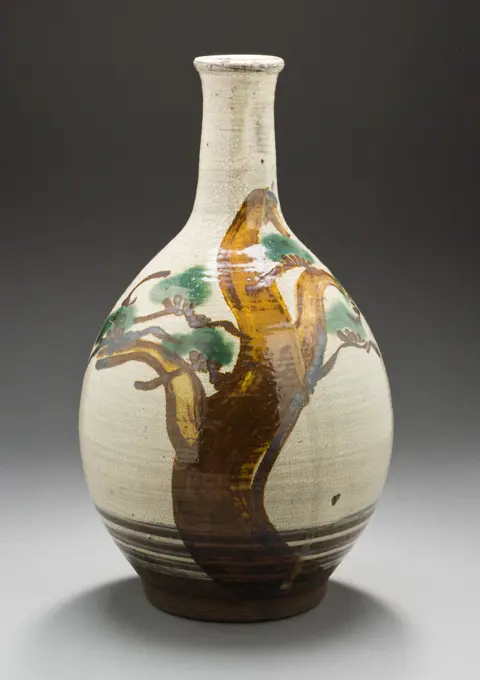
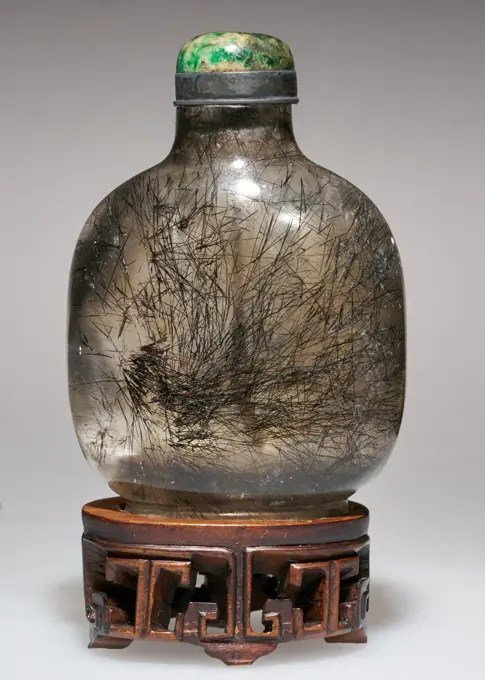
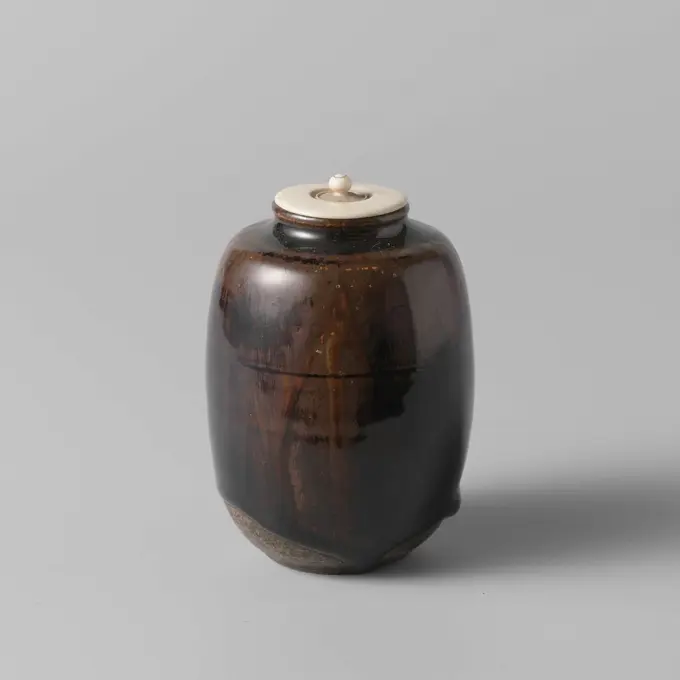
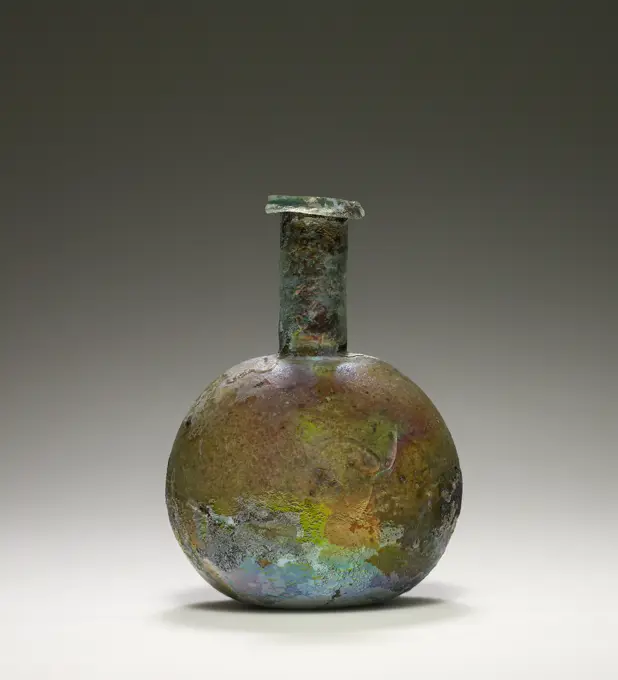
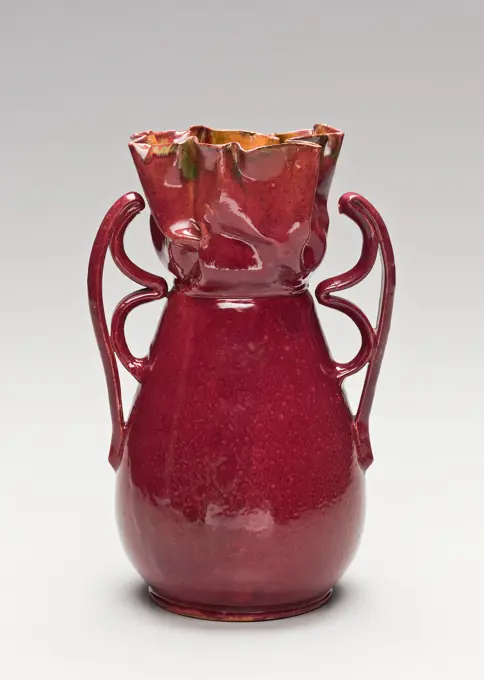
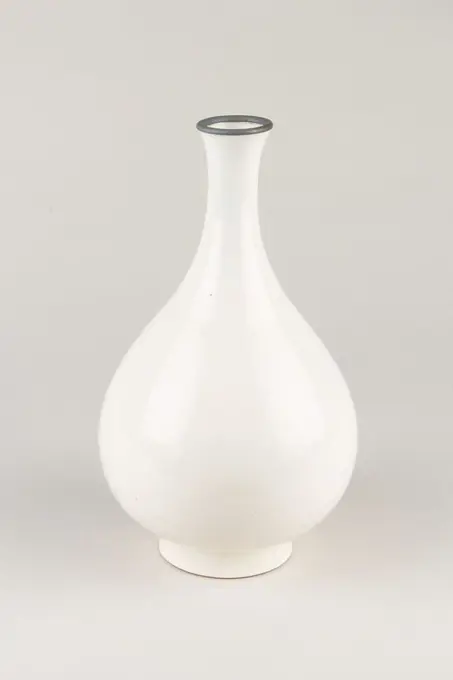
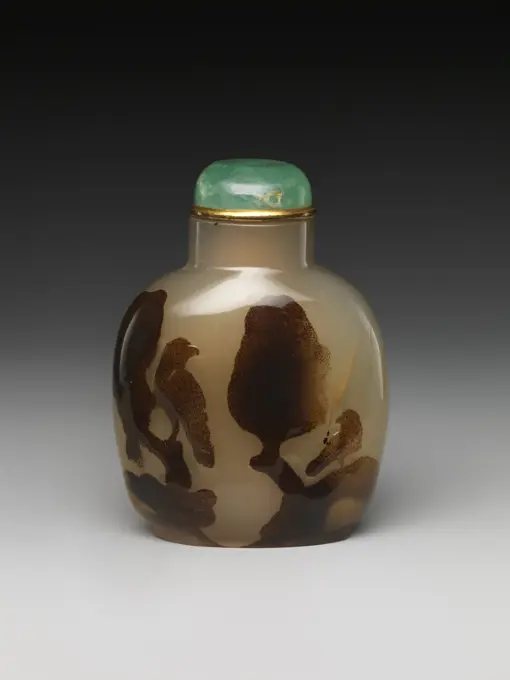
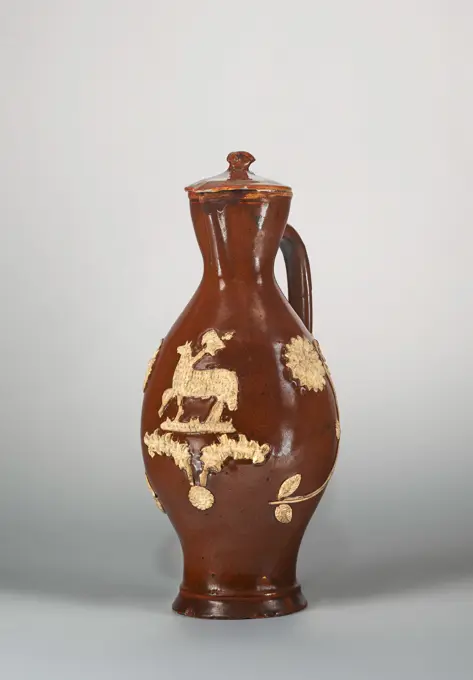
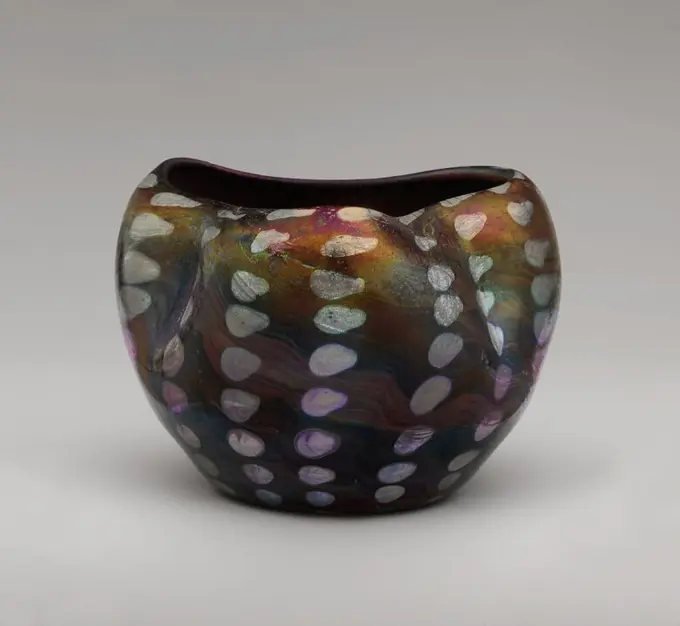
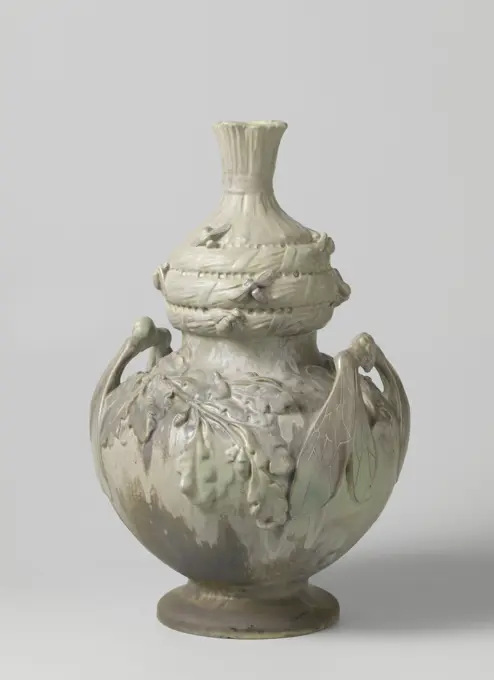
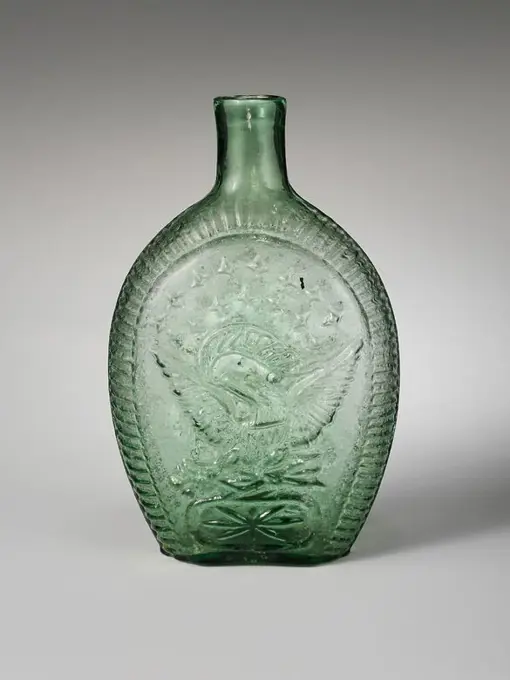
Glass alabastron (perfume bottle). Culture: Greek, Eastern Mediterranean or Italian. Dimensions: H.: 5 5/8 in. (14.3 cm). Date: mid-4th-early 3rd century B.C..Translucent cobalt blue, with handles in same color; trails in opaque yellow and opaque white.Broad horizontal rim-disk, sloping slightly outward; cylindrical neck, expanding downwards; narrow rounded shoulder; straight-sided cylindrical body, with slight upward taper; convex bottom; below shoulder, two vertical ring handles, not pierced through, with short pointed trails, applied over trail pattern.A fine yellow trail attached at edge of rim-disk; on body, alternating bands of yellow and white, tooled from shoulder to undercurve at bottom into a close-set feather pattern in ten vertical panels with alternating upward and downward strokes.Broken and repaired around body, with three large holes; dulling, some deep pitting holes, and patches of creamy iridescent weathering. Museum: Metropolitan Museum of Art, New York, USA.Vase (England); earthenware; 20 x 10 cm (7 7/8 x 3 15/16 in.)Quatrefoil vase, Jun ware possibly 18th century Chinese. Quatrefoil vase, Jun ware 461210Vase. Porcelain with speckled green cover, Qing dynasty (1644-1912). Provenance: China. Paris, Cernuschi museum. 78839-23 Asian art, Chinese art, art of living, ceramic, fine ceramic, Ching dynasty, Qing dynasty, tsing dynasty, porcelain, container, vaseBottle probably 18th-19th century. Bottle 443124Glass bottle shaped like a bunch of grapes 1st century A.D. Roman Translucent purple.Rim folded out, round, and in, and pressed into slanting, oval mouth; cylindrical neck with concave sides; slightly lentoid body; round bottom. One continuous mold seam around body, but only visible at sides.Body molded into the shape of a bunch of small round grapes.Large hole in bottom; some bubbles; slight dulling and pitting on exterior, soil encrustation, thick blackish weathering, and brilliant iridescence on interior.. Glass bottle shaped like a bunch of grapes. Roman. 1st century A.D.. Glass; blown in a two-part mold. Early Imperial. GlassBottle with Deer in Landscape first half 17th century Objects like this bottle were typically displayed in open niches in reception rooms of upper-class Syrian residences during the Ottoman period.. Bottle with Deer in Landscape 444516Bottle China. Bottle 48647Rosewater Bottle With Flowering Plats and a Petal Border. Porcelain rose water bottle with pear-shaped lichan and narrow, slightly flared neck, painted in underglaze blue. Plants with large leaves and a tree on the wall. On the neck depending, pointed leaf motifs from the edge. Edge has been broken. Foot ring chipped. Arita, blue-white.Vase. Violacced (ext.) And colorless (base) porcelain. Paris, Cernuschi museum. 78841-19 Asian art, container, vaseBottle 450 CE-550 CE Levant. Vessels such as this were part of the luxurious domestic decoration displayed in wealthy households in both urban villas and rural estates in the later Roman and early Byzantine eras (about 300ñ725). Glass vessels were used for a variety of purposes, including cosmetic containers. In the kitchen and for dining, pitchers served water and wine, and small cups were used for drinking. Glass was also used for lamps to light the home.Byzantine glass craftsmen improved upon the techniques, forms, and decorative motifs they had inherited from their Roman predecessors. An imperial edict of 337 exempted glassworkers from personal taxes and attested to their relative status in society; it remained in effect for several centuries. These artisans would, in turn, pass on their craft to successive generations, including those who worked under Islamic rule after the important Byzantine provinces of Egypt, Palestine, and Syria were conquered in the seventh century.. Glass, Bottle with Coiling Dragon late 16th century China Archaeological evidence indicates that the kilns near Dehua in Fujian Province on Chinas southeastern coast opened in the late thirteenth century and flourished from the sixteenth to the eighteenth. Characterized by thick, lustrous glazes, Dehua wares, both religious figures and items for use on a scholars desk, were exported to Europe in the seventeenth to nineteenth century. They are often known in Western writings by the French term blanc de chine, or “China white,” which originated in nineteenth-century scholarship.. Bottle with Coiling Dragon. China. late 16th century. Porcelain with transparent glaze (Dehua ware). Ming dynasty (1368-1644), Wanli period (1573-1620). CeramicsGlass perfume bottle 1st century A.D. Roman Colorless.Rim folded out, over, and in, with uneven flattened upper surface; cylindrical neck, with tooled indent around base; piriform body; rounded bottom, flat at center.Broken and repaired, with pieces missing around body and on bottom; pinprick bubbles and blowing striations; pitting and brilliant iridescent weathering, with some soil encrustation on interior of neck.. Glass perfume bottle 244631Miniature Buddhist Water Sprinkler (Kundika) with Lotus-leaf Spout. China. Date: 1200-1299. Dimensions: H. 8.9 cm (3 9/16 in.); diam. 4.9 cm (1 15/16 in.). Glazed stoneware. Origin: China. Museum: The Chicago Art Institute, Chicago, USA.Vase 18th century China. Vase 49852Vase. Culture: American. Dimensions: 7 7/8 x 4 5/8 in. (20 x 11.7 cm). Maker: Charles Volkmar (American, Baltimore, Maryland 1841-1914 Metuchen, New Jersey); Volkmar Ceramic Company (ca.1893-ca.1902). Date: 1896-1902. Museum: Metropolitan Museum of Art, New York, USA.Jug (Bartmann jug) with a roundel in a medallion, anonymous, c. 1650 - c. 1749 Jug (beard fancier) of stoneware on the standing surface with a spherical abdomen and narrow neck. The C-shaped ear is attached to the neck and shoulder. Profiles on the neck. Covered with a brown Engobe. In relief on the abdomen a printed and imposed medallion with a rosette. On the neck, continuously on the shoulder, a bearded man. Frechten. Cheek stoneware. glaze. engobe vitrification Jug (beard fancier) of stoneware on the standing surface with a spherical abdomen and narrow neck. The C-shaped ear is attached to the neck and shoulder. Profiles on the neck. Covered with a brown Engobe. In relief on the abdomen a printed and imposed medallion with a rosette. On the neck, continuously on the shoulder, a bearded man. Frechten. Cheek stoneware. glaze. engobe vitrificationGlass jar. Culture: Roman. Dimensions: H.: 5 3/8 in. (13.7 cm). Date: 2nd half of 1st-mid-2nd century A.D..Translucent blue green.Rounded, flaring, tubular rim, folded out and down, forming collar around neck; broad ovoid body, tapering sharply downwards; bottom pushed in to form hollow foot ring.Intact; some very large bubblesbubbles and blowing striations; slight brownish weathering and faint iridescence.The jar is recorded as having been found with the mold-blown gladiator cup (81.10.245) that is displayed in the Roman Imperial Art gallery, Gallery 168 on the First Floor. Museum: Metropolitan Museum of Art, New York, USA.Vase (USA); Theophilus Anthony Brouwer Jr. (American, d. 1932); Manufactured by Brouwer Pottery (United States), Middle Lane Pottery (United States); glazed earthenwareTea service: tray and cups. Terracotta. China, Tang dynasty. Paris, Cernuschi museum. 72776-25 Asian art, ancient ceramic, covered, tang dynasty, email, empire unifies tang, glacide three 3 colors, 9th ixe ix 9th 9th 9th century, Chinese object, jar, Chinese pottery, terracotta, terracotta emaillee, viem 7th 7 CENTURY, VIIIEM VIIIE VIII 8th 8th 8th century, XEME XE X 10th 10th 10th centurySnuff Bottle, 17th-19th century, 2 3/8 x 1 5/8in. (6 x 4.1cm), Amber, jade, China, 17th-19th centuryOvoid vase with a red glaze, anonymous, c. 1800 - c. 1899 Egg -shaped vase of porcelain with a thin neck with trumpet -shaped mouth, covered with a monochrome, slightly crawling red (sang the boeuf) glaze. Partly glazed within the foot ring; Liprand is white. Monochrome. China porcelain. glaze vitrification Egg -shaped vase of porcelain with a thin neck with trumpet -shaped mouth, covered with a monochrome, slightly crawling red (sang the boeuf) glaze. Partly glazed within the foot ring; Liprand is white. Monochrome. China porcelain. glaze vitrificationVase with dragons 18th century China. Vase with dragons 47600Snuff Bottle (Biyanhu) Imitating Realgar. Egg-shaped pot of pottery, covered with a gray-green cracked glaze. The upper part of the wall with ingrangled flower reflection; The lower part with a band with raised sheet motifs. The neck is caught in a (recent) Silver frame with leaf raft and pointed leaf motifs. The glaze is largely worn out.Glass perfume bottle. Culture: Roman. Dimensions: H.: 3 1/4 in. (8.3 cm). Date: first half of 1st century A.D..Translucent cobalt blue.Outsplayed rim, with fire-rounded lip; cylindrical neck, with horizontal tooled indent around base; piriform body; flat bottom, slightly concave at center.Intact; some bubbles and blowing striations; patches of dulling, creamy weathering, and iridescence. Museum: Metropolitan Museum of Art, New York, USA.Vase, 18th century, Unknown Korean, 8 1/2 in. (21.59 cm), Porcelain with underglaze blue decor, Korea, 18th century, China's cultural influence on Korea dates to over two thousand years ago when they first engaged in trade. This influence is seen in Korea's ceramic production, when local potters began making porcelain at the end of the fourteenth century, with many of their wares modeled on Chinese prototypes. This later vase is no exception, as it features a cup-like mouth, which is also seen in Chinese porcelain. The abstract design in blue underglaze is suggestive of flowers, with similar motifs appearing on other Korean wares.Vial;  IV-IX century () (301-00-00-900-00-00);Semerau-Siemianowski, Władysław (1849-1938), Semerau-Siemianowski, Władysław (1849-1938)-collection, gift (provenance), Islam (culture), art of IslamMaker Unknown, Decanter and Stopper, c. 1820-40, colorless glass.Water bottle. Culture: British, Staffordshire. Dimensions: Height: 8 1/4 in. (21 cm). Date: ca. 1755. Museum: Metropolitan Museum of Art, New York, USA.Ovoid jar with a blue black glaze, anonymous, c. 1600 - c. 1868 Egg -shaped pot of stoneware with a short, wide neck, covered with a blue -black glaze. The pot is intended for storing tea leaves. Old label on the bottom with 'W843'. Japan stoneware. glaze vitrification Egg -shaped pot of stoneware with a short, wide neck, covered with a blue -black glaze. The pot is intended for storing tea leaves. Old label on the bottom with 'W843'. Japan stoneware. glaze vitrificationVase with decor of two dolks, the Dordtsche artificial pattern, c. 1903 - c. 1908 Vase of earthenware, decorated in brown and black with two fools bothered to each other on gray-blue stock. Dordrecht earthenware Vase of earthenware, decorated in brown and black with two fools bothered to each other on gray-blue stock. Dordrecht earthenwareVase with decoration of dragons among clouds (one of a pair) China The technique of incising a very delicate pattern into the surface of a porcelain vessel before covering it with a thick glaze, which obscures the underlying decoration, became popular in the early fifteenth century and was used thereafter. The long, elegant necks and bulbous bodies of these miniature vases most likely derive from an Islamic glass prototype introduced to China centuries earlier.. Vase with decoration of dragons among clouds (one of a pair) 653045Glass perfume bottle 1st-2nd century A.D. Roman Colorless.Rim folded out, over, and in; cylindrical neck, expanding downward, with tooling around base; elongated piriform body with convex sides; concave bottom.Intact; some bubbles; deep weathering and pitting; brilliant iridescence.. Glass perfume bottle 239630. Can in the form of a vase with wide and flattened body and long neck and large handle. Polychrome painting with Clematis Jackmanni. On the neck dark purple and brown ornaments and brown tire along the foot edge.Bottle vase 19th century China. Bottle vase 45941Gourd-Shaped Bottle (one of a pair) 18th century China. Gourd-Shaped Bottle (one of a pair). China. 18th century. Porcelain with celadon glaze (Jingdezhen ware). Qing dynasty (1644-1911), Qianlong mark and period (1736-95). CeramicsDouble gourd vase 19th century China. Double gourd vase 47935Vase in Meiping Shape 17th century China Yellow, which is a color associated with the earth in Chinese culture, has often been reserved for the use of the emperor in ceramics and textiles. Other members of the imperial family have been assigned other colors such as white or green, depending on their rank.. Vase in Meiping Shape. China. 17th century. Porcelain with incised decoration under yellow glaze (Jingdezhen ware). Qing dynasty (1644-1911), Kangxi period (1662-1722). CeramicsSnuff Bottle, 17th-19th century, 3 1/8 x 1 5/8in. (7.9 x 4.1cm), Porcelain, China, 17th-19th centuryBottle with Peony Design in Underglaze Iron. Korea, Korean, Joseon dynasty (1392-1910), 15th-early 16th century. Furnishings; Accessories. Buncheong ware: Wheel-thrown stoneware with incised slip and brown painted decoration and pale green glazeGlass unguentarium (perfume bottle). Culture: Greek, Eastern Mediterranean, possibly Alexandrian. Dimensions: 3 11/16 × 1 3/4 × 1 1/2 in. (9.4 × 4.5 × 3.8 cm)Diam. of rim: 7/8 in. (2.2 cm)Diam. of base: 1/2 in. (1.3 cm). Date: 3rd century B.C..Translucent cobalt blue, with opaque turquoise blue handles, rim-disk, and pad-base; trails in opaque white and yellow.Turquoise blue trail applied as outsplayed rim-disk around rounded top of neck; tall, slender neck, tapering slightly downward; steeply sloping shoulder; elongated piriform body, tapering downward to applied; small pad-base with uneven flat bottom; two small loop handles applied to edge of shoulder and top of body with everted upward angle.White and yellow trails attached at top of neck and wound down as alternate spiral lines, tooled into a festoon pattern round upper half of body, with twelve upward tooling strokes.Complete except for part of rim-disk and weathered chip in pad-base; one large pitted hole on edge of shouldSmall ball vase. Gift from Copenhagen Private property 1896Vase, Rookwood Pottery, American, 1880 - 1967, Joseph Bailey Sr., American, d. 1898, glazed earthenware, White clay body, cast. Ovoid body, decorated with two herons flying along rushes. Birds in underglaze white slip (appear yellow) and rushes in green. Against a shaded background of ochre, forest green, sage green, brown and russet. Yellow glaze overall. Bottom and interior glazed., 1894, ceramics, Decorative Arts, Vase, VaseVase. Grès to couverts of Type jun. Par musée musée malée. 78845-25 Asian art, container, vaseCelt 10th-4th century B.C. Olmec An Olmec sculptor created this celt, or axe, from a high-quality, blue-green jadeite. The petaloid (petal-shaped) celt was masterfully rounded and polished before likely being buried in a dedicatory assemblage. The color and shape of the stone, as well as the reference to a functional axe in this ceremonial object, reference maize agriculture. Jadeite celts symbolized sprouts of maize in Olmec imagery, concepts that were shared by societies in what is now Chiapas and Guatemala after about 1000 B.C. When planted” in dedicatory caches, the makers of celts may have called for growth of their communities as they would hope for in a productive field of maize. Further readingBenson, Elizabeth P., and Beatriz de la Fuente, eds. Olmec Art of Ancient Mexico. Washington, D.C.: National Gallery of Art, 1996. Berrin, Kathleen, and Virginia M. Fields, eds. Olmec: Colossal Masterworks of Ancient Mexico. San Francisco: Fine Arts Museums of San Francisco, 2010. CheethAryballos. Dimensions: H. 6.3 cm (2 1/2 in). Dynasty: Dynasty 26-27. Date: 550-500 B.C.. Museum: Metropolitan Museum of Art, New York, USA.Can with ovals and circles. Can of clear, colorless glass. Konian foot. Plated spherical body Finish in a straight neck with outstanding edge and spout. C-shaped handle. On the flattened sides of the body a rosette of ovals in a circle surrounded by an edge of ovals. A rosette of circles on the narrow sides. On the neck ovals and circles.Glass miniature flask. Culture: Roman. Dimensions: 2 9/16 in. (6.5 cm)Other: 1 3/4 in. (4.4 cm)Diam. of rim: 5/8 in. (1.6 cm). Date: 3rd-4th century A.D..Colorless ().Plain, knocked-off vertical rim; funnel-shaped neck, with tooled groove around base; bulbous body; concave bottom.Intact; many bubbles; deep pitting and iridescent weathering. Museum: Metropolitan Museum of Art, New York, USA.probably Boston and Sandwich Glass Works, Cologne Bottle or Cruet and Stopper, c. 1826-c. 1840, sapphire blue glass.Meiping vase with floral scrolls 18th century China. Meiping vase with floral scrolls. China. 18th century. Porcelain with relief decors under a celadon glaze (Jingdezhen ware). Qing dynasty (1644-1911). CeramicsJar (England); William Frend De Morgan (British, 1839-1917); Produced by Sands End Pottery (England, GB, United Kingdom); glazed earthenwareBottle with PlantMotifsOvoid Vase with Floral Sprays 960 CE-1279 China. Jian ware; stoneware with brownish black glaze .Small VesselVase in shape of winter melon early 19th century China. Vase in shape of winter melon 48544Pilgrim Bottle. Culture: China. Dimensions: H. 6 in. (15.2 cm); W. 4 in. (10.2 cm); Diam. of rim: 1 1/4 in. (3.2 cm); Diam. of foot: 1 7/8 in. (4.8 cm). Museum: Metropolitan Museum of Art, New York, USA.Jar with two medallions on the belly in which the figure of Mary .. Brown jug, with 2 medallions on the bullet-shaped belly 2 in which the figure of Minerva.Vase.   Maker: Catalina Island Pottery, American, 1927-37BottleJug with lid; Boles 1760-1780 (1760-00-00-1780-00-00);Bolesławiec Kamionka, Easter Lamb, decoration with overlaysBottle probably 18th-19th century. Bottle. probably 18th-19th century. Glass; dip-molded. Attributed to Iran. GlassKohl Jar 2055 BCE-1773 BCE Egypt. Egyptian alabaster . Ancient EgyptianBerkenmeier with the weapon of the Grave family. Berkenmeier with the weapon and arms spell from the Grave family. The arms spell is: INGU I n. Passe. LA. Force.Vase China. Vase 48774Jean Carriès (1855-1894). "Small depression pot". Enamelled sandstone and golden drips. Museum of Fine Arts of the City of Paris, Petit Palais. J. CARRIES - PETIT POT A DEPRESSION Ceramic, gold, ceramic, depression, Enamed Stoneware, Golden Runoff, Gres Emaille, Petit Pot, Small PotFlask with Inlaid Lotus Design, 1200s-1300s. Korea, Goryeo period (918-1392). Stoneware, celadon with inlaid decoration;Snuff Bottle, 19th century, 2 1/2 x 1 3/4in. (6.4 x 4.4cm), Agate, glass, China, 19th centuryBeehive-Shaped Water Coupe 1662-1722 China. Porcelain with copper red peachbloom glaze .Belly bottle, wine bottle bottle holder soil find glass, bottom Body with almost vertical ascending wall to convex shoulders and rejuvenated neck with imposed all-round sharp glass thread (half of which has been broken off) and flattened lip (chip) archeology packagingGlass perfume bottle Roman first half of 1st century CE Translucent deep turquoise blue.Everted rim, folded over and in, with inner lip pressed flat; cylindrical neck; squat piriform body; small, slightly concave bottom.Intact; few bubbles; slight dulling and patches of iridescent weathering. View more. Glass perfume bottle. Roman. first half of 1st century CE. Glass; blown. Early Imperial. GlassPiston vase. .Decanter -Jean Carriès (1855-1894). "Jar". Enameled sandstone. Museum of Fine Arts of the City of Paris, Petit Palais. 24204-9 Ceramic, gres emaille, potBottle Vase, 1662-1722. China, Jiangxi province, Jingdezhen kilns, Qing dynasty (1644-1911), Kangxi reign (1662-1722). Porcelain with underglaze blue decoration; overall: 44.2 cm (17 3/8 in.).Hexagonal vase with tubular handles first half 19th century China. Hexagonal vase with tubular handles. China. first half 19th century. Porcelain with flambé glaze (Jingdezhen ware). Qing dynasty (1644-1911). CeramicsSake Bottle with Pine Tree Design. Japan, second half 17th century. Ceramics. Hizen ware, Takeo style; stoneware with iron wash, white slip, and green and brown glazesYuhuchun vase with lotus petals China 13th-14th centurySnuff Bottle, 1800-1900, 3 x 2 1/8in. (7.6 x 5.4cm), Rutiled crystal; jade, China, 19th century, The crystal from which this snuff bottle was carved has natural imperfections reminiscent of pine needles, grass, lines of ink, or even hair. The scattered 'needles,' which are actually a mineral called rutile, remind us of the arbitrary beauty that nature is capable of creating and that artists can capture and feature in artworks such as this snuff bottle.Bottle, anonymous, 1676 Soul inserted. Spherical body under a slender neck, why a drip ring has been laid. On the body, Italian letters are calligraphy 'Heerlust Maekt is poor.' And at the bottom of the bottom 'd'Armoe leit at least in' t lack, but most in the noit.nversaed. '. Around the pointil brand 'W. van Heemskerk AO 1676. Navigans. '. glassblower: Low CountriesLeiden glass glassblowing Soul inserted. Spherical body under a slender neck, why a drip ring has been laid. On the body, Italian letters are calligraphy 'Heerlust Maekt is poor.' And at the bottom of the bottom 'd'Armoe leit at least in' t lack, but most in the noit.nversaed. '. Around the pointil brand 'W. van Heemskerk AO 1676. Navigans. '. glassblower: Low CountriesLeiden glass glassblowing. Fabric tea bus or chair of stoneware with an ivory lid covered with a golden brown glaze. The lower part of the bus is unglazed. Old label on the bottom with 'W631'. Satsuma.Ointment Flask. UnknownVase ca. 1895-96 George E. Ohr In many ways George Edgar Ohr was the quintessential Arts and Crafts potter, combining artistic vision with extraordinary skill with his hands. Working in the seaside resort town of Biloxi, Mississippi, he dug the clay, processed and prepared it, threw the shape on the wheel, altered the piece according to his vision, mixed and applied his own glazes, fired the kiln, created his own style of advertising, and took his wares on the road. Ohrs personal mantra was "no two alike," and he was as eccentric as his work was individualistic, with its manipulated forms on ultra-thin thrown vessels, crimping, ruffling, off-centering, and twisting, to create unprecedented forms for the 1890s. To these forms, he applied his own completely new and unusual glazes, applied by sponging, splashing, and spattering, resulting in works that in many ways anticipated the abstract art movements that would find form decades later. This vase combines several of Ohrs trademarks inVase. Acquired by S. Bing, Gallery "L'Art Nouveau", at the World's Fair 1900 in ParisBottle. Culture: China. Dimensions: H. 9 1/2 in. (24.1 cm). Museum: Metropolitan Museum of Art, New York, USA.Vase with dragon 18th century China. Vase with dragon. China. 18th century. Porcelain with blue glaze and incised decoration (Jingdezhen ware). Qing dynasty (1644-1911). CeramicsJean Carriès (1855-1894). "Small depression pot". Enamelled sandstone and golden drips. Museum of Fine Arts of the City of Paris, Petit Palais. 24203-21 Ceramic, golden flow, depression, emaille gres, small potWhitney Brothers Glass Works, Figured Bottle, c. 1850s, aquamarine glass.Vase. Culture: American. Designer: Designed by Hugh C. Robertson (1845-1908). Dimensions: 14 7/8 x 6 7/8 x 4 in. (37.8 x 17.5 x 10.2 cm). Manufacturer: Manufactured by Chelsea Keramic Art Works (1872-1889). Date: 1800-1900. Museum: Metropolitan Museum of Art, New York, USA.Ewer 12th-13th century. Ewer 447138Vase. Culture: American. Designer: Designed by Louis Comfort Tiffany (American, New York 1848-1933 New York). Dimensions: 6 5/8 x 4 7/8 in. (16.8 cm). Maker: Tiffany Furnaces. Date: ca. 1913.This object forms part of a group of glass vessels and enamel containers Louis Comfort Tiffany loaned to the Museum in 1925 that were later given to the Museum by the Tiffany Foundation in 1951 (51.121.1-.44). Tiffany originally chose this group of objects to show examples of form, technique, and color that were not represented in the 1896 Havemeyer gift (96.17.9-.56). The mark on the underside of this vase indicates that this object was once part of Tiffany's private collection. Less than 250 objects are so marked. Tiffany described the effects achieved here as created "by numerous glasses of various chemical constituents reacting one upon another." This vase was part of a series with morning glories; the first one was exhibited at the 1900 Exposition Universelle in Paris. Museum: Metropolitan MuFlask 17th century probably German. Flask. probably German. 17th century. Glass. GlassSnuff Bottle with Two Eagles late 18th-early 19th century China. Snuff Bottle with Two Eagles 41246Jug with a lid. Bolesławiec (ośrodek ceramiczny ; ca 1400- ), potter's workshopVase. Culture: American. Designer: Designed by Louis Comfort Tiffany (American, New York 1848-1933 New York). Dimensions: H. 3 5/8 in. (9.2 cm). Maker: Tiffany Glass and Decorating Company (American, 1892-1902). Date: 1893-96. Museum: Metropolitan Museum of Art, New York, USA.Pocket bottle 1815-45 American. Pocket bottle. American. 1815-45. Blown, pattern-molded glass. Possibly made in Pennsylvania, United States; Probably made in Ohio, United StatesVase late 17th-early 18th century China. Vase. China. late 17th-early 18th century. Porcelain with black glaze (Jingdezhen ware). Qing dynasty (1644-1911), Kangxi period (1662-1722). CeramicsAmphoriskos (Container for Oil). Eastern Mediterranean or Italian. Date: 450 BC-350 BC. Dimensions: 6.7 × 4.5 × 4.5 cm (2 5/8 × 1 3/4 × 1 3/4 in.). Glass, core-formed technique. Origin: Eastern Mediterranean Region. Museum: The Chicago Art Institute, Chicago, USA. Author: Ancient Eastern Mediterranean.Vase, spherical, with a neck in the form of a beehive with ten bees, Ernest Bussière, 1903 Vase of earthenware, spherical on tackled base, with a neck in the form of a beehive with ten bees in relief, with thatched cover. On the spherical body branches with oak leaves and acorns in relief and two bees, also in relief at the front. The vase has two ears in the form of bee wings. The entire vase is covered with a green and gray -covered Engobe with a partial luster over a red glaze. The vase includes a foot (B) of chestnut wood with bronze plaque with inscription. Lunéville earthenware Vase of earthenware, spherical on tackled base, with a neck in the form of a beehive with ten bees in relief, with thatched cover. On the spherical body branches with oak leaves and acorns in relief and two bees, also in relief at the front. The vase has two ears in the form of bee wings. The entire vase is covered with a green and gray -covered Engobe with a partial luster over a red glaze. The vase incluFlask. Culture: American. Dimensions: H. 7 in. (17.8 cm). Maker: Possibly Kentucky Glass Works (ca. 1850-55). Date: 1840-60. Museum: Metropolitan Museum of Art, New York, USA.