Decorative Vessels and Cups

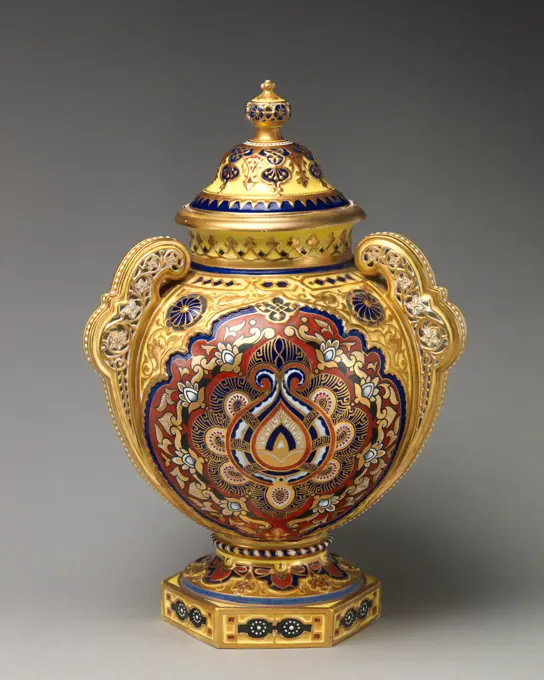
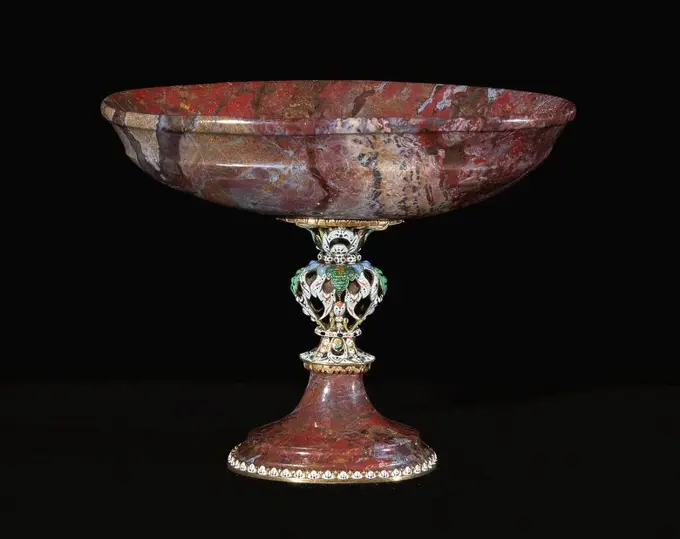
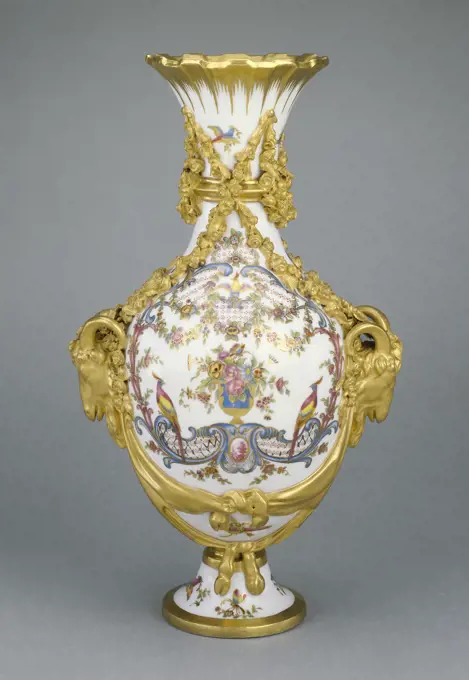
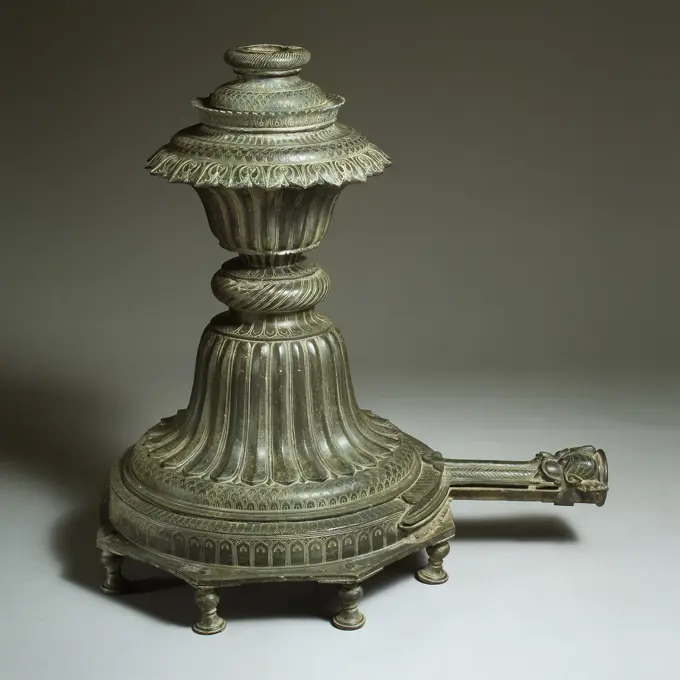
Ornate containers, including a Persian cup, Sèvres vase, and jeweled coupe lids featuring fine craftsmanship and intricate designs.
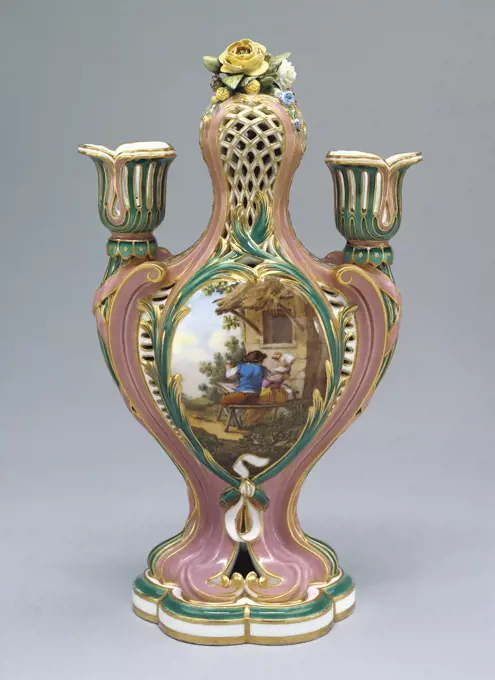
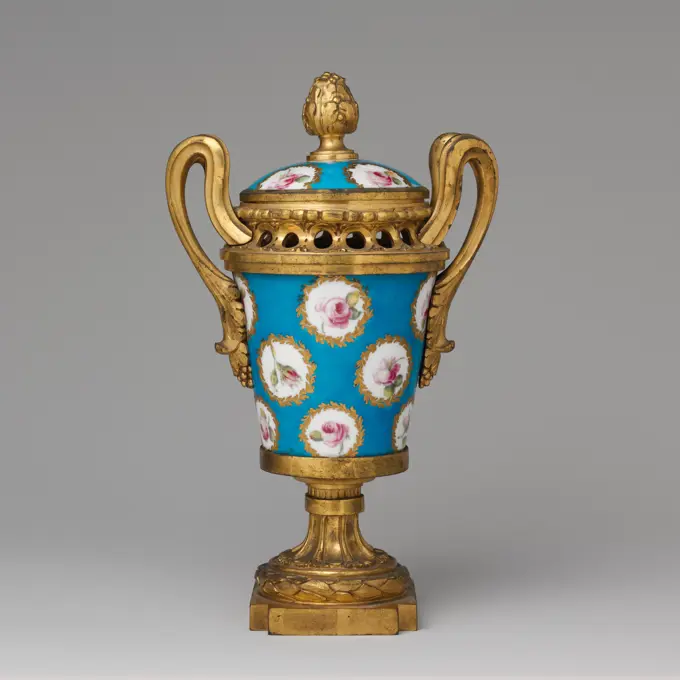
Vase; Painted by Charles-Nicolas Dodin (French, 1734 - 1803); Sèvres, France; 1759; Soft paste porcelain, pink and green ground colors, colored enamel decoration and gilding; 24.9 x 14.4 x 9.4 cm (9 13,16 x 5 11,16 x 3 11,16 in.)
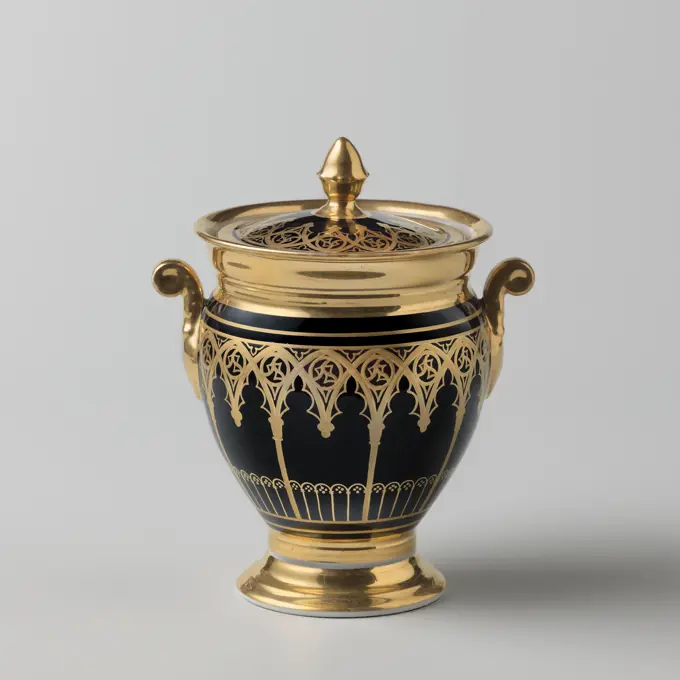
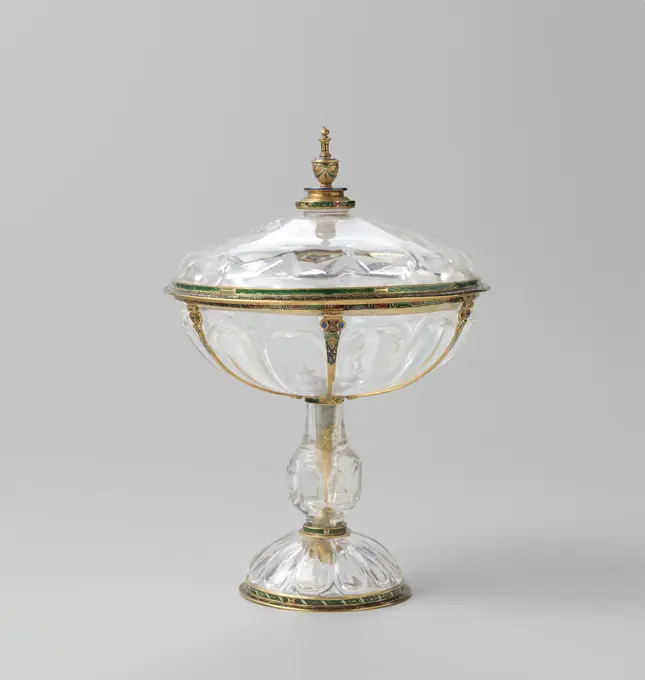
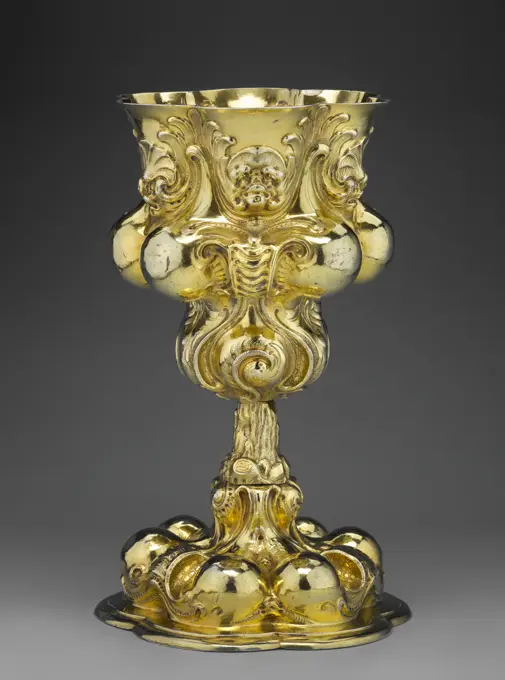
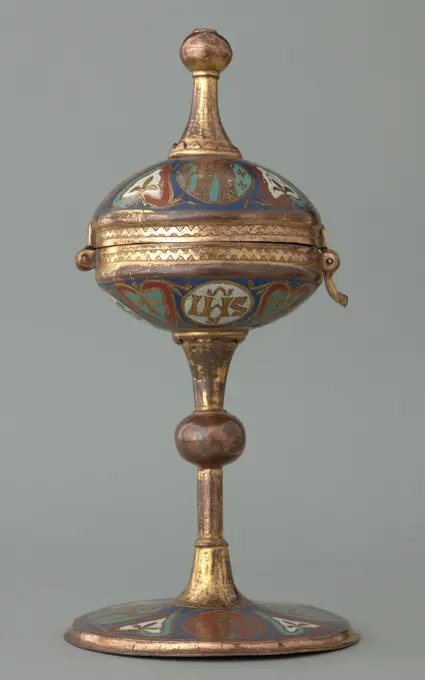
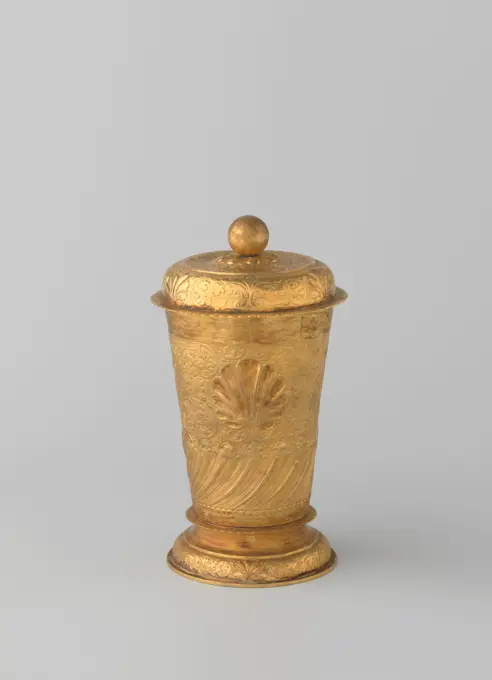
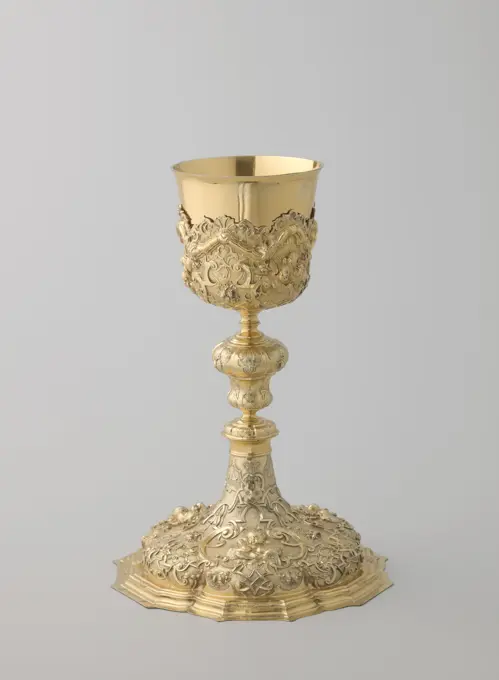
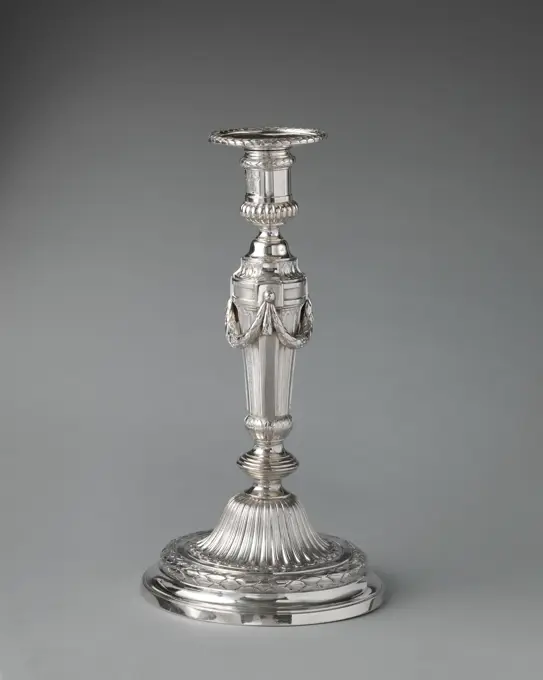
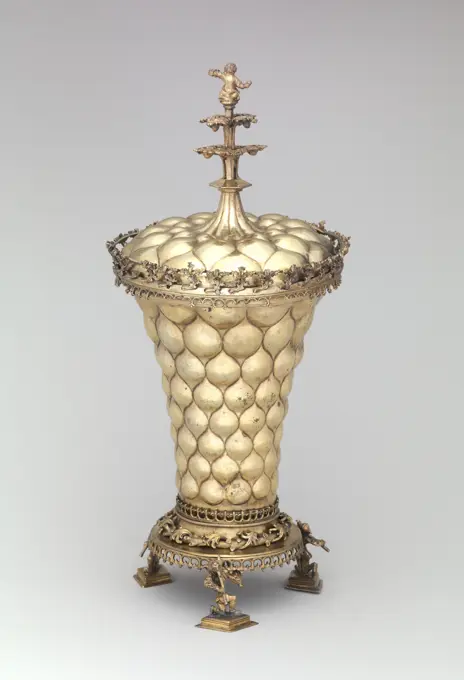
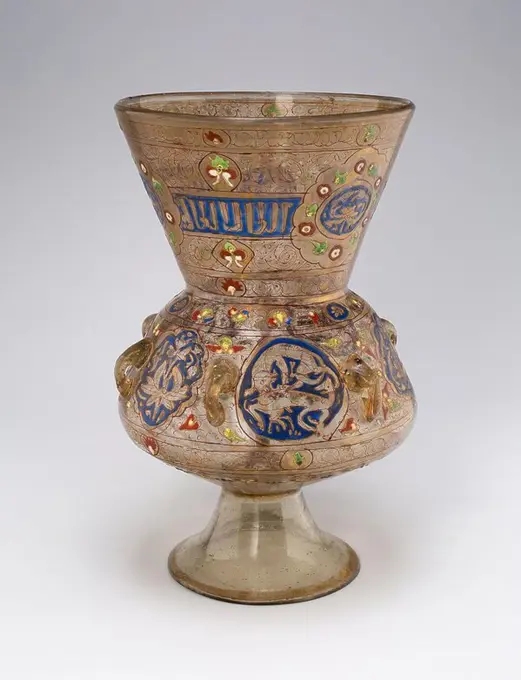
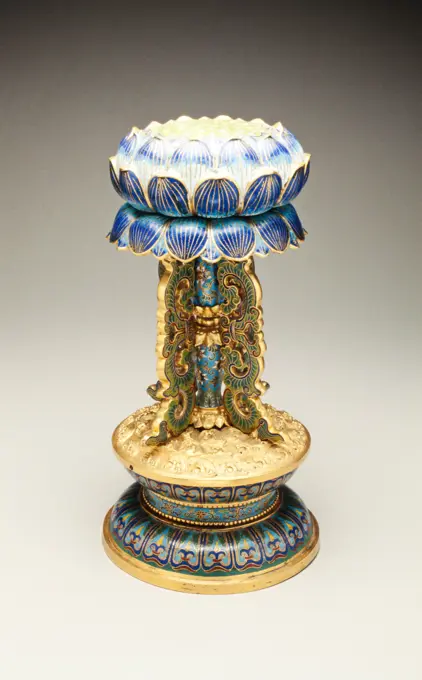
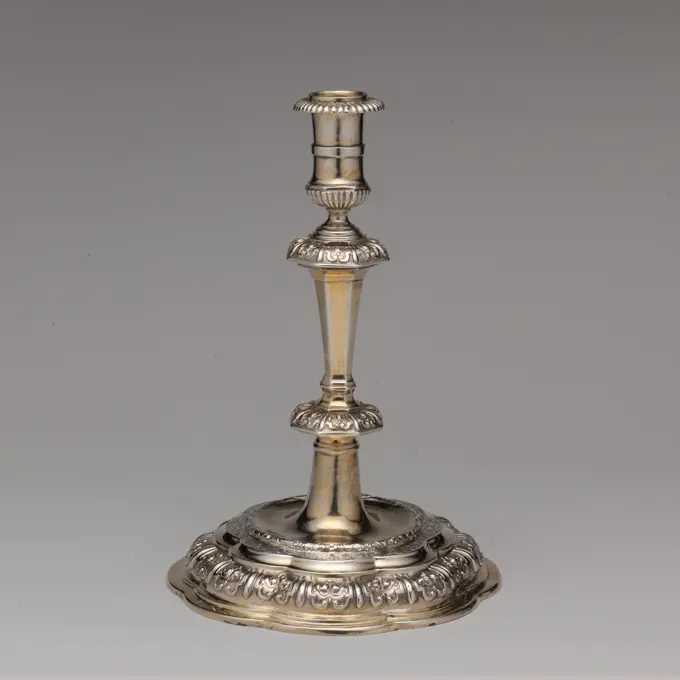
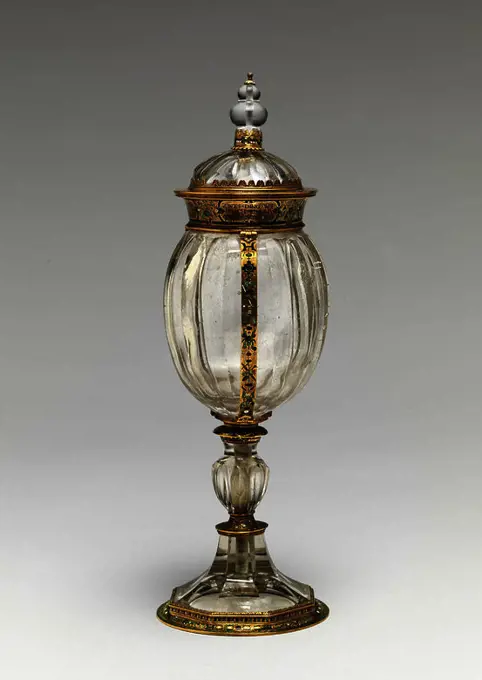
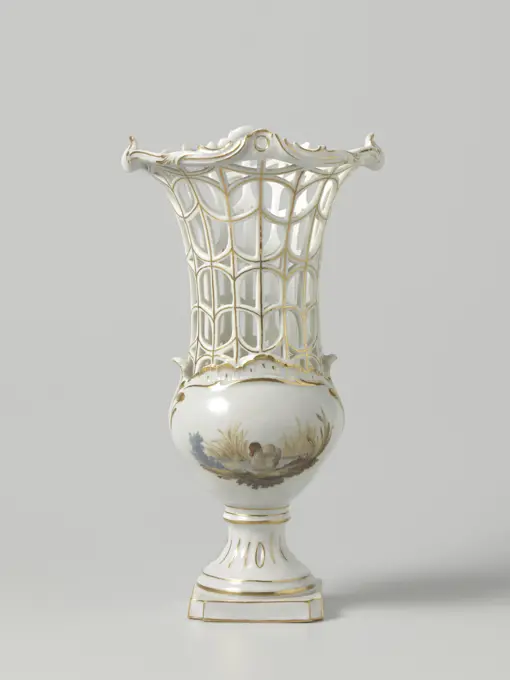
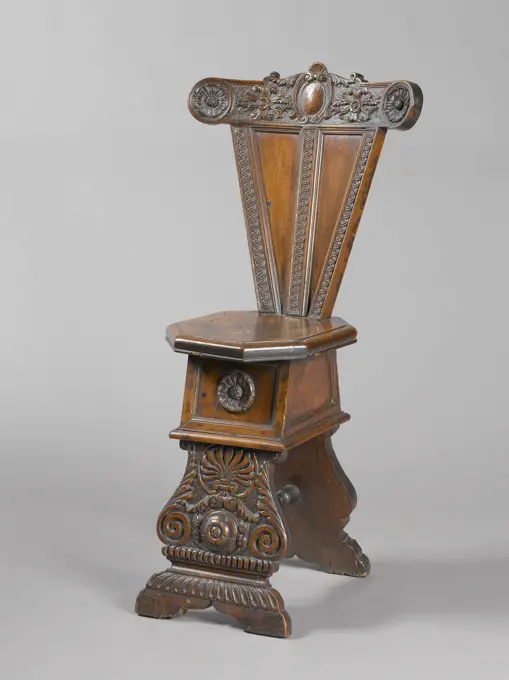
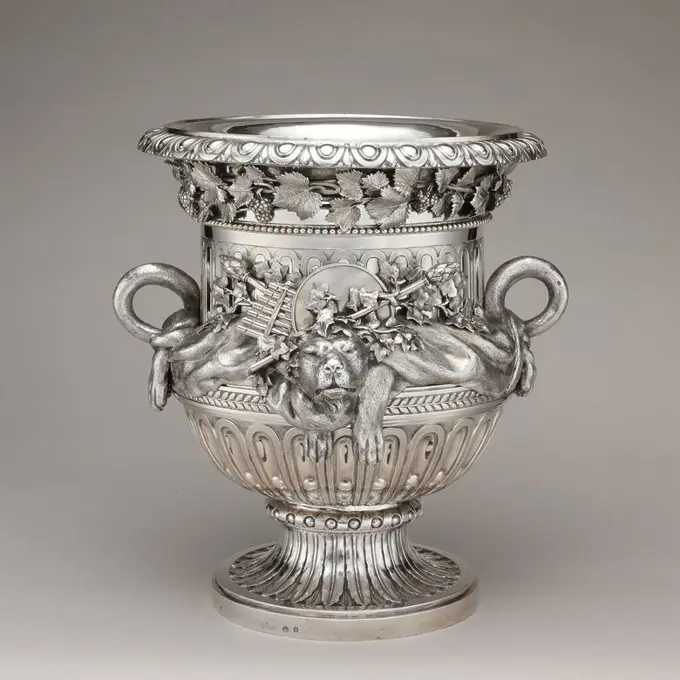
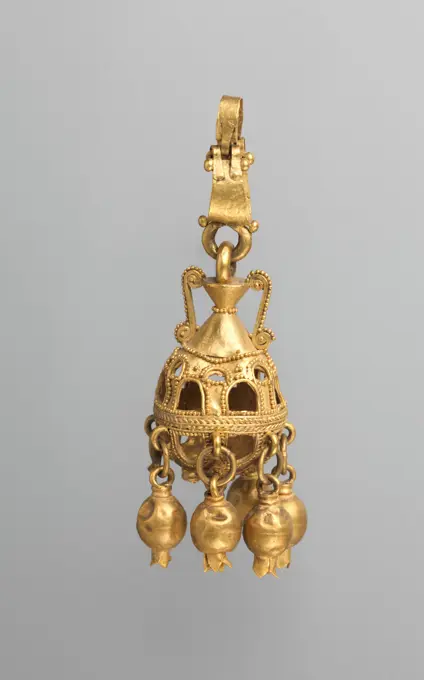
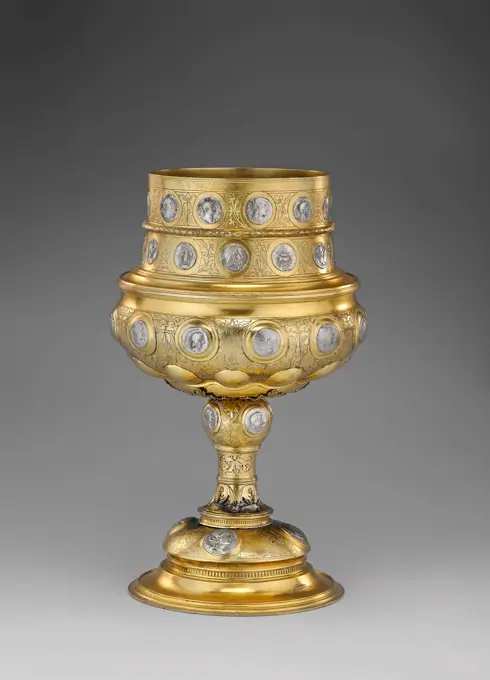
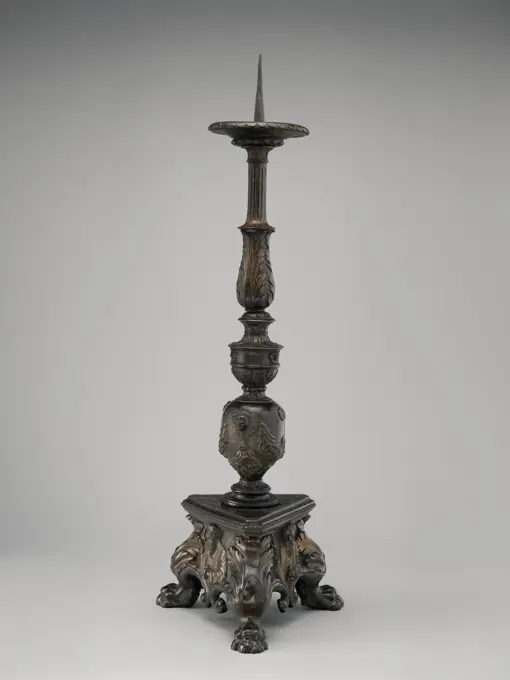
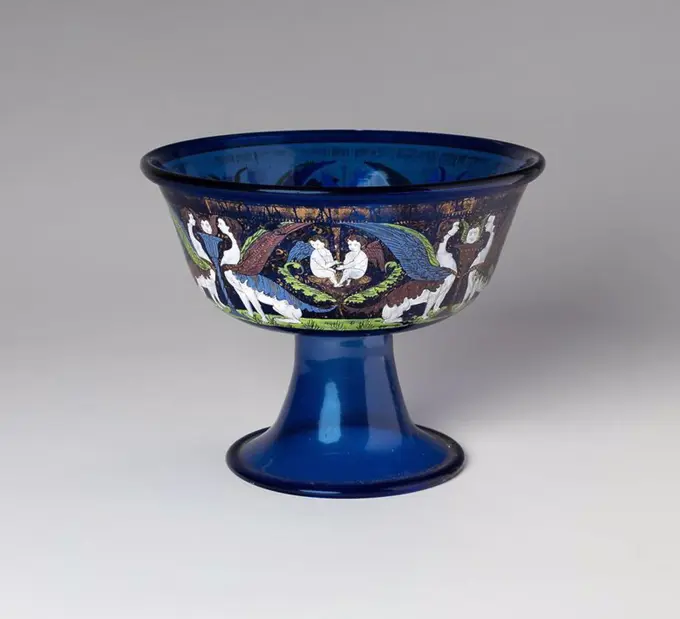
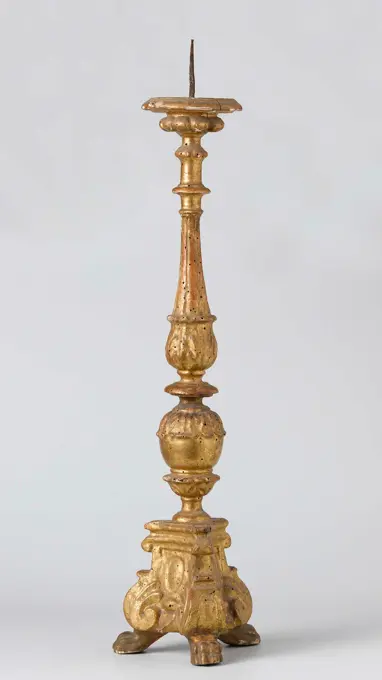
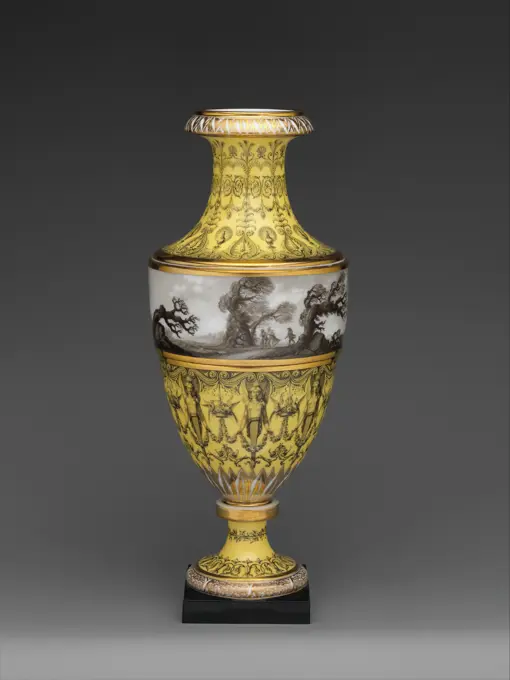
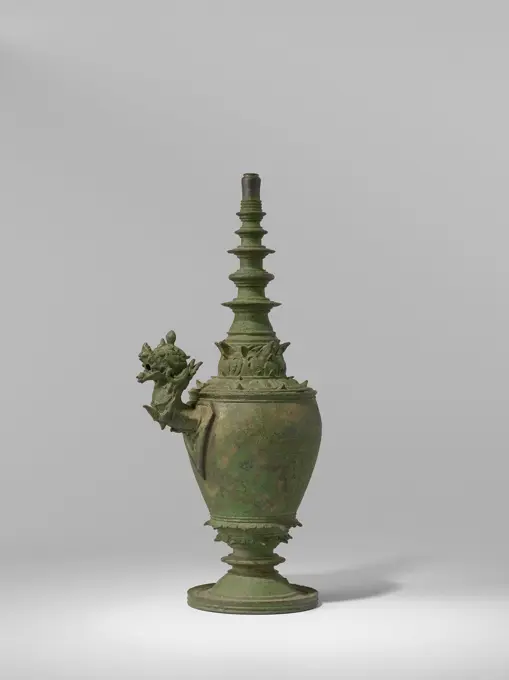
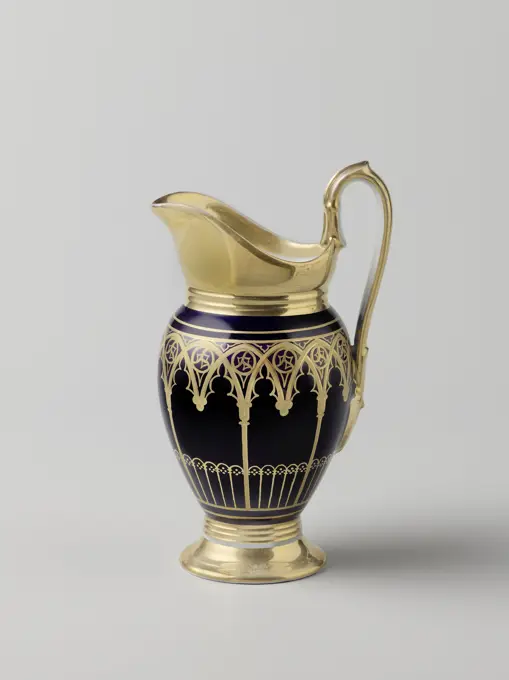
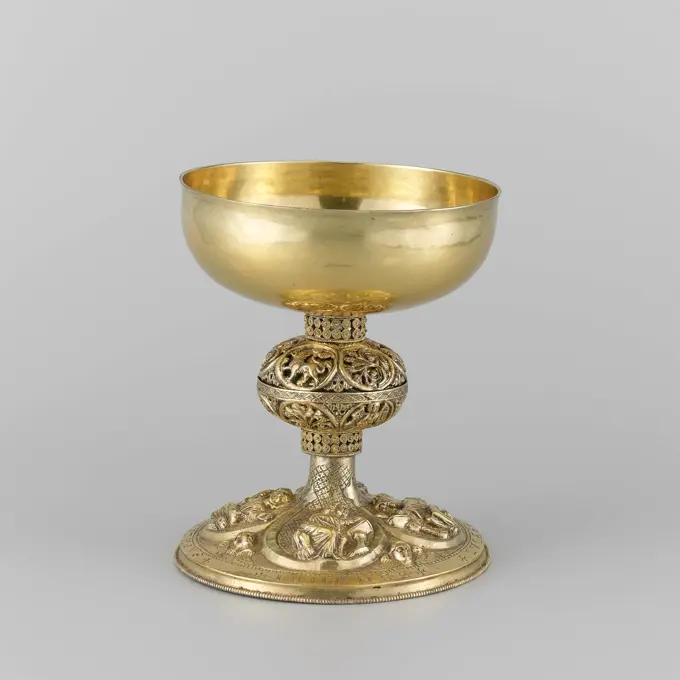
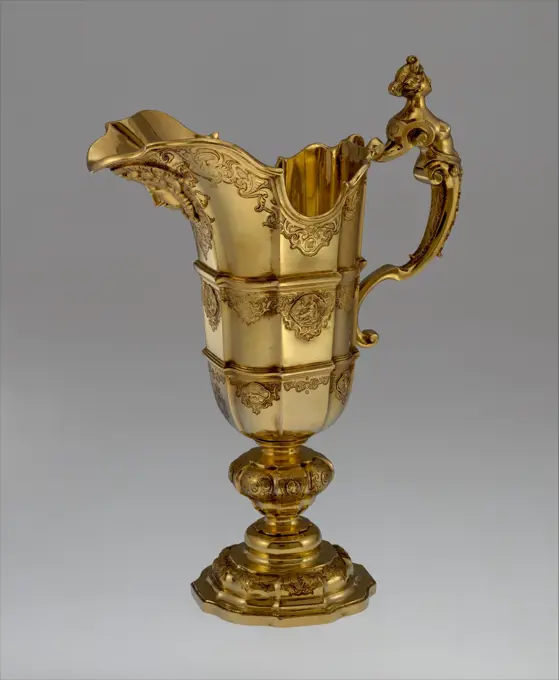
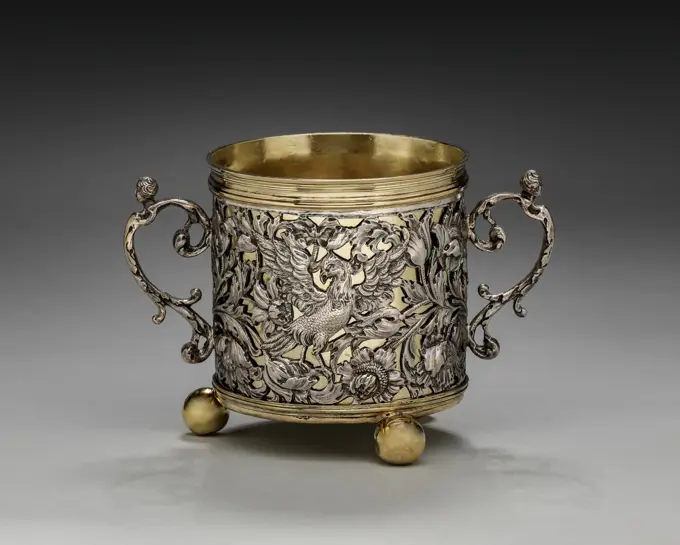
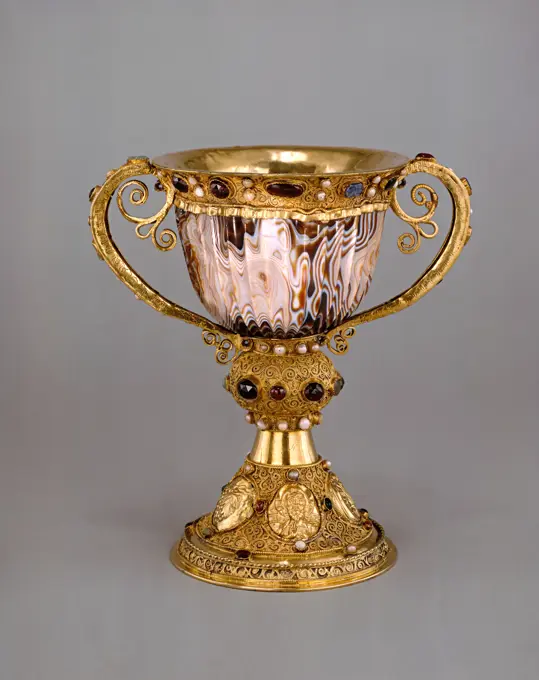
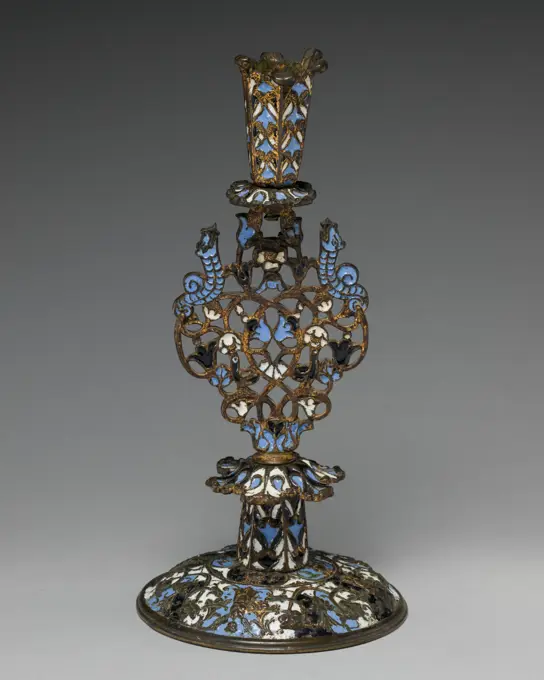
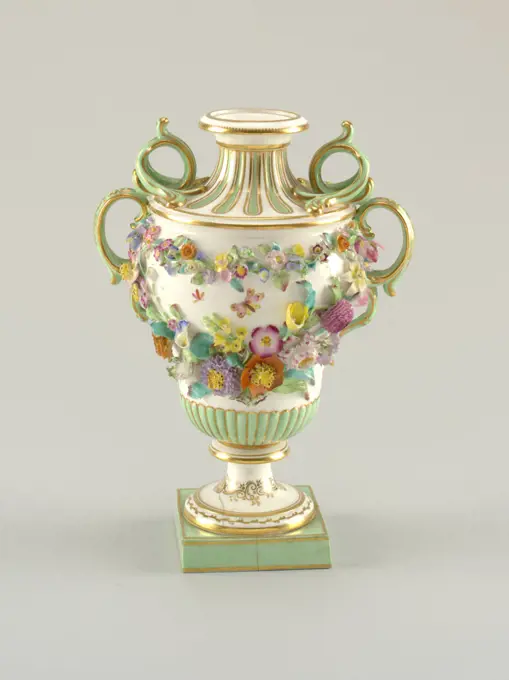
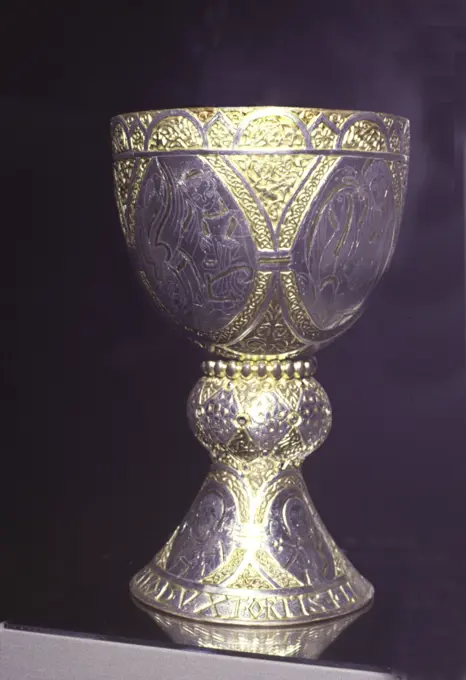
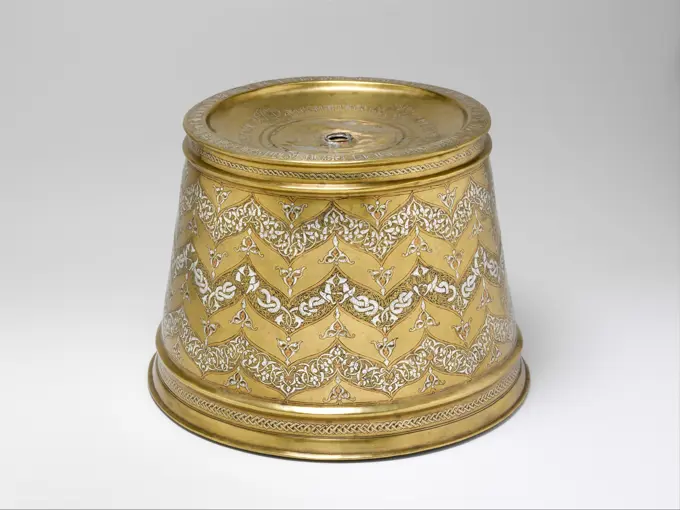
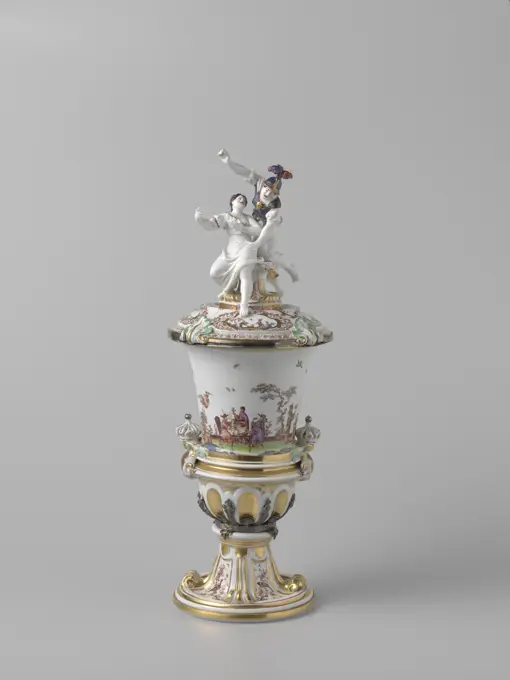
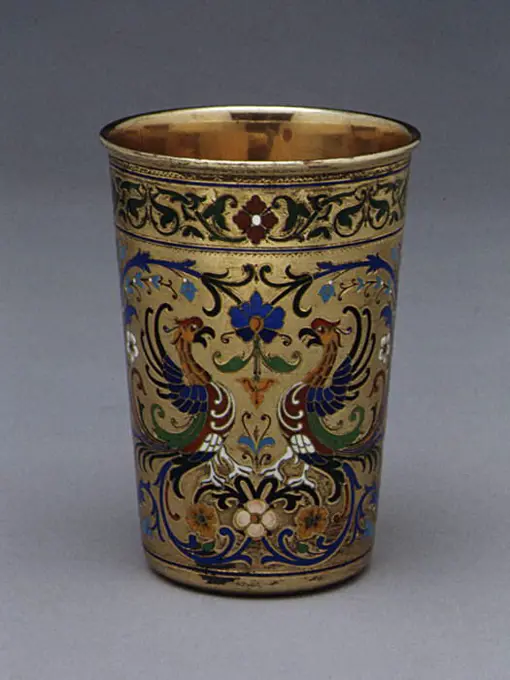
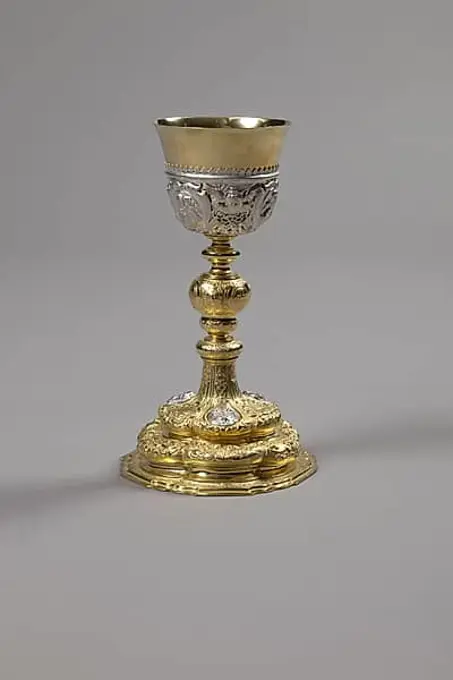
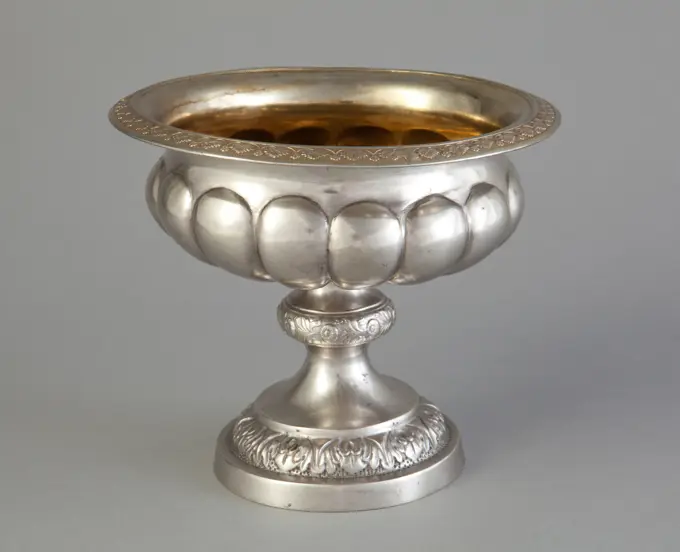
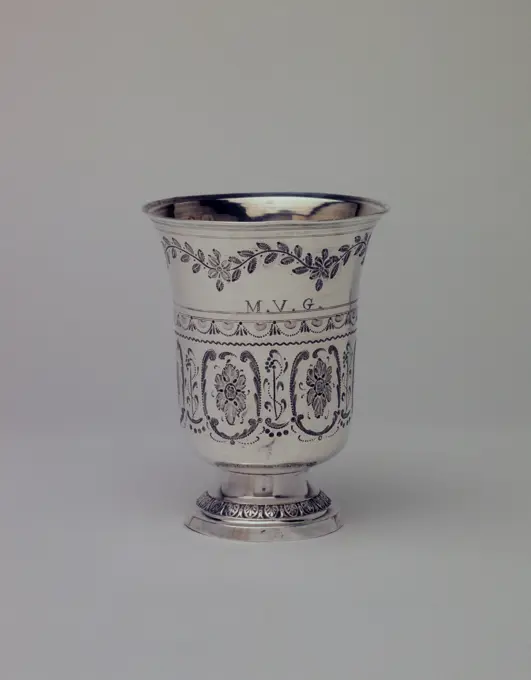
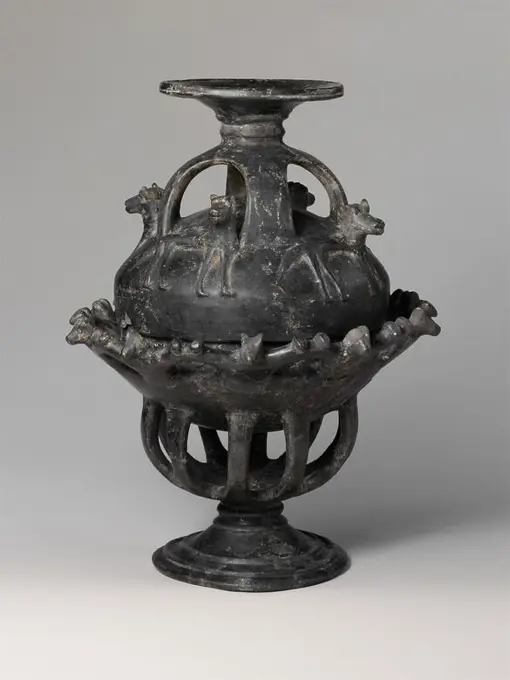
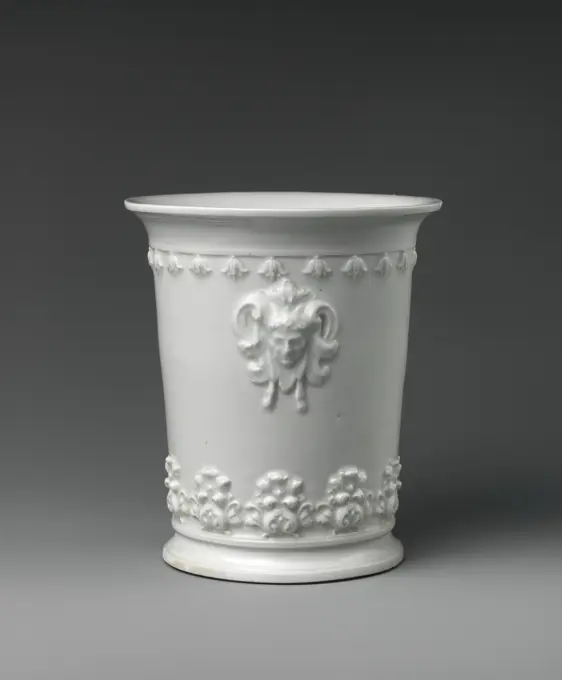
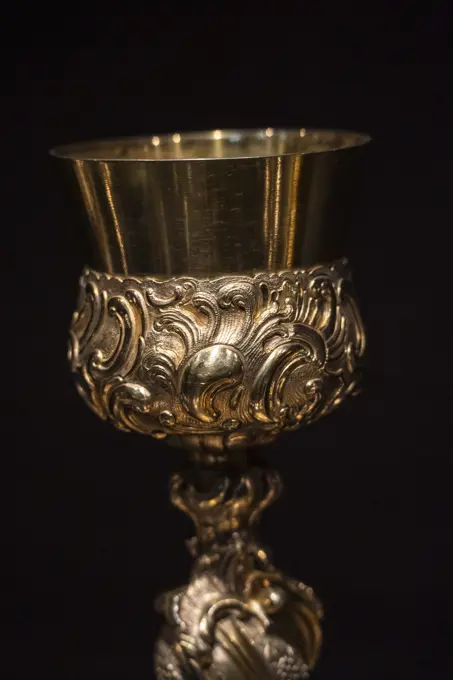
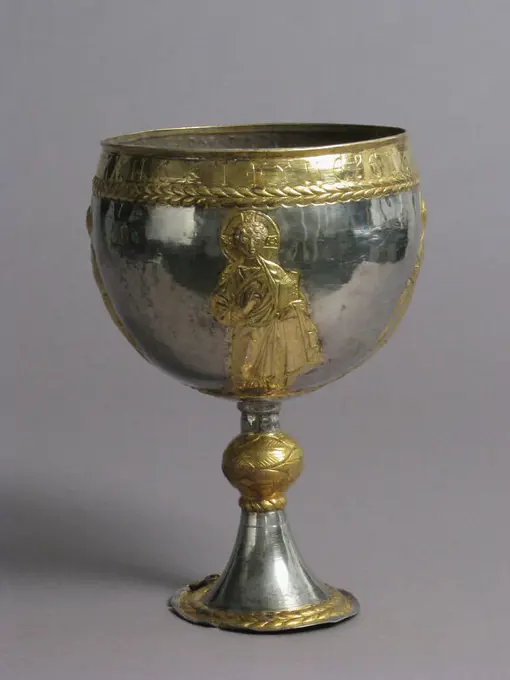
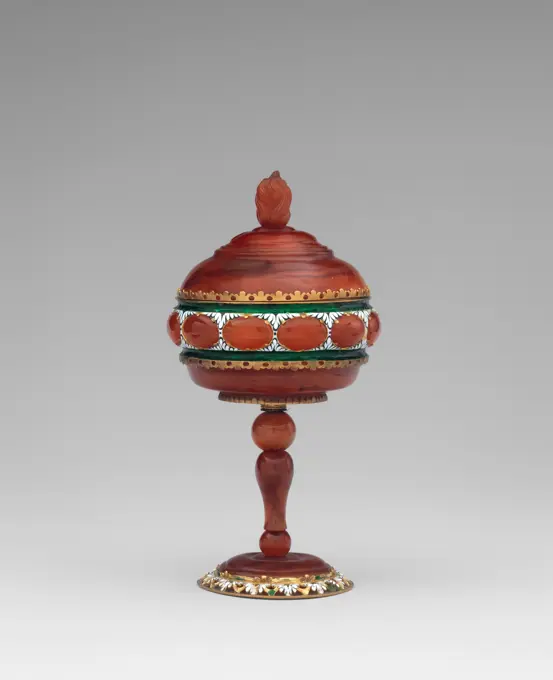
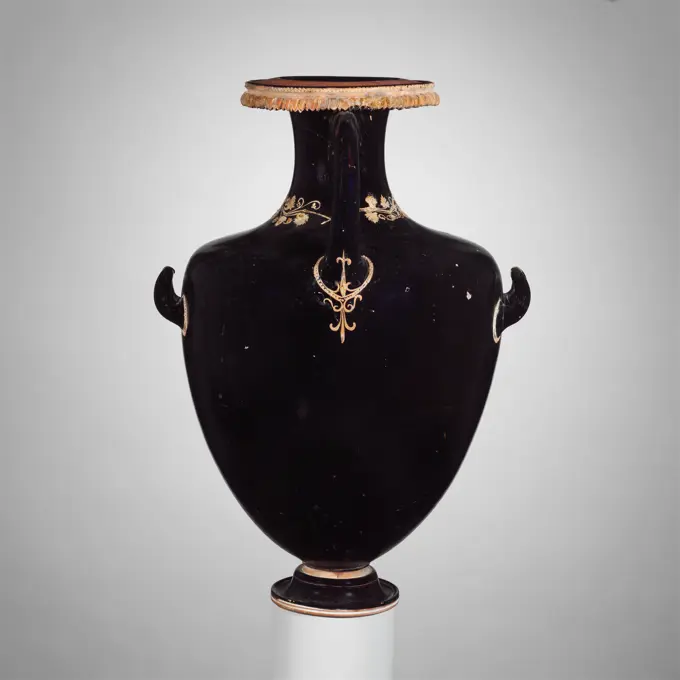
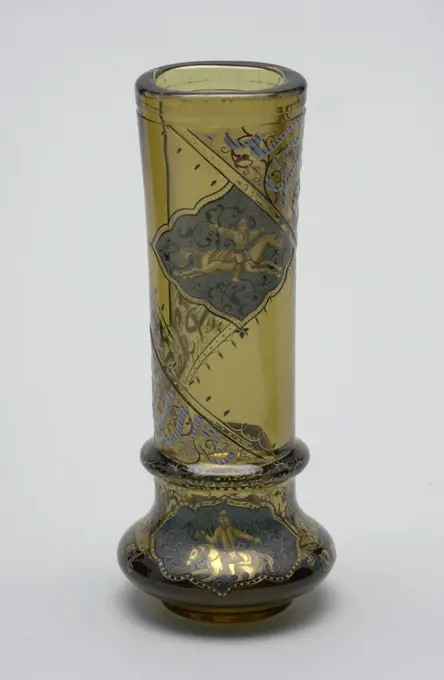
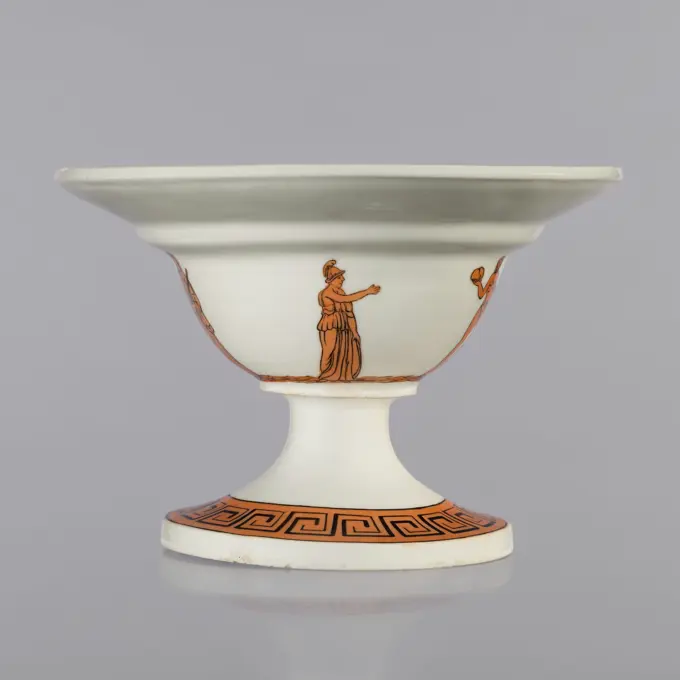
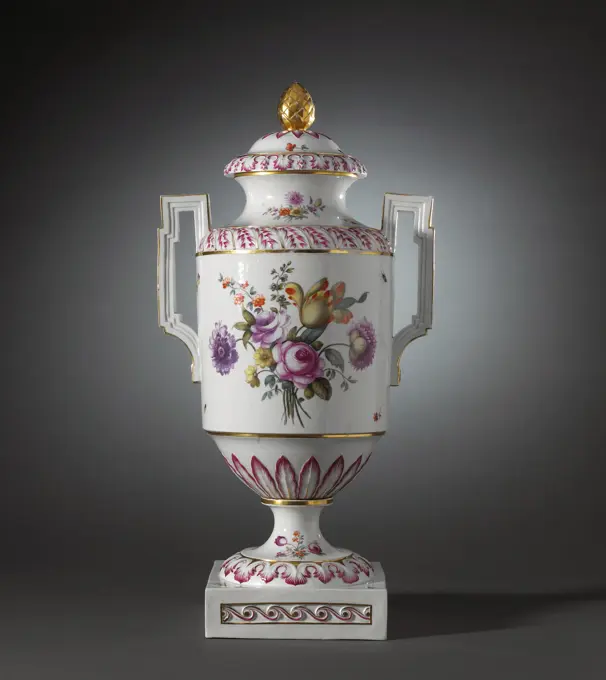
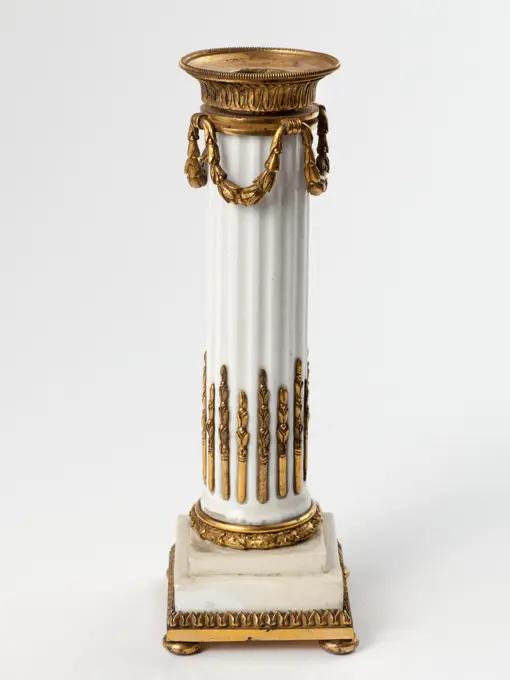
Galvanoplastic reproduction of the cup of the Cup of St. Jorisgilde of Middelburg. Galvanoplastic reproduction of the cup of the Cup of St. Jorisgilde of Middelburg. The cuppa, on a baluster-shaped strain, with three coats of arms and lion heads; On the lid four medallions with fruit and flower ornaments and a figure of St. Joris.Vase; Painted by Charles-Nicolas Dodin (French, 1734 - 1803); Sèvres, France; 1759; Soft paste porcelain, pink and green ground colors, colored enamel decoration and gilding; 24.9 x 14.4 x 9.4 cm (9 13,16 x 5 11,16 x 3 11,16 in.)Coupe lid, Anonymous, c. 1500 - c. 1600 Coupe lid. As a button a sharpened Safier. Russia chalcedony. gold (metal). precious stone (material). sapphire (mineral) Coupe lid. As a button a sharpened Safier. Russia chalcedony. gold (metal). precious stone (material). sapphire (mineral)Cover of a sugar bowl with a gothic arcade decoration, Perche, c. 1800 - c. 1899 Cover of a porcelain sugar bowl, painted in underly glaze blue and on the glaze gold. Decorated with a gothic arch decoration against a blue background. Pointed lid button. Saint-Yrieix-la-Perche porcelain. glaze. cobalt (mineral). gold (metal) painting / gilding / vitrification Cover of a porcelain sugar bowl, painted in underly glaze blue and on the glaze gold. Decorated with a gothic arch decoration against a blue background. Pointed lid button. Saint-Yrieix-la-Perche porcelain. glaze. cobalt (mineral). gold (metal) painting / gilding / vitrificationScale, anonymous, c. 1600 Coupe on foot, from rock crystal in a golden frame with translucid email. The foot and barrel are lobed. Vertical gold tires connect the lip and bottom edge. On the bottom of the barrel in translucid email a pelican with young. Freiburg frame: Gold (Metal). frame: Coupe on foot, from rock crystal in a golden frame with translucid email. The foot and barrel are lobed. Vertical gold tires connect the lip and bottom edge. On the bottom of the barrel in translucid email a pelican with young. Freiburg frame: Gold (Metal). frame:Baroque cup;  the twenties of the 17th century (1620-00-00-00-1629-00-00);Baroque (style), mannerism, mascarons, fantastic creatures, purchase (provenance)Przeszo Przyszoci LimogesWedding cup, anonymous, 1569 The base of the round cup is made up of a slightly vaulted lower edge, decorated with a stamped, repetitive pattern of leaves, a profiled straight wall with a block frame, a vaulted part with roller -cartouches and acanthus leaves on a punched surface, a second profiled straight wall with A stamped Fries van Leeuwensmasters and Draperies, and another vaulted part, with a decoration of Guilloches. The vase -shaped nodus rests on a straight profiled base with a block list. It is decorated with knorren connected by band work on an shaded surface and with three detached volutes and is crowned by a ray -applied edge of wider and narrower leaf shapes. A narrow profiled band forms the transition to the conical cuppa, which is closed on the bottom by a roaring part and at the top by a smooth curved lip edge. The blinded part is decorated with grunts under a browse edge, above which Satyrmasters against RolwerkCartouches, interspersed with fruit bunches on a punchedGalvanoPlastic reproduction of a cup with lid, decorated with shells and leaf voltues, fa. Elkington & Co., after 1854 - Before 1878 Galvanoplastic reproduction of a cup with lid, decorated with shells and leaf voltues. With the inscription: Jacob Marten, Hamburg, 4, 7ber 1708. Londonsilversmith: Hamburg copper (metal). silver (metal) gilding Galvanoplastic reproduction of a cup with lid, decorated with shells and leaf voltues. With the inscription: Jacob Marten, Hamburg, 4, 7ber 1708. Londonsilversmith: Hamburg copper (metal). silver (metal) gildingStand of a Dish with Landscapes, royal porcelain manufactory, c. 1837 - c. 1844  Foot of a porcelain coupe or drinking bowl with a copper frame with iron pin to place in the high foot. Painted with email colors and gold. On the foot elongated compartments with lion heads on a shell motif surrounded by rolling and stylized flowers. The wide part with two tires with stylized leaf motifs and below that a bond with rosettes in medallions. Marked on the inside of the foot with the scepter including K.P.M. Berlin porcelain. glaze. gold (metal) painting / vitrificationMiskelk, dude. Michaël Ernst (II), 1730 Miskelk of gilded silver, on a sixte base. The foot is decorated with cherubs and Louis Xivde Bandonamet. The chalice is caught in a wide, six -pointed edge, in which Cherubs alternate with tire work and flowers. München silver (metal). gilding (material) gilding Miskelk of gilded silver, on a sixte base. The foot is decorated with cherubs and Louis Xivde Bandonamet. The chalice is caught in a wide, six -pointed edge, in which Cherubs alternate with tire work and flowers. München silver (metal). gilding (material) gildingCandlestick (one of a set of eight) 1768/69 John Romer British. Candlestick (one of a set of eight). British, London. 1768/69. Silver. Metalwork-SilverCovered Beaker ca. 1470 Attributed to Hans Greiff The emblem of the fishermans guild—a boats rudder and fishing hook crossed—is affixed to the inside of the beakers cover. Proud of their trade up and down the Danube, members of the fishermans guild embellished their emblem—a boats rudder and fishing hook crossed—to the inside of the lid of this festive drinking cup. A few years later, in 1498, they affixed the same motif to the guild house that they owned in the city of Ingolstadt.. Covered Beaker. Attributed to Hans Greiff (German, active ca. 1470-died 1516 Ingolstadt). German. ca. 1470. Silver, gilt. Made in Ingolstadt, Bavaria, Germany. Metalwork-SilverScent bottle. Meissener Porzellan ManufakturMeissen, c. 1730-1735hard-paste porcelain, silverLacquer box on chassis, five -lobbig round, with six boxes in the inside, Anonymous, 1675 - 1699 Box on chassis, paint in brown and gold. Both parts are round and five -lobbig. The chassis is on five legs. On the lid of the box and the upper surface of the chassis, landscapes with houses, rocks, trees and mountains are shown, rosettes on the sides. The lower and inside edges are decorated with salvokate. In the box there is a loose plate (decorated with salvokaat) with raised walls, between which five large rounds and one small round box are placed. These boxes are gilded and decorated with a rosette on the lids. A final five -lobe dish has been placed over these boxes, also decorated with a landscape. Japan lacquer (coating). gold (metal) Box on chassis, paint in brown and gold. Both parts are round and five -lobbig. The chassis is on five legs. On the lid of the box and the upper surface of the chassis, landscapes with houses, rocks, trees and mountains are shown, rosettes on the sidSet of four candlesticks 1806-8 Matthew Boulton British. Set of four candlesticks 198385Lamp. Egypt or Syria. Date: 1301-1400. Dimensions: 28.2 × 18.1 × 18.1 cm (11 1/16 × 7 1/8 × 7 1/8 in.). Glass painted with red, blue, pale green, and white enamels and gilding. Origin: Egypt. Museum: The Chicago Art Institute, Chicago, USA. Author: Islamic.Cloisonné Altarpiece, 18th century, 18 1/2 x 9 1/2 in. (47 x 24.13 cm), Gilt bronze, enamel, China, 18th centuryCandlestick (one of a pair) ca. 1710-20 Master "RW" Swedish Early-eighteenth-century Swedish silver of such a commanding quality is exceedingly rare. These refined candlesticks reflect the stylistic adaptations and the high standard of craftsmanship of the master gold- and silversmiths in Uppsala, a northern European university town. The objects' delicate ornamental vocabulary constitutes an elegant and refreshing version of what could be defined as a Swedish interpretation of the style of French designer Jean Berain. In I687 Swedish architect Nicodemus Tessin the Younger (i654-1728) visited Versailles and was fired with a deep admiration for the elaborate trappings with which Louis XIV was enshrining himself as absolute monarch. Later Tessin, responsible for the design of the New Royal Palace in Stockholm, was able to create one of the finest examples of the contemporary French idiom, mirroring now the exalted and powerful position of the Swedish king in northern Europe. French artistCovered Cup with Shield of Arms of the Countess of Gleichen. Dated: c. 1566 (crystal); 1566 (mounts). Dimensions: overall: 23.8 x 7.7 x 7.7 cm (9 3/8 x 3 1/16 x 3 1/16 in.). Medium: rock crystal and enameled gold. Museum: National Gallery of Art, Washington DC. Author: Freiburg-im-Breisgau 16th Century (crystal); Augsburg 16th Century (mounts).Group of Vases, Manufactuur Oud-Loosdrecht, c. 1784 Vase of porcelain. The convex barrel is on a high foot. The top that spreads upwards is open. Multicolored painted. Loosdrecht porcelain Vase of porcelain. The convex barrel is on a high foot. The top that spreads upwards is open. Multicolored painted. Loosdrecht porcelain. Chair of walnut, resting on a, placed in spread, front and backboard, connected by a twisted sport. The front plate is decorated with acanthus volutes and a circular rosette with palm with it. The wide seat rules are smooth; The rule has a circular rosette. The seat is octagonal. The back has the shape of a reverse-like triangle with two flat panels. The upper spray ends in circular rosettes with a rolling cartouche in the middle flanked by leaf motifs.Wine cooler (one of a pair). Culture: Austrian, Vienna. Dimensions: Overall (wt confirmed): 11 15/16 x 9 7/8 in., 6000g (30.3 x 25.1 cm, 6kg). Maker: Ignaz Joseph Würth (Austrian, first mentioned 1769, died 1792). Date: 1781.The wine coolers formed part of the now dispersed so-called Second Duke of Sachsen-Teschen Service, which originally included all kinds of silver tableware as befit the splendor of royal dining. The overall style is indebted to French Neoclassical designs and encapsulates the strong appreciation of contemporary French art and culture by the patrons, Duke Albert Casimir of Sachsen-Teschen (d. 1822) and his consort, Archduchess Maria Christina of Austria (d. 1798), sister of Queen Marie-Antoinette and daughter of Empress Maria Theresa. Nonetheless, the vigorous design, the sparkling play of textures, and the daring juxtaposition of classical elements with whimsical sculptural details embody the freshness of the Viennese interpretation of high-style French NeoclassicEarring ca. 1st-2nd century Parthian This elaborate gold earring features a boat-shaped ring with a pendant "amphora" vase suspended from it that is decorated with three rows of arched perforations and both granular and filigree decoration. A ring at the vases bottom indicates that an additional pendant originally hung from it. Five pomegranates hang from rings attached to the pendant vase (there were seven originally); pomegranates, associated with fertility, were a popular subject in jewelry from the ancient Near East. The earrings production date is determined in part because its design is very similar to a pair discovered buried in a cache in the city of Seleucia that is dated between 40 and 120 A.D. Parthian wealth obtained through lucrative trade networks resulted in substantial patronage of the arts and luxury goods including jewelry. In addition to surviving examples, representations of earrings, necklaces, bracelets and frontal bands appear in funerary portraits from PalmyraUnknown, vase with lid. Porcelain. Petit Palais, Museum of Fine Arts of the City of Paris.Galvanoplastic reproduction of a jar with lid with scenes related to hunting. Galvanoplastic reproduction of a jar with lid, with tires with engraved scenes with subjects related to hunting interspersed with tires with rollerwork in relief; A vase with flowers forms the crowning of the lid.Vase. unknown, craftsmanTable clock. Culture: British, London. Dimensions: Diameter (dial): 1 3/4 in. (4.4 cm);Diameter (back plate): 3 1/2 in. (8.9 cm). Maker: Movement by Bartholomew Newsam (British, recorded 1565, died 1587). Date: 1580-85.Bartholomew Newsam is the earliest known native English maker of small domestic clocks, yet his few surviving works are remarkably similar to French clocks. In this example, the cylindrical gilded-brass case contours to the shape of the movement contained inside: the perforated dome of the upper section follows the form of an interior bell. The leather and gilded-brass outer case, which protected the clock during travel, has a special opening at the top for easy access to the dial. Museum: Metropolitan Museum of Art, New York, USA.Majolica salt barrel on high foot, in the shell grasshopper in blue, salt barrel tableware holder soil find ceramic earthenware glaze tin glaze lead glaze, hand-turned baked painted glazed fried Majolica salt barrel or salt plate on high base. Knobby in the middle of the trunk. underside of lead glaze Monochrome blue painted In the bowl 'Chinese garden' in which grasshopper is the central representation. High soul outstretched archeology food serve serving condiment saltMustard pot. Culture: Hungarian, Pest. Dimensions: Overall: 6 7/8 x 2 1/4 in. (17.5 x 5.7 cm). Maker: Josephus Pasperger I (active 1762, died 1791). Date: ca. 1765.Sugar was a rare commodity in the eighteenth century and often surrounded by ceremony. The sugar caster, acc. no. 2010.110.59a, b, with its pierced domed lid, forms a matching pair with the mustard pot, 2010.110.60, with its hinged lid and a slot for a ladle. Sets like this one were very rare on the European continent, which may indicate that the goldsmith or patron was familiar with English silver, where these types were more common. Italian and Austrian Baroque architecture clearly inspired the powerful, bulging outline of this vessel. The engraved arms refer to the family of the Princes of Reuss (Younger Line).LiteratureMarc Rosenberg. Der goldschmiede Merkzeichen. 3rd ed. 4 vols. Frankfurt am Main, 1922-28, no. 9409.Elemr Koszeghy. Magyarorszgi tvsjegyek a kzpkortl 1867-ig / Merkzeichen der GoldschmiBell-shaped bowl with pierced sides and medallions with moulded and gilded figures, anonymous, c. 1600 - c. 1649 Klock -shaped bowl of porcelain, painted in under -glaze blue. The wall of the bowl is opened with five medallions saved. In four medallions two modeled and gilded figures, the eight immortals; The last medallions with a show by shouldao. The underside of the wall and the outer edge with a band with flower vines in low relief. The underside is unglazed. Some chips in the edge; A crack in the wall. Gilding probably from later date and in Europe. Ming porcelain in blue and white. China porcelain. glaze. gold (metal) painting / vitrification Klock -shaped bowl of porcelain, painted in under -glaze blue. The wall of the bowl is opened with five medallions saved. In four medallions two modeled and gilded figures, the eight immortals; The last medallions with a show by shouldao. The underside of the wall and the outer edge with a band with flower vines in low relief. The undersideRenaissance cup with ancient coins. Schweiglin (fl. ca 1535-ca 1540), goldsmithAltar Candlestick with Busts in Relief of Saints Peter and Paul (one of a pair) mid-16th century Workshop of Vincenzo Grandi Analogies of texture and composition (figures from which a Byzantine stiffness has not altogether disappeared) between these and three flagpole stands by Alessandro Leopardi in Piazza S. Marco, Venice, permit an attribution of the candlesticks at least to Leopardis sphere of influence. The candlesticks were part of a set of six for an altar. Two with reliefs of Saints Matthew and Luke are in the Pierpont Morgan Library, and two with Saints Mark and John are in the Victoria and Albert Museum.. Altar Candlestick with Busts in Relief of Saints Peter and Paul (one of a pair). Workshop of Vincenzo Grandi (mentioned 1507-1577/78). Northern Italian. mid-16th century. Bronze, partially oil-gilt. Sculpture-BronzeFooted Bowl. Italian; Venice. Date: 1485-1495. Dimensions: 16.5 × 20.8 cm (6 1/2 × 8 3/16 in.). Blue glass, enamel, and gilding. Origin: Venice. Museum: The Chicago Art Institute, Chicago, USA.. Torchère of gold-plated linden wood. The three-nozzles placed on three nozzles is the sad feet, which is decorated to the corners with jumped volutes and on each of the faces with a medallion. This lies a triangular cover plate with a flat concave sides, on which the shaft raises, which consists of the following sections; A cup-shaped portion with serrated edge, an inverted pomegranate, a disk, an acanthus knob, from which a tapered fluted column shaft, which ends in four rings of different diameters, while the third and fourth are decorated with pearl edge. Above the round cover disc, in which a square pin.Vase with scenes of storm on land ca. 1797-98 Dihl et Guérhard French In the closing decades of the eighteenth century, a number of porcelain factories were established in Paris that offered both commercial and artistic competition to the Sèvres factory, despite the latters royal status and the patronage of its products as encouraged by Louis XVI (1754-1793), king of France. Many of these newly founded factories had royal protectors who allowed them to operate regardless of the monopoly that Sèvres continued to enjoy, and the majority of the Paris enterprises focused solely on the production of hard-paste porcelain. One of the most successful of these factories was first known by the name of its protector, Louis-Antoine dArtois (French, 1775-1844), duc dAngoulême (Manufacture de Monsieur Le Duc dAngoulême), and later known as the Dihl et Guérhard factory at the time of the French Revolution (1789-99). The factory was founded in 1781 by Christophe Dihl (German, 1753-1830), a potter Bowl and lid, Earthenware, Blue footed bowl with star pattern of white pearls all over. Finial made up of crown of pearls., Switzerland, 18th century, ceramics, Decorative Arts, Bowl and lidWater Vessel, anonymous, 1200 - 1499 Bronze is possible for life elixir. East Java bronze (metal) Bronze is possible for life elixir. East Java bronze (metal)Milk jug with a gothic arcade decoration, Perche, c. 1800 - c. 1899 Porcelain milk jug on spreading foot and with an egg -shaped body, wide gase and high ear, painted in underlaze blue and on the glaze gold. The belly with a gothic arch decoration against a blue background. The foot, neck and ear are covered with gold. Saint-Yrieix-la-Perche porcelain. glaze. cobalt (mineral). gold (metal) painting / gilding / vitrification Porcelain milk jug on spreading foot and with an egg -shaped body, wide gase and high ear, painted in underlaze blue and on the glaze gold. The belly with a gothic arch decoration against a blue background. The foot, neck and ear are covered with gold. Saint-Yrieix-la-Perche porcelain. glaze. cobalt (mineral). gold (metal) painting / gilding / vitrification. .Rosewater ewer ca. 1730 Possibly by Johann Erhard Heiglen German This ewer was undoubtedly made with a matching basin, now lost, and would have stood on a buffet in a dining room. Until forks became common after the seventeenth century, diners used ewers and basins to wash their hands. This ewer is an interpretation of a French style that evolved during the reign of Louis XIV (1643-1715) under the influence of his court designer Jean Berain (1640-1711), but the three bands of strapwork may have been designed by Heuglin.. Rosewater ewer. German, Augsburg. ca. 1730. Silver gilt. Metalwork-SilverTwo-Handled Cup, 1677. England, London, 17th century (Charles II). Silver and silver gilt; overall: 17.2 x 11.5 cm (6 3/4 x 4 1/2 in.). Due to its size and ornament, this vessel may have functioned as a caudle-cup, containing a mixture of ale or wine and bread, oatmeal, eggs, sugar, and spices that was given to women after childbirth to help them regain their strength. The scrolling foliage and exotic birds along the exterior of this cup were likely based on prints circulating in the 1600s. The reclining female figures capping the handles and the acanthus bud finial on the accompanying lid recall common architectural motifs.French 12th Century (mounting); Alexandrian 2nd 1st Century BC(cup) , Chalice of the Abbot Suger of Saint Denis Chalice of the Abbot Suger of Saint-DenisEgg glass; Koenigliche Porzellan Manufaktur (KPM; Berlin; 1763-1918); 1780-1800 (1832-00-00-1850-00-00);Tea service with tray (déjeuner Bolvry). The Sèvres factory succeeded in making true hard-paste porcelain containing kaolin (white clay) only in 1769. Many new patterns were developed for this kind of porcelain. The painted decoration of this service was influenced by patterned calico fabric (chintz) from India and by enamel from China.Vase and cover, 1750-90. Makers: Josiah Wedgwood (& Sons Ltd) .Vase; unpredictable Lona Manufaktura; 19th century (1801-00-00-1900-00-00);Candlestick (one of a pair) ca. 1660-80 Stephen Pilcherd British Although popularly known as Surrey enamel, this variety of champleve enameling was probably made in London.. Candlestick (one of a pair). British, London. ca. 1660-80. Brass, partly enameled, traces of gilding. Metalwork-BrassCandlestick 1849-58 United States Pottery Company. Candlestick 1336Urn, Coalport Porcelain Factory, English, active late 18th - 20th centuries, hard paste porcelain, vitreous enamel, gold, On a square pedestal, a footed pyriform urn, reeding on its lower portion and fluted on contracting neck. Body covered with garlands of applied flowers. Triple-scrolled handles, green and gold. Flowers are polychrome on a white body., England, ca. 1830, ceramics, Decorative Arts, urn, urnLondonderry Vase 1813 Sèvres. This vase epitomizes the great achievements of the royal porcelain factory at SËvres during the Napoleonic period. SËvres was a chief beneficiary of Napoleonís policy of resuscitating factories after the trauma of the French Revolution; demonstrating the supremacy of French craftsmanship, the emperor used sumptuous porcelain in his palaces as well as for state gifts. With its monumental size, rigorous symmetry, and unabashed splendor, this vase is a superb example of the Empire style inspired by Greco-Roman art. It is a triumph of the collaborative practice of the SËvres factory; documents reveal the precise roles played by each artist in its creation. Napoleonís chief architect, Charles Percier, created the Etruscan scroll-handled design. The vase was commissioned by Napoleon in 1805 but was produced only in 1813 and was still at the factory when he was exiled the following year. It was used as a diplomatic gift from his successor, King Louis XVIII, to ViAnglo Saxon silver and gilt chalice. ENGLAND.Triptych metalwork late 15th century, intaglio probably 16th century, composed probably 19th century probably French. Triptych. probably French. metalwork late 15th century, intaglio probably 16th century, composed probably 19th century. Gold, enamel, jasper. Metalwork-Gold and PlatinumAnonymous / 'Case for goblet of partially-agatised jasper'. 1650 - 1711. Leather, Wood, Metal, Cloth. Museum: Museo del Prado, Madrid, España.Candlestick Base with Interlacing Dragons early to mid-13th century The central band of three densely decorated zigzag bands consists of pairs of confronted winged dragons with knotted serpentine bodies, feline forelegs, and tails ending in interlacing dragons heads. The dragon with an open mouth and knotted snakelike body may relate to the devastating pseudo-planets al-Jawzahr and Nawbahr, which were thought to cause solar and lunar eclipses by devouring the sun and moon. It has also been connected to ancient Central Asian and Mesopotamian beliefs regarding dragons, which have been subject to a range of interpretations, from potency to royalty and harmony to protection. Such meanings are confirmed by the benedictory and apotropaic inscriptions, as well as the luxurious medium.. Candlestick Base with Interlacing Dragons 444561Pair of candlesticks 1739-40 John Gould. Pair of candlesticks. British, London. 1739-40. Silver gilt. Metalwork-SilverMountGoblet, Meissener Porcelain Manufaktur, c. 1727 Cup of painted porcelain. The cup has a vaulted foot, which is decorated in relief, on which the bowl -shaped part of the Cuppa. The bowl -shaped part is included by a gilded silver frame. On the bowl-shaped part is the cup-shaped part that is painted with Höroldt chinoiseries. The lid is painted with Höroldt chinoiseries and has a button in the form of two women (Minerva and a girl). The cup is not marked. Float porcelain. silver (metal). gilding (material) gilding Cup of painted porcelain. The cup has a vaulted foot, which is decorated in relief, on which the bowl -shaped part of the Cuppa. The bowl -shaped part is included by a gilded silver frame. On the bowl-shaped part is the cup-shaped part that is painted with Höroldt chinoiseries. The lid is painted with Höroldt chinoiseries and has a button in the form of two women (Minerva and a girl). The cup is not marked. Float porcelain. silver (metal). gilding (material) gildingCenser 16th century () French () or South Netherlandish (). Censer. French () or South Netherlandish (). 16th century (). Copper alloy. Metalwork-Copper alloyCandlestick, one of a pair, 20th century, 17 3/4 x 6 x 6 in. (45.09 x 15.24 x 15.24 cm), Gilt copper, Mexico, 20th centuryBeaker 1876 Russian. Beaker 207368Scottish Money Bank' still bank, c. 1780, 5 5/16 x 4 1/8 x 4 1/8 in. (13.49 x 10.48 x 10.48 cm), Ceramic, Scotland, 18th centuryChalice, goldsmithing and textile art from the 16th to the 20th century, St., Sankt, SaintTureen (one of a pair) ca. 1770-90 Chinese, for Continental European, probably Portuguese, market. Tureen (one of a pair). Chinese, for Continental European, probably Portuguese, market. ca. 1770-90. Hard-paste porcelain. Ceramics-Porcelain-ExportEgg glass; Koenigliche Porzellan Manufaktur (KPM; Berlin; 1763-1918); 1780-1800 (1832-00-00-1850-00-00);Candlestick with foot in lobe style. Foot, trunk, fat catcher and pin are poured separately. The triangular base carried out in lobe is made up of three S volutes, which are connected by three cartouches, and carrying the triangular base for the trunk. This consists of a vase and a baluster. The profiled fat catcher includes a rib in the middle of the strongly curving edge. The candle pin decorated with grooved rings has been profiled to the foot and ends at the top of a gang. The candlestick is aged inside at the bottom to give more firmness.Sugar bowl KozłowskiThéodore Tonnelier. "Cup". Money. 1809-1819. Museum of Fine Arts of the City of Paris, Petit Palais. 74383-3 Money, silverware, gobletLidded "Alhambra" vase 1877-90 Crown Derby The history of the Derby porcelain manufactory can generally be divided into two periods. The old Derby porcelain was produced from 1750 to 1848, and was foremost distinguished by the ownership of William Duesbury I and II. When the original factory closed in 1848, a number of former workers established a separate smaller factory at King Street, Derby, using Crown Derbys original molds and patterns and oftentimes incorporating the factory marks on its wares. Around 1876, a separate company established a factory at Osmaston Road under the name Derby Crown Porcelain Company (and eventually bought the King Street factory in 1935), although the firm did not being producing commercial pieces until two years later. In 1890, the factory was granted the privilege of using the title "Royal Crown Derby Porcelain Company." Although the new Crown Derby continued to produce the firms old eighteenth-century Japan patterns, it became known for making vesseAnonymous / 'Oval jasper bowl with fretwork stem'. 1625 - 1630. Enamel, Jasper, Gold. Museum: Museo del Prado, Madrid, España.Stand from a Centerpiece, c. 1864, H.7-3/4 x W.13-3/4 x D.7 in. (overall), Electroplate, England, 19th centuryTerracotta pyxis (box with lid). Culture: Etruscan. Dimensions: Overall: 8 1/4in. (21cm)Other (height with cover): 14 9/16in. (36.9cm)Other (height without cover): 8 1/4in. (21cm). Date: ca. 550-525 B.C..Consisting of a lower bowl on a flaring foot and a lid decorated in relief with seated dogs. Museum: Metropolitan Museum of Art, New York, USA.Cup with patenPair of two-handled vases with covers French 19th centuryBeaker vase ca. 1713-20 Meissen Manufactory German This vase, one of the first pieces of porcelain produced at Meissen, embodies the qualities that made porcelain so desirable to Europeans during the seventeenth and early eighteenth centuries, when porcelain was still an unfamiliar and exotic medium. Its whiteness and translucency distinguished the vase dramatically from the earthenwares and stonewares that were the common ceramic bodies in Europe. The only true porcelains available to Europeans prior to the discovery of porcelain at Meissen in 1708-10 were those imported from China and Japan, and the attempts in Europe prior to this time produced an artificial or soft-paste porcelain that did not possess the qualities of a true, high-fired porcelain body (see 50.211.186).The events leading to Meissens production of porcelain as a result of the experiments carried out by Johann Friedrich Böttger (German, 1682-1719) have been well documented.[1 Böttgers initial efforts produced a denSilber-vergoldeter Kelch Silver-gilt chalice, 18th century, Huesca Diocesan Museum, Aragon community, Spain Copyright: xZoonar.com/Tolox 22307547The Attarouthi Treasure - Chalice. Culture: Byzantine. Dimensions: Overall: 9 7/16 × 6 11/16 in., 12.6oz. (23.9 × 17 cm, 356g)Diam. of foot: 3 3/4 in. (9.5 cm)Diam. of knop: 1 5/8 in. (4.2 cm)Capacity of cup: 2100 ml. Date: 500-650.With a youthful Christ with a cruciform halo, a deacon saint with a censer (probably Saint Stephen), the Virgin Mary in orant pose, anda youthful saint with staffInscribed in Greek: In completion of a vow and for the salvation of him whose name is known unto the Lord. Museum: Metropolitan Museum of Art, New York, USA.Cup with cover ca. 1650-60 French The flame finial and band of cabochon-cup gems of carnelian, a reddish variety of chalcedony, set in bands of black and white and translucent green-enameled gold, identify this exquisite object as one of the French royal treasures listed in an inventory made during the reign of King Louis XIV (1643-1715). Daniel Alcouffe has recognized that the majority of the objects made of polished hardstone formerly in the collection of King Louis XIV and now in the Louvre, Paris, were, in fact, purchased by the king from the estate of his first minister, Cardinal Mazarin, at the time of the cardinals death in 1661.[1 The published inventory of the cardinals possessions, made in 1653 and describing in detail his extraordinary collection of painting and sculpture, as well as household furniture, plate, and goldsmiths work, makes no mention, however, of this object. While it is not possible at present to be certain whether or not the cup was a later addition to tTerracotta hydria (water jar) 4th century B.C. Greek, Attic This extraordinarily beautiful vase is decorated at the neck with a wreath of vine tendrils and gilded leaves. There is gilding as well on the lip and on the delicate ornament at the handles. During the fourth century B.C., the taste for vases with anthropomorphic embellishment such as a necklace extended from Southern Italy to the Black Sea area.. Terracotta hydria (water jar). Greek, Attic. 4th century B.C.. Terracotta; black-glaze. Late Classical. VasesVase, Emile Gallé, French, 1846 - 1904, Glass, enamel, gold, Tall cylindrical vase of greenish-brown transparent glass. Flat base, with swelling lower section, curved inward to semi-round collar of applied glass. Above collar rises elongated cylinder, slightly flattened and with pronounced curve. Rounded lip, with cut reveal. Lower body section enameled with stylized flowers in black, blue, and gold, surrounding lozenge-shaped reserve panel with enameled and gilded depiction of Persian warrior on horse, against azure blue ground. Upper portion of body with diagonally placed band of enameled decoration extending from base collar to lip; painted with blue letters against black stripes: 'Rien Sans Amour,' in pseudo- Kufic script., Nancy, France, ca. 1881, glasswares, Decorative Arts, VasePlatter. Horodnica (1807-1914), manufactureCandlestick. Culture: American. Dimensions: H. 8 1/8 in. (20.6 cm). Date: 1820-70. Museum: Metropolitan Museum of Art, New York, USA.Oval box (one of a pair) 1761-63 Johann Martin Satzger I Beginning in the seventeenth century, Augsburg was one of Europes main producers of silver wares. In the second half of the eighteenth century, when these boxes were made, its main competitors were London and Paris. A royal or aristocratic client who wanted to purchase a toilet service for a wedding gift might solicit proposals from goldsmiths in all three cities, as, for example, an agent for Augustus III did in Dresden in 1747. Johann Martin Satzger I was the preeminent maker of dressing-table sets in Augsburg; many of the leading aristocratic families in Germany commissioned a toilet service from him.. Oval box (one of a pair) 206244Bowl Made 1815-1825 Paris. Hard-paste porcelain, polychrome enamels, and gilding . Denuelle Porcelain Manufactory (Manufacturer)Cover of a vase with flowers and insects, Fürstenberg, c. 1785 - c. 1790 Cover of a porcelain vase, painted on the glaze in blue, red, pink, green, yellow, purple, black and gold. Decorated with flowers and insects and on the edge modeled leaf vines; Lid button in the form of a pine cone with a modeled rosette as the basis. Fürstenberg porcelain. glaze. gold (metal) painting / gilding / vitrification Cover of a porcelain vase, painted on the glaze in blue, red, pink, green, yellow, purple, black and gold. Decorated with flowers and insects and on the edge modeled leaf vines; Lid button in the form of a pine cone with a modeled rosette as the basis. Fürstenberg porcelain. glaze. gold (metal) painting / gilding / vitrificationCandlestick British 19th century View more. Candlestick. British. 19th century. Brass. Metalwork-BrassTable piece. .Blood Reliquary, 1500s. Italy (), 16th century. Gilt silver; overall: 35.6 cm (14 in.); diameter of base: 10 cm (3 15/16 in.); average: 4.7 x 6 cm (1 7/8 x 2 3/8 in.).Jean-Baptiste Locré (1726-1810). Torch. White porcelain, chiseled and golden bronze. 1785. Paris, Carnavalet museum. Bronze chisel, gilding, gilding, torch, white porcelain, 18th 18th 18th 18th 18th 18th 18th centuryStemmed Kyathos (Drinking Cup) 550 BCE-525 BCE Vulci. A unique legacy of the Etruscans is the glossy black pottery known as Bucchero ware, made from the 7th century to the late 5th century B.C. Produced for both domestic and funerary uses, Bucchero ware was popular locally and imported across the Mediterranean. The signature shiny black surface was achieved by firing the pottery in a reduced-oxygen kiln, where restricted ventilation caused the iron oxide in the coarse Tuscan clay to turn black. Before firing, the clay was burnished, or polished with a smooth stone, resulting in the sheen so sought after by potters. This sheen mimicked the gleam of bronze vessels.. terracotta, bucchero ware . Ancient EtruscanJewelry Box; woodCandlestick vase, painted with flowerguirles, manufacture Oud-Loosdrecht, c. 1778 - c. 1782 Candlestick vase of porcelain. The round base of the vase and the foot of the candle holder are decorated with a laurel wreath in relief. The twisted godrons on the foot of the vase and on the lid, the Godrons at the bottom of the vase body and on the lid and the cannelures of the candle holder are bordered in blue, as well as the chain motif along the mouth edge, in which golden dots are still applied. The deepened compartments of the pedestal are also bordered blue; In these courses alternating garlands and flower branches in green. On the vase body flowerguirles painted in relief and multi -colored. In the middle a hanging flower branch. The plastic chain motif, as well as the heads, is decorated in gold. Golden piping along the edges. The button of the lid is decorated in blue and gold; Below that a jet wreath in gold (largely worn out, so that the red -brown underpainting is visible). LoosdLidded Bowl. UnknownBell with Lion. Indonesia, Eastern Java, Hindu-Javanese, 13th century. Tools and Equipment; musical instruments. Copper alloyDripbak van a Sabbathlamp, Unknown, 1700 - 1800 Profiled rod with drip tray made of cast brass. With the hook on the top of rod, the drip can be hung under the Sabbath lamp. The container was sounded on the rod and later soldered. The sign of an angel's head has been taken on the top edge of the container. Nuremberg brass (alloy) casting / soldering Profiled rod with drip tray made of cast brass. With the hook on the top of rod, the drip can be hung under the Sabbath lamp. The container was sounded on the rod and later soldered. The sign of an angel's head has been taken on the top edge of the container. Nuremberg brass (alloy) casting / solderingVase (vase bouc du Barry B); Painted by Fallot (French, active Sèvres, France 1764 - 1790), Gilded by Jean Chauvaux the Younger (French, 1735 - 1807), Sèvres Manufactory (French, 1756 - present); Sèvres, France; November 1778; Hard-paste porcelain, polychrome enamel decoration, silvering and gilding; 29.5 x 17.8 x 12.1 cm (11 5,8 x 7 x 4 3,4 in.)Garden Fountain early 17th century Some of the forms on this fountain, such as its hourglass shape and the lion mask (kirttimukha) on its spout, can be traced to Hindu sources, but their combination with a strong architectural profile and articulated ribs places its production at one of the Muslim courts of the Deccan. The fountain was formed from seven separately cast parts soldered together in a fashion reminiscent of contemporary cannon construction. Water would have been forced up through the pipe that projects from the base of the fountain, and would have trickled down the outside from the circular well at the top. Listen to experts illuminate this artwork's story Listen Play or pause #6735. Garden Fountain, Part 1 Play or pause #6785. Garden Fountain, Part 2 Supported by Bloomberg Philanthropies We're sorry, the transcript for this audio track is not available at this time. We are working to make it available as soon as possible.. Garden Fountain 453386Pommellum decorated with fish blowing and banderollen, anonymous, c. 1450 - c. 1500 The object -driven object is composed of the following parts: two half bulbs, the part that holds them together, the two rosettes on the opening and the tube that connects them. Every hemisphere has a driven ornament of 14 fish blowing that is engraved alternately. On one half sphere, those engraved fish blowing are always provided with banderollen on which partly readable inscriptions are applied in Gothic minuskels: Jhesus +, +Maria +, Petrus +Kattarina, Barbara, +M +. On each sphere the fish blowing gathered around the round opening, on which a six -leaf rosette is mounted. The tire, which holds half the bulbs together, is profiled and serrated on either side. Germany copper (metal). gilding (material) gilding The object -driven object is composed of the following parts: two half bulbs, the part that holds them together, the two rosettes on the opening and the tube that connects them. Every hemispherThree vases, part of a garniture, De Grieksche A, c. 1765 Lid vase, multi -colored painted with pagodas, Chinese landscapes and bouquets à la Chinoise. The foot and upper and top of the vase is entirely built from rocailles. The lid looks like a short Chinese dress that folds over the edge of the vase. The button of the lid is formed by a Chinese women's head. Delft . Lid vase, multi -colored painted with pagodas, Chinese landscapes and bouquets à la Chinoise. The foot and upper and top of the vase is entirely built from rocailles. The lid looks like a short Chinese dress that folds over the edge of the vase. The button of the lid is formed by a Chinese women's head. Delft .Tureen with stylized floral scrolls, anonymous, c. 1800 - c. 1810 Oval terrine of porcelain on high, spreading base and with two handles of curl and leaf vines with a rosette in the curl. The edge is slightly indenting. Painted on the glaze in gold. On the edge and below that a strap of stylized leaf and flower vines. On the foot gold lines and a leaf vank. The lid with the same decoration. France porcelain. glaze. gold (metal) painting / gilding / vitrification Oval terrine of porcelain on high, spreading base and with two handles of curl and leaf vines with a rosette in the curl. The edge is slightly indenting. Painted on the glaze in gold. On the edge and below that a strap of stylized leaf and flower vines. On the foot gold lines and a leaf vank. The lid with the same decoration. France porcelain. glaze. gold (metal) painting / gilding / vitrification