Decorative Vintage Plates

A collection of vintage plates showcasing intricate floral and landscape designs, featuring vibrant colors and historical craftsmanship.
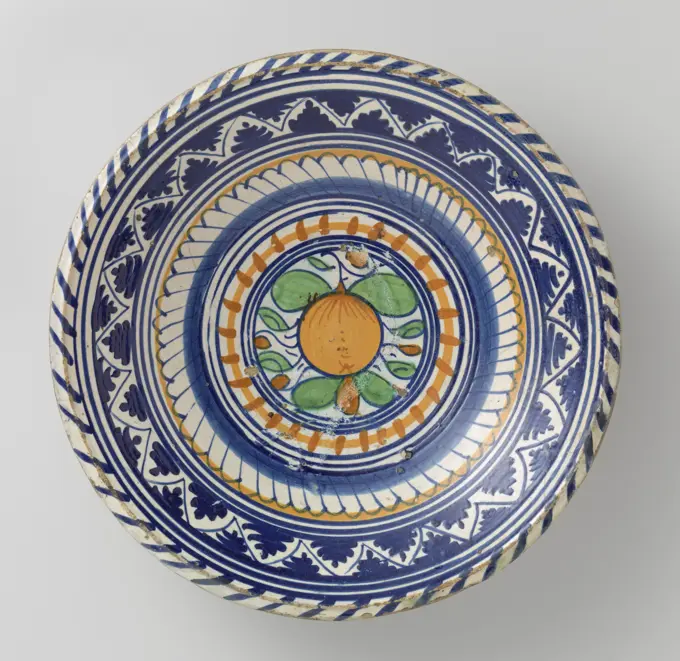
Saucer, multicolored painted with a southern fruit inside concentric circles, yellow piping and orange stripes, frieze with leaves, zigzag line and stripes on the outer edge., Anonymous, c. 1590 - c. 1610 Round dish of multi -colored painted majolica. In the middle, a southern fruit with leaves is painted inside concentric circles. A yellow piping with orange stripes is painted around the circles, around concentric circles, a frieze with blue leaves, concentric circles, a blue band with a zig-saw line between which stylized leaves, concentric circles and small stripes on the outer edge. Holland earthenware. tin glaze. lead glaze majolica Round dish of multi -colored painted majolica. In the middle, a southern fruit with leaves is painted inside concentric circles. A yellow piping with orange stripes is painted around the circles, around concentric circles, a frieze with blue leaves, concentric circles, a blue band with a zig-saw line between which stylized leaves, concentric circles an
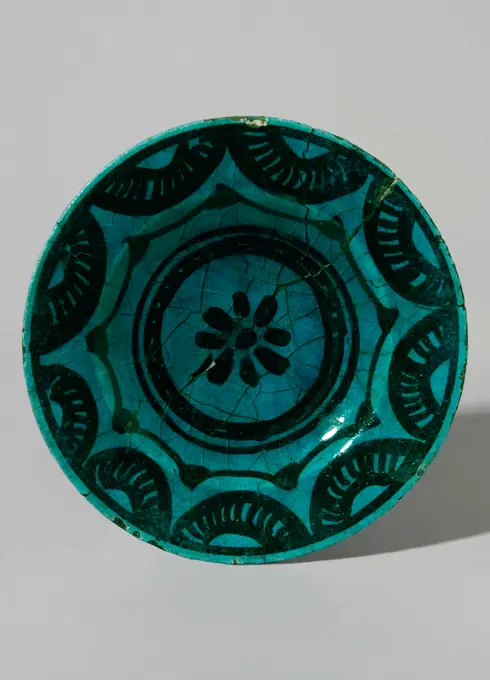
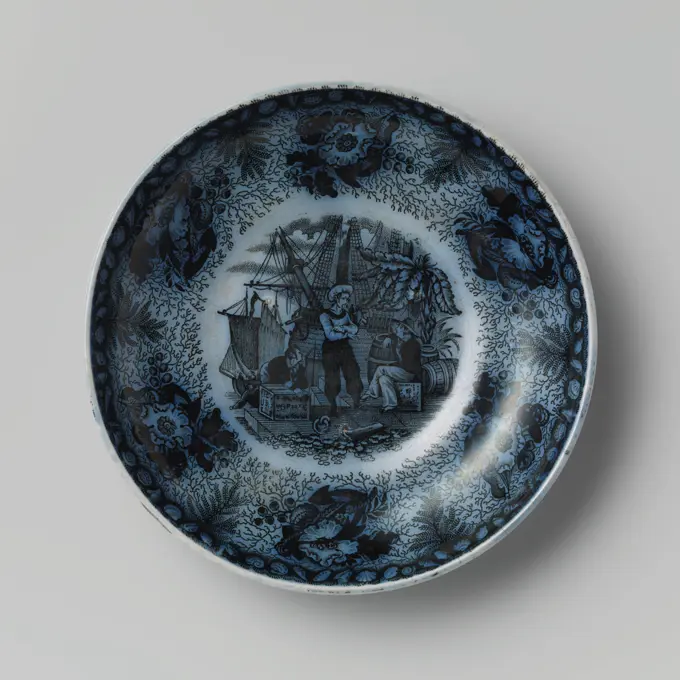
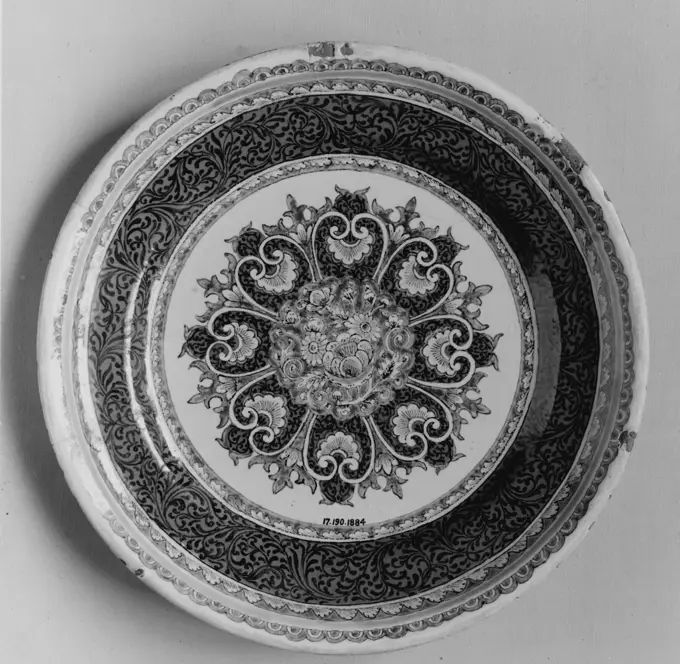
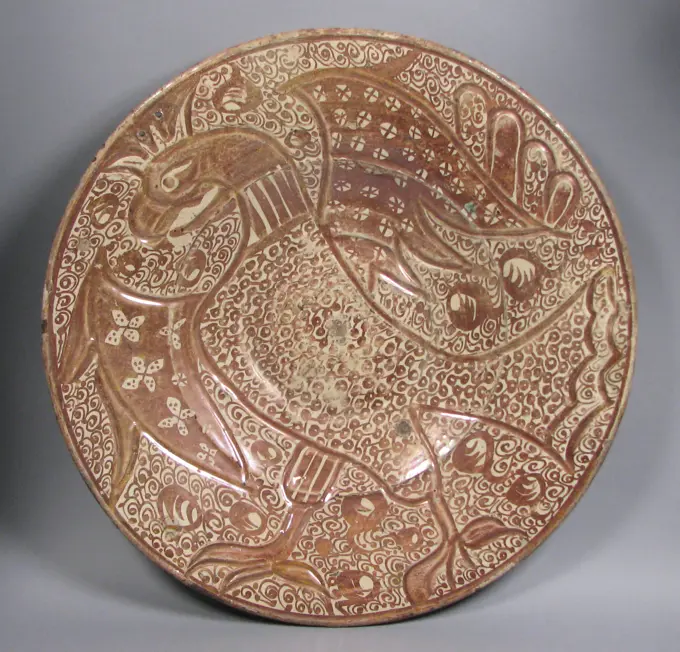
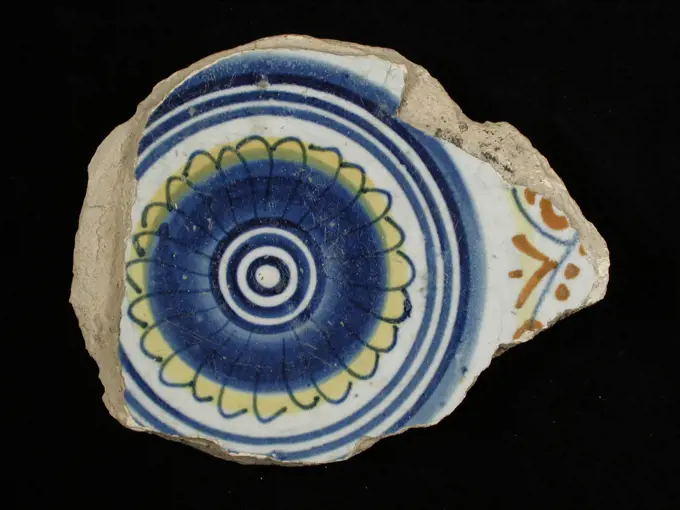
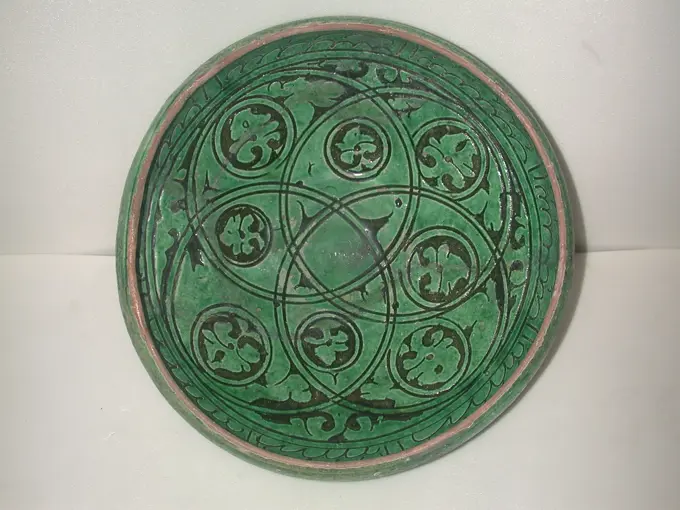
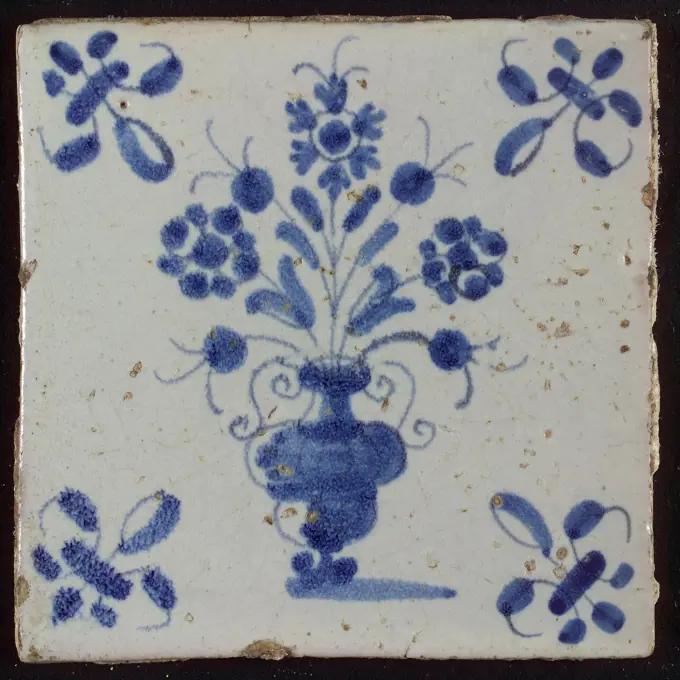
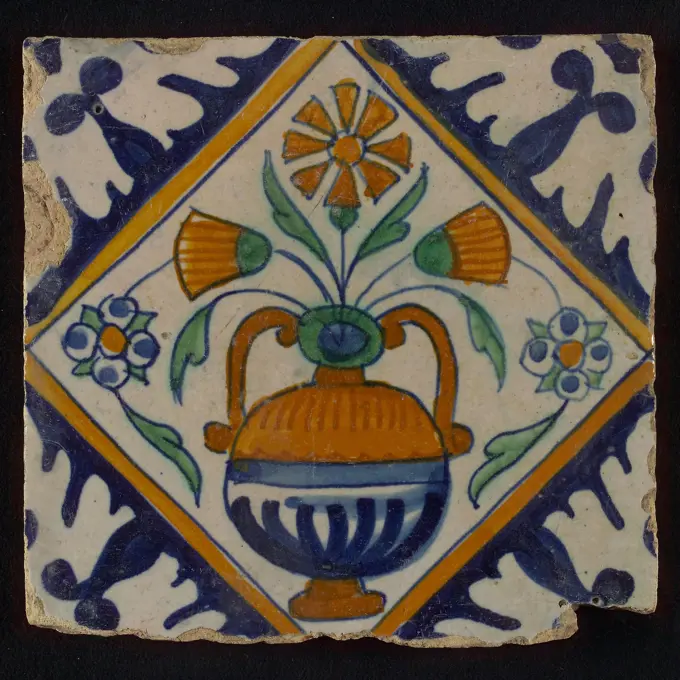
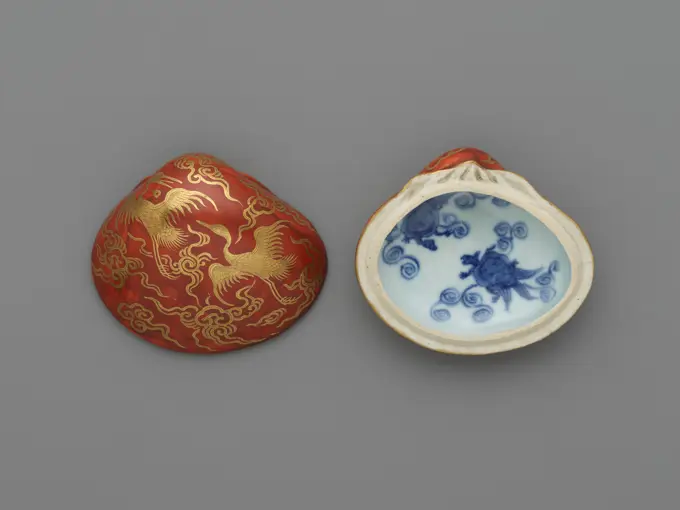
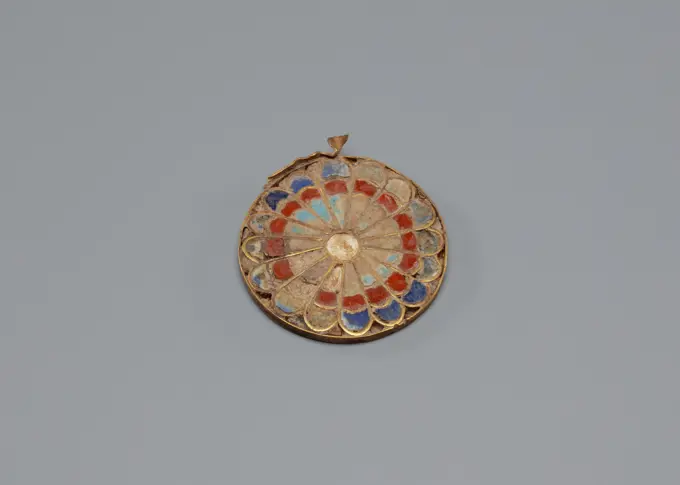
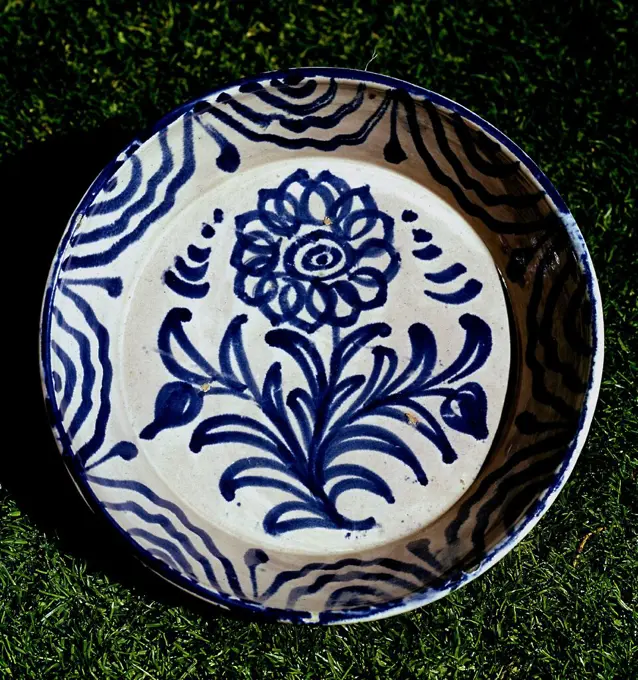
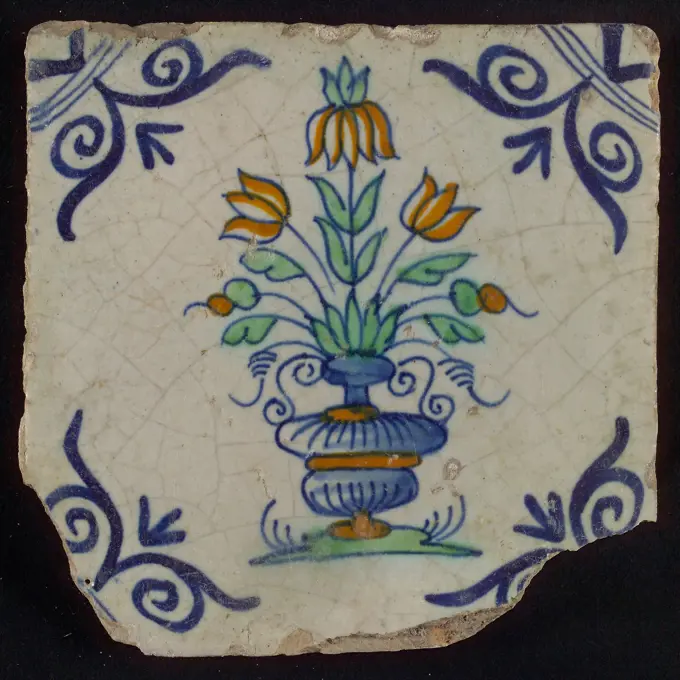
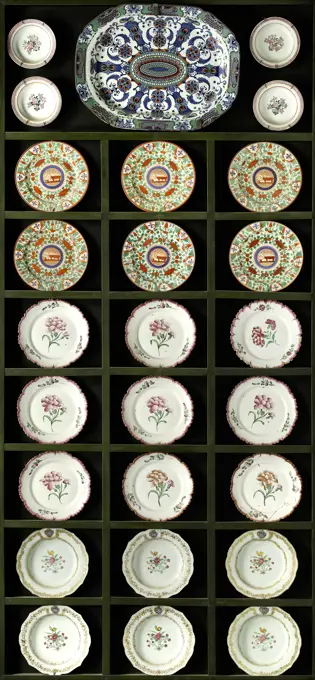
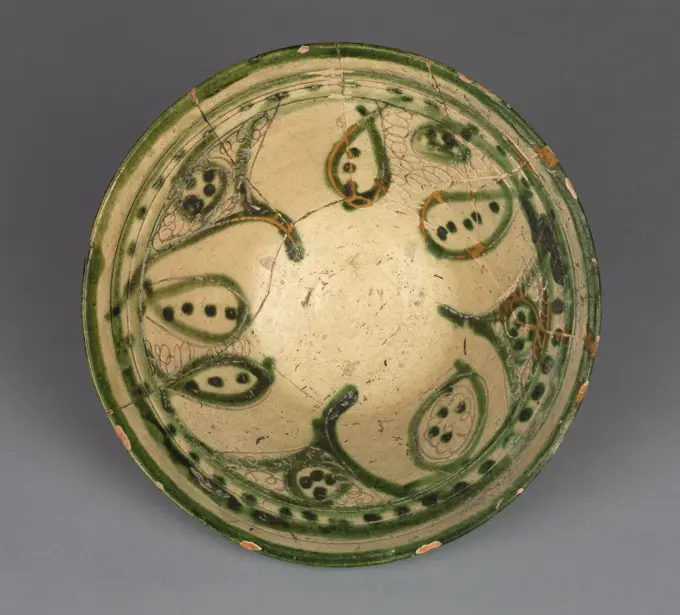
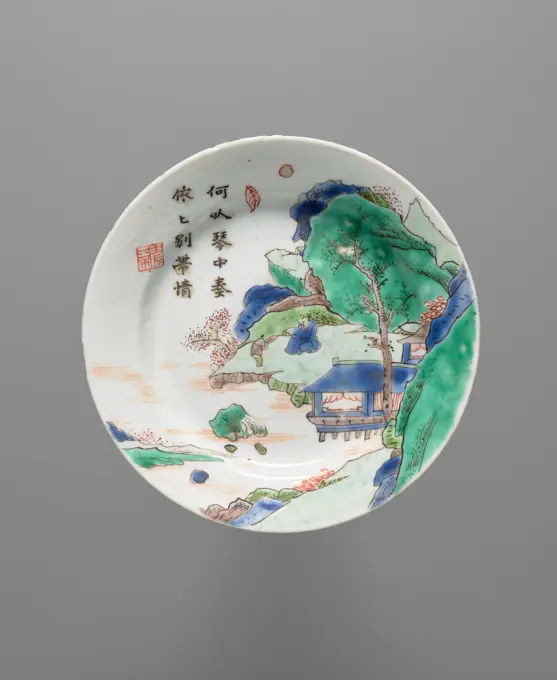
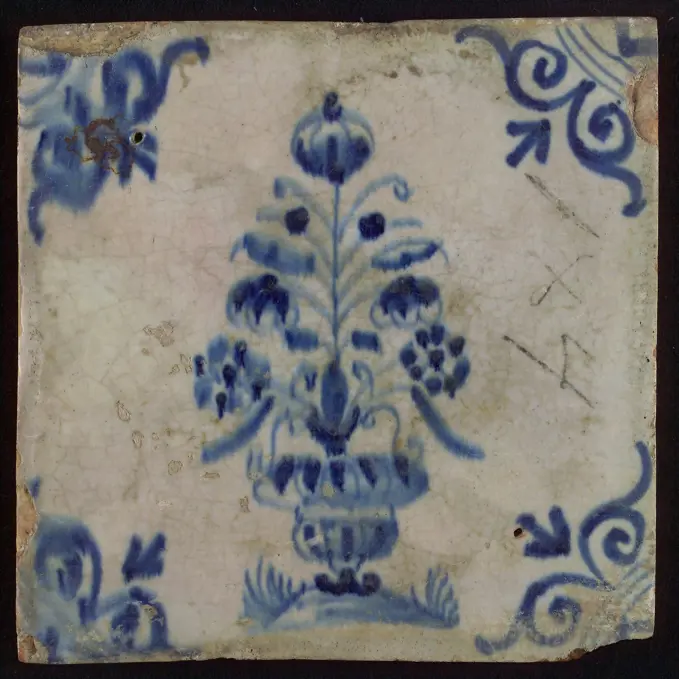
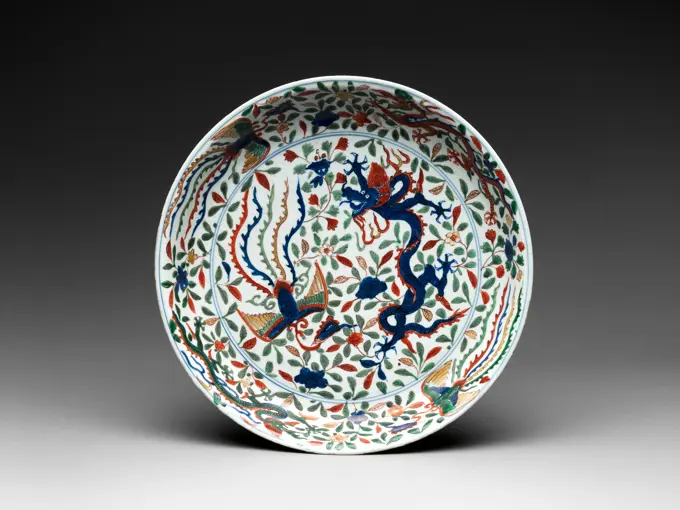
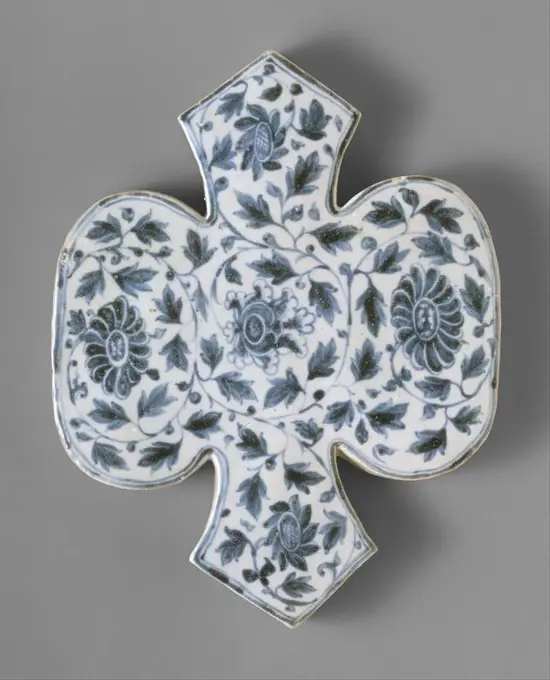
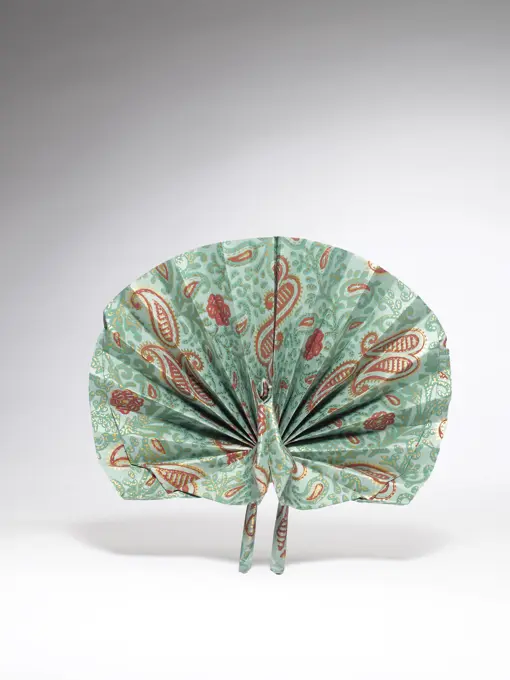
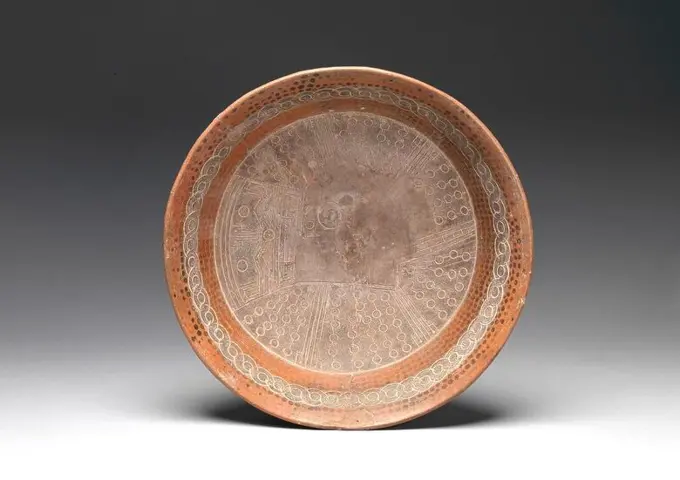
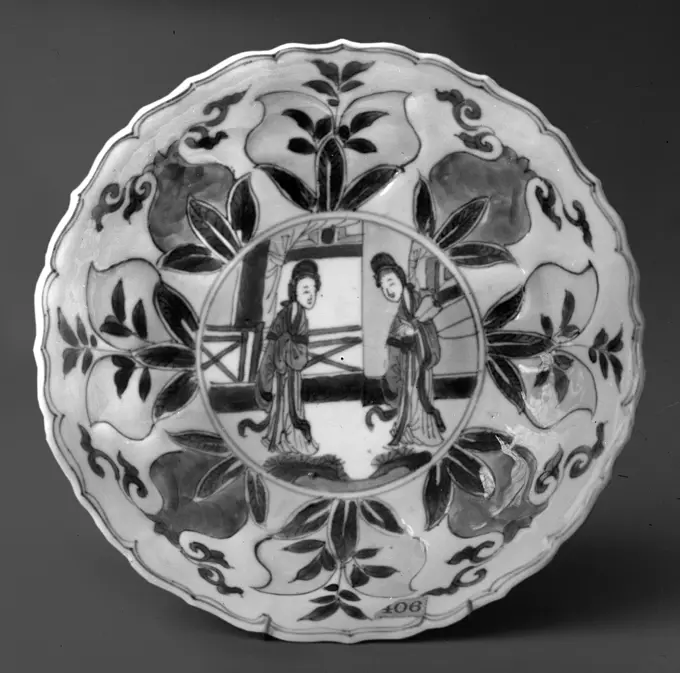
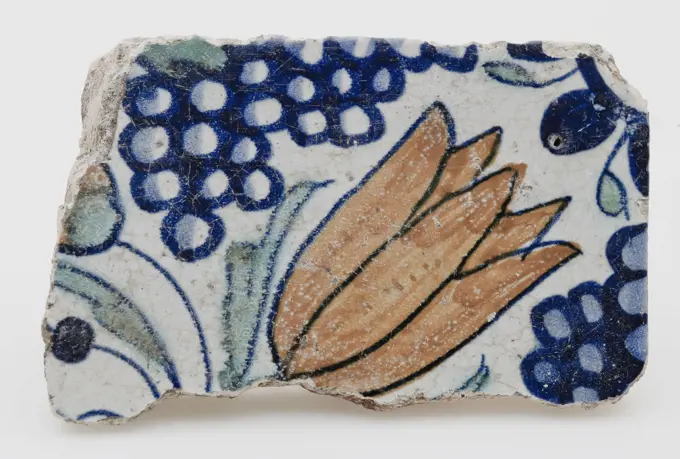
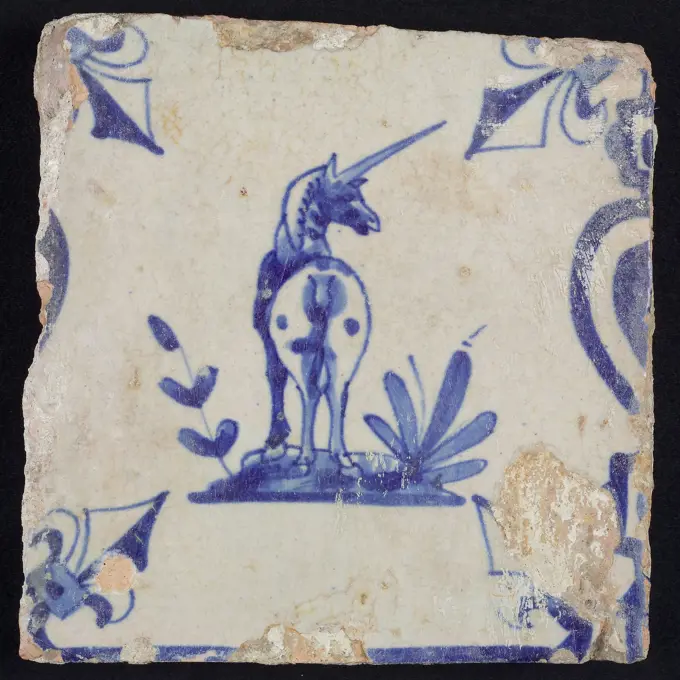
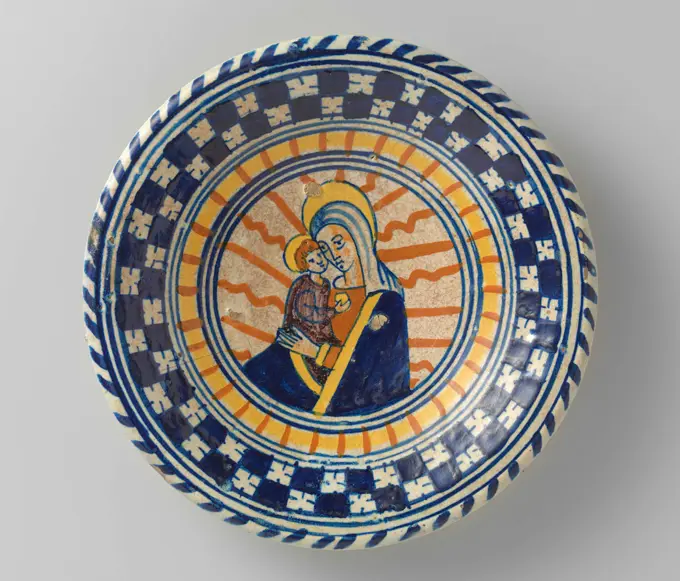
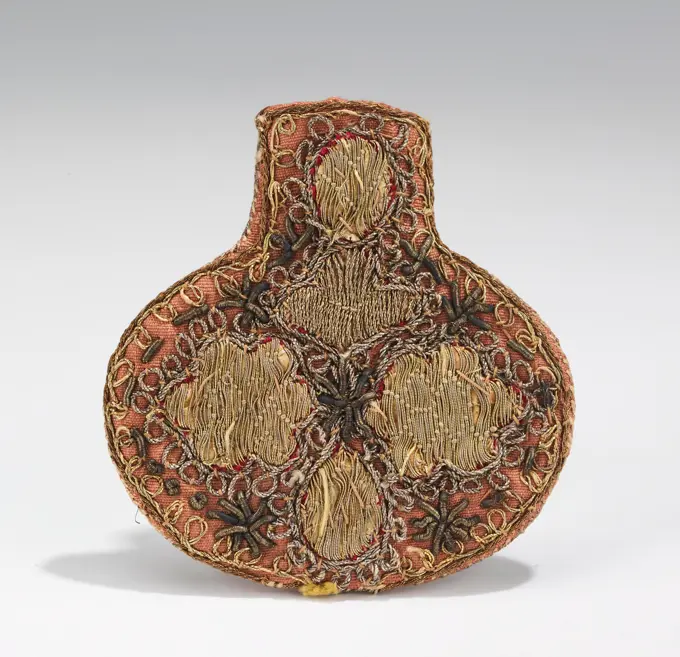
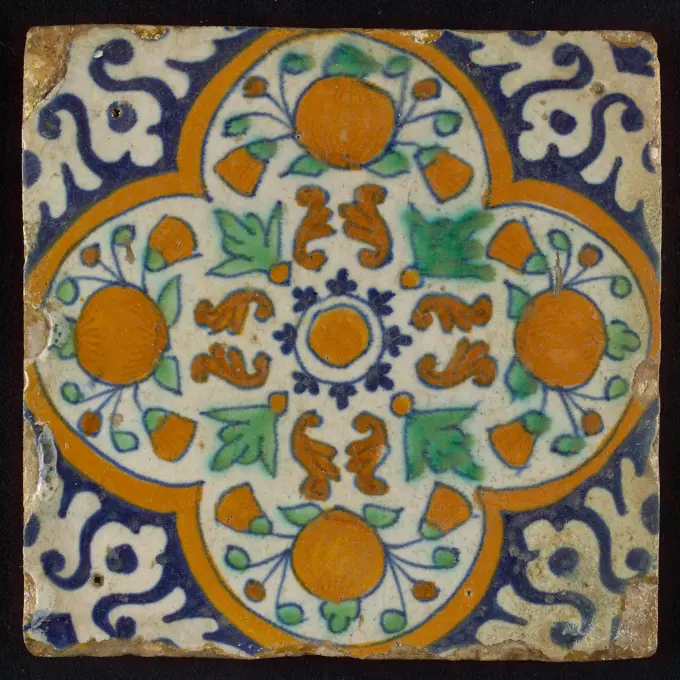
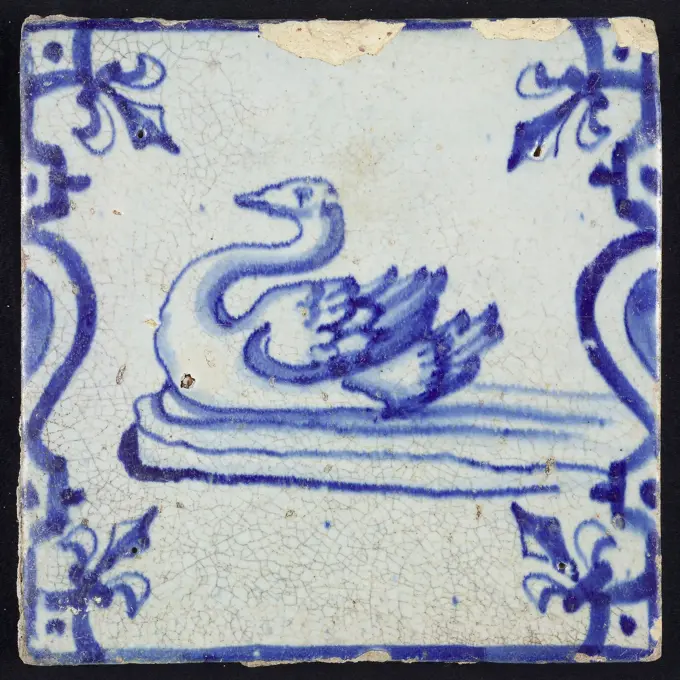
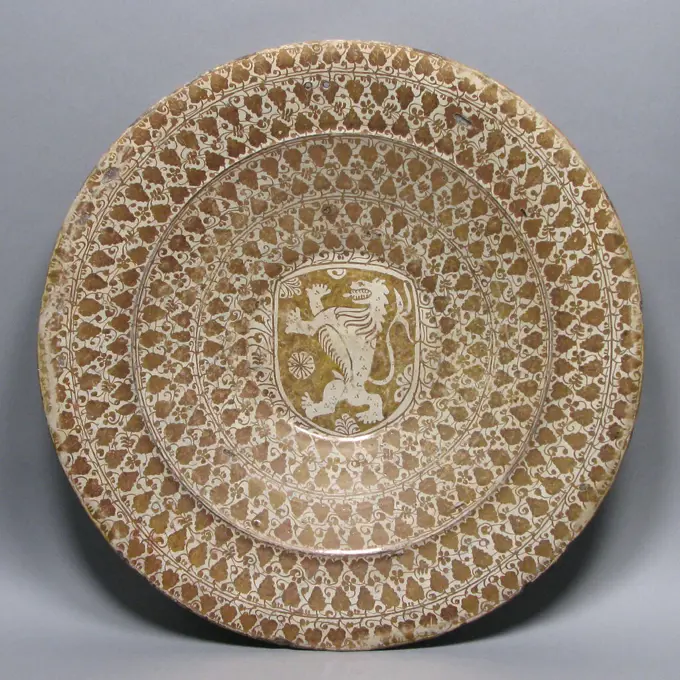
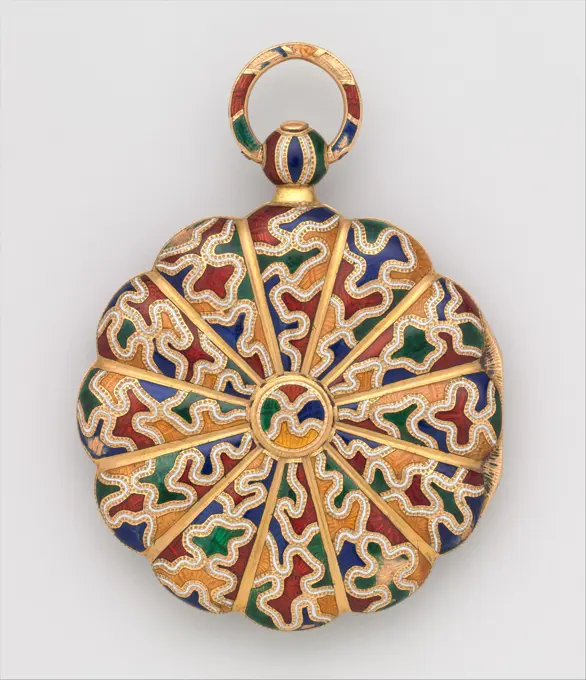
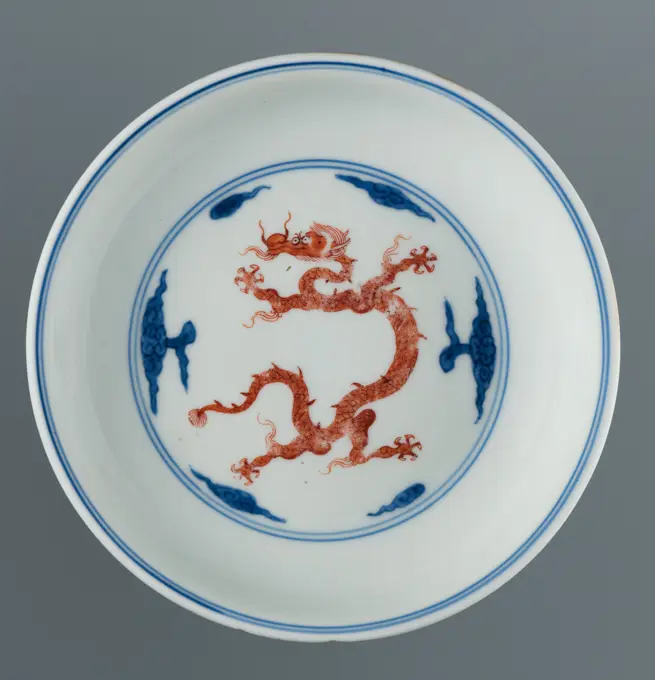
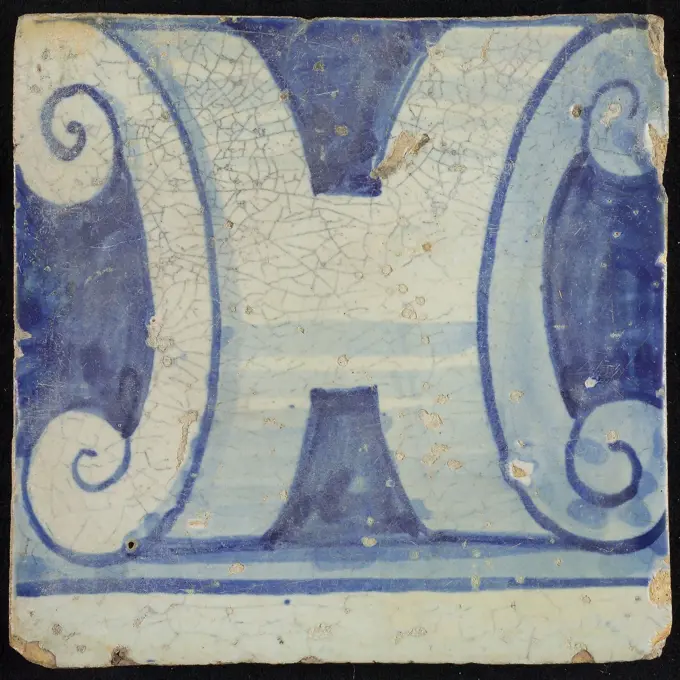
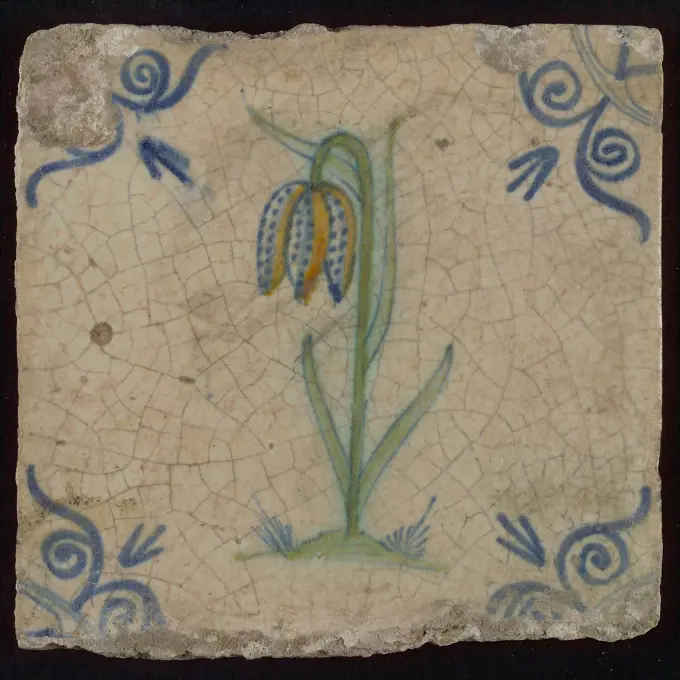
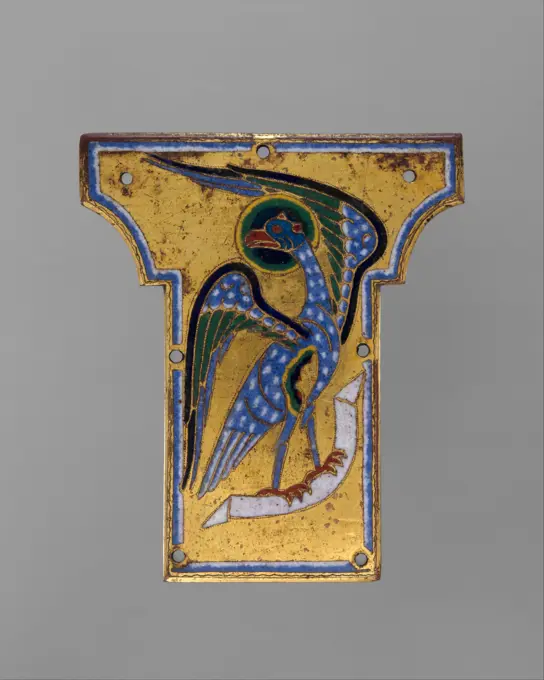
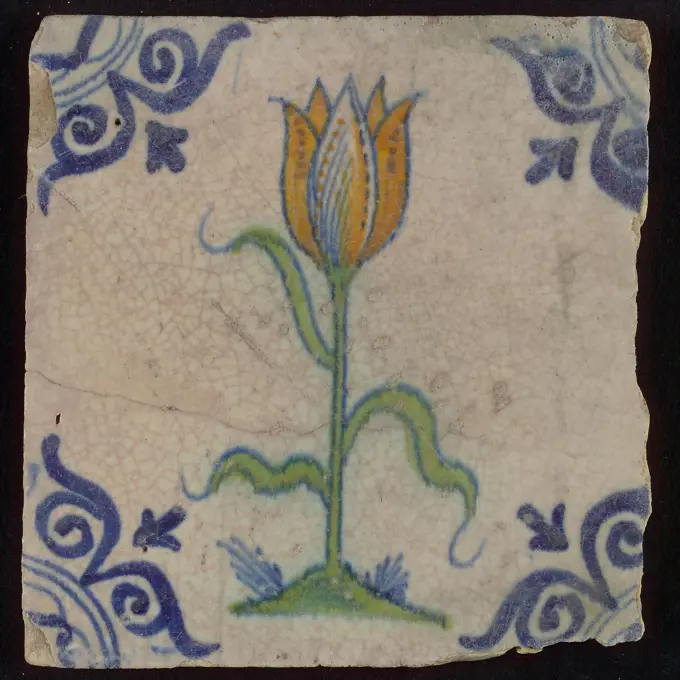
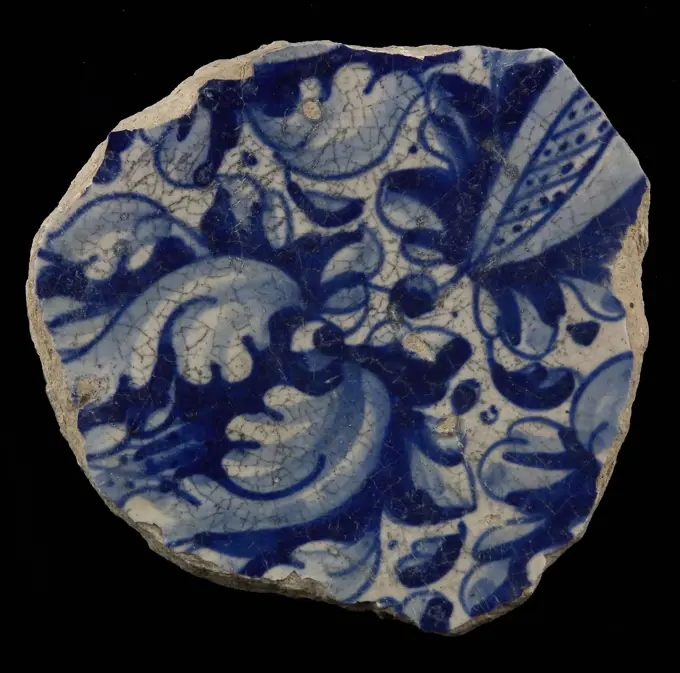
Fragment majolica dish, blue on white, -foglie Leaves, flowers and pomegranate, dish plate crockery holder earth discovery ceramics pottery glaze, majolica Decorated with deco Decor with acanthus leaf and pomegranate archeology Rotterdam Overschie Schieveen Verlaatsloot decorate food Soil discovery Verlaatsloot 1941Plate. Culture: China. Dimensions: Diam. 9 7/8 in. (25.1 cm). Date: late 18th-19th century. Museum: Metropolitan Museum of Art, New York, USA.Box in the shape of a flower late 18th-early 19th century China. Box in the shape of a flower 40770Sharf of a bowl of earthenware with white tinglaze on the underside and white tinglaze on the top and a decoration in blue, damaged, anonymous, 1500 - 1799   earthenware. tin glaze   earthenware. tin glazeBowl 12th century. Bowl 448269Sign, with a man on the camel in the Eastern Landscape, Petrus Regout, 1867 Plate of pottery with lilac transfer decor. The flat decorated with an oriental landscape with a company, including a man on a camel. The edge is decorated with cartouches, in which flowers and buildings are displayed alternately. Maastricht . Plate of pottery with lilac transfer decor. The flat decorated with an oriental landscape with a company, including a man on a camel. The edge is decorated with cartouches, in which flowers and buildings are displayed alternately. Maastricht .Plate (cup saucer). unknown, craftsmanFour Tiles; glazed moulded earthenwarePlate with flowers late 18th century China. Plate with flowers. China. late 18th century. Porcelain painted in overglaze polychrome enamels (Jingdezhen ware). Qing dynasty (1644-1911). CeramicsBowl 12th-13th century. Bowl. 12th-13th century. Stonepaste; luster-painted on an opaque white glaze with polychrome panels. Attributed to Iran, Rayy. CeramicsDish with Molded Dragons, c. 13th-14th century, 1 7/16 x 6 1/2 in. (3.7 x 16.51 cm), High fired stoneware with molded decor under a light blue glaze, Vietnam, 12th-15th centuryDish, with three men on the flat for a moored ship, Petrus Regout, c. 1860 - c. 1890 Dishes of earthenware with black transfer decor. On the flat three men for a moored ship. The edge with six bouquets, above which a bond with shells. Maastricht . Dishes of earthenware with black transfer decor. On the flat three men for a moored ship. The edge with six bouquets, above which a bond with shells. Maastricht .Plate ca. 1725-30 French, Rouen Faience, or tin-glazed and enameled earthenware, first emerged in France during the sixteenth century, reaching widespread usage among elite patrons during the seventeenth and early eighteenth centuries, prior to the establishment of soft-paste porcelain factories. Although characterized as more provincial in style than porcelain, French faience was used at the court of Louis XIV as part of elaborate meals and displays, with large-scale vessels incorporated into the Baroque garden designs of Versailles. Earlier examples of French faience attest to the strong influence of maiolica artists from Italy. Later works demonstrate the ways in which cities such as Nevers, Rouen, Lyon, Moustiers, and Marseille developed innovative vessel shapes and decorative motifs prized among collectors throughout Europe. While faience can be created from a wide mixture of clays, it is foremost distinguished by the milky opaque white color achieved by the addition of tin oxidPlate, painted multi-colored with a weapon on the flat with bird or duck as a helmet mark. Edge in eight compartments divided in which a stylized flower .. around plate of multi-colored painted majolica. A weapon is painted on the flat with a bird (duck) With stretched wings as a helmet mark. The weapon is smear, left is the solid colored and right is a straight, a curved and a angled line painted. The edge is divided into eight compartments in which a stylized flower. The outer edge is serrated.Star-Shaped Tile first half 14th century. Star-Shaped Tile 448202Dish late 15th-early 16th century Spanish. Dish. Spanish. late 15th-early 16th century. Tin-glazed earthenware. Made in probably Manises, Valencia, Spain. CeramicsMirror, early 18th Century. India, Mughal dynasty (1526-1756). Jade with gold and enamel inlay; overall: 15 x 15.1 cm (5 7/8 x 5 15/16 in.).Jar with Cover (lid), 18th Century. India, Jeypore, Moghul. Crystal set with gold and jewels; overall: 5.5 cm (2 3/16 in.).Plate late 15th century Spanish. Plate 463687WJ, Fragment majolica dish, polychrome, rosette, signed, plate crockery holder soil find ceramic earthenware glaze, Cooked on the underside covered with lead glaze. Polychrome. Signed on the reverse the initials: WJ archeology Rotterdam decorate food Soil discovery Rotterdam 1940.Garrus-Ware Bowl 12th-13th century This bowl belongs to a group known as Garrus ware, named after a district southwest of the Caspian Sea, where examples were reportedly found. It epitomizes one of the most typical Garrus ware designs: vegetal motifs within interlaced frameworks. The design is carved through the creamy slip coating the body, exposing the reddish earthenware, to which darkening agents are applied. Finally the whole piece is covered with the transparent glaze.. Garrus-Ware Bowl 447952Bowl with Birds. Iran; probably Kashan. Date: 1281-1349. Dimensions: . Fritware painted with gray and white slips under a transparent glaze. Origin: Iran. Museum: The Chicago Art Institute, Chicago, USA. Author: Islamic.Saucer with flower sprays, anonymous, c. 1800 - c. 1810  Porcelain dish, curled ear, painted on biscuit in blue, red, pink, green, yellow and black and on the glaze gold. On the flat concentric gold circles. The wall is divided into two horizontal tires, the lower with flower branches and the middle with stylized flower vines. The inner and outer edge with a golden band. France (possibly) porcelain. glaze. gold (metal) painting / gilding / vitrificationTile, orange, brown, green, and blue on white, flowerpot in square, corner pattern palm, wall tile tile image ceramics earthenware glaze, baked 2x glazed painted Timeside baked in blue but partially visible markPlate, c. 1880-1890. Theodore Deck (French, 1823-1891). Earthenware; diameter: 30.2 cm (11 7/8 in.); overall: 4.2 cm (1 5/8 in.).Worcester Porcelain Manufactory, Dish, 1765-80, porcelain.A plate;  End of the 19th century (1891-00-00-1900-00-00);Papier saucer, with lead glaze on the bottom and at the top white tinglaze with a fruit basket, damaged, anonymous, 1500 - 1799 in blue   earthenware. tin glaze. lead glaze   earthenware. tin glaze. lead glazeDish early 18th century Dutch, Delft. Dish 190724Arbour' plate, c. 1740, Cornelius Pronk, Dutch, 1691-1759, 1 1/16 x 9 1/4 x 9 1/4 in. (2.73 x 23.5 x 23.5 cm), Porcelain, China, Chinese exportTile, flower pot in blue on white, corner motif lily, wall tile tile sculpture ceramic earthenware glaze, baked 2x glazed paintedTile, orange, brown, green, and blue on white, flowerpot in square, corner pattern palm, wall tile tile sculpture ceramic earthenware glaze, baked 2x glazed paintedTile, flowerpot in blue on white, corner pattern lily, wall tile tile sculpture ceramic earthenware glaze, baked 2x glazed paintedFlower tile, flowerpot in square, corner pattern palmet, wall tile tile sculpture ceramic earthenware glaze, baked 2x glazed painted Yellow shard square three nail holes. Multicolored: orange brown blue green on white fond.Round plate of hard-baked pottery with a blue decoration; Wedgwood. Round plate of hard-baked pottery, with a decoration under the glaze in transfer technology. The decoration is in blue and has a representation of a landscape in which a building (Chinese pagoda), Trees and figures. The edge has flowers and acanthus leaves. The sign has been labeled: Wedgwood aa.Incense Container (Kg) in the Shape of a Clamshell, with Cranes and Tortoise Motifs first half of the 19th century Eiraku Hozen. Incense Container (Kg) in the Shape of a Clamshell, with Cranes and Tortoise Motifs. Eiraku Hozen (Japanese, 1795-1854). Japan. first half of the 19th century. Porcelain painted with cobalt blue under (interior) and red and gold over (exterior) a transparent glaze (Kyoto ware, Eiraku type). Edo period (1615-1868). CeramicsTile, orange, brown, green and blue on white, flowerpot in square, corner pattern palm, wall tile tile sculpture ceramic earthenware glaze, baked 2x glazed paintedFili Anka Litron with Spodek; Korzec (Porcelain Manufaktura; 1790-1832); 1820-1825 (1820-00-00-1825-00-00);Inlaid Rosette New Kingdom ca. 1427-1400 B.C. This rosette has been inlaid with pieces of red jasper, faience, and glass in a technique called cloisonné. According to a note on the accession card, Howard Carter said that it was purchased by Theodore M. Davis from one of the men who funded excavations in KV 42 in the Valley of the Kings. While Carter was Chief Inspector of Antiquities for Upper Egypt, he had overseen the excavation of this tomb. In his report on the work, Carter mentions the rosette which he thought might be the bottom part of a menat or counterpoise for a ceremonial necklace. Although this is possible, it may be an element for another type of jewelry.For more information on KV 42 and the objects found there, see the curatorial interpretation below. View more. Inlaid Rosette. ca. 1427-1400 B.C.. Gold, faience, red jasper, blue glass. New Kingdom. Said to be from Egypt, Upper Egypt, Thebes, Valley of the Kings, Tomb of Merytre-Hatshepsut, KV 42, first corridor near entraDish 1736-95 Chinese. Dish 3235FUENTE VIDRIADA Y DECORADA EN AZUL CON FLOR DE LA PATATA-ARTE POPULAR S XX. Location: ALFARERIA. FAJALAUZA. GRANADA. SPAIN.Tile, three-tier in blue, green, orange and purple on white, inside frame with accolades, corner motif, wing, wall tile tile sculpture ceramic earthenware glaze, baked 2x glazed painted Bellevue Rotterdam Hillegersberg-Schiebroek Hillegersberg Zuid Kleiweg Originating from Huize Bellevue, which stood on the Kleiweg.Victor Hugo (1802-1885). Chinese decor from Juliette Drouet's house in Guernsey, West Wall. Green wooden record containing plates and dishes, composed of twenty-seven compartments (right side of the west wall). Painted wood. 1857-1864. Paris, house of Victor Hugo. 78171-18 Asian art, decorative arts, painted wood, green wood, Chinese cabinet, locker, chinoiserie, compartment, decor, faience, storage, Chinese living room, dishes, 19th XIX 19th 19th 19th 19th century, plate, dishBowl, late 1700s. Wedgwood Factory (British). Cream-colored earthenware; diameter: 21.4 cm (8 7/16 in.).Charger Made 1700-1725 Bristol. Tin-glazed earthenware .Field of four tiles with pattern of grape bunches, pomegranates, tulips and stars, anonymous, c. 1600 - c. 1625 Field of four tiles (2 x 2) with a blue painted pattern formed by four tiles with pomegranates, grape bunches and tulips around a star. Netherlands earthenware. tin glaze majolica Field of four tiles (2 x 2) with a blue painted pattern formed by four tiles with pomegranates, grape bunches and tulips around a star. Netherlands earthenware. tin glaze majolicaBowl, 1000s-1100s. Iran, Amul, 11th-12th century. Earthenware with underglaze slip-painted decoration; overall: 7.8 x 18 cm (3 1/16 x 7 1/16 in.).Ornament tile, diagonal ornament in quatrefoil with bows in which orange apples and flowers, palm corner, corner pattern rosette, wall tile tile sculpture ceramics pottery glaze, baked 2x glazed painted Yellow and reddish shard square two and four nail holes. Multicolored: brown blue green yellow on white ground (variation in light and dark). Saving technique in blue on white.Plate. unknown, craftsmanFragment majolica dish, convex mirror, polychrome, flower on the ground, plate crockery holder soil find ceramic earthenware glaze, baked underside covered with lead glaze. Polychrome waised soul of the pancake dish or salad dish archeology Rotterdam decorate food Soil discovery Rotterdam 1940.Plaque van Kanton-email, anonymous, 1700 - 1800 tile White 'tile' on which image of a yellow dish with lid with a uivid button. On the scale multicolored decoration of flowers and stylized leaves. Canton copper (metal).   CantonTile, flower vase on ground, blue decor, corner filling oxen head, wall tile tile sculpture ceramic earthenware enamel tinglage, in form made baked painted baked Wall tile with blue decor on white fond Central representation of flower vase on piece of ground with sprigs. Vase with two thin curled ears. Corner filling large ox-head Ruddy shard of mixed pottery on the inside. Tile on the left fused by too high baking temperature. Slanted sides of indigenous potteryTile, flowerpot in blue on white, corner motif lily, wall tile tile sculpture ceramic earthenware glaze, baked 2x glazed paintedBowl 12th-13th century. Bowl. 12th-13th century. Stonepaste; overglaze painted (mina'i). Attributed to Iran. CeramicsDish with flower wreath in blue and gold. Dish of porcelain, decorated with a flower wreath in blue and gold. Signature with coated letter L. (corresponding head not marked).Dish with Dragon and Phoenix late 16th-early 17th century China The five-clawed dragon, a symbol of the emperor, is paired here with the phoenix, often associated with the empress.. Dish with Dragon and Phoenix. China. late 16th-early 17th century. Porcelain painted with cobalt blue under and colored enamels over transparent glaze (Jingdezhen ware). Ming dynasty (1368-1644), Wanli mark and period (1573-1620). CeramicsFragment deep plate from V.O.C. ship De 'Witte Leeuw', Before 1613 plate (dishes) Fragment deep plate from V.O.C. ship the 'Witte Leeuw'. Jingdezhen bone china (material)   Sint-HelenaOrnament tile, central kidney-shaped green and brown floral shape, corner motifs, quarter rosette and saving technique, wall tile tile sculpture soil find ceramic pottery glaze, baked 2x glazed painted Multicolored: blue pull; green yellow brown blue on white fond archeology underground pit Churchillplein Rotterdam City center Stadsdriehoek Soil discovery: Churchillplein underground pit 1968 Gerzon.Fragment Kraaikop from v.O.C.-ship the 'white lion'. Fragment Kraaikop from v.O.C.-ship the 'white lion', 75%% present.Shaped Tile with Floral Decoration. Culture: Vietnam. Dimensions: H. 13 in. (33 cm); W. 10 in. (25.4 cm); D. 1 3/8 in. (3.5 cm). Date: 15th century.This thick, hollow tile in the shape of a quatrefoil is decorated in underglaze blue with a design of five flowers attached to scrolling leaved stems. The style of decoration is inspired by Ming Chinese blue-and-white porcelains. Museum: Metropolitan Museum of Art, New York, USA.origami peacock India Copyright: xVirenxDesai/DinodiaxPhotoxBowl with Overall Floral and Gourd Design. Japan, 19th century. Ceramics. Nabeshima ware, porcelain with underglaze blueBowl. Culture: Paracas. Dimensions: Overall: 2 1/2 in. (6.35 cm)Other: 8 1/2 in. (21.59 cm). Date: 7th-4th century B.C.. Museum: Metropolitan Museum of Art, New York, USA.Plate. unknown, craftsmanCharger. Bristol, England. Date: 1700-1725. Dimensions: 7.6 × 34.3 cm (3 × 13 1/2 in.). Tin-glazed earthenware. Origin: Bristol. Museum: The Chicago Art Institute, Chicago, USA.Dish with two ladies late 17th-early 18th century China. Dish with two ladies. China. late 17th-early 18th century. Porcelain painted in underglaze cobalt blue (Jingdezhen ware). Qing dynasty (1644-1911), Kangxi period (1662-1722). CeramicsField of sixteen tiles (4x4) each with a multi -colored pattern in blue, yellow and orange of a rosette surrounded by three dots with a lily, anonymous, c. 1640 - c. 1660 Field of sixteen tiles (4 x 4) each with a multicolored (blue, Geelen orange) rosette surrounded by three dots with a lily in the corners. Haarlem (possibly) earthenware. tin glaze majolica Field of sixteen tiles (4 x 4) each with a multicolored (blue, Geelen orange) rosette surrounded by three dots with a lily in the corners. Haarlem (possibly) earthenware. tin glaze majolicaFragment earthenware tile from quatrefoil with polychrome tulip and bunch of grapes, wall tile tile footage earth discovery ceramic earthenware glaze tin glaze, in form made glazed baked 2x Fragment of earthenware tile from quatrefoil with polychrome tulips and bunches of grapes Highly layered ceramics yellow red veins archeology Rotterdam City center Stadsdriehoek Schielandshuis Soil discovery: Schielandshuis Rotterdam.Animal tile, standing unicorn seen from behind with right-angled head on ground between balusters, in blue on white, corner pattern french lily, wall tile tile sculpture ceramic earthenware glaze, baked 2x glazed painted Square. Blue unicorn standing on white background. Baluster ornament with french lilies.Deep Dish. Culture: Spanish. Dimensions: Overall: 18 3/8 in. (46.7 cm). Date: ca. 1490. Museum: Metropolitan Museum of Art, New York, USA.Shards of signs from V.O.C. ship De 'Witte Leeuw', Anonymous, Before 1613 plate (dishes) Shards of plates, one of which is four glued fragments, from V.O.C. ship the 'Witte Leeuw'. Jingdezhen porcelain   Sint-HelenaQueen Charlotte ca. 1765 British This ivory relief of Queen Charlotte forms a pair with a relief of George II (1986.94.1).. Queen Charlotte. British. ca. 1765. Ivory mounted on blue glass oval. Sculpture-MiniatureDish, painted multicolored with a Madonna with child inside three circles surrounded by rays .. round dish of multi-colored painted majolica. On the flat, a madonna with child has been painted in three blue circles, surrounded by orange rays. On the edge is painted in blue and white (chessboard motif).Tile, flower on plot in blue, green, and yellow on white, inside frame with accolades, corner motif, wing, wall tile tile sculpture ceramic earthenware glaze, baked 2x glazed paintedceramica de Muel, Elorrio, Arkeologi Museoa, museo aqueologico, Bilbao, Bizkaia, Pais Vasco, Spain.Case late 18th century Russian This object is from the collection of Natalia de Shabelsky (1841-1905), a Russian noblewoman compelled to preserve what she perceived as the vanishing folk art traditions of her native country. Traveling extensively throughout Great Russia, she collected many fine examples of textile art of the wealthy peasant class. From the 1870s until moving to France in 1902, Shabelsky amassed a large collection of intricately embroidered hand-woven household textiles and opulent festival garments with rich decoration and elaborate motifs. The Brooklyn Museum holdings include many fine examples including the majority of the garments. Portions of Shabelsky's collection are also housed at the Museum of Fine Arts, Boston, the Cleveland Art Museum, and the Russian Museum of Ethnography in St. Petersburg.The overall opulence of imperial Russian attire is evident in this small perfume bottle case. Even such a small object warranted an equal level of ornamentation as a grandOrnament tile, orange and marigolds, four-sided frame, corner motif, wall tile tile sculpture ceramic earthenware glaze, baked 2x glazed painted Square reddish to yellow shard three to four nail holes Multicolored: blue orange-brown and green on white background.Animal tile, swimming swan in water to the left between balusters in blue on white, corner pattern french lily, wall tile tile sculpture ceramic earthenware glaze, baked 2x glazed painted Square. Blue on white fond swimming swan. Baluster ornament with french lilies.FUENTE DE CERAMICA. Location: EXTERIOR. SPAIN.Shards of signs from the wreck of the East Indians Hollandia, Anonymous, 1700 - in Or Before 1743 plate (dishes) Porcelain, plate, type 3; fragm: fragm of rim; fragm of centre, sim. NG 1980-27H3202c Netherlands porcelain   SecondTile field, four tiles, central decor, blue on white, three times flowers with bird in circle and flower in circle, corner motif three-section, tiled field wall tile tile sculpture ceramic earthenware glaze, baked 2x glazed paintedDish. Culture: Spanish. Dimensions: Overall: 17 7/8 in. (45.4 cm). Date: 1430-1470. Museum: Metropolitan Museum of Art, New York, USA.White pearl man's button, 1770-1800. Button decorated with small mirror glass and blue glass stones... Produced in Birmingham.Flower tile, flowerpot in square, corner pattern palmet, wall tile tile sculpture ceramics pottery glaze, baked 2x glazed painted Yellow shard square. Multicolored: yellow green blue and brown on white background.Watch ca. 1825 Watchmaker: Firm of Moynier & Fils. Watch 187195Plate. unknown, craftsmanShards of signs from the wreck of the East Indians Hollandia, Anonymous, 1700 - in Or Before 1743 plate (dishes) Porcelain, plate, type 3; fragm of base, sim. NG 1980-27H3202c. Netherlands porcelain   SecondTile of chimney pilaster, blue on white, part of pillar with capitals in H-shaped curly ornament, chimney pillaster tile pilaster footage fragment ceramic pottery glaze, baked 2x glazed painted Tiles form part of one-row chimney pilaster originally twelve high Yellow to ruddy shard square two nail holes figure bottom left and the letter upper right S and 12 1914 construction city hall Zandstraat-quarters Second World War war bombardment Rotterdam City Center Stadsdriehoek 1940 renaissance Coming from debris after bombing on Rotterdam in May 1940.Tile, flowerpot in blue on white, corner motif lily, wall tile tile sculpture ceramic earthenware glaze, baked 2x glazed paintedFlower tile with large flower pot, blue decor on white ground, corner filling: ox head, wall tile tile sculpture ceramic earthenware glaze tin glaze, in form made baked glazed painted baked Wall tile with blue decor on white background. Flower tile with big flower pot on the ground. wugeele shard. Corner filling: ox-head The ox-heads are very wooden and awkwardly painted Shaved earthenware Slightly sloping sides Marked at the back Misbaksel; most probably, the glaze of the gloss coating is not applied to this tile. Paint on the back: RI uncertain letters are incomplete or covered with cement native pottery tile craftField of twenty -four tiles with birds, anonymous, c. 1640 - c. 1670 Field of twenty -four tiles (4 x 6) each with a multicolored (blue, green, yellow, orange and purple) painted bird on a floor or branch within a circle with an ox head in the corners. Netherlands earthenware. tin glaze majolica Field of twenty -four tiles (4 x 6) each with a multicolored (blue, green, yellow, orange and purple) painted bird on a floor or branch within a circle with an ox head in the corners. Netherlands earthenware. tin glaze majolicaFormal Collar. Culture: China. Dimensions: Overall: 13 1/2 x 30 1/4 in. (34.3 x 76.8 cm). Date: 18th century.Formal portraits of Qing-dynasty men and women--members of the imperial family, the nobility, and court officials--show them wearing this type of detachable collar (pi ling) over their formal court robes. Museum: Metropolitan Museum of Art, New York, USA.Dish - William de Morgan Collection.. Manufactured by William de Morgan (& Co) 1888-1898Tile, flower on ground in orange, green and blue on white, corner motif oxen head, wall tile tile sculpture ceramic earthenware glaze, baked 2x glazed paintedTsuboya-yaki, the colorful traditional Okinawan ceramics feature a classic red enamel 'Akae' hew. Naha, Okinawa, Japan.Tile, flower on ground in orange, yellow, green and blue on white, corner pattern french lily, corner point yellow, wall tile tile sculpture ceramic earthenware glaze, baked 2x glazed paintedPlaque from a Cross with the Eagle of Saint John ca. 1185-95 French. Plaque from a Cross with the Eagle of Saint John. French. ca. 1185-95. Copper: engraved, stippled, gilt; champlevé enamel: dark and light blue, deep turquoise, translucent dark and medium green, yellow, red, and white. Made in Limoges, France. Enamels-ChamplevéTile, flower on plot of green, yellow and blue on white, corner pattern of ox's head, wall tile tile sculpture ceramic earthenware glaze, baked 2x glazed painted