Decorative Wooden Boxes

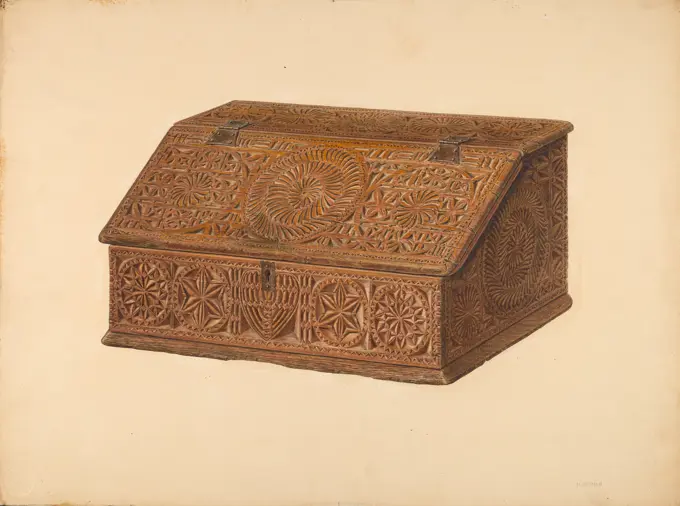
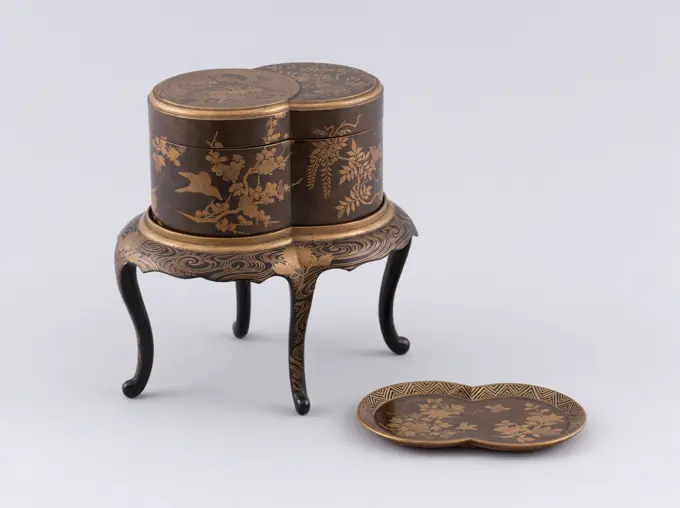
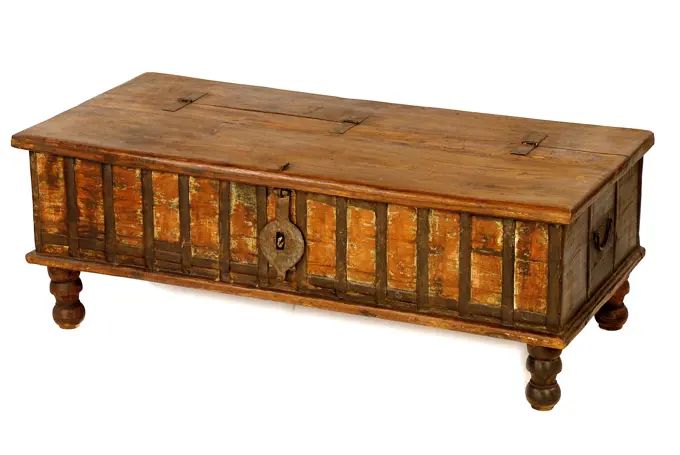
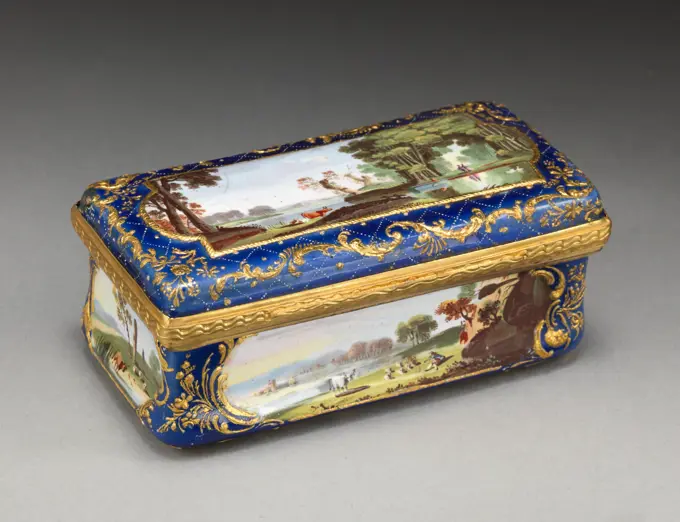
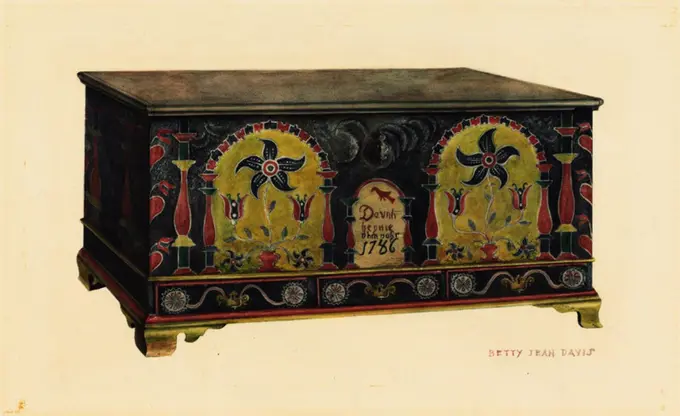
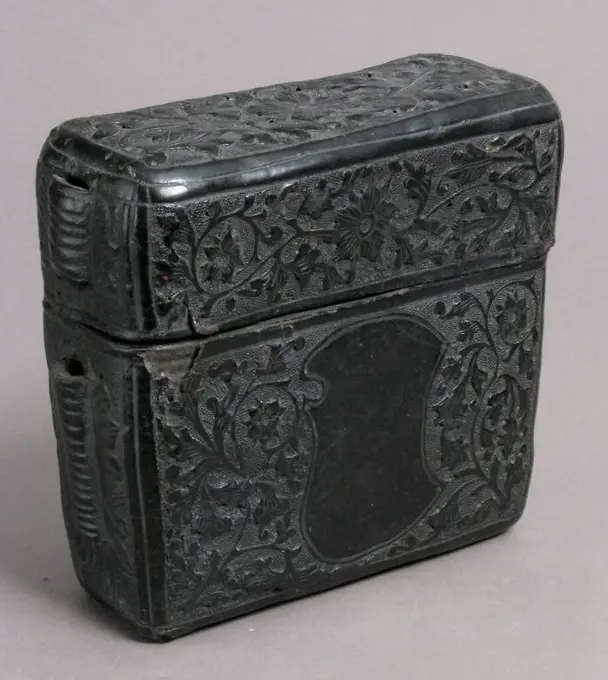
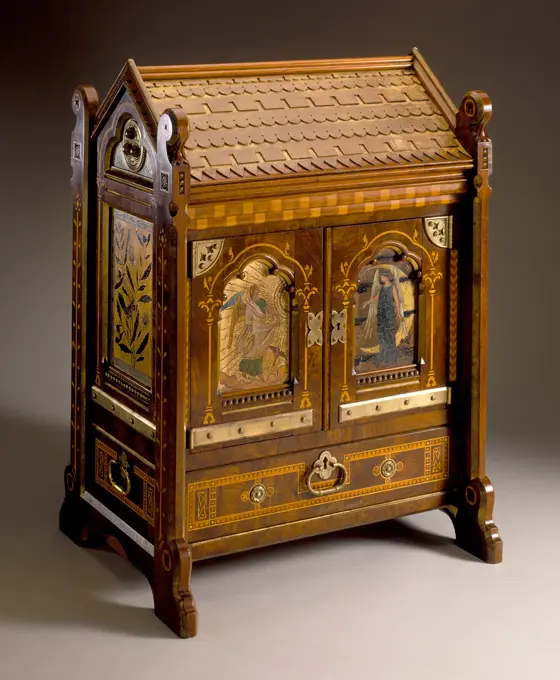
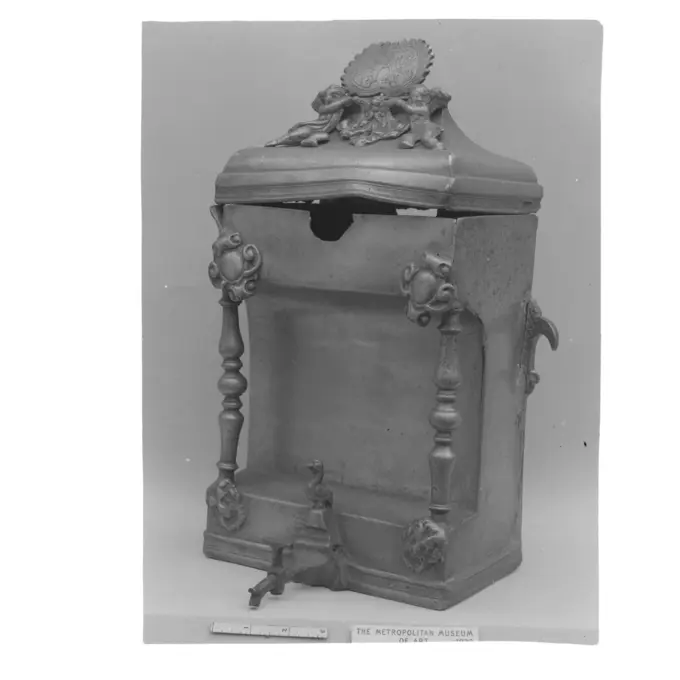
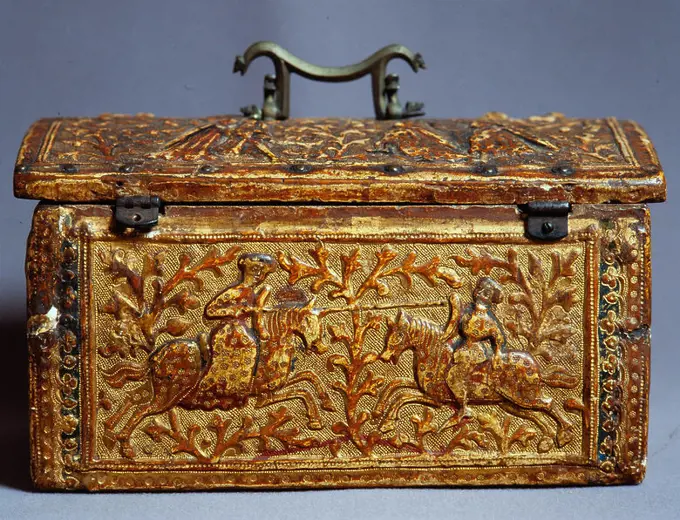
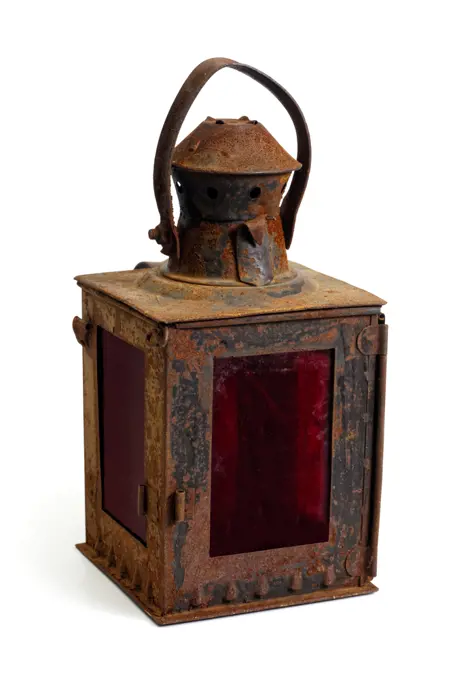
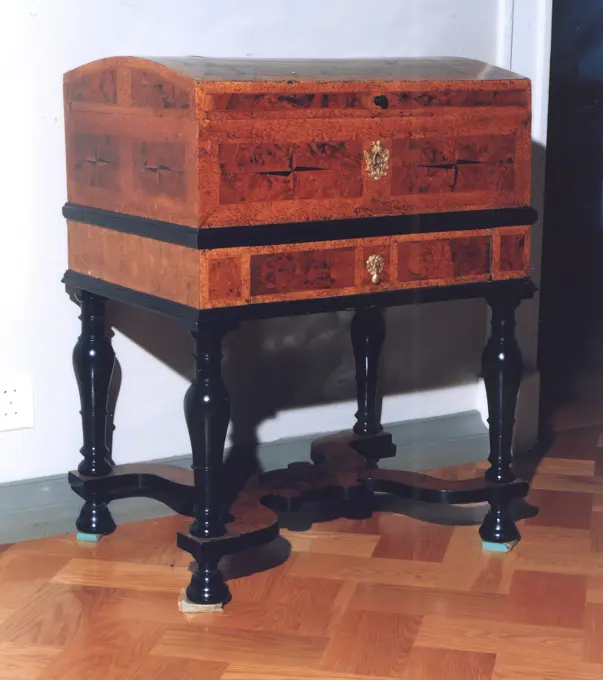
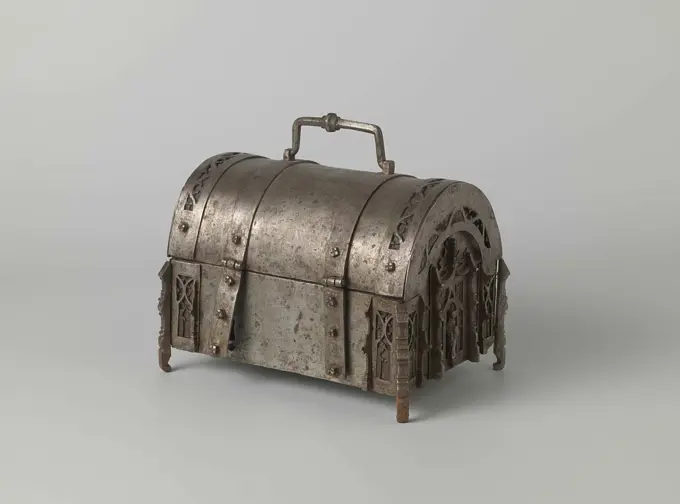
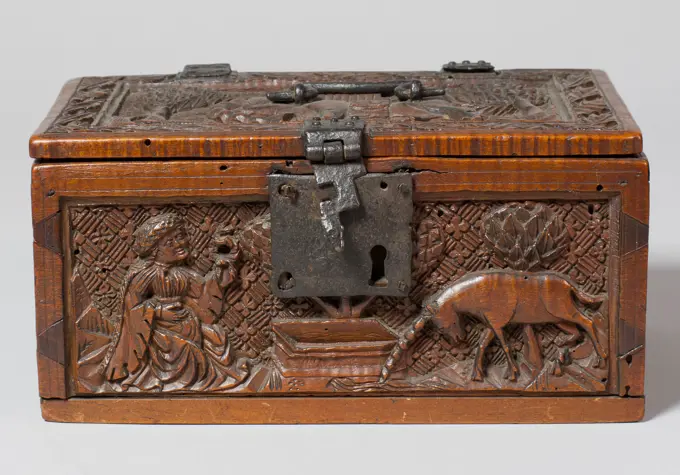
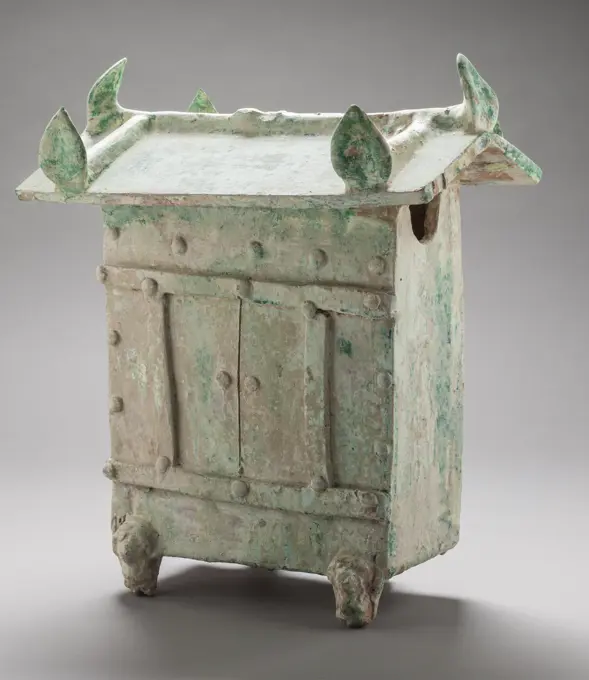
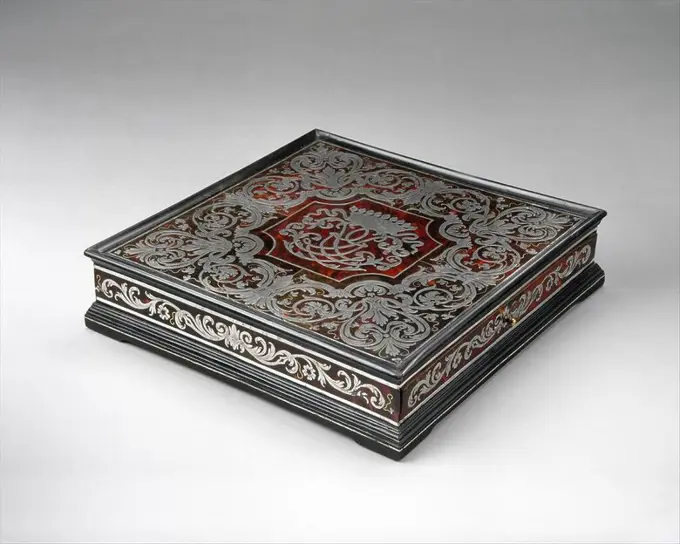
An array of ornately decorated wooden boxes from different periods, featuring intricate carvings, vibrant colors, and various historical styles.

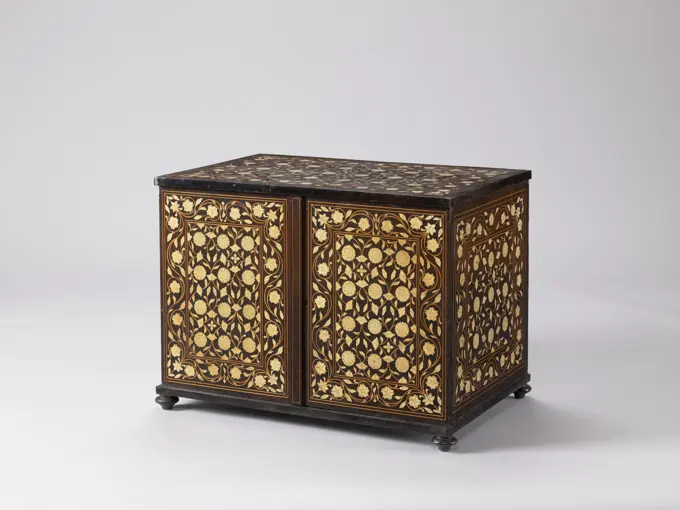
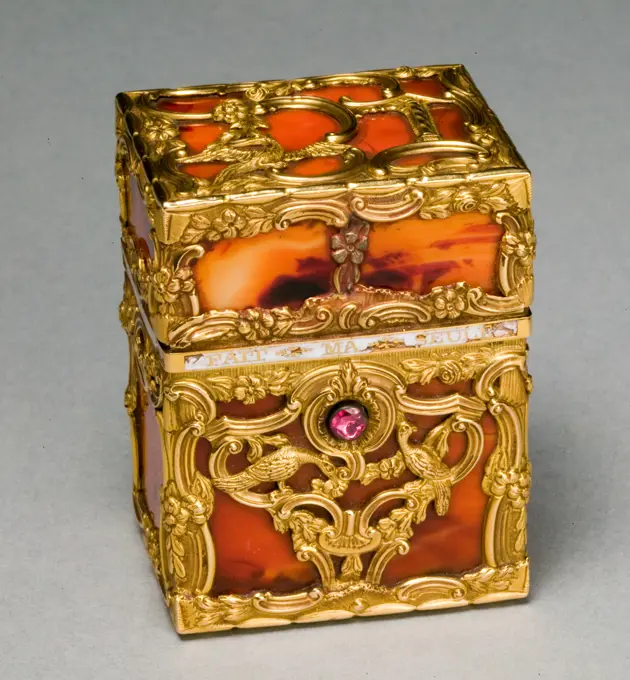
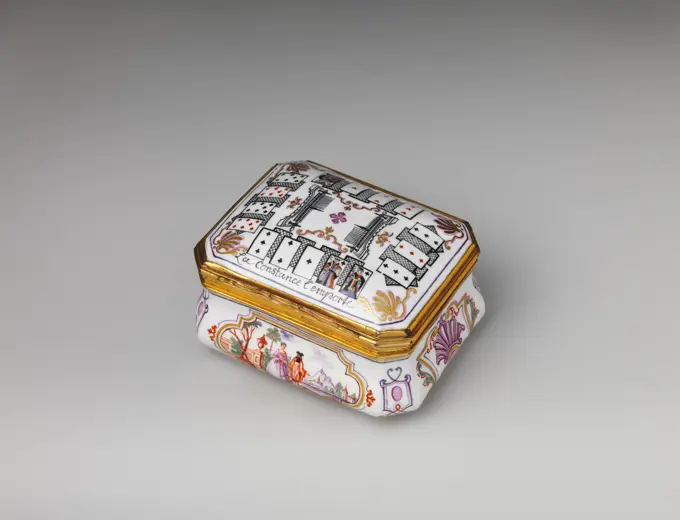
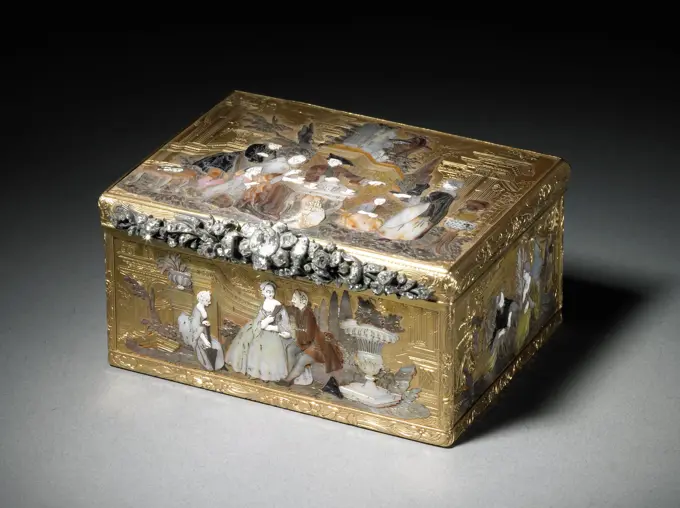
Box, anonymous, 1725 - 1825 Box with lid and inner box for writing paper. Decoration of a garden fence with blossoms and mourning willows that rise above it. Japan wood (plant material). lacquer (coating) Box with lid and inner box for writing paper. Decoration of a garden fence with blossoms and mourning willows that rise above it. Japan wood (plant material). lacquer (coating)
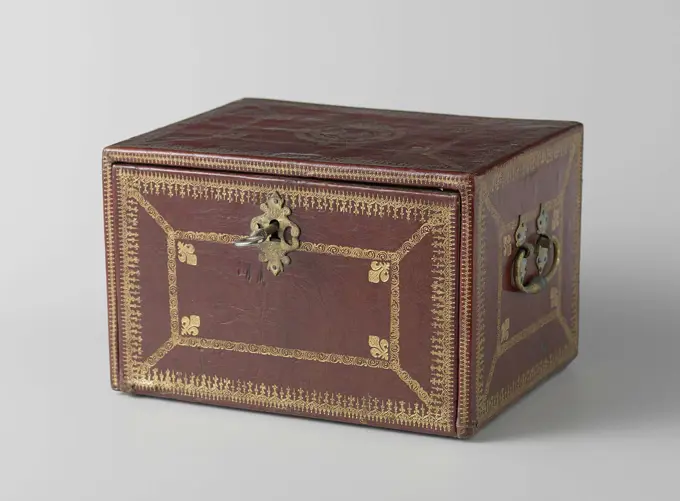
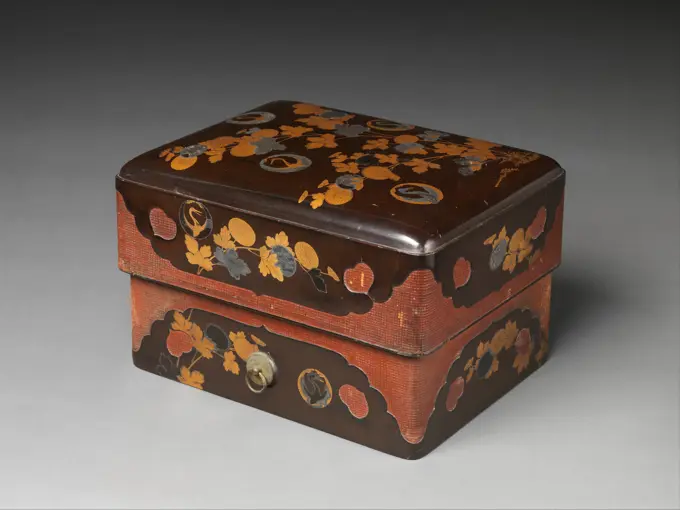
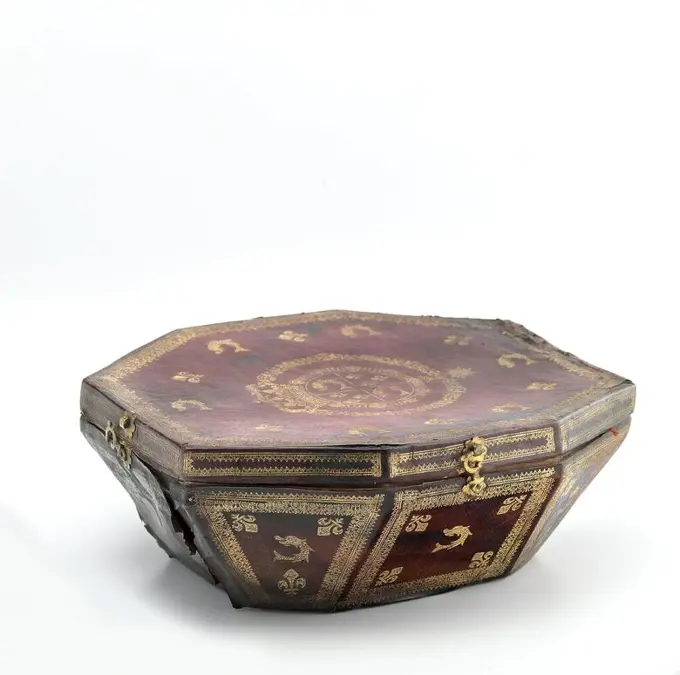
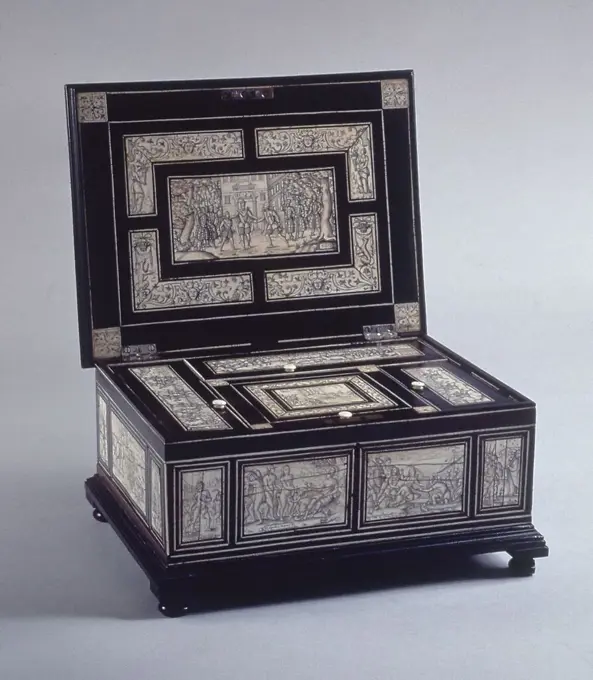
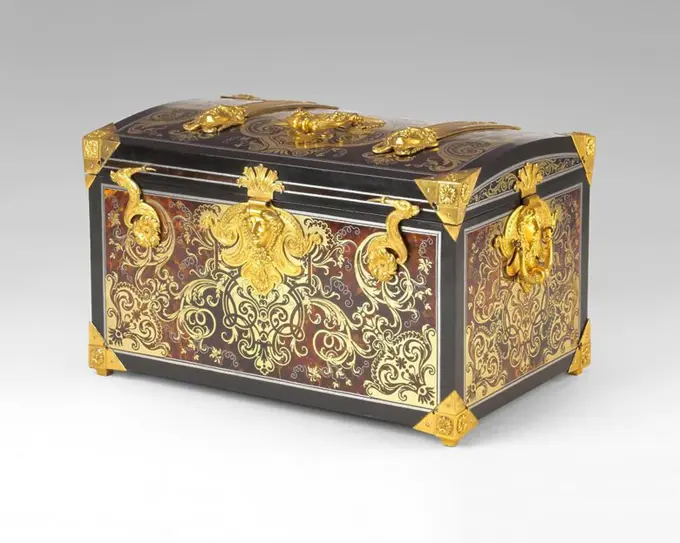
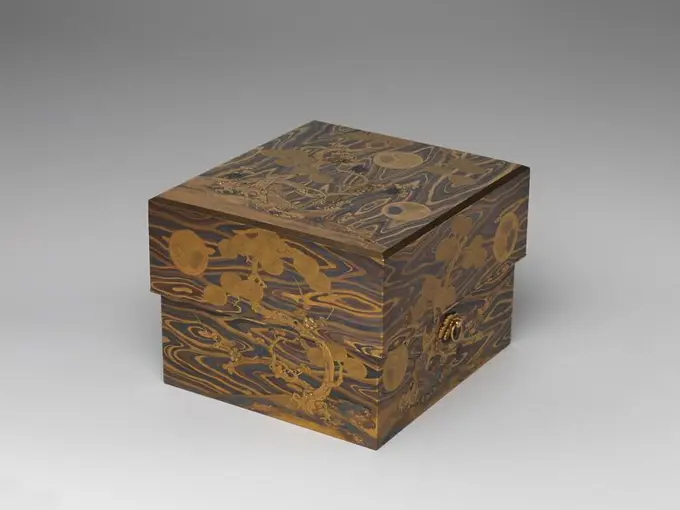
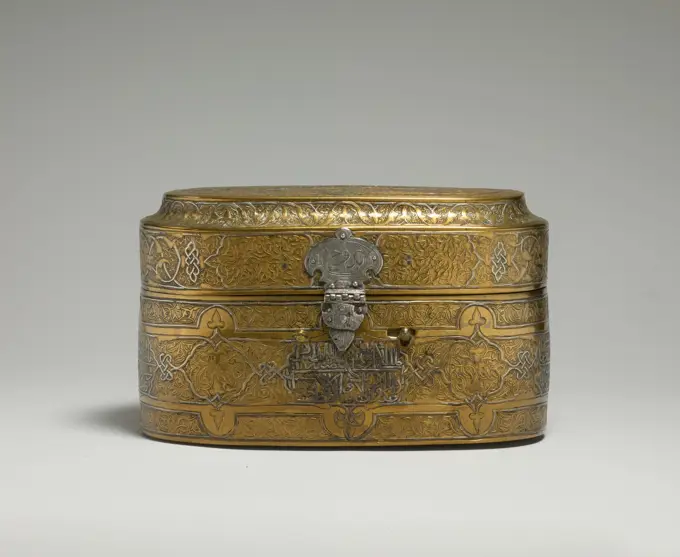
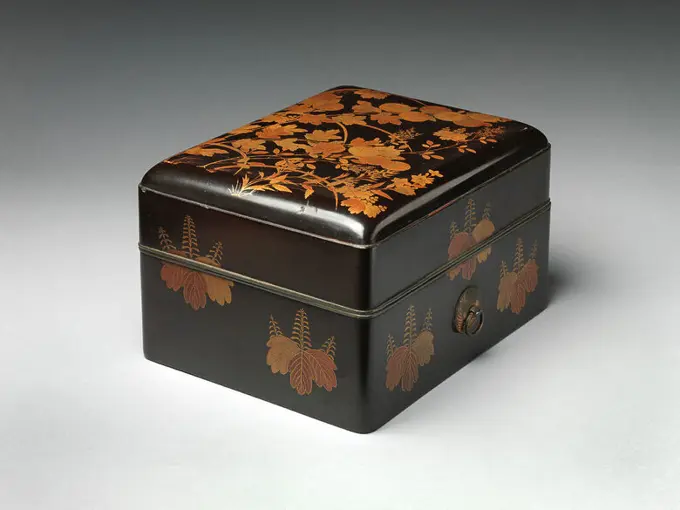
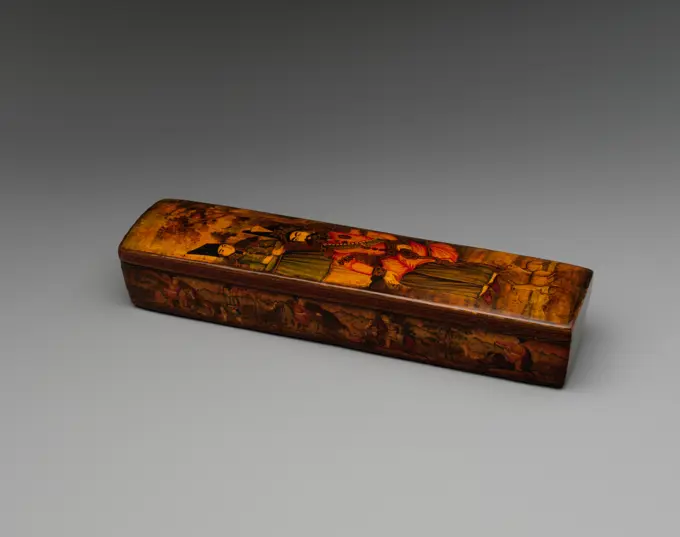
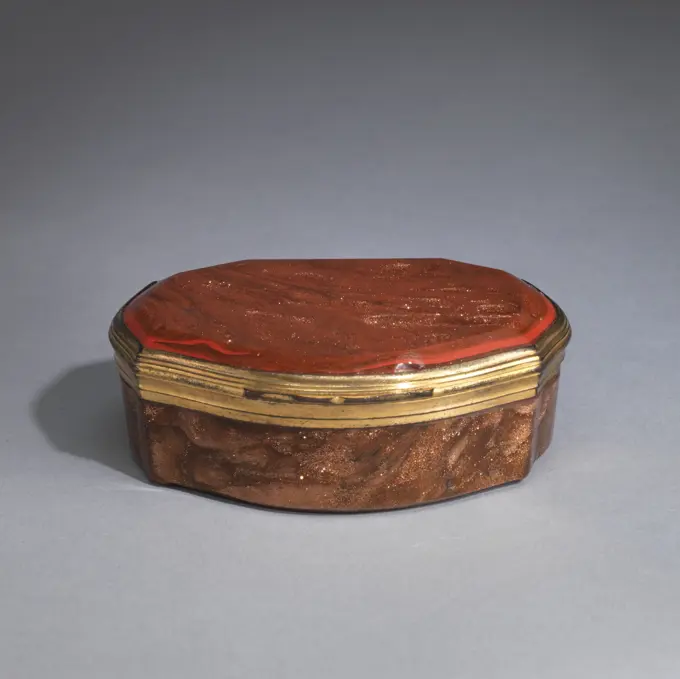
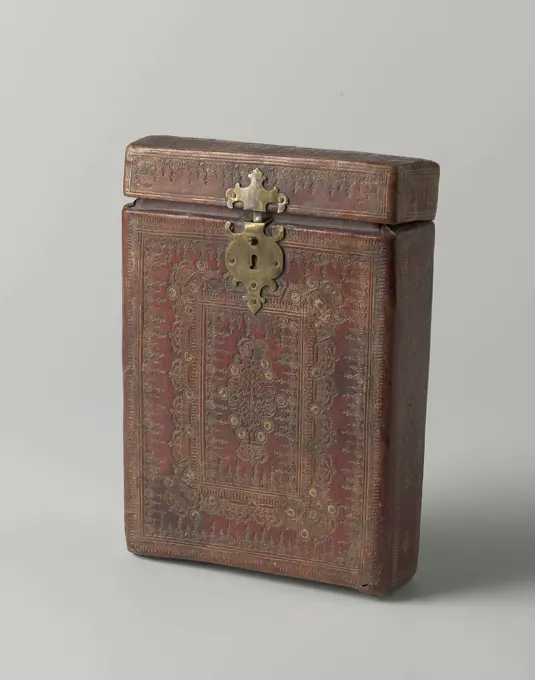
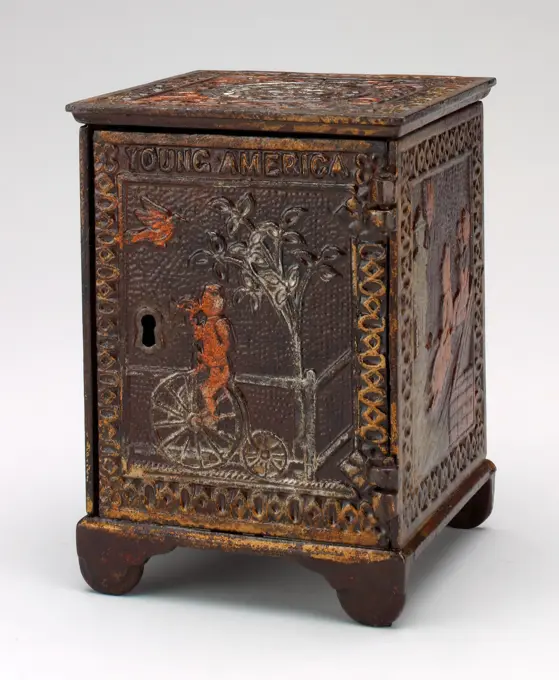
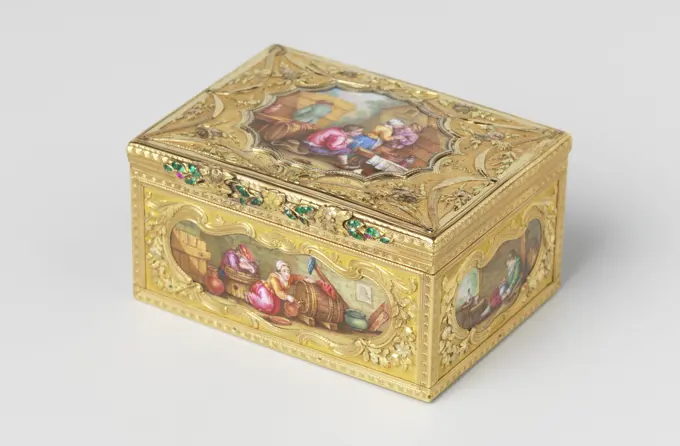
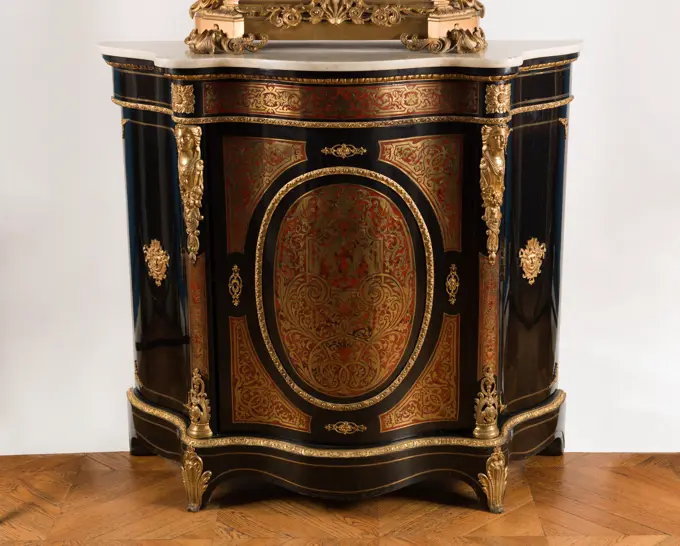
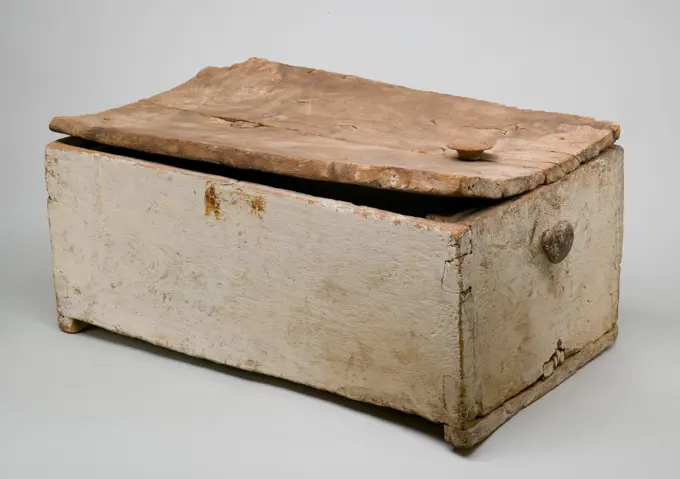
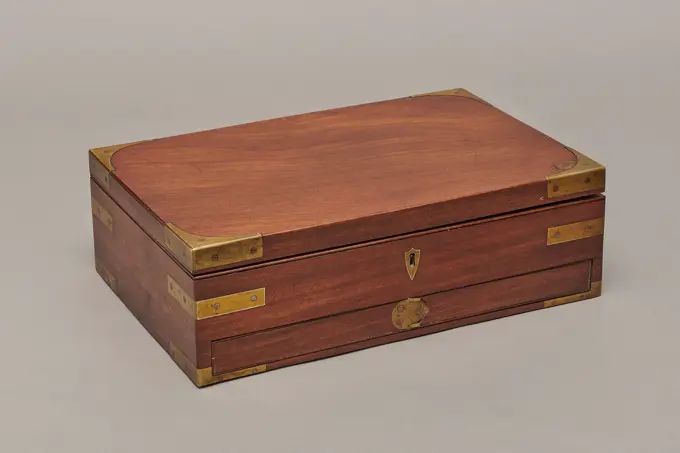
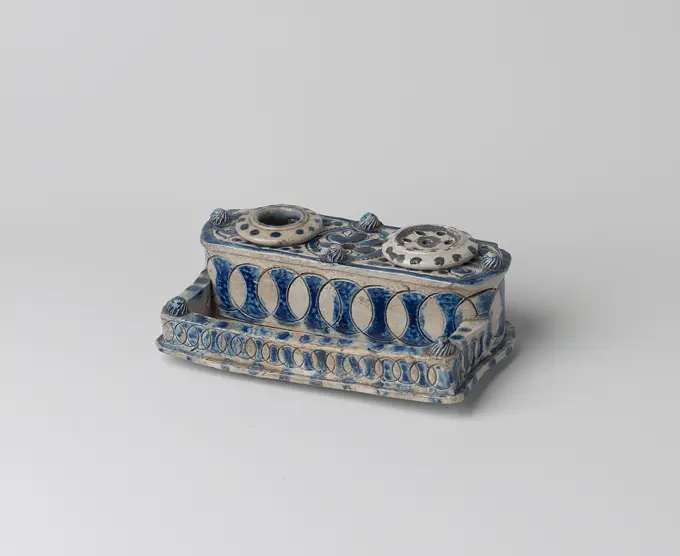
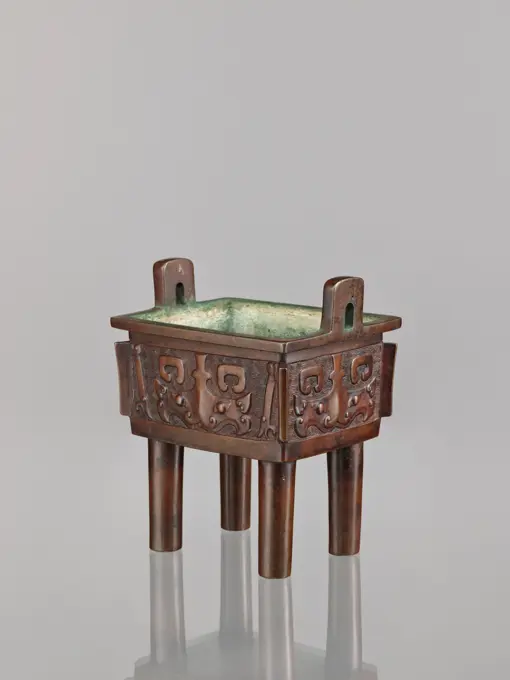
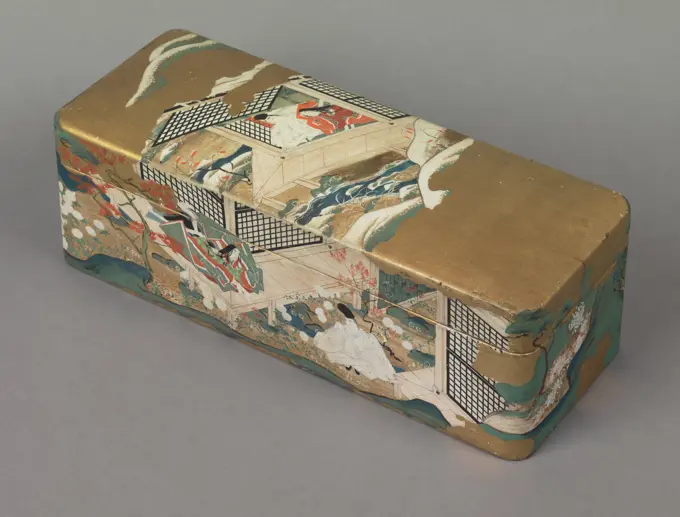
Corn Van Kornoeljehout, decorated with drawings in East Indian ink, Antonio Barile, 1500 - 1600 Corn van Kornoeljehout. Drawings have been applied to the front and sides and on the lid. The front shows four putti in the midst of leaf vines, interspersed with rosettes inside profiled circles and the lid shows two eagles in flight on either side of a tree. The edge of the lid, as well as the sides, carries a tivert motif in East Indian ink. The box has a box on the left. Italy wood (plant material). dogwood (wood). pine (wood). walnut (hardwood). iron (metal). India ink (ink) Corn van Kornoeljehout. Drawings have been applied to the front and sides and on the lid. The front shows four putti in the midst of leaf vines, interspersed with rosettes inside profiled circles and the lid shows two eagles in flight on either side of a tree. The edge of the lid, as well as the sides, carries a tivert motif in East Indian ink. The box has a box on the left. Italy wood (plant material). dogwood (woo. Coffin, square, with red pressed and partially plated leather. In it 7 drawers with sixty-five tokens with the portraits of the French kings. A paper document in the lower drawer. A key belongs to the box.Box, 1830-1881. Lukutin Factory (Russian, 1818-1904). Lacquered wood; overall: 9 x 9.9 x 3.9 cm (3 9/16 x 3 7/8 x 1 9/16 in.).Casket with Erotes and Animals 12th century Italian or Byzantine In scenes recalling antiquity, two panels on the lid of this casket show erotes (nude children), fighting (left) and playing music (right). The style of the animals represented on the four sides suggests that the carving was done by Italian artists drawing on Byzantine models.. Casket with Erotes and Animals. Italian or Byzantine. 12th century. Bone plaques and ornamental strips over wooden casket with silk lining; copper handle, clasps, lock plate, and nails. Made in Northern Adriatic. BoneBox, anonymous, 1725 - 1825 Box with lid and inner box for writing paper. Decoration of a garden fence with blossoms and mourning willows that rise above it. Japan wood (plant material). lacquer (coating) Box with lid and inner box for writing paper. Decoration of a garden fence with blossoms and mourning willows that rise above it. Japan wood (plant material). lacquer (coating)Red-Cornered Box (Sumiaka) early 17th century Japan. Red-Cornered Box (Sumiaka). Japan. early 17th century. Gold maki-e and silver foil inlay on black lacquer, red lacquer over coarse cloth. Momoyama (1573-1615)-early Edo (1615-1868) period. LacquerCovered square box with dragon dated 1610 China. Covered square box with dragon. China. dated 1610. Polychrome lacquer with filled-in and engraved gold decoration. Ming dynasty (1368-1644), Wanli mark and period (1573-1620). LacquerLiqueur box with two liqueur bottles with stop and eight liqueur glasses. Black lacquered rectangular liqueur cabinet with faint bent front. On the hinged lid and on the front a vignette of stylized ornaments in copper and turtle. On either side of the handle two square liqueur bottles with stop. Left and right of the bottles are two rows of four liqueur glasses.Anonymous / 'Case for octagonal tray with interlaced foliate decoration'. 1650 - 1711. Leather, Wood, Metal, Cloth. Museum: Museo del Prado, Madrid, España.Footstool, 1899 Padoekhout footstool inlaid with a tropical wood. With original upholstery. Amsterdam padouk (wood)   Amsterdam Padoekhout footstool inlaid with a tropical wood. With original upholstery. Amsterdam padouk (wood)   AmsterdamARQUETA DE DON JUAN DE ZUÑIGA - 1587 - ARQUETA EN MARFIL Y EBANO - 15x32x24. Author: CURTIS GIOVANNI BATTISTA. Location: PRIVATE COLLECTION. MADRID. SPAIN.Chest with drawer in the bottom, anonymous, 1680 - 1720 Chest, square, of ebony with batter and handles of silver. Flowers and tendrils stabbed in the wood. A sliding drawer in the bottom; This is closed by a slider on the inside of the top lock. Indonesia ebony (wood). silver (metal)   Indonesia Chest, square, of ebony with batter and handles of silver. Flowers and tendrils stabbed in the wood. A sliding drawer in the bottom; This is closed by a slider on the inside of the top lock. Indonesia ebony (wood). silver (metal)   IndonesiaCoffer 1700-1720 France. The cabinetmaker AndrÈ-Charles Boulle was responsible for some of the finest examples of French furniture made during the reign of Louis XIV (1643ñ1715). Boulle perfected the technique of veneering furniture with a rich marquetry of tortoiseshell, pewter, and gilt copper, and he further enriched his surfaces with sculptural gilt bronze mounts. Acclaimed for his brilliant designs and superb execution, Boulle was commis- sioned by the most discerning and demanding patrons in France, among them members of the royal family, aristocrats, ministers, and financiers.This rectangular coffer is a visually powerful example of Boulleís work from the early eighteenth century. Such objects served as containers for medals or jewels. This example is richly veneered with marquetry panels of scrolls, strapwork, and vines executed in engraved gilt copper on a ground of tortoiseshell. Framing the panels are strips of ebony and pewter. The coffer also features gilt bronze mounts inCoffer. Attributed to André-Charles Boulle (French, 1642-1732); France, Paris. Date: 1700-1720. Dimensions: 44.5 × 73 × 48.3 cm (17 1/2 × 28 3/4 × 19 in.). Oak, tortoiseshell, brass, pewter, ebony, and gilt-bronze mounts. Origin: France. Museum: The Chicago Art Institute, Chicago, USA. Author: ANDRE CHARLES BOULLE.Box for Hair Ornaments (motoyui-bako) with Pine, Bamboo, Plum, and Tokugawa Family Crest on Wood-Grain Ground. Culture: Japan. Dimensions: H. 9 in. (22.9 cm); W. 8 1/2 in. (21.6 cm); L. 7 7/8 in. (20 cm). Date: early 18th century. Museum: Metropolitan Museum of Art, New York, USA.Lidded Box of Muhammad al-Hamawi, Timekeeper at the Umayyad Mosque, Damascus 15th century Mamluk metalwork began to decline in quality by the late fourteenth century. Commissioned for the official responsible for supervising the calltoprayer and announcing the beginning and end of Ramadan, this box probably served as a food container.. Lidded Box of Muhammad al-Hamawi, Timekeeper at the Umayyad Mosque, Damascus. 15th century. Brass; engraved and inlaid with silver. Attributed to Syria. MetalBox for Personal Accessories with Autumn Grasses. Culture: Japan. Dimensions: H. 8 7/8 in. (22.5 cm); W. 8 13/16 in. (22.4 cm); L. 11 1/8 in. (28.3 cm)Storage Box: 11 x 12 1/4 x 14 1/4 in. (27.9 x 31.1 x 36.2 cm). Date: ca. 1600.Autumn flowers and grasses, principally chrysanthemums, pampas grass, and bush clover, embellish the lid of this box. Scattered across the naturalistic depiction of these plants are five stylized paulownia crests that echo the larger ones adorning the sides. The combination of such crests with freely rendered autumn grasses is characteristic of lacquers associated with the Kodai-ji temple in Kyoto. Museum: Metropolitan Museum of Art, New York, USA.Case with a key unknownPenbox with Portrait of Nasir al-Din Shah Qajar 1840s Large-size lacquer penboxes depicting full-scale portraits of a Qajar ruler are rare. This example bears the portrait of Nasir al-Din Shah Qajar (r. 1848-1896) seated on a jeweled throne in a Europeanizing landscape. He wears a European military uniform with trousers and a jacket with epaulettes. He is also shown with a jeweled belt and armbands (bazubands). The eclectic nature of the details of portrait reflect the "in-between" spirit of the first decades of the shah's reign. View more. Penbox with Portrait of Nasir al-Din Shah Qajar. 1840s. Papier-mache; painted and varnished. Probably made in Iran. LacquerSnuffbox 18th century Miotti Family Workshop. Snuffbox. Italian, Venice (Murano). 18th century. Glass. GlassCasket. German. Date: 1201-1300. Dimensions: 33 × 36.8 × 22.2 cm (13 × 14 1/2 × 8 3/4 in.). Wood, iron, tin, paint, and traces of paper. Origin: Germany. Museum: The Chicago Art Institute, Chicago, USA.Hand of wood, covered with red leather in which golden ornaments. FOODLE OF WOOD, covered with red leather in which gold ornaments: a repeating pattern of French crowns and crowned dolphins. The lid on which four crowned dolphins is connected to the box with two copper hinges. The copper lock plate is also decorated. The case is probably used for a book or for scriptures.secretary Miniature; paper, glassScribe cassette from satin, inlaid with ivory and fittings of silver. Writing cassette, rectangular, with sloping satin valve, glued with ivory, batter of silver. There is an interior with two times three drawers behind the valve, separated by an open box above a single tray through three arches. Under the valve two side-side drawers above a single, over the entire width. All fields have engraved edges with flower vines. Lock plates of silver, tractors and handles on the sides. Rear not being glued with ivory. South India, vizagapatam, ca. 1800.Anonymous / 'Case for rock crystal drinking vessel with stem motifs and scroll-shaped handles'. 1650 - 1711. Leather, Wood, Metal, Cloth. Museum: Museo del Prado, Madrid, España.Oak box, coffin cabinet furniture furniture interior design wood oak wood, Round wood carving with flower and circle ornaments on short side padlock.Harry Eisman, Desk Box, c 1940 Desk BoxLiqueur cellar of mahogany. Liqueur cellar of mahogany for 4 bottles and a glass. The glass and two bottles are missing.Anonymous. Double box on a 4 -foot table; gold lacquer decorated with the fö bird, flowers and foliage; Interior containing gold lacquer tray. Overview with tray. Lacquer. Museum of Fine Arts of the City of Paris, Petit Palais. Decor Bird FO, Double Box, Foliage, Flower, Lacquer object, Gold, Plateau, Table view, TableBrass design fitting on wooden book holder, Jodhpur, Rajasthan, India Copyright: xSafatxAli/DinodiaxPhotoxIron design fitting on antique wooden storage box iron, Jodhpur, Rajasthan, India Copyright: xSafatxAli/DinodiaxPhotoxBox ca. 1760-1800 British, Staffordshire. Box. British, Staffordshire. ca. 1760-1800. Enameled copper. Enamels-PaintedBox, Gold, diamonds, rubies, Tooled gold, cubic shape, chamfered corners. Hinged lid with helmeted bust on cloud-like background surrounded by three flying cherubs bearing diamond and ruby studded garlands; T-square, palette, brushes, drawing at base of bust. Each side of box decorated with rayed head; trophies on each chamfered corner., France, 1750-56, containers, Decorative Arts, BoxCovered Box, 20th century, 1-3/4 x 3-5/8 x 3-1/16 in. (4.4 x 9.2 x 7.8 cm), Cloisonné, China, 20th centuryNeccessaire 1725-1775 England. Wood, mirror glass, and crystal .Snuffbox ca. 1760-80 British, Staffordshire. Snuffbox. British, Staffordshire. ca. 1760-80. Enamel on copper. Enamels-PaintedBrass design fitting on antique wooden box, Jodhpur, Rajasthan, India Copyright: xSafatxAli/DinodiaxPhotoxTea box with marquetery. Tea box of oak, glued with marquetery in nuts, rose, maple, green stained maple and rosewood, with a decor of stacked cubes. Bol slots from copper and a gilt copper handle.Wall cupboard. unknown, creatorOak bread cabinet, cabinet cabinet furniture furniture interior design wood oak wood, Two small doors iron locks and fittings in the cupboard shelf.Chest, c. 1700. America, Massachusetts, perhaps Salem, 18th century. Oak and pine; overall: 77.5 x 115.3 x 53.7 cm (30 1/2 x 45 3/8 x 21 1/8 in.).Lakkist van Klon de Commande with weapon Fonteyn Verschuur, Anonymous, c. 1810 - c. 1830 Lakkist van Klon de Commande with the lid in mother -of -pearl the coat of arms of Fonteyn Verschuur, supported by two shield holders (lion and griffin). Six boxes in the box and a container with metal handle in the middle. All lids on the inside signed. Decoration box consists of edges of mother -of -pearl and gold, water landscapes or banks in gold and on top of flowers. DESHIMA wood (plant material). lacquer (coating). mother of pearl Lakkist van Klon de Commande with the lid in mother -of -pearl the coat of arms of Fonteyn Verschuur, supported by two shield holders (lion and griffin). Six boxes in the box and a container with metal handle in the middle. All lids on the inside signed. Decoration box consists of edges of mother -of -pearl and gold, water landscapes or banks in gold and on top of flowers. DESHIMA wood (plant material). lacquer (coating). mother of pearlYoung America' still bank, c. 1882, Kyser & Rex Company, Philadelphia, c. 1879-1898, 4 7/16 x 3 1/8 x 3 1/4 in. (11.27 x 7.94 x 8.26 cm), Iron, pigment, 19th centuryGold snuff box, rectangular, decorated with six inn scenes in Émail, Jean Ducollay, c. 1765 - c. 1775 Rectangular box of gold, with six inn scenes in everymail. At the front of the lid a flower festival of gold, emerald and rubies. Paris gold (metal). emerald (mineral). ruby (mineral). Rectangular box of gold, with six inn scenes in everymail. At the front of the lid a flower festival of gold, emerald and rubies. Paris gold (metal). emerald (mineral). ruby (mineral).Poodle - a rectangle casket;  XVIII-XIX century (1701-00-00-1900-00-00);Paderewski, Ignacy Jan (1860-1941), Paderewski, Ignacy Jan (1860-1941)-collection, qing (style), Chinese (culture), gift (provenance), caskets, Chinese artBox (part of a set) last quarter 17th century Southern German Made to hold set of silver miniature furniture, 31.37.1-.22.. Box (part of a set) 196838CDK unknownSugar bowlBrass design fitting on antique wooden box, Jodhpur, Rajasthan, India Copyright: xSafatxAli/DinodiaxPhotoxCovered Box late 17th-early 18th century China. Covered Box. China. late 17th-early 18th century. Cloisonné enamel. Qing dynasty (1644-1911). CloisonnéBox 19th century This whimsical box was designed for making pan, an Indian digestif, and is composed of several small compartments that would each hold one ingredient. The surface of the box is delicately filigreed with quatrefoil flowers, the petals of which are filled with ivy leaf and lotus bud motifs. The knob handle appears as a carved nut sprouting from a chrysanthemum disk.. Box. 19th century. Silver. Attributed to India. MetalChest. Dated: c. 1939. Dimensions: overall: 31.7 x 40.9 cm (12 1/2 x 16 1/8 in.) Original IAD Object: 29 3/4"high; 48"wide; 21 3/8". Medium: watercolor, colored pencil, graphite and some heightening on paperboard. Museum: National Gallery of Art, Washington DC. Author: M. Rosenshield-von-Paulin.Molded base. Culture: Austrian. Dimensions: Overall: 6 1/2 x 11 7/8 x 7 7/8 in. (16.5 x 30.2 x 20 cm). Date: mid-17th century. Museum: Metropolitan Museum of Art, New York, USA.Box decorated with lotus scrolls 18th century Korea. Box decorated with lotus scrolls 52092Anonymous. "Support furniture". Building: oak; Placing: ebony, red tinted scales and brass; gilded bronze; White marble. 1860. Paris, Carnavalet museum. 100080-12 FURNITUREFlower-Style Box with Drawers 17th century Rows of graceful flowering plants are frequently used as a design element in Mughal art. Here, they appear alongside coiled cloud bands and flying birds. The iron handles on either side of the box are a later addition that indicate that the box was used as a traveling chest.. Flower-Style Box with Drawers 452813Box late 19th century Japan. Box 57609Brush holder. Culture: Japan. Dimensions: H. 5 in. (12.7 cmm) ; W. 5 1/2 in. (14 cm). Date: 18th century. Museum: Metropolitan Museum of Art, New York, USA.Embroidered Cabinet. England, circa 1665. Furnishings; Accessories. Silk satin and linen plain weave with silk and metallic-thread embroidery, metal purl, metallic braid, silk plain weave, metallic-embossed paper, metal, and glassInk stand met heart shapes and leaves, anonymous, c. 1750 - c. 1799 Ink set of stoneware with a pen box and two holders for the ink jar and the sand spreader. Partly covered with cobalt blue. On the holder a relief decoration of printed and imposed heart shapes and leaves. The edges with small flowers or stars. At the top on each corner a modeled 'Klinknagel'. Westerwald. Westerwald stoneware. glaze. cobalt (mineral) vitrification Ink set of stoneware with a pen box and two holders for the ink jar and the sand spreader. Partly covered with cobalt blue. On the holder a relief decoration of printed and imposed heart shapes and leaves. The edges with small flowers or stars. At the top on each corner a modeled 'Klinknagel'. Westerwald. Westerwald stoneware. glaze. cobalt (mineral) vitrificationCabinet;  beginning of the 20th century (1900-00-00-1920-00-00);Hat box with stylized chi dragons. Culture: China. Dimensions: H. 9 1/4 in. (23.5 cm); Diam. 15 1/4 in. (38.7 cm). Date: 18th century. Museum: Metropolitan Museum of Art, New York, USA.Vanity Case (Nécessaire), c. 1760. Attributed to James Barbot (British). Gold, orange agate, enamel;Trunk with Brocade (Kati Rimo) Design. Tibet, circa 1550-1650. Furnishings; Furniture. Wood with mineral pigments on cloth; metal fittingsCassone. UnknownSnuffbox ca. 1735 Vienna The complex decorative schemes on this box, including four hands of playing cards on the lid, a game of chess in progress on the underside, and three enigmatic inscriptions, suggest that it was commissioned as an intimate gift and expresses a coded message that cannot be easily deciphered today.. Snuffbox 206630Gold snuff box, rectangular, with the presentation of a tape in mosaic and mother -of -pearl. At the front a garland from Diamant, Anonymous, c. 1760 Rectangular golden box covered with mosaic of mother -of -pearl, with which a tea party is presented in the open air. Along the front a garland with diamonds. Berlin (possibly) gold (metal). mother of pearl. diamond (mineral) Rectangular golden box covered with mosaic of mother -of -pearl, with which a tea party is presented in the open air. Along the front a garland with diamonds. Berlin (possibly) gold (metal). mother of pearl. diamond (mineral)Pennsylvania German Chest. Dated: 1935/1942. Dimensions: overall: 31.6 x 45.7 cm (12 7/16 x 18 in.) Original IAD Object: 26 1/2" high; 40" long; 22 1/2" deep. Medium: watercolor and graphite on paper. Museum: National Gallery of Art, Washington DC. Author: Betty Jean Davis.Book Case. Culture: Italian (). Dimensions: Overall: 5 7/8 x 6 1/2 x 2 11/16 in. (15 x 16.5 x 6.8 cm). Date: 15th century. Museum: Metropolitan Museum of Art, New York, USA.Jewelry Casket. England, circa 1870. Furnishings; Accessories. Mahogany, gilding, paint, exotic wood inlays, brassOld chest isolated on the white backgroundBox 15th century French Boxes such as this one (olearia, or vessels for oil) have circular braces on the inside that hold vials of the three kinds of consecrated oil used for the sacraments of Baptism, Confirmation, and Extreme Unction (anointing the sick). The oils are also used for the ordination of priests and the blessing of altars, fonts, bells, and liturgical vessels that will come into contact with the Eucharist.. Box 468246Covered Box with Design of Pine, Bamboo, and Cherry Blossom 19th century Japan. Covered Box with Design of Pine, Bamboo, and Cherry Blossom 57881Lavabo cistern late 16th century French The shields are of metal of different quality from the rest of the piece and have evidently been substituted for the original cresting. Lavabo cistern. French. late 16th century. Pewter. Metalwork-PewterRelikwiekist, anonymous, c. 1100 - c. 1300 The object and originally completely gilded object is composed of three parts: the bottom, the wall and lid. This is attached to the wall with a hinge and can be closed with a pin. It has the shape of a perpendicular sectional roof, the fainting roof shields of which connect to a flat part in the shape of a cross. The roof shields have a decoration in the form of flat roof tiles, the rows of which are granulated alternately. The upright sides of the lid have a symmetrical rank ornament, the leaves of which are stylized into palmets. In the walls of the coffin, the front and back are eight smooth with a smooth and a granulated edge surrounded, medallions are cut out and four on the sides. These are surrounded on three walls by a cord edge and on one side wall by a cord edge and continuous ranking ornament. At the front, in the middle Christ on the cross with the sun and the moon above it, and left Mary with her hand of God, a female saint and aMiniature Chest (Mingqi) 1368-1644 China. Earthenware with green glaze and underglaze molded decoration .Miniature Table with Scholarly Implements (Mingqi) Artist's working dates 1368-1644 China. Earthenware with green and yellow-brown glazes and underglaze molded decoration .Elongated cushion consisting of two equal halves, covered with green velvet and on the corners with large, with green silk racks, lock of brass in the middle, interior of wood with lids covered with printed leather, anonymous, c. 1580 - c. 1620 Elongated mirror cushion consisting of two equal halves, covered with green velvet and on the corners with large, with green silk racks, lock of brass in the middle, interior of wood with lids covered with printed leather. Model: The elongated cushion consists of two lying on top of each other, equal halves that close in the middle of the front by means of a small brass lock. (The key is missing) These halves are connected to each other by means of the, of one completely consisting of green velvet that has been beaten back along the edges and is attached to the wooden interior with large stitches of green silk. The red upholstery of the interior also consists of one whole. In this way the pillow can 'hinge'. The green outdoor covering is decoratCloud-Shaped Pillow with Peony Scroll. China. Date: 960 AD-1050. Dimensions: 9.6 × 21.6 × 17.8 cm (3 3/4 × 8 1/2 × 7 in.). Cizhou ware; stoneware, slip-coated with underglaze carved, incised, and inlaid decoration. Origin: China. Museum: The Chicago Art Institute, USA.Arqueta, siglo XV. Fundación Juan March.Old rusty lantern. Isolated objects: very old shabby and rusty lantern, with red glass, on white backgroundInkstand.Wooden Treasure Box An ancient wooden box with beautiful carvings used for storing jewelery, isolated on a white background. Copyright: xZoonar.com/Copyrightx xNikhilxGangavanex 9970109unknown (unknown), Ammattikunta-arkku, undateable, birch and hardwood veneering, arts and craftsJewelery suitcase of iron. An iron jewelery suitcase on four legs with handle, arc-shaped lid and hidden slot, and trimmings, including a bishop's image.Chest Antiques-Furniture Box for Incense ca. 1750 Japan The design and painterly rendition of phoenix and Chinese lion were popular in Kyoto in textiles and other decorative arts. The shape of this piece (jūbako) also reflects Kyoto and Kyoto ware influence.. Box for Incense 63037Box; Overall: 11.1 x 11.5 x 9 cm (4 3/8 x 4 1/2 x 3 9/16 in.); Bequest of Mrs. John Innes Kane; 1926-37-12John H Tercuzzi, Match Box, c 1939 Match BoxLinen Chest Reused as a Child's Coffin ca. 1479-1400 B.C. New Kingdom Found in the debris above Hatshepsut's Valley Temple in the Lower Asasif, this whitewashed chest, once used to store linen, was repurposed as the coffin of a child. There are five lines of inscription in hieratic on the underside of the lid, providing a list of linen garments along with the names of officials.. Linen Chest Reused as a Child's Coffin. ca. 1479-1400 B.C.. Wood, whitewash. New Kingdom. From Egypt, Upper Egypt, Thebes, Dra Abu el-Naga, Carnarvon/Carter, 1906-1911. Dynasty 18Flower Pot (one of a pair) China. Flower Pot (one of a pair) 52641Paint box. unknown, authorWell. Ink tube of stoneware in gray with blue decoration.Fangding crap;  18th century (1701-00-00-1800-00-00);Box -Coffret late 15th century German Used to hold jewelry and other personal items, Minnekästchen were frequently exchanged as gifts between lovers or betrothed couples. This example is fancifully decorated on the lid with an elephant bearing a howdah; on the front a maiden and a unicorn flank a founatin, and drolleries with musical instruments decorate the side and back panels.. Coffret. German. late 15th century. Maple. Made in Upper Rhineland, Germany. Woodwork-FurnitureFunerary Sculpture of a Granary. China, Eastern Han Dynasty (25-200 A.D.). Sculpture. Slab-built earthenware with modeled and carved decoration and green glazeBox, anonymous, 1700 Lacquer box with lid with mother -of -pearl and gold inlaid. China lacquer (coating). mother of pearl Lacquer box with lid with mother -of -pearl and gold inlaid. China lacquer (coating). mother of pearlWriting box. Culture: German, Eyrichshof (Franconia). Dimensions: Overall: 2 5/8 × 11 3/8 × 11 11/16 in. (6.7 × 28.9 × 29.7 cm). Maker: Ferdinand Plitzner (German, 1678-1724). Date: ca. 1715-20.During the seventeenth and eighteenth centuries luxurious boxes, similar to this one, that held writing and sealing implements had an obligatory place in the ceremonial setting of every Central European court. The elaborate decoration and preciousness of the materials reflected the owner's aristocratic status. Although frequently mentioned in contemporary inventories, such stately boxes have rarely survived the changing writing habits of later generations. This refined box shows a hitherto-unidentified monogram, incorporating the letters LG beneath a count's coronet; it is the only box of this type currently known of German origin. Plitzner was the most important German cabinetmaker of the early eighteenth century. His works reveal perfect mastery of contemporary French design and cabinetmakingBox with scenes from The Tale of Genji, 18th century, Unknown Japanese, 3 1/2 × 3 3/4 × 9 7/8 in. (8.89 × 9.53 × 25.08 cm), Painted wooden writing box; ink and color on gilded wood, Japan, 18th century, Artists depicted iconic scenes from The Tale of Genji in a variety of formats, including round and folding fans, painted hanging scrolls, folding screens, albums, and containers. This box for personal items features scenes from chapters 17, 20, and 49. The scenes depicted were seemingly chosen not for their narrative content but rather for the season in which each scene takes place, with a winter scene on the lid and autumn scenes on the sides. The autumnal theme extends to the inside of the box, where fringed dianthus (also known as 'pinks') and white chrysanthemums dance across an area of gold paint.