Delicate Lace Fragments

Historical lace pieces featuring intricate floral and geometric designs, representing traditional craftsmanship in textiles from various centuries.
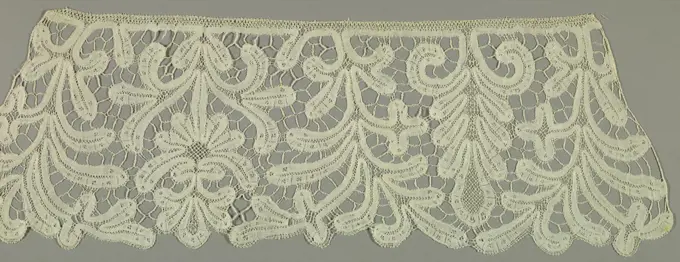
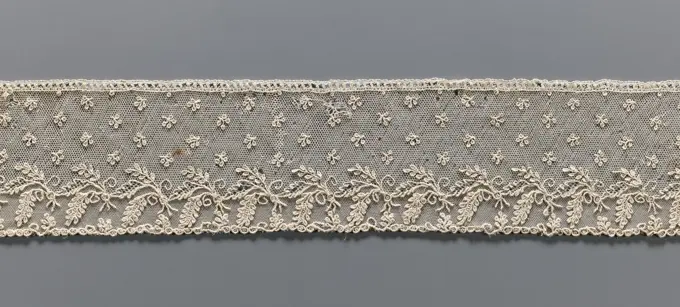
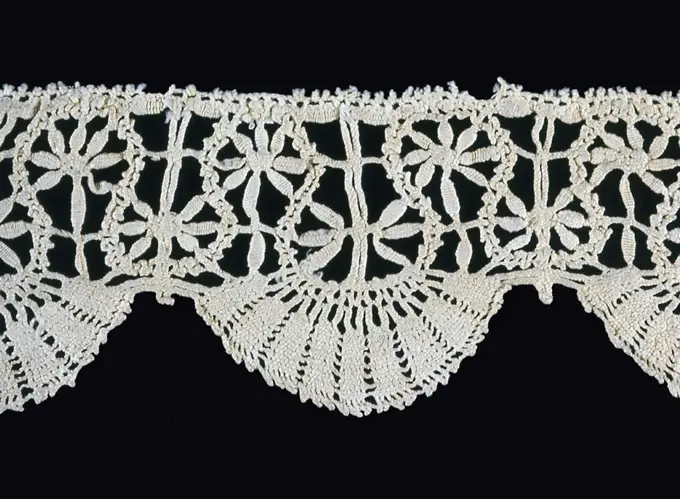
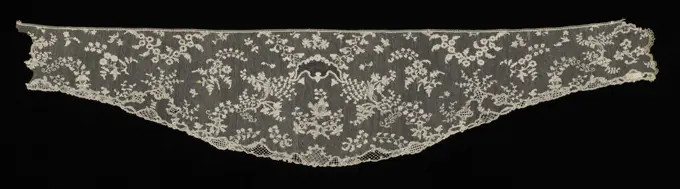
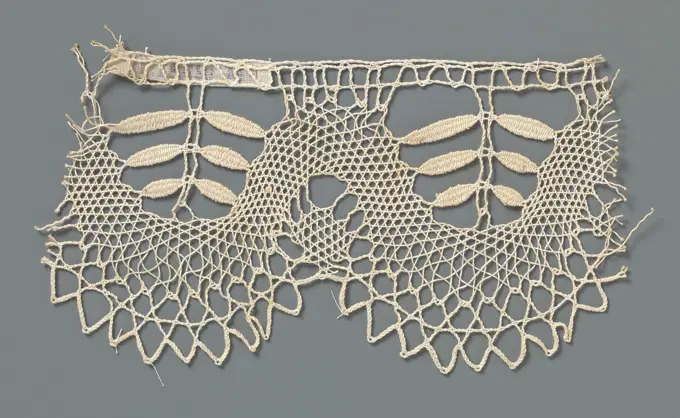
Fragment, Medium: linen Technique: bobbin lace, continuous tape with bars added, Patterns shows pendant flower with spray on either side, alternating with leaf motif. Tape has ornamental stitches, and parts are connected with brides picotees. (parts are connected with bars that have picots), 19th century, lace, Fragment
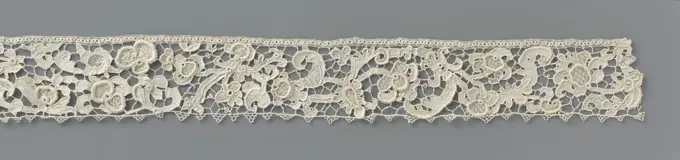
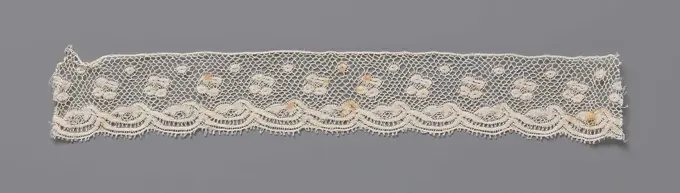
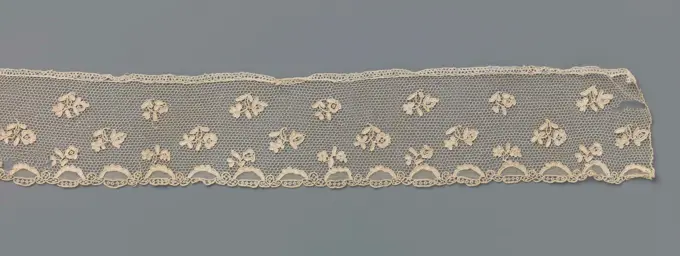
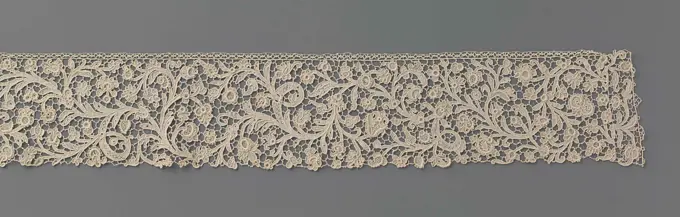
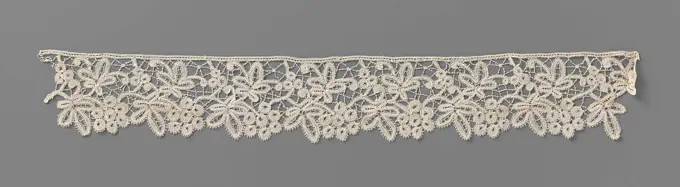
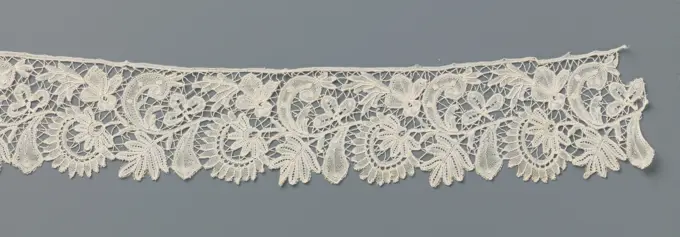
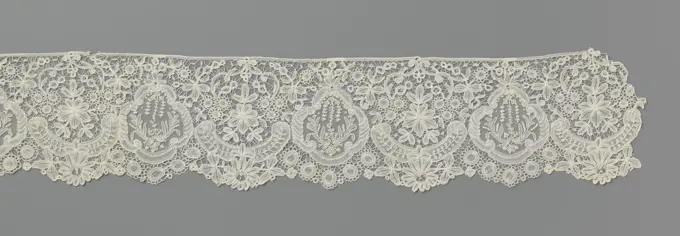
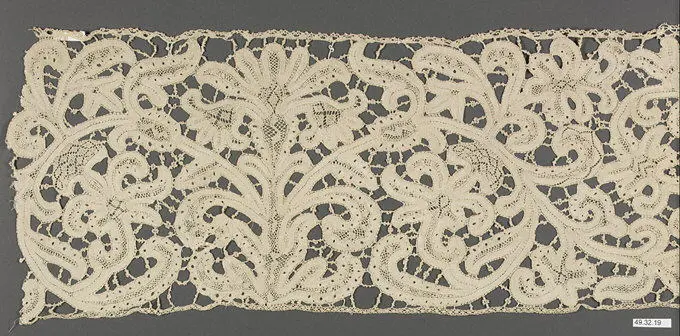
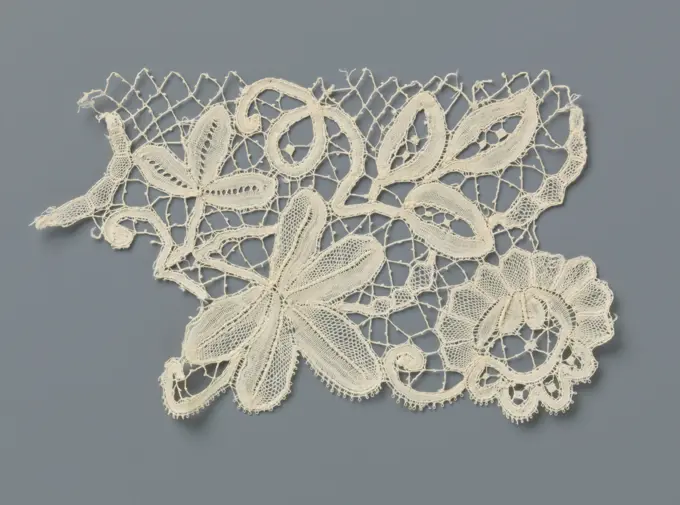
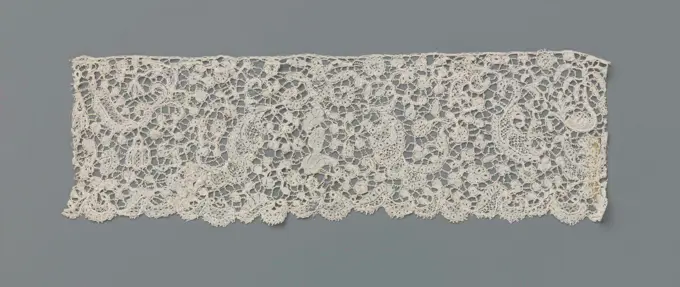
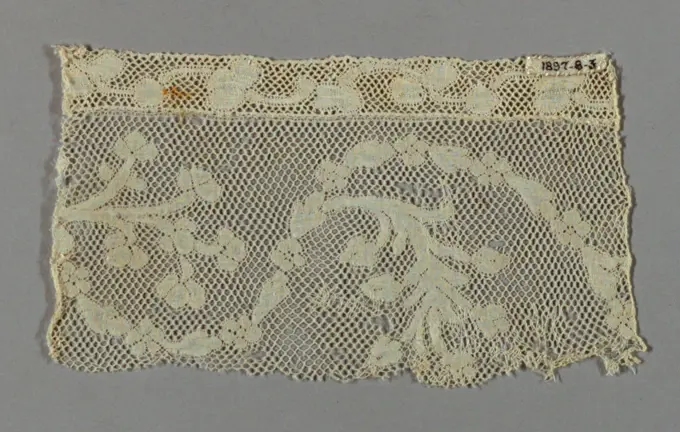
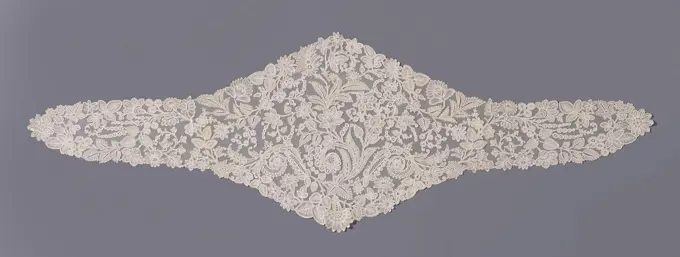
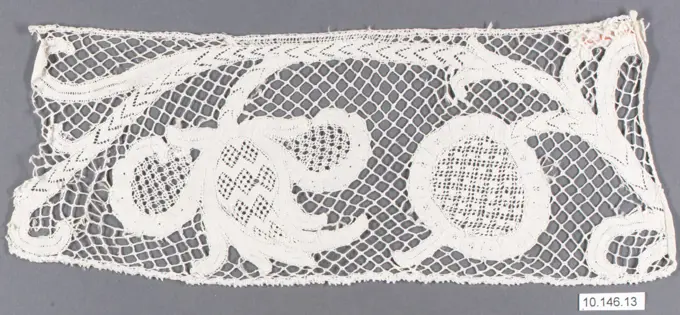
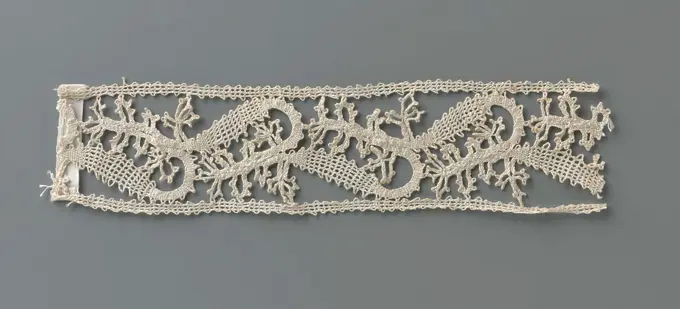
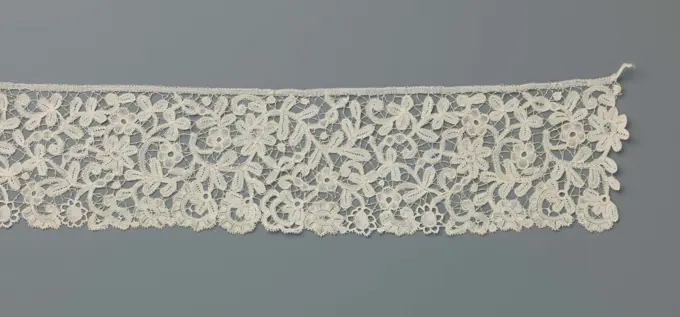
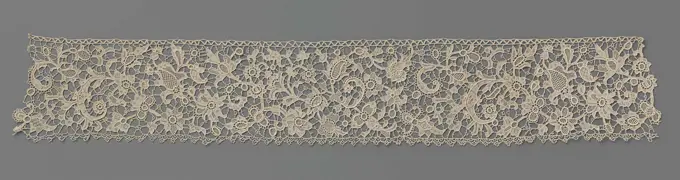
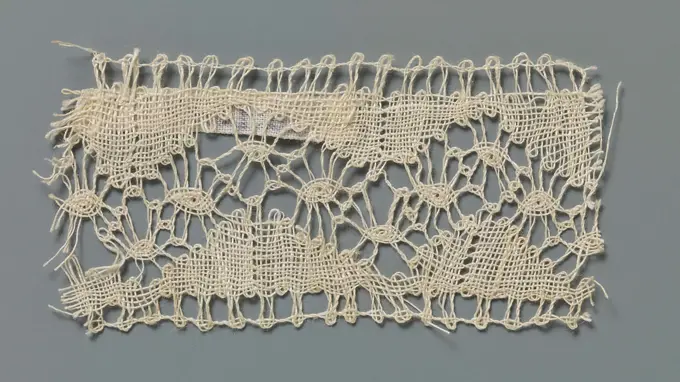
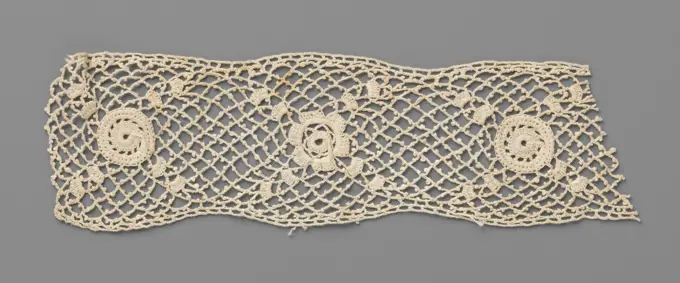
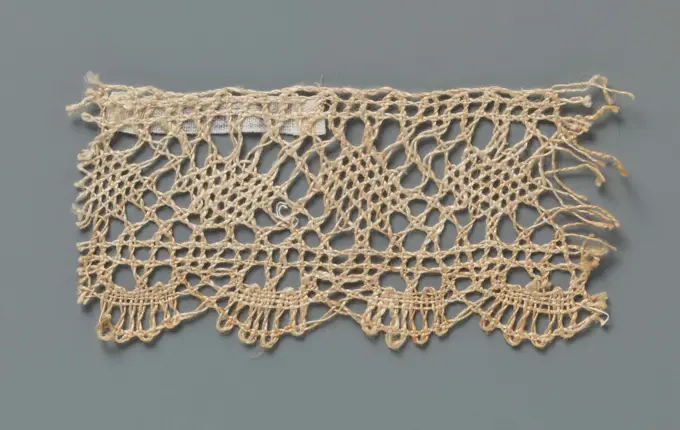
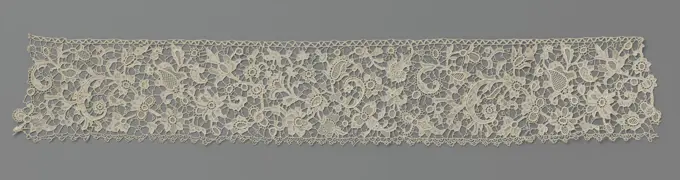
Fragment, Medium: linen Technique: bobbin lace, continuous tape with bars added, Patterns shows pendant flower with spray on either side, alternating with leaf motif. Tape has ornamental stitches, and parts are connected with brides picotees. (parts are connected with bars that have picots), 19th century, lace, FragmentFragment late 17th-early 18th century Flemish. Fragment 218233Strip of needle side with composite tibar pattern, anonymous, c. 1850 - c. 1899 Strip of natural needle side: Venetian relief side. Composed of two strips of two strips with a different pattern. The left part consists of a pattern with elongated tendrils with flowers, on an open ground with picoted bars. The right part consists of a finer and more closed pattern of flowers on a bar with rader picots. This part of the strip has the shape of a hat -slip with a picot edge. Venice linen (material) Venetian raised work Strip of natural needle side: Venetian relief side. Composed of two strips of two strips with a different pattern. The left part consists of a pattern with elongated tendrils with flowers, on an open ground with picoted bars. The right part consists of a finer and more closed pattern of flowers on a bar with rader picots. This part of the strip has the shape of a hat -slip with a picot edge. Venice linen (material) Venetian raised workStrip of needle side with hanging branch, anonymous, c. 1875 - c. 1909 Strip of natural -colored needle side: Venetian relief side. On an irregular bar of bar, there is an interrupted slender with palm flowers and volute leaves. Straight list of dots, alternately large and small. BURANO linen (material) Venetian raised work Strip of natural -colored needle side: Venetian relief side. On an irregular bar of bar, there is an interrupted slender with palm flowers and volute leaves. Straight list of dots, alternately large and small. BURANO linen (material) Venetian raised workEdge, Medium: linen Technique: needle lace with ground of loop & twist with twist return, Italy, 18th-early 19th century, lace, EdgeStrip bobbin with coarse three -leaf, anonymous, c. 1875 - c. 1899 Strip of natural-colored bobbin: Duchesse side. On a very open braiding soil there are one-sided, targeted serpentine branches with an anemone and a large Drieblad, which alternately form the unequal sculpts. Netherlands cotton (textile) bobbin lace Strip of natural-colored bobbin: Duchesse side. On a very open braiding soil there are one-sided, targeted serpentine branches with an anemone and a large Drieblad, which alternately form the unequal sculpts. Netherlands cotton (textile) bobbin laceStrip mixed side with wide spiral rank, anonymous, c. 1690 - c. 1699 Strip of natural -colored mixed side - Mezzo Punto - with a messing around or woven ribbon and a needley strand. On a mesh ground (needle side) is a pattern that consists of wide curling stems with exotic flowers. The contours of the flowers and stems consist of burst or woven ribbons. Different decorative land (needle side) have been used within the contours. A messing bow edge serves as a finish along the outside, with the exception of one long side that is finished with a straight strap. Milan (possibly) linen (material) mixed lace / tape lace (mixed lace) Strip of natural -colored mixed side - Mezzo Punto - with a messing around or woven ribbon and a needley strand. On a mesh ground (needle side) is a pattern that consists of wide curling stems with exotic flowers. The contours of the flowers and stems consist of burst or woven ribbons. Different decorative land (needle side) have been used within the contours. A Strook naaldkant met klaverblaadjes en waaiervormige bloemen.Natural coniferous strip: Men-Alençon. Spreading dot with clover leaves on a fine hexagonal maas soil. Along the top edge a row of mashes. The pattern on the underside of the strip consists of a concatenation of leaf branches with plumes. Including fan-shaped flowers that spring from the lower edge filled with an ornamental ground. The underside is finished with scalloped edge of picoted circles containing a rider poic. The top is finished with a straight edge.Strip bobbin with wavy slender and curling flowers, anonymous, c. 1740 - c. 1760 Strip of natural -colored bobbin: pot side. The repeating pattern consists of a regularly wavy slender or decorative band from which flowers and leaves spring. Halfway through each wave is a flower with three petals in the decorative band. Leaves spring from this flower and always two flowers: under each wave top, a flower with five flower leaves and a plume -shaped flour curls up and two plume -shaped flowers in each golf valley curls into the field. The motifs are made in linen battle with openwork edges and recesses. The motifs are connected by a five -part ground. In the wavy decorative band and between the flowers and leaves a snowflake soil has been used as a decorative soil. Netslag has also been used as a decorative land in the decorative band. The top and bottom of the strip are straight finished, with the bottom with picots. Southern Netherlands linen (material) bobbin lace / pot lace Strip of naStrip bobbin with volutes, anonymous, c. 1910 - c. 1930 Investor of natural -colored bobbin, possibly Flemish guipure. A repeating pattern with volutes to which three, four and five-leaf flowers spring. A braided bar with picots around the motifs. A honeycomb land within the motives. Top and bottom finished with triangles built from arches. Belgium linen (material) bobbin lace / Flemish guipure lace Investor of natural -colored bobbin, possibly Flemish guipure. A repeating pattern with volutes to which three, four and five-leaf flowers spring. A braided bar with picots around the motifs. A honeycomb land within the motives. Top and bottom finished with triangles built from arches. Belgium linen (material) bobbin lace / Flemish guipure laceScarf collar (half) from bobbin with oak leaves and roses, anonymous, c. 1880 - c. 1910 Scarf collar (half) of natural -colored bobbin: Bruges flower arrangements. Rectangular model with one sloping lace and a narrowing and widening with a small kink in it. Pattern with different types of flowers and leaves, including oak leaves and roses. The motifs are connected by a braid ground in which the braids were laid in zigzag lines as a grid. The collar has been cut in the middle. Bruges (possibly) cotton (textile) bobbin lace / Bruges flower lace Scarf collar (half) of natural -colored bobbin: Bruges flower arrangements. Rectangular model with one sloping lace and a narrowing and widening with a small kink in it. Pattern with different types of flowers and leaves, including oak leaves and roses. The motifs are connected by a braid ground in which the braids were laid in zigzag lines as a grid. The collar has been cut in the middle. Bruges (possibly) cotton (textile) bobbin lace / Bruges flStrip bobbin with carnations in flowerpot and v-shaped bouquet, anonymous, c. 1750 - c. 1799 Strip of natural -colored bobbin, Parisian Pottekant. The repeating pattern consists of a easily designed flowerpot with small ears, which contains a symmetrical bouquet. The flowers in the bouquet increase in size from the top, ending on either side of the pot with a large overhanging carnation. Between the consecutive flower pots, a V-shaped bouquet along the top, with a loose rosette flower with straight a loan. The motifs are connected by a Maas soil, the Paris soil. The motifs are made in linen battle with thicker and shiny contour threads. Different decorative lands have been used, including in the flowerpot, the flower hearts and between the flowers. The top is finished with a separate stretched strap, the pattern runs partly in it, probably the top edge was once damaged and a new strap was turned on. The bottom is straight finished and provided with picots.  linen (material) bobbin laceStrip of lace with three -lobe cartouche and hanging flour with drop -shaped heart, anonymous, c. 1740 - c. 1760  Strip of natural -colored bobbin: Mechelse side. The repeating pattern consists of two merging symmetrical compositions. One composition consists of a three-lobe cartouche, which is located along the underside and is flanked left and right by an elongated S-Volut with five lobes at the bottom. A splitting branch with one leaf and two flowers originates from the S-Voluten. The other composition consists of a flower hanging from the top with a drop -shaped heart, between two leaves. The motifs are connected by a fine Maas soil. The motifs are made in linen battle with few recesses, but with openwork edges. Contour lines are applied around the motifs with slightly thicker and shiny wire. A few different decorative lands have been applied, including a snowflake land, in the cartouche and between the leaves, among others. The faintly scalloped underside stems from the pattern anFragment 17th century Italian. Fragment 212507Tussenzetsel van kloskant met roosjes.Between two arches edges, with openings for a ribbon, a web runs with square meshes, on which a row of roses are on curve sprigs. Valenciennes side.Strook kloskant met viervoudige moesjes.Natural collate strip, Valenciennes side. Repetitive motif from a flower made with a quadruple moot. Santa above the flour is a single mouth. Slight sculpture with decorative tires. The top is finished with a straight edge.Strook naaldkant met strooipatroon van verschillende bloemtakjes.Strip natural needle side: Argentan side. The strip is equipped with a scattering pattern of different flower branches. The flat sculpture along the bottom edge consists of a concatenation of elongated oval filled with a row of riderpicots, over each oval is always a half oval-shaped bow. The motifs are on a hexagonal mesh of hexagonal mesh, which are close to feston stitches. The folder is made with feston stitches without recesses and the motifs are equipped with relief contour lines, here and there provided with picots. As ornamental soil is used under the arcs in the edge pattern and a very fine maas soil in a few flower hearts. Except in the edge pattern, radar picots also occur in most flower hearts. One side is finished with a straight edge, the other side has been cut. The top is finished with a border clamping side.Strook naaldkant met gepluimde ranken.Strip natural needle side: Venetian rosion side. On a bars soil with six-sided meshes there are rich branched, left and right swiveling tendrils, sometimes drew, sometimes walking. Veeloertige, carefully detailed knob-shaped flowers grow. Here and there the top of a rank has grown through an opening in the branch. Straight finish of alternation an eye and a triangle.Fragment of the lace;  2. PO. 18th century (1751-00-00-1800-00-00);Strook kloskant met de druiventrossen.Strip natural colosside, Duchesse-side. On an open braid soil there is an ongoing pattern of a short branch with two winger leaves and a grape tray. For turns a leaf and the bunch form the uneven slip.Strip bobbin with aster, anonymous, c. 1900 - c. 1924 Strip of natural-colored bobbin: Duchesse side. On an open braid ground is a unilaterally oriented running slender, which ends in a wide spiral drink and out in one and profil. Netherlands (possibly) linen (material) bobbin lace Strip of natural-colored bobbin: Duchesse side. On an open braid ground is a unilaterally oriented running slender, which ends in a wide spiral drink and out in one and profil. Netherlands (possibly) linen (material) bobbin laceStrip of needle side with incised leaves, anonymous, c. 1900 Walking pattern of incised leaves above a rose and a three -leaf, which together form the sharply toothed outside line. Cross-shaped bars with button (soil of long X-shaped bars with a spider). The Remplis consists of buttonholes and a long distance gazé. German side: 'Carlsbader Points'. Karlsbad (Germany) (possibly) linen (material) Walking pattern of incised leaves above a rose and a three -leaf, which together form the sharply toothed outside line. Cross-shaped bars with button (soil of long X-shaped bars with a spider). The Remplis consists of buttonholes and a long distance gazé. German side: 'Carlsbader Points'. Karlsbad (Germany) (possibly) linen (material)Japon strip of mixed side with lobed medallions, anonymous, c. 1875 - c. 1899 Japonstrook made of mixed side - bobbin in combination with needle side - Brussels Duchesse. Standing lobed oval medallions with fine Maas soil and, among other things, weeping willow leaves (needle side) are connected by lying C-Voluten, a Margriet of which depends. The remaining land is an irregular braid land and is filled with five and three-lobe leaves and 'daisies' (bobbin). Belgium (possibly) linen (material) mixed lace / mixed Brussels Japonstrook made of mixed side - bobbin in combination with needle side - Brussels Duchesse. Standing lobed oval medallions with fine Maas soil and, among other things, weeping willow leaves (needle side) are connected by lying C-Voluten, a Margriet of which depends. The remaining land is an irregular braid land and is filled with five and three-lobe leaves and 'daisies' (bobbin). Belgium (possibly) linen (material) mixed lace / mixed BrusselsStrip bobbin with tifles and 'horn of abundance', anonymous, c. 1750 Strip of natural-colored bobbin, binche side. There is an ongoing pattern on a ringed snowflake land. Two chalice flowers grow on a wavy slender and a 'horn of abundance' starting with a bunch of abundance, which forms in volute leaves, with it forms the shells. The top of the strip is straight finished. The scrap edge along the bottom is finished with picots. Southern Netherlands linen (material) bobbin lace / Binche lace / large snowflake ground with ring Strip of natural-colored bobbin, binche side. There is an ongoing pattern on a ringed snowflake land. Two chalice flowers grow on a wavy slender and a 'horn of abundance' starting with a bunch of abundance, which forms in volute leaves, with it forms the shells. The top of the strip is straight finished. The scrap edge along the bottom is finished with picots. Southern Netherlands linen (material) bobbin lace / Binche lace / large snowflake ground with ringBobbin Lace (Rose Lace) Edging of Bell Points, 17th century. Italy, Genoa, 17th century. Lace, bobbin; average: 3.9 x 11.8 cm (1 9/16 x 4 5/8 in.).Border; linenKloskant interlimpse with florets, anonymous, c. 1890 Between two arched edges, with openings in front of a ribbon, a lane with square meshes runs, on which a row of roses stand on crooked twigs. Valenciennes side. Ieper (possibly) linen (material) Bobbi Lace / Valenciennes Lace Between two arched edges, with openings in front of a ribbon, a lane with square meshes runs, on which a row of roses stand on crooked twigs. Valenciennes side. Ieper (possibly) linen (material) Bobbi Lace / Valenciennes LaceFragment, Medium: linen Technique: bobbin lace, Mechlin style with Point de Paris ground, Birds on a symetrical tree., Belgium, 18th century, lace, FragmentStrook kloskant met hangende granaatappel.Strip natural colosside: Mechelen side. The repeating pattern consists of a hanging pomegranate, in which a large incised leaf hangs straight downwards, three smaller leaves on top shaping it for the grantatato typical crown of chalis leaves and flower remains. The successive pomegranates are connected by a circle. At the top of the strip is a row of circles, always one circle between two pomegranates. The motifs are connected by a fine Maas soil, a Mechelen soil. The motifs are made in linen stroke with recesses and thicker and shiny contour wires. In the pomegranates and the incised leaves, an ornamental ground has been applied, with meadows made in the center in the field. An ornamental ground with coarser diamond mesh is used in the space under the apples, up to the incised leaves. The top of the strip is straight finished. The slip edge along the underside waves under the incised leaves and is finished with picots. The short sides are finiStrip bobbin with zigzag and fan shells, anonymous, c. 1910 - c. 1930 Strip of natural -colored bobbin, straw side. Symmetrical and executed in coarse wire. Short and wide zigzagging, half matte and half blocked, are filled towards butien with fan shells and the inside with a malie stock on which spinning and cubes stand. Le Puy-en-Velay (Possible) linen (material) Bobbi lace / lace cloth Strip of natural -colored bobbin, straw side. Symmetrical and executed in coarse wire. Short and wide zigzagging, half matte and half blocked, are filled towards butien with fan shells and the inside with a malie stock on which spinning and cubes stand. Le Puy-en-Velay (Possible) linen (material) Bobbi lace / lace clothStrook kloskant met drie omkrullende takken met verschillende bloemen aan een golvende rank.Strip natural colosside. The repetitive and continuous pattern consists of a wavy rank, with three curling side branches with a different flower to each. In addition to the flowers, there are some rounded blunt leaves or side branches on the rank and a few comparable, but slightly longer and curling leaves. The motifs are made in independent linen battle with double contour wires and are connected to each other by a diamond-shaped grille: a nozzle ground. The top of the strip is straight finished. The sloping edge along the underside comes from the pattern and is finished with picots.Japonstrook van gemengde kant met gelobde medaillons.Japon strip of mixed side - climbing side in combination with needle lace - Brussels Duchesse. Standing lobby oval medallions with fine maasing soil and, among other things, treurwilgen leaves (coniferous lace) are connected by lying c-volutes, of which a daisy depends. The remaining land is an irregular braiding ground and is filled with five and three-lawy leaves and 'daisies' (docking side).Border; 1974-52-49Mutsenstrook van kloskant met zigzag-rivière.Strip natural colored Brussels climbing side. A river in zigzag line is crossed by spiral raft, enclosing impeller-shaped medallions. The motifs are connected by a draft ground. A coarse hexagonal soil has been applied in the Rivieres. On the fields that are bounded by the Rivier are twigs, to which flowers in the form of pomegranates, pears or winged insects. The strip is probably used or made for a hat.Cuffs (England); linenStrook gehaakte kant met reticella motieven.Strip natural colored Irish crochet side, imitation reticella. The top and bottom are finished with a straight edge. The sides are finished with picoted impeller-shaped slot.Strook naaldkant met hoog en breed uitlopende gespleten bloemtakken.Strip natural-colored coniferous lace: Alençon side. Pattern with high and wide flaring split flower branches on a fine hexagonal Maas soil. One of the three branches always forms half a oval along the bottom edge, which is filled with alternating ornamental grounds. The underside is finished with a picoted slot edge, which comes from a pattern of lying leaves and flowers and some small spaces filled with ornamental grounds. The top is finished with a border clamping side.Band (Italy); linenPiece 18th century Flemish, Brussels. Piece 212513Strook kloskant met bloem of ster in vierkant met puntschulp.Strip natural colosside, cluny side. The repeating pattern consists of a cut-away square, in which a star or a flour with eight points or eight petals is alternately. There is a triangle under the vertical sides of each square. The consecutive triangles form a slip edge, which is finished with drip-shaped lobes made with picoted braids. The motifs and lines in the pattern are largely made in shape stroke, with two, three or seven ribs. Different connections are made with picoted braids. The circular flower heart is made in linen stroke and an ornamental soil has been applied in the center of the star, a twisted crossbeats. The top of the strip is straight finished.Strip early 18th century Flemish. Strip 212885Strook naaldkant met korenbloemen.Two-thirds of the width is filled with a scattering pattern of falling cornflowers on a coarse ground (of abusive bars). A third of the width forms a right sealed outer edge (with a single Alençon soil), lined with two parel lists, and decorated with a horizontal rank of coordinated stems, each with three cornflowers, which are always in the same direction. Alençon side.Strook kloskant met ijl takje en naar beneden hangende tros rozetbloempjes of vergeetmijnietjes.Strip natural colosside: Mechelen side. Under a scattering pattern of five rows of rosette flowers, it consists of a repeating pattern along the underside of the strip from a sloped-placed iling branch, to which a bunch of rosette flowers hangs down. A semicircular shell is formed around every bunch of rosette flowers. The twigs with flower clusters are made in little linen, with a recess in the flower hearts and thicker and shiny contour wires. The rosette flourishes in the thrift pattern are made with contour wires, in which square motifs are used in shape stroke in each open-worked flower heart. The motifs are connected by a fine Maas soil, a Mechelen soil. The top of the strip is straight finished. The tube edge on the underside is finished with picots.Strip of needle side with C-shaped tendrils, anonymous, c. 1700 Strip of natural needle side, venise flat. Pattern with tifles and modestly designed flowers. Different C-shaped tifles that are placed next to each other stand out. Soil with irregularly potented bars. The top is trimmed with a border bobbin. The bottom is finished with a picot edge with triangles. unknown linen (material) flat Venetian (needle point) Strip of natural needle side, venise flat. Pattern with tifles and modestly designed flowers. Different C-shaped tifles that are placed next to each other stand out. Soil with irregularly potented bars. The top is trimmed with a border bobbin. The bottom is finished with a picot edge with triangles. unknown linen (material) flat Venetian (needle point)Strook kloskant met twee afwisselende ruitvormige composities.Strip natural colosside. We worked with coarse wire. In a Maas soil, a Paris soil with coarse meshes, a repeating pattern made in linen stroke two alternating diamond-shaped compositions. A narrow path along the top of the strip is made in slot blank, this is also the finish of this long side. A wider band runs along the slot, made in slower. The short sides have been cut.Fragment of the lace - Wolant;  1. PO. 19th century (1801-00-00-1850-00-00);Fragment (Border) Made 1601-1650 Italy. Linen, bobbin straight lace .Band, Medium: Technique: bobbin lace, discontinuous tape, 19th century, lace, BandKloskant intermediate mate with a row of windows, anonymous, c. 1900 - c. 1924  Piles of natural spot of torway side: sling. The repeating pattern consists of a row of connected windows. The windows alternately have contours in linen and mains and different decorative land as a filling. The contours in Linnenlag are interrupted on the corner points and three lines are in linen battle parallel on each side. These lines fill the fields between the windows. Top and bottom of the strip are straight. Russia linen (material) Bobbi lace / lace clothBand; cottonFragment 17th-18th century Flemish. Fragment 214480Insertion late 17th-early 18th century Italian. Insertion 227423Strip bobbin with five -leaf, anonymous, c. 1890 Strip of natural -colored bobbin, fine bridge flower arrangements. On an open bars stock there are concentric U-shapes with a running pattern of branches, on which an anemone, a five-leaf and a bunch of three almond-shaped fruits or leaves. Bruges (possibly) linen (material) bobbin lace Strip of natural -colored bobbin, fine bridge flower arrangements. On an open bars stock there are concentric U-shapes with a running pattern of branches, on which an anemone, a five-leaf and a bunch of three almond-shaped fruits or leaves. Bruges (possibly) linen (material) bobbin laceStrook kloskant met vrouwenborstbeeldje.Strip natural colored Brussels climbing side. The pattern consists of many small motifs, where the female breast statue stands out in the middle. Along the underside, mostly C-shaped motifs are connected to a border with scallops. The motifs are connected by picoted braids. The motifs are made in linen battle with recesses, partly with openwork edges and partly with closted relief contours. Different ornamental grounds have been used in the motifs, including an ornamental ground with squares made in shape stroke. The top is just finished. The scales along the bottom are finished with picots.Strook applicatiekant met c-vormige bloemtak.Strip natural colored Brussels application side: dick edge with a few needle lace standards appliqued on machine tulle. The repeating pattern consists of C-shaped flower branches, which spring from a wavy bottom edge with zigzag pattern. This edge is trimmed with picoted arcs, with a rocaille-like motif with a dot in the center under every golf top. The motifs are made in linen stroke with open editors and equipped with relief contours. The top is deposited with a separate splitting strap.Fragment of the lace;  End of the 18th century (1791-00-00-1800-00-00);Fragment; linenEdging 17th century Italian. Edging 220982Strip of a climbing side with a row of windows and a wavy slip edge. Strip of a climbing side: sling. The repeating pattern consists of a row of windows made in linen stroke with a cut-away center. At the top between the windows, smaller windows are in a slot stroke and at the bottom always an inverted V between the consecutive windows, also made in a cut-off. The motifs are connected by a nozzle ground. The sloping edge consists of a wavy or zigzagging course made in linen battle with openwork edges. The top is just finished. In the description made around 1933 of this strip it states that the common straight underside at the sling side in the 's gravesmoerse lace school from its founding in 1914 was often replaced by a slot edge.Collar and cuffs, Medium: linen Technique: appliqué on net, Sprays of needle lace applied to machine-made net and cut to form a collar and two cuffs., 19th century, embroidery & stitching, Collar and cuffsSleeve ruffle, Medium: linen Technique: needle lace with bobbin ground, In center of the ruffle is a design of a cartouche surrounded by asymmetric pattern of floral sprays., Belgium, late 18th century, lace, Sleeve ruffleFragment; linenStrook machinale kant met diamantvormige moesjes en zigzag-band.Strip natural-colored mechanical side: Machine lust side. Under a scattering pattern of two rows of diamond-shaped moes, it consists of a repeating pattern along the lower half of the strip from a zigzag band with circles. The band consists of an ornamental ground, machine rose land, along which contour wires run. Under each point is formed with a machine roses, with three large meshes, a quarter of a circle. These quarter circles together with a contour wire and a strap in linen batter, there are the slight sloping edge along the bottom of the strip. The top of the strip is straight finished.Fichu van gemengde kant met drie spiralen.Fichu from natural mixed side: Brussels climbing side in combination with a needle lace ground, a fine mesh side ground. This type of side is also known as the name: Point d'Angleterre. A wide diamond-shaped back with a folded tip is fairly suddenly in the pointed ends. The large pattern with relief from a thick wires bundle strongly led against the fine maas soil. In the heart there are three substantial spiral drinks, including with a voluntary of wheels and scattered open grid work fillings. Furthermore, large tendrils with large flowers and leaves, including three heart-shaped leaves.Fragment 18th century Flemish. Fragment 218902Tussenzetsel van kloskant met gekantelde u-vormige motieven.Natural Italian climbing side intersection. Made to Italian example from the 17th century. The repeating pattern consists of a concatenation of tilted U-shaped motifs. They form one row between two narrow straight jobs, also top and bottom of the strip. The opening of U-shapes is always on the same side, but alternately slanted up or sloping down. One half of each you are wider and more open than the other half, but unfinished. The clutched narrower halves are decorated with bowets with picots and piquelated points.Slip of a mixed side in coats of arms, anonymous, c. 1900  Slip of a das of natural -colored mixed side - bobbin in combination with needle side - Brussels Duchesse side. Coat of arms-shaped model. Symmetrical pattern with an oval medallion in the middle with a flower in needle with 'sun rays' around it. Around this central motif is an oval frame of connected cobblestone rosette flowers with flower hearts from the needle. The medallion is connected to a relatively coarse braid with a coat of arms-shaped frame of curious C-volutes and curling-lend tire work containing an ornamental soil of needle side (dots in the C-Voluten and rings in the rest of the band). This frame, in turn, is again with a zigzag of braids connected to different types of flowers, which also form the scrap edge. The flowers increase in large from top to bottom. These flowers are largely made in netslag, with edges in linen battle. Ale motifs are provided with thick contour threads. Brussels linen (material) mixed lStrook kloskant met veelsoortige bloemen.Natural collate strip: Duchesse-Side. On a braid soil there is an ongoing and closed tendrilder pattern with flowers, rosettes and volutes.Strook naaldkant met korenbloemen.Two-thirds of the width is filled with a scattering pattern of falling cornflowers on a coarse ground (of abusive bars). A third of the width forms a right sealed outer edge (with a single Alençon soil), lined with two parel lists, and decorated with a horizontal rank of coordinated stems, each with three cornflowers, which are always in the same direction. Alençon side.Border Made 1755-1765 Mechelen. Linen, bobbin straight lace of a type known as Mechlin with a five-hole mesh ground .Strip bobbin with deep wave line, anonymous, c. 1880 - c. 1899 Strip of black bobbin, cluny side. The repeating and symmetrical pattern consists of a deep wave line. In each golf valley there is a rosette with two smaller rosettes and a four -pointed star in between. Each wave summit comprises a composite, standing leaf, with five leaves on either side. Under the leaf is a framed four -pointed star. The scrap edge along the underside of the strip is formed by three radiating lobes under each golf valley. A composite leaf hangs down in each of these lobes. The lobes are finished with arches made with potente braids. The golf lines and frames are made in netslag and linen battle, the rosette leaves, composite leaves and stars in shape. They are connected by a braid ground, which forms a coarse square grille on the top of the strip. The top of the strip is straight finished. Geraardsbergen (Possible) silk bobbin lace / Cluny lace Strip of black bobbin, cluny side. The repeating and symmetFragment (possibly France); cottonSleeve of needle side with stripes and moes. Short and straight coupe, narrow to the bottom edge. Stripes, shaped by a swinging twig with fine buttons alternate with intermediate strips, strewn with moes. On the lower side a double edge of standing oval is running the lower shapes. Alençon side.Collar of climbing side with three butterflies. Collar of natural colosside. Trapezoidal model. Symmetrical pattern with a butterfly in the midfield, which is flanked on two sides a larger butterfly. The contours of the motifs are narrow ribbons split into linen stroke with a thick relief wire in the middle, as they also see at Russian Lintkant. The motifs are connected by braiding that form four-pointing stars. Decorations in the butterfly wings are made with leaves in shape stroke and with a kind of coarse snowflakes or spiders. The collar was made by Alida Maria van Schaik, student of a climbing course at the Rijkschool voor Kunststeerheid in Amsterdam.Fragment 18th century French. Fragment 214614Mixed side cuff with a rose and two lying mirrored C-shaped stems with chalice, anonymous, c. 1900 Cuff made of natural -colored bobbin side - Brugse Kant - in cobination with one needle -sided motif. Narrow rectangular model with a point in the middle on one long side and pointed corners on the two sides. The side has a symmetrical pattern in which the point in the middle is formed by a rose of needle side. The rose is made with feston stitches with relief contours and some cut -outs in the petals and petals filled with a decorative land. There is a festoned circle in the openwork Bloemhart. The rest of the cuff is from bobbin: two lying C-shaped stems above the rose, crowned in the middle by a chalice flower and with chalel flowers twisted at the ends, which also form the scallops along the top of the cuff. The points on the underside are each formed by a hanging chalice, a fuchsia-like flower. The bobbin side is made in linen battle with openwork edges and recesses. Various (ornamenStrip bobbin with pearl and rosette list, anonymous, c. 1830 - c. 1840 There is a running pattern on the traly land, a Mechelen soil (also known as ice ground), with a few stripped four -pass -shaped mulets. Along the inside there are small hanging rosette branches, a dune rose in the middle on larger volute stems, which spring with the same flower that forms the final piece of the pure circular arch -shaped scallops. The sculptes consist of a pearl and rosette list, which encloses a middle track with gridwork. Mechelen side. Belgium linen (material) bobbin lace / Mechlin (lace) There is a running pattern on the traly land, a Mechelen soil (also known as ice ground), with a few stripped four -pass -shaped mulets. Along the inside there are small hanging rosette branches, a dune rose in the middle on larger volute stems, which spring with the same flower that forms the final piece of the pure circular arch -shaped scallops. The sculptes consist of a pearl and rosette list, which encloseFragment, Medium: linen Technique: bobbin lace (Valenciennes ground), Symmetrical flowering vine and palmette design. Round mesh. Heavy thread., France, 18th century, lace, FragmentGuimpe van Kloskant with symmetrical volute pattern, Leon Sacré, c. 1907 Guimpe of natural -colored bobbin: Flemish Guipure. Symmetrical pattern of S-Voluten and C-Voluten between which a total of three round-shaped flowers or fruits and three rosette flowers. Braid soil. Finishing on all sides with unequal sculptures that arise from the pattern. The guy is faintly curved rectangular. Brussels linen (material) bobbin lace / Flemish guipure lace Guimpe of natural -colored bobbin: Flemish Guipure. Symmetrical pattern of S-Voluten and C-Voluten between which a total of three round-shaped flowers or fruits and three rosette flowers. Braid soil. Finishing on all sides with unequal sculptures that arise from the pattern. The guy is faintly curved rectangular. Brussels linen (material) bobbin lace / Flemish guipure laceStrook naaldkant met veermotief.Strip natural needle side: Venetian relief side. On an open bars soil, they are branches with a variety of flowers, including flowers with a spring motif. It is a continuous pattern with report. The top edge is straight finished with equal triangles. The bottom edge is finished with a zigzag line with arcs and picots.Strip of bobbin with flour and scrap edge with circles, anonymous, c. 1850 - c. 1899 Strip of natural-colored bobbin, Valenciennes side. The repeating pattern consists of a one -sided flower stem with one flower on it, which hangs down in the middle of a shell. A decorative band of connected circles runs along the Schulpenrand, with a snowflake in every open center. The successive flower stalks always spring from the highest circle in the decorative band. The motifs are connected by a mesh ground, a diamond-shaped Valenciennes-ground, strewn with moesjes. The motifs are made in linen battle with recesses and openwork edges. Covering pairs, among other things, decorate the recesses in the petals. The top of the strip is straight finished. The scums along the bottom are finished with picots. Valenciennes cotton (textile) Bobbi Lace / Valenciennes Lace Strip of natural-colored bobbin, Valenciennes side. The repeating pattern consists of a one -sided flower stem with one flower on it, whicStrip bobbin with incomplete pattern of a flower and two leaves, anonymous, c. 1700 - c. 1799 Strip of natural -colored bobbin: Mechelse side. The pattern consists of a curved leaf, which takes up almost the entire width of the strip, with a smaller heart -shaped leaf that rises a flower with a curved stem. The short strip does not show a complete pattern, it is cut where the flower holds and on the other hand it is cut right through a motif. The motifs in the incomplete pattern are connected by a fine grid, a five -day ground. The motives are made in linen battle with recesses, and with thicker and shiny contour threads. A decorative land has been used under the curved stem, a fine snowflake land. The faintly scalloped underside stems from the pattern and is finished with picots. The top is straight. Mechelen linen (material) bobbin lace / Mechlin (lace) Strip of natural -colored bobbin: Mechelse side. The pattern consists of a curved leaf, which takes up almost the entire width of thStrook kloskant met spitsovaaltjes in opengewerkte zigzag-band.Strip natural colosside, sling. The repeating and continuous pattern consists of an open-worked zigzag band in which spits are made between crossing couples. The triangular fields that arise along the top and bottom of the zigzag band are made in linen stroke. Upper and bottom of the strip are immediately finished, both with picots.Strip bobbin with triangles, anonymous, c. 1850 - c. 1899 Strip of natural -colored bobbin. We worked with thick threads. The very open pattern consists of three rows of connected triangles. The sloping lines of the triangles are made of ribbons in closed linen battle. The horizontal lines are made with three braided lines. At each corner point the triangles are connected by Maas soil, which forms a more or less star -shaped field here. Along the top and bottom of the strip runs an edge with square meshes. Germany (possibly) linen (material) bobbin lace Strip of natural -colored bobbin. We worked with thick threads. The very open pattern consists of three rows of connected triangles. The sloping lines of the triangles are made of ribbons in closed linen battle. The horizontal lines are made with three braided lines. At each corner point the triangles are connected by Maas soil, which forms a more or less star -shaped field here. Along the top and bottom of the strip runs an edge with sBobbin Lace (Rose Lace) Edging with Bell Points, first half of 17th century. Italy, Genoa, first half of 17th century. Lace, bobbin; average: 4.5 x 21.3 cm (1 3/4 x 8 3/8 in.).Slip of a mixed side, anonymous, c. 1900  Slip of a das of natural -colored mixed side - bobbin in combination with needle side - Brussels Duchesse. Centrally a flower caught in two different edges with a wreath of eleven flowers from which five leaf branches sprout. With a coarse Maas, this is completely caught in five volutes, which are surrounded by a floral motif on the sides and bottom. The motives are provided with relief contours. Brussels linen (material) mixed lace / mixed BrusselsStrip bobbin with zigzag-garland above an edge with S-Voluten, anonymous, c. 1900 - c. 1914 Strip of natural -colored bobbin: Mechelse side. The pattern along the upper half of the strip consists of a somewhat irregular zigzagging thin sling, with leaves on either side. The ZIZAG valleys are varied alternately by a loose flower basket with a rosette flower between leaves or by a large leaf that originates from the pattern that fills the bottom half of the strip. This pattern consists of two different, lying S-Voluten with incised leaves, spring leaves and clusters of three rosette flowers. The S-Voluten are linked to each other and alternate each other. The motifs are connected by a fine Maas soil, a Mechelen soil. The fullwork is largely made in linen battle and very limited in netslag, with thicker and shiny contour threads. Decorative lands have been used in and around the S-Voluten, including a snowflake land and a soil decorated with mosies made in form. The top of the strip is fiStrook kloskant met drie keer een dubbel blad aan tak in u-vormige schulp.Strip natural colosside: sloping. The repeating pattern is formed by a continuous wide ribbon worked in a slot base, which forms U-shaped slot. In each shell, a stylized branch is straight down, with three places placed on either side, six in total, made in shape stroke. The top is just finished. Along the bottom of the ribbon in the battery is an open network of braids, which finish the tubes with triangles.Strip mixed side with wide spiral rank, anonymous, c. 1690 - c. 1699 Strip of natural -colored mixed side: Milanese side (bobbin) with a needle -sided soil. On a mesh soil (needle side) is a messing around pattern that consists of wide curling stems with exotic flowers. The contours of the flowers and stems consist of burst ribbons. Various decorative lands have been applied within the contours. A messing bow edge serves as a finish along the outside, with the exception of one short side that is finished with a straight strap. Milan (possibly) linen (material) mixed lace / tape lace (mixed lace) Strip of natural -colored mixed side: Milanese side (bobbin) with a needle -sided soil. On a mesh soil (needle side) is a messing around pattern that consists of wide curling stems with exotic flowers. The contours of the flowers and stems consist of burst ribbons. Various decorative lands have been applied within the contours. A messing bow edge serves as a finish along the outside, with the eBand (Germany); linenCuff of crocheted side with four passes and square godranships. Cuff of natural colored Irish crochet side. Rectangular model with rounded corners. The midfield consists of a diamond-shaped network with three rows of mashes. The collar is finished on three sides with a concatenation of open four passes (rosettes with four flower blades). There is a circle in the center of every four-pass. And under every four-pass a square shell, filled with godrewes. The top of the cuff is straight finished.Cuffs. Culture: Italian. Date: mid-17th century.One of a pair of men's cuffs, the animated figural imagery flanking central motif is a highlight of this well-designed lace piece. AS they were a coslty commodity, men's lace accessories represented status and were featured prominently in portraiture from the period. Museum: Metropolitan Museum of Art, New York, USA.Strook gehaakte kant met rozet tussen twee cirkeltjes.Strip natural-colored crochet side: Irish crocheted. Pattern with rosette between two circles and a diamond-shaped soil with picots. Slightly wavy top and bottom of the strip.Edging 17th century Italian. Edging 215495Lace Border. England, 1825-1850. Textiles; borders. Linen bobbin lace and Bucks laceStrook kloskant met ruiten en waaierschulpen.Strip natural colosside, sling. The repeating pattern consists of one row of loose windows made in slot blank. The windows are connected to each other by a grille: a straw trace. Under this pattern, a double straight line underlooks opened impeller-shaped slot. The top of the strip is straight finished.Strip of needle side with spring motif, anonymous, c. 1875 - c. 1909 Strip of natural -colored needle side: Venetian relief side. On an open bar of land there are tumbles with multifaceted flowers, including flowers with a spring motif. It is a continuous pattern with a report. The top edge is straight finished with equal triangles. The lower edge is finished with a zigzag line with arcs and picots. BURANO linen (material) Venetian raised work Strip of natural -colored needle side: Venetian relief side. On an open bar of land there are tumbles with multifaceted flowers, including flowers with a spring motif. It is a continuous pattern with a report. The top edge is straight finished with equal triangles. The lower edge is finished with a zigzag line with arcs and picots. BURANO linen (material) Venetian raised workMan's Cravat. France, circa 1795. Costumes; Accessories. Linen lacePoint de Gaze needlelace, Applied Arts, Textiles, LaceCuffs (one of a pair) 18th century Italian. Cuffs (one of a pair) 220787