Delicate Lace Fragments

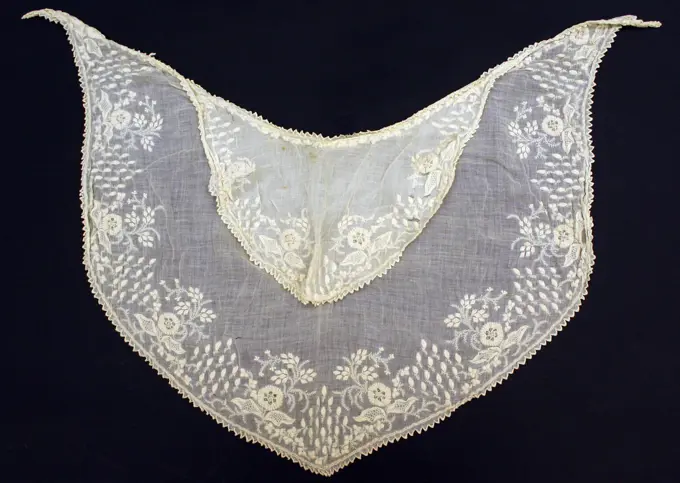
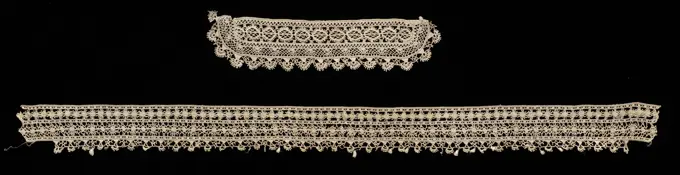
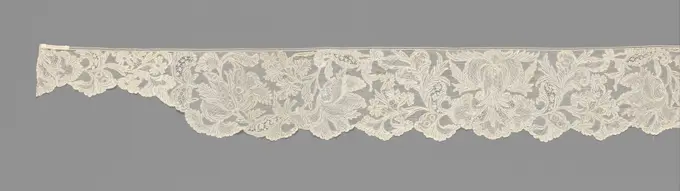
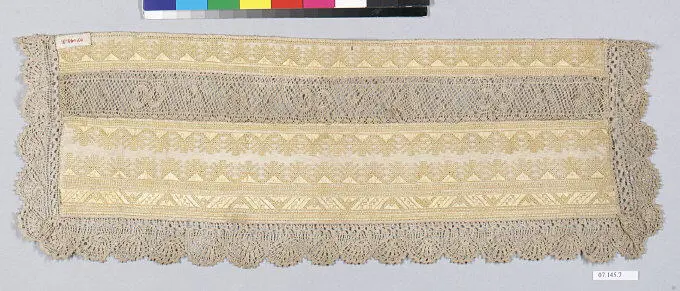
Historical lace pieces featuring intricate floral and geometric designs, representing traditional craftsmanship in textiles from various centuries.
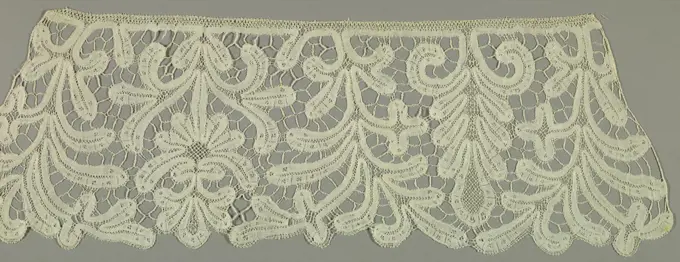
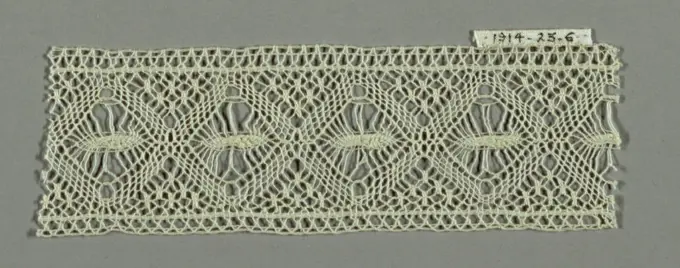
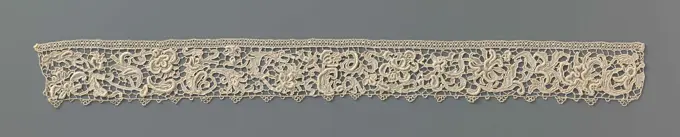
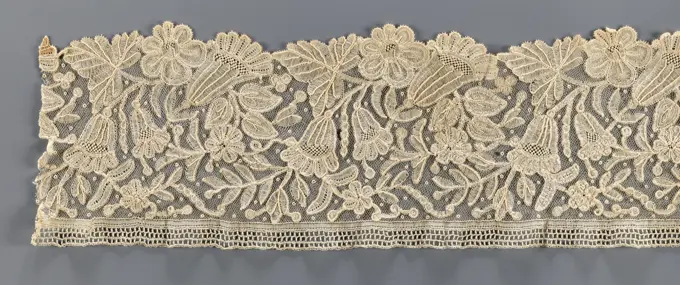
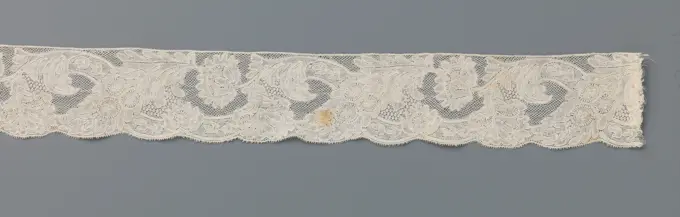
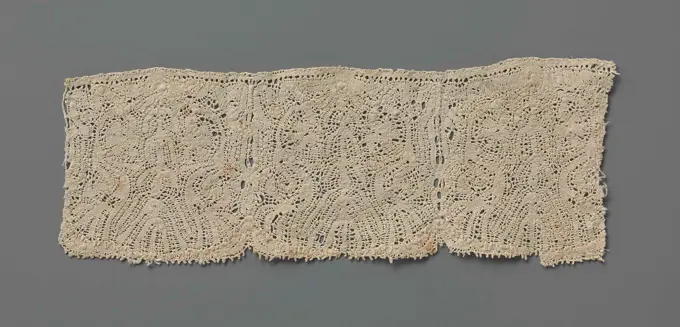
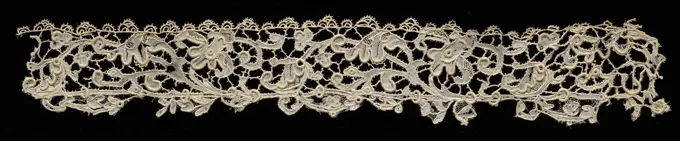
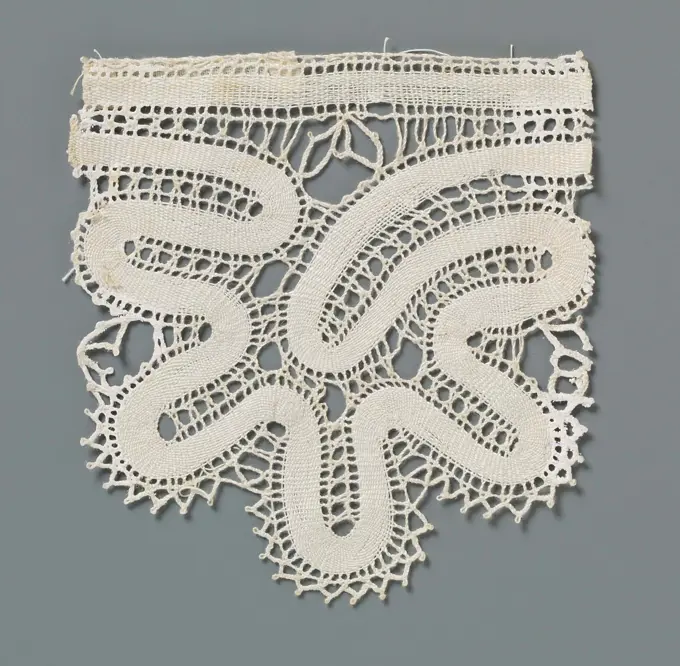
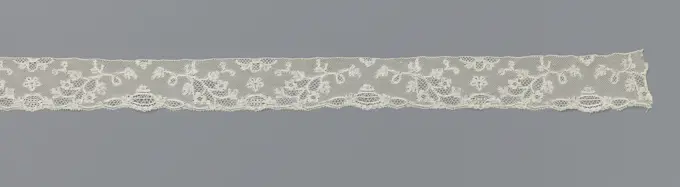
Fragment, Medium: linen Technique: bobbin lace, continuous tape with bars added, Patterns shows pendant flower with spray on either side, alternating with leaf motif. Tape has ornamental stitches, and parts are connected with brides picotees. (parts are connected with bars that have picots), 19th century, lace, Fragment
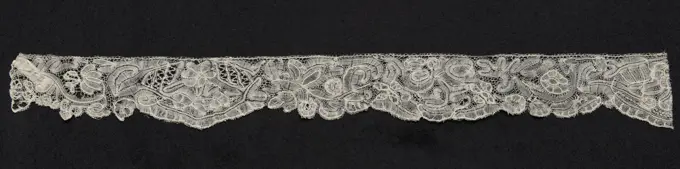
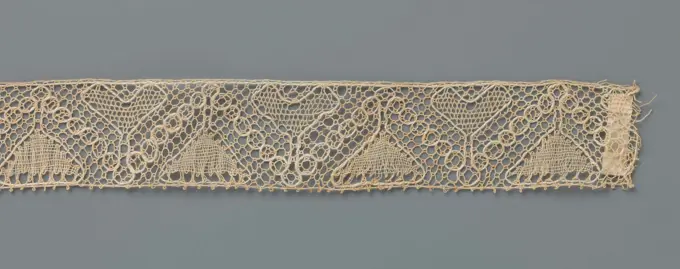
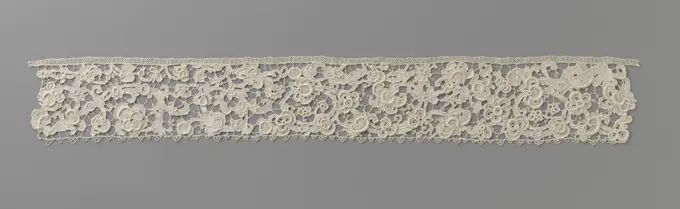
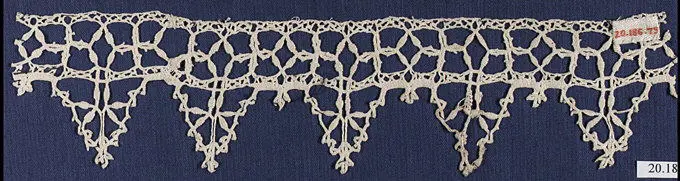
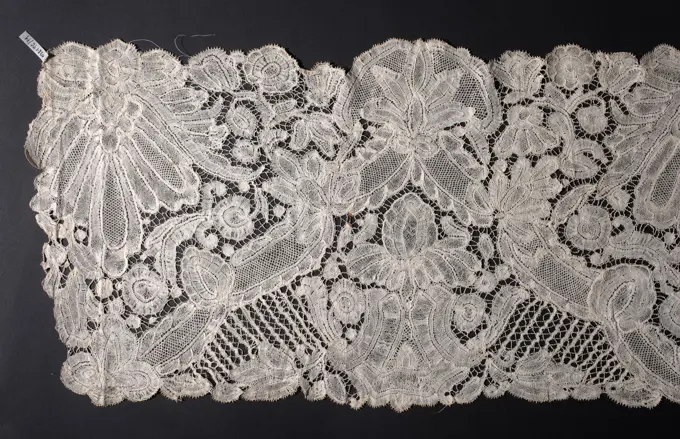
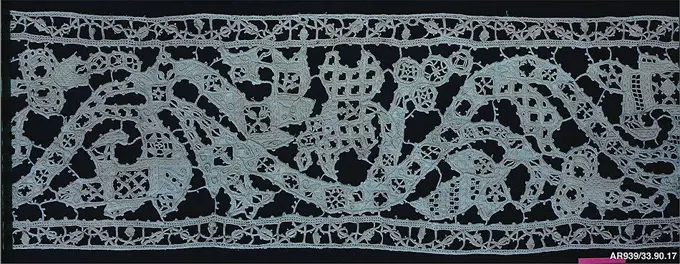
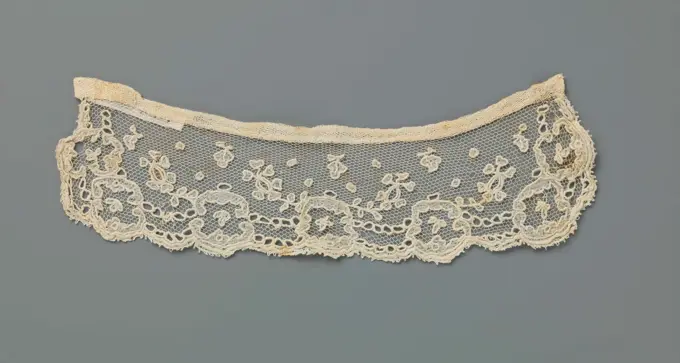
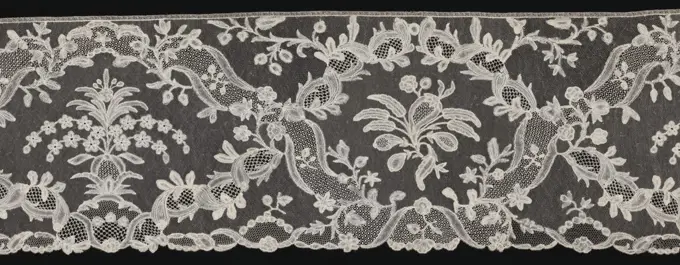
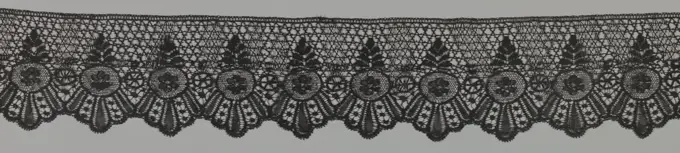
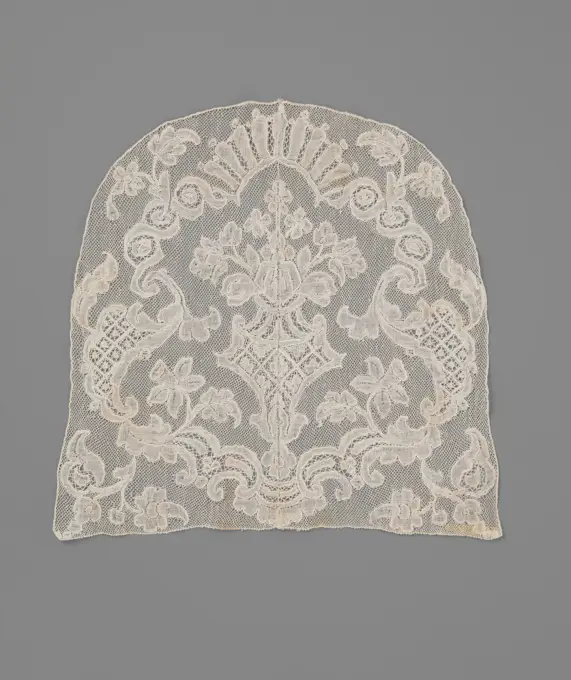
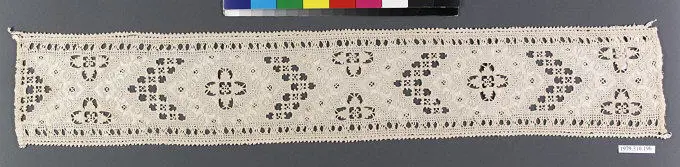
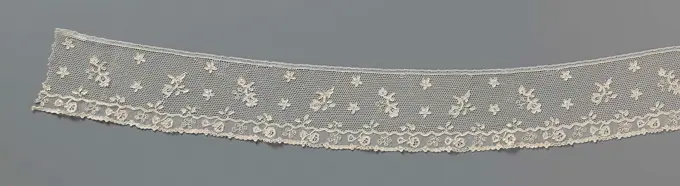
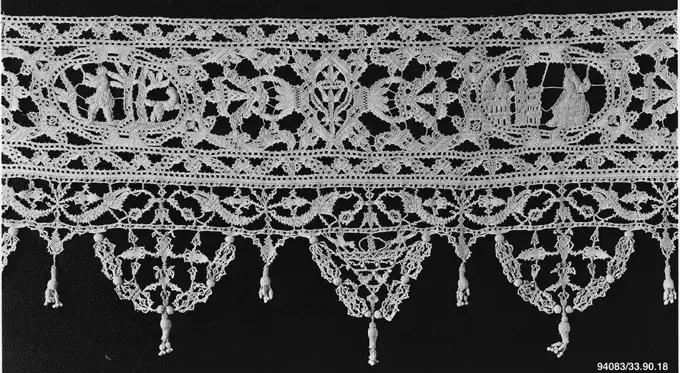
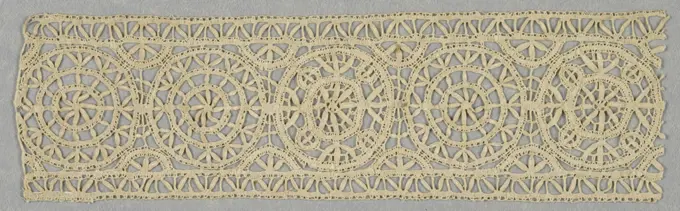
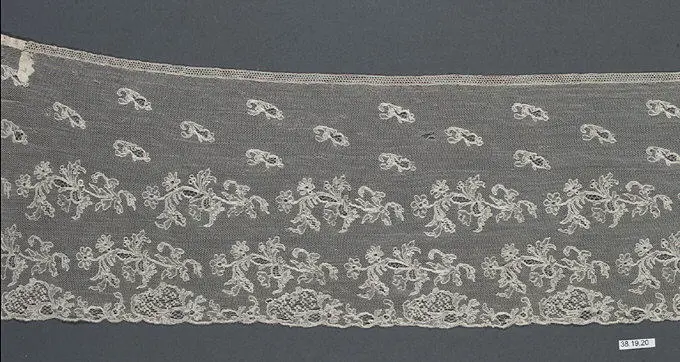
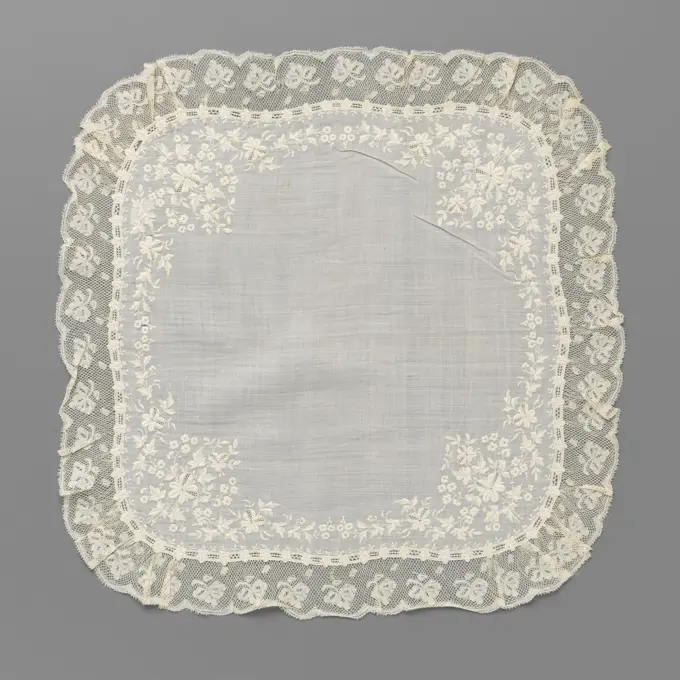
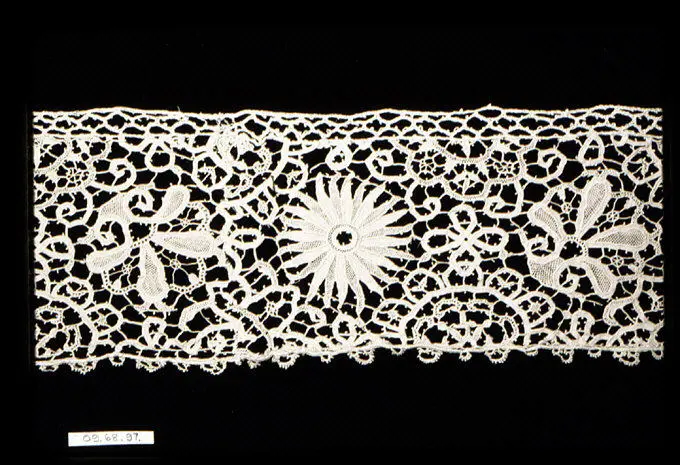
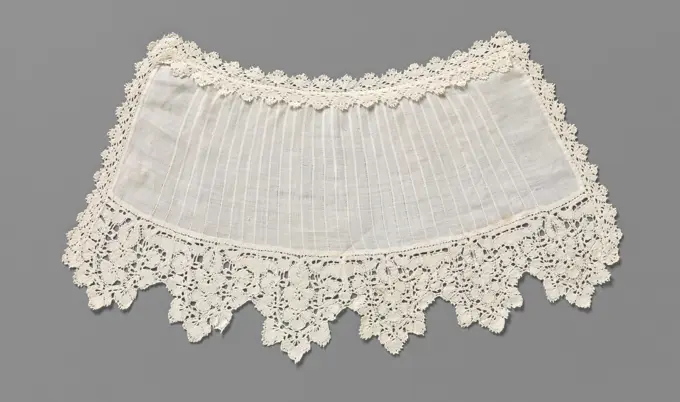
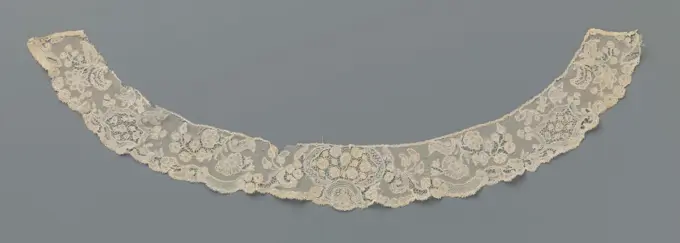
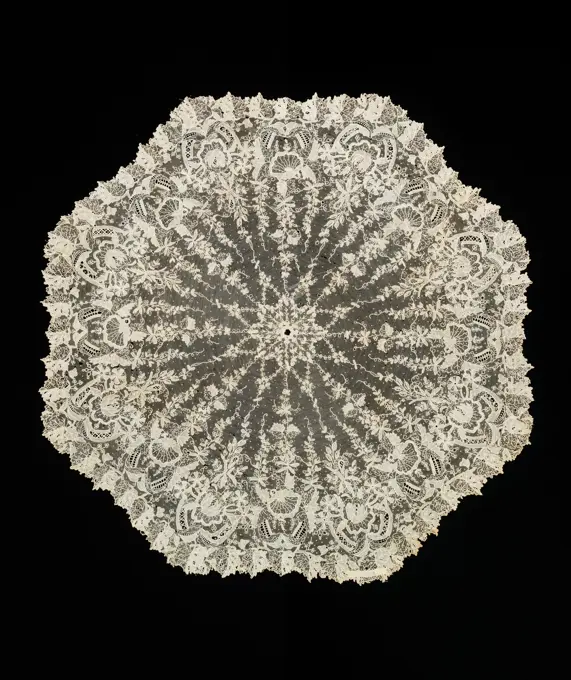
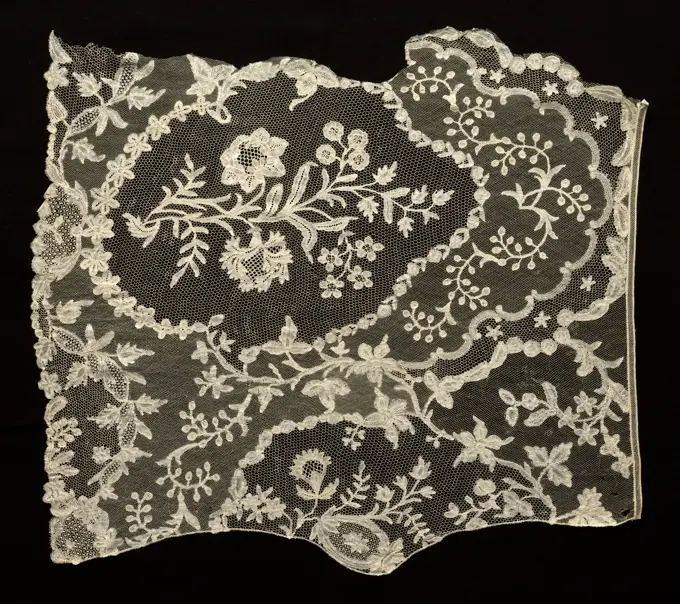
Bobbin Lace (Appliqué) Portion of Flounce, 18th century. Belgium, Brussels , 18th century. Lace, bobbin; average: 67 x 61 cm (26 3/8 x 24 in.).Bobbin Lace Insertion without Selvage, mid 16th century. Italy, Venice, mid 16th century. Lace, bobbin; average: 6.4 x 22.6 cm (2 1/2 x 8 7/8 in.).Bobbin Lace Insertion, early 17th century. Italy, Venice, early 17th century. Lace, bobbin; average: 5.8 x 42.2 cm (2 5/16 x 16 5/8 in.).Bobbin Lace (Rose Lace) Insertion with Edging of Bell Points, 18th century. Italy, Genoa, 18th century. Lace, bobbin; average: 6.7 x 26.1 cm (2 5/8 x 10 1/4 in.).Bobbin Lace (Point d'Angleterre) Edging, 18th century. Belgium, Brussels, 18th century. Lace, bobbin; average: 4.2 x 36.2 cm (1 5/8 x 14 1/4 in.).Strip application side with double rosette flowers, anonymous, c. 1900 Strip natural -colored application side, bobbin lacquered on mechanical tulle. Spray pattern with mosjes on a fine hexagonal Maas soil. Repetitive motif that forms along the lower edge with three rosette flowers interspersed by two daffodil-like flowers. The stems of the three rosette flowers walk up vertically and cross each other halfway through the strip width. There is a smaller rosette flower over the intersection of the stems. Above the two daffodils you can see a symmetrical motif with two curved leaf branches, with a rosette flower here too at the intersection. The large rosette flowers have doubled and consist of a large flower, with a smaller flower over it. Motives cloated in linen and relief contours with a thicker wire, flower arrangements. Various flowers on the bottom are made of chattered ribbon side. The top is trimmed with a border bobbin. Luxury  bobbin lace Strip natural -colored application sidePiece (one of three) 18th century French. Piece (one of three) 218296Strook kloskant met hartvormige en driehoekige bloem tussen zigzag-lijn van cirkeltjes.Strip natural colosside: straw side with motifs in sloping and blank, also called 's gravesmother side. The repeating and symmetrical pattern consists alternately from a heart-shaped flower in a scroll and a triangular flower in linen stroke. For the motifs a thicker contour wire runs that also forms the stem from every flower and the zigzag line of circles that forms between the flowers, under each point one flower. The motifs are connected to each other by a reinforced closed pin layer. Upper and bottom of the strip are directly finished in which the underside is equipped with picots.Strip of needle side with split spirals, anonymous, c. 1800 - c. 1899 Strip of natural -colored needle side: Venetian relief side. There are running, wide spiral ranks on an open bar, which are split in many places. There are also large openwork centers in the petals, which typifies the 19th century. Finishing with a straight list of alternately large and small triangles. Bayeux (possibly) linen (material) Venetian raised work Strip of natural -colored needle side: Venetian relief side. There are running, wide spiral ranks on an open bar, which are split in many places. There are also large openwork centers in the petals, which typifies the 19th century. Finishing with a straight list of alternately large and small triangles. Bayeux (possibly) linen (material) Venetian raised workEdging 16th century Italian, Genoa. Edging 220889Pelerine 1835-45 American or European. Pelerine 118998Needle -sided Engageante with a row of leaf branches and a bottom edge of connected medallions from which leaf branches spring, anonymous, c. 1775 - c. 1799 Engageante of natural-colored needle side: Alençon side. Leaf branches placed under one row, a repeating pattern of connected medallions, in two alternating variants, runs along the underside of the strip. In one medallion, a fine Maas soil has been used as a decorative land and in the other a coarser diamond -shaped grid soil. From the medallions with the grid soils, one leaf branch always originates. The motifs are connected by an Alençon ground with wallpaper meshes. The top is straight finished with a messing strap. The very flat scrap edge is finished with picots. France linen (material) Alençon Lace Engageante of natural-colored needle side: Alençon side. Leaf branches placed under one row, a repeating pattern of connected medallions, in two alternating variants, runs along the underside of the strip. In one medallion, a fineKnotted Lace Collar and Cuff, 17th century. Italy, 17th century. Lace, knotting; average: 5.7 x 77.5 cm (2 1/4 x 30 1/2 in.).Needle -sided Engageante with bunches and tulips, anonymous, c. 1710 - c. 1730 Engageante of natural -colored needle side: flat Venetian net land side. Elongated rectangular model with widened center piece and a scrap edge along the underside. The symmetrical pattern consists in the middle of a leaf rosette with a flower bulb and three chalumps, from where to shocks of waves, which cover the entire width of the Engageante, with waving composite leaves, bunches and large tulips. The motifs are made with undisputed feston stitches, with countless fine recesses between them. A slightly thicker, but equally fine contour wire has been used to accentuate pattern parts. The motifs are connected by a fine Maas soil with transfers. In and around most flowers and leaves, very fine decorative lands have been used in many variants, including decorative land with diamonds, 'patrixties', cubes and zigzag lines. In a few leaves a bar of land is decorated with picots used as a decorative soil. The scrStrip of mechanical side with three rows of flower branches and W-shaped motifs along the bottom, anonymous, c. 1850  Strip of natural-colored machine side: machine alençon side. The strip is slightly bent in shape. The repeating pattern consists of three rows of flower branches with one muse between the flower branches in the upper two rows. The successive flower branches in the upper row consist of one flower with two leaves. In the middle row there are always three flowers hanging on the flower branches. The lower flower branches are the largest with three flowers and a flower bud in the top. Along the lower edge are W-shaped motifs between which circles made with a decorative soil, a machine rose soil. The motifs are provided with contour threads and are connected by a hexagonal Maas soil, a machine alençon ground. The top of the strip is straight finished. The faintly scalloped underside stems from the pattern with the W-shaped motifs and circles and is finished with picots. FrancCuff Moravian-Slovak 1800-1899Kloskant cuff with relief flowers in windows and an edge with suns, anonymous, c. 1850 - c. 1899 Cuff made of natural-colored bobbin: Cluny side. It is a nice species within the Cluny-Kanten group. Trapezoidal model with a V-shaped point in the center on one long side. The symmetrical pattern consists of a decorative frame with a row -connected windows and one relief flower in each window. The frame is made in Ovenlag, the checks in linen battle with openwork edges and contour threads and the relief flowers are on the linen battle. Along the short sides and continuously along the V-shaped point is a scrap edge with suns with rays of potented braids and decorations in shape. One openwork row with such suns is above the decorative frame, which is crowned by a triangular field with three connected windows as in the decorative frame. Volvic linen (material) bobbin lace / Cluny lace Cuff made of natural-colored bobbin: Cluny side. It is a nice species within the Cluny-Kanten group. TrapezoiFragment; cottonShawl (Belgium); linenFragment ca. 1650 Italian, Venice. Fragment 212487Sampler 19th century German. Sampler 228635Strook naaldkant met golvende omkrullende rank met verschillende bloemen.Strip natural needle side: Venetian rosion side. The pattern consists of a wavy rank with curled flower stems and leaves. On the rank, many are larger and smaller flowers. The motifs are made with feston stitches. By applying a rotation in the feston stitches, fine recesses forming line patterns and checks of patterns in, among other things, the petals and leaves. Along all motives are relief contours and around the flower hearts and edges of the curly leaves are thickened with cordons, which are decorated with rover picots. The motifs are connected by picoted bars. The top of the strip is straight finished. The underside is finished with a bow edge.Border (Belgium); linen; 1918-31-4Edging 17th century Italian, Genoa. Edging 221105Insertion with Cardinal's Coat-of-Arms. Italy, Milan. Date: 1675-1725. Dimensions: 18.1 x 276.1 cm (7 1/8 x 108 3/4 in.)Width repeat: 23.3 cm (9 1/4 in.). Linen, bobbin part lace. Origin: Italy. Museum: The Chicago Art Institute, Chicago, USA.Fragment of reticella lace unknownStrip bastard with W-shape around cloud-like motifs, Anonymous, 1840-1849 Strip of natural -colored bobbin: blonde. The upper half of the strip has no pattern and consists of a grid, a Paris soil. The repeating and continuous pattern along the bottom half of the strip consists of two rows of cloud-like motifs with different ovals placed in a V-shape or W-shape. The motifs are made in linen and mains and they are accentuated by thick and shiny contour threads. The (ornamental) rabs with which the motifs are connected to each other on the lower half of the strip are a rose soil and a tender. The top of the strip is straight finished. The scrap edge is finished with picots. Belgium (possibly) silk bobbin lace / blonde (lace) Strip of natural -colored bobbin: blonde. The upper half of the strip has no pattern and consists of a grid, a Paris soil. The repeating and continuous pattern along the bottom half of the strip consists of two rows of cloud-like motifs with different ovals placed in Fragment (Italy); linenStrip 18th century Italian, Genoa. Strip 220803Cap Crown (Belgium); linenFragment of the lace - frill;  around 1700 (1701-00-00-1710-00-00);lace, purchase (provenance)Fragment; linen; 1897-8-290-a,bStrook naaldkant met spichtige bloemen.Strip natural colored Venetian needle side "Gros Point". On an open bars soil there is a running rank with large-fashioned small flowers, which are occupied with a spandy, strongly curved petals. The richly varied leaf volutes, are also strongly curved.Fragment of reticella lace unknownBorder; linen; Bequest of Marian Hague; 1971-50-433Needlepoint (Punto in aria) Lace Insertion and Edging, 16th century. Italy, Venice, 16th century. Lace, needlepoint; average: 5.5 x 27 cm (2 3/16 x 10 5/8 in.).Strip of bobbin with thin sprig and down -hanging rosette flowers or forget mine beers, anonymous, c. 1830 Strip of natural -colored bobbin: Mechelse side. Under a stray pattern of five rows of rosette flowers, the repeating pattern exists along the underside of the strip from a sloping scoop, on which a bunch of rosette flowers hangs down. A semi -circular shell has been formed around each bunch of rosette flowers. The branches with flower clusters are made in little linen battle, with a recess in the flower hearts and thicker and shiny contour threads. The rosette flowers in the spreading pattern are made with contour threads, where square motifs in shape are used in every open worked flower heart. The motifs are connected by a fine Maas soil, a Mechelen soil. The top of the strip is straight finished. The scrap edge on the bottom is finished with picots. Mechelen linen (material) bobbin lace / Mechlin (lace) Strip of natural -colored bobbin: Mechelse side. Under a stray pattern of fBorder early 17th century Italian Punto in arialiterally, "stitches in the air"is one of the earliest styles of needle lace, which is itself developed from cutwork of primarily geometric design. When lacemakers transitioned to using a foundation of threads laid out according to a pattern drawn on parchment, they were able to incorporate more fluid lines and curves into their designs.. Border 222709Manchet van applicatiekant met ronde cartouches.Cuff of natural colored application office: Batist applicated on machining tulle. The repeating pattern exists along the bottom edge of two C vultuts that form a more or less round cartouche. There is a three-leaf motif in every cartouche. The cartouches are interconnected by one pair of winds of openwork cables. Above is a stroke pattern of mates and small flowers or leaves. The top is finished with a soil. The tube edge at the bottom runs through in both short sides is finished with picots. The cuff can be closed by means of two brackets.Strip of needle side decorated with a leaf and flower edge and moes, anonymous, c. 1785 - c. 1799 Strip of natural-colored needle side: men's-Aalençon, possibly partly machine (see comment at technology). Spread motif with mosjes on a fine hexagonal Maas soil. The pattern on the underside of the strip consists of sloping twigs with a lobed leaf on either side. These leaf pairs are alternately filled with a decorative land. The underside consists of a row of screen flowers with seven separate flowers, filled with a decorative soil. There is no separate pattern for the lower edge, the scrap edge forms from the lower flower motif. The top is trimmed with a border bobbin. France linen (material) Alençon Lace Strip of natural-colored needle side: men's-Aalençon, possibly partly machine (see comment at technology). Spread motif with mosjes on a fine hexagonal Maas soil. The pattern on the underside of the strip consists of sloping twigs with a lobed leaf on either side. These leaf pairs are Fragment of the lace;  19th century (1800-00-00-1900-00-00);Two Fragments of a Border Made 1880-1900 Bruges. Cotton, bobbin part lace of a type known as Duchesse de Bruges .Strook kloskant met een door tulpjes geflankeerde margriet.Natural collate strip, old lace. The pattern consists of a repeating symmetrical composition of a daisy on a straight stem, which is flanked on either side by a tulip on a faint rolling stem with elongated volute leaves. The flowers hang down from the top edge and always fill one semi-round shallowed. A sparingly used irregular maasing soil connects the motifs. The motifs are made in linen stroke with openwork edges. The shelters are picoted. The top is finished with a straight edge.Strook kloskant met liggende bloemtak in schulp met rozetbloempjes.Strip natural colosside: Mechelen side. The repeating pattern consists of a horizontal flower branch with different types of flowers. Each consecutive branch lies straight above an elongated blade in a shell in a faint curved shell. A concatenation of rosette flowers runs along the slump edge. The motifs are connected by a fine Maas soil, a Mechelen soil. The motifs are made in linen stroke with thicker and shiny contour wires. In the opened flower hearts, cubes were made in shape stroke. The top of the strip is straight finished. The sloping edge is finished with picots. The short sides are finished with a soil.Flounce, Medium: linen Technique: Brussels style bobbin lace, Flounce worked with a design of twisted foliate garlands enclosing a motif of pomegranate fruit and flowers. Edge irregularly scalloped., Belgium, 18th century, lace, FlounceBand; linen; Bequest of Marian Hague; 1971-50-299Border Made 1750-1800 Italy. Linen, bobbin straight lace .Strip bobbin with omega -shaped decorative belt cut over by a plume and by peonies, anonymous, c. 1740 - c. 1760 Strip of natural -colored bobbin: Mechelse side. The repeating and continuous pattern consists of a decorative band in the shape of the Greek capital letter Omega. This is cut on one side by a slanting feather slanted downstairs and from the top through a lush leaf from which two peonies spring. The plume that cuts the subsequent omega rises from the upper of these peonies. The motifs are connected by a fine Maas soil. The motifs are made in linen battle with few recesses but with openwork edges. In the decorative band and the three oval medallions in the Pluim, among other things, it is made in netslag. Contour lines are applied around the motifs with slightly thicker and shiny wire. A decorative land has been installed in residual spaces between leaves and flowers, a snowflake ground. The faintly scalloped underside stems from the pattern and is finished with picots. The tPiece 18th century Flemish, Mechlin. Piece. Flemish, Mechlin. 18th century. Bobbin lace. Textiles-LacesSquare 17th century Italian. Square 214784Edge; silk; 1933-1-198Strip of needle side with cut point and bows, anonymous, c. 1500 - c. 1599  Strip of natural needle side, sliced work and work with pulled out threads. Pattern with a broadly cut point in the middle. Cut edges with triangles where 'bows' in feston stitches form the connection between the opposite triangles on the cutting edge. To the left of this embroidery in the form of insect wings. To the right of the cut point embroidery in the form of coats of arms. The edges along the strip on top and bottom consist of work with pulled out threads, with a pattern of a row of squares with alternating spider and a stylized flower. unknown linen (material) embroidering armorial bearing, heraldryBorder, Technique: applique, bobbin lace, Applique a vrai Drochel, floral edge; late 18th century Brussels, joined, late 18th century, lace, BorderBobbin Lace Insertion, mid 16th century. Italy, Venice, mid 16th century. Lace, bobbin; average: 3.5 x 17.2 cm (1 3/8 x 6 3/4 in.).Cravat end, Medium: linen Technique: needle lace, 6-sided reworked grounds Label: linen needle lace, Needle lace cravat end with a delicate all-over floral design and figures, including a figure dressed as a warrior, wearing a helmet in form of a double-headed eagle, standing on a trophée flanked by kneeling warriors; the scene surmounted by a royal crown and surrounded by dolphins, winged putti, warrior figures and foliated sprays., France, ca. 1695, lace, Cravat endBobbin and Needlepoint Lace Lappet, 1730s-1740s. Belgium, Brussels, 18th century. Lace, bobbin and needlepoint: linen; average: 59.7 x 12.1 cm (23 1/2 x 4 3/4 in.).Strip crocheted side with five -pointed stars and flowers made with open circles, anonymous, c. 1890 - c. 1909 Part of a strip of natural -colored Irish crocheted side. The original, repeating, pattern consists of a double row with a total of eight triangular floral motifs made with open circles, interspersed with one five -pointed star with a circle in the middle and a circle on each point. Crochet irregular mesh soil with picots. At the top and bottom are finished with a straight edge. Ireland cotton (textile) Part of a strip of natural -colored Irish crocheted side. The original, repeating, pattern consists of a double row with a total of eight triangular floral motifs made with open circles, interspersed with one five -pointed star with a circle in the middle and a circle on each point. Crochet irregular mesh soil with picots. At the top and bottom are finished with a straight edge. Ireland cotton (textile)Borders, Medium: linen Technique: bobbin lace (late Valenciennes ground), Borders of bobbin lace with Valenciennes ground worked in a meandering floral design above a border of vertical sprigs, scallops and pendant leaves forming the edge., France, 19th century, lace, BordersHatsbol van Mechelse side, Anonymous, c. 1725 - c. 1750 Hatsbol van Mechelse side with a vase with flowers in the middle, around which a cartouche. The cartouche consists of leaves and curls with spaces filled with diamonds. West-Europa . Mechlin (lace) Hatsbol van Mechelse side with a vase with flowers in the middle, around which a cartouche. The cartouche consists of leaves and curls with spaces filled with diamonds. West-Europa . Mechlin (lace)Application with Machinal side, anonymous, c. 1850 - c. 1899  Application of natural -colored machine side. Heart -shaped model. The symmetrical pattern consists of a decorative edge along the underside of the heart of openwork squares with a cross in each square with a dot in the center. Halfovaal -shaped scumples hang down along this band with the same crosses. The squares and shells increase towards the tip at the bottom in size. At the top the heart is limited by a slender with small leaves. In the heart are three chalice flowers with two rosette flowers in between, both with small leaves. Europe cotton (textile)Fragment; linen; Bequest of Marian Hague; 1971-50-417Strip bobbin with deep wave line, anonymous, c. 1880 - c. 1899 Strip of black bobbin, cluny side. The repeating and symmetrical pattern consists of a deep wave line. In each golf valley there is a rosette with two smaller rosettes and a four -pointed star in between. Each wave summit comprises a composite, standing leaf, with five leaves on either side. Under the leaf is a framed four -pointed star. The scrap edge along the underside of the strip is formed by three radiating lobes under each golf valley. A composite leaf hangs down in each of these lobes. The lobes are finished with arches made with potente braids. The golf lines and frames are made in netslag and linen battle, the rosette leaves, composite leaves and stars in shape. They are connected by a braid ground, which forms a coarse square grille on the top of the strip. The top of the strip is straight finished. Geraardsbergen (Possible) silk bobbin lace / Cluny lace Strip of black bobbin, cluny side. The repeating and symmetFragment of bobbin lace unknownStrip 17th century () French Punto in aria—literally, "stitches in the air"—is one of the earliest styles of needle lace, which is itself developed from cutwork of primarily geometric design. When lacemakers transitioned to using a foundation of threads laid out according to a pattern drawn on parchment, they were able to incorporate more fluid lines and curves into their designs.. Strip 212403Strook kloskant met aaneengeschakelde cirkels met in het centrum een rozetbloem.Strip natural colosside, Buckingham side. The repeating pattern consists of connected circles with a rosette flower in the center. Above the circles a narrow job is made with a maas land, a tulet. The circles are made entirely with a rose ground, where the round meshes along the edge are accentuated with thick and shiny contour wires. The rosette flowers are made in linen stroke, with a small recess in the middle and along the outside with a contour wire. Each circle forms a semicircular shell on the bottom of the strip and is finished with picots. The top of the strip is straight finished.Bands 15th-16th century Italian The Metropolitan Museum's great lace collection was started when the Museum became the first among American museums to organize a permanent collection of lace with the acceptance of the McCallum Collection in 1879 and the bequests of Mrs. John Jacob Astor, Mrs. Robert L. Stuart, Mrs. Augustus Cleveland, and Mrs. A. W. Winters shortly thereafter. In 1893 a loan collection of antique laces shown at the World's Columbian Exposition in Chicago was assembled by a committee of New York women headed by Catharine Augusta Newbold. About 1900 Miss Newbold arranged and labeled an exhibition of laces and linenworks lent to the Metropolitan Museum by Mrs. James Boorman Johnstone and the Misses Johnstone. "Her scholarly knowledge of lace technique enabled the Museum for the first time to offer a comprehensive display of lace illustrating its historical development," wrote Miss Frances Morris, then curator of the textile department. Miss Newbold's name occurs again in Edging 17th century Italian, Genoa. Edging 221020Strook kloskant met een symmetrisch patroon met drie gestileerde tulpen.Strip natural colosside: Old cravings. The repetitive and symmetrical pattern consists of a straight stem hanging down at the bottom of a chali flour or styled tulip. The central stem is flanked by wavy stems (S-shaped), with a smaller cheries flower to each end and a small rosette flower on the base. The motifs are made in linen stroke with openwork edges. There is hardly any grounds, but the piece does show a first step towards the development of grille. The top of the strip is straight finished. The very flat sloping edge along the bottom of the strip is finished with picots.Edging 17th century Italian, Genoa. Edging 220975Bobbin Lace (Blonde Lace) Edging, early 19th century. Spain, early 19th century. Lace, bobbin; average: 2.9 x 8.3 cm (1 1/8 x 3 1/4 in.).Handkerchief with a border of needle side with corner banderolles. Handkerchief with an edge of natural needle lace, Brussels mesh edge. Around a large twelve-floping, batters center piece runs a lace edge of four stained middle crabs and deep angular lines. The latter are filled with a banderle, which binds a hanging tuft of lilacs and lilies. The lilies have a single relief and form the outside corners. A chain of hanging bells along the slot forms the outer circumference.Strook naaldkant met bloemtakken en stervormige bloemen.Strip natural needle side: Argentan-lace and alnezon-side. Repetitive motif with two different flower branches, each flanked by two star-shaped flowers placed above each other, on a ground with meshes that are close to naid with buttonhole stitches (Argentankant). The flower branches bend to and to each other. Along the bottom under a wavy line including a pattern of flowers and berries on a fine hexagonal Maas soil (Alençon side). Decorative ground with rover picots in the larger flowers and the circles along the bottom edge. Full work with minimum recesses within the contours of the other motifs. Slip edge on the underside through a concatenation of circles, regularly interrupted by a rosette flower. The top is trimmed with a border clamping side.Border 17th century Italian Punto in arialiterally, "stitches in the air"is one of the earliest styles of needle lace, which is itself developed from cutwork of primarily geometric design. When lacemakers transitioned to using a foundation of threads laid out according to a pattern drawn on parchment, they were able to incorporate more fluid lines and curves into their designs.. Border 222710Band, Medium: linen Technique: bobbin lace, discontinuous tape, Strip of insertion lace in design of concentric circles, each with central rosette., Genoa, Italy, 17th century, lace, BandNeedlepoint (Venetian Raised Point) Lace Narrow Strip, 17th century. Italy, Venice, 17th century. Lace, needlepoint; average: 32.2 x 4.2 cm (12 11/16 x 1 5/8 in.).Fragment (Italy); linenFlounce 18th century Flemish. Flounce 226290Textile, Medium: silk on linen Technique: counted running stich embriodery, needlepoint lace insertion, White linen frontal made in eleven perpendicular panels of linen, which are outlined in narrow border of embroidery, stylized vine, in blue silks. Insertions of needlepoint lace, (four) also perpendicular; accross bottom a wider band of blue embroidery, a band of lace insertion, and another band of embroidery. Edged with narrow blue silk fringe. Stitch 'punto scrito' - counted running., 16th century, embroidery & stitching, TextileBatist handkerchief with plumetis embroidery with violets and forget-me-nots and a border bobbin with three-part leaves, anonymous, c. 1850 - c. 1860 Batist handkerchief with embroidery - Whitework with plumetis and sand stitches - and a border bobbin: Valenciennes side. Square model with rounded corners, on which the strip of side is wrinkled. The embroidery is located along the edge of the batist in the corners, from which it spread towards the center of each side. The pattern is the same in every corner and almost symmetrical. It consists of four violets, surrounded by forget-me-nots and wingerd leaves and berries. Along the outside of the batist runs an openwork decorative band with needle side stitches between embroidered maple leaves. The lace strip has a repeating pattern of a mosies with a hanging three -part leaf on a curved stalk diagonally. The motifs are made in linen battle with openwork edges and cut -outs such as leaf gry. The motifs are connected by a wasting ground: a Border 16th-17th century Italian Punto in arialiterally, "stitches in the air"is one of the earliest styles of needle lace, which is itself developed from cutwork of primarily geometric design. When lacemakers transitioned to using a foundation of threads laid out according to a pattern drawn on parchment, they were able to incorporate more fluid lines and curves into their designs.. Border 218036Strip 16th-17th century Italian. Strip 217986Dames- of herenmanchet van fijn linnen met kloskanten schulpranden.Cuff for a lady or gentleman, made from Batist and finished with natural colosside around: Old Flemish side. Model: Rectangular linen laid with fine pleats in a curved shape. On one long side, the cuff has a wide strip of clamping and a narrower strip on the other sides. Along the long side with the narrower strip side, a mirrored narrow strip side is also sewn, which falls over the linen. The repetitive and symmetrical pattern of the wide strip with a total of five tubes consists of a flower pot surrounded by seven triple leaves by a glider. The pattern of the narrow strips consists of jointed triple flowers that simultaneously form tubs.Fragment; linen; 1933-1-97Crocheted side with rose and clover leaves, anonymous, c. 1890 - c. 1909 Triangular support piece of natural -colored Irish crocheted side. Central to the triangle a layered rose with a spray pattern around it with a cloverleaf and dots. Crocheted soil with potente diamond -shaped meshes. Finished along all sides with picoted three -part arches. Ierland (possibly) cotton (textile) Triangular support piece of natural -colored Irish crocheted side. Central to the triangle a layered rose with a spray pattern around it with a cloverleaf and dots. Crocheted soil with potente diamond -shaped meshes. Finished along all sides with picoted three -part arches. Ierland (possibly) cotton (textile)Encaje de bolillos. Museu Català de les Arts i Tradicions Populars.Strook kloskant met ovaal cartouche in het midden en insect boven hol geschulpte cartouches.Strip natural colored Brussels climbing side. The strip is curved in shape. The symmetrical pattern consists of an oval cartouche with a hanging flower branch with a carnation and rosette flowers, a hollow scalloped cartouche and a hanging flower branch with a rosette flower with a rosette flower with eight pointed petals on either side. An insect flies above the scalloped cartouches. The motifs are connected by a fine Maas soil, a slighten ground. The full work is largely made in linen battle with openwork edges, single recesses and with power stuffs. Most motifs have closted relief contours. Various ornamental grounds have been applied, including snowflakes and picoted braid forces. The top is just finished. The scalloped underside is finished with picots. The short sides are finished with a soil.Strip bobbin with three -lobe fan -shaped leaves, anonymous, c. 1900 - c. 1914 Strip of natural -colored bobbin: Mechelse side. The repeating pattern consists of a thin sling that forms a very silly edge of the scaffold along the underside of the strip. A three -lobby fan -shaped leaf rises from the pendulum in each shell. The pendulum with leaves is made in a fine Maas soil, a Mechelen soil. The sparing fullwork is made in linen battle with thicker and shiny contour threads. A strip of tulle is attached along the top of the strip, both strips are straight finished. The very silly outskirts of scales are finished with picots. Belgium linen (material) bobbin lace / Mechlin (lace) Strip of natural -colored bobbin: Mechelse side. The repeating pattern consists of a thin sling that forms a very silly edge of the scaffold along the underside of the strip. A three -lobby fan -shaped leaf rises from the pendulum in each shell. The pendulum with leaves is made in a fine Maas soil, a Mechelen sStrip of clamping side with lobes formed by a ribbon. Strip natural colosside: Russian side. The pattern is formed by a ribbon that forms winding lobes. The ribbon is made in poetry linen, with open edges. The winding ribbon are kept in shape by braids. The top is just finished. The lower lobes form the slump and which are finished with triangles made from braids, with a picot at each point.Needlepoint (Punto in aria) Lace Insertion and Edging, late 16th century. Italy, Venice, late 16th century. Lace, needlepoint; average: 10.5 x 48 cm (4 1/8 x 18 7/8 in.).Parasol fourth quarter 19th century Belgian This is an excellent example of a very expensive and fine parasol cover. The pattern created for this specific format of eight sections, corresponds with the sections of the parasol. Inexpensive parasols were usually used just for a season and then discarded, but a parasol for which this would be a cover would be only of the finest quality and used for several years.. Parasol. Belgian. fourth quarter 19th century. linenStrip Application side with Margriet branches, Anonymous, c. 1890 - c. 1899 Strip of natural -colored application side, bobbin lacquered on mechanical tulle. On a fond decorated with twigs, along the scalloped side, alternately a large branch with daisies and a small branch with bell flowers. The stretched scales show, among other things, broken C-volutes and rocailles filled with gridwork. Brussels linen (material) Strip of natural -colored application side, bobbin lacquered on mechanical tulle. On a fond decorated with twigs, along the scalloped side, alternately a large branch with daisies and a small branch with bell flowers. The stretched scales show, among other things, broken C-volutes and rocailles filled with gridwork. Brussels linen (material)Strip of bobbin with bold branches, anonymous, c. 1775 - c. 1799 On the traly land, a Mechelen soil (also known as ice soil), there are two symmetrical, soaked and slanted branches, the side branches of which cut an oval that is filled with grid. Smaller ovals in the faintly scalloped edge. Halved cross flowers and rosettes are on the straight inside. Mechelen side. Southern Netherlands linen (material) bobbin lace / Mechlin (lace) On the traly land, a Mechelen soil (also known as ice soil), there are two symmetrical, soaked and slanted branches, the side branches of which cut an oval that is filled with grid. Smaller ovals in the faintly scalloped edge. Halved cross flowers and rosettes are on the straight inside. Mechelen side. Southern Netherlands linen (material) bobbin lace / Mechlin (lace)Piece 18th century Italian. Piece 214917Lace shawl unknownLace piece, 1800s, maker unknown. Gift of Mary Crone, 2008.Band, Medium: natural linen Technique: bobbin made continuous tape with bars, Fragment of band with meandering vine., Italy, 17th century, lace, BandFragment early 19th century British, Buckinghamshire. Fragment 213241Handkerchief with edge of mixed side with bell-shaped corner reserves. Natural mixed handkerchief: Brussels Duchesse. Around a large, hollow scalloped batters center piece runs a lace edge with large oval-shaped links or medallions with a fine mesh soil (needle side), on which a flower branch is located. In the corners, the switches are cross-cut by a large, overhanging bell-shaped reserve, with a braid soil, on which a standing oval medallion (needle side). The links are surrounded by joined rosette. Every medallion is decided between two acanthus leaves. A fine godrone edge runs along the edge.Edge, Medium: linen Technique: bobbin lace (late twisted Valenciennes ground with Brussels motifs), Border resembling Valenciennes type, but made in Belgium. Design of floral, leaf and scroll forms. Twisted Valencienne ground hooked into Brussels motifs., Belgium, 19th century, lace, EdgeCollar van Duchesse with large irregular scallops, anonymous, c. 1896 - c. 1906 Collar van Duchesse with large irregular scallops decorated with clovers and roses. Lying round model with connecting, finely scalloped neckline. Used . Collar van Duchesse with large irregular scallops decorated with clovers and roses. Lying round model with connecting, finely scalloped neckline. Used .