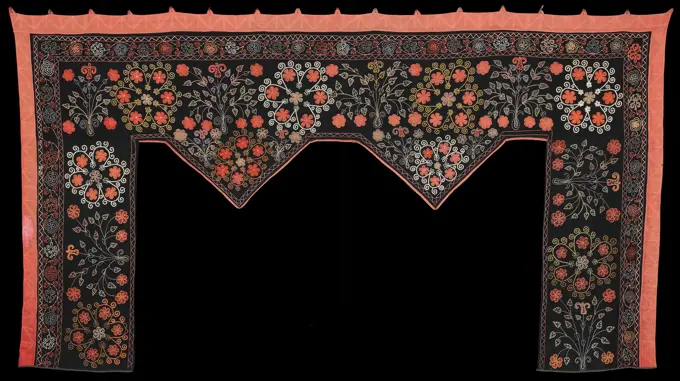
Delicate Vintage Lace Strips

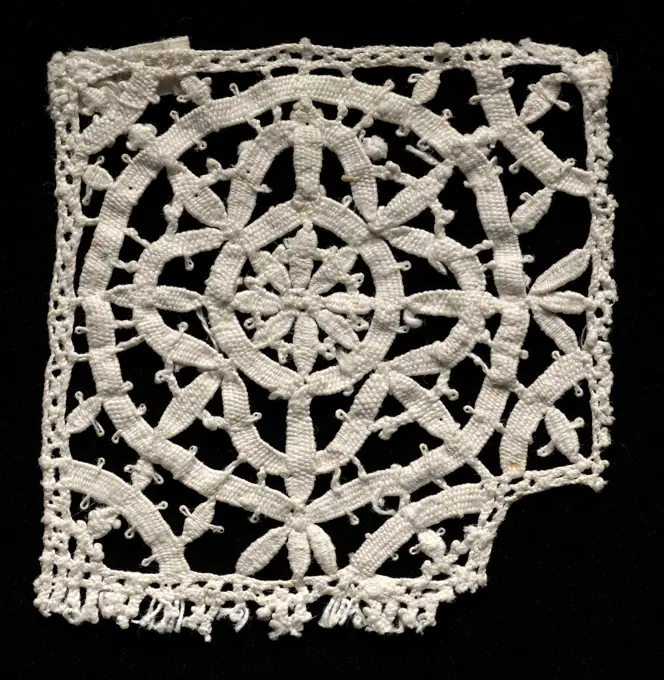
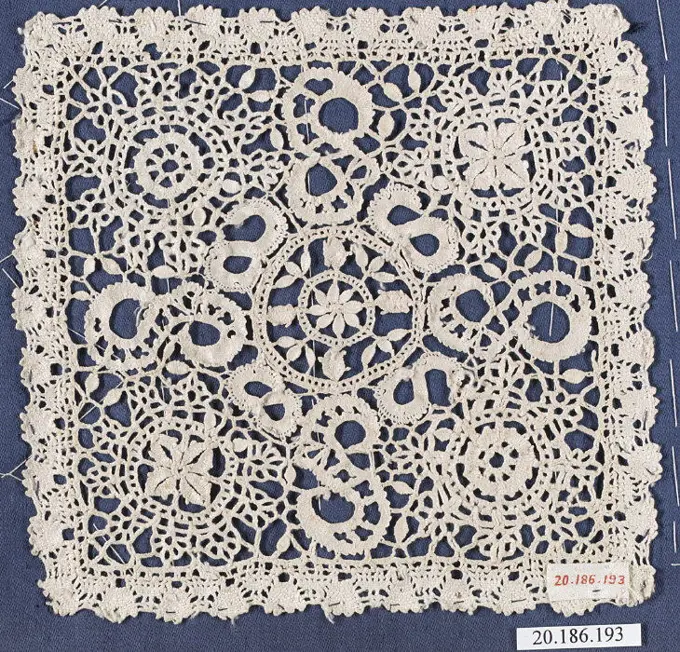
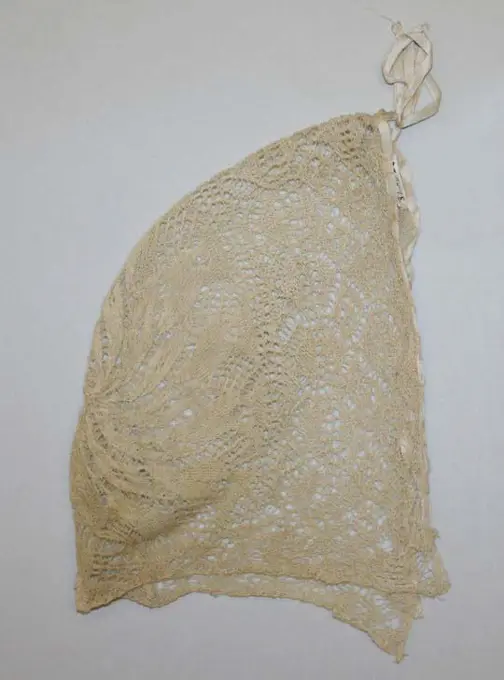
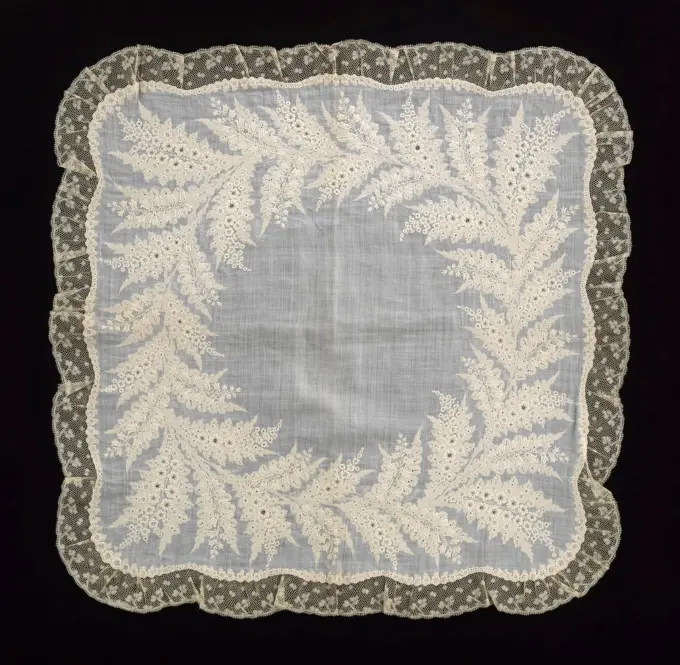
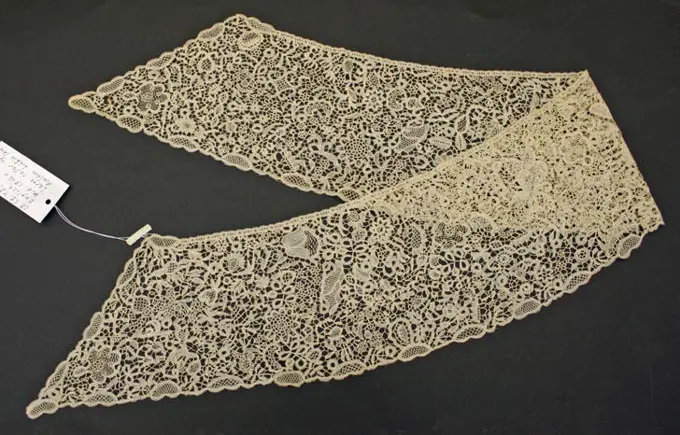
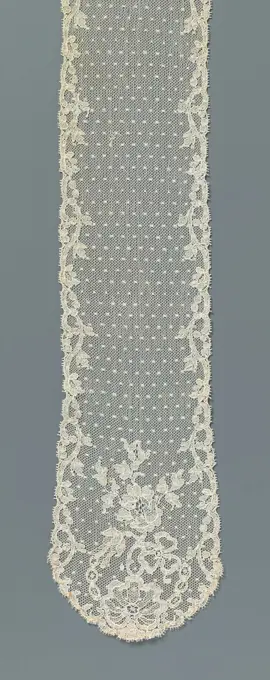
Intricate lace strips featuring floral patterns and historical designs. The natural colors and detailed craftsmanship exude elegance and vintage charm.

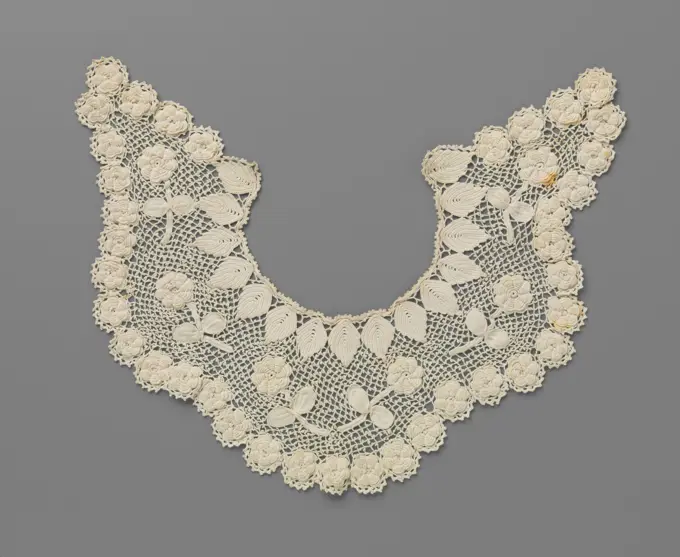
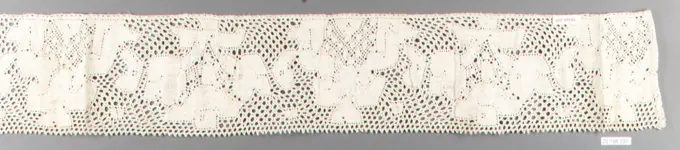
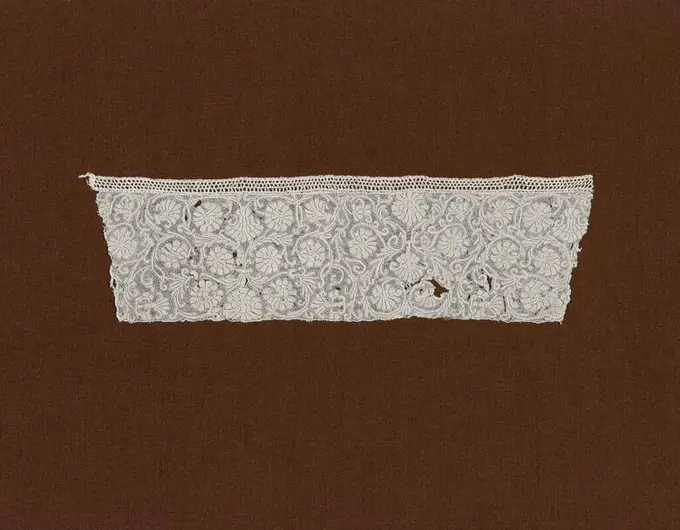
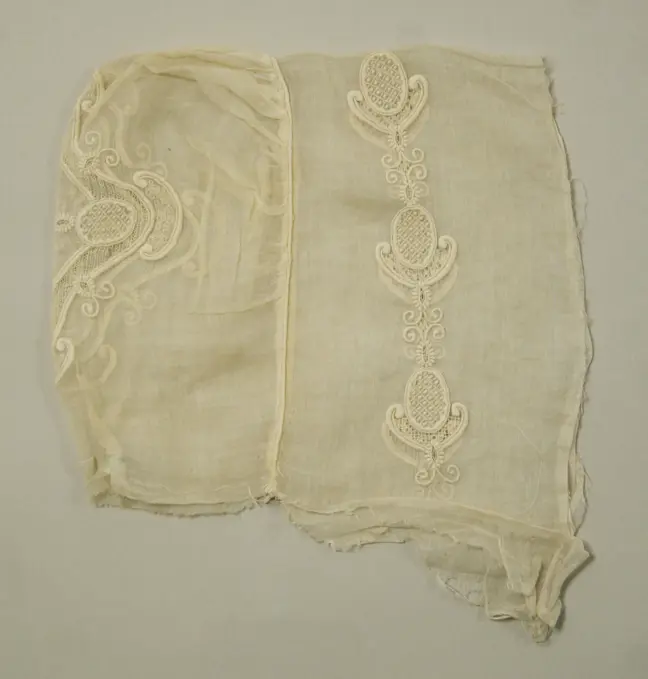
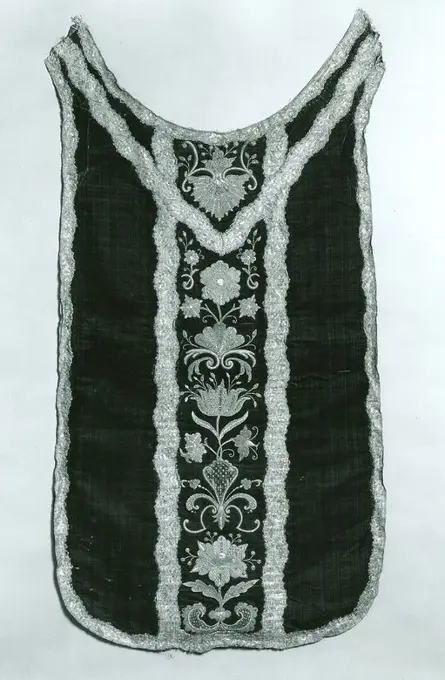
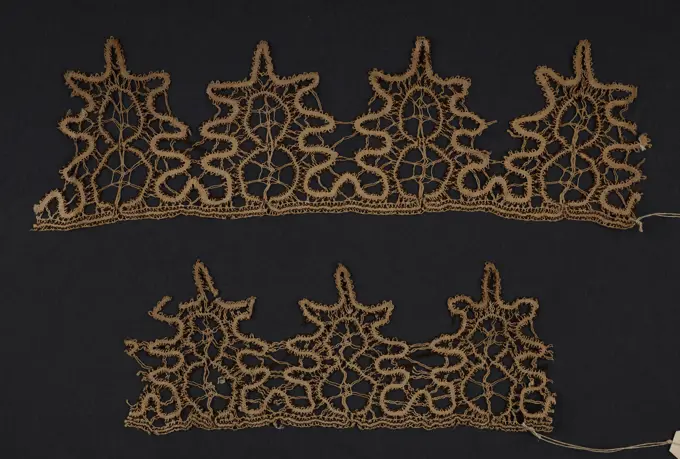
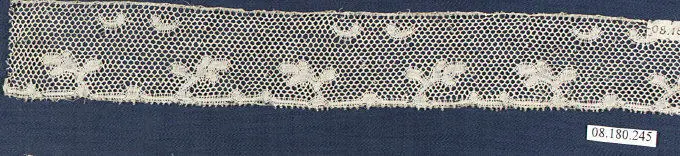
Strip made of linen with a wax edge and lace plunge with a row of open -worked drop shapes, anonymous, c. 1820 Japon strip made of natural linen with lace border: English embroidery. Pattern with a row of drop shapes formed by openwork ovals and spire. Above the drops of open work and rosette flowers. The scrap edge follows the shape of the bottom of the drops and is accentuated by a double continuous list of openwork circles. Each shell is finished with twelve embroidered lobes. Along the top of the strip is a narrow strip of linen sewn with vertical lanes whitework. Netherlands (possibly) linen (material) Japon strip made of natural linen with lace border: English embroidery. Pattern with a row of drop shapes formed by openwork ovals and spire. Above the drops of open work and rosette flowers. The scrap edge follows the shape of the bottom of the drops and is accentuated by a double continuous list of openwork circles. Each shell is finished with twelve embroidered lobes. Along the t
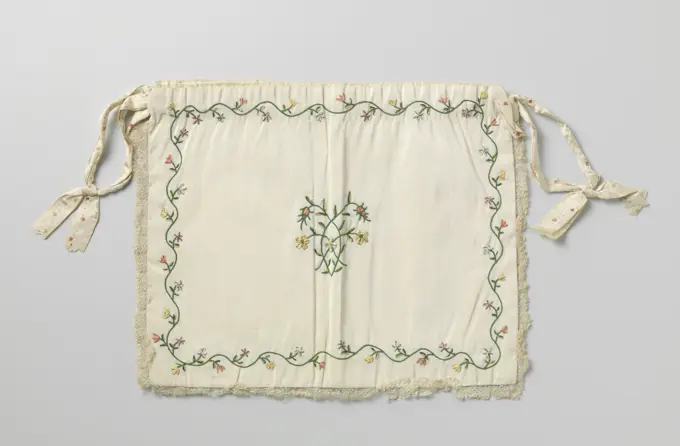
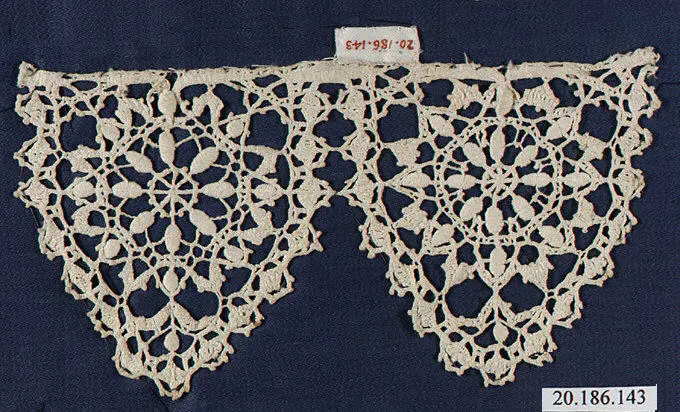
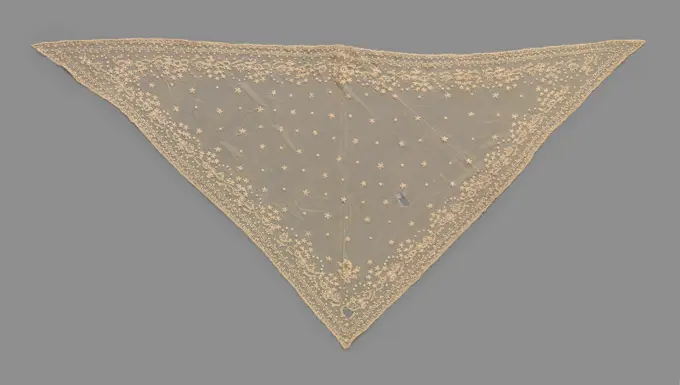
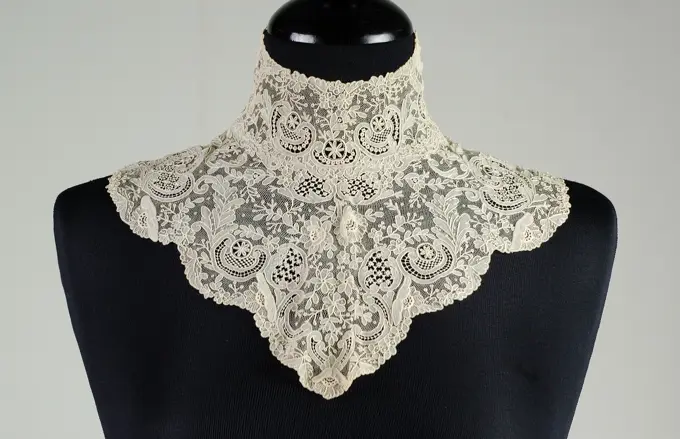
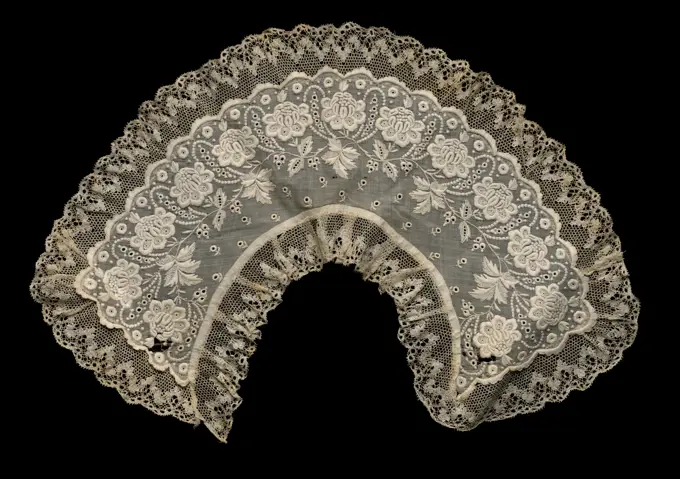
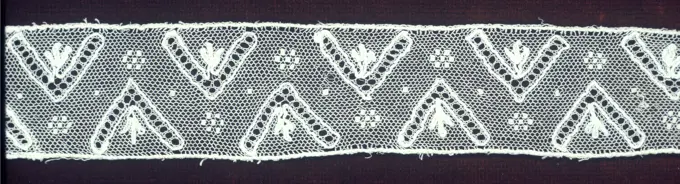
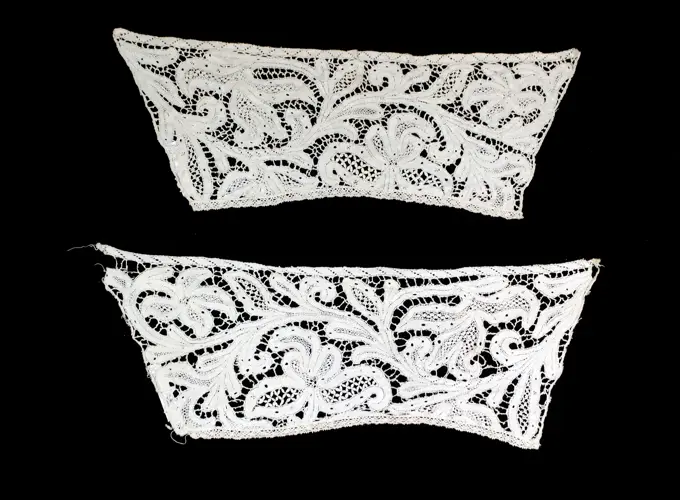
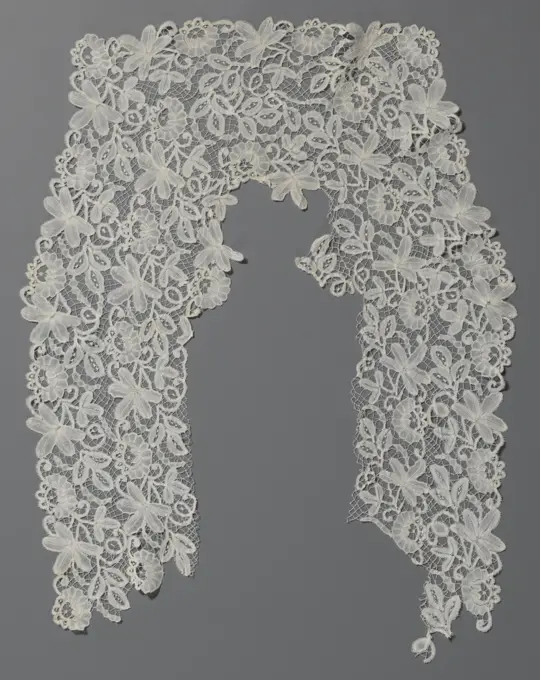
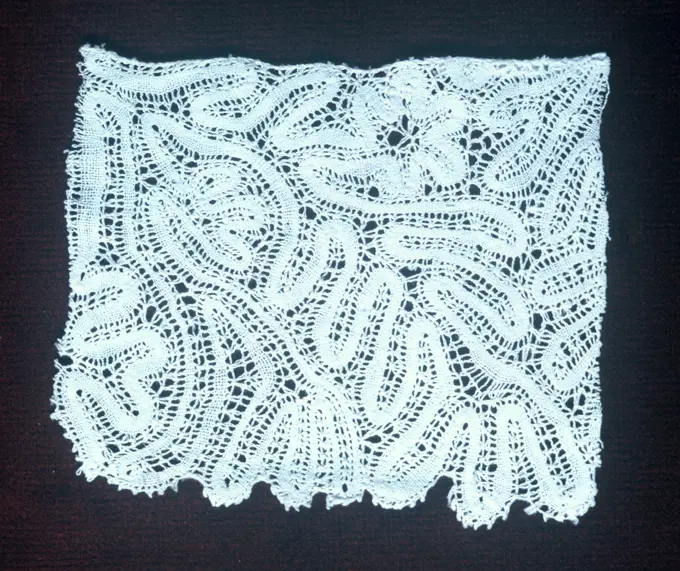
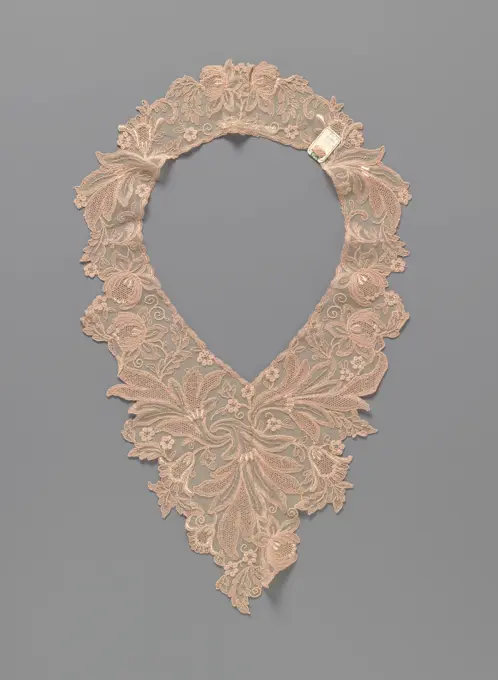
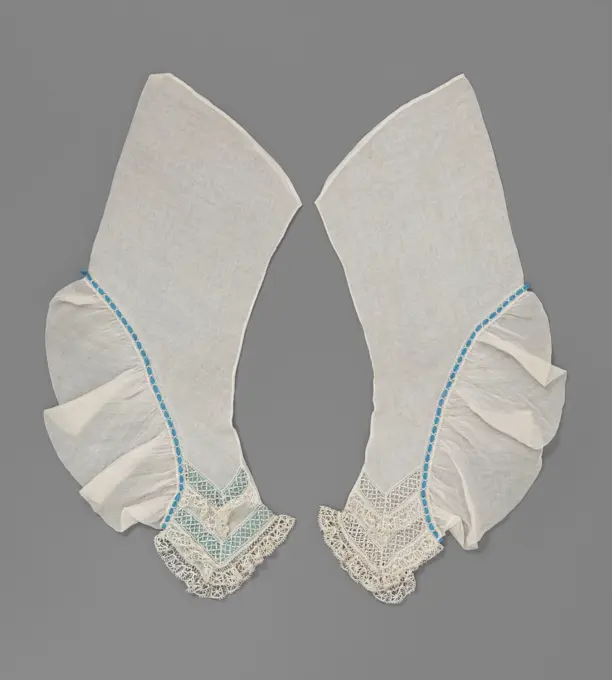
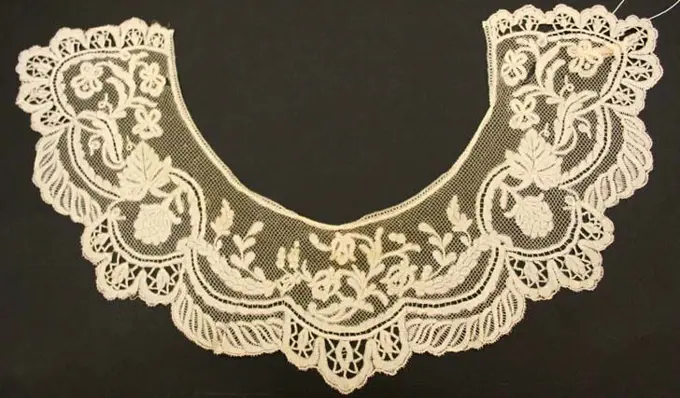
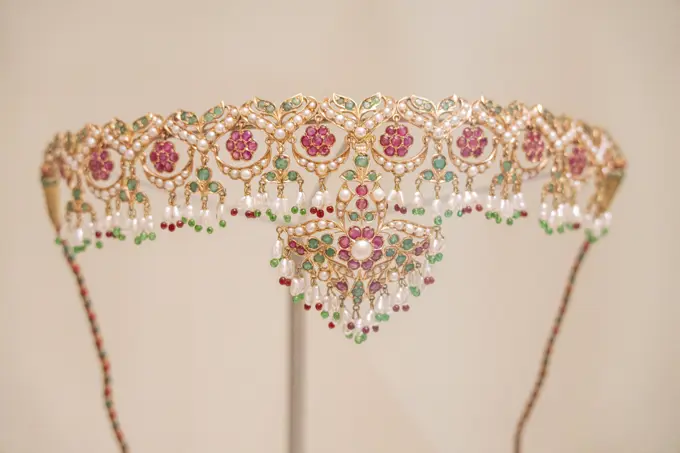
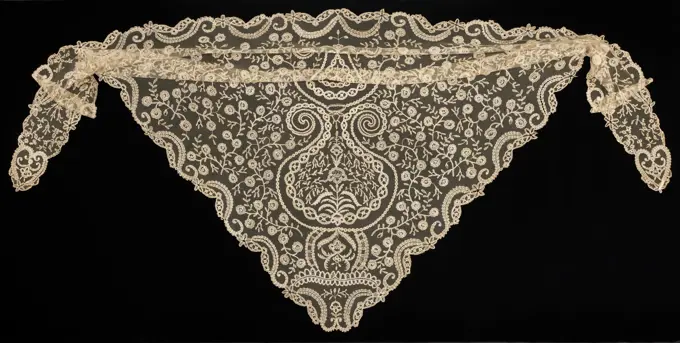
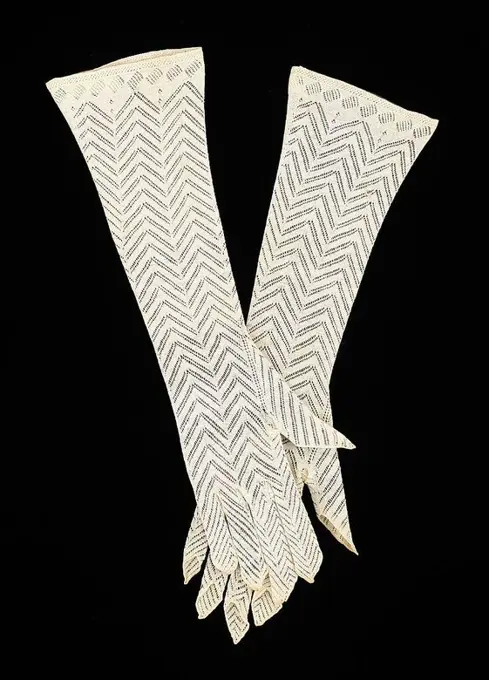
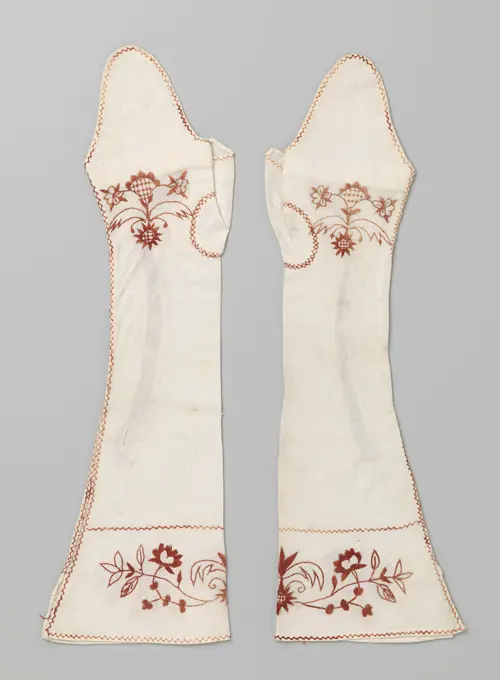
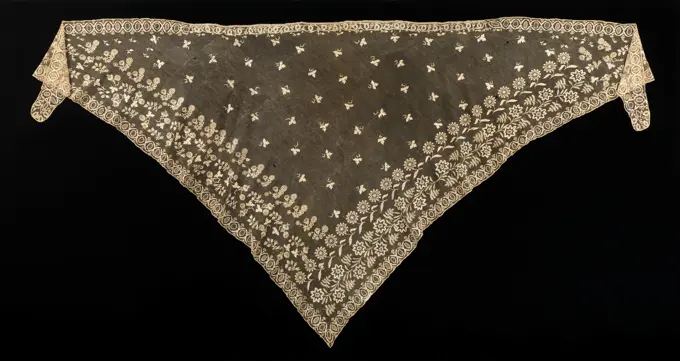
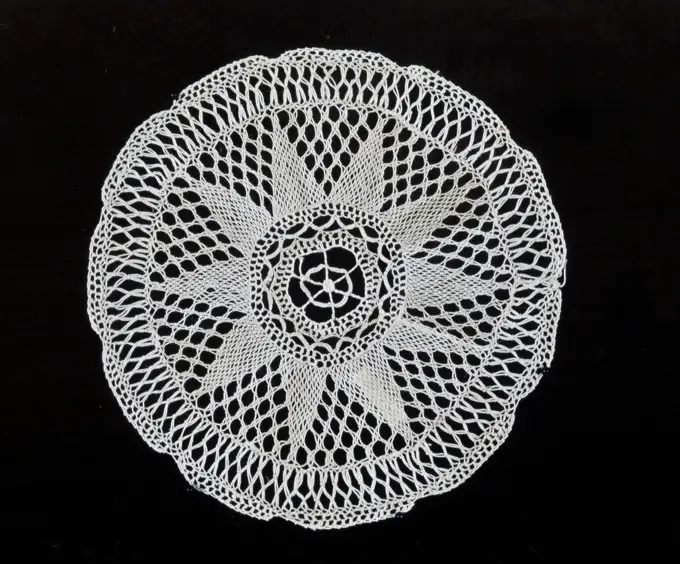
Batist handkerchief all around with bobbin side with a pine -shaped cartouche with rosette flower, c. 1890 Natural -colored batist handkerchief finished with natural -colored bobbin: fine brugs flower arrangements. Symmetrical pattern with a pine cone -shaped cartouche with a rosette flower on a long straight steel with two pairs of oval petals. Along each side four connected C-Voluten with a zigzag line in it. In the middle of each side, the point of contact of two C-volutes is crowned by a flower with three oval petals. The flower is flanked by two round flowers with many openwork petals, arches, all around. Seven of these round flowers with arched leaves form the scrap edge around every corner around the cartouches. The motifs are made in linen battle with openwork edges and are equipped with thick contour lines. The veins of leaves are made with recesses in which crossing couples can be seen. The scrap edge is finished with picots. Used cotton (textile). batiste bobbin lace NaturalKloskant cuff with ivy leaf, anonymous, c. 1910 - c. 1920 Cuff made of natural-colored bobbin: Valenciennes side. The cuff consists of two strips of each other. The strip at the top has a repetitive motif with ivy leaves on a square Valenciennes ground. There are always two dots between the successive leaves. The top and bottom are finished with a straight edge. The strip at the bottom also has a repetitive motif of leaves on a square Valenciennes ground, with a row with slightly staggered mosquitoes above it. The top is finished with a straight edge. At the underside, silly scallops, formed by connected cogs. Around the cuff is a piece of double folded and sewn at the height of the lower row of leaves, so that the pattern is partly disappeared. Netherlands (possibly) linen (material) Bobbi Lace / Valenciennes Lace Cuff made of natural-colored bobbin: Valenciennes side. The cuff consists of two strips of each other. The strip at the top has a repetitive motif with ivy leaves on a squarBobbin Lace (Needlepoint Design) Point, early 17th century. Italy, Genoa, early 17th century. Lace, bobbin; average: 7.7 x 7.7 cm (3 1/16 x 3 1/16 in.).Needlepoint (Cutwork) Lace Insertion and Bobbin Lace Edging, 16th century. Italy, Venice, 16th century. Lace, needlepoint and bobbin: linen; average: 2.3 x 19.7 cm (7/8 x 7 3/4 in.).Square or pall 17th century Italian, Genoa. Square or pall. Italian, Genoa. 17th century. Bobbin lace. Textiles-LacesCap 1700-1937 American. Cap. American. 1700-1937. cotton, silkHandkerchief 1850-60 French The beautiful workmanship of this handkerchief is expressed in the sense of movement of the design and the highly detailed embroidery.. Handkerchief 157749Insertion 16th century Italian. Insertion 220857Fragment; silkBobbin Lace (Rose Lace) Edging with Points, 17th century. Italy, Genoa, 17th century. Lace, bobbin; average: 3.9 x 29.3 cm (1 9/16 x 11 9/16 in.).Border. Date/Period: Late 16th-early 17th century. Border. Medium: linen. Technique: grid of withdrawn element with needle lace (reticella style). Author: UNKNOWN.Band; linenStrip 18th century Flemish. Strip 218157Fragment of the fabric;  18th century (1701-00-00-1800-00-00);Jongenskraag van gehaakte kant met reliëfrozen als schulpenrand.Collar for a boy from Irish crocheted side. Landscape model, from the front in points ending and three flat lobes (shoulders and middle-backs). Symmetrical pattern of round roses on long a stem with two leaves. The two roses in the middle are a V and the roses are connected to each other by a diamond-shaped network with picots. A edge of diamond-shaped leaves is running along the neck. Along the outer edge a slip edge of co-switched relief roses, such as the roses in the midfield, but without steal. Around every rose a bow edge.Small piece of drawn-work, 20th century, Lace, Indonesia, 20th centuryFragment of the lace;  16th century (1501-00-00-1600-00-00);Geometric ornaments, rosette (ornament)Edging 18th century Italian, Abruzzi. Edging 221148Frivolitétas in the rectangular model of ivory -colored taf side, on which Angs the edge a flower garland lodged with colorful ribbons, with silk bobbin omboard, anonymous, c. 1770 - c. 1790 Bag in a flat and rectangular model of ivory -colored taf side, on which a thin flower garland is embroidered on both sides along the edge with colorful ribbons and vlos side. Central in the middle a composition of branches and five flowers in pink, blue and yellow. The bag is bobbin and lined with ivory -colored silk. At the top is an opening that can be closed with ribbons from Ripszijde. Painted on the ribbons and red flower buds. Netherlands (possibly) whole: Silk. Embroidery: Silk. Embroidery: Silk. board:. Lining: Silk. Lint: Silk. Lint: Watercolor (Paint) embroidering / bobbin lace / painting Bag in a flat and rectangular model of ivory -colored taf side, on which a thin flower garland is embroidered on both sides along the edge with colorful ribbons and vlos side. Central in the middle a coFragment 17th century Italian, Genoa. Fragment 220953Strip 18th century Italian, Milan. Strip 221151Fichu van Kantbobruimwerk Werk Possible from Zaanse Dracht, Anonymous, c. 1825 Fichu of natural-colored lace-ups: Lierse side or Limerick side, with tambouring work on mechanical tulle. The pattern has two frames of angular meanders along the sides, in which a running pattern of loose stems with clock and star flowers. In the middle rows of stars and mushes alternate. Ivy (possibly) silk. Fichu of natural-colored lace-ups: Lierse side or Limerick side, with tambouring work on mechanical tulle. The pattern has two frames of angular meanders along the sides, in which a running pattern of loose stems with clock and star flowers. In the middle rows of stars and mushes alternate. Ivy (possibly) silk.Towel Ends early 19th century. Towel Ends 443032Not scratched. Bridal handkerchief. Linon, Plumetis. March 10, 1868. Galliera, fashion museum of the city of Paris. 51784-11 Lace, woman, linon, married, feminine mode, handkerchief, plumetisBorder, Technique: bobbin lace, Bobbin lace border, floral vine; early 18th century Bruges a Brides., early 18th century, lace, BorderBorder. Belgium, Flanders. Date: 1634-1666. Dimensions: 10.0 × 33.2 cm (4 × 13 in.)Width repeat: 22.0 cm (8 5/8 in.). Linen, needle lace. Origin: Flanders. Museum: The Chicago Art Institute, Chicago, USA.Fichu 19th century British. Fichu. British. 19th century. no medium availableCap 19th century British. Cap 98209Undersleeves fourth quarter 19th century Italian. Undersleeves 156923Collar (half) of Batist with contiguous hex corners in which margins of lace -ups, C.I. Bosch Reitz-Teding van Berkhout, c. 1910 Collar (half) of natural batist with lace pledger: English embroidery. The other half concerns BK-1978-714-B. Investigative model with rounded corners and slightly hollow top. The pattern consists of a row of continuous hexagons made with openwork circles, with an open work Margriet in each hexagon. The scrap edge follows the pattern with the hex corners and is finished along three sides with a wrinkled strip of mechanical side: Machinal Valenciennes side. The embroidery was made around 1870, the collar around 1910. Amsterdam cotton (textile). batiste Valenciennes lace Collar (half) of natural batist with lace pledger: English embroidery. The other half concerns BK-1978-714-B. Investigative model with rounded corners and slightly hollow top. The pattern consists of a row of continuous hexagons made with openwork circles, with an open work Margriet in each hexCollar of machining with nine circular flowers between ten roses in reverse drops. Collar of machining: Etkant, imitation of needle side. The wide collar with nine shelters form two-thirds of a circle. Along a narrow strap on the inside of the circle there are ten drops - the first and the last halved - that point nozzle out with their pointed ends. Between the points are nine circular flowers, to which three leaves are between four C votes. These flowers are the big slip edge with their appendices. The contours of the drops are made with connected thick balls. The contours of the large circular flower hearts are made of six, overlapping thick cordons, which seem scantling. The other contours around the motifs also seem scored. The motifs are connected by bars, equipped with picots or raderpicots. Different ornamental grounds have been applied in the motifs.Collar ca. 1895 Belgian. Collar 170395Bobbin Lace Insertion, mid 16th century. Italy, Venice, mid 16th century. Lace, bobbin; average: 4.5 x 26.7 cm (1 3/4 x 10 1/2 in.).Vitrage in Neo Lodewijk -XVI style, with copper rings. ,, 1895 - 1905 Vitrage in Neo Lodewijk-Xvie style, with copper rings. Netherlands copper (metal) Vitrage in Neo Lodewijk-Xvie style, with copper rings. Netherlands copper (metal)Side intermediary with floral motif on cardboard, Gustav Schnitzler, c. 1920 Side intermediary with floral motif on cardboard. NijmegenFrance (possibly) cardboard Side intermediary with floral motif on cardboard. NijmegenFrance (possibly) cardboardBorder, Medium: silk Technique: bobbin lace, continuous braid-like, Border of pendants filled with abstract circular motifs. Pattern connected by brides., Genoa, Italy, 17th century, lace, BorderBand; linen; 1898-23-6Japon strip of application side with wavy slender and bell -flower branches, anonymous, c. 1835 - c. 1849 Japon strip of Brussels application side, bobbin with a needle side decorative stitches, attached to machine tulle. The strip was made as a top strip of three strips for a crinoline gown. On the strip there is a continuous pattern with a wavy and open -worked leaf vend. Three rosette flowers and a large to the right bend branch with bell flowers from each golf top. There are always two richly decorated garlands under one wave, which form the deep scallops. The motifs are made in linen stroke and the motifs are largely provided with relief contours made with a thicker wire and here and there with burst relief contours (ribs). One kind of decorative land (needle side), with thickened buttons decorated meshes, fills part of the motifs. The top edge is finished with a zoompje. Brussels  Brussels Applied Japon strip of Brussels application side, bobbin with a needle side decorative stitSerbia, Donji Milanovac. Typical handmade Serbian lace.Collar Unknown, Nidecka studioPiece. Culture: French. Dimensions: Overall: 16 x 8 1/4 in. (40.6 x 21 cm). Date: 1750-60. Museum: Metropolitan Museum of Art, New York, USA.Lace application for a dress;  around 1920 (1915-00-00-1925-00-00);Magdalena, Witwińska, Dar (provenance)Band, Medium: linen Technique: bobbin lace, Band of northern Italian guipure. Open scrolling pattern with brides., Italy, 17th-18th century, lace, BandDamesdas van machinale kant met moesjes en randen met pluimvormige bloem.Ladies' bag of machining: machining meshes. The tie is filled with mates and has a pattern of stretched S-shaped flower stems with a curled end and a poultry-shaped flower with five pointed petals. On both ends of the tie is a large shell-like flower with a flower branch with two large flowers, leaf branches and a stretched ribbon above. An ornamental ground has been applied in the upper flour (on both sides). The motifs are equipped with contour wires and are interconnected by mechanical males. The sides are finished with picots.Embroidery and Lace Collar, 1875. America, 19th century. Lace: cotton ground embroidered with linen; trimmed with linen bobbin lace; overall: 29.5 x 46 cm (11 5/8 x 18 1/8 in.).Collar of tulle decorated with applicationboarding in the form of flower vines and loose flowers, c. 1400 - c. 1950 Round, flat collar of tulle that is decorated with applicationboarding in the form of flower vines and loose flowers, and is trimmed with scallops. The collar is trimmed with a recommended strip of tulle that is decorated with mosies and application boards in the form of flowers. West-Europa . embroidering Round, flat collar of tulle that is decorated with applicationboarding in the form of flower vines and loose flowers, and is trimmed with scallops. The collar is trimmed with a recommended strip of tulle that is decorated with mosies and application boards in the form of flowers. West-Europa . embroideringCap, early 1900s. Netherlands, 20th century. Cotton; overall: 35.6 x 17.8 x 30.5 cm (14 x 7 x 12 in.).Length; linen; 1946-42-51Kloskant parasoldek with rush -hour, anonymous, c. 1850 - c. 1870 Black bobbin parasoldek: Chantilly side. At eight sectors with an empty Mazenfond there are Spitsovale fields, flanked by narrow Spitsovalen. The outlets consist partly of climbing profits, partly of court work; The fillings consist of a flower cancer. Heart -shaped medallions and an edge of oak leaves form wide scoops; A rose contained in two leaves forms small scallops. A loose pumpkin from the same side is applied to the top. Belgium silk bobbin lace Black bobbin parasoldek: Chantilly side. At eight sectors with an empty Mazenfond there are Spitsovale fields, flanked by narrow Spitsovalen. The outlets consist partly of climbing profits, partly of court work; The fillings consist of a flower cancer. Heart -shaped medallions and an edge of oak leaves form wide scoops; A rose contained in two leaves forms small scallops. A loose pumpkin from the same side is applied to the top. Belgium silk bobbin laceCuffs fourth quarter 17th century Italian. Cuffs 170495Lappet early 18th century European. Lappet 169669Collar of climbing side with five leaf. Natural collar collar, fine bridges flower work. The collar has an unfinished model in U-shape. On an open bar fee there are concentric u shapes with a running pattern of branches, to which an anemone, a five-leaf and a bunch of three almond-shaped fruits or leaves.Edging 17th century Italian, Venice. Edging 221023Fragment 16th-17th century Italian Punto in arialiterally, "stitches in the air"is one of the earliest styles of needle lace, which is itself developed from cutwork of primarily geometric design. When lacemakers transitioned to using a foundation of threads laid out according to a pattern drawn on parchment, they were able to incorporate more fluid lines and curves into their designs.. Fragment 218816Fichu of mixed side with window, anonymous, c. 1875 - Before 1894 Fichu of natural -colored mixed side - bobbin in combination with needle side - Brussels Duchesse. An elongated diamond shape shows an inner window made of a ribbon, partly filled with flower and leaf branches, partly with cubes with rosettes. In the sharp points there are a very large and a small oval with radish and star filling (needle side), ovals are placed in the blunt corners, one of which has been crowned with a palmet. On the open braid soil there is a series of decreasing windows in the outer edge, a large symmetrical bouquet of branches with bunch and chalice, triple leaves, composite flowers and a rose in the inner field. Brussels linen (material) mixed lace / mixed Brussels Fichu of natural -colored mixed side - bobbin in combination with needle side - Brussels Duchesse. An elongated diamond shape shows an inner window made of a ribbon, partly filled with flower and leaf branches, partly with cubes with rosePocket belonging to a uncut freak of silk velvos, anonymous, c. 1780 - c. 1790  France (possibly)Netherlands (possibly) silk. embroidering  France (possibly)Netherlands (possibly) silk. embroideringTucker late 1830s British. Tucker 119005Scarf late 19th century French. Scarf. French. late 19th century. no medium availableCollar (Belgium); horsehair, linenBobbin Lace Insertion with Fringe, early 17th century. Italy, Venice, early 17th century. Lace, bobbin; average: 11.5 x 35.6 cm (4 1/2 x 14 in.).Fragment 16th century Italian. Fragment. Italian. 16th century. Metal thread, bobbin lace. Textiles-LacesEdging (Spain); silkHandkerchief 1840-80 French or Swiss. Handkerchief 236973Fragment; linenHandkerchief with a border of needle side with crown. Handkerchief with an edge of natural needle lace, Brussels mesh edge. A batters center piece is decorated in the corners with a large side rose; Above one is a small embroidered crown. A lace edge consists of a straight list of grieved column with a chain of florets and inside S and C-Volutes.Chasuble Back. Culture: Italian. Dimensions: 39 1/2 x 25 in. (100.3 x 63.5 cm). Date: 18th century. Museum: Metropolitan Museum of Art, New York, USA.Mail Standard (Collar). Western European. Date: 1450-1500. Dimensions: . Iron and brass. Origin: Germany. Museum: The Chicago Art Institute, Chicago, USA.Application from Mechanical Side for a round neckline, anonymous, c. 1920 - c. 1930 Application of pink colored mechanical side: Machine tulle with machine embroidery. Collar for a round neckline. REVEN from a deep V-neck end and triangular in shape with a large palm leaf between flowers in the sculptures. "V&D;" EMEK "Ned. Patr. 89962; 0 1151; Party; 0.79 England (possibly)Netherlands cotton (textile). Application of pink colored mechanical side: Machine tulle with machine embroidery. Collar for a round neckline. REVEN from a deep V-neck end and triangular in shape with a large palm leaf between flowers in the sculptures. "V&D;" EMEK "Ned. Patr. 89962; 0 1151; Party; 0.79 England (possibly)Netherlands cotton (textile).Strip application side with Petrus and John. Strip natural colored Brussels application side, dick edge and needle side on dirchel soil. Above an edge of oval medallions and tendrils, a wavy pendulum runs, with underneath and to figures of Petrus and John the evangelist in needle side. The tendrils and pendulum escaped the slip edge on the bottom. The top is finished with a border clamping side. The ends of the strip are sewn together.Sub -sleek of the application side with straw pattern of oval flower on a stalk with two leaves, anonymous, c. 1850 Under sleeve of natural -colored application side: Batist Applicated on mechanical tulle. Wide tube -shaped model, highly wrinkled at the wrist, making it closely closing. A separate cuff from Machinale Tulle has been wrinkled on the sleeve. The unadorned cuff can be closed with a knot. On the sleeve is a spray pattern of small oval flowers, on a stalk with two leaves. The opening of the sleeve is finished with a slightly wrinkled zoompje. Netherlands cotton (textile). batiste. knoop: mother of pearl Under sleeve of natural -colored application side: Batist Applicated on mechanical tulle. Wide tube -shaped model, highly wrinkled at the wrist, making it closely closing. A separate cuff from Machinale Tulle has been wrinkled on the sleeve. The unadorned cuff can be closed with a knot. On the sleeve is a spray pattern of small oval flowers, on a stalk with two leaves. The opCap ca. 1875 French. Cap 168307Turkish needle work embroidery Ornamental with lace patterns, details, flowersBatist lower sleeve with blue satin ribbon and lace cuff, anonymous, c. 1850 - c. 1900 Onderemen of cotton batist with a recommended strip that runs from the elbow to the wrist. Between the sleeve and this strip a border side, through which a blue satin ribbon is woven. Cuff with two Entre-Deux from Kloskant on a blue stock. In between, a bordered bobbin side. On the cuff also a recommended strip of bobbin. West-Europa Batiste. board:. ribbon: Satin bobbin lace Onderemen of cotton batist with a recommended strip that runs from the elbow to the wrist. Between the sleeve and this strip a border side, through which a blue satin ribbon is woven. Cuff with two Entre-Deux from Kloskant on a blue stock. In between, a bordered bobbin side. On the cuff also a recommended strip of bobbin. West-Europa Batiste. board:. ribbon: Satin bobbin laceTextile Swatches Onondaga Silk Company, Inc. (1925-1981). Textile Swatches, 1948-1959. 72 silk; 28 metal, a-h: 11 x 3 1/2 in. (27.9 x 8.9 cm).    1948-1959Collar and Cuffs (From a Border) Made 1675-1700 Venice. Linen, raised needle lace .Two fragments of laceBobbin Lace (Rose Lace) Edging of Points, 17th century. Italy, Genoa, 17th century. Lace, bobbin; average: 8.6 x 46.1 cm (3 3/8 x 18 1/8 in.).Collar mid-19th century French. Collar. French. mid-19th century. no medium availableHolzstricknadeln, Scheren und helles Garn. Zubehör für das Stricken. Liegt auf dunkelbeigem Hintergrund. Ansicht von oben Wooden knitting needles, scissors and bright yarn. Accessories for Knitting. Lies on dark beige background. Top view. LicenseRF Copyright: xZoonar.com/KatsiarynaxHuravax 23226287Guluband-Halskette Guluband necklace, Northern India, 19th century, gold, pearls, precious stones, and enamelMuEC, Barcelona, Catalonia, Spain LicenseRF Copyright: xZoonar.com/Tolox 23171209Piece early 19th century French, Dieppe. Piece. French, Dieppe. early 19th century. Bobbin lace. Textiles-LacesShawl 1850-70 Belgian. Shawl 157860Evening gloves. Culture: American. Date: 1830-35.Lisle, the knitted fabric used in these gloves, employs a highly refined cotton that has the look and softness of silk. This allows for the creation of an intricate pattern such as the zig zag example here. The open finger tips are an unusual feature that adds to their interest. Museum: Metropolitan Museum of Art, New York, USA.Mitaine from white kepper cotton and linen. Left mitaine of white chopper cotton and linen. Pierced tip that falls over the hand and inserted thumb without a great. On the inside an open split closed by means of flannel stitches. Decorated with red embroidery. On the back a double flower branch with leaves and a sun. The seams are trimmed with red flannel stitches.Pelerine ca. 1835 American. Pelerine 170431Insertion from a Table Cloth Made 1601-1625 England. Linen, plain weave; ink drawing; embroidered with silk and linen in chain and running stitches; cut and drawn work embroidered with linen in buttonhole, overcast, and Russian overcast stitches; with needle lace filling stitches .Devant De Gorge Van Naaldant, Anonymous, c. 1800 - c. 1900 Devant De Gorge from Needle Side. Point triangular model with the tip down. Faintly hold neckline. Pattern of random wavy spiral vines with branches that go through rings. On stems are multifaceted small flowers in rosette, palmet, pomegranate and other shapes. Randoming with a straight frame, which contains potente arches. Venice (possibly) linen (material) Venetian rose point Devant De Gorge from Needle Side. Point triangular model with the tip down. Faintly hold neckline. Pattern of random wavy spiral vines with branches that go through rings. On stems are multifaceted small flowers in rosette, palmet, pomegranate and other shapes. Randoming with a straight frame, which contains potente arches. Venice (possibly) linen (material) Venetian rose pointHat of batist decorated with leaves in chain stitch and a strip of Rijssel side, anonymous, c. 1850 - c. 1875 Cap made of batist decorated with leaves in chain stitch. A strip of Rijssel side is confirmed on the front that has a coral motif. West-Europa hat: Batiste. strip: Lille lace Cap made of batist decorated with leaves in chain stitch. A strip of Rijssel side is confirmed on the front that has a coral motif. West-Europa hat: Batiste. strip: Lille laceFontaneldoek van Linen with a strip of bobbin with a scrap edge with four -leaf rosettes, anonymous, c. 1700 - c. 1799 Fontaneldoek van Linen with a strip of natural-colored bobbin, binche side. Pattern with a scrap edge with four -leaf rosettes against a five -part ground. Europe linen (material) Bobbi Lace / Binche Lace Fontaneldoek van Linen with a strip of natural-colored bobbin, binche side. Pattern with a scrap edge with four -leaf rosettes against a five -part ground. Europe linen (material) Bobbi Lace / Binche LaceShawl 1820-50 Flemish. Shawl 158215Evening mitts fourth quarter 19th century German. Evening mitts 156511Cap early 19th century American. Cap. American. early 19th century. cottonHandkerchief Frame; Bequest of Erskine Hewitt; 1938-57-1468-cFragment (Italy); linenSlab of narrow machine plumetis embroidery and valenciennes side, anonymous, c. 1880 A bav also (bib) from narrow machine plumetis embroidery, intermediatezel and side of Valenciennes side with a strip of Valenciennes side all around. Netherlands . Valenciennes lace A bav also (bib) from narrow machine plumetis embroidery, intermediatezel and side of Valenciennes side with a strip of Valenciennes side all around. Netherlands . Valenciennes laceDoily, 20th century, ; lace, Algeria, 20th centuryPair of bracelets, Iron, Pair of open ironwork bracelets, each one a wide, flexible, linked band formed of three quatrefoil-and-foliate forms alternating with rosettes, all in the Gothic style; simple rectangular clasp at one end; quatrefoil-and-foliate form with rosette on oval panel at other end, to receive clasp., Germany or France, ca. 1830, jewelry, Decorative Arts, Pair of braceletsTush kyiz (hanging), c. 1940s-1950s, 69 1/4 x 127 1/4 in. (175.9 x 323.22 cm) (without hanging loops), Cotton; embroidery, Kyrgyzstan, 20th centuryTie, Medium: linen Technique: machine-made lace, Narrow border ornamented with small four-petaled flowers. Medallions at either end show design of floral sprays in leaf border., France, mid-19th century, lace, TieDress ca. 1816 American. Dress 98118