My Boards
View Pictures
  • My Boards
← Artworks

Egyptian Funerary Objects

Canopic jars and shabti figurines from ancient Egypt, crafted from various materials, representing significant cultural and religious practices of the time.

Adoring ,, c. 960 - C. 1279 Adorant. On a pedestal. China . Adorant. On a pedestal. China .
389 assets in this story
4409-18421088
CANTARO DE DOS CUERPOS CON GRAN ASA Y BOCA ESTRECHA - ARTE POPULAR S XX. Location: ALFARERIA. MOVEROS. Zamora. SPAIN.
6145-43652501
Sarkofag i kartonaż kapłana Hor-Dżehuti oraz mumia nieznanej kobiety. unknown, author
4409-10372
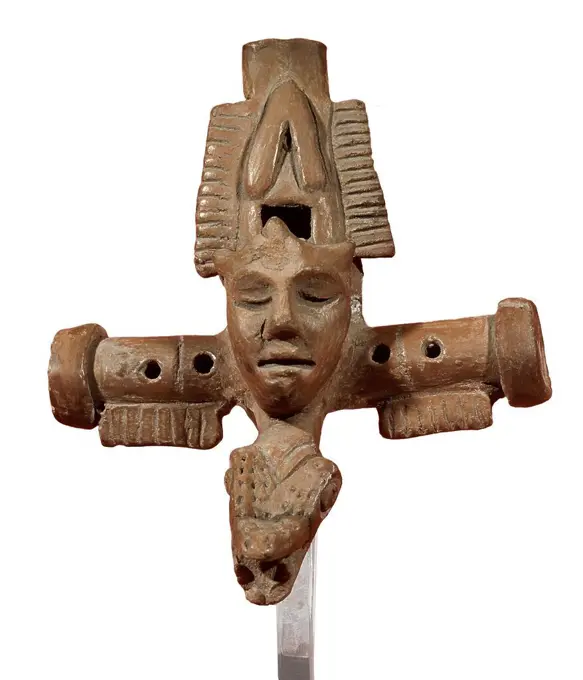
INCENSARIO ZOOMORFO-TERRACOTA INCA-800/500 DC-CULTURA LA TOLITA(ESMERALDAS)40x20,5CM. Location: MUSEO DEL BANCO CENTRAL. QUITO. ECUADOR.
6145-29236195
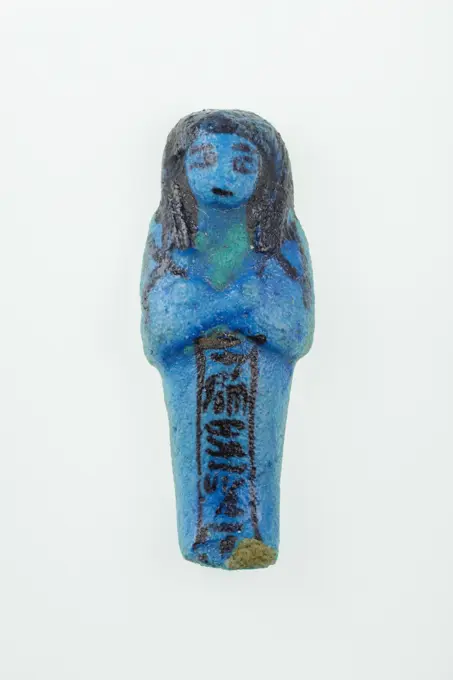
Worker Shabti of Nany ca. 1050 B.C. Third Intermediate Period See 30.3.30.1a, b. Worker Shabti of Nany. ca. 1050 B.C.. Faience. Third Intermediate Period. From Egypt, Upper Egypt, Thebes, Deir el-Bahri, Tomb of Meritamun (TT 358, MMA 65), first corridor, burial of Nany, MMA excavations, 1928-29. Dynasty 21
4443-28729412
Standing figure, 20th century, 5 1/2 × 1 7/8 × 1 3/4 in. (13.97 × 4.76 × 4.45 cm) (with base), Ivory, Democratic Republic of Congo, 20th century
6145-48871018
Statuette of a Banqueting Couple. Unknown
4409-20920754
PITO DE TERRACOTA DE LA CULTURA AZTECA MEXICO. Location: MUSEO PIGORINI. Rome. ITALIA.
4409-20921194
ESTATUILLA FEMENINA PUNICA. Location: MUSEO ARQUEOLOGICO / MUSEO DE PUIG DES MOLINS. IBIZA. SPAIN.
4443-28739677
Female Figure, early 20th century, 4 3/8 x 1 3/8 x 1 3/4 in. (11.1 x 3.5 x 4.4 cm), Wood, Democratic Republic of the Congo, 20th century
6145-29118078
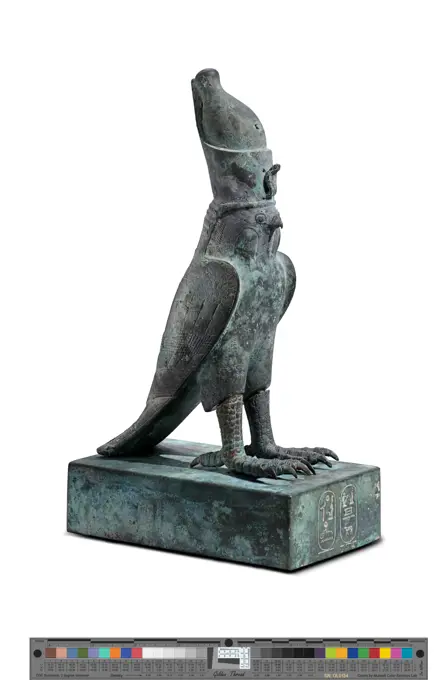
Horus. Egypt, Ptolemaic-Roman period (c. 332 BCE - CE 395). Sculpture. Bronze
4409-17339844
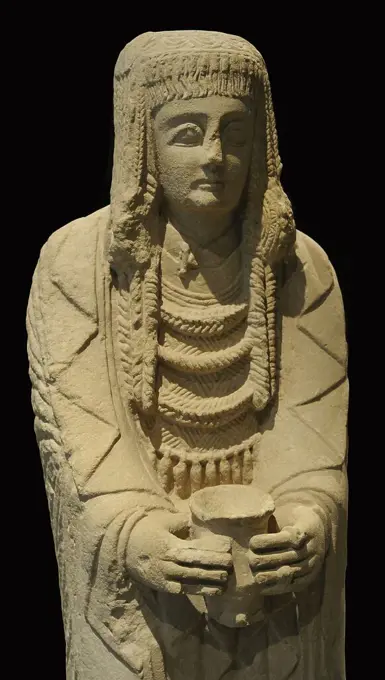
Great Lady Offerant, detail. 3rd century BC. Iberian Culture. Female sculpture in offering attitude. Dressed in three overlapping tunics, the upper one tied to the neck with a fibula type La Tene, indicating his high social status. Identified as part of a rite of passage of age. From the Shrine of Cerro de los Santos (Montealegre del Castillo, province of Albacete, Castile-La Mancha, Spain). National Archaeological Museum. Madrid. Spain.
1788-18251
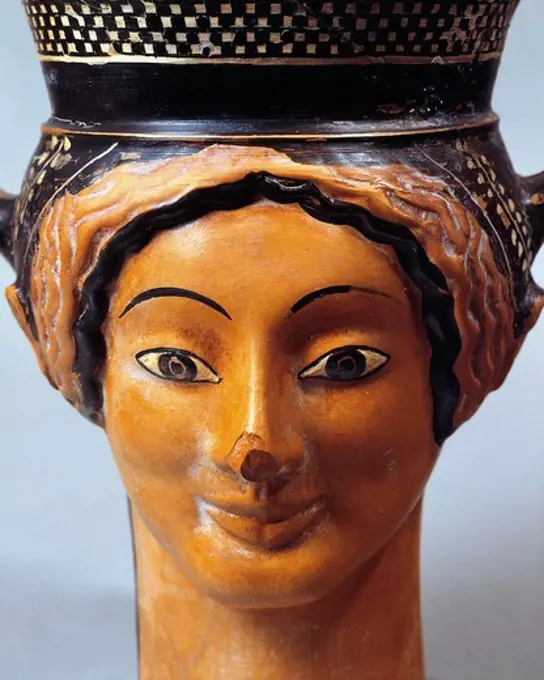
Kantharos in shape of white woman and black woman, Detail of white woman
6145-29235480
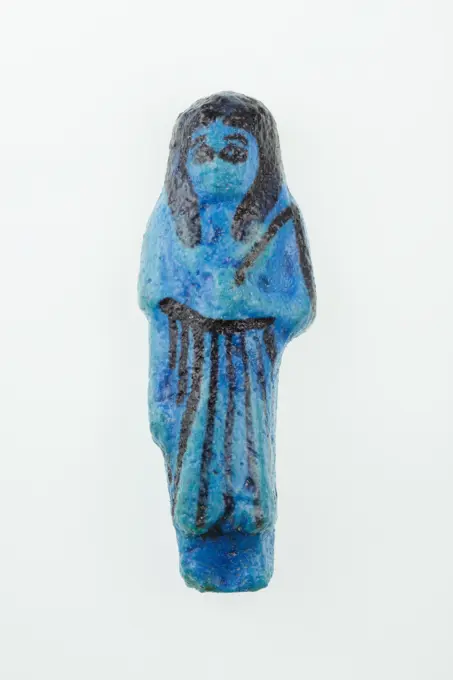
Overseer Shabti of Nauny ca. 1050 B.C. Third Intermediate Period See 30.2.28.1a, b. Overseer Shabti of Nauny. ca. 1050 B.C.. Faience. Third Intermediate Period. From Egypt, Upper Egypt, Thebes, Deir el-Bahri, Tomb of Meritamun (TT 358, MMA 65), first corridor, burial of Nauny, MMA excavations, 1928-29. Dynasty 21
6145-29240670
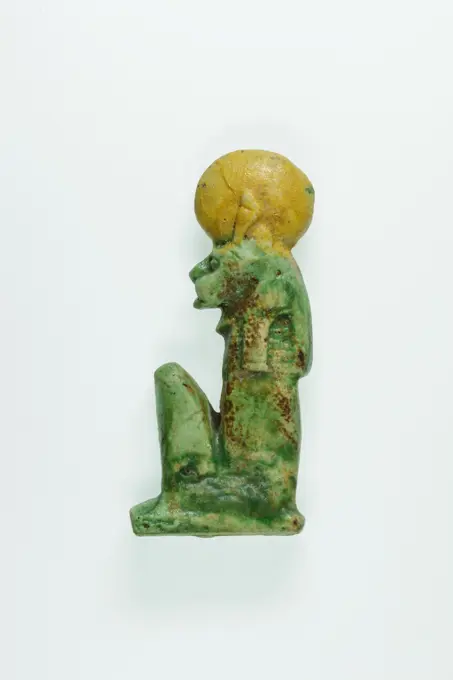
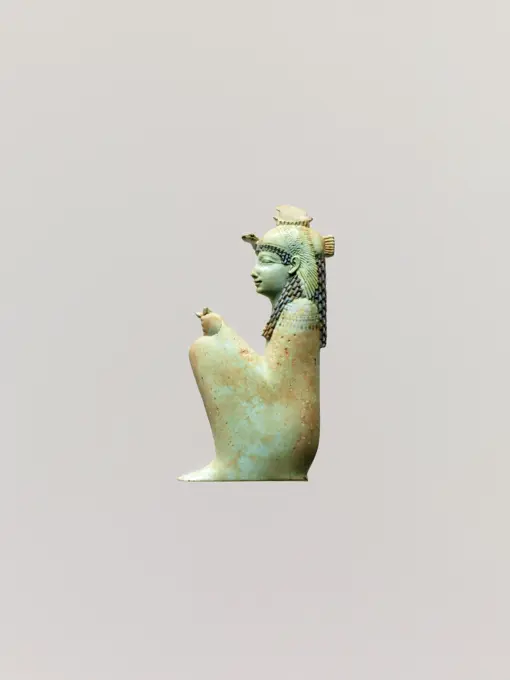
Inlay of a seated lion-headed goddess 664-30 B.C. Late Period-Ptolemaic Period Lion-headed goddesses in Egypt encompassed numerous deities including Sakhmet, Wadjet, and Bastet, among others. In this guise, the goddesses were fierce protective deities, but ones that could also bring about destruction on behalf of the gods, both through violence and through plague and pestilence. The sun disk, when worn by a lion-headed goddess, is sometimes linked with Wadjet, and alludes to her role as the daughter and eye of the sun god Re, but many goddesses shared this aspect and similar inscribed statuettes name several different deities; without an inscription or context, it is difficult to assign a precise identity to this figure.. Inlay of a seated lion-headed goddess. 664-30 B.C.. Faience. Late Period-Ptolemaic Period. From Egypt
6145-29195072
Female musician 6th-7th century China. Female musician. China. 6th-7th century. Earthenware with pigment. Sui dynasty (581-619). Tomb Pottery
6145-48832894
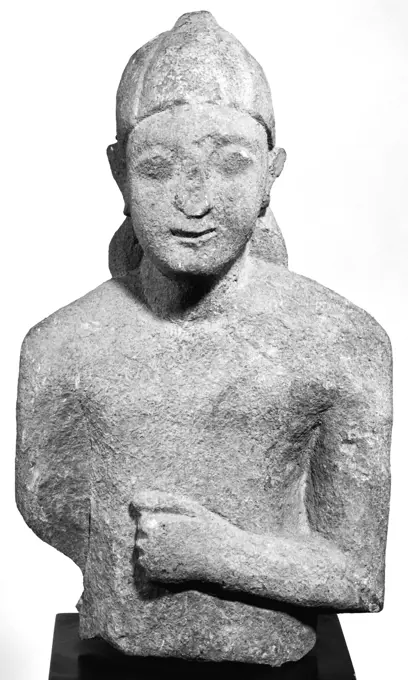
Fragmentary Statue of a Male Figure. Unknown
1746-19689320
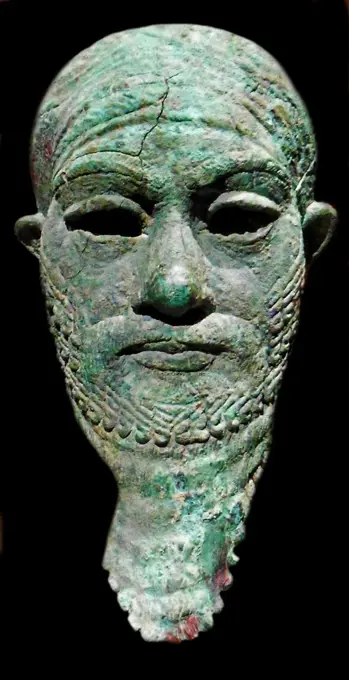
Head of a ruler. Arsenical copper, probably Iran, 2300-2000 B.C.
6188-69067852
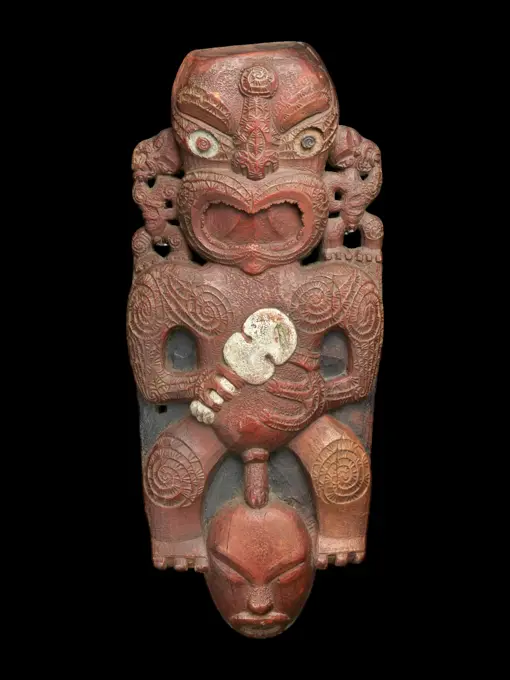
Maori Tekoteko Giebelfigur - 1820er Stammeskunst aus Te Arawa Maori Tekoteko Giebelfigur - 1820er Stammeskunst aus Te Arawa LicenseRF Copyright: xZoonar.com/GallóxGusztávx 23397811
1788-23443
Ivory statuette, Copper age
1746-21107617
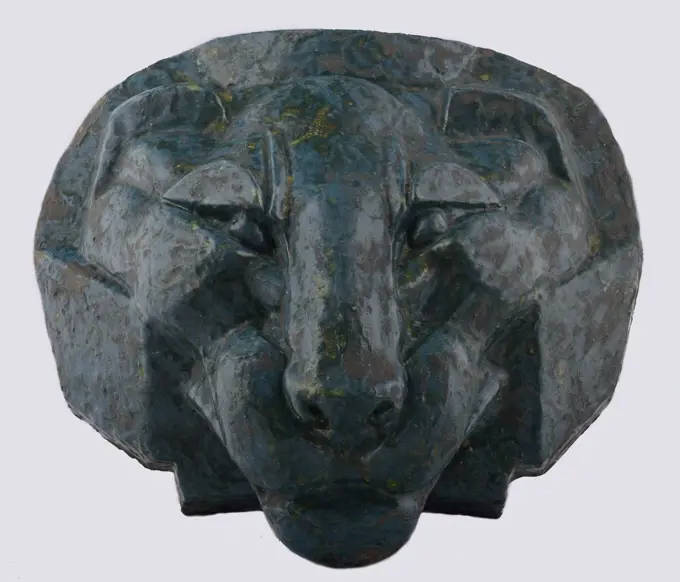
Gold painted glass wall fountain mask by Henri Edouard Navarre (1885-1971) French artist who primarily works with glass. Dated 1937
4409-67199803
goddess Tanit, Archaeological Museum of Ibiza and Formentera, Ibiza, Spain.
6145-29075944
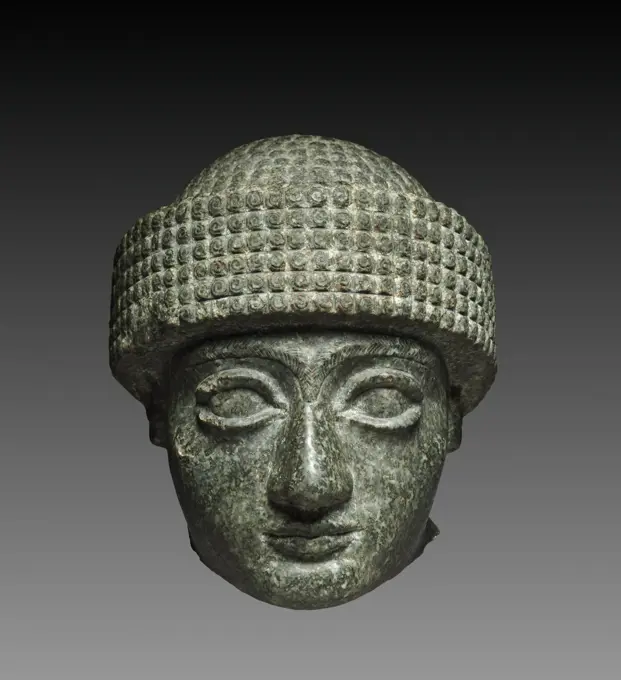
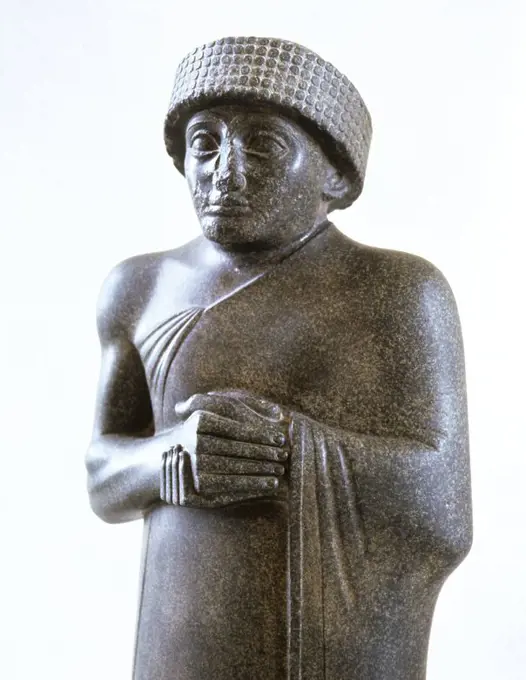
Head of Gudea, ensi of Lagash, c. 2150 BC. Iraq, Tello (Ancient Lagash), 12th century BC. Dolerite; overall: 21 x 17.8 x 20.4 cm (8 1/4 x 7 x 8 1/16 in.).
6145-29198346
Statuette of Wah ca. 1981-1975 B.C. Middle Kingdom This statuette, intended to serve as a home for Wah's spirit, depicts a young man in the prime of life. Full of vigor, the little figure has the imposing presence of a much larger statue. The linen wrap may imitate the type of long skirt worn by Middle Kingdom officials. Beneath this, the figure wears the more typical short kilt, carved into the wood and painted white.. Statuette of Wah. ca. 1981-1975 B.C.. Cedar, plaster, paint, linen. Middle Kingdom. From Egypt, Upper Egypt, Thebes, Southern Asasif, Tomb of Wah (MMA 1102), beside feet of mummy, MMA excavations, 1920. Dynasty 12
6145-29171804
Lead figure of a warrior with a helmet and shield 6th-5th century B.C. Greek, Laconian Small flat votive figurines of cast lead have been found in great quantities at the ancient sanctuaries of Laconia; over one hundred thousand, dating from the seventh century B.C. to the Classical period, were dedicated to the goddess Artemis Orthia in Sparta.. Lead figure of a warrior with a helmet and shield 251632 Greek, Laconian, Lead figure of a warrior with a helmet and shield, 6th5th century B.C., Lead, Height: 1 7/8 in. (4.8 cm). The Metropolitan Museum of Art, New York. Gift of A. J. B. Wace, 1924 (24.195.66)
4409-49134
EGYPTIAN ART. New Empire. Bust of a young man. Museum of Fine Arts. Budapest. Hungary.
6145-30163367
Sarasvati, Goddess of Wisdom, Holding a Book and a Water Pot 901 CE-1000 Kathmandu Valley. Gilt copper alloy with semiprecious stones .
4443-21957386
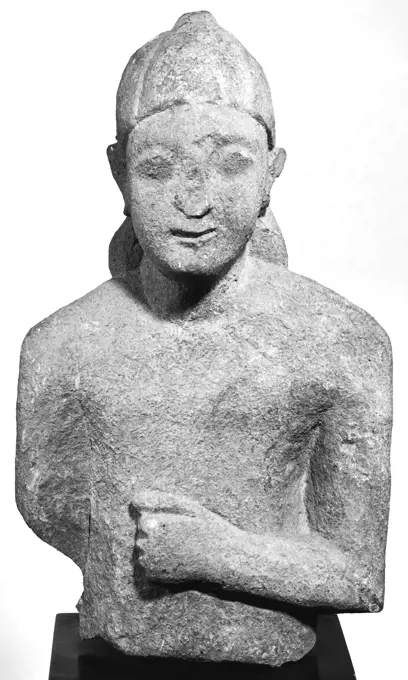
Fragmentary Statue of a Male Figure; Cyprus; late 6th century B.C; Limestone; 32.5 × 19 × 11 cm (12 13,16 × 7 1,2 × 4 5,16 in.)
1788-19245
Granite head of Sekhmet, from the temple of Mut
1746-19675191
Heavenly beauty from India 12th century Hoysala Dynasty sculpture
6145-29165292
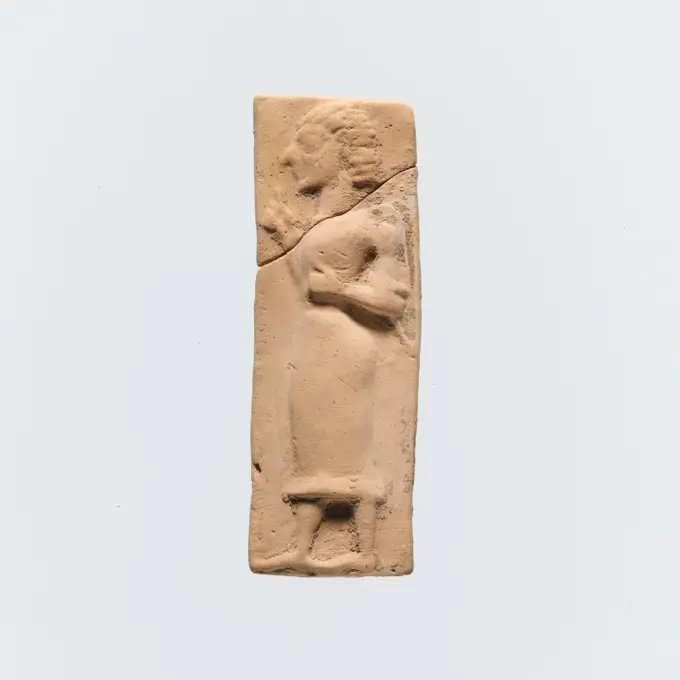
Terracotta plaque 7th century B.C. Greek, Cretan Youth in long garmentThis type of plaque, showing a youth wearing a straight, long garment with short sleeves, is one of the most characteristic from Praisos. The identity of the figure has not been established.. Terracotta plaque 254737 Greek, Cretan, Terracotta plaque, 7th century B.C., Terracotta, 5 in. x 1 3/4 in. (12.7 cm x 4.4 cm). The Metropolitan Museum of Art, New York. Gift of the Archaeological Institute of America, 1953 (53.5.12)
7155-70376535
Stone age statue. 3 feet high found in Amman. 6000 BC.
4409-17501844
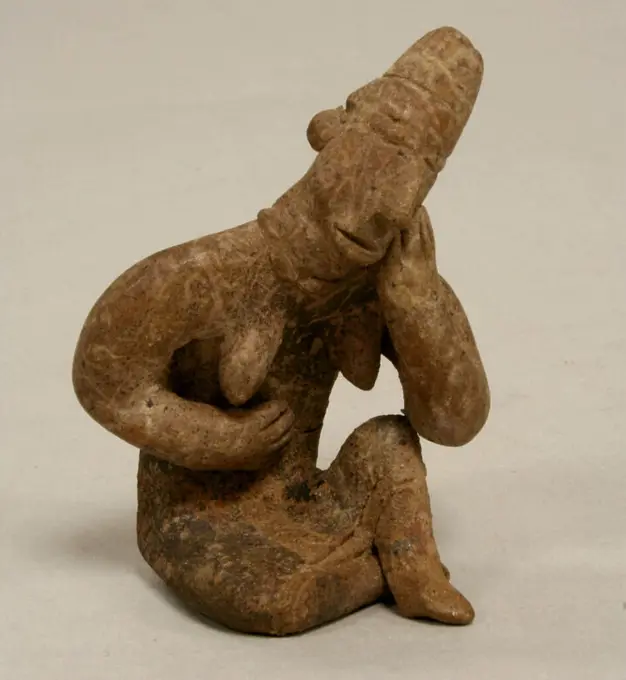
Female Figure. Culture: Colima. Dimensions: H. 2 3/4 x W. 2 x D. 1 5/8 in. (7 x 5.1 x 4.1 cm). Date: 2nd century B.C.-A.D. 3rd century. Museum: Metropolitan Museum of Art, New York, USA.
4409-17377674
Figure of a Woman. Culture: China. Dimensions: H. 5 1/2 in. (14 cm); W. 4 1/2 in. (11.4 cm). Date: 5th-6th century. Museum: Metropolitan Museum of Art, New York, USA.
6145-46833347
Puppet (WayangKlitik)
6145-59056420
Amitajus;  2. PO. XVIII-1. after. 19th century (1751-00-00-1850-00-00);
6145-29757265
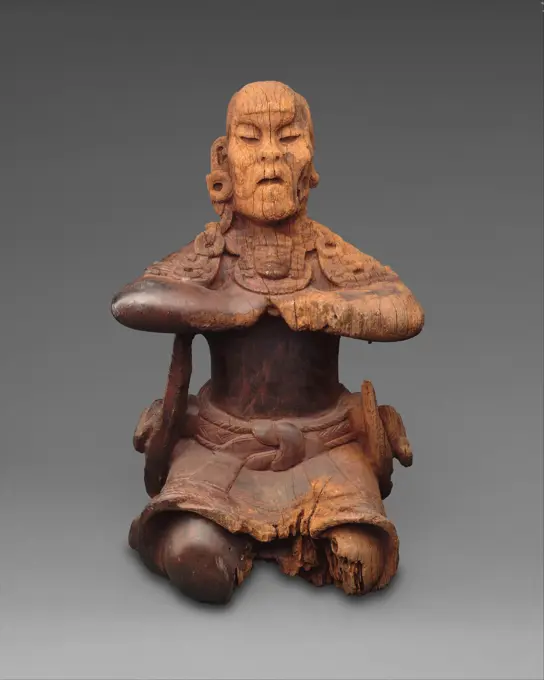
Mirror-Bearer 6th century Maya This Mirror-Bearer figure is the best-preserved example of portable Maya wood sculpture and one of the highlights of the Early Classic period (ca. A.D. 250-550) Maya art. The artist created this figure out of a solid piece of hardwood from the genus Cordia, known locally as bocote. Research determined a radiocarbon age for the wood of 1425 years before present (± 120 years), or a range of A.D. 410 to 650. It was said to have come from the border region between Guatemala and Tabasco, Mexico. Most likely, to judge from its extraordinary preservation, the findspot must have been a dry cave or well-sealed funerary chamber. The damage on its left side is the result of some wear or decay in that context, perhaps from resting against a surface or being subjected to varying passage of air. The person, a male, wears an elaborate knee-length woven skirt with ties that cover his navel. The waistband of the skirt shows a braided and fringed design with circular roset
1899-17321506
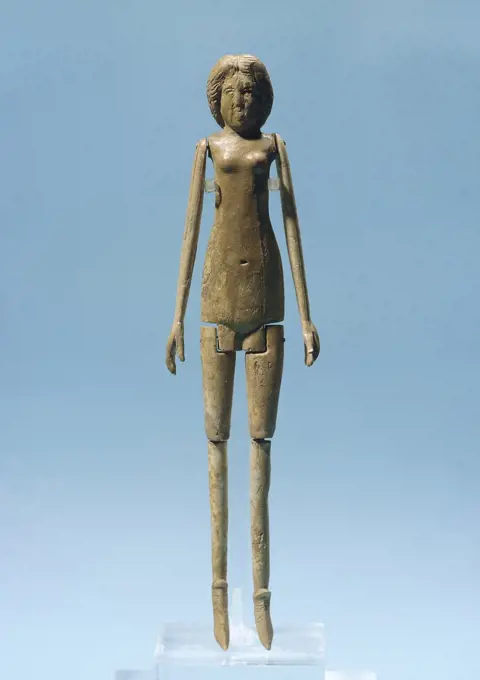
Roman doll. Articulated arms and legs. Ivory. From Necropolis of Ontur. Archaeological Museum of Albacete. Castille-La Mancha. Spain.
6145-58992660
Tadpole. "Portrait-charge of Paul Baroilhet (1810-1871), Baryton. Role of Charles VI in" Charles VI ". Polychrome plaster. Paris, Carnavalet Museum. 72099-46 Baritone, french singer, polychrome plaster, portrait, french king, role
1788-28087
Goldsmith's art, France, 13th century. Gilded copper and Limoges enamel plaque of Saint Martial, 1230.
4409-10990
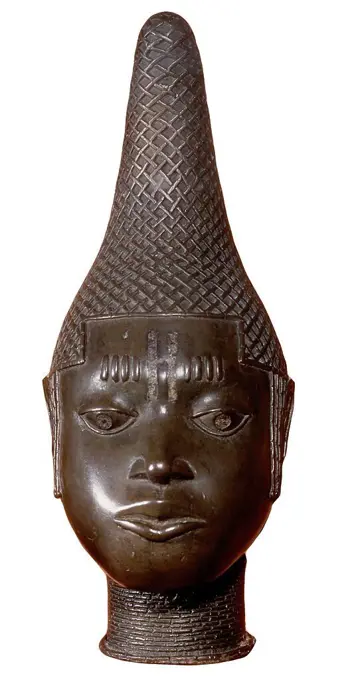
CABEZA EN BRONCE - SIGLO XVI - REINO DE BENIN - ARTE GUINEANO. Location: BRITISH MUSEUM. LONDON. ENGLAND.
6145-59181942
Lazio Viterbo Viterbo Museo Civico22. Hutzel, Max 1960-1990 Views of paintings (Middle Ages through 18th c.), frescoes, a tabernacle, coffin, sculpture reliefs, portal fragments, busts, sculpture, tapestry found in the Pinacoteca, Second floor gallery and Second floor cloister sequences. Antiquities: Many views of Etruscan and Roman fragments, sculpture, sarcophagi, pottery, masks, jewelry and other objects found in the Storeroom sequence (inventory numbers on back of prints), and the Cloister, Second floor Cloister, Valle Giulia, Sala Romana and Sala Etrusca sequences. General Notes: There are eight separate numerical sequences for this location. The cloister as an architectural structure, rather than museum site, is documented in the record and file for S. Maria della Verita, Cloister, all views of which are stored in Medieval core collection. Five views from the Museo Civico Second floor cloister sequence are stored in Medieval. German-born photographer and scholar Max Hutzel (1911-
6145-29239637
Head of a Woman ca. 1250-1070 B.C. New Kingdom, Ramesside The head is a rare example of late Ramesside private statuary. With her elaborate wig and colorful floral fillet, the piece represents a woman of the elite, who was probably shown with her husband. Their statues would have been carved into a niche in the tomb chapel, where family members and visitors could appreciate this lifelike art, give offerings, pronounce their names, and therefore contribute to their afterlife.. Head of a Woman. ca. 1250-1070 B.C.. Limestone, paint. New Kingdom, Ramesside. From Egypt. 19-20
1848-49456317
Marcello Cammi, sculptor and painter from Bordighera Italy, sculpted and painted along the Sasso river for most of his life
6145-30161317
Head of Buddha 201 CE-400 CE Gandhara. Stucco with pigments .
4409-17691
TORO-IBERICO SIGLO VI/V AC-PROCEDENTE DE PORCUNA-EN LAS CULTURAS MEDITERRANEAS ESTABA ASOCIADO AL PODER, LA FUERZA Y LA FERTILIDAD. Location: MUSEO ARQUEOLOGICO-COLECCION. JAEN. SPAIN.
1788-17952
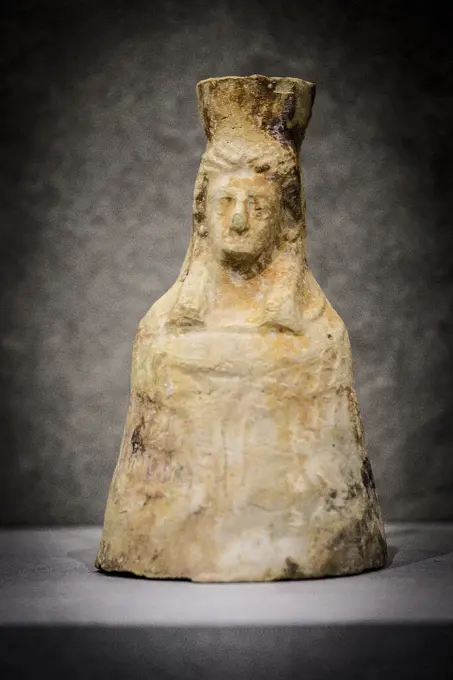
Statuette of goddess enthroned between two sphinxes, from Granada, Spain
1746-19629571
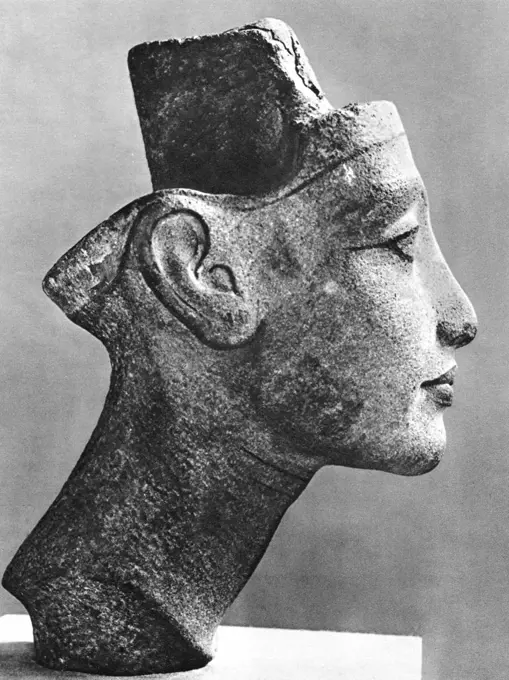
Nefertiti 14th century BC, queen consort of Akenaton (Akhenaten) the heretic pharaoh. Sandstone bust. Profile.
4409-17401164
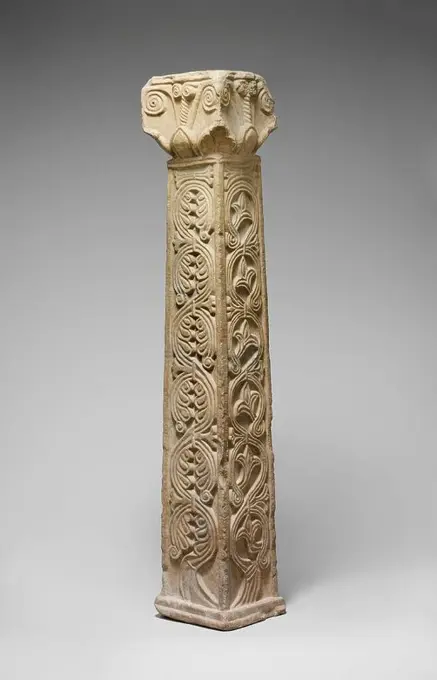
Pillar with Capital. Culture: South Italian. Dimensions: Overall: 47 1/2 x 9 1/4 x 8 7/8 in. (120.7 x 23.5 x 22.5 cm). Date: 9th century.Each of the four faces of this pillar shows a different scrolled vine-and-leaf pattern. The exact use of the pillar is unclear. Along with an identical one now in Berlin, it may have been part of a pulpit or a canopy over an altar or a choir screen. Museum: Metropolitan Museum of Art, New York, USA.
4443-28727091
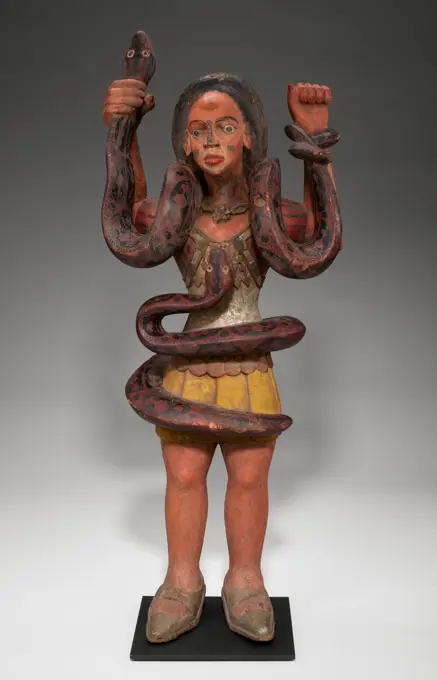
Mami Wata figure, 1950s, 34 x 14 x 10 in. (86.36 x 35.56 x 25.4 cm) (without mount), Wood, pigment, Nigeria, 20th century, Beautiful, seductive, powerful, and fearsomethat is Mami Wata, a water spirit usually represented as a snake charmer or a mermaid. Her name may be an African derivation from 'Mother Water,' but it is also possible that the term existed long before colonization and the use of English in Africa. Associated with health and wealth, love, and good fortune, she is celebrated throughout Africa and the African diaspora as a being of great spiritual power. Her non-African appearance is perhaps due to the fact that many Africans associated the early European traders and explorers with the sea and water spirits. For her followers today, however, Mami Wata represents modernity, worldly sophistication, and access to a cash economy.
4168-21957363
Statue from 1368 AD (Ming Dynasty) in an exhibit at the Shanghai Museum, a museum of ancient Chinese art, situated on the Peoples Square in the Huangpu District of Shanghai, China.
4409-21485715
Gudea, Prince of Lagash, praying, ca. 2120 B.C. Diorite.From Tello (ancient Girsu). Iraq. Louvre Museum. Paris, France.
6145-29193176
Seated Lion 8th century China. Seated Lion. China. 8th century. Conglomerate (pudding stone). Tang dynasty (618-907). Sculpture
4409-21403888
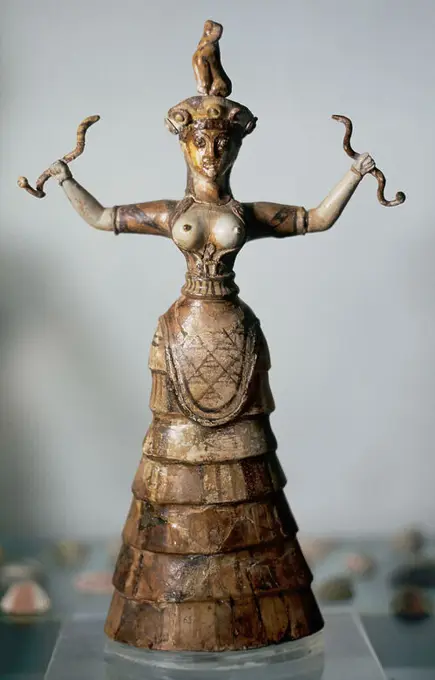
Minoan Art. Island of Crete. The younger snake goddess, from the palace of Knossos. C. 1600 BC. Heraklion Archaeological Museum. Greece.
6145-48838545
Imitation of a Statuette of Aphrodite. Unknown
6145-29822266
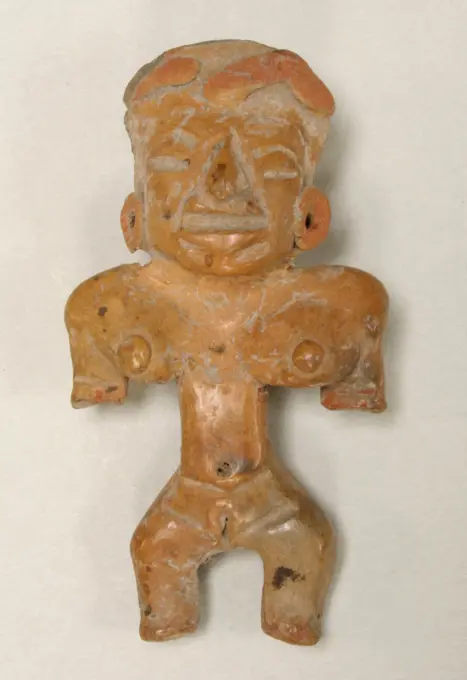
Female Figure 12th-9th century B.C. Ticoman. Female Figure 313047
4266-21636025
Leon Mask, Vrubel, Mikhail Alexandrovich (1856-1910)
6145-58993134
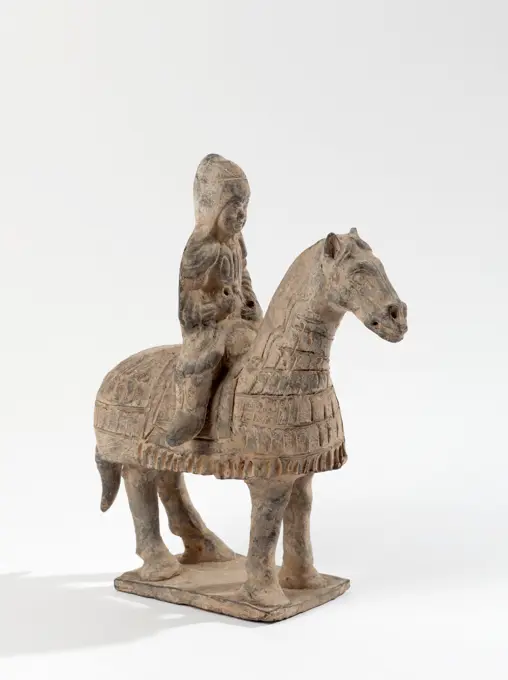
Horse and rider ". Terracotta. China. Northern Wei Dynasty. Paris, Cernuschi museum. 74781-11 Rider, horse, northern wei dynasty, land suite
4443-28729432
Framed male figure, early 20th century, 7 1/2 × 4 3/4 × 1 1/2 in. (19.05 × 12.07 × 3.81 cm) (with base), Wood, Democratic Republic of Congo, 20th century
1746-21121841
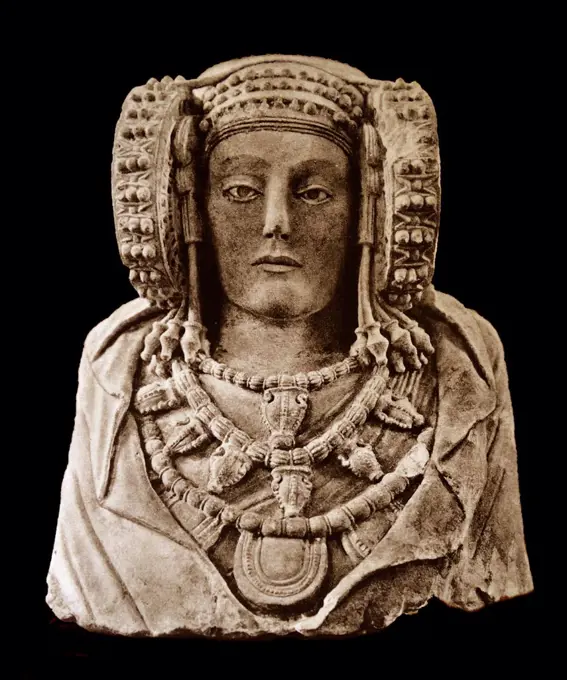
The Lady of Elche or Lady of Elx (Dama de Elche). polychrome stone bust discovered in 1897 at L'Alcúdia; an archaeological site; Alicante; Spain. The Lady of Elche is generally known as an Iberian sculpture from the 4th century BC
6145-59210932
Abruzzo L'Aquila S. Giuliano (L'Aquila environs) Museo28. Hutzel, Max 1960-1990 Views of the four collections housed in museum: Roman coins; Pre-Columbian art brought from Central America in 17th century; Greek and Roman sculpture; Egyptian sculpture and minor arts. Museum Roman coins; Greek and Roman sculpture; Egyptian sculpture and minor arts; Pre-Columbian sculpture. German-born photographer and scholar Max Hutzel (1911-1988) photographed in Italy from the early 1960s until his death. The result of this project, referred to by Hutzel as Foto Arte Minore, is thorough documentation of art historical development in Italy up to the 18th century, including objects of the Etruscans and the Romans, as well as early Medieval, Romanesque, Gothic, Renaissance and Baroque monuments. Images are organized by geographic region in Italy, then by province, city, site complex and monument.
6145-29779308
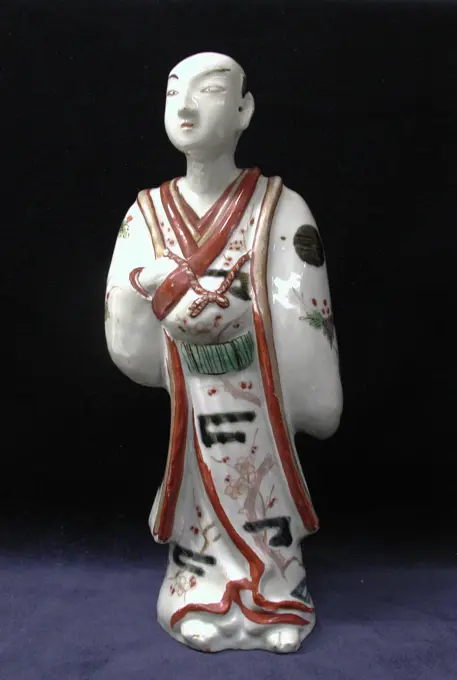
Kabuki actor ca. 1700 Japanese, for European market The sophisticated life style in cities such as Tokyo and Kyoto supported a flourishing theater district, with theaters featuring the dance-drama known as kabuki, first performed in the early seventeenth century.. Kabuki actor 208420
6145-46859067
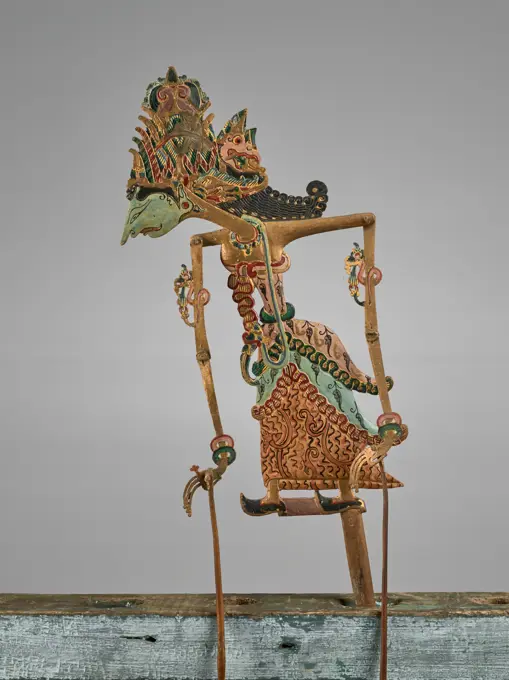
Shadow Puppet (Wayang Kulit) of Bima, from the set KyaiDrajat
1746-19628766
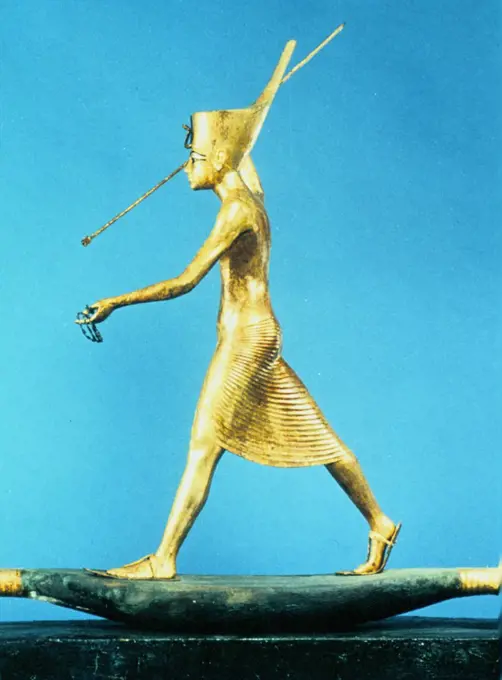
Tutankhamun (Tutenkamen) d.c.1340 BC 18th dynasty Egyptian Pharaoh. Guardian figure on his golden sarcophagus Photograph.
1848-49457613
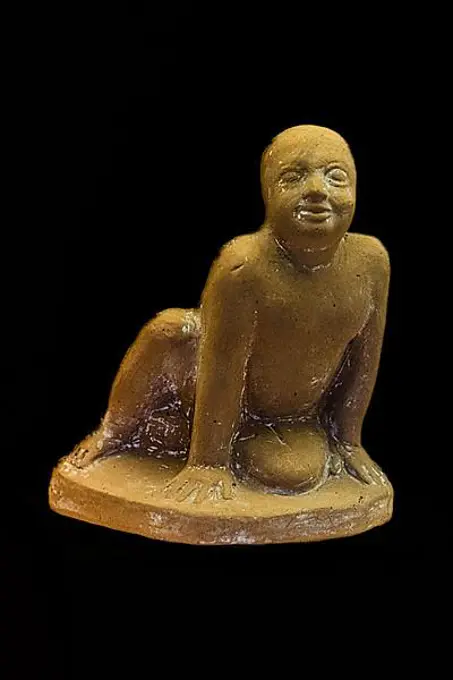
Figure of a naked crawling child, 425-400 BC, Archaeological Museum in the former Order of St John Hospital, 15th century, Old Town, Rhodes Town, Greece, Europe
6145-46833123
Puppet (Wayang Klitik) possibly of Jembawati or KencanaWungu
6145-59042742
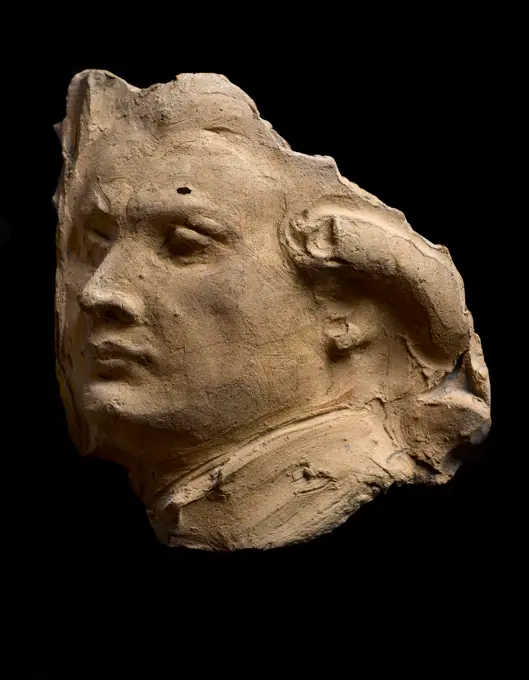
Aimé-Jules Dalou (1838-1902). "Head of a three-quarter man, Study for the Mirabeau bas-relief responding to Dreux-Brézé". Terracotta, between 1880 and 1884. Museum of Fine Arts of the city of Paris, Petit Palais. Bas-relief, Study, man, French politician, terracotta, head, three-quarters, face
7012-69889339
South America, Peru, Lima. National Museum of Archaeology & Anthropology. Moche pottery. (Editorial Usage Only)
6145-29707773
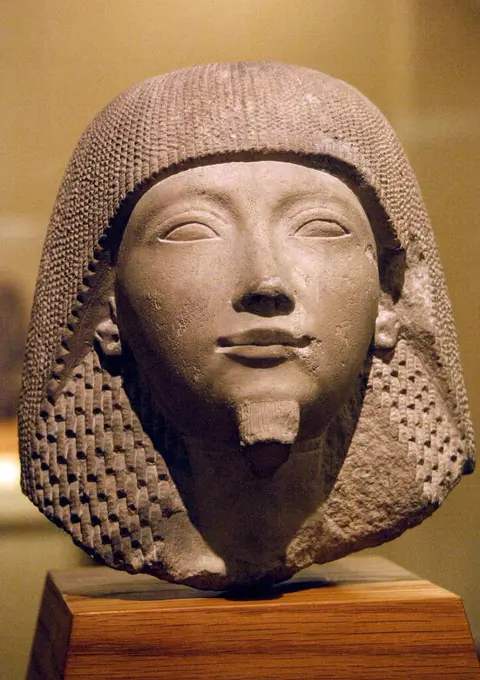
Fragmentary Head of a Man ca. 1550-1070 B.C. New Kingdom This fragmentary face once belonged to a small male statue in painted limestone. The black pigment used for the hair and red paint used for the skin, conform to ancient Egyptian artistic conventions. The oval-shaped face and the full, almost pouting, lips provide a date within the New Kingdom.. Fragmentary Head of a Man. ca. 1550-1070 B.C.. Limestone, paint. New Kingdom. From Egypt
7208-70657797
Egypt, Valley of the Mummies, Gilded Mummy, Bahariya Oasis
4409-9344
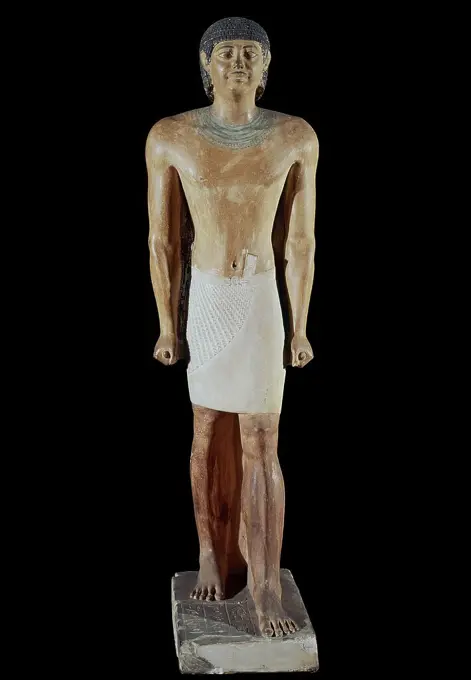
ESTATUA DE ASHMA. V DINASTIA PROCEDE DE SAQQARA. PIEDRA CALCAREA POLICROMADA. 91 CMS ALTURA. Location: EGYPTIAN MUSEUM. KAIRO. EGYPT.
6145-29176113
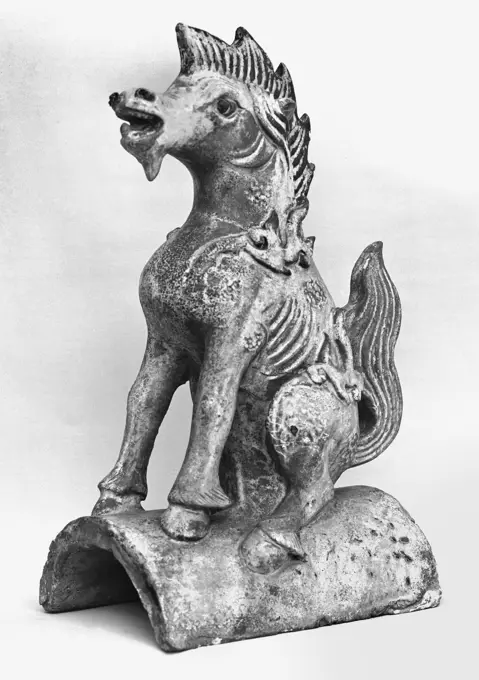
Roof Tile China. Roof Tile. China. Ceramic with glaze. Ming dynasty (1368-1644). Ceramics
6145-43639254
Head of Mary - part of a Pieta group. unknown, sculptor
1746-19692091
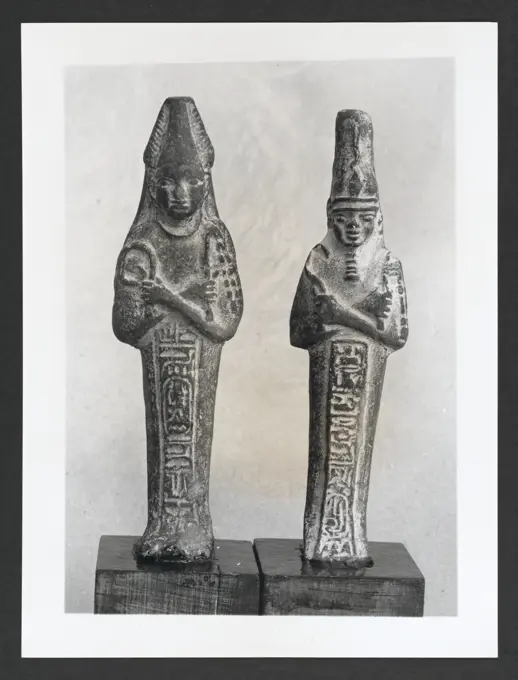
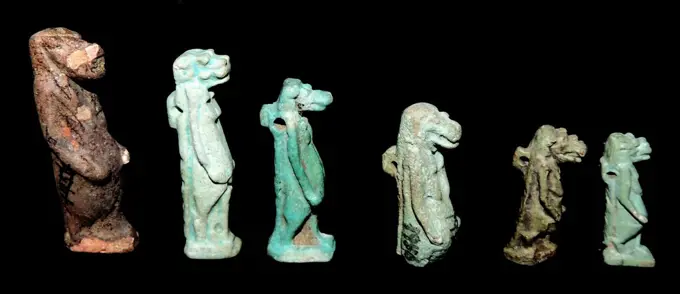
Ancient egyptian figures of gods
6145-46833330
Puppet (Wayang Klitik) possibly ofRama
6145-29129683
Votive Plaque (Tsha Tsha). Tibet or China, 18th century. Sculpture. Terracotta with gilt and paint
1848-63254140
Nuraghic warrior, Museo Archeologico Nazionale, Cagliari, Sardinia, Italy, Europe
6145-29727333
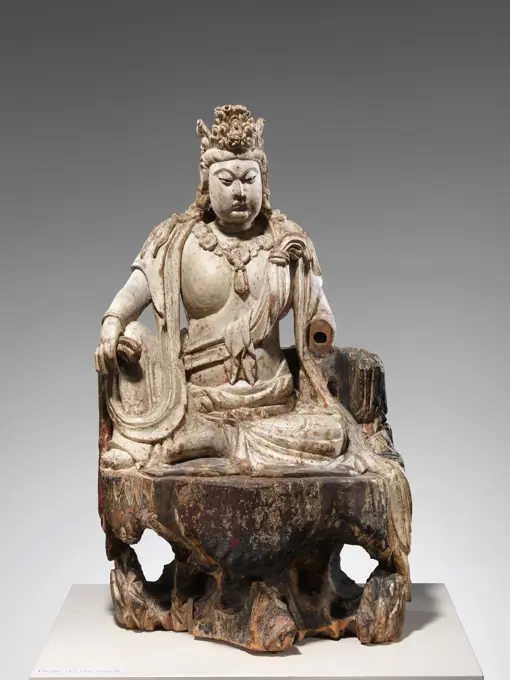
Bodhisattva Avalokiteshvara in Water Moon Form (Shuiyue Guanyin) dated 1385 China This powerful figure belongs to a small group of wooden sculptures that can be securely dated, owing to an inscription that also provides rare information regarding its production and intended use. The inscription appears on the interior surface of a removable panel in the figures back that gives access to a chamber that once contained consecratory material. It states that the sculpture was carved in 1385 under the direction of a certain Xin Zhongwen, who, together with members of Dongan village, commissioned the piece. It also names two artists—Feng Xiaozhong, “Woodcarver-in-Attendance,” and his son—and explains that the sculpture was created for a temple and to serve as a guardian of a road.. Bodhisattva Avalokiteshvara in Water Moon Form (Shuiyue Guanyin). China. dated 1385. Wood (willow) with gesso and traces of pigment; single woodblock construction. Ming dynasty (1368-1644). Sculpture
6145-29469792
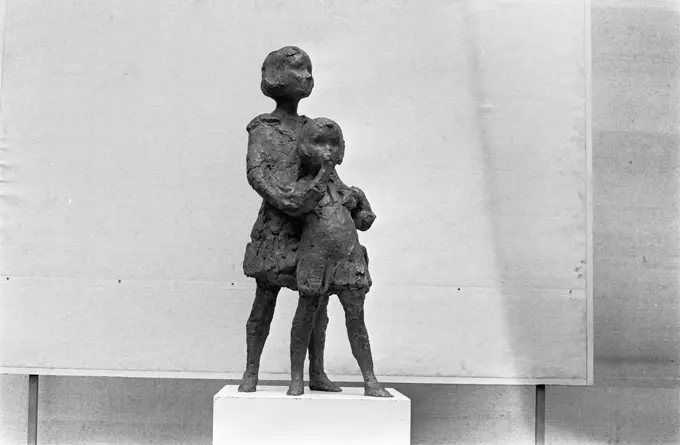
Anefo photo collection. Assignment Bayens figurine two girls at Artis. May 6, 1969
1746-21131131
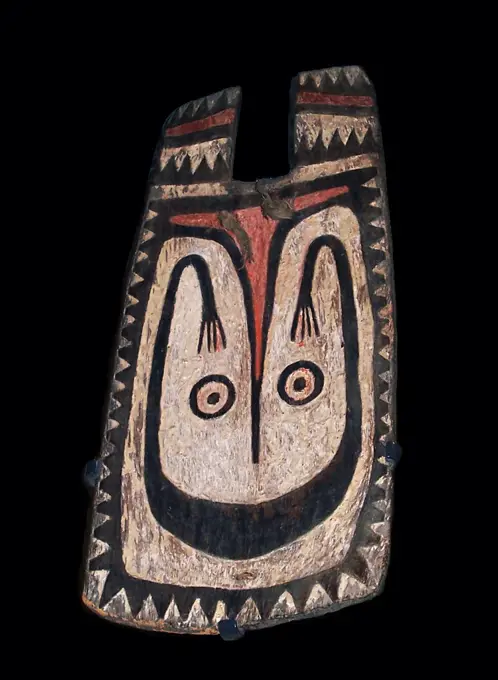
Tribal art: Decorated wooden board from the South Pacific. Displayed in ceremonies by the Elema people from Gulf of Papua, New Guinea.
4443-28729343
Box and cover (kogo) in the shape of Otafuku, c. 1830, Ninnami Dohachi, 2 13/16 × 2 1/16 × 2 1/16 in. (7.14 × 5.24 × 5.24 cm), Glazed stoneware with overglaze enamel decoration, Japan, 19th century
6145-29825374
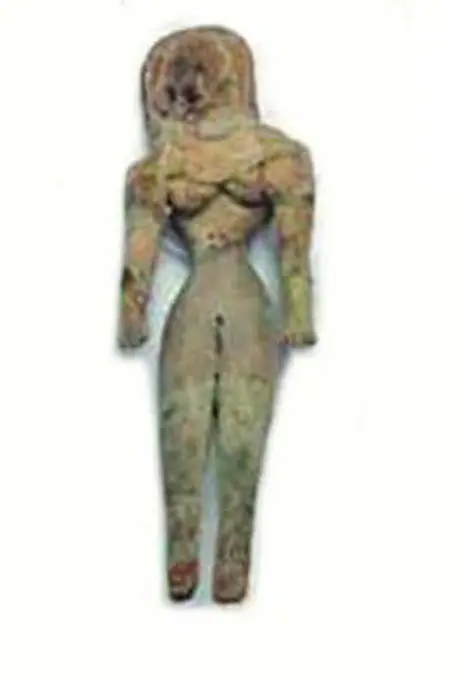
Figure of Fertility Goddess ca. 2700-2000 B.C. Baluchistan. Figure of Fertility Goddess. Baluchistan. ca. 2700-2000 B.C.. Terracotta. Ceramics
6145-29194817
Figure of a standing woman 7th-8th century China. Figure of a standing woman. China. 7th-8th century. Earthenware with pigments. Tang dynasty (618-907). Tomb Pottery
6145-29156559
Inlay depicting squatting goddess, probably Hathor 4th century B.C. Late Period-Ptolemaic Period This inlay represents a small crouching female goddess. She wears the vulture headdress associated by this time with great mother goddesses, topped by a modius of uraei and a disk, all broken away. She originally held a scepter in the fist on her knee. The king Nectanebo II incorporated into his royal names epithets relating him to the goddess Hathor.. Inlay depicting squatting goddess, probably Hathor 551334
6145-51840116
Chinese, Putai, porcelain.
866-21912
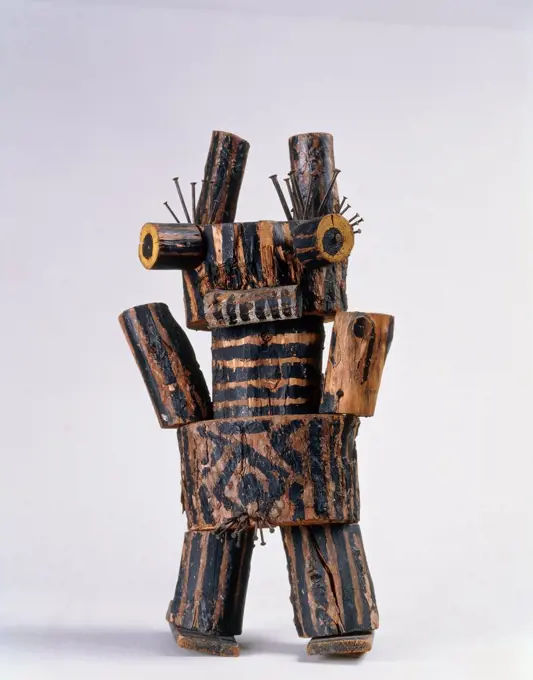
Standing Figure; Staande Figuur. Karel Appel (1921-2006). Painted wood and nails. Executed in 1947. 61cm high.
4409-20918722
PLATO DE CERAMICA CON UNA CARA. Author: PABLO PICASSO.
6145-46859521
Shadow Puppet (Wayang Kulit) of SitaKakya
1848-55257174
-
4435-6233
Kero in jaguar shaped. 1438-1534. Inca art. Sculpture on wood. SPAIN. MADRID (AUTONOMOUS COMMUNITY). Madrid. America's Museum.
PREVIOUS
of 4
NEXT
2401 S. Ervay, Suite 206
Dallas, Texas 75215
United States
Get Started
Free ResearchMy BoardsMy Cart
For Creators
How To License Your ContentContributor PortalFrame of Mind
Resources
API accessPricing
Contact
+1 866 236 0087help@viewpictures.co.uk Contact form
©2026 View Pictures. All Rights Reserved. -B
This site is protected by reCAPTCHA and Google Privacy Policy and Terms of Service apply.