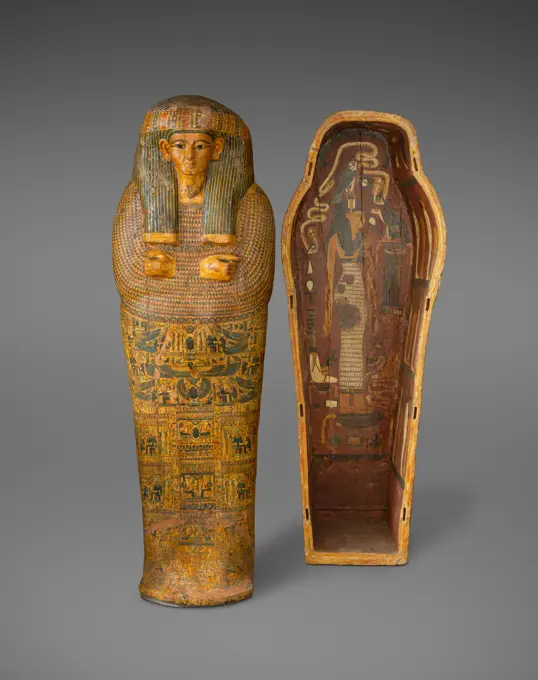
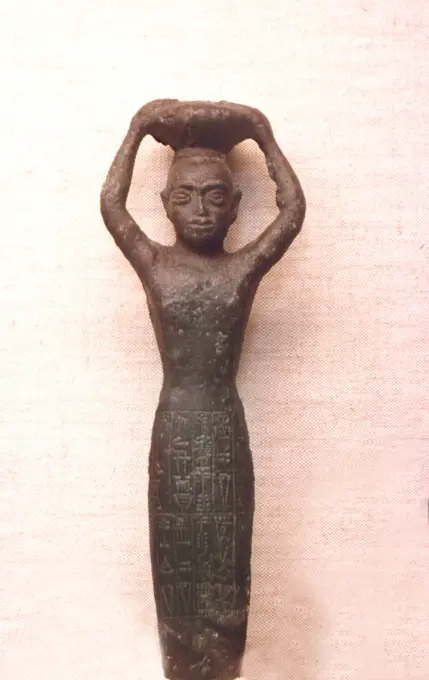
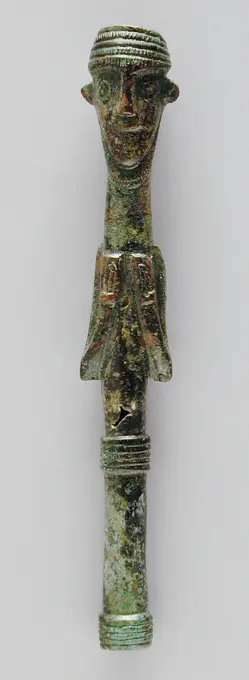
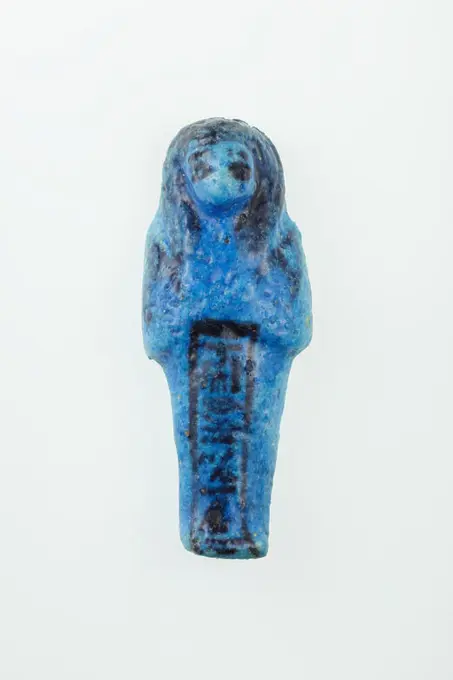
Egyptian Shabtis of Henettawy

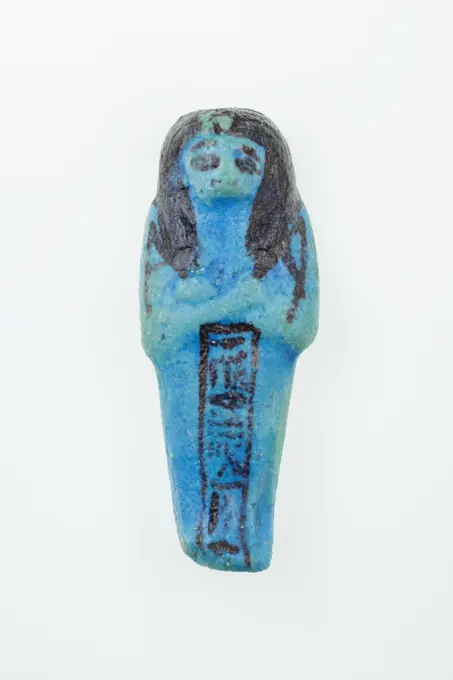
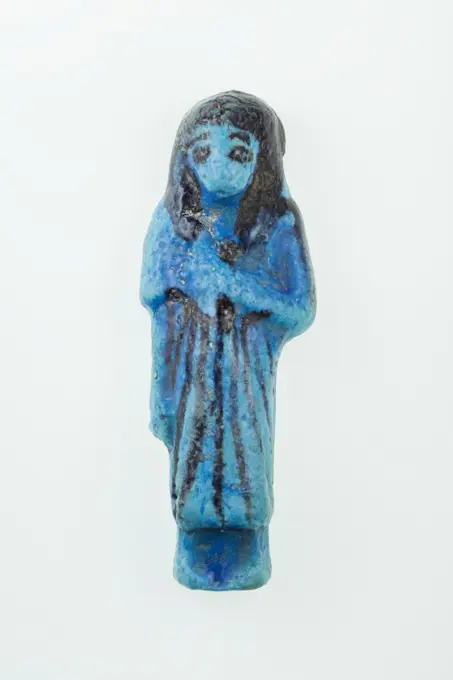
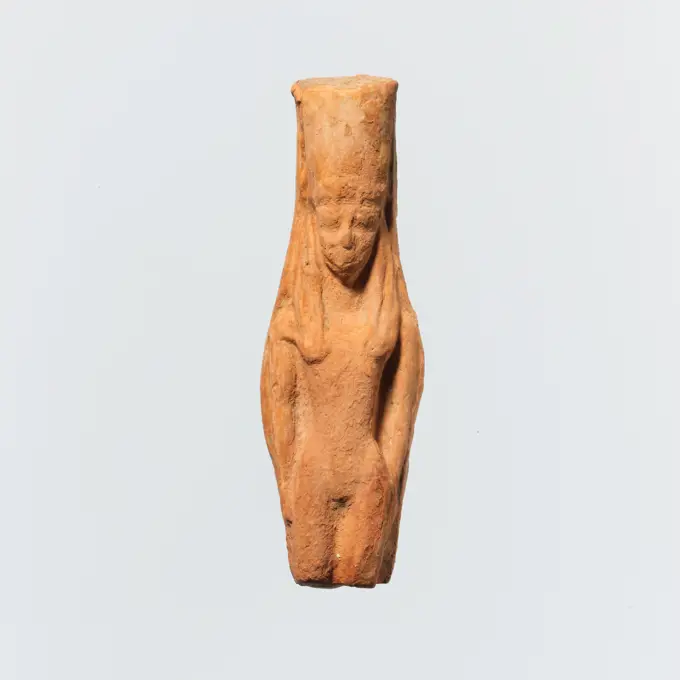
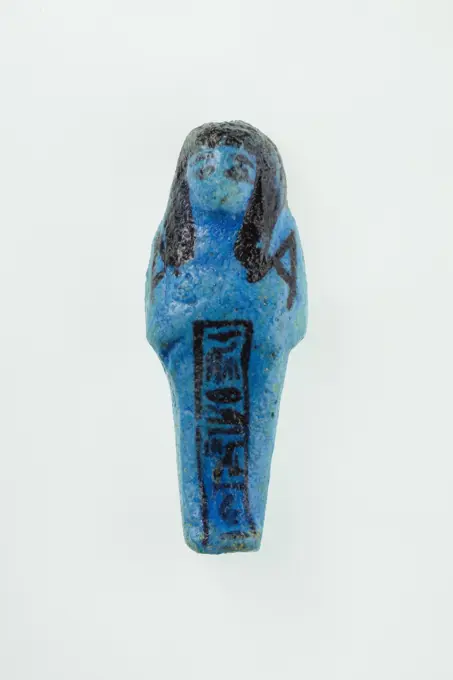
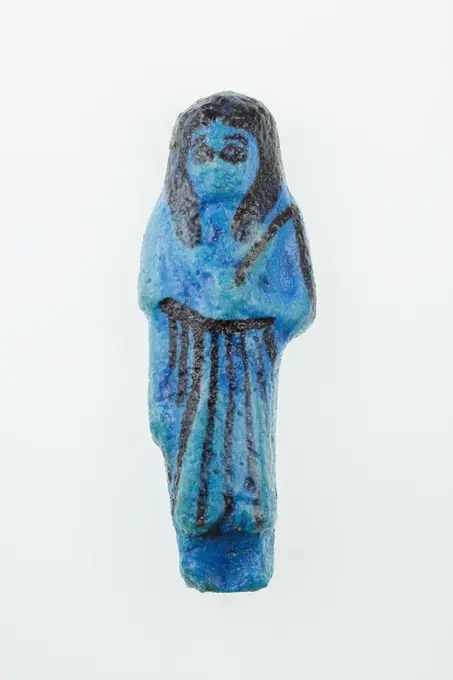
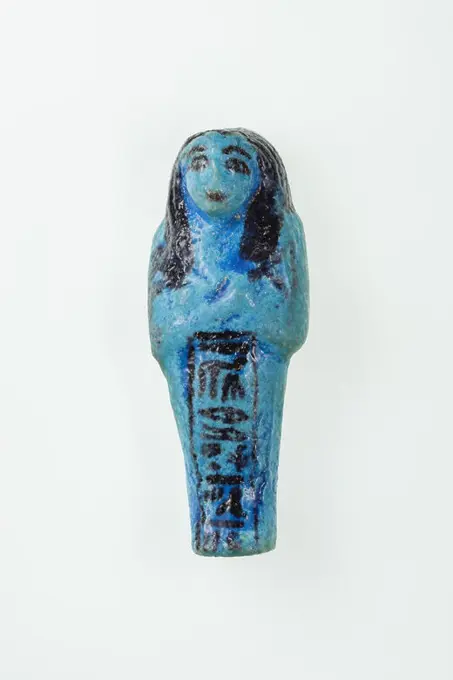
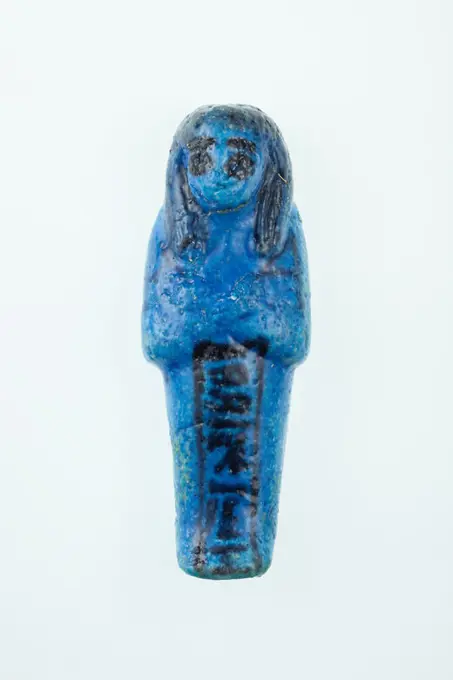
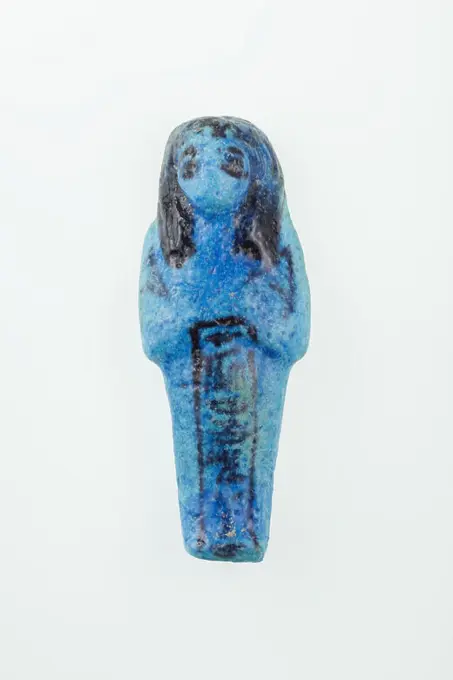
Colorful ancient Egyptian shabti figurines, representing the worker Henettawy, showcasing detailed craftsmanship from circa 990-970 B.C.
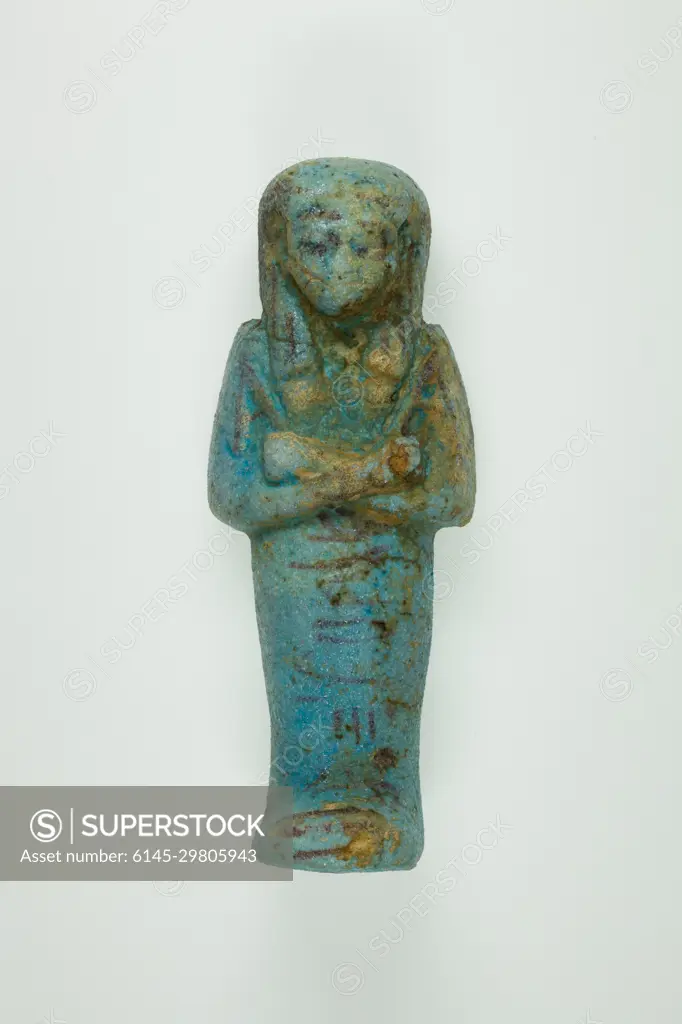
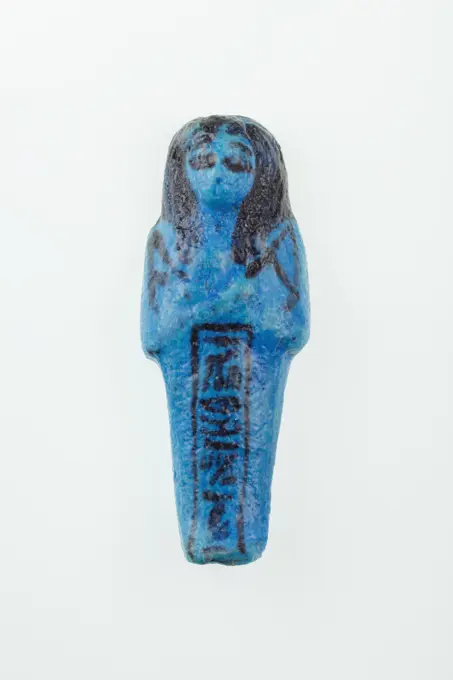
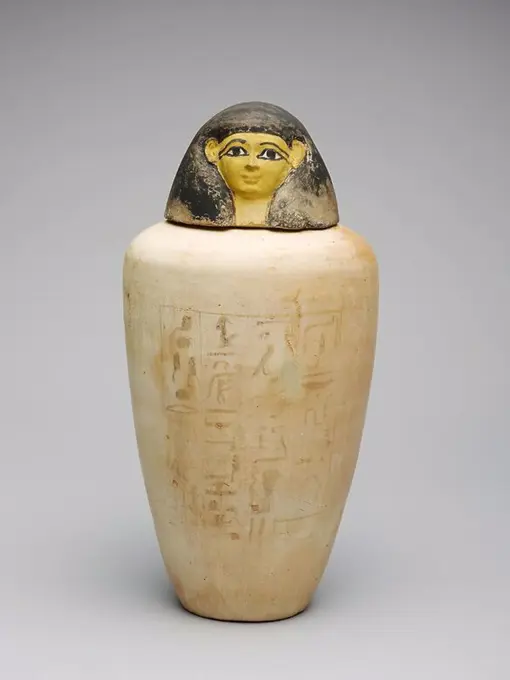
Worker Shabti of Henettawy (C), Daughter of Isetemkheb ca. 990-970 B.C. Third Intermediate Period. Worker Shabti of Henettawy (C), Daughter of Isetemkheb. ca. 990-970 B.C.. Faience. Third Intermediate Period. From Egypt, Upper Egypt, Thebes, Deir el-Bahri, Tomb MMA 60, Chamber B, Burial of Henettawy C (4), MMA excavations, 1923-24. Dynasty 21
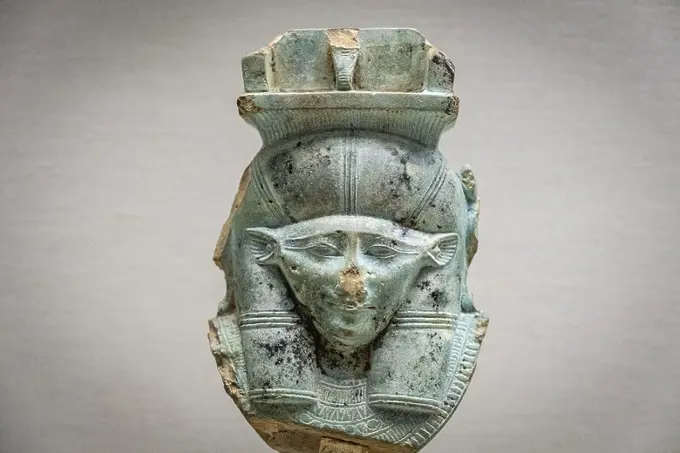
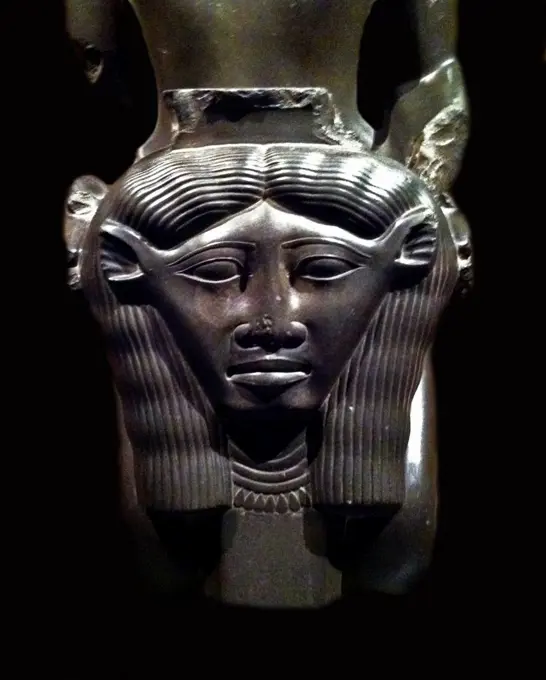
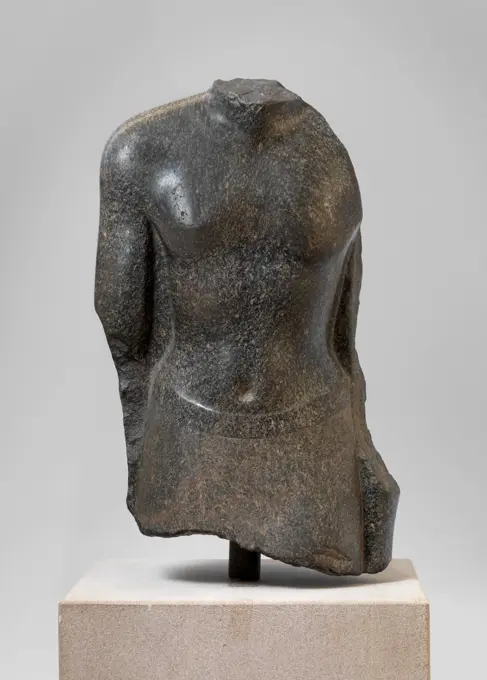
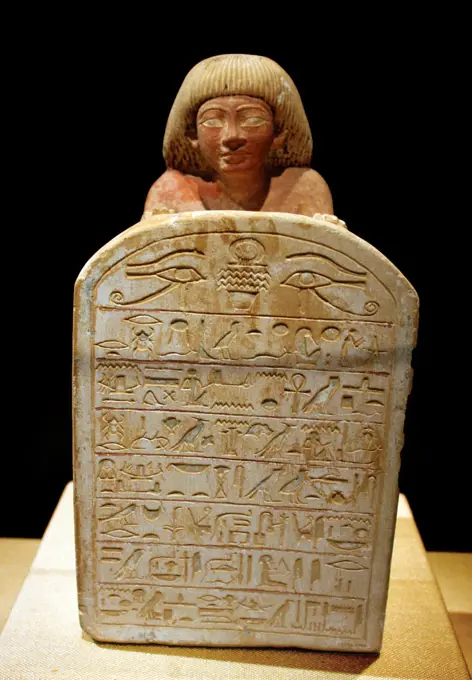
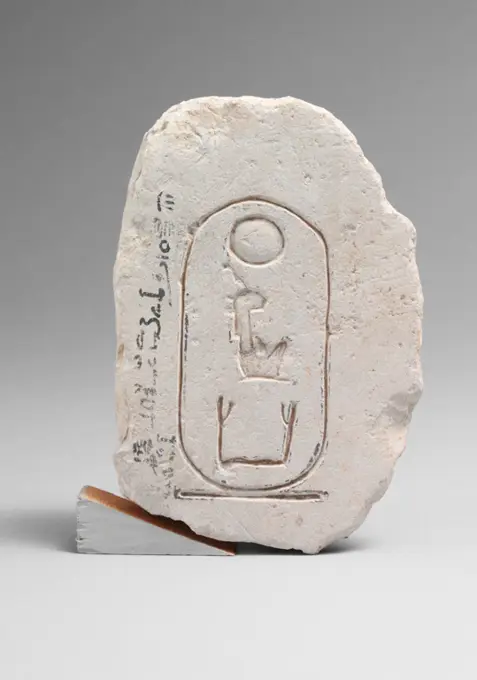
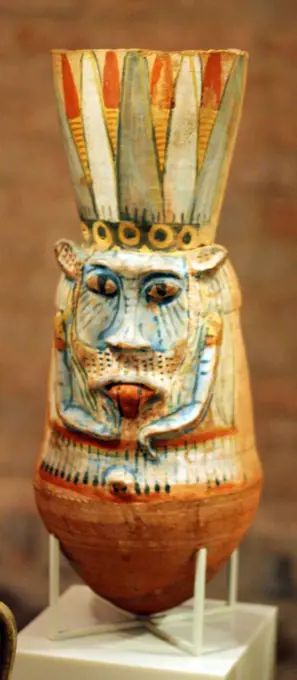
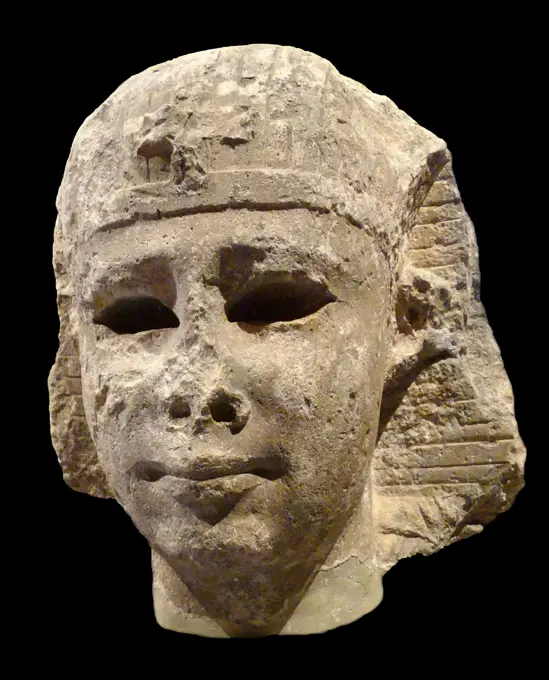
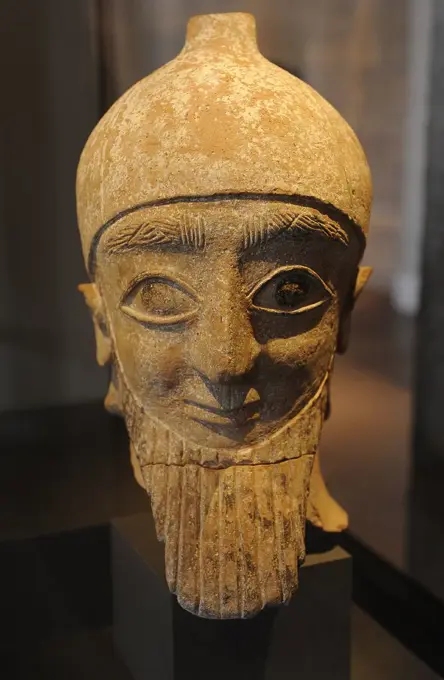
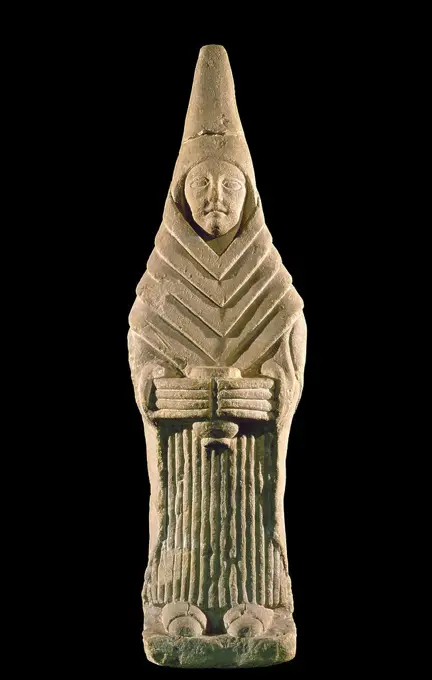
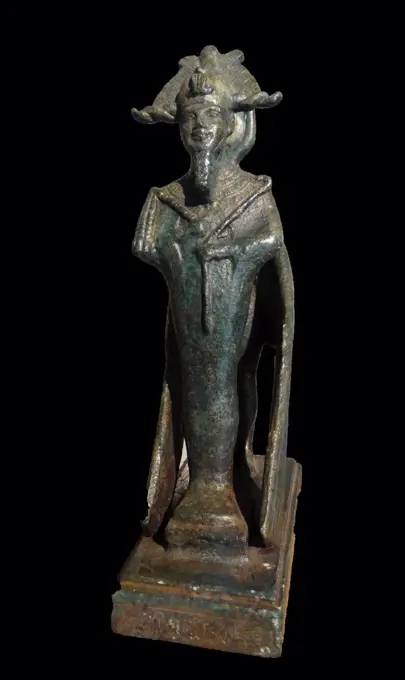
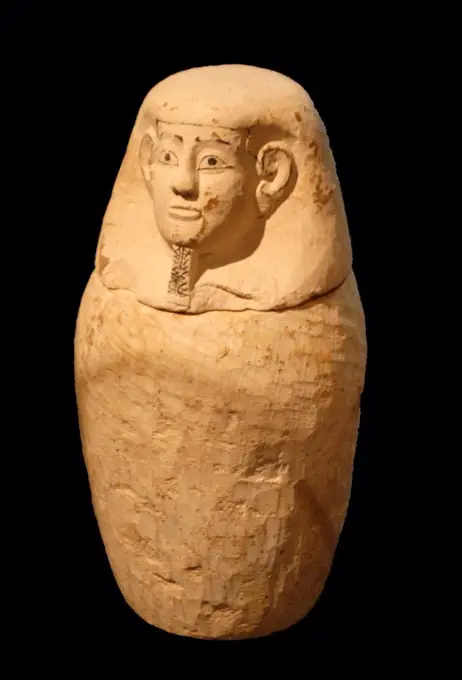
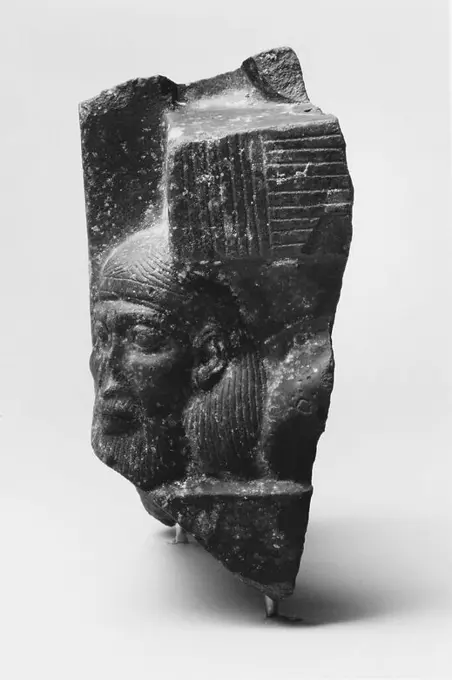
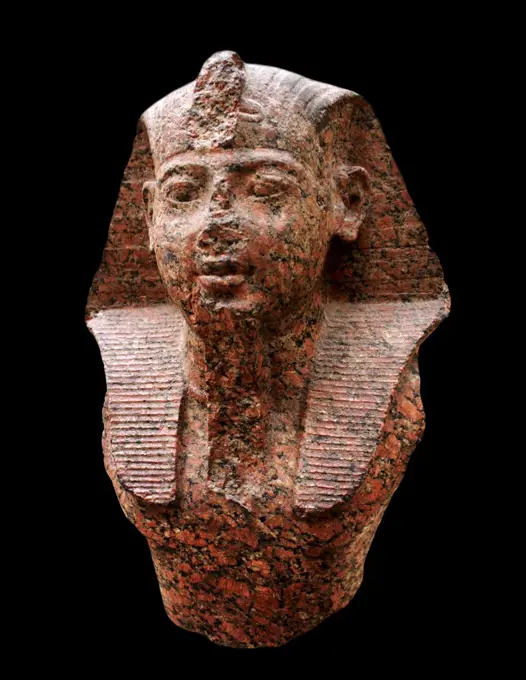
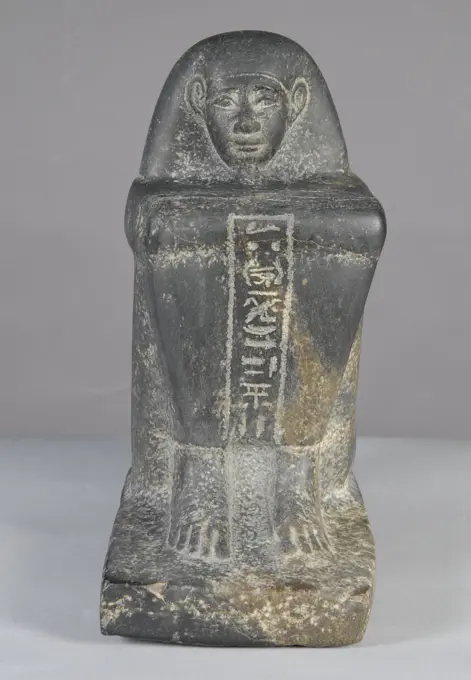
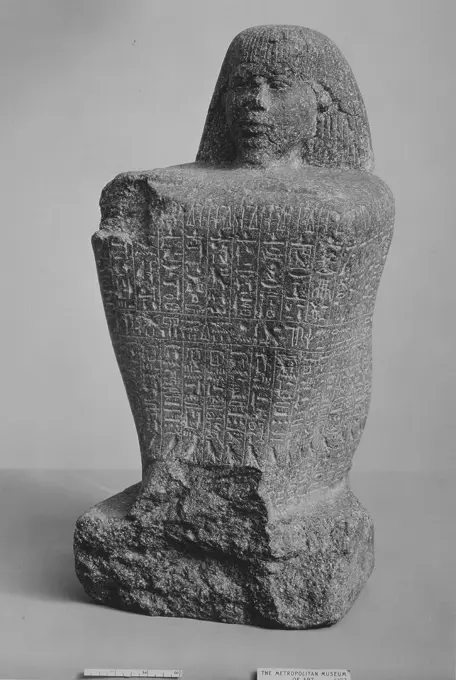
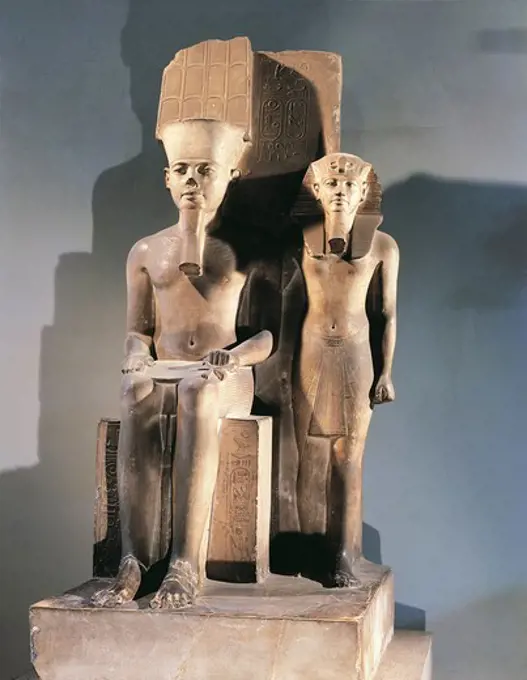
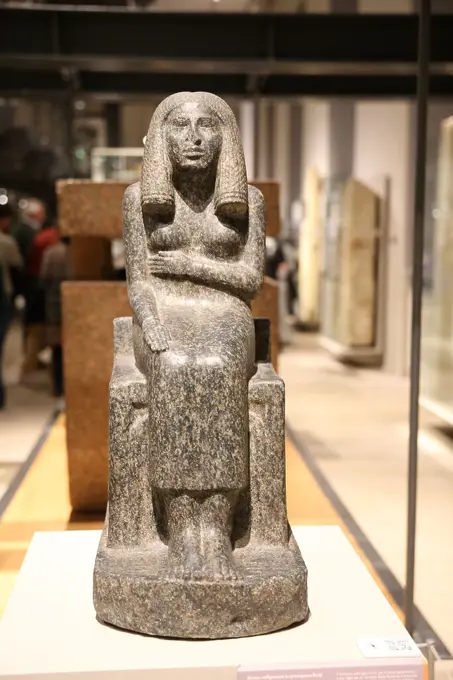
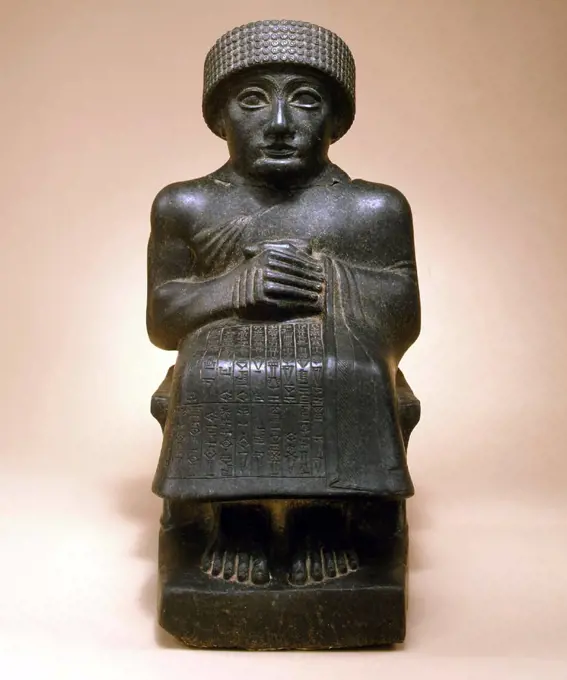
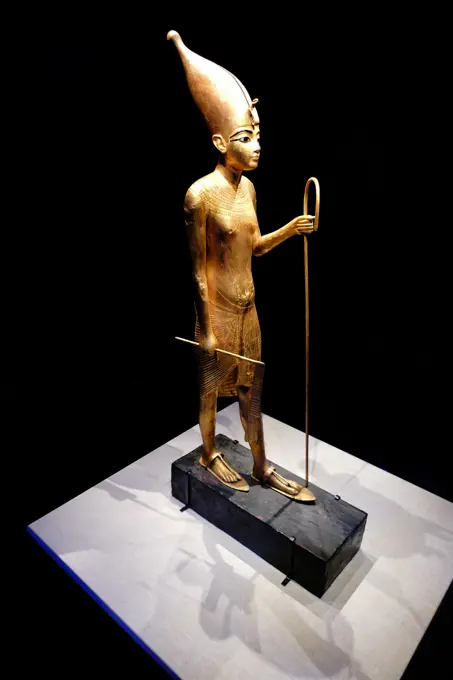
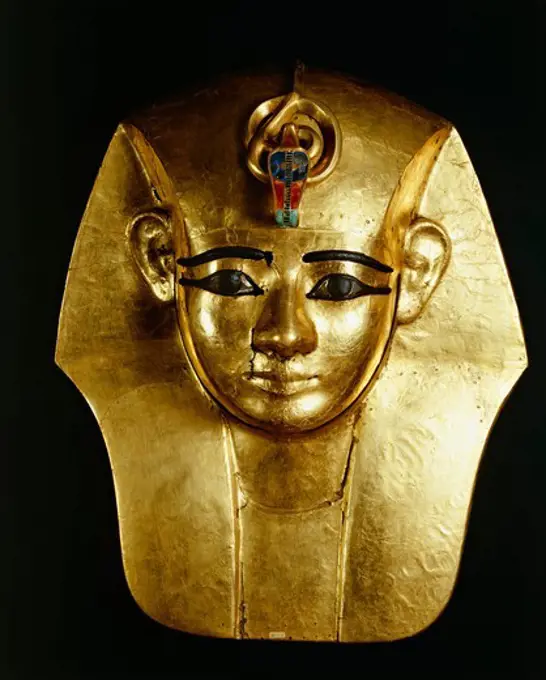
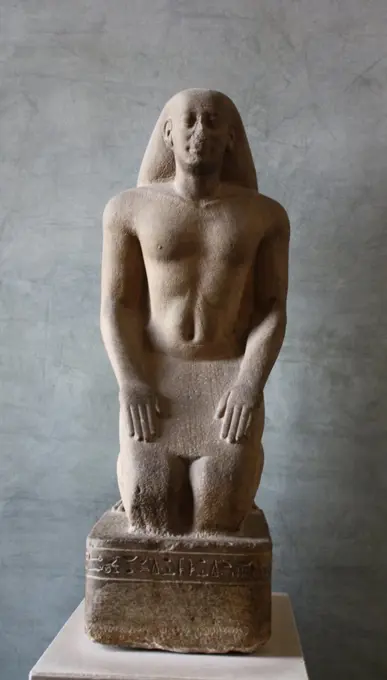
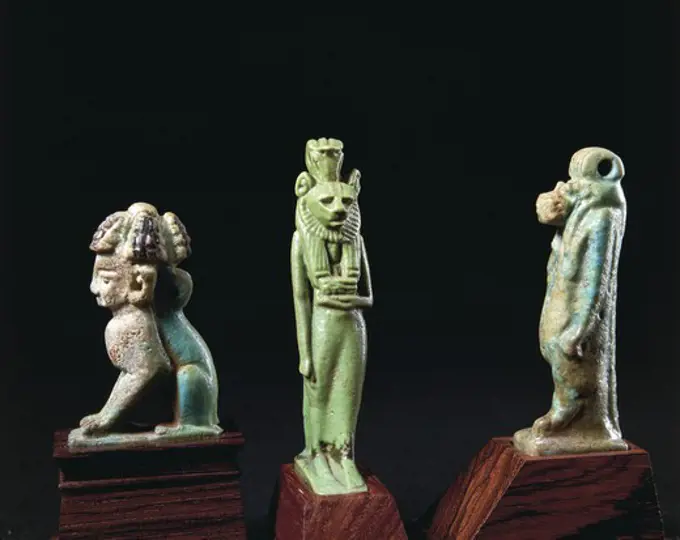
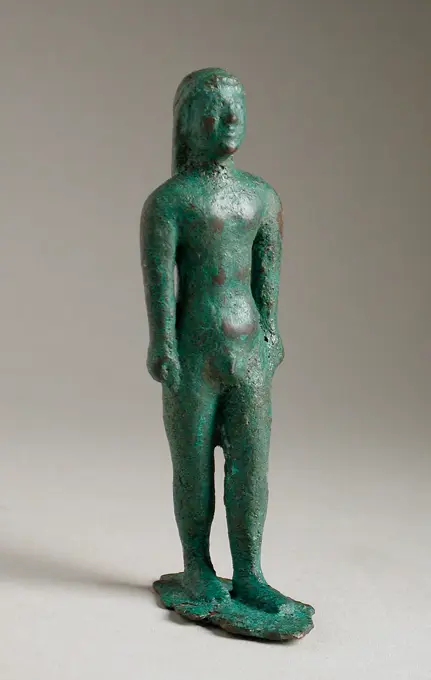
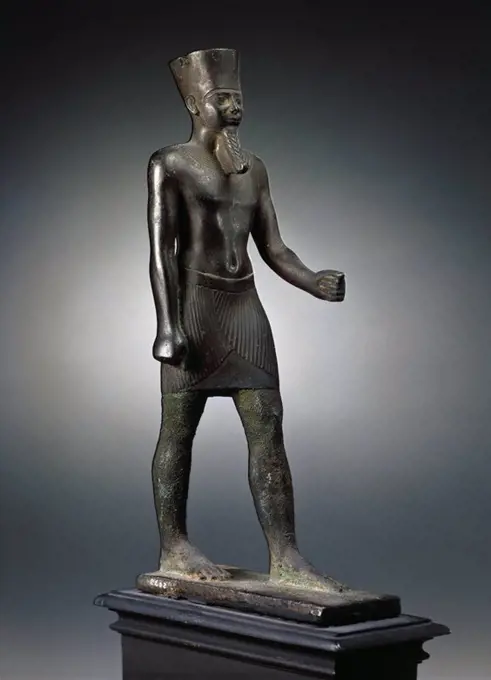
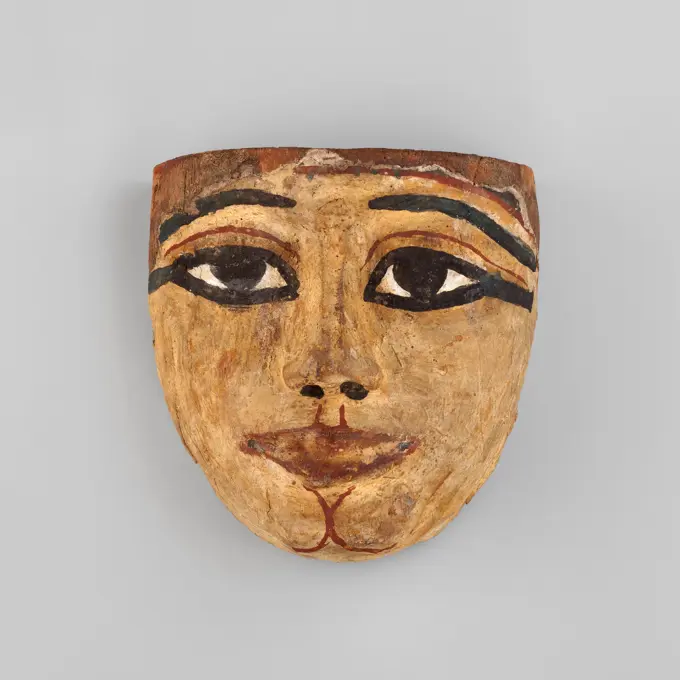
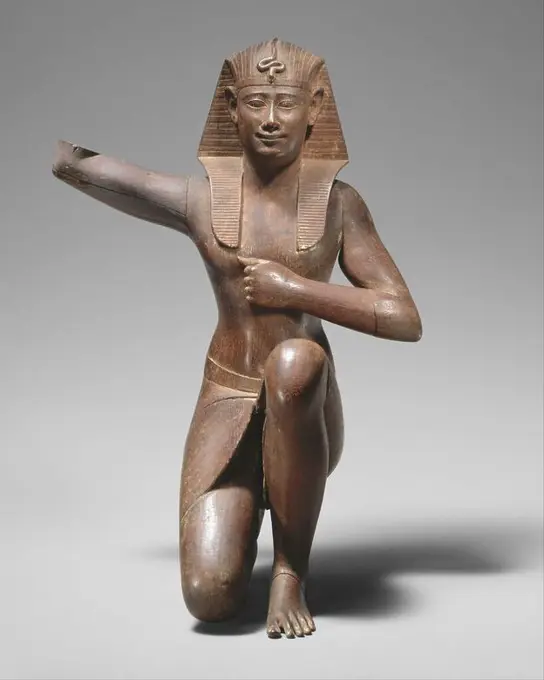
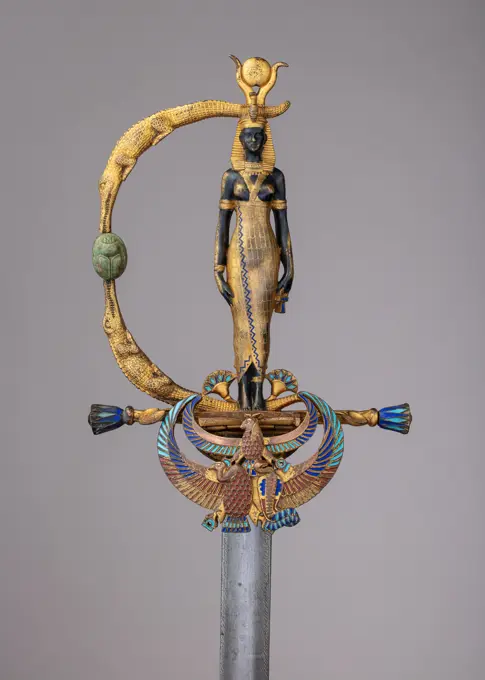
Worker Shabti of Nany ca. 1050 B.C. Third Intermediate Period See 30.3.28.1a, b. Worker Shabti of Nany. ca. 1050 B.C.. Faience. Third Intermediate Period. From Egypt, Upper Egypt, Thebes, Deir el-Bahri, Tomb of Meritamun (TT 358, MMA 65), first corridor, burial of Nany, MMA excavations, 1928-29. Dynasty 21diosa Hathor, periodo tardío de Egipto, XXVI dinastia, 664-332 a. C. loza verdosada, Fundación Calouste Gulbenkian, («Fundaçío Calouste Gulbenkian»), Lisboa, Portugal.Statue depicting woman filtering barley to make beerUszebti. unknown, authorKneeling Statue of Amenemope-em-hat 664 B.C.Torso of an official of Nectanebo I 380-362 B.C. Late Period The name of the man represented is not preserved, but he proudly asserts his attachment to Nectanebo I by placing the king's cartouches at the head of the texts on the back pillar. The slightly greenish flocked stone is associated with the site of Saft el-Hina, and, indeed, the left side of the back pillar figures an address by the deceased to the priesthood of the temple of Sopdu, confirming that the statue stood in the ancient city of Per Sopdu, modern Saft el-Hina. Per Sopdu was located at the eastern edge of the Egyptian Delta and at the western end of the Wadi Tumilat that connects the Nile valley to Sinai near the Red Sea. This was an important route during the century of the Persian Occupation and the protracted struggle that ensued during the fourth century. The temple of the city was rebuilt and greatly enriched by Nectanebo I and further embellished by Nectanebo II.. Torso of an official of Nectanebo I. 380-362 B.C.Statue of Roy. New Kingdom, reign of Amenhotep 11 (ca 1420 B.C.) Limestone paint.Inscribed Stone from Hatshepsut's Valley Temple ca. 1479-1458 B.C. New Kingdom. Inscribed Stone from Hatshepsut's Valley Temple. ca. 1479-1458 B.C.. Limestone, ink. New Kingdom. From Egypt, Upper Egypt, Thebes, Asasif, Birabi, Foot of Hatshepsut's causeway, Ptolemaic radim, MMA excavations, 1915-16. Dynasty 18Worker Shabti of Nauny ca. 1050 B.C. Third Intermediate Period See 30.3.28.1a, b. Worker Shabti of Nauny. ca. 1050 B.C.. Faience. Third Intermediate Period. From Egypt, Upper Egypt, Thebes, Deir el-Bahri, Tomb of Meritamun (TT 358, MMA 65), first corridor, burial of Nauny, MMA excavations, 1928-29. Dynasty 21Sekhmet goddess with the head of a lioness, Temple of Amun, Karnak, Egypt. Artist: Unknownfemale protome, from Carthage, clay, 6th cent. BCE, Carthage national museum, The Coliseum , Rome, Lazio, Italy ,.Mask of Coffin of Pekherkhonsu, Kushite Dynasty 25, el-Khokha Tomb, Upper Egypt,  Thebes,  Metropolitan Museum of Art, Manhattan, New York City, USA, North AmericaArabic peninsula. Anthropomorphe Stele. 57x27 cm. Late 4th-early 3rd millennium BC. Sandstone. al-Ma'akir / Qaryat al-Kaafa, nera Hail. National Museum, Riyadh. Saudi Arabian.Wine vessel in the shape of the god Bes New Kingdom, 18th Dynasty, around 1360 BC Amarna, ceramics paintedColossal head from a Royal statue from Ancient Egypt. Built from Numulitic stone from Alexandria. Dated 300 BCPolychrome Funerary Statue of aManMaska sarkofagowa. unknown, authorFemale Head. UnknownHead of a male statue with conical helmet. Terracotta. 7th-6th centuries BC. Idalion, Cyprus. Neues Museum. Berlin. Germany.Ancient Egyptian statue of a seated man. Limestone, vth Dynasty (2465-2323 B.C.). In the private tombs of Old Kingdom period are common the statues of their owners, usually in limestone.Shrine fragment with a figure of Thoth Third Intermediate Period-Late Period ca. 760-332 BC View more. Shrine fragment with a figure of Thoth. ca. 760-332 BC. Wood, paint. Third Intermediate Period-Late Period. From Egypt, Upper Egypt, Thebes, Deir el-Bahri, MMA excavations, 1922-23. Dynasty 25-30Limestone statuette of a male votary with Cypriot shorts and an Egyptian crown first half of the 6th century B.C Cypriot Male votary with pointed helmet and Cypriot loin-cloth.. Limestone statuette of a male votary with Cypriot shorts and an Egyptian crown 242125DAMA IBERICA MITRADA OFERENTE CON MANTILLA - SIGLOS II-I AC - PROCEDENTE DEL CERRO DE LOS SANTOS (ALBACETE). Location: MUSEO ARQUEOLOGICO NACIONAL-COLECCION. MADRID. SPAIN.electrum amulet showing the Egyptian god Amon-Ra 715-332 BCfemale protome, from Motya, tofhet, central favissa, clay, 6th cent. BCE, Motya Museo G Whitaker, The Coliseum , Rome, Lazio, Italy ,.Italy, Turin, Bust of QueenArchaic period in Greece. Sacred Gate Kouros. Marble, ca. 600-590 BC. Kerameikos Archaeological Museum. Athens, Greece.Ancient Egyptian funerary urn or Canopic jar 26th Dynasty, 664-525 BCHead of King Amenemhat III. Dimensions: H. 40.6 × W. 18.4 × D. 25.4 cm, 20.9 kg (16 × 7 1/4 × 10 in., 46 lb.). Dynasty: Dynasty 12. Reign: reign of Amenemhat III. Date: ca. 1859-1813 B.C..Although somewhat battered, this is an impressive image of a pharaoh wearing the double crown of Upper and Lower Egypt. The head is rounder than those depicting Senwosret III; the eyes are less bulbous, and the lids less fleshy. We see, in fact, a portrait of Senwosret's successor Amenemhat III. A piece closely related in style was found at Kom el-Hisn in the western Nile Delta. Like that sculpture the Museum's head has a distinctly youthful character, which is apparent in spite of the deep furrows at the sides of the king's nose. Egyptian artists often emphasized youthfulness in the face of an already mature pharaoh in images that commemorated the king's thirty-year jubilee (Heb Sed). The king was, in this image, most probably represented seated. Museum: Metropolitan Museum of Art, New York, USA.Canopic Jar of the Overseer of the Builders of Amun, Amenhotep. Egyptian. Date: 1427 BC-1400 BC. Dimensions: a (jar): 30.7 × 18.4 × 18.4 cm (12 1/8 × 7 1/4 × 7 1/4 in.)b (lid): 12.7 × 12.7 × 13.3 cm (5 × 5 × 5 1/4 in.). Terra-cotta and pigment. Origin: Egypt. Museum: The Chicago Art Institute, Chicago, USA. Author: Ancient Egyptian.Goddess Hathor, late period of Egypt, XXVI dynasty, 664-332 BC. Greenish loam, Calouste Gulbenkian Foundation, ("Fundação Calouste Gulbenkian"), Lisbon, Portugal.Female Figure 2nd century B.C.-A.D. 1st century Old Bering Sea In the last two millennia before the Common Era, the peoples who established themselves along the rim of the North Pacific Ocean between Asia and America were dependent for their livelihood to a great extent on the resources of the sea. Walrus, seal, and whale were significant to subsistence, and all were hunted. On the American side, the Bering Sea Eskimo were careful to decorate the ivory and wood tools with which they hunted. The beautifully balanced and elegantly incised objects were functional tools that were incised with spirit images and designs that honored the animals the hunters sought. Harpoon heads and foreshafts, and the socket pieces known as winged objects are salient examples. Also carved of walrus ivory were human figures, most frequently female. The purpose to which the enigmatic but equally elegant figures were put is unclear. Some authorities call them dolls-originally, they may have been dressed-while oStanding Male Figure 5th-10th century Teotihuacan. Standing Male Figure. Teotihuacan. 5th-10th century. Stone. Mexico. Stone-SculptureHead of Sesostris III. 1878 BC. Middle Kingdom. Egyptian art. Middle Kingdom. Sculpture on rock. EGYPT. CAIRO. Cairo. Egyptian Museum. Proc: EGYPT. Medamud. Temple at Medamud.Fragment of a sculptured statue base depicting an Asiatic prisoner. Dimensions: h. 21.6 cm (8 1/2 in); w. 11.4 cm (4 1/2 in); d. 18 cm (7 1/16 in). Dynasty: Dynasty 19. Reign: reign of Ramesses I-Seti I. Date: ca. 1300-1250 B.C..Ancient Egyptian artists expressed the might of the pharaoh through a variety of images. One of these is the image of the pharaoh standing or enthroned above the bodies of foreigner captives. This fragment of a statue base shows the head and shoulder of a Syrian who is characterized by long strands of hair confined by a headband, a beard and mustache, and a fringed mantle embroidered with rosettes. The complete figure lay flat on his belly, his back pressed down by the reed mat on which the king stood. It is likely that captives from four different ethnic groups adorned each of the four corners of the statue base. The Syrian was at the rear corner. The adjacent blank face of the stone continued upward, forming an upright slab (or back pillar) behind the figurHead of a 19th Dynasty Pharaoh about 1250 BC. Made of red granite, this head, wearing royal headdress, depicted a New Kingdom pharaoh, possibly Ramses II.Block Statue of Porter Amenemhat 4th century B.C. Ptolemaic Period. Block Statue of Porter Amenemhat. 4th century B.C.. Basalt. Ptolemaic Period. From Egypt, Upper Egypt, Thebes, Karnak, Temple of Amun, CachetteBlock statue, Hor. Dynasty: Dynasty 18. Date: ca. 1550-1295 B.C.. Museum: Metropolitan Museum of Art, New York, USA.Overseer Shabti of Nauny ca. 1050 B.C. Third Intermediate Period See 30.3.30.1a, b. Overseer Shabti of Nauny. ca. 1050 B.C.. Faience. Third Intermediate Period. From Egypt, Upper Egypt, Thebes, Deir el-Bahri, Tomb of Meritamun (TT 358, MMA 65), first corridor, burial of Nauny, MMA excavations, 1928-29. Dynasty 21Calcite sculptural group portraying pharaoh Tutankhamen standing beside enthroned god Amon from Thebes, New Kingdom, Dynasty XVIIIAbruzzo, L'Aquila, S. Giuliano (L'Aquila environs), Museo, Italy, 20th century, photo, photography, EuropeTerracotta statuette of a female figure 7th century B.C. Greek, Cretan The tall polos (headgear), nudity, and frontality suggest that this may be a deity of Eastern origin.. Terracotta statuette of a female figure 254750 Greek, Cretan, Terracotta statuette of a female figure, 7th century B.C., Terracotta, 6 1/2 in. x 2 in. (16.5 cm x 5 cm). The Metropolitan Museum of Art, New York. Gift of the Archaeological Institute of America, 1953 (53.5.25)Worker Shabti of Nany ca. 1050 B.C. Third Intermediate Period See 30.3.27.1a, b. Worker Shabti of Nany. ca. 1050 B.C.. Faience. Third Intermediate Period. From Egypt, Upper Egypt, Thebes, Deir el-Bahri, Tomb of Meritamun (TT 358, MMA 65), first corridor, burial of Nany, MMA excavations, 1928-29. Dynasty 21Wooden statue of Sesostris from LishtOverseer Shabti of Nany. Dimensions: H. 9.5 × W. 3.3 × D. 2.1 cm (9.5 × 3.3 × 2.1 cm). Dynasty: Dynasty 21. Reign: reign of Psusennes I. Date: ca. 1050 B.C..See 30.2.28.1a, b. Museum: Metropolitan Museum of Art, New York, USA.Worker Shabti of Nany. Dimensions: H. 8.7 × W. 3.3 × D. 2.2 cm (3 7/16 × 1 5/16 × 7/8 in.). Dynasty: Dynasty 21. Reign: reign of Psusennes I. Date: ca. 1050 B.C..See 30.3.27.1a, b. Museum: Metropolitan Museum of Art, New York, USA.Posąg mężczyzny. unknown, authorMask of Coffin of Pekherkhonsu, Kushite Dynasty 25, el-Khokha Tomb, Upper Egypt,  Thebes,  Metropolitan Museum of Art, Manhattan, New York City, USA, North AmericaStatue of princess Redji. Granodiorite. Old Kingdom, 3rd Dynasty (2592-1543 BC). Saqqara. Drovetti Collection. Egyptian Museum of Turin. Italy.The city-state of Lagash produced a remarkable number of statues of its kings as well as Sumerian literary hymns and prayers under the rule of Gudea (c. 2150-2125 BCE) and his son Ur-Ningirsu (c. 2125-2100 BCE). This sculpture belongs to a series of diorite statues commissioned by Gudea, who devoted his energies to rebuilding the great temples of Lagash and installing statues of himself in them. Many inscribed with his name and divine dedications survive. Here, Gudea is depicted in the seated pose of a ruler before his subjects, his hands folded in a traditional gesture of prayer. The Sumerian inscription on his robe lists the various temples that he built or renovated in Lagash and names the statue: 'Gudea, the man who built the temple; may his life be long'.King Sesostris III Pharaoh of Egypt from 1878BC to 1839BC (Twelfth Dynasty)Amenemhet III by unknown artists, diorite-gneiss sculpture, 19th century BC, Russia, St Petersburg, State Hermitage, 86, 5Worker Shabti of Nany. Dimensions: H. 9 × W. 3.1 × D. 2.1 cm (3 9/16 × 1 1/4 × 13/16 in.). Dynasty: Dynasty 21. Reign: reign of Psusennes I. Date: ca. 1050 B.C..See 30.3.28.1a, b. Museum: Metropolitan Museum of Art, New York, USA.Statuette of a Siren 400 BCE-100 BCE Greece. terracotta . Ancient GreekGilded wooden statue of King Tutankhamun. 1326 BC From the tomb of King TutankhamunGold funerary mask of Pharaoh Amenemope from TanisStatue of Nakhthorheb kneeling in prayer 590 B.C.Egyptian Art - Late Period - Amulets of the Goddess Thueris Sekhmet and of the Sphynx with the Nubian Crown -  Enamelled clayRetro look Ramesses monument Vintage looking Statue of Pharaoh Ramesses II The Great isolated over white Copyright: xZoonar.com/ClaudioxDiviziax 5825273Standing Kouros Figurine. Italy (), 6th century BCE or modern. Sculpture. BronzeGranite statue of Sekhmet 1350 BC. The Egyptian goddess associated with destruction.Mummy Board of Tabakmut ca. 1000-950 B.C. Third Intermediate Period This mummy board was found nested inside Tabakmut's outer and inner coffins (25.3.10a, b and 25.3.11). When the excavators opened the inner coffin, they found that the face, wig, and hands of this board had been chopped off, likely because they prevented the funeral party from closing the lid. Fortunately, most of the pieces had been tucked inside the box, so the face and hands at least could be restored.As on the inner and outer coffins, the deceased wears a striated wig bound with a fillet, but in this case he has a short trapezoidal beard, associated with the living, attached to his chin rather than the long "divine" version seen on the inner coffin. Beneath the elaborate collar that covers the shoulders and neck, the board is divided by bands of inscription into square sections containing images of the deceased before Osiris. The interior was left undecorated.Note that Tabakmut's name was not included in any of theEurope, Germany, Berlin. Egyptian Museum, bust of NefertitiGilded statuette of the Goddess Sekhmet. From the tomb of King Tutankhamen. 1323 BC. 18th dynasty, New KingdomEgyptian Art. Bronze statuette depicting the god Amun standing with leg and arm upfront and holding a scepter now missed. Cover his head with crown that has lost two pens, short skirt and false beard. Dated between 664-332 B.C. Lower Empire. National Archaeological Museum. Madrid. Spain.Lady Of Auxerre 6th C. BC Greek Art Limestone Musee du Louvre, Paris, FranceWomen's sarcophagus mask;  I - II century; Roman period (1-00-00-200-00-00);Scene.gal., UNESCO (1946 -), Dar (provenance), fragments of sarcophagus, masks, facesCampania Salerno Padula Museo Archeologico della Lucania Occidentale. Hutzel, Max 1960-1990 Antiquities: There are views of Ardean artifacts, including artefixes. German-born photographer and scholar Max Hutzel (1911-1988) photographed in Italy from the early 1960s until his death. The result of this project, referred to by Hutzel as Foto Arte Minore, is thorough documentation of art historical development in Italy up to the 18th century, including objects of the Etruscans and the Romans, as well as early Medieval, Romanesque, Gothic, Renaissance and Baroque monuments. Images are organized by geographic region in Italy, then by province, city, site complex and monument.Figure of a Flute-player in the ministry of the Temple, also showing the influence of an Egyptian style. Stephen Thompson (British, about 1830 - 1893)Ritual Figure. Dimensions: H. 21 cm (8 1/4 in.); W. 14.3 cm (5 5/8 in.); D. 11 cm (4 5/16 in.). Dynasty: Dynasty 30 or later. Date: 380-246 B.C..The fluid pose and chest-beating gesture of this extraordinary figure evoke a stately performance. Egyptian relief representations depict such figures as part of a troupe of similarly genuflecting divine beings with falcon and jackal heads. This troupe is usually seen attending the sunrise or the birth and coronation of a king; three-dimensional figures of the same type were set around the processional shrines of certain gods, doubtlessly to accompany the epiphany of the deity during a procession.It is not easy to explain the presence among the animal-headed divinities of the human-headed figure wearing--as seen here--the regalia of a pharaoh. Some scholars interpret the figure as the representation of an actual king. Others understand it as a mythical being that introduces royal aspects into the otherworldly ritual. Whatever its exact meaniPresentation Sword Honoring Commandant Jean-Baptiste Marchand (1863-1934) for His Conduct at Fashoda 1889 Hilt designed by Jean-Joseph-Marie-Anatole Marquet de Vasselot This sword occupies as special place among the many presentation swords made in nineteenth-century Europe for the Orientalist theme, sculptural qualities, and polychrome ornamentation of its elaborate hilt. It is also potentially unique for the attention that its original design aroused at the time in France and beyond. The hilt was designed by the sculptor Anatole Marquet de Vasselot (1840-1904) for a sword that the daily newspaper La Patrie wished to award to the French military officer Jean-Baptiste Marchand (1863-1934). The sword was intended to honor the spirit, abnegation, and competence that Marchand had shown in Africa as the leader of a small expeditionary force known as the Congo-Nile Mission. The initiative of commissioning a sword of honor, and the prospect of presenting it on behalf of its readers supportedMummy mask made of painted plastered cloth from ThebesMaska sarkofagowa. unknown, authorESCULTURA DE ARCILLA. Author: ANTONIO BALLESTER BALLESTER.Statue of Nenkheftka. Painted limestone. This statue comes from Nenkheftkas tomb at Deshasha. Free-standing statues such as this were a characteristic feature of the tombs of the old Kingdom (about 2613-2160).Face and top of Iyhat's outer coffin. Dated 8th Century BCPainted terracotta Lefkandi Centaur, from the necropolis of Toumba (1100-825 B.C.)Ancestor Panel with AbstractDesignSakhmet Amulet 664-30 B.C. Late Period-Ptolemaic Period. Sakhmet Amulet. 664-30 B.C.. Faience. Late Period-Ptolemaic Period. From Egypt. Dynasty 26-30Case of the inner coffin of Nespamal, showing the goddess Nut. 27 Dynasty, 500 years BCEgyptian art. Nefertiti. 14th century B.C. Egyptian Princess, wife of Amenhotep IV Akhenaton. Bust. Limestone and stucco. It is believed to have been crafted in 1345 BC by the sculptor Thutmose. New Kingdom. 18th Dynasty. It comes from Tell-el-Amarna. Egyptian Museum of Berlin (Neues Museum). Germany.Amenhotep III (1390 BC-1352 BC), Ancient Egyptian Pharoah, 1936. Artist: UnknownFemale figure. Iberian art. Sculpture on bronze. SPAIN. MADRID (AUTONOMOUS COMMUNITY). Madrid. National Museum of Archaeology.MASCARA DE ORO DE TUTANKAMON CON INCRUSTACIONES DE LAPISLAZULI Y CORNALINA- DINASTIA XVIII - 1352 AC. Location: EGYPTIAN MUSEUM. KAIRO. EGYPT.Figure 18th century Columbia River. Figure. Columbia River. 18th century. Bone. United States, Oregon, Columbia River region. Bone/Ivory-SculptureShabti of Siptah. Dimensions: H. 20.5 cm (8 1/16 in.). Dynasty: Dynasty 19. Reign: reign of Siptah. Date: ca. 1194-1188 B.C.. Museum: Metropolitan Museum of Art, New York, USA.Bronze figure ofHorusUszebti. unknown, authorMummy Mask. 1st half 1st c. Representations of funerary genious are inlaid in the pectoral. Made with painted cardboard and gilded with glass inlays. From the first Roman period. Egyptian art. Roman and Byzantine period. Jewelry. EGYPT. CAIRO. Cairo. Egyptian Museum. Proc: EGYPT. El Qusiya. Meir.Egypt, New Kingdom, Valley of the Kings, Egyptian Museum, Tut Manniken, Wooden TorsoStatue von Senenmut mit Prinzessin Neferura. Altes Ägypten. Statue of Senenmut with Princess Neferura. Ancient Egypt. Publication of the Meyers encyclopedia, Vol. 7, Leipzig, Germany, 1910. LicenseRF Copyright: xZoonar.com/SergeyxKohlx 23252490Worker Shabti of Nany. Dimensions: H. 8.5 × W. 3.2 × D. 1.8 cm (3 3/8 × 1 1/4 × 11/16 in.). Dynasty: Dynasty 21. Reign: reign of Psusennes I. Date: ca. 1050 B.C..See 30.3.30.1a, b. Museum: Metropolitan Museum of Art, New York, USA.Egyptian statuette of a woman bearing offerings, 22nd century BC. Artist: UnknownOuter Coffin Inscribed for Tabakmut ca. 1000-950 B.C. Third Intermediate Period Tabakmut was one of the last burials in the main chamber of Tomb MMA 60. His anthropoid coffin set was relatively complete, with this outer coffin, an inner coffin (25.3.11a, b), and a mummy board (25.3.12), but no other equipment was included in his burial. The ready-made, stock coffins, with their false beards and fisted hands, are of the kind designed for men, and the mummy found inside was that of a male, twenty-five to thirty years old. However, the name Tabakmut, added in blue over the varnish in two places on the vertical inscrpitions, is typically female. Tabakmut had no titles, and there was no equipment other than the coffins included in his burial. In addition, the quality of his mummification was mediocre, thus he was clearly of lesser status than some of the other inhabitants of the tomb.The head of this coffin is covered with a striated tripartite wig, with a hole under the chin for a now-missNuraghic bronze chieftain figure, Museo Archeologico Nazionale, Cagliari, Sardinia, Italy, EuropeVotive figurine, Inshushinak, Sumerian artefact, 3rd Mill BC, Mesopotamia.Decorated Tube. Iran, Luristan, circa 1000-650 B.C.. Sculpture. Bronze, castXIXe dynastie: Apis III, mort l'an 26 de Ramsès II. Mariette, Auguste, 1821-1881. Prints. 1857. General Research Division. Serapeum (aqqrah, Egypt), Canopic Jars , Egypt , To 499CABEZA DE TEYE. XVIII DINASTIA, HACIA 1370 A.C. ALTURA 9,5 CM. Location: NEUES MUSEUM. BERLIN. DEUTSCHLAND. TEYE REINA. AMENOFIS III ESPOSA.Worker Shabti of Nany. Dimensions: H. 8.5 × W. 3.3 × D. 2 cm (3 3/8 × 1 5/16 × 13/16 in.). Dynasty: Dynasty 21. Reign: reign of Psusennes I. Date: ca. 1050 B.C..See 30.3.30.1a, b. Museum: Metropolitan Museum of Art, New York, USA.