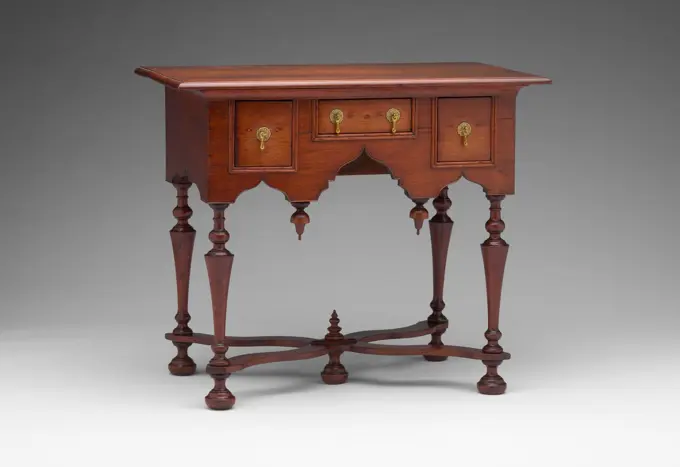
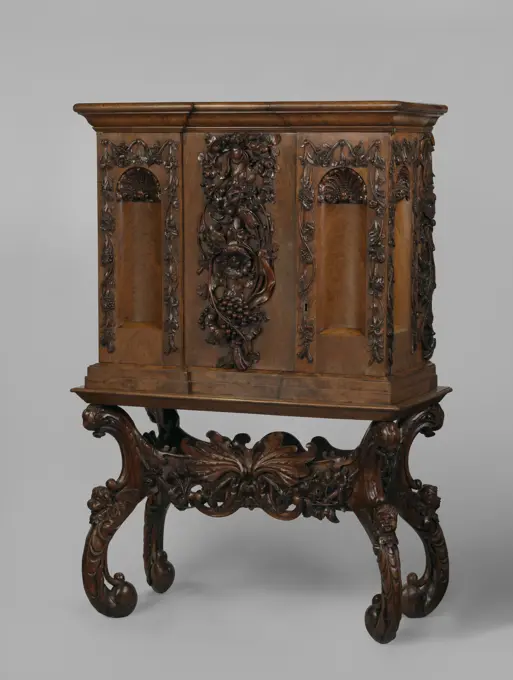
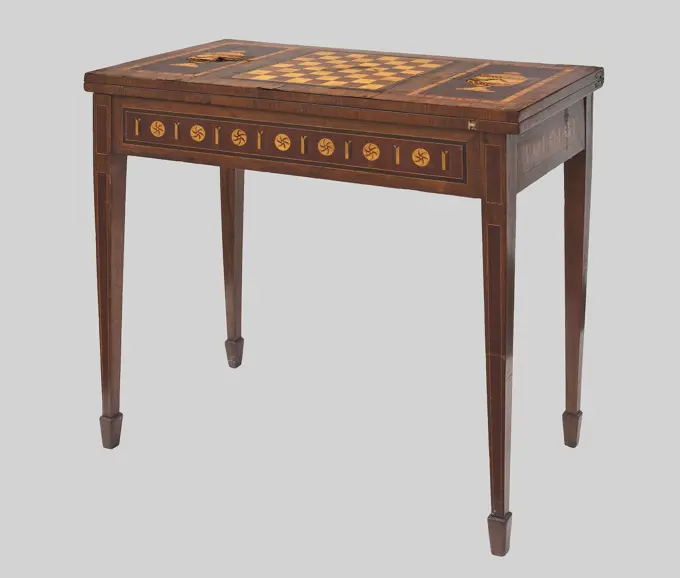
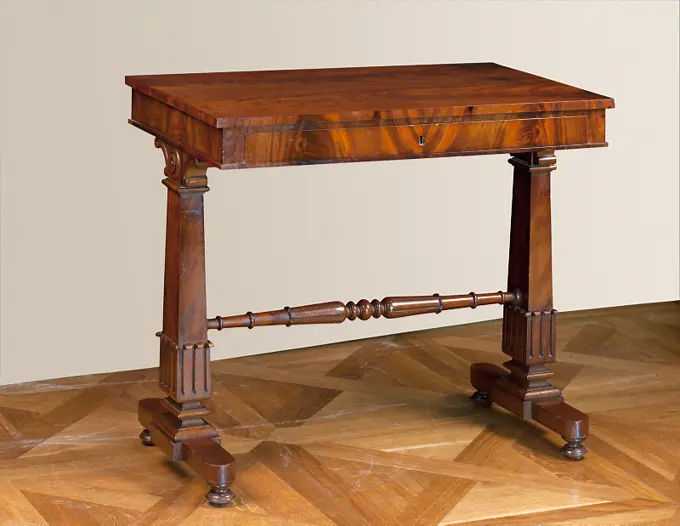
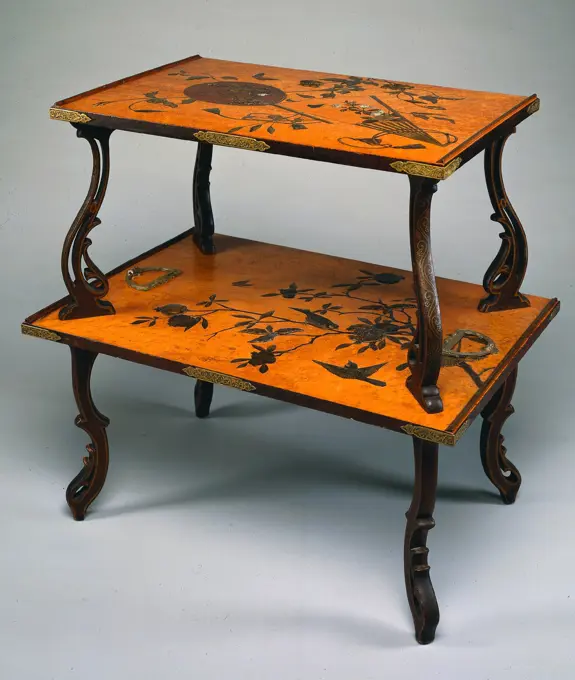
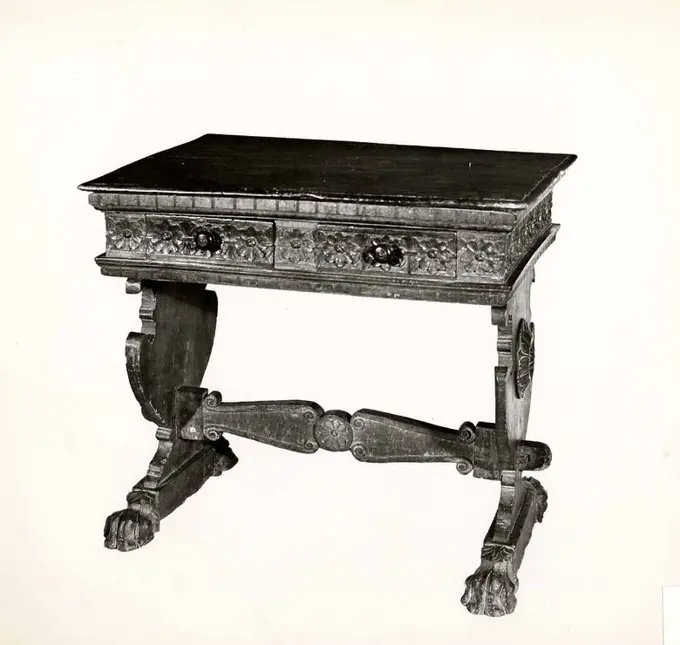
Elegant Antique Tables

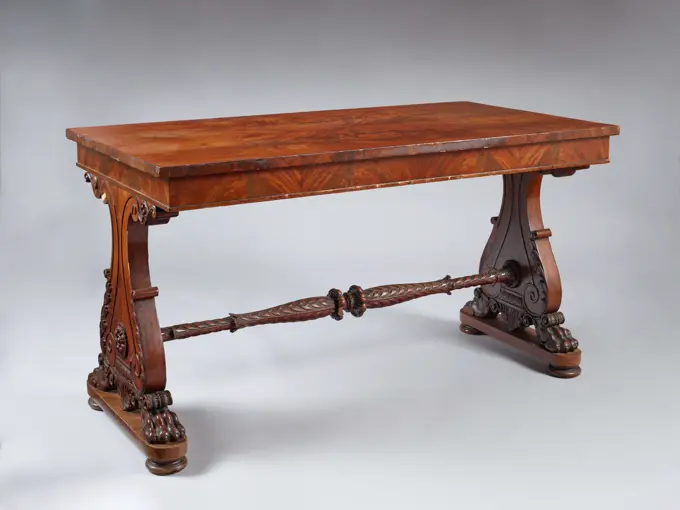
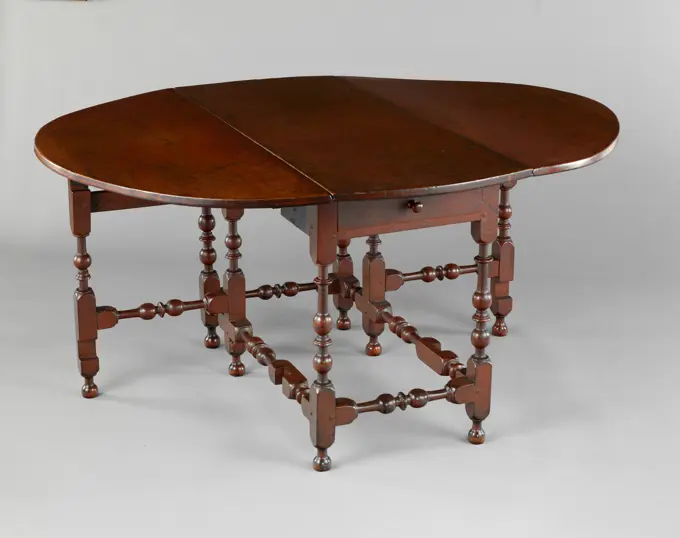
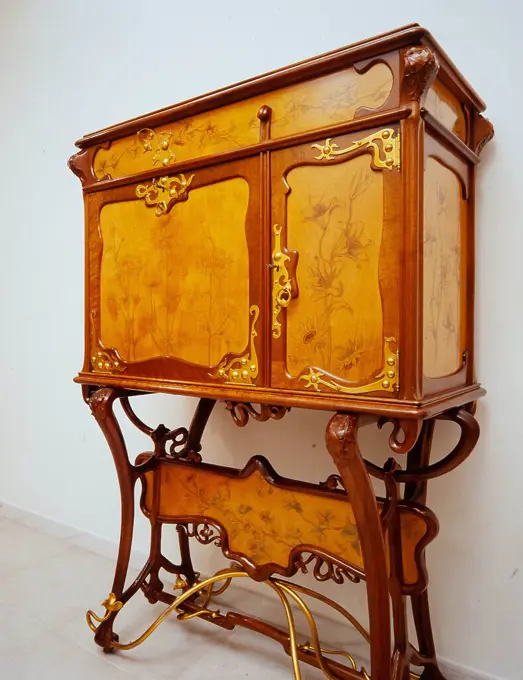
A collection of ornate tables, showcasing various designs and styles, featuring intricate carvings and diverse uses from writing to dining.
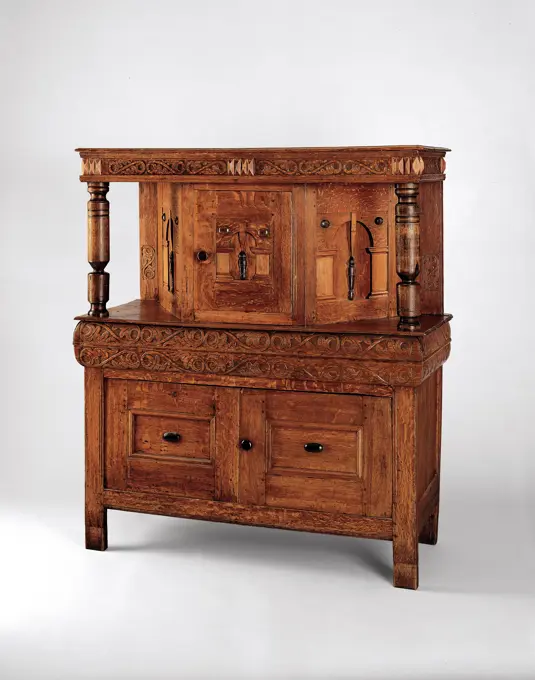
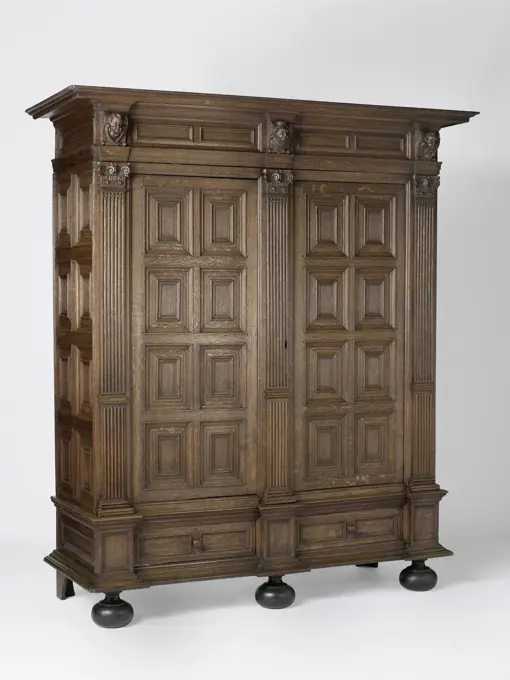
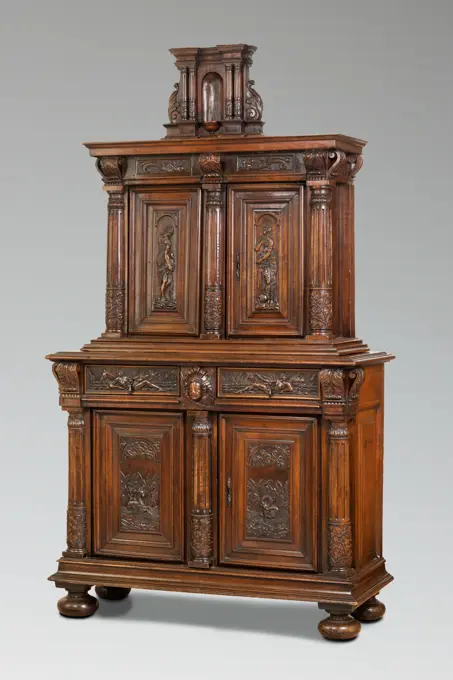
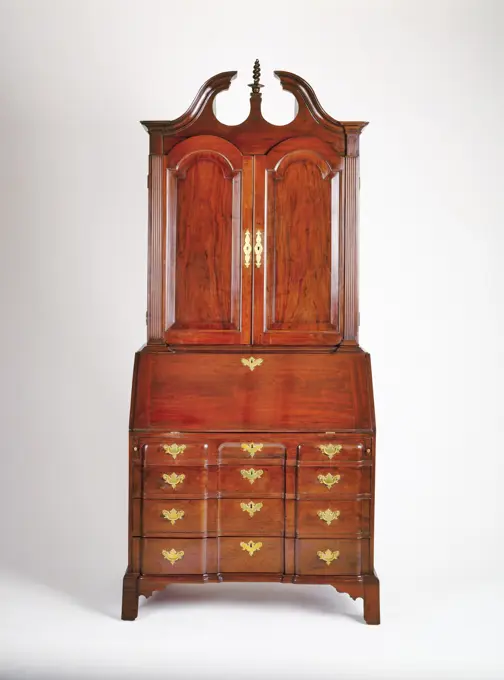
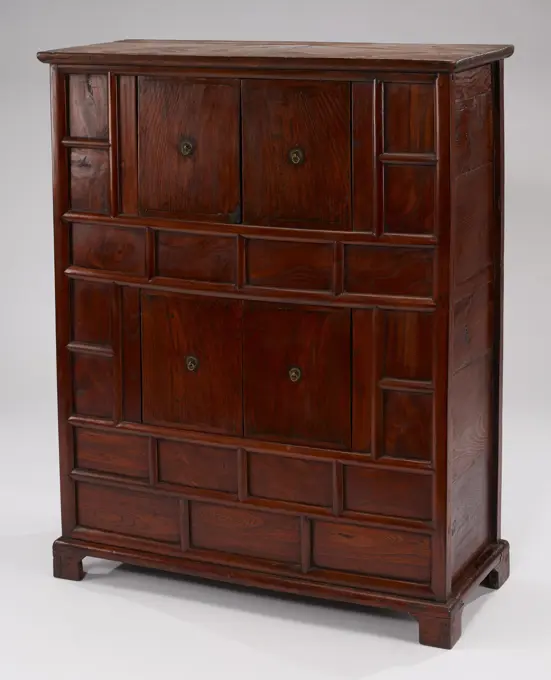
Cupboard American 1670-1700 Early colonial cupboards were ordinarily built in two parts, with one or both units enclosed. The trapezoidal upper section of this cupboard has one central door, while the rectangular lower portion has two doors that open onto a single compartment with a shelf. The large, boldly carved midmolding on the shelf between the upper and lower sections conceals a hidden drawer.
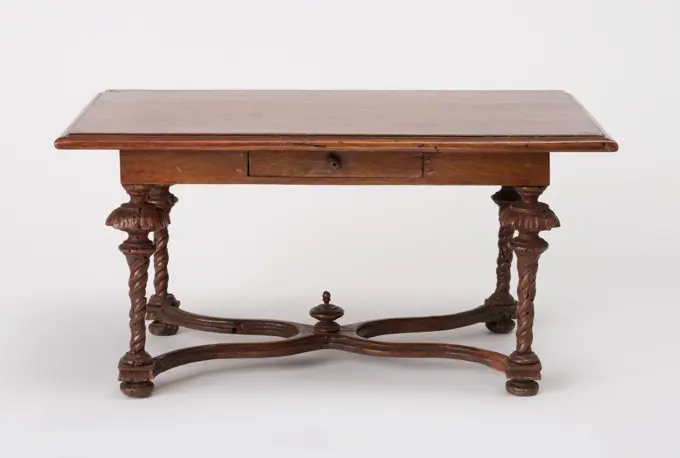
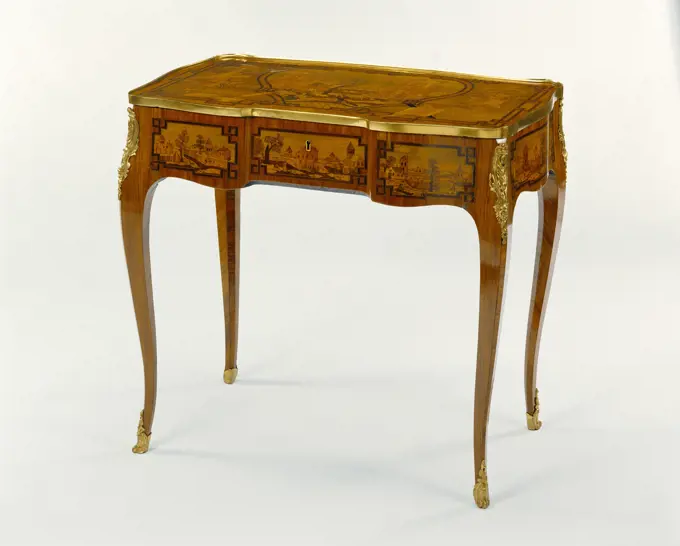
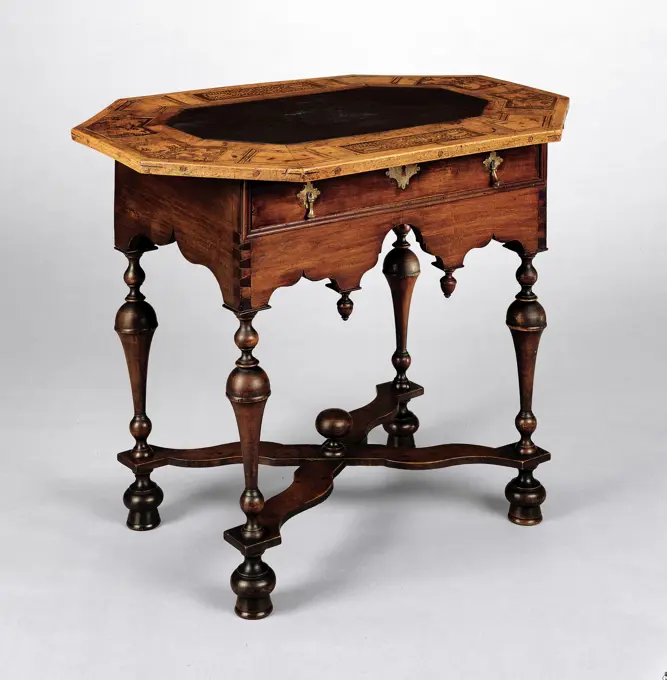
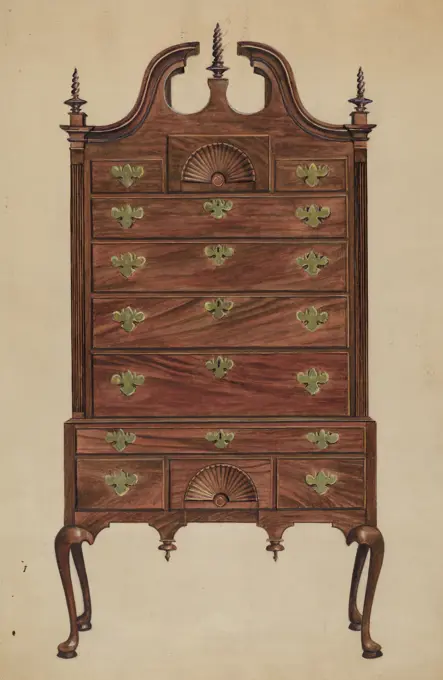
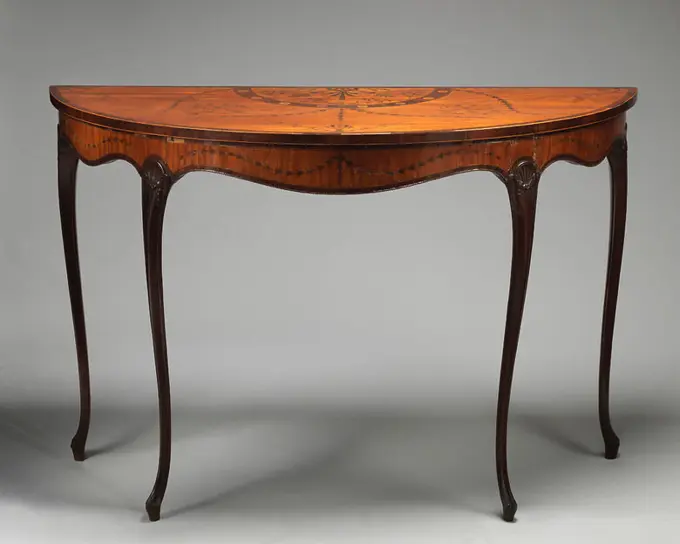
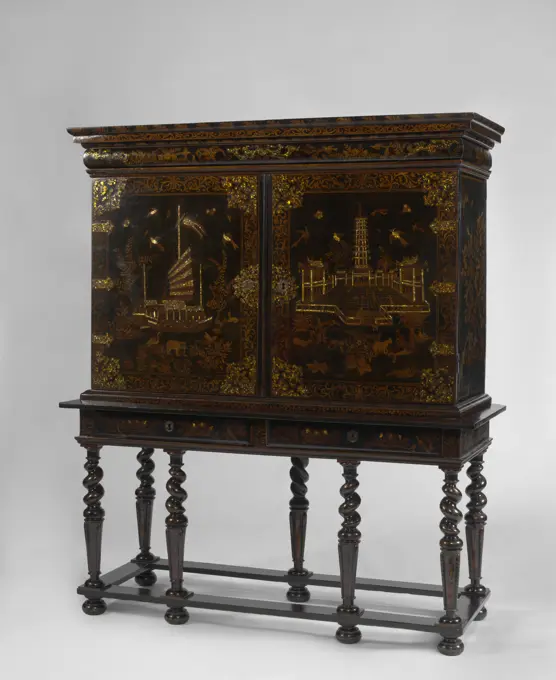
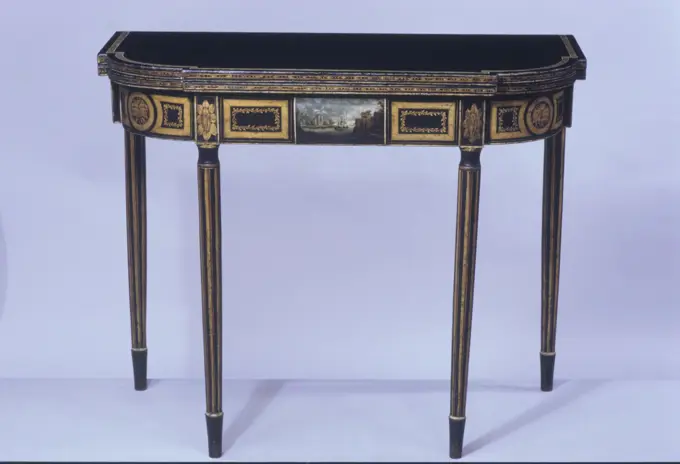
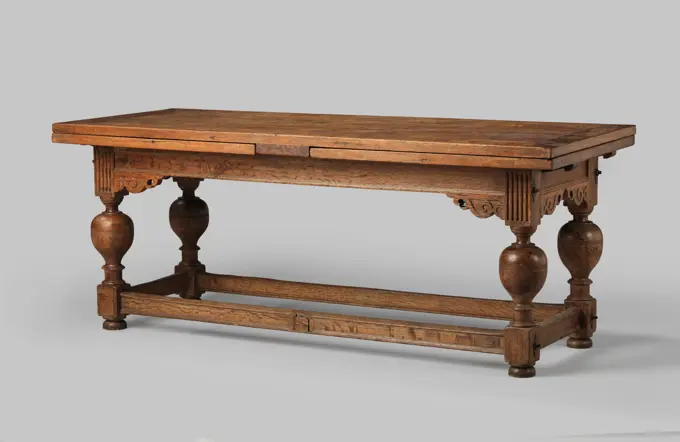
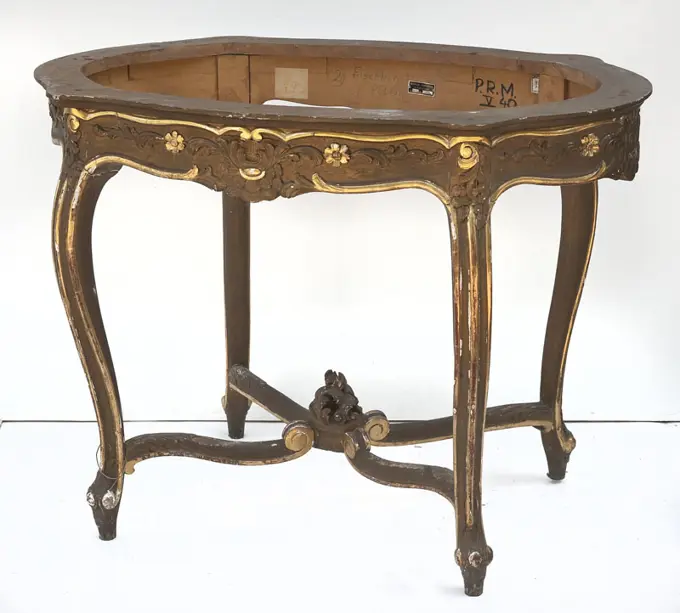
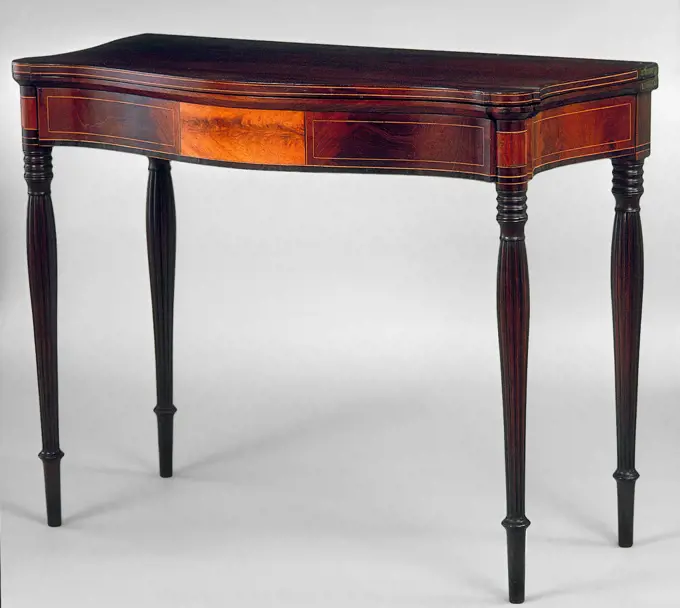
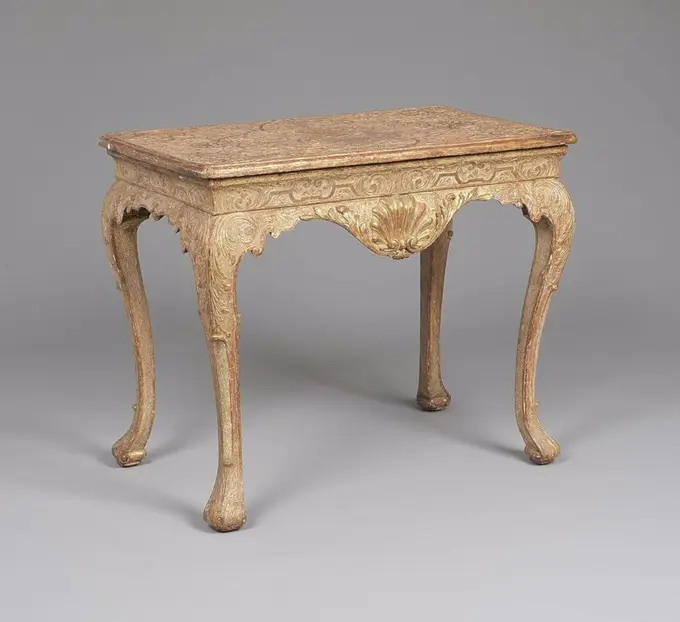
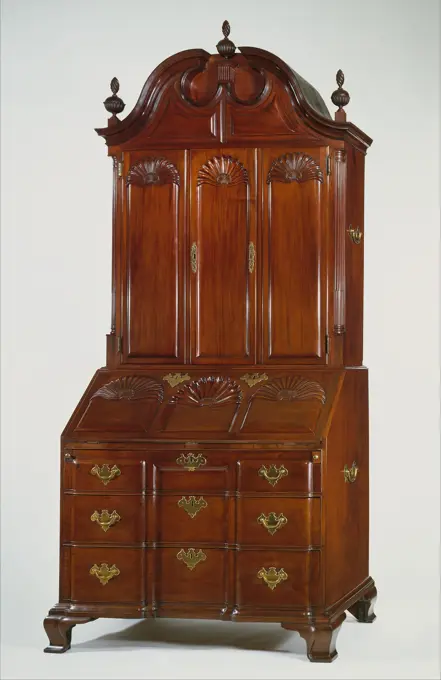
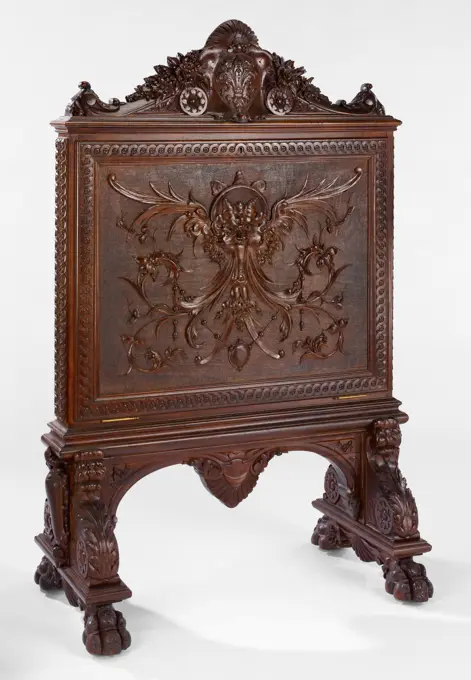
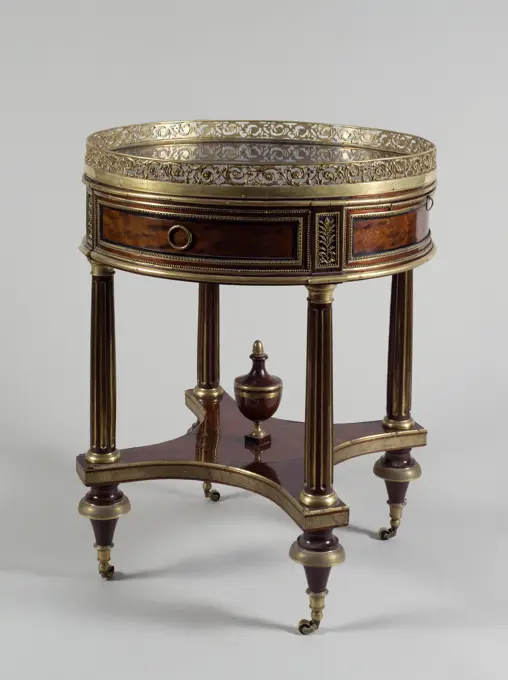
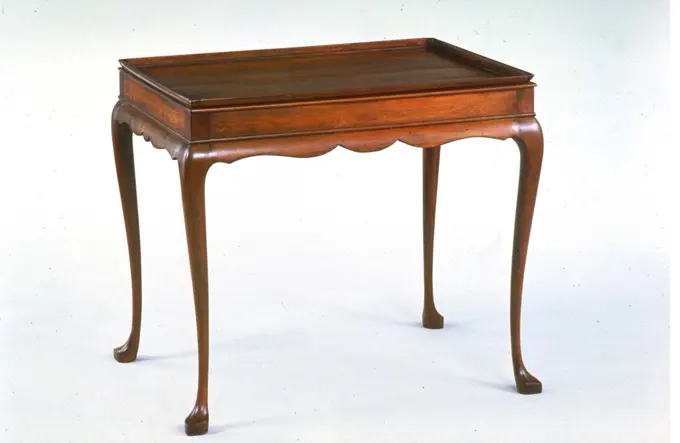
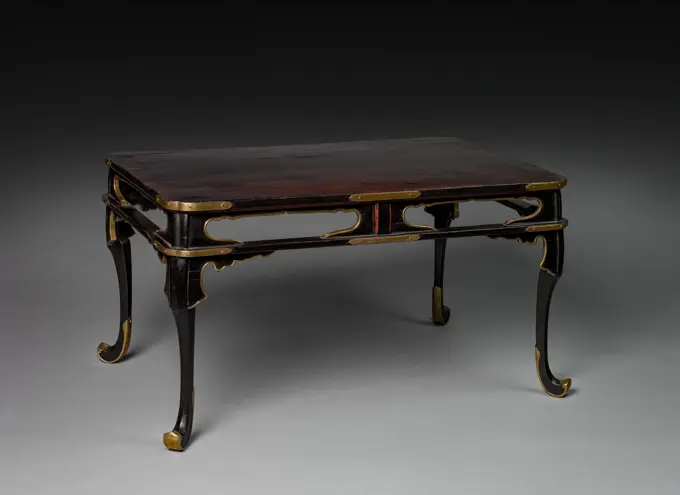
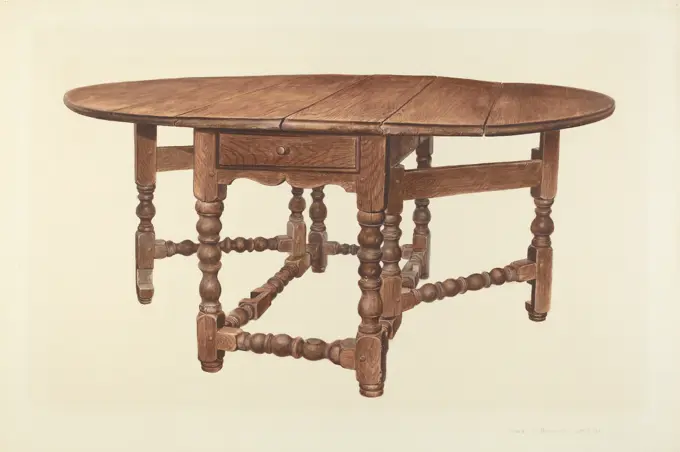
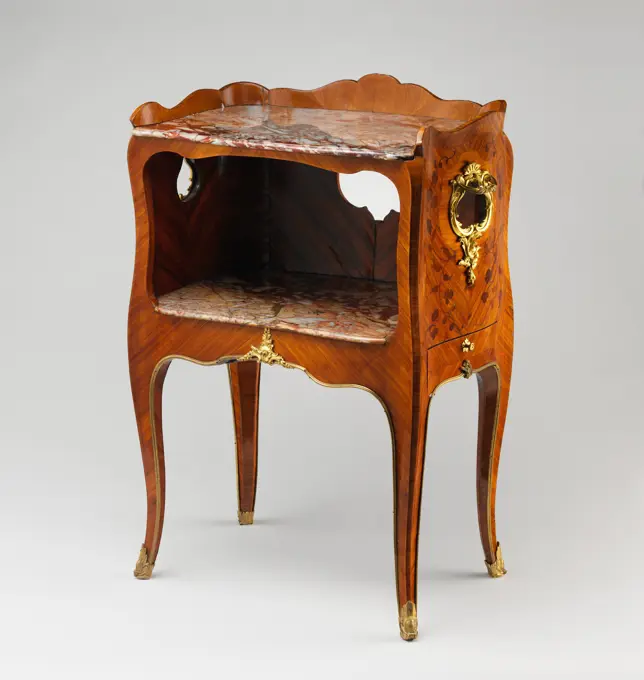
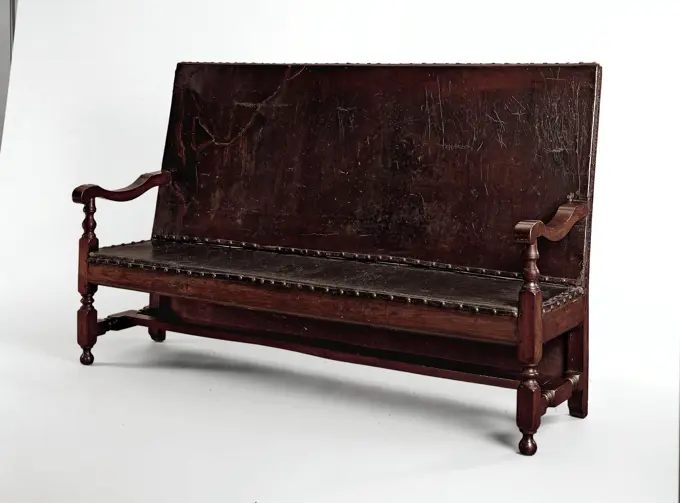
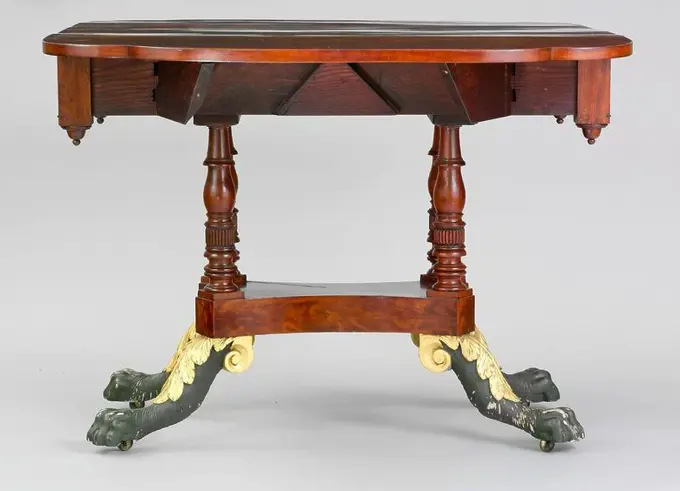
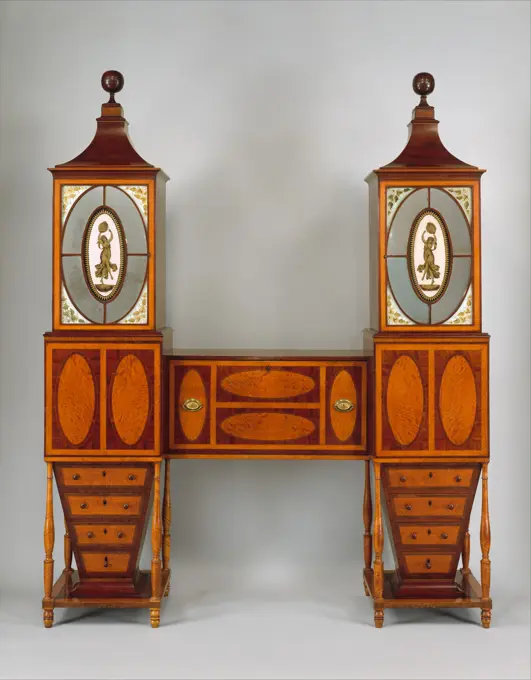
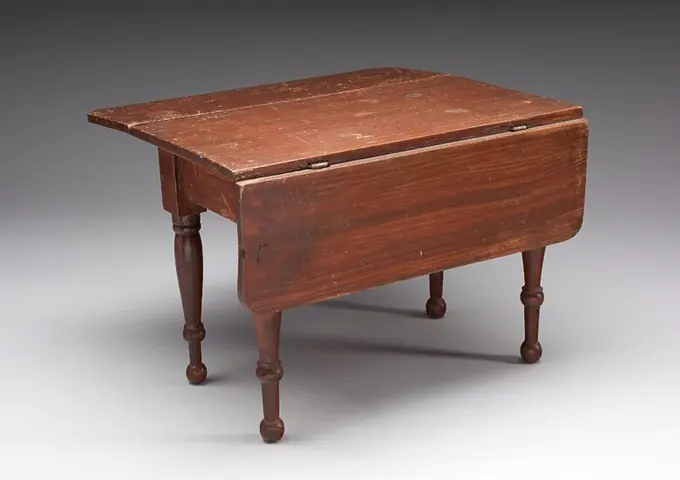
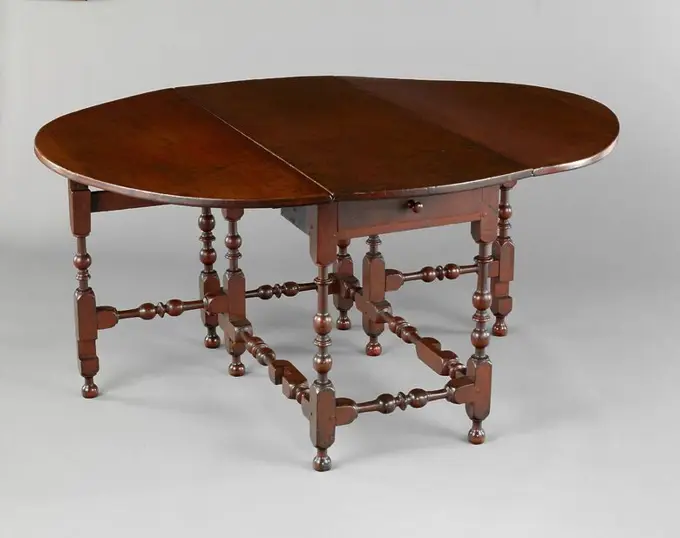
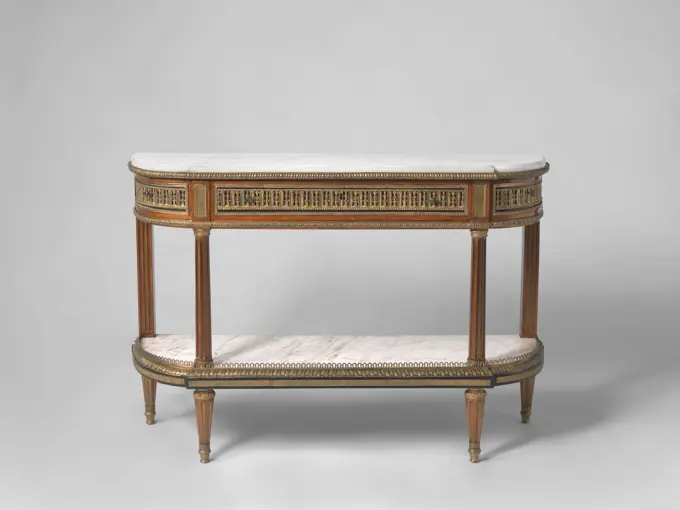
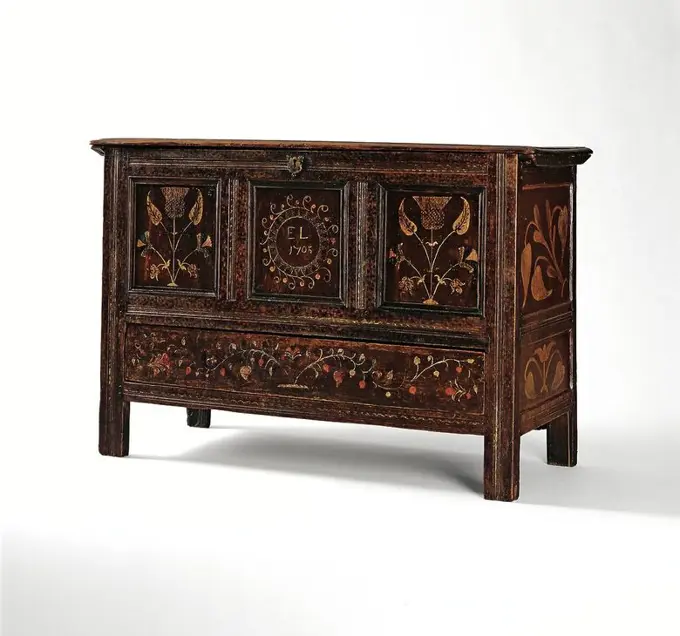
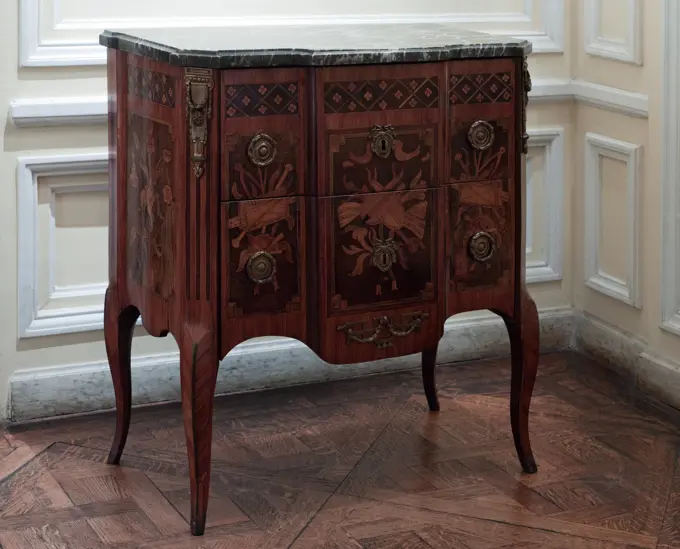
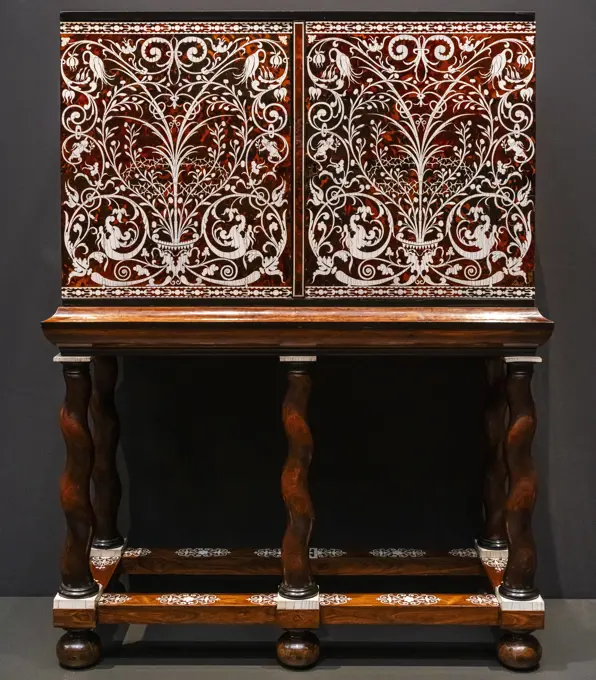
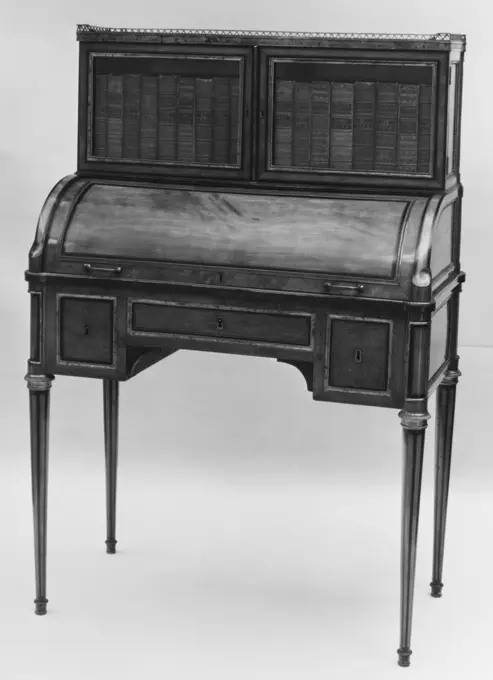
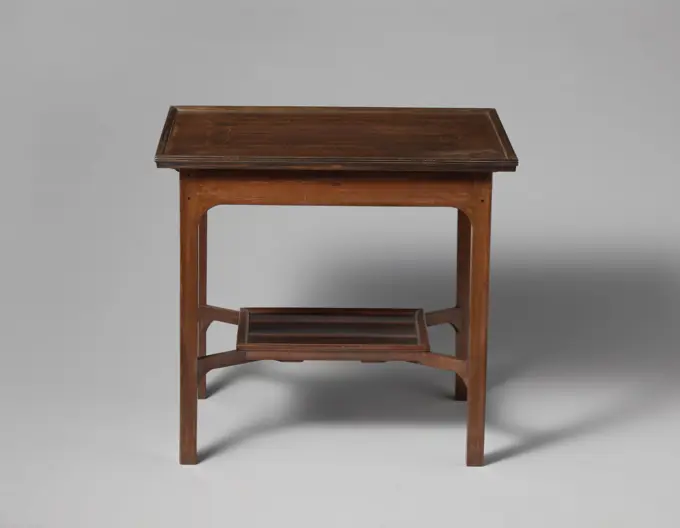
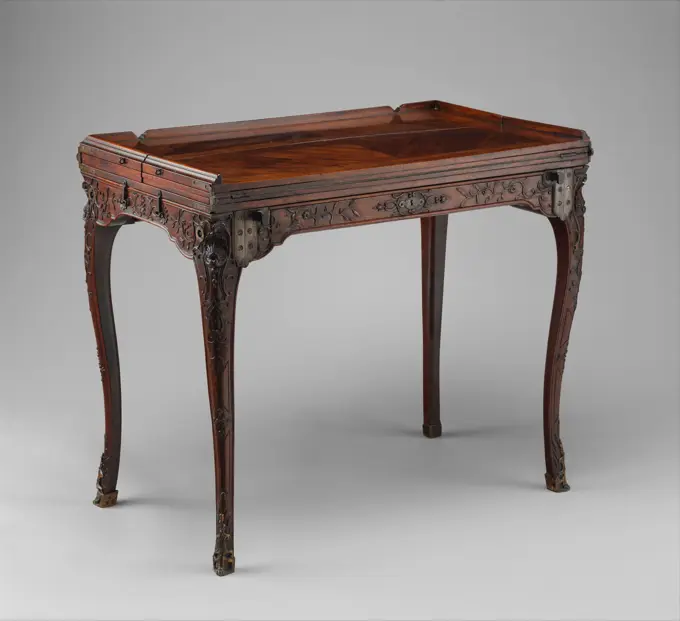
Traveling table (table de voyage or table pliante) ca. 1700-1720 French The Chteau de Saint-Cloud, near Paris, belonged to the ducs d'Orléans until 1785. In the estate inventory of the furnishings in the rooms of Duchesse Élisabeth Charlotte (1652-1722), called Madame, sister-in-law of Louis XIV, there is mentioned a carved writing desk made of walnut on pieds de biche (doe's feet). The French term could be taken literally, because zoomorphic feet for furniture was a very fashionable conceit in the seventeenth century. But the term could also refer to the slim, stylized S-curved legs of late Louis XIV and early Régence style that suggest the sweetly elegant stance of the deer. This leg shape, seen also on the Museum's table, appeared about 1700 at the latest-certainly not in the Rococo period, as has long been maintained.1 This refined and ingeniously constructed table 2 is a very rare example of a type of multifunctional furniture that was specifically invented for rough and spacTable c 1690-1730 New England. Maple . Artist unknownDressingTableCard table 1760-90 American. Card table 20588Baby linen cabinet. A cabinet of this small format was designed to hold a layette and was thus called a baby linen cabinet. This one is among the most richly ornamented examples to have been preserved. The lower part (stand) is shaped like a console table in Auricular style, while the cabinet is more classical in design.Cupboard American 1670-1700 Early colonial cupboards were ordinarily built in two parts, with one or both units enclosed. The trapezoidal upper section of this cupboard has one central door, while the rectangular lower portion has two doors that open onto a single compartment with a shelf. The large, boldly carved midmolding on the shelf between the upper and lower sections conceals a hidden drawer.Furniture. Table glued with walnut on oak core, with hexagonal baluster legs on houses, standing on round bobbins. The legs are connected by a scalloped double y-shaped cross. As a rule, a drawer is applied to the front. The leaf has been vented into the miter.CardtableCardtableGame table;  XVIII/19th century (1790-00-00-1815-00-00);gamesMahonie table, made for Professor Pel., Carel Adolph Lion Cachet, 1901 Mahonie table, made for professor Pel. On label under leaf: designed by Lion Cachet belongs to jubilee album for professor Pel that to the Ned. Institute of Medicine has been handed over. Netherlands mahogany (wood). ebony (wood). brass (alloy) Mahonie table, made for professor Pel. On label under leaf: designed by Lion Cachet belongs to jubilee album for professor Pel that to the Ned. Institute of Medicine has been handed over. Netherlands mahogany (wood). ebony (wood). brass (alloy)Small table. unknown, authortable Miniature; woodToilet Table; Paris, France; about 1777 - 1780; Oak and pine veneered with tulipwood and stained holly; marquetry panels of amaranth, satinwood, pearwood, tulipwood, applewood, ebony, and other stained fruitwoods; gilt bronze mounts; 71.4 x 80.6 x 42.5 cm (28 1,8 x 31 3,4 x 16 3,4 in.)Slate Table 1715-35 American This table is distinguished for combining an imported Swiss top with an American- made base. The octagonal tops slate center is framed by a marquetry border with heraldic motifs in a style characteristic of workshops in eastern Switzerland. The piece may have been used as either a dressing table or a serving table.. Slate Table 8065Side table. Culture: Irish. Dimensions: Overall: 28 1/2 × 60 × 28 5/8 in. (72.4 × 152.4 × 72.7 cm). Date: ca. 1730-40. Museum: Metropolitan Museum of Art, New York, USA.StandLouis Annino, Highboy, c 1936 HighboyCross foot cabinet with two doors on open chassis with thrill styles, with paint decoration in oriental style. Prowheads Cross foot cabinet with Dutch paintwork panels, with interior with two shelves and four drawers, and lowering below over the full width.Pier Table 1835-40 Attributed to Workshop of Duncan Phyfe Scottish Designated for the pier wall between two windows, a pier table was considered an integral part of an elegant parlor. The mirror below the tabletop reflected light into the room, amplifying the soft glow of candle and fuel-based light sources. Two similar Phyfe pier tables are known: one, for which there is an 1834 bill of sale, is in the White House; the other, bearing the D. Phyfe & Sons label (1837-1840), was made for Phyfe's daughter Eliza Phyfe Vail (1801-1890). However, neither of those examples have scroll supports placed at a 45 degree angle to the table's top as seen here. The other two documented tables have scroll supports and bases that face straight out. This table carefully follows the design illustrated in Plate 631 of volume three of Pierre de La Mésangère's Collection de Meubles et Objets de Goût.. Pier Table. American. 1835-40. Mahogany, marble, glass. Made in New York, New York, United StatesTable with two drawers (dummy title). House of Victor Hugo - Hauteville House.Side table. Culture: British. Dimensions: Overall: 33 × 51 × 22 1/2 in. (83.8 × 129.5 × 57.2 cm). Date: ca. 1788. Museum: Metropolitan Museum of Art, New York, USA.Cabinet on stand, anonymous, c. 1670 - c. 1700 WITHOUT CASSIGREMENT FISTORED WITH PICTURE AND Pearl. The cabinet rests on an open chassis with two drawers, four legs at the front and three at the back, connected by flat rules. The legs are partly baluster -shaped, partly twisted. The rectangular two -door cabinet has a straight hood with a ball of frieze and a profiled roof list. Apart from the bottom rules, the entire furniture, including the doors and two drawers on the inside, is decorated with chinoiseries made of gold lacquer, with pearly accents. Paris wood (plant material). mother of pearl. pine (wood). lacquering WITHOUT CASSIGREMENT FISTORED WITH PICTURE AND Pearl. The cabinet rests on an open chassis with two drawers, four legs at the front and three at the back, connected by flat rules. The legs are partly baluster -shaped, partly twisted. The rectangular two -door cabinet has a straight hood with a ball of frieze and a profiled roof list. Apart from the bottom rules, the enCupboard 1670-1700 American A cupboard usually occupied the parlor or hall, where the household dined. It stored the textiles, vessels, and utensils used at mealtime.. Cupboard 2968Press cupboard. unknown, creatorCard Table 1800-1810 Attributed to John Finlay A table with nearly identical decoration was included in a documented set made by the Finlays in 1805 for John Morris (1785-1874) of Baltimore. The painted harbor scene is attributed to Francis Guy on the basis of its resemblance to other examples of his work. Guy worked for the Finlays from 1804 to about 1810.. Card Table 1439Secretaire. unknown, creatorHigh chest of drawers 1700-1730 American The striking maple burl veneers that create a pattern of arches draw immediate attention to the upper front of this high chest. A burl is a dome-shaped growth on the trunk of a tree that is sliced though to make veneer.. High chest of drawers 4280Table on Shape -shaped legs, Anonymous, 1600 - 1650 furniture. table  Northern NetherlandsNetherlands wood (plant material). oak (wood)Oak table with sliding blades, table furniture interior design metal iron wood oak wood moors without, lg with blades 315.0 sawn forged inlay elongated oak table with sliding blades Fully removable. Baluster-shaped legs on the swallows next to the legs inlays of mooreiken and without: simple geometric figures in Gothic style Small arches along the undersides of the edges of the frame. Square pedestals with slanted sides in which arches are recessed Detachable iron pins in the sides that are anchored in the wood of the frame with small blocks of wood. Strengthened here and there with forged nails. Footrest around; legs connected by beamsDressing Table 1730-50 American. Dressing Table. American. 1730-50. Walnut, walnut veneer, maple, white pine. Made in Massachusetts, United StatesTable. unknown, authorMaker: John Caldwell, American, 1746-1813, Cardtable, Mahogany; mahogany veneer; eastern white pine (frame rails, glue blocks), hickory (hinge pin), 29 15/16 × 37 11/16 × 18 1/4 in. (76 × 95.7 × 46.3cm), Made in Hebron, Maine, American, 18th-19thcentury, FurnitureHigh Chest with Open Scrolled Pediment and Rococo Carving. United States, Pennsylvania, Philadelphia, circa 1770. Furnishings; Furniture. Mahogany, yellow pine, and tulip poplarFrame with three drawers, with marketer dialing including a medallion with vase, rams caps and festans. Commode decorated with marketary in satin, ebony, nut, coromandel and green, stained maple wood on an oak core. The corner styles have gilt bronze fittings. The marketer shows a pattern on both drawers. In the middle a medallion, within which a vase with rams caps and festans. The upper shell is decorated with hexagonal fields and rosettes. The outlined center piece, which depends on the sills, carries a copper decorative piece. The leaf is made of gray marble (see BK-NM-15-A).Semi-round card table. Two semicircular card tables with fold-out blades, resting on four conical, in diameter square legs, the two hind legs of which are rotatable. The leaf and the rule are painted with a border of flowers and leaf refines; The legs show a dependent winding ribbon, between which a flower gluage. The tables carry glass cover plates. See also: BK-16152-b.Estate cupboard with pilasters with Corinthian capitals, anonymous, c. 1625 Cabinet of oak. The middle and corner styles wear pilasters with Corinthian capitals and shaft base decorated with pipes. The two doors each have a division into eight profiled panels. The pilasters rest on cropped basements with flashes and wear the hood; This has a recovered architrave with consoles in line with styles, between which two profiled fields. The consoles show a crowned women's head on the corners of cherubs and in the middle. At the bottom two drawers. Netherlands wood (plant material). oak (wood). elm (wood) Cabinet of oak. The middle and corner styles wear pilasters with Corinthian capitals and shaft base decorated with pipes. The two doors each have a division into eight profiled panels. The pilasters rest on cropped basements with flashes and wear the hood; This has a recovered architrave with consoles in line with styles, between which two profiled fields. The consoles show a crowned women's. German-born Blechschmidt worked for leading Paris cabinetmakers and specialized in colourful marquetry (inlaid work) in various materials. He used an Italian Renaissance style for the marquetry here. Friedrich Frickhinger, one of his pupils and also a German active in Paris, made the furniture. He placed his signature and the date, 1834, on the inside of the secretary.Side Table. England. Date: 1715-1725. Dimensions: 76.8 × 91.4 × 55.3 cm (30 1/4 × 36 × 21 3/4 in.). Carved and gilt gesso on wood. Origin: England. Museum: The Chicago Art Institute, Chicago, USA.Cabinet of Indonesian wood on chassis, anonymous, c. 1675 - c. 1700 Cabinet of Indonesian wood, resting on a base glued with root nut wood. The lock plate, corner pieces and hinges are made of forged copper. Iron handles with copper plates on the sides. Behind the two front doors there are several drawers with copper tractors on star -shaped plates. The chassis has flung legs, connected by a X-shaped cross flared at the bottom, and rests on flat black bulbs. As a rule, a drawer is applied. Indonesia (possibly) wood (plant material). teak (wood). walnut (hardwood). copper (metal). iron (metal) Cabinet of Indonesian wood, resting on a base glued with root nut wood. The lock plate, corner pieces and hinges are made of forged copper. Iron handles with copper plates on the sides. Behind the two front doors there are several drawers with copper tractors on star -shaped plates. The chassis has flung legs, connected by a X-shaped cross flared at the bottom, and rests on flat black bulbs. As a Desk and bookcase 1760-90 American The blocked, tripartite desk drawers and shell-carved fall-front provide a sturdy foundation for the towering bookcase with a grand arched pediment. Behind the bookcase doors lie cubbyholes and drawers in which business and household records were stored. Many colonial Rhode Island families made their livelihoods through the transatlantic exchange of enslaved people, sugar, and other commodities. This monumental workstation embodies the superior craftsmanship of Newport cabinetmakers while implicating the destructive commerce and consumption of the Triangle Trade.. Desk and bookcase 3141Cupboard, low model, decorated with marqueterie and bronze batter, boucher, 1750 Cabinet decorated with marquetery of rosewood and pink wood and other types of wood on oak core. The S-shaped legs are placed overhoeks and carry batter. The front consists of two curved doors, between which a hold middle style, and, like the vaulted sides, has panels in Marqueterie within asymmetrically gilt bronze batter. The panels are decorated with bouquets tied together. Stamped: BVRB JME (perhaps boucher); Property brand under marble leaf. See: BK-16679-A. France wood (plant material). oak (wood). pine (wood). boxwood. rosewood (wood). rosewood (wood). bronze (metal). marble (rock) gilding Cabinet decorated with marquetery of rosewood and pink wood and other types of wood on oak core. The S-shaped legs are placed overhoeks and carry batter. The front consists of two curved doors, between which a hold middle style, and, like the vaulted sides, has panels in Marqueterie within asymmetrically gilt bronKast c 1660-1700 New York. Oak and walnut . Artist unknownFolio stand, c. 1870s, Attributed to Luigi Frullini, Italian, 1839-1897, 58 1/2 x 38 1/2 x 22 in. (148.59 x 97.79 x 55.88 cm) (closed), Walnut, Italy, Renaissance revival, The Florentine woodcarver and furniture maker Luigi Frullini achieved international renown for his Renaissance Revival designs through highly visible displays at World's Fairs, most notably in London (1862), Venice (1873), and Paris (1867 and 1878). This exposure led in 1875 to a commission to design and execute the dining room and furnishings for Chteau-sur-Mer, the family cottage of George Peabody Wetmore in Newport, Rhode Island.Medium table. Mahogany, around 1785. Paris, Carnavalet museum. The table is adorned on the interview with a small urn; The elements reported in gilded bronze adopt a decor of scrolls (on the openwork gallery) and palmettes (on the body of the furniture, above the feet). Mahogany, furniture, medium tableTeaTableTable. Japan, Muromachi period (1392-1573). Wood with lacquer; overall: 30.8 x 36.9 x 57.8 cm (12 1/8 x 14 1/2 x 22 3/4 in.).Amos C Brinton, Gateleg Table, 1939 Gateleg TableCabinet. unknown, creator, Goujon, Jean (ca. 1510-ca. 1565), author of a modelWriting Table from the Henry G. Marquand Residence, New York City. Louis Comfort Tiffany (United States, New York, 1848-1933). United States, circa 1885. Furnishings; Furniture. Satinwood, brass, pewter, and original leatherCommode (one of a pair) (part of a set) ca. 1772 British Fuhrlohg, a Swedish-born cabinetmaker, trained in Paris before moving in 1767 to London, where he made marquetry decorated furniture strongly influenced by French transitional forms. Sets of three commodes are extremely rare in eighteenth-century English furniture; this is the only known set by Fuhrlohg. The central medallion, showing a seated muse, is based on The Triumph of Venus by Angelica Kauffmann (1741-1807).. Commode (one of a pair) (part of a set). British. ca. 1772. Marquetry of various woods, bronze and gilt-bronze mounts. Woodwork-FurnitureBedside table (table de nuit) ca. 1750-56 Attributed to Bernard II van Risenburgh From hence we went forward to Belle Vue, the finest Situation I have hitherto seen in Francethe House perfectly elegant;it was inhabited by Madame de Pompadour it seems, when in the plenitude of her Power. Hester Thrale, journal entry for October 26, 1775Situated between Meudon and Saint-Cloud, the Chteau de Bellevue, as its name suggests, offered beautiful prospects over the Seine River to the panorama of Paris in the distance. In 1750 Louis XV transferred the house, then just completed, to his official mistress, the marquise de Pompadour. Although modest in scale, the country residence was richly furnished by the king’s favorite, who was born Jeanne-Antoinette Poisson (1721-1764), a commoner who became a great patron of the arts. The mark of the Chteau de Bellevue (BV under a crown) and the number 59 on the frame of this night table identify it as a piece listed in an inventory drawn up in 1763, siFurniture. Oak dresser glued with mahogany. There are four drawers in the single bent front; The sides are also just bent. The furniture rests on four legs, the two front overhoeks places placal are formed as large claws with balls, decorated above the claws with a leaf motif. The leaf is scaled and profiled. The bronze fittings consisting of the lock plates and the tractors exhibit O.A. vase, braid and festile motifs.Desk and Bookcase , c. 1780. America, Massachusetts, Boston or vicinity. Mahogany and pine, brass hardware, gilding; overall: 241.9 x 106 x 56.5 cm (95 1/4 x 41 3/4 x 22 1/4 in.). During the 1700s, a desk and bookcase, sometimes called a bureau in early inventories, was among the largest and most expensive pieces of furniture in a household. Their owners were chiefly businessmen and community leaders, and because of their function as repositories for personal letters and documents, they were usually placed downstairs in a back parlor or hall. A desk and bookcase consisted of two parts: usually a slant-top desk below and a cabinet above that sat within moldings applied to the desktop to hold it in place. The form often included elements derived from contemporary architecture. Like much New England furniture of the later 1700s, the lower section of this example is block-fronted, in which the profile recedes in the center and protrudes at either side. Though some European precedents can Table. unknown, creatorOval table with falling leaves 1715-40 American This table is part of a group of about thirty Rhode Island tables of several types with related leg turnings consisting of a high baluster characterized by a globular base, and a long, straight, tapering neck with a pronounced ring at the top. The profiles of the leg and stretcher turnings suggest the influence of Boston cane (48.122) and leather (10.125.698) chairs of the later 1710s to the 1730s.. Oval table with falling leaves. American. 1715-40. Soft maple, white pine. Probably made in Rhode Island, United StatesAltar Table with Auspicious SymbolsChest c 1692 Marshfield. Red oak and white pine . Artist unknownTable;  19th century (1801-00-00-1900-00-00);Table. unknown, authorHigh chest of drawers. Culture: American. Dimensions: 91 3/4 x 44 5/8 x 24 5/8 in. (233 x 113.3 x 62.5 cm). Date: 1762-65.The naturalistic carving on this tall chest is the work of highly skilled London-trained craftsmen who came to Philadelphia before the Revolutionary War to seek their fortunes. Characteristically, these makers took motifs from London pattern books and rearranged them to suit local tastes. Thus, the scroll pediment with finial bust and cornice moldings were taken directly from illustrations in Thomas Chippendale's famous "Gentlemen and Cabinet Maker's Director" (1762), the serpent-and-swan motif in the central bottom drawer from Thomas Johnson's " New Book of Ornaments" (1762). Museum: Metropolitan Museum of Art, New York, USA.Joan Busquets i Jané / Secreter, siglo XX. Colección privada.Tavern Table or Stretcher. Dated: 1935/1942. Dimensions: overall: 23 x 30.6 cm (9 1/16 x 12 1/16 in.) Original IAD Object: Top: 57"long; 34"wide. Medium: watercolor, colored pencil, and graphite on paper. Museum: National Gallery of Art, Washington DC. Author: Dorothea A. Farrington.Close-up of a wooden desk with drawersLeather settle 1710-40 American Joined settles of walnut and leather appear to have been produced only in Philadelphia. While they varied considerably in some elements of their design, they were generally configured to shield the sitter from drafts. Their high backs were either covered in leather or paneled, and protection below the seat was provided by extending the back down to the feet, as in this example. The leather on the back of this example is original, while the seat upholstery is an old replacement.. Leather settle 7390Gateleg Table. Dated: 1939. Dimensions: overall: 34.3 x 51.1 cm (13 1/2 x 20 1/8 in.) Original IAD Object: 69" wide; 60" deep; 20 3/4" high. Medium: watercolor and gouache over graphite. Museum: National Gallery of Art, Washington DC. Author: Amos C. Brinton.Footstool 1730-60 American. Footstool 3789Sideboard. Dated: 1936. Dimensions: overall: 22.9 x 30.1 cm (9 x 11 7/8 in.) Original IAD Object: 40 1/2"high; 76"long; max. width 29".. Medium: watercolor, gouache, colored pencil, and graphite on paperboard. Museum: National Gallery of Art, Washington DC. Author: Arsen Maralian.ChestDrop-leaf Table. Culture: American. Dimensions: 28 11/16 x 37 7/8 x 45 3/4 in. (72.9 x 96.2 x 116.2 cm). Maker: Michael Allison (1773-1855). Date: 1817. Museum: Metropolitan Museum of Art, New York, USA.Desk and Bookcase ca. 1811 American This H-shaped desk and bookcase may be the most unusual example of high-style furniture produced in the Federal period. Its design was inspired by the "Sister's Cylinder Bookcase," plate 38 in Thomas Sheraton's "Cabinet Dictionary" (London, 1803), but the maker substituted a rectangular fall-front desk between the two pedestals for Sheraton's cylindrical one. The decorative details are characteristic of fine Baltimore furniture. The double-line inlay spiraling down the turned legs can be found on at least one other piece of Baltimore furniture. The inscription refers to the date when Roswell Lyman Colt married Margaret Oliver, one of the four daughters of Robert Oliver, a millionaire merchant of Baltimore.. Desk and Bookcase 3152Toy Table. American. Date: 1821-1840. Dimensions: 17.7 × 30.5 × 26 cm (7 × 12 × 10 1/4 in.). White pine. Origin: United States. Museum: The Chicago Art Institute, Chicago, USA.Eiken cabinet, glued with mahogany. With two doors below and above, with mesh., J.H. Mertens, 1783 Cabinet glued with mahogany on oak core. There are two doors with mesh under and above; A folding writing sheet in the middle. The sides wear three fields. Many borders with a cubicle and with batter that ends up and below the writing sheet in a round ornament. The writing sheet shows a paint panel on a lighter field, filled with flowers and framed by ribbons and brushes, hung on bows. The attachment is raised in the middle with a panel decorated with drapery. Northern Netherlands wood (plant material). mahogany (wood). oak (wood). boxwood (hardwood). boxwood. maple (wood) lacquering Cabinet glued with mahogany on oak core. There are two doors with mesh under and above; A folding writing sheet in the middle. The sides wear three fields. Many borders with a cubicle and with batter that ends up and below the writing sheet in a round ornament. The writing sheet shows a paint panel on a lightEarl Butlin, Baker's Table, c 1937 Baker's TableWriting table, Jean François Oeben, c. 1760 Table decorated with marqueterie of pink, rosewood, carrot wood and other types of wood and with gilded bronze. The overhoeks placed, stretched S-shaped legs carry under and above batter; Upstairs with rams heads. The rules and the bronze band surrounded by a gilded bronze, show flower branches in Marqueterie within bispy fields; In the middle of the leaf a flower basket. The legs are glued in lanes from the front. The front line with lightly bent center piece and stretched S-shaped side pieces is completely extendable. Paris wood (plant material). rosewood (wood). maple (wood). bronze (metal). oak (wood). gilding (material) gilding Table decorated with marqueterie of pink, rosewood, carrot wood and other types of wood and with gilded bronze. The overhoeks placed, stretched S-shaped legs carry under and above batter; Upstairs with rams heads. The rules and the bronze band surrounded by a gilded bronze, show flower branches in Marqueterie withNesting Table 1860-70 American. Nesting Table 8102Oval table with falling leaves. Culture: American. Dimensions: 28 1/2 x 57 1/2 x 48 1/4 in. (72.4 x 146.1 x 122.6 cm). Date: 1715-40.This table is part of a group of about thirty Rhode Island tables of several types with related leg turnings consisting of a high baluster characterized by a globular base, and a long, straight, tapering neck with a pronounced ring at the top. The profiles of the leg and stretcher turnings suggest the influence of Boston cane (48.122) and leather (10.125.698) chairs of the later 1710s to the 1730s. Museum: Metropolitan Museum of Art, New York, USA.Harry King, Walnut Desk and Bookcase, c 1941 Walnut Desk and BookcaseSide table. Culture: British. Designer: Probably after a design by John Yenn (British, London () 1750-1821 London). Dimensions: Overall: 30 1/2 × 46 × 21 in. (77.5 × 116.8 × 53.3 cm). Date: ca. 1780.A drawing related to the decoration of this, and two similar, tables has been attributed to John Yenn, a pupil and draftsman of the architect Sir William Chambers (1723-1796), who may have been responsible for their design. The Meeting of Bacchus and Ariadne on the Isle of Naxos, after a composition by the Italian painter Guido Reni (1575-1642), is depicted on the table's top. The monogram G IV R, for George IV Rex incised on the back, shows this to be one of the few pieces of furniture in the collection with an English royal provenance. Museum: Metropolitan Museum of Art, New York, USA.Tabouret.  Maker: Francis Asbury Reinohl, American, 1884-1954Commode. This commode is veneered with panels of lacquer removed from a piece of Chinese furniture, probably a screen or chest. Bending the lacquer so that it could be adhered to the curved surface of the commode was not easy. The commode is an example of chinoiserie, a European style that incorporated Chinese materials and motifs. The gilt-bronze mounts are devoid of Chinese elements.Table. unknown, authorSide table (one of a pair) ca. 1790 British. Side table (one of a pair). British. ca. 1790. Satinwood. Woodwork-FurnitureBack wall, Claude-Charles Saunier, c. 1780 - c. 1790 Back wall of Spiegel from BK-16670, consists of two matching parts through metal pins. Paris wood (plant material). metal Back wall of Spiegel from BK-16670, consists of two matching parts through metal pins. Paris wood (plant material). metalChest with drawer. Culture: American. Dimensions: 33 x 48 3/4 x 20 1/2 in. (83.8 x 123.8 x 52.1 cm). Date: 1705.Inscribed "EL 1705," this is one of six similar joined chests from Connecticut bearing dates between 1704 and 1706. The painted decoration on its three front panels echoes the carving of the "sunflower" chests of Hartford County, which it also resembles in its form and construction. Museum: Metropolitan Museum of Art, New York, USA.Louis-Noël Malle (1734-1782). "Convenient". Color wood marquetry, top marble top Saint Anne molded. 18th century. Paris, Carnavalet museum. 72593-7 Color wood, Sainte Anne Gray Marble, Marquetry, Mobilier, 18th century, chest of drawers, furnitureChest 1780-90 American. Chest 14296Commode. Charles Cressent (French, 1685 - 1768, master 1719)(Book Storage Chest), late 19th century, Unknown Korean, H.43-11/16 x W.33-13/16 x D.13-7/8 in., Pine and Zelkova wood, metal, paper, Korea, 19th centuryCabinet of Amalia von Solms Cabinet of Amalia von Solms, Wilhelm de Rots, 17th century, Amsterdam, Netherlands Copyright: xZoonar.com/BartomeuxBalaguerxRotgerx 21627725Table. Phipps, Thomas (fl. ca 1750-1780), joinerCylinder-fall desk with cabinet top ca. 1790 French. Cylinder-fall desk with cabinet top 199503CentertableChest of Drawers c 1760-1790 Boston. This serpentine-front bombÈ chest, one of only six known, is an exceptional example of this rare form, and it has retained its original finish and brasses. Though seemingly plain in design, the bombÈ chest was quite complicated and costly to produce because it took an excellent craftsman to curve the drawer sides, mahogany front, and the interior dovetail joints to match the swell of the case. While most American furniture forms were derived from European sources and were disseminated throughout the colonies, some forms like the Boston bombÈ chest are now known to have been produced only in their specific regions.. Mahogany with white pine . John CogswellTable with two extendable sheets, Theo Nieuwenhuis, c. 1898 - c. 1910 Table of mahogany and cormandel wood resting on four legs that contain brass geometric motifs on the top. The legs are connected to the top by means of wide rules with rounded corners on the underside on which two extendable sheets rest. In addition, the table top with a profiled list is located. At the height of the center of the legs, there is a bottom leaf with a raised profiled edge placed in a cross -shaped lines. Amsterdam mahogany (wood). brass (alloy) Table of mahogany and cormandel wood resting on four legs that contain brass geometric motifs on the top. The legs are connected to the top by means of wide rules with rounded corners on the underside on which two extendable sheets rest. In addition, the table top with a profiled list is located. At the height of the center of the legs, there is a bottom leaf with a raised profiled edge placed in a cross -shaped lines. Amsterdam mahogany (wood). brass (alloy)DiningTableTable, c. 1885. Firm of Louis Majorelle (French, 1859-1926). Wood decorated with lacquer, inlays of mother-of-pearl and bronze; overall: 80.6 x 80.3 x 54.8 cm (31 3/4 x 31 5/8 x 21 9/16 in.).Brass design fitting on colourful wooden almira , Jodhpur, Rajasthan, India Copyright: xSafatxAli/DinodiaxPhotoxTable. Culture: Italian, Umbria (Tuscany). Dimensions: H. 82.5 cm, W. 94 cm, D. 71 cm. Date: 16th century, second quarter. Museum: Metropolitan Museum of Art, New York, USA.Lowboy. Dated: c. 1939. Dimensions: overall: 36.1 x 48.7 cm (14 3/16 x 19 3/16 in.) Original IAD Object: none given. Medium: watercolor, colored pencil, and graphite on paperboard. Museum: National Gallery of Art, Washington DC. Author: ARTHUR JOHNSON.