Elegant Antique Tables

A collection of ornate tables, showcasing various designs and styles, featuring intricate carvings and diverse uses from writing to dining.
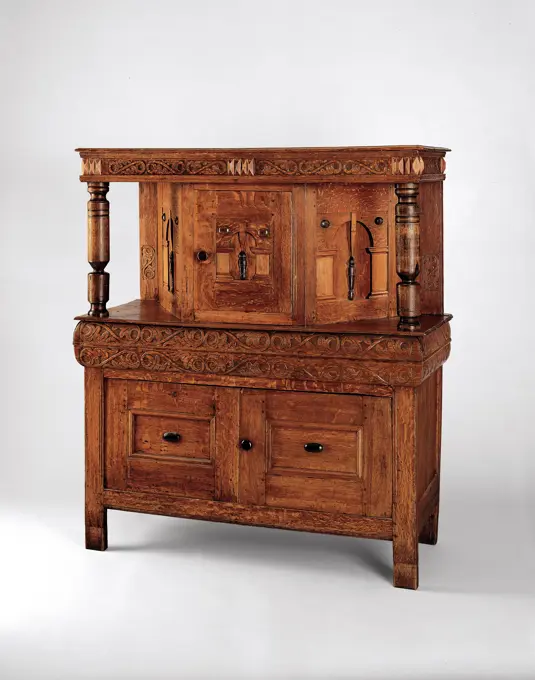
Cupboard American 1670-1700 Early colonial cupboards were ordinarily built in two parts, with one or both units enclosed. The trapezoidal upper section of this cupboard has one central door, while the rectangular lower portion has two doors that open onto a single compartment with a shelf. The large, boldly carved midmolding on the shelf between the upper and lower sections conceals a hidden drawer.
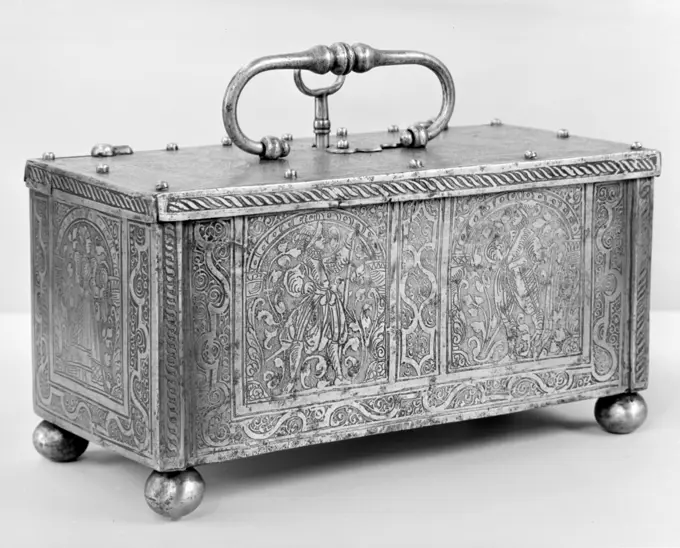
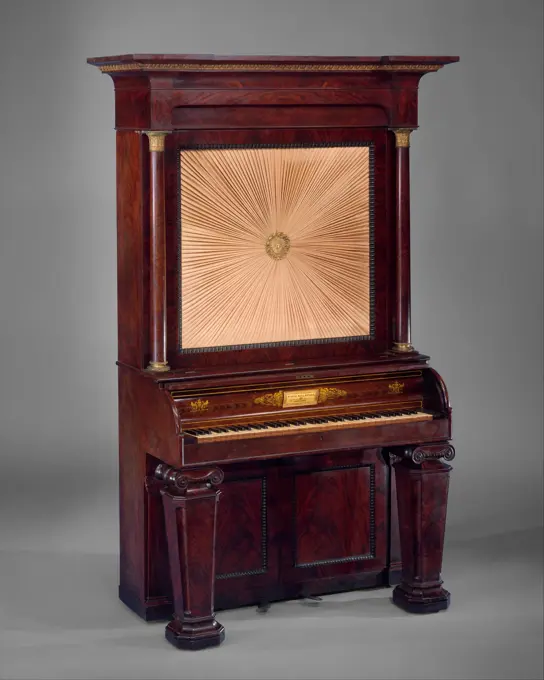
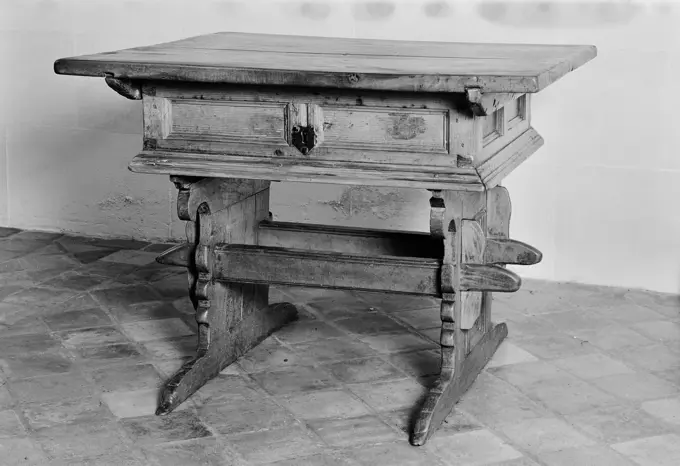
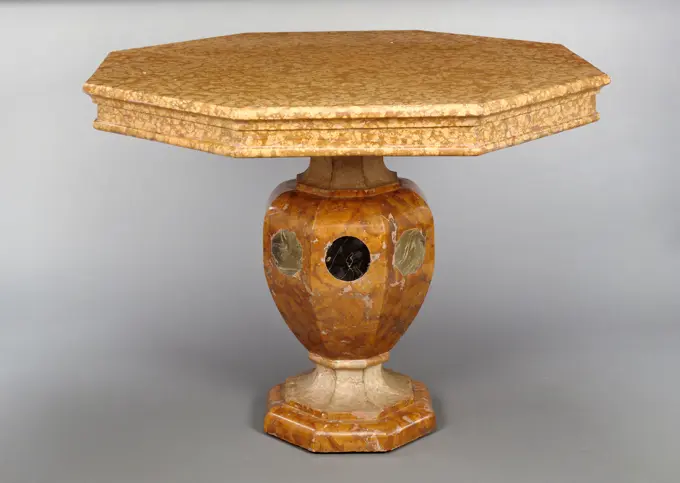
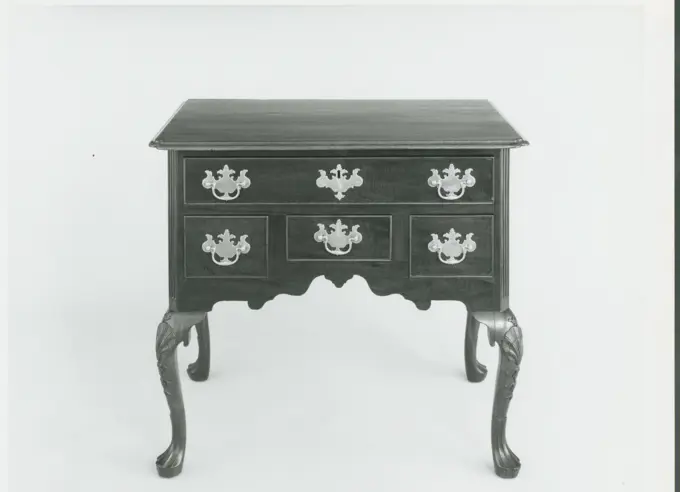
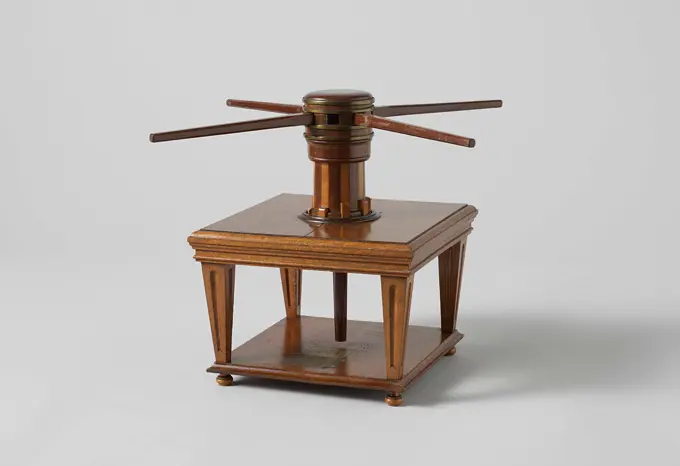
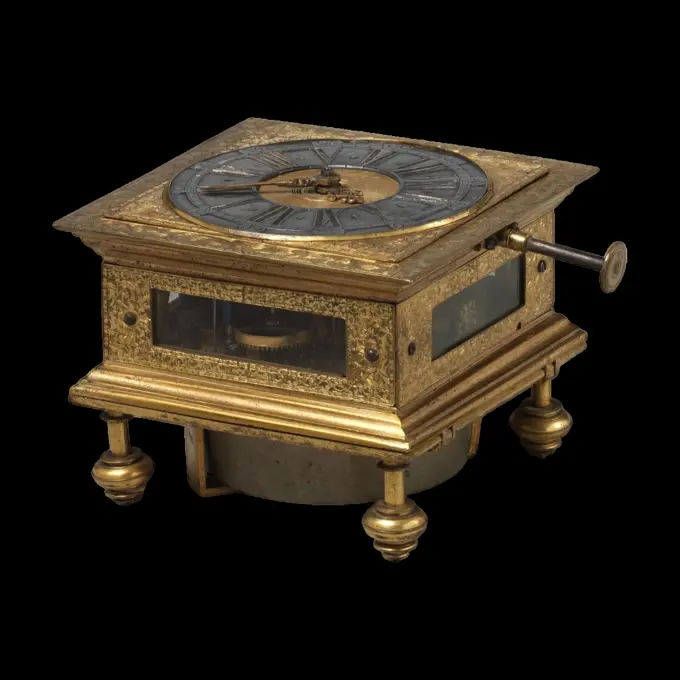
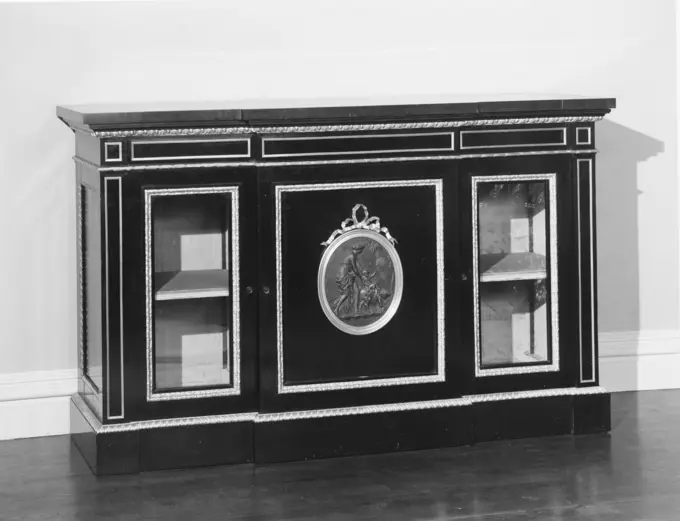
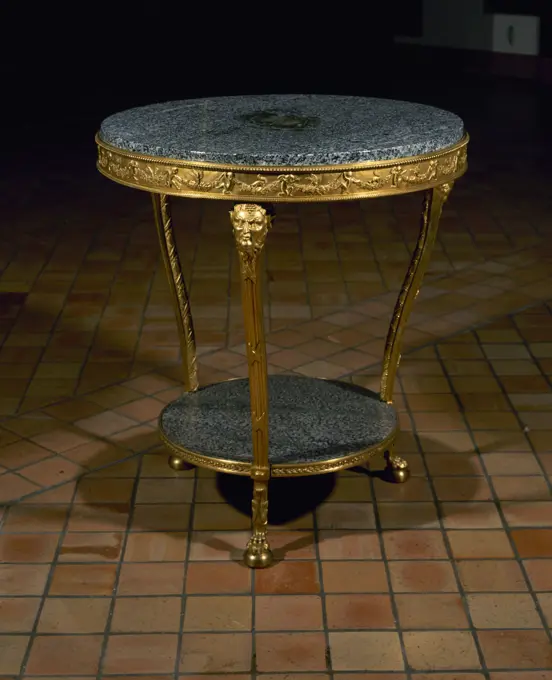
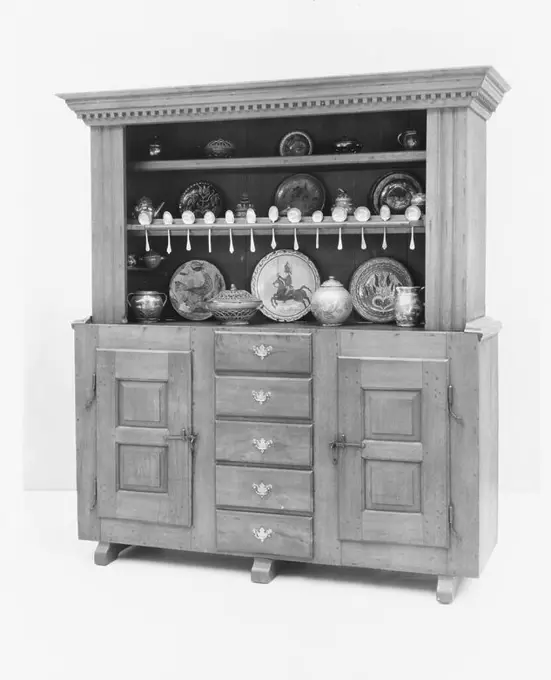
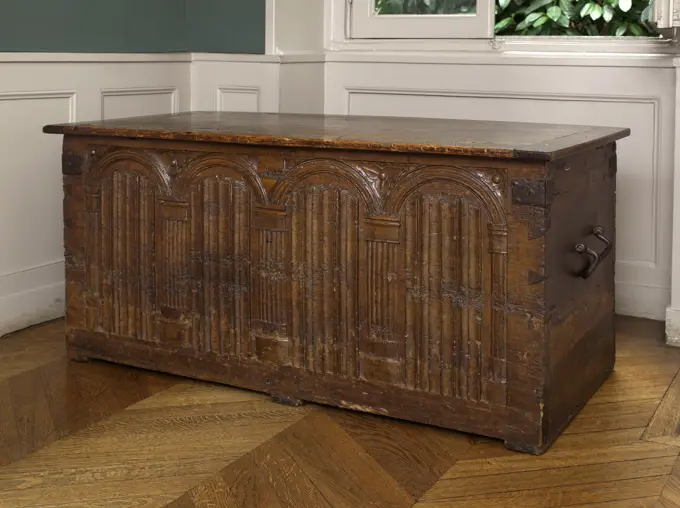
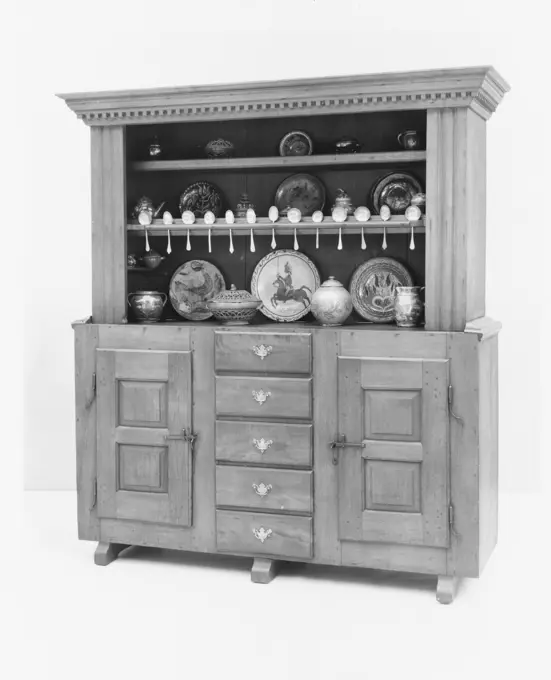
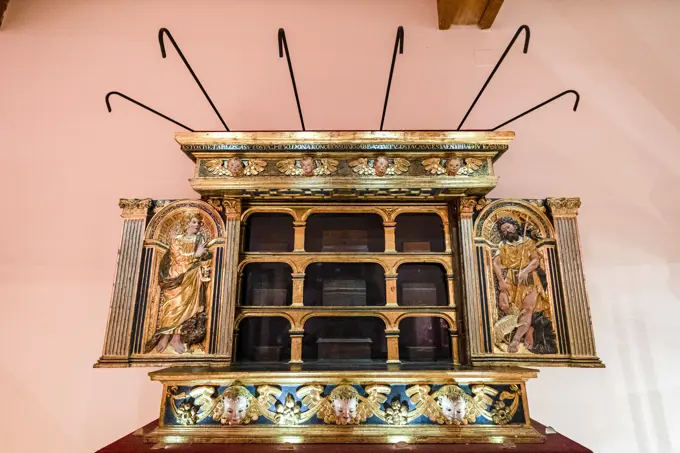
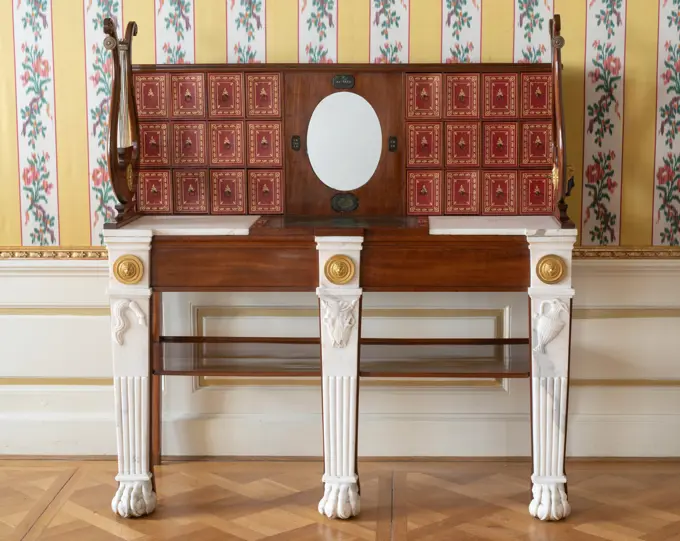
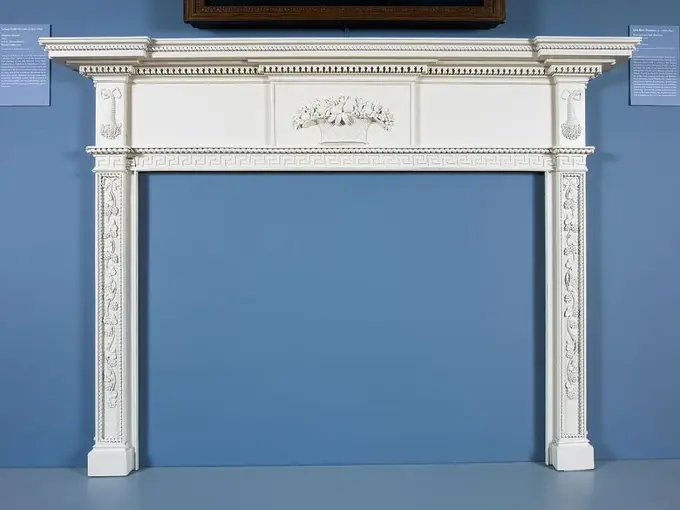
Sgabello (one of a pair) ca. 1575-1600 Italian, Florence The sgabello is a type of chair or stool with carved and often elaborately ornamented wood legs and back. The form originated in Renaissance Italy, and its popularity spread throughout Europe in the sixteenth and seventeenth centuries.. Sgabello (one of a pair) 670538Table. Culture: French. Dimensions: 31 1/2 x 58 x 26 3/4 in. (80 x 147.3 x 67.9cm). Date: late 17th century.With its openwork decoration and X-shaped stretcher, this table bears a resemblance to tables recorded in a set of engraving by Pierre le Pautre (1660-1744) entitled "Livre de tables qui sont dans les apparements du roy sur lesquelles sont posée els bijoux du Cabinet des Médailles.". Museum: Metropolitan Museum of Art, New York, USA.Coffer 16th century Southern German. Coffer 191591Upright Cabinet Piano 1835 American Firth, Hall & Pond was a New York based partnership of John Firth, William Hall, and Sylvanus Pond that existed between approximately 1833 and 1847 when Hall broke with the others. The company was a major music publisher and manufacturer, as well as selling all manner of music merchandise. It is unlikely that the firm actually produced pianos, but probably contracted with another maker to provide them with instruments to sell.Technical description: Mahogany and mahogany veneer case, upper section of case consisting of "sunburst" panel of silk and massive cornice supported by tapered, mahogany veneered columns with gilt brass mountings, heavy square, tapered mahogany legs with fluted corners and carved scroll capitals; ivory naturals with molded fronts, ebony accidentals; compass FF--f4 (73 keys); English upright sticker action; wires attached to upper portion of stickers push upwards on projecting arms of dampers hinged to wood rail, dampers, lined wAbruzzo, L'Aquila, Castelvecchio Subequo, S. Francesco, Italy, 20th century, photo, photography, EuropeLectern, anonymous, c. 1700 - c. 1800 Lesser with a performance of pine trees on the beach of Sumiyoshi in gold lacquer and gold leaf against a black stock. Legs and base are decorated with peonies and tenders. Japan wood (plant material). lacquer (coating). gold (metal) Lesser with a performance of pine trees on the beach of Sumiyoshi in gold lacquer and gold leaf against a black stock. Legs and base are decorated with peonies and tenders. Japan wood (plant material). lacquer (coating). gold (metal)Chair 15th century French. Chair 467697Changer table. Wood. France, Changer table. Wood. France, sixteenth century.Four Door Panels Adapted as a Screen, early 1700s. Italy, Florence or Luca, early 18th century. Painted decoration on wood; moldings, gold leaf on silver leaf; overall: 229 x 62.2 cm (90 3/16 x 24 1/2 in.).Octagonal Table. UnknownDressingTableModel or a capstan. Model of a capstan in a wooden frame of two levels. It is a capstan for eight wind trees and has no catches to prevent the fallback. The wooden king continues to the lower level. The drum is completely round, the dialing does not except except at the heel where they are thickened and can move up and down. A sloping plane is applied under the drum, making the dialing when rotating up and down and move the line on the drum with their thickening. The sloping surface can be removed from the drum. Scale 1:10 (estimation).Cast iron stove, circa 1900, living room in the teacher's apartment, school building from Pfaffenhofen, built in 1801, Franconian open-air museum, Eisweiherweg 1, Bad Windsheim, Middle Franconia, Bavaria, Germany, EuropeCombination table. Culture: French, Paris. Dimensions: Overall (Table): H. 29 × W. 27 3/4 × D. 16 3/8 in. (73.7 × 70.5 × 41.6 cm);Overall (Bed table): H. 9 1/4 × W. 26 7/8 × D. 15 1/2 in. (23.5 × 68.3 × 39.4 cm). Maker: Martin Carlin (French, near Freiburg im Breisgau ca. 1730-1785 Paris). Date: ca. 1775.The principal occupation indeed of a French Lady is her Toilet.-- Elizabeth Seymour Percy, Duchess of Northumberland, diary entry for June 9, 1770The daily ritual of dressing and grooming was taken very seriously in France, and it was not unusual for an aristocratic lady to receive visitors, who could even be called upon to assist her. Special pieces of furniture were designed for the toilette, such as this elegant marquetry table signed by Martin Carlin, which is more versatile than most dressing tables. The upper section can be removed to serve as a bed table, as it has its own short legs. It is fitted with an adjustable mirror that can be reversed to form a book rest. A shallow British, Neoclassical frame, Unknown framemaker, late 18th to early 19th century, Wood and compo, later patinated oil and water gilding over original gildingClose-up of bowl of marble eggs on wooden coffee-tableAncient German brass table clock of the 17th century by Kleinschmidt Antique German brass table of the 17th century by KleinschmidtCabinet ca. 1860 Léon Marcotte French This cabinet is part of a suite of Louis XVI-style furniture that John Taylor Johnston (1820-1893) purchased from the firm of Ringuet-Leprince and L. Marcotte in about 1856. This international firm had showrooms in both Paris and New York, and it is believed that at least some of the pieces of the suite were made in Paris for the New York commission. Johnston, a railroad executive and the first president of The Metropolitan Museum of Art, used the furniture in the music room of his residence at 8 Fifth Avenue. The suite (68.69.1-68.69.11, 68.165.1-68.165.6) includes two sofas, two armchairs, a table, two matching cabinets, a third large cabinet, six matching side chairs, a pair of lyre-back side chairs, and a firescreen. After Ringuet-Leprince retired in 1860, the firm became known as L. Marcotte and Company. Léon Marcotte was New York's most noted cabinetmaker and interior decorator during the 1860s.. Cabinet. American. ca. 1860. Oak, poplar, pearConsola, siglo XIX. Museu de la Garrotxa.USA, Florida, Sarasota, Ringling Estate Grounds, Museum of Art Water Fountain.Vintage table lamp isolated on white Anonymous. Guéridon table with two gray marble trays on chopped and golden bronze base, feet topped with fauna heads and ended with claws and balls (overview in the room, without bottom), end of the 18th century. Paris, Cognacq-Jay museum. Boule, bronze chisel, two, dore, fauna, end 18th century, claw, gray marble, furniture, foot, pitch, tray, gueridon table, head, furnitureDresser. Culture: American. Dimensions: 83 3/4 x 75 1/2 x 23 1/2 in. (212.7 x 191.8 x 59.7 cm). Date: 1700-1800. Museum: Metropolitan Museum of Art, New York, USA.Honoré de Balzac (1799-1850), French writer. Oak. Paris, Balzac house. 34325-9 Chene, chest, French writer, Balzac house, roomDresser 1700-1800 American. Dresser 3414Silversmith's Art, Italy 20th century. Tray with ivory handle. Alessi manufacturing, 1929.Secretary desk last quarter 18th century French. Secretary desk 200548Cabinet ca. 1645, with extensive later alterations French, Paris This imposing cabinet on stand belonged at one time to George Gordon Meade (1815-1872), the American Civil War general who led the Union troops to victory at the Battle of Gettysburg. Largely veneered with lustrous ebony, the architectural piece bears eloquent testimony to the importance to the European economy of overseas trade. In the seventeenth century, for the first time, tropical timber and other exotic materials became available in quantity to European cabinetmakers, who prospered as they set new fashions in furniture. Since imported wood was still a costly commodity in mid-seventeenthcentury France, the unknown cabinetmaker carefully layered the nearly black veneer on the cabinets superstructure to minimize the amount of ebony needed. Furthermore, he used blackened, so-called ebonized, pearwood for the lower part, which was, after all, not at eye level. The exterior is richly decorated with ripple moldings and enThe Witcombe Cabinet, Japanned and silvered wood, about 1697. A lacquer cabinet was a key status symbol in the seventeenth century.four antique wooden drawers isolated on white backgroundCasket with marquetery with panels with work on a structure. Rectangular coffin glued with multiple wood types. The lock plate with robbery, corner pieces, cleats and handles are made of engraved plated copper. All panels, the front front of which is folded, exhibit the work on a building under construction; On the lid four courses filled with musical instruments and weapons, between which leafwork, and a rolling cartouche with a bear for a ruin and globe. The coffin contains doors and (sham) in the inside and is fully decorated with performances in Marqueteria.Alfred Koehn, Doors, c 1936 DoorsPanel from a Choir Stall, c. 1330-1340. Spain, Catalonia, Monastery of Pedralbes, 14th century. Walnut; overall: 279.9 x 60.3 x 5.8 cm (110 3/16 x 23 3/4 x 2 5/16 in.).Relic cabinet Relic cabinet, donated by the abbess Dona Leonor Osorio, 16th century, Relics room, Monastery of Santa María de San Salvador de Canas, Canas, La Rioja, Spain Copyright: xZoonar.com/Tolox 22152812Relic cabinet Relic cabinet Copyright: xZoonar.com/Tolox 22593209Desk with lyrics; Staggi, Gioacchino (1761-1809), Zug, Szymon Bogumi (1733-1807); around 1797 (1792-00-00-1802-00-00);Mantel. Samuel Field McIntire; American, 1780-1819. Date: 1813. Dimensions: 139.7 × 185.4 × 16.5 cm (55 × 73 × 6 1/2 in.). Wood. Origin: United States. Museum: The Chicago Art Institute, Chicago, USA.Fortepiano manufactured by Erard. New-York, Met Museum. United States. Author: Erard. Location: METROPOLITAN MUSEUM OF ART. NEW YORK.Tiled stove around 1880 in an apartment in an old building, Germany, EuropeCredence 15th-16th century French. Credence 463033A wooden piece of furniture with two vases  of color black and a sculptureGermany, Bavaria, Munich, ContainersPirate ship cabin interior set with old wooden table, chair and treasure chest. Vector cartoon illustration of captain room furniture, map, rum bottle, dagger and candles isolated on white background. Pirate ship cabin, capitan room interior set