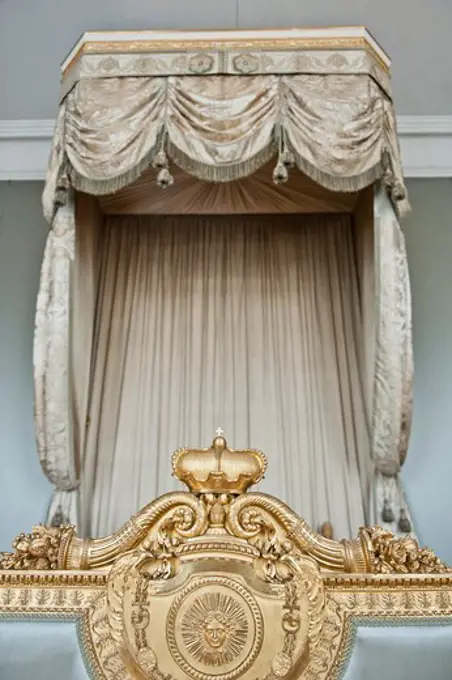
Elegant Armchairs

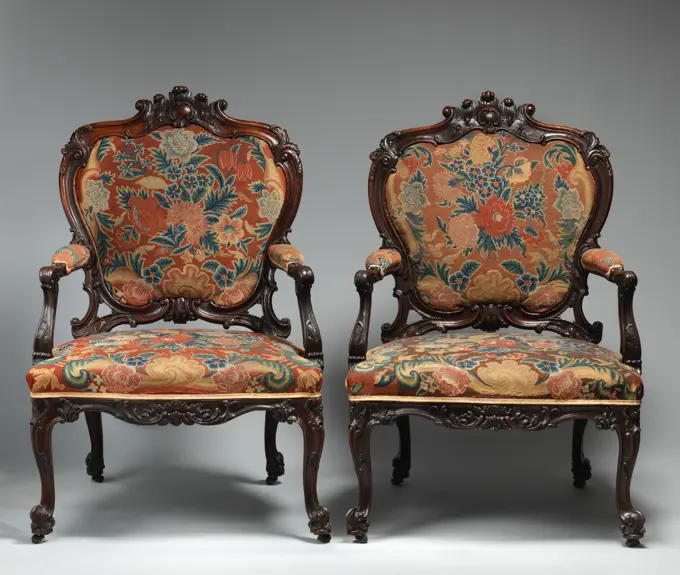
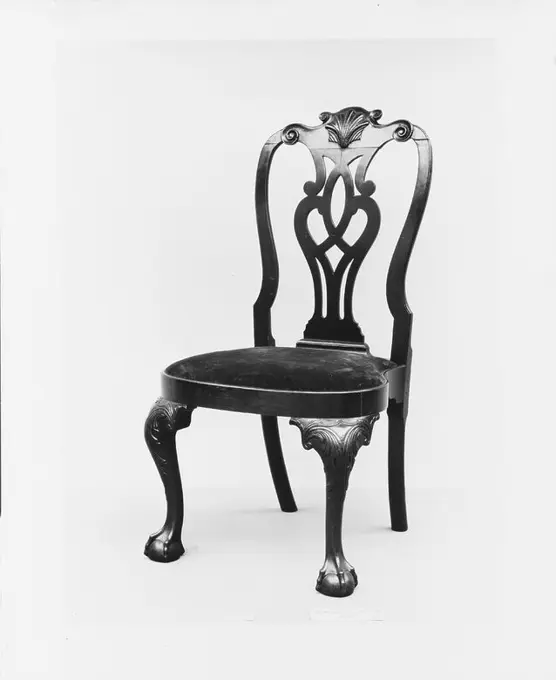
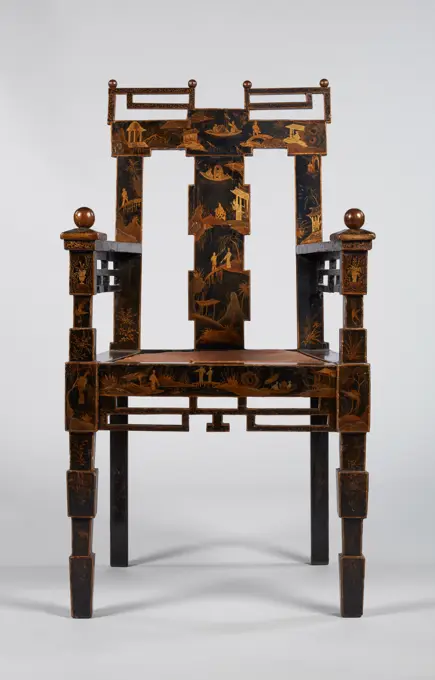
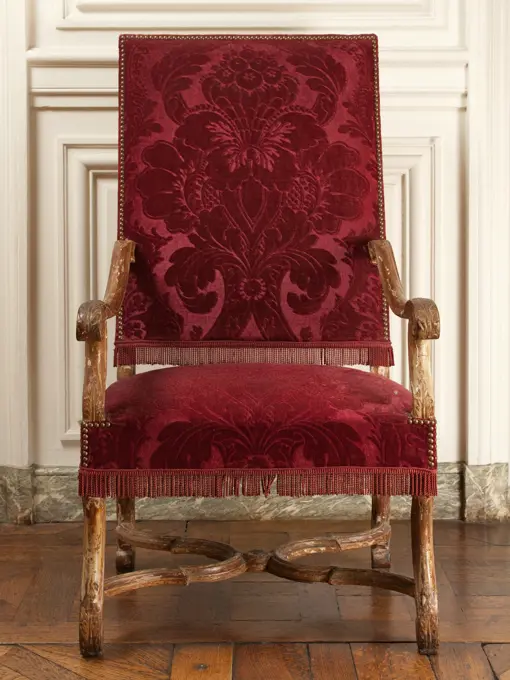
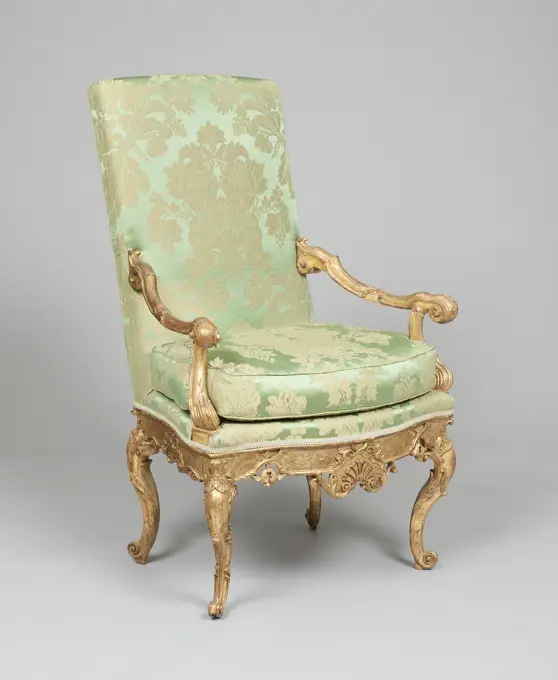
Collection of ornate armchairs, featuring rich woods and unique designs. Each piece embodies a blend of classic elegance and historical significance.
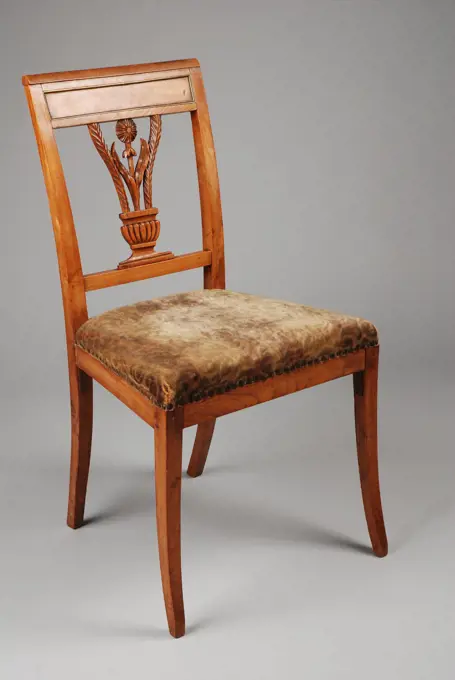
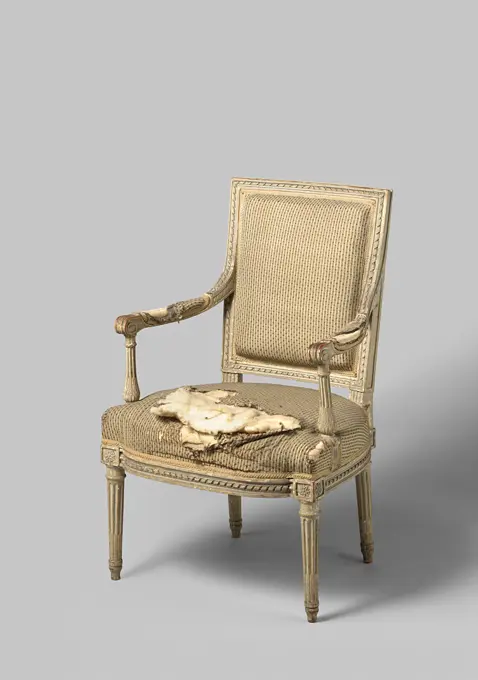
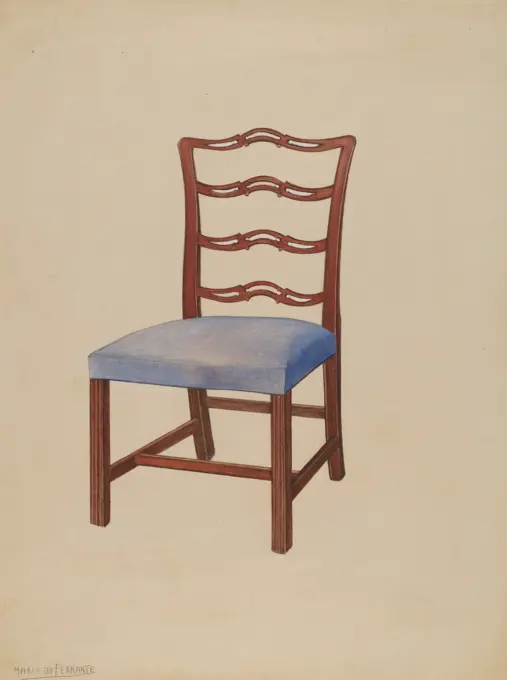
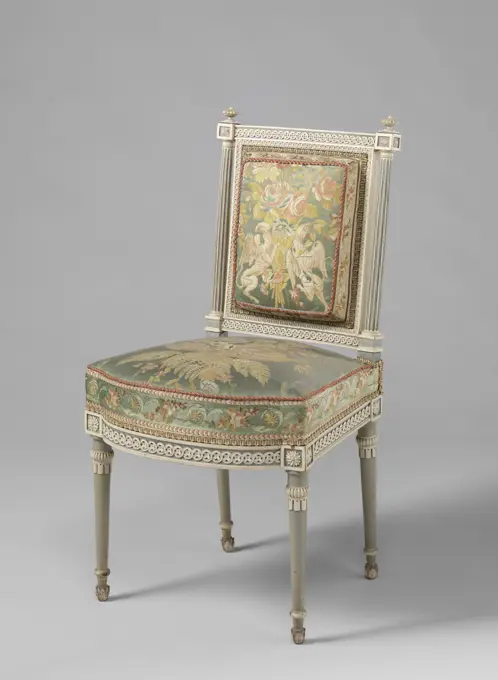
Eggshade Louis Seize straight chair, straight-seat chair furniture furniture interior design wood elmwood brass velvet, With flower vase as back in the hood brass profiled frame slightly curved legs velor upholstery with brown stripe pattern and floral relief Louis XVI Louis XVI Louis Seize
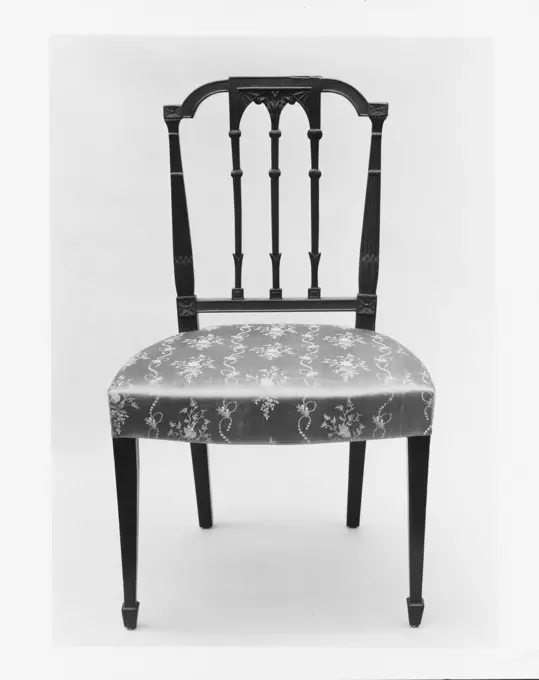
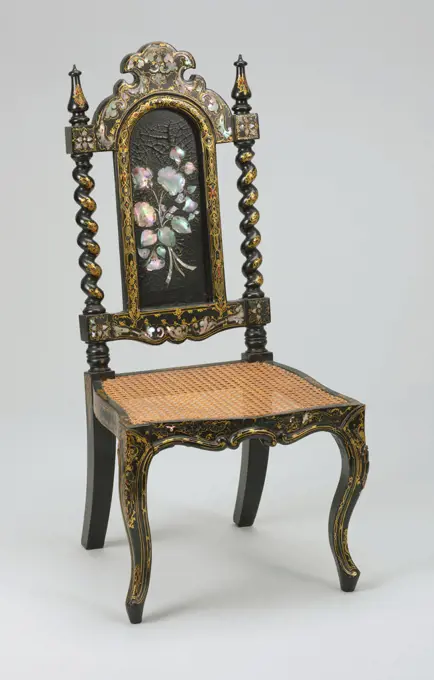
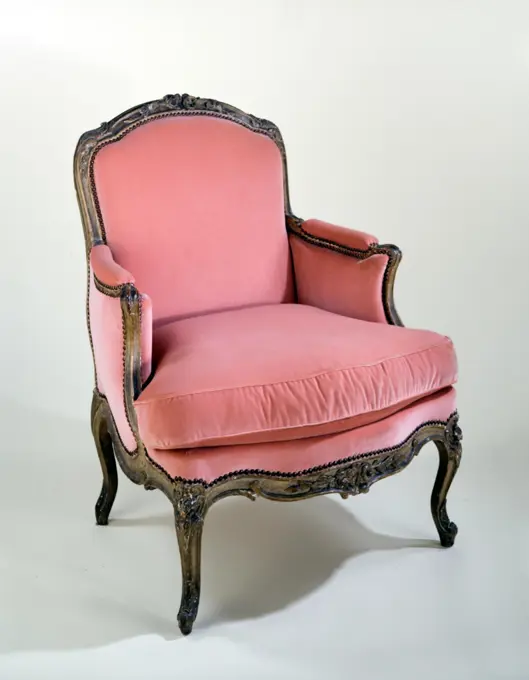
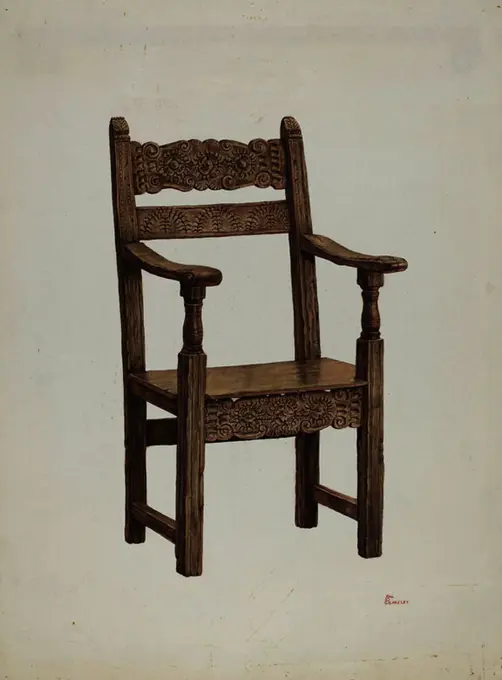
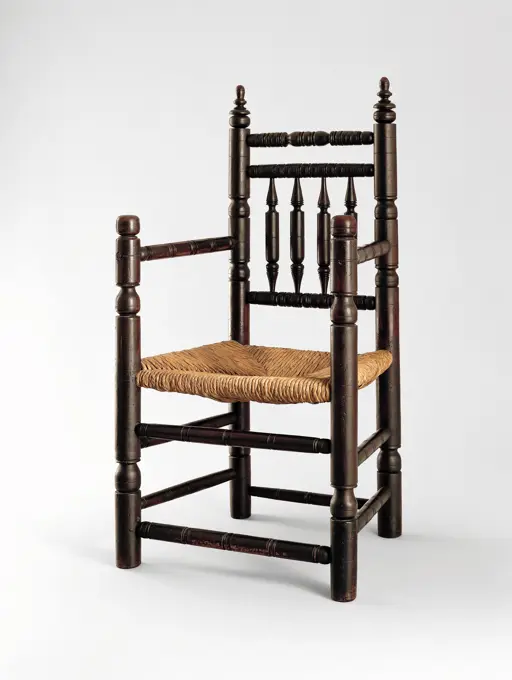
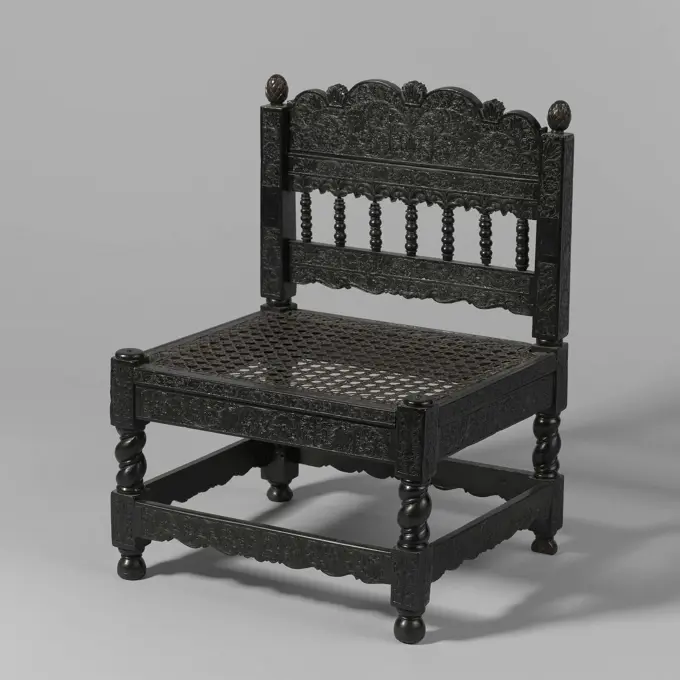
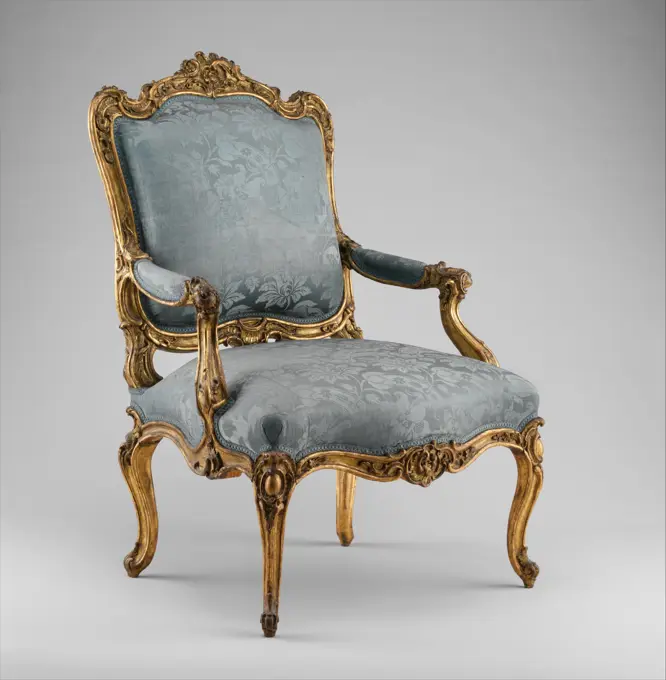
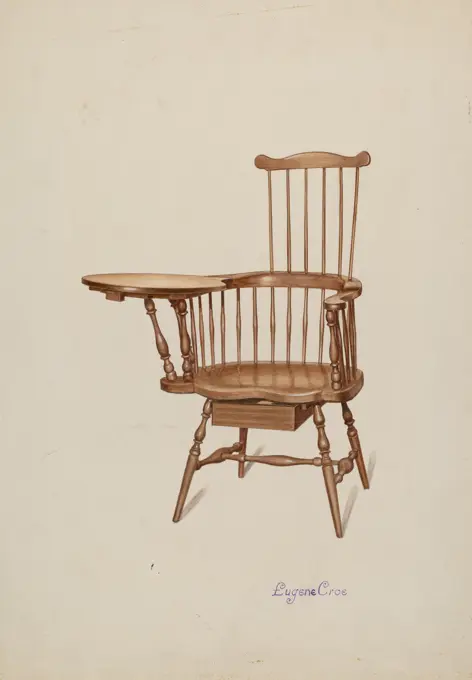
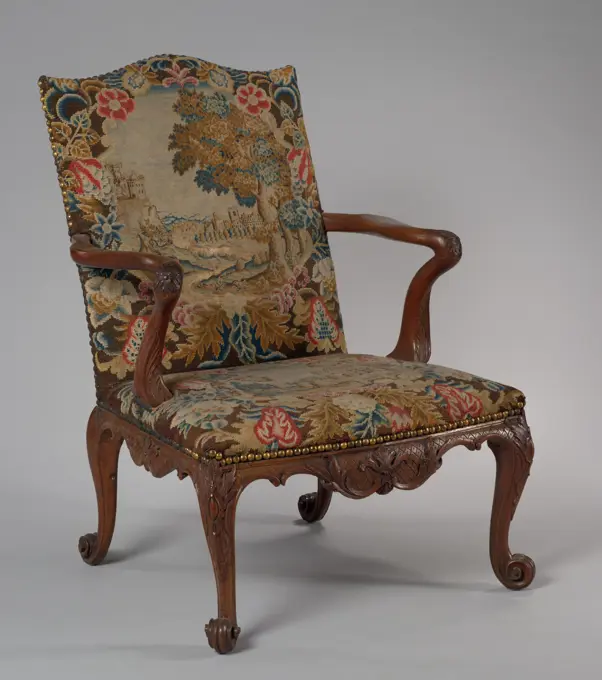
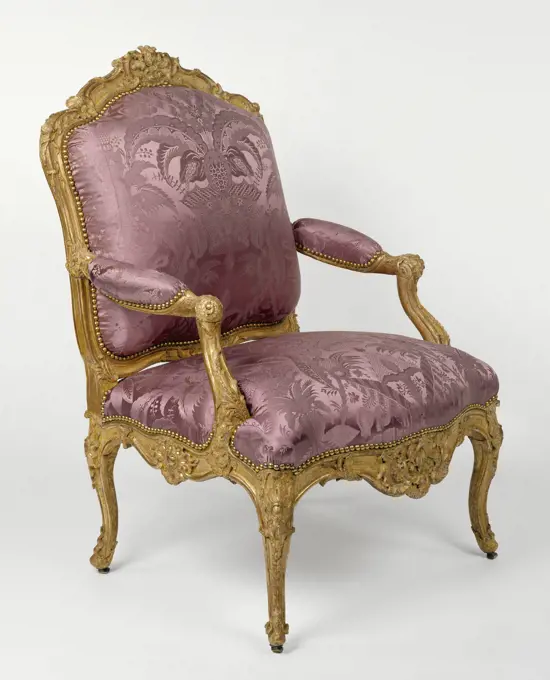
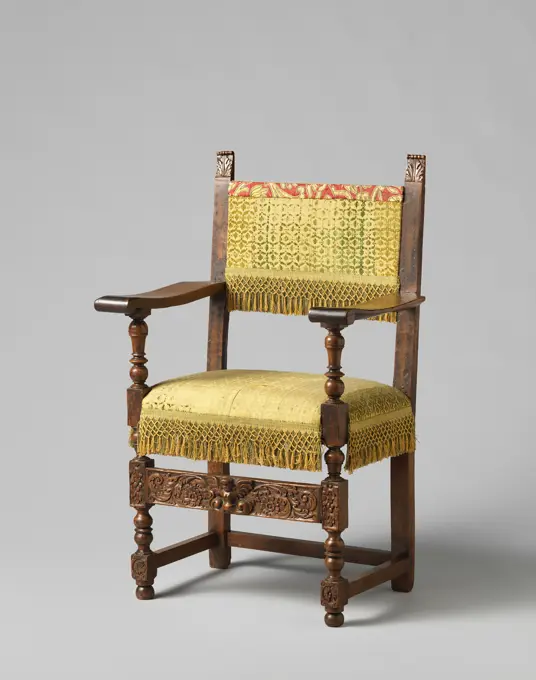
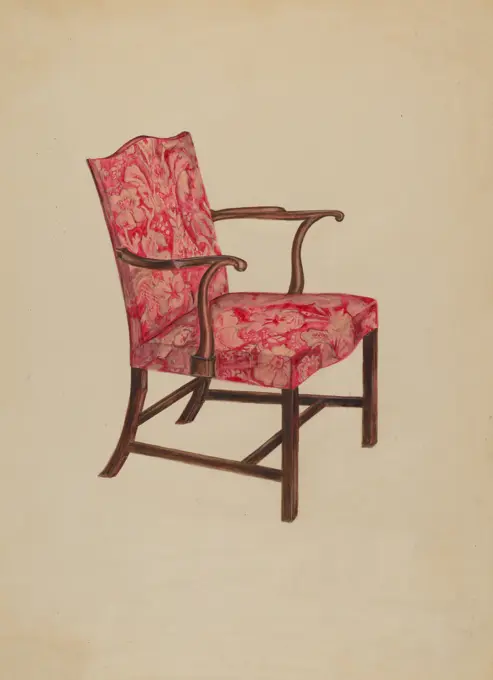
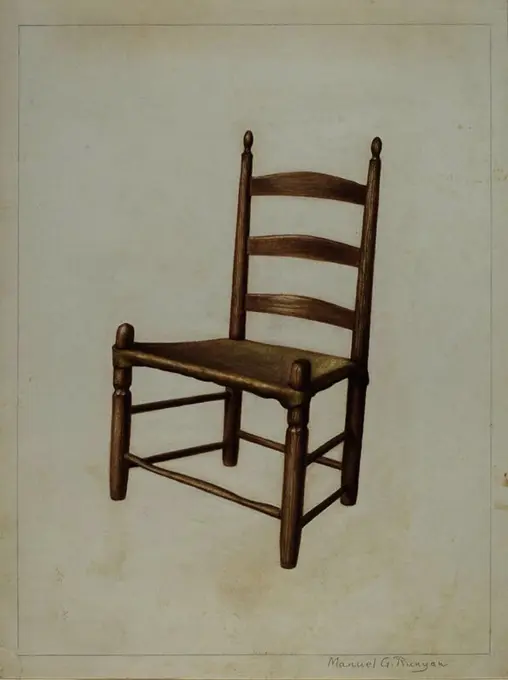
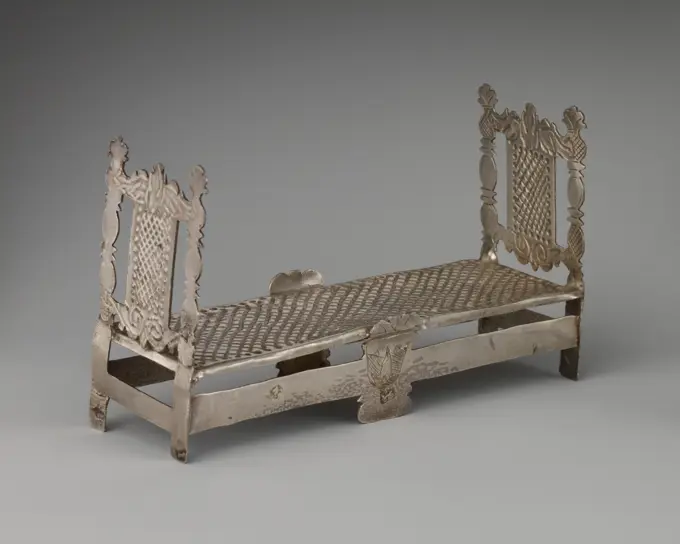
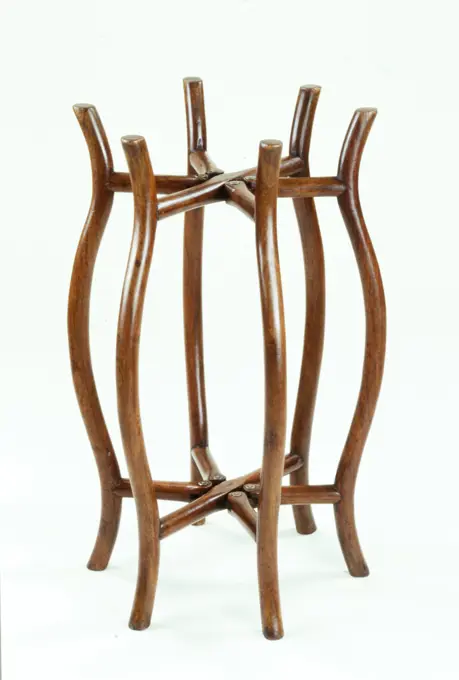
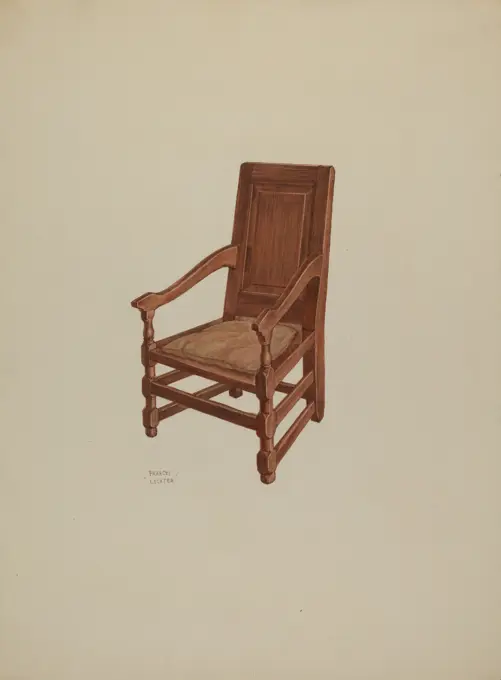
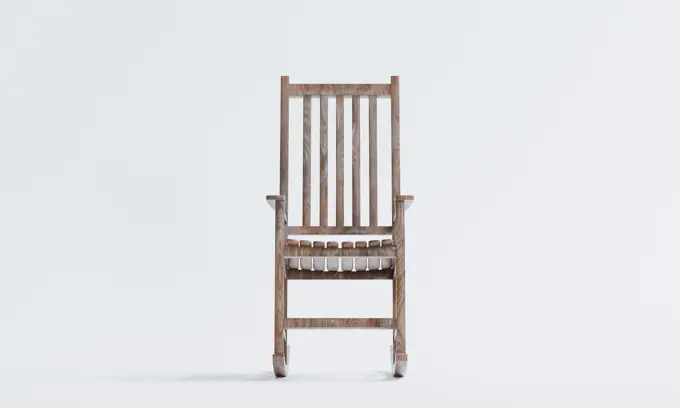
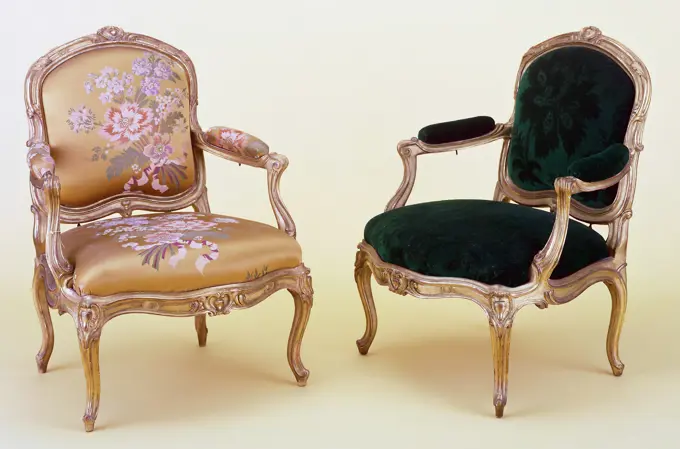
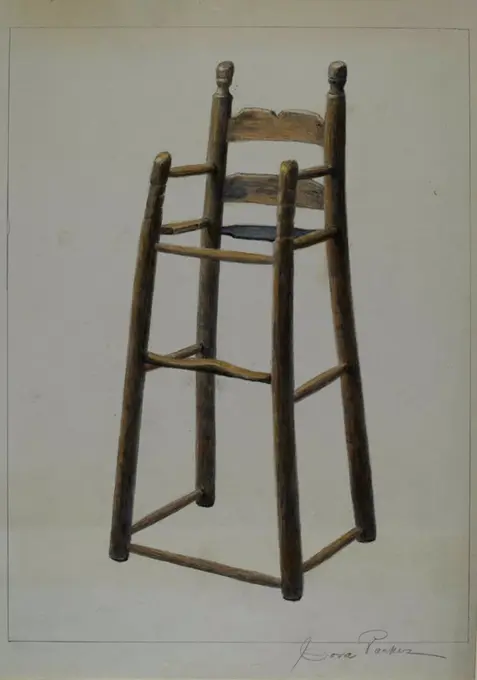
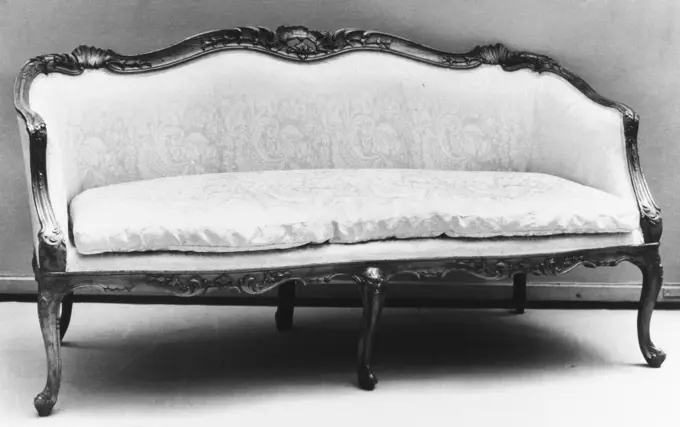
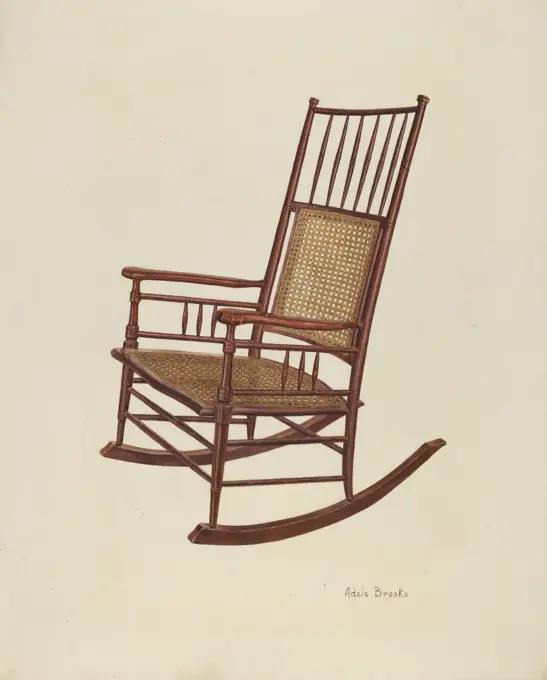
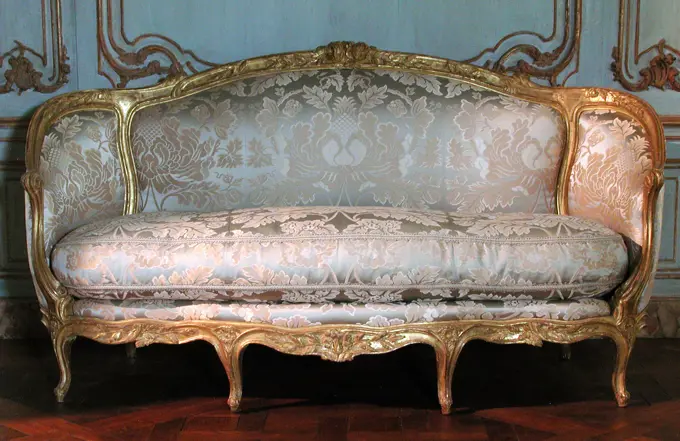
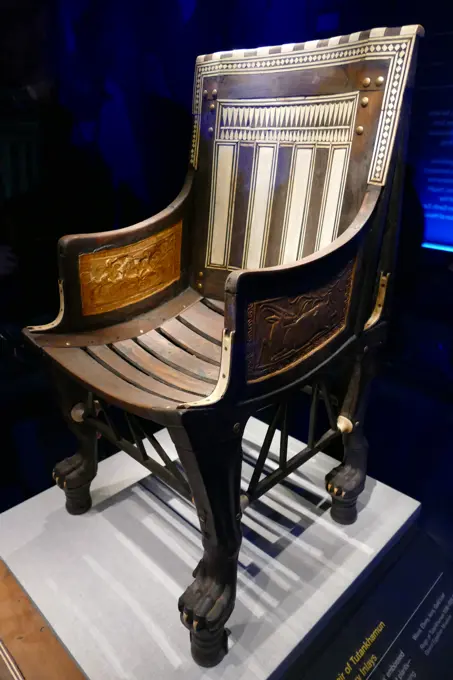
Étagère, c. 1850, Julius Dessoir, American (born France), American (born France), 65 9/16 x 58 x 24 1/2 in. (166.5 x 147.3 x 62.2 cm), Rosewood, satinwood, maple, mirrored glass, United States, 19th century, This lavishly carved and decorated étagère was made by Julius Dessoir, a French émigré who came to America in the late 1840s and quickly established a thriving furniture-making business on Broadway, the most fashionable street for shopping in 19th-century New York City. Designed primarily for 19th-century parlors, rococo revival étagères, like this example, typically displayed vases of flowers, scientific specimens, and fine porcelain and marble, seen from the round on mirrored shelves.Side Chair 1795-1810 American. Side Chair 1860Pair of armchairs, Georges Jacob, c. 1787Side chair, Papier-mché, mother of pearl, caning, wood, Shaped rectangular back with an arched splat inlaid with a flower-filled basket between barley-twist turned stiles headed by finials and a serpentine caned seat, on cabriole legs with scroll feet., England, mid-19th century, furniture, Decorative Arts, Side chairJean-Baptiste Tillard. Shepherdess known as the Queen, in beech, in apricot velvet with mobile cushion and decorative nails (overview on a light background), around 1760. Paris, Cognacq-Jay museum. Bergere to the queen, sculptic wood, decorative nail, mobile cushion, armchair, stretch, furniture, Louis XV style, fabric, apricot velvet, 18th century, furnitureCharles Henning, Pa German Chair, c 1939 Pa. German ChairLibrary chairs of O-Schodki;  Ok. PO. 19th century (1840-00-00-1860-00-00);Chair (Arm). Dated: 1941. Dimensions: overall: 35.5 x 26.6 cm (14 x 10 1/2 in.) Original IAD Object: 42"high; Seat 15"x23". Medium: watercolor, colored pencil, and graphite on paper. Museum: National Gallery of Art, Washington DC. Author: Hal Blakeley.Armchair (part of a set) ca. 1785 Georges Jacob French. Armchair (part of a set). French, Paris. ca. 1785. Carved and gilded walnut; 18th-century embroidered silk-satin (not original to the frame). Woodwork-FurnitureEgyptian Chair, 1857. Designer: William Holman Hunt. Manufacturer: J G CraceHall ChairSideChairSpindle-back armchair 1660-1700 American Seventeenth-century chairs of this type were produced by turners. The chairs components were quickly fashioned on a lathe, easily assembled, and finished with seats woven from rush or another inexpensive fiber. This armchair is one of a minority of seventeenth-century turned chairs with posts ornamented below the seat and it represents a rare occurrence of turnings on both the rear and front legs.. Spindle-back armchair 202. High chair of ebony with sculpted flower and leaf drinks and with a seat of braided reeds. Note: Racing tracks indicate original armrests present. Seat renewed.Side Chair ca. 1795 Attributed to Thomas Howard Jr.. Side Chair 1673Side Chair. Designed by August Thonet; Austrian, 1853-1921; Made by Gebrüder Thonet; Austrian, 1853-1921. Date: 1880-1890. Dimensions: 91.4 × 40.6 × 51.4 cm (36 × 16 × 20 1/4 in.). Beech, cane. Origin: Austria. Museum: The Chicago Art Institute, Chicago, USA.Side Chair 1795-1810 American. Side Chair 1865Rocking Chair. Dated: c. 1938. Dimensions: overall: 35.9 x 25.8 cm (14 1/8 x 10 3/16 in.) Original IAD Object: 40"high; 23"wide; rockers 35". See data sheet for dets.. Medium: watercolor, colored pencil, gouache, and pen and ink on paperboard. Museum: National Gallery of Art, Washington DC. Author: John R. Towers.Arkchair from beech wood. Window, lined, made of gray painted beech wood and resting on conical scanned legs. The seat rules, houses of the legs and back window wearing ornaments. The round sitting window is bent on the front. The backwards placed armrest tricks start vase-shaped and finish as the upper part of a channeled tuscan column. The armrests run over in the light careed, rectangular back pain. Signature: "G. Jacob". On the inside label: "Salon de Monsieur Le Bienaimé".Armchair (fauteuil à la reine) ca. 1750-60 Southwestern German The flowing, curvilinear silhouette of this exuberantly carved armchair is close in inspiration to a design attributed to the French ornamentist and court goldsmith Juste-Aurèle Meissonier (1695-1750), who was named architect and designer to the king in 1726. Meissonier's chair is characterized by the same overall sweep of the back and cabochon-cartouches heading the legs, and a similar disposition of the armrests. As in the Museum's example, the crest and front rail are centered by an ornamental carving that retains a certain symmetry, although otherwise the Rococo ornament is full-blown.1 An engraving by Meissonier published in Paris probably about 1735 resembles the drawing in many details and may have contributed to the popularization of the chair design abroad.Thus, in its general form this German fauteuil à la reine is French, but the striking array of C-scrolls at the crest rail and the floral decoration on the cenChair of rosewood, covered with calf leather. Colompen with four sports; backstyles crowned by shielding lions., Anonymous, c. 1640 - c. 1650 Chair of rosewood, covered with calf leather. The furniture has slim columns with four sports. The backstyles are crowned by individual lions stabbed in walnut as shield holders on pedestals in the form of an ionic capital. Netherlands Wood (plant material). Rosewood (Wood). Seat, Backrest: Calf (Leather) Chair of rosewood, covered with calf leather. The furniture has slim columns with four sports. The backstyles are crowned by individual lions stabbed in walnut as shield holders on pedestals in the form of an ionic capital. Netherlands Wood (plant material). Rosewood (Wood). Seat, Backrest: Calf (Leather)Chair; Meunier, Etienne (Fl. Post 1732); around 1750 (1740-00-00-1760-00-00);Eugene Croe, Windsor Desk Armchair, c 1937 Windsor Desk ArmchairArmstoel Kops-Amoublement, Anonymous, c. 1793 - C. 1795 Covered armchair from the Kopseublement, from white and blue-gray painted beech wood. The seating rules and sills of the back window show stabbed braid tire with rosettes. Vase -shaped struts with flinged cannelures support the armrests with pillows, which overflow with an acanthus leaf in the Tuscan columns of the back window. The upholstery shows floral motifs on light blue satin soil, held on the back by griffins. Ordered for building Nieuwe Gracht 74, Haarlem. See: BK-15614, 15615-A/P, 15616-A/B. furniture worker: Netherlandsdesigner: Amsterdam wood (plant material). beech (wood). silk. paint (coating) Covered armchair from the Kopseublement, from white and blue-gray painted beech wood. The seating rules and sills of the back window show stabbed braid tire with rosettes. Vase -shaped struts with flinged cannelures support the armrests with pillows, which overflow with an acanthus leaf in the Tuscan columns of the back window. Armchair, 1760-1765. England, 18th century. Mahogany upholstered in needlework; overall: 101.6 x 73 x 69.9 cm (40 x 28 3/4 x 27 1/2 in.).Antique wooden chair Antique wooden chair isolated over white background Copyright: xZoonar.com/IvonnexWierinkx 7858133Sofa. Dated: 1936. Dimensions: overall: 22.5 x 30.3 cm (8 7/8 x 11 15/16 in.) Original IAD Object: 86"long; 33"high at back. Medium: watercolor, colored pencil, and graphite on paperboard. Museum: National Gallery of Art, Washington DC. Author: Anna Aloisi.Armchair; Paris, France; about 1730 - 1735; Gessoed and gilded beech; brass casters; modern silk upholstery; 108.5 x 72.3 x 63.4 cm (42 11,16 x 28 7,16 x 24 15,16 in.)Armchair (part of a set of nine) mid-18th century Tapestry woven at Aubusson. Armchair (part of a set of nine) 239164Mario De Ferrante, Side Chair, 1937 Side ChairChair, Wing, Turned Front Legs. Dated: c. 1936. Dimensions: overall: 30.4 x 22.5 cm (11 15/16 x 8 7/8 in.) Original IAD Object: 45 1/4"high, 29"wide, 25 3/8" deep.. Medium: watercolor, graphite, and colored pencil on paper. Museum: National Gallery of Art, Washington DC. Author: George Loughridge.Armchair from walnut. Armchair from walnut belonging to an ambuele from four armchairs. The front legs and arm struts show home and articulation. The houses with leaf motifs are connected by a flat arrangement with pelleted leaf reflections, between which a winged women's figure whose lower-end passes in degenerate volutes. The wide lightly healed flat armrests end in closed leaf volutes. The back styles end in stabbed leaf volutes. The original damask upholstery is covered with an antique fabric of a cavity.Chair. unknown, authorArmchair for a lady. .Chair. unknown, creatorPair of side chairs probably first half 18th century Dutch. Pair of side chairs 205508SILLA DE CADERA DE MADERA Y TARACEA, DE LA CATEDRAL PRIMADA DE TOLEDO (EN EL MUSEO DE SANTA CRUZ).American 20th Century, Armchair, 1936 ArmchairDining Room Chair. Dated: c. 1938. Dimensions: overall: 33 x 24.7 cm (13 x 9 3/4 in.) Original IAD Object: 33"high; 18 1/2"wide; 13 1/4"deep. See data sheet for dets.. Medium: watercolor, colored pencil, and graphite on paper. Museum: National Gallery of Art, Washington DC. Author: Manuel G. Runyan.Pair of armchairs ca. 1765 British Part of a set of seat furniture previously at Lavington Park, Sussex, the chair is related to a design for a so-called "French chair" in the third edition of Thomas Chippendale's The Gentleman and Cabinet-Maker's Director (1762). Chippendale suggested to create an open space between the cartouche-shaped back and the seat in order to lighten the overall effect of this drawing-room chair.. Pair of armchairs. British. ca. 1765. Mahogany, beech and needlework. Woodwork-FurnitureChild's High Chair. Dated: c. 1942. Dimensions: overall: 35.5 x 24.6 cm (14 x 9 11/16 in.) Original IAD Object: 33"high; 14 1/2"wide; 10 3/4"deep. See data sheet for dets.. Medium: watercolor, colored pencil, gouache, and pen and ink on paperboard. Museum: National Gallery of Art, Washington DC. Author: Donald Harding.Miniature daybed (part of a set) 1690-91 Probably George Manjoy British. Miniature daybed (part of a set). British, London. 1690-91. Silver. Metalwork-Silver-MiniatureChildrens armchair. unknown, authorMeubbilair, Gebrüder Thonet, 1900 - 1987 Thonet chair. Germany (possibly) wood (plant material). beech (wood). plywood. iron (metal) Thonet chair. Germany (possibly) wood (plant material). beech (wood). plywood. iron (metal). Oak chair resting on four rectangular legs. The legs are interconnected by means of an H-shaped cross supplemented with a line between the hind legs. The hind legs run through in the back styles. From the bottom of the bottom, an elongated black dyed panel is placed that reaches the upper spray. A narrow space has been released between the panel and the back styles and hind legs. The chair has a trapezoidal piping seat.Luxury gold plated kitchen chair in the Baroque style. Three positions. Luxurious kitchen chairSide Chair. Culture: American. Dimensions: 40 x 20 7/8 x 20 1/2 in. (101.6 x 53 x 52.1 cm). Date: 1755-65. Museum: Metropolitan Museum of Art, New York, USA.Anonymous, Chinese armchair - Decor of Hauteville II, Maison de Juliette Drouet in Guernesey (attributed title), 1700. Maison de Victor Hugo - Hauteville House.Square armchair ". Wooded, velvet. XVIIth century. Paris, Carnavalet museum. 72593-2 Carreed armchair, furniture, wax walnut, red, velvet, 17th century, furnitureAir armchair from the 18th/19th century from the court in Tuchanowicz, according to the watercolor of Julian Maszyn from 1915 - a general view from the front; Sztolcman, W Adys Aw Roman (1873-1950); 1915 (not after February 16, 1915) (1915-00-00-1915-00-00);Armchair 1740-1750 Venice. Caned, giltwood, and modern upholstery .Chair with blue upholstery and straight back with open edited middle style. Chair of mahogany with a straight back, straight openwork middle style and tight tapered legs. The loose seat is covered with blue silk damask.Stadtholders chair and footstool, weduwe Jan Baptist Xavery (attributed to), 1747 - 1748 Footstool covered with green velvet, resting on s-shaped, overhoeks placed legs. The Hague elm (wood). velvet (fabric weave). silver thread. silk gilding  Amsterdam Footstool covered with green velvet, resting on s-shaped, overhoeks placed legs. The Hague elm (wood). velvet (fabric weave). silver thread. silk gilding  AmsterdamStoel Kops-Amouublement, Anonymous, c. 1793 - C. 1795 Covered chair, part of the KopsEublement, of white and blue gray painted beech wood and resting on conical legs. The seating rules and sills of the back window, with Tuscan -canaled columns as backstyles, show stabbed braid tire with rosettes. Finish with rosettes and acanthus leaves. The upholstery shows floral motifs on light blue satin soil, held on the back by griffins. Ordered for the Nieuwe Gracht 74 building, Haarlem. See: BK-15615-A/P, BK-15614, BK-15616-A/B. furniture worker: Netherlandsdesigner: Amsterdam wood (plant material). beech (wood). silk. paint (coating) Covered chair, part of the KopsEublement, of white and blue gray painted beech wood and resting on conical legs. The seating rules and sills of the back window, with Tuscan -canaled columns as backstyles, show stabbed braid tire with rosettes. Finish with rosettes and acanthus leaves. The upholstery shows floral motifs on light blue satin soil, held on the back bySix-Leg Folding Basin Stand, late 16th-early 17th century, 37 x 17 15/16 x 17 15/16in. (94 x 45.6 x 45.6cm), Huang-hua-li hardwood, China, 16th-17th century, Round flat basins called pan were already used for ritual hand washing during the Bronze Age. With time, the metal basins were set on small stands and, by the tenth century with the advent of a chair-level mode of living, taller stands resembling the present one were developed. In a traditional upper-class Chinese household, servants would have supplied wash water to the various bedrooms. This elegant folding version was easy to carry and readily stored when not in use. Basins such as this were often accompanied by a separate towel rack like the one shown here.SlipperchairArmchair early 17th century French. Armchair. French. early 17th century. Walnut. Woodwork-FurnitureETA Studio of bamboo products S. Rutkiewicz in a beef (will be a furniture factory; end of the 19th century-1914); 19th/20th century (1890-00-00-1910-00-00);Purchase (provenance)Ralph Morton, Chair, c 1939 ChairSide chair, 18th century, 42 x 22 3/4in. (106.7 x 57.8cm), Walnut, United States, 18th centuryFrances Lichten, Pa German Chair, c 1938 Pa. German Chair3D rendering of isolated wooden rocking chair on white background 3D rendering of isolated wooden rocking chair on white backgroundChair. Dated: c. 1936. Dimensions: overall: 43.8 x 51.1 cm (17 1/4 x 20 1/8 in.) Original IAD Object: 28"high;17"wide at rockers; Rockers-29". See data sheet for dets.. Medium: watercolor, colored pencil, and graphite on paperboard. Museum: National Gallery of Art, Washington DC. Author: Charles Bowman.Side Chair 1760-90 American. Side Chair. American. 1760-90. Mahogany, maple, white pine. Probably made in Boston, Massachusetts, United StatesSettee. Culture: British. Dimensions: Overall: 41 × 67 1/2 × 26 in. (104.1 × 171.5 × 66 cm). Date: ca. 1730-35.This piece is from a large set of at least eight side chairs, four settees, four stools, and two side tables formerly attributed to James Moore (ca. 1670-1726) and said to have been made for Stowe, Buckinghamshire, a provenance now questioned. Museum: Metropolitan Museum of Art, New York, USA.Consola con dosel, 1830. Colección privada.Armchair, one of eight, after 1756, Jean-Baptiste Lebas (Maître in 1756), French, 38 1/2 x 27 x 24 in. (97.79 x 68.58 x 60.96 cm), Gilt wood and upholstery, France, 18th centuryAmerican 20th Century, Pa German Chair, 1935 1942 Pa. German ChairChild's High Chair. Dated: c. 1938. Dimensions: overall: 33.8 x 23.5 cm (13 5/16 x 9 1/4 in.) Original IAD Object: 31"high; 14"wide at base. See data sheet for details.. Medium: watercolor, colored pencil, and graphite on paper. Museum: National Gallery of Art, Washington DC. Author: Cora Parker.Comfortable armchair with footstoolArmchair c 1670-1700 New York. This chair is one among a small group of turned chairs with slat backs that were produced in the New York area at the end of the 17th century. The chair was made by an artisan known as a turner, whose main tools were a lathe and a set of gouges. A block of wood was set into the lathe, which was operated manually by an apprentice using a hand crank or a foot pump. Gouges, or tolls, with sharp edges in varying widths were used to form the design on the wood being turned.. Maple and ash . Artist unknownSILLA DE MONTAR DE FELIPE II. Location: PALACIO REAL-REAL ARMERIA DE MADRID. MADRID. SPAIN.Chair. unknown, authorSettee mid-18th century Italian, Venice. Settee 195353Chair. unknown, creatorRoyal Purple classical style Armchair sofa couch in vintage roomRed Vintage retro style Chair with lampAdele Brooks, Shaker Rocking Chair, c 1940 Shaker Rocking ChairSofa (canapé à confidents) ca. 1765 Jean-Jacques Pothier This elaborately carved beechwood sofa (canapé) is stamped several times: I. POTHIER. Jean-Jacques Pothier was elected a maître menusier in 1750. Around 1775-76, he established his workshop in the Rue de Bourbon-Villeneuve, Paris, and appears to have retired around 1780. The curvilinear shape of the frame with its crest-rail curving around the ends to form armrests, the serpentine seat-rail and the seven short cabriole legs are still expressions of the Rococo style. However, the continuous molding along the legs, seat-rail, arm supports and crest-rail, as well as the symmetrical floral and foliage carving makes this sofa a Transitional piece. Pothier made other seat furniture in the Transitional style by introducing classical motifs such as the Greek key pattern, thereby heralding the advance into Neo-classicism (see armchair 07.225.60). Very little is known about Pothiers clientele. His oeuvre shows a high level of craftsmanshiPurple classical style Armchair sofa couch in vintage roomEbony and ivory chair from the tomb of King Tutankhamun. 1326 BCResidenz, Munich, Upper Bavaria, Bavaria, Germany